← Digital Social Hour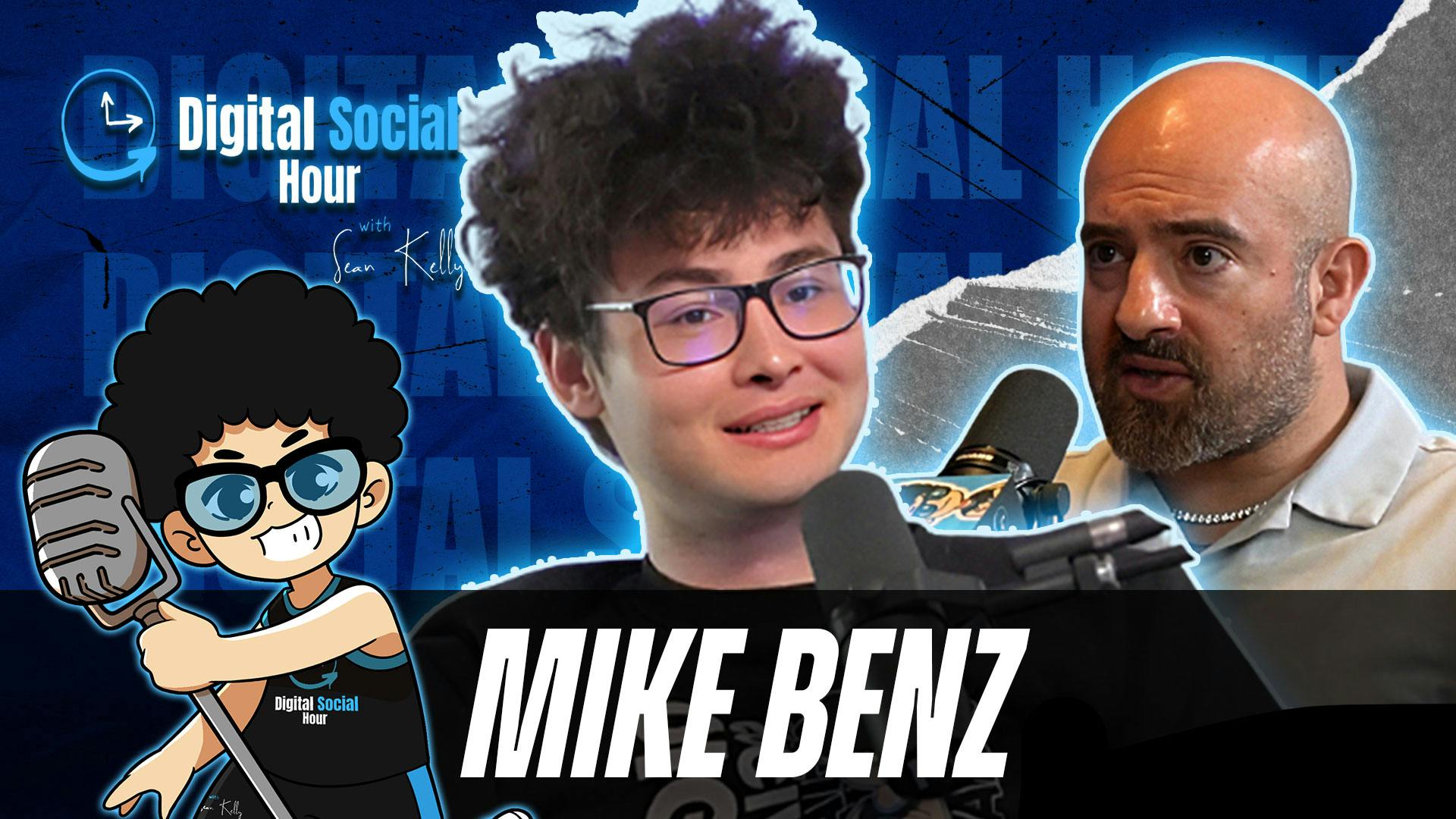
Loading summary
Transcript78 lines
- [00:00]
A
University of Washington, the Harvard Belfer Center, MIT Media Lab, Berkeley Data Lab. I can name you 100 of these that were having teams of, some of them 120 people or 50, 60, 70 people, all working in labs off government grants to spend their whole day reading our tweets to see whether we like Donald Trump.
- [00:27]
B
Okay, guys, just got off the main stage at a bitcoin conference. We got Mike Benz here.
- [00:32]
A
How you doing?
- [00:32]
B
Yeah, we were just talking about how crypto's evolved over the years.
- [00:35]
A
It's fascinating, fascinating story.
- [00:38]
B
Yeah.
- [00:38]
A
I mean, it's gone from this libertarian pirate ship for people who want to build an alternative digital money system to a complete tool of the US Government to save the US dollar rather than fight the dollar. It's serves the dollar. All the liquidity comes from the fact that the stablecoin companies are buying US Treasuries. So now it's like crypto is what will save us from China divesting of US Treasuries and Saudi Arabia potentially moving off the petrodollar. And it's like Paul Ryan pumping it. All these people who the crypto libertarians hated and railed against, now they're celebrating, you know, record high bitcoin prices. And I don't think very many of them appreciate that what's driving it is the opposite of the thing that brought them into it. Right.
- [01:33]
B
I think they're so emotionally invested in the price of it at this point that they're willing to put everything else behind.
- [01:38]
A
Yes, but it's very useful marketing for the government.
- [01:41]
B
It's working well.
- [01:42]
A
I mean, I always say this, which is like, I'm bullish on bullshit. And I've been saying this for a decade now, which is that I do think that so many of the underlying dynamics, especially around the price of bitcoin and the liquidity that flows through it, are bullshit. But I believe legitimately that people are going to get very, very rich from it, as they have, because I'm bullish on that bullshit. I believe that there is. I'm bullish on the US Government maximizing dollar diplomacy. I believe in the US Government being hyper aggressive to prop up the US dollar and the stablecoins buy the treasuries to do that. And I'm bullish on CIA money laundering. There is an almost infinite need for creative structuring to obscure illicit sources of funds for arms trafficking, for gun. I don't. A lot of people say, oh, you know, they only use crypto or bitcoin to buy drugs and guns and they make it sound like the people doing that are your retail street corner drug dealer. And it's like, no, the large transactions on that are nation states. It's like look what's happening in Pakistan right now. Pakistan just speed ran the entire regulatory approval for this huge crypto architecture. Pakistan is, this is the global capital of international narcotics trafficking and gun running. And it has been the vassal state of the US government for 50 years and the UK government, you know, beyond that. This is where we put BCCI, the CIA's proprietary scam bank to fund the mujahideen in the 1980s when we were taking the drugs from the Golden Crescent and laundering it through the CIA's BCCI bank. Now you have crypto BCCI and it's driving up the stock price or the price of bitcoin to huge levels. And I think that's likely to continue. But that's not libertarian, free market, decentralized, plucky underdogs doing that. It's big tectonic plates.
- [04:00]
B
Yeah, I don't think crypto's going to ever be decentralized again at this point. Right. We're in so deep it's not going to be anonymous like it used to be, if it ever was. There's that debate going on too. It's been tracked from the start.
- [04:11]
A
But what's interesting is you can achieve a kind of quasi anonymity through stacking. I think about James Comer who was the head of House oversight during the attempt to drill down into the Biden shell company. I don't know if you remember this. There was the head of the House oversight committee for the Republicans alleged that the Biden family was getting payouts from all these different shell companies. These LLCs with no operations they would just move money through. And there were 38 of these that all had these wire transfers that moved through it and ended up at the Biden family. And it took I don't know like three years for them.
- [05:01]
B
The Tri light from Therasage is no joke. Medical grade red and near infrared light with three frequencies per light. Deep healing, real results and totally portable. It's legit photo biomodulation tech in a flexible on body panel. This is the Trilite from Therasage and it's next level red light therapy. It's got 118 high powered polychromatic lights each delivering three healing frequencies, red and near infrared from 580 to 980 nanometers. Optimal penetration, enhanced energy, skin rejuvenation, pain relief, better performance, quicker recovery and so much more Therassage has been leading the game for over 25 years and this panel is FDA listed and USB powered, ultra soft and flexible and ultra portable on body Red light therapy. I use daily and I take it everywhere I travel. This is the Thera 03 ozone module from therapy Therassage. It's a portable ozone and negative ion therapy in one. It boosts oxygen, clears and sanitizes the air, and even helps your mood. It's a total game changer at home or on the go. This little Device is the Thera03 ozone module by Therasog and it's one of my favorite wellness tools in the sauna. It boosts ozone absorption through your skin up to 10 times, oxygenating your blood and supporting deep detox outside the sauna. It purifies the air, killing germs, bacteria, viruses and mold. And it improves mood and sleep with negative ion therapy. It's compact, rechargeable and perfect for travel, planes, offices, hotel rooms, you name it. It's like carrying clean energy wherever you go. This is the Thera H2 go from Therasage, the only bottle with molecular hydrogen, structured water and red light in one. It hydrates, energizes and detoxes water. Upgraded. The Thera H2 go from Therasosh isn't just a water bottle. It's next level hydration. It infuses your water with molecular hydrogen, one of the most powerful antioxidants out there. That means less oxidative stress, more energy and faster recovery. But here's what makes it stand out. It's the only bottle that also structures your water and adds red light to supercharge it. It's sleek, portable and honestly, I don't.
- [07:05]
A
Go anywhere without it to trace and track all of the wallets effectively that were done through Fiat. You can do that with tether transactions. And it would take 10 years for a forensic investigator to be able to track it all, verify the activities of everything, check every level of it, create attribution and then make a criminal case about it. And so I think there was actually a big, I think it was Malaysia had this big sort of tether stacking money laundering scandal. Just a few months ago it broke. And you know, I think in a way you get quasi anonymity because all you need to do is open up a new wallet, open up a new wallet, open up a new wallet. You don't even need to have a, you know, a kind of registered agent to open up an LLC in the US So I think it's very useful for all of that. And so I think a lot of the market, because that has become the new offshore Cayman Islands bank account that the C of the. When, Paul, hello, The CIA legal beagle was setting up offshore banks for the CIA and Australia and Panama and Cayman Islands. And now you don't need to do that. You can just do. You can do it at a much faster, easier rate if you want to run a covert operation.
- [08:32]
B
Yeah. You start wondering how early the CIA was to crypto and if they got some mega wallets or something and if they're controlling the price at all too. Right?
- [08:39]
A
Yeah, yeah, it's possible. I don't know. I've seen a lot of arguments around it. I haven't seen a lot of evidence, but who knows?
- [08:48]
B
Yeah, well, they're probably good at covering their tracks, right? Unless you're on the case, you're really good at diving in there.
- [08:54]
A
Well, I mean, I suppose if it were to be government, it would probably be an NSA thing, I would have to imagine because you know, the whole thing is built on encryption and there could be some joint US Treasury NSA type operation there, but it would have to come back to the stablecoins at some point because that is what's. Because bitcoin could be a threat to the US dollar if its volume was not used primarily to gobble up dollars. Imagine for example, if stablecoins were all Chinese and people and all this liquidity in the bitcoin space was buying up renminbi and the renminbi was threatening to displace the US dollar and creating this giant demand for Chinese dollars effectively rather than US dollars. I think the US might declare that a national security threat and pass some law criminalizing it. But if they're buying up US Treasuries, then suddenly it's a good thing and all of the rah, rah, rah libertarianism will be very useful in selling that in universal human principles to the international community about why they too should transact in stablecoins with US dollars.
- [10:16]
B
What do you think the biggest threat to the dollar is? Do you think it's stablecoins? Do you think it's brics?
- [10:21]
A
I think stablecoins right now are seen as the thing that props up the US dollar. I think the. I think, I mean the threat by Saudi Arabia under the Biden administration to move off the petrodollar in 2027 I think they said is a big one, but I don't know that they mean it. I think a lot of that was posturing against the Biden administration because there was such a big war between MBS and Biden, Biden and Obama. So it's weird that the, the Middle east politics in this play a weirdly big role. I think Saudi Arabia is very close with Trump world, and I think part of the perception maybe in Saudi Arabia is that they wouldn't let Trump win and Saudi Arabia had to form these new alliances because it was a new world where it was going to be the Biden clan forever. But I think obviously China has been one of the biggest purchasers of US Treasuries, propping up the US Dollar for a very, very long time. And they've recently started divesting in a very serious way. And I think that's part of what has caused strange places in Congress and the U.S. treasury to back crypto as an industry, because China is not propping up the US Dollar at the volume it used to and is divesting from its current holdings. But that's why I'm ultimately bullish on the space, although just for reasons kind of diametrically opposite.
- [12:07]
B
You think you have some personal bias, not getting in early too?
- [12:11]
A
No, no. I was, I was, I was in for, for, for a long time. And like I said, I, I think it is going to continue to rise because of its utility. So I don't have any ill will on it. Ill will about it. It's. I, I hope it continues. I know a lot of great people in the space. I think it's a, it's an interesting development. And in a weird way, it could end up saving the US Dollar. I love America. I want dollar dominance. I don't want the dollar displaced as the world reserve currency. So, I mean, in a weird way, you can argue it's a good thing, but for reasons that you don't necessarily love seeing how the sausage is made.
- [13:02]
B
Yeah, I was scrolling through your Twitter said you've ratioed the whole continent of Europe, man. Well done.
- [13:08]
A
Well, that's crazy. They were saying 72%. We polled the people in Europe and 72% of people trust the European Union. Okay. Marine Le Pen is winning. She was up 11 points in the opinion polls over the next person in the candidacy for the 2027 French election. So she's up. She's the most popular candidate by 11 points. And she's running on, effectively, Brexit, getting the France out of the European Union. Kaylin Jorgescu won the first round election in Romania and has been running on this very NATO skeptical, populist, nationalist flank. There you have the law and order Party, Law and Order, Law and Justice Party in Poland, who's expressed a significant amount of EU skepticism. The Vox Party in Spain is the same. The AFD Party in Germany, which is the most popular party in Germany, is the same. But so the most popular parties in almost all of the major EU companies have no trust in the EU. And the EU's response has been to organize the arrest of every leader of those parties. They arrested Marine Le Pen and they banned her from running in France. The leaders of the Vox Party in Spain were shot in the face. They have declared the AFD Party an extremist party and authorized the domestic spying on every member of the party. Banning that. They're trying to ban them from being teachers, police officers, firefighters, and they've openly.
- [15:01]
B
I hope you guys are enjoying the show. Please don't forget to like and subscribe. It helps the show a lot with the algorithm. Thank you.
- [15:07]
A
He contemplated banning the party entirely in order to stop them from winning. They banned the election with Kalyn Georgescu and then arrested him. So nobody trusts the eu. Even the people who like the economic benefits of the EU don't trust the EU. The EU's response to criticism is to censor, arrest, and ban elections when they lose them. So my ratio was, when North Korea makes posts like this, we make fun of them. This is the way you need to look at the European Union. It is a European West Korea. You know, that's. That's all it is at this point. And they're coming after Americans. We are, you know, as we're speaking, we are now one month away from the EU's Digital Censorship Act. It's currently as a voluntary code of practice on disinformation. On July 1, it becomes mandatory.
- [16:06]
B
Wow.
- [16:06]
A
And that is going to force every US social media company, unless they want to suffer billions in fines, bankrupting fines, 6% of annual global revenue, not profit revenue, if they don't comply with this. And that will make the EU governing body able to fine Americans. Talking to Americans about anything Europe calls disinformation, Guess what they call disinformation. Pretty much anything anyone in America, at least, who voted for the Trump administration likes. When Emmanuel Macron's wife just slapped him at an airport, the response from their office, I don't know if you saw this was reported in the New York Post, was to call it Russian disinformation. And then the video came out and they said, okay, it happened, but still, it's out of context. It's like, that would have been banned under the eu Digital services Act as Russian disinformation, be able to amplify that. So, I mean, we fought a war of independence over this in the 1700s when the US was being governed by an island far away that was setting its own rules, setting its own trade and commerce restrictions, and unduly taxing what was happening here in the States. And I'm, I'm heartened to see this administration beginning to realize the magnitude of what needs to be done in terms of fundamentally restructuring our diplomacy with Europe.
- [17:39]
B
Scary. So basically in the next month, free speech could be eliminated.
- [17:43]
A
Yeah. Now, now I think my understanding is, is there have been several talks with the EU about enforcement on this and there is. I've been stressing escalating counter threats on this and that the White House, the State Department, the embassies in Europe, have to make it crystal clear to every European regulator that if they do this to us, we will do something three times as harsh to them. Every French company who operates in the U.S. get them. Every, every European official who's got, you know, property assets, because they're going after U.S. assets there. This is, if you remember in Brazil in about April of last year, the Brazilian censorship court banned X from the country and then seized assets from Starlink, a totally unrelated company that just happens to be also owned in large part and operated by Elon Musk. Just to punish X, they went after a completely different company and seized assets. And the EU Digital Commission said we may have to do the same thing. Wow, that can't stand. And so I think that there needs to be very heavy handed countermeasures to have a kind of mutually assured destruction. If they want to do that to our technology companies, to our social media platforms, to, to our rights on our own platforms, then there will be very, very serious consequences for that. And they won't like those consequences. And I think what happened this week is a shot across the bow on that. Secretary of State Marco Rubio announced that every government official on foreign soil who takes government action to infringe on free speech rights on, of Americans on US Social media companies will have their visas revoked and will not be allowed to even visit the United States. So if they own property here, crap, if they, you know, if they have friends and family, if they want to come, you know, come here on a diplomatic mission or to meet up with their little NGO friends. Sorry, better get rid of your censorship laws. This is the sort of stuff that we did in the Cold War, though we were very aggressive in the 20th century, advancing free speech diplomacy all over the world. And a lot of that was for cynical, self serving purposes because foreign governments controlling speech meant that the US Government could not build up influence nodes, influence networks. The CIA was backing journalists, the State Department was backing independent news entities. USAID was running money to everything from bloggers to on the ground reporters and associations. And so putting pressure on them to allow that free speech was a way of propping up US national interests in their country and influencing the domestic politics from within by building up that network. So I'm not denying that there were cynical, self interested reasons for doing it, but the fact is we did that. We did not pressure foreign countries to censor citizens. We considered that to be a violation of the UN Declaration on Human Rights. That changed under the Biden administration. The Biden administration helped Europe do this, actually pushed Europe to do this. They pushed Brazil to do this. And I can show you document after document after document and video after video after video of them doing this at every level of it, because they were afraid that they were barred by the First Amendment from being able to have the kind of speech regulatory architecture here in the US So they went to their little buddies in Europe and their little buddies in Brazil, their little buddies in Canada and Australia, and they built up giant influence networks to promote social media censorship. They did this through their countering disinformation initiatives. They did this through their information integrity initiatives. They did this through the rule of law initiatives. We have a concept in diplomacy for rule of law, which is our influence over judges, courts and prosecutors in foreign countries. We pay their court systems, we run money to the prosecutors and to the judges associations and things like this. And then we tell them what best practices are for how you should rule on various commercial, trade and human rights issues. And we put countering disinformation in that rule of law toolkit. So we were training judges in Brazil, we were training judges in Europe, we were training these associations in Canada and all over just to build up a censorship capacity to stop populist movements there. So the Trump administration is finally reversing that, but there's a lot, a lot more left to do.
- [23:06]
B
Thank God Trump won, because I saw you retweet Tulsi Gabbard's tweet. Today. Biden started a domestic violent extremist watch list for people that were outspoken on social media.
- [23:15]
A
Yeah, no, they did. They did that for, even for Covid dissonance, the Department of homeland security in February 2021. So this is one month after Trump, you know, after Biden got into office, January 2017, the very. I'm sorry, 2021, January 2021, February 2021. DHS was. Had. Had a category for Covid extremism and said that people who oppose masks, people who oppose vaccines, people who oppose lockdowns, they could organize in real life and they could take action that undermines public safety by undermining public support for these policies. And so we need to be able to unleash the spycraft and intelligence powers of the DHS FBI. DHS even had videos at the time. And I published these. They were actually on DHS's YouTube page. And get this, they put them in their cybersecurity bureau. DHS had this concept of cybersecurity, which was before there was a sense there was no censorship capacity. Really before 2021, there was no formal office of mistis and malinformation. That's. DHS created that in 2021. But before that, it was all run out of CISA, the Cybersecurity and Infrastructure Security Agency. And they did this because there was no offensive power against online speech other than cybersecurity. That was all they had. There was no. And creating that whole cloth out of nothing was not politically palatable at the time. They had to gin up this idea that disinformation is an attack on democracy and disinformation about COVID endangers lives and disinformation about elections, causes, January 6th and this sort of thing. So all they had was cybersecurity. And what they did is they said, okay, well, cybersecurity is stopping viruses and malware and phishing threats and network attacks. Well, social media is a cyber. Is a cyber domain. It's all online. It's creating these mind viruses. It's infecting the network of our political ecosystem and our democracy. So we're going to. We're going to have cybersecurity encompass hacking, you know, malware, phishing. Oh, and misinformation on the Internet. And so you had these Cybersecurity 101 conferences that DHS posted where they did this cartoon. And I clipped this. I blew it up. Tucker Carlson covered it on Fox News back in. I think it was like 2022. And then right after the segment on Tucker the next week, DHS ripped it down from their YouTube page and then denied that it really implied what. But I had this online on my ex account. You can just type in DHS Covid on my account, Mike Ben Cyber account on X. And it literally is a cartoon series that DHS prepared where they took this little Girl Susan, and she is this Uncle Steve. And Uncle Steve is saying that the fatality rate of COVID is no more than the flu. Of course, this would be validated by Bill Gates six months later that actually there was an equivalent fatality rate with COVID and the flu. And this was all reflected by existing CDC data. Uncle Steve in the cartoon was literally citing CDC data to tell his niece Susan that actually Covid was no more dangerous than the flu. And DHS walks through in this cartoon about how Susan can and should report her Uncle Steve to Facebook for disinformation. This is the Department of Homeland Security. This was only set up in 2003 to stop another 9 11. And now they are doing instruction manuals for little children to report their family members for disinformation. So social media companies can kill their family members social media accounts.
- [27:36]
B
It's crazy.
- [27:37]
A
Yeah. So that's where we are.
- [27:38]
B
Yeah. That censorship during the vaccine era was massive, huh?
- [27:43]
A
It was. And you know, they almost were able to take it all the way if they had continued to be as jargon laden and nebbish and academic and impenetrable in terms of the names that they would call these things. Because I bet you when I said cybersecurity and Infrastructure Security Agency just now, half the audience probably fell asleep and said, okay, it can't be that bad. Can't be that bad, right? But when you call it the Disinformation Governance Board, then it's like, holy crap. And this is what happened in April 2022. They made the disastrous misstep of calling it what it was. The whole thing relied on a sophisticated Jenga tower of lies and names that lied about what they were really doing every step of the way. They would call it digital resilience knows what the F that means. Digital resilience means. Digital resilience against misinformation means psychological inoculation against misinformation. But you just see that in a paper. Digital resilience. Okay, well, I guess sounds good. We should all be resilient against digital. Nobody knew what any of these terms meant. Information integrity. How many people know what that term meant? That term means Biden had an entire White house Working Group, a 26 government agency interagency working group spearheaded by the Office of Director of National Intelligence, odni, for information integrity. Information integrity means information can be divided into two categories, high integrity and low integrity. High integrity are news sources like the New York Times, the Washington Post, cnn. Anyone who gives, you know, propaganda fellatio to the Biden administration Low information integrity news sources are basically anyone who supports Donald Trump, anyone who questions Covid vaccines, anyone who questions why we're spending hundreds of billions of dollars on a war in Ukraine. And so you had this group that was being run by the by ODNI, the Central Intelligence Agency, the US State Department, USAID, Department of Homeland Security, FBI, DOJ, 26 government agencies all lending their own contributions to stop low integrity news sites. That is government control over the news. That is the thing we said. We fought the cold war to stop autocratic government control over independent media, over citizens free speech rights. And they had a frigging central coordinating command for this within the White House. But nobody knows because they think information integrity, okay, I could use my information having a little bit more integrity. They have no idea how the sausage is made. But when they called that thing the disinformation governance board, everyone went, whoa, whoa, whoa, whoa, whoa. You're governing disinformation. The government can't do that. Hey, the government had been doing that for six years before they called it that name. They just were using much more boring, mundane names to hide it. So the first time they showed their face into the sunlight, it really catalyzed an entire movement to get to the bottom of how deep the government's involvement in government censorship was. And that combined with Elon acquiring X and you being able to actually post these receipts, really culminated into the entire movement that is currently winning in the United States today.
- [31:27]
B
Yeah, it makes you wonder, if Kamala won, we would have been on social credit scores. Who knows what would have happened? All the surveillance, it would have been really bad, right?
- [31:34]
A
It would have been the end. I mean, it would have been the end and everyone would have been prosecuted too. It would have been censorship. And the amount of money that would have flowed into the censorship space because this is really what makes it work. If you think about that term censorship industrial complex. You have to focus in on that word industrial. That means a business enterprise. The thing that made the military industrial complex what it was was not just the government loving war, it was that we built an entire industry out of war. And the war industry companies therefore had a lobbying interest in more wars. In the early 1990s, when the cold war ended and we were supposed to have our peace dividend after there was no more Soviet Union and no more reason for this big arms industry, the war companies, Lockheed Martin, Raytheon, Boeing, all the major military contractors, began lobbying Congress to expand NATO. Expand NATO, Expand NATO. That way all these other countries have to buy our military equipment. In order to modernize their systems and be in sync with NATO and then go to war in Yugoslavia, go to war in Iraq, go to war in Libya, go to war in Afghanistan. There became a, to get elected to Congress, you were, you know, you had to confront this industry or else either you vote for the war or they primary you and you lose to the guy who's got $100 million more of a war chest in terms of his campaign from the military contractors. And the same thing built up here in the US with the censorship industry. And they got hundreds of millions of dollars from the US government. And I have no doubt that would have ballooned into the billions with Kamala. But, you know, we, we literally dodged a bullet. Wow.
- [33:27]
B
So you think it's over now or you think it's still lingering?
- [33:29]
A
Oh, no, it's definitely still lingering. It's, it's the, the fight has changed. It's. There has been sweeping action at almost every level of the government around this positive action. The State Department killed the granddaddy of the censorship government agencies. This place called the Global Engagement Center. It then went through this, it's now going through a restructuring where they're chopping 130 different sub agencies out of the State Department, including a complete restructuring of a place called drl, Democracy, Rights and Labor, which is the big color revolution, overthrow government side of the State Department. And they've cut a huge proportion of the grants out of that. The shutdown of USAID was absolutely massive. USAID was spending hundreds and hundreds of millions of dollars a year paying censorship organizations to execute censorship, promote censorship laws, promote censorship judicial edicts through the rule of law programs. The National Science foundation, which is an unbelievably big money gun for this. That's basically the civilian side of darpa. DARPA is the military. When they do dual use civilian work, it runs through the National Science Foundation. They gave hundreds of millions of dollars to the National Science foundation for the study of the science of disinformation. It was just censorship operations laundered through disinformation studies. Those grants have been massively, massively cut. NIH has killed millions of dollars in these grants for science disinformation. And so the military shut down the Minerva Initiative, which was the psychological operations research center of the Pentagon, which was doing all this censorship work as well, because they said, you know, disinformation is part of the hearts and minds war. And so we need to fund all these university centers to work with NGOs to flag, you know, trending narratives online so we've, we have all these huge wins here which have shut down several very major censorship sells. But those places are waiting to get back into power through the House of representatives in 2026, where it's currently looking projected according to polling data. So I hear that the Democrats have a very good chance of taking back the house in 2026. That's going to give them control over committees, that's going to give them subpoena power, that's going to allow them to drag people in for transcribed interviews. That's going to allow them to do these public hearings. And it will also give them a much bigger say in the budget. And the budget fight is ultimately how funding is done. And they are going to be lobbying very hard to resuscitate those censorship grants. And there are going to be a lot of Republican allies, internationalist anti maga Republicans in Congress who are going to vote with the Democrats on that because they too have an interest in stopping populism. Oil companies who want markets in Eurasia who would want us to spend billions of dollars on war. They also want to make sure that Marine Le Pen doesn't get elected in France because she's running on reinstating French Russian energy relations. They also are going to want the German Marshall Fund to get millions of dollars censoring the AfD party in Germany because AfD is running on restoring the Nord Stream pipeline. And that will potentially hurt the markets for US LNG companies who have stolen that market after Ukraine and the CIA blew that up. And so the fight is we are way better now than where we were. But this fight is going to be eternal. And it's also an international one now with all these foreign, foreign censorship laws that talked about before.
- [37:37]
B
This is also where my head goes. I'm a chess player. I like to think a little ahead. If the censorship stuff kind of fails or doesn't work as effective as I think it will, I think they're going to start acquiring. So I think they'll start acquiring podcasts like you see. Soros is already buying them up and they'll start just controlling the narrative because alternative media is getting a lot of eyeballs these days. And I look around and I see like more and more shows saying more interesting things to say the least. And I'm like, are they compromised?
- [38:03]
A
Yeah. Yeah. Well, that is what they were. They were. They have been doing. And what's really interesting now because, okay, so the State Department spends billions of dollars buying media. USAID spends billions of dollars buying media. The Pentagon spends billions of dollars buying media. This has been going on forever. And it really, really accelerated after Trump won in 2016 because of social media freedom. The autopsy of the 2016 election by David Brock, who was the big political hitman for the Democrat Party, he used to be a political hitman for the Republicans and then he switched for Hillary Clinton and he ran Correct the Record and a bunch of these other super PACs for the Democrats. And the autopsy that he published for a meeting with like 120 Silicon Valley executives in January 2017 was that the reason the Democrats lost the 2016 election was because of free speech on social media. That the plan to take back power in 2020 and in the House and Senate in 2018 would require getting those voices censored on social media. They published a whole plan. It was a 49 page document published in the Washington Free Beacon. Everyone can look this up. It was January 2017, I think Breitbart also published it, 49 page leaked David Brock memo. And it talked about how we lost because there was too much free speech on social media. And they ran all these empirical studies of the largest political Facebook Pages, Instagram accounts, YouTube traffic, Twitter hashtags, and they found that by a factor of like 3 or 4 to 1, even though Democrats, the entire broadcast TV networks were something like 95 to 97% pro Hillary, all the MSNBC, CNN, ABC, NBC, obviously, but even Fox News was not, you know, was not really pulling for Trump in 2016. There was a big. Until he won the nomination, there was no support at Fox for Trump. They had wanted him to lose very badly. And then even when he won, they were very ambivalent. But they said even though we completely dominated on network news, it was outweighed by the reach and the dominance of pro Trump voices on social media. Twitter, YouTube, Facebook, Instagram. And so they literally set up this playbook two weeks before Trump was even inaugurated, that the plan to stop this from ever happening again was to put pressure on the social media companies to take them down to work with the NGOs to build a transatlantic alliance with Europe in order to cram down on this, to threaten them with regulation, threaten them with antitrust, threaten them with fines, threaten to, you know, withhold regulatory approvals for various things. And that's exactly what they did. And at that time, the other side of this, you know, so. So my foundation is called foundation for Freedom Online. And when I picked that name, I thought, ah, you know, that's what I want to call it. But the problem is, is everyone's going to think that I'm a censorship organization if I call it foundation for Freedom Online. Because every major NGO or nonprofit organization that has the word freedom in it started during the Cold War as an asset for the State Department to selectively promote free speech so that US Government interests could be built up in the region. And then when the 2016 election happened, they all advocated Internet censorship. So all of the worst offenders had the word freedom in their name.
- [42:02]
B
Ironic.
- [42:02]
A
Like Freedom House is a great example of this. Freedom House is a. It's. It's a organization that was created by Congress. It was, it was created by Congress during the Cold War in order to promote free speech and freedom of expression and does country rankings of every country and goes through in just granular detail every way that they infringe on free speech rights of civil society organizations, NGOs, activists, community groups and independent news media. So in 2013, for example, Freedom House had this blistering report on the Great Firewall of China and how China has the temerity to use government resources to censor speech by dissidents in China against, you know, against the government. 2017, Freedom House turns around and says that, you know, the United States actually is an autocratic country like China. You can read this, I think in their 2023 or 2024 report, they say this almost explicitly, that because it doesn't do what China did in 2013, they categorize the attacks on the Disinformation Governance Board and the shutdown of the Disinformation Governance Board as an attack on free speech, an attack on freedom, because disinformation is a threat to democracy. And so you're getting dinged in your democracy score by not having government censorship. But these same groups are also passing funds on to media organizations all over the world. 90% of Ukrainian media outlets are funded by USAID or the U.S. state Department. We buy up the media in order to create the surround sound of the message. NAITO is taking social cohesion and social Digital resilience funds and paying TikTok influencers to promote NATO's war agenda. This has been going on a long, long time. The national noun for democracy, the CIA cutout, has a whole center called the center for International Media Assistance, which, that means financial assistance, funding them. USAID, in their Democracy Rights and Governance, funds media outlets. The State Department's Public Diplomacy Office funds media outlets. The National Science foundation funds media outlets. The fact is, this gobbling up of media has been going on for a long time. But the thing I think, to take heart in is at least now they'll have to buy it themselves. They were buying it with our money. They were buying influencers. We pay NATO. The United States pays for more than half of NATO's budget, and NATO is spending that money on buying up TikTok influencers and Instagram influencers. At least now we'll leave the native thing. At least now USAID will not be funding them, God willing. And I believe that Secretary Rubio is doing the right thing on here. And the Undersecretary for Public Diplomacy, Darren Beatty has been doing great work on this as well. So at least now Soros will have to buy it with his own money. Pierre Omidyar, Craig Newmark. The Bill Melinda Gates foundation will have to buy media rather than them working with our government to steal our money to buy our own friends for their allegiance to write hit pieces on us. And you see this. If you go to the big philanthropy pages, if you go to devex or open philanthropy, these, you know, open philanthropy or philanthropy.com and these, these type of places, you will see that there is a panic right now about. There's so much pressure on the big donors to pick up the slack of these cutbacks by Trump 1 or by Trump 2.0. And just recently, Bill Gates announced that he will be spending 20, I'm sorry, $200 billion over the next 20 years on Gates foundation grants. So $200 billion. So the Gates foundation is basically stepping up to become the new big daddy USAID for all these issues. And the Gates foundation funds a huge amount of this censorship work. All that stuff about COVID censorship. Well, all that is a huge threat to Gavi into all the pharmaceutical companies that Bill Gates owns or as huge equity investments in. And so the Gates foundation is sort of becoming now this big floating USAID. I mean, $200 billion is just a huge amount to think about.
- [46:54]
B
Unfathomable.
- [46:54]
A
USAID is a $44 billion annual budget, which is a huge amount of money. But the Gates foundation is now going to have 200 billion. Now, that's over 20 years, but that's 20 billion a year. And that was just announced last month, but at least now they'll have to pay for it. Wow.
- [47:11]
B
Yeah. Him and Elon were going at it because Elon caught a bunch of his funding with Doge. Right.
- [47:15]
A
And in fact, one of the first things that my organization did was an analysis of the 26 NGO threat letter that was sent to Elon Musk right after he announced the acquisition of X. In between acquisition and closing, you may remember he got this mysterious threat letter that if you go through with your stated intended threats to cut the trust and safety team and to roll back content moderation, say goodbye to your advertising. We're going to work with the global advertisers, the GARM and the World Economic Forum and the national advertisers Associations and all the major brands to bankrupt Twitter as it still was at the time. 12 of those 26 NGOs were funded by Bill Gates.
- [48:01]
B
Whoa.
- [48:02]
A
Yeah.
- [48:02]
B
So that war was brewing.
- [48:03]
A
It's a proxy war.
- [48:04]
B
Yeah, that was behind the scenes going on for a little bit. Damn, that's crazy. 12 out of the 26. So Bill Gates is really at the head of the snake with this stuff, huh?
- [48:14]
A
He wrote a whole book about how we need to censor the Internet. At the height of COVID he wrote a whole book about misinformation as an attack on democracy. He's using the same verbiage that the CIA and the State Department and USAID do about democracy. Democracy and public health institutions are vital to the health of our democracy, just as there is vital to public health. But yeah, Gates is all over this because for a number of reasons, obviously it's the public health stuff that he's financially over invested in. But then also Microsoft itself. Microsoft is absolutely huge in international markets. Microsoft is what it is because it's not just the US standard, it's them and Apple. They're the global standard. And not only that, they're one of the most overexposed companies to China. Microsoft is deep, deep, deep, deep, deep in China. And Trump's trade war with China hurts Microsoft. Trump's hawkish views on China hurt Microsoft. Trump's diplomatic altercations with China hurts the standing of Microsoft with the ccp. And so Microsoft has been going around funding censorship directly. Not just the Bill Melinda Gates Foundation. Microsoft works with CIA cutouts like the National Endowment for Democracy. They, they sponsored News Guard, the, the information integrity rating system that called anyone who questioned the COVID vaccines or anyone who believed that there may have been fraud in 2020. They went after Breitbart One America's voice, real America's News. You know, a gateway pun. Basically anybody who is, who is pro Trump, they worked directly with the advertisers to kill their advertising revenue. And they were, they were literally like a seed of Microsoft. They were. Before they released their first commercial product, they were incubated in Microsoft's Protecting Democracy program.
- [50:31]
B
Wow.
- [50:32]
A
Microsoft doesn't give a flying fig about democracy. They care about profits and they want an international neoliberal economic system that stops any attempt at economic nationalism and allows Microsoft to basically exploit those countries and have its own monopolistic share all the contracts, killing all the competitors. And so they don't want economic populism or economic nationalism. So they're funding the censorship organizations to kill any populist movement in Germany. Kill any populist. Because News Guard operates in Germany, they operate in France, they operate transatlantically. They go after all of these. And by the way, who's on the board of News Guard, the Board of advisors? Michael V. Hayden, General Michael V. Hayden, the former head of the CIA, also the former head of the nsa, also a former four star General, Tom Ridge, the former head dhs, Rick Stengel, the former head of the censorship bureau of the U.S. state Department and Andersvog Rasmussen, the head, the General Secretary of NATO. So this censorship organization funded by Microsoft, sponsored, rolled out through Microsoft and partnered with the Biden administration in the Information Integrity Task Force has. Well, it's doing independent ratings of news organization to determine whether or not they're allowed to get advertising revenue or else because they sell the whitelist blacklist software to the advertising companies. It's not a bunch of plucky independent journalists. It's the head of the CIA, the head of the nsa, four star general head of dhs, head of the censorship bureau of the State Department and the friggin head of NATO. We just called that operation Mockingbird in the 1950s and 70s. This is that on a thousand X steroids. Wow.
- [52:25]
B
This should be a huge deal.
- [52:26]
A
More people should be talking about this and they are. It has drawn, there have been lawsuits now. There have been, there was huge congressional focus on this. I believe there's still a investigation in the House Oversight Committee around this and a lot more is forthcoming on this because there are going to be declassifications of State Department records that are forthcoming at the office of the Undersecretary for Public Diplomacy. That office is working on what they're calling the Geck Files, the Global Engagement center so that we can get a sort of Twitter files version of what its censorship office was doing. Because we have Twitter's side of it in part, we have some selected excerpts that are very useful to tell, I think a representative sample of what was going on on the private sector side of this. But we don't yet have the emails, the text messages on government phones, the meeting minutes of everything that was happening at the government layer. Now you can tell that story I think without it. But I think people are going to be absolutely shocked when they see how that sausage was made. And frankly, I think there's going to be a lot of lawsuits at the end of that because of the collusion between the US government and their third party censors.
- [53:44]
B
I mean, if you think about all the lives affected and even lost from the censorship, it's a lot of people.
- [53:49]
A
Yeah. How many people in America make their living in the news? Whether or not it's political news or sports news or niche news or just being an influencer, it is a huge, huge profession. You and I effectively are doing that. Personally. I know hundreds. I'm sure there's hundreds of thousands. I mean, people today, you look at polling from the 1960s and 70s, everybody said they wanted to be an astronaut when they grew up. I think a recent poll from 2022, 2023, people wanted to be the number one profession that people wanted to do in, I think it was elementary school, was being a YouTuber. I think this is 2022. That is because the ability to monetize your passion. And then in every little niche, fitness, wellness, public health, science, archaeology, every profession has a secondary profession for news about the profession and for narratives and for analysis. Every single person in every single niche got hit by this. If you were a sports influencer and you had a problem with the COVID vaccine, boom, boom, boom, There went your Sage Steele, right? There goes your mortgage. You know, there goes. And what happens to families as you get economically destabilized by this? These people who are playing God had zero compassion. They ran right over the mom and pop businesses that they completely destroyed. And I'm not talking about the COVID level with the lockdowns. I'm talking about the censorship level by killing their social media accounts, by back channeling with tech companies and threatening the companies if they didn't do it in order to get them deplatformed. Shadow banned, Banned in search recommendations, ghost bans, demonetized advertising killed. Killed in search and SEO. And these same people watch them now as they cry on television about having their government money cut. These people were living on easy street. They didn't have to fight for their dollars. They were contract agents for the US Government. These were grants. These weren't even contracts. The Stanford Internet Observatory, University of Washington, the Harvard Belfer Center, MIT Media Lab, Berkeley Data Lab. I can name you 100 of these that were having teams of some of them, 120 people or 50, 60, 70 people, all working in labs off government grants to spend their whole day reading our tweets to See, whether we like Donald Trump or whether or not we have a problem with vaccines, or whether we have a problem with man made climate change narratives, are we a problem with spending more money on a war in Ukraine and zero compassion about the collateral damage to the lives that, the lives of these people when you kill their livelihoods. And these are the same people crying boo hoo that my NIH grants got cut, my National Science foundation grants got cut. My usaid, they're saying it's an attack on the First Amendment, that they don't get to steal our frigging money anymore. Yeah, they don't have to even work for it. They're good little boys for the system. Good little boys and girls for the system. People out here only make our money if our audience likes what we do, supports it, and if we build up over years of blood, sweat and tears, a loyal, committed audience, who will donate? Who will help? Who will send support? These people have one customer. It's the frigging government and the idea that it's some sort of human rights violation for them to lose their government money. Hey, why don't I get the government money? If, if, if, you know, if speech is, is a, is something that should give you a government grant and it's a First Amendment right to take it away. Hey, you know what? Keep USAID alive. Give me $5.7 million in government grants and I'll track down my enemies and see what they tweet about and I'll report to the government. See if you like that. Isn't that. Hey, that's. You better give me that or else. It's an attack on the First Amendment, right?
- [58:19]
B
Yep. Crazy. When Harvard had the 3 billion cut. I don't even know if I feel bad about it.
- [58:25]
A
You know, I wish this was champagne.
- [58:30]
B
You're celebrating it.
- [58:33]
A
People have no idea how dark that place is. No idea. Because what gets all the attention is the indoctrination, the wokeness, the DEI stuff. People have no idea how deep the rabbit hole goes on. Harvard Corporation, Harvard Inc. The Endowment. The Harvard Endowment. The $53 billion and what it invests in. And I can tell you that whole story if you're interested, but I want to make a note about the censorship work that Harvard did. Harvard had four different departments that all did Internet censorship work and then dozens of institutes and centers within those that did it. They ran almost like a government level censorship operation. And it was a government level. They were partnered with the US Federal government. And I'll walk you through that whole thing. The Kennedy School at Harvard, the Belfer center, the Shorenstein center, the Berkman Klein Center. Every single one of these was doing government funded censorship work, flagging misdis and malinformation and every single time it's the most predictable thing on earth. Anything Trump says is misinformation. Anything that hurts the profits of Big Pharma is misinformation. Anything that supports the AfD party in Germany is misinformation. Anything that supports me, you can spin the globe, I can go to the Harvard Kennedy School, I can type in that country's name in the search phrase threat to democracy. And I will tell you exactly who is the target of the misinformation work of Harvard University. And I can probably tell you what, what asset classes the Harvard is investing in in that country as an endowment with their, their private equity and illiquid as well as their, their industry exposure in order to profit from one the party that they're calling the threat to democracy in order to profit from the one that one they're censoring if they win. So they Let me, I'll trace the history of this in one sec, but let me just sketch this out a little bit. The Harvard Belfer center is, it's run by a guy who came out of the intelligence community and the military whose unit was ranked I think the number one intelligence unit in the army by the Central Intelligence Agency. The whole place is this diplomatic intelligence defense corps that does sort of bills itself is doing sort of research and analysis about issues related to the intelligence community, the State Department and DoD. But they run operations under code of that. Sam Bankman Fried said his trading arm was called Alameda Research. And he was asked once, how do you come up with that name, Alameda Research? It's a funny name for the trading arm of ftx. And he said, oh, it's a funny story. We tried at first to call it crypto trading and arbitrage, but we couldn't get a bank account. Every time that we put the name crypto or trading or arbitrage in our, in our company name, banks would hold us up. We would have enhanced review. We couldn't get a bank account to do it, so we lied about what we did. Effectively we called it Alameda Research and banks all gave us accounts because everybody wants to service a research institute. This is what Harvard operations do under the guise of doing research. They do active operations at every level of US statecraft and intelligence. And the whole thing is a lie when they say, oh, we're doing Russian studies. No no, no, no, no. They're doing operations in Russia and in Eurasia. Wow. When they say they're doing disinformation studies. No, no, no, no, no. They're actively working with the US Federal government in censorship operations. But if they had to call it operations, it would hit a little different, right?
- [62:56]
B
Yeah.
- [62:58]
A
And so I'll give you some great examples of this. And all this is on my ex account. I mind the. I actually found this not from Harvard itself initially until I went the Harvard records on this. I found this in the Department of Homeland Security records that same place. We were just talking about CISA, the, the censorship center of the. Of DHS. Ahead of the 2020 election, they ran this giant operation where they went after tens of millions of tweets to classify them as misinformation. Basically anything pro Trump. Anything about, you know, voting machines, mail in ballots, early voting, drop boxes, anything around stop the steal, anything that might question the legitimacy of Trump's. Literally, they, they had a category called delegitimization. Any Tweet, Facebook post, YouTube video, TikTok, TikTok video, Reddit, Twitter. They had 15 different platforms that they all that they monitored for five months ahead of the 2020 election. And the category was called delegitimization. Anything that might delegitimize a hypothetical upcoming come from behind victory by Joe Biden. That's literally. They call this the Red Mirage Blue shift. Anything that questioned the Red Mirage Blue Shift, anything that questioned Biden winning. If Trump won on the night of the election. Think how insane that is, by the way, to have that architecture in place before the election even happens. To be able to pre censor any whiff of controversy or scandal, because it didn't even matter if it was true or false. This was their malinformation category. Even if it was a true event that looked a little fishy about the voting machines, looked a little fishy about mass mail in ballots. If it undermined public trust and confidence in the legitimacy of a Joe Biden win, then it was called misdismal information. And so DHS's partner in this, one of their top partners in this was the Harvard Belfer center, who they had a formal partnership with. You can go on DHS's YouTube page and if they've taken this down, I haven't checked on this, on the, on this particular clip in probably about 8 or 10 months, but I have it all clipped on the FFO source clips, rumble page as well as on my X handle. You can just type in Harvard Belfer center you'll see it. Belfer center actually ran the DHS meetings at the DHS disinformation conferences ahead of 2020. They literally handed over the microphone to the Harvard Belfer Center. And the Harvard Belfer center wrote an entire hundred page playbook about dhs, how it could, should and must set up incident response teams with different severity levels to go after different right wing influencers depending on what they said about the election. And so you might let go if an account only has 50 followers and no reach. That might be a low severity threat. But if someone like Charlie Kirk or Jack Bosobiek or Don Jr says it, activate the incident response team, have them work. Use DHS's cyber mission control, this place called EI ISAC intelligence sharing and Analysis center for Election Integrity. Have them. That was supposed to set it. That was set up to stop hacking attacks. And Harvard used that and worked with DHS to set up these incident response teams like the immune system, like the white blood cell of a frigging immune system to go after anyone who supported Donald Trump. Those were active government operations being run by the Harvard Belfer Center. So I don't want to hear anything ever again about research out of Harvard. Its operations. They serve as the back channel when the US government wants to get something done overseas, but it's a little too dirty and the State Department doesn't want attribution. The State Department, the USAID wants to do something, but it's a little bit dirty. It's working with some unseeded characters. There's going to be some kickbacks and bribes. We don't want a US government agency to have formal attribution for what we say to these groups. We send in Harvard to do this. This is the story of the 1990s, by the way, and how we got here with the Russian war. This started because Harvard pulled off an economic of Russia in the 1990s. And we have Harvard to blame, frankly for what's happening right now with the Ukraine, Russia war. Can I go off on that? Okay, 1990, 1991, the Cold War ends. We're supposed to have this peace dividend. We're supposed to be able to scale back the State Department and USAID foreign spending budgets because we don't need to fight communism anymore because the Soviet Union has collapsed and Russia is transitioning to a free market capitalist economy. Communism is dead was basically what happened. Now Russia has the most natural resources of any country on earth. They have 75 trillion dollars worth of raw resources. The US by contrast, has about 50 40, 38, 40 trillion of just raw resources under the soil. So even though the Soviet Union by the end did not have much wealth, all of its health was held publicly by the state. Effectively this was a communist government. The government owns the assets. They have trillions of dollars worth of government assets that are held by the government. But because they're going through privatization to a free market economy, they were selling off these trillions of dollars of assets to London, Wall street, major university endowments to buy them up. So these bidders got first access to buy up privatizing Russian assets. This is happening by the way, today in Ukraine. Ukraine is going through a mass privatization as it's selling itself off to the us, to uk, to the hedge funds and private equity funds who are gobbling up their oil and gas assets, gobbling up their agriculture assets, gobbling up their mineral assets. Things that were previously held by the Ukrainian government for the Ukrainian people are now being held by Wall Street, London, Harvard Endowment folks, the head of Harvard, the head of the Harvard Corporation, which is the 12 person board on top of Harvard University is Penny Pritzker. Penny Pritzker was a special envoy for Ukraine reconstruction for the Biden administration as she was running Harvard. But here's what happened in the 1990s. We're putting Russia through shock therapy, privatization, and we call it shock therapy because it's going to hurt, it's going to shock you guys Russians as it will look like you're getting poorer as you sell off your assets to the west, but in the end it will make you richer. This is the promise and that was led the US State Department, USAID effectively subcontracted that work out to Harvard's version of usaid, which is called the Harvard Institute of International Development. That Sounds familiar because USAID's full name is the U.S. agency of International Development. So Harvard had a parallel called the Harvard Institute of International Development. And they got half a billion dollars from USAID to go to Russia and to back channel to use their guys as Harvard economists who are specialists in how to structure a free market capitalist economy in order to advise the Russian oligarchs, advise the Russian Finance Minister, advise the Russian President, advise Boris Yeltsin about how to structure the economic reforms, how to sell off these assets and, and in return, Harvard Endowment together with their, the, the other entity that worked with them on that at the Wall Street London level, which was the George Soros Quantum Fund, got first bid access, non competitive bids, nobody else was allowed to bet on it, to gobble up the very assets that they were instructing the Russian government to sell. So Harvard made billions of dollars. This is supposed to go to the Russians, right. Westerners are buying for billions of dollars these assets that were held by the Russian government. The Russians are supposed to get the money, but they bought it from the oligarchs and the oligarchs kept the money. And then the oligarchs gave kickbacks to the Harvard Endowment for juicing the skids. And so the Russian oligarchs make banks, the Harvard Endowment makes bank, and the Russian people are left with nothing. And so the Russian stock market crashed as. And you know who ran this at the time, interestingly enough, were Larry Summers and Jeffrey Sachs.
- [72:01]
B
Hmm.
- [72:03]
A
Jeffrey Sachs, in the intervening time, has become a leading voice against the war against Russia in Ukraine. He's traveled. He was brought to Ukraine for economic reconstruction after 2014 in Maidan. He actually testified to the European Parliament about how the US orchestrated the riots to overthrow the Ukrainian government in 2014 to install a government who would privatize all the assets and hand them over to the Harvard Endowment and the hedge fund and private equity class. But the fact is, Harvard made billions off of poor and middle class Russians, right at the time when Russians placed their faith in us and surrendered to us and said, okay, we think your system is better than ours. Guide us, take us to the promised land of capitalism, and we will do everything that you say. Boris Yeltsin was a complete puppet of the US government, gave everything, everything. We sent an army into Russia in 1996 when he was pulling at 7% to get him reelected. He faxed the National Endowment for Democracy for permission before he bombed his own parliament in 1993 to fight off internal opposition who was yelling at him, was upset because he was selling off the country to the US to Harvard. But this was a time where we could have had peace, we could have had trade. Russia has trillions of dollars of natural resources that could make Americans rich if US companies could buy up all of the minerals, the oil and gas. This is what the Obama administration was trying to do before 2014. This is when Obama was caught on the hot mic saying, I'll have more flexibility. Tell Vladimir I'll have more flexibility after the election. And when Mitt Romney was attacking Obama for not going to war with Russia, and Obama said, hey, the 1980s called, they want their foreign policy back. But that was all that was in 2012. That was before the 2014 Maidan counter coup with the breakaway of the Donbass in Crimea, which created that uniparty you know, because the Clintons were doing deals with Russians at the time. Uranium won. They were. But this is completely artificial, this Russia hate. Is what I'm saying is this is. It's not. It has nothing to do with, in my view, Putin being an autocrat, although I think to a large extent he is. But a lot of that is because the CIA keeps trying to overthrow his government. The CIA keeps trying to. So many of these media outlets and movements in Russia, Putin is doing to those movements exactly what the US does here. We funded Pussy Riot, the national noun for democracy, USAID sponsored, radical, you know, perverted sexual deviancy, left wing rock bands, Pussy Riot, look them up on YouTube, go to any random video and they're fomenting riots in the streets on behalf of the US government. You can look up a picture of their lead singer at the State Department podium posing with Tony Blinken. That failed. So then we astroturf Alexei Navalny, we said, okay, the coup from Putin's left didn't work. Now we're going to try a coup from Putin's rights. They tried Alexei Navalny, who was a hardcore ethno nationalist before he was resuscitated into being a free speech war. We brought him to Yale, to Yale University's Maurice Greenberg World Fellows Program. You know who Maurice Greenberg was? The head of the aig, who was asked to be the head of the Central Intelligence Agency by Bill Clinton. He was the CIA's guy in the fire space, the whole finance, investments, real estate, insurance. And they have a whole school for training people on how to foment color revolutions and street riots. This is where we sent people to train for riots in Venezuela, in South America and central Eastern Europe and in Russia. Alexei Navalny was cultivated there, sponsored by the USAID and the National Endowment for Democracy. So Putin's cracking down these people. It's true, and that sucks. But what happened here, what the State Department called for and said was free speech, was the Maidan Revolution in 2014, was the OPOR Revolution in Yugoslavia in 1995. What happened in both of those, both of those US State Department sponsored revolutions, mobs of tens of thousands of people surrounded the Capitol building and ran democratically elected presidents out of the country and set the parliament buildings on fire. A tiny 1 1,000th fraction of that happened in this country on January 6, where for three hours, people. There was no fires, didn't overturn the government. Most of the people stayed within the velvet ropes and we cracked down, threw thousands of people in jail, had government censorship, killed the Advertising revenue of anybody who suggested that that was not the event that they said that it was, and then labeled anybody in that affinity network as a domestic violence, violent extremist and use the full force of the state the same way the Russians did. So you can't have it both ways. Either it's an autocracy when Putin does it or every single thing. The Biden administration was an autocracy and a movement should be funded by the CIA to overthrow the Biden regime in the name of democracy. If that's how you're going to define democracy, then you deserve to be overthrown by the Central Intelligence Agency that you sicced on Russia. But what I'm getting at here is Putin rose to power because of what Harvard did to the Boris Yeltsin government. The stock market tanked 90%. Everything was left in the hands of Harvard, Soros, London, Wall street and a handful of Russian oligarchs. Putin then took power in 1999 because Yeltsin was such a disaster and the people hated the West. So who they had loved eight years earlier and said, you know what? We'll have Pizza Hut. Gorbachev was in Pizza Hut ads. You know, we'll have, you know, we, we believe Hollywood, we believe we want that standard of living. And that was killed by Harvard self dealings. They wanted more for their own hedge funds and private equity fund buddies and their own personal endowment. And so they killed our ability to have peace with Russia because they robbed them blind. And just this week, Larry Summers, the same guy who pulled this off in Russia, who became the head of Harvard, you know, when he was, until he was me too. And then he came back zombified. You might, you might find on his X page a very strange tweet that he put out at the time of this recording two days ago where he said the tweet went, it is a sad day when Harvard University's greatest threat is not an autocratic government of the likes of Russia, but rather our own domestic president, Donald Trump. And if you don't know this backstory, you might say, why is he bringing Russia into the US Cutting government grants? Why would you invoke a Russian dictator on this? Right? I mean these are supposed to be grants to like, these are NIH grants for the public health. These are National Science foundation grants to their computer science departments and their disinformation studies departments and their Eurasian Studies and his Middle east studies programs. The heck does the Russian government. Why is that? Well, understand, because when Putin rose to power, it was the end of the gravy train for Harvard and Russia. That gravy train was exploiting Boris Yeltsin, who was a total puppet and upon of the Clinton White House and State Department. His whole network was financially juiced by the U.S. state Department. Harvard's ability to economically Russia was dependent on a supine president of that foreign country who would turn over their oil and gas, turn over their steel mills, turn over their agriculture companies to portfolio companies for the Harvard Endowment. If there's a president who cuts them off from the oligarchs by threatening the oligarchs if they do business with Harvard, well then there goes Harvard's gravy train. They don't hate Putin because he's an autocrat. They hate Putin because it's a punch in their own piggy bank.
- [81:22]
B
Wow, you just reshifted a lot of my worldviews, man. You're good at connecting the dots.
- [81:27]
A
Well, they say it themselves. Don't trust me. Read their own literature, Go to the Harvard Belfer center, read the white papers, go to the Harvard Candy center, go to Larry Summers Twitter page and run a internal search for Russia. It's all there, black and white. Read a great article. Everyone can Google this right now. I think it was in the Nation, it's called the Harvard Boys Do Russia and. Or read from the Harvard Crimson an article, Harvard's own in House magazine called Harvard Prince's Russian Reformers. Go to JSTOR and read all the white papers on this. This came out. It was an absolute disaster for US Diplomacy because. And a lot of this came out in the early 2000s because at first the US government and Harvard didn't have that much of a problem with Putin because they thought he would be a continuation of Yeltsin. It wasn't until he started turning the gas off in Georgia and reasserting Russian influence over the eastern Ukraine, central eastern Ukraine axis in the mid aughts that people had to go back and do this forensic history of, oh, what's behind this move by Putin. And in the context of those investigations, this history, I mean, a lot of this was published contemporaneously in the 1990s. But you can't understand the Putin story without understanding the Harvard story. And Harvard ruined it for this whole country. We could have peace right now.
- [83:06]
B
It's so ironic because a lot of families look up to Harvard, they want to send their kids there. It's like the gold staple of America, right? Ivy League.
- [83:14]
A
It's a gold staple because that's how you get the gold. They want their Kids to they want their kids to get rich like Harvard boys get rich. They don't know Harvard boys get rich not from having the best and brightest scientists. It's by the Harvard Endowment, having first access. It's insider trading is what it is.
- [83:32]
B
53 billion dollar endowment, right?
- [83:34]
A
Yep. But it's insider trading. They are working, working actively with the Central Intelligence Agency. They are working. Look at this. What just came out yesterday in Crossfire. Hurricane I did a video this week about the CIA origins of the Russian studies programs at universities. The story started in 1951, late 40s, early 1950s. In 1946, the CIA only had 38 Russian analysts. The entire Central Intelligence Agency. I'm sorry, 1948, 38. They had a crisis moment when coming into the early 1950s, 1951, where they said we don't have nearly enough analysts to actually be able to do intelligence operations. We don't know what the heck is going there. Only 12 of those 38 spoke Russian. So you're going to base psychological warfare, economic relief, you're going to base diplomatic statecraft, NGO funding, charity fronts, arts, sciences, work with the trade, labor unions, regional bilateral and multilateral stakeholder relations around Russia's relationship with Mongolia and China and the Urals and central when we only have 12 dudes who even speak Russian. So we have a big problem there. So we need to what we're going to do is we need thousands of people. We need 38,000, not 38. We don't have a budget for that, though. The CIA cannot ask that from Congress who are now a lot of this was already, there was already some interstitial because there was a big revolving door between the analyst track at CIA and the universities, university professors who are specialists in Russia as a region, who teach about it, who, who publish about it, who build theoretical understanding frameworks about it, are, are effectively since they know the most about it, they're the most useful for intelligence about it. They are literally the leading edge of intelligent, you know, intelligent analysis about it. So there, there's all there was already a revolving door there. But what they said is, okay, we're going to build up the universities to be a sort of CIA auxiliary. We're going to build up Russian studies. We're going to build up so for our Russian work and we're going and I published this this week. It's a, I published two declassified. They weren't declassified until 50 years later, 1999, the CIA documents where the CIA, the head of research and analysis for the CIA writes a memo to the Central Intelligence Agency Director Alan Dulles with talking points about his upcoming conversation with the Ford Foundation. To get the Ford foundation to fund private universities. Harvard, Yale, Carnegie Tech, University of Minnesota, Rutgers, Princeton, Stanford. There's like two dozen universities. It says, here are the programs we the CIA want the Ford foundation to fund at the university level. Like a dozen of these alone were Russian language, Russian history, Russian political philosophy, Russian political science. And the goal is to build up this network within Harvard and Stanford and Yale and Columbia. And they will produce the publications that will allow us to be the basis for operations. Because most of this, the iceberg of intel work is most of it is unclassified and open source. This is why now it is now today. When I was at the State Department, I remember seeing white papers on this that there was a crisis of intelligence because most useful information is open source. Most most useful information. Classified stuff in secrets moves stuff at the margins. But if you haven't gobbled up all of the open source information, you have nothing to build your classified work on top of. You're shooting in the dark. And so Russian Studies was Russian operations. And they used this front as an academic. There's a great story in these unclassified memos about the. Another great piece on this people can read is called Cold War's Organization man, published by the National Endowment for the Humanities, which is US Government. And it's about Philip Mosley, who was the godfather of Soviet ology, Russian Studies based out of Columbia University. And it literally goes through the whole history of this and talks about Columbia and Harvard and the interplay between those two there. And Philip Mosley had a covert security clearance with the Central Intelligence Agency he created. The CIA tried to set up this Eurasian Institute but couldn't get enough funds for it. So they convinced Columbia and Harvard to open up institutes instead of the CIA running them directly. They would be run directly out of that. They also set up something, it's called the Harvard center for International Affairs. I'll just pause for a second if you can work out the acronym for that, which was a huge vector. It was run by Henry Kissinger, who's Secretary of State. The CIA is the supporting arm for the State Department. Anyway, I say all this to say that just yesterday after I published this video about how Russian studies programs are just Russian operations for the intel and State Department world. It just came out yesterday in Crossfire Hurricane. This document, which had been concealed from Kash Patel and Dan Bongino, it was actually so deeply concealed by the FBI, the FBI is this classification system called restricted access. If you're at the FBI and you're trying to look at files, you go in the Sentinel database. And if something's restricted access, it will show up in the database, but say you can't access it because it's restricted. But they have another layer called prohibited access, which generates a false positive in the Sentinel system so that when you run a keyword search for it, you don't even know the document exists. Hmm. So it fools the FBI. The FBI not only can't access the document, but can't even know that it exists. This document around Crossfire Hurricane, which was the Russiagate get Trump operation, the whole thing is around Nelly or and this whole fusion GPS private intelligence network that the FBI and CIA were working with to get Trump. And the FBI is discussing internally Nelly Orr's qualifications for working with them on this Crossfire Hurricane thing. And says Harvard University, specialized in Russian studies, then worked for the CIA for six years, and she's the one being used in Russiagate against Trump. But think about this from Harvard's perspective. Harvard is buying up all these assets in Ukraine. They're leveraging their endowment to maximize what the CIA's agenda in Ukraine was. And they're working with the State Department to make that happen. They're working with them on sanctions policy. They're working with them on building up civil society networks to foment coups inside of these countries while they're betting on the industries that will most profit from the CIA being successful. So they are in bed with them operationally. But then, unlike the retail investors in the stock market, they also are inside the State Department in the Central Intelligence Agency, guiding the actions and working as partners on the ground to make that happen. So, and then, lo and behold, it's the, you know, Harvard University Russian studies people who end up at the CIA and then running the Russiagate operation with the Bob Mueller FBI.
- [92:06]
B
Insane. Can't believe all this. Harvard man. I'll never look at it the same after this episode, I'll say that. Thanks for sharing that, Mike. It's. I could talk to you for hours. Where can people find your show and what you're up to?
- [92:19]
A
Find me on X. It's at Mike Ben Cyber. I also have a Instagram Ikeben Cyber and have a YouTube like Ben Cyber. And my foundation is foundationforfreedomonline.com but X is where I. I'm 247 there. I post like 100 times a day.
- [92:36]
B
Awesome. We'll link everything below. Thanks for coming on Mike. All right. Learned a lot. Check them out, guys. See you next time.