← Dirt Talk Podcast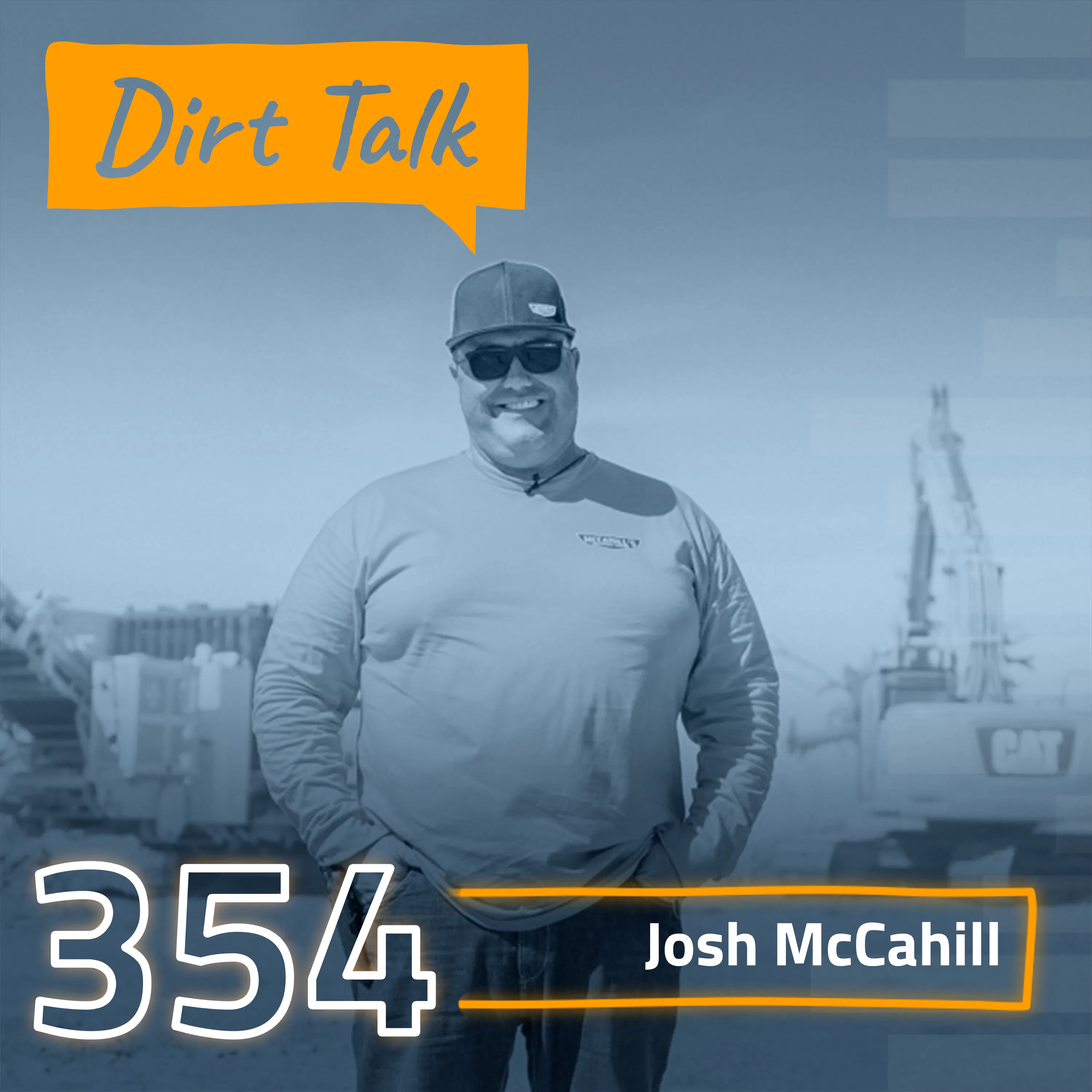
Loading summary
Transcript1,198 lines
- [00:00]
A
Is corn becoming more popular out here? Has it always been out here?
- [00:03]
B
It's always been out here.
- [00:04]
A
I feel like I didn't. I. Today was the first time I'd seen it out here.
- [00:07]
B
Oh yeah. They grew up in here.
- [00:08]
A
Really?
- [00:09]
B
Dairies. A lot of dairies out here that have to grow corn. Alfalfa.
- [00:12]
A
Yeah.
- [00:14]
B
It's becoming more popular because you know what? It's not that expensive to farm well.
- [00:18]
A
And corn. Corn's becoming so much better. Like it's so much more dense than it was even 20 years ago. It's crazy how much they've engineered corn.
- [00:28]
B
Right?
- [00:28]
A
That's probably one of the most engineered plants ever.
- [00:30]
B
I would agree.
- [00:31]
A
Yeah. Well, just, just the density. I mean it's. It's like they, they you in the movies, you know how you could run through a cornfield? You can't run through a cornfield anymore. Good luck. Like maybe down the rows but across the corner. Yeah, good luck. Like there's no way you're running through that. It's so dense now.
- [00:49]
B
You used to have. People would run into cornfields from us when I was in the law enforcement days.
- [00:55]
A
Oh.
- [00:56]
B
And it's like running through a cornfield. People don't know if you run through long sleeves on. It's like a thousand paper cuts on.
- [01:02]
A
Your arms cut up.
- [01:03]
B
Oh, it's horrible. They would just come back out a lot of times be like, I'm sorry. You know.
- [01:11]
A
It'S, it's, it's. But you see it in the movies all the time. Like the old movies. You probably think it's a good idea.
- [01:17]
B
No, it's not.
- [01:29]
A
The fire stuff. They just call you.
- [01:32]
B
Yeah. So they call. We're on the list, right?
- [01:34]
A
We're on the call out list.
- [01:36]
B
And when there's a fire somewhere, normally it goes by closest resource until it gets to where they have a plan.
- [01:45]
A
Need.
- [01:46]
B
Okay. And after that they still go to closest resource, but they include some disabled vet people and other stuff in there. Yeah, they'll go ahead of us and then if they run out of them, they'll call us to go after that.
- [01:58]
A
Yeah, we spent time with those guys month ago on April. Yeah, they're just, they're as cool as it gets. Yeah, those guys do some crazy and it's. It's pretty wild. The dozers like Cal Fire has their spec, but then every other fire agency has their spec.
- [02:14]
B
Right.
- [02:14]
A
Like there's no two that are the same. Like the Cal Fire fives. Those are the only ones that are consistent.
- [02:18]
B
Right.
- [02:19]
A
All the other ones are different.
- [02:20]
B
Right.
- [02:21]
A
It's. And it's fun seeing them all lined up and seeing all the differences. And even like Orange county, they got a new A7.
- [02:29]
B
Right. I saw that. I saw that.
- [02:30]
A
That's cool. Yeah. And they just like they had a six that they got. And then they're like based on what they learned with the six, they made some adjustments to the seven and it's just, it's like you're. I don't know, it's kind of like what you guys do. Like with this loader, for example, like you've just run enough of them. You build it out right how you think it should be and then you break stuff. Right. Then you're like, well, I need to add this, this, this. And you have like every generation is a little bit different than the last.
- [03:00]
B
Exactly. They're all improved off of everything. The first one is. There's so much improvements now. Yeah, we've done. Yeah, it's hardly recognizable, you know.
- [03:08]
A
Yeah. But you've basically gone that loader like you've built your own spec. Yeah, essentially I have. Which is pretty cool.
- [03:14]
B
I have cat. Cat doesn't know what to do with me. Like they just send me the parts and we put them on.
- [03:19]
A
Yeah, yeah, yeah.
- [03:20]
B
They're like, okay, you want a waste handler and a forest don't know how to do that.
- [03:24]
A
Yeah.
- [03:25]
B
So we'll build a waste handler and then we'll give you the forestry stuff.
- [03:28]
A
So the base machine's a waste handler?
- [03:29]
B
The base machine's a waste handler. Yeah.
- [03:31]
A
Cuz it has all the additional guarding on the bottom.
- [03:33]
B
The heavy guarding. Yeah. And forest machines typically won't have that heavy guarding where a waste handler has all that stuff for trash and dust and the, the turbine pre cleaner and all the, all the stuff that they need.
- [03:44]
A
Okay. And you just add on from there.
- [03:47]
B
We just add on. We put more guards on it, more lights. Yeah. And just heavy duty it up. Take the fenders off. This one has the fender still on it. We. That's the first thing we do is.
- [03:56]
A
Take the fenders off because you'll just mango mother.
- [03:59]
B
Yeah, maybe, maybe 30 minutes and they'll be, they'll be done.
- [04:04]
A
They. That's what those guys were on their new seven. They had like on the new Dozers they have that, that, that like hand rail kind of coming off the track a little bit.
- [04:15]
B
Right.
- [04:16]
A
You know that.
- [04:16]
B
Right.
- [04:18]
A
And they're looking at, they're like, yeah, this will get ripped off the first fire. But we're just going to keep it on for now. It's just a different environment.
- [04:26]
B
Yeah.
- [04:26]
A
The machine is going to get abused.
- [04:29]
B
Yep.
- [04:30]
A
The trash stuff, too, just gets destroyed.
- [04:32]
B
Oh, the trash stuff is horrible. Yeah, yeah. It's just an abrasive environment for it, you know?
- [04:37]
A
Yeah. That and steel mills also obliterate equipment.
- [04:42]
B
I can imagine with the heat.
- [04:43]
A
Just destroy. Oh, yeah, yeah, yeah. But it's pretty cool. Like, they're. We saw some new steel mill 988s and all of, like, the hydraulic hoses are stainless steel braided.
- [04:56]
B
But that's expensive.
- [04:57]
A
It's really expensive. But. But you have to, or else it'll just melt. Yeah, yeah, it'll just melt the hose.
- [05:04]
B
Wow. It's crazy.
- [05:06]
A
Yeah, it's. So the fire stuff you've been doing for a few years now, huh?
- [05:11]
B
I've been signed up for two years. Last year was our first year really running on fires, and we got our feet right to the fire. I mean, we were.
- [05:18]
A
Yeah.
- [05:18]
B
You know, there was a fire here locally that we went to. We were on for a week, and then we went up to Chico on that fire and we ran there for two weeks and we lost the truck and trailer on that fire.
- [05:30]
A
I forgot about that. Yeah, yeah.
- [05:32]
B
And then. So we brought another truck and trailer up and stayed on the fire for another week, and then it blew up pretty bad. And I think I'd had enough. I said, I'm. I'm de mobing. I'm leaving.
- [05:42]
A
Yeah, the.
- [05:43]
B
It was so big a fire. It was like I. I didn't need to be there anymore. I've been involved in incidents where things were mismanaged, and I could see this one starting to go that direction. And I said, I'm. I'm done.
- [05:54]
A
Do they just tell you what to do? You just kind of show up and.
- [05:57]
B
Yeah, what can I do? You. Yeah, you go to the briefing in the morning. You're assigned to a division or a group of people Right. In a certain area of the fire. And that can be changed on the daily basis. So that's why you have a truck and trailer with your dozer. You go there, you talk about it in the morning. This is what we're going to do. We're going to cut a line from here to here, and we're going to scout this line. We want to improve this. And basically, you have a goal for the day, a leader's intent, and that's what they do. They have a. Typically a dozer boss assigned with you.
- [06:26]
A
Yeah.
- [06:26]
B
And so you just kind of follow his lead. What do you want him. What does he want you to do. And. Well, sometimes it'll be cutting a pad for a water tank for a water balloon so they can. Water trucks come back up to it or clearing out. Like up in Chico, we cleared out huge pine trees, and there was stuff that we couldn't even. A D6 wouldn't even touch. I mean, sure, you know, they had a D8 in there, just mowing them down.
- [06:48]
A
Yeah.
- [06:49]
B
So it was. It was cool. It was. It was a different experience, you know?
- [06:53]
A
Yeah, they. That's the stuff I want to see, because they were. We were down in San Diego, and they're like, oh, no, this is nothing. You just kind of blow through it. Whereas they're, like, up north. I mean, you are just slamming trees down The.
- [07:05]
B
The northern fires, though, that's the ones that. Those are. Those are the death fires.
- [07:08]
A
They can move fast.
- [07:09]
B
That's what they call those. Well, they call the la. The death fires because of how quickly they spread.
- [07:14]
A
Yeah.
- [07:14]
B
But up north, when that fire goes, like, when it gets hot and burns, it's like. Like a nuclear bomb. I mean, it's amazing to see it. And, like. So the last day I was there, Last day I was there, I was dozing, like, deep in the forest, way out there somewhere with. I was with another guy, and he didn't really know what he was doing, so I was kind of way ahead of him, pushing trees, and I was just slamming trees down.
- [07:34]
A
And while you're in like a six and my six.
- [07:36]
B
Six R. Yeah. And. And so I hadn't seen my dozer boss for probably four or five hours. But I'm just. I know what I needed to do. I was improving the line, and I'm just hitting trees and going. And I. I hear something. I look out of the corner of my eye, and I see him running up to me with his radio, and he's waving his radio in his hand, and he's like, we have to go now. And I'm like, what do you mean? He's like, the fire is almost on top of us. We have to go now. So I spun that dozer around in third gear, and I was tracking out of the forest as hot as I could go. And I mean, it was. It was right on top of me. That fire was roaring, so.
- [08:12]
A
But. But it can. It can kind of sneak up on you. Like, you don't even. It just because you're in the forest.
- [08:17]
B
It just blew up. Like, it started blowing up below us. So we were above it.
- [08:21]
A
Okay.
- [08:21]
B
And the fire was down in a canyon. It had been kind of going and it started to kick up a little bit. And then I think a Marin county dozer got burned over below us.
- [08:29]
A
Wow.
- [08:30]
B
And then it just started running. And then when that thing ran, I mean, it was like. It was amazing. I never had experienced something like that. I mean, I've been law enforcement and been scary things. And I'm telling you, I was scared. Like, I was tracking out on that D6 as fast as I could go. And I was like, man, just get me out of here.
- [08:45]
A
You know, that's wild.
- [08:46]
B
And the fire to hear the roar is the weirdest. You'll never experience that.
- [08:50]
A
You know, you can hear it.
- [08:52]
B
You can hear it. It. It's just a roar and it's weird.
- [08:55]
A
Whoa. Is that how your truck and trailer got burned over? It just changed so faster?
- [09:01]
B
No, my truck and trailer got burned over because we were in. In there. We. They. When they brought us in there, the or one of the commander. One of the. They call the guy the division. Right. So he's in. In charge of a certain area or length of what their fire is.
- [09:15]
A
Yeah, he.
- [09:16]
B
He was. Wanted us to go down into a spot. We told him no, we didn't want to go in there. That it was. There was too tight. Those brushy. And we didn't see why we wouldn't just drop and track our dozers down there. Said, no, you guys need to go down in there. They threatened us with getting kicked off the fire.
- [09:31]
A
Oh, wow.
- [09:32]
B
So we took our trucks in there. We improved a safety area for the trucks when parked. There was three trucks and a dozer parked there. We went to work. They started their back burning operations. It was. And this is. But we probably had been parked there for a day or two. And then we were up working above on the fire, doing lines and stuff like that. At 4 in the morning, one of the fire guys come to my operator and said, hey, your truck burned up, by the way, last night. And didn't tell us to move it. But several times we had asked. We said, hey, look, this is a bad spot. It's steep, the road's narrow. We need to get our trucks out of here and park them where all the other trucks were at. Right. There's three trucks. Why does it make sense to have three semis and a low bed when you know the fire's coming up?
- [10:12]
A
Yeah.
- [10:12]
B
You know. And they said, nope, you guys want to leave? You're going to leave the fire.
- [10:16]
A
Wow.
- [10:17]
B
So we stayed and that's what happened. We lost the truck and trailer. So in that experience has probably been the business wise for me. One of the hardest things I've had to handle because I had to claim insurance on it.
- [10:29]
A
Yeah, you have to claim insurance on it, but insurance doesn't care that you don't have a truck and trailer currently.
- [10:34]
B
Insurance wasn't real excited to know that I was out on a fire.
- [10:38]
A
Oh, that would be. That would be a pickle too.
- [10:40]
B
In California. Yeah.
- [10:42]
A
Yeah. That would.
- [10:43]
B
Fire and insurance in California. If you mentioned fire and insurance, they don't get very excited about that.
- [10:48]
A
Yeah, they're struggling these days.
- [10:50]
B
Nationwide is not on my side.
- [10:55]
A
But you ended up getting a new truck and trailer out of it.
- [10:57]
B
I did. I bought a new truck. A new truck and a new trailer.
- [11:00]
A
What you get truck wise?
- [11:01]
B
I got another same exact truck that I had.
- [11:03]
A
Okay.
- [11:03]
B
Kenworth T800 heavy haul.
- [11:05]
A
Nice.
- [11:06]
B
And the trailer I changed, the old one was a Coad. I went to a Murray this time. I like the Murray a little bit better. I had made friends with the owner of Hogan Manufacturing who now owns Murray. And I kind of talked to him and told him what I wanted and I kind of really even customized it more.
- [11:22]
A
Nice.
- [11:22]
B
So I. I like that trailer. It's a good trailer.
- [11:25]
A
And you have multiple trucks and trailers now?
- [11:29]
B
Now I have 10 trucks and 15 trailers.
- [11:31]
A
Woof. So you're moving not just your gear, but you're moving everybody else's as well.
- [11:36]
B
Whoever calls me on the phone will move. Yeah.
- [11:38]
A
And I mean, up until not too recently, you were having other people move your stuff.
- [11:44]
B
So the company that I bought out was moving my big heavy equipment.
- [11:47]
A
Okay.
- [11:48]
B
Grinders. Yeah. The. So he was doing the nine axle.
- [11:51]
A
Yeah.
- [11:52]
B
The heavy. Anything over, you know, £80,000 is what he was hauling for me.
- [11:56]
A
Okay.
- [11:56]
B
And I was driving down the road one day and. And he was supposed to sell out to another company. And we thought that was a done deal. And I was going to just go buy a bigger trailer and just move my own stuff on the bigger stuff myself. I was already in the works to do that. And he called me up one day and he said, hey, the deal he had, but somebody else didn't go through. And he said, if you want to make a deal, I'll offer this business to you. And. And this is the price. And I said, that's agreeable to me. And we met and the lawyers hashed it out for a couple weeks and nice became mine.
- [12:28]
A
Wow. Yeah. You move stuff a lot, don't you?
- [12:32]
B
All the time.
- [12:33]
A
Yeah. Yeah. So that's pretty essential to the Business essential.
- [12:37]
B
We moved five pieces of equipment today.
- [12:40]
A
Yeah. And this is some of your gears. I mean, you get. You said you brought the D10 back today. Like you're moving tens around all the pretty regularly.
- [12:48]
B
Like.
- [12:48]
A
Yeah.
- [12:49]
B
People move skid steers.
- [12:50]
A
Yeah. It is pretty wild. Yeah, but that's. I know people are always on the Internet asking, why don't you have an 11? That's also why you don't have an 11. Right. Because just.
- [13:01]
B
Yeah, they're too hard to move.
- [13:02]
A
Yeah, yeah, yeah, yeah, yeah.
- [13:03]
B
It's just too, too far overweight.
- [13:06]
A
Yeah. How far overweight are they? It's. It's a huge leap from a 10 to 11, isn't it?
- [13:10]
B
It is.
- [13:11]
A
Weight wise, it is.
- [13:12]
B
Like my D10s are 100. Like, they sit there on that D10. That deton sitting right there is around 155,000. A D11 without the blade, like with the ripper shank in it, you're probably closer to 1 9,195.
- [13:26]
A
Yeah.
- [13:27]
B
And if it's a carry dozer D11, like a CD D11, RCD 205. 210.
- [13:34]
A
So to haul it around, what do you need around here? More axles. There's a bigger trail.
- [13:39]
B
You need to strip it down, so you need to take.
- [13:41]
A
Pull the ripper box off.
- [13:42]
B
Pull the ripper box. Yeah, yeah. It needs to be stripped down. If they strip them down to get the weight off, you can move them. They're just. You just need to be below roughly 165,000. That's kind of your, your weight limit.
- [13:55]
A
But the 10, you can just track on the trailer and go.
- [13:57]
B
Yeah, okay. I can just track it on. I could make weight. All the axes are good. Yeah. You know, it's in a purple weight category, but it's, it's legal or we're permitted to move that, you know.
- [14:06]
A
Okay. That makes a lot more sense.
- [14:08]
B
Yeah.
- [14:08]
A
Makes it a lot more economical.
- [14:09]
B
Well, yeah. And you're not breaking people's bridges, you know.
- [14:13]
A
Yeah, yeah, yeah, yeah, yeah, yeah.
- [14:14]
B
That gets real expensive real quick when you cross a bridge that's not a purple weight bridge. And, or, and you're way overweight, you know.
- [14:21]
A
Well, and it's. There's so much out here with all the, the canals, the aquifers and everything. And then even just these roads, some of them are a little.
- [14:29]
B
Yeah.
- [14:29]
A
I don't know, some of them a little hairy.
- [14:31]
B
And then you get tall. A D11 is 16. Two tall.
- [14:34]
A
Sure.
- [14:35]
B
D10 is only 15. Three on the trailer.
- [14:37]
A
Okay. So how far from here do you work typically? Like an hour?
- [14:41]
B
Yeah. Hours, sometimes 30 minutes. I mean, depends on where we go. We don't typically go real far anymore. Seems like there's a lot of grinding companies that have popped up and rivers and so they kind of stay within their area, which makes sense because you go, the further you go, the more problems you have and sure. The more money you spend to fix those problems.
- [14:59]
A
You know, it's wild though. I for, I forget every time I come out here, I'm shocked with how much ag there is.
- [15:05]
B
Yeah.
- [15:05]
A
Like we just came from San Luis Obispo over the, over the mountains there. But then you drop into the valley and it's just as far as you can drive. Hours.
- [15:13]
B
Yeah.
- [15:14]
A
And it's just almonds and citrus.
- [15:16]
B
Citrus, almonds.
- [15:17]
A
Stone fruit and grapes.
- [15:19]
B
In Kettleman City. There is stone fruit out there.
- [15:21]
A
What is stone fruit for? People eat it.
- [15:23]
B
Apricots, plums.
- [15:25]
A
Oh, oh, so fruit because of the pit? Yeah, yeah.
- [15:28]
B
They call it stone fruit. Yeah. So we call it stone fruit because it's like peaches, plums, nectarines.
- [15:33]
A
Yeah.
- [15:34]
B
And the grower right as you came over the hill, right. Just north of that, I think he has a couple thousand acres in there and it's nice because it's warmer out in Kettleman City. And so he gets to pick his fruit two to three weeks earlier than anyone else in the valley. So really the market early, it gets the early market and it makes more money for them.
- [15:55]
A
I was meaning to buy some fruit on the way here, I just didn't get around to it.
- [15:59]
B
But their little fruit stand on the corner down there is the best fruit around.
- [16:02]
A
I know. I was gonna ask you. Yeah, I'm on our way out. I need to pick up some fruit. It is the best fruit out here.
- [16:06]
B
It is the best. Yeah, yeah.
- [16:10]
A
So the grinding thing, if you're looking for another industry event that is a snooze fest, this is definitely not for you. But if you're leader looking to elevate yourself, your team, looking for like minded individuals that are hungry, then look no further than the Ariat Dirt World Summit, November 5th through the 7th in Dallas, Texas. In our third year, we'll have about 1500 hungry industry leaders from about 500 companies looking to learn, grow, teach. It's going to be fantastic. We also have a world class lineup. We've got Jesse Cole from the Savannah Bananas, James Clear, Atomic Habits, Kim Scott, Radical Candor, Mark Miller, Chick fil a leadership, Tim Grover, who is Michael Jordan's trainer. You will not hear from a lineup like this anywhere else. So check out details now. Dirtworld.com you can use code AARON10 for 10% off any registrations and we'll see you November 5th through the 7th in Dallas, Texas. I feel like when I met you originally, you weren't doing any grinding.
- [17:20]
B
Probably not. I was probably burning then.
- [17:22]
A
I think you're burning everything.
- [17:24]
B
Burning. Yeah.
- [17:24]
A
How many grinders do you have now?
- [17:26]
B
3.
- [17:27]
A
And they're just always going, I take it.
- [17:29]
B
Always going.
- [17:30]
A
So the. The reason for the grinding is air quality.
- [17:36]
B
Air quality, yeah, because open burning, they've decided, and it's probably right, that it just pollutes the air too much and causes too many problems for.
- [17:44]
A
Yeah.
- [17:44]
B
People with asthma or other problems. Breathing problems. And it does.
- [17:48]
A
Well, it does. And it makes sense too, because it really is a valley. Like you have the Sierra Nevadas on one side and then whatever that range. Yeah, the coastal range. And so it. Like, even when you're. Again, you're going into the valley, you can just see the dust just. It's just dense. Right in this valley. So I believe everybody's burning their crops.
- [18:08]
B
Can't do it. It just. It's cleaner. And we've noticed the air has been a lot cleaner since we open burning. I remember open burning. Then it would just be. Well, take it. You have a forest fire going when the forest fires are going. It is. This is smoke covered. It's like a fog out here.
- [18:23]
A
It is bad.
- [18:24]
B
People don't like that. It's not good for breathing. And we have enough forest fires in California. We don't need to add any more fires to it. So, yeah, so they opened up or they wanted us to start grinding and that's kind of where we went with it. And that's what we've been doing.
- [18:39]
A
Are they all Pearson grinders?
- [18:41]
B
I have two Petersons and one Diamond Z. Diamond Z. The first one I bought is a. Was a Diamond Z.
- [18:47]
A
Okay. And then the newest one was the one we saw.
- [18:50]
B
Yeah, the newest one is a 6710. They call it a Peterson or it would be Aztec now.
- [18:55]
A
What? Yeah, yeah, Aztec.
- [18:57]
B
Aztec's the parent company.
- [18:58]
A
Yeah.
- [18:59]
B
And I think they actually, I think they. I don't even think they call them a Peterson.
- [19:03]
A
No, they're not all Aztec. It's all Aztec. What size engine does that one have? Doesn't a cat.
- [19:10]
B
Both The Petersons have C32 engine.
- [19:12]
A
C32. So same engine, just D11.
- [19:14]
B
D11 engine. Yeah.
- [19:15]
A
Yeah. It's a monster machine.
- [19:17]
B
But those engines and the grinders. A D11 is roughly, I think 800 horsepower. Maybe 900.
- [19:23]
A
Yeah.
- [19:24]
B
And the grinders are 1200. Yeah. So they're turned up a little more than a D11.
- [19:29]
A
Those grinders are extremely impressive.
- [19:33]
B
Yeah.
- [19:33]
A
I mean, it can chew through whatever you want to shoot.
- [19:36]
B
Whatever you want to chew through.
- [19:38]
A
Yeah. They do try to tear themselves apart though.
- [19:41]
B
They do, if you may. But if you maintain them, they don't. There's a very secret the way of maintaining those. I don't know so much secret.
- [19:49]
A
Yeah.
- [19:49]
B
Keeping them balanced.
- [19:50]
A
Okay.
- [19:51]
B
People don't think about the balance of the machine. And if you let it go out of balance, the mill goes out of balance. Right. And say it wears funny to one side or a bits off or something. Okay.
- [20:01]
A
Yeah.
- [20:01]
B
Every six months I have somebody come and balance my mills.
- [20:04]
A
Interesting.
- [20:05]
B
Because in the last time I had one out of balance and I could see it started to shake stuff off. Right. Things were breaking. And you're like, why is this happening? Well, it was. Because it was out of balance. As soon as I balanced my mill the next day, I gained two more acres of production because the mill ran faster, because it was balanced better.
- [20:24]
A
Wow. Is it. So it's basically just a giant spinning drum.
- [20:28]
B
It is.
- [20:29]
A
With like little knobs that hang off it. Teeth. Okay. Teeth on it.
- [20:33]
B
Big teeth. Yeah. And so on the Aztecs, those. The teeth swing up.
- [20:39]
A
Yeah, swing up.
- [20:40]
B
And they take the wood between a crush roller and then it goes into an anvil. And then it goes into a screen which screens the wood and basically sizes the wood.
- [20:48]
A
Okay.
- [20:49]
B
From there it drops through the screen to a belt and shoots it out.
- [20:52]
A
And if it's too big, does it go back through?
- [20:54]
B
Yes.
- [20:55]
A
Okay.
- [20:55]
B
It will roll it back around. It'll roll it back around. And then. And then regrind till it gets to size.
- [21:00]
A
Yeah. I feel like I remember what the drum looks like, but I don't. I've been around with it. I do have a picture with. Yeah, I've just been around a few things. Crushers and like what? The other day we went to a car shredder.
- [21:14]
B
Okay.
- [21:14]
A
9,000 horsepower car shredder. And so as fast as they can feed the cars in, it's eating them. Like, I mean, like two seconds per car just chomping.
- [21:23]
B
I don't even know what. 9,000 horsepower. I can't even imagine that in my head.
- [21:27]
A
Well, it's like a five story building. So it's just a giant building. But then. And you can't. You can't really see the shredding process. You can just see it on a infrared camera. Oh, wow. So you can see the. The car just slide right into the drum and then it hits the drum and it just goes right through. And you just see hot bits flying everywhere. Yeah. Wow. It's surreal.
- [21:47]
B
That's got to be impressive. I'd love to see that.
- [21:49]
A
It's. It's super impressive. Yeah. Yeah. And it just eats all night. They bring in cars all day, they pile them up, eats all night, all the way down through the pile, and then next day, stack it all up again. And then it spits out like all the ferrous steel into one pile. And then everything else goes into a whole other facility that they. They separate everything out.
- [22:09]
B
Wow.
- [22:09]
A
Like, because modern day cars, it's not a lot of them. Not as much metal anymore.
- [22:15]
B
A lot of plastic.
- [22:16]
A
Yeah. The percentage of metal has dropped, so they have to get rid of all the plastic and like it just. But they just send the whole car in, like engine block, seats, dashboard, everything.
- [22:25]
B
There's nothing that'll stop that grinder, huh? 9,000 horsepower. I don't know what you'd have to stop that with.
- [22:31]
A
No, they don't feed the big stuff into it because they don't really need to. It's like they don't need to wear it excessively.
- [22:38]
B
Right.
- [22:38]
A
They have a. What is it? I think a 2,000 ton shear.
- [22:46]
B
Yeah.
- [22:46]
A
For the bigger stuff. Yeah, 2,000 ton. Just chopping, chopping, chopping. And then for the really thick stuff, I mean there's like. Out there, there was like 6 inch steel from some of this. Yeah. I don't even know where this stuff's from. They've just got guys with torches. Really?
- [23:02]
B
They just torch cut it, huh?
- [23:03]
A
Yeah. That's the only way to. I mean, technically they said you can slice it, but then it just wears the press.
- [23:09]
B
Yeah.
- [23:09]
A
Unnecessarily. So it's just more cost effective to cut through with the torch. But some of this stuff out of like the power plants and stuff. I mean it is like the steel and it's wild how thick it is. Or like some military stuff is pretty great.
- [23:22]
B
I'm sure they have some big heavy.
- [23:23]
A
Plate, you know, really heavy stuff so that the grinders are always going. You are grinding up any tree. You don't do the. Do you do vineyards too, through the grinder?
- [23:36]
B
Yeah, we're gonna do. A matter of fact, we're gonna do a vineyard tomorrow where one of the grinders is set up to separate the wire from the vineyard.
- [23:42]
A
I was going to say what is the wire? Yeah, how does the wire.
- [23:45]
B
So as long as they cut the wire about 4ft, it's long enough to where it doesn't wrap in the. Into the mill, right?
- [23:51]
A
Yeah.
- [23:51]
B
The wire goes through. Wire goes through with the vineyard and goes right down, drops down to the belt. And then we have a cross belt magnet on the end of it, and it shoots that wire out to the side, and it gets pretty big. It's about 98 of the wire.
- [24:04]
A
So you. You have to. When do you cut the wire?
- [24:09]
B
Before that? We dig it out. So they take the. Basically, they cut the wire in. The farmer cuts the wire, we remove the vines, we stack them up.
- [24:18]
A
So they'll just like, walk through there by hand?
- [24:19]
B
Yeah.
- [24:20]
A
Just wire cutters, like bowl cutters.
- [24:22]
B
Yep.
- [24:22]
A
And chop it up.
- [24:24]
B
Yeah. And then we separate it out into a bin and then we send it to recycling.
- [24:28]
A
Interesting.
- [24:29]
B
Yeah.
- [24:29]
A
Does it end up being quite a bit.
- [24:31]
B
Oh, yeah. And it will like embedded wire that's grown into the vine. It'll. You'll see a little ball of wood with the wire because it actually separates. It picks up the wire with the wood in it.
- [24:41]
A
Wow. So is all of the removal stuff farmers are doing, is it a lot of changing out of crops or is there still the water issue?
- [24:50]
B
Right now we have water issues and price issues now. So a lot of the crops are like, almonds are not worth, you know, what they were. So a lot of them are owned. Some of them we're doing right now are owned by banks. And so banks are not wanting to farm because the farm's worth more than with bare land where you can put something on it than it is with the trees. Maybe like out on the west side. Solar panels, you know, or something out there.
- [25:14]
A
I saw we passed by a lot of warehouses, too.
- [25:16]
B
Yeah.
- [25:17]
A
What is it? Visalia or. Yeah, yeah, a lot of warehouses outside of. Outside of that town.
- [25:23]
B
And so their. Their farming Ammons are not doing as good as they used to do. They're hoping that the price comes back up. There was. What happened. It was like kind of a gold rush almost, Right?
- [25:32]
A
Yeah.
- [25:32]
B
The gold rush was to get Ammons in because they were $3 a pound or $4 a pound. Well, everybody planted them. Everybody. I mean, even the little farmers. The guy with 10 acres was like, I'm planting Ammons. This is my retirement. Well, there's a supply and demand. So too much supply and not enough demand, the price dropped now to where it's hard to farm them.
- [25:55]
A
And so how long do they take to grow to produce.
- [25:59]
B
Ammons will produce in about three years.
- [26:01]
A
That's quick.
- [26:02]
B
Yeah. Not. I mean, not a full production, but.
- [26:04]
A
Yeah.
- [26:04]
B
I mean, you get a pretty good harvest at three years, you know.
- [26:07]
A
And how many years will the tree be?
- [26:08]
B
Around 25, roughly.
- [26:10]
A
Wow. Okay.
- [26:12]
B
Yeah.
- [26:12]
A
So you're removing things for a few reasons. One, the land is just worth more without anything on it sometimes. Or there's no water. There's no water because the water. Some farmers, they'll intentionally make this area without anything, or they'll just, like, stop watering a field to then put water elsewhere.
- [26:35]
B
Right.
- [26:35]
A
Is that right?
- [26:36]
B
So they're given an allocation. It's even like, where we're at here.
- [26:39]
A
Yeah.
- [26:39]
B
I. I bought 30 acres of water. I'm not going to use 30 acres of water because I don't have anything planted here. But if I want to, somebody else who's farming here, who needs water wants to buy it from me, I can now sell them the water.
- [26:54]
A
Interesting.
- [26:55]
B
And I can sell it for what I paid for it. I could sell. I could mark it up if they want to pay more. I mean, it's. It's almost a water business.
- [27:01]
A
Where does all the water come from?
- [27:02]
B
Here. The water here comes from the Frying Current Canal. From here, it goes into Orange Cove Irrigation District.
- [27:08]
A
Okay.
- [27:09]
B
And they have basically infrastructure. And there's a little spigot out there where I could plug into it and open up and I can have water any time of the year. And they just have to pay for it.
- [27:19]
A
Yeah. They just track how much you take.
- [27:20]
B
Yep. Like any meter on the water. Yep.
- [27:22]
A
Does it come from the Sierra Nevadas?
- [27:24]
B
Yes.
- [27:24]
A
Okay.
- [27:25]
B
Yeah. I think Frank Cream comes from out of the Militant Lake, I think. Yeah.
- [27:31]
A
Okay.
- [27:32]
B
No, no, it comes. Where does it come from? It's a good question.
- [27:38]
A
Somewhere.
- [27:39]
B
Somewhere.
- [27:39]
A
But the water thing is still contentious, isn't it?
- [27:42]
B
Yeah, yeah. It always will be. Because it's a. It's a. It's a business. Right. Water is now a business of making money. So anytime you have a business and making money and you have government involved in it, it's going to be contentious because they're going to control it. They're going to say, you get so much. You get so much, and you get so much. Fortunately, the past couple years, we've had good rain. So you've heard about the Tulare Lake bed out here?
- [28:08]
A
Yes.
- [28:08]
B
We had so much rain that one year that a lake that had never been here for 100 years opened up. Yeah, well, that was all farmland. That was all farmland that. That Lake is now on. I don't. I haven't been out there to see if the lake's still there, but I know, I think it still is a little part of it.
- [28:23]
A
Interesting.
- [28:24]
B
But we've had a lot of water, so we have a lot of water to give out. The years that we don't have a lot of water are the years where they're like, hey, you don't need to pump so much. You need to, you know, use surface water or not. Not use water.
- [28:37]
A
So yeah, I. So it just becomes too expensive. And then you don't have a choice. You just have to not water if.
- [28:45]
B
They'Re not water or crops, or take something out and say, okay, you're allocated for 30 acres, but you don't have. Now they only give you 15 acres. Well, you have 30 acres to farm. You need to take out 15 acres so you can farm the 15.
- [28:58]
A
What's most. What's most water intensive?
- [29:02]
B
Probably stone fruit price.
- [29:04]
A
Stone fruit? Yeah.
- [29:05]
B
Yeah. I mean, it's pretty water intensive because the peaches have a lot of water in them. It's not like an almond where there's really not a lot of water to produce. You think about how much water it takes to make. Or citrus too. How much water does it take to make that piece of fruit?
- [29:19]
A
Sure. I mean, a lot, you know, so it is interesting. Yeah. You don't. This is all stuff you don't think about. No, you just go to the grocery store and people.
- [29:27]
B
Yeah, they just go to the store and buy the beach.
- [29:28]
A
Yeah. But that, that's such. That's one of the most fascinating things about the California Central Valley. It's like outside of this world, it's totally forgotten about.
- [29:37]
B
Oh yeah.
- [29:38]
A
Total. Because most people have never been through the Central Valley. Like you're either going. If you go to California, you're going to like San Diego, San Francisco. This is like a completely forgotten about part of the state yet. This is where so much of US agricultural production is. And then up by like Watsonville and that whole area too. All the areas and everything up there, berries.
- [30:00]
B
And then they grow a lot of vegetables and I mean they do a lot of stuff in there.
- [30:04]
A
A lot of stuff like. Yeah, vegetables. And then there's avocados down south on the coast on this. Yeah, it's crazy.
- [30:11]
B
They're trying to do avocados here. They're really trying hard to get them into here. They just haven't. I don't think they've got the process down quite yet. Maybe they might. It's Just the climate. They say the climate is not right for avocados here.
- [30:23]
A
Yeah. So you're taking out some of the stuff that. Because of water and then you're taking out some stuff because sometimes they switch the crop a lot of times because of pricing.
- [30:34]
B
Mostly what they're doing is they're. Yeah, they're switching to another crop or like sometimes they'll push Ammons to do corn or. A lot of my customers, I do a lot, like I say where I'm at in Reedley areas, it's the stone fruit capital of the world. So peaches, plums, nectarines, everything's growing here. Those guys have a crop life of maybe 20 years on the high, sometimes about 15 to 20. And so they have to switch out their crops. They have a plan so they know how much their packing shed will take in that time. Right. So they have normally no more than like 10 acre blocks. Okay. This block is due to come out this year. This year? This year. It's a, it's a 20 year plan. And that's how they farm. It's not just some farmer out there with a tractor. And these guys, they know their business and they know how to. They know that they need to switch out. So then in three years, the packing shed needs this amount of plums because they're going to need it because the other ones are taking out. Yeah, the production's starting to drop. So they know that they, they keep a real good tabs. The guys that are the stone food people, I work for, smartest guys, I think as far as farming go, because they've had a real tough time. They've been through a lot with like labor issues, water issues, and they're still able to make money. And they have their own packing sheds, they have to market their own fruit. I mean, it's not like they're a big conglomerate like the Ammon people are like, you can take the almonds and you can store them. Right. A peach, you can't store that peach very long. You can put it in cold storage, but sure, if it goes a month and it doesn't sell, it's getting dumped on, you know, on somebody's drive road for peach pits. So they can drive on them.
- [32:09]
A
That's a, that's a good point.
- [32:10]
B
Yeah. So they have to market and sell their fruit. And there's a lot of facets to stone fruit of buying a pizza people don't really think about.
- [32:18]
A
I've, I've. Until I came out here, I never thought about it. Yeah, it is kind of like a big game board though.
- [32:24]
B
It is.
- [32:25]
A
I mean, even if you look at this area from. From above, it's just a bunch of squares and you're just moving.
- [32:32]
B
Yeah.
- [32:32]
A
This piece over here, this piece over there so that you. So when it's time to change it over, you come in, rip everything out, shred it, and then they can plant whatever they want next.
- [32:44]
B
They put whatever they want. Yep.
- [32:49]
A
The ripping. Do you always rip or not?
- [32:51]
B
Always depends on what's going back in. If they're going to go back in with like a tree, then. Yes. If they're going to plant corn or something, they probably really don't need to rip very deep because the water's not an issue. Trees, the reason they rip here is because the ground's hard. So the water will go down and it will sit in the root zone and it'll hurt the trees. So they want the water to flush down through the roots. Get through the roots and not sit there and flush down.
- [33:17]
A
Do you have to rip something that's already been ripped?
- [33:19]
B
Oh, I've ripped stuff that I ripped 20 years ago.
- [33:21]
A
Really?
- [33:22]
B
Yeah.
- [33:23]
A
Okay. So it hardens up again.
- [33:24]
B
It does. And it's good to open the ground.
- [33:26]
A
Up and it just stirs up the nutrients too.
- [33:29]
B
Stirs up the nutrients and it. Then when you plant again, you have 20 years of somebody driving a tractor on top of ground.
- [33:36]
A
Yeah.
- [33:36]
B
The ground tends to get compacted there where it's at or the water compacts it. So when you put a new tree in, you have another 20 years, you want to make sure that you don't, you know, take any shortcuts and just rip the ground, break it open, get the nutrients up and then plant new trees.
- [33:51]
A
Yeah. Because it. It's just more cost effective to rip it than to have lower yields or whatever it is.
- [33:56]
B
Right. You say you lost 10% of your crop or 10% production over a 20 year period. The by far that would pay for ripping.
- [34:04]
A
Yeah. Yeah. Is corn becoming more popular out here? Has it always been out here?
- [34:09]
B
It's always been out here.
- [34:10]
A
I feel like I didn't. I. Today was the first time I'd seen it out here.
- [34:13]
B
Oh yeah, they grew corn out here.
- [34:14]
A
Really?
- [34:15]
B
Dairies. A lot of dairies out here that have to grow corn. Alfalfa. Yeah, it's becoming more popular because you know what, it's not that expensive to farm.
- [34:23]
A
Well. And corn. Corn's becoming so much better. Like it's so much more dense than it was even 20 years ago. It's crazy how much They've engineered corn.
- [34:33]
B
Right.
- [34:34]
A
That's probably one of the most engineered plants ever.
- [34:36]
B
I would agree.
- [34:37]
A
Yeah. Well, just, just the density. I mean, it's. It's like they, they in the movies. You know how you could run through a cornfield? You can't run through a cornfield anymore.
- [34:46]
B
Oh, no.
- [34:46]
A
Good luck. Like maybe down the rows, but across the corner. Yeah, good luck. Like, there's no way you're running through that. It's so dense now.
- [34:55]
B
You used to have. People would run into cornfields from us when I was in the law enforcement days. Oh. And it's like running through a cornfield. People don't know. If you run through there without long sleeves on, it's like a thousand paper cuts on your arms. Oh, it's horrible. They would just come back out. A lot of times you're like, I'm sorry. You know.
- [35:17]
A
It'S, it's, it's. But you see it in the movies all the time, like the old movies. You probably think it's a good idea.
- [35:23]
B
No, it's not.
- [35:24]
A
No. Yeah. I didn't know corn was. But I guess it's cattle feed then.
- [35:28]
B
Cattle feed? Yeah. I think a lot of. They do a lot of cattle feed, but I think mostly that's what they're doing or wherever they send it. I even have some guys that are stone fruit growers that take an orchard out. They put corn on top of it for a year to form it, and then they may go back with trees after that just to help break the wood chips and stuff in. It kind of helps the nutrients in the soil.
- [35:46]
A
Well, and corn's a way different cycle. It's just an annual cycle.
- [35:49]
B
Yeah. Just were they 90 days, I think is what it takes.
- [35:52]
A
90 days?
- [35:53]
B
Yeah. From plant to plant to harvest?
- [35:55]
A
I guess so. Yeah.
- [35:56]
B
I don't very long.
- [35:58]
A
No, I. Again, I'm not. I'm not that sophisticated when it comes to corn. I just know when we did our road trip last time I was here, we drove across America and back, like all over America. And the amount of corn in America and soybeans is incredible. Like, you get into corn in North Dakota and you follow it all the way to New York.
- [36:25]
B
Wow.
- [36:25]
A
It's crazy. Like the whole middle of the United States is corn or soybeans. Yeah, that's it. And sunflowers.
- [36:35]
B
Interesting.
- [36:36]
A
Like all of North Dakota. Sunflowers, huh?
- [36:39]
B
Yeah, I. I mean, I've been. I haven't been to North Dakota, South Dakota, but never been east of there. Driving. Right. I need to go drive that Sometime.
- [36:47]
A
It'S not the most thrilling, but it, the whole place is a farm. Like the whole state is farmed. It seems like it's either that or oil.
- [36:53]
B
Yeah.
- [36:54]
A
That's all it's going on there.
- [36:55]
B
Yeah.
- [36:56]
A
And the North Dakota people will say there's a lot more going on, but to the untrained eye, if you just draw, I don't know what interstate, maybe I 80 I 90.
- [37:02]
B
I 80.
- [37:03]
A
Yeah. All the way through there is just corn and soybeans. So you. The process for people that don't know it is like say you're taking out 10 acres of orange trees, citrus. These are pretty good sized trees at this point.
- [37:25]
B
Yeah.
- [37:25]
A
If they've been there for 20 years or whatever it is.
- [37:27]
B
Well, citrus. They may have been there for 60.
- [37:29]
A
Wow.
- [37:29]
B
Maybe been there for 100. I pulled some hundred year old citrus out.
- [37:32]
A
Really?
- [37:33]
B
Yeah.
- [37:33]
A
What's the biggest.
- [37:34]
B
Longer. A longer life than. Than another. Something else.
- [37:38]
A
But like citrus gets pretty big. Pecan.
- [37:41]
B
Pecans. I don't know much about pecans.
- [37:44]
A
Are there. Are there. They're not out. Was it walnuts out here?
- [37:46]
B
Yeah.
- [37:47]
A
What's the other nut?
- [37:48]
B
Walnuts and Ammons.
- [37:49]
A
Okay. But the walnut trees are big.
- [37:51]
B
People say Ammon meat. I say Ammon. People say almond with the L. Yeah, I'll call them Ammon.
- [37:56]
A
Yeah, yeah, yeah.
- [37:58]
B
Walnuts. There's not a lot of pecans. I know there's one block across the street from me and those are the only ones that I really know. And I. I talked to a guy the other day about them and he said they're really not very good out here in California. So I don't know what people farm pecans, but there's not a lot.
- [38:12]
A
But the walnut. The walnut trees are big.
- [38:14]
B
They're big.
- [38:15]
A
And some of these citrus trees are big.
- [38:16]
B
Some of the citrus trees are real big. Yeah.
- [38:18]
A
And how do you typically remove them?
- [38:21]
B
With the excavator. Walnut. A walnut tree. We break the tree down. We'll break the limbs off with the excavator and then we'll take the stump out and we'll set the stump aside. Sometimes the stump has to be split before it can even get through the grinder. It's too big.
- [38:34]
A
How do you split the stump with the excavator?
- [38:36]
B
We just hammer down on it. Yeah.
- [38:38]
A
With the rake.
- [38:38]
B
With the rake, yeah.
- [38:40]
A
And so you. Are they 336s or three 30s?
- [38:43]
B
Three 30s. I have one 336 and I have three 330s.
- [38:48]
A
So they use. I remember we, I think we removed Some of the walnut trees one time. So you take the rake, you whack the limbs off.
- [38:55]
B
Right.
- [38:55]
A
And then you, what do you do? Do you dig on either side to loosen it up a little bit?
- [39:01]
B
Sometimes. Yeah. And dig on the side and push it over. Push it over. Yeah.
- [39:03]
A
And then you, you grow everything up, right.
- [39:06]
B
Put it in a row.
- [39:08]
A
So the excavator ruins everything. Ruins, Piles it up. Yeah, yeah. Crashes the party. And then you use the loaders to pile everything.
- [39:16]
B
Yeah. To bring basically bring the material to the, to the grinder.
- [39:20]
A
Yeah. Because you want to use, you move the grinder around because the grinder has tracks. But you don't want to move around too much.
- [39:27]
B
Right. You don't want to move. It's not, I mean it's not cost efficient to move that much.
- [39:31]
A
Okay, so on like a 10 acre track, how many areas do you or how many piles do you make? Four piles. So like four corners.
- [39:39]
B
Yeah, you could square that into four. Like you would take a 10 acre square block and you would just divide it by basically like the, the car salesman, you know when they come out and they bring the little sheet and they're like, they put the four in it the same, same thing.
- [39:52]
A
So you divide, you divide into four. You knock everything over the excavators and then you pile it up with the loaders and then the grinder comes in and then the excavator feeds the grinder.
- [40:02]
B
Right, the excavator feeds the grinder and.
- [40:05]
A
You leave four giant piles of chips.
- [40:08]
B
Four giant piles of chips, Yep.
- [40:09]
A
And all of that typically stays on the property then.
- [40:12]
B
Mostly yeah, we there for a while. We had co generation plants that would be able to burn that biomass and generate electricity. However they. I, I don't know what happened with them, their business model or something. I, I don't know.
- [40:26]
A
I don't know why they don't do more of that.
- [40:27]
B
I don't know why they don't do more of it. Because they were given. At the time that they closed they were not paying us for the chips at all. So they were getting free material. How do you get free material? And you get paid for the power and you're not able to make it and they just weren't. I think they just. The plant was too old and it cost too much to run.
- [40:45]
A
Yeah. And it's probably California stuff if I have. So they, you leave the piles and then some of the properties. Do you always spread it or do you sometimes just leave the piles?
- [40:59]
B
I, we pretty much spread it. Yeah. It's not good. It could catch fire. It attracts rodents. It's just not good to us.
- [41:06]
A
So then from the pile you put it in. You have those tractors now, don't you? Those fancy spreading.
- [41:10]
B
I do have the spreader.
- [41:11]
A
Yeah, but you can.
- [41:12]
B
You.
- [41:13]
A
You can spread it with just a loader, too.
- [41:15]
B
You can. It doesn't get as consistent, though.
- [41:17]
A
It's a little chunky.
- [41:18]
B
Yeah. It just gets high spots and it's like. Okay. Like on Gold Rush, you see a guy feeding a plant that doesn't have. That doesn't have. What would they call that? The feeder that goes out to the.
- [41:30]
A
Yeah, a belt. Right.
- [41:31]
B
And it. It takes the material and evenly feeds their plant.
- [41:34]
A
Right, sure.
- [41:35]
B
Same process. The guy's trying to feed a plant with a loader. Well, now he has a whole bunch of dirt and not a little bit of dirt. There's no consistency.
- [41:43]
A
Yeah.
- [41:43]
B
And that was the same. Would apply to wood chips. It would be that it's just not consistent. And nobody wants to have a whole lump of wood chips in their ground in one spot and then none somewhere else.
- [41:55]
A
So you. You use those spreader trailers, whatever those are.
- [41:59]
B
I do.
- [42:00]
A
To. So you load them up with the loaders, and then they just drive back and forth.
- [42:05]
B
They just drive back and forth. Y.
- [42:07]
A
And evenly apply the wood chips. Okay.
- [42:10]
B
And that way it's nice and even. So there's not. If the wood chips are real heavy, like a foot of wood chips, and then that's going to be hard for the stuff to grow into. It's gonna be hard to work that on the ground where now Maybe there's a 3/4 of an inch of wood chips. Not even that because they're spread so evenly. So it makes it more viable to break down on the wood chips.
- [42:31]
A
And then you sometimes rip. You don't always rip.
- [42:34]
B
Yeah, not all the time. Just depends on what they're replanting with, if they want to spend the money to rip, you know.
- [42:39]
A
But when you rip, then you mix the wood chips into the ground. We do as you go. So you really leave a blank slate when you're done.
- [42:45]
B
Yep. Ripped.
- [42:46]
A
If it's ripped.
- [42:47]
B
If it's ripped. Yep.
- [42:48]
A
This is all a pretty quick process too, isn't it?
- [42:51]
B
Within about a month, you know, it could happen sometimes two months. You know, it depends on. It depends on what we're doing and how fast they want to go.
- [43:00]
A
Yeah. Did you. You have to let the trees dry out first before you can shred them?
- [43:04]
B
No, you don't have to. It is good to do that. But you don't have to do that.
- [43:07]
A
Okay.
- [43:08]
B
They'll grind wet. They just grind a little stringer when they're wet.
- [43:11]
A
And so it doesn't mix in.
- [43:12]
B
It's not as fine of a wood chip. Yeah.
- [43:14]
A
Okay. You want it nice and dry and fine.
- [43:17]
B
Nice and dry. So it breaks it up and nice and. Yeah. Done.
- [43:20]
A
Does that. Is the wood. Is it. Is. Is it legitimate nutrition for whatever's next or is it just to get rid of it?
- [43:27]
B
Most of the farmers here don't like it. They don't like the. They don't like it because it sucks a lot of nitrogen out of the soil. And plants need nitrogen to grow.
- [43:35]
A
Yeah.
- [43:36]
B
They say at year three or year four, it starts to. It's break down enough to where it. It helps the soil.
- [43:41]
A
Yeah.
- [43:42]
B
But you've got. Who has three or four years to not farm something to put it on. So when they replant they have to add nitrogen in. And it's costly because nitrogen comes from. I don't know what they make it here, maybe, I guess. I don't know.
- [43:58]
A
How do they make hydrogen or nitrogen? I feel like they make it.
- [44:05]
B
But it's a commodity.
- [44:06]
A
Yeah. I want to say the Haber Bosch method, but I could be totally wrong.
- [44:10]
B
People that grow corn use a lot of nitrogen.
- [44:12]
A
Yeah.
- [44:13]
B
If they're growing a lot of corn. Nitrogen is expensive.
- [44:16]
A
Once they figured out how to make nitrogen, that was a big deal with humanity.
- [44:21]
B
Yeah.
- [44:21]
A
Yeah.
- [44:22]
B
I'm growing, you know.
- [44:23]
A
Yeah. I'm reading a really interesting book right now. It's. It's a very well known book called Guns, Germs and Steel. It's like the history of humanity. And in the whole thing, the whole thing is like an exploration as to why did the Europeans figure everything out first, like if. If. And it's a really interesting question. And part of it is agriculture.
- [44:48]
B
Right.
- [44:48]
A
Even just looking at like native plant species and like there's hundreds of thousands of plant species in the world, but only a select few have been domesticated. Like thousands.
- [45:01]
B
Right.
- [45:01]
A
Have been domesticated. And then there's like 10 that comprise of most human calories outside of. Outside of meat. Meat products. And it's like this whole breakdown of why and how corn was domesticated and potato is domesticated. And then like, like wheats were better because it has more protein, which then was able to sustain people more effectively than like lower protein carbs. Cereals, like like a rice, for example.
- [45:36]
B
Right.
- [45:36]
A
And so it's like again, this is stuff you don't think about at all. But you have this whole world of agriculture that's allowed all of humanity to exist as is, and without it, nothing functions.
- [45:52]
B
Right.
- [45:53]
A
But then you have these, like a long human history, these innovations in agriculture that make it a lot better, like being able to create fertilizer, etc. But then at the end of the day, it's still growing trees.
- [46:04]
B
It's still growing.
- [46:05]
A
Yeah, yeah.
- [46:07]
B
You know, it's just the way we do it. Yeah. I mean, it's computer models and I mean, you know, everything now is the. The new big push for the. Again, I talk about stone food because I do a lot of work for them to get away from any hand labor. Yeah, they don't want any hand labor. So they're trying to develop a machine that will go through and pick the fruit and put it into a box or put it into a bin where they can now process it because they don't want to pay the hand labor. Hand labor in California is too expensive.
- [46:34]
A
Well, because. And right now, everything's by hand, isn't it? They have to pick everything.
- [46:38]
B
Yeah.
- [46:39]
A
That's crazy. Are almonds. It's not by hand, is it?
- [46:42]
B
No.
- [46:43]
A
Yeah, they shake those.
- [46:43]
B
They shake those with like, they have a shaker machine that comes through and shakes them and then they put them into like a little windrow and the thing comes through and picks them up and then they. They take them out to like a. A feeder and it feeds them into a truck and away they go.
- [46:55]
A
Yeah. That's fascinating.
- [46:57]
B
Yeah.
- [46:57]
A
Yeah. So they, they have a machine, grabs the. Grabs the tree, just shakes it like crazy.
- [47:02]
B
Yeah.
- [47:03]
A
But then the tree's fine.
- [47:04]
B
The tree's fine. And they actually, normally they'll come through and do it a second time.
- [47:08]
A
Wow.
- [47:09]
B
So they don't just shake the tree once, they'll come through. They'll shake it one time, and if they don't feel like they got enough of the nuts, they'll come back again and shake it a second time. And then sometimes they shake them in the winter time because they have mummy. They call them mummies, the nuts that are still there, and they want to get those off.
- [47:23]
A
Interesting.
- [47:24]
B
Yeah. Because if those, Those can harbor pests.
- [47:26]
A
Yeah.
- [47:27]
B
So they need to get those cleaned up.
- [47:29]
A
But the stone fruits, somebody has to physically. Like, they have, like, step ladders that they carry around to each tree and pick each individual fruit.
- [47:39]
B
Sometimes new, newer things now or like a. A motorized.
- [47:45]
A
Like a platform.
- [47:45]
B
A platform, yes.
- [47:46]
A
Okay.
- [47:47]
B
Where they would stand on the platform and they pick. And that's. That's, that's better. That Actually, one of my farmers said that saved him 30 labor was to plant in the trees differently. Right. So they plant the trees in a row, a straight row, and instead of like an orchard, where it's like a tree, A big tree.
- [48:04]
A
Yeah.
- [48:05]
B
The tree just grows straight up, and they're like 12 foot rows. So it's almost like a vineyard, but it's a stone fruit orchard. And they go through and they can pick, they can prune. Now, they don't get the production out of that, but they also don't spend the money in hand labor. So.
- [48:19]
A
Wow.
- [48:19]
B
Has to balance itself, which they say it does.
- [48:22]
A
Interesting.
- [48:22]
B
Yeah.
- [48:23]
A
How do they harvest all the grapes?
- [48:25]
B
Is that by hand in Napa? No, I think all the wine grapes that they harvest. Table grapes, obviously by hand. Yes.
- [48:32]
A
Everything here is table grapes, isn't it?
- [48:34]
B
Everything here is table grapes. I mean, in this area of the valley, the wine grapes are not doing real well.
- [48:39]
A
Yeah.
- [48:39]
B
People aren't drinking enough wine. So the wine grapes have been coming out at an amazing rate.
- [48:45]
A
Oh, but there are wine grapes around here?
- [48:46]
B
There are, yeah. Okay. They harvest those mechanically. Table grapes have to be picked by hand. So there you'll see guys with boxes and like little wheelbarrows, and they'll go through the field and pick them, and they just.
- [48:57]
A
Like a little knife and just slice.
- [48:59]
B
Yeah. And then they process those right at the end of the field they go. Or they. They have people that they ship them out to, and the person processes, cuts the bundle, make sure everything's good, and puts them into a bag, and they put them into a box, and that's how they're sent to market.
- [49:13]
A
Wow.
- [49:13]
B
So there's no packing shed, really. I mean, other than maybe a cold storage. They're packed, processed right in the middle of the field.
- [49:21]
A
That is amazing.
- [49:22]
B
Yeah.
- [49:22]
A
It really is. Incredible how it is still like that.
- [49:25]
B
Yeah.
- [49:26]
A
Yeah. I. I mean, we just drove by a bunch that there were just. It seeming like like hundreds of people in some of these fields.
- [49:32]
B
Oh, yeah. Oh, yeah. Labor. I mean. Yeah. It's expensive.
- [49:36]
A
Yeah.
- [49:36]
B
So that's why if you buy table groups of the store and you pay $10 for them, it's why they're that price. Because they're a farmer's paying somebody to go out there and pick them and harvest them and prune them.
- [49:45]
A
They are pretty expensive.
- [49:46]
B
Yeah.
- [49:46]
A
Berries too.
- [49:47]
B
Yeah.
- [49:47]
A
And they have to pick each one of those one.
- [49:50]
B
Right. Anything that's. That's picked by hand is expensive. Just think about labor.
- [49:55]
A
How do you do. How do you do olives?
- [49:57]
B
These are picked by hand because these are 100 year old olive trees. There's no way to shake those or anything.
- [50:02]
A
So they're just a little too mangly and they're just.
- [50:05]
B
Yeah. Too big. I don't think you could fit a shaker around them.
- [50:08]
A
Yeah.
- [50:09]
B
And. And so yeah, we pick these by hand.
- [50:11]
A
But they can shake olives as well?
- [50:13]
B
I, I think so. Yeah. I think I've seen them do that. And they also have a lot of the new olives are planted like a vineyard, so they harvest them with a mechanical harvester.
- [50:22]
A
Okay.
- [50:23]
B
Almost like a grape harvester, but for olives.
- [50:25]
A
What do they do with these olives? Oil.
- [50:27]
B
These olives. Sometimes oil, Sometimes table. And we pick some. We picked some for ourselves and made like table olives out of them. They were delicious. They're really good.
- [50:37]
A
Yeah. Do you get any of the oil from here?
- [50:39]
B
I don't, I don't. I, I mean we looked at buying like a cr. Like, like they have homemade oil crushing plants.
- [50:46]
A
Yeah. But it's not breed.
- [50:47]
B
They're like five grand. And I was like, how much olive oil am I really gonna get out of five grand? Like, I'm really good. No, I mean I could buy a lot of olive oil for five grand. So it's, it's a niche thing, right?
- [50:58]
A
It is pretty. I mean, olive oil is pretty expensive in the States. I, But I, if all this falls through, I'm going to become an importer of olive oil from the Middle east because it's, I mean, you can go to the supermarket and you can buy it like five gallon buckets for like ten bucks. It's crazy how much cheaper that. And dates, like, dates are really expensive here in the States. But there's, I mean you can buy pallets of like boxes like you don't, you don't get like in the biggest bag of dates you can get in the grocery store here. You couldn't. It's, it's too small over there.
- [51:32]
B
How is it as a date on a tree? Do they grow them on a tree? I mean. Yeah, they don't grow dates here. I've never pushed a date tree.
- [51:39]
A
No, it's interesting. Yeah, it's not here, but it's, it's apparently over there is the perfect climate for them. That's like one of the big commodities and that's actually one of the big thing, big things that's smuggled over there.
- [51:49]
B
You think that they would try to grow dates here if they could?
- [51:52]
A
Yeah, yeah, you'd think so. But they. What's Interesting too, about agriculture, is that, like, the taste of stuff when it's close to wherever it was grown.
- [52:03]
B
You're all right.
- [52:04]
A
Versus something on a show. It is not even close.
- [52:08]
B
No, you're right. You're right.
- [52:10]
A
I. I still think about, like, the, like, the dates over there are 10 times better than any date I've had in the States.
- [52:17]
B
Interesting.
- [52:18]
A
The olive oil is better here, like I was telling you. The fruit is just so much better.
- [52:22]
B
Oh, yeah, yeah. You can. Fresh fruit here. It's just is. You can't beat it. I mean, no, this. You're not going to get a better piece of fruit.
- [52:28]
A
Oh. Which is like. And everybody's like, yeah, dummy, of course it's better. But it's like, it's way better. Or maybe I'm just making it up, but I don't think so. I don't think so. What's. What's your favorite crop to work on? Are they all the same?
- [52:46]
B
I like citrus. Citrus is pretty good. I do a lot of stone fruit, so I would prefer like, peaches and nectarines are easy to push. They're easy to grind. They grind clean.
- [52:58]
A
Yeah.
- [52:58]
B
And they come out good. The chips are always good. I always like those because the. The fields are clean, they're not weedy. They take care of them. Those are the best. Those are the easiest ones to push.
- [53:09]
A
How come you push them with the rake versus, like a bucket?
- [53:13]
B
I push them with a digger a lot of times.
- [53:15]
A
What do you mean?
- [53:17]
B
Well, I push stone fruit with a dozer with a digger on the front. Oh, you do a rake on my excavator, yes. Because the rake allows the dirt to drop through it or bucket keeps the dirt in it.
- [53:29]
A
Okay. All right. And so the. On the dozer, it's like you've.
- [53:35]
B
Wow.
- [53:36]
A
You've made it yourself, though, haven't you? Oh, yeah, yeah, yeah. You fabricated a lot of stuff yourself. But it's. It's just like a kind of like a ripper on one side. In a way.
- [53:44]
B
It is. It's a ripper shank. Right. But it has a side blade put on it at an angle. And then it has like mine, mine. A lot of people hear that. You always can tell a rookie who builds one of them because they never put a replaceable cutting edge on them. Mine all have replaceable cutting edges because at some point you wear the blade down and you don't want to keep hard facing it every day.
- [54:06]
A
Sure.
- [54:06]
B
You know, you need to be able to just switch the blade out. So I fabricate my Own blades and hard face them and everything else. But yeah, a lot of people just build. They put a ripper shank and they put a piece of plate alongside of it. They hope that that'll do the job and it won't.
- [54:19]
A
And you use it. You basically just drive the dozer down the row and it just pushes it every. Everything over.
- [54:26]
B
Yep.
- [54:26]
A
Is that how you do most?
- [54:27]
B
Most if I treat, yes.
- [54:30]
A
But not the big trees.
- [54:31]
B
Citrus and walnut snow.
- [54:33]
A
Yeah, there's two.
- [54:34]
B
The roots on citrus are too big.
- [54:36]
A
Yeah.
- [54:36]
B
It'll break roots off and you have a bunch of roots. You have a mess where an excavator can go back kind of clean, chase the roots a little bit, get things cleaner.
- [54:45]
A
Because you have to get everything out.
- [54:46]
B
Yeah.
- [54:47]
A
Yeah.
- [54:47]
B
But it's slower. Excavators are a lot slower. Where you know, on. I have a job on the west side where we're doing some Ammons and you know, we're getting 20 acres a day with a dozer. We'd be happy to get three or four with an excavator.
- [55:01]
A
Yeah. So you do vineyards the same way, don't you?
- [55:04]
B
Same way, same plows, everything. Yep, it is.
- [55:09]
A
Yeah. I remember seeing one you did. It was funny because you had to. The wire was not cut on this one. And it's like. It's just like how it is though. It just gets wrapped in the dozer. You just get out with bowl cutters and just chop it like every few hundred yards and then just keep on going.
- [55:27]
B
I've had it wrapped in there so bad we had to take a cutting torch and get it out. I've had a. When I was first new, I had a D8K and so the 8 that was a low track dozer. And good luck getting wire guards on those. They didn't like. I guess they never ran a D8K in a. In a landfill application because they didn't make wire guards for them. So we made our own. And they would get in there and that wire would sometimes get past the guard and so I'd have to stop and I'd get out. And I was usually by that. When I was running the dak, I was a one man operation, right?
- [55:58]
A
Yeah.
- [55:59]
B
So I would take. I try to find the little piece of wire and I'd make a loop in it and I'd put a pair of vice grips on the loop to hold the loop. And I take my crane and I'd pull on that wire out and it would just pull it right around there, right around the final Drive would come out most of the time. I. I got 95% of the wire out. Just like by making a loop with bice grips and just pulling it out through the. Through the tracks. Yeah.
- [56:21]
A
Did you have to like figure all this out yourself?
- [56:23]
B
Yes.
- [56:24]
A
Did you have to. Did you have to learn how to weld when you were starting this out? Did you already know how to do that?
- [56:28]
B
I knew how to weld when I was in college. In high school I took welding class Instead of, you know, some other like computer class. I took welding. So I knew how to weld decently. I went into college and I took advanced welding in college.
- [56:40]
A
Okay.
- [56:41]
B
So I was a pretty good welder. I. And had I not been, I probably wouldn't have been in the business I'm in.
- [56:47]
A
You have. You have to know how to.
- [56:49]
B
You have to know how to weld.
- [56:50]
A
Weld and modify equipment and work on equipment.
- [56:53]
B
Yep.
- [56:53]
A
But you had to figure out everything else. Had to figure out everything because you just. When you start, you just buy a dozer, you look at other people's stuff and then you try to make your own.
- [57:04]
B
Right.
- [57:04]
A
You put it in a field, break it, break it a lot and then build the next one.
- [57:10]
B
Then you're up at like till midnight welding on something. And they. I spent a lot of time at night welding on stuff.
- [57:17]
A
You know, it is funny though because it's like you're. You're running a heavy equipment business but you have a full shop here.
- [57:22]
B
Yeah.
- [57:22]
A
Because you're having to make so much stuff.
- [57:24]
B
Yeah.
- [57:24]
A
And online I always see you working on something.
- [57:26]
B
Oh, we're all constantly. I mean I have two mechanics now that were always working on something.
- [57:31]
A
Yeah. It's just so abusive. But I like this stuff. I like when you have to. I like when machines are modified for specific tasks.
- [57:40]
B
Yeah. That's us.
- [57:41]
A
I mean to me that's, you know, it's more. I think it's more interesting.
- [57:44]
B
It is.
- [57:46]
A
Like even your excavators don't. They have heavy duty, heavier duty boom.
- [57:51]
B
My 336 does the 330. They don't offer that.
- [57:55]
A
Okay.
- [57:56]
B
But if they did, I would have that.
- [57:57]
A
Yeah. Because you can straight up bend. Bend the boom.
- [58:00]
B
Oh yeah. You'll bend the boom. Twist it. On my old 330 we had the boom twisted so bad that we had to cut the big pin that holds the two cylinders. We had to cut that out a couple times. It cracked between that pin and where it pins to the carriage. And we fixed that a couple times. And finally it Just said, enough. And I found another boom and I sold it. I said, that's it. We're done.
- [58:21]
A
That's wild.
- [58:22]
B
So that 336 with the extreme service boom, not a problem. 1.
- [58:26]
A
Yeah, I mean, they.
- [58:27]
B
They redesigned that boom, and it's heavier, and it. That with. It doesn't break. I mean, I guess you could break it, I'm sure, but not the problems that they had with the 330 series.
- [58:36]
A
Huh? Yeah. Seeing when you bust a boom, that's.
- [58:40]
B
It's a big. It's a big thing.
- [58:42]
A
It's not a cheap fix.
- [58:43]
B
No.
- [58:44]
A
Yeah. You don't call Quinn and just get another one dropped off that afternoon.
- [58:48]
B
And to be honest, you're busting a boom. It's been cracked for a while, and you just let the crack go.
- [58:53]
A
Yeah. Yeah.
- [58:54]
B
And out here, when we get a crack, we don't let it go. We. We fix it right away. Because the. The crack isn't gonna miraculously fix itself. It's not like wine. It's not gonna get better with time.
- [59:05]
A
Yeah. Yeah.
- [59:06]
B
It's only gonna.
- [59:07]
A
Yeah. Metal doesn't.
- [59:08]
B
Yeah. So you need to get. If you see a crack, stop, gouge it out, fix it, figure out why it's cracked, make, and then go forward.
- [59:16]
A
Is it just because when you're. You can, like, twist or. Or apply weird kinds of force onto.
- [59:25]
B
The boom when you're ripping the tree, it's side loading.
- [59:27]
A
Yeah. Yeah.
- [59:28]
B
So you're side loading the. You're side loading the boom when you swing in to get a tree. If this would be the tree, right?
- [59:34]
A
Yeah.
- [59:34]
B
And the excavator's coming in to grab it. He's grabbing it like this, and he's. He's swinging at it.
- [59:38]
A
Yeah.
- [59:39]
B
But if the tree's not completely out of the ground or, you know, if the tree's still stuck in the ground, well, that's a lot of force. So it's better. A good operator will push the tree over and get it kind of loosened up real well and then knock it over, and he'll knock it over with this. But still, it's every tree. How many thousands of times you're side loading that boom.
- [59:59]
A
Yeah. And it's. It's not built for that at all. It's built for straight. Yeah. Yeah. But your machine's having dug anything.
- [60:07]
B
I don't think so. I have. I have three 330s, and I have one bucket, so. Yeah. And the bucket's been over here. It's rusty. That is pretty funny. I don't dig Much. Yeah.
- [60:18]
A
Can you explain the carb stuff to anybody that's not in California?
- [60:22]
B
So carb. Carb stuff is. They want, you know, they want you to burn or to have newer machines. Right. So for the farming industry, they've upgraded in the San Joaquin Valley. Specifically, they have grant programs. So if I were to have an old loader, like a 980B, which I had three of them, I turned that loader in, they gave me grant money to buy a new 966 or 972, and they helped basically pay for a little better than half of that loader.
- [60:53]
A
Yeah. So they give you way more than market value. Weight machine.
- [60:57]
B
Yeah.
- [60:58]
A
If you're buying.
- [60:59]
B
If you buy something that will burn clean, a tier four. So you have a tier zero machine that's smoky and old.
- [61:04]
A
Yeah.
- [61:05]
B
You're buying something that's tier four and you have to put a certain amount of hours on it. You have to put a thousand hours a year or 500 hours, I think. All right. We run about. On our wheel loaders. I think we're about 12 to 1300 hours a year on them.
- [61:17]
A
Okay. And that's how you've replaced pretty much your entire fleet.
- [61:22]
B
Entire fleet, yeah.
- [61:23]
A
Yeah.
- [61:23]
B
That's why. Why it's. Nobody's going to come to you and say, here's, you know, 50 or 65, whatever the number is, to buy a new car. They're just not going to do that.
- [61:34]
A
Yeah. Wouldn't that be nice?
- [61:35]
B
Would it be nice? And that's basically what they did, but in heavy equipment.
- [61:38]
A
Yeah. I. I feel like when I first met you, too, you didn't have anything new, did you?
- [61:44]
B
I didn't. I was probably running all old stuff. Yeah.
- [61:46]
A
When did you start replacing your fleet? Like 2018. 17.
- [61:50]
B
17, yeah, 17 is when I think I started 2018.
- [61:53]
A
You started with what, S. 966.
- [61:56]
B
972.
- [61:57]
A
972M was my 1972 M. First new loader.
- [62:00]
B
Yeah.
- [62:01]
A
Okay. And first one ever, tier four. And you traded in.
- [62:05]
B
I traded in a 980B for it.
- [62:07]
A
A 980B. And they. You have to scrap the loader too, don't you?
- [62:12]
B
You take the. Yeah, that's part of the program.
- [62:14]
A
Yeah.
- [62:14]
B
You take delivery of the. Of the new machine. You have 30 days to scrap metal.
- [62:19]
A
That loader and they make sure you scrap it.
- [62:21]
B
Yeah.
- [62:21]
A
You gotta put a hole in the engine block.
- [62:23]
B
They go to the scrap yard to inspect it.
- [62:25]
A
Really?
- [62:25]
B
Oh, yeah.
- [62:25]
A
To make sure.
- [62:26]
B
Yeah. They don't. Because people get to the Scrap yard. And they know the guy at the scrap yard.
- [62:31]
A
Yeah.
- [62:32]
B
I need a motor transmission. And they're like, okay, you know, we. I paid you. This guy. Scrap metal. And I get it. No, no, no, no, no. Not on carb stuff. That's cut up. And that's it. It's smashed.
- [62:46]
A
And so. Yeah. You've been able to turn over at this point, pretty much your whole fleet.
- [62:50]
B
Of wheel loaders and excavators.
- [62:52]
A
And excavators.
- [62:53]
B
Yeah.
- [62:53]
A
You still run old dozers?
- [62:54]
B
The dozers I have. I have a D7R. My eights are old. My D8N is old 8D 8K. Because the money that it takes to buy a D8, that's not cost effect, not cost effective.
- [63:07]
A
Yeah.
- [63:08]
B
And so they haven't been. They haven't been questioning or they haven't said anything to me about those. Because if they look at my fleet as a whole, the percentage is mostly tier four.
- [63:18]
A
Yeah.
- [63:18]
B
Especially with. They look at it by horsepower.
- [63:21]
A
Yeah.
- [63:21]
B
So I have three 1200 power horsepower grinders that are tier 4. So my fleet is a clean fleet. I just have a couple of old dozers. Even my D10s are Tier 3.
- [63:32]
A
Are they?
- [63:33]
B
Yeah, D10t's Tier 3.
- [63:35]
A
Yeah. It is interesting how they've done the. Yeah. Percentage of your fleet based on horsepower. What's tier four and what's not?
- [63:42]
B
Yeah.
- [63:42]
A
I. We saw this this week. 651B models. Just absolute dogs, these things. I mean, they've probably paid for themselves at this point.
- [63:54]
B
Oh, yeah.
- [63:54]
A
Ten times over, if not more, I'm sure. More. Yeah. Yeah. I mean, they've been. Some of them, like late 60s, early 70s, I'm sure old machines still moving 28 yards at a time per clip. But they can. They can run them still because so much of their other fleet is the rest of the fleet's tier four. Yeah.
- [64:16]
B
Right.
- [64:17]
A
Yeah. But it's starting like California. They've been phasing it in, haven't they? Like, on a percentage basis. They wanted more and more and more over time.
- [64:25]
B
Yeah, they wanted more and more and more that. They haven't been too much lately talking about it, but yeah, they do want regulation. They want to. You want. They want you to have a clean fleet. I don't think now you can add. I don't think you can add a Tier 3 engine into your fleet.
- [64:44]
A
Yeah. But it's. They. I feel like they pushed it to a point, and then it's just gotten to the point where, like you said, it's just not economical. Anymore. Like, I, I mean, I talked with a big scraper company out here, run a ton of scrapers, and, and they just said like, listen, even if we wanted to turn our entire fleet over within the next few years, Caterpillar can't make this many machines. Like, it's not. It's just feasible. Yes. Mathematically not achievable, let alone the purchase price for these machines are way beyond like some of these old 657es, they're just fine. And they're. But they're 30, 40 years old. I don't know how old they are. But, but old, old machines still moving just as much dirt as the new model.
- [65:29]
B
Right.
- [65:30]
A
Sometimes better because they don't have the emissions.
- [65:32]
B
Mostly better.
- [65:33]
A
Mostly better.
- [65:34]
B
Yeah.
- [65:35]
A
And so there's so many. And then it's like, okay, so you're gonna make us spend all like, where does the money come from? 1. And then it's like. Or we just don't run it. And you, you don't get dirt moved in the state.
- [65:46]
B
Right.
- [65:46]
A
So what do you, what do you want from us?
- [65:47]
B
Right. You can't have your freeway project or.
- [65:49]
A
Yeah, yeah, yeah.
- [65:50]
B
If they're using 651s, they're moving a bunch of dirt.
- [65:54]
A
Yeah. Well, the job we were at 10 million yards, it's like, no, they're moving.
- [65:57]
B
A bunch, you know.
- [65:58]
A
Yeah. And a 10 million yard job in Southern California or California, like kind of a usual thing.
- [66:05]
B
And that's typically a government job now down there for houses.
- [66:09]
A
That was, that was landfill government. Yeah. County landfill. Yeah, yeah, yeah, yeah. Which. That's the funny part. Yeah. Or the, the fire dozers.
- [66:21]
B
Well, the funny part of you look at the forestry. The forestry guys, like U.S. forest Service in California, they have old trucks.
- [66:29]
A
Yeah.
- [66:29]
B
1980S trucks. Right. And the truck regulation is really tight. Like they really don't want to see an old truck on the road. Oh, yeah, but those guys are allowed to. They're old dozers or, you know, Caltrans. You look at Caltrans trucks, they're. They're loaders.
- [66:41]
A
Yep.
- [66:42]
B
Old non tier loaders. And I'm like, how do you make all of the rest of us do something and then you don't. You need to lead by example.
- [66:48]
A
Yeah.
- [66:49]
B
Caltrans should have the electric loaders and all the junk, right? No, no, no, no.
- [66:54]
A
They got old junk rules for the. Not for me. And that then. And then you get into the US Military, the number one Caterpillar customer in the world, running nothing with emissions on.
- [67:03]
B
Oh, yeah.
- [67:06]
A
And you've You've been to the dozer factory. Like you'll see the military machines intermixed with what on the assembly line?
- [67:12]
B
Yep.
- [67:12]
A
It's like, what's that D8R, brand new, doing on the assembly line? Oh, that's for United States military government. Oh, of course. Yeah. They get the R model. Yeah, you can't have the R model, but Uncle Sam can.
- [67:24]
B
Well, you talk about fire dozers, the eight R's that LA county has. Yeah, those things are a monster. I love those tractors.
- [67:33]
A
Those are probably the most expensive D8s in the world.
- [67:39]
B
You think?
- [67:40]
A
Yeah. That cab alone I've heard is like at least half a million bucks. I'm sure between half a million and a million. Like it's. They crazy.
- [67:47]
B
They buy D8Rs, they buy D8Rs and they. I don't have like 10 of them and they just start taking parts and they build them and they rebuild them all the way through. Yeah, that's like a brand new D8R.
- [68:00]
A
They're incredible.
- [68:01]
B
They're monsters.
- [68:02]
A
Yeah. Within, within the brand new Crest Cab. Yeah, the. Well the, the, the, the, the ones that do have the Crest Cab. Did you see those on the fire down there?
- [68:12]
B
I saw LA County Dozer. What is it, number three and number five.
- [68:15]
A
Was it the two seater cab? Yeah, yeah, yeah, yeah. That's the Crest Cab.
- [68:19]
B
Yeah.
- [68:19]
A
So it's an aftermarket company that builds that.
- [68:21]
B
It's amazing.
- [68:22]
A
And it has like monsters apparently. Like the glasses. It's like the same stuff on ovens.
- [68:28]
B
Really?
- [68:29]
A
Yeah, yeah.
- [68:30]
B
Interesting.
- [68:30]
A
Yeah, it's, it's, it is. That's high dollar. I got to sit in one a few years ago when they brought it out. I missed it this year, unfortunately. But it's. That's a high dollar tractor.
- [68:40]
B
Yeah, yeah.
- [68:41]
A
And then the seven that Orange county had, they spent some money on this thing and they like even just the communications it had built in Starlink.
- [68:50]
B
Oh wow.
- [68:50]
A
Which was cool. Like you should do that on.
- [68:52]
B
Did it have the little Starlink, like the little tablet Starlink one?
- [68:56]
A
Yeah, yeah.
- [68:56]
B
So I had that on the fire in Chico with me. I had that. At that point I just threw it in a backpack and it was in my dozer. Yeah, right. And so it needs 110 to power it. So I plugged in, I got a little inverter plugged in the cigarette lighter in the dozer and I was in the middle of the forest with no cell service and I popped that thing up and next thing I know I could call out the Internet, whatever I want it was the best thing ever.
- [69:19]
A
That's so nice.
- [69:20]
B
I can't believe they have it built in.
- [69:21]
A
Yes. Built into the tractor. Yeah, it's. It's one of the nicest tractors I've ever seen, I'm sure. Yeah.
- [69:27]
B
Seven is a good. I think a seven is a good tractor for a fire.
- [69:30]
A
That's what they said. Because the six, like, from a production standpoint, pushing line, it's just not fast enough.
- [69:36]
B
It's not fast enough. They're not. I mean, they're big, they're great for grass fires, but when you get into brush and stuff like that, you need a little more weight and a little more oomph.
- [69:44]
A
Yeah, seven. Yeah. But they. It's the new seven, so it's that. The high track, obviously. And then they didn't go eight because the eight's just a little too big.
- [69:52]
B
From a transport standpoint, it's the same as what my. I mean, I think carriage wise. And it's the same as my D7R.
- [69:58]
A
Yeah.
- [69:59]
B
I have a D7.
- [69:59]
A
Yes.
- [70:00]
B
And that, that honestly of the Dozer range that like, for dozers and for what I do, the D7R is by far my favorite. The only reason is it's easy to move, it's easy to get on a truck, and it has a lot of weight and horsepower.
- [70:12]
A
Yeah.
- [70:12]
B
And when I first started running D7s, I put a high track D7 against my old Dak, and the high track D7 outworked it.
- [70:21]
A
Yeah, yeah, yeah, yeah, yeah.
- [70:24]
B
So production wise, they're good.
- [70:26]
A
It's funny, today I saw there was a Chinese equipment manufacturer with like a D7 D7. It was like damn near identical to a D7. It was. It was. I was looking, I was like, of course. This is hilarious. How was the. How was the LA fire?
- [70:41]
B
LA fire was unlike anything I'd ever seen in my life.
- [70:44]
A
Were you at Palisades or Altadena?
- [70:46]
B
Palisades in Malibu.
- [70:47]
A
Yeah. How. Yeah. How was that?
- [70:50]
B
Incredible. Like, you don't think. Like you think. You know, we drove through Malibu there and drove up PCH there. Highway 1. And you don't think that people's beach houses would burn and they just burned. And everything around it burned. And then you'll see like one house standing.
- [71:07]
A
Yeah.
- [71:08]
B
In the middle of nowhere. And you're like, what happened there? Sure. Maybe the guy fought off the fire. I don't know. But just.
- [71:14]
A
We're just dumb luck sometimes.
- [71:16]
B
Yeah. And I mean, the LA fires were like, the terrain was okay. The train wasn't bad. There's Just a lot of brush. And the. The. The politics of what had happened up there for them was tough. They had wanted to clear that brush for a long time, and they got sued. I think where we were at, they had some power poles. Right. And PG Needed to move these power poles. And they went in, they drilled holes, and they got sued, and they stopped.
- [71:42]
A
Yeah.
- [71:42]
B
And this was like 10 years. And so one of the fire guys fell in one of the holes because it was like covered with plywood, and the plywood had rotted. And they're like, look, everything we do, we get sued on. And they're like, we need to do this for the fires. Like, we need to clear the brush in these areas. We know we need to do it. They just keep getting sued and they get stopped. At some point, they have to say, okay, enough is enough. We. We need to be able to clear the brush in this area. And that's it. You know, that's just the way it is. People's houses take precedence over, you know, some brush. And. Yeah, brush up there was just amazing. Yeah, it was wild.
- [72:18]
A
It was like, I know enough. It was interesting. It's. It's always interesting to watch something on the news that, you know, like a subject that you are somewhat educated about and just see how wrong some of the opinions and information is about. It was like, the firefighters could only do so much.
- [72:40]
B
Yeah. Like, there's nothing they can do.
- [72:43]
A
No. Even the stuff in the Palisades, like, oh, they. They, you know, the reservoir was empty or they didn't have the water. This. It was like none of that was helping, man.
- [72:52]
B
It would. No, that was a fire that was running with the wind.
- [72:55]
A
Yeah. I mean, four miles per hour.
- [72:58]
B
There was no way to fly a plane on it, you know?
- [72:59]
A
No, no, no, no, no.
- [73:01]
B
So it. Those fires are gonna go and we're gonna keep having them.
- [73:06]
A
Yeah, I think so. Oh, yeah.
- [73:07]
B
Yeah.
- [73:07]
A
Oh. Oh, yeah. Oh. Without the management. Yeah.
- [73:12]
B
I mean, I think one of the houses we saw up in Mandeville Canyon. Have you ever heard of that place? It's. A lot of the rock stars have houses up in there. It's like a little. It's like a little canyon. And we drove in there, and I was afraid because the fire was coming into there, and that's what they. They were afraid of, is if it went in that canyon and washed down, it was just going to hit all these houses. But one of these guys, some. A movie producer or something, had like a 60,000 gallon tank for his house. And I mean, when that fire got close. These just sprinklers. I mean, there was, it was just like a water truck out there.
- [73:42]
A
Wow.
- [73:43]
B
And his house didn't burn, you know, so. Yeah, I guess if you spend the money for fire suppression.
- [73:49]
A
Well, you kind of have to now that you can't get stuff insured.
- [73:52]
B
No, no. I, I, Anybody down there is not going to want insurance. I mean, you see what I went through with my truck and my truck was in a big loss compared to these houses. A million dollar houses. I mean.
- [74:03]
A
Yeah. You can't get any of that stuff insured. No.
- [74:05]
B
No.
- [74:06]
A
Good luck.
- [74:06]
B
No.
- [74:07]
A
Yeah. Yeah, it's, we went to, so the Palisades got all the PR and then we went to Altadena and that place was leveled.
- [74:18]
B
Oh, yeah.
- [74:19]
A
I had, I didn't even know from, from watching all the news and everything. I thought everything was really going on in the Palisades because that's what, that's what got most of the coverage.
- [74:28]
B
Well, because it was all the rock stars.
- [74:30]
A
Yeah. Big homes and.
- [74:31]
B
Big homes.
- [74:32]
A
Yeah, yeah. Oh, no. The rich people, they're losing their stuff or them. But then Altadena is just like an everyday neighborhood.
- [74:39]
B
Right.
- [74:40]
A
And it got wiped out.
- [74:42]
B
And I was listening to the radio at night when it was going on and they were just like, this house on fire. This house on fire. Yeah, no, they would, like, the fire guys were like, okay, we're evacuating here. They were evacuating some old people's homes because they're like, it's coming. Just get everybody out of here.
- [74:59]
A
Yeah. I think. Was it maybe you, you sent me like the cal fire, like radio chat or whatever it was. You could play it. Maybe it was.
- [75:08]
B
You play it.
- [75:08]
A
Or maybe somebody else.
- [75:09]
B
It was probably somebody else.
- [75:11]
A
Yeah.
- [75:11]
B
But you can play the, the radio on the Internet. It brought broadcastifies what it is, I think.
- [75:16]
A
Yeah, yeah, yeah, yeah, yeah, yeah. I listened to it for.
- [75:18]
B
Yeah, you can listen to it. And it's just like that night when I was listening to Altadena, it was.
- [75:22]
A
Just like, like, oh boy.
- [75:23]
B
Holy man. My wife. I'm like, this is not good.
- [75:26]
A
Yeah, yeah. But, but these guys are so like, these guys are as cool as a cucumber because it's what they do. And they're just so mad like what they're talking about, but so matter of fact, there's no panic or anything like that. There's no, no emotion.
- [75:40]
B
Right.
- [75:40]
A
But like the stuff they're saying is, is, is you're listening to like, oh my.
- [75:45]
B
Whoa.
- [75:46]
A
This is.
- [75:47]
B
And they would put out an address, and I would look on Google Maps and I'm like, this house is not, like, by the fire. This house is like a mile in.
- [75:56]
A
Yeah.
- [75:56]
B
Like, this shouldn't be happening this. This deep into this neighborhood.
- [76:00]
A
Yeah.
- [76:01]
B
And there's nothing you can do. And how when a fire runs like that in a neighborhood, it's going to run well.
- [76:05]
A
And when we went, because people don't remember, Malibu burned in 2017, I think. 2017, maybe. So it was pretty. Pretty surreal. It didn't really. This one, like, the fire just rolled through the area, whereas the other one was. It was a lot of, like, embers falling. And so we would go into these neighborhoods and it would be like, every three houses burned to the ground, which is super sporadic, just because the embers, you know, you would just fall on the rooftop and the whole thing goes up. And so it wasn't like, you think the fire has to. Has to, like, approach the house and light the house on fire, but all it takes is a little ember falling on a tree in your front yard, and the whole house goes up next thing you know. Yeah.
- [76:55]
B
And in that. Those neighborhoods, if you've driven around down there, especially in Malibu, you see how much brush and shrubs and landscaping they had that wasn't getting really watered. Everything was really dry. And I never thought I'd go to a fire in January. I think we'd put all our fire stuff away.
- [77:12]
A
No, that's what. That's why. Part. That's. That's why they couldn't do a lot of air attack when it began. Because everything was on maintenance.
- [77:18]
B
Right. Everything was out.
- [77:20]
A
Yeah. It's like, this is off season.
- [77:22]
B
I want to think that our dozer was on maintenance. I hauled another dozer for another guy to that. That's the only reason we were there.
- [77:28]
A
Wow.
- [77:28]
B
My dozer was down. I was putting another radiator in it because I thought, it's January.
- [77:33]
A
Yeah, it's January.
- [77:34]
B
There's no fires. I mean, it's cold here and rainy. How am I gonna get a fire? And sure enough, that thing popped down and they said, you know, so I hauled another guy that had a dozer, and then we ran his dozer with him.
- [77:44]
A
It was interesting when I was talking with some of the fire guys. They train on Pendleton because they. To train, they can only train on existing breaks for environmental reasons.
- [77:56]
B
Well, I'm sure.
- [77:57]
A
And even they were saying that. And I was looking at him, I was like, but you guys are the fire agency. Like, shouldn't you guys be able to cut Fire breaks as needed. Like, isn't that.
- [78:09]
B
No.
- [78:09]
A
Isn't that the program? But no. Yeah. Because I've been sued. Yeah, yeah, yeah, yeah, yeah, yeah. Which I, which I, I was like, all right, if, if anybody can do it, it would be this, this group. But no, they can't even do it. Which is why, I mean, Pendleton's nice too. It's a great area. But. But they said they can't go out and just cut breaks because that's, that's just not how it works.
- [78:29]
B
Yeah.
- [78:30]
A
In California.
- [78:31]
B
So my couple of the guys that work for me, they have a local cattle rancher guy and they went over there and did some training and they cut fire breaks and that's what they did. They just said they wanted to learn how to run fire dozers. I had the mechanic I needed to bring him up to speed on a dozer.
- [78:46]
A
Yeah.
- [78:46]
B
So they took a Saturday and they took my D6R over there and they had some other tractors and they kind of just went through and did a little like their own training. There'd be so nice if somebody ever had a ranch. And they did that for the fire guys to get them. Everybody, uniform, right. Count fire somebody.
- [79:01]
A
Yeah.
- [79:01]
B
Hey, look, I'm gonna bring all the private guys in here because in the private guy, you may have a guy who has 20 years in the hills on a dozer. Right. But has no time down in la.
- [79:10]
A
Sure.
- [79:10]
B
Or like us, you know, we went to Chico. We hadn't been in big timber before.
- [79:14]
A
Yeah.
- [79:15]
B
I pushed a ton of trees in my life. I know how to push a tree, so that was good. But, you know, I didn't know big timber and how fast the fire runs and those fires, that fire runs in the crown of the trees. And so when you get a crown fire, those are hot and those are. Those get real dangerous real fast.
- [79:31]
A
Yeah, yeah. The, in the, in the California, like, fire agencies, those, those guys, they don't get a lot of hours. And the dozers.
- [79:40]
B
Yeah.
- [79:41]
A
They're not like. I feel like the people don't understand. They're not running a dozer 1500 hours a year, 2000 hours a year. Like, that's. They're not full time dozer operators. They're. They only run the dozer when there's a fire.
- [79:52]
B
Right.
- [79:53]
A
Which doesn't happen in a calendar year for that many days.
- [79:57]
B
Well, in California it does. Well, California, you could be out for 90 days.
- [80:01]
A
Yeah.
- [80:02]
B
You know, from one fire to the next fire to the next fire. That's our, that's pretty much how Our summer was one fire to one fire, to one fire, to one fire.
- [80:10]
A
At what point though does it have to change? At what point does the state be like, all right, we're gonna have to do something about this because a lot of it is self inflicted.
- [80:19]
B
It's government.
- [80:20]
A
Yeah, yeah.
- [80:21]
B
But it's government has the hardest time to fix problems than anybody else. They create problems, they don't fix them.
- [80:26]
A
They certainly created it.
- [80:27]
B
Yeah, they created this problem and they can't fix it. There's no, they don't know how to fix it because they get bound up in too much red tape to be able to let them fix it. You know, they start doing something, they get sued. Right. They start pushing this line or doing something, they get sued. They do something up north that a timber company owns, some of that property. They don't like, they're going to get sued, you know.
- [80:47]
A
Yeah.
- [80:48]
B
So it's just a lot more one lawsuit to the next lawsuit, to the next lawsuit to the next lawsuit and everything's in court. And then 10 years later, like the power poles and Palisades, nothing done. Yeah.
- [81:01]
A
Yeah. What do you think about your soon to be high speed rail? Any, any day now they're going to fire that thing up.
- [81:11]
B
I keep telling my wife like we drive over and I'm like, hey, we need to buy some tickets.
- [81:16]
A
Getting done any day now, you're going to be in the future.
- [81:20]
B
I think that's a joke. I mean, it's a big. All that was, was a union payback thing. And so that's not, you know, it seems that way. It's just like the union is in it. They, they're making money, they're, they're paying operators, right?
- [81:31]
A
Yep. They're talking about how many jobs, how.
- [81:33]
B
Much jobs they're created. Yeah, they're running equipment and they're. And they just run equipment and they just. I don't know what they do.
- [81:41]
A
I don't know what they do either.
- [81:42]
B
It should be like, okay, you need to build this amount of track by this day or you're thrown off the job. Right. And the next lower, the next bidder get. The next highest bidder gets it.
- [81:51]
A
Yeah.
- [81:52]
B
No, no, no. Just do whatever you want. Waste our money. And then, and then at the end of it you're like, well, yeah, I said it's gonna cost 50 bucks, but it's really gonna be like $5,000. And you're like, yeah, you know, like people don't go for that. They're like, okay, I, I was cool with the, the not there's a to say about it. $50. Right. But now it's $5,000. How many billions and billions and billions of dollars? Yeah, we don't have a train. And who wants to ride a train from Bakersfield to Merced?
- [82:23]
A
That's the best, that's the best part about it was they sold it to voters because it's going to go from LA to San Francisco. And now they've quietly said, no, no, we're not actually going to do that because that's not feasible. We're going to do it from Bakersfield to Mercedes. Okay, all right, all right. Hey, no offense, but there's not a lot of like, that's not the, you know, those, those aren't like major hubs of activity for a hundred billion dollars.
- [82:51]
B
The best idea was they were, I heard they were talking about doing from LA to Vegas.
- [82:56]
A
Yeah, they say that one's going, but I'll believe it when I see it. I don't think so. I don't think it's gonna work.
- [83:03]
B
I don't know. The voters would have to approve it. It's too big of money wise.
- [83:07]
A
No, they've already started. Well, they got a lot of federal funding. They got a lot of federal dollars, but I don't, I don't think it's nearly enough.
- [83:14]
B
No, whatever you think on that, you're gonna have to bid more because you're gonna run into stuff in that desert.
- [83:19]
A
But no, that one's a little bit different because they're following the right of way, the interstate right away.
- [83:25]
B
Whereas this one just went wherever it went.
- [83:28]
A
Went wherever it went. And it's amazing because you'll drive by it and you'll see this billion dollar elevated section of, of rail over some field, right. That no one cares about. Right. And then it just drops off because they still haven't got the land.
- [83:45]
B
Right.
- [83:46]
A
Necessary for the next bid because they.
- [83:48]
B
Don'T pay the farmers. They tell them, hey, we're taking your, taking your land and they don't pay them. Yeah, like you're the government, right? You make us pay our taxes. If you're going to take our land that you need to pay them. Like pay them that. Yeah, I don't get 30 days to pay my taxes. I'm like, oh, I'll just pay whenever.
- [84:04]
A
No, I, I'm, I'm more pro infrastructure than anybody, but this is one I can't get behind because it's just so clearly a racket.
- [84:12]
B
It's like I can't fathom that if you, if Somebody were to actually from like you, who doesn't know California, go drive around and look at that. You'd be like, what is this? And why? Is this a. Why? What has happened here?
- [84:23]
A
Yeah, yeah, we drove by today.
- [84:25]
B
It's not. It's.
- [84:26]
A
And it looks the same. No, no, no. It's. It's insane.
- [84:29]
B
It's just a racket.
- [84:29]
A
It's a. It's a to. I. I think it's a total racket. And good for the people building it. Good for the people doing the work. Great. Like, I'm glad it's been a good job, but I don't think you can honestly be like, you know what? This is really changing the world.
- [84:43]
B
Right.
- [84:43]
A
Because they haven't. They haven't even laid a single mile of track yet.
- [84:45]
B
I know, it's horrible.
- [84:47]
A
And it's going to go from Bakersfield to Merced. Like, come on. And you. Then you drive even worse. You drive the 99. Is that the 99? Is 99 right here.
- [84:56]
B
That's horrible. Horrible. How about all that money? We could have put an extra lane in and fixed it and we'd have been fine.
- [85:02]
A
You could have fixed it 10 times over for the amount of money spent. It's like, I don't know. Again, I'm just some in the bleachers. But it's like, why don't we fix like the main thoroughfare for everybody in this community? Like, why. Why wouldn't we do that?
- [85:17]
B
Could be a good union payoff, too.
- [85:19]
A
It would be a killer job. It's needed.
- [85:21]
B
It's all. It's all union.
- [85:22]
A
Lots of jobs. I'm all for it.
- [85:24]
B
Yeah, me too.
- [85:24]
A
Yeah. Ye.
- [85:25]
B
Yeah, yeah, me too. I don't mind spending money on roads. Like if, if, if you want to do roads and you want to improve our roadways that make things better for the vehicles and make transportation faster. People make more money.
- [85:35]
A
Yeah.
- [85:35]
B
It improves the economy. Yeah, but they don't seem to want that. The money's got to go to high speed rail, which is. No, they'll never. As a business owner, how do you spend? I don't. What? I don't even know the number anymore.
- [85:47]
A
I think I have a feeling, like they're $30 billion into it.
- [85:50]
B
So how do you get that money back?
- [85:52]
A
Oh, no, you don't get it back.
- [85:54]
B
Like, money's never coming back. As a business guy, I'm like. And now they're talking about, oh, yeah, we're gonna try to find some private funding because I think they're getting money pulled out of it. Who in the right mind does a private funder would say, I think this is a good idea.
- [86:08]
A
No, no. I, I bet everything I have that that project will never get completed.
- [86:15]
B
Who will stop it though?
- [86:17]
A
I, I just think the money's gonna run. Like, I, I don't, I don't think like they're saying it's going to be a hundred billion dollars to, to.
- [86:23]
B
Yeah, it will be.
- [86:24]
A
So, so you. So they're $70 billion. And, and the interstate system, the entire United States interstate system, inflation adjusted, was $500 billion.
- [86:34]
B
Right.
- [86:35]
A
Like again, a six year old could figure this out on a chalkboard. Like, wait a minute, I don't know what's going on here. Another controversial thing right now is the only immigration thing. And this area is rich in immigrant labor. It is more so than a lot of other parts of the country.
- [86:58]
B
I would agree.
- [86:59]
A
It's pretty much all immigrant labor, mostly.
- [87:02]
B
Yeah. Anybody that's working in the fields, they're immigrants.
- [87:05]
A
Yeah. Yeah. So how do you think that's going to play out?
- [87:09]
B
I don't think. Well, I don't think. I think if they come in here and start really enforcing the immigration laws, I, I don't think it's fair. This is the way I look at immigration is. And I've been around immigrants since I was a child and I don't think it's fair they don't have a path for a guy who's been here for 10 years or 15 years, who's paid in taxes and has a family. There should be a path for him to citizenship, like some way that he can. Some way that. Not even citizenship. Right. Okay. Just a work visa or something where he can stay and work and provide.
- [87:46]
A
For his family legitimately.
- [87:47]
B
Legitimately. Right on the board. They, they don't. And I don't, I don't know why. I guess. Okay. Brooks. A lot to come here. Right. Or what happened. Okay. People break the law all the time. There's consequences for that. Okay. Maybe a fine may find that guy $10,000 and make him pay a thousand dollars a year out of his thing. Okay. 20,000 or whatever fine you would set. Set a fine, get the guy his work status and get him to work it. Because these guys are hard workers. Yeah. There's some bad apples out there with them. Sure.
- [88:17]
A
Yeah. 100. Yeah.
- [88:19]
B
And I agree. If you've seen, if you get arrested, if you get arrested and you're an immigrant, you don't have legal paperwork, you need to go. I'm all behind that, but I'M not behind taking a guy who's out here with, in the fields working, taking him out just because he's not here, you know.
- [88:34]
A
Well, a lot of these guys have been, been here for a long time too.
- [88:36]
B
A lot of them long, 20, 30 years.
- [88:39]
A
Yeah. And those are the ones a lot of them are. It's interesting. They're very anti immigration.
- [88:47]
B
Oh yeah.
- [88:48]
A
It's kind of screwing up what they have going.
- [88:50]
B
But what they want is a path.
- [88:52]
A
They said, yeah, yeah, just give me a path.
- [88:54]
B
Like I've been here 30 years, like I paid all this taxes. Right?
- [88:57]
A
Right, yeah.
- [88:57]
B
They get taxes taken out, whatever Social Security number they use.
- [89:00]
A
They don't see it and they never get it back. Right.
- [89:03]
B
So why is the government going to say, hey, now we're going to give you this program and now we're going to have to give you your tax money back. Government makes more money on immigrants than anybody else because they pay all that. They pay the same tax that me and you pay. But at the end of the year when they get a refund, they don't get a refund.
- [89:20]
A
Government just keeps, is, it is interesting.
- [89:23]
B
So yeah, there's some part of that too, you know.
- [89:26]
A
Yeah, I, I, my opinion is definitely nuanced because I came up with Mexican guys in Arizona, Right. They're still the hardest working people I've ever been around.100, like by a wide margin. A wide margin. And that's why I struggle a little bit with the South. It's just like, it just seems like things go slower. Whereas I was in, I was in Arizona. And you're with Hispanic guys. Oh yeah. Mostly Mexican guys.
- [89:53]
B
Yeah.
- [89:53]
A
And they just go, they hustle. Boy, do they. I, I distinctly remember trying to keep up with these guys. I was 18, able bodied, I couldn't keep up with anything. They just move too fast, right. And they don't stop. Like they don't hang out, they just go non stop. And so coming up like some, coming up like that, like I have this immense respect for these people. And even driving by all these fields, just watching these people working out in a field all day is like, man, that's a hard job. That is a hard job. And I love eating fruit, I love eating vegetables. And I'm under no oppression that they just magically appear. It takes that hard work to, to get those things. Now the wild unchecked immigration stuff for the past four years that's been out.
- [90:40]
B
Of control didn't help things. It didn't help, no.
- [90:42]
A
That made everything way worse. And I'M glad that's been stopped. But to just like paint with a broad brush and say it all needs to go. I think is, Is wildly unreasonable.
- [90:54]
B
I think that's unreasonable, too. I, I don't, I don't see that. I, I think that. I think it's wrong. I think it's morally wrong to do that to somebody.
- [91:01]
A
Yeah.
- [91:02]
B
I think that, you know. Yeah. They're bad people. Bad people need to go. How you weed those people out? Well, you know what if you get arrested, you just put that out there. You get arrested, you go to jail, you're going to be deported. That's it.
- [91:12]
A
And that. I'm, I've. I've been confused. Yeah. About that whole conversation. They've made something. They've made that into like the noble cause. Oh, you're, you're kicking these. What? You know, they, they should have rights too. It's like. No, that's not. I don't think that's how it should work at all. If, if, if, if you do something wrong, here's the door. Like, you don't have a right to be here.
- [91:35]
B
Consequences for your actions.
- [91:37]
A
Yeah.
- [91:37]
B
You know, if you're a dirt bag, you need to go get out of here.
- [91:40]
A
Yeah.
- [91:40]
B
We don't. I don't want these people around.
- [91:42]
A
Yeah.
- [91:42]
B
I don't want regular citizen dirt bags, let alone ones from that aren't here.
- [91:46]
A
Legally, you know, but that, but that on a percentage. Bas. Small percentage.
- [91:51]
B
It is, it is. Especially in, in here, in this area.
- [91:54]
A
Yeah.
- [91:54]
B
Everybody here, hard workers. And people think that they, they're out there working hard for nothing. No, they, they make really decent money.
- [92:04]
A
They make good money, but a lot of it goes home.
- [92:06]
B
A lot of it goes home to Mexico.
- [92:07]
A
Yeah. Y.
- [92:08]
B
But we pay them way above minimum wage. There's some of these guys that, you know, you look at their cars they drive and what it used to be. They used to not be paid good. Now they're paid pretty well because they won't work. If you're going to pay a guy 15 an hour. Right. But then there's another large grower that's willing to pay them 18 or $20 an hour.
- [92:27]
A
Sure.
- [92:28]
B
Well, they're going to go work for the guy who's $20 an hour, and if they're good crew, he's going to keep that guy working and working and working.
- [92:34]
A
Yeah.
- [92:34]
B
So the pay rate, the pay scale for these guys. Yeah. They don't make what a college graduate makes, but you know what? They make pretty good money.
- [92:41]
A
College graduates aren't doing as well nowadays.
- [92:43]
B
No.
- [92:44]
A
Oh, boy. I do not envy any of those kids that got l. I. But. But that. I think that's what people forget too, is like there are. There are basic, like, the economics of wages. Like, it still applies to these people whether they're legal or not.
- [93:02]
B
Right.
- [93:02]
A
They still want to make good money and they have options out here.
- [93:05]
B
Right.
- [93:05]
A
There's a lot of. There's a lot of growers that need.
- [93:07]
B
Yeah. Labor if you want to get out and work in California, you'll make money.
- [93:11]
A
Yeah, yeah, yeah. It's just. And they still have to live in California, which is expensive.
- [93:16]
B
It is.
- [93:17]
A
Like, it's not cheap to live anywhere.
- [93:19]
B
And here especially.
- [93:20]
A
Yeah. But even gas, five, six dollars a gallon, some places art. And that's artificial. Like, it doesn't need to be that way, but.
- [93:27]
B
I know, I know.
- [93:28]
A
You go one state over 250.
- [93:30]
B
I know. And then, then. And then the government's like, hey, we're gonna look into why gas prices are so high. Like, dude, just look at yourself.
- [93:39]
A
What?
- [93:40]
B
Why?
- [93:40]
A
Yeah.
- [93:41]
B
Guys are the ones that put all these taxes and stuff and then. And. But it's almost like a. Taxes to them is almost like a drug. And they can't get off of it.
- [93:48]
A
Yeah. They.
- [93:49]
B
They can't lower it. They can't stop. It's just they need more, and they need more and they need more until they're like, well.
- [93:55]
A
And California has lost tax revenue over the past few years, too.
- [93:57]
B
Oh, yeah.
- [93:58]
A
With the people moving, what if they.
- [94:00]
B
Just can't sustain it?
- [94:00]
A
Yeah.
- [94:01]
B
If. If I could do what I do in another state, I would be long gone. I just can't.
- [94:06]
A
I just. I. I think people are also unfair to California. I think people love to, like, talk about California. And I get it. I totally understand. But even, like, I was in San Francisco, I missed my flight, so I had to spend a night in San Francisco in December, and I hadn't been there in a while. And it's post Covid. Covid up a lot of cities, most cities, especially west coast cities. And I was like, I don't know how this is going to be. And I spent the day in San Francisco. I was like, that's actually pretty nice.
- [94:36]
B
Yeah, they're probably not too bad.
- [94:37]
A
No, this is like. Like there's certain areas, like, don't hang out in the Tenderloin, like, but it's obvious. It's like, don't go to this area. Everybody knows not to go to this area. But if you go to the rest of the city, it's Fine. You're good.
- [94:49]
B
It's fine. People live there.
- [94:50]
A
Yeah. You know, and I was like, this is actually pretty nice. And, and, and so I feel like people like to. They, they do. I think California deserves to get bullied, but I think sometimes it gets unnecessarily bullied by people that haven't even been here in like 17 years.
- [95:07]
B
I would agree.
- [95:07]
A
Or I've never been here.
- [95:09]
B
They take one thing and they run with it. But. Yeah, yeah. I mean in the state hasn't, to be honest, hasn't changed much. I've seen a lot more recently. Driving has been really bad in California. The drivers are bad. The highway patrol is way understaffed.
- [95:23]
A
Really?
- [95:23]
B
So in California, you know, other states, I drive around in other states, go places. You always see police on the road doing traffic stops. Out here. I think they go from one crash to one DUI to one crash to one dui. They just don't have time. And they're way understaffed after. It's hard for them to enforce speeding laws and, and all. Every. With everything that they have to do.
- [95:40]
A
Yeah.
- [95:41]
B
So you'll see a lot of vehicle accidents where it wasn't like that 20 years ago.
- [95:44]
A
Is that right?
- [95:45]
B
Yeah.
- [95:47]
A
When you were. Which, Which Sheriff.
- [95:50]
B
Sheriff, yeah.
- [95:51]
A
Yeah. But what department? What county?
- [95:53]
B
County.
- [95:53]
A
Fresno County. Fresno County. Fresno county, yeah. Was it pretty staffed up when you were there?
- [95:57]
B
No, no, we, the highway patrol was short staffed then. We were short staffed and we had to run a mandatory overtime because it was cheaper to pay us overtime than it was to hire somebody, a new guy, put them through training and then get. Let them get out and get retirement benefits and medical.
- [96:13]
A
Wow.
- [96:14]
B
Cheaper to just keep paying people over time.
- [96:16]
A
I don't. With law enforcement too now. I don't think it's ever been harder to be law enforcement.
- [96:20]
B
Oh, they don't pay those guys enough.
- [96:22]
A
Well, they don't pay them enough. But even just all the stuff that's happened over the past five years then like everybody hates you. Yeah. I mean it's, it's. And it's dangerous and it's, it's the, the, the ptsd.
- [96:34]
B
Yep.
- [96:35]
A
Is that's out of control.
- [96:37]
B
Oh yeah, yeah, yeah, yeah.
- [96:41]
A
I mean you, you live.
- [96:42]
B
I've lived through it. Yeah. I have PTSD for.
- [96:45]
A
I tell you. Yeah.
- [96:46]
B
Luckily I have something else to go to. But if you were only a cop and you had PTSD and you only knew law enforcement, you didn't have an outlet. That's why you see officer suicides on the rice too.
- [96:57]
A
Is that Right, Yeah, yeah, yeah.
- [97:00]
B
And I hear the same for operators. I, we, I heard something the other day about people, operators committing suicide quite a bit and why that was. And I, I can't figure that out. Why they would, why they would want to go commit suicide like that. I don't, I just don't understand it.
- [97:13]
A
The stress or something in, in construction. I think it's a few things. I think construction attracts people lower on the life spectrum, economic spectrum, naturally.
- [97:28]
B
Right.
- [97:28]
A
Just because it is entry level. So you do have that, which is definitely part of it. A lot of substance abuse is part of it. A lot of it's not even intentional suicide. A lot of it's dying by overdose right now is far greater.
- [97:44]
B
Yeah.
- [97:46]
A
A lot of it's pain. And so I think some people are just, just living in a lot of pain and decide to kill themselves. I think there's a lot of them when you're, I mean, speaking of overstaffed, like over overtime's mandatory on a lot of construction operations. Like you're, I mean like 60 hours is pretty standard now.
- [98:10]
B
Yeah.
- [98:11]
A
But 70, 80 plus hours, like if you're working between 60 and 80 hours and you have a family, right, you're not seeing, like mathematically speaking, you're not seeing them, you're not seeing the family, or you're just not sleeping, or you're not sleeping and not seeing the family, like there's no good scenario there.
- [98:29]
B
Right.
- [98:29]
A
And if you're sleep deprived, if you're abusing substances, if you're divorced, if you're isolated, if you're traveling, if you're working long hours, like it's pretty easy to see why it's that way. Like it doesn't take a of. It's not all that complicated at the end of the day.
- [98:48]
B
Right.
- [98:49]
A
And it's, it's, it's hard on bodies too. I mean you, you, you, you do that for 10, 20, 30 years. You pick up like, these aren't, these aren't, these aren't like druggies. These are guys that, their back is killing them. So they go get a prescription for Percocet.
- [99:06]
B
Oh.
- [99:06]
A
Next thing you know, 1, 2, 6. It's pretty easy to pick up something you shouldn't and it. Anywhere, right? Anywhere. Especially places like Central Valley. And you're, you're dead next day.
- [99:19]
B
It's not good.
- [99:20]
A
It's not good at all. No, no, no, no, no. And that's, that's where I start to. Yeah, I can get on a soapbox here, but it's just there's a huge disconnect between people in the office and people in the field. And then especially, like, then you get into the whole conversation. I talk about this all the time. It's like the whole women in construction things, like, we need more women in construction. It's like, like, listen, a woman with two to three kids at home can't work 70 hours a week.
- [99:45]
B
Right? 80 hours, 90 hours.
- [99:46]
A
Yeah, yeah. Explain to me how that's going to work and then I'll agree with you. Until. But until you give me some sort of remedy for that, you're out of your mind. It's just not. It's not achievable. It doesn't Math.
- [100:00]
B
Interesting.
- [100:01]
A
Yeah, yeah, but that's, that's a, That's a tough nut to crack. I don't know. I was talking with. With a friend of mine the other day and he goes to therapy once a week, which I thought was pretty interesting.
- [100:13]
B
Good.
- [100:13]
A
And yeah, yeah, I thought it was super cool. And we were talking because I was like, even there was like a construction safety week. I don't keep up with that kind of stuff, honestly. But it was, it was, it was all over the Internet maybe a month ago or whatever it was. And you've got all these people talking about mental health, this and that, but it's like you can talk about mental health all day long.
- [100:35]
B
Right.
- [100:36]
A
It's not going to mean anything, really. I mean, okay, cool. Maybe it does something. But it means so much more to say, hey, listen, I'm just as screwed up as anybody else and here's what I'm doing to get unscrewed up or to keep myself straight or. Yeah, I'm an alcoholic too. I used to abuse substances. Here's how I got clean. And yeah, it's a daily blanket. Like, that's way more compelling. Right. And I feel like everybody's had some sort of struggle. It just requires you to look in the mirror.
- [101:07]
B
Right.
- [101:07]
A
And do something about it yourself, which is the hardest thing to do. And then. But then if you share it, it makes you so much more relatable and makes the message so much more effective.
- [101:15]
B
I would agree.
- [101:16]
A
Yeah. Yeah. I mean, you again, you've seen so many people abusing all kinds of stuff and as suicide.
- [101:24]
B
The one thing I could tell you about suicide is that I saw a lot of people that were crying for help. Right. Right.
- [101:29]
A
Yeah.
- [101:30]
B
That kind of attempted it or got a little bit, you know, off. And they were like, hey, I'm not feeling well. And I. A lot of that. Right. And Then I saw a lot of people just commit suicide. Like you just come home and find them some dead.
- [101:42]
A
Yeah. You have to go to those calls as, as a sheriff, don't you?
- [101:45]
B
Oh, yeah, yeah. And we have to investigate them to make sure they're not a homicide. Right. Sure. But yeah, I saw a lot of suicides and I just never could figure out, like, I just figured one thing I did figure out was somebody suicidal, they're just going to go kill themselves.
- [101:58]
A
Yeah.
- [101:58]
B
And, you know, that's the way it goes. And you, there's, I wish that if they were that way, if they reached out to somebody or something before they did that maybe that would have helped. But we saw a ton of it. I saw a ton of bad suicides and I never could figure that part out.
- [102:12]
A
You know, I, I, I, I spent a lot of time just not understanding it at all. Like, man, that's, you know, like the typical talking points. That's selfish. Why would you do that? You know, there's like, why would you do that? I couldn't understand it. But then, I don't know, you start to, like, now I can build a case for it at least. Like, I can understand how they get to that point. Is this sat. It's one of the saddest things about life. Like, it's horrible that they get to that point, but I can almost, I can understand it a little bit better now. And then the drug thing, that's to me a lot easier to understand because that you can be anywhere and get caught up in that now.
- [102:51]
B
Yeah. And the drugs change the chemicals in your brain.
- [102:54]
A
Yeah.
- [102:54]
B
People don't realize how much damage that it does to the brain and the way you think and the way you process thoughts, things like that, it just changes your chemical. And a couple years of drug abuse, next thing you know, somebody who is a normal person, it's just, it just changes the chemicals. Your, your brain in the natural. When you were made by God and through how many thousands of years we've been here.
- [103:15]
A
Right. Yeah.
- [103:16]
B
Brain's not meant to have all these chemicals running around in it. It's not, it's gonna mix it up. It's gonna have some bad thoughts. You.
- [103:23]
A
I've, I've, I've, I've seen it with people. They come off some kind of medication and you can tell they're a little bit different. Like they're not totally. Yeah. I don't even know how to explain it, but it's like even, even very regular medications that are prescribed all the time now. I'VE seen people come off like very, very straightforward stuff and it's like they really struggle.
- [103:47]
B
Right?
- [103:47]
A
Really struggle. Yeah. And then. Yeah. The fentanyl stuff is just.
- [103:53]
B
And I don't know anything about fentanyl. It wasn't around when I was a cop.
- [103:56]
A
No, no, it's pretty new.
- [103:57]
B
It's new.
- [103:57]
A
Yeah.
- [103:58]
B
But I mean, I'm glad I don't. Because I don't want nothing to do with that stuff. It's dangerous, you know.
- [104:03]
A
No, but, but, but it's, it's as simple as a kid getting some Adderall or what they're told is Adderall.
- [104:11]
B
Right.
- [104:11]
A
While in school and one of them's laced and they're dead the next day. Like that's all it takes. Which is crazy.
- [104:17]
B
Yeah. I just added to me, it doesn't seem like anything that I would want to have to do. Like a Russian roulette of drug.
- [104:23]
A
No, no, no, no, no, no, no. If I, if I, if I had, if I didn't have enough reasons to stay away from that now it's like I am not even going close. Yeah, it's tough. It's. It's tough. And I know there's just a lot of all that in this area. The immigration thing. The, like this isn't a. Well off air part of California. No, this isn't. The Palisades. The same, the Palisades crime, drugs, like you kind of have it all.
- [104:50]
B
Yeah.
- [104:51]
A
In this area you do. And then tens of thousands of very hard working people.
- [104:56]
B
Right.
- [104:56]
A
Basically propping up a large part of the economy as well.
- [104:59]
B
Right.
- [105:00]
A
Most everybody forgets about.
- [105:01]
B
They prop up a good chunk of the California economy.
- [105:04]
A
Yeah.
- [105:04]
B
Especially here.
- [105:05]
A
Yeah. And if you're eating fruit in the states, a lot of it's from here.
- [105:09]
B
Most of it, yeah.
- [105:10]
A
Yeah. Well, I guess that's that.
- [105:17]
B
That's that.
- [105:18]
A
Yeah.
- [105:18]
B
Look forward to smashing some cars.
- [105:20]
A
Yeah, that. Yeah, we'll be smashing cars. How do people see your stuff? Because you, you're sharing quite a bit.
- [105:26]
B
I shared quite a bit on Instagram and then I'm on Tick Tock a little bit sometimes Facebook. I'm not really a big fan of Facebook. No, I like Instagram. I like Tick Tock. Yeah, I'm on Instagram, mostly Instagram. I think that's my biggest way that I get out there, you know?
- [105:43]
A
Yeah, you've shared on there all the time.
- [105:45]
B
Yeah. Some of the stuff we've gotten a couple million views on, you know.
- [105:48]
A
Yeah. I mean you, but you share good and the bad. I like the stuff I do the best.
- [105:52]
B
I share the good and I share the bad. You know why? Because the bad is relatable. And, like, if I'm an Instagram account and so many of them only share the good stuff. Right.
- [106:00]
A
And you're like, yeah. Oh, no, we're perfect, dude.
- [106:02]
B
And I'm like, look at him. Like, man, I'm like, wish my life was like this. Because my life is not. Like, I'm. This is all bad. I'm having a bad day. No, I. If it's bad day, if we do something dumb, we do something screwed up.
- [106:13]
A
I put it out there, and it's happening a lot. Just the nature of the work. Yeah. Even just equipment. Getting bored. Yeah.
- [106:24]
B
We're actually gotten some. We haven't buried so much, so we're actually pretty good about getting it out now.
- [106:28]
A
No, it's. It's.
- [106:29]
B
It has become a process.
- [106:30]
A
Yeah.
- [106:31]
B
Oh, you're stuck. Okay, no big deal. Let's go get that. Go to Excavator. We'll get it out tomorrow morning. Yeah, it's no big deal.
- [106:37]
A
Well, I enjoy it.
- [106:39]
B
Yeah.
- [106:40]
A
And it's just. What is it at McKay Hill.
- [106:43]
B
McKay Hill. Dozing. And then also at McKay Hill, heavy. H. I have two separate. I have two companies.
- [106:50]
A
I'll need to make sure I'm following that one, too.
- [106:51]
B
Yeah. McKay Hill, heavy hall. The trucking side of what I'm doing.
- [106:55]
A
Sweet.
- [106:55]
B
Yeah.
- [106:56]
A
All right. Well, thank you.
- [106:58]
B
All right. Thank you. Yeah, it's good talk.