
Podcast
Disruption Network Lab
Hosted by Disruption Network Lab · EN
Examining the intersection of politics, technology, and society, Disruption Network Lab exposes the misconduct and wrongdoing of the powerful.
Disruption Network Lab is an ongoing platform of events and research focused on the intersection of politics, technology and society. We are a Berlin-based nonprofit organisation in Germany (Disruption Network Lab e. V.) that has since 2014 organised participatory, interdisciplinary, international events at the intersection of human rights and technology with the objective of strengthening freedom of speech, and exposing the misconduct and wrongdoing of the powerful. We develop work that advocates for the globally marginalised.
Disruption Network Lab (http://www.disruptionlab.org/#teaser) organises inter-disciplinary conferences at the interface of scholarship and politics and local meetups throughout the year in Berlin.
Produced by Voice Republic
For more podcasts visit http://voicerepublic.com
10episodes
Episodes
Newest firstAll episodes
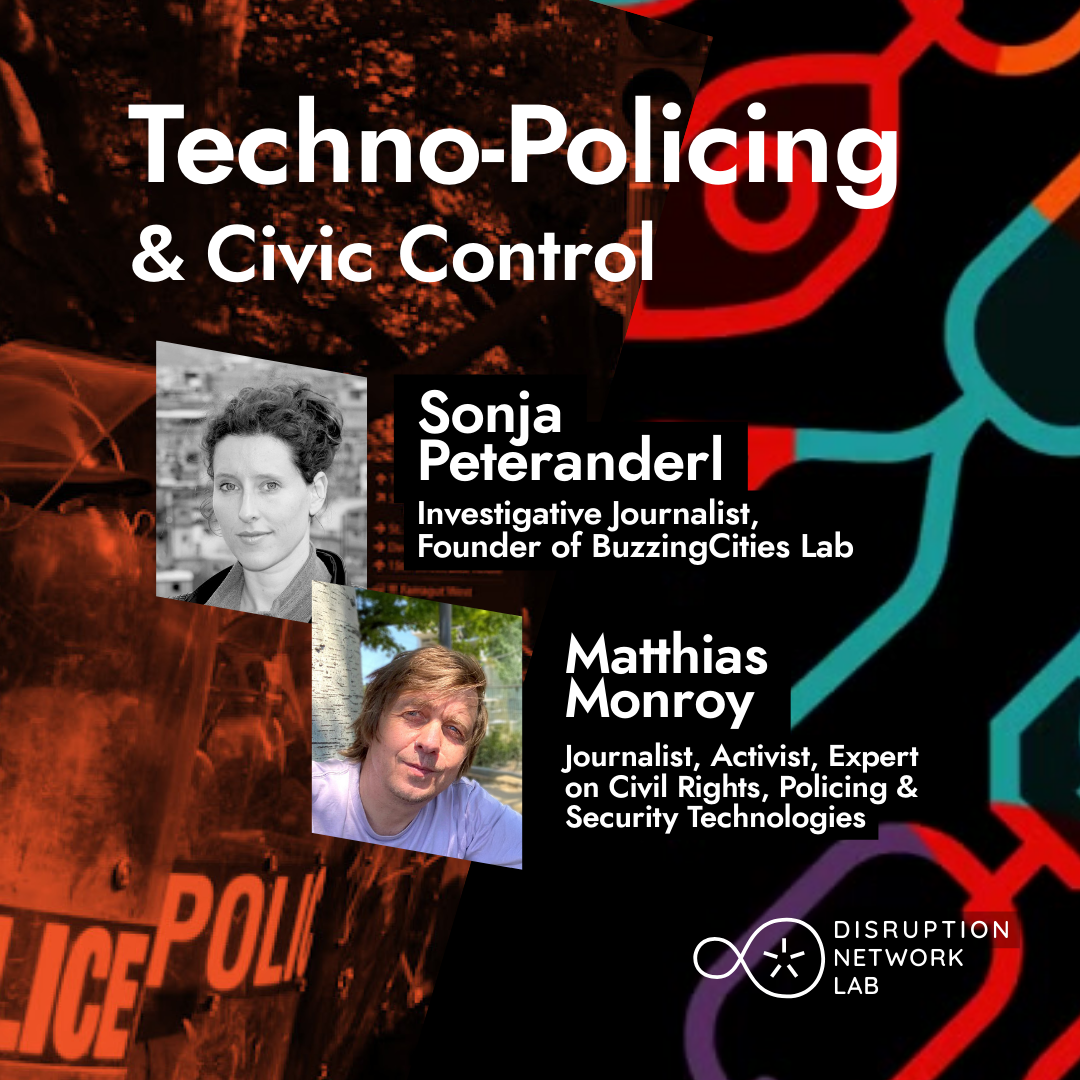
Techno-Policing & Civic Control - with Sonja Peteranderl and Matthias Monroy
Dec 1900:57:37Tap to summarizeUpcoming Conference: 'Exposing Crimes is not a Crime: The Real-World Consequences of WikiLeaks', March 19–22 2025, Berlin - follow us for tickets and news! This episode: Techno-Policing & Civic Control With: Sonja Peteranderl (Investigative Journalist, Founder of BuzzingCities Lab, DE) and Matthias Monroy (Journalist, Activist, Expert on Civil Rights, Policing, and Security Technologies, DE). This podcast was recorded at nGbK, October 16 2025. You can download Matthias's slides, and find links to research by Sonja on the event page. Support the Disruption Network Lab by donating or becoming a member! Sonja Peteranderl is an investigative journalist and the founder of BuzzingCities Lab – a think tank focusing on violence, crime and the impact of technology – and The School of Conflict & Peace. She covers organized crime, violence, relationship & digital violence, security/policing and tech trends, from predictive policing to criminal innovation for SWR Vollbild, SPIEGEL, Zeit or AlgorithmWatch. She teaches at the Hamburg Media School and is a mediator (International Peace Mediation). Matthias Monroy is a journalist, activist, and expert on civil rights, policing, and security technologies in Europe. He works as editor for the civil rights journal Bürgerrechte & Polizei/CILIP and for nd.DerTag. His data-driven research and critical reporting published also in left-wing media relates to police practices, digital surveillance and European security policy. --- Part of New Perspectives for Action. A project by Re-Imagine Europe, co-funded by the European Union. Views and opinions expressed are however those of the author(s) only and do not necessarily reflect those of the European Union or the EuropeanEducation and Culture Executive Agency (EACEA). Neither the European Union nor EACEA can beheld responsible for them.
Transcribe →
Illiberal Realities: Understanding Propaganda and the Orbanisation of Europe
Apr 23, 202500:54:34Tap to summarizeUpcoming Conference: Shadows of Illiberalism, June 13–15 2025, Berlin This episode: Illiberal Realities: Understanding Propaganda and the Orbanisation of Europe With: Péter Adamik and Sára Szedlár (Freie Ungarische Botschaft, HU/DE). Two activists from the Berlin-based Hungarian expat organisation Freie Ungarische Botschaft (Free Hungarian Embassy) will give an overview of how Viktor Orbán's government has built its machinery of power. Read more about the talk Support the Disruption Network Lab by donating or becoming a member! --- Part of New Perspectives for Action. A project by Re-Imagine Europe, co-funded by the European Union. Views and opinions expressed are however those of the author(s) only and do not necessarily reflect those of the European Union or the EuropeanEducation and Culture Executive Agency (EACEA). Neither the European Union nor EACEA can beheld responsible for them.
Transcribe →
Marwa Fatafta on AI & Warfare in Gaza
Nov 19, 202400:38:12Tap to summarizeHow can we ensure the dystopian tech-enabled violence we are witnessing in Gaza is neither normalized nor harnessed in future armed conflicts? Marwa Fatafta discusses the technologies used by Israel in Gaza and the role of tech companies. Marwa leads Access Now's policy and advocacy work on digital rights in the Middle East and North Africa (MENA) region. Read more at https://dnlb.org/perfectstorm Organised in collaboration with Untold Stories / Untold Mag: https://www.untoldstories.media Don't miss our conference Investigating the Kill Cloud: Information Warfare, Autonomous Weapons & AI, Nov 29–Dec 1 in Berlin: https://www.disruptionlab.org/investigating-the-kill-cloud See you there! --- Part of New Perspectives for Action. A project by Re-Imagine Europe, co-funded by the European Union. Views and opinions expressed are however those of the author(s) only and do not necessarily reflect those of the European Union or the EuropeanEducation and Culture Executive Agency (EACEA). Neither the European Union nor EACEA can beheld responsible for them.
Transcribe →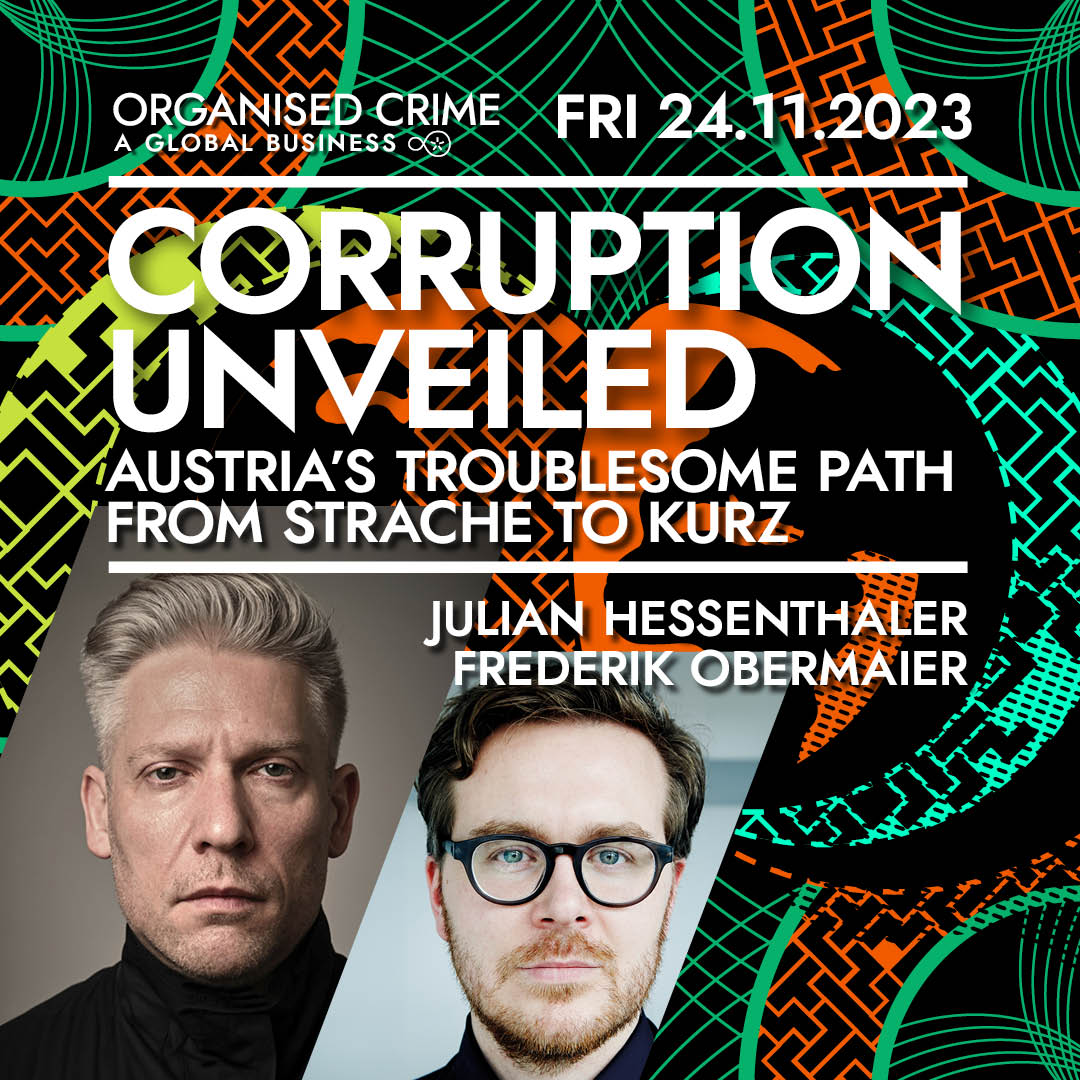
Corruption Unveiled: Julian Hessenthaler & Frederik Obermaier · #DNL31 #OrganisedCrime
Dec 18, 202301:23:09Tap to summarizeCorruption Unveiled: Austria's Troublesome Path from Strache to Kurz From #DNL31 #OrganisedCrime. Watch this talk and others here Julian Hessenthaler, the private detective who set the trap for Strache and triggered the "Ibiza affair," delves into the issues of power and abuse of power in the state of Austria with Frederik Obermaier one of the journalists to whom he leaked the video. In 2019, a scandal rocked Austrian politics as journalists from Der Spiegel and Süddeutsche Zeitung revealed a secretly recorded video featuring Heinz-Christian Strache, the leader of the far-right FPÖ. In the video, he offered state contracts to a woman who claimed to be a millionaire and the niece of a Russian oligarch with close ties to Vladimir Putin. Among other statements in the video, Mr. Strache mentioned his desire to create a media landscape similar to what Viktor Orbán had done in Hungary. Just hours after these initial reports, Mr. Strache resigned, prompting Chancellor Sebastian Kurz to call for new elections. Following the "Ibiza affair," Austria has weathered a series of subsequent scandals. Investigations have exposed illegal donation schemes, election tampering, and inquiries funded and manipulated using taxpayers' money. Searches were conducted at various locations, including the Austrian Chancellery, the Ministry of Finance, the ÖVP party headquarters, and the media house Österreich. Consequently, Federal Chancellor Sebastian Kurz was compelled to resign, as he and his closest associates are suspected of misappropriating taxpayers' money to purchase favorable media coverage and manipulate fake surveys on behalf of the ÖVP, with alleged involvement of the Ministry of Finance. Austria, once again, is synonymous with a country plagued by endless scandals. --- Part of New Perspectives for Action. A project by Re-Imagine Europe, co-funded by the European Union. Views and opinions expressed are however those of the author(s) only and do not necessarily reflect those of the European Union or the EuropeanEducation and Culture Executive Agency (EACEA). Neither the European Union nor EACEA can beheld responsible for them.
Transcribe →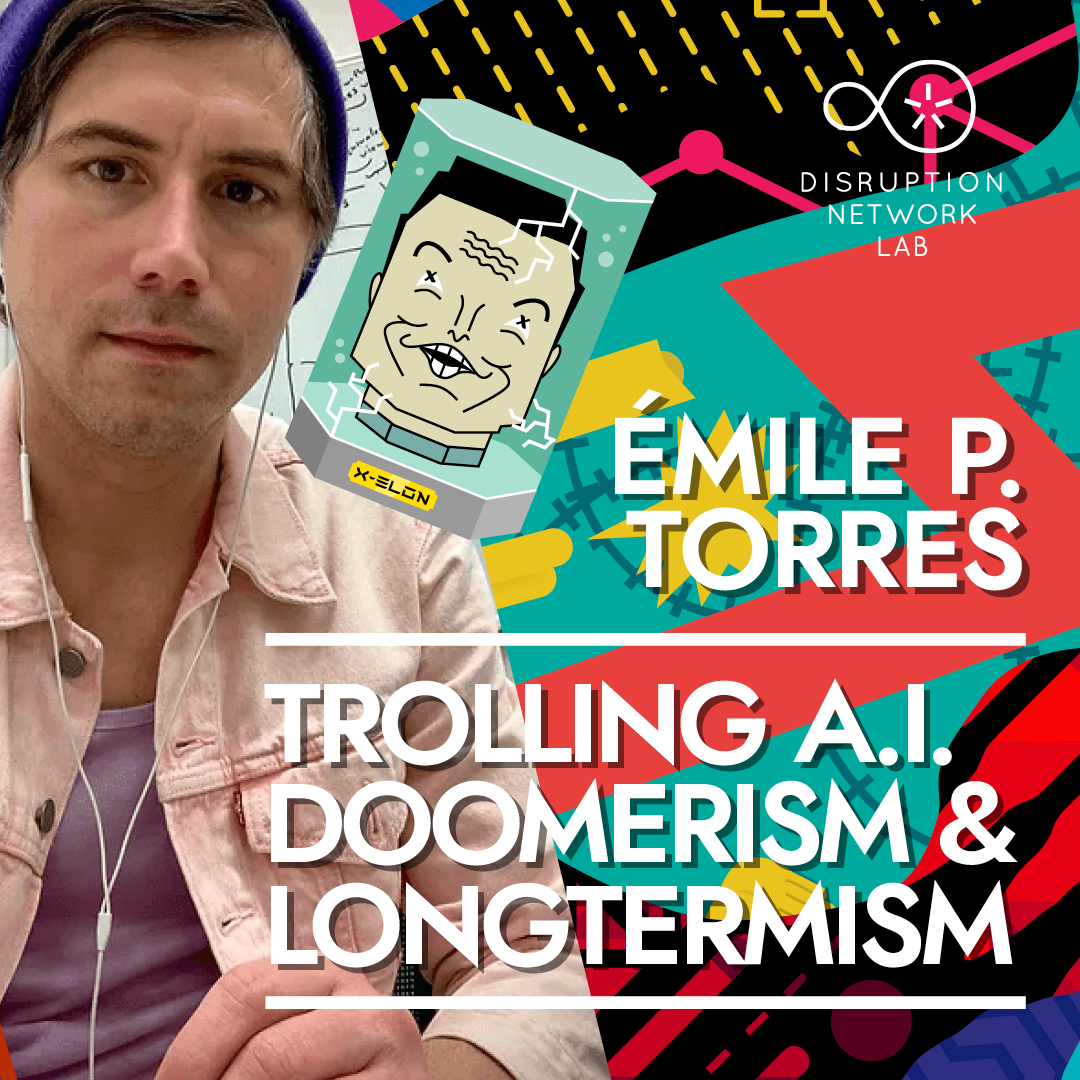
Émile P. Torres: Trolling AI Doomerism & Longtermism
Oct 13, 202300:55:19Tap to summarizePhilosopher Émile P. Torres takes you on a journey through the surreal and very influential techno-utopian – and dystopian - philosophies and ideologies of Silicon Valley billionaires and leaders. Recorded at a meet-up and workshop curated by Sabina Barcucci. Read more about the meet-up here: https://dnlb.org/torres. Our next conference is Organised Crime: A Global Business, Nov 24–26 2023: https://dnlb.org/31. Become a menber: dnlb.org/join More events and resources at https://disruptionlab.org Join our Telegram Group for Berlin event updates: https://t.me/disruptionlab Follow us: https://dnlb.org/newsletter https://twitter.com/disruptberlin https://youtube.com/disruptionnetworklab https://mastodon.bida.im/@DisruptionNetworkLab https://www.instagram.com/disruptionnetworklab/ --- Part of New Perspectives for Action. A project by Re-Imagine Europe, co-funded by the European Union. Views and opinions expressed are however those of the author(s) only and do not necessarily reflect those of the European Union or the EuropeanEducation and Culture Executive Agency (EACEA). Neither the European Union nor EACEA can beheld responsible for them.
Transcribe →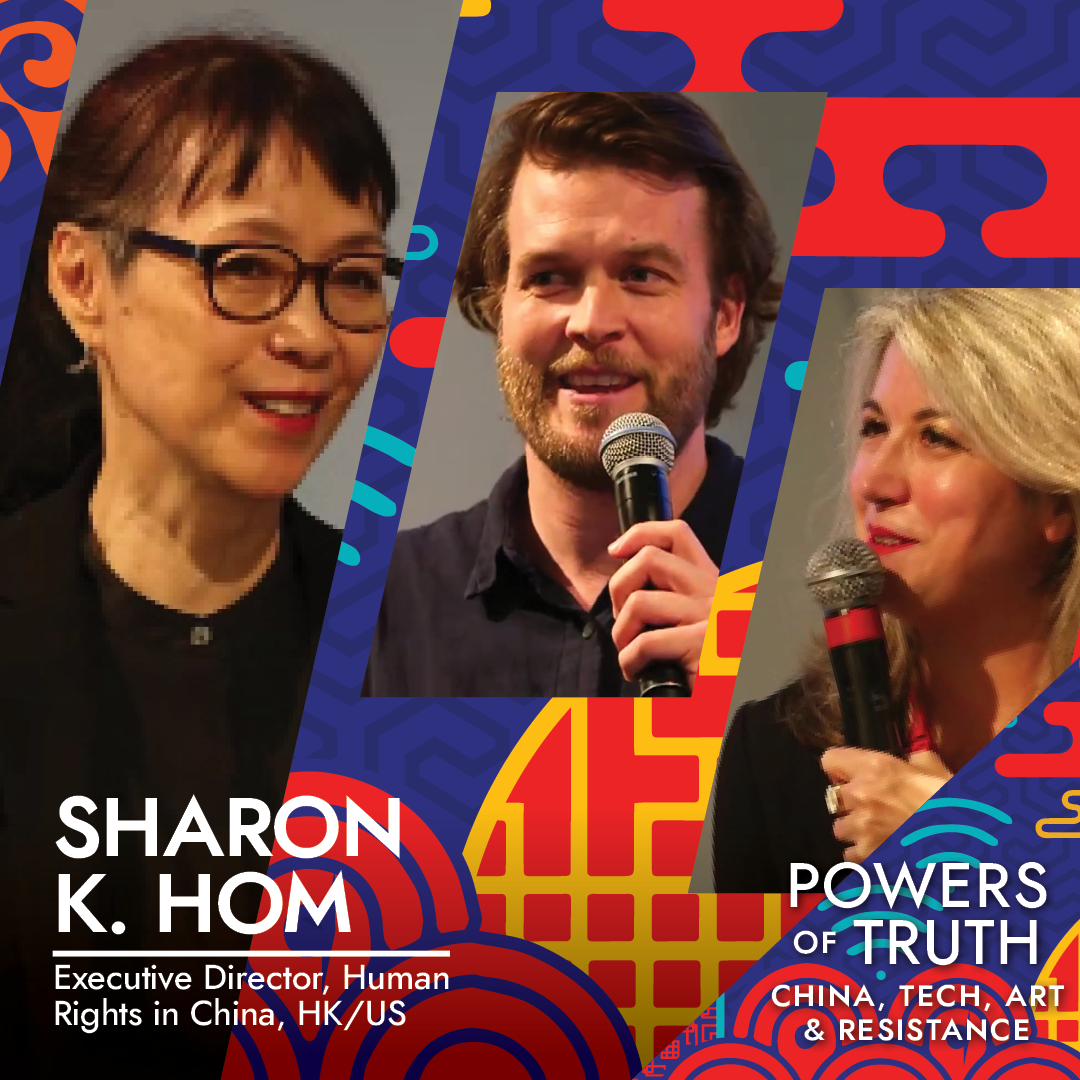
Sharon K. Hom (Executive Director, Human Rights in China)
Oct 7, 202101:29:17Tap to summarizeSharon Hom (Executive Director, Human Rights in China, HK/US). Moderated by Magnus Ag (Journalist, Human Rights Advocate, Founder of Bridge Figures, DK/NO). In recent decades, the Communist Party of China (CPC) has increasingly challenged international human rights norms and values and aggressively promoted its alternative models for human rights, development, and even, as it claims, "democracy." Framed within a narrative of global resistance against Western imperialism and exploitation, the CPC now centers its ideological battle on the narrative that the U.S. (and its allies) are trying to impose their values—values of democracy and fundamental rights—on countries with values that prioritize collective aims, values that have been shaped by their respective historical, cultural, and economic conditions. What are the power dimensions of this narrative? How is it promoted? Who benefits from, who is harmed by uncritical or implicit acceptance of it? And where do fundamental rights enshrined in international human rights treaties fit into this contest? Beyond discursive contests, why does this matter? How can progressive communities push back and contribute to more empowering space for and solidarity with domestic rights defenders and citizen actions? https://www.disruptionlab.org/powers-of-truth
Transcribe →
Are Kleptocrats the big winners of Covid-19?
Aug 9, 202100:53:46Tap to summarizeAward-winning investigative journalist and author Tom Burgis discusses the opportunities that the pandemic has provided for kleptocracy to flourish. Across the world, we've seen dramatic increases in government spending, logistical obstacles for watchdogs monitoring kleptocratic financial flows, and a ready-made excuse for restrictions on freedom of movement... and political protest. In our conversation, Tom shared his wealth of experience on the topic (nodding to his recently published second book, 'Kleptopia: How dirty money is conquering the world"), on how the crisis has helped to break down defences against kleptocracy. What can we learn about the response to the pandemic and the structures that allow the transnational kleptocracy to thrive, what are our strategies to hold power to account and could the post-pandemic future look brighter?
Transcribe →
Whistleblowing during Covid-19
Aug 2, 202100:57:56Tap to summarizeRenata Avila, Joseph Farrell & Rima Sghaier discuss the role of whistleblowers during COVID-19 and the importance of exposing the truth during the pandemic. The work of whistleblowers is central to denounce power violations and to protect the most vulnerable sectors of our society, but also whistleblowers are people at risk. They are subjects of repression and opposition before and after blowing the whistle, and often confined in isolation, imprisoned or persecuted while their civil rights are suspended.
Transcribe →
THE Q IN QONSPIRACY
Jul 26, 202101:04:17Tap to summarizeIn this conversation between Wu Ming 1 and Florian Cramer, QAnon is discussed as a template for contemporary social-media-driven conspiracy fantasies that work simultaneously as games and a new kind of cults. By focusing on the mutation of conspiracy myths from countercultural phenomena to contemporary meme and influencer culture, they will focus on three conspiracy narratives: "The Great Replacement" (from Renaud Camus to Charlottesville), QAnon (from Pizzagate to the Capitol storming) and "The Great Reset" (as a set of pandemic-inspired variations on the old New World Order trope).
Transcribe →
WHISTLEBLOWING & COVID-19
May 10, 202101:27:28Tap to summarizeThis keynote conversation brings together Eileen Chubb, a former care assistant in the UK who became a whistleblower and later a campaigner, and Erika Cheung, one of the key whistleblowers in the Theranos scandal and today co-founder and executive director of Ethics in Entrepreneurship. The conversation is based on two important experiences of raising concerns in the healthcare field, wants to discuss systemic problems around corporate governance, ethical decision-making and the importance of protecting people that decide to hold companies accountable and highlight poor standards of care. www.disruptionlab.org/behind-the-mask
Transcribe →