← Documentos RNE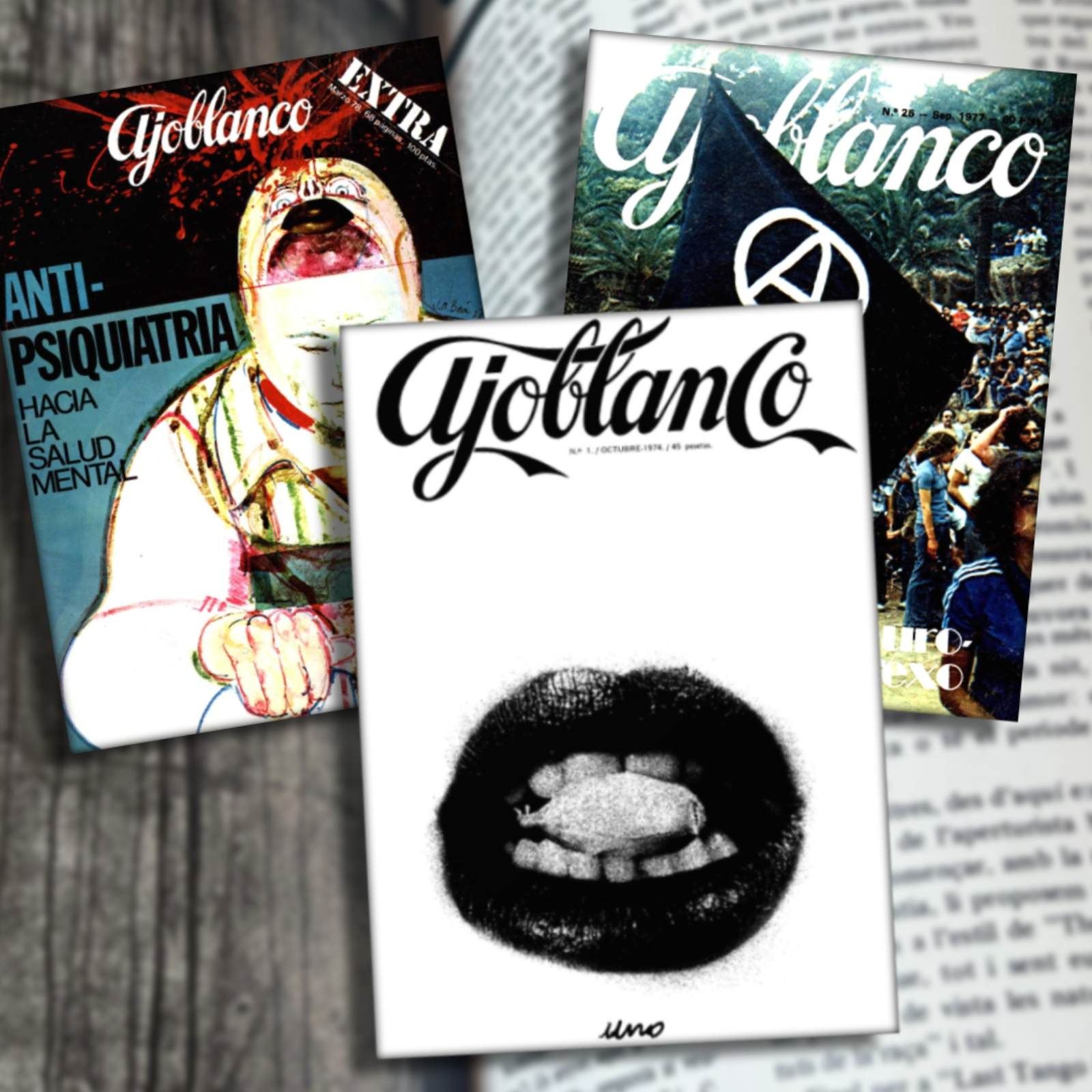
Documentos RNE
Documentos RNE - 'Ajoblanco', utopía libertaria y contracultural - 06/10/25
00:59:41
'Ajoblanco', utopía libertaria y contracultural
Loading summary
Transcript247 lines
- [00:01]
Narrator / Host
RNE Audio Descarga la app y disfruta de los programas de RNE y nuestros podcast originales.
- [00:15]
Narrator / Commentator
Documentos Radio Nacional de España ¿Has visto la nueva revista?
- [00:21]
Narrator / Host
¿Qué revista?
- [00:22]
Interviewer / Participant
Tienes que leerla.
- [00:23]
Fernando Mir
Ajo Blanco.
- [00:25]
Interviewer / Participant
Sí, sí, Ajo Blanco. No me digas que no mola el nombre.
- [00:28]
Fernando Mir
A ver.
- [00:28]
Interviewer / Participant
Despertad, jóvenes de la nueva era. Desplegad vuestras inteligencias contra los mercenarios ignorantes.
- [00:35]
Narrator / Host
A nosotros lo que más nos movía era la aventura de unir arte y vida. La lucha contra cualquier autoridad impuesta, el no canon, las actitudes dadaístas, el vivir al día, el rock salvaje, el viaje sin rumbo ni fecha de retorno, la libertad sexual, la vida en comunidad y la muerte de la familia tradicional. Ajoblanco. Utopía libertaria y contracultural.
- [01:08]
Narrator / Commentator
Cultura ante el cambio.
- [01:10]
Narrator / Host
Dosier de Anti War. El rock salvaje. El viaje sin rumbo ni fecha de retorno. La libertad sexual.
- [01:18]
Narrator / Commentator
Pepe Rivas, los 70 a destajo. Ajo Blanco y Libertad.
- [01:24]
Narrator / Host
Estos eran los astros emergentes del imaginario de la nueva generación, aunque todavía no fuésemos capaces de realizar aquellos sueños de forma clara y transparente.
- [01:38]
Narrator / Commentator
Este relato nos adentra en otra época, en un momento en el que el mundo era otro. En un país, en una ciudad y en un sueño. El de unos jóvenes que creyeron en la utopía contracultural y libertaria. La historia nos lleva hasta una antigua y aislada masía de Lampurdán.
- [01:57]
Interviewer / Participant
Hola.
- [01:58]
Narrator / Commentator
Un lugar en el que el tiempo se detiene.
- [02:00]
Interviewer / Participant
No era fácil llegar hasta aquí.
- [02:03]
Pepe Rivas
No, No hay ninguna señal ni nada.
- [02:06]
Interviewer / Participant
Hemos venido por un angosto camino de tierra flanqueado por un bosque de girasoles muy tupido. Al fondo se abre el terreno y vemos preciosas y antiguas casas de piedra con jardines arbolados. Fuera es todo olivos. Y si miro muy a lo lejos, puedo ver el mar. Sopla un fuerte viento que en el exterior golpea nuestros micrófonos. A este viento lo llaman Tramontana. Qué muebles. También en este lugar escondido del mundo hay un tesoro que custodia Pepe Rivas.
- [02:47]
Pepe Rivas
Aquí está la biblioteca. Aquí el archivo del segundo Ajo Blanco. Es uno de los archivos más importantes de cultura crítica que hay en España.
- [02:58]
Interviewer / Participant
Muy grande.
- [02:59]
Pepe Rivas
Es enorme.
- [03:01]
Interviewer / Participant
Desde aquí, desde esta casa de campo llena de estancias luminosas, suelos de barro, retratos de ilustres antepasados y una inmensa biblioteca, nos adentramos en las páginas de la revista Ajoblanco.
- [03:16]
Pepe Rivas
Jerry, Robin y Aldo. Su puerta de la percepción. Cielo infierno es un libro clave. María José Rae Arias California Drip es otro libro clave.
- [03:26]
Narrator / Commentator
El momento histórico se refleja en múltiples capas contrapuestas. Conviven en un mismo tiempo y en un mismo espacio. A un lado, el franquismo, la represión. Al otro lado, la izquierda militante con su idealismo, sus jerarquías, sus doctrinas. En medio, una masa gris. Fuera, al margen de todas ellas, colándose por pequeñas grietas, emerge otra realidad, la de quienes buscan, experimentan y ensayan nuevas formas de vida. Desde el rechazo frontal a cualquier autoritarismo, quieren demostrar y demostrarse que otro mundo es posible.
- [04:06]
Pepe Rivas
Libertad y comunidad Cuando vives como piensas, un día te inventas una comuna, al día siguiente te invitas a una cooperativa, al día siguiente empiezas a cultivar habas. Entonces ibas aprendiendo a medida que ibas viviendo, pero ibas viviendo una vida distinta. No la que te habían propuesto, sino que te la inventaba.
- [04:27]
Narrator / Commentator
Pepe Rivas ideólogo y fundador de Ajoblanco.
- [04:31]
Pepe Rivas
En el Ajoblanco, ¿Qué hacíamos? Inventarnos la revista a través del encuentro con gente que no conocíamos, que nos era igual.
- [04:41]
Germán Labrador
Ajoblanco es la revista más importante de los años 70, aquella en la cual se dan cita todas las disciplinas, distintas sensibilidades que apuestan por un cambio radical en las formas de vida.
- [04:57]
Narrator / Commentator
Germán Labrador Investigador distinguido a ATRAE del Departamento de Estudios Literarios y Culturales del CSIC.
- [05:05]
Germán Labrador
Es una red de personas que están viviendo o intentándolo de esas otras maneras. Es un lenguaje que socializa ideas y alternativas, en muchos casos muy prácticas, porque lo que en algunas ocasiones se está discutiendo es la necesidad de energías renovables, alimentación sana, carriles bici, el derecho de que los ciudadanos contribuyan directamente a decidir en qué tipo de ciudad quieren vivir. Cuestiones en realidad muy básicas, pero que contrastan totalmente con las lógicas jerárquicas y verticales del Estado y de la época.
- [05:58]
Narrator / Host
Yo creo que Ajoblanco fue la mejor revista que se hizo en aquel tiempo porque no tenía ni prejuicios ni muchas líneas fijadas.
- [06:06]
Narrator / Commentator
Ramón Barnils periodista con carnet que figura como director ante las autoridades franquistas. Archivo de Radioteles Española Ojoblanco era mejor.
- [06:17]
Narrator / Host
Que las revistas oficiales e incluso que las de la oposición, porque no tenía dogmas.
- [06:23]
Interviewer / Participant
Bueno, Ojoblanco era una revista pionera, era una revista contracultural.
- [06:29]
Narrator / Commentator
Lola Gispert psicóloga, integrante del colectivo de sexualidad que surgió en la revista.
- [06:35]
Interviewer / Participant
Era una revista libre, por lo tanto no dependía de nadie solo del propio colectivo.
- [06:43]
Germán Labrador
Lo importante de Ajoblanco es su función de escaparate y laboratorio de las distintas líneas de trabajo de ruptura de la juventud.
- [06:56]
Narrator / Commentator
En los años 70 nos reuníamos en la redacción y escribíamos lo que nos daba la gana. Carmele Marchante Periodista Introduce el feminismo en Ajo Blanco. Y luego, cuando se editaba y salía, veíamos que tenía éxito y ahí seguíamos.
- [07:14]
Germán Labrador
Las preocupaciones creo que eran muy amplias en un sentido humanista. Yo subrayaría que era un humanismo contracultural el que se daba cita en la revista.
- [07:28]
Tony Puig
Nosotros queríamos cualificar, diríamos. Ahora éramos más RIMBO.
- [07:34]
Narrator / Commentator
Tony Puig cofundador y coordinador de la revista.
- [07:38]
Tony Puig
Liberar la vida cotidiana a partir de sus múltiples monotonías y servidumbres.
- [07:55]
Narrator / Commentator
Año 1974. Richard Nixon renuncia a la presidencia de Estados Unidos por el escándalo del Watergate. En Portugal ha caído el dictador a golpe de claveles. España vive momentos convulsos. Carlos Arias Navarro es nombrado presidente del Gobierno. Hay huelgas, manifestaciones. Tiene lugar la ejecución de Puig Antic. Franco vuelve a enfermar. Se agudiza la agonía del régimen.
- [08:23]
Germán Labrador
El contexto justo anterior a la muerte de Franco viene definido por una especie de parón a la expectativa. Ha habido un momento de mucha movilización obrera, sindical, estudiantil, vecinal. Venimos del 68, unas huelgas obreras brutales en Galicia, en Ferrol, en Vigo, Euskadi. Una movilización colectiva muy fuerte. Y de repente ha habido mucha represión. Y ahí hay un momento raro de a ver qué pasa. Saber qué pasa en el nivel de la vida cotidiana hace que muchas personas ya se hayan ido a vivir a la democracia.
- [09:12]
Pepe Rivas
Entonces era una España truculenta, muy gris. La universidad se empezó a politizar, pero hubo un bache, una crisis a final de los 60 de todas las organizaciones comunistas tradicionales. Entonces empezaron las más radicales, MC, bandera roja. Y cambia la perspectiva y muchos estudiantes dejan la universidad porque ya no creen en una carrera y se vuelven hippies.
- [09:47]
Germán Labrador
Aparecen las nuevas drogas y hay una división entre aquellos. La represión del movimiento estudiantil producen en algunas personas una radicalización política y en otras, la forma de radicalización política tiene que ver con el underground, con el pasarse, digamos, a abrazar plenamente los ideales de una vida salvaje, de una vida límite, una vida distinta.
- [10:14]
Pepe Rivas
Se vuelven hippies por la conexión con hippies europeos americanos, ya sea por a través de la ruta de Ibiza, ya sea en el propio Ampurdán, ya sea en algunas comunas de Andalucía, ya sea en la Costa del Sol, los primeros bares gays, también en Barcelona, o lo de las bases americanas de Morón y de Rota, que había un intercambio.
- [10:40]
Germán Labrador
Si lo vemos de una manera internacional, es algo que está pasando en Francia, es algo que está pasando en Alemania, es algo que está pasando en México, en Estados Unidos, en Puerto Rico, de otra manera distinta, pero también en Túnez o en Egipto, a los dos lados del muro de Berlín. Es una demanda de época que va mucho más allá de las circunstancias particulares del caso español.
- [11:09]
Narrator / Commentator
En la España del tardofranquismo la contracultura está presente de una manera u otra en muchos puntos de la geografía, pero tiene principalmente dos focos. Uno en Andalucía con Sevilla como epicentro.
- [11:27]
Pepe Rivas
Realmente lo de Sevilla empezó muy fuerte gracias al flamenco, gracias a la cuadra de Paco Lira.
- [11:38]
Germán Labrador
A través de las bases de la OTAN, de los desertores de la guerra de Vietnam, de los soldados en Torrejón, en Morón, que van a traer su música, muchos de ellos también soldados afroamericanos, y en contacto con grupos de bohemios y con grupos gitanos, van a generar una suerte de flamenco afroflamenco electrónico. También aparecerán personas como Nazario o como García Pelayo. Esta primera movida específicamente sevillana.
- [12:19]
Narrator / Commentator
Antes de trasladarse a Barcelona, Nazario, uno de los padres del cómic alternativo, conoció a Diego Delgastor en Morón. Allí se unió a un nutrido grupo de hippies extranjeros que aprendían del Maestro.
- [12:33]
Pepe Rivas
Esto Diego, ¿Usted qué hace normalmente todos los días?
- [12:35]
Narrator / Host
¿Cuál es su vida?
- [12:36]
Pepe Rivas
Pues todos los días tomamos una copa con mis amigos, como aquí mi amigo Vicente y otros más.
- [12:42]
Narrator / Commentator
Diego Delgastor, guitarrista flamenco en el programa de Televisión Española Rito y geografía del Cante, año 1972.
- [12:52]
Pepe Rivas
Y habla de lo que nos gusta a nosotros de cante, de toque y del arte.
- [12:58]
Narrator / Host
También parece que da usted clases a norteamericanos que vienen a aprender aquí a Morón.
- [13:04]
Pepe Rivas
Muchas clases. ¿Los americanos? No solamente los americanos, de Finlandia, de Francia, de Italia, de Japón, Australia.
- [13:16]
Narrator / Commentator
Todo esto ocurre alrededor de la ciudad que verá nacer el rock progresivo andaluz con la llegada de grupos como Smash. Esta banda con tintes psicodélicos que une rock y flamenco, recorre el camino de Sevilla a Barcelona, donde se situará el otro gran foco de la contracultura, algo que hacen el historietista nazario y el pintor y agitador cultural José Pérez Ocaña.
- [13:49]
Pepe Rivas
Bárcega fue masivo. La influencia y el contacto fue masivo. Masivo dentro de un tipo de juventud que ya no quería el autoritarismo ni franquista ni marxista, o sea. En Cataluña hubo el primer festival aéreo libre en el parque de la Ciudadela en el año 68, con Sisa, Oriol Tranvía y Pau Rivas, entre otros, y María de Marbone, y no pasó nada. Y en el 71 hubo el primer festival tipo Müstok en Granollers y en el 73 vino King Crimson en Granollers. Entonces la gente se movía, había mucho tráfico por las Baleares y ya en Ibiza habían expulsado a 2.000 hippies. La Guardia Civil.
- [14:50]
Interviewer / Participant
En aquella época, en una ciudad abierta. Era el final del franquismo y el principio de una democracia.
- [14:58]
Narrator / Commentator
Lola Gispert, psicóloga, participa en Ajoblanco desde el colectivo de sexualidad Sexajo.
- [15:05]
Interviewer / Participant
Era una lucha entre un principio y un final y la gente teníamos muchas ganas de cambio. Salimos a la calle, claro. Primaba en aquella época más lo colectivo que lo individual.
- [15:18]
Germán Labrador
En comunas, en pisos liberados. En las Ramblas hay pequeños grupos de personas que desde unos pocos años atrás han empezado a vivir realmente en otro tiempo y en otro espacio, conforme a nuevas ideas y a una afirmación de la libertad individual y colectiva para construir una vida más allá de los límites del nacionalcatolicismo.
- [15:47]
Interviewer / Participant
El centro neurálgico eran las Ramblas. Se montaban tertulias espontáneas, también juergas espontáneas.
- [15:56]
Narrator / Commentator
Hacíamos lo que queríamos, salíamos por la noche, follábamos y se nos pasaba por la cabeza la cultura. Íbamos al teatro muchísimo. Carmele Marchante, periodista, colabora activamente con Ajoblanco, que el teatro también era vanguardista en aquel momento. Nuria Sper hizo unos montajes fantásticos de las obras de García Lorca. Y luego yo era muy amiga de.
- [16:23]
Interviewer / Participant
Ocaña, estaba Ocaña con todo su séquito y habían unos números en las Ramblas increíbles que no sé cómo se permitían, pero bueno, era así.
- [16:35]
Germán Labrador
Lo que está contracultura va a experimentar como primera noción de la política es la posibilidad de juntarte con nosotros. Va a convertirse en una herramienta de construcción desde abajo y de manera celular de la democracia.
- [16:54]
Tony Puig
Yo creo que Ajoblanco viene precedido de este clima de permisividad, yo no diría libertad.
- [17:03]
Narrator / Commentator
Toni Puig, cofundador y coordinador de la.
- [17:06]
Tony Puig
Revista Permisividad desde la cultura que había en Barcelona especialmente, y también en Cataluña, pero especialmente en Barcelona.
- [17:24]
Narrator / Commentator
Ajo blanco, número 1. Foto en blanco y negro. Una boca de labios carnosos sostiene entre los dientes un ajo. Octubre 1974. Una nueva revista llega a los quioscos de toda España. Promete sabores atrevidos, frescos. Su contenido atrae, interpela, golpea.
- [17:50]
Interviewer / Participant
Luego estaba en el grupo de Carlos Barral y de Jaime Gil, etc. Y claro, de repente que vinieron unos tíos y quisieran meter la cuña con unos elementos que no solamente tenían el entusiasmo ellos de lo que querían hacer, sino que además era la pura modernidad.
- [18:06]
Narrator / Commentator
Rosa Regás en el documental coproducido por Televisión Española Ajo Blanco. Crónica en rojo y negro.
- [18:14]
Interviewer / Participant
Es decir, la contracultura americana que la querían meter allí sin renegar de lo demás, sino meter esta cuña. Y eso me cautivó.
- [18:25]
Narrator / Commentator
En el origen de todo un grupo poético universitario de nombre Los Nabuco.
- [18:32]
Pepe Rivas
Éramos un grupo poético dadaísta, frodalista, muy partidarios de Astronianto y de los diálogos de Platón.
- [18:41]
Narrator / Commentator
Pepe Rivas fundador de Ajoblanco Y entonces.
- [18:46]
Pepe Rivas
Decidimos hacer una exposición poética. Entonces todas las paredes del hall de la universidad se llevaron de poemas. Entonces nos quedamos muertos porque en vez de haber 40 poemas había 500. Y eso nos dio fuerza para irnos de viaje. Y entonces vivimos salvajemente en la ruta de los hippies. Al volver en París me robaron la cartera y en el parque de Apollinaire tuve la idea de hacer una revista.
- [19:19]
Narrator / Commentator
Septiembre de 1973. Una cena, una sopa fría y un bautismo.
- [19:26]
Pepe Rivas
Y convoqué a los Nabuco en el restaurante Puche. La noche en que Flora, que era la mujer de un torero sin suerte, que había montado este restaurante y era donde iba la gauche diví, pues nos dio la típica comida julanco.
- [19:42]
Narrator / Host
Di un sorbo, calcé la copa y observando sus rostros voy a crear una revista de arte y cultura con quien quiera seguirme fuera de los círculos de la Universidad y la distribuiré por todos los quioscos de España. ¿Quién me sigue?
- [19:59]
Narrator / Commentator
Ángeles bailando en la cabeza de un alfiler.
- [20:03]
Narrator / Host
Pepe Rivas Todos levantaron la copa. Armando Vocerín. Flora abrió otra botella de codorniu y brindó con nosotros. El suelo del restaurante pareció elevarnos ante las miradas ajenas. Nacía otra época, nacía otro mundo.
- [20:21]
Pepe Rivas
Fue la noche de Ajo Blanco y ahí viene el nombre de Ajo Blanco.
- [20:27]
Narrator / Commentator
Un encuentro azaroso, una amistad y una colaboración fundamental para la revista.
- [20:34]
Pepe Rivas
Al cabo de quince días me encontré por la calle a Tony Putin.
- [20:38]
Tony Puig
Nos conocíamos por la calle como se conocía la gente en aquel entonces. Nos sentamos en un banco en Paseo de Gracia. Yo lo invité a mi casa. Mi casa era una comuna rara.
- [20:52]
Pepe Rivas
Vivía en una comuna con una naturista, un actor de Juglars y un actor de Comedian.
- [21:00]
Tony Puig
Nos sentamos en el suelo y los cuatro empezamos a hablar hasta que fue a las cinco de la mañana.
- [21:08]
Pepe Rivas
Y ahí nació la unión de dos Cataluñas. La Cataluña que provenía de la Universidad y la Cataluña que provenía de la Iglesia. Porque todos estos actores habían pasado por el seminario o por Montserrat, teniendo en cuenta que Montserrat en aquel momento era como Harvard, porque todos los monjes habían estado en Stanford o en la India o en Japón, con lo cual tenían nociones de budismo, de zen y de contracultura. Y eso fue muy importante en mucha gente que pasó por Ajoblanco.
- [21:48]
Narrator / Commentator
Toni Puig se incorpora al equipo fundador. Junto a él llega el fotógrafo Pep Rigol y aterriza un nutrido grumo de colaboradores cercanos al catalanismo progresista. Cineastas, escritores, diseñadores. Todos ellos participan en los primeros números de Ajo Blanco.
- [22:07]
Pepe Rivas
Pedrigault introdujo a César, que es el que empezó a diseñar el Ajo, que había sido también estudiante del seminario con él. Pep Brigaul, a su vez, introdujo Arquímonzo. Y al ver abril, el Kim Monso introdujo Alca de Montaña, Olpe Brigón y al Manel Esclusa. Y yo entonces empecé a moverme y empecé a aportar poetas jóvenes de todo tipo.
- [22:37]
Narrator / Commentator
Como todo proyecto Ajoblanco requiere financiación.
- [22:42]
Tony Puig
Nosotros no teníamos dinero. Nosotros éramos jóvenes. Yo trabajaba en una escuela que cobraba una miseria de verdad.
- [22:49]
Pepe Rivas
Francisco Marsal, un tío que se aburría porque su mujer se había largado con un filósofo parisino del 68, y entonces nos puso 100.000 pesetas. Y entonces con aquello empezamos.
- [23:03]
Narrator / Commentator
Para empezar necesitan un permiso. Pepe Rivas echa mano de contactos y de encanto personal.
- [23:11]
Pepe Rivas
Me fui a ver al ministro, el Pío Cabanillas. No me fui a ver al Pío Cabanillas, pero llegó un momento que conseguí que un expediente que estaba al final de un bloque pasara primero. Y eso fueron las secretarias, porque me lié a las burócratas con falda tubo y les hacía gracia, les creaba confianza y risas.
- [23:39]
Narrator / Commentator
Redactadas. Realizan estatutos de una sociedad anónima, tramitan mucha burocracia y buscan a dos periodistas con carne.
- [23:47]
Tony Puig
Barnils era un señor periodista del ámbito catalán que publicaba cosas no usuales y que confió en nosotros y que nos dejó el carnet y que no tenía miedo.
- [24:02]
Narrator / Host
Como la ley obligaba a tener un periodista delante, vinieron al periódico progre de la época de Barcelona, que era Telexpress. Preguntaron por un tal Pedro Oriol Costa y el cual les dijo que no. Y entonces este mismo Pedro León Costa pero hablad con Barnil.
- [24:18]
Pepe Rivas
Llamó a Ramón Barnil, nos miramos a los ojos, le aguanté la mañana y me toma el carnet, confío en ti. Y me dio el carnet.
- [24:28]
Narrator / Host
Se lo di y me olvidé. Y a los seis meses me vienen unos amigos y oye, esa revista tan.
- [24:33]
Narrator / Commentator
Bestia que diriges, Ramón Barnils será su hombre de paja ante el régimen. Pero les falta un segundo carnet.
- [24:42]
Pepe Rivas
Entonces Fernando Mir un día vino, tenía una venena enorme.
- [24:48]
Fernando Mir
Me presentó en la redacción, que estaba en Aribau 15.
- [24:51]
Pepe Rivas
Estuvimos hablando como tres horas o dos horas. En la redacción.
- [24:55]
Fernando Mir
Me cuenta el proyecto y cuando le digo que tengo carnet de periodista, se le disparan los ojos. Entonces le ofreció mi carnet a cambio de participar en el proyecto.
- [25:06]
Pepe Rivas
A partir de ahora eres subdirector de Ajo Blanco. Y se quedó.
- [25:12]
Narrator / Commentator
Los primeros números se guisan a fuego de chimenea en una comuna Dala Castellar.
- [25:19]
Pepe Rivas
Que era la secretaria de Carlos Barral, que se enamoró de el, amigo de mi hermana Rosa, que es una mujer importantísima en mi vida, 10 años mayor que yo, que había vivido en muchos sitios y que era masa de arte, de artistas jóvenes. Todo esto nos llevó a la comuna de Fonclara. Y entonces en el Ampurdán montamos un cuartel general.
- [25:42]
Fernando Mir
Íbamos muchos fines de semana. Aquí íbamos Pepe, Ton y yo y un montón de gente que se iba añadiendo.
- [25:49]
Tony Puig
Estábamos todos tirados en una habitación con colchones en el suelo, escuchando música de los años 20 y 30, alemana, bebiendo vino malísimo, comiendo juntos, intercambiando maneras de pensar. A estas reuniones se unieron después los representantes de la Roche Divine.
- [26:16]
Fernando Mir
Pasaron, recuerdo, desde Básquet, Montalbán, Terence y Moz, hasta la Nico, la cantante.
- [26:22]
Tony Puig
Nico Vázquez Montalbán escribió una novela en la cual nosotros salimos los alegres muchachos de Zavara.
- [26:32]
Narrator / Commentator
A mí me gustaba con melena macho.
- [26:34]
Interviewer / Participant
Por cierto, ¿Has visto la nueva revista?
- [26:36]
Narrator / Host
¿Qué revista?
- [26:37]
Interviewer / Participant
¿No has oído hablar de ella? ¿De qué va? Bois, tienes que leerla. La traigo aquí en la carpeta.
- [26:42]
Narrator / Commentator
Toma.
- [26:43]
Fernando Mir
Ajo Blanco.
- [26:44]
Interviewer / Participant
Sí, sí, Ajo Blanco. No me digas que no mola el nombre.
- [26:47]
Narrator / Host
A ver, ¿Por qué esta nueva revista? Porque no queremos una cultura de imbecilistas. Porque estamos ya hartos de divinidades, sacerdocios y élites industrial culturalistas. Porque queremos intervenir, provocar, facilitar y usar.
- [27:00]
Interviewer / Participant
De una cultura creativa.
- [27:02]
Narrator / Host
Porque todavía somos utopistas.
- [27:04]
Interviewer / Participant
¿Pero qué te parece? Es que mira, mira. Me encanta esto que dice aquí. Despertad, jóvenes de la nueva era. Desplegad vuestras inteligencias contra los mercenarios ignorantes.
- [27:15]
Tony Puig
Total.
- [27:16]
Narrator / Host
Y entonces, mira, Ajoblanco quiere sintonizar con todos los que luchan por una nueva cultura. Se te ofrece como revista y pide tu colaboración.
- [27:25]
Narrator / Commentator
Por pequeños que fueran los huecos, entre los muros de contención del tardofranquismo se había colado una efervescencia imparable, creativa y libre. Desde los márgenes logró conquistar grandes espacios.
- [27:39]
Pepe Rivas
Me gusta, me encanta.
- [27:45]
Narrator / Commentator
Primera octubre 1974 mayo 1980.
- [27:53]
Pepe Rivas
Al principio la hicimos entre todos en el suelo.
- [27:56]
Narrator / Commentator
Número cero, Pepe Rivas.
- [27:58]
Pepe Rivas
Y allí se vio el reflejo de muchas sensibilidades.
- [28:03]
Tony Puig
Yo creo que nadie creía en nosotros. Nadie.
- [28:06]
Narrator / Commentator
Tony Puig, gestor cultural, es uno de los pilares del primer Ajo Blanco.
- [28:12]
Tony Puig
La presentación del número cero fue un acto, un happening moderno de gente un poco bien. Pero no tuvo tu gozo, no nos engañemos. Y a partir de ver número fue complicado. Y nos metíamos y trabajábamos y currábamos mucho. Entonces Pepe aquí encontró una imprenta y conectó con el editor, un señor mayor muy interesante con su hijo. Y negoció, negoció y fuimos creciendo.
- [28:45]
Narrator / Commentator
Desde los primeros números participan fotógrafos, diseñadores, artistas, dibujantes de cómic o escritores que son o se convertirán en figuras destacadas de la cultura.
- [28:58]
Pepe Rivas
Primero era limpio, era muy poluto. Luego lo de América Sánchez era muy pop. Y no nos gustó porque son los números que menos hemos vendido de toda la historia del ajo. Y el 6 ya lo hicieron César Rath, que yo le metí mucha caña para que empezara undergroundizarlo. Y luego ya vino el 7, que ya es el que se desdobla. Y el cachondeo y la cloaca y la subida.
- [29:27]
Germán Labrador
Una parte de la estética de Ajoblanco es muy fanfinera. Bebe mucho de la estética underground, de las publicaciones alternativas, de los fanzines clandestinos.
- [29:40]
Narrator / Commentator
Germán Labrador Filólogo, comisario de arte e.
- [29:44]
Germán Labrador
Investigador del CSIC También toma muchos elementos de la estética sesenta y ochista del collage. Tomar elementos gráficos de la publicidad y darles un sentido político.
- [29:57]
Fernando Mir
A ver las portadas, no de todas quedamos muy satisfechos.
- [30:01]
Narrator / Commentator
Fernando Mir Periodista y uno de los.
- [30:03]
Fernando Mir
Coordinadores de Ajoblanco Había grandes debates con las portadas. Incluso había peleas con las portadas. Bueno, luego resulta que sí, que tuvieron su éxito.
- [30:16]
Narrator / Commentator
La elección del logo de Ajoblanco no es casual.
- [30:23]
Narrator / Host
Entonces esta es una revista contracultural. Cogemos el logo de la Coca Cola y en vez de poner Coca Cola, ponemos Ajo Blanco.
- [30:32]
Narrator / Commentator
Kim Mon So Escritor, periodista y diseñador gráfico en el documental Barcelona era una fiesta de morrosco Vila San Juan.
- [30:42]
Narrator / Host
Qué bofetada en la cara del capitalismo. Bueno, entonces Coca Cola se cabreó y o lo cambiáis o ponemos una demanda y lo cambiamos rápidamente.
- [30:54]
Narrator / Commentator
El nuevo logo, una versión modificada, está listo un 20 de noviembre. Es el año 1975.
- [31:02]
Pepe Rivas
El día que lo fuimos a buscar es el día que se murió Franco y estuvimos toda la mañana en el estudio del Kim poniendo música rock que nos usaba para celebrar la muerte del Caudillo.
- [31:15]
Narrator / Commentator
Si el diseño es importante, el contenido lo es aún más. Cultura ante el cambio Droga, drogas, decadencia Dosier de Andy Warhol Cultura y democracia mayo del 68 Manifiesto Libertario de John Sinclair Son pioneros, se arriesgan aún en dictadura, con lo que nadie se había atrevido a publicar.
- [31:41]
Germán Labrador
Che Guevara SOS Planeta Tierra.
- [31:45]
Interviewer / Participant
Planeta Tierra hablaba de temas tabú. Lola Gisper más prohibidos hasta el momento.
- [31:52]
Germán Labrador
Desde el urbanismo crítico a la ecología, las comunas, la antipsiquiatría, la sexualidad libre, el comic underground, la contracultura californiana. Pero también el teatro independiente, la música progresiva, las drogas y particularmente las drogas alucinógenas, las asambleas, las fiestas populares.
- [32:24]
Narrator / Commentator
La redacción también es diferente. Reciben a todos y construyen la revista junto a los lectores.
- [32:31]
Narrator / Host
Una publicación normal, que hay los que hacen la revista y los que la compran.
- [32:34]
Narrator / Commentator
Ramón Barnils Archivo de Radio Televisión Española.
- [32:38]
Narrator / Host
En Ajo Blanco Eso estaba unido hasta el punto siguiente que lectores de Ajo Blanco, cuando venían a Barcelona, se iban a dormir a la redacción de Ajoblanco y entonces encontrabas los pasillos llenos de tíos con mochila.
- [32:50]
Pepe Rivas
Pasaba mucha gente y de repente si pasaba mucha gente y no trabajábamos, pues nos Quedábamos hasta las 4 de la mañana. Fernando Tonillo Porque no trabajábamos. Era una pasión.
- [33:05]
Narrator / Commentator
La primera sede se sitúa en la calle Aribau. Fernando Mir la describe así en una anotación de la é es tal el.
- [33:14]
Fernando Mir
Silencio que hasta se oye el roce del bolígrafo de Toni sobre papel. Está inspirado, absorto en la redacción de un artículo para el número dos. Son casi las once de la noche. ¿Se trabaja bien a esa hora? Antes era imposible. Como todas las tardes, un desfile incesante de colaboradores, propuestas, ideas o ganas de charlar un rato con los artífides de la revista. Bueno, yo tengo hambre. Rompe, Pepe, lo encanto.
- [33:37]
Interviewer / Participant
¿Qué tal?
- [33:37]
Fernando Mir
¿Un boca? También.
- [33:39]
Narrator / Commentator
Carmele Marchante. Había un comité de redacción y nos repartíamos los temas. No hay jerarquías, aunque sí un equipo que coordina y se encarga de que la revista salga cada mes al frente. Pepe Rivas, junto a Toni Puig y Fernando Mir. También participa, aunque de manera más esporádica, el escritor Luis Racionero.
- [34:04]
Tony Puig
Éramos todos muy alternativos, pero el día que se tenía que llevar la imprenta tenía que estar todo y calidad.
- [34:15]
Narrator / Commentator
Tony Puig.
- [34:17]
Tony Puig
Por tanto, ¿Qué significaba? Fernando Mir, Pepe, yo y algún otro currar a destajo y el grafista a destajo. Pero no fallamos. Luego el resumen más artesanales. La hermana de Pepe, Rosa, venía y nos escribía los artículos a esta máquina para que quedaran bien.
- [34:39]
Interviewer / Participant
Lo que pasa que después lo reuníamos todo y Fernando Mir es el que redactaba y acababa todo el trabajo.
- [34:47]
Fernando Mir
Corregía todas las vistas, corregía. Llevaba un poco la organización de la redacción y luego tenía mis feudos.
- [34:56]
Tony Puig
Fernando Mir. Aquí hubo una aportación muy interesante, porque Fernando Miller era un espléndido periodista, un gran editor, pero tenía un alma contracultural radical y él es el que montó la cloaca. Los tiki tiquis, todas estas historias pequeñas de conexiones de cómo el Internet de.
- [35:21]
Fernando Mir
Verdad antes de Internet eran textos cortitos, como si dijeran anuncios o comunicaciones de los lectores muy breves. Entonces podían escribir sobre lo que quisieran.
- [35:33]
Tony Puig
Nosotros queríamos en la gente y entonces conectar con la gente, que la gente nos contara cómo vivía, qué hacían desde que no tenía sexo hasta que hacía mermeladas.
- [35:45]
Fernando Mir
Y a ver, no me resisto a leer algunos textos de la cloaca. Atención, comuneros de Madrid. Disponemos de terreno y una granja muy aptos para montar una comuna en la que podrían entrar unas 60 personas. El lugar queda una hora de Madrid. Los interesados puedes telefonear. Tachín. Hace un año puse un anuncio en vuestra cloaca en el que pedí a chicas para conectar. Pues bien, resulta que conecté con tres o cuatro. Este me gusta mucho. Había una que me gustó, nos fuimos conociendo y. Y hoy resulta que hemos decidido casarnos. Ya ves, papiajo, ¿De qué sirven tus papeles? Aborregado y encantado ante el matrimonio, he procedido invitaros a la boda. Esta me encanta.
- [36:26]
Narrator / Commentator
Ajoblanco es refugio para los excluidos de la moral del régimen y de la rigidez antifranquista. Rompe soledades, sobre todo en las zonas rurales, donde el aislamiento para quienes sienten, piensan o son diferentes se hace más árido. Lo logra creando redes, comunicando con los lectores y a través de las cartas, cuyo archivo nos muestra Pepe Rivas en su casa de Lampurda.
- [36:52]
Pepe Rivas
Todo esto ya está archivado. Hay unas 1500. Estas son unas partes de las cartas. Cartas hay unas 10.000 ateneos libertarios. Esto es del primer ajo blanco. Del segundo hay muchas más.
- [37:07]
Narrator / Commentator
Junto a las cartas y a los lectores surgen colectivos de ecología, de antipsiquiatría o de sexualidad.
- [37:16]
Tony Puig
Sexajo era la liberación sexual a través de poner encima del tapete la homosexualidad, el lesbianismo, las rarezas sexuales. Y era un colectivo sex.
- [37:31]
Interviewer / Participant
En el Ajo. Bueno, yo era lectora de Ajo Blanco y entonces hubo un número en el que se planteó toda una encuesta sobre sexualidad y la aprovechó para hacer una llamada a estudiantes de psicología, de psiquiatría, de sociología, gente que le interesaba este tema.
- [37:51]
Narrator / Commentator
Lola Gispert, del colectivo Sexajo.
- [37:54]
Interviewer / Participant
A partir de ella nos repartíamos trabaj, cada uno escribía y también hubieron mesas redondas con el colectivo LAMAR. Con Carmelé Marchante fuimos a entrevistarla. El colectivo Gai también el FAC, que era Fronde Ayivanamen Gay de Cataluña.
- [38:11]
Tony Puig
Enseguida salió Karmele y empezó los temas del feminismo.
- [38:19]
Interviewer / Participant
Sí, bueno, ella escribió bastante en Ajoblanco. Además hizo muchas entrevistas, entrevistó a Daniel con Bendi y forma parte del colectivo de feminismo.
- [38:30]
Narrator / Commentator
Como yo les dije al llegar que yo solamente escribiría feminismo pues ponía mis temas. Carmele MARCHANTE Periodista Por ejemplo, quiero escribir una carta al macho ibérico.
- [38:43]
Pepe Rivas
Pumba.
- [38:44]
Narrator / Commentator
La escribían, me la editaba y salía despreciado. Macho cualquiera. Voy a tratar de concretar en ti mismo todo lo que siento cuando cientos de miles de tus gemelos se meten con mis hermanas de clase en cualquier lugar y aprovechando la máquina.
- [39:05]
Pepe Rivas
¿Quién firmó los artículos de Ajo Blanco? No lo sabes, porque un artículo pasaba por cinco manos.
- [39:11]
Narrator / Commentator
Pepe Rivas, qué pasaba en los colectores.
- [39:14]
Pepe Rivas
¿Pero quién lo escribía todo aquello? Pues entre todos, el. Fernando al final lo editaba, pero había pasado por siete manos, porque la creatividad era en grupo, era el colectivo, era lo común.
- [39:30]
Narrator / Commentator
Ajoblanco, Bull, lectores colectivos, Dosieres y especiales, Siana, sobre feminismo, La Bombilla Literaria, La Bañera, Energías Libres o Alfalfa, la primera revista ecologista de España. En las páginas del Ajo también es posible embarcarse en los viajes más contraculturales.
- [39:51]
Fernando Mir
Una cosa en la que fuimos los pioneros fueron los viajes. En aquel momento no existían revistas de viajes. Incitamos un poquito al viaje. Hagamos especiales, viajes a través de la cloaca. Mi reducto particular.
- [40:05]
Narrator / Commentator
Fernando MIR Periodista y uno de los coordinadores de Ajo Blanco.
- [40:10]
Fernando Mir
Creamos una sección que se llamaba Infociudades, en la que informábamos que hacíamos como pequeñas guías de las ciudades, guías contraculturales de las ciudades en las que decías desde sitios baratos donde alojar, donde comer, o sitios que visitar, o donde había las movidas culturales importantes.
- [40:30]
Germán Labrador
En cierto sentido, Ajoblanco es una revista que crea a su propio lector.
- [40:36]
Narrator / Commentator
Germán Labrador, experto en la historia cultural española contemporánea, va acompañando a su generación.
- [40:43]
Germán Labrador
Durante un largo tiempo, un punto por delante, ofreciendo aquellas ideas, preguntas, referencias que la generación está persiguiendo.
- [40:58]
Tony Puig
Pero había una cosa que la revista en sí respiraba libertad, imaginación, atrevimiento. No compraban una revista, compraban respiración, compraban una bandera, compraban esperanza.
- [41:13]
Narrator / Commentator
Si al principio era todo contracultura, enseguida llegan los aires libertarios.
- [41:19]
Germán Labrador
Hay un momento muy temprano en la revista donde se dan cuenta que lo de California está muy bien, pero que en el contexto ibérico hay una cosa que se llama anarquismo, movimiento libertario, que tiene una larga tradición y una herencia oculta, silenciosa, que de repente se pone en primer término.
- [41:39]
Fernando Mir
Compañeras y compañeros, estamos en una reunión de libertarios.
- [41:44]
Narrator / Commentator
Ajoblanco participa de forma decisiva en las jornadas libertarias del 77.
- [41:50]
Narrator / Host
Caminar hacia las posibilidades insurreccionales necesarias a una revolución total.
- [41:55]
Pepe Rivas
Nosotros hicimos las zonas libertarias, la preparamos, la divulgamos, la asumimos e hicimos el Barcelona Libertaria las tres ediciones.
- [42:05]
Narrator / Host
Además, caemos en la trampa que se nos impone el capital de parcializar la lucha contra.
- [42:10]
Pepe Rivas
Pero desaparecimos. En los debates solamente participaron los de Tara, los ecologistas. Nosotros no, porque no era cuestión de. De mostrar nuestras fuerzas. Nosotros éramos de todos, no éramos una facción.
- [42:30]
Narrator / Commentator
Todos anarcosindicalistas, fallistas, consejistas, situacionistas. Tenemos que estar en la lucha.
- [42:36]
Germán Labrador
La celebración de las Jornadas libertarias en el 77 de alguna forma representa la gran fiesta de la contracultura. Se su. Se supone que es el acto político cultural más importante de la Transición. Se dice que participaron más de un millón de personas, con independencia de las cifras. Las fotografías son impresionantes. Muestran una ciudad con una efervescencia y con una galleria que no se había visto desde julio del 36.
- [43:12]
Narrator / Commentator
Un año antes, en el 76, se publicaba un dossier sobre las Fallas que generó ríos de tinta, amenazas y una suspensión.
- [43:22]
Fernando Mir
Un número especial dedicado a las Fallas, escrito por gente de Valencia, o sea, por valencianos. Entonces había algún artículo un poco subido de tono, eran un poquito satíricos. Ahí tampoco era bueno. Aquello despertó las iras de la derecha valenciana. El búnker barraqueta.
- [43:42]
Pepe Rivas
Nosotros lo que adquiríamos era Reivindicamos las populares sin corchetes.
- [43:46]
Fernando Mir
Entonces empezamos a recibir llamadas telefónicas, amenazas de bomba. Un día tuvimos que avisar a la policía y salimos por la ventana, por una ventanita del despacho. La cuestión es que la cosa fue subiendo de nivel y llegó al Consejo de Ministros y se decretó el cierre de la revista. Cierre y mu la multa, por cierto, no se iba a pagar nunca. Pero el cierre no nos lo quitó nadie. Bueno, ese cierre fue una bendición. Estuvimos cerrados cuatro meses y nos fuimos.
- [44:15]
Tony Puig
A Menorca a pensar el futuro.
- [44:18]
Fernando Mir
Y estuvimos preparando un poquito la red. Entre y remodelamos la revista, diseño contenidos.
- [44:26]
Pepe Rivas
Nosotros utilizamos todo lo de las Fallas como una campaña de publicidad tremenda. Pasamos de 10.000 ejemplares de venta a 30.000, 40.000, 50.000, 70.000, 80.000, 90.000, 100.000. En poco tiempo.
- [44:47]
Narrator / Commentator
En los seis años de vida del primer ajo blanco, se editaron 56 números y 20 especiales. En ese tiempo el ajo se distribuyó por dos canales, uno convencional y otro alternativo. Un camino que abrió Pepe Rivas recorriendo en su coche el mapa de nuestra geografía.
- [45:06]
Tony Puig
Pepe organizó muy bien la venta directa de revistas sin pasar por los kioscos. Esto nos abrió un público muy amplio de pueblos que no llegaba a la revista.
- [45:22]
Pepe Rivas
Yo me paseaba con un coche lleno de revistas por toda España continuamente, y no paraba en las ciudades y en los sitios modernos paraban los pueblos.
- [45:32]
Germán Labrador
Hay otras revistas ecologistas, hay fanzines, hay otras revistas literarias, hay multitud de iniciativas. Pero Ajoblanco opera un poco como el órgano oficial de la contracultura.
- [45:48]
Narrator / Commentator
A finales de los 70 las calles se llenan de heroína y Ajo Blanco, de problemas. Fernando Mira es el primero en salir de un barco que navega escorado en medio de la marejada. Un tiempo después crecen las divisiones, los enfrentamientos internos.
- [46:05]
Pepe Rivas
Había como dos lí la línea del Toni, que era Cultura Popular, y la línea de Raúl Aguirre, que era Cultura Revolucionaria. Yo seguí pensando que no era ni una cosa ni la otra, sino que era crear colectivos. Y seguí con los colectivos hasta que yo me harté y decidí irme a escribir a Menorca.
- [46:32]
Tony Puig
Se fue a Menorca, me dejó a mí, yo lo asumí. Buscamos un gerente, pero no encontramos el gerente que necesitábamos.
- [46:43]
Pepe Rivas
Y cuando me fui, al cabo un mes o mes y medio, se mataron las dos facciones y me dijeron que volviera. Y yo dije que ya era tarde. Y no volví nunca más al primer Ajo Blanco. Y se acabó para mí el primer Ajo Blanco. Me fui a vivir a Madrid.
- [47:00]
Tony Puig
Yo me quedé y sufrí mucho.
- [47:04]
Pepe Rivas
Vitoria, al cabo de un año, tomó la decisión de sanarlo.
- [47:13]
Narrator / Commentator
Pero como dice Pepe Rivas, el ajo pica y repite. Por eso regresa siete años después.
- [47:22]
Pepe Rivas
Yo había escrito ya una novela, Hablábamos idiomas. Fernando Mir era gran periodista, ha recorrido toda Sudamérica. Georges Eva era de los mejores fotógrafos y había estado encarcelado en Egipto. Y Mercedes Vilanova era una catedrática de Historia. Es una prima mía, es la introductora de Historia. Vale. En España nos juntamos en el momento que dan la Olimpiada Barcelona 86. Ha habido el referéndum de la OTAN y entonces buscamos a todos nuestros amigos burgueses que ya tienen 31 años 32. Por lo tanto ya tienen poder. Son abogados, empresarios, fabricantes. Y entonces hacemos una colecta y conseguimos 25 millones. Y entonces lanzamos un Ajo Blanco Magazine.
- [48:15]
Fernando Mir
Es decir, que hemos cambiado, hemos crecido un poquito. Se ha acabado la contracultura, se ha acabado el underground. Y entonces decidimos hacer una revista con un cariz mucho más cultural.
- [48:25]
Germán Labrador
Creo que no tiene la ingenuidad y la imaginación. Creo que no tiene tampoco el impacto que la primera revista tuvo. Pero bueno, creo que es una de las también grandes revistas del periodismo cultural español contemporáneo.
- [48:43]
Pepe Rivas
Reproducimos el ambiente del primer Ajo Blanco, pero con mucha más gente. Éramos ya quince, veinte.
- [48:52]
Narrator / Commentator
La redact. La estación se llena de jóvenes periodistas y colaboradores en esta vuelta. El Ajo es una revista más profesionalizada y cara. Necesita mucha publicidad para pagar el centenar de páginas a color de cada ejemplar y su apuesta por los grandes reportajes.
- [49:11]
Fernando Mir
Es una revista con un peso cultural importante. Llegó a sacar 124 números, o sea que no es un moco de pavo. Y creo que tuvo mucha trascendencia.
- [49:22]
Pepe Rivas
Hacemos viajes, hay reportaje internacional. Empezamos a entrevistar a todos los intelectuales europeos, Else Berger, Goddard, todos. Entonces cogemos a todos los escritores jóvenes y los ponemos en primera bandera. Y cogemos a todos los filósofos y nos ponemos en primera bandera. Aunque vendíamos 25, 30.000 ejemplos, nunca vendimos lo del primer eje blanco, excepto el especial marihuana 1, 2 y 3, que llegamos a vender 300.000 ejemplares y nos salvó mucho tiempo.
- [49:56]
Narrator / Commentator
Pero mantener una revista de ese nivel no es fácil. Llegan los problemas económicos. Pepe Rivas apunta como responsable al gobierno de Felipe González en una época en la que se empiezan a publicar informaciones sobre corrupción.
- [50:11]
Pepe Rivas
Entonces el PSOE nos hace la guerra y nos intenta destruir la distribución. Nos bocoteaban todas las agencias de publicidad, que estaban todas controladas por ellos.
- [50:24]
Narrator / Commentator
El segundo ajo blanco se mantiene en los quioscos 13 años. Al final malvive a duras penas. Publican temporalmente con la editora del diario El Mundo. Después vuelven a independizarse y reducen el formato. Pero el Ajo no remonta y echa el cierre tras publicar su último número en diciembre de 1999. Desde entonces ha habido algún intento de regresar, pero no ha tenido continuidad.
- [50:55]
Pepe Rivas
Intentamos hacer cosas, pero no hay relevo. Bueno, hicimos los ajos 30 años, el número más radical del Ajo. Eso fue un suplemento que hicimos para celebrar los 30 años. Hicimos número uno es este, que es buenísimo, y el número 2. Y luego hicimos la exposición y luego hicimos lo del espacio Ajo Blanco, que sacamos dos números y tampoco hubo relevo.
- [51:31]
Interviewer / Participant
Nos marchamos. Ya en el camino de vuelta dejamos atrás La Masía, el archivo de Ajo Blanco y a un Pepe Rivas algo cansado después de varias horas de entrevista, pero al que no han dejado ni por un momento de brillarle los ojos.
- [51:48]
Pepe Rivas
Yo creo que Ajo Blanco ayudaba a que este país fuera lo que es, que lo mejor del país ha pasado por Ajoblanco, o casi. Pero no lo digo sin ninguna pretensión, lo digo porque fue una apertura y a las aperturas siempre acude aquel que tiene inquietudes.
- [52:08]
Fernando Mir
Ajo Blanco para mí fue un fenómeno social, o sea, empezamos un puñado de personas con mucha ilusión y ganas de cambiar las cosas, pero ni el más optimista ni el siquiera Pepe Rivas, pudo imaginar que aquello llegaría a ser un referente para miles y miles de personas y para quienes hacíamos la revista fue una auténtica revolución personal, que fue el.
- [52:29]
Tony Puig
Milagro de unos locos, de unos muchachos con un gramo de locura diferente, que apostaron por lo publicar una revista para qué en los lugares más recónditos de España llegara un soplo de libertad y esperanza, que las fosas podían ir mejor desde nuestra vida cotidiana sí cambiábamos.
- [53:06]
Narrator / Host
Ajo Blanco, utopía libertaria y contracultural. Un programa de Libertad Martínez Con realización de Miguel Ángel Coleto, Narradora Berta Tapia. Producción Elena Muñoz. Con el apoyo del archivo de Radio Televisión Española y las voces de Amaia Prieto, Juan Suárez, Marcos Mostaza, Irene Vaquero, Ricardo Peralta y Juan Ballesteros. Dirección de la serie Maika Aguilera y Álvaro Soto. ¿Escucha todos nuestros programas en RTVE es.
- [53:42]
Narrator / Commentator
Barra documentos Documentos Radio Nacional de España?
- [54:35]
Narrator / Host
¿Hola jaimito y doña urraca, jan carpanta y barbazul y frankenstein y lo malo yo? Contad drácula y tarzán, La monachita y peter pan la señoreta marieta del olvídate al rey durien, papá noel al pato donald y pascual. La pepa, maca y superman oh, bimbingo, paseu de los cristos, amalenfum a casa me va. Señor king kong, señor roberto alcázar y pedrín loma del sa y en pa.
- [56:30]
Narrator / Commentator
Tu fe.
- [56:36]
Narrator / Host
Señor char. Afada, mona y benta fox, domi, jerry, la brusha, calixta, bambi, imobidi, Filemon.