← Documentos RNE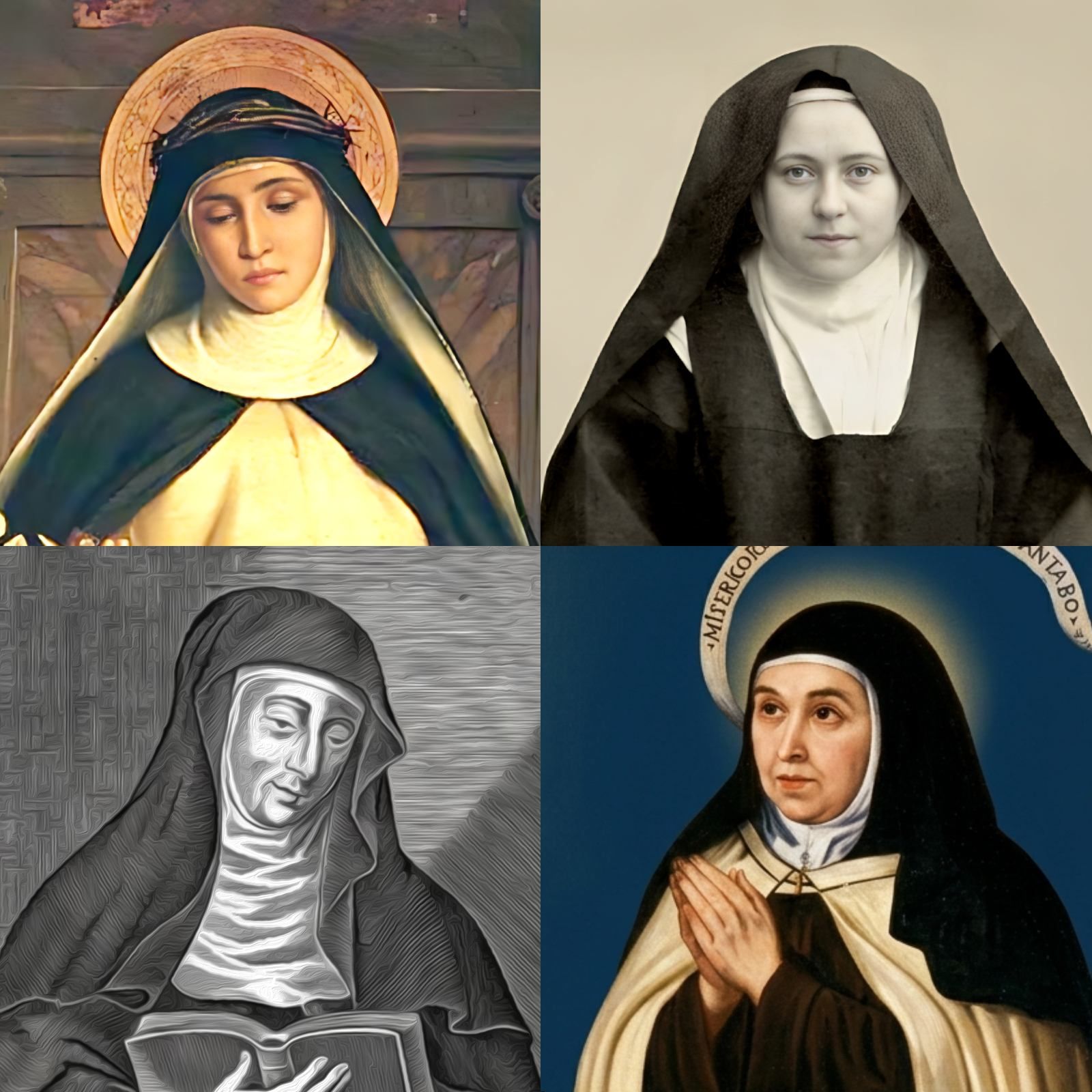
Documentos RNE
Documentos RNE - Doctoras de la Iglesia: místicas, visionarias y teólogas - 30/03/26
00:55:52
Doctoras de la Iglesia: místicas, visionarias y teólogas
Loading summary
Transcript149 lines
- [00:01]
Narrator
Rne audio. Solo tienes que escuchar. Documentos radio nacional de españa.
- [00:27]
Pope Paul VI
Hoy, en la Plaza de San Pedro, llena de fieles procedentes de todo el
- [00:32]
Narrator
mundo,
- [00:36]
Pope Paul VI
he proclamado Doctora de la Iglesia Universal a Teresa del Niño Jesús y de la Santa Paz.
- [00:52]
José Carlos Martín
Sería bueno incluir el nombre de Santa Catalina de Siena en el número de
- [00:56]
Narrator
Doctores de la Iglesia.
- [00:57]
Reporter
Santa Teresa de Ávila es declarada Doctora de la Iglesia. Primera mujer agraciada con este tipo.
- [01:07]
Announcer
Declaramos Hildegarda de Vingen Doctora de la Iglesia Universal.
- [01:18]
Saint Thérèse of Lisieux
Jesús ha querido darme luz acerca de este misterio.
- [01:22]
Saint Catherine of Siena
Debe venir a Roma. Venga, venga sin temores.
- [01:26]
Saint Teresa of Ávila
Y las mercedes que el Señor me ha hecho.
- [01:28]
Saint Hildegard of Bingen
Vino del cielo abierto una luz ígnea que se derramó como una llama en todo mi cerebro, en todo mi corazón.
- [01:36]
Program Host
Doctoras de la Iglesia, místicas, visionarias y teólogas.
- [01:49]
Narrator
Sólo cuatro mujeres se encuentran entre los actuales 38 doctores de la Iglesia Cató Teresa de Jesús, Catalina de Siena, Teresa de Lisieux e Hildegarda de Bingen. El Papa Bonifacio VIII es el que oficialmente inicia el título de Doctor de la Iglesia en el año 1295, con el nombramiento de San Agustín de Hipona, San Ambrosio de Milán, San Gregorio Magno y Jerónimo de Estridón.
- [02:23]
Silvia Mas
El Doctor de la Iglesia es una figura en la que se une la santidad de vida, o sea, una fama de santidad. Luego también un pensamiento que es acorde con este Evangelio y con esta transmisión de la vida de la Iglesia. Una doctrina que sea correcta, que sea coherente.
- [02:43]
Narrator
SILVIA Mas Profesora del Departamento de Historia de la Iglesia de la Pontificia Universidad della Santa Croce en Roma Pero sobre
- [02:51]
Silvia Mas
todo, para un Doctor de la Iglesia lo que necesitamos es la erudición eminente, es decir, una profundización que no quiere decir tanto en extensión. Uno puede pensar Santo Tomás de Aquino es un Doctor de la Iglesia y nos viene a la cabeza las sumas y una síntesis de un pensamiento de un hombre de una capacidad increíble. Pero no es necesaria tanto la extensión como la profundidad.
- [03:17]
Narrator
Nombres como Santo Tomás de Aquino o San Bernardo de Claraval, entre otros, se unieron a figuras destacadas de los primeros Padres de la Iglesia. Muchos de ellos ya consider considerados Doctores por la tradición. Pero hasta 1970 no reconocería la Iglesia a una mujer como Doctora de la Iglesia Universal.
- [03:42]
Reporter
Abrimos este servicio informativo desde la Basílica de San Pedro de Roma. Ofrecemos este reportaje sobre la solemne proclamación de Santa Teresa de Jesús como doctora universal de la Iglesia, ceremonia ciertamente inédita en la historia, porque si bien es cierto que la Iglesia proclamó hasta ahora 30 doctores, esta es la primera vez que tal honor recae en una mujer. Y es también la primera vez que el Papa personalmente honra con su presencia personal una declaración de este tipo.
- [04:12]
Narrator
Transmisión en directo de Radio Nacional de España el 27 de septiembre de 1970.
- [04:19]
Reporter
Durante tres siglos se tuvo a Teresa de Ávila por doctora. Abunda la iconografía de la santa con los atributos doctorales y sin embargo, de manera oficial no se planteó la candidatura oficial al doctorado hasta el pontificado del Papa Pio XI. Fue entonces cuando los teólogos se preguntaron si la santa no estaba ya en posesión de un doctorado equivalente por el estilo del reconocido a los primeros grandes doctores antes de las proclamaciones.
- [04:50]
Narrator
Pero con la frase obstat sexus, el sexo lo impide, se expresó en esta ocasión la negativa vaticana a la solicitud del doctorado para la santa por parte de la Orden del Carmelo Descalzo.
- [05:02]
Reporter
La Iglesia ha definido la figura del doctor. En el siglo XVIII ninguna condición se pedía sobre el sexo, ni se exigía que fueran varones. Pero ha existido un doble obstáculo secular, el primero atribuido a San Pablo, el segundo a Santo Tomás. De San Pablo existen dos textos en la primera carta a los Corintios se escribe que las mujeres en las asambleas callen, no se les permite hablar. En otra carta a la mujer no le permito enseñar. Era aún más difícil el obstáculo debido a la pluma de Santo Tomás. ¿En su Tratado de los carismas, el santo plantea frontalmente el problema Los carismas de la palabra, de la ciencia, de la sabiduría, son o no son concedidos a las mujeres? Se pregunta el filósofo. Su respuesta, en sustancia, es negativa. La apoya en razones extremadamente precarias.
- [05:53]
Theologian
Debemos añadir dos observaciones que nos parecen importantes. En primer lugar, hay de que notar que Santa Teresa de Ávila es la primera mujer a quien la Iglesia confiere el título de doctora.
- [06:10]
Narrator
Pablo VI, en su homilía en español durante la proclamación de la santa abulense
- [06:15]
Theologian
Y esto no sin recordar las severas palabras de San Pablo, las mujeres cállense en las iglesias. Lo cual quiere decir todavía hoy que la mujer no está destinada a tener en la Iglesia funciones jerárquicas, de magisterio y de ministerio. ¿Se habrá violado entonces el precepto apostólico, podemos responder con claridad No, realmente no se trata de un título que comporte funciones hierárgicas de magisterio? Pero a la vez debemos señalar que este hecho no supone en ningún modo un menosprecio de la sublime misión de la mujer en el seno del pueblo de Dios.
- [07:16]
Teófane Segido
La gran dificultad era esa, el ser mujer.
- [07:19]
Narrator
El historiador y carmelita descalzo Teófane Segido, en el año del quinto centenario de Santa Teresa, comentaba cómo ella misma había hecho frente a esas trabas Y ella
- [07:30]
Teófane Segido
en alguna ocasión le dijeron que a ver si se callaba, a ver si se metía en su conventito y a ver si no andaba por ahí de un sitio para otro. Y que tuviese en cuenta lo que dice San Mulieres in Ecclesia tacean que las mujeres en la Iglesia estén calladitas. Y entonces cuenta ella que tuvo una especie de experiencia espiritual en que Dios le Anda, diles a esos que expliquen a San Pablo en su contexto, no por una frase, lo cual es una norma precozísima. Lo dice ella, es algo encantador. Exégesis que hace
- [08:04]
Narrator
Nacida en Ávila en 1515, Santa Teresa profesa en el convento de la Encarnación de su ciudad natal en 1534. No será hasta 1555 cuando, profundizando en sus experiencias místicas, inicia el camino de la reforma del Carmelo, lo que le lleva a la fundación de numerosos conventos. Una amplia labor vital que compagina con la redacción de su gran obra literaria.
- [08:34]
Saint Teresa of Ávila
Quisiera yo que, como me han mandado y dado larga licencia para que escriba el modo de oración y las mercedes que el Señor me ha hecho, me la dieran para que muy por menudo y con claridad dijera mis grandes pecados y ruin vida. Diérame gran consuelo.
- [08:55]
Narrator
Con estas palabras inicia Teresa de Jesús su Libro de la vida, texto autobiográfico fundamental para conocer su pensamiento.
- [09:05]
Rosa Navarro Durán
Indudablemente, ya que es listísima, es una mujer inteligentísima y que tiene los pies muy asentados en el suelo, sabe muy bien que una mujer y más monja no puede escribir.
- [09:17]
Narrator
Rosa Navarro Durán, catedrática de Literatura Española de la Universidad de Barcelona.
- [09:22]
Rosa Navarro Durán
Ahora bien, si ella empieza a escribir y luego se lo enseña todo, eso sí que lo hace a los confesores, a quien se dirige en el Libro de la vida, y ellos lo aprueban y le dicen que siga, es lógico que tenga el estímulo para continuar con ello. Esto no es una escritora que escribe solo para monjas, vamos a ver. Es una escritora de pies a cabeza que tiene mucho interés en que su obra llegue a los demás y que sirva para todo el mundo su verdad.
- [09:52]
Narrator
Su obra literaria abarca libros de carácter místico y didáctico como Camino de perfección, El libro de las fundaciones y las moradas o El castillo interior.
- [10:05]
Saint Teresa of Ávila
Estando hoy suplicando a Nuestro Señor, háblese por mí, porque yo no atinaba a cosa que decir ni cómo comenzar a cumplir esta obediencia, se me ofreció lo que ahora diré, para comenzar con algún fundamento, que es considerar nuestra alma como un castillo todo de un diamante o muy claro cristal, adonde hay muchos aposentos, así como en el cielo hay muchas moradas.
- [10:40]
Rosa Navarro Durán
Ella, que es una observadora estupenda, ve elementos de la vida cotidiana y los intercala en su exposición para hacer comprensible lo que dice.
- [10:52]
Narrator
La declaración como Doctora de la Iglesia de Santa Teresa de Jesús fue un gran acontecimiento. En 1970, jóvenes ataviadas con trajes de
- [11:02]
David Jiménez
las 14 provincias donde Santa Teresa fundó
- [11:05]
Reporter
monasterios, asistieron en la Basílica Vaticana al
- [11:07]
Pope Paul VI
acto solemne de la proclamación de la
- [11:09]
David Jiménez
Santa de Ávila por Su Santidad Pablo VI como primera Doctora Universal de la Iglesia.
- [11:16]
Josemi Lorenzo Arribas
Teresa de Ávila, un personaje que también ha sido muy ambivalente en la cultura española.
- [11:22]
Narrator
José Mi Lorenzo Arribas, doctor en Historia Medieval y experto en monacato femenino, porque
- [11:28]
Josemi Lorenzo Arribas
de ser casi un icono del franquismo, después ha sido unánimemente reconocida también por todas las tendencias feministas como una pensadora y una mujer con un empuje brutal y que sirve para ampliar horizontes y que socava los cimientos patriarcales a la hora de negar ciertas cosas. También fue una mujer hábil y que supo establecer estrategias y demás. Pero desde luego, en la cultura de la península ibérica posiblemente no haya habido otra mujer con esa relevancia histórica. Al fin y al apóstol.
- [12:03]
Narrator
Su trascendencia como figura se ha reflejado en numerosas ocasiones en el cine y la televisión. Entre las visiones más destacadas de su vida se encuentra la serie producida por Televisión Española en 1984, con la dirección de Josefina Molina, guión de Carmen Martín Gaite y Víctor de la Concha e interpretación de Concha Procurad ser afables, que amen vuestra conversación y deseen vuestra manera de vivir y tratar, y no se atemoricen y amedrenten de la virtud. Cuanto más santas, más conversables. No dejéis arrinconar vuestra alma. En 2020, numerosos actos conmemoran el 50º aniversario de la proclamación de Santa Teresa como Doctora de la Iglesia.
- [12:59]
David Jiménez
En este sitio, en el mismo lugar donde se encontraba la casa donde nació Santa Teresa de Jesús, ahora se edifica esta iglesia y este año estamos de fiesta, celebrando el 50 aniversario de la declaración como doctora de la Iglesia de Santa Teresa de Jesús.
- [13:14]
Narrator
David Jiménez, carmelita descalzo y prior de su comunidad en Ávila, lo recordaba para
- [13:20]
David Jiménez
RTV La Iglesia nombra doctor a alguien que por su doctrina es una doctrina eminente, especial, que ilumina a toda la Iglesia sin preocuparse del tiempo y del lugar. Siempre habían sido varones los que eran doctores de la Iglesia. Es precisamente con Santa Teresa cuando la Iglesia, con San Pablo VI, reconoce como primera mujer doctora a esta mujer que ha tenido una vida santa, pero también una doctrina que sigue iluminando a nuestro mundo de hoy.
- [13:55]
Narrator
Tras esta celebración, distintas instituciones universitarias interesadas en profundizar en el papel de las mujeres en la Iglesia se unieron para llevar a cabo en 2022 un congreso sobre las Doctoras de la Iglesia. Silvia Mas Universidad della Santa Croce en
- [14:12]
Silvia Mas
Roma Lo que a mí me llamó la atención es que realmente se ve que ha habido en la historia de la Iglesia mujeres que han sido realmente líderes, si queremos utilizar una palabra contemporánea, empoderadas, en el sentido de que han sabido abrir camino, cambiar esquemas, y eso no significa que no hayan encontrado dificultades o estrecheces de mente. Nuestro trabajo histórico se centraba mucho en ser muy profesionales. Históricamente.
- [14:48]
Theologian
Tantas mujeres han llegado a las cimas más altas, hasta el punto de que su palabra y sus escritos han sido luz y guía de sus hermanos, luz alimentada cada día.
- [15:06]
Narrator
En el contexto, el 4 de octubre de 1970, algunos días después de Teresa de Jesús, otra mujer, Santa Catalina de Siena, es proclamada Doctora de la Iglesia por Pablo VI.
- [15:21]
Josemi Lorenzo Arribas
Catalina de Siena, que ya es una figura del siglo XIV y que nos pone en relación con un universo femenino apasionante desde mi punto de vista, y que es el de las figuras de las terciarias que no llegan a ser monjas, son órdenes terceras.
- [15:35]
Narrator
Josemi LORENZO ARRIBAS Doctor en Historia Medieval
- [15:38]
Josemi Lorenzo Arribas
La orden primera es la masculina. Vamos a pensar en dominicos. Los dominicos serían la orden primera, las dominicas orden segunda y después hay unas órdenes terceras. O terciarias, que son mujeres laicas, pero que deciden hacer algún voto, entrar libremente bajo una regla y llevar una vida que les contribuya a la perfección y a la santidad y demás. Pero son mujeres libres en todo caso, y son mujeres que habitan en espacios urbanos y son mujeres que tienen agencia, es decir, que el resto de la sociedad les da un valor que estén ahí y pronto les empezarán a llover testamentos. Bueno, pues porque eran mujeres muy valoradas. Nos encontramos en este caso con Catalina de Sina, una mujer que muere muy jovencita, a los 33 años, una señora que pasa como una de las principales dominicas que ha habido y que de hecho la iconografía la replica en muchísimos lugares, desde luego de la península ibérica, de Italia, claro, pero en realidad de toda Europa.
- [16:46]
Narrator
Catalina nació en 1347 en Siena y falleció en Roma en 1380. Fue reconocida como mística, predicadora y escritora, en especial con su obra llamada El diálogo con la Divina Providencia, fruto de sus experiencias visionarias iniciadas desde los 6 años.
- [17:08]
Saint Catherine of Siena
Cuando un alma se eleva a Dios con ansias de ardentísimo deseo de honor a Él y de la salvación de las almas, se ejercita por algún tiempo en la virtud, se aposenta en la celda del conocimiento de sí misma y se habitó a ella para mejor entender la bondad de Dios.
- [17:29]
Narrator
Pero además, Catalina de Siena tuvo una enorme influencia política en su época, de gran complejidad para la historia del papado, que entre 1309 y 1377 vivió el llamado exilio de Aviñón. Durante ese periodo, siete papas abandonaron Roma en un momento de grandes tensiones con la monarquía francesa.
- [17:53]
José Carlos Martín
Santa Catalina de Siena es la mujer clave de la reforma de la Iglesia, la primera gran reforma de la Iglesia. Tenía que arrancar volviendo al Papa a Romo. El papa estaba en Aviñón y por tanto estaba dominado por el poder francés. No tenía independencia.
- [18:11]
Narrator
José Carlos Martín, doctor en Historia de la Teología y miembro de la Academia de Historia Eclesiástica Era importante que él
- [18:18]
José Carlos Martín
volviera y volviera otra vez a ponerse en marcha una curia romana que fuera independiente, que fuera universal, que pudiera recuperar el gran sentido de la Iglesia. Catalina de Siena lo vio enseguida, porque ella decía que la oración es como el pez en el agua, y el agua en el pez es muy bonito. Su libro, su gran obra, se llama El diálogo. El diálogo con Jesús es como el pez en el agua y el agua en el pez. Por tanto, ella yo quiero estar unida a Jesús en una oración diaria y quiero contagiar a los demás la felicidad que eso conlleva. ¿Y cómo lo hago? Amando al Papa como lo que es, el Vicecristo. Ella fue la primera persona que llamó al Papa el Vicecristo. Y procuraba tener diálogo con el Papa para tener diálogo con Dios
- [19:15]
Saint Catherine of Siena
Santo y bienaventurado Padre. Su indigna hija Catalina le da coraje en su preciosa sangre con el deseo de verlo sin ningún temor servil, ya que el que tiene temor pierde toda la fuerza de santas resoluciones y buenos deseos.
- [19:30]
Narrator
Carta DE Catalina DE Siena al Papa Gregorio XI debe venir a Roma.
- [19:35]
Saint Catherine of Siena
Venga, venga sin temores. Si alguien de los que le rodean se lo quiere impedir, respóndale intrépidamente como Cristo respondió a San Pedro, que quería por ternura evitar la pasión.
- [19:51]
Narrator
Su activa vida política, iniciada a los 25 años, la llevó a tener un abundante pistolario con cerca de 400 misivas dirigidas a importantes figuras de su época.
- [20:02]
Saint Catherine of Siena
En el nombre de Jesucristo crucificado, le niéguese a seguir los consejos del demonio. Quien reao mis ojos, no un temeroso. Responda al Señor, quien lo llama a sostener y ocupar la silla del glorioso Pastor San Pedro. Con esta cara, hermano, le ruego y le venga a desconcertar a nuestros enemigos.
- [20:23]
Narrator
Según la tradición, llegaba diciendo dictar hasta tres cartas a la vez sobre distintos temas.
- [20:30]
José Carlos Martín
Lo normal es dictar. No nos olvidemos que Santo Tomás de Aquino tenía tres personas copiando lo que decía Santa Catalina. Seguramente sabría escribir, pero realmente seguro que dictaría mucho. Porque ella tenía que preparar el terreno de Roma. No sólo fue al Papa y le ven, ella tuvo que ir y recuperar los Estados Pontificios para que el Papa pudiera venir y tuviera Hilde Albornoz, el hombre fuerte de aquella época, que se alía con Catalina de Siena para empezar a poner orden en los Estados Pontificios. Porque si viene el Papa y aquello está en manos de unas cuantas familias de los Orsini, pues había que poner orden. Eso implica muchas gestiones, muchas cartas.
- [21:16]
Josemi Lorenzo Arribas
Hasta la edad contemporánea se puede decir que toda actividad política estaba mediada por lo religioso y por el discurso religioso. Y estas mujeres entran en política y de qué manera, En el caso de Catalina de Siena, media para lograr que el Papado vuelva a Roma, siendo una mujer tan extraordinariamente joven, porque si muere a los 33 años, todo esto evidentemente lo hizo antes. Y eso significaba que había varones muy importantes, también muy poderosos, que le concedían a ella autoridad y capacidad de mediación. Esta variante relacional, llamémosle política, en gran parte para gente que no podía o no tenía la capacidad de hablar como la tenía otro varón, pasaban necesariamente por las visiones. Era una forma de autorizar su voz. Entonces, claro que pasaba por las visiones y claro que entraban en política.
- [22:10]
Pope Paul VI
Hoy, en la Plaza de San Pedro, llena de fieles procedentes de todo el mundo y de numerosos cardenales, arzobispos y obispos, he proclamado Doctora de la Iglesia Universal a Teresa del Niño Jesús y de la Santa Paz.
- [22:35]
Narrator
27 años más tarde del nombre Nombramiento de Teresa de Jesús y Catalina de Siena, llega la proclamación de una tercera Doctora de la Iglesia, Teresa de Lisier. En 1997. Era el año del centenario del fallecimiento de la joven Teresa, nacida en 1873 en Alençon, en Francia. Tras una temprana vocación, con 15 años ingresó en el Carmelo de Lisier. A pesar de su corta vida, realizó una notable producción literaria que abarca poesía, breves piezas de teatro, cartas y su obra más conocida, de carácter autobiográfico, publicada bajo el título de Historia de un alma.
- [23:24]
Saint Thérèse of Lisieux
Seguramente, madre querida, te estás preguntando extrañada, dónde quiero ir a parar. Pues hasta ahora nada he dicho todavía que se parezca a la historia de mi vida. Pero me has pedido que escribiera lo que me viniera al pensamiento, sin trabas de ninguna clase. Así que lo que voy a escribir no es mi vida propiamente dicha, sino mis pensamientos acerca de las gracias que Dios se ha propuesto concederme.
- [23:55]
José Carlos Martín
Una de las conclusiones del Vaticano II es la recuperación de la confianza. La Iglesia tiene que ser lugar de acogida, tiene que ser lugar de confianza. En ese sentido, Teresita del Niño Jesús lo que hace es curarnos del gran mal de la soberbia. La gran Doctora de la Iglesia, de ese amor sencillo, de ese amor en lo pequeño, de ese amor en las cosas de cada día. El caminito espiritual que me llama ella en su libro de Historia de un alma, lo que viene a decir esto no es cuestión de fuerza, no es cuestión de voluntarismo, no es cuestión de soberbia, sino que es cuestión de tomar ese camino que está al alcance de la mano, que es el detalle de cariño dejar hacer a Dios en mi alma.
- [24:44]
Saint Thérèse of Lisieux
Jesús ha querido darme luz acerca de este misterio. Puso ante mis ojos el libro de la naturaleza y comprendí que todas las flores que Él ha creado son hermosas y que el esplendor de la rosa y la blancura del lirio no le quitan a la humilde violeta su perfume, ni a la margarita su encantadora sencillez. Comprendí que si todas las flores quisieran ser rosas, la naturaleza perdería su gala primaveral y los campos ya no se verían esmaltados de florecilla.
- [25:17]
Narrator
Historia de un alma se publicó en 1898, un año después de la muerte de Santa Teresa de Lisier. Se trata de un libro basado en tres manuscritos autobiográficos que desde el primer momento alcanzó una enorme popularidad como libro espiritual. En 1925 el Papa Pío XI canonizó a la joven carmelita descalza y la nombró Patrona de las Misiones. Con Juan Pablo II llegaría en 1997 su nombramiento como Doctora de la Iglesia.
- [25:55]
José Carlos Martín
Una de las grandes preocupaciones de Juan Pablo II era el relanzamiento de las misiones, es decir, el mundo de llevar a Jesús hasta el último rincón de la tierra, lo cual tiene dos uno, llevar a Jesús a lugares ignotos, a países donde apenas está presente el Evangelio, como puede ser muchos lugares de África o de Asia todavía, incluso de América. Y luego hay otro mundo, que es el mundo intelectual, el mundo de los poderosos, el primer mundo. Es un mundo que hay que estar constantemente evangelizando. Juan Pablo II le llamaba la Nueva evangelización, Nueva en su ardor, no va en su método, no va en sus expresiones, porque, como decía Juan Pablo II, la iglesia es experta en humanidad. Por eso nombrarle a Teresita de Lisieux Doctora de las Misiones y Patrona de las Misiones era recordar al mundo entero que el mensaje de la Iglesia es un mensaje de amor.
- [26:51]
Narrator
Ha sido inspiración de directores clásicos del cine francés como Julien Divivier y Alain Cavalier, quien con su película Thérèse obtuvo el premio del jurado en Cannes y hasta seis premios César en 1986. ¿No tienes mucho que decirle a tu superiora?
- [27:09]
Saint Thérèse of Lisieux
Me quedo sin habla.
- [27:10]
Narrator
Si no puedes articular palabra, escribe.
- [27:13]
Saint Teresa of Ávila
¿Por qué no escribes tus recuerdos?
- [27:16]
Saint Catherine of Siena
Lo que experimentas aquí sería interesante.
- [27:19]
Victoria Cirlot
Hazlo por mí.
- [27:21]
Narrator
Cógelo.
- [27:30]
Announcer
Nos acogiendo al deseo de muchos hermanos en El Episcopado, tras haber tenido el parecer de la Congregación para las Causas
- [27:39]
Narrator
de los Santos,
- [27:42]
Announcer
declaramos a Hildegarda de Wingen Doctora de la Iglesia Universal espíritu santo.
- [27:52]
Narrator
Benedicto XVI proclama una cuarta doctora de la iglesia en el año 2012. Hildegarda de Wingen Extraordinaria mística alemana del
- [28:02]
Theologian
siglo XII, Hildegarda fundó una alta comunidad a Pingen, intitulata San Ruperto Tuve trascos en el resto de la vida.
- [28:13]
Narrator
Nacida en 1089 en Bermersheim, en una familia noble, entra a los nueve años en el monte monasterio benedictino de Dissibodenberg y a lo largo de sus más de 80 años de vida despliega una intensa actividad intelectual y política. Tiene una monumental obra, tanto espiritual como artística y científica, que abarca extensos conocimientos de teología, ciencias naturales y música. Tres libros nos transmiten sus visitas en los que expresa su compleja teología, entre ellos el Estibias, quizás el más famoso.
- [28:54]
Josemi Lorenzo Arribas
Hildegarda escribe un ciclo largo, largo de visiones, que son las que ya ha tenido y que nuevamente nos relacionan con otro casi de las escritoras la necesidad de ser autorizadas haciendo uso de una voz superior, en este caso digamos, la voz de Dios, que a través de ellas se revela a través de las visiones.
- [29:16]
Narrator
Josemi Lorenzo Arribas, doctor en Historia Medieval y autor de una monografía sobre Hildegarda
- [29:23]
Josemi Lorenzo Arribas
El ciclo visionario de Hildegarda es uno de los más impresionantes de la Edad Media, tanto masculino como femenino, por la exuberancia de símbolos, por las cosas que se ponen en juego y después por la cantidad de años en los cuales estas visiones se fueron sucediendo y el escribano del monasterio, un monje en este caso, las fue apuntando. Al final configuran un retablo prácticamente inmenso que está lejos de ser interpretado, porque para eso habría que meterse lógicamente en la mente de Hildegarda.
- [30:04]
Victoria Cirlot
Como dice en la vida que escribe Theodorich von Eichternach. Ella habla de que desde su más tierna infancia tuvo visiones, pero en el año 1141 es cuando la visión es aquello que tiene que ser trasladado a la escritura. Ella recibe la orden de que debe escribir todo aquello que ve y oye.
- [30:25]
Narrator
Victoria Cirlot, catedrática de Filología Románica de la Universidad Pompeu Fabra, editora de Hildegarda de Bingen en español.
- [30:34]
Victoria Cirlot
En esa unión tan inextricable que acontece en la experiencia mística de visión y audición, porque tiene lugar eso que nosotros llamamos la sinestesia, los sentidos se confunden y eso es lo que está detrás de una obra suya, como por ejemplo Scibias, o como por ejemplo El libro de las obras divinas.
- [30:57]
Saint Hildegard of Bingen
A La edad de 42 años y 7 meses vino del cielo abierto una luz ígnea que se derramó como una llama en todo mi cerebro, en todo mi corazón, en todo mi pecho. No ardía, sólo era caliente, del mismo modo que calienta el sol todo aquello sobre lo que pone sus rayos. Y de pronto comprendí el sentido de los límites, de los alterios, de los Evangelios y de otros volúmenes, tanto del Antiguo como del Nuevo Testamento. Aun sin conocer la explicación de cada una de las palabras del texto, ni la división de las sílabas, ni los casos de los tiempos,
- [31:51]
Victoria Cirlot
Hildegard repite siempre que ella nunca tuvo éxtasis. Y curiosamente una coetánea suya como fue Elisabeth von Schönau, con la que se escribe Hildegard, esta mística le dice que sus visiones siempre son extáticas, es decir, lo que significa la palabra éxtasis, o sea, en esa salida del mundo, mientras que Hildegard siempre dice que no, ella tenía los ojos abiertos, y mientras tenía los ojos abiertos y por tanto rodeada del mundo físico y material, estaba asistiendo a un despliegue monumental, porque sus visiones son realmente monumentales, y que ese mundo ella accedía de otro modo, no con los ojos físicos, sino que accedía a través de esos ojos interiores,
- [32:40]
Narrator
unas visiones que se diferencian claramente de los fenómenos alucinatorios.
- [32:45]
Victoria Cirlot
Es muy importante distinguirlo, porque aunque en nuestra época son conceptos que se confunden y hay un libro famoso que hablaba de las alucinaciones y que fue el libro que leyeron todos los surrealistas, yo creo que es una distinción útil, porque la visión no nos introduce en ninguna patología, ya que el místico tiene clara conciencia de que una cosa es lo que ella está viendo y otra cosa es lo que ven los demás. Esto, por ejemplo, lo aclara con toda rotundidad Teresa de Ávila en su autobiografía cuando yo veía las piedras preciosas en la cruz que me había dado Cristo, pero solo las veía yo. Es decir, que la mística tiene una conciencia clara entre lo que es la visión y lo que es la percepción del mundo físico, y no las confunde como sí ocurre en cualquier patología.
- [33:43]
Narrator
Hildegarda describió sus amplísimos conocimientos en ciencias en sus obras Libro de medicina sencilla, también conocido como Física, y Libro de medicina compleja, también llamado Causas y remedios,
- [33:58]
Josemi Lorenzo Arribas
y de hecho Física es el rótulo bajo el cual se comprenden un montón, son nueve libros distintos, donde va haciendo repaso a cada una de las cuestiones de lo que entonces se considera física, a los animales, a las plantas, a las piedras, a los cuatro elementos, etc. Es una obra tremenda y que tiene como diferencia con respecto a otras summe de sus contemporáneos masculinos, que principalmente ya parte de la experiencia y de lo que hoy llamaríamos casi la experimentación. No es una obra de conocimientos simplemente librescos o de cita de autoritates, que también las hay, sino que siempre es muy apegada a lo que ella conoce, a lo que ella sabe.
- [34:44]
Narrator
Hildegarda compuso además una ingente obra musical con antífonas, himnos e incluso un auto sacramental.
- [34:54]
Josemi Lorenzo Arribas
Una de sus ciclos más conocidos es Sinfonía de la armonía de las revelaciones celestes. La música no voy a decir que lo impregna todo, pero si no es todo, es casi todo, porque también era muy propio de una filosofía platónica como a la que pertenece por siglo Hildegarda, una filosofía muy boeciana en cuanto al significado de la música, las esferas, y de la música que suena, vamos a decirlo así, pues tiene todo ese sentido de que esa armonía celestial sea tanto la relación de los humores entre sí, como de los elementos básicos, como de las relaciones entre las personas al final. Y esto es una mentalidad muy medieval y muy pleno medieval, no solamente Hildegarda, claro, todo esto es proporción, y la proporción es belleza, y la música no es otra cosa que proporciones entrecruzadas, etc.
- [35:51]
Narrator
Creó incluso una lengua nueva llamada lingua ignota.
- [36:09]
Josemi Lorenzo Arribas
Eso es maravilloso, eso maravilloso, más en un mundo como ahora, en el que otras neolenguas se han ido con construyendo Tolkien, etcétera, etcétera. Hay unos manuscritos hildegardianos, efectivamente, en los cuales encontramos dos cosas. Por un lado, una lengua ignota. ¿Qué es la lengua ignota? Pues es una neolengua, es decir, es un idioma inventado, pero no solamente eso, sino que gran parte de esa lengua ignota está escrita con unas litere ignote, es decir, con unas letras, un alfabeto también inventado. Se ha estudiado mucho porque el glosario realmente lo que incluye es un glosario de cómo se dicen cerca de 1.100 palabras y las traduce al alemán de su época. Y la neolengua esta es una mezcla de medio alemán y latín, pero no llega a ser ni uno ni otro. Y se han disparado, claro, las hipótesis.
- [37:09]
Victoria Cirlot
Esa es la obra sobre la que más se ha discutido de Hildegar von Bingen, y que nunca ningún estudioso ha llegado a una conclusión clara. Pero yo creo que, teniendo en cuenta la pasión que hay en el mundo medieval por descubrir eso que se llama la URSSprache, el lenguaje original, y por lenguaje original se entiende el lenguaje en el que habló Dios a Adán en el paraíso, esa búsqueda cristaliza, yo creo, en esa obra tan profundamente extraña de Hildegard, que es La lengua ignota. Esto solo son hipótesis, porque no tenemos nada para llegar a comprender qué es esa lengua. Quizás es una lengua que quiere aproximarse a eso que ella ha oído, en eso que nosotros llamamos experiencia mística. Es decir, aquello que transcurre en un tiempo que no es el tiempo tiempo nuestro, terrenal, de nuestra vida cotidiana, sino que es un tiempo otro, parecido, por ejemplo, al tiempo del sueño.
- [38:11]
Narrator
Hildegarda tuvo también una activa vida como predicadora y se involucró en los más importantes temas de su época.
- [38:21]
José Carlos Martín
Es muy interesante porque el obispo de Colonia le dice Ven y dinos lo que Jesús quiere de nosotros. Ella se va a Colonia y predica a los sacerdotes con una fuerza, con una claridad, con una intensidad. Estamos en el tiempo de los cátaros, el mundo de la herejía cátara, que era una herejía oculta, porque ellos funcionaban siempre bajo tierra.
- [38:44]
Narrator
José Carlos MARTÍN Profesor del máster del Dicasterio de las Causas de los Santos en Madrid y asesor de la Conferencia
- [38:52]
José Carlos Martín
Episcopal Ellos tenían su credo, tenían su Padrenuestro, tenían sus sacramentos, tenían su clero y su clera, porque había mujeres en el mundo de los cátaros, había mujeres sacerdotisas. ¿Qué pasa? Que si hubiera triunfado el catarismo, la humanidad hubiera desaparecido, porque los cátaros prohibían toda relación sexual. Entonces, claro, ¿Cuál era el único camino para superar la herejía cátara? Pues que los sacerdotes fueran más ejemplares y más santos que los sacerdotes cátaros. Eso es la esencia de lo que Jesús le dice a Hildegarda, para que Hildegarda se lo diga. Cuando ella regresa al convento, el cardenal de Colonia le queremos que lo que les has dicho a los sacerdotes nos lo digas por escrito para poder meditarlo.
- [39:50]
Narrator
En el año 2012, Hildegarda es proclamada doctora junto al sacerdote español del siglo XVI, San Juan de Ávila.
- [39:58]
José Carlos Martín
Cuando el Papa estaba preparando el doctorado de San Juan de Ávila, pensó Y los discursos de Hildegarda a los sacerdotes de Alemania, que fueron lo que hizo que rebrotara la fe en Alemania, la fe católica, fue al MIÑE, que es la gran colección, la patología de MIÑE. Y ahí estaban. Pero no sólo estaban los discursos, es que además había un volumen del Mille recogiendo todos los milagros que Dios Nuestro Señor había hecho por intercesión de Hildegarda en vida, en el momento de la muerte y después de la muerte. Por tanto, el Papa tenía todos los elementos sobre el sacerdocio, tenía los milagros, tenía las pruebas de la santidad de vida, porque eran los testimonios de fama de Hildegarda. Y entonces se pudo hacer el proceso de canonización y se pudo hacer la preparación para el doctorado.
- [40:55]
Josemi Lorenzo Arribas
De hecho, en las iglesias locales alemanas, en la diócesis de donde ella vivió, siempre fue considerada santa y estaba incluida en el calendario litúrgico y en el santoral.
- [41:03]
Narrator
JOSÉ MI LORENZO ARRIBAS Doctor en Historia
- [41:06]
Josemi Lorenzo Arribas
Medieval Estos son los procesos complejísimos de la Iglesia cristiana y ahora católica, de las beatificaciones, canonizaciones, porque realmente nunca tuvo un predicamento universal como santa hasta el siglo XXI, desde luego muy, muy, muy tardío. También no es casual que sea un Papa alemán el que nombra doctora de la Iglesia a una alemana como era Hildegarda. Pero desde luego, si alguien merece ese tipo de títulos por su conocimiento, sabiduría, magisterio sobre todo, etc. Pues una de las primeras tuvo que haber sido ella. Pero bueno, pues ha habido que esperar hasta el siglo XXI. La Iglesia siempre en la vanguardia
- [41:48]
Saint Thérèse of Lisieux
El
- [41:48]
Narrator
interés por Hildegarda y su su obra es amplio. En la cultura contemporánea me ha interesado
- [41:54]
Victoria Cirlot
mucho la confrontación de una visionaria como fue Hildegard von Bingen con los procesos creativos de artistas de nuestro mundo.
- [42:04]
Narrator
VICTORIA ZIRLOT Catedrática de Filología Románica de la Universidad Pompeu Fabra y autora de La mirada mística femenina en la Edad
- [42:14]
Victoria Cirlot
Media Cuando te enfrenta, enfrentas a una mística del siglo XII como fue Hildegard, indudablemente tienes una sensación de alteridad absoluta, pero en cambio, al constatar documentos y testimonios de muchos artistas de nuestro siglo XX, comprendes que tampoco está tan lejos, ni que tampoco es algo tan otro. Siempre ocurre este fenómeno visionario.
- [42:44]
Saint Hildegard of Bingen
No oigo estas cosas ni con los oídos corporales, ni con los pensamientos de mi corazón, ni percibo nada por el encuentro de mis cinco sentidos, sino en mi alma, con los ojos exteriores abiertos, de tal manera que nunca he sufrido la ausencia del éxtasis.
- [43:04]
Victoria Cirlot
Y esa experiencia visionaria ella la relata muy bien porque la entiende como una iluminación, pero una iluminación pentecostal, es decir, que vuelve a ocurrir aquello que ocurrió en Pentecostés, según nos narran los Hechos de los Apóstoles, cuando el Espíritu Santo desciende ahí donde está la Virgen con los doce apóstoles y los ilumina a través de esas llamas del Espíritu y a partir de ese momento los apóstoles at adquieren el conocimiento lingüístico, pueden ir a predicar a cualquier lugar del mundo y además tienen visiones en nuestro mundo no podemos hablar de iluminación pentecostal, estamos ante otro mundo en el que lo sagrado se ha diluido tremendamente y son otras las formas de comprensión. Pero el fenómeno visionario está también presente, yo lo he podido comprobar en artistas como Max Ernst, Joan Miró, Anthony Tapies, cuando dentro de su proceso creativo de pronto y de pronto vi, entonces se abre lo que nosotros con los medievales llamamos el ojo interior, el ojo del corazón, el ojo de la mente, es decir, tiene lugar una visión otra que está detrás de esa creación. Max Ernst, por ejemplo, decía que él no tenía nada más que esperar que acontecieran, que florecieran las imágenes que venían, en su caso dice, no dice del Espíritu Santo, pero dice del inconsciente.
- [44:48]
Josemi Lorenzo Arribas
Cualquier rama feminista la ha reivindicado y lo que causa estupor es que no sea igualmente reivindicada por cualquier rama medievalista, sea feminista o no, y que se topa con una obra de esta magnitud, porque todavía seguimos viendo incluso en libros clásicos, etc, o bien la omisión de Hildegarda Deringen, que ni siquiera se la cita, o bien yo ahora estoy pensando en una historia de la música muy conocida, con la que llevamos generaciones estudiando los alumnos y alumnas de conservatorio, ahora tiene un capítulo de dos páginas y con eso parece que ya la cuota que ya está servida.
- [45:36]
Narrator
En la actualidad varias mujeres se encuentran en las candidaturas al doctorado de la Iglesia, entre ellas una carmelita descalza de origen Juan Judí Santa Teresa Benedicta de la Cruz, más conocida como Edith Stein,
- [45:53]
Silvia Mas
se está revisando toda su producción escrita
- [45:56]
Narrator
porque es una filósofa, Silvia Mas, profesora del departamento de Historia de la Iglesia de la Pontificia Universidad de la Santa Croce en Roma.
- [46:05]
Silvia Mas
Era alumna de Hafsa, padre de la fenomenología, y escribió un libro Ser finito y ser eterno. Fue una de las mujeres que luchó por el derecho al voto femenino. Estamos en los años 20 del siglo pasado.
- [46:28]
Narrator
Edith Stein nace en Breslavia en 1891, en el seno de una familia judía. Estudia con el matemático y filósofo Edwin en Friburgo y lee en 1917 su tesis doctoral titulada Sobre el problema de la empatía. Con motivo de su beatificación por parte de Juan Pablo II en 1987, la catedrática y escritora Carmen Castro, viuda del filósofo Javier Tubiri, y el filósofo isla sacerdote Carlos Castro Cubels recuerdan en RTVE su
- [47:09]
Carmen Castro
yo no conocí, realmente yo no conocí a la Dra. Stein, pero sin conocerla personalmente. Sé de ella muchísimo, porque sí la había conocido Javier, mi marido, en casa de Husserl, en La primavera de 1929, en la fiesta de la jubilación de la Universidad de Freiburg del maestro Husserl. Javier llegó a Berlín después de Freiburg, En el año 30, en el otoño, impresionado por Edith Stein. Emanaba santidad, amaba a esa santidad de Edith Stein. Era una mujer suave, callada, inteligentísima, extraordinariamente feliz.
- [47:52]
Announcer
Había sido ella. No soñó nunca cuando empezó llegar a ser nada menos que asistente y llegó a ser la gran asistente, la gran editora y la gran colaboradora de Husserl. Realmente practicó su primera fe judaica. Pasó en un cierto agnosticismo, hasta que se encuentra, por un azar casi providencial, en Bergchaber con la vida de Santa Teresa. Se la lee de un tirón por la noche y al terminar pronunció la célebre frase Yaoi Das ist die Wahrheit. Esto es, la verdad se había convertido.
- [48:34]
Saint Catherine of Siena
Se me ofreció lo que ahora diré.
- [48:37]
Saint Teresa of Ávila
Entendí el gran bien que hay en
- [48:39]
Saint Catherine of Siena
no hacer caso de cosas para llegarnos más a Dios.
- [48:43]
Silvia Mas
Y así entendí una mujer inteligente, profunda, que ha sido fuertemente sacudida interiormente por el pensamiento de otra mujer, una mujer del siglo XVI. Teresa Benedicta de la Cruz es una mujer del siglo XX, además de vanguardia, una estudiosa universitaria de fenomenología atea. Y lee este libro autobiográfico de una mística, pero que escribe con tanta claridad, con tanta profundidad, con tanto amor de Dios, que queda profundamente transformada y decide convertirse.
- [49:23]
Saint Catherine of Siena
Entendí grandísimas verdades sobre verdad, más que si muchos letrados me lo hubieran enseñado.
- [49:32]
Announcer
Inmediatamente después de esto se arregla por la mañana se compra un cat decísal y un breviario, se lo aprende todo y al poco tiempo va a oír su primera misa dicha por el párroco de Berchtshavern y le dice, después de dejarle dar gracias, le dice en la sacristía quiero ser bautizada. ¿El espanto fue tremendo por parte del párroco en aquellos tiempos sobre todo, y le pero usted está preparada? Pregúnteme. Se sabía hasta las posiciones de las manos del sacerdote en la misa. Se lo sabía todo.
- [50:09]
Silvia Mas
En 1934 ingresó en el monasterio carmelita de Colonia, tomando el nombre de Teresa Benedicta de la Cruz. Y ahí es donde pudo escribir su libro Ser finito y ser eterno.
- [50:21]
Saint Catherine of Siena
Un movimiento eterno en sí mismo, de un eterno sacar de sí, partiendo del fondo del ser propio infinito, como la entrega del yo eterno a un tú eterno, un eterno recibirse y darse correspondientes.
- [50:39]
Silvia Mas
En 1942 Hitler reaccionó ante la condena del nazismo por parte de los obispos holandeses. Esto conllevó a que Hitler ordenara la detención de los judíos, incluso los que eran conversos, porque ya se había convertido al catolicismo. Y ella fue Edith y su hermana Rosa fue fueron llevadas a Auschwitz y fueron asesinadas el 9 de agosto de 1942
- [51:04]
Carmen Castro
en el horno de Auschwitz, que es obra de quienes estaban hechos una escuridad, como hubiera dicho de ellos Santa
- [51:11]
Narrator
Teresa Carmen Castro, escritora En la noche
- [51:15]
Carmen Castro
serena con llama que consume y no da pena, la Madre Teresa Benedicta el Duvigis de la Cruz tuvo clara ayuda de San Juan de la Cruz. San Juan de la Cruz matando muerte en vida la has trocado. Tiene ya muy buena compañera Santa Teresa, Doctora de la Iglesia. En esta otra doctora, que yo creo que también debe de ser nombrada Doctora de la Iglesia,
- [51:48]
Narrator
su nombre se une al de otras mujeres que se encuentran en estudio para el nombramiento, como Juliana de Norwich o Brígida de Suecia.
- [51:57]
Silvia Mas
Unas mujeres con una personalidad arrasadoras y que se han enfrentado quizás a modos de ser que son estrechos, pero que en ese periodo eran así y ellas no se han frenado como han hecho su recorrido, Como un río que avanza y se encuentra un obstáculo, gira para otro lado, pero tiene una idea clara y llega a su objetivo.
- [52:29]
Program Host
Doctoras de la Iglesia, místicas, visionarias y teólogas. Un programa de Ana Vega Toscano, Con realización de Samuel Alarcón. Narradora Berta Tapia. Producción Elena Muñoz. Con el apoyo del archivo de Radiotelevisión Española y la asistencia de Jordi Barcia. Desde la corresponsalía de Radio Nacional en Roma. Con las voces Lourdes Guerras, Amaya Prieto, Irene Rivas, Mercedes Menchero, Libertad Martínez, Manuel Martínez, Martín Yade y Javier lostalé. Dirección de la Maika Aguilera y Álvaro Soto. Escucha todos nuestros programas en RTVE ES
- [53:22]
Narrator
Documentos Documentos Radio Nacional de España Vivo
- [53:27]
Saint Teresa of Ávila (poem recitation)
sin vivir en mí y tan alta vida española espero, que muero porque no muero. Aquí esta divina unión del amor en que yo vivo ha hecho a Dios mi cautivo y libre mi corazón y causa en mí tal pasión ver a Dios mi prisionero, que muervo porque no muero. Vivo sin vivir en mí y tan alta vida espero, que muero porque no muero. Ay, qué larga es esta vida, qué duros estos destierros, esta cárcel, estos hierros en que el alma está metida. Solo esperar la salida me causa dolor tan fiero, que muero porque no muero. Mira que el amor es fuerte, no me seas molesta, mira que solo te resta para ganarte, perderte. Venga ya la dulce muerte, el morir, venga ligero, que muero porque no muero. Vivo sin vivir en mí y tan alta vida espero que muera porque no muero. Aquella vida de arriba, que es la vida verdadera, hasta que esta vida muera, no se goza estando viva. Muerte, no me seas esquiva, viva muriendo primero, que muero porque no muero.