← Documentos RNE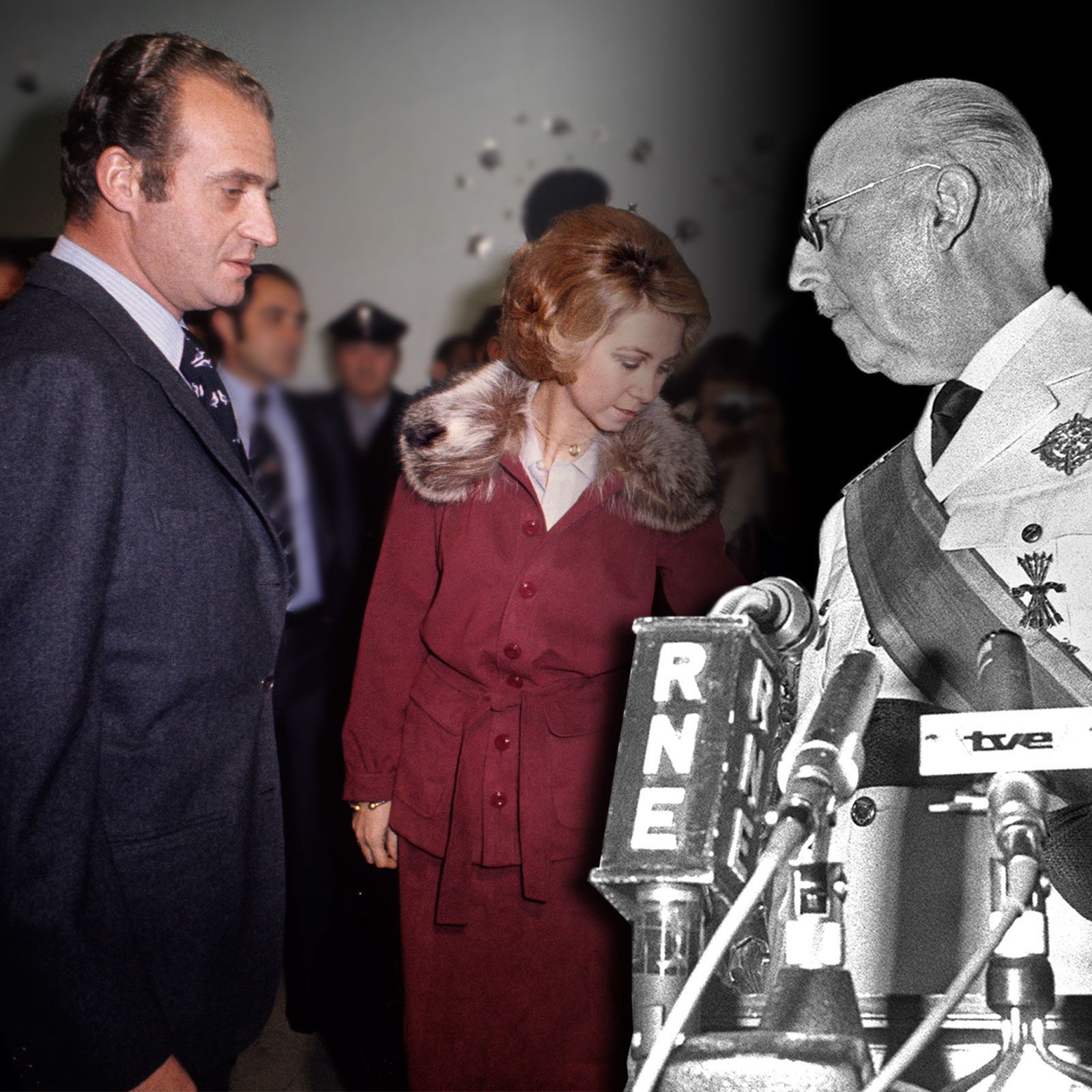
Documentos RNE
Documentos RNE - El desmontaje de un régimen | Después de Franco... ¿qué? - 10/11/25
00:55:28
El desmontaje de un régimen | Después de Franco... ¿qué?
Loading summary
Transcript210 lines
- [00:01]
Narrator
RNE Audio Descarga la app y disfruta de los programas de RNE y nuestros podcast originales.
- [00:15]
Narrator/Documentary Voice
Documentos radio nacional de españa.
- [00:29]
Santiago Carrillo
Españoles, Franco ha muerto.
- [00:33]
Narrator
Después de Franco, qué si nuestra nación.
- [00:36]
Santiago Carrillo
Se hubiera negado al sacrificio, se habría indudablemente sumido en el caos comunista.
- [00:42]
Narrator/Documentary Voice
He aquí el último acontecimiento militar de la guerra, el gran desfile militar de.
- [00:47]
Santiago Carrillo
La Victoria en Madrid ante su Excelencia.
- [00:49]
Narrator
El Jefe del Estado.
- [00:50]
Santiago Carrillo
Esta revolución tiene sus enemigos, los viejos politicastros. El punto 23 señala la obligación de inculcar con el orgullo de la patria un espíritu nacional fuerte y unido en las futuras generaciones. 38 pantanos existen en este momento en construcción en España y esta demostración que habéis hecho aquí con las danzas rítmicas. Así hemos creado una España nueva, con otro rostro y otra piel. Valorando con toda objetividad las condiciones que concurren en la persona del Príncipe Don Juan Carlos de Borbón y Borbón, he decidido proponerle a la Patria como mi sucesor, que contribuirá en gran manera a que todo quede atado y bien atado para el futuro.
- [01:38]
Narrator
Después de Franco qué. Primera parte El desmontaje de un régimen.
- [01:47]
Santiago Carrillo
El proyecto de ley ha sido aprobado. Se levanta la sesión.
- [01:54]
Narrator/Documentary Voice
18 de noviembre de 1976. Las Cortes franquistas aprueban la Ley para la Reforma Política que dibuja un modelo de transición de la dictadura a la democracia.
- [02:07]
Historian/Political Analyst
Televisión Española va a transmitir en directo el funeral que, presidido por su Majestad.
- [02:12]
Narrator
El Rey Don Juan Carlos, va a.
- [02:14]
Historian/Political Analyst
Oficiarse dentro de unos minutos en el.
- [02:16]
Narrator
Primer aniversario de la muerte de Francisco.
- [02:18]
Historian/Political Analyst
Franco en sufragio de su alma.
- [02:21]
Narrator/Documentary Voice
Solo dos días después, Juan Carlos de Borbón, Adolfo Suárez y Torcuato Fernández Miranda, que han sido imprescindibles para abrir desde dentro las puertas a ese ese cambio de sistema político, asisten a una misa en recuerdo y homenaje a Franco.
- [02:36]
Historian/Political Analyst
Mensaje de la sierra madrileña que rodea a esta Basílica de la Santa Cruz.
- [02:41]
Narrator
Del Valle de los Caídos.
- [02:44]
Narrator/Documentary Voice
Es una muestra, tal vez anecdótica, pero real, de un proceso sui generis en el que el futuro y el pasado convivieron y a la vez se enfrentaron. Un proceso lleno de luchas e ilusiones, de renuncias y contradicciones, de generosidad y miedo. Un proceso de construcción de lo nuevo y de desmontaje de lo viejo, en el que la importancia de los actores que intervinieron sigue aún hoy en disputa.
- [03:15]
Historian/Political Analyst
Yo creo que la transición es un proceso coral. La Transición triunfó porque todos se sumaron. Lo que pasa es que yo sostengo que el proceso comienza de arriba a abajo.
- [03:25]
Narrator/Documentary Voice
Juan Fernández Miranda Periodista. Autor del libro Objetivo democracia. Crónica del proceso político que transformó España.
- [03:35]
Historian/Political Analyst
Me gusta decir que si la transición fuera un viaje en tren, el rey Juan Carlos es el que señala la estación de término, la democracia, y luego busca un equipo que monte las vías. Y ahí encuentra un ingeniero, Torcato, Fernández Miranda, y un maquinista que es Adolfo Suárez.
- [03:55]
Political Activist/Union Leader
Había una movilización muy amplia en la sociedad española que es lo que hizo que la continuidad de la dictadura de un régimen autoritario fuera inviable.
- [04:05]
Narrator/Documentary Voice
Nicolás Sartorius Ex dirigente político y sindical. Coautor del libro El final de la la conquista de la democracia en España.
- [04:15]
Political Activist/Union Leader
Lo que hicieron estos personajes, el rey Suárez y Fernández Miranda, no es traer la democracia, es asumir que la movilización que había en la sociedad española exigía moverse.
- [04:30]
Historian
La Transición la inicia un sector del franquismo reformista que tiene un proyecto de apertura no definido. Y luego hay la oposición.
- [04:40]
Narrator/Documentary Voice
Xavier Casals Historiador. Autor, entre otros, del libro La transición españ el voto ignorado de las armas.
- [04:49]
Historian
A medida que va avanzando el proceso, es la oposición la que va imponiendo su programa. Es decir, hay ciertamente una dinámica de élites de apertura del régimen, pero luego hay una presión desde abajo que lleva más lejos de lo que hubieran podido hacer estos sectores reformistas.
- [05:11]
Political Scientist/Analyst
Yo creo que la democracia parlamentaria que se instauró en España con La Constitución de 1978 reflejaba en muy buena medida los objetivos de las fuerzas opositoras.
- [05:23]
Narrator/Documentary Voice
Carma Molinero Historiadora. Coautora de obras como La transición Historia.
- [05:29]
Political Scientist/Analyst
Y relatos Ahora la diferencia fue, y es importante, que el procedimiento de acceso a la democracia no fue como esas fuerzas hubieran deseado sin sino a través de un proceso que se llamó en aquel momento de la ley a la ley.
- [05:58]
Narrator
Transmite Radio Nacional de España en conexión con todas las emisoras españolas. Según comunican los médicos de turno, Su Excelencia el Generalísimo acaba de fallecer por parada cardíaca. Como Final del curso de su 20.
- [06:20]
Narrator/Documentary Voice
De noviembre de 1975. Francisco Franco muere en una cama de hospital. La noticia, aunque esperada desde hacía semanas, provoca, cuando se produce el miedo en unos, la esperanza en otros, la incertidumbre en todos, porque el dictador ha muerto. Pero la dictadura, con sus leyes, sus instituciones, sus aparatos, de propaganda y de represión permanece en pie. Ha llegado la hora de despejar la incógnita que flota en el país desde hace años después de Franco, qué.
- [06:56]
Historian/Political Analyst
Cuando muere Franco hay dos el inmovilismo o continuismo y el rupturismo. En lo que tiene que ver con el rupturismo, que es la propuesta que hace esencialmente Santiago Carrillo como líder del Partido Comunista desde París, de lo que se trataba era de romper radicalmente con el franquismo e iniciar un proceso que acabara en una república socialista.
- [07:18]
Political Activist/Union Leader
Nosotros éramos conscientes de la relación de fuerzas que había, sabíamos perfectamente que a la muerte de la dictadura no iba a llegar un régimen que no fuese un régimen democrático de lo que había en Europa. Y la prueba es que todas las movilizaciones que Comisiones Obreras y el PC estaban entonces apoyando no era decir que ven el socialismo. Lo que estábamos diciendo libertad, amnistía, estatutos de autonomía, libertades democráticas.
- [07:48]
Santiago Carrillo
En realidad no hay más que una auténtica solución democrática al problema español.
- [07:56]
Narrator/Documentary Voice
Santiago Carrillo Secretario General del Partido Comunista de España, 1971 Esa solución la instauración.
- [08:07]
Santiago Carrillo
De un gobierno democrático de amplia coalición, la amnistía para presos y exiliados políticos, el restablecimiento de las libertades políticas para todas las tendencias existentes en el país sin exclusión alguna y la convocatoria de unas elecciones libres a Cortes Constituyentes que determinen el régimen que va a darse mañana. España.
- [08:47]
Political Scientist/Analyst
La clase política franquista se dividía, grosso modo, podríamos decir, entre los sectores más inmovilistas, los que en aquel momento se llamó el búnker, y aquellos otros que pensaban que se debían hacer cambios y se quería asegurar la continuidad del franquismo sin Franco, que es lo que se pretendía.
- [09:09]
Santiago Carrillo
Ante la personalidad y la obra de Franco no sería posible encontrar nadie que le sucediese si tuviese que hacerse cargo de todas sus responsabilidades actuales.
- [09:19]
Narrator/Documentary Voice
Gregorio López Bravo Ministro de Industria, 1966.
- [09:24]
Santiago Carrillo
Pero a la pregunta correctamente formulada de después de Franco, ¿Que se puede? A mi juicio, dar una cumplida respuesta. Después de Franco, las instituciones que él nos propone, con un jefe del Estado y con un presidente del Gobierno, todo sigue igual, pero perfeccionado y con garantías para el futuro.
- [09:48]
Narrator/Documentary Voice
Sin embargo, frente a esa lucha entre la continuidad más o menos disfrazada y la ruptura más o menos radical, algunos elementos del contexto nacional e internacional van a influir para que al final triunfe. Un camino intermedio, el que unos llamarán de reformas sustantivas y otros de ruptura pactada.
- [10:09]
Historian
Hay tres dinámicas que favorecen la transición. Una es la cercanía emocional de la guerra civil. Muy poca gente quiere volver a tomar las armas, quiere volver a un conflicto fratricida. Y por otra parte hay dos experiencias extranjeras muy importantes. Una es el golpe de Estado de Chile contra Salvador Allende, que es un mensaje a la oposición. Si se radicaliza puede haber una involución o un golpe de Estado. Y luego hay la revolución de los Claveles portuguesa, que es un mensaje al establishment de la dictadura. Si no se produce un cambio desde arriba, puede haber una revolución desde abajo.
- [10:52]
Santiago Carrillo
Desde las 12 y 35 del mediodía.
- [10:55]
Narrator
De hoy, día 22 de noviembre de.
- [10:57]
Santiago Carrillo
1975, don Juan Carlos de Borbón y Borbón es Rey de España. Juro por Dios y sobre los Santos Evangelios cumplir y hacer cumplir las leyes fundamentales del Reino y guardar lealtad los principios que informan el Movimiento Nacional.
- [11:15]
Political Activist/Union Leader
Si así lo hiciereis, que Dios os.
- [11:18]
Santiago Carrillo
Lo premie y si no, que os lo demande.
- [11:26]
Narrator/Documentary Voice
Con la proclamación de Juan Juan Carlos de Borbón como Rey se cumple lo que Franco llamó las previsiones sucesorias. Por eso, tanto su mera designación como el discurso que pronuncia ese 22 de noviembre en las Cortes suscitan las reacciones más encontradas.
- [11:44]
Santiago Carrillo
La institución que personifico integra a todos los españoles. Y hoy, en esta hora tan trascendental, os convoco porque a todos nos incumbe por igual el deber de servir a Españ que todos entiendan con generosidad y altura de miras que nuestro futuro se basará en un efectivo consenso de concordia nacional.
- [12:08]
Historian
El Rey y un sector sus colaboradores tienen claro que el franquismo se ha acabado y el Rey quería pasar algún tipo de régimen democrático. Ahora bien, lógicamente esto era un anhelo personal que más allá de su círculo de confianza era difícil de transmitir en la medida que podía encontrar grandes resistencias.
- [12:29]
Historian/Political Analyst
El papel que la oposición le otorga a Juan Carlos de Borbón cuando es proclamado rey es absoluta desconfianza, vinculación absoluta con Franco, poca credibilidad en sus afirmaciones respecto a que quería ir a un modelo democrático.
- [12:42]
Political Activist/Union Leader
Yo recuerdo que hubo un momento determinado en que, no sé si fue en un artículo, unas declaraciones donde Carrillo habló de Juan Carlos como Juan Carlos el Breve. Yo creo que hubo una cierta confusión de pensar que Juan Carlos podía reinar con los poderes de Franco y que eso lo podía sostener en el tiempo.
- [13:06]
Santiago Carrillo
Aunque Franco duerme para siempre en el Valle de los Caídos, queda el franquismo, que restablecen una monstruosa monarquía que el pueblo arrojó por la Borda en 1931.
- [13:22]
Narrator/Documentary Voice
Dolores Ibarruri Presidenta del Partido Comunista de España diciembre de 1975 El régimen franquista.
- [13:31]
Santiago Carrillo
Que se esfuerza en pervivir en España encabezado por un rey, no puede hacerse muchas ilusiones, porque todas las fuerzas progresivas de nuestro país no están dispuestas a que el juancarlismo sea la continuación del franquismo.
- [13:52]
Political Scientist/Analyst
Hay que partir de una base Juan Carlos I heredó casi todos los poderes de Franco y tanto el búnker como los sectores franquistas reformistas confiaban en que sería capaz de controlar la situación.
- [14:08]
Santiago Carrillo
El príncipe no tiene más legitimidad que la legitimidad de origen de la guerra, de la Cruzada de Liberación y la voluntad instauradora y fundadora de Franco.
- [14:18]
Narrator/Documentary Voice
Blas Piñar líder del grupo ultraderechista Fuerza nueva octubre de 1975 es la monarquía.
- [14:26]
Santiago Carrillo
Del 18 de julio la que el príncipe ha jurado, la monarquía de la Cruzada. El príncipe Juan Carlos Carlos será un rey de todos los españoles si sabe apoyarse en los principios del Movimiento, en la lealtad a aquella sangre que se vertió para que él fuese precisamente rey de los españoles.
- [14:49]
Narrator/Documentary Voice
A los pocos días de su proclamación, el rey nombra presidente de las Cortes y del Consejo del reino a Torcuato Fernández Miranda.
- [14:58]
Historian/Political Analyst
Lo que hizo Torcuato Fernández MIranda como presidente de las Cortes, por eso le dijo al rey que no quería ser presidente del Gobierno, sino de las Cortes. Tomó decisiones importantes. Por ejemplo, crear el procedimiento de urgencia, crear una especie de grupos parlamentarios, es decir, dividir la voz unívoca y uniforme del búnker franquista en las distintas corrientes. Plantear que la votación, llegado el momento, se realizará de forma nominal, es decir, que los procuradores se retrataran ante la ciudadanía. Fue poco a poco preparando las Cortes franquistas en un compromiso personal.
- [15:30]
Santiago Carrillo
No basta, pues, que el Gobierno cumpla el calendario de su programa político. Es necesario que ese calendario en ninguna manera pueda aparecer obstaculizado por el ritmo del trabajo de las Cortes.
- [15:46]
Narrator/Documentary Voice
Fernández Miranda ayudará a realizar cambios en el sistema en el primer semestre de 1976. Bien distinto será el caso de Carlos Arias Navarro, el último presidente del Gobierno nombrado por Franco a quien el rey confirma en su puesto esos mismos días.
- [16:04]
Historian/Political Analyst
El primer presidente del gobierno de la monarquía fue Carlos Arias Navarro, porque el rey no tenía fuerza para cambiarlo. Puso todo su énfasis en cambiar al presidente de las Cortes.
- [16:14]
Government Official/Minister
Teníamos hasta el último día en que yo fui ministro presidiendo la sala del Consejo de Ministros, un gran relato del general Franco vestido de militar, como correspondía a los tiempos anteriores. Pero nadie se dio prisa en cambiar ese retrato por el jefe del Estado actual, que era el rey.
- [16:32]
Narrator/Documentary Voice
José María de Arelza fue ministro de Asuntos Exteriores en el primer gobierno de la monarquía. Archivo de Radio Televisión Española Nunca Rosarías.
- [16:41]
Government Official/Minister
Era un hombre consciente de que iba a ser el presidente del gobierno de la Transición, quisiera o no quisiera. Y eso le hacía al mismo tiempo tener un freno por dentro y una concesión por fuera, lo cual daba lugar a una contradicción en su actitud, en sus palabras, en sus discursos.
- [17:04]
Political Scientist/Analyst
Los propósitos del primer gobierno de la monarquía después de la muerte de Franco era continuar un proceso de mantenimiento de la base del franquismo con algunas reformas liberales, pero mucho en la forma. Y además es que el mismo gobierno utilizó la expresión de que su objetivo era establecer una democracia española. Si tú necesitas poner una etiqueta, ya muestras que el modelo que se proponía no era homologable con las democracias europeas, que es lo que pretendía la oposición.
- [17:47]
Santiago Carrillo
Las ininterrumpidas, multitudinarias, emocionantes y emocionadas visitas a la tumba del Caudillo son un símbolo inequívoco de esa firme decisión de permanecer fieles al recuerdo y a la herencia de Franco.
- [18:04]
Narrator/Documentary Voice
Discurso de Carlos Arias Navarro en Televisión ESPAÑOLA, abril DE 1976 ADECUAR NUESTRAS LEYES.
- [18:13]
Santiago Carrillo
E instituciones a las actuales circunstancias es la grave y difícil tarea a que nos hemos comprometido. Sólo se reforma aquello que se desea conservar y sólo se conserva aquello que se estima. Continuidad y reforma son conceptos que se complementan. No hay reforma sin continuidad ni sin reforma sería posible la continuidad.
- [18:42]
Historian/Political Analyst
El primer gobierno Arias tiene dos cabezas. Una es el propio Arias, que no quiere aperturismo bajo ningún concepto, aunque juguetea con las palabras, pero no lo quiere. Y el vicepresidente de Asuntos Políticos y ministro de la Gobernación, Manuel Fraga.
- [18:58]
Political Scientist/Analyst
Fraga era la pieza central del gobierno encabezado por Arias Navarro. De manera que ya el 2 de enero del 76 Fraga presentó lo que serían las líneas maestras de la reforma que él propugnaba, en el cual los referentes orgánicos del franquismo estaban muy presentes. Y eso no es extraño que sea así, porque él escribió en innumerables ocasiones que su voluntad era evitar la ruptura con el franquismo.
- [19:29]
Santiago Carrillo
Gobierno y oposición deben aceptar compromisos históricos y pactos fundamentales pese a los embates.
- [19:35]
Historian/Political Analyst
De posiciones ideológicas extremas.
- [19:37]
Santiago Carrillo
El pueblo español está lejos de ser nuevamente carne de cañón de aventuras revolucionarias o rupturistas. El orden es deseable frente al caos, el consenso frente a la coacción.
- [19:50]
Political Activist/Union Leader
Fraga lo que tenía en la cabeza era una reforma de las leyes fundamentales de las leyes anteriores, pero no tenía en la cabeza una Constitución plenamente democrática como la Constitución del 78. Eran cosas cosméticas que intentaban dar a entender fuera de España de que aquí se iba en un camino de liberalización, etc.
- [20:12]
Historian/Political Analyst
El error de Manuel Fraga fue ir paso a paso. No se puede cambiar un modelo político ley a ley y menos con la resistencia que había en las instituciones franquistas y en particular en las Cortes. Fraga, Vicepresidente de Asuntos Políticos y Ministro de la Gobernación Esto es importante porque mientras con la mano izquierda era un aperturista, con la mano derecha decía aquello de la calle es mía y eso era una distorsión.
- [20:34]
Political Scientist/Analyst
Y fue la movilización social, la contestación social que se agudizó en el primer semestre de 1976, el que hizo imposible esa reforma y obligó a buscar otras alternativas.
- [20:53]
Narrator
Los últimos meses de la vida de Franco son unos meses de gran paz, tanto en el terreno político como en el terreno laboral.
- [21:01]
Narrator/Documentary Voice
Rodolfo Martín Villa fue Ministro de Relaciones Sindicales y después Ministro de la Gobernación en los primeros gobiernos de la monarquía.
- [21:10]
Narrator
Pero inmediatamente y en ocasión de la constitución del primer gobierno de la monarquía, se produce un movimiento huelguístico que a mi juicio es el movimiento huelguístico más importante quizá de la España contemporánea, que tiene además características muy peculiares, que afecta no sólo a los sectores conflictivos laboralmente tradicionales, sino a todos los sectores y que afecta no sólo a aquellas provincias o aquellas regiones en las que la tradición sindical hacía que hubiera más conflictos laborales, sino prácticamente a toda España.
- [21:48]
Political Activist/Union Leader
En los tres primeros meses del año 76 hubo una movilización potentísima del movimiento obrero, sobre todo algo así como cerca de 18 mil huelgas.
- [22:00]
Political Scientist/Analyst
Compañeros, hoy nos toca a nosotros. Estamos todos trabajadores de Villaverde en pie, todos los trabajadores de Getafe nosotros estamos.
- [22:10]
Santiago Carrillo
Dispuestos a salir a la calle, compañeros. Viva la clase obrera. Viva.
- [22:17]
Political Activist/Union Leader
Solamente en Madrid en el año 1976, en enero, febrero y marzo, se paró el metro, los taxis, los autobuses. Bueno, estaba todo parado. Eso lo que llamó a Laiza una galerna de vuelos y una movilización en múltiples sectores sociales. La Universidad está en plena lucha.
- [22:41]
Narrator
La Universidad no es un sitio para.
- [22:43]
Santiago Carrillo
Hacer pintadas, ni para destrozar paredes, ni.
- [22:47]
Narrator
Para insultar a la en los bares.
- [22:49]
Historian/Political Analyst
Manuel Fraga, ni muchísimo menos so pretexto.
- [22:53]
Narrator
O democracia para hacer allí todo lo.
- [22:54]
Historian/Political Analyst
Posible por destruir.
- [22:58]
Political Activist/Union Leader
Los barrios, las mujeres, sectores de curas progresistas, organizaciones de jueces y fiscales demócratas. Había ya periódicos y revistas que ya hablaban abiertamente de lo que estaba pasando.
- [23:22]
Historian/Political Analyst
La izquierda estaba fuera de las instituciones en aquel momento y la izquierda tenía que entrar a participar. La forma en esos primeros meses fue a través de la conflictividad laboral.
- [23:33]
Santiago Carrillo
La unidad nuestra con la huelga es la única forma de romper con ese gobierno que durante 40 años nos está esclavizando. Están sacando las empresas grandes beneficios y nosotros estamos cada día muriéndonos más en el puesto de trabajo. Estamos seguros que hemos vivido ayer y hoy una victoria importantísima, pero es la victoria de la clase trabajadora contra el régimen.
- [24:00]
Political Activist/Union Leader
Y sobre todo confluyen las luchas sociales que ya están en muchos sectores, con la negociación de muchos convenios colectivos. Entonces la confluencia de todo esto, de motivos laborales, sociales y de motivo políticos, crean la tormenta perfecta.
- [24:23]
Political Scientist/Analyst
Los trabajadores que se sentían fuertes en aquel momento, porque venían de una década de crecimiento de la movilización, se encontraban en aquel momento sufriendo también los efectos de la crisis económica que desde 1974 había ido avanzando clarísimamente. De manera que justamente esos trabajadores que se sentían fuertes no querían pagar las consecuencias de la crisis que existía.
- [24:51]
Narrator/Documentary Voice
De todas las consignas que se lanzan en estos meses en las asambleas, concentraciones y manifestaciones, una petición es tal vez la más la amnistía.
- [25:05]
Historian/Political Analyst
Decisiones que tomó el Rey nada más ser proclamado. Fue en el primer Consejo de Ministros, el 25 de noviembre del 75, cinco días después de la muerte de Franco, tres después de su proclamación indulto general, 4.000 personas salieron de las cárceles, entre ellas Marcelino Camacho, gran líder sindical, condenado por delitos políticos. Marcelino Camacho en la puerta de Carabanchel. Esto no es suficiente. Queremos la amnistía.
- [25:30]
Santiago Carrillo
Conseguir la amnistía es una necesidad de todo el país, no sólo de las familias de los presos. Pero además hay que ser conscientes de que esta amnistía, esta libertad de los presos y retorno de los emigrados, como todas las libertades, no es el resultado de una donación, es el resultado de una conquista.
- [25:50]
Political Activist/Union Leader
Había muchos presos, había mucha gente despedida de las empresas. Entonces había una situación de mucha gente represariada. El Tribunal de Oren Público en el año 76, ya muerto el dictador, abrió más expedientes que en los años de la dictadura.
- [26:11]
Santiago Carrillo
Un grupo bastante numeroso. Llevan pancakes recibiendo amnistía, bamboteando amnistía, amnistía, policía. Y hay que cargar. Cargar con todos por delante.
- [26:19]
Narrator/Documentary Voice
Todos.
- [26:26]
Santiago Carrillo
Bueno, H. Comunica que hemos procedido a la distribución aquí de unos 600 aproximadamente que se acercaban por la calle Provincia a la cárcel. Nos han puesto el coche perdido porque nos han tirado muchas piedras. Hemos tenido que proceder a hacer 4 o 5 disparos de arma de fuego. Cambio.
- [26:45]
Political Scientist/Analyst
Yo diría además que la propia acción represiva del gobierno también fue fundamental para que las protestas, los movimientos de solidaridad, etc. Fueran creciendo.
- [27:00]
Political Activist/Union Leader
Se llamó aquello el periodo del gatillo fácil. Era una expresión que se utilizaba porque cada vez que había unas grandes manifestaciones, había muertos. La policía disparaba y cargaba, porque seguía siendo una dictadura represora.
- [27:15]
Political Scientist/Analyst
Esa represión continuada que tuvo en el mes de marzo en las muertes de Vitoria, un momento, podríamos decir, de extraordinaria carga simbólica. En Vitoria murieron cinco trabajadores al disolver las fuerzas de orden público una asamblea obrera.
- [27:33]
Narrator
Adelante, Charlie.
- [27:34]
Political Activist/Union Leader
Cambio. Vamos alrededor de San Francisco, donde hay más gente.
- [27:38]
Narrator
¿Qué hacemos?
- [27:38]
Santiago Carrillo
Cambio.
- [27:39]
Narrator
Si hay gente por ellos.
- [27:40]
Santiago Carrillo
Cambio.
- [27:41]
Political Activist/Union Leader
Pero ten en cuenta que se meterán dentro de la sacristía. Cambio. Sacarlo como sea.
- [27:48]
Narrator
Cambio.
- [27:49]
Political Activist/Union Leader
Conforme.
- [27:55]
Santiago Carrillo
Horroroso. Estaban unas 15.000 personas fuera y 5.000 dentro de la iglesia. La respuesta de ellos fue entrar con bombas de humo. La primera cayó en un confesionario y luego siguieron lloviendo bombas y bombas. Yo no, serían diez o doce. Lo primero que se hizo fue con las macetas, romper todos los cristales para poder respirar. Entonces la gente se asomaba a respirar y la policía asomaba las metralletas.
- [28:20]
Political Activist/Union Leader
Cuando fue a Vitoria Fraga a interesarse por los heridos, un herido le qué vienes a rematarme, o sea, ese era el ambiente que había.
- [28:31]
Santiago Carrillo
Estamos dispuestos a impedir que sus de tal naturaleza se repitan.
- [28:36]
Narrator/Documentary Voice
Carlos Arias Navarro Pero si el reto.
- [28:39]
Santiago Carrillo
Vuelve a plantearse, no vacilaríamos en adoptar las medidas, todas las medidas necesarias para mantener el orden y garantizar la paz. Sabemos que el comunismo internacional no ha olvidado su derrota en nuestro suelo y que busca afanosamente el momento del.
- [29:06]
Narrator/Documentary Voice
Las movilizaciones políticos sociales del primer semestre de 1976 no solo son un pulso al gobierno Arias, también impulsan la unidad de las fuerzas antifranquistas, que no era fácil porque había que acabar con décadas de recelos y recriminaciones. Un paso decisivo en esa unidad es la creación en marzo de 1976 de Coordinación Democrática, que se conocerá popularmente como La Platajunta por ser la fusión de dos organismos la Junta Democrática, creada en torno al PCE y la Plataforma de Convergencia Democrática, con el PSOE como grupo principal.
- [29:45]
Narrator
Cualquier paso racional conduce a la democracia y exige la liquidación de las instituciones que hacen empezar posible la libertad individual y la libertad colectiva.
- [29:55]
Narrator/Documentary Voice
Felipe González Secretario general del Partido Socialista.
- [29:58]
Narrator
Obrero español Las parcelas de libertad hay que arrancarlas bajo presión, movilizar a los diferentes sectores y darles conciencia del valor de las libertades y la necesidad de las libertades.
- [30:14]
Political Scientist/Analyst
La unidad opositora había sido muy difícil porque los proyectos políticos eran muy distintos entre ellos y también porque muchas organizaciones tenían reticencias a llegar a acuerdos con el Partido Comunista, que era la organización a mucha distancia con más influencia en la movilización social y política.
- [30:34]
Santiago Carrillo
Los comunistas hemos sido los más brutal y sangrientamente perseguidos por la dictadura, persecución que alcanza cotas estremecedoras.
- [30:45]
Narrator/Documentary Voice
Dolores y Barrurí Pero esa represión no.
- [30:48]
Santiago Carrillo
Pudo romper en la conciencia de nuestro pueblo su voluntad de lucha contra el franquismo y su decisión de mantener viva su confianza en un futuro democrático que ya comienza a amanecer en nuestra patria.
- [31:07]
Political Scientist/Analyst
Coordinación Democrática fue un cambio importantísimo porque comportó la plasmación de esa alternativa democrática y además fue un golpe duro para el proyecto de Fraga que contaba que esa unidad no se llegaría a producir.
- [31:29]
Government Official/Minister
Defendí en el Consejo de Ministros que La Platajunta había que tomar como una actitud táctica y que era negociable todo lo que ellos decían.
- [31:39]
Narrator/Documentary Voice
José María de Areilza Ministro en el primer gobierno de la monarquía Fraga dijo.
- [31:45]
Government Official/Minister
Que había habido unos documentos que demostraban que la Platajunta estaba en una situación revolucionaria y que había dado su apoyo a determinados movimientos que había habido en la calle y que en vista de eso pensaba meter en la cárcel a La Plata Junta. Yo me lo puse, dije que era un disparate, que aquello daba una mala imagen. Él insistió y al final dijo esa frase hasta 1 de mayo, esos son míos.
- [32:10]
Santiago Carrillo
A nosotros nos pareció que el primero.
- [32:11]
Historian/Political Analyst
De mayo iba a ser el momento.
- [32:13]
Political Activist/Union Leader
Decisivo y que valía la pena de.
- [32:14]
Narrator
Que en ese momento terminase ese periodo.
- [32:18]
Historian/Political Analyst
De agitación irresponsable con que sin duda ninguna rupturista. Y a pesar de que había algunos amigos míos personales, decidí que el día.
- [32:25]
Santiago Carrillo
Primero de mayo lo pasaran a sombra.
- [32:27]
Historian/Political Analyst
Y después volviesen a tomar sol y no pasa nada. Me parece esencial para el éxito de la transición que la izquierda entendiera que debían unirse, que la izquierda juntara toda su fuerza para presionar sobre un argumento o participamos todos en las elecciones o no participa ninguno. Ese elemento le dio mucha fuerza al Partido Comunista, pero también le dio solvencia al Partido Socialista que podía haberse presentado dejando al margen al PC y se habría beneficiado.
- [32:59]
Political Activist/Union Leader
También es verdad que la unidad de las fuerzas de la oposición era porque era evidente que no había fuerza para que se produjera una ruptura tipo Portugal. Es que esas cosas no suceden si el ejército no está contigo. Eso es lo que hace que comprendan que si quieren negociar con el gobierno tienen que ir unidos, que no pueden ir separados.
- [33:21]
Santiago Carrillo
La oposición democrática tiene mucho que ofrecer al país. Santiago Carrillo no negocia, no actúa con las manos vacías. Es un poder real que no está tratando de satisfacer ambiciones mezquinas de hombres o grupos. Está tratando de levantar a España, de servir a España y habla justificadamente en nombre de España.
- [33:56]
Narrator/Documentary Voice
Cuando acaba la primavera de 1976 está claro que el antifranquismo controla la calle y el franquismo controla los aparatos del Estado, incluidos los represivos. Pero queda claro también que la oposición no es capaz de imponer la ruptura y desbordar a las instituciones de la dictadura y el poder no es capaz de mantener el orden del que había presumido durante 40 años. La mayoría de ambos sectores optarán por negociar en vez de insistir en el choque directo con el fin de conseguir el mayor beneficio posible para todos pero para eso el régimen deberá cambiar de caras y de actitudes.
- [34:38]
Narrator
Alrededor de la primavera de 1976 en la Sociedad española partidaria no ya de una reforma, sino de una reforma pacífica, había una gran inquietud porque el gobierno iba a menos velocidad.
- [34:56]
Narrator/Documentary Voice
RODOLFO MARTÍN VILLA Ministro en los primeros gobiernos de la monarquía Eso yo creo.
- [35:01]
Narrator
Que se percibe también en el interior del gobierno. Se percibe una cierta incomodidad en relación con el presidente del Gobierno y del presidente del Gobierno en relación con algunos de sus ministros. Y la verdad que a mí no me extraña nada la decisión final del relevo del presidente del Gobierno en junio de aquel año.
- [35:28]
Political Scientist/Analyst
La relación de Juan Carlos con Arias Navarro no era buena, la relación personal con él no era buena.
- [35:35]
Narrator/Documentary Voice
CARMA MOLINERO Historiadora Pero no existe ningún.
- [35:40]
Political Scientist/Analyst
Elemento objetivo para afirmar que Juan Carlos fuera contrario al proyecto que se planteó en ese momento. Ante la contestación continuada que se produjo a lo largo de del primer semestre de 1976, pues evidentemente la actitud del monarca tuvo que ir cambiando.
- [36:02]
Political Activist/Union Leader
Y en un momento determinado, ante esa gran movilización social, el rey le dice a Areiza, que era entonces ministro de Asuntos Exteriores, le dijo aquella famosa esto no puede continuar así, so pena de perderlo todo.
- [36:16]
Narrator/Documentary Voice
NICOLÁS SARTORIO Ex dirigente político y sindical.
- [36:20]
Political Activist/Union Leader
Y es evidente que cuando un rey dice so pena de perderlo todo, claro, no está pensando en un chalé en El Viso, está pensando en la Corona.
- [36:30]
Political Scientist/Analyst
Fue el riesgo de perder el control de la situación lo que le llevó llevó al convencimiento de que no existía otra alternativa para consolidar la monarquía, que era una cuestión fundamental para todos estos sectores, estabilizar el país y hacer frente a los grandes problemas del momento, como la crisis económica, que abrir un proceso hacia la democracia.
- [36:55]
Santiago Carrillo
Sabéis que mientras el rey me honre con su confianza y aprecio, no desmayaré en servirle y serviros con inquebrantable lealtad y total entrega porque así sirvo a mi patria.
- [37:15]
Historian/Political Analyst
La dimisión de Arias fue algo que costó muchísimo al rey Juan Carlos. Arias Navarro entendió que él había sido nombrado por Franco para cinco años y que él era el albacea del franquismo. Esto impidió al rey, que tenía que conseguir muchos apoyos, cambiarlo hasta llegado el momento, en el mes de julio, cuando la situación ya era insostenible. El rey pocas semanas antes había dicho en una entrevista en un medio internacional que Carlos Arias era un desastre sin paliativos.
- [37:45]
Narrator
Juro desempeñar el cargo de presidente del Gobierno con absoluta lealtad al Rey y estricta fidelidad a los principios del Movimiento Nacional y Leyes Fundamentales del Reino, así como guardar secreto de las deliberaciones de los Consejos de Ministros.
- [38:00]
Narrator/Documentary Voice
El designado para sustituir a Arias Navarro es Adolfo Suárez, que fue ministro secretario general del Movimiento en el primer gobierno de la monarquía. Es una elección del rey, aunque para llevarla a cabo ha sido fundamental Torcuato Fernández Miranda, al moderar los debates del Consejo del Reino, el órgano que debía proponerlo como candidato.
- [38:23]
Narrator
El gobierno que voy a presidir no representa opciones de partido, sino que se constituirá en gestor legítimo para establecer un.
- [38:31]
Santiago Carrillo
Juego político abierto a todos.
- [38:33]
Narrator
La meta última es muy concreta, que los gobiernos del futuro sean el resultado de la libre voluntad de la mayoría de los españoles.
- [38:44]
Historian/Political Analyst
Es muy curiosa la reacción que produjo Adolfo Suárez porque fue coincidente.
- [38:49]
Narrator/Documentary Voice
JUAN Fernández MIRANDA Periodista Rechazo de la.
- [38:53]
Historian/Political Analyst
Izquierda porque le veía como un franquista, rechazo de la derecha porque le veía como un joven sin criterio. No sólo un rechazo a Suárez hubo un rechazo a su gobierno. Desde el régimen lo llamaban un gobierno de penenes, como de jovencitos, de niños, de personas sin experiencia. Realmente eran gente joven, pero eran gente joven con ímpetu, con ideas claras y con una capacidad y una fuerza para llevar adelante un proceso que era complejo.
- [39:17]
Historian
Suárez tiene dos elementos que darán mucho juego político.
- [39:22]
Narrator/Documentary Voice
XAVIER CASALS Historiador Uno es que es.
- [39:25]
Historian
Muy desconocido, entonces esto permite crear cierta expectativa en torno a lo que va a hacer. Deja campo abierto a hacer cábalas y ello le da margen de maniobra. Y también que es joven, lo que puede sintonizar con un afán de cambio muy extendido en la época.
- [39:43]
Political Scientist/Analyst
Suárez, a diferencia de Fra, no tenía ningún proyecto acabado y eso al final resultó importante. Lo que tuvo siempre Suárez fue un gran olfato político y además supo gestionar bien el tiempo político.
- [40:04]
Narrator/Documentary Voice
Suárez aprenderá de los errores anteriores. No todos los miembros del gobierno Arias eran reformistas, empezando por el propio presidente, y los que lo eran tenían proyectos distintos y personales. El gobierno Suárez tendrá un perfil más homogéneo y compacto. Además, Fraga había propuesto un proyecto de reforma que se podía aceptar o no, pero que él no estaba dispuesto a negociar con la oposición democrática. El gobierno Suárez, en cambio, se presenta con un talante y un lenguaje nuevos.
- [40:37]
Santiago Carrillo
El Gobierno expresa claramente su convicción de que la soberanía reside en el pueblo y proclama su propósito de trabajar en la instauración de un sistema político democrático basado en la garantía de los derechos y libertades cívicas, en la igualdad de oportunidades políticas para todos los grupos democráticos y en la aceptación del pluralismo real.
- [41:03]
Narrator
Por primera vez aparece en el lenguaje del régimen el principio de la soberanía popular como base de legitimidad de todo poder político. Felipe González Asimismo se plantea la necesidad del diálogo gobierno oposición y se declara desde el poder que la alternativa democrática debe ser el fruto del entendimiento entre amplios sectores políticos del país.
- [41:27]
Political Scientist/Analyst
Hasta tal extremo que la primera decisión de Suárez, en julio del 76, cuando es nombrado presidente del Gobierno, fue aprobar un indulto que se le llamó amnistía por la fuerza que tenía la expresión.
- [41:44]
Historian/Political Analyst
Su Majestad el Rey, a propuesta del Consejo de Ministros, ha acordado hoy conceder amnistía por todos los delitos y faltas de intencionalidad política y de opinión incluidos.
- [41:56]
Narrator
En el Código Penal y en las.
- [41:57]
Historian/Political Analyst
Leyes penales especiales, con el límite de.
- [42:01]
Narrator
Que no no hayan puesto en peligro.
- [42:03]
Historian/Political Analyst
O lesionado la vida o la integridad de las personas.
- [42:09]
Narrator/Documentary Voice
Y hay también un cambio fundamental en la concepción de la reforma. Fraga había querido cambiar una a una las leyes fundamentales del franquismo. Consiguió aprobar tres en las Cortes, aunque el Código Penal del régimen las convertía en letra muerta. El Gobierno Suárez opta por un procedimiento mucho más simple y a la vez mucho más eficaz.
- [42:32]
Historian/Political Analyst
La ley para la reforma Política tiene una virtud que encontró su redactor, que es Torcuato Fernández cambiar de la dictadura a la democracia en un único movimiento. La Ley para la Reforma Política es una ley fundamental de Franco. Es la octava ley fundamental que deroga las siete anteriores y convoca elecciones sin vacío de poder. Por eso es tan importante el concepto de la ley a la ley a través de la ley.
- [42:56]
Narrator
Es un proyecto sencillo y realista que trata de servir de cauce formal para que el pueblo pueda desempeñar el protagonismo que le corresponde. Con ello comenzamos a convertir en realidad elevar a la categoría política de normal lo que a nivel de calle es simplemente normal.
- [43:14]
Narrator/Documentary Voice
El proyecto de ley para la reforma política lo anuncia Suárez el 10 de septiembre. Para entonces está ya claro. Por convicción o por táctica política, el Gobierno ha sabido leer bien la situación y las demandas del país. Con su audacia y su capacidad de iniciativa irá sumando apoyos sociales, desactivará las resistencias en las instituciones franquistas y descolocará a la oposición democrática que deberá acomodar su estrategia. La última gran batalla en la calle la darán el 12 de noviembre los sindicatos aún clandestinos.
- [43:54]
Narrator
Nosotros nos planteamos, y yo en concreto, el ganar y ganar por goleada desde el gobierno aquel pulso, porque seguía pensando que para los españoles es muy importante la apertura política, pero que esa apertura política no esté en absoluto perjudicada por ningún desorden de ofrecer a los españoles libertad, pero también seguridad.
- [44:24]
Political Activist/Union Leader
Ese paro no paraliza al país. Yo tengo noticias que Suárez estaba muy contento, no han logrado paralizar el país, han fracasado, etc. Y que un ministro le bueno, han parado más de dos millones de trabajadores, que fue el paro más grande que se había producido en España después de la guerra y esta vez no lo han paralizado, pero la próxima lo paralizarán si no se toman medidas.
- [44:59]
Narrator/Documentary Voice
El 16 de noviembre de 1976 comienza a discutirse en las Cortes la Ley para la reforma política.
- [45:07]
Santiago Carrillo
Artículo 1º. 1. La democracia en la organización política del Estado español se basa en la supremacía de la ley, expresión de la voluntad Soberana del Pueblo.
- [45:21]
Narrator/Documentary Voice
Dos días después se aprueba por 425 votos a favor, 59 en contra y 13 abstenciones. El final del proceso no está aún totalmente definido, pero los representantes del búnker, como José María Fernández de la Vega, no se llaman a engaños sobre el alcance del texto pure y simplemente pretende.
- [45:42]
Santiago Carrillo
Acabar con el régimen. Los elementos básicos de la abierta constitución orgánica española caen bajo el hacha del más absoluto revanchismo ideológico. ¿Qué tormenta idiota, qué revolución solapada o qué golpe de Estado se ha producido para que un año después de que las instituciones políticas españolas entronizarán la continuidad, estemos asistiendo a sus funerales con el corporin sepulto del régimen entre los cirios? De este proyecto de ley.
- [46:17]
Political Activist/Union Leader
Las Cortes franquistas se dijo que se habían hecho la harakiri. Yo no sé si hicieron el harakiri o habían salvado las trapacerías que habían hecho, pero en todo caso se disolvieron, se eliminaron.
- [46:31]
Narrator/Documentary Voice
Como fase final del proceso, el pueblo debe ratificar la ley en referéndum. Se celebra el 15 de diciembre y el gobierno se vuelca en conseguir no solo el mayor número de síes, sino también la máxima participación porque espera que una amplia legitimación popular refuerce su posición y también porque la oposición democrática promueve la abstención al no haber garantías de que la consulta será limpia.
- [46:58]
Santiago Carrillo
Habla, pueblo, habla. Este es el momento. No escuches a quien diga que guarde silencio. Habla, pueblo, habla. Habla, pueblos. No dejes que nadie decida por ti. ¿Por qué nos abstenemos? Porque la reforma no es la democracia ni la soberanía del pueblo.
- [47:31]
Narrator/Documentary Voice
Santiago Carrillo ¿Que nos pide?
- [47:34]
Santiago Carrillo
Que creamos a ciegas las promesas democráticas del Gobierno. Yo no niego entre los actuales gobernantes y sus colaboradores algunos quieran de verdad un cambio. Pero eso no es bastante para dar un voto en blanco al gobierno.
- [47:52]
Narrator
Votaron cerca del 80% de los españoles y de ese 80% el 95% lo hicieron de forma positiva a partir del 15 de diciembre de 1900. 1976. No es que estuviéramos apoyados por ese casi 80% de los españolES, pero nuestro proyecto político sí que estaba apoyado por ese casi 80% de los españoles.
- [48:19]
Political Activist/Union Leader
¿Que hubo un alivio en sectores de la oposición de que eso saliera adelante? Hombre, con respecto a la otra opción, que es que hubieran votado en contra y que se hubiera establecido un régimen duro con detenciones, muertos. Evidentemente que fue un alivio.
- [48:37]
Narrator/Documentary Voice
A esas alturas la oposición se halla en una contradicción. Debe seguir unida para negociar con el Gobierno, pero cada partido debe ir diferenciándose de los demás ante la opinión pública de cara a las elecciones que ya están a la vista.
- [48:54]
Narrator
Es evidente que en la oposición democrática existe una crisis profundo. Felipe González El plan de reforma política del gobierno Suárez ha ahondado las diferentes concepciones que existían en su seno. Es necesario insistir en que estamos dispuestos a negociar el proceso de tránsito de la dictadura a la democracia, pero no el objetivo democrático mismo.
- [49:21]
Political Scientist/Analyst
Ya la batalla no se establece establecía entre reforma y ruptura, sino entre democracia plena y democracia recortada. En los últimos meses del 76 se forma una comisión que es la Comisión de los nueve, porque había seis representantes de las diferentes fuerzas políticas y tres representantes de las comunidades históricas.
- [49:45]
Narrator
La negociación con el gobierno es importante que sea cuanto antes mejor. Hay una serie de problemas políticos y económicos planteados en el país. Estos problemas no admiten espera y esta negociación nosotros la consideramos que es necesaria.
- [49:57]
Historian/Political Analyst
Y que es urgente.
- [50:00]
Political Scientist/Analyst
La carta que jugó la oposición después del referéndum fue entrar en esa fórmula que imponía el gobierno pero poniendo toda una serie de condiciones para participar en las elecciones y que realmente aquellas fueran unas elecciones libres.
- [50:21]
Narrator
Un proceso reformista que nace de las leyes y de las instituciones del régimen anterior necesitaba la colaboración y si se quiere, la caución democrática de la oposición. Porque al final ese proceso tenía que descansar en una simple impecables elecciones que no hubieran sido impecables si esa oposición no hubiera concurrido.
- [50:50]
Narrator/Documentary Voice
Aún habrá muchas cosas que solventar hasta las elecciones generales del 15 de junio de 1977 la legalización de los partidos y sindicatos, una nueva amnistía, la aprobación de una ley electoral. Aún habrá mucho, muchos sobresaltos, sobre todo por parte del terrorismo. Pero con la Ley para la Reforma Política las líneas del modelo de transición española quedan trazadas. Un proceso impulsado y dirigido desde el gobierno pero negociado con la oposición. En esa negociación la oposición dejará a un lado algunas reivindicaciones históricas y los reformistas del franquismo llegarán más lejos de de lo que quizá pensaban solo unos meses antes.
- [51:36]
Historian/Political Analyst
Para mí el gran acto de generosidad de la derecha franquista es aceptar que hay que abrir puertas y ventanas y votar contra sí mismos lo que es la ley para la Reforma política. Derogar el franquismo. El gran acto de generosidad de la izquierda es darle una oportunidad al rey Juan Carlos y aceptar entrar al juego, a las negociaciones para entre todos llegar a consensos.
- [51:57]
Narrator
Se nos puede decir. Y ustedes hubieran hecho ese proceso exactamente igual si no hubieran estado expoliados por la oposición. Es que aquel proceso que formalmente es un proceso de reforma frente a los partidarios de la ruptura, es un proceso en buena parte también espoleado por los partidos partidarios de la ruptura.
- [52:25]
Political Activist/Union Leader
Lo que pasa es que hubo un proceso de sucesivas reformas que concluyeron en la constitución del 78. Por eso yo sostengo que la constitución de 1978, por cierto una de las más avanzadas de Europa, es la ruptura completa con las leyes del franquismo, puesto que hay una disposición que dice que quedan derogadas todas las leyes de la dictadura. Muchas veces nos han hecho en cara al PC, a comisiones oye, ¿Por qué aceptasteis esto? ¿Por qué aceptasteis lo otro? Yo siempre digo ese dicho tan popular. Sí, claro. Y si los toros no tuvieran cuernos, pues yo sería torero. Pero es que los toros tienen cuernos y ahí había cuernos muy gordos.
- [53:12]
Narrator
Después de Franco, que primera el desmontaje de un régimen. Un programa de Luis Zaragoza. Con realización de Miguel Ángel Coleto, Narradora Berta Tapia, Producción Elena Muñoz. Con el apoyo del Archivo de Radiotelevisión Española. Dirección de la serie Maika Aguilera y Álvaro Soto. Escucha todos nuestros programas en RTVE ES Documentos.
- [53:47]
Narrator/Documentary Voice
Documentos Radio Nacional de España. Mi querida España, esta España mía, esta España nuestra. De las alas quietas, de las vendas negras, sobre carne abierta, ¿Quién pasó tu hambre? ¿Quién bebió tu sangre cuando estaba seca? Mi querida España, esta España mía, esta España nuestra. Mi querida España, esta España mía, esta España nuestra. Mi querida España, esta España mía, esta España nuestra. Pueblo de palabras y de piel amarga, dulce tu promesa, Quiero ser tu tierra, quiero ser tu hierba, cuando yo me muera. Mi querida España, esta España mía, esta España nuestra. Mi querida España, esta España mía, esta España nuestra.