Podcast
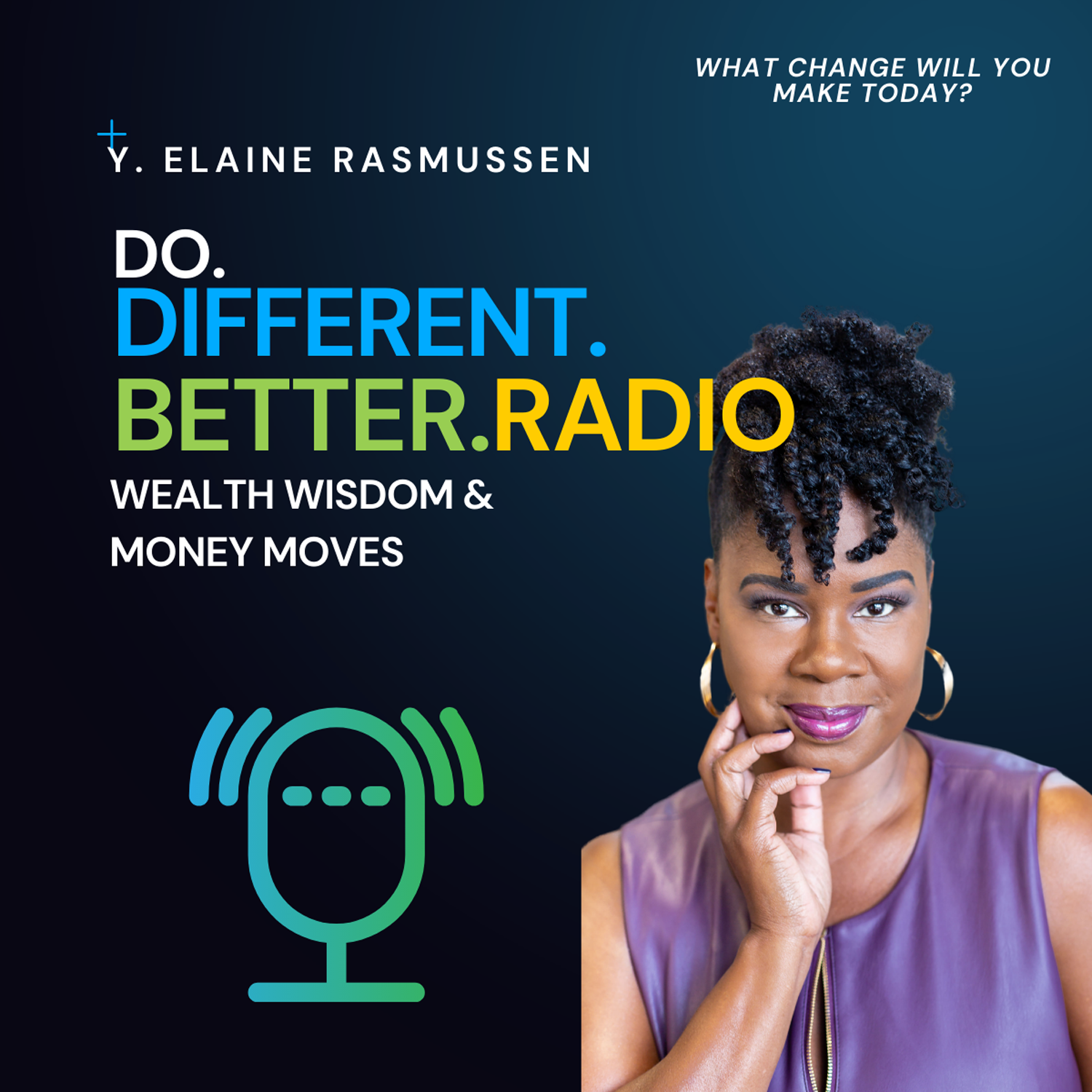
Do.Different.Better
Hosted by Do.Different.Better · EN
Do.Different.Better is a groundbreaking radio show dedicated to financial and wealth education tailored for everyday people. Hosted by renowned financial expert Y. Elaine Rasmussen, the show empowers listeners with practical insights, strategies, and expert advice to achieve financial success and build wealth. Every episode presents profound conversations with industry experts, thought leaders, and accomplished entrepreneurs. These discussions delve into crucial themes like budgeting, investing, retirement, real estate, and entrepreneurship. Instagram: @DoBetterwithElaine YouTube: @do.different.better LinkedIn: https://www.linkedin.com/in/y-elaine-rasmussen-21b4ba3/ and https://www.linkedin.com/company/social-impact-now/?viewAsMember=true.
40episodes
Episodes
Newest firstAll episodes
Do Different Better – Ep. 112 (Encore): Why Investing Triggers Anxiety—and Why You’re Not Crazy
2w ago00:46:23Tap to summarizeThis episode originally aired March 29, 2026: If investing makes you feel tense, obsessive, or like you’re always one “wrong move” away from regret—this episode is for you. **Investing anxiety** doesn’t usually come from ignorance. It comes from **uncertainty + too many options + too much information + no decision framework**. So you second-guess, you doomscroll, you check your accounts, you hesitate, and you miss the real opportunity: consistency. In this episode, Elaine walks you through emotional regulation for money decisions and shows you how to build a personal **Investment Operating System**—a small set of **decision rules** that prevent panic moves, reduce account-checking, and make your strategy feel trustworthy in real life. You’ll leave with a clear approach to investing even when you’re anxious: what to do before you buy, what to do when markets drop, how to stop renegotiating your plan every week, and how to keep “research” from becoming avoidance.
Transcribe →Do Different Better – Ep. 111 (Encore): The 4 Types of Financial Capacity—and Why Most People Build the Wrong One First
3w ago00:46:07Tap to summarizeThis episode originally aired February 8, 2026: Why do smart, high-earning people still feel stuck with money? It’s not discipline. It’s not knowledge. It’s identity. In this episode of the Do.Different.Better Show, Y. Elaine Rasmussen introduces the concept of Wealth Identity—the invisible pattern that shapes how you earn, save, give, invest, and set goals. You’ll learn: Why copying other people’s financial goals keeps failing you The 4 Wealth Identities (Builder, Caretaker, Maximizer, Minimalist Strategist) How stress reveals—not changes—your money behavior How to stop fighting yourself and start designing money systems that fit your real life This episode is especially for HENRYs—high earners who are doing “everything right” but still feel financial tension, overwhelm, or decision fatigue. WATCH, REFLECT, AND SHARE If this episode helps you name something you’ve felt for a long time, you’re in the right place. Subscribe for weekly episodes on money, power, and possibility Follow @DoDifferentBetter on Instagram & LinkedIn Explore more at DoDifferentBetter.com
Transcribe →Do Different Better – Ep. 110 (Encore): Why Your Financial Goals Don’t Stick (And How to Fix It)
Jul 1300:45:20Tap to summarizeThis episode originally aired January 25, 2026: Ever feel like your financial goals are just wishful thinking that fades by February? In this episode of The Do Different Better Show, Elaine Rasmussen gets real about why the standard “save more, spend less” advice often falls flat—especially for high earners feeling the squeeze or folks just trying to find some stability. Instead of guilt-tripping you about discipline, Elaine breaks down the concept of “financial mobility” and introduces a four-stage framework (Survival, Stability, Growth, Optimization) to help you set goals that actually match your current reality, not just where you think you should be. #DoDifferentBetter #FinancialGoals #MoneyMindset #FinancialMobility #WealthBuilding #PersonalFinanceTips #SmartMoney #GoalSetting #FinancialFreedom #ElaineRasmussen
Transcribe →Do Different Better – Ep. 109: Your Rich Life: Wealth Identity, Capacity & SOLE
Jul 600:50:01Tap to summarizeThis episode was supposed to be recorded live at Twin Cities PRIDE—but Minnesota weather had other plans. So instead of a live audience conversation, Elaine turns the moment into something deeper: a financial freedom reset and recap of the framework we’ve been building across the last 20 episodes. Because money is not just math. Money is memory, identity, capacity, and choice. Before we can talk about saving, investing, debt, spending, or building wealth, we have to understand the person operating the money. What relationship with money are you carrying? What role do you default to under stress? Are you the Builder, Caretaker, Maximizer, or Minimalist Strategist? And does your current life have the capacity to hold the wealth, freedom, responsibility, visibility, and opportunity you say you want? In this episode, Elaine connects the dots between your money story, Wealth Identity, Wealth Capacity, and the SOLE framework—Stability, Optionality, Leverage, and Embodiment—as the foundation for building a sustainable financial future. Then she closes with the 5 Rules of Financial Optionality every listener can use immediately to create more choice, less panic, and a stronger financial container. In this episode, you’ll learn: Why money is not just math—it is memory, identity, capacity, and choice How your relationship with money shapes your financial behavior The four Wealth Identity patterns: Builder, Caretaker, Maximizer, and Minimalist Strategist Why Wealth Capacity determines how much complexity, visibility, responsibility, and opportunity you can hold How SOLE creates a path from Stability to Optionality to Leverage to Embodiment The 5 Rules of Financial Optionality: Baseline, Buffer, recurring expenses, boundaries, and values-aligned spending How to choose one 30-day freedom-building move Download: The 30-Day SOLE Optionality Scorecard on the website. Watch: The YouTube version for the full Wealth Identity, Wealth Capacity, and SOLE breakdown.
Transcribe →Do Different Better – Ep. 108: Are You Buying Options Or Hidden Obligations
Jun 2200:47:50Tap to summarizeIf your spending looks successful but quietly makes you feel trapped, this episode is your strategic reset. On this episode of the Do Different Better show, host Elaine Rasmussen breaks down why true wealth isn’t just about what you can afford—it’s about whether your purchases are buying you options or obligations. We dive deep into evaluating your cash flow through the lens of “optionality” rather than shame, helping you recognize the hidden traps that keep high earners stuck in a cycle of dependency. Elaine walks through the specific spending traps of the four wealth identities: The Builder: Learn to tell the difference between a tool that creates real capacity and one that just adds unnecessary complexity to your life. The Caretaker: Discover how to generously support the people you love without turning a temporary rescue into your permanent monthly bill. The Maximizer and Minimalist: Shift from stacking isolated “smart” expenses or avoiding necessary costs to actually building your stability and future leverage. Plus, you’ll learn five essential diagnostic questions to test any purchase before the money leaves your account to ensure it actually increases your choices. Get ready to stop buying obligations and start buying your freedom. #WealthBuilding #FinancialFreedom #Optionality #WealthIdentity #MoneyMindset #DoDifferentBetter #PersonalFinance #IntentionalSpending #WealthMindset #FinancialStrategy
Transcribe →Do Different Better – Ep. 107: Owning Your Optionality for Real Financial Freedom
Jun 1500:47:19Tap to summarizeIf you make good money but still feel like one surprise expense could derail your peace of mind, this episode is your financial reset. On this episode of the Do Different Better show, host Elaine Rasmussen breaks down why true financial freedom isn’t just a vibe—it’s something you own. We dive deep into the concept of “owning optionality” and explore the straightforward asset moves that give you life choices without forcing you to become a full-time finance hobbyist. Elaine walks through the three primary engines of optionality: The Cash Reserve Stack: Learn how to build your baseline, buffer, brick house, and flex funds to handle surprises without ever going into debt. Boring on Purpose: Discover why index fund ownership is the perfect hands-off strategy for diversifying your portfolio and compounding your wealth. The Ownership Mindset: Shift from relying solely on your labor and a single paycheck to building a durable foundation of assets. Plus, you’ll learn essential anti-sabotage rules to protect your wealth from emotional decisions, including the 24-hour rule, building a 90-day plan, and the true power of automation. Get ready to stop just earning and start owning. #WealthBuilding #FinancialFreedom #Optionality #IndexFunds #MoneyMindset #DoDifferentBetter #PersonalFinance #InvestingBasics #WealthMindset #FinancialPlanning
Transcribe →Do Different Better – Ep. 106: The Secret to Financial Alignment in Any Relationship
Jun 800:47:49Tap to summarizeIf your relationships have ever made your money feel tighter—and your anxiety higher—this episode is your fix. Romantic partners, family members, and business associates don’t need perfect chemistry to succeed. You need a shared operating system that turns unspoken expectations into predictable peace. In this episode, Elaine gives you the blueprint to “Upgrade Your Picker” and protect your optionality. You’ll learn how to identify your wealth identity (are you a Builder, Caretaker, Maximizer, or Minimalist?), set up relationship governance, and create an exit strategy—so a misaligned partnership doesn’t bankrupt your bank account or your peace of mind. This works whether you’re merging finances with a spouse, building a business with a co-founder, or managing family expectations. You’ll also learn how to build shared financial freedom without becoming cold, isolated, or trapped. #FinancialAlignment #RelationshipGovernance #WealthIdentity #BusinessPartnerships #MoneyManagement #FinancialFreedom #CouplesAndMoney #EntrepreneurFinance #FinancialPlanning #ProtectYourPeace
Transcribe →Do Different Better – Ep. 105: If Your Income Is Random, Your Paychecks Don’t Have to Be
Jun 100:48:16Tap to summarizeIf your income changes month to month—and your stress changes with it—this episode is your fix. Founders, freelancers, creatives, and commission earners don’t need perfect prediction. You need a smoothing system that turns unpredictable income into predictable decisions. In this episode, Elaine gives you an Income Stabilization Blueprint (Baseline Pay vs Good Month rules), a simple monthly “pay yourself” workflow, and ‘runway’ you can calculate in minutes—so one slow month doesn’t send you into panic mode and one good month doesn’t turn into new fixed costs you regret later. This works whether you’re on straight commission, 1099, or salary + bonuses. You’ll also learn how to use bonuses and big commission checks to build optionality—not obligations. Takeaways: – Why variable income creates money anxiety (and what actually solves it) – How to set Baseline Pay so your personal life stops whiplashing – “Good Month” rules that build future calm, not future commitments – Runway math + the 4 runway zones (stabilize, tighten, optimize, grow) – How to allocate commissions/bonuses to Buffer, Flex Fund, and investing Download: Income Stabilization Blueprint (website) #VariableIncome #CashFlow #VariableIncomeBudgeting #CommissionPayPlan #FreelancerCashflow #RunwayMath #EntrepreneurFinance #FinancialPlanning #MoneyManagement #EmergencyFund #FlexFund #WealthBuilding #Optionality #PersonalFinance #SalesTips
Transcribe →Do Different Better – Ep. 104: Inheritance: Being Values-Aligned Without Being Naïve
May 2500:47:31Tap to summarizeInheritance: Being Values-Aligned Without Being Naïve Inheritance doesn’t just come with money—it comes with pressure. Pressure to honor the source. Pressure to help family. Pressure to “do something meaningful.” And if you don’t have guardrails, it’s easy to swing between two extremes: freezing and hoarding… or **giving and spending so fast you lose control. In this episode, Elaine breaks down a practical, values-aligned approach to stewardship that protects the principal and preserves relationships. You’ll learn simple governance basics (purpose, decision rights, cadence, documentation), the 90-day “protect → decide → deploy” plan, and decision rules that keep guilt and urgency from becoming your investment committee. In this episode, you’ll learn: – How to treat inheritance as stewardship, not a scramble – The guardrails that prevent legacy-killing mistakes – How to set a giving plan without becoming a blank check – Why “values-aligned” needs governance to be sustainable – A 90-day plan to protect the money, reduce overwhelm, and make intentional moves Get the tools: Download the Inheritance Guardrails Toolkit on the website.
Transcribe →Do Different Better – Ep. 103: First-Gen Wealth The Pressure, The Pride, The Panic
May 1800:47:52Tap to summarizeIf you’re the first in your family to earn well, build savings, invest, or “make it out,” you already know the truth: first-gen wealth isn’t just a financial upgrade—it’s an emotional one. Pride and pressure show up together. And sometimes the more you build, the more anxious you feel about losing it. In this episode, Elaine names what most people don’t say out loud: the identity conflict of being the “responsible one”, the weight of family expectations, the guilt that comes with boundaries, and the panic that hits when your nervous system still remembers scarcity—even if your paycheck is bigger now. You’ll learn how to protect your progress without isolating from your people—using practical systems like Baseline–Buffer–Brickhouse, a support budget, a rescue rule, and decision rules that keep you generous and stable. This is values-aligned, conscious finance for first-gen high earners who want wealth without resentment. In this episode, you’ll learn: – Why first-gen success can feel like a job (and why that’s normal) – The “family money roles” you get assigned—Family CFO, Sponsor, Emergency Line – How to set boundaries without becoming “the villain” – Systems that protect your stability: Baseline, Buffer, Brickhouse – Decision rules that stop guilt from driving your money choices – How to support outcomes without funding patterns Get the tools: Download the **First-Gen Wealth Boundary Kit (scripts + support budget + rules) on the website.
Transcribe →