← Dolly Parton's America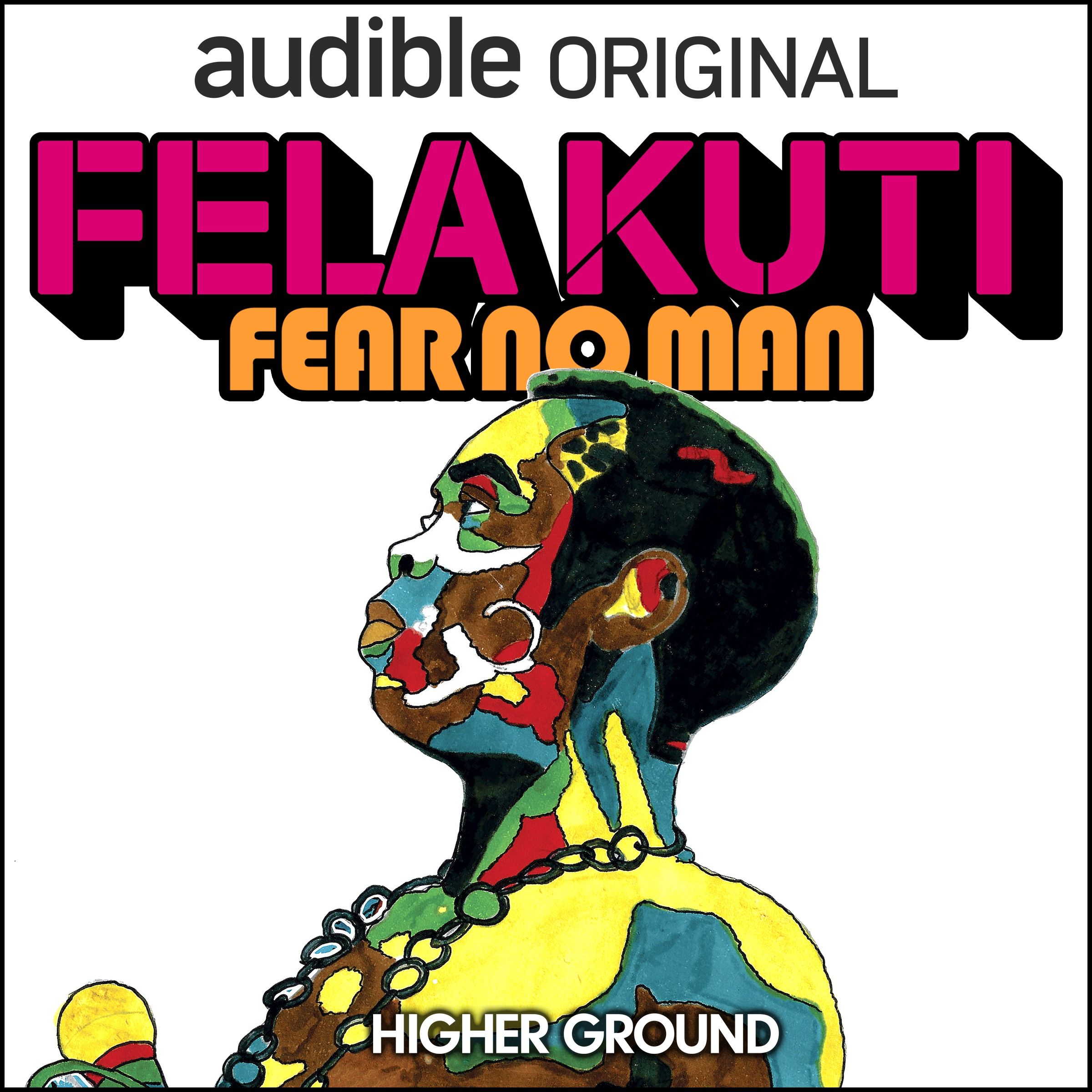
Dolly Parton's America
Jad Abumrad’s new show - Fela Kuti: Fear No Man
00:37:25
In a world that’s on fire, what do we do with art? Like, what can music actually do? Today, Jad Abumrad is back with his first major project since Dolly Parton’s America. Fela Kuti: Fear No Man is a twelve episode exploration of the life, work, and legacy of the Nigerian singer Fela Anikulapo-Kuti, one of the most important musical artist of the 20th century.
Loading summary
Transcript158 lines
- [00:00]
Michael's Party Store Announcer
Attention party people. You're officially invited to the party Shop at Michael's where you'll find hundreds of new Items starting at 99 cents with an expanded selection of party wear, balloons with helium included on select styles, decorations and more. Michaels is your one stop shop for celebrating everything from birthdays to bachelorette parties and baby showers to golden anniversaries. Visit Michaels store or michaels.com today to supply your next party.
- [00:27]
Jad Abumrad
Hey Dolly fans. Dolly Parton's America fans. Jad Abumrad here. I know it's been a minute, but I wanted to drop into your feed to tell you about this new project. Share with you a new project that I think you might love. It's sort of a continuation of the Dolly Parton's America approach, but it is looking at someone very, very different. The Nigerian musician and activist Fela Kuti Podcast is called Fela Kuti Fear no Man. Fela. If you don't know him, he invented back in the 1960s and 70s, a style of music that became synonymous with rebellion. It was killer dance music, but it was also so dangerous to the dictatorship in power that they burned his house down. They threw his mother out of a window. He's one of those figures that, like Dolly, just transcends every usual idea we have of what a musician should do or be. I mean, okay, there's no one like Dolly. She is singular. And especially in this moment, a lot of us are thinking about her greatness, her impact. He's one of the few musicians I would put in her category. I didn't think I was going to do another podcast after Dolly Parton's America, but I could not do this one. We're about to release a series, but I wanted to play it for y' all first. The first episode is the story of one person who knew Fela, played with him and was healed by him. I hope you like it. This episode does contain descriptions of violence. Please know that going in and thank you for checking it out. If you like it, you can find Fela Kuti Fear no Man, on audible or wherever you get your podcasts. In a world that is on fire, what do we do with art? Like, what can music do? Can it actually change things? Like really change the world? Let's find out. In this series, we're going to look at the life and the music of Fela Kuti.
- [02:54]
Dele Shosemi Bami
Always get that.
- [02:55]
Jad Abumrad
My tongue always trips over that. Aniculapo Kuti, the father of Afrobeat, the.
- [02:59]
Dele Shosemi Bami
Black president, the chief priest.
- [03:22]
Jad Abumrad
I'm going to argue that Fela is one of the most influential musicians of the 20th century from 1 of the most important countries that we in the west rarely think about but should Nigeria. He created an entirely new form of music that not only mixes jazz and funk and all these things, but also layers in resistance, bakes it in. Fela answers those questions about music and art in ways that are beautiful and troubling and profound. And I'm not the only one who thinks this. Here's a quick list. Ayo Adebori Actor, writer, someone I really respect. She's in the Bear. Great show. On some red carpet somewhere she was asked, oh, this question.
- [04:03]
Tide Commercial Announcer
A musician. I have a cult like fascination with her answer.
- [04:08]
Dele Shosemi Bami
Fela Kuti, who is a like Nigerian legend, is a very complicated man.
- [04:14]
Jad Abumrad
Fela has to be the epicenter and quest love one of the great musical minds of our time. I mean, Fela is the one figure.
- [04:21]
Dele Shosemi Bami
Whose story resonates with modern American hip hop culture.
- [04:26]
Jad Abumrad
The passion, the pain, Jay Z. The strength, the need to get the message out there. Beyonce famously quoted Fella on one of her albums.
- [04:37]
Dele Shosemi Bami
Look, it's like, listen to it.
- [04:40]
Jad Abumrad
Flea from the Red Hot Chili Peppers.
- [04:41]
Dele Shosemi Bami
It's the hardest shit you've ever heard in your life.
- [04:44]
Jad Abumrad
They invited me out to the African Shrine, which was his club just outside Lagos. Then There is Paul McCartney. Sir Paul the Beatle tells the story of seeing Fela play. And it was very intense. But when this music broke, I ended up just weeping. Looked like one of the most amazing musical moments of my life.
- [05:05]
Dele Shosemi Bami
So this is Fela Kuti, Fela, Nicola.
- [05:08]
Jad Abumrad
Kokuti and then there is Burna Boy, the first African musician to sing a US stadium. In a video, he shows off a tattoo of Fela's face on his left forearm and also a Fella necklace around his neck.
- [05:19]
Dele Shosemi Bami
It's like my hero, like the best.
- [05:21]
Jad Abumrad
Musician I ever knew, just to pile on. Brian Eno legendary record producer When I.
- [05:27]
Dele Shosemi Bami
Heard Fellah, he absolutely blew my mind.
- [05:29]
Jad Abumrad
I thought, this is really the future of music. David Byrne this is not just feel good music. There's something about this. They're doing stuff I'd never heard before. And I thought, oh, this is really liberating. Even President Obama had some thoughts.
- [05:47]
Dele Shosemi Bami
Music like Fellas is able to not just get folks moving, get them on their feet, but it also makes them feel alive. Our very best art and our very best music stirs the soul.
- [06:03]
Jad Abumrad
So how, how is he doing that exactly to create that reaction in all those people? Unfortunately, we can't talk to him because he died in 1997. And he didn't leave a lot of tape behind. But for the last three years, we've been talking to the people who knew.
- [06:21]
Dele Shosemi Bami
Him, either in old school style or in a new school style, who fought.
- [06:25]
Jad Abumrad
With him, sang with him, took blows with him, and tried to change the world with him. The story they tell, I hope you'll agree, has everything to do with this moment as we're all searching for, what do we do now?
- [06:39]
Dele Shosemi Bami
Am I gonna hold it?
- [06:40]
Jad Abumrad
No, no, I'll hold it.
- [06:41]
Dele Shosemi Bami
Oh, thank God. That can be okay.
- [06:44]
Jad Abumrad
I want to start this series with sort of a prologue by playing you some tape from an interview that we did with a man named Dele, where he told us about his encounter with Vela.
- [06:54]
Dele Shosemi Bami
Hello, my name is Dele. Shosemi Bami. Dele is the full name. Bamidele means you set foot on the motherland where we come from.
- [07:07]
Jad Abumrad
And Shosemi, your last name, does that have a meaning?
- [07:11]
Dele Shosemi Bami
It's a name given to those who always advocate peace. Shoes. Let there be peace.
- [07:19]
Jad Abumrad
Listening back to that intro, I realized Dele's name basically contains his story. And his story, in a way, contains the story of Nigeria with all the promise and tragedy built in.
- [07:33]
Dele Shosemi Bami
So fire on.
- [07:36]
Jad Abumrad
We met delay in a small studio space in London where he lives and plays in a bunch of bands. He has a trio, quartet. Quintet orchestra. He's been called the ambassador of Afrobeat. That is of the genre of music that Fella Couti created. In fact, there were many times during our interview where Dele would sing a complete Fela song and do all the parts, the vocals, backing vocals. He would sing all the different saxes, the altos, the baritones, all the trumpet lines, the different guitar lines, the percussion, the shakers, all the things.
- [08:18]
Dele Shosemi Bami
Then he goes there.
- [08:25]
Jad Abumrad
We'd called him up because we'd heard that he played keyboard in Fela's band in the late 70s and early 80s. We did not expect the story to go where it went. You were born in the uk.
- [08:38]
Dele Shosemi Bami
You just said, yes, born here. And then we went back home. That's how I met Fela.
- [08:44]
Jad Abumrad
He told me his parents were Nigerian, but his dad had gone to London to study economics.
- [08:48]
Dele Shosemi Bami
He.
- [08:48]
Jad Abumrad
He was born soon as they got to London. But then when he was 4, 1967, his dad decided to move them all back. What were the circumstances of your. Of your parents coming back in Nigeria?
- [09:00]
Dele Shosemi Bami
We had just gained independence. 1960. In 1960, sovereignty to a new nation, the new Nigeria. There was celebration, jubilation in the streets. The 60. October now in every town, every corner, it's the date we've been waiting to celebrate. Nigeria is free. It was like, yeah, we kicked the British out. Everybody be ready to play your part. We can rule ourselves.
- [09:33]
Jad Abumrad
And so Dele's dad decides to move the family back to Nigeria because he was a believer.
- [09:38]
Dele Shosemi Bami
Yeah, we're going to build our own nation.
- [09:42]
Jad Abumrad
He was going to put his economics degree to work to help build the country's banking sector.
- [09:46]
Dele Shosemi Bami
When my dad got his qualifications, there was already a job waiting for him. So he didn't wait. So I went home with my dad until 67.
- [09:55]
Jad Abumrad
He was 4 at the time. And for the first time in his life, he was living not in a flat in the city, but out in the country in the place where he was actually from.
- [10:09]
Dele Shosemi Bami
I hated it. No ice cream. There were goats. They're gonna walk into houses. I saw lizards and I was like, baby crocodiles. No way, what's going on?
- [10:23]
Jad Abumrad
But I'm gonna jump ahead a little bit. It was also in Nigeria where he met Fela.
- [10:28]
Dele Shosemi Bami
I was in high school. Every morning before the assembly, we used to jump on the piano. Me just popular songs. Anybody who knows the song would just play, you know.
- [10:51]
Jad Abumrad
Yeah. And every so often at these pre assembly jam sessions, this kid would drop.
- [10:57]
Dele Shosemi Bami
In two years above me, slightly older.
- [11:00]
Jad Abumrad
He would play with them. And he was pretty good, this guy.
- [11:03]
Dele Shosemi Bami
You know, he just used to jump. I'm like, how does he know all these songs? I just said, I'm gonna. Anytime he's playing, I'm gonna be watching him.
- [11:12]
Jad Abumrad
That kid, it turned out, was Fela's nephew. Fela was a massive star at this point. He was like Elvis. If Elvis were also getting into violent clashes with the government on a regular basis. More on that in a later episode. Point is, he was huge. And so his nephew, he would come.
- [11:29]
Dele Shosemi Bami
To school and be showing off. Oh, this is Fela's latest track. It's called Yellow Fever. This Fela's latest track is called Opposite People. This is Fela's latest track. It's called Colonial Ment. So one day he was playing and there were some things he can't play together with his right hand. So I just said, okay, let me play that one you're playing. So I just went.
- [12:04]
Jad Abumrad
Fella's nephew would play one line, he was. Would play the other. And he says they both loved how the riffs would sort of snake in and out of each other. A Fella trademark. And how when they were playing, their fingers would almost overlap.
- [12:18]
Dele Shosemi Bami
The symmetry of those two Together then you could feel the tapestry of the. The two patterns. So he was so happy. He was like, yeah, keep it going. And then he.
- [12:39]
Jad Abumrad
Long story short, Dele and this older kid, Koye, his piano buddy, a great friendship.
- [12:44]
Dele Shosemi Bami
Commanderie evolved. You know, after meeting him, he will leave school and he'll be going for piano lessons. And I'll go with him just to watch because my mom will not pay for piano lessons.
- [12:56]
Jad Abumrad
This goes on for many years. One day, Koye introduces Dele to his cousin Femi, Fela's son. They become tight, and several years into their friendship, Femi says to Delay, hey, I'm gonna go see my dad.
- [13:10]
Dele Shosemi Bami
You wanna come?
- [13:11]
Jad Abumrad
Wanna come with me, fella?
- [13:16]
Dele Shosemi Bami
Yes, please. And then we went. And then he introduced me, this is not my friend I told you about. And he looked at me like, how's your mom coping?
- [13:28]
Jad Abumrad
How is your mom coping?
- [13:30]
Dele Shosemi Bami
How are you all coping?
- [13:36]
Jad Abumrad
That meeting would change Delay's life in profound ways. But before we get there, it's important to say a few things to fill in that gap that I skipped over a second ago. From age 4 to 14, from when Dele arrived in Nigeria to when he met Fela Kuti. In those 10 years, things did not go as planned for either Dele or the country initially. His dad got them set up. Your dad was doing finances for the. For the government at that point, or.
- [14:12]
Dele Shosemi Bami
No, no, he was working for a bank straight away. He worked with Standard bank, from Standard bank to Barclays bank, from Barclays bank to National Bank.
- [14:20]
Jad Abumrad
And his dad became a very important person, one of the top financial auditors in the country. They lived in a compound. They had guards. Dele worshiped his dad. Things were good. But the country was shifting. Toxic seeds were growing. Even before independence, substantial reserves of oil have been located under the River Niger. You had all this oil discovered in the south of the country. This year. Exports may be worth 5 million in 10 years time, perhaps 50 million. So the British forced a deal on the new Nigerian government. They said, just because we're leaving doesn't mean you get to use our stuff. If you're going to pull all this new oil out of the ground, you're going to need our equipment. And if you're going to use our equipment, you have to sign a bunch of deals with British companies. In that way, colonialism really didn't end. It just changed clothes. The Nigerian government was not technically beholden to the British government anymore, but they were now beholden to British companies and eventually German companies and Dutch companies and American companies. Those Companies would continue to extract resources and a very small group of Nigerian political elite would make a lot of money in exchange. In the middle of this shift, delay's dad is working at a bank doing financial auditing, trying to keep the books straight.
- [15:49]
Dele Shosemi Bami
That was his job. He was one of the fraud auditors.
- [15:54]
Jad Abumrad
And in 1974, 5, he discovers there's a whole lot of money missing from the bank.
- [16:00]
Dele Shosemi Bami
He had made his findings and he was about to release a big scandal and they tried to shut him up.
- [16:11]
Jad Abumrad
Who's trying to shut him up and why?
- [16:15]
Dele Shosemi Bami
A syndicate of people who had ruined the bank, defrauded the bank.
- [16:20]
Jad Abumrad
Delay says his dad was about to file a report, about to name names. He's still not sure who exactly was going to be named, but he suspects they were pretty high up at the time. He wasn't aware of any of this. He was 12. And he remembers one day some very well dressed men came to the door.
- [16:36]
Dele Shosemi Bami
They came to the house. When your dad comes back, tell him this is his new car. They gave us keys.
- [16:42]
Jad Abumrad
These men brought a car.
- [16:43]
Dele Shosemi Bami
And we were like, ooh, ooh, ooh, ooh, ooh ooh ooh ooh ooh, ooh. And then the next thing, they come another visit.
- [16:52]
Jad Abumrad
This time they hand his dad a.
- [16:53]
Dele Shosemi Bami
Briefcase and he said, look, whatever's in it is yours. And then he's throwing the keys back at her and said, get out of my house. Take your briefcase, take everything and get out of my house. We're children. We don't know what's going on. Yeah, luckily he told us, I've just been, I've just been told to shut up about my work. I spent all these sleepless nights and I've been told I should not report what I found. Can you imagine?
- [17:19]
Jad Abumrad
So the car was a bribe? He explained that to you?
- [17:22]
Dele Shosemi Bami
Of course, all the G called all of us was like. You see in life, sometimes you get to the crossroads you go to make a stance. Without a good name, you're nothing.
- [17:33]
Jad Abumrad
At this point in Nigeria, 1975, the initial civilian government was long gone. There had been several coups. The military government that was in power was actively disappearing people. Killing journalists with mail bombs, hanging environmental protesters who protested against the oil companies. This would all come out years later in public hearings. At the time, delay's dad had fortified the walls of their house and put bars on the window. It would all come to a head on the night of September 11, 1975. This is about four years before he would meet Fela, my dad.
- [18:09]
Dele Shosemi Bami
He was supposed to Submit the report. The next day, we went to bed. They came that night, about 40 of them. They got in. They started assaulting the building.
- [18:24]
Jad Abumrad
Around midnight, this gang of 40, they first overwhelmed the security guards. And then they started pounding on the doors and windows with sledgehammers.
- [18:39]
Dele Shosemi Bami
That's the only way they could get him. Neighbors called for the police. Police said, oh, we run out of fuel.
- [18:47]
Jad Abumrad
They. They said they ran out of fuel.
- [18:48]
Dele Shosemi Bami
Yeah. One of the police stations that they called. And blah, blah, blah, blah. We couldn't get anybody to rescue.
- [18:54]
Jad Abumrad
So you're on your own.
- [18:55]
Dele Shosemi Bami
Yeah. My dad told us to separate into different rooms.
- [19:01]
Jad Abumrad
He says he ran to the back of his house, to his room, and hid in a closet. He could hear the muffled sounds of screaming and fighting getting closer and closer.
- [19:10]
Dele Shosemi Bami
And then the door of the room where I was in, I was thinking myself, oh, my God, this door is now gonna get in.
- [19:20]
Jad Abumrad
Oh, my God.
- [19:20]
Dele Shosemi Bami
Doe was just about to cave in, and I was like, I'm not gonna go down without. I was saying to myself, what do I do? Do I punch? Do I kick? Do I just grab onto one and bite? You know, I was calculating, you know, that speed of thoughts. And then suddenly we just hear. And we had people running, running. We just had. I was, like, the door stopping, and I was like, oh, my God. Oh, my God. Oh, my God. Our security guard had run into town. He had gone into, like, city center to gather his friends. There were about hundred of them marching from the village. So they got to our house just as our own door was caving in. They've gone. They've gone. Thank God. Thank God. Then I heard the guard shouting our names to make sure we were all right. Calling our names. I said, I'm in my room. I'm in my room. And then I opened the door. I just saw a body on the floor in red. My dad had pajamas, you know, pyjamas, matching top and bottom. It was soaked in blood.
- [20:42]
Jad Abumrad
Oh, my God.
- [20:45]
Dele Shosemi Bami
Multiple stab wounds. There was a massive pickaxe entering into his head.
- [20:52]
Jad Abumrad
Jesus dang. Del says his father was unrecognizable.
- [21:04]
Dele Shosemi Bami
Completely fucked up. My mom was distraught. Then the burial. Because we couldn't bury him immediately, we had to wait. It took a week. And because it was multiple perforations all over his body, distinct. Oh, Lord. I was like, why do we have to lie him instead? And my mom said, it's good. Let people see what they did to my darling, you know?
- [21:35]
Jad Abumrad
Oh, my God.
- [21:47]
Dele Shosemi Bami
But over the years, I can still talk about it. But evil Damn. So yeah, God damn. How do you just ask for someone's life to be snuffed out? You know, we had to waste about 10 cologne, perfume spraying the room because my mom is said open, coughing as one big massive stitch to keep the skull together because it pickaxed him on the head. I was like, why?
- [22:42]
Jad Abumrad
Imagine you are 12 and you see that. How do you process that? I have a 13 year old kid. I don't even know how you answer that question. But making matters worse for Dele, he was told, don't process it. That thing that just happened, just pretend it didn't happen.
- [23:09]
Dele Shosemi Bami
Family, friends, they were telling my mom, don't give you go and hide. Be really scared. They may still come for you. Some people said, please don't stop coming to our houses. Please don't. We don't know if you're being traced.
- [23:23]
Jad Abumrad
He was told, don't talk about it, keep your head down. But he'd seen what he'd seen. He told us night after night he would have this dream where he was trying to warn his dad that something bad was about to happen. But his dad wouldn't listen. And then he would wake up feeling guilty. So that's where Dele was at when his new friend Femi introduced him to his dad. Fela Kuti Fela.
- [23:58]
Dele Shosemi Bami
Yes, please. And then we went and then he introduced me. This is that my friend Dele I was telling you about. You remember the son of that banker everybody in Lagos knew? Chief Auditor, national bank executed. And he looked at me like, tell me what happened to your dad. Tell me the story. The same thing. As I explained it, I explained to him. He shook his head, said, how's your mom coping? How are you all coping?
- [24:36]
Jad Abumrad
No one had ever asked him that question before.
- [24:38]
Dele Shosemi Bami
Have you had psychological counseling or psychotherapy? I said, no, I didn't know what I was.
- [24:48]
Jad Abumrad
He said he'd never heard those words before.
- [24:50]
Dele Shosemi Bami
But my mom worked in a library and it was just behind my high school. So I finished from school, walk around the back of the school into the library. In those days we didn't have Google thesaurus. Psychology, okay, Psychology.
- [25:18]
Jad Abumrad
That's so interesting that he introduced you to the idea that you, you need to take your psyche seriously.
- [25:27]
Dele Shosemi Bami
Oh, Daddy said, look, I'm going to fight for your family because right now both your mom and you children should be in therapy. And right now your mom should not be working. She should be on permanent holiday. The full salary of your dad. I'm going to fight for that. For you.
- [25:47]
Jad Abumrad
How did that hit You.
- [25:49]
Dele Shosemi Bami
I was shocked when he said that. I was like, he didn't know my dad. He's not even family. But he was the only. Not the first. He was the only person who were.
- [26:02]
Jad Abumrad
Bitter, as in pissed, not scared.
- [26:05]
Dele Shosemi Bami
That statement, my life has changed. I said, that's it. It's my new hero. I will follow this man to hell and back. Now I know what my calling.
- [26:21]
Jad Abumrad
But here's the thing. Delay did not find his therapy where the book told him to look. Instead, he started methodically learning all of.
- [26:29]
Dele Shosemi Bami
Fela's music, all his back catalog. Started teaching myself as a teenager. I was 14, going on 15.
- [26:37]
Jad Abumrad
He says he would hit up anybody who had a fellow record borrow it. And then he would study the piano part, the rhythm piano. 50, 60 songs. By the time he was 17, he started hanging around the Shrine, Fela's club, and watching Fela rehearse.
- [26:52]
Dele Shosemi Bami
One day I walked up to him and I was like, fela, can I play this song? I've learned it. He was like, you sure? Yeah. And I want to take a solo. You sure? Go ahead. I got on stage. He counts me in. You have to know that's when I come in.
- [28:10]
Jad Abumrad
He says that first run through. Fela would occasionally glance at him and smile.
- [28:15]
Dele Shosemi Bami
It was the first song I climbed on stage. It's a big deal for me. Authorities steal it.
- [28:20]
Jad Abumrad
Okay? So pretty soon, he had joined Fela's band, Egypt 80, as a rhythm pianist, which meant, you know, there are 20, 25 people on stage. You have the horn section, the bass, the drums, percussionists, guitarists, multiple guitarists. And way over on the left side of the stage was him sitting at a Rhodes piano. There are videos on YouTube where you can see these fleeting glimpses of him. He looks like a baby, scrawny Adam's apple. And there would be nights, he says, where they would play a song like Authority Stealing. And it would go on for well over an hour, just that song. Which meant after the opening, dun dun dun dun dun dun dun dun. After that, Dele would settle into one riff that he would just have to keep playing.
- [29:03]
Dele Shosemi Bami
It starts with that bass line. Then I go.
- [29:11]
Jad Abumrad
This one he played for us backstage in London before a gig with his quintet. He had this little electric piano that he demonstrated on.
- [29:20]
Dele Shosemi Bami
Can you imagine me playing for 40 minutes without stopping him?
- [29:29]
Jad Abumrad
Fela took repetition to an extreme. We talked to one person who told us that he once made his band record one song for 24 hours straight, an entire rotation of the earth. And he had a policy that every musician had to play Their loops exactly the same each time.
- [29:49]
Dele Shosemi Bami
And if they didn't, you just get fined.
- [29:51]
Jad Abumrad
You get fined, we get fined. Wait, how much?
- [29:55]
Dele Shosemi Bami
If he find you more than twice in a night, all your wages gone.
- [30:00]
Jad Abumrad
Can you imagine? So we asked him. Playing that one thing over and over again for hours with all that pressure hanging over you, doesn't that make you nuts?
- [30:08]
Dele Shosemi Bami
Oh, no, no, no. No way.
- [30:10]
Jad Abumrad
No, he said, actually it was the exact opposite.
- [30:14]
Dele Shosemi Bami
That repetitive thing just keeps me. Oh, take another breath. Keep it going no matter what. Just like the heart pumping up, pumping up every minute, every second. Because the kick, kick of the drums.
- [31:02]
Jad Abumrad
Walk me through what happens in your mind over the course of those repetitions.
- [31:07]
Dele Shosemi Bami
It's like, it's gonna be okay. It's okay, it's okay. Hang in there. Hanging there, hanging there. It's okay. There's more to coming in over. It's okay, it's okay.
- [31:27]
Jad Abumrad
He says every night when he would play that one little loop, it's okay. He would feel his body calm, his breath would slow down. He would slide his attention into his own lungs and then pretend he was pushing against the walls of his lungs, pushing them out. And then he would slow his heart rate until his heart matched the K. And after about 20 minutes of that, he would then drift back to the surface.
- [32:18]
Dele Shosemi Bami
Fella told me a secret one day, said, look, after many solos and all that, he said, when you want to take your soul, look how many people dancing on the floor. Zero in onto one of them. Check their moves, find something to engage with. Within the nature of that ostenado. It could be a little boy. If I just zero in on it and he zeros in, I'm like. And then he's looking at me like, okay.
- [32:46]
Jad Abumrad
In the interview, he sort of mimed what would happen. He would wink at the boy, the boy would wink back. You're sort of like locking eyes and doing movements together. He would move his head to the left, the boy would do it. Then to the right, left, left, right.
- [32:59]
Dele Shosemi Bami
Someone I would like to be friends with.
- [33:01]
Jad Abumrad
Pretty soon they were basically dance partners at a distance.
- [33:04]
Dele Shosemi Bami
Oh, okay. And I'd be like, maybe just to see if it would. And I get reaction.
- [33:16]
Jad Abumrad
You know, this is the one part where I wish we had video. We can play what you're doing right now. At this stage of the interview, Delay was basically having a full on dance party in his seat, just imagining him and that boy duetting back and forth.
- [33:32]
Dele Shosemi Bami
I just used to trip on hypnotic cleansing. So that was my therapy. I said, I went and checked the psychological psychotherapy and all that. And I realized that it could either be administered or it is something. You actually have to find a way what makes you. What takes you to a place where you are okay.
- [34:01]
Jad Abumrad
I gotta say, watching you sing the songs, I feel it's such an interesting experience watching you kind of feel like you're like channeling something.
- [34:12]
Dele Shosemi Bami
Oh, man, the energy I got. I just love doing this stuff, man. It's my healing.
- [34:57]
Jad Abumrad
Coming out of that interview, the word that I kept thinking about was not healing. Actually, it was the word David Byrne used at the beginning. Oh, this is really liberating liberation, how trauma holds you in place. It's like a cage. But Fela gave Dele the opportunity to step out of that cage and be free. At least for as long as he was playing that riff. The reason I started with he's just one guy, but imagine a million delays having more or less the same experience. Like atoms, one tiny explosion bumps into the next, into the next, into the next, until you have a cascade of energy that creates something much bigger. In this series we'll show you how Felar did that, not just for Dele, but for the entire country of Nigeria and the world.
- [36:09]
Dele Shosemi Bami
It's amazing. It's amazing. Bala was a genius. Someone's got to speak the truth. And he was a musical genius. He didn't just speak the truth, he sang the truth. Some say he's the greatest musician in.
- [36:19]
Jad Abumrad
Africa, others that he's a prophet.
- [36:21]
Dele Shosemi Bami
Some of that music was prophetic. Became a tyrant. People who are still hero worshipping him, I feel sorry for for them.
- [36:30]
Jad Abumrad
He's a very complicated man. And we'll get into all that. We'll tell you about his life.
- [36:34]
Dele Shosemi Bami
Can't tell you how many times the police army park in front of our.
- [36:38]
Jad Abumrad
House through the prism of his family.
- [36:40]
Dele Shosemi Bami
Kids surround it and riddle the house with bullets. Then they go away.
- [36:46]
Jad Abumrad
I said, why would you do that? We'll hear from the people who radicalized him. You can use your music to uplift people. I saw the delight and the people radicalized by by him. Will the pose a king ignite a youth movement? Two, actually 50 years apart. They're shooting us.
- [37:08]
Dele Shosemi Bami
They're shooting us.
- [37:09]
Jad Abumrad
The music was like inside of me was all around. It was just like, you know, being hypnotized. Drop into a 24 hour party. We'll travel to Lagos, Paris, London, dive into hidden archives to find out what does rebellion look like, sound like when the weapon is not guns.
- [37:26]
Dele Shosemi Bami
Fella said, music is the weapon. Music is the weapon.
- [37:29]
Jad Abumrad
Music is the weapon, but music weapon of the future. If you're someone who doesn't think art has power, you need to listen to this, search up and subscribe to Fela Kuti Fear no Man. It's on every podcast app with new episodes every week. Felikuti Fear no Man. Let's go.
- [37:53]
Tide Commercial Announcer
Did you know Tide has been upgraded to provide an even better clean in cold water? Tide is specifically designed to fight any stain you throw at it, even in cold butter. Yep. Chocolate ice cream. Sure thing. Barbecue sauce. Tide's got you covered. You don't need to use warm water. Additionally, Tide pods let you confidently fight tough stains with new coldzyme technology. Just remember, if it's got to be clean, it's got to be tied.