← Don't Listen To Us with Mandy Patinkin and Kathryn Grody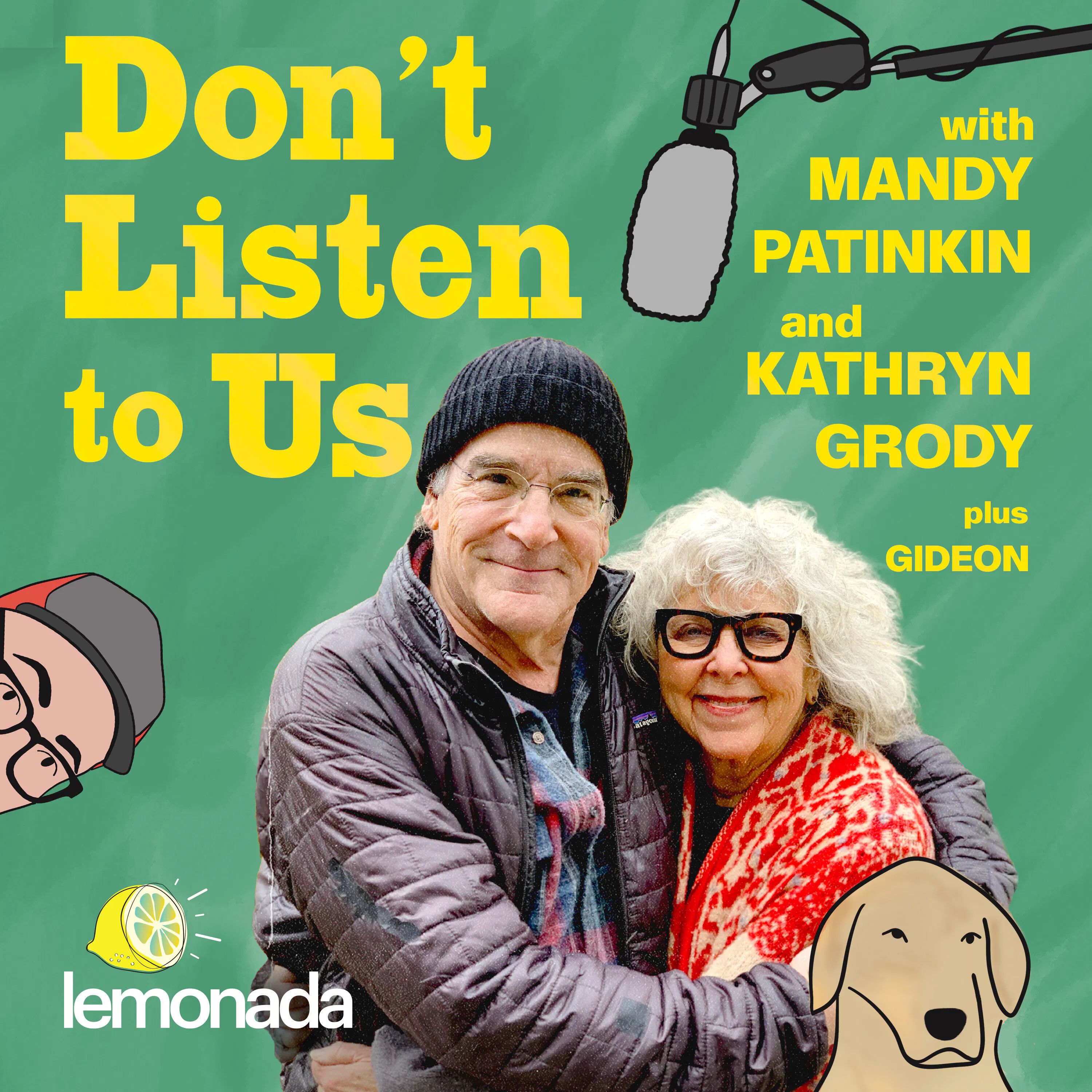
Don't Listen To Us with Mandy Patinkin and Kathryn Grody
Death Doula Answers What Happens When We Die
00:46:57
Loading summary
Transcript262 lines
- [00:00]
Susan (Soul Midwife/Doula)
Foreign.
- [00:06]
Booking.com Sponsor Voice
This episode of Don't Listen to Us is brought to you by booking.com I'm looking out my window and spring is in the air. It's time to go travel. I've got to say, if you're looking to grow your vacation rental business, this is the place to be. Booking.com is one of the most downloaded travel apps in the world. And for good reason. Since 2010, they've helped over 1.8 billion vacation rental guests find places to stay. That's billion with a B. But here's the thing. Most vacation rental hosts don't even realize they can list their properties on booking.com and if you're not on the platform, your rental is basically invisible to millions of booking.com travelers who worldwide. After all, they can't book what they can't see, right? But once you start listing on booking.com your property gets seen by a massive global audience of unique travelers. That means more visibility, more bookings, and more opportunity to accelerate the growth of your rental business. And it couldn't be easier. You can register your property in as little as 15 minutes. And nearly half of hosts get their first booking within a week. So if your vacation rental isn't listed on booking.com, it could be invisible to millions of travelers searching the platform. Don't miss out on consistent bookings and global reach. Head over to booking.com and start your listing today. Get seen. Get booked on booking.com today on don't
- [01:43]
Kathryn Grody
Listen to us Pickleball rules for couples who actually want to stay together. Her rules are no eye rolling, no groaning, no coaching each other. What do you think?
- [01:52]
Gideon Grody Patinkin
I think those are great rules for life as a couple off the pickleball court.
- [01:57]
Mandy Patinkin
When having sexual activity, I find all three of those things very helpful.
- [02:02]
Kathryn Grody
Eye rolling, groaning. And coaching.
- [02:03]
Mandy Patinkin
And coaching.
- [02:05]
Kathryn Grody
Then a sharp turn. A death doula. Helps us navigate an end of life dilemma.
- [02:11]
Mandy Patinkin
I don't know how to deal with this decision. And I feel like then. Then let me just die and let them deal with it, but I feel that's wrong.
- [02:19]
Kathryn Grody
From sex to death. Yeah. This one goes places.
- [02:23]
Mandy Patinkin
Stick around for the ride.
- [02:25]
Kathryn Grody
Okay.
- [02:25]
Mandy Patinkin
Oh, Susanna, don't you cry for me.
- [02:28]
Kathryn Grody
And I come from Louisiana with a banjo on my knee sandwich and I lost it in the woods. What could you do?
- [02:38]
Mandy Patinkin
It's too long.
- [02:39]
Kathryn Grody
Oh, wow. Do it again.
- [02:40]
Gideon Grody Patinkin
Okay. Wait. Oh, honey.
- [02:44]
Kathryn Grody
Dad is trying to place spoons on his face.
- [02:46]
Mandy Patinkin
Almost like I'm hyper. I need to meditate.
- [02:48]
Kathryn Grody
Okay.
- [02:48]
Gideon Grody Patinkin
Yeah. Right now a cup of tea.
- [02:50]
Mandy Patinkin
I'm a little Nuts. Cup of tea, maybe? I'm worried if I take some more dark chocolate, I'm worried I'll go through the roof. Oh, I need a nail file.
- [02:57]
Kathryn Grody
No, we're not doing our nails right now. We're doing our podcast. Yeah, it's. Don't listen to us.
- [03:02]
Gideon Grody Patinkin
We're doing a podcast now.
- [03:04]
Kathryn Grody
Giddy and Mandy.
- [03:05]
Mandy Patinkin
I have other things I need to get done.
- [03:06]
Booking.com Sponsor Voice
I know.
- [03:08]
Kathryn Grody
I'm such an inconvenience.
- [03:09]
Gideon Grody Patinkin
Yeah.
- [03:10]
Kathryn Grody
Do you guys know about the idea of the phone? Five love Languages. It's a concept that basically identifies five different ways people like to feel loved. You can have more than one, but the five love languages are Acts of Service, Receiving Gifts, Quality Time, Physical Touch, and Words of Affirmation. Wow. Mom, what would you say Dad's key love language is now? Acts of Service, Receiving Gifts, Quality Time, Physical Touch, Words of Affirmation.
- [03:46]
Gideon Grody Patinkin
I think he's great at all of those right now, actually. I mean, I think he's great at giving service, both in his work and in his activism.
- [03:55]
Kathryn Grody
What does he love?
- [03:56]
Gideon Grody Patinkin
What does he love most of those? Wait a minute. Love. Wait, wait.
- [04:01]
Kathryn Grody
Receiving gifts.
- [04:02]
Gideon Grody Patinkin
He loves receiving gifts. No, that's not really true. He loves affirmation. I'd say he loves kids. Gifts of affirmation.
- [04:10]
Mandy Patinkin
I love touch. She's wrong. I don't need information.
- [04:14]
Kathryn Grody
No, she couldn't be wrong.
- [04:15]
Mandy Patinkin
47 years, doesn't know a fucking thing about.
- [04:17]
Gideon Grody Patinkin
Excuse me. He doesn't get that New Yorker cartoon. I think I've already mentioned that.
- [04:21]
Kathryn Grody
What's the New Yorker cartoon?
- [04:22]
Gideon Grody Patinkin
The New Yorker cartoon. That's my favorite that I've been explaining to dad for 30 years. Two dogs are sitting in a yard, and one dog says to the other, you know, sometimes a lick on the ear is just a lick on the ear.
- [04:33]
Mandy Patinkin
Which is exactly true. That is what it is.
- [04:35]
Gideon Grody Patinkin
Oh, no.
- [04:36]
Kathryn Grody
See, dad, why is that funny? I. I can't unpack this for you guys.
- [04:39]
Gideon Grody Patinkin
You really can't. And I think
- [04:43]
Mandy Patinkin
I would like the touch. That's the ball game to me.
- [04:46]
Kathryn Grody
Great.
- [04:47]
Mandy Patinkin
You can touch me during the podcast.
- [04:48]
Gideon Grody Patinkin
Honey.
- [04:50]
Kathryn Grody
What would you say?
- [04:51]
Mandy Patinkin
You want to lick my ear?
- [04:52]
Kathryn Grody
What would you say is, Give me
- [04:53]
Mandy Patinkin
a lick on the ear. See what it feels like.
- [04:56]
Booking.com Sponsor Voice
Oh, my God.
- [04:57]
Gideon Grody Patinkin
No, that's.
- [04:58]
Mandy Patinkin
It's more than just a lick of the year I finally got the New Yorker.
- [05:02]
Gideon Grody Patinkin
Okay, great.
- [05:03]
Kathryn Grody
Dad, what would you say is Mom's key love Language? Out of Acts of Service, Receiving Gifts, Quality time, Physical Touch, Words of affirmation,
- [05:14]
Mandy Patinkin
Quality time, Physical Touch, and words of affirmation equal 50.
- [05:18]
Gideon Grody Patinkin
50 if you had to choose one.
- [05:19]
Mandy Patinkin
Words of affirmation.
- [05:21]
Kathryn Grody
Yeah, okay, Interesting.
- [05:23]
Mandy Patinkin
I got it.
- [05:24]
Gideon Grody Patinkin
I love those five things. I want to write that down.
- [05:26]
Kathryn Grody
What do you think? My key love language is words of affirmation.
- [05:30]
Mandy Patinkin
What are the other three acts of service?
- [05:32]
Kathryn Grody
Receiving gifts, quality time. Physical touch. Words of affirmation with large sandwiches.
- [05:38]
Gideon Grody Patinkin
Receiving gifts, quality time.
- [05:41]
Kathryn Grody
Receiving gifts, quality time.
- [05:42]
Julia Louis-Dreyfus
I think quality time
- [05:46]
Gideon Grody Patinkin
and people. What was that one about people kid? The affirmation service.
- [05:53]
Kathryn Grody
I'll read it one more time. I'll read it one more time, please. Cleaning couches, Cloud interpretation.
- [06:00]
Gideon Grody Patinkin
Nevermind.
- [06:00]
Kathryn Grody
Let's start with an email from a listener named George. Okay. I'm gonna read it for you guys.
- [06:06]
Gideon Grody Patinkin
Okay.
- [06:06]
Kathryn Grody
He said, hi, Catherine. Hi, Mandy. Love you too. Okay, not a life altering question, but here goes. I've been with my barber for 15 years. I see him about once a month. So at this point we know each other pretty well. He recently moved his business and now it takes me more than an hour to get to my appointments.
- [06:26]
Gideon Grody Patinkin
Oh, wow.
- [06:27]
Kathryn Grody
I hate the commute. Life is short and I don't want to waste it commuting. But I enjoy our chats and our silences and my haircut. Would you look for another barber? Is loyalty a thing here? Side note, my wife thinks this is a ridiculous question. All the best, George.
- [06:45]
Mandy Patinkin
It's a perfect question. I do the hour drive and once a month it's a little off. And I don't think you need your hair cut that often. I just relax a little bit with the appearance thing and go see him once every other month. That's really cool. And have a nice quiet drive. I love being in the car. Don't even turn anything on. Have quiet one way and maybe a little music on the other and maybe nothing both ways.
- [07:11]
Kathryn Grody
Maybe the commute is part of the appeal.
- [07:14]
Gideon Grody Patinkin
I think those relationships are really special with people that are not members of your family or intimates, but just somebody you've known in a different circumstance for 15 years. I think they're really hard to duplicate.
- [07:28]
Kathryn Grody
And have you had a long term relationship relationship with a hairdresser?
- [07:31]
Mandy Patinkin
Oh, my God. She's a loyal.
- [07:33]
Gideon Grody Patinkin
Yeah. Though somebody once called me her children haircutting, a prostitute because I changed all the time.
- [07:40]
Kathryn Grody
A haircutting process.
- [07:41]
Gideon Grody Patinkin
That's what Tina says.
- [07:43]
Kathryn Grody
A more colloquial term.
- [07:44]
Gideon Grody Patinkin
I don't know. Yeah, But I did find one and his name is Sean and he's up here and I've been pretty steady with him.
- [07:52]
Kathryn Grody
You guys talk a lot during your hair?
- [07:53]
Gideon Grody Patinkin
Oh, we talked about Everything. He introduced me to Maggie, my doctor friend. And you end up knowing a lot about each other, even though I've been meaning to have Sean over to the house for years. Anyway, I'm erasing him. Can I be called on to erase? Erase, erase, erase.
- [08:12]
Kathryn Grody
You know, I've got some things to say. Sure, dad. Dad, what would you like to say?
- [08:18]
Mandy Patinkin
I just remembered that my cousin Alan and I in Chicago on the south side went to a barber named George, just like our questioner's name. And George was quite the character because you'd say, you know, George would say, well, what do you do? And you say, well, I'm an actor. I'm going to be an actor. Well, I was an actor. He'd say. And then you tell George, like, you know, if somebody come in and say, well, I'm going to be a political scientist. I was a political scientist once. And no matter what you tell George, I'm a brain surgeon. George says, I did surgery for a while once. No matter what you tell George, he said he had a career, and my cousin Alan believed him. And I think he wrote something about him because he's a wonderful writer, my cousin is, but I thought he was nuts. So that was it.
- [09:09]
Gideon Grody Patinkin
George, let us know what happens. I'm curious about your decision whether he's
- [09:14]
Kathryn Grody
going to continue the commute or not.
- [09:15]
Mandy Patinkin
Yeah, I'm not curious, George.
- [09:18]
Gideon Grody Patinkin
I understand why his wife get a bunch of these nuts.
- [09:20]
Mandy Patinkin
I can't. I can't think of anything. I'm actually less interested.
- [09:23]
Kathryn Grody
So maybe you agree with George's wife that it's a terrible question. George, I think it's the best question we've had on the podcast so far.
- [09:30]
Mandy Patinkin
George, let's. Let's not hear from you again.
- [09:33]
Kathryn Grody
George, please call back week.
- [09:35]
Gideon Grody Patinkin
Yeah.
- [09:40]
Booking.com Sponsor Voice
This episode of Don't Listen to Us is brought to you by booking.com I'm looking out my window and spring is in the air. It's time to go travel. I've got to say, if you're looking to grow your vacation rental business, this is the place to be. Booking.com is one of the most downloaded travel apps in the world. And for good reason. Since 2010, they've helped over 1.8 billion vacation rental guests find places to stay. That's billion with a B. But here's the thing. Most vacation rental hosts don't even realize they can list their properties on booking.com. and if you're not on the platform, your rental is basically invisible to millions of Booking.com travelers worldwide. After all, they can't book what they can't see, right? But once you start listing on booking.com, your property gets seen by a massive global audience of unique travelers. That means more visibility, more bookings, and more opportunity to accelerate the growth of of your rental business. And it couldn't be easier. You can register your property in as little as 15 minutes, and nearly half of hosts get their first booking within a week. So if your vacation rental isn't listed on booking.com, it could be invisible to millions of travelers searching the platform. Don't miss out on consistent bookings and global reach. Head over to booking.com and start your listing today. Get seen, get booked on booking.com hey,
- [11:17]
Julia Louis-Dreyfus
it's Julie, Louis Dreyfus from Wiser Than Me, et cetera. Just popping in with a little reality check. Food waste shouldn't exist. There is no reason that our leftovers should end up in a landfill. But that's the final destination for about a third of the food we grow. Our ancestors would be confused. They use their food scraps as compost or as animal feed or in weird soups. All the stuff we did before garbage was invented. But composting is hard work. Living with a bucket of rotten food on your counter is gross. Most food goes in the trash because it's easy. And these days, we'll take any easy we can get. But now there's something easier. Drop your scraps in a mill food recycler. It looks like a kitchen bin and an iPhone had a baby. It takes nearly anything, even meat and bones. It works automatically. You can keep filling it for weeks and it never smells. When you finally empty it, you've got these nutrient rich grounds. Use them in your garden, pour them in your green bin, or have mill get them to a small farm so the food you don't eat can help grow the food you do. Just like it should be. It's why I own a mill, why I invest in mill, and why I'm still obsessed with my mill. If you want to get obsessed too, go to mill.comwiser to get $75 off. That's mill.comwiser for $75 off.
- [12:53]
Kathryn Grody
Okay, next we're gonna put our headphones in here and we've got a voice note.
- [12:58]
Mandy Patinkin
Oh, I had my ears in the whole time and didn't need it.
- [13:01]
Kathryn Grody
That's okay. We got a voice note from Judy.
- [13:07]
Mandy Patinkin
Boy, I'm a little wired. I can't calm down.
- [13:09]
Gideon Grody Patinkin
I know.
- [13:10]
Judy (Pickleball Coach)
Hi, I'm Judy from Sarasota, Florida, and I Teach pickleball. When I coach couples, one of the things I say to them is, I am married to a marriage and family therapist, so I know things. So if you two want to play together, there are some rules you need to abide by. One, no rolling the eyes. Number two, no groaning. And number three, no coaching. If you can agree to these three things, then I agree to teach you how to play pickleball as a team. What other advice would you two have that I could give married couples that compete on a pickleball court to get along better? It's not always the man that's the aggressive one. Sometimes it's the woman, but mostly it's the man. Any advice you can give me, I'd appreciate it.
- [14:08]
Kathryn Grody
Mom, dad, before we get to your advice, what do you think of what Judy tells couples of how to.
- [14:14]
Mandy Patinkin
Can I take my ear things out?
- [14:15]
Kathryn Grody
Yeah.
- [14:16]
Booking.com Sponsor Voice
Or compete.
- [14:17]
Mandy Patinkin
What do we think?
- [14:17]
Kathryn Grody
No eye rolling. Her rules are no eye rolling, no groaning, no coaching each other.
- [14:22]
Mandy Patinkin
What do you think?
- [14:23]
Gideon Grody Patinkin
I think those are great rules for life as a couple off the pickleball court. You know, I think one of my worst habits as a mate is eye rolling and groaning. The coaching sometimes is useful, but I think they're great. And the other things I would advise is to remember that you're supposed to be having fun and different people learn things differently, and to be really supportive of people's anxieties about learning a new sport. So. So have fun, be supportive, and don't judge each other's abilities. And remember, you're in this.
- [15:02]
Kathryn Grody
Dad is currently eye rolling right now.
- [15:05]
Gideon Grody Patinkin
Yeah. Really?
- [15:07]
Kathryn Grody
Do you feel like you're.
- [15:07]
Gideon Grody Patinkin
And it really reminds me, I want to play pickleball again.
- [15:10]
Kathryn Grody
Wow. I've never seen you eye roll like that. Do you know the rules of pickleball?
- [15:16]
Gideon Grody Patinkin
Well, I just know that you get the ball across the court and not in the lines. It's kind of like, you know, a different form of tennis. But I don't know all the rules, kid. So that would probably drive people crazy.
- [15:32]
Mandy Patinkin
I have to say, for pickleball, I think those are. Those three items. No eye rolling, no groaning, no coaching. Are really good, helpful things to do to, you know, let your partner feel free when having sexual activity. I find all three of those things very helpful.
- [15:52]
Kathryn Grody
Eye rolling, groaning, and coaching.
- [15:53]
Mandy Patinkin
And coaching helped me to have an orgasm. And. And so I've encouraged Mom.
- [15:59]
Kathryn Grody
The coaching helps all these things. Come on, Manny.
- [16:01]
Gideon Grody Patinkin
You can do it.
- [16:02]
Kathryn Grody
You can do it.
- [16:02]
Mandy Patinkin
You know, instructing me. When she rolls her eyes, I feel
- [16:06]
Kathryn Grody
like, oh, my God, you have to stretch.
- [16:08]
Mandy Patinkin
Yeah, but when she rolls her eyes, I feel like I have really, you know, done right by her. And the groaning just is what I live for.
- [16:15]
Kathryn Grody
Yeah. This is my first birds and bees conversation from my parents. It took this long boat.
- [16:22]
Mandy Patinkin
We told you all about where to put things, honey.
- [16:28]
Kathryn Grody
Have the two of you ever been on a sports team together?
- [16:31]
Mandy Patinkin
No, but we. Yeah, well, we played pickleball at Lila Rose's wedding.
- [16:36]
Kathryn Grody
You did?
- [16:37]
Mandy Patinkin
Yeah, I did. I was there. You were playing. Danielle was playing. Mom got on the court. Mom's a great athlete, a great tennis player, a great pickleball player. She's a great teammate. Because if she can't help you win, she's very.
- [16:54]
Gideon Grody Patinkin
Couldn't help you losing.
- [16:55]
Mandy Patinkin
No, she's hilarious to watch. She entertains you as you're losing.
- [17:00]
Gideon Grody Patinkin
Well, one of my favorite memories is when you were 14 and we were in the White Mountains of New Hampshire when I played imaginary tennis.
- [17:08]
Kathryn Grody
Oh, yeah. You are good at imaginary sports.
- [17:10]
Gideon Grody Patinkin
I'm great at imaginary sports.
- [17:12]
Kathryn Grody
Have you guys ever done. This is a great game. I can teach. Can teach all our listeners. I don't know if I've ever done this. Have you ever played mind bowling?
- [17:19]
Gideon Grody Patinkin
No.
- [17:20]
Kathryn Grody
It's really fun. So we're gonna go mind bowling right now. Okay, so first you. You're up, Ma. So you let me know when you've thrown the ball.
- [17:27]
Gideon Grody Patinkin
Okay, it's gone. It's gone.
- [17:29]
Kathryn Grody
Okay, it's going down. And. Yes. You got six pins.
- [17:32]
Gideon Grody Patinkin
I did.
- [17:33]
Kathryn Grody
Okay, now your second ball. Go ahead. It's out.
- [17:36]
Gideon Grody Patinkin
It's out. I got the rest of them.
- [17:38]
Kathryn Grody
No, Gutter got her ball. Oh, six pins. Okay, dad, do you want to turn?
- [17:43]
Susan (Soul Midwife/Doula)
Yeah.
- [17:43]
Kathryn Grody
Okay, and you go.
- [17:47]
Mandy Patinkin
I haven't bowled yet.
- [17:48]
Kathryn Grody
Oh, that was the lane next to us.
- [17:51]
Mandy Patinkin
I'm waiting for the person next to me to finish bowling.
- [17:53]
Kathryn Grody
Okay.
- [17:54]
Mandy Patinkin
Because it's.
- [17:55]
Kathryn Grody
Did you. Did you get. Did you wipe the grease off your hands from the chicken?
- [17:58]
Mandy Patinkin
I've been having my hand on the air conditioning thing.
- [18:01]
Kathryn Grody
Let me know I have the ball.
- [18:03]
Mandy Patinkin
I'm walking up, down.
- [18:05]
Kathryn Grody
I let it go and. Wait, wait. Oh, it's two pins. Disappointing. It's. It's one pin on each side.
- [18:14]
Mandy Patinkin
Almost a full split.
- [18:15]
Kathryn Grody
It's. Yeah, I actually would like to do a second ball. Yeah, you throw it. Oh, it went into the other lane. You threw it and it lost your hand. It went into the other lane, and they're calling security. Oh, sorry. We got kicked out. All right, next.
- [18:34]
Mandy Patinkin
I'm never playing with you again.
- [18:36]
Kathryn Grody
Wait, wait, let me Go.
- [18:37]
Mandy Patinkin
You took my whole turn.
- [18:38]
Kathryn Grody
No, no, you did Gid.
- [18:39]
Mandy Patinkin
You took my turn.
- [18:40]
Kathryn Grody
I. I was letting you know what happened in your turn, Gideon.
- [18:43]
Mandy Patinkin
Now let people know that you can recognize the truth. There's video here. They can see it. They can play it.
- [18:48]
Kathryn Grody
I'll go. You let me know what happens to my ball. And. Oh, wait, that ball's too heavy. I got a new ball. That ball has something weird on it. I got third ball. Okay, I'm ready. And I let it go.
- [19:00]
Mandy Patinkin
Strike. Yes.
- [19:02]
Gideon Grody Patinkin
Yes. You win.
- [19:03]
Kathryn Grody
I win.
- [19:04]
Gideon Grody Patinkin
Okay.
- [19:05]
Kathryn Grody
It's a fun game, right?
- [19:06]
Mandy Patinkin
It was really fun. Thank you.
- [19:08]
Kathryn Grody
You're welcome.
- [19:09]
Mandy Patinkin
I loved it.
- [19:10]
Gideon Grody Patinkin
Oh, my God.
- [19:12]
Mandy Patinkin
What else are we going to do today?
- [19:13]
Kathryn Grody
We're going to go to a live guest. Oh, wow. Got a live guest coming up. Wow. We've got Susan joining us. So we're going to put in our headphones here. And we've got Susan to help us with our next listener question. This guest reached out to us about her expertise. Mom, dad, this is Susan. Susan is a sole midwife or more commonly known as a doula. Doula.
- [19:41]
Gideon Grody Patinkin
Wow.
- [19:43]
Kathryn Grody
So, Susan, welcome. So glad to have you here. What does a soul midwife do? And why not use the more common term death doula?
- [19:52]
Susan (Soul Midwife/Doula)
Okay, well, first of all, the death doula, commonly used name that we've been using for a number of years, has transitioned into end of life doula. Now, principally because most people don't like the word death.
- [20:08]
Gideon Grody Patinkin
Yeah, that's a good reason, which is
- [20:09]
Susan (Soul Midwife/Doula)
a lot of what we talk about every day. The difference between an end of life doula and a soul midwife is it's different. Depending on the school that people attended. Soul midwives tend to care for our clients in a spiritual way, an emotional way, a practical way. We can use any and all of those tools as a client in the family wishes, including sacred oils, including helping them to align with clergy, talking with physicians and caregivers to make sure that patients and families understand what's going on and what to expect next. So we do all that stuff.
- [20:51]
Kathryn Grody
And when did you get into this profession?
- [20:54]
Susan (Soul Midwife/Doula)
Oh, gosh. I started before there was such a thing. I started with Greystone foundation in Yonkers, New York. We worked with HIV patients, many of whom had families that had abandoned them. And we worked with the doctors who didn't have time or energy to sit with patients, sometimes just sitting vigil as they were dying, sometimes replacing a loved one who had already passed before them and just doing whatever we could do to make them comfortable, listening to their stories, doing Legacy projects with them, sometimes writing things down, like recipes, whatever, made them feel like they could leave that legacy behind. And I've been doing that off and on for a number of years and came back to it more recently with some more hours left after my mom passed because I was doing some caregiving for her.
- [21:47]
Kathryn Grody
Sorry for your loss.
- [21:47]
Mandy Patinkin
Sorry for your loss.
- [21:48]
Susan (Soul Midwife/Doula)
Thank you.
- [21:49]
Gideon Grody Patinkin
Thank you, Susan. You know, it's so interesting. When my parents died in 72, my brothers and I were quite young. We were in our early 20s. And the only book that had just come out was Kubler Ross book, you know, and it was helpful in the sense.
- [22:07]
Kathryn Grody
Can you explain that book to folks who aren't familiar?
- [22:09]
Gideon Grody Patinkin
What is the name of the book that I can't remember the name?
- [22:11]
Kathryn Grody
Five Stages of Grief, Death and Dying.
- [22:14]
Gideon Grody Patinkin
Her book, Death and Dying. Was that it? No, it was the five stages of grief. You know, it was denial, rage, acceptance, whatever. But I remember very much there was no place else to turn to. And I intuitively felt that my mother was having trouble leaving us, you know, her children. And when I told her it was okay, and that I got from Kubler Ross's book that sometimes people can't leave, which is why sometimes people die when they're alone and not surrounded by loved ones. And I remember it was so helpful to me. And I've been sort of astonished and grateful for the expansion as much as we're still in denial of death and struggle with the concept. And it makes us do all sorts of crazy things. One of the good things, I think, is this expansion of transition and having a soul and various techniques to help. How did this. How did you come to this work in the first place? And how has the work impacted your idea of what dying is about and what you would like in that transition?
- [23:26]
Susan (Soul Midwife/Doula)
So I came to this work by starting in Modern Medicine. I was an emt. I did triage work in an emergency room when I lived back in Michigan and left it in some sort of disappointment and discouragement because we weren't treating the whole person. We were never looking at what they were going through emotionally. We see it in ICUs a lot with families and patients and any kinds of dysfunction that the family has, any sorts of unresolved issues that they're facing often come out during the dying process, and no one knows how to deal with that. So I came into this work to try to support people emotionally and spiritually in whatever way is right for them. And that depends on your religious beliefs. It depends on your own spirituality, on your ethnicity and what Your culture brings into the grieving process. So I also do a lot of grief support work. I have two hospice grief support groups that I run every week. And we see the. The end result of us not understanding how people can die with dignity and how to help them transition, how to express our feelings to one another before it's too late. We see the after effects of that in grief. So it's all. It's like a through line. You know, What I hope is that we can bring more of this discussion to the forefront, because people in Western civilization still don't talk about it.
- [25:02]
Kathryn Grody
Susan, I'm curious. What's something that has surprised you about being with people who are close to death?
- [25:11]
Susan (Soul Midwife/Doula)
Well, I think that it's surprising in every death. Every death is different. Every death has a lot of commonality. What you will hear a lot of people say who do this for a living is that whether they're nurses, doctors, end of life doulas, soul midwives, family members, there is a sense, if you're paying attention to what's really happening in the room and you are not fighting it tooth and nail, there is a sense of peace and transition. There can even be a physical sense of passing in that it may feel like something is cool passing by you or something is warm passing by you in the room. You may have an actual sense of when the last breath takes place. Those are maybe not surprising, Gideon, but they are constantly a source of wonder to me because I love the term soul midwife, because just like a midwife brings somebody into the world, we help people leave the world and transition. So it's constantly surprising the way it happens.
- [26:16]
Kathryn Grody
Yeah,
- [26:26]
Mandy Patinkin
I'm not trying to make light of this, but it is a little humorous to me. But it's also a genuine conundrum. We are losing people all the time in our lives these days, now that we're in our 70s and even happened before that. But people prepare their other family members by expressing their wishes of how they want to be buried, how they want to be buried, cremated. Different customs, different religions, different kinds of, you know, protocols and rituals. The idea for me, I'm wondering if you could just help me with this. I don't want to burden my children with when the time comes, but the idea for me, I'm claustrophobic. So the idea of being put in a box is just a nightmare that I don't feel like living with every day till that time would come. The idea of being put in an oven because of my Jewish heritage, has particular Holocaust remembrances and a Horrible. I know the Buddhists cremate, Many cultures cremate from the beginning of time, but it has a particular offense to my being. And so if I don't want to be in a box and put in the ground, and if I don't want to be in an oven, and if I don't want to do Catherine's idea of getting a mushroom suit and finding the local health cemetery to go that route. Because I can't deal with it, is what I'm saying. I don't know how to deal with this decision. And I feel like, then let me just die and let them deal with it. But I feel that's wrong.
- [28:17]
Susan (Soul Midwife/Doula)
Okay, well, there is two ways to go about it. One is you could just let them worry about it. But if you. If you have something you don't want or something you do want, you know. Yes, put that on paper, talk to them about it. One of the things you might think about, and I don't know how you feel about this, but body donation is something that helps other people. They will take whatever organs they can, depending on how you died. They will take tissue samples. They may use things for autopsy, for. To teach medical students. And then when it's all done, if your family wants whatever is left of that, they can give them ashes. If not, that's it. But the way that some people feel about that is that their. Their. Their earth suit, if you will, goes on after they don't use it anymore to help other people. But having said that, there's lots of people that find that to be kind of difficult, too. So it's important to find what you think works for you and the family. And I love that you're trying to make it easier on your family, because sometimes people just don't care. They leave it all to the family. And then the family is in their. The throes of their grief trying to decide what to do because mom and dad didn't tell them what they wanted.
- [29:41]
Kathryn Grody
And I think, like you said, the biggest thing in all this is people not talking about it, not even putting different options and thoughts and ideas out there. So I think it's all great. I think that's a great question, dad. And I'd like to offer a radical solution. You could ask your children how they feel about it. If you're worried about burdening us, you could say, hey, guys, sometimes I wonder if you can just decide, because I'm just too overwhelmed by that question. Is that okay with you, or do you need me to decide? We would be totally Capable of giving you an honest answer. We've never had you ask us that.
- [30:18]
Mandy Patinkin
Well, but I'm worried that if you say, we want you put in a box in a traditional Jewish way, I worry about being in the box while I'm alive.
- [30:25]
Kathryn Grody
That's not what I'm saying. I'm saying we don't need to. It's not about what will happen. It's about, are you guys okay to make that decision once I'm gone, or do you not want that burden?
- [30:37]
Mandy Patinkin
Oh, you mean without me guiding the decision?
- [30:40]
Kathryn Grody
Yes. And we could think about it and say, oh, thanks, dad. Actually, yeah, that's no problem with us. We're happy to do that and find out what works or that's uncomfortable for us. We really need you to tell us what you want.
- [30:53]
Mandy Patinkin
I mean, the conundrum for me is I loved going to the cemetery on occasions when I was in Chicago to see my dad and digging, you know, a little hole by the headstone and putting a note there and pushing it down as far as I could go. Just being in the sight, in the space. So if my loved ones have the desire to be able to be in proximity of where my remains are, that would be something to certainly consider. And I hear what you're saying, that that is something just like organ donation. I'm an organ donor. I'm an organ recipient. I have a 13 year old little boy's eye and a 14 year old little girl's eye.
- [31:32]
Kathryn Grody
Cornea.
- [31:33]
Mandy Patinkin
Cornea, sorry, cornea transplants. And. And so I deeply believe in that and encourage people to be organ donors. But I'm afraid to have the discussion with my children. But I do think it's a brilliant suggestion and my wife, who could easily outlive me as well.
- [31:53]
Kathryn Grody
And I think if anyone else out there is afraid to have this discussion with their kids, who's listening? Sometimes all we need is just a little extra push. And if this conversation can be that for you, I think it's at the end of the day, and I bet Susan would agree with me. It's often harder to have not had these conversations than it is to have them. Susan, we wanted to have your help with a listener question that we got. It's a heavy one. It's an email from Tina. Tina sent this in. I will read it for us. She said, hi, Mandy. Hi, Kathryn. Hi, Gideon. I appreciate you all on this podcast. Here's my situation. My closest friend was given a terminal diagnosis. It's estimated she's got about a year to live. I'm Devastated, but I want to be there for her. I'm just not sure how. How do you support a friend who is dying? Thank you for taking my question, Tina and Susan. Yeah, I'd love to start with you on any advice you could offer Tina.
- [33:02]
Susan (Soul Midwife/Doula)
So one of the things Tina and her friend will experience through this process is anticipatory grief. So as soon as you hear that diagnosis, you know that your life has changed. You know, even though we never know when we're going to die, any one of us that's talking right now could be gone tomorrow. But there's something about that diagnosis that makes it. The clock is ticking. So the friend and Tina are both grieving what they've lost in their normal lifestyle. In anticipating that, the person is not always going to be able to go out to lunch and to do things that they love to do together. So being willing to be flexible to that, being open to being there to listen and to let her friend know that she is there to hear anything, fears, concerns, what do I do about this? Can you help me with that? That kind of thing. But not to fix anything, not to try to fix anything or solve the problem we as humans always want to control, we want to fix. And especially if we're women, we're raised to be caretakers. So we immediately go into the mother mode. And we just want to make it right because we don't want our friend or our loved one to suffer. So sitting with the suffering, sitting with the illness, being able to be there as her friend deteriorates may be more difficult for her than she knows. And it depends on her own experience with death. She may want to give some thought to how far down the path she can go with this to prepare herself so that she is ready, because her friend is going to show signs of decline. So looking into your own heart and understanding. I want to do everything I can do for my friend, but I also know that I have boundaries and limits. What can I do if and when I can't do it? How can I help? Bringing in some other resources may also be necessary, but mostly it's just sitting and listening. And I know that sounds simplistic, but that's what we all need when we're trying to process this stuff.
- [35:19]
Gideon Grody Patinkin
And don't you think, Susan, it also, of course, depends on the friend.
- [35:22]
Susan (Soul Midwife/Doula)
Absolutely.
- [35:23]
Gideon Grody Patinkin
It might be a friend who is more accepting than somebody else who wants to say, look, I don't want to spend my last year talking about not being here. Let's live in those moments that you Spoke of, you know, I mean, I thought how often a lot of us practice premature anticipatory grief when we're totally fine, but we're still scared of the end or spending our waking hours talking about that. You know, I think it's a lot of what people of my generation get obsessed with, and it's a good reminder to not prematurely be in that position while you're still alive.
- [36:01]
Susan (Soul Midwife/Doula)
And to also respect if her friend does not want to talk because her friend may go into denial and her friend may be struggling. You can't force somebody to have that discussion, but you can always let them know that you're there for them and don't treat them like they are the disease. Remember to have fun and to keep joy in the relationship.
- [36:21]
Gideon Grody Patinkin
Right.
- [36:21]
Susan (Soul Midwife/Doula)
Because the last thing they want is every time somebody picks up the phone, how are you today? You know, it starts to feel like I am the cancer.
- [36:29]
Gideon Grody Patinkin
Right.
- [36:30]
Susan (Soul Midwife/Doula)
Yeah.
- [36:30]
Mandy Patinkin
I have to say something before we have to end this conversation, which probably is going to come around at some point, but I want to say it before it comes around. I want, you know, Katherine and I just sit here and we welcome whatever happens. But the people who bring gifts into our lives are our three producers, Katrina Onstadt, Debbie Pacheco and Gideon Grody Patinkin, who search through a lot of things, have a lot of discussions and choose what they think might be interesting to mom and dad. And. And this has been a profound gift of many choices they make are profound gifts. But this is a particularly difficult gift to receive and a profound gift to embrace. And this is not a comfort area conversation for me, but I'm very grateful that they have found you, brought you into our lives.
- [37:29]
Susan (Soul Midwife/Doula)
Thank you.
- [37:29]
Mandy Patinkin
And into our listeners lives and given us these moments.
- [37:36]
Susan (Soul Midwife/Doula)
Thank you for welcoming me.
- [37:37]
Booking.com Sponsor Voice
It's no small gift.
- [37:38]
Mandy Patinkin
It's enormous. And I thank you all.
- [37:41]
Kathryn Grody
This topic in particular, dad, is one you've often said, you know, you hate or you struggle with or you don't want to talk about it. And I think part of our resistance to talking about this stuff is how we talk about it, you know, and the tools we have to talk about it. And I think the more that people have an awareness of different ways to do this and see different examples of people doing this, you know, not so long ago, nobody had words like death doula or soul doula in their vocabulary. We didn't know those were assets that could be part of this experience. You even saying like, you know, to keep a sense of humor, have fun in the process of my uncle dying and taking care of him, that was something that was, like, very present. Along the way, he lost a lot of his language and, you know, changing, cleaning him up and all these things that were so unimaginable and still being able to find what's funny, the misunderstandings, the absurdity of needing help in a way that's so humiliating, but somebody who loves you, being able to do that was, like, very profound, but also funny. You know, we're able to laugh sometimes when you spend five minutes trying to figure out if, you know, your person wants some porridge or a sip of water. Really, he just wanted the blinds to be put down. It's like, if you can find humor along that way, up, up into the end. I mean, just one. One memory. On that note, you guys were in the room trying to. We lost our, you know, my mom's brother, beloved uncle, brother in law. And you guys were in the room trying to have a nice. Thanks. You guys were. Ah, shit. I thought this would be easy to talk about. You guys were in the room trying to have a nice moment with him, and he was, you know, fairly checked out. Yeah, a bunch. We're all, like, wanting to have those special last moments. And any kind of communication was, like a big win. And a little dog, my brother's dog, jumped up on the bed and, like, startled my uncle and, like, licked his face. And he was really, like, freaked out and didn't know what was happening. We took the dog away and he. He was. He was, like, really overwhelmed by it. And then 20 minutes went by and we were kind of saying our goodbyes and he, you know, we said, do you want to. Do you want to kiss the dog goodbye? Making a joke? And he started sticking out his tongue and licking the air. And we put the dog on the bed and he and the dog just licked each other's mouths for, like 10 seconds. And that was sort of his big last joke of grossing out his family, because he used to love, really gross us out. And, like, he took every little ounce of energy that he had to make us disgusted. And I just think it's important to be open to all the possibilities that are available in even the death and
- [40:59]
Gideon Grody Patinkin
dying part that you might not think are appropriate, but are appropriate to that person. My brother, Kit's uncle was a Zen Buddhist monk. He was at a monastery for 30 years up here and was always trying to teach us to be in the moment, to wake up, to not waste your life. And he wanted very much to die. Well, it was really important for him to be in the experience. Susan. And, and, and he did. And he. It was important for him even when he was first diagnosed and had problems with language and said to me, maybe I can't be this anymore. And I said, you mean a monk? And he said, yes. And there was a young speech pathologist who asked if he could come in and talk to him. And my brother said, of course. And that guy John ended up telling him and us that even in that altered condition, my brother helped him more than anybody else, had to deal with the grief he was going through. Do you know? So you never know what limits still allow a person's humanity or gifts to shine through in that circumstance.
- [42:14]
Susan (Soul Midwife/Doula)
As Rumi said, we are all just here to walk each other home, which I love. Because you're so compromised that you can't possibly contribute to life anymore. There is a reason why you're still here. And you. You can teach somebody something in the grace of your death, in the love that you give them just by your touch. We can't. We. We have to be open to those things and not expect this grand, you know, I have to be this. Or I shouldn't be alive anymore.
- [42:49]
Kathryn Grody
Susan, we've gotta wrap up, but thank you so much for being with us just before we leave you. If people are interested in trying to find a sol doula or engage with this kind of work and help with themselves or their loved ones, what is kind of the best way to find people who are skilled in this way?
- [43:11]
Susan (Soul Midwife/Doula)
There is a national organization called neda, NEDA that lists a directory of people. So if you're looking in your area in Florida or Illinois or something, you can find people who are certified. All the schools are a little bit different, so you will want to talk to people and find out what services they offer. And fees are different. I work by donation. Some people do charge a standard hourly fee, but I believe that everybody is entitled to the service, even if they can't afford a lot of money. So NITA will give you a starting point and you can look up those people in your area and then like a doctor or a priest or anybody else, find the one that works for you.
- [43:53]
Gideon Grody Patinkin
So great to find you on this planet. Isn't it really a gift? Have a beautiful day. Thank you so much for sharing this with us.
- [44:01]
Mandy Patinkin
Thank you.
- [44:02]
Susan (Soul Midwife/Doula)
Thank you.
- [44:02]
Mandy Patinkin
Have fun.
- [44:04]
Susan (Soul Midwife/Doula)
You too.
- [44:05]
Gideon Grody Patinkin
I always talk about the devil, diversity, devaluing of humans and us getting less expansive and human. That is an example. The fact that we've gone from one book on grief and dying to a whole Library of different opinions to death doulas to soul doulas is quite an extraordinary, you know, evolution in a very short time of how we think about this thing that happens to everybody. I was so moved by her.
- [44:35]
Kathryn Grody
And just because you mentioned Elisabeth Kubler Ross. The whole thing about the five stages of grief, and we've talked about this before, is that that was a system created for people who are actually dying themselves. And it got kind of hijacked and bastardized and popularized so that everyone out there just thinks, oh, grief. Grief has five stages.
- [44:56]
Gideon Grody Patinkin
That's right.
- [44:56]
Kathryn Grody
Which stage am I at now?
- [44:58]
Gideon Grody Patinkin
Yes. And then it's over and you're done with grief.
- [45:00]
Kathryn Grody
And people who are in this conversation say, no, it's actually the stages fall in and on top of each other, they go backwards. Their pretzels. There's 20 stages or 30 stages or two never ending stages varied as people are and experiences are.
- [45:15]
Gideon Grody Patinkin
Right.
- [45:16]
Kathryn Grody
And also, before I forget, if I die today, I'd love the medical science option. For me.
- [45:24]
Gideon Grody Patinkin
Really?
- [45:25]
Kathryn Grody
Yeah. For me, organ donation medical science. And I always like the idea of like a death butcher and that, you know, you prepare a steak of me
- [45:38]
Gideon Grody Patinkin
and I know I won't do that, kid. I'm into that. Nobody is into that.
- [45:42]
Kathryn Grody
If I can only get some of my wishes, it's the.
- [45:45]
Gideon Grody Patinkin
It's a medical science. Okay.
- [45:47]
Kathryn Grody
But I want you to, I want you to vet the medical school.
- [45:51]
Gideon Grody Patinkin
Okay. Okay.
- [45:57]
Kathryn Grody
Well, that was very grateful for her and very grateful for you guys being open to the, to the conversation. And I think maybe today that's a good place to end. I love the roomie quote where we're
- [46:10]
Gideon Grody Patinkin
all each other home. I have not heard that quote. It makes me want to look at my roomie book again. And I love it.
- [46:17]
Kathryn Grody
It's pretty great.
- [46:19]
Gideon Grody Patinkin
But I'm not walking you home prematurely. Get just to know you told me that when you were sick.
- [46:24]
Kathryn Grody
But thank you guys for being open to that and talking about it.
- [46:27]
Gideon Grody Patinkin
Yeah.
- [46:29]
Kathryn Grody
Thank you all for tuning in. Want to hear from you questions, ideas, memories, interpretations of clouds, descriptions of sandwiches. You can email us@askmandiancatherinemail.com or check out our socials for an easy way to send us a voice note. And thanks so much for being here and. And tuning in. See you next time. Don't Listen to Us is a Lemonada Media original hosted by Mandy Patinkin, Kathryn Grody and Gideon Grody Patinkin. Created by Katrina Onstad, Debbie Pacheco and Gideon Grody Patinkin. Executive producers are Catherine Grody, Gideon Grody Padinkin, Mandy Padinkin, Katrina Onstadt, Debbie Pacheco, Jessica Cordova Kramer and Stephanie Whittles Wax. Our engineer is Ryan Derringer of Welterweight Sound. Video and audio production by Mark Whiteway of Bellows Media. You can watch on CNN.com watch or the CNN app. If you haven't subscribed to Lemonada Media Premium yet, now's the perfect, perfect time. You can hear Don't Listen to Us completely ad free. Plus you'll unlock exclusive bonus content like behind the scenes conversations, questions so weird they didn't make it on air, Becky the Dog shenanigans and more. Just tap the subscribe button on Apple Podcasts. Head to lemonade premium.com to subscribe on any other app or listen ad free on Amazon Music with your prime members membership. That's lemonadapremium.com don't miss out.