← The Dr. Laura Podcast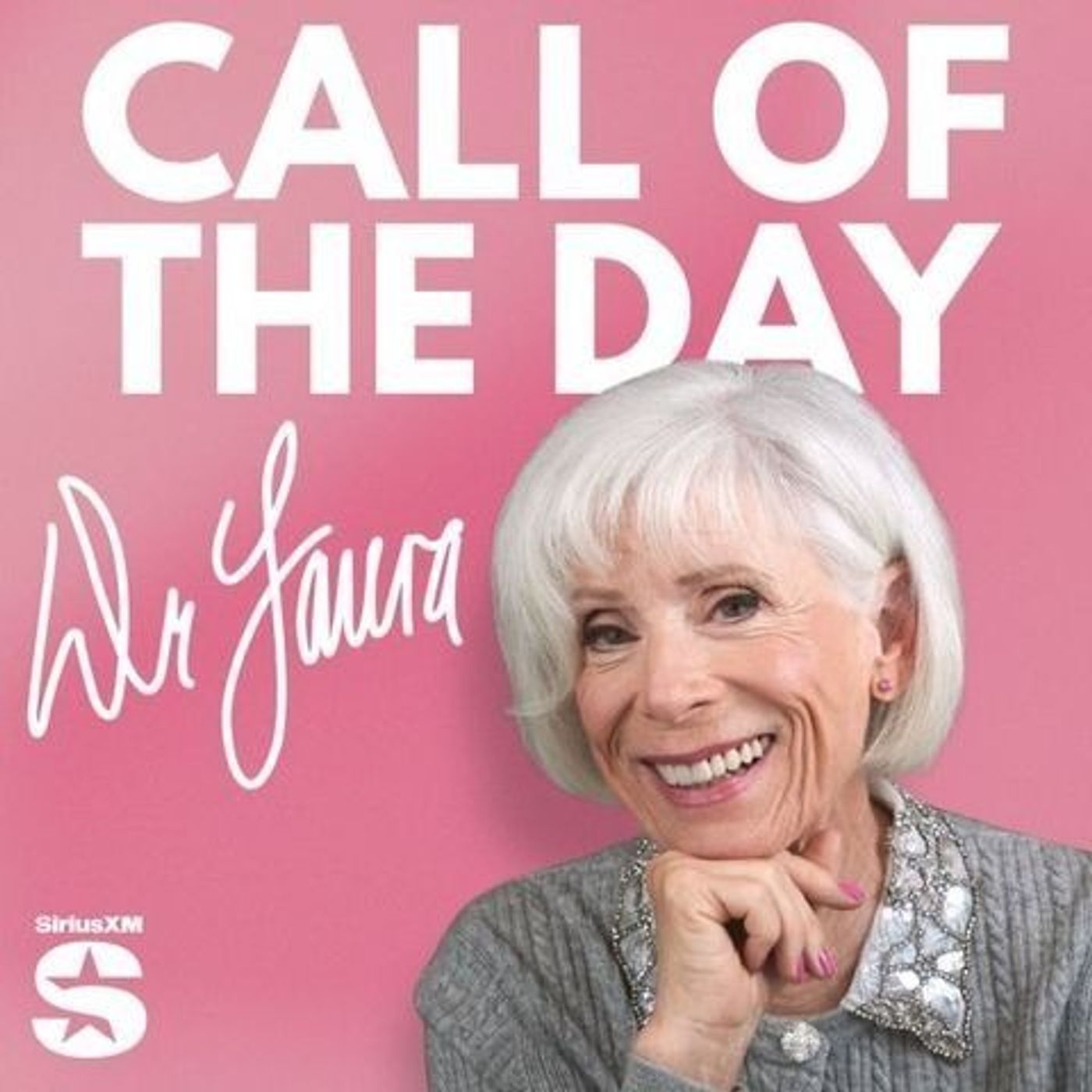
The Dr. Laura Podcast
How to Handle Childhood Tantrums
00:08:06
How can Josh and his wife put an end to their 4-year-old's bad behavior when she's not getting her way? Got a dilemma? Call 1-800-DR-LAURA / 1-800-375-2872 or make an appointment at DrLaura.com - Listen to The Dr. Laura Program daily on SiriusXM Triumph 123.
Loading summary
Transcript43 lines
- [00:01]
Walmart Pharmacy Announcer
Look, if you've got prescriptions, the Walmart app is your place to manage them. Transfer your scripts, refill them and have them delivered straight to you. Migraines, managed allergies, alleviated dermatology, derma delivered ding dong. Is that your pizza? Nope. Walmart pharmacy delivery with a refill. Switch to Walmart and manage your prescriptions in the app. The Walmart you thought you knew is now new delivery not available for all prescriptions.
- [00:29]
VRBoCare Announcer
Exclusions apply day or night. VRBoCare is here 247 to help make every part of your stay seamless. If anything comes up or you simply need a little guidance, support is ready whenever you reach out from the moment you book to the moment you head home. We're here to help things run smoothly because a great trip starts with the right support. And hey, a good playlist doesn't hurt either.
- [01:01]
Dr. Laura Schlessinger
Thanks for listening to my Call of the Day, brought to you by Home Title Lock. Don't become a victim of title fraud. Protect your equity with their million dollar triple lock protection. Try it for free today@hometitlelock.com DrLora Remember, you can hear my radio program daily
- [01:19]
on Sirius XM Triumph.
- [01:21]
And connect with me 24 7@drlaura.com Josh
- [01:25]
welcome to the program.
- [01:27]
Caller (Parent)
Hi Dr. Laura, thanks for taking my call.
- [01:30]
Dr. Laura Schlessinger
Thank you. How can I help?
- [01:32]
Caller (Parent)
Well, I'm calling. I have a four and a half year old daughter and we started her in a Montessori program this year and I've definitely have noticed some behaviors and some behaviors have come up that the school.
- [01:50]
Dr. Laura Schlessinger
Okay, what behaviors are you talking about?
- [01:53]
Caller (Parent)
I would. She like emotionally goes offline, I guess is the best way to describe it.
- [02:01]
Dr. Laura Schlessinger
Four and a half.
- [02:02]
Caller (Parent)
Absolutely. I, I agree 100%. It does kind of come out as violence and there.
- [02:12]
Dr. Laura Schlessinger
Have you seen this behavior?
- [02:15]
Caller (Parent)
Yes.
- [02:16]
Dr. Laura Schlessinger
So describe what you saw, the whole scenario.
- [02:20]
Caller (Parent)
So, okay, so she goes a half day, so I pick her up at noon. She likes to gather little things.
- [02:26]
Dr. Laura Schlessinger
I don't want to hear any of that. I want you to tell me when you saw her be violent.
- [02:32]
Caller (Parent)
Okay, so pick her up from school. She was collecting a rock or something from the playground for me and she can't find it. And she. The best way to describe she goes offline and we'll start scratching, hitting, flopping on the ground. I mean that's, it's. She's had a couple incidents with other kids. She I guess hit one in the head with a shovel and just last week she scratched another kid in the face.
- [03:03]
Dr. Laura Schlessinger
Okay, now before you put her in Montessori, which I will tell you, I had one experience there in one, and there are millions of these all over the country, maybe the world, I don't know. And we went in and there were these rugs and blocks and things like that. And so I was thinking of putting him in, you know, before I was thinking about it. So he goes in, he plops down and he just starts playing with the blocks and building his own thing. He liked to do that. He was going to build his own thing high up. And the teacher, talking to me, stopped talking to me, went over and instructed him how the blocks are supposed to be stacked. I picked him up, took him out and went home. So my one experience is that it's very controlling environment. I don't know how relevant that is to your situation, but some kids are going to be better with that than others. So I have to ask. Before you started the Montessori school, was your kid having severe reactions when frustrated?
- [04:09]
Caller (Parent)
Yes.
- [04:11]
Dr. Laura Schlessinger
Okay, so it has nothing to do with the school?
- [04:14]
Caller (Parent)
Yes. Right.
- [04:16]
Dr. Laura Schlessinger
Okay. Is that why you put her in school? So get her out of the house.
- [04:28]
The Knot Announcer
Planning a wedding shouldn't feel overwhelming. The Knot brings everything together in one place. Vendors who get your vibe, a custom planning checklist, guest list tools, and a free wedding website that syncs with it all. So instead of juggling a dozen apps and spreadsheets, you can actually enjoy getting married. Get started@thenot.com audio the Knot let's plan your wedding together.
- [04:54]
Nissan Pathfinder Announcer
There's an SUV that turns the unthinkable into the unforgettable. The new Nissan Pathfinder. Built for big adventures and all that family chaos. It's powered by a strong V6 engine with a nine speed automatic transmission. Inside, it's rugged and capable, but still premium and tech forward with room for up to eight passengers. It's also available with seven passenger seating and second row captain's chairs. With massive hauling capability. Now you can bring all the gear you and your family need for unforgettable Adventures. The new V6 Nissan Pathfinder. Power your adventure.
- [05:24]
Cottonelle Announcer
Upgrade your bathroom routine with the Cottonelle cleaning duo. Their toilet paper and flushable wipes feature cleaning ripples designed to help you come clean. Using them together leaves you feeling cleaner and fresher than dry toilet paper alone. Cottonelle gives you that kind of clean that makes you want to come clean about everything else. Like admitting you've been rocking press on nails since 2008. It's the clean that boosts your confidence and keeps you feeling fresh all day.
- [05:52]
Walmart Pharmacy Announcer
Look, if you've got Prescriptions. The Walmart app is your place to manage them. Transfer your scripts, refill them and have them delivered straight to you. Migraines, managed allergies, alleviated dermatology, derma delivered. Ding dong. Is that your pizza? Nope. Walmart pharmacy delivery with a refill. Switch to Walmart and manage your prescriptions in the app. The Walmart you thought you knew is now new delivery. Not available for all prescriptions. Exclusions apply.
- [06:22]
Lowe's Announcer
If you need a new appliance, this is your sign. Shop at Lowe's now to get up to 35% off and next day delivery on hundreds of major appliances. A new appliance now means an easier to do list later. Our best lineup is at Lowe's. Valid through 318 while supplies last. Selection varies by location. Order by 4pm Available Monday through Saturday, subject to availability, fees, exclusions and restrictions apply. See lowe's.com appliance delivery for more details.
- [06:56]
Caller (Parent)
A little bit. I mean, she's, she's very bright and my wife was a big advocate and she always wanted Montessori. So we decided to try the half days.
- [07:06]
Dr. Laura Schlessinger
But yeah, well, it's not working. It's not working. So you guys have to get more educated on handling tantrums because that's where it's going to stop, in how you guys handle the tantrum. So go on the net, YouTube, look at a bunch, half a dozen with video handling tantrums. Learn how to do it. That's it.
- [07:43]
Caller (Parent)
Okay. I mean, we do, we have.
- [07:47]
Dr. Laura Schlessinger
That's it.
- [07:48]
Caller (Parent)
Okay.
- [07:49]
Dr. Laura Schlessinger
Learn how to do it. If she's still doing it, then you haven't learned how to take care of it yet.
- [07:56]
Caller (Parent)
Okay.
- [07:58]
Dr. Laura Schlessinger
Unless you think she's a four and a half year old homicidal maniac. Assuming that's not the case, then you have to learn better how to handle her frustration and understand a little bit of where it comes from. That's a lot of anger. You have any idea what in the house makes her angry? Other than,
- [08:19]
Caller (Parent)
I mean, any ideas we got her in? I don't, I don't. I mean, I recognize the behavior, like at seven or eight months of like, wow, this is extra.
- [08:32]
Dr. Laura Schlessinger
You know, wait a minute, she was seven or eight months old and violent?
- [08:40]
Caller (Parent)
Maybe, maybe not violent, but like, like an example. I remember when she was first kind of propping her stuff up and kind of, you know, they walk along the couch and kind of. And there was something she was coming up to. I don't remember what it was, but my wife had moved it and the kid just, you know, flops on the ground. And, and it was, it was just like a very extreme, extreme reaction for
- [09:05]
Dr. Laura Schlessinger
still, there are ways of handling that without adding to it. It's scary and it's uncomfortable for parents, but there are ways of handling that by staying perfectly calm and not catering to it, not escalating it, but directing it. So you need to learn some of these techniques. So please learn them and then your kid will be a happier kid who will be able to get along with people. Still can't handle frustration. I'm going to stop there because I'm not willing to escalate a notion when I think generally speaking, we just have to learn how to handle it and be consistent. My number one, 800, 375 like, the toy is moved. So she flops on the floor and you lean down and look at her and go, tell me when you're going to come get the toy. Do you want to get the toy right now? Do you want to get the toy later? I don't know if eight months. She understands any of that, but do you want the toy now? It's over here, Very calm. So the kid's looking at a totally calm parent. And if the kid wanted the toy, we're directing the kid to accomplish her goal of getting the toy. Then she learns, don't quit, get the toy. Which is better than throwing yourself on the ground because you don't get the toy unless mom hands it to you. My number 1-800-doctor Laura 1-800-375-2872 if you
- [11:12]
like this podcast, be sure to rate it on Apple podcasts or your favorite place to listen to my podcast. Of course, I'd love if you gave me five stars. And be sure to share this podcast with a friend on Facebook or your preferred social media platform.
- [11:31]
Walmart Pharmacy Announcer
Look, if you've got prescriptions, the Walmart app is your place to manage them, transfer your scripts, refill them and have them delivered straight to you. Migraines, managed allergies, alleviated dermatology, derma delivered. Ding dong. Is that your pizza? Nope. Walmart pharmacy delivery with a refill. Switch to Walmart and manage your prescriptions in the app. The Walmart you thought you knew is now. New delivery not available for all prescriptions. Exclusions apply.