← The Dr. Laura Podcast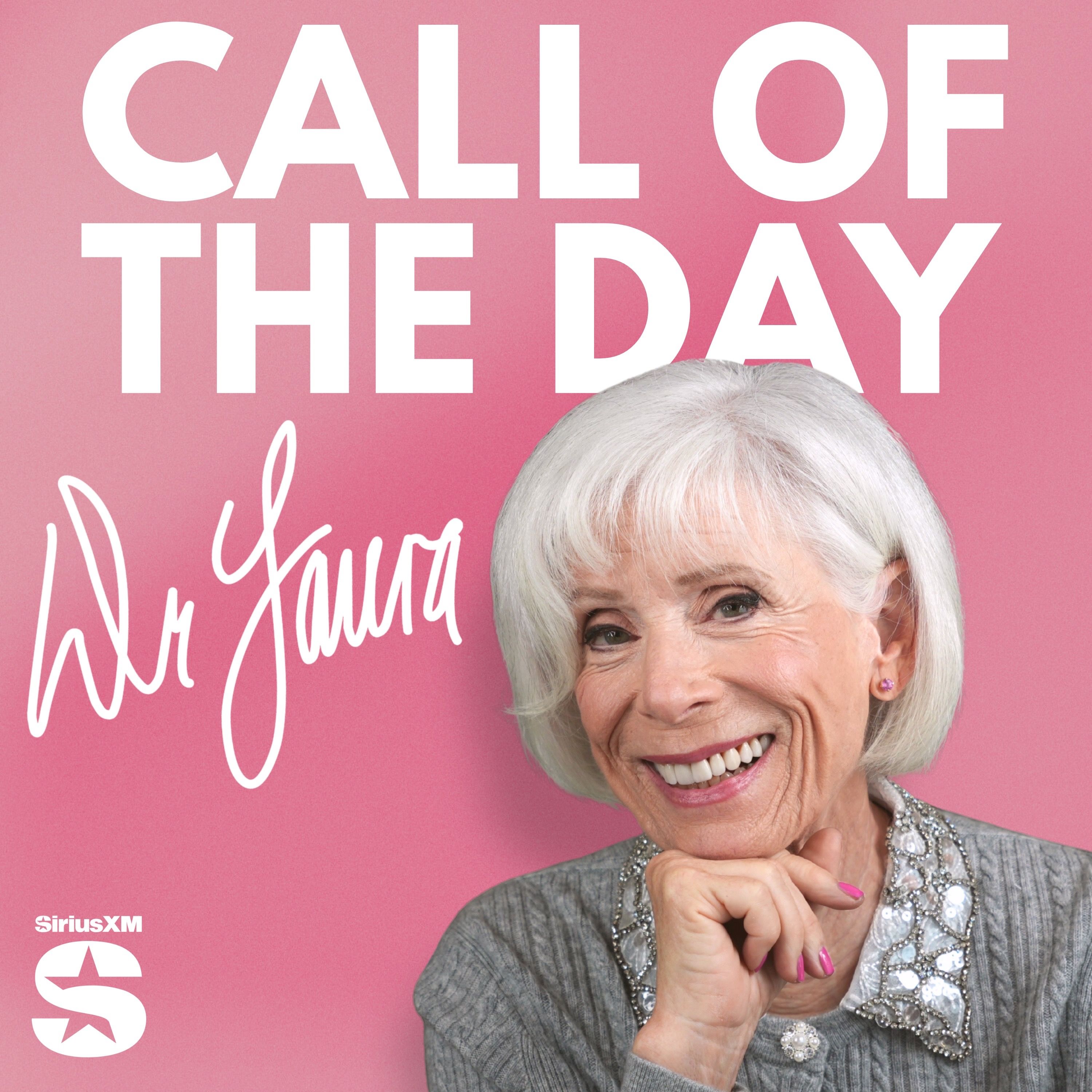
The Dr. Laura Podcast
Living Through a Spouse's Decline
00:12:53
Dr. Laura gives Antoinette concrete ways to care for herself as she caregives her man. Got a dilemma? Call 1-800-DR-LAURA / 1-800-375-2872 or make an appointment at DrLaura.com - Listen to The Dr. Laura Program daily on SiriusXM Triumph 123.
Loading summary
Transcript117 lines
- [00:01]
Dr. Laura
With 50 plus weekly options, the Suvi kitchen robot has a meal to meet all your family's needs. Too busy to cook? No problem, just don't feel like making dinner. You're covered. Need to eat the second you walk in the door? Sure thing. And here's the best news. Right now, Suvi is having its biggest sale ever. From easy family feasts to Sunday suppers, takeout favorites, and even date night dinners complete with chocolate souffle, there's nothing your sous vide can't do. With sous vide, you just scan a recipe pop in your meal. Enjoy the day. Meals are ready when you are thanks to built in refrigeration that keeps ingredients safely cooled until it's time to start cooking. Sous Vide's holiday sale going on now. Save $150 off your own sous vide plus get 16 free meals during their best sale ever since. Don't miss out. Go to suv.comdrlora that's s u v I e.comdrlora We've all got just one life and I'm against wasting any of it. If you've been dreaming of starting your own business, don't let self doubt stop you. No turn your what ifs into why nots with Shopify. Shopify is the commerce platform behind millions of businesses around the world and 10% of all E commerce in the United States. They've got beautiful ready to go website templates to match your brand style and Shopify can help with everyday tasks like enhancing product images, writing product descriptions and generating discount codes with their AI tools. From household names to brands that are just getting started, Shopify is the partner that business dreams are made of. So turn your dreams into dollars and give them the best shot at success with with Shopify. Sign up for your $1 per month trial and start selling today at shopify.com DrLora go to shopify.com DrLaura shopify.com DrLaura thanks for listening to my Call of the Day brought to you by Vibriance Super C Serum, the skin care product I use twice a day. Visit vibrance.com drlaura to save 37% and get free shipping. Remember, you can hear my radio program daily on Sirius XM Triumph and connect with me 247 at drlaura.com Antoinette welcome to the program.
- [02:28]
Antoinette
Thank you for having me taking my call.
- [02:31]
Dr. Laura
You're welcome. What's up?
- [02:39]
Antoinette
I'm feeling kind of.
- [02:42]
Depressed and I'm trying to handle it better than I am. I had to put my husband into the veterans nursing home last January.
- [02:58]
And, well, right before that, he was home with me. And I had assistance, a little assistance, taking care of him. He had Covid. And when he came home from the hospital, he was a different person.
- [03:14]
He couldn't get out of bed, get out of bed anymore. And the little dementia that he had, I think it just quadrupled.
- [03:24]
Dr. Laura
Yeah, that could happen.
- [03:27]
Antoinette
Yeah. This. Seeing all this and trying to take care of him at home was just getting too much for me. So I'm guilty because I put him there. It's an hour up and back for me, and I've been doing this since January.
- [03:45]
Dr. Laura
Well, how often are you going up there? How often are you doing this trip?
- [03:50]
Antoinette
Every day. Every day.
- [03:53]
Dr. Laura
Antoinette, that has to stop.
- [03:56]
Antoinette
Yes.
- [03:58]
Dr. Laura
The quality of your health, physically and mentally, matters also. It's not just about him.
- [04:06]
Circumstance. You ought not permit the circumstance to make you deteriorate. It's awful when he hopefully has been the love of your life. And this disintegration, this disappearance of him happens.
- [04:26]
You are not a better person if you destroy yourself.
- [04:35]
Antoinette
I'm just so lonely at home.
- [04:37]
Dr. Laura
Of course you are.
- [04:40]
Of course it is. And that's something you will have to get used to. And that will take time. Can't expect things to happen overnight. Transitions are very difficult. They're painful. We fight them.
- [04:55]
We hate them. I get it.
- [04:59]
Antoinette
I hate it.
- [04:59]
Dr. Laura
This is something you will have to endure.
- [05:09]
Antoinette
I know.
- [05:11]
Dr. Laura
You're not a bad person. You're not a bad wife. There's nothing to feel guilty about. You didn't make him have Covid. You didn't make him have dementia. You had a good life. Together. His body and his mind are going.
- [05:24]
Commercial Announcer 1
To.
- [05:24]
Dr. Laura
That's not your fault. It's your loss, but it's not your fault. Well, what'd you think? We were going to live forever and be perfect?
- [05:36]
Antoinette
No.
- [05:37]
Dr. Laura
We're all going to die of something.
- [05:45]
I always say I can't cure normal collagen loss. Normal. But it's also the number one reason you start to feel older, stiffer, and more tired. It begins in your 20s, skyrockets after 40. By age 50, you're likely producing only half of what you used to. But here's the good news. Native path collagen can help restore. What time is stealing. Two scoops a day. Deliver 18 grams of pure bioavailable protein. Peptides support healthy cartilage, increased bone density, skin elasticity, strong hair, nails, even better digestion, flavorless, tested for absolute purity. And right now, you can lock in a special bundle deal at a fraction of the retail price plus free shipping. Don't wait. Supplies move fast. Go to getnativepath.com DrLaura that's getnativepath.com DrLora feel it. See it. Start your transformation today. These statements have not been evaluated by the fda. This product is not intended to diagnose.
- [06:43]
Commercial Announcer 1
Treat, cure or prevent any disease.
- [06:45]
Commercial Announcer 2
My dog Max loves chewing on my favorite pair of shoes almost as much as he loves his Blue Buffalo Life Protection Formula Dry Dog Food. Seriously, he never leaves a crumb. And I love it too because it's made with high quality protein, antioxidant packed fruits and nutrient rich veggies. Blue Buffalo foods are made with the superior ingredients your dog needs to thrive. Can your dog food say that? Visit feedbluefood.com to learn more.
- [07:13]
Commercial Announcer 1
For delicious meals, you could go out to eat or you could just make a Marie Callender's Meal. Marie Callender's classic Chicken Parmigiano bowl is so good. It has marinara sauce that's made from scratch and creamy mozzarella cheese over pasta. It's delicious with no artificial flavors, colors or preservatives and 30 grams of protein. You can find it in the frozen aisle. Marie Callender's what Having it all tastes.
- [07:36]
Commercial Announcer 3
Like Family movie night just got easier with Fandango. Reserve seats in advance, skip the lines and even cancel if plans change. Plus with Fandango's fan club, save on every trip to the movies. Want to stay in with Fandango at home, you can stream your family favorites right from the couch. Whether it's a weekend outing or a cozy night in, Fandango makes movie magic simple for the whole family. Download the Fandango and Fandango at Home app today.
- [08:05]
Commercial Announcer 1
Tis the season of gifting and holes to deck and the who's in Hoodooville were in love with new tech. Where can we find Sonos and Samsung and Nintendo? They shouted. Could he find it in one place? This they questioned and doubted when suddenly a who yelled walmart's the place to start. And Dichu added headphones, TVs and games to their carts. With Walmart their shopping was done in a flurry. They cried out who knew? And ordered their gifts in a hurry. Shop the latest tech gifts in the Walmart app.
- [08:40]
Antoinette
It's going there and seeing him look into my eyes and I feel like he wants to say something.
- [08:52]
Dr. Laura
Yeah, I know it seems like that.
- [08:57]
Antoinette
Today when I walked in and said hello, he said.
- [09:03]
I forget what I want to say and I thought, oh, my God, you been forgetting since January.
- [09:11]
But he still seems to know a little bit. Something comes through now and then.
- [09:18]
Dr. Laura
Yeah.
- [09:20]
Antoinette
It doesn't give me hope that things are going to change.
- [09:23]
Dr. Laura
No, no.
- [09:24]
Antoinette
It just makes me.
- [09:26]
Dr. Laura
I remember. I recommend you go no more than three times a.
- [09:35]
And at some point it'll go to twice a week.
- [09:40]
When it seems like there's really nobody home. You can't.
- [09:48]
You can't really justify damaging yourself.
- [09:54]
Antoinette
I know. I hear you.
- [09:59]
Dr. Laura
It's not fair to you.
- [10:02]
It's not fair to him. The whole thing isn't fair. It sucks.
- [10:07]
Antoinette
Yeah.
- [10:13]
I just needed to talk to you.
- [10:16]
Dr. Laura
I know. It's all right.
- [10:19]
It's really awful. By the way, how is your general state of health? Your brain is obviously good. How's your body?
- [10:29]
Antoinette
Except for a bad knee, I'm okay.
- [10:32]
Dr. Laura
Okay. Sitting in a car for two hours. Sitting when you get there. This is bad.
- [10:42]
Antoinette
I just feel.
- [10:45]
I know things go wrong when it's not there.
- [10:51]
Dr. Laura
Well, things go wrong in the time you leave, too.
- [10:57]
Antoinette
He fell out of his chair once.
- [11:01]
Dr. Laura
And this is what's going to happen.
- [11:04]
And this is going to happen because unfortunately, and I say this with all sincerity, it is annoying and enraging to me that we live past our brains.
- [11:21]
Because it tortures everybody else in our lives.
- [11:25]
Antoinette
That makes sense.
- [11:27]
Dr. Laura
They have loss without actually losing you.
- [11:33]
They're grieving, but you're not dead yet.
- [11:37]
Yeah, I know. It's very confusing and upsetting.
- [11:49]
Antoinette
I have to grieve twice.
- [11:51]
Dr. Laura
I know.
- [11:53]
I know. You're right.
- [11:58]
No more than three times a week, or I come to your house and pinch your head off.
- [12:05]
And when you're lonely at night, I don't know if you have a pet.
- [12:09]
I'm a widow for 10 years. I couldn't. I'd be so lonely at night without Lilybug.
- [12:17]
So having a pet is really good.
- [12:22]
Antoinette
Dr. Laura, I'm 79. If I get a pet now with the adult Antoinette.
- [12:29]
Dr. Laura
Antoinette. I'm going to be 79 in January. She's going to live another 10 years at least. I'm counting on living another 10 years because I'm taking care of myself.
- [12:48]
Commercial Announcer 1
If.
- [12:48]
Dr. Laura
You don't take care of yourself. And the other thing is, you can get either an older dog or you can get a bigger dog. Bigger dogs don't live as long as little dogs.
- [13:04]
So instead of anticipating you keeling over in two minutes, I think you need a dog.
- [13:13]
Antoinette
I do, too. Yes, I do, too.
- [13:17]
Dr. Laura
You cuddle with your dog. I get into bed and she cuddles with me and I go, life is good. Life is good.
- [13:22]
Antoinette
I love it, I love it, I love it.
- [13:25]
Dr. Laura
Well, let's go get a dog.
- [13:28]
Antoinette
Where do I go? The svca?
- [13:32]
Dr. Laura
Yeah. You can absolutely. You can adopt a dog. You can go on the net and adopt a dog.
- [13:41]
There are all these rescues. Is there a particular kind of dog you like?
- [13:50]
Can you name a dog type that you like, breed?
- [13:54]
Antoinette
I like a medium sized dog. Yeah. A shepherd or.
- [14:01]
Dr. Laura
That ain't no medium sized dog, babe. Okay, a shepherd. Well, they have. Shepherd.
- [14:08]
They have. Go on the net and look at, you know, adopting a shepherd and a zillion things will come up. You look for something close to you, you talk to them. You want a certain personality. You want a relaxed dog. You don't want one that's very antsy and needs to run around a lot. So maybe it's like three years old, four years old. Be terrific for you. Be terrific for the dog to have somebody to love it.
- [14:34]
Antoinette
Oh, that sounds so good. But what do I do with the dog when I'm not there?
- [14:40]
Just eat it?
- [14:43]
Dr. Laura
Well, no. Yeah, well, you're not going to go as often.
- [14:50]
And yes, once the dog is learned. Or you can have somebody dog sit. If I've got. I take my dog everywhere. But there are some places it's illegal, like a doctor's office, you know, So I have a friend come. I'm going to be gone for two hours, play with the dog. So you just arrange friends to pitch. Pitch in for you.
- [15:12]
Antoinette
You know, you just gave me a thought. I could.
- [15:17]
On days that they didn't have certain activities, I could actually take the dog with me.
- [15:26]
What do you think?
- [15:27]
Dr. Laura
Yes. Oh, I love it. Because usually in those places they like when dogs come in because it cheers people up. Funny we should mention that.
- [15:40]
Antoinette
I guess I'd have to have it. They have to have a personality. Yes.
- [15:45]
Dr. Laura
Well, that's why you really need to check out the dog. So I'd get. I'm looking at my watch now. I'd get busy if I were you.
- [15:55]
Antoinette
Okay.
- [15:59]
Yeah. That might fill in some part of my heart there.
- [16:04]
Dr. Laura
Well, it would fill in everywhere.
- [16:10]
If you want a really sedate dog, you get a golden retriever.
- [16:16]
Antoinette
Oh, I love them.
- [16:18]
Dr. Laura
Well, get a golden retriever. That's better than a German shepherd. German shepherds, you need to run them. These dogs are like pillows. Golden retrievers are like pillows.
- [16:29]
No, my best friend has one that's bigger than me.
- [16:35]
And it's just a love bunny.
- [16:40]
Antoinette
Oh, that's such a good idea.
- [16:43]
I needed that push because everyone's telling me to get a pet, get a pet, get a cat. And I'm like, no, not home and all.
- [16:52]
Dr. Laura
I love cats, but you really need a dog. That's a different relationship.
- [16:58]
Antoinette
It is. I've had dogs all my life. Yeah.
- [17:04]
Oh, you've been so helpful. I'm so, so kind.
- [17:08]
Dr. Laura
I'm glad you feel that way. Thank you very. Call me anytime. Okay. Antoinette.
- [17:13]
Antoinette
Yes. Thank you. Thank you so much.
- [17:15]
Dr. Laura
You're very welcome. My number, 1-800-375-2872. If you like this podcast, be sure to rate it on Apple podcasts or your favorite place to listen to my podcast. Of course, of course. I'd love if you gave me five stars. And be sure to share this podcast with a friend on Facebook or your preferred social media platform.
- [17:45]
Commercial Announcer 2
Did you know Tide has been upgraded to provide an even better clean in cold water? Tide is specifically designed to fight any stain you throw at it. Even in cold butter. Yup. Chocolate ice cream. Sure thing. Barbecue sauce. Tide's got you covered. You don't need to use warm water. Additionally, Tide pods let you confidently fight tough stains with new coldzyme technology. Just remember, if it's gotta be clean, it's gotta be Tide.