← The Dr. Laura Podcast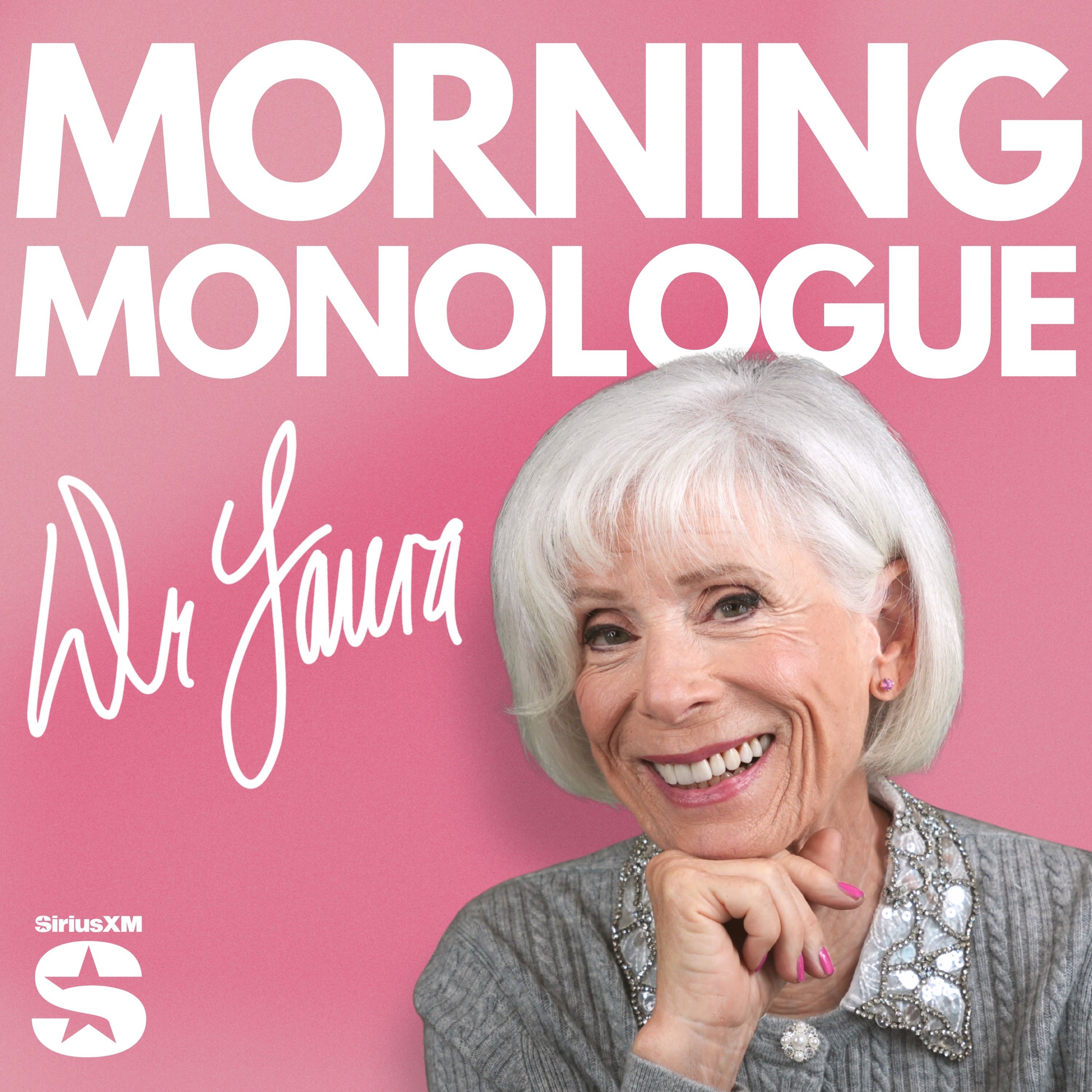
The Dr. Laura Podcast
What Cheaters Are Really After
00:10:12
Listen to my Morning Monologue: I’m sharing my take on pressing issues, enlightening research on human behavior, answering questions I get by email, and my favorite, most instructive interactions with callers. Everything you’ll hear is designed to help you become a better spouse, parent, family member, co-worker, friend, and human being. It’s the free therapy you need! Call 1-800-DR-LAURA / 1-800-375-2872 or make an appointment at DrLaura.com
Loading summary
Transcript15 lines
- [00:00]
Etsy Advertiser
This is an Etsy holiday ad, but you won't hear any sleigh bells or classic carols. Instead, you'll hear something original, the sound of an Etsy holiday, which sounds like this. Now that's special. Want to hear it again? Get original and affordable gifts from small shops on Etsy. For gifts that say I get you shop Etsy.
- [00:28]
Chevrolet Advertiser
The 2026 Chevy Equinox is more than an su. It's your Sunday tailgate and your parking lot snack bar. Your lucky jersey, your chairs and your big cooler fit perfectly in your even bigger cargo space. And when it's go time, your 11.3-inch diagonal touchscreen's got the playbook, the playlist, and the tech to stay a step ahead. It's more than an suv. It's your Equinox Chevrolet. Together, let's drive.
- [00:57]
Dr. Laura Schlessinger
Thank you for listening to my morning monologue brought to you by Vibriant Super C Serum, the skincare product I use twice a day. Visit vibrance.com drlaura to save 37% and get free shipping. Remember, you can hear my radio Program Daily on SiriusXM Triumph and connect with me 24 7@drlora.com what cheaters are really after when they have an affair and most importantly, do they find whatever they're searching for? The answer is not really. Article today that appeared I love this site goodmenproject.com written by Tim Dahl, so I'm going to use his article as a springboard. It's well done. I like that it comes from a guy, because it's mostly guys. Not totally, but mostly guys who fool around. Okay, Want to uncover why people do such risky things outside their committed relationship, in spite of what the consequences are likely going to be. Why do they risk it? What is worth the risk? Evidently, there are about a handful of things that make it worth the risk. There's a thrill you don't even have to like the other person. It's a thrill to have that excitement of sneaking off to meet somebody and having sex. It's exciting. It's intoxicating. Unfortunately, the thrill doesn't last. Bummer. The excitement fades because reality sets in. Why? Think about it. The thrill seeker is seeking the new. Well, as the affair goes on, the new becomes routine and it becomes old. And they're back to where they started. Except they might have a mess to clean up. 44% of men cheat because of the desire to more have more exciting sex, which is more easily gotten in a new situation because the newness in of itself is exciting like when you first met somebody. Oh, it's all exciting. It's new, and you have your fantasies going on and it's just a blast.
- [04:09]
Etsy Advertiser
This is an Etsy holiday ad, but you won't hear any sleigh bells or classic carols. Instead, you'll hear something original. The sound of an Etsy holiday, which sounds like this. Now that's special. Want to hear it again? Get original and affordable gifts from small shops on Etsy. For gifts that say I get you shop Etsy.
- [04:35]
Lowe's Advertiser
With my job, I can't drink during the week. Weekends are a different story.
- [04:40]
Fandango Advertiser
Ugh.
- [04:40]
Pillsbury Advertiser
After eight hours of this, I have earned my wine.
- [04:43]
Dr. Laura Schlessinger
You know what I'm saying?
- [04:44]
Chevrolet Advertiser
My family is a lot. It takes me four beers just to hang out with them.
- [04:49]
Oregon Health Authority Representative
Binge drinking isn't all college kids doing keg stands. Oregonians in their 30s and 40s binge drink at close to the same rates as younger people, raising our risk for long term health problems. More at Rethink the drink more at an OHA initiative.
- [05:05]
Fandango Advertiser
Family movie night just got easier with Fandango. Reserve seats in advance, skip the lines, and even cancel if plans change. Plus, with Fandango's fan club, save on every trip to the movies. Want to stay in With Fandango at home, you can stream your family favorites right from the couch. Whether it's a weekend outing or a cozy night in, Fandango makes movie magic simple for the whole family. Download the Fandango and Fandangoome app today.
- [05:33]
Pillsbury Advertiser
Holidays Feeling hectic? Pillsbury is here to lend a hand. Roll out some magic with cookies, crescents, crusts and more fresh from the oven. Tis the season for big smiles and easy wins. With Pillsbury.
- [05:50]
Lowe's Advertiser
Here for the Lowe's early Black Friday deals. You're right on time. For some of our biggest savings, we're talking up to 50% off. Select major appliances, plus up to an extra 25% off when you bundle. Select major Applian holiday lights going up soon. Select ladders are up to 50% off right now. Get Black Friday prices without the Black Friday crowds. Lowes we help you Save. Valid through 1119. Selection varies by location. Select locations only while supplies last. See lowe's.com for more details.
- [06:23]
Dr. Laura Schlessinger
Another motivation is escape. A lot of people see their primary marital relationship as so routine. No spark left. No treating each other like boyfriend girlfriend. No doing cute things. Every now and then I get a snarky letter. It's so rare, though, that I I have to mention it because I'm sure it represents some tiny populace nonetheless. But Ow. I remember one. It cracked me up so bad. We have an outtake where I say, run into his arms and say, hug me, hug me, hug me. So this woman writes to me. That's the dumbest, God awful, stupid thing I've ever heard. I would never run to my husband and say, hug me, hug me, hug me, hug me. He'd think I lost my marbles. Really? Why don't we ask him if feeling needed by his woman makes him feel good or bad? Why don't we ask him? So a lot of you, poo, Poo. Oh, it's just disgusting. You're expecting the woman. When he comes through the door, give him a kiss. Get the kids in bed, feed everybody, get them the hell out of the main house room and go take a shower together. Rub soap all over each other, everywhere. Delicate soap. Okay, rinse off and tell me if you feel better or worse about being married. Tell me. I'd be very interested. For those of you who go, oh, I'm tired after a long day, you know, why am I expected to do this? Because you're in the relationship and you're supposed to contribute. And men are like the water pumps on farms. Often they need to be primed to get out of their workspace, out of their cerebral space, into their soul space, Sensuality space. Women tenderize men. Sounds like I'm talking about a steak. I know, but women tenderize men. So why would you deny it? I mean, why? Why get married if you're going to deny it? Come on. So for that group, an affair becomes an escape route to sort of restart the sparks again. And I bet in an affair, you're taking showers together, using whipped cream, doing all kinds of cool things with the person you're having an affair with. But no, not your spouse. I have too much resentment built. So between now and dead, you're going to live on resentment instead of love and tenderness? That's seriously stupid. Stupid, stupid, stupid. Some turn to affairs because it's an ego boost. Makes me feel wanted. Sexy. It's a temporary fix. Again, all this fades. 33% of women evidently cheat on their spouse to find out if they've lost their charm. Do cheaters realize what they've lost, you ask? Every single moment. Cheaters suffer a lot. I don't care. Too bad. Another curious variety of cheaters are those who turn to screwing around as a twisted way of getting the upper hand. Makes them feel like they're in charge. They have the upper hand in their relationship. They have this whole secret thing that they're doing that elevates them above the trivial crap they have to deal with with their spouse. Yeah, except affairs end up controlling you. You're always looking over your shoulder, calculating, hiding, until the thing you thought was going to empower you ends up being an ugly trap. And then there are people who look for themselves in sock drawers. That's what I used to snarkily say when people I'm looking, I'm trying to find myself. And I always say, look in a sock drawer. That is where you are. Seriously, you ever look in your drawer and think, what does this say about me? Are the socks all lined up? Are they just thrown in, not attached? Are they thrown in? Just sort of. One is shoved into the other one. They have ribbons around them. I mean, what does your sock drawer look like? It tells a lot about you. Find yourself in in your sock drawer. You're not Finding yourself in an affair gives you the illusion of some kind of new start. But it's a fake one. It's a hidden one. It rarely leads to any true long lasting fulfillment. And generally, you realize you've been searching in all the wrong places for yourself. Check out the sock drawer. Look, affairs are not just about desire, romance, excitement. They're a deep reflection of some unmet needs. Neurotic or healthy unmet needs. But instead of addressing those needs when you cheat, you're basically opting out for a shortcut. And shortcuts rarely get you to any positive destination. You want a better life? Make an effort. Communication, Better choices, Better behavior. Okay, that's that, folks. My number 1-800-375-2872. If you like this podcast, be sure to rate it on Apple Podcasts or your favorite place to listen to my podcast. Of course, I'd love if you gave me five stars. And be sure to share this podcast with a friend on Facebook or your preferred social media platform.
- [13:21]
Chevrolet Advertiser
The 2026 Chevy Equinox is more than an SUV. It's your Sunday tailgate and your parking lot, snack bar. Your lucky jersey, your chairs and your big cooler fit perfectly in your even bigger cargo space. And when it's go time, your 11.3-inch diagonal touchscreen's got the playbook, the playlist, and the tech to stay a step ahead. It's more than an suv. It's your Equinox Chevrolet. Together, let's drive.