
Podcast
DTC Podcast
Hosted by DTC Newsletter and Podcast · EN
Weekly discussions between disruptive direct to consumer ecommerce brands and our amazing team about marketing, funnels, and everything scaling related. Subscribe to our newsletter for highlights and step by step tactical insights 👉🏻 📦 directtoconsumer.co
228episodes
Episodes
Newest firstAll episodes
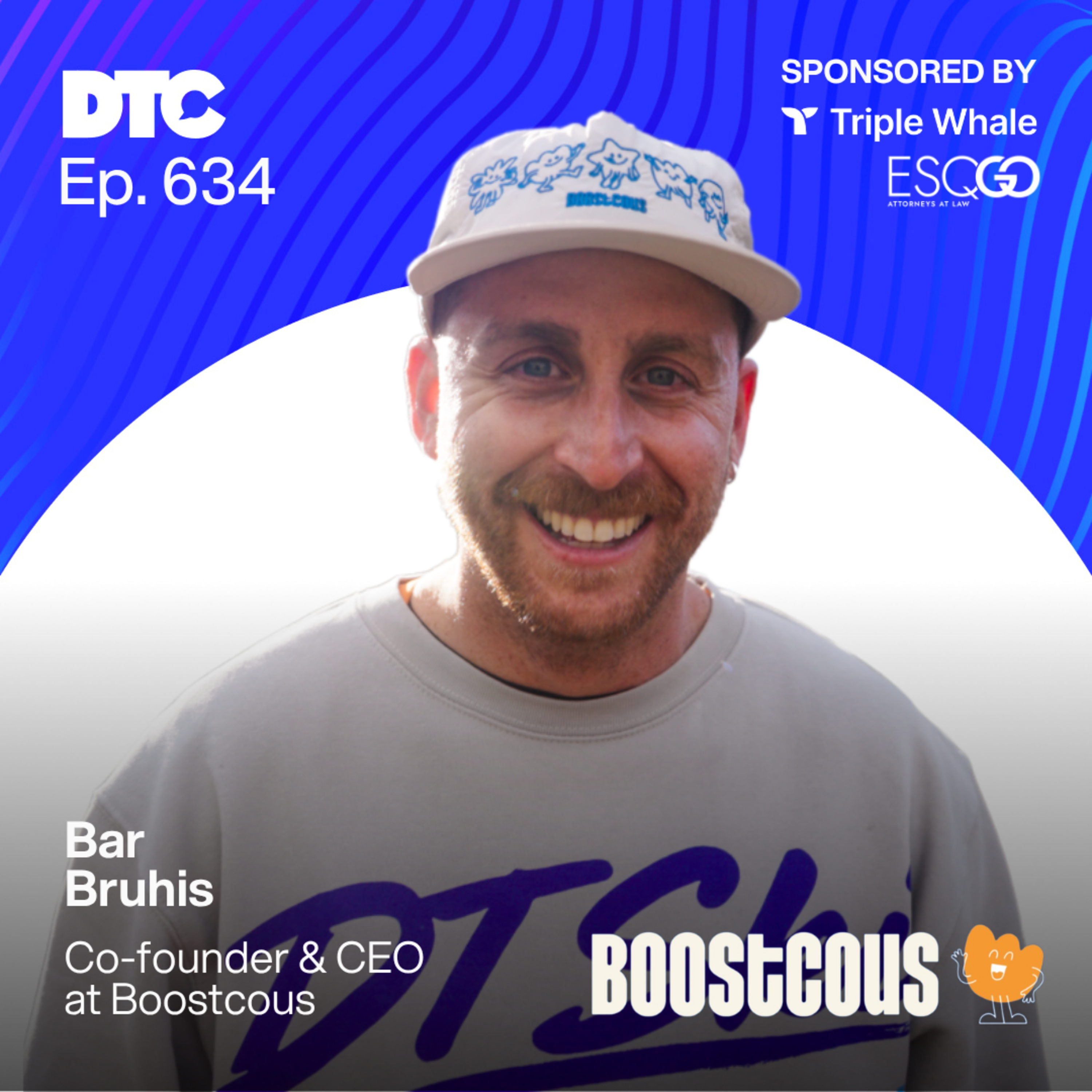
Ep 634: 10,000 Orders in 6 Months Selling Protein Couscous: Bar Bruhis on Launching Boostcous
2d ago00:34:24Summary readySubscribe to DTC Newsletter - https://dtcnews.link/signupBar Bruhis spent ten years building SaaS for Shopify brands. He helped start one of the first email capture tools in 2015, then co-founded KnoCommerce, the post-purchase survey tool 6,500 brands use. In December he finally took his own leap: Boostcous (boostcous.com), the first protein couscous. Six months later he's about to cross 10,000 orders, bootstrapped, with a team of two.Try it: boostcous.com. The tagline says it all: "Finally a carb that pulls its weight." (An AI copywriting agent wrote that. More on this below.)If you're sitting on a product idea you haven't launched, or you're a CPG founder trying to turn DTC numbers into retail meetings, this episode is the working playbook.What's inside:Why couscous: protein pasta has Banza, Brami, and Goodles. Couscous had nobody. Chickpea, lentil, and pea flour, gluten free, protein and fiber naturally derived from the legumes themselves.The launch: a front-page story in the local Carbondale paper and free pickup from his garage. The first 400 to 500 orders were handed over face to face, and he asked every customer why they bought.First-order profitable on Meta with a product almost nobody has ever bought online. "That doesn't really happen" in CPG.The KnoCommerce lessons applied to his own brand: "what almost prevented you from buying today" for CRO, and "which retail stores would you like to see Boostcous in" as ammo for buyer meetings. The pitch: in the last 30 days, this many of our customers asked for your store by name.The first one-star review, after 155 five-stars. He emailed her, got on a call, learned she was cooking it wrong, and updated the packaging. She rewrote the review herself as a five-star essay.Where AI actually helps a two-person brand (product seeding draft orders, static ads, most of the website photos, sell sheets built from survey and review data) and his warning: "we swung the pendulum a little too far at first." Calling customers stays human.Expo West on a $0 badge. He got the ticket by pitching his podcast, and the Gelson's deal came from walking the floor.His read on the protein trend: protein soda and protein sprinkles exist now. Naturally derived protein in foods you already eat is the part that lasts.Who this is for: founders sitting on a long-gestating idea, CPG operators heading into retail, and SaaS people wondering what their skills are worth on the brand side.What to steal: add two questions to your post-purchase survey today. "What almost prevented you from buying?" fixes your site. "Which retail stores would you like to see us in?" fills your retail pipeline with proof buyers can't ignore.Try Boostcous: boostcous.comTimestamps:00:00 Building a First-Order Profitable CPG Brand07:24 Launch Strategy That Validated Product-Market Fit11:50 Using Post-Purchase Surveys to Drive Growth18:08 Turning DTC Success Into Retail Expansion31:12 Advice for Launching Your First Ecommerce BrandSubscribe to DTC Newsletter - https://dtcnews.link/signupAdvertise on DTC - https://dtcnews.link/advertiseWork with Pilothouse - https://dtcnews.link/pilothouseFollow us on Instagram & Twitter - @dtcnewsletterWatch this interview on YouTube - https://dtcnews.link/video
Summary
Ep 633: Why Your Winning Meta Ad Dies in 8 Days, and What to Test Instead
5d ago00:31:45Summary readySubscribe to DTC Newsletter - https://dtcnews.link/signupLiam Robinson and Nate Vankoughnet were two of Pilothouse's first employees and spent years scaling some of its biggest accounts on Meta. Now they've spun out Marlbank Digital (website coming soon), a Meta-only agency built for the brands Pilothouse moved past as it went upmarket: pre-launch up to $100K/month.Want them in your ad account? Email nate@marlbank.co or liam@marlbank.co. No website yet. They've been busy in client accounts.If you're a founder running your own Meta ads, or the one marketer at a brand doing under $100K a month, this episode is a working session on why your account structure is probably answering the wrong question.What's inside:The Meta hierarchy of needs: unit economics at the base ("you'd be surprised how many people need a 3.5 ROAS to barely break even"), marketing strategy in the middle, creative at the top. Most brands skip the middle.Circumstance testing, their replacement for jumping straight to creative: articulate your product's real distinction, find the cultural currents it's relevant to, then map the specific moments it fits into someone's life. Each moment becomes a campaign.A full anonymized case study: the ceramic to-go cup brand that couldn't scale on pretty product shots or the eco angle, and unlocked the account with one question: "Would you use a metal mug at home?" Selling an upgrade to existing to-go cup users beat converting the single-use crowd, and the commute became the winning niche.What this looks like in the account: open audiences, existing customers excluded, CBO single ad set, 4 to 6 ads per set, creative held constant so circumstance is the variable.Why one ad usually takes 80% of an ad set's spend, and how to structure launches around that.The four foundations they ask for before a brand spends a dollar: a decent website, email flows, some social presence, and Meta.Plus the origin story: the agency is named after the small Ontario town where they spent a summer hand-building tree stands for a bow-hunting brand.Who this is for: ecom founders and marketers between pre-launch and $100K/month, and anyone whose Meta account is a graveyard of creative tests that never compounded.What to steal: before your next creative batch, write down your product's distinctions, then list every circumstance where it slots into a customer's day. Test those against each other first.Work with Liam and Nate: nate@marlbank.co / liam@marlbank.co | marlbank.coTimestamps:00:00 Why Meta Marketing Has Changed02:01 The Story Behind Marlbank Digital08:14 Why Foundational Marketing Beats Meta Tactics13:15 The Ceramic Cup Case Study20:10 How to Structure Circumstance Testing on MetaSubscribe to DTC Newsletter - https://dtcnews.link/signupAdvertise on DTC - https://dtcnews.link/advertiseWork with Pilothouse - https://www.pilothouse.co/?utm_source=AKNF633Follow us on Instagram & Twitter - @dtcnewsletterWatch this interview on YouTube - https://dtcnews.link/video
Summary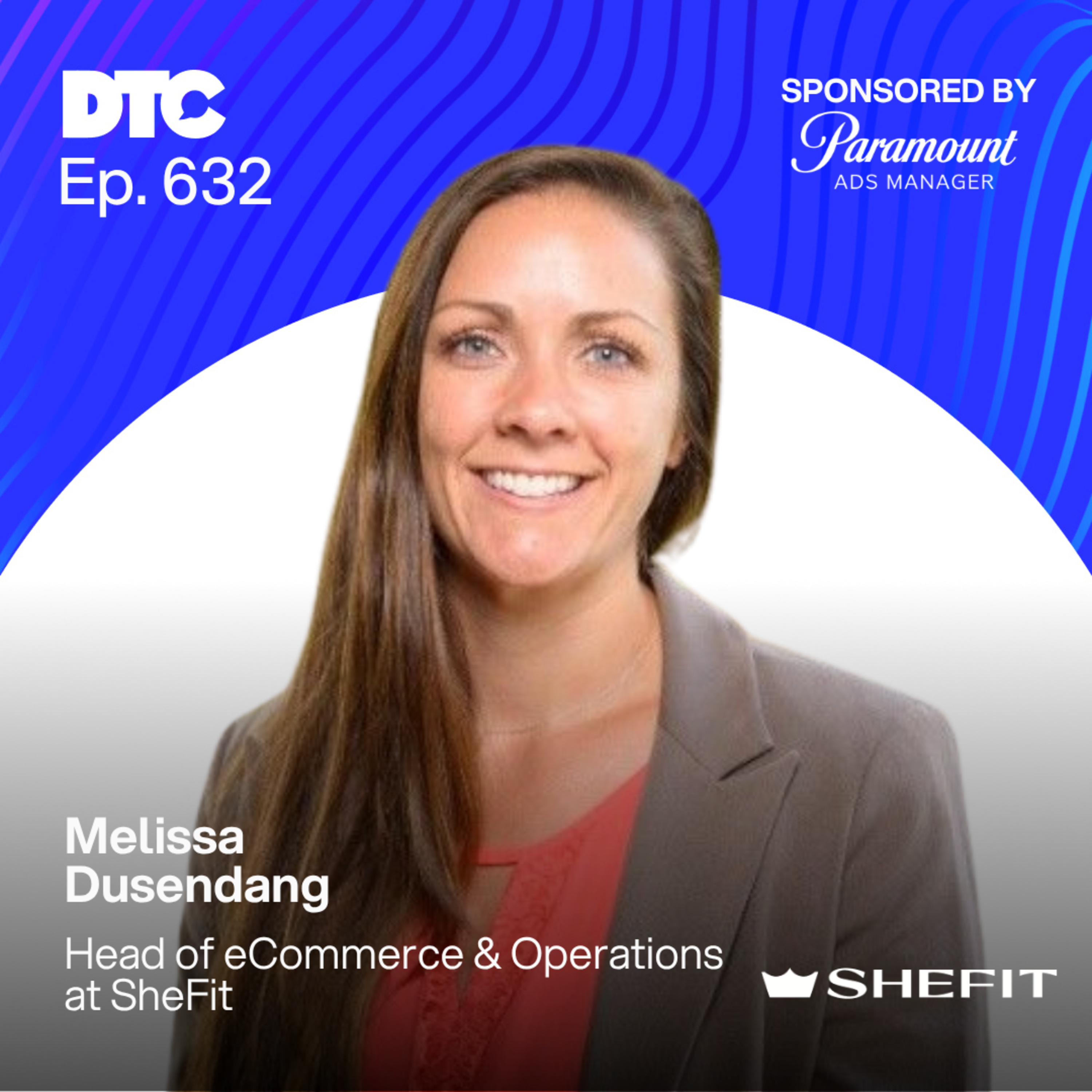
Ep 632: SheFit on TikTok Shop's Hidden Costs and Why Your New Customer Numbers Are Wrong
1w ago00:41:50Summary readySubscribe to DTC Newsletter - https://dtcnews.link/signupMelissa Dusendang ran a summer contract at SheFit to "manage the chaos" for one marketing director. She never left. Years later she runs ecommerce and operations, and her actual job is stopping the company from lying to itself with its own data.If you own the P&L, the dashboard, or the customer experience, this one is for you. Melissa sits in the finance meeting thinking about how a tax decision hits checkout, and in the marketing meeting thinking about which numbers are secretly inflated. She calls it being a puzzle person. Eric calls her a silo obliterator.Why TikTok Shop can quietly wreck your new-versus-returning customer math. Masked and missing emails on marketplace orders mean Shopify can count repeat buyers as new, so "we 2x'd new customers" can really mean you gave existing customers a discount.The attribution question to ask before anyone reports a ROAS or MER number, so two teams aren't arguing about goals while measuring different things.How SheFit found its best-selling ad hooks inside customer reviews and comments, and why phrases like "my boobs don't move" outperform copy the team writes.The Emerge Sports Bra story: how customer comments drove a custom-strap design (skinny straps on smaller sizes, wider straps on larger sizes) that sold out on launch.Why real women feeling the "aha moment" when they lift the straps is SheFit's top new-customer acquisition move, run through micro-influencers and ambassadors instead of a gym-only ad.Her honest read on TikTok Shop: better customer control than Amazon, but a margin eroder that can turn a premium brand into a "always on sale" brand.Who this is for: Ecommerce and ops leaders, founders wearing five hats, CX and community managers, and anyone trying to get finance, marketing, and product to agree on what the numbers mean.What to steal: Pull your own review and comment language and use it as ad copy verbatim. Before your next growth review, write down which attribution model each number is using. And check whether your marketplace orders are inflating your new-customer count.Timestamps:0:00 Why TikTok Shop metrics can be misleading5:18 Breaking down silos across ecommerce teams10:01 Why customer language beats marketing copy15:09 Building products from customer feedback23:21 Using AI and social listening for better decisionsSubscribe to DTC Newsletter - https://dtcnews.link/signupAdvertise on DTC - https://dtcnews.link/advertiseWork with Pilothouse - https://dtcnews.link/pilothouseFollow us on Instagram & Twitter - @dtcnewsletterWatch this interview on YouTube - https://dtcnews.link/video
Summary
Ep 631: Cracking Profitable, Incremental Scale on Applovin with Pilothouse
2w ago00:28:36Summary readySubscribe to DTC Newsletter - https://dtcnews.link/signupAppLovin just opened to everyone, and most DTC operators still do not know how it actually works. Jacob runs Meta at Pilothouse, which has spent on AppLovin for nearly two years, back when it was invite only.He breaks down what he sees in real client accounts: the product price points that work, the creative volume it takes to scale, and the end card, a full-screen animated step between the ad and the product page that has no equivalent on Meta.What you get:The $50 rule. Why products in the $30 to $150 range win, why below $20 gets tough on margin, and why $1,000 products are a bad fit for someone mid-game.The end card. What it is, why it acts like a second landing page, and the basketball-into-the-hoop trick for matching the ad to the app.Creative volume. Start with about 10 videos, add 10 to 20 a week, and what the ramp looks like at $50k/day.First-hour buying. Around 80% of purchases land in the first hour, and the other 20% almost always convert on a different video.The learning phase. Why you confirm tracking, then leave it alone for a week, sometimes two.Who this is for: DTC operators and media buyers weighing AppLovin as a third channel next to Meta and Google.What to steal: the creative-volume cadence, the end-card structure, and the measurement discipline to prove new-customer CPA instead of trusting platform ROAS.Timestamps:00:00 Intro02:00 AppLovin vs Meta Performance05:20 Best Products & Creative Strategy11:10 Measuring Incrementality & New Customers17:10 Scaling with Creative Volume23:00 Halo Effect & Campaign Best PracticesSubscribe to DTC Newsletter - https://dtcnews.link/signupAdvertise on DTC - https://dtcnews.link/advertiseWork with Pilothouse - https://www.pilothouse.co/?utm_source=AKNF631Follow us on Instagram & Twitter - @dtcnewsletterWatch this interview on YouTube - https://dtcnews.link/video
Summary
Bonus: How One Brand Recovered $1.5M in Amazon Sales From Unauthorized Sellers
2w ago00:37:32Summary readySubscribe to DTC Newsletter - https://dtcnews.link/signupMost brands treat unauthorized sellers and copycats as a cost of doing business. Mario Simonyan treats them as your biggest untapped revenue source.Mario is a former Amazon seller turned brand protection attorney. He started selling kitchenware and artificial turf doormats out of his driveway during law school, got ripped off, and discovered that not a single attorney he called understood how marketplaces actually work. So he built the firm he wished he'd had.In this episode he breaks down how one eight-figure fitness brand walked away from 1.5M a year on Amazon after attorneys and enforcement agencies failed them, and how his team got them back to 95% control of their listings. He explains why cease and desist letters get burned in people's fireplaces, why sellers fear account suspension far more than lawsuits, and the three-pillar approach his firm uses to get marketplaces to do the enforcing.He also goes into the dark side: the seller who allegedly flew a duffel bag of cash to Costa Rica to bribe an Amazon employee, the competitor who planted the word cocaine in a rival's backend keywords to trigger an automatic ban, and the copycat running a cloned website doing a million dollars a month off someone else's brand.Request a 100% free, custom Brand Audit Report from ESQgo here: https://esqgo.submitrequests.com/brand-audit-report?utm_source=dtc_newsletter&utm_medium=newsletter_sponsorshipWhat you'll learn:Why 15 to 25% of your revenue may be leaking to sellers you've never heard ofThe trademark material difference argument that removes sellers moving genuine productThe three pillars: IP, marketplace policy, and regulatory compliance, and why using only one is why most enforcement failsWhy an unauthorized seller priced higher than you is still an emergencyHow brand protection raises your multiple when you sell the businessWho this is for: Brand owners and operators doing 5M or more who sell on Amazon, Walmart, or any marketplace with a shared buy box.What to steal: The 500% ROI framing, the material difference memorandum, and the free brand audit at esqgo.com to see what you're actually losing.Timestamps:0:00 Intro0:53 How unauthorized sellers steal 15–25% of revenue4:09 The Amazon strategy that actually removes unauthorized sellers11:56 Why brand protection is a revenue driver, not a cost17:47 The 3-pillar framework for Amazon brand protection31:02 How to find marketplace revenue leakageSubscribe to DTC Newsletter - https://dtcnews.link/signupAdvertise on DTC - https://dtcnews.link/advertiseWork with Pilothouse - https://dtcnews.link/pilothouseFollow us on Instagram & Twitter - @dtcnewsletterWatch this interview on YouTube - https://dtcnews.link/video
Summary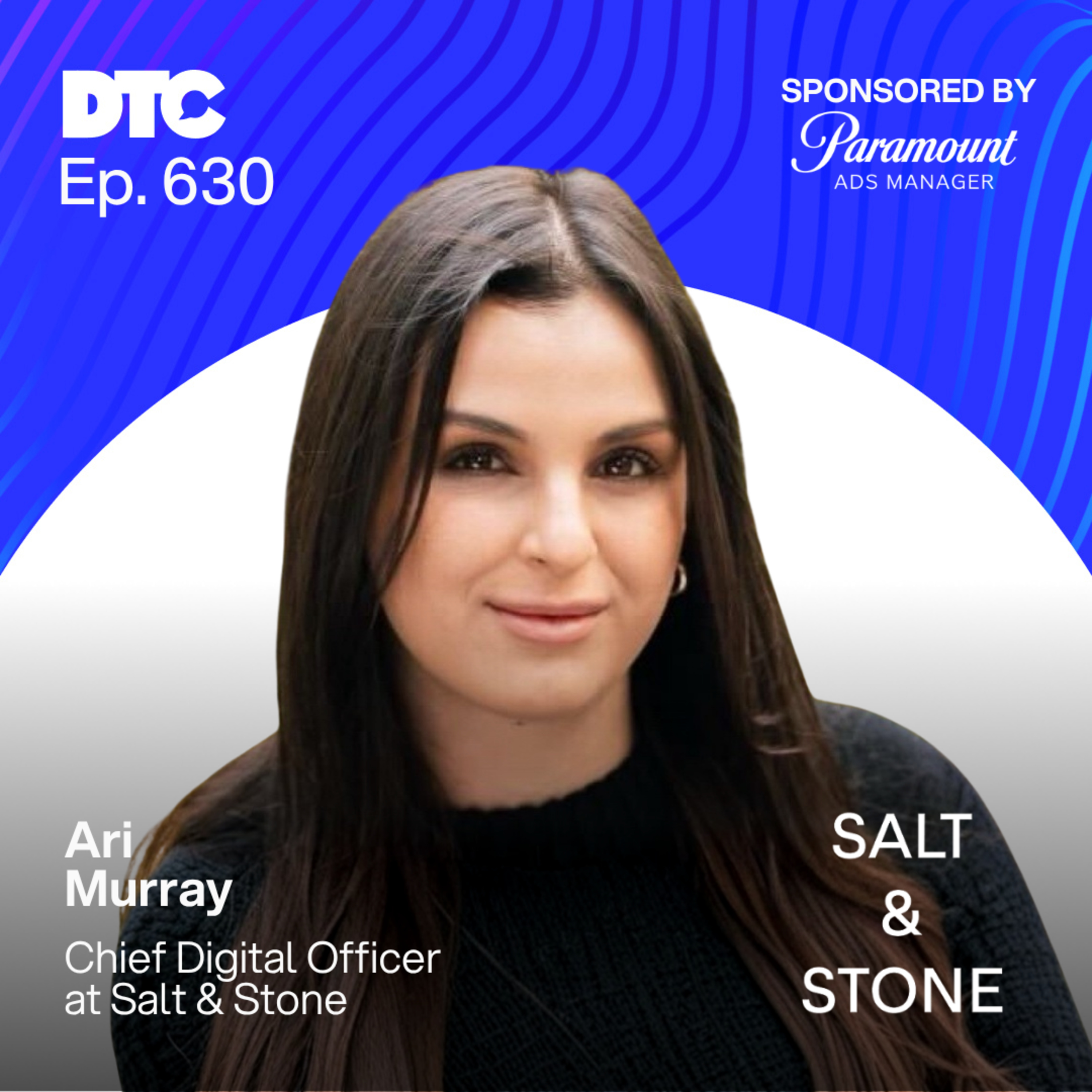
Ep 630: "The Best Ads Say Nothing" | Ari Murray, Chief Digital Officer at Salt & Stone
2w ago00:40:59Summary readySubscribe to DTC Newsletter - https://dtcnews.link/signupAri Murray runs DTC, Amazon and customer experience at Salt & Stone. She came from Sharma Brands, and before that worked on influencer and celebrity brands including a Kardashian line and Halsey's beauty brand. She started as a customer service agent.In this episode she breaks down why the old brand-versus-performance argument is collapsing. Customers now shop with a chatbot in the loop. Those bots read your reviews, your Reddit threads, and your actual customer experience. You cannot hack that, which means product quality and brand protection have become growth levers.She also gets specific on creative: what "socially native" really means, why she is chasing ads that don't look like ads, and the protein powder ad where the product is the seventh ingredient in someone's recipe.For: DTC founders, growth leads, creative strategists, retention and CRO teams, brand marketers.In this episode:Why she left the agency side for Salt & StoneWhy Salt & Stone has never acted like a deodorant brandAI visibility, Reddit indexing, and why you can't hide from real customer feedbackThe collapse of the middle of the funnel in agentic shoppingWhy she doesn't feel a desperate need to move spend out of MetaHow they actually measure incrementality (holdouts, Status, Northbeam, Triple Whale, hunting for an MMM)Socially native creative, and why splitting a hook five ways is played outWhy a brand with boundaries makes better adsWhat makes a brand feel cheapWhat makes a brand deserve to be iconicSubscribe to DTC Newsletter - https://dtcnews.link/signupAdvertise on DTC - https://dtcnews.link/advertiseWork with Pilothouse - https://dtcnews.link/pilothouseFollow us on Instagram & Twitter - @dtcnewsletter
Summary
Ep 629: 85% of Your Email Revenue Comes From One Segment (And You're Ignoring It)
3w ago00:21:15Summary readySubscribe to DTC Newsletter - https://dtcnews.link/signupJordan Gordon runs CRO and retention at Pilothouse and hosts TWBERP, The World's Best Email and Retention Podcast. He has audited somewhere in the range of 400 to 500 brands and been inside more Klaviyo accounts than almost anyone in DTC.In this All Killer No Filler episode he breaks down why most email programs are structurally backwards. 85% of campaign revenue comes from people who have visited your site recently, and yet most campaigns are sent to anyone who opened an email in the last 180 days. You are risking your entire sending reputation to chase the 15%.Then he gets to the good part: a flow he says he has basically never seen a brand run, and why it is the most valuable one you can build.For: ecommerce founders, retention leads, email marketers, CRO teams, agency operators.In this episode:Why free traffic is the "forever job" and paid is the spikeWhy small counts hide truths (nobody hits fold 10, but the people who do are your buyers)The 85/15 rule of campaign revenueHow brands blow up a Klaviyo account: too many campaigns, too-broad segments, and the sunset flow that sends to ten years of dead addresses in one goWhy recent repeat buyers are whales you should not over-messageCampaigns are zero-intent messages, so they can only ever be about newness or offersThe essentials core flow: triggered by site visit, not lifecycle, selling your hero SKU to people who came for something elseSending less in a margin-compressed Q4Subscribe to DTC Newsletter - https://dtcnews.link/signupAdvertise on DTC - https://dtcnews.link/advertiseWork with Pilothouse - https://www.pilothouse.co/?utm_source=AKNF629Follow us on Instagram & Twitter - @dtcnewsletter
Summary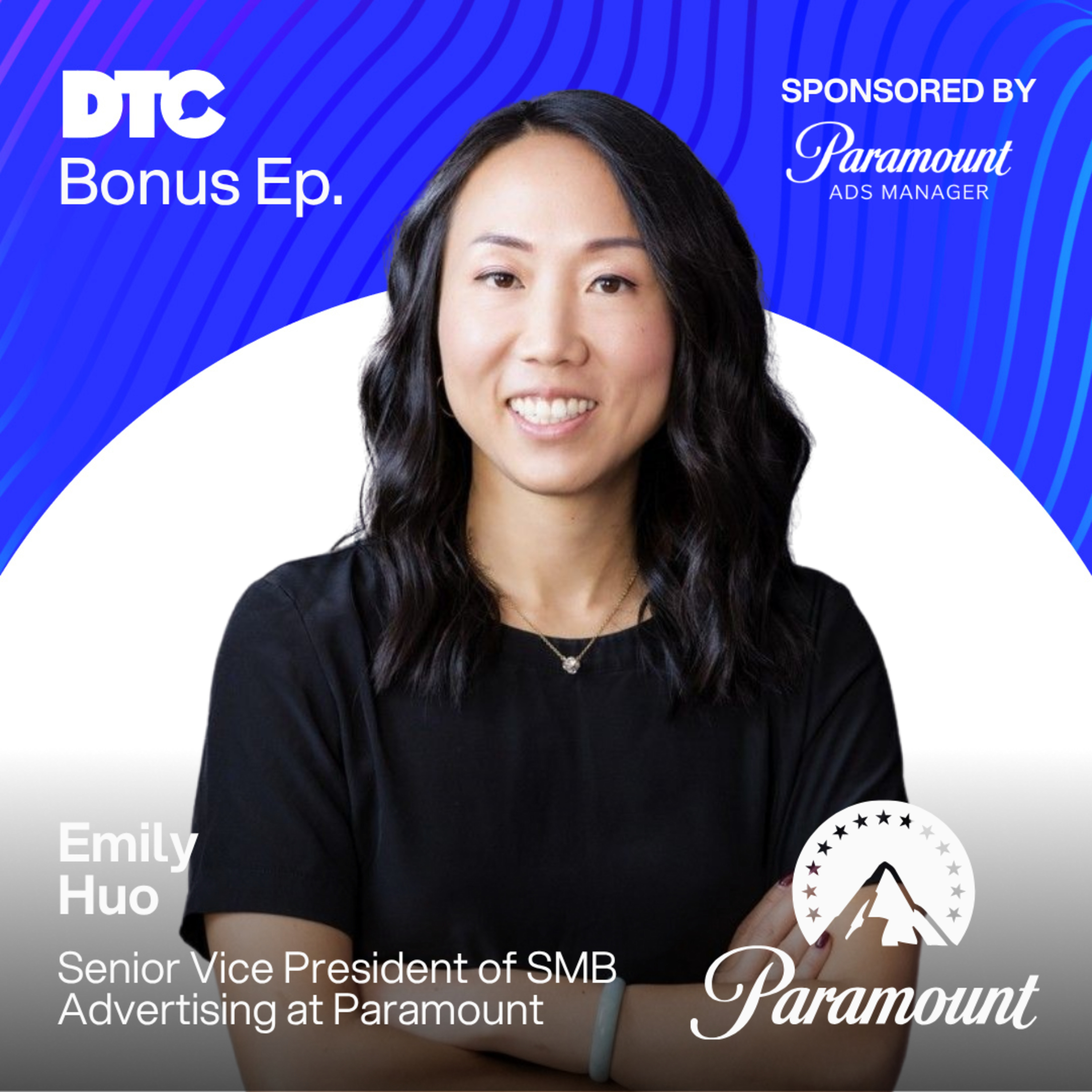
Bonus: The CTV Blueprint for DTC Brands: Build in Summer, Convert in Q4 (Paramount Ads Manager)
3w ago00:32:56Summary readySubscribe to DTC Newsletter - https://dtcnews.link/signupMost DTC brands put the bulk of their paid budget where attention is thinnest. Viewers spend about 99 minutes per session on Connected TV and 8 minutes per session on social, yet only 9% of standard marketing budgets go to CTV. This episode is about closing that gap on CTV with the same measurement & targeting you get on social (starting at $7 CPMs!)Emily Huo built ad businesses at X (Twitter), Reddit, and Spotify, and now runs SMB advertising at Paramount. She walks through how a DTC brand actually gets onto Survivor, Landman, or RuPaul's Drag Race, what to spend, and how to know if it worked.Sign up for Paramount Ads Manager today. Get your brand on TV tomorrow.This episode, we get into:The seasonal play: build awareness over the summer, retarget in the fall, convert in Q4Why you start broad on targeting and let the data tell you who is really watching, not the persona you imported from MetaThe pixel setup that ties a TV impression to a site visit, a lead, or a purchaseThe geo holdout test for measuring halo effect with no third-party toolsWhy a 30-second unskippable spot changes how you tell a brand story when you are not a household name yetBudgeting: carve out 10% as experimental, expect a three-month ramp, scale from thereWho this is for: DTC founders and growth marketers who have maxed out social, anyone planning Q4 now, and operators curious whether CTV is real or just a hot label.What to steal: the install-pixel-now, build-in-summer, convert-in-Q4 sequence, and the broad-then-narrow targeting approach.Timestamps:0:00 Emily Huo's Journey to Paramount3:10 Why CTV Is Growing So Fast8:07 CTV Targeting vs Meta Ads12:14 CTV Budget & Testing Strategy23:18 Measuring the Halo EffectSubscribe to DTC Newsletter - https://dtcnews.link/signupAdvertise on DTC - https://dtcnews.link/advertiseWork with Pilothouse - https://dtcnews.link/pilothouseFollow us on Instagram & Twitter - @dtcnewsletterWatch this interview on YouTube - https://dtcnews.link/video
Summary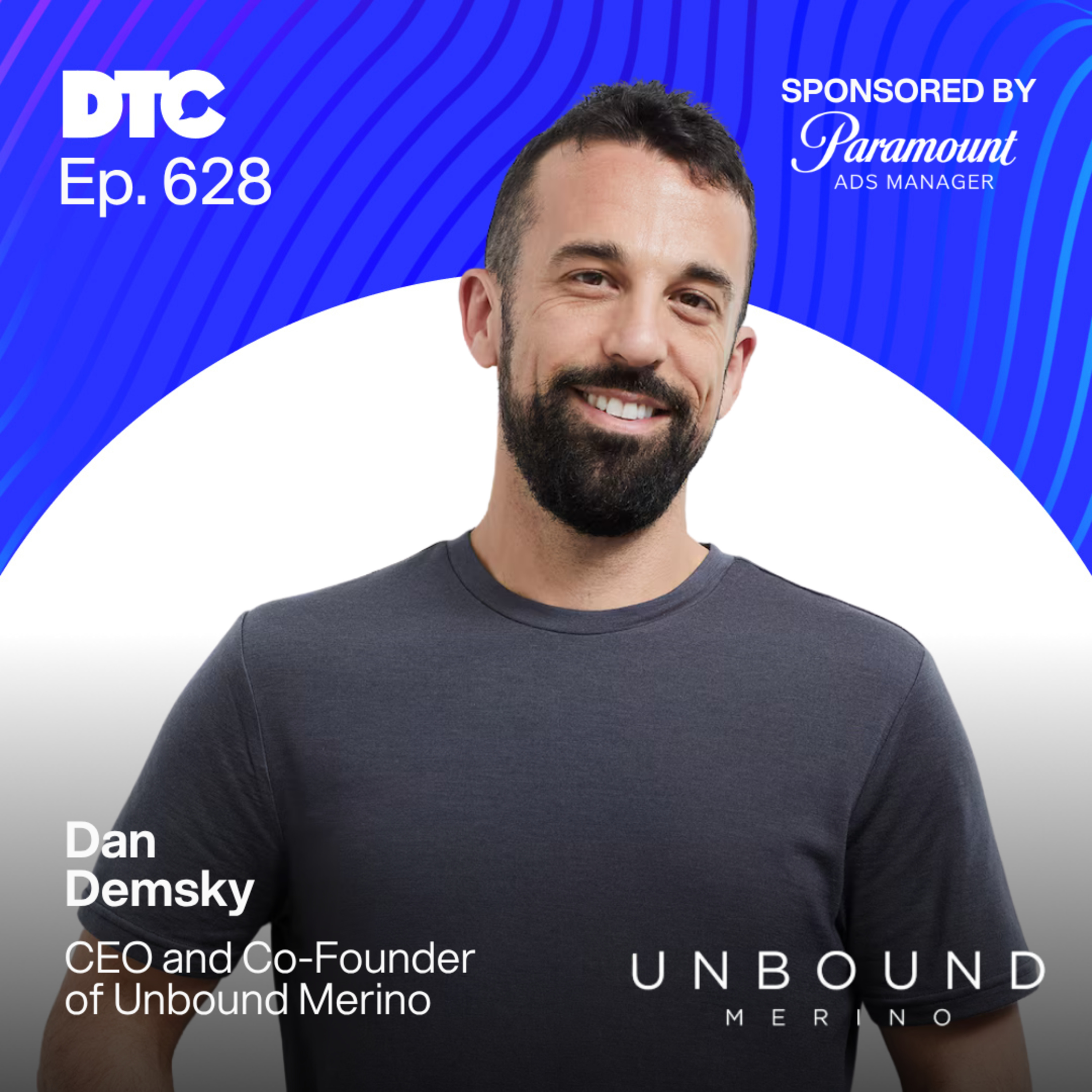
Ep 628: How Unbound Merino Bootstrapped to Nine Figures Selling $90 T-Shirts
3w ago00:43:46Summary readySubscribe to DTC Newsletter - https://dtcnews.link/signupDan bootstrapped Unbound Merino from a Reddit-fueled obsession with merino wool into a brand approaching nine figures in lifetime revenue, with a warehouse sale, a growing women's line, and zero outside funding.In his second appearance on the DTC Podcast, the Unbound co-founder gets specific about what actually moved the business over the last three years, why he almost lost 80% of his sales in a single day, and why he now cares more about the product and the friendships than any growth hack.What you'll learn:Why the ads Dan loves flop and the cringe ones scale, and how he made peace with itThe creative volume system that unlocked Meta scaling in 2023, and why Meta stopped working the same wayHow word of mouth (15% of new customers) and a 50/50 women's line changed the growth modelThe de minimis and tariff shock that nearly ended the company, and the scramble to open a Dallas warehouse before Liberation DayHow Unbound uses a custom AI wired into Shopify, its ERP, Asana, Slack, and Drive to triangulate why products get returnedWhy 5% of sales now come from ChatGPT and Claude, and what that means for discoveryWho this is for: bootstrapped founders, DTC operators, and anyone selling a premium product who is tired of renting customers from Meta.What to steal: the reorder-first mindset, the creative iteration loop, and the tariff survival playbook.Timestamps:00:00 Building a $90M travel apparel brand02:12 Scaling Meta with creative volume08:00 Why product quality beats acquisition tactics16:00 How tariffs nearly killed the business32:05 AI as a business advisor and data analystSubscribe to DTC Newsletter - https://dtcnews.link/signupAdvertise on DTC - https://dtcnews.link/advertiseWork with Pilothouse - https://dtcnews.link/pilothouseFollow us on Instagram & Twitter - @dtcnewsletterWatch this interview on YouTube - https://dtcnews.link/video
Summary
Ep 627: Why Nick Shackelford's Personal Brand Saved His Cash Flow | Agency Confidential Preview
4w ago00:41:57Summary readySubscribe to DTC Newsletter - https://dtcnews.link/signupThis week on All Killer No Filler, we're giving you a preview of Agency Confidential, the new podcast from our co-founder Jeff, and this episode's is a truly killer.Jeff sits down with Nick Shackelford, who's everywhere in DTC. Three agencies (Structured, Konstant, Lucid), an events business, and a decade of showing up on every feed, stage, and group chat. Jeff calls him the Coca-Cola of ecommerce. Eric calls him the Drake of DTC.But halfway through, Nick stops and shares something he says he's never told publicly. Last July, cash got tight and he had to bridge the gap on one of his companies. Not with a loan or a raise, but by getting paid as a public agency owner to talk about SaaS products. Ten years of being a face turned into a cash-flow lever almost no other owner has.Then it gets stranger. That same decade of posts and videos is now training data for every LLM on earth. Ask ChatGPT or Claude about DTC agencies and Nick, Structured, Konstant, and Geek Out all come up. A personal brand he built to win deal flow quietly became free distribution in a channel that didn't exist when he started.They get into the real cost of being the face, why building a faceless brand (like DTC and Pilothouse) trades built-in pull for durability, AI in the agency space, and why Nick thinks the market's about to splinter back into specialists.What they cover:The never-shared story of how Nick bridged a cash-flow gap in a rough monthWhy a personal brand is a lever most agency owners don't haveHow ten years of content became free distribution in AI searchThe real cost and risk of being the face of your agencyFace vs. faceless: durability, transferability, and selling the businessWhere Nick thinks the agency market is heading in 2026Who this is for: Agency owners, DTC operators, and founders weighing whether to build in public or build something that doesn't hinge on one person's face.Catch the preview here, and if you like it, go subscribe to Agency Confidential for the full episode.Timestamps:00:00 Nick Shackelford on building agencies and personal brands02:19 How Nick built three agencies and scaled operations11:59 Why AI is changing agency work and client communication27:56 How a personal brand became a business advantage39:18 Why AI will bring back specialized agenciesSubscribe to DTC Newsletter - https://dtcnews.link/signupAdvertise on DTC - https://dtcnews.link/advertiseWork with Pilothouse - https://dtcnews.link/pilothousehttps://www.pilothouse.co/?utm_source=AKNF627Follow us on Instagram & Twitter - @dtcnewsletterWatch this interview on YouTube - https://dtcnews.link/video
Summary