Loading summary
Transcript215 lines
- [00:00]
A
Fall is in full swing and if you're like me, it's the season to cozy up and refresh your wardrobe. Quince makes it so easy. You get those polished, comfy pieces that keep you warm without the crazy price tag. Quince has all the elevated essentials for fall. Think 100% Mongolian cashmere from $50, washable silk tops and skirts and perfectly tailored denim at all prices that feel too good to be true. I'm eyeing their wool coats. They look designer level but cost a fraction of the price and the quality just as good if not better. By partnering directly with ethical top tier factories and cutting out the middleman, Quint cuts out the middleman to deliver luxury quality pieces at half the price of similar brands. It's the kind of wardrobe upgrade that feels smart, stylish and effortless. This fall, my Quint staples are on repeat. Their cozy cashmere hoodie for every day, buttery soft leggings for the gym, and their organic cotton bedding I never want to get out of quick. Quince has become my one stop shop from closet to kitchen to home, giving me luxury essentials without the luxury price tag. Keep it classic and cozy this fall with long lasting staples from quince. Go to quince.com bunny for free shipping on your order and 365 day returns. That's Q-U-I-N-C-E.com B U N N I E to get free shipping and 365 day returns. Quinn comments.combunny when starting a podcast. You're starting a business. Exciting but honestly, kind of scary. Had all the doubts. What if it doesn't work? What if no one shows up? But that's normal for any entrepreneur. That's why I love Shopify. It makes turning an idea into reality simple from selling products to growing your brand all in one place. So if you've been waiting for a sign to finally start, this is it with Shopify, you can make it happen. Shop Shopify, the commerce platform behind millions of businesses around the world and 10% of all e commerce in the US hosts, level up your wardrobe with the Bunny XO fam. Your closet will thank you. Shop Bunny XO com what if I can't design a website? Shopify's got you from the get go with beautiful ready to go templates to match your brand style. What if I need a hand? Get help with everyday tasks like enhancing product images, writing product descriptions, or generating discount codes with Shopify's AI tools created for commerce. What if people haven't heard about my Brand Shopify helps you find your customers with easy to run email and social media campaigns. And what if I get stuck? Shopify is always around to share advice with their award winning 24. 7 customer service support. Turn those dreams into and give them the best shot at success with Shopify. Sign up for your $1 per month trial and start selling today at shopify.com bunny go to shopify.com b u n I e shopify.com bunny hey guys, I need to ask you a question. I want to know why and the hell are you not on Patreon?
- [03:06]
B
I don't think you guys even realize how much content we have on Patreon.
- [03:08]
A
Let me break it down for you. We have the Bunny XO show. We have Meet the D fors, we have propaganda, we have more shows that we're adding. And not to mention we have the visuals of the podcast. Head over to www.patreon.com backslash Dumblon Pod sign up.
- [03:27]
B
You guys are going to be pleasantly surprised. So with this podcast, you know, Dolly had. She's a workhorse like I am. And before she had done the podcast, she had already done three other things.
- [03:37]
A
The podcast was the last of her.
- [03:38]
B
Things of the day and we got allotted 45 minutes with her and her and I just started talking and like she had some of the most incredible answers and like, you know, when Dolly speaks, you don't cut her off. So I didn't get to finish the entire interview, but Dolly had so much fun that they're bringing me back for a part two. It was incredible and I can't. I'm just so grateful and so thankful.
- [04:06]
A
Bunny Xo is this thing on?
- [04:30]
B
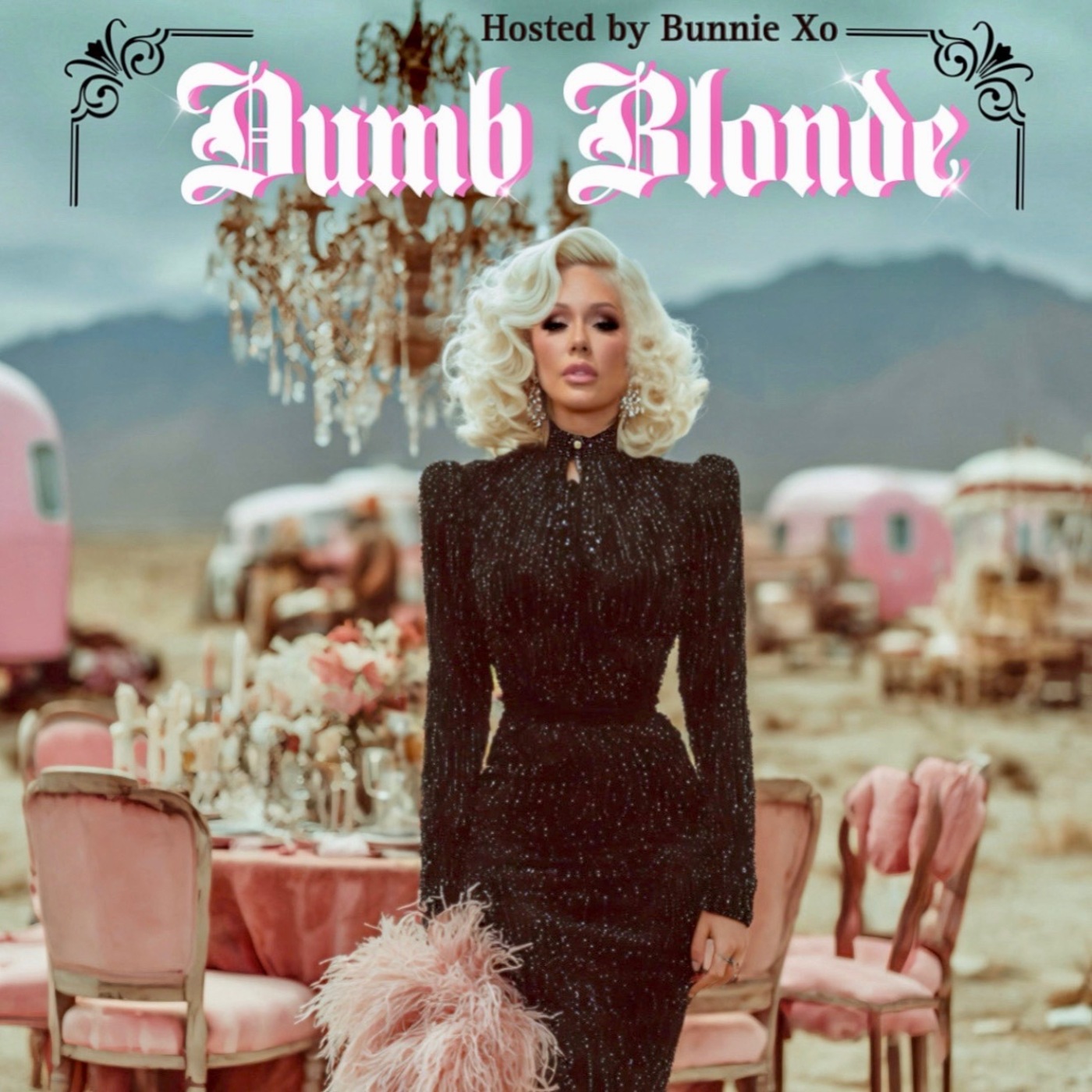
Hello, babies. Welcome back to another episode of Dumb Blonde. Today is so special to me because I started this podcast six years ago and when I named this podcast, I named it after a specific song that was tongue in cheek, but also was an oxymoron to my life, but also a woman who I have admired and literally just patterned my entire life after the iconic, the queen of not just country, but the Queen of everything. Ms. Dolly Parton is here today.
- [05:03]
C
Well, hello. Now. We should put an S on the dumb blonde. I'm telling you, two of us here today.
- [05:08]
B
Will you be my co host?
- [05:09]
C
I'll be your co host.
- [05:10]
B
I would love for you to be my host.
- [05:11]
C
I would love that. I would love it.
- [05:13]
B
I would love for you to be my co host.
- [05:15]
C
You have a bunny and a squirrel.
- [05:16]
B
I love it. I love it so much. Both are fast, though. Very, very slippery. Soc Right.
- [05:21]
C
Yeah. Very, very.
- [05:24]
B
This has been something that I have pretty much manifested since I started this podcast. Everybody has always asked me, who is your dream guest? And there's two of you. Dolly Parton and Joyce Meyers are the two people that I have said that I have wanted since the beginning. And sitting here with you today is such an honor. And I just want to say thank you for making time for me today.
- [05:42]
C
Well, I'm happy to do it. We love you.
- [05:44]
B
I love you, too. And my husband loves you, too.
- [05:46]
C
Well, we love your husband very much, but anytime I see you, I see him, and vice versa. So, yeah, we love both. You make a great couple.
- [05:53]
B
Thank you.
- [05:54]
C
But you're great on your own. And you're no dumb blonde. No, I can tell you that.
- [05:58]
B
Thank you. Neither one of us are, though, right? Isn't that just.
- [06:01]
C
I don't know about me, but I know you're okay.
- [06:03]
B
Well, I mean, the testimony to your life is pretty much shows how brilliant of a woman you are, and I kind of want to dive into that with you, starting with. I want to paint a picture for my viewers at home, for some people who might not even know your backstory. I'd like to start, you know, with your childhood and where you grew up and stuff like that, if you could tell me a little bit about that.
- [06:24]
C
Well, I grew up in the Great Smoky Mountains of East Tennessee, way up in the hills, actually. I was actually born in a little cabin on the little Pigeon River. My dad was a sharecropper for a while, and then eventually we moved over to the little place we call Locust Ridge, where you hear me talk a lot about my Tennessee mountain home. But there's 12 of us in all. Mama had 12 kids and six boys and six girls. We were pretty even. And we were just country people just trying to scratch a living out of. Out of dirt up there in the hills. But I was blessed to have a good mom and dad, and they managed pretty good to work with. Nothing to try to, you know, to raise a house full of kids. And none of us wound up in jail. None of us had to get married. So all in all, I think they did a pretty good job. But we were just. A lot of folks in our area were poor. That's just the way it was in that area. But it's been one of the greatest things, really, that I've carried with me all my memories of my childhood, and it's made me appreciate life and people more than if I had been brought up a different way.
- [07:30]
B
I think yes, ma'. Am. I always feel like harder childhoods make for great adulthoods. It, like, sets you up for just a lifetime of, you know, knowing that you have to work for what you want and going after your dreams. And you. I feel like you dream a little bit bigger, too.
- [07:45]
C
I think you do. I think you also kind of can relate, you know, to. To things more. And you also. Because if you like us, you stay so close together as a family in order to try to make it. And I think that in itself gives you a strength that you wouldn't have had you not had, you know, to know what it's like to work together.
- [08:06]
B
Yes.
- [08:06]
C
You know, to make things work and to keep a family together.
- [08:10]
B
Yes, ma'. Am. Absolutely. A lot of your songs are deeply personal, and some of them reference your father's tough love. And you've also spoken about your mom's faith, how she was, you know, extremely religious. Do you feel that the tough love approach and her religious views is kind of what made you so independent or, like, dare I say, rebellious?
- [08:34]
C
Oh, I don't think I'm rebellious as much as I'm just strong. And I get my work ethic from my dad, and I get my spirituality and, you know, just my. My faith. I mean, my faith, but also just my creativity from my mom's side of the family, because they were all musical. Now, Dad's people worked hard, and dad was not a tough dad. He was strong, though. He was kind of like that. We knew. We knew we better watch out.
- [09:01]
B
He wasn't one to play with.
- [09:02]
C
No. He wasn't going to beat us to death or anything like that, but we weren't afraid of Mama. You know, we'd get by with anything with her, but she would say, you couldn't push her over the edge. She'd say, okay, now that's enough. But my dad. But I think that was a good combination with Mom's faith and with Dad's strength, that it made us really all pretty well balanced kids, I think.
- [09:31]
B
I love that. I love that a lot. The respect that you have for your parents still, after all these years, is admirable also.
- [09:37]
C
Yeah, well, I loved my family. I still do. I stay as close as I can to them, certainly, if I don't see them as often as I'd love to, but they're always in my heart, and I always carry home with me wherever I go. And I write so many songs in order. Well, it comes natural to me, but I often do it just to keep all that straight and keep that still present because it's so easy. And I'm sure, you know, living out in this big world, you can just go any way, whether it be right or wrong.
- [10:07]
B
Yes, ma'. Am.
- [10:08]
C
You can go left and right and wrong. But it's like, if you keep that thing that you remember as a child, that faith. I keep that very. I'm a big person on faith and keeping that strength because that's my creative energy and my spiritual energy is the thing that keeps me motivated, keeps me strong, keeps me from falling through the cracks.
- [10:31]
B
Keeps you grounded.
- [10:31]
C
Crazy world. Yeah.
- [10:32]
B
I always say that. I'm like, whenever you're on your knees, you're in the best position to pray. It is literally like, that has been the only thing that has gotten me through in any hard times in my life is being able to call on Jesus and be like, all right, big homie, I know we got this. I know you got this for me. Speaking about family and you being so close with your brothers and sisters, everybody knows you as Dolly the icon. But how did they know you before all of this? Like, if they could describe you, how would they describe the Dolly that they grew up with?
- [11:04]
C
Well, I was just another one of those little ragged ass kids up there in the Smokies in the mountains. But we all loved the music. I took it more serious, I think, because my uncle Bill, one of my mom's brothers, he took a great interest in me because he saw me paying more attention to it than maybe some of the others did, because I was always trying to learn all the chords on a guitar or any kind of an instrument laying around. And so they knew me as somebody that's going to, you know, offer to do their chores if they'll come help me sing on a song or if they'll add some background or help me work up a background part that I thought of. I remember once I had pig Latin when I was in school. Somebody came up with pig Latin.
- [11:49]
B
I never learned how to speak that well.
- [11:51]
C
I did because I was fascinated with anything different.
- [11:54]
B
Can you tell me a song?
- [11:55]
C
I only learned? I only learned to do it. Yeah, I'm going to sing you a song in piglet. But anyway, so I came up with the. A song called Friendliest Enemy. And I wanted the backgrounds to be like, she was my best friend to go with that in the background. So it was like I say, oswe, I may espe infre I shay aus way I may espe in fray ooh. And that meant she was my best friend. But if the song was she's the friendliest enemy I believe ever did see and she'd better get my baby off her mind I shea aus way I may espe and pray so anyway, that's a hit dol I had to get my sisters because they had to learn it, you know, they had to learn all that. And I had to offer to do their chores for a week or two for them to take the time to do it and just make them do it. So that kind of stuff. So they knew me as somebody that was always singing, always writing, always fidgety. I couldn't stay still. I was just kind of always full of energy in life. But we all loved each other. We all had our own personalities. We all loved each other for the way we were. And that's how we still are. We all. Some of us are a good mix, you know. Well, we're all a good mix, but a lot of them are more like mom's people or some are more like dads. But I was a really good mix between the two. And I love that.
- [13:20]
B
That is perfect. And I really think you need to release that song in pig Latin. Start a new trend again. The kids will love it.
- [13:26]
C
We actually did it up in as one of the shows at Dollywood when I was telling my life story. So we worked it in a couple of years ago at the Dolly. And my nieces got such kick having having to learn to sing it up there on the show. But everybody was singing it because everybody tried to learn that little part.
- [13:45]
B
I love it. I know. I was so jealous of the people who could do piggy Latin because I just couldn't do it. I just could not catch on to it or how to do it. So I'm just fascinated that you.
- [13:53]
C
I was a pig. So I learned.
- [13:55]
B
Stop it right now.
- [13:56]
C
I was farmer's daughter.
- [13:58]
B
I love that. So you circling back to your family you helped raise. Being from 12 children, you guys all took turns raising a baby right in the family. The oldest ones did that is what I had read. And you had one specifically your brother Larry that you helped raise.
- [14:20]
A
Shopify helps you sell at every stage of your business like that. Let's put it online and see what happens.
- [14:25]
B
Stage and the site is live that.
- [14:28]
A
We opened a store and need a fast checkout.
- [14:30]
C
Stage.
- [14:31]
A
Thanks. You're all set that count it up and ship it around the globe Stage.
- [14:35]
C
This one's going to Thailand and that.
- [14:38]
A
Wait, did we just hit a million orders?
- [14:40]
C
Stage.
- [14:42]
A
Whatever your Stage Businesses that grow grow with Shopify. Sign up for your $1 a month trial@shopify.com Listen. You know what doesn't belong in your epic summer plans? Getting burned by your old wireless bill. While you're planning beach trips, barbecues and three day weekends, your wireless bill should be the last thing holding you back. That's why I made the switch to Mint Mobile. With Mint, you can get the coverage and speed you're used to, but for way less money. And for a limited time, Mint mobile is offering three months of unlimited premium wireless service for 15 buckaroos a month. So while your friends are sweating over data overages and surprise charges, you'll be chilling. Literally and financially. Say bye bye to your overpriced wireless plans, jaw dropping monthly bills and unexpected overages, Mint Mobile is here to rescue you. All plans come with a high speed data and unlimited talk and text delivered on the nation's largest 5G network. Use your own phone with any Mint Mobile plan and bring your phone number along with all your existing contacts. Ditch overpriced Wireless and get three months of unlimited service from Mint Mobile for 15 buckaroonies a month. Listen, I don't gatekeep money hacks. I use Mint Mobile and you should too. My old provider, Highway Robbery Mint gives me the same crystal clear service, full bars and speedy data for a fraction of the price I'm saving enough every month to put towards things I actually enjoy this year. Skip breaking a sweat and breaking the bank. Get this new customer offer and your 3 month unlimited wireless plan for just 15 bucks a month@mintmobile.com bunny that's mintmobile.com b u n n I IE upfront payment of 45 required equivalent to 15amonth limited time new customers offer for first 3 months only. Speeds may slow above 35 gigabytes on unlimited plans, taxes and fees. Extra cement Mobile for details.
- [16:35]
B
Can we touch base on that whole situation a little bit?
- [16:40]
C
Well, I think. Let me clear up a little bit. Okay. We all had. I have a sister and two brothers older than me.
- [16:46]
B
Yes.
- [16:46]
C
And there's eight kids younger. But we. Mama had so many kids. There was only 18 months, 2 years difference in all of our ages. Mom and daddy married when Mama was 15. She had her first baby at 16. And so they were just born one right after another. So any older child had to help with whoever was coming along. But the one that was going to be my baby was little Larry. He didn't live that long actually. And you know, he was just. He died at birth, but he was. I followed mom around when she was pregnant the whole time she said that was going to be mine. I'd sing to it and I'd kiss on the belly and, you know, couldn't wait for my baby to come. But he didn't make it. And it just crushed me because I. That was when I, you know, I didn't understand about death and, you know, all of that. So that was a real hit for me at that age that I had lost my baby. I thought it was some, you know, I had a guilt thing about it somehow that I'd done something wrong. But I think any child that goes through a thing like that. But we all grieved over him. Not just me, but I more than the others, because he was supposed to be mine. And I was picturing how I was going to rock him and how I was going to sing him my songs and, you know, and all that. But we loved all the kids and we all helped with all the kids.
- [18:06]
B
You've spoken about the influence of your family. So would you say that Larry's spirit and the memory of him has continued to impact you both personally and professionally? Because after that, he passed away when you were 9, correct. And then at 10 is when you, like, started performing and kind of like. I don't know, I feel like maybe it was kind of like a push. Was that your way of dealing with the pain?
- [18:31]
C
No, no, I don't think they had anything to do with it. I was so musically oriented anyway, and I had my dreams. It did take me a while. I was so depressed as a little kid over that. Took me a while to kind of overcome that. I mean, you know, weeks, months, kind of where I really wasn't all that interested in stuff. But I don't think that had anything to do with the rest of my life. It just taught me about grief, you know, how we all have to learn those things at some age. And so that was, you know, that was a real hard hit. But know that after I got over the grief of that and I moved on, I knew he was in heaven and if Mama could handle it, certainly I could. That kind of thing. But I just was ready to go on. And my Uncle Bill was pushing me on, and he saw my desire, my dreams, and so we would. He would take me around to different local things to sing and on local radio and tv. But all of those things help to make up a human being. All those memories of the bad and the good, you know, I think that just all. You don't even know what parts they really play, the little things that happen. It just either if Nothing else. It makes your heart tender or, you know, how you have to protect certain things and it teaches. You got to know about those things.
- [19:52]
B
Yes, ma', am. I couldn't agree more. So, you know, at 10 years old, you're starting to work with Uncle Bill and you guys are going around, you know, you're performing and stuff like that. At 10 years old, a lot of kids are still figuring out who they are. How did you find your confidence to stand out and perform at such a young age like that?
- [20:13]
C
Well, I. I was always writing songs. I was always able to rhyme. And Mama was always fascinated. And there was always so much commotion in a house with that many kids. Oh, I can imagine none of us really got any real special attention unless we were in trouble or, you know, or something, you were going to get called out with something. But I learned early on, Momma was always fascinated. And, you know, when I'd sing these songs that I'd written, I would hear people talk, I'd hear stories. So I was writing songs at 8, 7, 8, 9 years old about people getting killed in the war and things that I'd never seen or done, but I was able to rhyme and write. And Mama, she would always noticed early on that I'd get more attention because of that. And, of course, everybody wants to be paid attention to. Everybody wants to be special. So when somebody come to our house, mom would often say, writing, get your guitar. And then she'd say, whoever would say, I want you to hear this thing this little thing wrote I want you to hear this song this little thing wrote. And so I'd be really just singing my song, and I was getting all that extra attention, which is making some of the other kids jealous because they weren't doing it, but they didn't work as hard as I did. But learning them chords, I had little calluses on my little fingers, cut deep. They were hard, they hardened. I had to really learn it till it hardens those calluses for you to play. So I took the time to do a lot of the things some of the younger ones weren't willing to do. So I just saw that that was. And I got the confidence from Mama bragging on me. And I knew that I could do something that some of them couldn't. You know, playing the guitar and all that. But I just. And then my Uncle Bill, he took great pride in me. And anytime somebody would tell me, oh, you're going to be good. You're this. I just kind of took that. And my personality was very, you know, susceptible to that kind of stuff.
- [22:13]
B
Do you feel like you're an old soul because you were able to relate to those songs of, like, people losing people in the war and stuff like that? Like, to be 10 years old and writing songs like that like, you. You would have to resonate with them in some way.
- [22:26]
C
Well, I'm just very perceptive. And I had the gift of rhyme, as I mentioned, and I had the gift of song, and so I would just hear things, and you can always. You know, I was. I could kind of take a story from one other thing and I could change a few things around. So I didn't feel like I was necessarily an old soul or that I had lived before or anything. I mean, I might have. I hope I did hope I might live again. Yeah. But I just think I was just able to do that because I had a. I was very perceptive, receptive, and I just had a very creative mind. You know, I had a great imagination, so it wasn't hard for me to make up a bunch of junk.
- [23:12]
B
Well, being around 12 kids, I'm sure to even just get any sort of piece, you had to have a great imagination.
- [23:18]
C
Yeah, I'd sneak up because there was a lot of kids going on. I'd sneak out behind the woodshed or around the outhouse, sit back there, do whatever, you know, write my songs, find a shady spot or a warm spot. But, yeah, I was always into that guitar and always writing my song.
- [23:33]
B
So I love everything that you do is productive. I want my daughter to watch this, our daughter to watch this, because she's 16 right now. She's still trying to find her place in this world. And I think it's awesome that, you know, you were so productive at such a young age. Can we talk about Uncle Bill?
- [23:49]
A
Because Uncle Bill really believed in you.
- [23:51]
B
And he took you to all these shows, and then he landed you in the Cass Walker Farm and Home Hour, and you became a regular on that show. Can you take me on that journey?
- [24:04]
C
Well, Knoxville was about 30 miles from where we actually lived, and I had an aunt that lived in Knoxville. That was where the show was from. And so I would, in the summer after I got to where I actually got the job, when I got old enough to be allowed to stay away from home. But, God, I was so homesick. She worked at one of those store department stores, and my uncle was a carpenter. So I was there in that house a lot. And I would go up to the top of the hill from where they lived, and I'd catch a bus down to the radio station, take my little guitar, and I would go to walk across the viaduct, I guess is what they call it, like this big bridge, have my little guitar. And then I would go do the Caswalker show, play my little guitar, do my songs. And Bill wasn't always with me then. Bill was doing a lot of other things. Things. But when I was working on the.
- [25:02]
B
Bill was living a full life.
- [25:04]
C
Yeah, well, he was doing. He did some other things, but I could go there. And then the guys that. The Brewster Brothers, especially, that worked with the Cass Walker show, they'd back me up and work with me playing the songs or sing some with me. And then sometimes I'd wait while I was waiting for the bus, I'd just get my guitar out to be singing. And some people would walk by and they'd think that I was standing on the corner. And they drop money in my guitar case, which I love, because then I go home and buy those little Jiffy burgers up at the top of the hill from where my aunt lived. They were like little crystal White Castle things. Oh, that was the greatest thing. If I made enough, somebody threw enough money in. And then I got onto that to where I just kind of play it, just pretend. I even wrote a song with my brother Floyd called Nickels and Dimes. And it was about that. That time when I was walking across. But working with the Caswalk show was amazing. Bill had taken me there early on, before I got the job. He's the one that got me, as you mentioned, got me on the Caswalk show, and he'd take me to the fair, the county fair, where I could join in contests and different things like that. And then eventually he would take me back and forth to Nashville. And so he just had. He saw that I was so serious about it, and he saw that I had potential. And I just. And Bill was a great guitar player. Bill wrote great songs. We wrote great songs together. In fact, in 19, I guess it was 67, we won the song of the year, BMI song of the Year, and put it off until tomorrow. Bill Phillips on Decca Records, he was a pretty big artist at the time. And so I got. When I had. We had sent the demo to him from when we'd just written it. Then they wanted me to sing on the demo. So that was kind of like my first kind of break of being heard, like on the. On the real radio, everybody was. DJs were calling, who's the girl singing with the Bill Phillips on the Bill Phillips song. So anyway, that was kind of A moment, too.
- [27:08]
B
That's awesome that Uncle Bill's been so pivotal in your career. That's amazing. At 10 years old, being on the Cass Walker show, who were some of your musical influences? Was there anybody that you wanted to be like, or did you have an idea of, like, hey, I'm gonna pave my.
- [27:23]
C
My own way? Well, all of my people were very musical, and so I think some of my greatest influences were within my own family. I had an aunt Dorothy Joel, one of my mom's sisters. Well, she played the banjo, she played the guitar, and she wrote great songs. And she was an evangelist. She also was a Pentecostal preacher. I love that. And I used to. I was just totally influenced by her. But as far as some of the others, there were the kitty. You know, there was kitty whales on the Grand Ole Opry and Ro. And there was some early on after I got out to where we really had a little bit more exposure to big radio and all. There was a woman named Rose Maddox. It was the Maddox brothers. And Rose, she worked with her brothers. And that was the first time I'd ever seen people dress in the rhinestones. They wore kind of Western, kind of like how the Grand Ole Opry does. But they were the first ones I'd ever seen do that. And they also put a show together. They did little bits, little comedy and little things. And I thought that was amazing. So you find now that I'm older, I look back and I find that I have just picked up bits and pieces from so many people through the years, and I've learned so much that I didn't realize I'm like a sponge without even knowing that I'm doing it. And then later on, I'll do something, I'll think, oh, that reminds me so much of when I saw so and so. Or, you know, you just learn. You just learn through watching.
- [29:00]
B
I always say we're like a masterpiece of all the art we pick up from each person. You know, it's just like little. Little gems of their souls that we take with us and that, you know, we look back on and we're like, okay, this influenced this, and this influenced that. So I love that you always give credit where credit's due, because I'm the same way. Like, if I see if anybody asked me, what's your look? I'm like, dolly. I'm Dolly all day long, you know?
- [29:20]
C
Well, I wish I look like you.
- [29:22]
B
Oh, stop it.
- [29:23]
C
You didn't need me for that.
- [29:24]
B
Oh, listen, we could trade outfits right now. And I'd be happy. I love this outfit right here.
- [29:28]
C
Well, yeah, we love. God, I guess we're like an.
- [29:32]
B
Absolutely.
- [29:32]
C
Yes.
- [29:33]
B
So, circling back, let's talk about the Grand Ole Opry. Opry. Because you made your first appearance at the Grand Ole Opry when you were 13 years old. How was that for you? Walking out on that stage at 13, being introduced by Johnny Cash.
- [29:47]
C
It was scary. Yeah. I could imagine my heart was beating like a drum, but I always said my desire to do a thing has always been greater than my fear of it. So I just try to hold on to that. I thought, well, I can't turn around in the middle of stage or run back. I thought, I gotta finish it.
- [30:07]
B
It's kind of how I felt today.
- [30:08]
C
No matter what.
- [30:09]
B
I was so scared. Oh, no, in a good way, though. I feel like if you're not scared of what you're doing, you're not growing.
- [30:17]
C
Well, I agree with that. But anyway, that was scary. That was big. That was, you know, working with just being around all those big elders. But I was also in awe of it. And like I said, of course, I mean, I was just a country kid. You know, you're always nervous when you first time you ever eat in a restaurant around people. You're not used to knowing how to do that, what, spoons and forks. And even to this day, I still don't know exactly when I go to these big, fine meals and all that, but I figure, well, I wouldn't be here if I wasn't a star, so, to hell with them. I'm going to eat what I eat and do. Has to. But I still would like to know those things, but I just never learned it. And now I don't care, you know, that I. You know, sometimes you think, oh, gets.
- [30:58]
B
To a point where you've earned your life.
- [30:59]
C
You just kind of watch other people. That's how you. How you learn. It's like, oh, I'll watch them, and when they pick that up, I'll pick that up and I'll do this and I'll do that.
- [31:08]
B
I could never. I could not point out a salad fork to you if somebody paid me. I don't know how to do that.
- [31:12]
C
Either, but that's what I'm saying. I just kind of watch if it's a big old, big thing, like if I'm invited to eat the Royal Family or something. You think I'm very uncomfortable. Yeah. But I better watch so I don't make a fool of myself.
- [31:27]
B
No.
- [31:27]
C
Or them.
- [31:29]
B
So, circling back to the Opry, Johnny Cash introduced you, and he's known for his powerful presence and mentorship. What do you remember about your interaction with him that night?
- [31:41]
A
And did he say anything to you.
- [31:42]
B
That stuck with you throughout your career?
- [31:44]
C
He said, hello. That stuck with me because at that time, I thought, see, I had seen Johnny Cash at another time when we were sitting in the audience, and I had the biggest crush on him.
- [31:56]
B
Oh, my goodness.
- [31:56]
C
Because he had so much magnetism. And I was young, you know, I was just beginning to feel those hormones. Look at, you know, to where you feel those things.
- [32:04]
B
I never felt very masculine energy.
- [32:07]
C
Well, he did. You know, he had all that, you know, movement and all. I found out later, it's because he was coming off drugs. Oh, no, he had. He just had twitches, I thought was magnetism.
- [32:18]
B
I love that.
- [32:19]
C
But there was some truth in that, I think the way he kind of moved.
- [32:23]
B
He was a Pisces, right?
- [32:25]
C
But I loved him. And as. For years and years, I told him he was my first crush. And he was. And then. So in my Broadway musical, the Life Story, I cover that about Johnny touching me on the shoulder. I mean, it just changed my life because I thought I was growing then because I felt all those feelings. But he was a real nice guy and very quiet. But I became best friends with June and Johnny after. So as the years went by, we would visit, and we liked each other a lot.
- [33:02]
B
She was a good woman. I really am.
- [33:04]
C
She was a loudmouth like me. So we got along just fine. And Johnny, I remember when somebody said something, something about johnny, don't you get tired of hearing June talk all the time? And he said, no, I do some of my best thinking when June's talking. So he does. But I think. I think he does some of his best thinking when I'm talking.
- [33:26]
B
No, I think that's how all husbands are. They just tune us out, you know, they're just so used to us. When you performed that night, did you already have a sense of, like, the legacy that you wanted to build in country music, or did that experience at the Opry shift your perspective on what was possible for you as an artist? Because.
- [33:44]
C
Well, at that time, I was just so nervous. And I reflected on that years later, as I still do. But at that time, it was just a big deal, you know, to be there at the Grand Ole Opry with all those big name artists. And so I think that I was just. It was just kind of addling at that time. I was just kind of addled about the whole thing. But I knew that that was, you know, just like when I got my encore on the Cassie Walker show the first time I was on there, and I thought, oh, boy, you know, I'm gonna. I'm gonna be a star. And now, years later, I realized they weren't applauding so much because I was good. It was just. Cause I was little, you know. No, it wasn't because I wasn't. You know, you have to develop, but you know how everybody wants to be good to a kid. And the fact that I was out there doing it, I think they, you know, people were just extra nice. And I think a whole lot of that might have been. So with the opera, it was just kind of cute when you see a young person doing something, so. But I did feel. And I felt back on it shortly after thinking, wow, you know, I was on the Grand Ole Opry and they liked me.
- [34:54]
B
So they asked you for three encore.
- [34:56]
C
This is what I want to do.
- [34:58]
B
Yeah, they asked you for three encores after your first.
- [35:01]
C
I didn't give them to them. No, I'm joking. They asked. Now, actually, they did applaud. And I kept singing the same, you know, last verse a couple of times.
- [35:10]
B
She's like, this is all you get?
- [35:12]
C
Yeah, this is all I practiced. Yeah.
- [35:14]
B
So soon after that, you ended up moving to Nashville and you graduated from high school. Correct. And then you ended up moving to Nashville, and you moved to Nashville with, you know, minimal amounts of money. How did you make ends meet in those early days? And were there any creative or unexpected ways you found to survive while pursuing your dreams out there?
- [35:35]
C
Well, I was lucky because there are so many songwriters in Nashville and publishing companies, and a lot of the people that write songs are not good singers. So all the publishing companies, they hire, if there's female songs that you can get a job singing those songs. So I got work through Tree Publishing Company. Buddy Killen was a dear friend, and so he would get me on these sessions, singing some of the songs that these writers had written, singing the girl songs. And then I didn't have a car, didn't have a phone, didn't have anything. And so all these musicians, because I was a right pretty girl at that time, you know, this young girl. And so I had all these musicians that were on the sessions, always willing to drive me home, always willing to stop showing, buying me a burger, Some of them thinking they might get more, and some of them might have, but that was not because I.
- [36:36]
B
Lucky, fellas.
- [36:38]
C
Seriously. It's like they were always so good to me. Everybody seemed to Know that my heart was in a good place and that I was just a country girl. I was funny, you know, I was always cracking jokes or just being. And, well, like I am now, really. But everybody got a kick out of me. So I was just one of the boys, because I had six brothers and all my uncles and my grandma. I was not a bit shy around the men, and I knew how to, you know, how to maneuver with all that. So. So I made money. And then I also got on a small salary with Tree Publishing Co. In those early days. And then later I got with the Combine Music with Fred Foster, Monument Records. They had a publishing company. So I got always lucky that I always got a little bit of a salary as a writer of my own songs, in addition to being able to sing some of the demos.
- [37:33]
B
She's like, I figured it out, sister. I did what I had to do. I love that story.
- [37:38]
C
But I used to go in the early, early days, I would walk down to the hotels, and I would walk through the hallways, and I would see all the trays out on the. Out in front of the doors, and any food that, you know, like all those little mustard and ketchup packets and bottles, I'd take those all back, and anything that looked like you know, that was pretty decent to still eat, I would get it. I would just kind of get a napkin off of the tray and put it all in my purse.
- [38:10]
B
Just whatever you had to do to survive.
- [38:12]
C
And there was a restaurant down around 12th Avenue at that time. And this was different places I lived, but right above the hill. It was called Calzers. It became very famous. It was a meet and three, and the Kauser brothers owned it. And I would walk down there, and they liked me, and so they would give me free food. They would give me a good meal, but I would clean off the tables, and I would refill the salt and pepper shakes, and I would, you know, do all the things that you do like that. So I could. I would do that. I didn't get it for money, but I got good food. And then they would pack me stuff to take home, too.
- [38:50]
B
Oh, that is so sweet. I never knew what a meet in three was until I moved to Nashville. My husband was like, we're gonna go to a meet in three. And I was like, what is that? And I love them now. I think the concept is so awesome. I think they need them all over. Everywhere. Not just in the south, like on the west coast and everywhere. I think they would just be a hill.
- [39:08]
C
But I guess if somebody out there. Don't know what a meat in three is. Wherever the choice of meat, whether it be meatloafing, it's like three. Three vegetable, three side dishes. You get.
- [39:18]
B
Yes.
- [39:19]
C
But. Yeah, all of those terms. I never. I remember once my. I was on the road with one of my brothers, and we were just. He played the bass in my first. One of my first bands, and we'd stopped at a truck stop, and he had. I guess he looked through the menu, and it had corned beef and cabbage when they brought it, and he said, well, where's my corn? Because he didn't know it was corn. Beef. From corn.
- [39:46]
B
Corn to beef.
- [39:47]
C
Yeah, it was corn to beef and cabbage. And he said, well, where's my corn? She said, well, did you want corn, sir? He said, well, it says corn.
- [39:54]
B
He took it literal.
- [39:55]
C
Yeah, there's jokes about those things with country boys coming to Nashville to tell their stories.
- [40:04]
B
So switching gears, we're gonna. We're gonna talk about Carl for a second, because you. You came to Nashville. Did you think coming to Nashville, you were gonna meet the love of your life?
- [40:15]
C
No.
- [40:16]
B
As soon as you came here, I.
- [40:17]
C
Left two boyfriends back home that had wanted to marry me. And I kept saying, no, I'm gonna move to Nashville. You know, when I. You know, I mean, a different. Well, I left two boyfriends.
- [40:29]
B
I love that there was two of them.
- [40:30]
C
Well, I. You know, I. Not at the same time, but they were like, in that it's okay if you did. Well, I know that's true, too. But my point is that I thought, well, the last thing I want is a boyfriend. I got it, you know, because I'm leaving two boyfriends here. And I kept saying, no, I'm going to Nashville. And so I got here, and I thought, well, that's the last thing. I'm going to get caught up with some boy, you know, until I get married. Feet on the ground, get things going. And the very day I got to Nashville, I met Carl Dean. And 60 years later, I'm still with Carl Dean. But that's the one that took. Yeah. We've been together 60 years. We've been married 58 going on. That's six decades. Yeah, well, it took. But anyway, he's a good guy, and, you know, he's quiet and I'm loud, and we just. We're funny. Oh, he's hilarious. And I think one of the things that's made it last so long through the years, we love each other, we respect each other, but we have a lot of fun Anytime things get too. Too much tension going on. Yeah. We either one of us can like find the. A joke about it.
- [41:45]
B
Yeah.
- [41:46]
C
To where I break the tension and where it's not. We don't let it go. You know, so far we never fought back and forth. And I'm glad now, that's amazing that we never did because once you start that, that becomes a lifetime thing. I've seen it with so many people and I thought I ain't ever starting that. I couldn't bear to, you know, think that he'd say something I couldn't take, you know, it would hurt, you know, because I'm a very sensitive person toward other people and myself. You know, you don't, you know, you may hurt people's feelings not knowing it, but knowingly, you know, don't do it. Yeah.
- [42:21]
B
Yeah, absolutely. Jay and I always say you have to be comfortable with having uncomfortable conversations and you have to be best friends like that. Best friends before lovers. Like, you have to remember why you fell in love with each other. And we have. We're only eight years in, but I can't wait to be 60 years in with them like you and Carl. In a world where love and marriage is often romanticized, what do you think was the most important but sometimes overlooked aspect of you and Carl's relationship? Relationship?
- [42:51]
C
Well, he was homebody and that worked well for us, you know, because he was in. Well, he was in asphalt paving. But he just. His sign. I don't know if anybody out there that goes by astrology pay attention to that.
- [43:05]
B
Astrology.
- [43:05]
C
Well, he's cancer and I'm Capricorn and those are compatible signs. Yeah, because the Capricorn is the mountain goat and it's always climbing, wanting to look down on the other side. And the cantor is more of a home body and he really was. He never. He loved to go places if we were were going to drive cross country or go if we had planned a thing. But boy, he never could wait to get home. He wanted to be around home and I wanted. I'm a gypsy by nature. I just love to go and love to see what else is out there. But I think that he's just. That's worked well for us. He's not the least. He loves music, but he's not the least bit interested in being in it. And he told me that right up front. I begged him to go with me in 67. We got married in 66. So that's when I got. Won the first award for the BMI song of the year. And I rented him a tux and begged him to go. And he did. Oh, he was so uncomfortable the whole night. As soon as we hit the door, he started pulling off stuff. Know he thought he was just. So. He said, look, now I want you to do everything you want to do, and I wish you the best, but don't ever ask me to go to another one of these damn things, because I ain't going. And he never did. So we just kind of have that respect. And I respected that because I didn't know he was going to be that uneasy. But he doesn't even like to go out to, you know, to big dinners or anything like that. So even on anniversaries and stuff like that, we usually stay home, make something special, do something special like that. But he does. Or go to McDonald's or go somewhere we want to go or to go to. Now, we will go to Mexican restaurants. He does. He will go in, sit in a booth and do that. He loves that.
- [44:55]
B
Does Carl love nachos?
- [44:56]
C
Yeah, he loves Mexican food, period. But we go, you know, we'll go sit in a booth, like if it's an anniversary or. Or just sometimes on a Saturday, we just go. We know where to go when the. Before the crowd comes. He doesn't like big crowds, but anyway, he's just special to me, and I just love him like he is.
- [45:16]
B
You light up whenever you talk about him. Well, I love to see that he's good.
- [45:20]
C
Everybody loves Carl.
- [45:22]
B
What's something that you would want the world to know about Carl that they don't know?
- [45:26]
C
He don't want me to tell the world nothing about Carl.
- [45:29]
B
I love that. I love that he's such a private person.
- [45:32]
C
Yeah, he is. I mean, he can. I can talk what I want to, but he'll say, just leave me out the whole damn thing.
- [45:37]
B
Thing.
- [45:37]
C
Don't, don't. He would say, don't say nothing I said. But I do all the time. Because he's funny.
- [45:43]
B
Yeah, I love that so much. And I also wanted to tell you, I always tell everybody, whenever they give me, they're like, oh, you're like a young dolly. And I'm like, Dolly's birthday is January 17th. Mine's January 22nd. So we're on the same cusp. And I. That's, like, always my thing. I'm like. I'm just like Dolly. Like, I love that. So we have the same cusp that we're on the 17th through the 22nd. So moving on from sweet car girl. Okay, gotcha.
- [46:09]
C
Oh, Boy, we could talk forever. I know.
- [46:12]
B
There's so much I wanted to talk to you about. So you and I, your signature look, the big hair, the bold makeup and all that stuff, you now have your own makeup line that we have sitting in front of us right now. And can you show me some of your products? Because I am really excited about learning.
- [46:32]
C
There's a whole bunch of stuff.
- [46:33]
B
There's so much stuff.
- [46:35]
C
We got the lipsticks, you know, we got great lipstick, and so we've got all the beautiful colors and we have these wonderful glosses too, with all the different colors. But I've always wanted to have my own line of makeup, and I love lipstick and you do, too. And I love gloss and I love the shine and I love all the beautiful things. And we don't have the full line that we will eventually have. We started out with our lipsticks and with our gloss, and so we're going to have a line of everything as, as we got our eyeliners in the different colors, and so we've got great stuff. So have you not had a chance to see any?
- [47:13]
A
I did.
- [47:14]
B
I did get to see it. They wanted me to, like, look at.
- [47:16]
C
These before you don't knock everything over if I try to get.
- [47:19]
B
No, you're good. Oh, look at these. Some of these right here. I mean, you, Dolly, your name is on everything. There's nothing that you haven't covered. I just want to tell you your Dolly Parton brownies that, though are. I brag about them on my podcast all the time. I will eat those brownies any time of day.
- [47:34]
C
Pop those up. I hope they hope it pops. Our nails are too.
- [47:38]
B
Sequoia actually showed me how to do this. Yes, There we go.
- [47:41]
C
Yeah. And, and don't you love these? The rhinestones.
- [47:44]
B
So beautiful.
- [47:45]
C
My joke of I never leave a rhinestone unturned and it's got my little name there, but that's the color that would fit you. That's the Jolene red.
- [47:53]
B
Yes.
- [47:53]
C
You know, we thought, well, we had to have, have, have a Jolene color. And then we got our beautiful gold glosses and all the things that go with them. And we have different colors, you know, of the, of the lipsticks, we have the gold dust in the gloss and a rose petal which is real, real pink. And so we have different things that we have for, for that. So.
- [48:17]
B
So moving on from the lipsticks because, I mean, and we always need a lipstick stained wine glass. You are selling.
- [48:27]
C
Lipstick stained wine glass.
- [48:28]
B
We need the lipstick stained wine glass.
- [48:30]
C
But why we have our chardonnay. We have the Accolades Wine company and I went in business together, and this is one that's really, really nice. And eventually, you know, like, with the makeup, we're starting out with certain ones, but then eventually we'll have all the things. But right now, we have our Chardonnay, and you can get that in easy stores like Kroger's and stores like.
- [48:55]
B
Yes.
- [48:55]
C
And in the. In the wine and beer stores.
- [48:58]
B
So we were also smelling backstage. We were. We opened up your.
- [49:02]
C
That's the good one. Yeah, that's my. That was my original.
- [49:06]
B
Yes.
- [49:06]
C
And now this is the. They're doing this as a, you know, special thing. This one's just a collect, kind of almost like a collector's item. And I can't. I can't wait for everybody to try this.
- [49:19]
B
This is the one we tried in the dressing room. And it smells so good. I love everything that you've done, everything that you've branded your name on. You have books. I mean, you have children's books. There's so many people that messaged me when they found out on my Patreon that we were going to be doing this podcast together, and they wanted me to thank you for the Imagination Books that you have.
- [49:38]
C
Oh, the Imagination Library. I'm as proud of that as anything I've ever done, where we give books to children from the time they're born till they start school. And, yeah, we've given over, I think, 250 million books out since we started. But that's all good. But I'm very proud of all the things we got in the little Billy the Kid books. It's based on stories that I've. Children's songs that I've written. Well, the Christmas one is based on a song I wrote, but the others are children's things that they need to know about. And, I mean, if you've got a good book and you got makeup and you got perfume and you got wine, what else do you need?
- [50:14]
B
I need some of your Jolene's.
- [50:16]
C
Well, you do.
- [50:18]
B
I need some of the Jolene's. They're coming out soon, so I need them are.
- [50:23]
C
They're called Jolene.
- [50:24]
B
I love it.
- [50:25]
C
Yeah. And you probably got a pretty butt, so they'll probably look good on you.
- [50:29]
B
Well, I got. I got hips, and I got hips, so we need. We need to slap some hips in there.
- [50:33]
C
I think they look good on everybody. I got to get me some of those, too.
- [50:36]
B
I love it so much.
- [50:37]
C
Jolene. Boy, for a husy. That's trying to steal my man. She's gone. She's done pretty good by me, ain't she?
- [50:43]
B
I think Jolene might be your alter ego.
- [50:46]
C
She might be.
- [50:48]
B
Ms. Dolly. Thank you so much for giving me your time, and I appreciate you. And thank you so much for just letting me be in your world for a little bit.
- [50:55]
C
Well, thank you for being in mine. And we're not Dumb Blondes.
- [50:58]
B
No, no, we are not.
- [51:00]
C
But anyway, I love the title of your show, and you have a huge following, and I was honored that you wanted me to be on the show. Thank you.
- [51:07]
B
I appreciate you so much.
- [51:08]
C
Now I want to be more like you.
- [51:09]
B
No, you are so sweet. I think I'm just going to continue to just walk in your footsteps and do whatever I can to be more Dolly. Like I always think, what would Dolly do so well?
- [51:19]
C
Lord, I'll do anything.
- [51:22]
B
Me, too. That's what got me here. So thank you, Miss Dolly.
- [51:26]
C
Thank you.
- [51:27]
B
Thank you guys for tuning in to another episode of Dumb Blonde. I will see you guys next week. Bye.