
Podcast
Dwarkesh Podcast
Hosted by Dwarkesh Patel · EN
75episodes
Episodes
Newest firstAll episodes

Ryan Greenblatt – What happens once AI can automate AI research?
3d ago02:12:32Summary readyRyan Greenblatt is the Chief Scientist at Redwood Research, where he works on technical AI safety research. He's also lead author on the "Alignment faking in Large Language Models", and is currently working on a third party investigation into the OpenAI/HuggingFace incident. In my opinion, he's one of the most interesting thinkers on the future of AI.Had him on to discuss/debate recursive self-improvement. This might be the most important question in the world right now – whether within a year or so of achieving human-level intelligence, you slingshot towards having 10s of billions of superintelligences, each of which is dramatically more competent than human experts across all fields.I’ve historically been skeptical of this possibility. My intuition has been that we will end up significantly bottlenecked by not only compute scaling but human expert data, which I think underlies most of the AI progress today.If, because of RSI, we got a jump as big as GPT-3 to a Mythos (i.e. 6 years of AI progress) within a single year of achieving AGI, then the thing we get there at the end of that year is definitively and wildly superhuman.We hashed it out, and I think Ryan made a pretty good case that this kind of speedup is plausible. FWIW, Ryan’s median for when we automate AI R&D is 2031.We then discussed the alignment implications of this scenario. Who should these superintelligences be aligned to? In the future, our capacity to steward our votes and our capital, and to make sense of what’s happening in the world, will all be titrated by superintelligences. And I worry that specs like the Claude Constitution are not shaping these ASIs to truly be my personal advocates and guardian angels.And can we get them aligned to anything in the first place? Ryan and I had a long debate about whether the kind of reward hacking we saw with the OAI/Hugging Face hack extrapolates to superintelligences that would team up to literally take over the world.The first piece of advice you get when you’re learning to drive is that it will go much smoother if you look at the horizon instead of directly in front of your tires. And so it is with the trajectory of AI. Hope you enjoy!Watch on YouTube; read the transcript.Sponsors* Antithesis is a software testing platform that finds the failures no human or AI could ever anticipate. It runs thousands of copies of your code inside a fully deterministic computer, injecting faults and steering each trajectory toward the most insidious bugs. This lets you find critical issues in minutes rather than waiting months for your users to uncover them. Learn more at antithesis.com/dwarkesh* Jane Street’s back with a new puzzle. They designed an ASIC and sent me the final masks… but they didn’t tell me what the chip actually does. So that’s the challenge: reverse engineer the circuit and figure out the chip’s purpose. Jane Street has a bunch of swag ready to send to the most creative solutions, and they’re also planning to feature the top write-ups in a blog post. Download the files and get started at janestreet.com/dwarkesh* Cursor and SpaceX recently released Grok 4.5, and I’ve been surprised by just how good the model is. For example, when I tested it against Fable and Sol on a bunch of AI governance questions, all three models gave substantially the same answers, but Grok was faster, more concise, and cheaper. Grok 4.6 is coming soon, but in the meantime, you can try 4.5 at cursor.com/dwarkeshTimestamps(00:00:00) – Is AI R&D verifiable enough to unlock recursive self-improvement?(00:16:52) – Is AI progress bottlenecked by human expert data?(00:34:02) – Flat token prices suggest scaling has been slow(00:39:47) – Skills AI can’t train on: does it even need them?(00:48:07) – Aligned to whom?(01:09:18) – Recent incidents of AIs colluding and deceiving humans(01:19:38) – What could possibly go wrong? A concrete scenario(01:48:02) – From reward hacking to takeover Get full access to Dwarkesh Podcast at www.dwarkesh.com/subscribe
Summary
8 Predictions for the Era of Continual Learning
1w ago00:08:37Summary readyRead the essay here. Get full access to Dwarkesh Podcast at www.dwarkesh.com/subscribe
Summary
Why smarter AI models could drive up compute prices 10x
2w ago00:11:18Summary readyThis is a video recording of a post I wrote last week. If you want to read the original you can check it out here.Thanks to Mercury for sponsoring this video. Mercury’s built-in AI, Command, helps me close my books and saves me a bunch of time. At the end of each month, Command categorizes my transactions and provides its rationale for every choice: I just review, fix anything that’s off, and approve... and then Mercury syncs everything to QuickBooks. Get started at mercury.com/command Get full access to Dwarkesh Podcast at www.dwarkesh.com/subscribe
Summary
Adam Brown – A deep but accessible introduction to general relativity
Jul 1001:38:24Summary readyAdam Brown is back!General relativity is said to be the most beautiful idea the human mind has ever produced. Most of us will never get to fully appreciate its elegance by taking the 20-lecture graduate course Adam taught on it at Stanford. But in this episode, Adam distills the key idea at its heart so clearly and compellingly that even I could keep up lol.At the core of general relativity, Einstein is trying to figure out the principle behind a particular coincidence: that the mass that resists acceleration and the mass that gravity pulls on just happen to be exactly the same. Adam then leads us through the path of insight which Einstein called his “happiest thought.”Then Adam lectures on black holes. First, by showing how even under special relativity you could create a perpetual motion machine if black holes weren’t truly black. And then, by explaining why the observations of an infalling observer and a distant bystander to the black hole would be so radically differentAdam leads Blueshift, the team at Google DeepMind cracking science and reasoning, which gave us the opportunity to discuss at the very end how close we are to AIs that could rediscover general relativity from scratch. Stay till the close for some philosophy of science.Watch on YouTube; read the transcript.Sponsors* Jane Street has traders from all sorts of different backgrounds. For example, I recently got to speak with Jed Thompson, a trader who started his career in particle physics. Jed told me how the habits he built as a physicist (like never running a calculation without first having a good guess at the answer) helped him build good trading intuition. So no matter what field you’re working in right now, your experience may be more applicable than you think. Check out open positions at janestreet.com/dwarkesh* Crusoe gave me early access to their new serverless fine-tuning product, so I decided to try fine-tuning a Dwarkesh-style question generator. Crusoe made this really easy: I just turned my interview transcripts into training data and then kicked off a run – I never had to touch infra or tweak hyperparameters. After training was done, I ran a blind eval with my team: they preferred the fine-tuned model’s proposed questions over my own suggestions about 30% of the time. Serverless fine-tuning goes live next week. Learn more at crusoe.ai/dwarkesh* Cursor’s iOS app lets me kick off real work no matter where I am. For example, recently I was at dinner with friends when I had an idea about how to investigate the past few years of progress in sample efficiency. I pulled out the Cursor app, dumped my thoughts into a voice note, and 15 minutes later, Cursor had cloned the relevant repo, done the necessary analysis, and written up its findings. And now I’m expanding that work into a full write-up. Without the Cursor app, the idea would’ve floated away. Check out the app now at cursor.com/dwarkeshTimestamps(00:00:00) – The coincidence that led Einstein to general relativity(00:16:42) – Gravity is a consequence of curved spacetime, not a force(00:31:46) – Why black holes prevent unlimited energy extraction(00:47:12) – Black holes are the ultimate power plants(01:13:50) – What falling into a black hole would actually feel like(01:18:51) – The three ways we know black holes are real(01:24:21) – The first time we saw gravity bend light(01:29:33) – How far can AI get without experimental evidence? Get full access to Dwarkesh Podcast at www.dwarkesh.com/subscribe
Summary
Grant Sanderson – AI and the future of math
Jun 3001:33:39Summary readyAlways so much fun to chat with Grant.AI has been making much faster progress in math than in other fields. As a result, mathematics is showing us, very concretely, what AI progress in other fields will look like. Even within mathematics, there’s a jagged landscape. What does it look like?What is the nature of the most important conceptual breakthroughs in the history of mathematics, and how different are they from what AIs are currently able to do?Does AI (on net) increase or decrease human understanding of the field?How big is the overhang from having AIs systematically try to connect ideas already in the literature?And what advice does Grant have for aspiring mathematicians, coders, and other students who are passionate about fields that are being most transformed upon by AI?Watch on YouTube; read the transcript.Sponsors* Gemini 3.5 Live Translate is what I wished I’d had on my last trip to China. It detects more than 70 languages and translates them in near real-time… and it preserves your original pacing and intonation. If you’re building an app that needs live translation, you should check out Gemini 3.5 Live Translate. Get started at ai.studio/live* Cursor’s harness lets me use models for a huge range of tasks at the podcast. For example, Cursor cuts out the ads from each episode I produce so I can post them on Bilibili. It also helps me prep for interviews — I have a repo full of books and papers that Cursor sorts through to find the exact right file for any given question. Try Cursor yourself at cursor.com/dwarkesh* Jane Street sponsors 3Blue1Brown, so Grant has gotten to spend a lot of time with various Jane Streeters. He actually just recorded an interview with a few of them, so when we sat down for this episode, he told me about some of the things he learned, like how Jane Street keeps their role definitions fuzzy to make sure their people keep learning and growing. Go check out Grant’s full interview at 3b1b.co/janestreetTimestamps(00:00:00) – AI is discovering new proofs. Is that AGI?(00:11:32) – The verification loop on conceptual breakthroughs can be a century long(00:26:12) – Will we understand an AI proof of the Riemann hypothesis?(00:38:08) – Can AI find the hidden bridges between fields?(00:53:48) – Why real-world tasks don’t fit into RL environments(01:07:07) – Good writing requires theory of mind that AI still lacks(01:16:02) – Why learning will still depend on human curation Get full access to Dwarkesh Podcast at www.dwarkesh.com/subscribe
Summary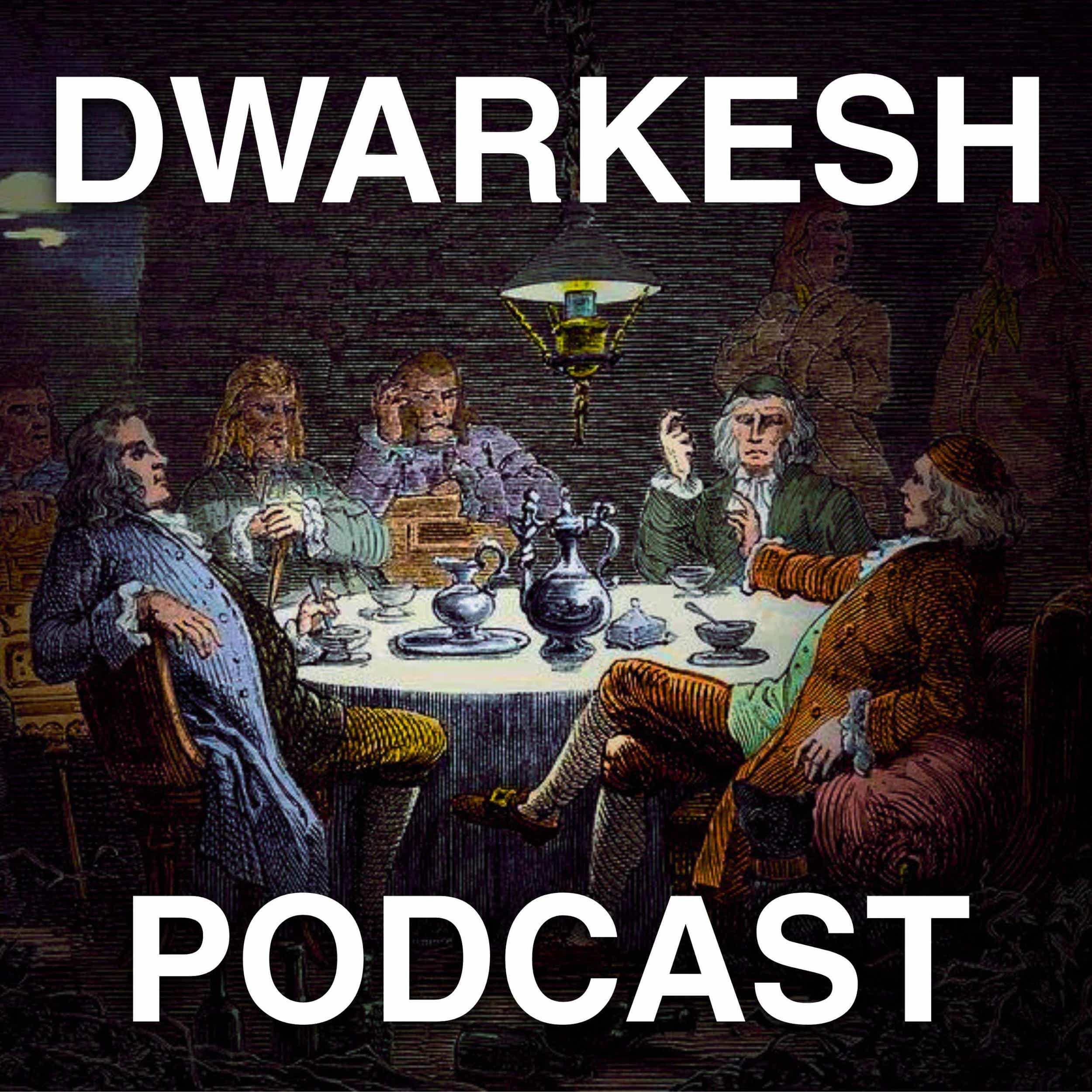
The next big breakthrough will be AIs learning on the job
Jun 2600:19:53Summary readyRead it here.Thanks to Mercury for sponsoring this essay.Mercury has automated basically my entire bill pay process for my business. I just give contractors a dedicated email address, and when they send an invoice, Mercury automatically creates a draft payment for me to review. I no longer have to hunt through my inbox for invoices or deal with messy spreadsheets to track my bills. Mercury handles it all. Learn more at mercury.comTimestamps:(00:00:00) – The big research bet the labs are making(00:02:12) – Grindability is just as important as verifiability(00:06:10) – Will RLVR alone generalize?(00:08:41) – Getting the learning back to the weights(00:15:22) – Dreaming(00:17:23) – What 2027 looks like Get full access to Dwarkesh Podcast at www.dwarkesh.com/subscribe
Summary
The data black hole at the center of AI
Jun 1900:11:57Summary readyRead the transcript here.Thanks to Mercury for sponsoring this essay!Mercury just released a new feature called Command, which gives me AI right in my banking platform. And since I use Mercury to run basically my entire business, Command has access to all the info it needs to get real work done. I can ask it to send invoices, or categorize expenses, or even transfer money… and Command just handles it. Learn more at mercury.com/commandTimestamps:(00:00:00) – What is really driving AI progress?(00:03:11) – Comparing human vs AI sample efficiency(00:08:46) – Does sample efficiency matter? Get full access to Dwarkesh Podcast at www.dwarkesh.com/subscribe
Summary
Ada Palmer – Machiavelli is the most misunderstood thinker of all time
Jun 1602:08:20Summary readyHad Ada Palmer back on – this time to talk about Machiavelli, perhaps the most misunderstood thinker of all time.Machiavelli cut his teeth as a high-level diplomat for Florence, a position from which he got to closely observe the most important rulers in Europe at the time, including the ones who were on the path to destroying his dearly beloved Florence.In 1513 the Medici retook control of Florence and, wrongly suspecting Machiavelli of participating in a coup attempt, fired, tortured, and exiled him.Machiavelli could have left exile and worked for any number of different principalities that would have been eager to make use of his talents.Instead, he decided to rot in the countryside and compile his career’s lessons about power, politics, and human nature into a book he dedicated to the very man whose new regime had tortured and exiled him, Lorenzo di Piero de’ Medici.But at least the Medici were in a position to use his insights to defend Florence. Machiavelli the patriot did not want any other hands to touch these books, because those hands, armed further with these lessons, might pose an existential danger to Florence.The closest modern analogy, at least as Machiavelli would have seen it, would be Szilard’s letter warning FDR about the possibility of a nuclear fission bomb.What were those insights? And how were they inspired by Machiavelli’s dangerous diplomatic missions all across Europe, and his extensive reading of antiquity? Watch this episode with Ada Palmer to find out!By the way, Ada is launching a new podcast which I’m very excited about. The first season will be about Machiavelli - a perfect way to dive deeper into the topics we discussed in this episode. Subscribe at Beforecast’s website to be notified of the first episode, subscribe on YouTube, follow her on Patreon, and if you want even more Ada, check out her FixTheNews Podcast episode, and check out her books and more.Watch on YouTube; read the transcript.Sponsors* Cursor recently saved one of my podcast recordings. When a video file from a shoot came out corrupted, I pointed Cursor at it: it recovered the footage on its own, tracking down the right reference file from the file’s metadata and realigning the out-of-sync audio. My whole team now uses Cursor for everyday tasks, not just coding. Get started at cursor.com/dwarkesh* Jane Street’s hiring process has been going viral on Twitter lately. The memes are pretty funny, but I wanted to see what their interviews were actually like. So I had Ricson, one of Jane Street’s ML researchers, walk me through a retired puzzle: he gave me an image dataset where 50% of the files had been corrupted – I had to figure out how to recover them. If you’re interested in these sorts of puzzles, you can find Jane Street’s open roles at janestreet.com/dwarkesh* Crusoe is turning the AI datacenter buildout into an industrial process. At their massive Colorado factory, they assemble Spark units, modular datacenters with power, cooling, and fire suppression built in. They also manufacture specific components in-house to skip the longest lead times. Crusoe has experience running these Spark units on a range of energy sources, including solar and used EV batteries, ensuring they don’t get bottlenecked by grid availability. Learn more at crusoe.ai/dwarkeshTimestamps(00:00:00) – How Florence bargained with Cesare Borgia for survival(00:15:08) – Machiavelli’s analytical innovations(00:23:58) – Why popes became warlords(00:36:13) – Why the common people demanded nepotism(00:47:57) – Cesare Borgia brought terror to rulers and justice to the people(00:57:55) – Art as a proxy for war(01:06:41) – Florence, a city famous in hell(01:15:57) – The Prince was a job application to Machiavelli’s torturers(01:41:39) – During the Renaissance, original ideas had to be couched in antiquity(01:50:44) – Why copyright began with the Inquisition(02:02:12) – Machiavelli wasn’t Machiavellian Get full access to Dwarkesh Podcast at www.dwarkesh.com/subscribe
Summary
Alex Imas and Phil Trammell – What remains scarce after AGI?
Jun 401:16:08Summary readyEconomics of AGI episode w Alex Imas and Phil Trammell.There’s a bunch of important questions about how we deal with AI that only economics can answer.What is the optimal way to tax and redistribute the wealth that will be generated? How should countries not in the AI supply chain index into the gains? Is there any world where inequality doesn’t explode?It might seem like these questions have obvious answers, but the first thing economics teaches you is that your intuitions can often be entirely wrong.It was very helpful to chat through these things with Alex and Phil.Watch on YouTube; read the transcript.SponsorsJane Street invests heavily in turning smart people into exceptional researchers and engineers. In addition to their apprenticeship model, Jane Street runs lectures and bootcamps in their in-office classrooms -- managers clear their teams’ schedules to encourage attendance. If you’d like to work at a place that takes learning this seriously, Jane Street is hiring. Check out their open roles at janestreet.com/dwarkeshGoogle’s Gemini Omni has incredible video editing capabilities -- you can upload a video and have Omni change the background, adjust lighting, or add specific elements. But Omni is also a preview of how future frontier models will be trained -- fully multimodal on both input and output. You can try it yourself in the Gemini app at gemini.google or in Flow at flow.googleCursor used targeted RL with textual feedback to help train their Composer 2.5 model. One of their researchers, Sasha Rush, gave me an impromptu blackboard lecture to explain how this form of on-policy self-distillation works -- I posted the full thing on X. If you want to try Composer 2.5, go to cursor.com/dwarkeshTimestamps(00:00:00) – Will capital share increase?(00:19:36) – Messy Middle scenario(00:25:57) – How to tax and redistribute AI wealth(00:30:02) – Why demand collapse is unlikely(00:39:26) – Human employees would be hard to integrate into the machine economy(00:43:08) – What if some humans (or AIs) value wealth accumulation intrinsically?(01:01:28) – What should developing countries do? Get full access to Dwarkesh Podcast at www.dwarkesh.com/subscribe
Summary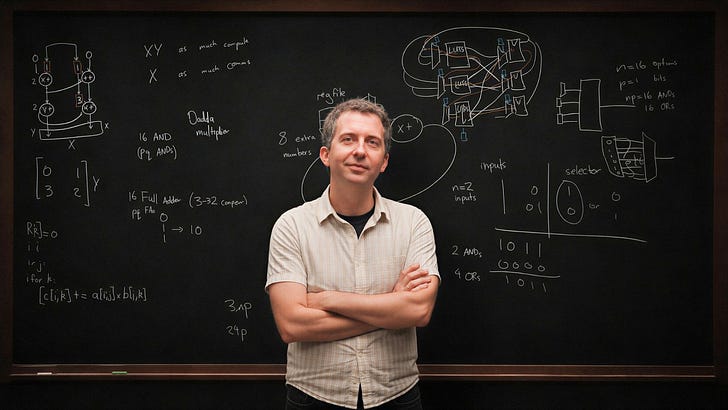
Reiner Pope – Chip design from the bottom up
May 2201:20:30Summary readyNew blackboard lecture with Reiner Pope: how do chips actually work - starting with basic logic gates, and working up to why GPUs, TPUs, FPGAs, and the human brain each look the way they do.Reiner is CEO of MatX, a new chip startup (full disclosure - I’m an angel investor). He was previously at Google, where he worked on software efficiency, compilers, and TPU architecture.Watch this one on YouTube so you can see the chalkboard. Read the transcript.Sponsors* Crusoe was one of only five GPU clouds that made the gold tier in SemiAnalysis' most recent ClusterMAX report. Gold-tier providers like Crusoe delivered 5-15% lower TCO than silver-tier clouds, even with identical GPU pricing. This is because optimizations like early fault detection and rapid node replacement don't necessarily show up in the sticker price, but still matter a ton in the real world. Learn more at crusoe.ai/dwarkesh* Cursor is where I do most of my work—from reading research papers to visualizing technical concepts to coding up internal tools for the podcast. Most recently, I used it to build two different review interfaces for my essay contest, one that anonymizes submissions for scoring and another that lets me see applicants' essays next to their resumes and websites. Whatever you're working on, you should try doing it in Cursor. Get started at cursor.com/dwarkesh* Jane Street let me ask Ron Minsky and Dan Pontecorvo, two senior Jane Streeters, a bunch of questions about how they use AI. We discussed everything from the types of models they're training to how they think about the future of trading to why they're more bullish than ever on hiring technical talent. You can watch the full conversation and learn more about their open positions at janestreet.com/dwarkeshTimestamps00:00:00 – Building a multiply-accumulate from logic gates00:16:31 – Muxes and the cost of data movement00:26:10 – How systolic arrays work00:39:11 – Clock cycles and pipeline registers00:51:51 – FPGAs vs ASICs01:03:25 – Cache vs scratchpad01:07:27 – Why CPU cores are much bigger than GPU cores01:12:00 – Brains vs chips01:15:33 – A GPU is just a bunch of tiny TPUs Get full access to Dwarkesh Podcast at www.dwarkesh.com/subscribe
Summary