Podcast
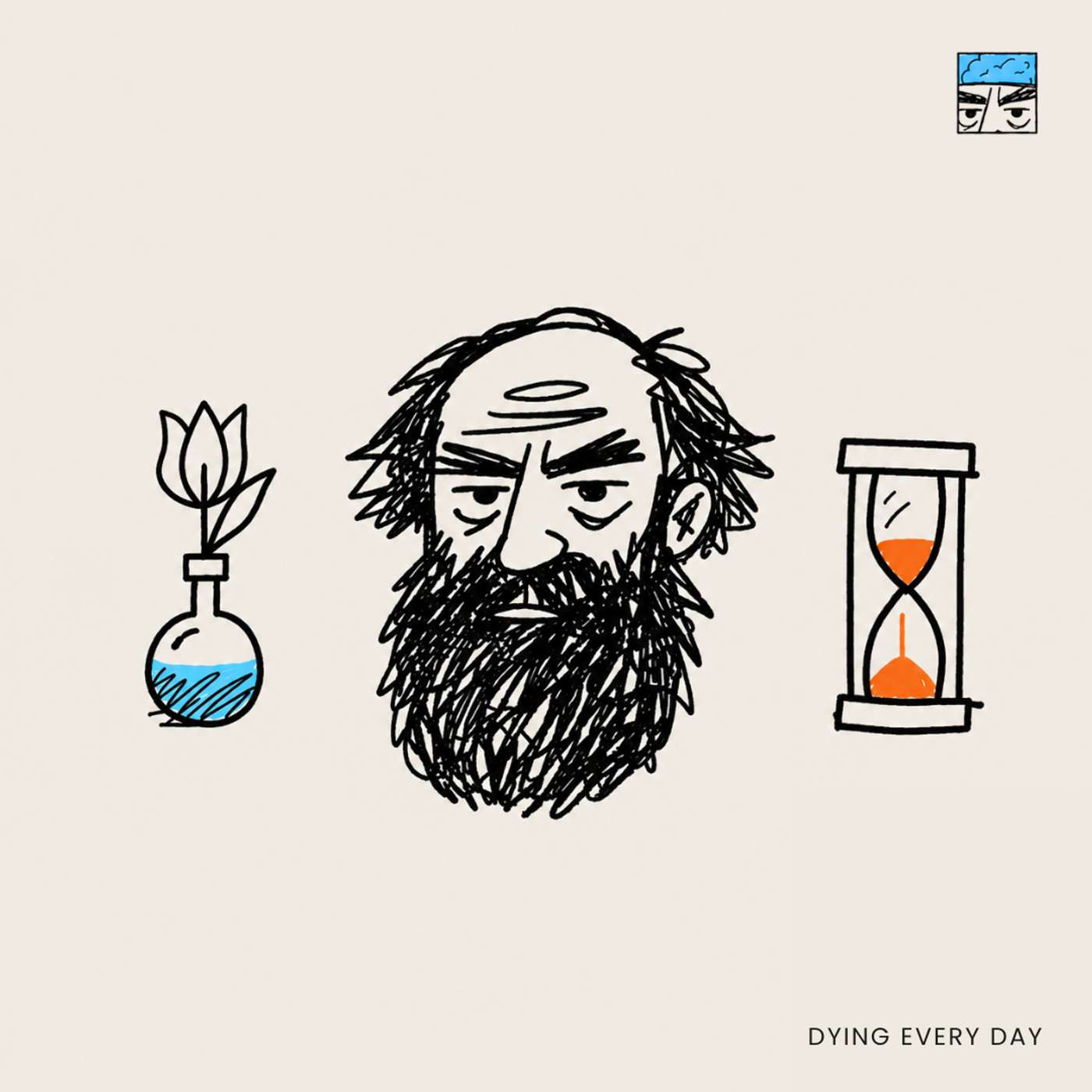
Dying Every Day (Stoicism in a Year)
Hosted by Perennial Leader Project · EN
Dying Every Day is a podcast by the Perennial Leader Project. Each episode turns a selected passage from Stoic philosophy into a guided meditation designed to help you (and me) contemplate what it means to live a ‘good’ life. Learn more at perennial.substack.com.
44episodes
Episodes
Newest firstAll episodes
Day 148: In Defense of the Examined Life | Dying Every Day
May 2700:12:22Tap to summarize📮 Want tools for the art of living? Sign up here: https://perennial.substack.com/subscribeWelcome back to Dying Every Day. This is Day 148.In 399 BC, a jury of five hundred Athenian citizens voted to convict Socrates of impiety and corrupting the youth. They were now deciding his penalty. The implicit offer was simple: stop asking questions, go into exile, live quietly, and stop examining people and calling into question the beliefs they had never thought to question.He refused. He stood before the jury and said that daily conversation about virtue and the examined life was the greatest good available to a human being—and that he would not stop, regardless of what it cost him. It cost him his life. He drank the hemlock. And the phrase he used in that courtroom, “the unexamined life is not worth living,” has been echoing for more than two thousand years.Here’s Socrates in Plato’s Apology, “To talk every day about virtue and the other things about which you hear me talking and examining myself and others is the greatest good to man, and the unexamined life is not worth living.”What Socrates was not doing, standing before that jury, was making a grand gesture for posterity. He genuinely believed that a life of unexamined ease was not worth having. [...]#stoicism, #philosophy, #meditation--- 🖇️ Stay Connected: Newsletter: https://perennial.substack.com/subscribeInstagram: https://www.instagram.com/perennialmeditations/YouTube: https://www.youtube.com/@PerennialMeditations--- 🦉 Additional Resources: Perennial Meditations archive: https://perennial.substack.com/archiveListen to more podcasts: https://www.perennialleader.com/podcasts
Transcribe →Dying Daily: Two Paradoxes, One Truth | Dying Every Day
May 2300:11:02Tap to summarize📮 Want tools for the art of living? Sign up here: https://perennial.substack.com/subscribeWelcome back to Dying Every Day. This is Dying Daily.One Stoic text that doesn’t get nearly enough attention is Cicero’s Stoic Paradoxes—six ideas that seem like contradictions until you understand what the Stoics actually mean. In this Dying Daily, we sit with one of them: the claim that virtue alone is sufficient for happiness.To test it, we go to September 9th, 1965—the moment Navy pilot James Stockdale ejected from his burning plane over North Vietnam. He had thirty seconds of freefall. His last thought in freedom: “I’m leaving the world of technology and entering the world of Epictetus.”He endured seven and a half years at the Hanoi Hilton, sustained by a philosophy his captors could not break. This is the essence of the Stockdale Paradox and Cicero’s Paradox—two thousand years apart, yet conveying the same insight. [...]#stoicism, #philsophy, #meditation, #selfimprovement--- 🖇️ Stay Connected: Newsletter: https://perennial.substack.com/subscribeInstagram: https://www.instagram.com/perennialmeditations/YouTube: https://www.youtube.com/@PerennialMeditations--- 🦉 Additional Resources: Perennial Meditations archive: https://perennial.substack.com/archiveListen to more podcasts: https://www.perennialleader.com/podcasts
Transcribe →Day 147: What Are You Running From?—Seneca and Socrates on Solitude | Dying Every Day
May 2000:13:22Tap to summarize📮 Want tools for the art of living? Sign up here: https://perennial.substack.com/subscribeWelcome back to Dying Every Day. This is Day 147.“Know thyself,” the words inscribed at the entrance to the Temple of Apollo at Delphi. Not know the world. Not know the gods. Know yourself—and understand that until you do, everything else you investigate is a distraction from the only question that finally matters.The question this meditation wants to sit with is not whether you know yourself. It is whether you have given yourself any real opportunity to find out. And beneath that, what you believe self-knowledge is actually for.For this reason, Seneca advised Lucilius to “withdraw into yourself as much as you can.” [...]--- 🖇️ Stay Connected: Newsletter: https://perennial.substack.com/subscribeInstagram: https://www.instagram.com/perennialmeditations/YouTube: https://www.youtube.com/@PerennialMeditations--- 🦉 Additional Resources: Perennial Meditations archive: https://perennial.substack.com/archiveListen to more podcasts: https://www.perennialleader.com/podcasts
Transcribe →Dying Daily: "Before We Knew It Was Passing" | Dying Every Day
May 1700:08:01Tap to summarize📮 Want tools for the art of living? Sign up here: https://perennial.substack.com/subscribeWelcome back to Dying Every Day. This is Dying Daily.In this first episode of Dying Daily, a new occasional and much more casual series on the podcast, we sit with a question that most of us already know the answer to, but haven't done anything about: Who are we taking for granted? You may have seen Eric Church's recent commencement address at UNC-Chapel Hill. If not, it’s worth watching. Church warns a graduating class not to turn the people they love into holiday strings—the ones who understand when you're too busy, whom you keep meaning to call, whom you'll see at Christmas. Interestingly, Seneca made the same argument two thousand years ago: life feels short because we give our time to everything that demands it, while the people who matter most get what's left over.This episode is intended to be a conversation and an invitation to choose differently—today, before the day is over, with whoever has been sitting at the back of your mind waiting for a moment that never quite arrives. [...]--- 🖇️ Stay Connected: Newsletter: https://perennial.substack.com/subscribeInstagram: https://www.instagram.com/perennialmeditations/YouTube: https://www.youtube.com/@PerennialMeditations--- 🦉 Additional Resources: Perennial Meditations archive: https://perennial.substack.com/archiveListen to more podcasts: https://www.perennialleader.com/podcasts
Transcribe →Day 146: There Are Two Kinds of Joy—Most People Are Chasing the Wrong One | Dying Every Day
May 1300:14:04Tap to summarize📮 Want tools for the art of living? Sign up here: https://perennial.substack.com/subscribeWelcome back to Dying Every Day. This is Day 146.There is the happiness that depends on circumstances—on getting what you want, on the day cooperating, on fortune being kind. It is real, while it lasts. And it does not last.And then there is something else. Something that does not rise and fall with the weather of events. Something James could describe but struggled to name—until he reached for a phrase that stopped him in his tracks. [...]--- 🖇️ Stay Connected: Newsletter: https://perennial.substack.com/subscribeInstagram: https://www.instagram.com/perennialmeditations/YouTube: https://www.youtube.com/@PerennialMeditations--- 🦉 Additional Resources: Perennial Meditations archive: https://perennial.substack.com/archiveListen to more podcasts: https://www.perennialleader.com/podcasts
Transcribe →Day 145: Why You React Before You Think—And What to Do About It | Dying Every Day
May 600:12:04Tap to summarize📮 Want tools for the art of living? Sign up here: https://perennial.substack.com/subscribeWelcome back to Dying Every Day. This is Day 145.Epictetus identified three key disciplines: desire, action, and assent, with assent being the most crucial. He described assent as the mind’s act of accepting an impression—saying yes to it, recognizing it as real and meaningful, and responding accordingly.Every moment, impressions arrive. Not the dramatic ones—those are easy to see coming. The ones that test the discipline are smaller and faster. [...]--- 🖇️ Stay Connected: Newsletter: https://perennial.substack.com/subscribeInstagram: https://www.instagram.com/perennialmeditations/YouTube: https://www.youtube.com/@PerennialMeditations--- 🦉 Additional Resources: Perennial Meditations archive: https://perennial.substack.com/archiveListen to more podcasts: https://www.perennialleader.com/podcasts
Transcribe →Bonus: Want Less. Live More. | Dying Every Day
May 300:05:46Tap to summarize📮 Want tools for the art of living? Sign up here: https://perennial.substack.com/subscribeWelcome back to Dying Every Day. This is a bonus episode.We often spend much of our lives wanting more—more time, more success, more security. But Seneca offers a different path: not more, but enough. This week’s episode is ultimately a reflection on loosening our grip and learning to meet life—and death—with a willing mind. It comes by way of my Sundays with Seneca series, since it’s one of my favorite letters; I’m also sharing an audio version on Dying Every Day. [...]--- 🖇️ Stay Connected: Newsletter: https://perennial.substack.com/subscribeInstagram: https://www.instagram.com/perennialmeditations/YouTube: https://www.youtube.com/@PerennialMeditations--- 🦉 Additional Resources: Perennial Meditations archive: https://perennial.substack.com/archiveListen to more podcasts: https://www.perennialleader.com/podcasts
Transcribe →Day 144: What Are You Holding? - Marcus Aurelius on Anger and Attachment | Dying Every Day
Apr 2900:15:28Tap to summarize📮 Want tools for the art of living? Sign up here: https://perennial.substack.com/subscribeWelcome back to Dying Every Day. This is Day 144.Anger is among the most examined emotions in human history, yet it remains one of the least understood when we're actually experiencing it. Today, Marcus Aurelius, Seneca, and psychologist Albert Ellis guide us in exploring it from the inside. I hope you find this useful! [...]--- 🖇️ Stay Connected: Newsletter: https://perennial.substack.com/subscribeInstagram: https://www.instagram.com/perennialmeditations/YouTube: https://www.youtube.com/@PerennialMeditations--- 🦉 Additional Resources: Perennial Meditations archive: https://perennial.substack.com/archiveListen to more podcasts: https://www.perennialleader.com/podcasts
Transcribe →Day 143: You Already Know This. So Why Doesn't It Work? | Dying Every Day
Apr 2200:14:12Tap to summarize📮 Want tools for the art of living? Sign up here: https://perennial.substack.com/subscribeWelcome back to Dying Every Day. This is Day 143.Why is it that we can fully grasp the dichotomy of control—know exactly where the line lies and what belongs to us and what doesn't—and still find ourselves reaching across it? Today, we’re revisiting one of Stoicism's most essential ideas, this time with Epictetus as our guide and a little help from Buddhist philosophy, to hopefully answer that question once and for all. [...]--- 🖇️ Stay Connected: Newsletter: https://perennial.substack.com/subscribeInstagram: https://www.instagram.com/perennialmeditations/YouTube: https://www.youtube.com/@PerennialMeditations--- 🦉 Additional Resources: Perennial Meditations archive: https://perennial.substack.com/archiveListen to more podcasts: https://www.perennialleader.com/podcasts
Transcribe →Day 142: "The present is all you have" | Dying Every Day
Apr 1600:11:48Tap to summarize📮 Want tools for the art of living? Sign up here: https://perennial.substack.com/subscribeWelcome back to Dying Every Day. This is Day 142.“The longest-lived and those who will die soonest lose the same thing. The present is all that they can give up, since that is all you have, and what you do not have, you cannot lose.” — Marcus Aurelius, Meditations, 2.14Take a moment to reflect on today’s passage.Let the logic of it settle before you try to follow it.Marcus Aurelius is making a claim that sounds almost too simple to be worth saying: the person who lives ninety years and the person who lives thirty lose exactly the same thing when they die. Not less. Not more. [...]--- 🖇️ Stay Connected: Newsletter: https://perennial.substack.com/subscribeInstagram: https://www.instagram.com/perennialmeditations/YouTube: https://www.youtube.com/@PerennialMeditations--- 🦉 Additional Resources: Perennial Meditations archive: https://perennial.substack.com/archiveListen to more podcasts: https://www.perennialleader.com/podcasts
Transcribe →