← Dying For Sex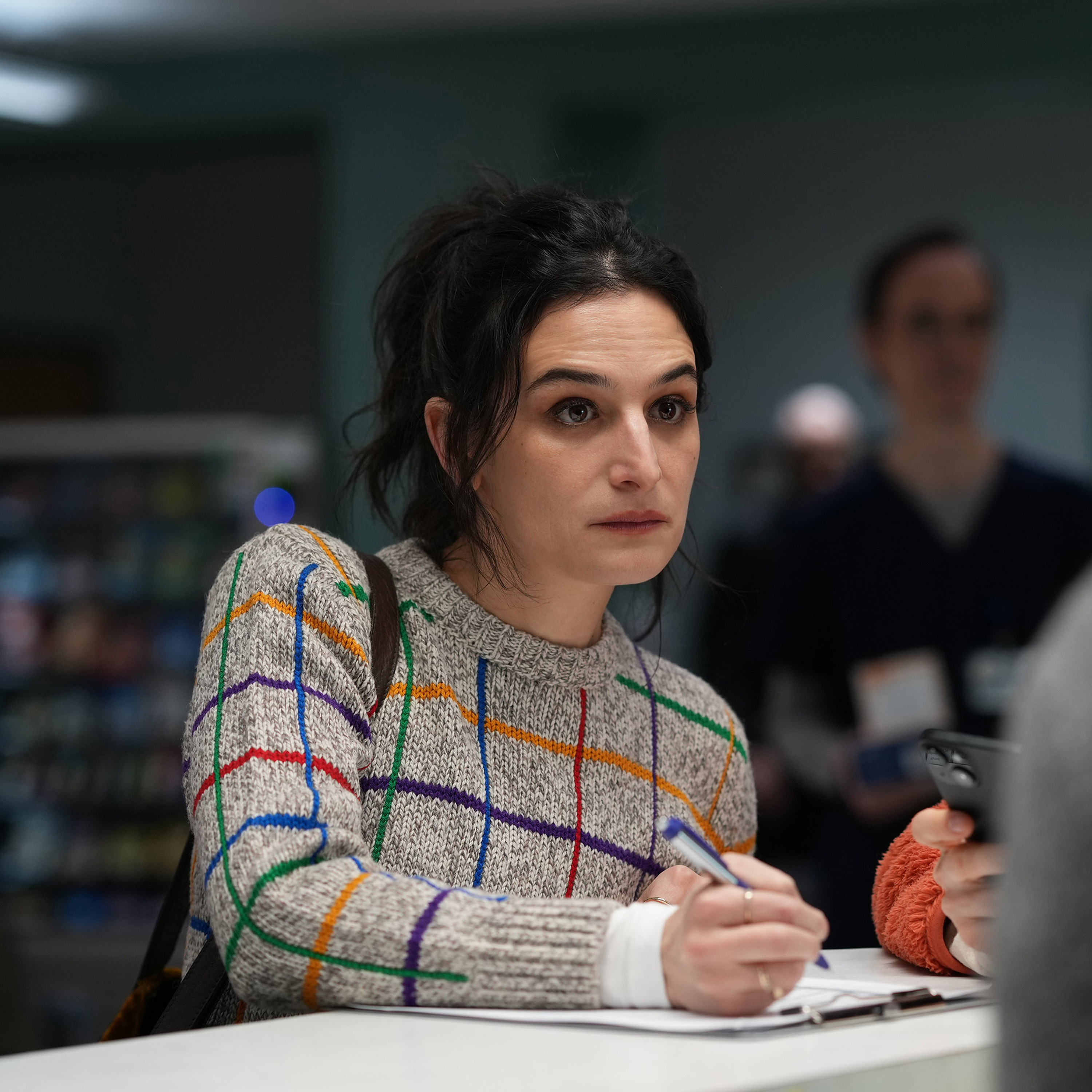
Dying For Sex
Jenny Slate, and Elizabeth Meriwether and Kim Rosenstock: On Throwing Out the Rules | 9
00:48:27
Loading summary
Transcript242 lines
- [00:06]
Nikki Boyer
One day, Molly and I were sitting in her hospital room eating pudding and talking about the important stuff. You know, like, hey, if Dying for Sex ever became a TV show, who would play us? And Molly had a lot of opinions about who would play her. She said, no pop stars, no rom com fluff. Like, she wanted somebody with depth, someone who was a force, someone. Well, like Michelle Williams. And when it came to me, she said, oh, you'll play yourself. Like, it was the most obvious thing in the world, which was really sweet. But let's be real, I'm not famous enough to play myself on tv, which is kind of funny. But it got me thinking. Since I couldn't play myself, what would I want from the person who did? Definitely someone honest. Someone weird. Someone who laughs hard and maybe talks a little too fast when they're nervous. Someone who gets that life is messy and ridiculous and kind of beautiful. And then Jenny Slate walked in and she nailed it without even trying to be me. She was everything I had hoped for and somehow more. You may know Jenny and her voice from Marcel the Shell With Shoes On, I Want yout Back, Obvious Child and Everything Everywhere all at Once. She has two hit standup specials, Stage Fright and Seasoned Professional. And she's written two books, Little Weirds and literally, what doesn't this Woman Do? And I am so completely honored that she played me because honestly, I kind of want to be her when I grow up. I talked to Jenny about stepping into my shoes and bringing this story to life on FX's dying for sex.
- [01:47]
Jenny Slate
Yeah, I liked her courage. I liked her instant boil anger, because I don't express anger in the same way. And I really needed that moment to be able to be loud and unapologetic. I loved that about the character.
- [02:02]
Nikki Boyer
I loved that.
- [02:03]
Jenny Slate
Yeah.
- [02:05]
Nikki Boyer
Later in the episode, I'll talk to Liz Meriwether and Kim Rosenstock, who are the co creators, writers and executive producers of the TV series. We'll be talking about friendship and not cutting away when things get uncomfortable.
- [02:17]
Liz Meriwether
We did the scene that's from the podcast where she pees on a guy in a bathtub and, like, she had a rig taped to her leg. And then you're just like, I can't believe that. Like, I'm doing this. I can't believe that this is my job. You know, I'm cold. You know it, don't you?
- [02:36]
Nikki Boyer
From Wondri. I'm Nikki Boyer and this is behind Dying for Sex, a series of interviews with the creators and cast of the new FXTV series based on the podcast I made with my best friend Molly.
- [02:48]
Liz Meriwether
You know, a glow. You see it, don't you?
- [02:53]
Nikki Boyer
This is episode two. Jenny Slate and Liz Meriwether and Kim Rosenstock on Throwing out the rules.
- [03:13]
Liz Meriwether
Craving your next action packed adventure, Audible delivers thrills of every kind on your command. Like Project Hail Mary by Andy Weird where a lone astronaut must save humanity from extinction. Narrated with stunning intensity by Ray Porter. From electrifying suspense and daring quests to spine tingling horror and romance in far off realms, unleash your adventure aside with gripping titles that'll keep you guessing. Discover exclusive Audible originals, hotly anticipated new releases and must listen bestsellers that hook.
- [03:46]
Kim Rosenstock
You from the first minute because Audible.
- [03:49]
Liz Meriwether
Knows there's no greater thrill than the one that speaks to to you. Discover what lies beyond the edge of your seat. Start your free 30 day trial at audible.com wonderyus that's audible.com wonderyus.
- [04:04]
Kim Rosenstock
We see.
- [04:05]
Liz Meriwether
You getting after your fitness goals, but what about those money goals? You can count on Credit Karma for a clear view of your finances and your progress, helping you see results. So you can keep checking off those financial personal bests and find your way to money Progress never felt so good. Download the Intuit Credit Karma app and start achieving your money goals today. Intuit Credit Karma Karma you can count on.
- [04:40]
Nikki Boyer
Hi.
- [04:40]
Jenny Slate
Hi.
- [04:42]
Nikki Boyer
When I see you, like, it's just magic.
- [04:46]
Jenny Slate
Oh my gosh. It's the same for me. That's about seeing you, not seeing myself. I'm not like, oh, there she is.
- [04:56]
Nikki Boyer
There, there is me again.
- [04:57]
Jenny Slate
Let the magic begin. I've found her. There me is.
- [05:03]
Nikki Boyer
Oh my gosh, I'm so happy to be next to you. And I've felt that way since the moment I met you. But there is something funny about me interviewing you, about playing me. Yes, of course I do wanna know. Cause I don't think I ever asked you this before at our lunches and facetimes and love fests that we've had. How did you even first hear about this role and what did you think about it?
- [05:28]
Jenny Slate
Well, I'd had a conversation with my agents and I was saying I just love acting, but if I could choose, I wouldn't do anything unless it gave me a certain feeling about going full wingspan is what I kept saying. Oh, like, let me extend as wide as I can and like see how far I can go.
- [05:53]
Nikki Boyer
So how did this land in your wingspan? I guess.
- [05:56]
Jenny Slate
Well, like two days later they were like, we think this is what you're talking about. It's called dying for sex. And I Read the first two scripts that night. And it wasn't just that I loved the role of Nikki. It was that I loved their relationship. I loved the way that the story was patterned and what was important to tell. It was a feeling of like, of course so many actors could play this role because it's written with such a spirit in it that it can be done by many people. But I know that for me, I could fully extend myself into this and go to places I've never been if I could only be given the chance.
- [06:39]
Nikki Boyer
I know this is gonna feel like I'm literally going, yeah, but what about me? But I do wanna know, what was it about the character of Nikki that made you wanna play it?
- [06:51]
Jenny Slate
There were many things. I think the intimacy that Nikki is capable of with Molly, but not necessarily with other people was a really interesting thing to get into. I also was interested in like, wow, this is a person who gets her heart broken while also discovering the strength of it at the end of the story. I was like, I wanna see that. I wanna see this person have to risk her heart, know that they are going into what they're going into, these two women, and throw that all down and not throw herself and life away. And she comes close in our. There are many people that say to Nikki like, you don't have good boundaries. And yeah, I liked her courage. I liked her instant boil anger. Cause I don't express anger in the same way. And I really needed that moment to be able to be loud and unapologetic and feeling right without being self righteous. I loved that about the character.
- [07:59]
Nikki Boyer
I loved that. Yeah, that's one thing that's pretty accurate.
- [08:02]
Jenny Slate
Yeah, I believe so. I think that I asked you that when I first met you.
- [08:06]
Nikki Boyer
So let's talk about the moment that we did first meet. Because it was kind of trippy, right?
- [08:12]
Jenny Slate
I think so.
- [08:13]
Nikki Boyer
So they said, I'm gonna bring you over to Jenny's trailer. They opened the trailer door and I'm in my actual normal Nikki person attire.
- [08:21]
Jenny Slate
Yes.
- [08:21]
Nikki Boyer
And you are in the Nikki costume. But our shirts were the same.
- [08:25]
Jenny Slate
The same.
- [08:26]
Nikki Boyer
And we were like, what? And we just were smiling and hugging. And I'm like, we have to take a picture of this. We're literally wearing the same shirt. Like, how did this happen? And immediately you felt like someone I had known for a very, very long time.
- [08:40]
Jenny Slate
I felt the same.
- [08:42]
Nikki Boyer
Really?
- [08:42]
Jenny Slate
Yeah. Just easy. Yeah, yeah.
- [08:45]
Nikki Boyer
And then we just sat on the couch and we talked and you were changing clothes and I was looking at the script and we were. It Was like we had been girlfriends and we were in our bedroom, total comfort. I loved it. I'm so glad. And I think. I feel like Molly kind of brought us together in a weird way.
- [08:59]
Jenny Slate
Yeah. I mean, that day when we filmed the first scene, which was actually way into the shoot, the first scene where you see Nikki and Molly together, I feel like, you know, because that scene was sort of looming. It was like it hadn't been shot, and then it got pushed and it was like, this is a really hard scene.
- [09:20]
Nikki Boyer
Yeah.
- [09:20]
Jenny Slate
But on that day, it had already started to be spring, and there was a beautiful apple blossom blooming in the backyard of the little apartment that they had for a bunch of us to wait in while we were, you know, getting ready to shoot. I felt that it was a very tender, sensitive day because it was also the day that you had offered to send me some pictures of you and Molly at the end of her life. And I was sort of like, I don't. I'm sort of afraid. Yeah, I remember that I was, like, afraid that it would be too much to see the images for many reasons. I just thought, I don't know if I deserve to see that. And on that day, I was looking at the tree and I was thinking, like, wow, it really. It really feels like Molly is here. I felt like I should ask now to see on this day of, like, beautiful beauty, like, the earth was sort of warming up and the pink blossoms, and it smelled so good. And I texted you and was like, I know it's last minute, but would you still be willing to share those pictures? Yeah. I sort of felt like I had, like, Molly's permission, not just yours, but to look at them that day.
- [10:36]
Nikki Boyer
And I sent him probably right over because.
- [10:38]
Jenny Slate
Of course.
- [10:38]
Nikki Boyer
And. Yeah. Why didn't know this?
- [10:40]
Jenny Slate
Yeah. It was so lovely. And I was looking at them before I drove the car into that scene, which is also kind of confusing to me because it's like, you don't roll up crying.
- [10:52]
Nikki Boyer
You know, that's not a great moment before. Right, right.
- [10:57]
Jenny Slate
But I guess I wanted to know, in my mind, this woman's life is about to change, and this is what the end of the story kind of looks like. And I haven't really had an experience like that ever.
- [11:13]
Nikki Boyer
Wow. You know what I. What's interesting is when you think of people doing standup and you naturally think of standup comedians, you think of someone that's always cracking the jokes and making the joke in the room, but you are just an incredibly present and thoughtful human. I love the humanity that you brought to the role and the humor. But your humor comes from your experience in the moment. And that's what I love so much about how you chose to navigate this.
- [11:38]
Jenny Slate
I'm so glad you you say that. I think, you know, one of the things I loved the most about the script was that humor isn't like a gimmick and it's not a cheat in terms of like, ugh, how do I get around not feeling scared and bad? But in fact, it's that Nikki and Molly just love each other so much. There's just so much and gratitude in the fact that they have each other that they will grab at any extra joy, any extra laugh. Oh, wow. If it occurs. And like, there's a scene where they're in the bathroom and Molly is writing in her journal and she's reading to Nikki. And, you know, it's very pivotal. It's incredibly serious. It's not a joke. No one should joke about what's in that moment. And yet, because they're real people, that scene does end in a really funny way. It's kind of like, you know, church giggles as they say, you know, you probably shouldn't be laughing, but you can't stop. But the comedy comes from actually being alive and not being desperate to experience something good, but just really eating up those morsels of, like, sweetness and real, real friendship.
- [12:57]
Nikki Boyer
I love that you get it on such a deep level. And like, that, that really was our love language. What comes to mind when I watched you and Michelle work together was just a feeling of, oh, that's. That feels like me and Molly.
- [13:09]
Jenny Slate
Oh, good.
- [13:10]
Nikki Boyer
Right from the get go. And it felt like there was something kind of magical happening. But I am curious, like, how the hell did you guys do that?
- [13:19]
Jenny Slate
I don't know. It just happened. I think it's. First of all, it's all on the page, and then it's all in the podcast, the connection between you and Molly. And then on the page, the connection between the characters of Nikki and Molly.
- [13:30]
Kim Rosenstock
Right.
- [13:31]
Jenny Slate
It's not vague. It's very clear what it's supposed to be. And I know for me, on my side, it's to understand the character and imbue her with someone who has complete concern, complete loyalty, ever expanding love and joy, and total access to this other person. Can I, can I get some more blankets? Yeah.
- [13:59]
Nikki Boyer
Are you family?
- [14:00]
Jenny Slate
Yes. Why are her hands bolted down?
- [14:04]
Kim Rosenstock
It's so she doesn't pull the tubes out. We had to intubate her after her lung collapsed. Your lung collapsed?
- [14:10]
Nikki Boyer
Yeah.
- [14:10]
Jenny Slate
And in terms of her own, like, what. What's on your hat? Excuse me, do you have Harry Potter lightning bolts on your surgical hat?
- [14:19]
Nikki Boyer
Was there anything that you learned from doing the show, maybe about yourself or maybe looking at something differently that you. You didn't see before?
- [14:28]
Jenny Slate
Yeah. I mean, this might seem like it's coming from left field, and also, one would think, like, you learn from the character you play, but in fact, you learn from everyone in the story. At least I do. And I thought a lot about Molly and what she was unable to confront for so long. You begin to understand Molly believes in an ever present, always threatening, like, tightly. The springs are ready to spring off badness. And the badness is gonna come out. And it's already directed her and her life. And when I watched that, I started thinking about my own fear of upsetting people, my own fear of being criticized, and how that can make me impatient, angry, and scared sometimes, even if I don't express it the way that Molly expresses her own anger when she eventually does, or how Nikki immediately expresses anger. And I really thought about it, and I was watching Molly and watching Michelle, and I got to this really weird place of unexpected catharsis, which was like, oh, I'm. I think I've been thinking that there's something deeply wrong with me for basically my entire life. And I, like, was able to really start to let that go during this.
- [15:56]
Nikki Boyer
Wow.
- [15:57]
Jenny Slate
Anyway, I've been thinking of the difference between something bad happened or I even did something bad, and I'm. Bad is so important, and you can intellectualize it, and you can suggest that other people go and understand that and live by it, but I actually don't think I have been living according to that line of thinking until I made this show.
- [16:22]
Liz Meriwether
Wow.
- [16:23]
Jenny Slate
So, thanks.
- [16:25]
Nikki Boyer
Ooh. You wanna know what one of my favorite scenes was?
- [16:28]
Jenny Slate
Yes, I should have asked.
- [16:28]
Nikki Boyer
You're sitting on the park bench and you stand up, and across the street is Molly's first doctor that misdiagnosed her breast cancer. And he comes walking out and you scream, I forgive you.
- [16:42]
Jenny Slate
Yeah.
- [16:43]
Nikki Boyer
And I saw the words on the page and I read it, and I thought, oh, how beautiful. But when I saw you perform it, I was so moved by it because your performance was so raw and so real. And it's also something that I never got to do. So in a way, watching you do it in person gave me a little bit of that experience of being able to. To do that.
- [17:06]
Jenny Slate
So thank you. Yeah. That was one of my favorite scenes when I read the script and I Actually think that that scene was the scene that when I read it, I started to have that feeling of like, oh, man, I would love to be able to do that. Yeah.
- [17:22]
Nikki Boyer
There's a line that you say where I never. I can't remember the line exactly, but I never thought I could love somebody this much. Yeah, that's the one that sticks with me.
- [17:31]
Jenny Slate
Yes.
- [17:33]
Nikki Boyer
Because I don't think that I was. Sorry. I don't think I was really conscious of that when it was happening in real life.
- [17:39]
Jenny Slate
Right.
- [17:40]
Nikki Boyer
But now that she's gone, I'm like, oh, my gosh, I really did love her in a way that I didn't think possible for a friendship. And so when you say that line in the show, that hits me every time. Every time.
- [17:54]
Jenny Slate
Yeah. Yeah. And that, you know, that's the moment for me where you realize that Molly has decided she wants to experience sex. She's had an awakening. She's being called, in fact, by her child self. It's sort of an awakening. It's also a reckoning. And it's a big, bold, beautiful chance at not dying in pain. I mean, in emotional pain, but living to the very end in understanding and with the courage to face that which has been sort of hounding you. And for Nikki, she starts being like, I'm not good at taking care of people. I have no idea what I'm doing. And for me, in the moment where Nikki says, now I know that I can. I can love fully. I can love both while being my total self and selflessly, I know what it's like to completely risk everything because love is so glorious.
- [19:01]
Nikki Boyer
Yeah.
- [19:02]
Jenny Slate
Nikki gets that incredible self reliance and self esteem that one can experience from understanding themselves as a person who is the center of receiving and giving love.
- [19:14]
Nikki Boyer
Yes. I really. I love that. Yeah. Was there a scene where you were very nervous about getting it right?
- [19:22]
Jenny Slate
Um, I was nervous about the intubation, when they would. When they were pulling the intubation tube out. That was hard for me. The tube, like, scared me.
- [19:34]
Kim Rosenstock
Really?
- [19:35]
Jenny Slate
Why you think I'm scared of that as a person? I'm scared of being intubated, not being able to speak. That's like a fear of mine. So I tried to put everything into the relief of the tube being out of her body.
- [19:51]
Nikki Boyer
Right.
- [19:52]
Jenny Slate
And I was like, okay, that's gonna be here. I'm gonna put it into the performance. I'm safe. I'm gonna look into Molly's eyes. That's what Nikki would do.
- [19:59]
Nikki Boyer
Yes. Yes.
- [20:00]
Jenny Slate
I'm keeping Molly with me. This is a Weird blend, but, like, go. Just, like, do it. Just do it. Yeah.
- [20:07]
Nikki Boyer
That's exactly how I felt in the room when it all happened. And honestly, that was the most scared that I ever was. So even talking about it right now makes me, like. Right. But that intubation, extubation. So, yeah, we were in it together, girl. Cause it was intense.
- [20:23]
Jenny Slate
Yeah.
- [20:24]
Nikki Boyer
What do you hope people walk away with after watching this show?
- [20:28]
Jenny Slate
What I hope, first and foremost, is that people are entertained. I hope that they felt something that feels personal to them. I think my wish is always that people allow themselves to believe in the idea that feelings can be simultaneous and that harder things don't cancel out the more positive things, and that the positive feelings aren't there to rescue us from things that are difficult, but that the mixture is really where truth lies and that it's really worth it.
- [21:06]
Nikki Boyer
Oh, that's good. That's a good one.
- [21:09]
Jenny Slate
Good. Not that I'm the question asker. I know you're asking me, but what are some of the main things that you've thought about when you think about this show actually being out there and released?
- [21:23]
Nikki Boyer
It feels like the biggest love letter in the whole world.
- [21:28]
Kim Rosenstock
Mm.
- [21:28]
Nikki Boyer
I'm also very aware that this is her doing, like, she is behind a lot of this. And I'm so blown away and grateful that we created this beautiful podcast and that the ripple effect is then that there was interest from other people to continue her story. So, like, she's been gone now. Gosh, Jenny, it's been six years that she's been gone. And I just feel like she's so alive and around and influencing people and inspiring people in so many different ways. But I have to be really honest with you, and it's something I'm kind of afraid of, is that once this gets released into the world, like, I'm kind of afraid of, like, the grief that's gonna hit me, because I feel like that will be, like, a final bit of letting go. So it's layered for me. But more than anything, I just feel so proud of her.
- [22:21]
Jenny Slate
Yeah.
- [22:22]
Nikki Boyer
Yeah.
- [22:23]
Jenny Slate
And I do believe, at least from how I've gotten to know you so far and you talk about Molly, that, yeah, you might have to let go, but you'll still continue to love her.
- [22:35]
Nikki Boyer
Absolutely.
- [22:36]
Jenny Slate
You know, you just won't have this work to engage with, and now you'll have to decide for yourself how you participate in your relationship with her.
- [22:46]
Nikki Boyer
I think that's actually really helpful because now there's a little bit of space to go. Well, what. What does our relationship look like now? So I'll keep you posted. I'll text you and let you know.
- [22:57]
Jenny Slate
I hope so.
- [22:58]
Nikki Boyer
Oh my gosh. I'm so grateful for our time together and our friendship, and I feel like you are just such an important part of my life now. So full wingspan.
- [23:07]
Jenny Slate
Same.
- [23:08]
Nikki Boyer
Yeah. And I love you.
- [23:09]
Jenny Slate
I love you, too. And thank you.
- [23:11]
Nikki Boyer
Thank you. Next. I talked to Liz Meriwether and Kim Rosenstock about what happens when you hand two brilliant minds the keys to the creative sandbox.
- [23:23]
Kim Rosenstock
I think both of us were like, holy shit. We have this opportunity to make a show about women in their 40s and sex and bodies and FX said we could do whatever we wanted. This is an amazing, maybe once in a lifetime opportunity. Hey, I'm Cassie Depechel, the host of Wondery's podcast Against the Odds. In each episode, we share thrilling true stories of survival, putting you in the shoes of the people who live to tell the tale in our next season. It's February 14, 1979. Elmo Wortman and his three children are stranded on a remote Alaskan island after a massive storm destroys their sailboat. Miles for help, miles from help. They have to face the brutal cold with barely any food, only a sail for shelter, and a leaky plastic dinghy. Desperate to survive, they build a raft and try to reach safety. But as starvation and frostbite take hold and days stretch into weeks, their endurance is pushed to the limit. Follow against the Odds Wherever you get your podcasts, you can listen ad free on the Amazon Music or Wondery app. Every successful business starts with an idea. And on the Best Idea yet, we're obsessed with those light bulb moments. Like how a bored barista invented the Frappuccino during his downtime and then it got acquired by Starbucks. Or how Patagonia, his iconic fleece, was inspired. Buy a toilet seat cover on the Best Idea yet, we dive into the untold origin stories behind the products you're obsessed with.
- [24:52]
Liz Meriwether
And the bold risk takers made them go viral.
- [24:55]
Kim Rosenstock
These are the wild ideas and insights that made Birkenstock the best selling sandals since Jesus and made Super Mario the most played video game in the history of attention span. Yeah, Nintendo almost became a ramen company until Super Mario saved it. New episodes drop every Tuesday. Follow the Best Idea yet on the.
- [25:12]
Liz Meriwether
Wondering app or wherever you get your podcasts.
- [25:14]
Kim Rosenstock
You can listen early and ad free right now by joining Wondery Plus. And if this podcast lasts longer than 45 minutes, call your doctor.
- [25:32]
Nikki Boyer
Elizabeth Merriweather and Kim Rosenstock are The co creators, writers, and EPs on FX's limited series Dying for Sex, Liz wrote the rom com no Strings Attached, starring Natalie Portman. She's also the showrunner and creator behind hit shows including the Dropout for Hulu and the Fox comedy New Girl, which Kim also wrote and produced on. Kim has written on shows like Glow and Only Murders in the Building, receiving WGA and Emmy award nominations for her work. They've been friends and collaborators for years.
- [26:04]
Liz Meriwether
Hi.
- [26:04]
Nikki Boyer
Hi.
- [26:05]
Liz Meriwether
It's so good to hear your voice.
- [26:06]
Nikki Boyer
Aw, that's so nice. Aren't you tired of it?
- [26:08]
Kim Rosenstock
I want to hear your voice forever.
- [26:10]
Nikki Boyer
I do love you guys. I feel very, you know, I'm very connected to both of you in a very cool way. So, like, we're in it now for life. You're stuck with me. So sorry. Apologies ahead of time.
- [26:21]
Liz Meriwether
We're so lucky to be stuck with you. You were such an amazing part of this process and putting it out into the world, and thank you. Yeah.
- [26:30]
Kim Rosenstock
And I feel so lucky to be talking to you, Nikki, on a podcast where it all started.
- [26:36]
Nikki Boyer
I know, right?
- [26:37]
Kim Rosenstock
So.
- [26:38]
Nikki Boyer
So what I love is that the two of you have this great history together, and I think I learned this along the way. You're a lot like me and Molly. You've known each other since your 20s, which is such a prime, interesting age. Right. To meet each other. I want to know what it was like for the two of you to work together on what I feel like is a real love story between close friends. Like, how did your friendship influence the way that you told this particular story?
- [27:04]
Kim Rosenstock
That's a great question. I mean, I was so honored and excited when Liz called me about this. And Liz is, like, has been one of my favorite writers, you know, for forever, since I was, like, 22, and I read, like, this play that she wrote about a salmon. I don't know. We've been friends for so long. We're so old. That's what's really surreal about this, honestly, is that we're old enough to be reflecting on this friendship, like, so long.
- [27:35]
Liz Meriwether
I know. I feel like it's hard for me to realize how long we've been friends. It's that moment in our lives where we're like, oh, wait a second. We've known each other for, like, 20 years.
- [27:44]
Nikki Boyer
Wow.
- [27:45]
Liz Meriwether
And Kim was such a huge part of New Girl, and she had, you know, written some of the best episodes, and I thought of her immediately when I thought of who I wanted to do it with, just because she has this amazing sense of tone. You know, like, that something can be both funny and heartbreaking. Yeah. But also, Kim is the reason I have an agent. Like, we were friends in New York, and she was working at a theater, and she was working for a literary manager who went off to have a baby, and she was in charge of the theater for a little bit and called me and said, do you have a play to do a reading of? And I lied and said, yes.
- [28:27]
Kim Rosenstock
I feel like I knew you were lying, but I was lying. You knew? I didn't care. I had nothing to lose. I had nothing to lose. I was 23, and I went off.
- [28:37]
Liz Meriwether
And wrote a play, and then we did a reading of it, and that's how I got an agent. So I actually owe my entire career to Kim. But, yes. Okay. So anyway, that's our history. But I feel like that was incredibly important going into this project, which, obviously, it's so much about friends who have been together for a long time through a lot of different parts of their lives. I mean, I think that was what drew us both in. Nikki, was you and Molly sort of talking about how many, you know, men and careers and places and just all these different things that you guys had gone through together. I don't know. Like, an old friend knows you in a way that I think sometimes even, like, your spouse doesn't know you. You know, like an old friend has, like, known you for so much of your life. It's such an important relationship. It was one of my favorite parts of the podcast. Just like, the celebration of that.
- [29:33]
Nikki Boyer
I love that. How did both of you first come across the podcast, and what was it about the podcast where you were like, oh, this needs to be a TV show.
- [29:43]
Liz Meriwether
A producer friend sent it to me. Just the description of it. I was immediately like, this is for me, just that it was about death and sex. I find I'm really drawn to surprising combinations of stories. And then I just completely binged it. And then the next day, I was trying to get the right student, really. So that's my story.
- [30:05]
Kim Rosenstock
She's a businesswoman.
- [30:07]
Liz Meriwether
Yeah.
- [30:08]
Kim Rosenstock
And I was wearing.
- [30:08]
Liz Meriwether
I was wearing shoulder pads, and I was like, get me Nikki Boyer on line three. I do remember the first time I met you, because it was the last meeting I had before COVID but we were kind of like, ah, what's this about? Like, well, you know, this'll blow over.
- [30:24]
Nikki Boyer
You were really one of my last physical meetings in person.
- [30:28]
Liz Meriwether
Yeah. And then once we met and sort of decided to do it together, I reached out to Kim because I was still working on the Dropout, and I needed, like, a partner on it. And, Kim, is that when you listened to it for the first time?
- [30:42]
Jenny Slate
Yeah.
- [30:42]
Kim Rosenstock
Well, I was like, yeah, I'm in, like, a really dark place. I'm really sad. It was, like a, you know, dark time. Liz was like, I would like you to listen to this podcast. It's about a woman who has stage four cancer. And I was like, yeah, I don't know, man. I don't know if that's good for me right now. And then she was like, but she also has, like, a lot of sex. And I was like, absolutely. Just send me the link. Like, I'm in. And then. And then I listened to it, and it was actually such an emotional experience for me. I feel like I. It opened me up to, like, actually have some, like, real emotional reactions that I hadn't been having, like, to just life. I suddenly was, like, just sobbing about everything. Because the podcast, it kind of is this, like, magic trick where it is kind of about everything by the end and all of life and, like, all relationships. It's this really small, specific story of Molly and you and Molly. But somehow it also just felt so huge by the end, and I felt like I was just sobbing on my floor. I was supposed to talk to you, Liz, and I feel like I called you. I was like, well, now I can barely talk. I'm shaking, you know, with actual human feeling, which maybe I haven't allowed myself to have in a long.
- [31:57]
Nikki Boyer
Wow. I am curious. How did you two decide, like, what to keep and what to cut? Like, I can't even imagine listening to the podcast and then having to delve into figuring that out.
- [32:09]
Kim Rosenstock
It was a long process. The very first thing that I feel like we talked about was, like, in the podcast, you are in the role, as you are now, of interviewer. And so we were like, we need to make Nikki and her role as caretaker, like, a. Much like we. That was something that we knew we wanted to build out, you know? And I think one of my first conversations, at least with you, was just. I feel like I grilled you for.
- [32:33]
Nikki Boyer
Loved it.
- [32:34]
Kim Rosenstock
I feel like Liz made fun of me, was like. That was like a stalker. I was like, tell me. Every single moment. It's like an interrogation. Cause I was like, I want to actually know what are the things we didn't hear on the podcast? What was going on for you? Like, what was. What was happening in your life around taking care of Molly.
- [32:49]
Liz Meriwether
And then I think. I mean, there was so much amazing stuff, and there is still stuff that I really wish we could have had on the show. The Tickle guy in particular, think about him. Tickled. I'm so mad that we had to cut it. He almost made it. He made it really far. He was so close to being in the chat.
- [33:11]
Nikki Boyer
Tickle Fetish is one of the guys that Molly had, like, you know, her little sexual escapades with, and he would just ask her to tickle him until he came. And.
- [33:24]
Liz Meriwether
Yeah, but he wore sweatpants, which, like, also just really stuck with me.
- [33:29]
Kim Rosenstock
She thought they were, like, women's sweatpants, Right?
- [33:32]
Liz Meriwether
Yeah.
- [33:32]
Nikki Boyer
And he wasn't wearing underwear, so, I mean, there's obviously not. So there's a lot going on there.
- [33:38]
Kim Rosenstock
And I'm like. And he's kind of wearing girl sweatpants. And I'm like. And I'm trying, like, really hard. I'm like, well, I'm here. So, like, we go in, it's this.
- [33:46]
Nikki Boyer
Kind of wearing girl sweatpants.
- [33:49]
Liz Meriwether
Yeah.
- [33:49]
Kim Rosenstock
Like, from, like, the juniors department.
- [33:51]
Liz Meriwether
And I'm like, so. Yeah. I mean, with anything that you're adapting, there are things that you just kick yourself about not being able to include. You know, we talked a lot about how are we gonna understand what's happening for Molly while she's having sex or having these moments with these guys, but still also really tell Nikki's story, too. And we actually had voiceover in originally and then took it out, and then it came back. I think at some point our director, Shannon Murphy, was kind of like, it doesn't matter what the rules are. You just have to kind of get the story out.
- [34:31]
Kim Rosenstock
Like, I mean, Liz, we talked about. We were like, oh, wouldn't it be amazing to see an episode where we. The magic School bus sex episode where, like, literally. Oh, yeah, we were gonna. Into her body.
- [34:43]
Liz Meriwether
Her body. Yeah.
- [34:45]
Nikki Boyer
What?
- [34:46]
Kim Rosenstock
I mean, we were really.
- [34:47]
Liz Meriwether
Here's the thing.
- [34:48]
Kim Rosenstock
We were really testing the limits of what we.
- [34:50]
Liz Meriwether
Nikki, there are some things that, like, it'd be better that you, like, just didn't hear about.
- [34:55]
Kim Rosenstock
You know what I mean?
- [34:56]
Liz Meriwether
Like, I feel like we.
- [34:57]
Kim Rosenstock
That didn't make it to Paige. That didn't make it to the Paige.
- [35:00]
Liz Meriwether
How cool would that have been, though? You would see. You would, like, be inside Molly's body.
- [35:05]
Kim Rosenstock
I think both of us were like, holy shit. We have this opportunity to make a show about women in their 40s and sex and bodies and FX said we could do whatever we wanted. And so it was like, oh, my God. It almost felt like paralyzing at a certain point of, like, this is an amazing Maybe once in a lifetime opportunity. And there's so many things I think both of us wanted to do and say about this. But ultimately the friendship and the love story of the friendship, I think was like a huge through line that I think we just kept coming back to over and over again.
- [35:38]
Liz Meriwether
I just also want to say, Nikki, you gave us, like, an enormous amount of time of freedom and grace, of just, like, being able to kind of make mistakes, but also kind of needing to do our own work on who the characters are. And there's some big differences between the Nikki character in the show and you and also Molly. You know, there are differences, but I think our North Star was the spirit of Molly in the podcast. Like, how do we get the spirit of what she was trying to find in herself into the show? The other thing I wanted to just pinpoint is how hard we worked on that first scene in front of the bodega where, oh, my God, yes, Molly tells Nikki that she has cancer. I think that kind of encapsulates how hard the sort of tone of the show was. And it was like, okay, we are starting this show with a scene where one woman tells her best friend that she has cancer. But it needs to be funny.
- [36:40]
Kim Rosenstock
Cause it's a very serious. Like, we don't wanna ever feel like we're making light of it or making. It's not funny. It's really awful.
- [36:48]
Nikki Boyer
I love that scene because it showed everything you needed to know about those two characters in that moment. Like, Molly's just staring at Nikki lovingly while she's getting this horrible news. And Nikki's losing her shit cause she's mad at the world. And I just. You guys nailed that scene so much. And I. I want to know. The relationship between Molly and Nikki really is the heart of the show. And how weird it is to talk about myself in third person.
- [37:15]
Liz Meriwether
Oh, it must be so weird. Yeah, I mean, I was going to say also all of Kim and my sort of stress about everything, it just kind of disappeared once we got onto set because I think there's so many conversations that you can have about a moment, and then when it's on Michelle Williams, all of the stress disappears because you're like, well, that's completely clear. Like, that is an actress playing seven things at once in the best way. And Jenny just. I mean, Jenny read that scene for us. We did, like a chemistry read. And I was crying in the back of the room. You know, it was kind of like, Jenny is incredible in that way of being able to riff. And then Bring it back. This very funny, really nimble actress who can kind of navigate really tricky tones and stuff. So, anyway, I will say, yes, we banged our head against the wall sometimes, but those two actresses were everything for us and for the show.
- [38:17]
Nikki Boyer
Was that chemistry read like, your moment of, like, that's it. Those are our.
- [38:21]
Liz Meriwether
Yeah. I mean, for me.
- [38:21]
Kim Rosenstock
Oh, my God, yes. Yeah. No, it was just like, oh, this is somebody that you'd be like, I wanna die with you. Like, Jenny is such a singular, specific, amazing comedian, but she has so much love. You just feel really good around her and somebody who just makes you feel safe, too. And then I think Michelle is just so honest. Like, everything she does just feels so truthful that there were some things that wouldn't work and we would find them because of Michelle. I feel like she would be like, totally agree.
- [38:54]
Liz Meriwether
And she's so funny. She's so funny in the show and so subtly funny.
- [39:00]
Jenny Slate
Right?
- [39:00]
Nikki Boyer
Like, just a look or a nod.
- [39:02]
Kim Rosenstock
And also, I took it for granted that, like, two amazing actors can just immediately be best friends. I don't know about you, but, like, on set, like, that first day, I was like, they didn't really know each other.
- [39:15]
Liz Meriwether
I know.
- [39:15]
Kim Rosenstock
And we had to shoot that scene at the end of the pilot. Like, it was, like, one of our first few days. And the I want to die with you scene, I'm like, I don't even know if they've. If they've ever, like, hung out. Like, you know, they just. They dove into it and they created that relationship that. I know it might sound, like, obvious, but I just was like, oh, it takes two incredible performers to just immediately seem like they've been friends forever. Because the way you structured the podcast, we start with that happy ending story, you know, and you're just, like, listening to two best friends talk about this crazy thing that happened at the masseuse, and you're like, I just want to be with these people. I just want to spend time with these people.
- [39:53]
Nikki Boyer
I kind of want to move on to the sex. Right. I'm sure this was extremely challenging, trying to approach writing and then moving into filming these intimate scenes and making them feel incredibly authentic without making them, like, voyeuristic. What were the conversations that you guys had around? How. How were you being sensitive about that in the writers room?
- [40:15]
Kim Rosenstock
I mean, Liz had an amazing idea to hire an intimacy coordinator for the writers room. And when she said it, I was like, that's such a good idea, because, like, we were going to have to ask our writers to, like, you Know, talk about these things that are really vulnerable and private. Usually.
- [40:35]
Liz Meriwether
Yeah, we had an intimacy coordinator. It was really helpful to give, like, a framework. I mean, at every stage, not just the filming of the sex scenes. We were, like, talking about the writing of it and just the crew as we were shooting it. Like, there were just conversations all the time about everybody being able to be there in whatever way felt the most comfortable for them. But, yeah, I mean, I was very aware of the sex scenes needing to be truthful, kind of hot, you know, when they need it to be. And also moving story forward as opposed to kind of just being there as a little break from the story. Also, just in the actual filming of them, I think it was important to Kim and I that they felt really human and really, like, the comedy doesn't come from, like, making fun of these characters and what they're doing. The comedy comes from human beings trying to figure themselves out in the moment in that way. Like, sex is very funny. It doesn't mean it's not hot or interesting. It's also just very human and funny. And things make weird noises and people look strange from different angles. And, you know, I think it was just. We tried to kind of be aware of that when we were shooting, like, that we weren't gonna shoot it in the same way that I feel like every time I saw a sex scene growing up, it was like two people kissing and then it would, like, the camera, like, pans off of them and, like, pans back to them, you know, like. Or it's just like everything is glowy and in a beautiful light. But then it was then when you.
- [42:15]
Kim Rosenstock
Actually have sex, you're like, where's that?
- [42:16]
Nikki Boyer
Why is.
- [42:17]
Liz Meriwether
Where's my beautiful light?
- [42:19]
Kim Rosenstock
Beautiful light?
- [42:22]
Jenny Slate
Well, that's.
- [42:22]
Liz Meriwether
There's been some times where I've been, like, wishing that the camera would pan away, like, metaphorically, whatever.
- [42:29]
Kim Rosenstock
I feel like there was this feeling that, like, Molly had been so fearless and, like, on the podcast, you can hear that fearlessness. So, like, how do we show this sex in a way that feels fearless but is also highly conscious of everyone's experience and wanting to make sure everybody feels good while making it?
- [42:49]
Liz Meriwether
And she was so non judgmental. I mean, Molly was so incredible in that way. And I think it was so important to us that we went into everything with that feeling of, like, we're not making fun of people's desires. We're just living in the moment and the full humanity of it and the silliness of it and the. The joy of it. And I Think. I mean, I really wanted it to be hot too. Like, I wanted to sort of find a way that all of that could also be very hot and fun.
- [43:19]
Nikki Boyer
Well, let's get into the nudity. I mean, I really wanna talk about the male frontal nudity because I feel like we've come to really expect shows to just naturally show female nudity. Like, oh, this is what we do. It's a no brainer. We show the ladies parts. But I think this really took a different approach and I just would love to know what kind of conversations you had about that choice, because I love it.
- [43:40]
Liz Meriwether
I think it was more just really based on the character and what had gone on with Molly, because I think Molly loved lingerie. Molly loved to kind of like perform while she was having these moments with these guys. And so it actually felt right in this framework of her being in the more, you know, top or sort of dom position and the man being more submissive. It felt right that there was male nudity and not female nudity. But yeah, I mean, it's a show about bodies.
- [44:10]
Kim Rosenstock
It felt again like those men felt so safe with Molly that they could be so open and vulnerable. And I think part of what the show and what the podcast does is hopefully helps people release some of the shame they might feel around even talking about what they like, what turns them on. And so to make that show but not actually show it would feel like that's shame. Like, why are we cutting away from that?
- [44:34]
Nikki Boyer
I love that. What was your favorite scene to shoot? I would love to know from the two of you.
- [44:41]
Kim Rosenstock
You know, really in the final episode, there's like a very expressionistic, hyper realistic scene that happens with Molly. As, you know, she's getting closer to the end. And like, I just remember everybody who came off set was like so happy and excited. People were just like filled with joy shooting this scene that's actually happening on this person's deathbed. And I was like, that's kind of amazing that that is happening right now. And so that was one that was really fun to watch the cast shooting because they were just having a really good time.
- [45:14]
Liz Meriwether
Yeah, for me, I think I was really into the relationship between Michelle and Rob Delaney, who kind of plays like a character that we. It's a composite of a few of the guys from the podcast. But I'm just a huge like rom com nerd, I guess.
- [45:30]
Nikki Boyer
Ye.
- [45:33]
Liz Meriwether
I loved their relationship and it felt so kind of like new to me. Like I haven't seen that on television. And the sort of big scene that we're building towards the two of them.
- [45:46]
Nikki Boyer
The scene where he comes to the hospital and they have this beautiful night together, which.
- [45:53]
Liz Meriwether
Just shooting it, it was just so emotional for me. I don't know. As a writer, you just have these moments where you're like, I can't believe all of these people came together to do this thing, to tell this story. I had that kind of emotional moment on set when we were shooting that.
- [46:10]
Nikki Boyer
That was pretty magical.
- [46:11]
Liz Meriwether
Yeah. I mean, there's also, like, a lot of wild, crazy moments.
- [46:15]
Kim Rosenstock
Like, what.
- [46:15]
Nikki Boyer
What does that mean? I might get their review, but what does one stick out like? That was wild.
- [46:21]
Liz Meriwether
I mean, we did the scene that's from the podcast where she pees on a guy, so we, like, chat. You know, a scene where she was peeing on him in a bathtub, and, like, she had a rig taped to her leg. And what's really great about production is that all of these kind of airy fairy ideas that you have get sort of boiled down to, like, a couple conversations about the color of the fake.
- [46:44]
Kim Rosenstock
Pee, and they're highly technical.
- [46:47]
Liz Meriwether
Like, pee enough. And, like, where the stream of it was to be accurate.
- [46:52]
Nikki Boyer
Where she was standing.
- [46:53]
Liz Meriwether
Being accurate. Yeah. Like, it's. And then you're just like, I can't believe that, like, I'm doing this. I can't believe that this is my job.
- [47:01]
Kim Rosenstock
Yeah. And the other thing that was amazing about this show was I feel like every actor that came across our path somehow was, like, the exact right person for the part. I've never worked on anything where it felt like that. Like, where it was, like, every single person who had some, like, deep sense of a desire to do this and, like, had some real personal connection to the material.
- [47:23]
Liz Meriwether
Well, Nikki, like, they listen to the podcast. I mean, pretty much everybody who.
- [47:27]
Nikki Boyer
Everyone in the crew, everyone involved was, like, kept coming up and saying how much they loved it and how much they loved Molly. And I just felt. I've never felt love like that on a set before, ever.
- [47:39]
Liz Meriwether
Yeah, I mean, it was like. It was a huge part of our interview process. Doing all of those crew jobs and actors and everything was just like, if the person said they loved the podcast, we knew that they at least understood what we were trying to do. So it was. Yeah, I think it felt really like a personal show for a lot of people.
- [48:01]
Nikki Boyer
Very much so. Was there a moment on set or a scene where you were like, I feel really proud of that. Why are you laughing?
- [48:11]
Kim Rosenstock
That's not something I feel like Liz or I ever feel.
- [48:14]
Liz Meriwether
Yeah, that's hard for me.
- [48:15]
Kim Rosenstock
Oh, I'm really proud of that.
- [48:17]
Liz Meriwether
No, I'm. I'm so bad at, like.
- [48:20]
Kim Rosenstock
You know what I am proud of? I'm proud that we put a character with ADHD on screen who has to become a caretaker and, like, rises to the occasion. And I was really proud that we put that big bag on screen and, like, all the shit falling out of it. My people will feel really seen. But I do think it's that thing where, like, Molly seeing Nikki as the person who can rise to this occasion makes Nikki rise to the occasion and that it's okay that she's not super put together. That doesn't mean you can't show up for somebody and love somebody and take care of somebody.
- [48:55]
Liz Meriwether
Also, not to, like, sound corny, but whenever you said that we got it right, or whenever you said that you loved it and were moved by it, I felt an enormous amount of pride.
- [49:06]
Nikki Boyer
Oh, God.
- [49:07]
Liz Meriwether
Just, like, an enormous amount of just joy. I don't know. I mean, it's like, we were all guided by you and Molly, and we're just so grateful that you guys put your story out there and that we got to tell it.
- [49:22]
Kim Rosenstock
I, like, sorry, I'm gonna cry. I was like. That was all we were trying to do, I think, was, like, capture that really, like, just intangible thing on the podcast. Just the humanness of it and that relationship.
- [49:35]
Nikki Boyer
I just feel so lucky that you two are you and that we got to work together. I can't even tell you how safe and good I felt, and I don't remember many times in this business feeling that way. Of course, when I was making the podcast.
- [49:50]
Liz Meriwether
What? This business? You're kidding, right?
- [49:55]
Nikki Boyer
Making the podcast, I felt that way. And then continuing and getting the honor of doing a TV show with the two of you, I just knew that I was in such good hands, and I'm just so grateful to you and to the cast and the crew and just everyone giving so much of their heart. But this was led by the two of you. So from the bottom of my heart, and I know from the bottom of Molly's, like, just thank you. Thank you.
- [50:21]
Liz Meriwether
Oh, God, thank you. Thank you.
- [50:25]
Kim Rosenstock
Thank you so much.
- [50:26]
Liz Meriwether
And thank you to Molly.
- [50:27]
Kim Rosenstock
Yeah, thank you, Molly. Okay, well, now we're all crying.
- [50:33]
Nikki Boyer
Not just kick me in the dick. All episodes of FX's limited series Dying for Sex are now streaming on Hulu from Wondery. This is a special episode of Dying for Sex, hosted by me, Nikki Boyer. This episode was produced by Rachel Yong, Senior producer is Laura Donna Palavoda managing producer is Heather Beloga, sound design and mixing by Jay Rothman and Jamie Cooper music supervisor is Scott Velasquez for Freeze on Sync. Special thanks to Erin Hart and Lata Pandya at Wondry Dying for Sex clips courtesy of FX and Hulu. Executive producers are Stephanie Jens Marshall, Louie and Jen Sargent for Wondery. I know you feel me now. Follow Dying for Sex on the Wondery app or wherever you get your podcasts. You can binge all episodes early and ad free right now on Wondry. Start your free trial of Wondry in the Wondry app, Apple Podcasts or Spotify. Before you go, tell us about yourself@wondry.com.
- [51:48]
Kim Rosenstock
Survey everyone has that friend who seems kind of perfect for Patty. That friend was Desiree. Until one day I texted her and.
- [52:00]
Liz Meriwether
She was not getting the text. So I went to Instagram. She has no Instagram anymore. And Facebook. No Facebook anymore.
- [52:07]
Kim Rosenstock
Desiree was gone. And there was one person who knew the answer. I am a spiritual person. A magical person, a witch. A gorgeous Brazilian influencer called Kat Torres, but who was hiding a secret from Wondery. Based on my smash hit podcast From Brazil comes a new series, Don't Cross Cat, about a search that led me to a mystery in a Texas suburb.
- [52:33]
Jenny Slate
I'm calling to check on the two.
- [52:36]
Nikki Boyer
Missing Brazilian girls, maybe get some undercover crew there. The family are freaking out.
- [52:40]
Liz Meriwether
They are lost.
- [52:41]
Kim Rosenstock
I'm Chico Felitti. You can listen to Don't Cross Cat on the Wondery app or wherever you get your podcasts.