← Ear Hustle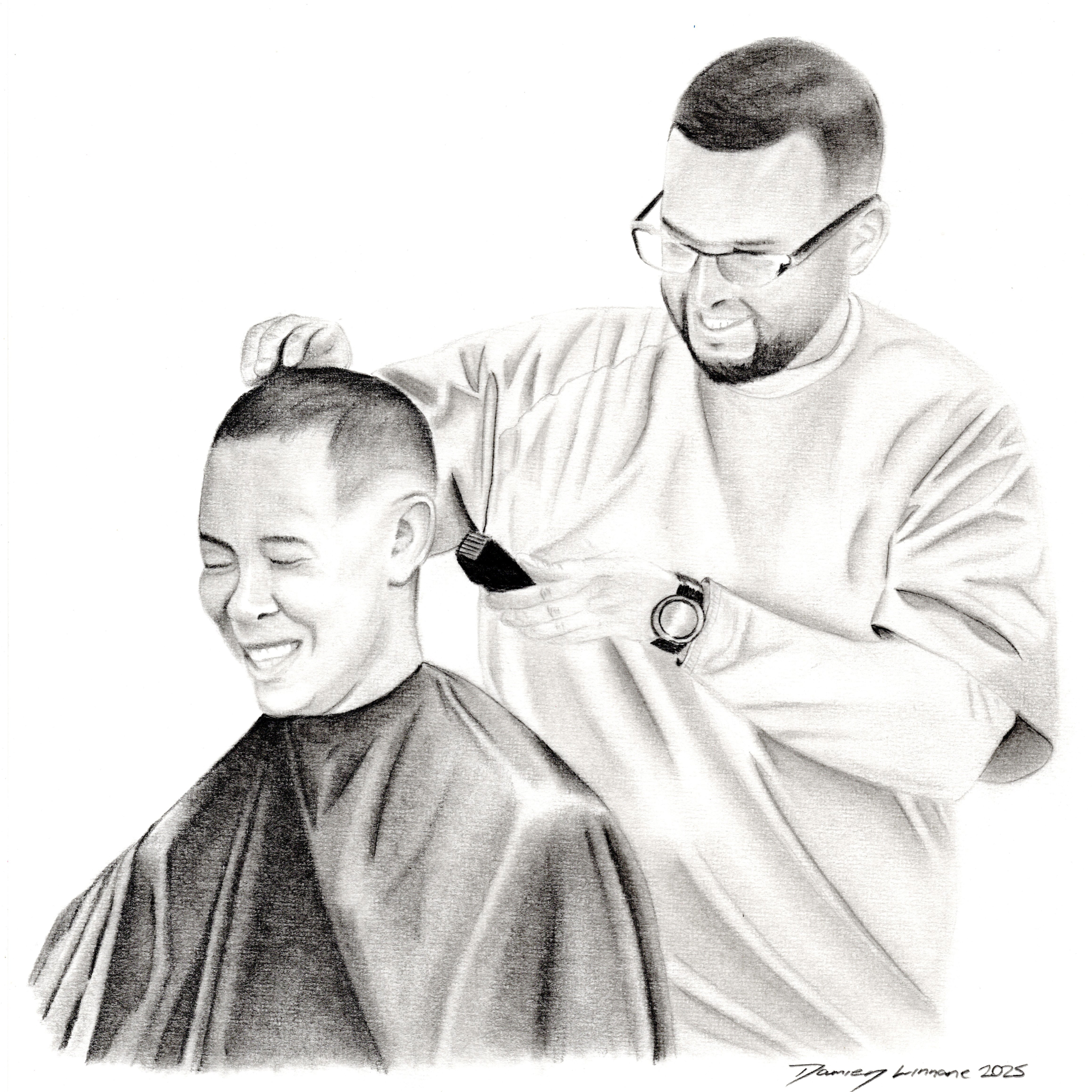
Loading summary
Transcript349 lines
- [00:01]
Earlonne Woods
Earlonne. It's that time of year again.
- [00:03]
Nigel Poor
What? When Easter candy goes on sale at the store?
- [00:07]
Earlonne Woods
Well, yes. And it's also the start of our annual Ear Hustle fundraiser.
- [00:13]
Nigel Poor
Yes, yes. Some listeners might not know that Ear Hustle is funded by a mix of sponsorships, grants, and listener support.
- [00:21]
Earlonne Woods
Exactly. Whether it's from our subscription to Ear Hustle plus or through tax deductible donations, listener support helps fund so much of the work that happens on Ear Hustle.
- [00:31]
Nigel Poor
Yep, we're doing it. We're recording stories, going to women prisons, expanding storytelling workshops, doing stuff in the communities, and a whole gang of other things.
- [00:42]
Earlonne Woods
So to support that, this year, our goal is to reach 1,000 donors.
- [00:46]
Nigel Poor
Everyone who donates will be invited to join us for a virtual party. And everyone who donates $10 a month or more will get access to Ear Hustle Plus.
- [00:55]
Earlonne Woods
Ear Hustle plus means ad free episodes plus bonus content.
- [01:00]
Nigel Poor
Every single gift helps Ear Hustle, no matter the amount.
- [01:03]
Earlonne Woods
Find out more and donate@earhustlesq.com thank you for helping to make Ear hustle possible.
- [01:10]
Nigel Poor
That's earhustlesq.com and know that we appreciate y'all. Ear Hustle is brought to you by Progressive Insurance.
- [01:23]
Earlonne Woods
Do you ever find yourself playing the budgeting game? Well, with the Name youe Price tool from Progressive, you can find options that fit your budget and potentially lower your bills.
- [01:34]
Nigel Poor
Try it@progressive.com Progressive Casualty Insurance Company and affiliates Price and coverage match limited by state law. Not available in all states.
- [01:46]
Barbara Suako McGuire
Hello, Hello.
- [01:46]
Nigel Poor
Malcolm Gladwell here on this season of Revisionist History. We're going where no podcast has ever gone before. In combination with my 3 year old, we defend the show that everyone else hates. I'm talking, of course, about Paw Patrol.
- [02:03]
Maserati E
There's some things that really piss me.
- [02:05]
Nigel Poor
Off when it comes to Paw Patrol.
- [02:07]
Piper Kerman
It's pretty simple.
- [02:08]
Oscar
It sucks.
- [02:09]
Nigel Poor
My son watches Paw Patrol. I hate it. Everyone hates it except for me. Plus, we investigate everything from why American sirens are so unbearably loud, to the impact of face blindness on social connection, to the secret behind Thomas's English muffins, perfect nooks and crannies. And also, we go after Joe Rogan. Are you ready, Joe? I'm coming for you. You won't want to miss it. Listen to Revisionist history on the iHeartRadio app, Apple Podcasts, or wherever you get your podcasts. What's up, Nash?
- [02:45]
Earlonne Woods
Hey, E. So we are about to hear your mystery episode, right? And this season, we're doing something we've never done before. You actually have a different co host for this episode.
- [02:57]
Nigel Poor
Yep. Stepped out on you, Nige.
- [02:59]
Earlonne Woods
I'm gonna say one thing to you, my friend. I'm happy to support this, but I'm telling you, under no circumstance are we becoming a throuple.
- [03:06]
Nigel Poor
Ooh.
- [03:07]
Piper Kerman
Okay.
- [03:08]
Earlonne Woods
So before I leave, I do wanna mention something we are both really excited about.
- [03:12]
Nigel Poor
Okay.
- [03:13]
Earlonne Woods
And that is our upcoming summer tour.
- [03:15]
Nigel Poor
Yes. Yes. We are about to hit the road August 4th through the 21st. We're gonna hit about 11 different cities.
- [03:22]
Earlonne Woods
It's a lot. We're actually gonna be traveling by van this time. Yep. So thanks for new, huh? Exactly. When we did a tour like two years ago, one of the things I loved about it was how we got to meet so many listeners in person, hang out, answer questions, ask questions, share a drink together.
- [03:41]
Nigel Poor
Yes. And I don't know if people realize, you know, we pretty much sat there at the end to talk to everybody.
- [03:48]
Earlonne Woods
Yeah.
- [03:48]
Nigel Poor
You know, we was able to just, you know, kick back and chill.
- [03:51]
Earlonne Woods
What I want to know from listeners are like, where should we go eat when we're in their city? Like, what are the places to get really good food? I don't know.
- [03:58]
Nigel Poor
See what the hot spots are.
- [03:59]
Earlonne Woods
Yes, yes. See where the hot spots are.
- [04:01]
Nigel Poor
11 cities.
- [04:02]
Earlonne Woods
11 cities. It's going to be great.
- [04:04]
Nigel Poor
Tickets are on sale now. You can go to earhustlesq.com tour and grab you a few and get them.
- [04:11]
Earlonne Woods
There because I've heard some people actually getting like, scams, scam emails about buying tickets someplace else. So buy them on our website.
- [04:18]
Nigel Poor
Go to earhustlesq.com tour to grab your tickets.
- [04:23]
Maserati E
Yes.
- [04:26]
Nigel Poor
What's going on? This is June the barber. I represent Beardos Grooming Lounge, a barbershop in San, California. The following episode of Ear Hustle contains language and content that may not be suitable for all listeners. There is also a brief mention of suicide. Listener discretion is advised.
- [04:47]
Maserati E
Foreign.
- [04:52]
Nigel Poor
This is Earlonne Woods. This is Bruce Wallace. We are live Eazy E and Bruce E. Bruce E. Good to be back in the studio with you, Earlonne. To reveal the results of the first annual listener inspired mystery episode. The listeners really came through for us like they always do. We got about 150 suggestions and our editor, Amy and I spent days and days pouring over them and have narrowed it to three for each of you. And so today we are presenting you with your finalists. And you can choose which ones PC the most. So. Okay, one. Who cleans up San Quentin? I was listening to Ear Hustle while I was cleaning this past weekend. And thought that cleaning could form the basis of an episode. Spending some time with people who clean or one person's experience of doing so might make some less visible parts of the prison experience visible. Sincerely, Elise Bruhl. Number two. Let's see for Earlonne. Friday night inside. I often listen to Ear Hustle on my drive home from work on Friday. The feel good of the weekend, free time is on its way. I like to know what are Friday nights like inside? And on a deeper level, how do you mark the time inside? Does it all blur together? If so, what does that do to you? Love the show. Alan McMillan, North Yorkshire, UK okay, number three. I thought a great story for Earlonne could be about hair, both in the men's and women's facility. How people express themselves through hair, how it's changed over time, what their hair means to them, what freedoms they do or don't have to style it and curl it the way they want. The list goes on and on as far as questions, and that's from Barbara Swaco McGuire. And then we only doing one of them. You gotta pick one. Sorry. Okay. Y'all don't need no plastic on the ground or nothing?
- [07:04]
Tom
Yeah, let me just get a plastic bag.
- [07:07]
Nigel Poor
What are you doing, Tom?
- [07:09]
Tom
Alright, I'm gonna lay these plastic bags on the floor so that we can catch as much hair as we can.
- [07:19]
Nigel Poor
Okay, you guessed it. I picked the listener question about hair. And I like this one because everybody in prison has to do something with their hair. And I figured if we're gonna do an episode about hair, someone better get their hair cut. So we called in Oscar, one of the best barbers at San Quentin, to help our inside producer Tom fix his hair.
- [07:47]
Barbara Suako McGuire
How do you like your haircuts?
- [07:48]
Tom
I just want a low fade so that it looks like it's a fade. And don't line me up, man. Every time somebody does it, they make me look like I'm going bald.
- [07:55]
Barbara Suako McGuire
You don't got a forehead for the lineup.
- [07:57]
Nigel Poor
I know, bro, but Foos be doing that, man. You ain't got the forehead for the liner.
- [08:00]
Tom
They be doing like this, trying to line me up. And then it looks like those. You know those kung fu movies where the guy shaves, like the front half?
- [08:06]
Nigel Poor
Oh, damn. I'm like, man, what are they doing? So today on the show, we're going to be talking about hair in prison. And we'll be coming back to check on the progress of Tom's haircut throughout the episode. Joining me today is a special guest and author of the email about Hair. I'm Earlonne Woods.
- [08:30]
Maserati E
I'm Barbara Sueco and this is ear.
- [08:32]
Nigel Poor
Hustle from PRX's Radiotopia. Barbara, I bet you didn't read the fine print, did you, that you were going to be the co host of this episode today?
- [08:49]
Maserati E
No, but I'm so excited to be here.
- [08:54]
Nigel Poor
We definitely appreciate it. You know, we had to switch some things up and make it a little bit more exciting. So I'm hoping you ready to take this co host chair and do your shit.
- [09:06]
Maserati E
I got big shoes to fill. Nigel's amazing.
- [09:09]
Nigel Poor
Indeed she is. So, you know, being that you fill in those shoes, you gotta ask those minutia type questions, what it smell like? No. So from your email, you had a gang of questions about hair, correct?
- [09:27]
Maserati E
Correct. I am so curious just because you guys have done an episode on how people are able to sort of customize their outfits, but I feel like hair can be such an expression. So I wondered how people are able to style their hair to express themselves and communicate things about themselves. And then I wondered, who are the people who cut the hair? Were they barbers or stylists before? Is this something they learn inside? And are there special kind of salons for something like this? And also, I mean, your George Jackson episode, when you guys talk about him, the theory that he hid a weapon in his hair really got me thinking more about what is allowed and isn't allowed. Just so much curiosity there.
- [10:14]
Nigel Poor
One of Barbara questions is, who gets to be a hairdresser? That's what she'd say. A hairdresser in prison.
- [10:21]
Eric Maserati
So I'm gonna start by saying I don't know if they would consider theyself hairdressers. Barbers know for sure.
- [10:29]
Nigel Poor
So this is the homie Eric Maserati, E. Abercrombie and Ear Hustle. Listeners know his songs because we've played his riffs in the episod. And he's also a sound designer for the podcast Uncuffed. And he teaches audio engineering in prison, in the men's prison and the women's prison. And when I read your email, Barbara, this is the first person that popped in my head.
- [10:56]
Eric Maserati
Honestly, I feel like anybody could be a barber in prison. You have like the person with that official position that has like a pay number and everything that has, like barber utensils and tools in it. You know what I mean? And that's a paid position. Usually got a nice little setup. It might have like a booth and the whole nine, you know what I mean? But then you have the barbers on the Yard, the self appointed barbers, the ones that you gonna, you know, pay with some soups and canteen or something like that. So if you got the talent and you got a brave soul willing to be your billboard, your muse, and I feel like anybody could do it if that's what they choose to do.
- [11:33]
Nigel Poor
So what he's saying there is there are official barbers in the California Department of Correction and Rehabilitation which pay them maybe between $20 and $37 a month to cut people hair. And then you have the unofficial barbers, who are the people that accept canned goods, soups, zoom zooms and wham whams, chips, the whole nine.
- [11:53]
Maserati E
And what equipment do the unofficial barbers like? How do they have access to that stuff?
- [11:58]
Nigel Poor
So if it's the official barbers, they just go to the officers and then they get. They have an assigned box, and that box has the equipment they need to cut people's hair. For the unofficial barbers, they can order beard trimmers from the prison catalogs. They're not the high quality ones, but, you know, they work. And the one thing that they can't really have is like scissors. But don't too many barbers use scissors like that? Oscar, he's one of those good unofficial barbers, and he's cutting Tom's hair with a beard trimmer. How long you been cutting hair?
- [12:29]
Barbara Suako McGuire
At least 17 years. I remember myself wanting haircuts. It made me feel better about myself, made me feel a little bit more confident, especially growing up as a insecure kid and then going on to prison with cutting hair. It allowed me to see the people's reactions, how it made them feel better about themselves.
- [12:49]
Nigel Poor
Have you ever been an official barber for the institution?
- [12:52]
Barbara Suako McGuire
No.
- [12:53]
Nigel Poor
And probably the person that had it couldn't even cut.
- [12:55]
Barbara Suako McGuire
Yeah.
- [12:56]
Nigel Poor
All zeros. As long as I've known barbers, the motherfucker that got that job can't even cut. Everybody go to people like you?
- [13:03]
Barbara Suako McGuire
Yeah. To the side person? Yeah.
- [13:07]
Nigel Poor
Yep. If you really wanted your hair to look good, you don't go to the official barber. You go to the other guy, period.
- [13:15]
Maserati E
Fascinating.
- [13:17]
Nigel Poor
So shall we go to your next question?
- [13:19]
Maserati E
Yes, please.
- [13:21]
Nigel Poor
This one you told us over the phone.
- [13:24]
Maserati E
I just wondered if also, like, when they go into the salon, I always imagine that that's a place where you can maybe the salon or whatever. Like, see, I don't know. I imagine there might be like a room, I guess. I imagine because in that show Orange is the New Black, there was like, I think like a quote unquote salon or like a place they could go. But I always wondered if it's, I guess if there isn't a salon that doesn't work or a specific room, but if you can kind of feel like maybe you're not in prison, like if it's the one place you can go and feel sort of a little normal or like if that's one way in which you can hold onto a little bit of what life might be like on the outside.
- [14:05]
Nigel Poor
To answer this one, my producer Kat and I went to the California Institution for Women, AKA ciw, and chatted with some women who are part of a cosmetology program there.
- [14:16]
Oscar
My name is Spani Duarte and I have been incarcerated for seven years. I am in cosmetology right now.
- [14:25]
Nigel Poor
Okay, so have you ever watched Orange is the New Black?
- [14:28]
Oscar
I did when I was out because I was preparing myself for this place and I was very scared.
- [14:34]
Nigel Poor
That was your prep work?
- [14:35]
Oscar
Yeah, that was my prep work.
- [14:37]
Nigel Poor
So are they similar to Orange as the new Black? How they get their hair done in there?
- [14:42]
Oscar
Our salon in here, it's actually a very beautiful room. There's probably around 15 stations with the high chairs, there's the big mirrors. Then we have our washing station. We have probably about eight blow drying stations, you know, to sit down and dry your hair. We have cabinets for towels. It looks legit. You really forget you're in prison because you're in that setting. And it's just. I forget we're there for six hours and it feels good. Yeah. Kind of like brings you back to being out there and getting all that treatment done, you know.
- [15:21]
Nigel Poor
My name is Cecilia Ochoa and I'm in the cosmetology class. And how long have you been doing hair? Since I was a little girl. Seriously? Yeah.
- [15:28]
Oscar
Yeah.
- [15:28]
Nigel Poor
I used to do my brother and my sister's hair. We asked Cecilia another question of yours about hairdressers as therapists.
- [15:37]
Maserati E
Yes.
- [15:37]
Nigel Poor
Remember that question?
- [15:38]
Maserati E
Yes, I do. I feel like a lot of people spill the tea to their hairstylist.
- [15:45]
Nigel Poor
When you're doing people hair, do they tell you all they secrets? Actually, yeah, they do talk to me a lot. They just share about their life and like what's going on for them in.
- [15:56]
Oscar
That moment in time.
- [15:57]
Nigel Poor
Like people that are getting ready to go to board or like an anniversary of when the crime happened or a death of a loved one. And so just hearing them out and being able to. To just be there for them as a listening ear and be like, I'm here for you.
- [16:10]
Oscar
You know, they leave lighter.
- [16:12]
Nigel Poor
You know, they leave Lighter. So it's pretty much a counseling session. It can be, for sure.
- [16:21]
Maserati E
I bet it also depends on whether or not you have people close enough in your life that you just share things with already. And I bet for people who are more reserved and don't share or don't have close friends or family, maybe going to the hair salon or the barber is an opportunity to share things you wouldn't. They. They don't share with anyone else.
- [16:39]
Nigel Poor
That sounds about right. You know, some people are reserved like that. I think I'm reserved, but I do have a lot of people I can share with.
- [16:46]
Maserati E
Yeah. So if you're already sharing there, you don't gotta share with your hair person. I feel like it's such an intimate thing to let someone touch your hair and they have to wash it. And, you know, it's just so personal that I think it relaxes you and you just feel comfortable sharing, but not everyone.
- [17:06]
Nigel Poor
Back at San Quentin, we asked Oscar that same question. Do you feel that being a barber is also. Do you have to be a therapist to your clients?
- [17:16]
Barbara Suako McGuire
You don't have to, but I think it's an escape route. And sometimes the clients could be going through something difficult, and they just. Just get to talking sometimes. And, hey, I'm going through this, I'm going through that. I had one dude talk about he wanted to commit suicide. He wanted to overdose on dope.
- [17:33]
Nigel Poor
He wanted to go out with a cool haircut.
- [17:35]
Barbara Suako McGuire
With a cool haircut. And once he did that, I stopped. I kind of didn't want to finish the haircut. I was like, hold up. Am I, like, enabling his fucking thought process right now? But I just talked to him about my trials and tribulations that I came through, and I think that helped him out. I did tell his Celia, hey, bro. Yeah, I mean, look out for your cellies. And luckily, he. He wouldn't go get high, But I don't think he did the amount he wanted to do to finish the job.
- [18:03]
Nigel Poor
So.
- [18:05]
Barbara Suako McGuire
Yeah, that was pretty deep.
- [18:07]
Nigel Poor
That's deep. Barbara, your facial expression changed just now.
- [18:17]
Maserati E
That's so heartbreaking.
- [18:19]
Nigel Poor
Yeah.
- [18:20]
Maserati E
You know, you have to think that hairstylists aren't trained therapists. Right. But I think that's such a moment of empathy between two humans and a moment of connectedness in a place where you might not expect it. And that's so special.
- [18:34]
Nigel Poor
Yeah. And I can imagine that Oscar being hit with that, not even able to articulate, like, hold up. You know, this is a different part of counseling. But I'm gonna do the best I can, you know, with what I have right here. I'm just gonna talk.
- [18:48]
Eric Maserati
Yeah.
- [18:48]
Maserati E
And then he shared his own story, which I'm sure maybe in some way was healing for him as well.
- [18:58]
Nigel Poor
Well, it looked like your head is shaping up a little bit.
- [19:03]
Tom
I can't see anything, but I know.
- [19:05]
Nigel Poor
He way better because you came in here looking like a little bell pepper. So, Oscar, can you tell me about the program where you're cutting correctional officers hair and what's that like? So there's this new program, part of the California Model, where correctional officers can get their hair cut by incarcerated barbers. And the idea behind this is to break down the us versus them mentality. So that's pretty much what the California Model is about.
- [19:37]
Maserati E
Mm.
- [19:39]
Nigel Poor
So Oscar was telling me this story about the first time he cut a correctional officer's hair.
- [19:46]
Barbara Suako McGuire
Honestly, I was nervous. There was a lot of officers standing around watching. Right. So this was like, what if I cut him by accident? These clippers are sharp. I'm cutting his hair, I feel my hands shaking. I mean, I trust my skills, but I was just uncomfortable. And I was like, man, this ain't good. I'mma fuck up his hair.
- [20:05]
Nigel Poor
So was sweat beating down your head?
- [20:07]
Barbara Suako McGuire
Everywhere. Forehead down, my neck, my back, everywhere. My legs were sweating. It felt like I finished of the gym. And eventually we both just started chopping it up and the same thing. Conversation. How long I've been cutting hair? Why do I cut hair? And I even went on to like, why did you become a co? Like, what attracted you to that? I think we just got talking about whiskey and fishing and traveling, and it was just a whole nother. We weren't in the prison yard. We weren't.
- [20:34]
Nigel Poor
So y'all was at the barbershop.
- [20:35]
Barbara Suako McGuire
Exactly. We were in the barbershop just chopping it up and just talking about life.
- [20:43]
Nigel Poor
So, you know, usually correctional officers and incarcerated people don't have open dialogues like, you know, them having a conversation, let's say, about family or about whiskey, can be considered over familiar. They having conversations they shouldn't be having.
- [21:03]
Maserati E
And I remember, didn't you guys do an episode where they're not even supposed to touch the correctional officers? And there was the man who was choking, and the prisoner was so scared to help him. So I imagine touching a corrections officer is, like, such a different experience. And. Yeah. So anxiety provoking.
- [21:22]
Nigel Poor
Yes. Because simply touching a correctional officer can be an assault. So you can see why Oscar was sweating bullets. And that's. So this. This whole California model is basically a ploy. To break down the walls, if you will.
- [21:41]
Maserati E
Yeah. And what a great way to humanize both sides.
- [21:44]
Nigel Poor
Yeah, that's the whole mission. Up next, you wanted to know whether people in prison make their own hair products.
- [21:52]
Oscar
Hmm.
- [21:54]
Nigel Poor
What's your name?
- [21:55]
Oscar
Martha.
- [21:55]
Nigel Poor
Martha. How long you been locked up, Martha?
- [21:57]
Oscar
I've been in and out for a long time, but I'm going home in 10 days.
- [22:01]
Nigel Poor
Oh, that's what's up.
- [22:02]
Oscar
Good shit out of of here.
- [22:04]
Nigel Poor
So tell us about this mascara for your hair. What does that do?
- [22:06]
Oscar
Okay, so we don't have dye hair. So we have to do something to cover the white hairs. Now we're getting older, you know, so we get the mascara, we cover our hair. Or the girls get the PIA soap, the institution soap that we have here that they gave us for free. And the denture tablets. And we make. We make like a paste and we put it in our hair. But dyes your hair blonde. Yeah.
- [22:25]
Nigel Poor
So I wonder. I wanted to look, what chemicals is in that to do that?
- [22:29]
Oscar
There's something in there because it makes your clothes white. Yeah.
- [22:34]
Maserati E
I wonder if that's horrible for their hair.
- [22:37]
Nigel Poor
I'm sure, because the PIA soap I know for a fact has lye in it. And I just. It's a trip. When I was talking to her, I didn't catch on to what she said. She said denture tablets. I don't know what's in denture tablets. All I can remember was the commercial. And you put the tablet in the water and it started bubbling. So it's something. It's something there.
- [23:01]
Oscar
I've heard of other techniques. For example, using dark eyeshadow, you know, to touchen up the. The roots. I've also learned coffee. When I was in county, people used coffee a lot to darken their hair and to make like a creamy paste.
- [23:16]
Maserati E
You know, I mean, that makes sense. Coffee dyes your teeth, right?
- [23:24]
Oscar
Coffee and probably conditioner or something.
- [23:27]
Nigel Poor
That type of stuff ain't sticky, though.
- [23:29]
Oscar
It's sticky, but it works. It tasty. You'd be surprised. They use jelly too, for gel. Yeah. Yeah. Serious? Yes. We get creative. I'm telling you. When we don't have access to these things, we gotta improvise.
- [23:44]
Eric Maserati
I've seen some pretty creative stuff. The funniest. And the funniest thing that I've seen was with dreadlocks.
- [23:52]
Nigel Poor
Right, here's Maserati E again.
- [23:55]
Eric Maserati
So somebody colored their dreads using Kool Aid. They colored the tip of they dreads using the Kool Aid. But then some people. Some people used to hit they dreads. And what I mean by hit them is like twist them down with honey and jelly. And one of my boys woke up with hella ants in his head. Cause this dude had a head full of honey and jelly.
- [24:18]
Nigel Poor
Oh my God.
- [24:19]
Eric Maserati
And I ain't gonna lie, it didn't look bad. Like it looked like some real hair dyed by the ear end of it all.
- [24:26]
Maserati E
Oh my God. I would freak out if I woke up with ants on my hair.
- [24:30]
Nigel Poor
Yeah, that's. That's crazy. But I can say this. I remember back in the day when I was in solitary confinement. And right before I went, I say about probably a week prior, going to AD said I had got my hair texturized like a Jheri curl. And so with a Jheri curl, you have to have moisturizer, stuff like that to keep it moist, you know, to keep it oily and stuff. But when you go to the hole, you don't get that type of stuff. So I'm in the hole. And the remedy, the only remedy is to use butter in place of curl activator or grease. And I'm like, I ain't finna do putting no butter in my hair. I'm kinda cool on that. So I rolled it out for a couple of weeks and by the time I was really transferred, I just cut my hair off. That was the easiest solution because I wasn't finna put butter in my hair to keep my hair and just have a buttery head. I wasn't gonna do that.
- [25:22]
Maserati E
I feel like butter would be so hard. Like, you think about, you wash your hands and it's even like you would not have gotten rid of that butter forever.
- [25:30]
Nigel Poor
Yeah, I mean, it would have probably kept it nice. It would have probably been oiled up. And I can just imagine, you know, it being like 98 degrees and the butter start dripping down and smelling and. Yeah, I didn't want to be like a little popcorn up in there. Now onto another one of your questions. And I really like this one because it was about George Jackson.
- [25:52]
Maserati E
Yeah.
- [25:52]
Nigel Poor
And George Jackson, as people may remember, is the guy who was killed in San Quentin in 1971. And George Jackson was a revolutionary. He was like, you know, when he was in prison, you know, at a young age, he was a big figure in the Black Panther movement. Barbara, you asked about a rumor that George Jackson hid a gun in his hair. So I asked my friend Maserati e if this could really happen.
- [26:17]
Eric Maserati
I feel like if that's your intentions, you could do that with any hairstyle, like literally any Hairstyle, you can get creative and hide something in it. Like, I don't wanna give away too much, you know what I'm saying? But as far as, like, things that I've done, I recall being on plenty of prison yards with a knife in my ponytail for sure. And I was getting pat down and everything, but they not grabbing my ponytail and it was fluffy, you know what I mean? So I used to have mine at the perfect length to where that fluff is still prominent and it's not poking through that, you know what I mean? But I used to always have a knife in my ponytail for sure.
- [26:53]
Nigel Poor
Any thoughts on that, Barbara?
- [26:55]
Maserati E
I mean, my first thought is, I guess, would it be a tiny knife?
- [26:59]
Nigel Poor
Like it's a tiny knife. How many inches?
- [27:03]
Maserati E
I don't know. And if it's fluffy, doesn't it stick out? But he must have very thick hair.
- [27:09]
Nigel Poor
I would say it is a tiny knife. You know, it might just scratch a person and make a person mad. So in prison you won't have a tiny knife. You will have a longer knife. And usually knives are not just like average knives that you think of. Knives in prison are more. Not all of them, but are more ice picky. They look like ice picks. So it'll be long, skinny and sharp and something that you can probably conceal. He had thick hair, so, you know, it's easy to probably braid it down in a braid that's going down.
- [27:41]
Maserati E
Oh, fascinating.
- [27:44]
Nigel Poor
And Barbara, you also asked about whether there are any hairdos that are illegal in prison. And for the most part I can say no. You know, pretty much you can have any hairdo you want, but I'll say, let me see. Maybe back in the early 2000s, CDCR came with some type of policy where they were trying to make everyone cut their hair and shave. But then there was a protest by the Native Americans because, you know, this is a part of their culture, their religion. So they end up winning. And everything went back to the way it was where there were no rules about hair. Yeah, of course there's other rules that have nothing to do with the institution. You know, prison politics, race stuff. And those rules might make it so barbers can only cut certain kinds of people hair. So being on a level two, I know it's a little different. But when you was on a level four, were you restricted to only cutting certain people's hair?
- [28:49]
Barbara Suako McGuire
Yes, sir. Being a Southern Hispanic, I wasn't allowed to cut anybody outside of my own race or anybody that was not a Southern Hispanic. Here is now that it's A non designated program facility. I run my own program. I'm not restricted to cutting anybody's hair. I follow my own rules and I feel free to cut in anybody's hair.
- [29:14]
Nigel Poor
So Oscar's talking about San Quentin, but in other prisons, like level threes, level fours, which is more maximum security, that's not the case. You'd have a barber for each race. You'd have a white barber, you'd have a black barber, you'd have an Asian barber, you'd have an Hispanic barber.
- [29:32]
Maserati E
So when he says not allowed, that's not like a rule from the prison. That's a rule among prisoners.
- [29:39]
Nigel Poor
Yes. That is what we would call an underground rule.
- [29:43]
Maserati E
Wow.
- [29:43]
Nigel Poor
Now, your final question about hair is tied to identity in prison. What did you mean by that, Barbara?
- [29:54]
Maserati E
Well, I told you a little bit about how my hair is such a part of my identity and I've had bangs since I was a small child. You know, my son has this kind of Mohawk mullet haircut that is just. He just loves it. And it's. I feel like it's really. It's silly and he's like that. And I just. I think a lot of people use their hair to express themselves and communicate things about themselves. And then it also got me thinking about, like, skinheads, right? Like you're really sending a message when you're a white person and you shave your head like that. So, yeah, just all thoughts around that. If people feel like maybe they can't do what they want with their hair. Cause they want to present a different image in prison even, right?
- [30:34]
Nigel Poor
So I'm sure there are a few people who want just like a regular cut while they in prison, so they can, you know, fly under the radar or whatnot. But I know at least one guy who did the opposite of that. That's Maserati E, who we heard from earlier.
- [30:53]
Eric Maserati
For a long period of time, my hair was heavily tied to my identity, right? Like, that was a huge identifier of me. It's a lot of people with the name E. So when they. Like which E? E from Oakland. Okay, which E from Oakland. It's a lot of them, you know, little Brad with the crazy haircut. You know what I mean? So I think that definitely played a huge part into my identity. For sure, for sure. And that's the beauty of it, right? Cause, you know, in prison, like, it kind of forces you to resemble the ones around you. You gotta wear the same clothes. If you alter those clothes, you could get in trouble. So it really kind of limits creativity but it was really liberating because it was me getting out of the norm, if we will. Right. So, like, it made me feel free, which ultimately made me wish I was out even more. Cause it's like, man, I feel this free in here when I get out. I could only imagine what's obtainable.
- [31:46]
Nigel Poor
So let me ask this to you, Tom. What type of hairstyles do you really like?
- [31:50]
Tom
I just wanted, like, a low fade so that I have some hair so it doesn't look like I'm dying yet or I'm an old man, you know, but kind of like, you know what? Most of my life, I had a shaved head.
- [32:01]
Nigel Poor
Ah, so you didn't do the BTS haircut?
- [32:03]
Tom
No, I'm from a different area.
- [32:05]
Nigel Poor
Different area.
- [32:06]
Tom
I'm from Long Beach. I'm from la, you know? I mean, like, there's, like, the Asians from, like, Orange county that they. They, like, dye their hair and. Yeah, they block blonde tips and they got the black bangs. I'm from Long beach, where you don't.
- [32:19]
Nigel Poor
Do moose or nothing?
- [32:20]
Tom
No, we just shave our head.
- [32:21]
Nigel Poor
So y'all just had the ball heads?
- [32:22]
Tom
Yeah, we just have the ball heads. I think we were just copping the blacks and the Hispanic gangs because we were all gang members down there. We dressed like them. We shave our head. Only difference is we speak a different language. For me, I saw a psych, like, maybe like, six, seven years ago, and she had pointed out that if I make it, like, if I really, like, I was starting to change my life, right? That. But even though it's just an external thing, it goes. People look. View you differently. And then, you know what I mean, it really, like, it struck me. So I said, okay, if I look meaner or I look, like, aggressive because I have a shaved head. Let me try this hair thing. It felt really awkward. But then people. I noticed people started saying that I look like a different person, like, nicer.
- [33:10]
Nigel Poor
What do you think about Michael Jordan and his bald head?
- [33:13]
Tom
Yeah, but he knows how to dunk, and you know what I mean? He got championship. If you know how to play sports, and then you run around with bald head. I'm pretty sure, like, people don't look at you bad, right? But I got gang tattoos on my hand, my arms, and then, you know, you got a bald head. It just fits into that little category. And I don't want to be seen in that category no more.
- [33:34]
Nigel Poor
All right, Barbara, it's time for the break. Then I have a story for you about my friend Maserati. E And the way his hair kept him connected to his brother while he was on the inside. Do you want to take us to the break?
- [33:48]
Maserati E
Sure.
- [33:48]
Nigel Poor
And what would you say to take us to the break?
- [33:51]
Maserati E
I don't know.
- [33:53]
Nigel Poor
What? What would Nigel say? What would I say? Throwing it to the break.
- [33:58]
Maserati E
Don't go anywhere. We're gonna continue cutting it up.
- [34:01]
Nigel Poor
Okay, we'll go with that. We'll be right back. Calling all ear hustlers, we've got an announcement.
- [34:25]
Earlonne Woods
We are hitting the road again.
- [34:27]
Nigel Poor
That's right. Back in 2023, we had our first live tour on the east and west coast and we had so much fun. We're like, we gotta do this again.
- [34:37]
Earlonne Woods
So that's what's happening. Only this time it's really like an old fashioned road show. Kind of like a 70s style rock band. We are renting vans and we are packing so many outfits. Earlonne.
- [34:49]
Nigel Poor
And hitting the road. We'll start out in Nashville on August 4th and we will drive across the south and Midwest hitting a bunch of cities, hopefully yours.
- [34:58]
Earlonne Woods
Grand finale in a city I have always wanted to visit. Austin, Texas.
- [35:03]
Nigel Poor
And this time out, we've got an entirely new show. Stories from inside and outside Prison reimagined by a cool animator, and music from some of our favorite artists you've met on the show.
- [35:15]
Earlonne Woods
And Earlonne, you know I am already picking out my outfits.
- [35:18]
Nigel Poor
Yep.
- [35:19]
Earlonne Woods
And between you and me, we are going to need our own van. Earlonne. We are going to travel Liberace style. And you know, I am dying to see what our listeners are going to be wearing.
- [35:31]
Nigel Poor
I'm wearing prison blues. What you talking?
- [35:33]
Earlonne Woods
You are not. You are not.
- [35:35]
Nigel Poor
So dress to impress.
- [35:37]
Earlonne Woods
For ticket info and all the details go to earhustlesq.com see you on the road. You know what? Special day is right around the corner, right?
- [35:51]
Nigel Poor
I got it in my calendar right here. See Mother's Day.
- [35:53]
Earlonne Woods
Yes, you do.
- [35:54]
Nigel Poor
That way I don't forget to call Mom.
- [35:56]
Earlonne Woods
Smart. And I was trying to think of a unique gift from my mom this year. Something I didn't have to mail. And then it hit me. Obvious masterclass.
- [36:07]
Nigel Poor
Yeah, that's a cool gift. Masterclass offers so many classes that you can stream online. Taught by real experts.
- [36:14]
Earlonne Woods
Exactly. And my mom just moved to an independent living spot and it's a real transition. So I have two great picks for her. Jay Chete's class on navigating change and Joanna Gaines talking about designing a home. And you know what, Earlonne? I was thinking it would be really cool to sit down right next to her and watch it together.
- [36:35]
Nigel Poor
Sounds cool. Whether you're showing love to a parent or to yourself, nothing compares to a gift that can change your life for the better. Give your mom the gift of learning with masterclass.
- [36:46]
Earlonne Woods
For just $10 a month, a membership with Masterclass gives you unlimited access to over 200 of the world best instructors and you get a 30 day money back guarantee.
- [36:58]
Nigel Poor
Our listeners always get great discounts on Masterclass of at least 15% off any annual membership@masterclass.com earhustle see MasterClass's latest deal.
- [37:09]
Earlonne Woods
At least 15% off at masterclass.com earhustle.
- [37:15]
Nigel Poor
MasterClass.com earhustle Lamont Jones's world shatters when his young cousin dies in custody just weeks after entering prison. The official report says natural causes, but bruises and missing teeth tell a different story. Grief turns to frustration as Lamont faces an impossible choice. Accept the lies or risk everything to uncover the truth.
- [37:45]
Earlonne Woods
From Wondery comes Death County, Pa. A chilling true story of corruption, cover ups, and one man's relentless pursuit of justice. Follow Death County, Pennsylvania on the Wondry app or wherever you get your podcast.
- [38:12]
Nigel Poor
So we're back with Barbara, our listener from Los Angeles who wrote us with a first rate Ear Hustle episode topic, which is hair in prison.
- [38:21]
Maserati E
Yeah.
- [38:22]
Nigel Poor
And Barbara, when I read your suggestion, the first person that came to my mind was Maserati E, who we heard from earlier because when he and I were in prison together, he used to have a signature hairdo like none other. What was the hairstyle for Maserati like when you were incarcerated, man.
- [38:42]
Eric Maserati
So I had a very unique style. Right? It was about, I think three, four hairstyles in one. Let me describe it like this. So it was like fades on the sides. The sides was faded. The top initially started off like curly with a long part going. Like it was like going across like a third of my head going all the way to the back and then the back went into a mohawk. And then I also had a ducktail.
- [39:12]
Nigel Poor
Wait a minute. Hold up, hold up. I'm watching your facial expression. You over there trying to put this together.
- [39:17]
Maserati E
Well, I think he must. It must be sort of like my son's because my son has got this ducktail mohawk thing going, but then he just flops it over to the side. But I mean, to be curly here and then like mohawk here and then I mean something else. It's a lot of work.
- [39:33]
Nigel Poor
Oh yeah. Maserati had tears to it. I'm talking about like for him, the side would be like blended in to the skin. And then it'd go, like, to maybe a half inch of just regular hair. And then the next one would be a little longer and it'd be waves. And then the next tier would. Might be a braid going towards the back. Then the top part would be this mohawk that's going down. Yeah. I'm telling you, Maserati had a nice hairstyle, and then he might even have a little afro part on this side just sticking out. Just this one little piece over here that's combed out. So he really was really creative with his hairstyle. Like he. And it was cool because it was his style. It's how you knew him.
- [40:14]
Maserati E
Did it look good?
- [40:16]
Nigel Poor
Oh, he kept it right.
- [40:21]
Eric Maserati
It started when I was in North Kern State Prison in Delano, and, like, they wasn't tripping off of, like, designs in your hair. You could get haircuts with designs in it. So, like, I. I became iconic for having a guitar always in the side of my head. So I felt like we started a wave for sure. Because after I started getting the guitar, you started seeing all type of designs from, like, grapes in people head to, like, designer stuff like Versace and Louis, and people head, like, people started getting creative, you know what I mean? Once we was able to open up those doors. So I felt like it kind of started away. So when I knew I was going to San Quentin, I knew I had to come with that sauce. I went all out. Don't get me wrong, Everybody wasn't receptive to it initially. Like, I was the butt of a lot of jokes. But my response used to be like, this is what your kids gonna want when we come home. I guarantee it for sure.
- [41:16]
Nigel Poor
Then in 2015, while Maserati was still incarcerated, he got some bad news from home. His brother had been killed.
- [41:25]
Eric Maserati
I recall, like, calling him over and over and over, knowing he was gone, and just found myself constantly calling and leaving texts and all that. Cause I was kind of delusional, you know what I mean? I would still call regularly and think and really believe. Like, now you finna pick up this time. Like, this ain't real. I'mma wake up. I'mma wake up. That's what's finna happen.
- [41:46]
Nigel Poor
When Maserati's sister went to identify their brother's body, she was able to cut off a few of his dreads, which were given out to people who were close to him, like Maserati. The only problem was Maserati was in prison at the time, and you can't receive gifts. So his mom came up with a plan to try to pass it off to him during one of their visits.
- [42:09]
Eric Maserati
Visiting room was packed. Definitely remember that. It was super packed. A lot going on. But we were in somber moods. Cause my brother's death was still pretty fresh. And I recall being somewhat nervous. Cause I didn't want her to get in trouble or anything like that. So I remember trying to slyly, like, make it a part of my hair. So I tied it into a knot and initially started off with that fake yawn, like to get my hands up there and then tied it in. I remember even leaving that visit. My heart was just pounding.
- [42:39]
Nigel Poor
And after that, strange things started to happen.
- [42:44]
Eric Maserati
When I first locked the dread in my head, I felt. I felt connected. I felt like I had a part of my brother with me. And at that time, he was in, like a lot of my dreams. And I felt like it was because of that dread. Like he was in a lot of my dreams. We was hollering, we was catching up. Like, it was a lot of, like, normalcy to the dreams. Like the very first dream for sure. I definitely remember that we was in, like, it was weird. It started off we kicking it, and then time kind of stopped. And then we just kept chopping it up. Initially, I was in a state of confusion, like, what the just happened? Because I'm a believer, you know, that your dreams mean stuff. Like, don't get me wrong, I'm aware how the subconscious plays a role in our dreams and stuff like that. But I also believe, like, when we dream, it's kind of like a place in between life and death. It was definitely good to see him and vibe with him. But then it reinstills the reality that he's no longer with us.
- [43:47]
Nigel Poor
Eventually, the dream stopped. But I think the dread helped Maserati feel like the connection to his brother was still there, you know, even after he got out of prison.
- [43:58]
Maserati E
I love that energy. Never dies, you know?
- [44:02]
Nigel Poor
Well, that may be true, but it wasn't the case for Maserati's hairstyle.
- [44:08]
Eric Maserati
It was locked into my head until, unfortunately, not that long ago on the highway at that, it was ripped out by a baby and thrown out the window all in one motion. So I don't even got it no more, man. Heartbreaking. What crazy.
- [44:23]
Nigel Poor
So you driving?
- [44:25]
Eric Maserati
We driving. My dread dangling in the back, flapping in the wind. Cause the window down, the baby in the car seat, snatch it. One hard motion, whop. And it got sucked up out the window.
- [44:35]
Nigel Poor
Gone. Oh, that gotta hurt. Yeah.
- [44:38]
Eric Maserati
So, yep, don't got that part of the swag. No more. It was a part of me for so long. You know what I mean? But it's one of those things where it just is what it is.
- [44:57]
Maserati E
Kids are savages, man, ain't they?
- [44:59]
Nigel Poor
Just took his heart from him, you know?
- [45:02]
Earlonne Woods
Oh, my God.
- [45:03]
Nigel Poor
I would say this for Maserati maybe, you know, that was probably one of the best possible endings to that story. Cause he probably would have never took it out his head.
- [45:11]
Maserati E
Yeah. Sometimes people gotta propel the change forward.
- [45:15]
Nigel Poor
For you, indeed. All right, so let's go check in one last time with Tom to see how his haircut turned out. So you sure you don't want the line up in the front?
- [45:30]
Barbara Suako McGuire
I think we should do it.
- [45:31]
Tom
No, no, we. We ain't doing that, man. No, it's cool. I'm good.
- [45:35]
Nigel Poor
It's okay.
- [45:36]
Tom
It's okay.
- [45:37]
Nigel Poor
Thank you. Thank you, man. No, I'm good. I'm sure you get a lineup in the front with your bang correct.
- [45:46]
Maserati E
Yeah, I do myself. It's not perfect, but I try.
- [45:49]
Nigel Poor
Yeah, he wasn't going for that. Because, you know, usually in prison, people will push your line and further and further and further back, and then they try to correct it, which make it only go back further. So people try to stay away from people messing with the front of their hairs. But, you know, I was over there pressing them. You know what I'm saying?
- [46:07]
Maserati E
Like, you hear the tension in his voice.
- [46:10]
Nigel Poor
No, he's serious. He's serious. That would mess your whole hairdo up, because you're gonna be like, man, cut it all off. You know what I'm saying? But I was able to convince him to go on, go get a lineup. Have. We're dealing with the best underground barber in San Quentin, so you might as well go on and, you know, get that line up.
- [46:28]
Maserati E
Yeah.
- [46:30]
Tom
Next thing you know, I look like.
- [46:31]
Nigel Poor
A bad kung fu, though. This is for the story. This is for the story. Let's see how you do.
- [46:35]
Tom
All right, so. So if it looked like I got.
- [46:37]
Nigel Poor
10 head right instead of forehead, it's gonna be good.
- [46:41]
Tom
All right, let's go.
- [46:42]
Nigel Poor
Let's go. Okay.
- [46:43]
Tom
All right.
- [46:44]
Nigel Poor
Don't go too crazy.
- [46:44]
Tom
Don't go too crazy.
- [46:45]
Nigel Poor
Oscar, are you now nervous?
- [46:47]
Tom
Yes.
- [46:48]
Barbara Suako McGuire
Are you sweaty right now?
- [46:48]
Tom
I'm sweating right now.
- [46:49]
Nigel Poor
Like, I think you needed this part for the finish of the haircut, cuz you. You know, you was. You was brewing some.
- [46:55]
Barbara Suako McGuire
You had hair on the forehead that's not even part of the hair of the lines. Yeah.
- [47:00]
Nigel Poor
Shout out to laugh.
- [47:01]
Tom
If I laugh right now, I'm holding your head, bro. Next thing you know, I'm going to have that half bald head. Does it look right?
- [47:12]
Nigel Poor
It look cool.
- [47:13]
Earlonne Woods
Okay.
- [47:13]
Nigel Poor
I think it needed.
- [47:14]
Tom
All right.
- [47:14]
Nigel Poor
All right.
- [47:15]
Tom
I'm gonna trust Sadiq Understeek. Understood, man.
- [47:18]
Nigel Poor
So I got one more question too. When a person get out your chair, do you get a handshake? Have you ever got a hug?
- [47:23]
Barbara Suako McGuire
I get both hugs. Handshakes. Nah. Not no kiss. Not no kiss. Mainly half a hug. The handshake. With the hug.
- [47:34]
Nigel Poor
With the hug?
- [47:35]
Barbara Suako McGuire
Yeah. With the side hug. Yep.
- [47:37]
Tom
Well, thank you, man. I appreciate it.
- [47:38]
Nigel Poor
Handshake. Side hug right there. Right. Well, Barbara, what do you think?
- [47:46]
Maserati E
I love it. I love it. I wonder, what's your favorite hairstyle you ever had in prison?
- [47:52]
Nigel Poor
Ah, shit. I would say the favorite hairstyle is when. Maybe say, for instance, if I got braids and I got my braids done, or if I was doing, like, the chiseled up, like, tears taper style. And I'm on my way to a visit and I'm looking great. I would say most of the time I look dusty and raggly because I don't care. But if I was going on a visit to go see my family, then I would definitely clean up and make it look like I, you know, wasn't going through the struggles. Mm. So before we let you go, Barbara, we got one more surprise for you.
- [48:33]
Piper Kerman
Hi, Barbara. It's so nice to meet you. You too. Thanks for this question.
- [48:37]
Nigel Poor
That's Piper Kerman. She wrote Orange is the New Black, and she's my homegirl.
- [48:42]
Piper Kerman
So the salon is real. In my memoir, I talk about the salon because it was one of those curious, opposite world, bizarro world places in the prison where I was incarcerated. And much like you say, in so many ways, it was just like a salon that anyone might out in the free world. However, there was a cage on the wall where all the sharps, you know, sort of all of the haircutting instruments were always locked up in this cage. And that correctional officer was responsible for unlocking them. So you could get an official job as a hairstylist in the salon. And then if there was room and the salon could get very crowded and very busy, like in advance of visiting hours, for example, if it was less busy, like if you had a friend who was good at hair, you. You might be able to get in there and. And use the salon as well. But that was sort of a privilege jealously guarded by the. The women who worked in the salon.
- [49:46]
Nigel Poor
Let me ask you this. Do you remember any of your hairstyles in prison?
- [49:50]
Piper Kerman
Well, so I have, you know, pretty ordinary hair. It's very, you know, straight, and, you know, sort of sits on my head and doesn't do very many fancy things. But what did happen is I got my hair colored so you can purchase, like, a temporary low color hair color, or at least you used to be able to. What I remember very clearly is that I was writing term papers for One of the OGs, a woman who had been incarcerated for 25 years, who was close to getting released, and she was taking a college class, and she was really stressed out about her term papers. So the truth is, like, I tried to coach her how to write them, and eventually she was like, look, Piper, you're going to write my term paper. I was like, okay. But her thank you to me for doing that, for writing her term papers and getting her an A in the class was a box of the temporary hair dye.
- [50:54]
Maserati E
Wow.
- [50:56]
Nigel Poor
Okay. So I highly appreciate you for popping in, Piper. And Barbara, I want to say thank you for assisting me in co hosting this episode. You definitely did a great job. So now let's take us out here, Ear Hustle style. I'm Earlonne Woods.
- [51:18]
Maserati E
I'm Barbara Suako McGuire.
- [51:19]
Piper Kerman
I'm Piper Kerman.
- [51:21]
Maserati E
Thank you for listening.
- [51:28]
Earlonne Woods
So maybe this isn't true, but I swear I've noticed that you've changed your hair a couple times recently, that you've been paying more attention to your hair. Is that true?
- [51:35]
Nigel Poor
Well, I mean, I've gotten braids done a couple of times.
- [51:39]
Earlonne Woods
Yeah, yeah, no, I know you're interchanging hair. It was just something like, was note to self. Huh. That's interesting. Well, it was fun to hear things I knew and things I didn't know. I had no idea that there was a salon at a women's prison.
- [51:50]
Nigel Poor
So do you see yourself stopping by the salon and getting some highlights?
- [51:53]
Earlonne Woods
I would love to get some highlights. Not with the jelly.
- [51:56]
Nigel Poor
I don't know. Hell no. That was more of a gel. Gel?
- [52:00]
Earlonne Woods
Yeah. Sometimes when Maserati's hair was at its, like, most complicated, I used to think sometimes the top of his head looked like a little pterodactyl because it was like, so. But I remember that story about his brother's lock and his hair really made a big impression on me. And it, like, amazed me. Also scared me. It's such, like, a bodily thing belonging to another person to put in your hair. I couldn't tell if it was a good thing to do.
- [52:24]
Nigel Poor
Right.
- [52:25]
Earlonne Woods
Or would it bring good luck or bad luck? This is a very emotional story.
- [52:32]
Nigel Poor
Well, I'm glad you.
- [52:33]
Earlonne Woods
I totally enjoyed it. You know, if I ever get a chance to talk to Barbara, I've got a burning question for her.
- [52:39]
Nigel Poor
Well, that may just happen.
- [52:40]
Earlonne Woods
Nice.
- [52:44]
Nigel Poor
What's up, Barbara?
- [52:46]
Maserati E
Hi, Earlonne.
- [52:47]
Earlonne Woods
Hey, Barbara. It's Nigel. Nice to meet you.
- [52:49]
Maserati E
Hi, Nigel. So nice to meet you.
- [52:51]
Earlonne Woods
So I listened to the episode, which was very fun, and the first part was where Earlonne gets given his three choices. And I knew right away. I was like, hare is the one who's picking, hands down. So kudos for coming up with a totally Earlonne topic. Okay. But I need an honest answer to this. When they were describing Maserati E's hairdo, could you really follow the complexity of that description and see it in your mind's eye?
- [53:18]
Maserati E
I kind of did. They did. He did a really good job of describing it. And then I don't know why. I think because my son sort of has it tight on the side. And then I was just sort of imagining those pieces on him, which is kind of funny too, which I think is why I was laughing, but not fully. I would love to see a photo.
- [53:35]
Earlonne Woods
Well, you've got good power of imagination, because I know him and I've seen him, and I was, like, really listening carefully, like in my mind's eye, trying to puzzle together. I was like, this is complex, but it does. But Maserai is a complex guy, so it made sense anyway.
- [53:51]
Maserati E
Sounds incredible, though, and so brave and I think courageous to have a hairstyle like that, especially inside.
- [53:58]
Earlonne Woods
Yeah. Maserati is like a special person. He stands out no matter where you see him. Anyway, I could chat with you for a long time, but I think that we are here to record credits, but nice job. It was really fun to hear you and Earlonne together on the episode.
- [54:11]
Maserati E
Thank you.
- [54:13]
Nigel Poor
All good. So y'all want to start off at the credits?
- [54:16]
Earlonne Woods
Okay.
- [54:17]
Maserati E
My name is Barbara Suako McGuire, and I am so stoked to have done this episode with Earlonne. It's a true honor. Ear Hustle is produced by Nigel Poore, Earlonne Woods, Amy Standen, Bruce Wallace, Rahsaan, New York. Thomas and Kat Shuknecht. Shubham Sigman is the managing producer. The producing team, Inside San Quentin includes Darrell Siddiq Davis and Tom Wynn. The inside managing producer is Tony Tafoya. Thanks also to Aristeo San Pablo. Thanks to Warden Andes at San Quentin and Acting Warden Parker and Lt. Newborg at the California Institute for Women, as well as Warden De la Cruz and Lt. Williams at the Central California Women's Facility for their support of the show. Thanks also to this woman here.
- [55:06]
Nigel Poor
My name is Lt. Giamare Berry and I serve as the Public Information Officer here at San Quentin Rehabilitation center and I approve this episode.
- [55:17]
Maserati E
This episode was made possible by the Justice Trust building a smaller, more humane engine of justice and safety across the country.
- [55:27]
Earlonne Woods
Earlonne woods and Bruce Wallace sound designed the show with help from Darrell Siddiq. Davis, Fernando Arruda and Harry Culhane are our engineers.
- [55:36]
Nigel Poor
Music for this episode comes from Antwan Banks Williams, David Jassy, Darrell Sadiq, Davis, Maserati E Fernando Arruda and me. For more information about this episode and about our upcoming live tour, check out Ear Hustle's website, earhustlesq.com Ear Hustle will.
- [55:54]
Earlonne Woods
Always be free, but if you want more Ear Hustle without ads, sign up for Ear Hustle plus. Subscribers get access to Ask Nigel and Earl on Anything episodes and where are they now? Episodes where we follow up with folks who have been on the show before and we see how they're doing now.
- [56:10]
Nigel Poor
On last in last week's Ear Hustle plus episode, Nigel and I answered some pretty challenging questions from listeners.
- [56:17]
Earlonne Woods
Oh Earlonne. It was really fun. So listeners, please keep up with those in depth, probing and even personal questions. Very fun to answer.
- [56:25]
Nigel Poor
Subscribe to Earhustle+@Earhustlesq.com/ or directly in Apple Podcasts.
- [56:32]
Earlonne Woods
Ear Hustle is a proud member of Radiotopia from prx, a network of independent, creator owned, listener supported podcasts.
- [56:40]
Nigel Poor
Discover Audio with Vision at Radiotopia fm.
- [56:43]
Earlonne Woods
I'm Nigel Poor.
- [56:45]
Nigel Poor
I'm Earlonne Woods. Thanks for listening.
- [56:57]
Tom
I noticed like guys who cut their hair really well. They're like meticulous about their own hair though.
- [57:02]
Nigel Poor
You wouldn't want to go to a barber whose shit is fucked up. Dan Nah, hell no.
- [57:05]
Tom
It's like yeah, going to like a skinny chef.
- [57:10]
Nigel Poor
Support Ear Hustle by donating today as part of our annual fundraiser.
- [57:14]
Earlonne Woods
Everyone who donates will be invited to our virtual party. If you've never been, it's a really fun time where we all talk about the season and answer questions from you all live.
- [57:25]
Nigel Poor
Every gift will help us reach our goal of 1,000 donors. Head over to earhustlesq.com to learn more and please contribute.
- [57:34]
Earlonne Woods
Thank you Radiotopia from PRX.