Loading summary
Transcript323 lines
- [00:02]
A
We've got a special guest with us today, our senior editor, Amy Stand in, who just got her aarp.
- [00:09]
B
What the hell?
- [00:11]
A
She's our senior editor.
- [00:12]
B
Oh, hey, Amy.
- [00:14]
C
He's right. Hi, guys.
- [00:15]
B
Hello. Hello.
- [00:16]
A
Amy, could you tell the good folks just a little about all the things that you do for Ear Hustle?
- [00:21]
B
Sure.
- [00:23]
C
Well, I'm in the studio whenever you guys track. Whenever you guys record narration, like right now, I get to help out a lot with the writing and shooting shaping of episodes with the two of you. After this, the three of us are going to San Quentin to do some interviews. That should be fun. Also, speaking of San Quentin, I run an internship program, and I also have something I call the open class, where we bring in guests from the outside to teach incarcerated people about storytelling.
- [00:50]
B
Definitely.
- [00:50]
C
And then the live shows is the other big piece.
- [00:53]
D
Right.
- [00:53]
C
We all work shaping those shows together, writing them, figuring out what they're gonna look like and sound like, and bringing those shows into prisons to show to incarcerated people. And also workshops on storytelling at different prisons around the country. So, yeah, it's basically I get to work on all of the fun stuff and none of the not fun stuff.
- [01:14]
B
What is the not fun stuff? It leaves up to Bruce. Oh, that will remain a secret.
- [01:19]
A
And the reason that we have Amy here is to make the point that none of those things she mentioned would be possible without listener support.
- [01:28]
E
Right.
- [01:28]
B
And it's a lot of stuff. It's pretty exciting to hear all, I think, behind the scenes of what gets done. So, recently, we launched this year's Ear Hustle fundraiser, and our goal is to reach 1,000 donors by the end of this season.
- [01:41]
A
We have a long way to go to get to a thousand.
- [01:45]
B
We do. We do. But every gift, no matter the amount, will help us get closer to our goal.
- [01:51]
C
Plus, when you donate, you'll get an invitation to our June 11th virtual party where you can ask Nigel and Earl on your most embarrassing and personal questions
- [02:00]
B
live exactly in the morning. Embarrassing and personal, the more fun it will be.
- [02:03]
C
Absolutely.
- [02:04]
B
And if you donate $10 a month, you'll get access to Ear Hustle plus for ad, free listening, and bonus content.
- [02:10]
C
For example, I think my favorite bonus content are the Ask me anything episodes that you guys do with Bruce. Because speaking of embarrassing and personal questions, you get asked a lot of kind of nosy stuff in there, and it's really fun listening to.
- [02:24]
B
It's always fun. Remember we had to take that personality test? Exactly. Oh, my God.
- [02:28]
A
So if y' all are interested in anything, they just said, go to earhustlesq.com donate to make your gift today. It's a gift.
- [02:37]
B
It is a gift and we thank you so much.
- [02:39]
A
And she said we need a thousand.
- [02:40]
B
I know.
- [02:41]
A
Before the end of the season.
- [02:42]
B
I know. Like I'm saying.
- [02:43]
A
All right. Ear Hustlers come in strong for us so we can keep doing this work.
- [02:48]
B
Yes. Earlonne. Doesn't it feel like it's been like go, go, go, go lately?
- [02:54]
A
Yeah. I haven't fully unpacked my suitcase in the past couple of weeks. It's all good though.
- [02:59]
B
It's really forced me to pack and shop smarter. I like to go for essentials, clothes that are com but still put together. It makes traveling and getting dressed simpler. And Quince has been one of my go tos.
- [03:12]
A
Quince has all the wardrobe staples for spring. They use premium materials like 100% European linen, organic cotton, and ultra soft denim.
- [03:21]
B
That's true. I actually just got a new pair of denim jeans from Quint. They are super soft. I love them. All of their fabrics feel elevated, the fits are flattering and everything just works without overthinking it.
- [03:33]
A
Everything at quince is priced 50 to 80% less than similar brands. They work directly with ethical factories and cut out the middlemen. So you're paying for quality, not brand markup.
- [03:44]
B
Refresh your everyday with luxury you'll actually use. Head to quince.comearhustle for free shipping on your order and 365 day returns. Now available in Canada too.
- [03:56]
A
That's Q-U-I-N-C-E.com earhustle for free shipping and 365 day returns. Quints.com earhustle
- [04:08]
B
this episode of Ear Hustle is brought to you by Progressive Insurance.
- [04:13]
A
Fiscally responsible financial geniuses, monetary magicians. These are things people say about drivers who switch their car insurance to Progressive and save hundreds.
- [04:24]
B
Visit progressive.com to see if you could
- [04:28]
A
save Progressive Casualty Insurance Company and affiliates. Potential savings will vary. Not available in all states or situations.
- [04:38]
F
Hi, I'm Azul Dahlstrom Ekman.
- [04:40]
G
I'm a reporter at kqed. This episode of Ear Hustle contains language and content that may not be appropriate for all listeners. Discretion is advised.
- [04:57]
F
Testing.
- [04:58]
A
Good.
- [04:59]
B
So you guys keep that one and then Frenemy and I will share this one. All right.
- [05:05]
A
Frenemy, huh? This cat again?
- [05:08]
B
Yeah. Listeners might remember him from that episode we did about elections where he said he would never vote for a woman no matter what, because he didn't think women should be in power or that they should be Bosses. And so I can never let that go. And that's why I call him Frenemy.
- [05:25]
A
Okay, Your Frenemy name is Jason.
- [05:28]
B
Yes. And he's one of our new interns at San Quentin now. So, you know, I see him quite a bit.
- [05:33]
A
Frenemy. Internemy.
- [05:35]
B
Internemy.
- [05:36]
A
Yeah.
- [05:36]
B
That's good. Anyway, we were in class the other day, and there was this idea I really wanted to get across about the importance of noticing small details. So I wanted to start today by playing a clip for you. One of the things that we're always thinking about when we do stories are what are the small, interesting details that a story can revolve around? When you're interviewing someone, I want you to listen for the small things, but it's not just with people's language. It's also with their body language and sounds that they make. So as you're listening, I want you to think about what you hear that keys you into something important that's gonna happen. All right, let's listen. The thing I wanted to talk to you about was your first visit with your mom. And. Yeah. How did you prep? So I took a lot of deep breaths.
- [06:28]
F
I tried to, like, choreograph my hug because I haven't hugged my mom in a long time in the cell.
- [06:35]
B
But wait, how did you practice? How did you choreograph a hug? So I didn't know because I haven't hugged someone in a long time. Maybe by then it was 13 years. Right. So I didn't know if my hand goes around her shoulder or her neck.
- [06:49]
F
I didn't know if it went, like,
- [06:52]
B
diagonally, like two 45 degree angles. Like, okay, what do you do up? Is it down? Is it sideways? Did you actually practice hugging somebody else? No, just like an air. You did it. I necessarily wasn't up for that.
- [07:03]
F
No, I did not.
- [07:05]
B
I just kind of like air hugged myself. When you're listening to that, what first cues you in to that this is going to maybe lead to an interesting conversation.
- [07:21]
G
So for me, when he did, like, a deep sigh, he was like. And so to me, that told me it was going to be emotional.
- [07:31]
B
Totally. So right when you're doing an interview and you hear me ask him, I want to talk to you about your mom. And you hear him go, that is the first sign. Like, okay, there is something interesting going on here. And I didn't know where it was going to go, but that told me immediately this is something to probe
- [07:53]
A
this conversation about. Looking for small details actually opened up a bigger conversation, didn't it about hugs.
- [08:00]
B
Yeah. And it turned out to be a really compelling topic. I mean, everyone in that room, Tony, Tom, and our interns, Jason and Sammy, they all had stories about hugs. I'm curious, as you were listening to it, what you all were thinking when he started talking about hugs. What came to mind for me?
- [08:19]
H
Hugging my mom came to mind.
- [08:21]
A
This is Sammy, our other intern. Like, I remember the last time I
- [08:25]
H
really hugged my mom was I was about 13 years old. Her arms was, like, around the top of me because I was littler than her.
- [08:35]
A
So I would, like, hug her lower
- [08:37]
H
body, like, her stomach area, and just hold on.
- [08:40]
A
And now that I'm taller than her
- [08:43]
H
now, here she was hugging me, and now she was at my chest area
- [08:47]
A
as we were hugging.
- [08:48]
H
You know, it was different.
- [08:49]
A
Yeah. But the love was still there.
- [08:54]
F
I don't like physical affection.
- [08:57]
A
Here's Tom.
- [08:58]
F
Came from those really stereotypical Asian families where they didn't just show a lot. Like, I could become the president of the United States. My father would do this. He would touch me on the shoulder and go, good job.
- [09:10]
B
I was really glad that Tom was here this day, because he and I share a story around hugs. It was about a year ago, and we were down in the media lab, and Tom had gotten some really bad news.
- [09:21]
A
He had a petition submitted to the courts to change his sentence, and things didn't go his way.
- [09:27]
B
And I was with him that day, and it was really emotional for everybody. And so there's this very strict rule on physical affection in prison. Like, I can't hug anyone no matter what they're going through. And I felt really terrible for Tom, and I wanted to express it, so I shared with him some, you know, acceptable hand hug that I had come up with.
- [09:52]
F
It was, hey, I can't hug you. Let's do the hand hug.
- [09:55]
B
Yeah.
- [09:55]
F
Basically, we put our hands together like palms facing each other, and then our thumbs wrap around the pinky side of the other hand. And I remember, you know, it almost made me cry. And I still do it to you now, and it always makes me laugh. I tried to do it to somebody else, and they just looked at me like I was crazy. And I go, I'm sorry, man. My thumb touched you too much.
- [10:18]
A
Nigel.
- [10:18]
B
Mm.
- [10:20]
A
It seems like y' all getting soft with these topics. What's going on?
- [10:23]
B
Okay. I hear what you're saying, because, yes, a hug has the potential to create a very corny story. I agree. But there's also something really potent in it. It's one of those I don't know. We always talk about doing stories about small, overlooked things, and a hug is a perfect example of that. On the surface, it may seem like this very corny, hallmarky thing, but when you start digging in, there's all kinds of interesting subtleties and stories behind various hugs.
- [10:54]
A
I don't know.
- [10:56]
B
What do you mean?
- [10:56]
A
I think this might be one of those bullshitty topics.
- [10:59]
B
You know what I'm saying?
- [11:00]
A
Nigga, you're stretching it.
- [11:02]
B
Maybe you're stretching the hug. We're going to see, but I'm going to check back with you at the end of the episode. Okay. Just see how you feel about hugs.
- [11:11]
A
All right, cool.
- [11:12]
B
And then we're going to hug it out.
- [11:15]
A
I'm Earlonne Woods.
- [11:16]
B
I'm Nigel Poor.
- [11:17]
A
And this is ear hustle from PRX's Radiotopia, the hug edition.
- [11:28]
F
If you had to pick a superpower, right. What would it be and why?
- [11:33]
G
Oh, man, you caught me off guard with that one superpower. What would it be and why?
- [11:40]
A
There's your frenemy again.
- [11:41]
B
Yes. So a little while after that internship class, Jason sat down with Tom to tell him a story about a memorable hug.
- [11:49]
G
I think if I had a superpower, I would read people hearts because I'll be able to know, like, if people intentions are pure towards me or not.
- [12:00]
A
Corne. Cornet.
- [12:04]
F
No, no, I get it, man.
- [12:07]
B
I appreciate it.
- [12:08]
G
I know, like, okay, don't mess with this person. Don't miss. I think you. You alleviate a lot of pitfalls in life if you knew people intentions.
- [12:16]
F
I get you, man. I just clowned, bro. That's funny. You know what? So that. That brings me to the. The story you were telling me about one of your friends here, right?
- [12:25]
G
Yeah.
- [12:26]
F
Tell me about this friend that you, you know, I mean, you grew up with.
- [12:30]
A
Yeah.
- [12:30]
F
And the first time you saw him here at the prison.
- [12:32]
G
Yeah. So I have a friend here whose name is Marky, and we grew up in juvenile hall together. We grew up same neighborhood, we grew up friends. And we haven't seen each other since we were kids, right. And so In June of 2024, I come to San Quentin and I know he's here. I know he is at the prison.
- [12:57]
A
So Jason's walking around and he's asking cats, amen. You seen my homie?
- [13:03]
G
You know, this guy named Ray B. That was his street moniker, right? And they was like, like, nah, I don't know who that is. One day I was walking out the building, and as I'm walking past the Mac Shack to go down to the Yard. We have like these three little flights of steps that we have to walk down. And as I'm walking down the steps, I see this dude walking with a bag over his shoulder like he was coming from canteen. And I know it's him cause he black as all outdoors. And I see his braids and I know it's him. I know him by his walk. And man, I was so excited and I had like this out of body experience. I just ran to the bottom of the steps and he saw me and we locked eyes and he just dropped his package and he ran towards me, man, and we just wrapped our arms around each other, bro. It's a full yard outside. It's like, you know, three to 500 people just on the yard playing pickleball, playing basketball, like, going about their business. But in that moment, it was just me and him. It was just like a scene from a movie, like when they were just like in the cornfields. It was just two people. Wasn't nobody around. It was just them. We didn't spin around in circles or anything like that in the movies, but we was just like, man, what's up? You here, man, he was just so excited and so happy to see me. And I was just so happy to see him too. Somebody that I knew. What's up, man? We with Ear Hustle. We out here doing stories.
- [14:57]
A
So like we said, we've got this internship going on in San Quentin, and one of the things that interns are learning to do is get yard talk. You know, when we go out on the yard with our microphones and we ask a bunch of people the same questions.
- [15:11]
B
Right. So here are Sammy and Jason doing their first yard talk.
- [15:15]
H
If you could hug anyone, who would it be? Kobe. Kobe, yeah. Explain to us why Kobe. Kobe is my number one favorite athlete of all time.
- [15:27]
A
He's the reason why I really started
- [15:29]
H
having a true love and affection for basketball. Like, okay, yeah, that's what I want to do. That's what I want to be like.
- [15:35]
G
State your name and who you are, how long you've been down, and if you could hug anybody, who would it be?
- [15:42]
A
My name, Deonza Clark. I've been down seven years. I hug my daughter.
- [15:47]
H
Yeah, she need me.
- [15:48]
G
When the last time you seen her?
- [15:51]
A
Last week.
- [15:52]
G
My name is Harmon. How long you been in prison?
- [15:55]
H
32 years. The last time I saw my daughter, she was 8 years old. She's 40 now. I distinctly remember her coming home from school from the school bus, and I was backing out the driveway and I saw her leaning on the door to get in. So I stopped, I said, where are your keys? And she grabbed me by the knees and said, daddy, don't go, don't go. I said, I'll be right back. And I've never been home since. And that was 1994.
- [16:34]
B
We're working on three different stories, so I'm going to tell you the three topics and let me know if any of these resonate with you, okay?
- [16:41]
A
A couple months back, we were doing interviews at the Central California Women's Facility. We asked women to choose one of three topics for potential future episodes to talk about pets, body image, and hugs. And I remember this woman, Kristen, before you even got to the end of the list, she got real emotional hugs.
- [17:01]
B
Man hugs will get you stories about, like, an important hug, an emotional one, a difficult one. And are you reacting to all of these,
- [17:15]
E
I think,
- [17:18]
I
hugs when you said that? My mom just died in November.
- [17:25]
B
And so
- [17:29]
I
the hug that I never got to give her.
- [17:33]
B
Yeah.
- [17:36]
A
Kristen and her mom didn't get along so well growing up. And after Kristen went to prison, her parents rarely visited her.
- [17:44]
B
But about eight years ago, her parents did come for a visit. And for the first time in years, Kristen felt like things with her mom had shifted. Like maybe there was a way to repair this relationship.
- [17:57]
I
That weekend that she came was a weekend that I had just kind of let go of any expectation, and I had done a lot of self work and let go of resentments, and I just wanted to show that I wanted to reconcile. I didn't want to continue the same hurts that we had between us. We were able to all take responsibility for bad choices that we'd been harboring for a long time and offer forgiveness to each other. And I thought, like, this is amazing. Like, I'm gonna have this relationship with my parents now, with my family that I've never had before.
- [18:44]
A
Before they said goodbye, Kristen and her mom hugged each other. Do you remember that hug?
- [18:50]
I
It was the first time in probably since I was a little kid that it really felt like an embrace and not an obligation to put our arms around each other and pretend like we were hugging. It really felt like, here we are embracing each other because we love each other. The day after they left, she had a grand mal seizure. They discovered that she had multiple small brain aneurysms, and that was the beginning of early onset dementia. It was a blessing in disguise. She would wake up one day and think that I was 16 years old again. I would call and my mom would start talking to me like, hey, maybe we can Meet up and go out to dinner. I know that in her mind she was trying to fix these things before it became what it is today.
- [19:54]
B
Man, Earlonne. I was so moved by this. Kristin's mom's dementia gave them, like, the opportunity to rewind things, to almost go back before the relationship had gone bad and start all over again.
- [20:08]
A
A straight up do over.
- [20:09]
B
Exactly. And Kristen allowed that to happen. Instead of like getting frustrated with her mom because her mom was forgetting things or, you know, or being angry about old resentments, she just let it all go.
- [20:22]
I
So I would just agree with her and say, yeah, mom, we can talk about that. Through dementia, I was able to have the mom that I always needed because she forgot why she didn't like me and she forgot the person that she used to be that was so angry and volatile all the time. How am I going to stay mad at her for things that she doesn't even remember doing?
- [20:56]
B
What comes to mind when I. When I say the word hug?
- [21:00]
J
Connection Forbidden.
- [21:06]
A
Back in February, you and I were in Portland performing a live show and doing a workshop at a men's prison. And I remember we met this dude named Robert.
- [21:15]
B
Yes. Do you remember he was this big, massive guy, like right out of central casting. You know, he could play a prison dude. Right, right. But once he started talking, he was really emotional and like, sort of porous to everything.
- [21:30]
A
Especially on the topic of hugs.
- [21:35]
J
A lot of things come to mind but important is the most, like that physical connection. That physical touch is something that we are so deprived of in here that I see that deprivation manifest itself in a lot of different ways in here. You see a lot of little banter and stuff between men that could be misconstrued as acts of homosexuality and stuff. And it's. And not to say that there's anything wrong with that. It's not where I'm going with this. Just some guys get clowned for stuff like that in here and get belittled and ridiculed when really it's just that desire for physical touch from anything that it's that human need and it's manifesting itself in this way where, you know, guys are playing grab ass, slapping each other on the ass, playing around and stuff. But it's because of that deprivation of heavily coveted human touch.
- [22:30]
B
Can I see? The last time you had a hug that you were expecting was going to give you all that stuff you wanted, but it was disappointing.
- [22:41]
J
That's a great question. I'm not sure. Yeah, the last few hugs I've had, they're so few and far between. They've all been really fulfilling, so I couldn't think of the last one that let me down.
- [22:52]
B
Okay, so tell us about the last great hug you had.
- [22:56]
J
The last great one was I hadn't seen my mom in about. Been about six years, and she came to the family event this last summer. We have a big barbecue on the yard. Family event. It's a really good time. Hugging my mom for the first time after all those years. She's gotten so much smaller and. Yeah, that was good.
- [23:25]
B
Did you say anything to her about getting smaller, or did you just keep that to yourselves?
- [23:33]
J
Yeah, I kept it to myself.
- [23:35]
A
Yeah.
- [23:36]
B
Yeah. At a certain age, when you get a hug from your parents, you feel protection from them and they're bigger than you. And then when you're older and you hug them and you want that feeling and you realize they can't give it to you anymore. And I imagine in prison, people come to this realization even when they're adults. My parents can't fix this. Yeah.
- [23:58]
J
There's a lot of things they can't save us from anymore.
- [24:04]
B
If you could hug anyone right now, who would it be?
- [24:14]
A
Hmm.
- [24:16]
J
My little brother. My little brother.
- [24:20]
H
He.
- [24:24]
J
He's in so much deeper and darker of a prison than I'm in right now. He's. I don't know. I don't even know where it came from. It's just. It's come on so strong in the last three or four years. He's struggling really, really bad with mental health. They always say the same thing. They're like, yeah, when you're around, it's different. It's this and that. But now he's just like. He's stuck in this room, and he's yelling at his walls and wandering around the yard with a gun in his hand, like, yelling into the street and stuff. And it's like, you can only watch so many. So much of this shit on TV before you. Like, I can't do it anymore. I hear about these people going crazy and hurting their loved ones and killing their families and stuff. And it's like, when am I gonna get that phone call? When am I gonna get that text message? I've always been my brother's keeper. Like, that's my little brother and the oldest of three. And, Yeah, it would be my little brother.
- [25:40]
E
And here is a little different. Some people don't like you to touch them. So you kind of respect people boundaries, and you kind of know the people that, you know hug and the people that don't. So it's more of, can I give you a hug?
- [25:56]
A
Now we're back at the Central California Women's facility.
- [25:59]
B
This is Gabriela. She's been in prison for 22 years.
- [26:03]
E
Now that we have new generation coming, they have different types of hugs. So we, the old school people have to ask the new was trending because, you know, we've been here decades and they just get here and they be looking at you like you're weird. But then I'm like, school me. Tell me what's happening out there.
- [26:23]
B
So what was the last good hug that you got?
- [26:27]
E
The last good hug that I got was in a courtroom after I was being sentenced to 25 to life. The judge allowed the bailiff to allow me hug my 6 month old nephew. His name is Zooz. She told the bailiff, let her hug him. She is dying in prison.
- [26:49]
A
Ooh, that's deep, man.
- [26:50]
B
The judge literally said, let her have one last hug because she's going to die in prison. Can you imagine hearing that?
- [27:02]
E
I hugged him and his little legs started moving fast. He was touching my face and I was just in awe, you know, the feeling of gratitude and joy was, you know, there's not even no words. We had that connection and
- [27:32]
D
I knew
- [27:32]
E
them that he loved me and I loved him too. And that was the last hug I gave somebody before I came to prison.
- [27:47]
B
Eighteen years after that final hug in the courtroom, Gabriella got to see her nephew again. When he came to visit her in prison and he was all grown up,
- [27:57]
E
I was like, oh my God, there he is. And he gently just waited for me, you know, his first time coming to prison to visit, he doesn't know how it is, so he doesn't want to break no rules. So he was just sitting there and I approached him and he, you know, he got up and he hugged me and we hugged and it was just. I was crying, he was crying. It was a very beautiful moment, you know, because I had been waiting for all those years to be able to see him.
- [28:28]
A
Is he tall? Did you have to reach up him?
- [28:31]
E
He's tall. Definitely taller than me. He had like a button up shirt. His, his pants were ironed, his shoes were like super clean. And I felt special because, you know, who buys an outfit to come to prison? Well, he did because he felt it was a special day for him. And you know, he might never know it, but to me, it was the best day of my life.
- [29:04]
A
We'll be back with some more Corn man stories. What?
- [29:09]
B
You can't even say it? I'm going to do my best to make sure there's some boohoos coming out of those eyes before this episode is done, my friend.
- [29:18]
A
We'll be right back.
- [29:21]
B
Hey listeners, Nigel and Earlonne here to tell you about our fellow Radiotopia show Proxy, which is coming back with a new.
- [29:29]
A
Proxy is a show built on the idea that you're never alone with a problem, no matter how niche, no matter how weird someone out there gets it.
- [29:39]
B
On Proxy, host Yowei Shah searches for a stranger with the closest possible experience to what someone is going through a proxy, if you will, and then she brings them together for a conversation.
- [29:51]
A
The cases can get pretty thorny, like a writer who loses the narrator in her head. But they also can be weird little problems, like a podcast host not knowing how to speak bro.
- [30:02]
B
Oh, you know how to speak, bro.
- [30:03]
A
For shizzle my nizzle,
- [30:07]
B
the new season of Proxy is out. Now, a good episode to start with is Jane doesn't like Her Dogs about the terrifying moment when the thing you love starts to give you the ugh.
- [30:19]
G
Ick.
- [30:19]
A
Listen to Proud wherever you get your podcasts.
- [30:26]
B
Listeners, do you want even more Ear
- [30:28]
A
Hustle and even fewer ads? Like zero, zilch, nothing, Nada?
- [30:33]
B
If so, subscribe to Ear Hustle Plus.
- [30:36]
A
Ear Hustle plus subscribers get access to ad free episodes and bonus episodes.
- [30:41]
B
Our Ear Hustle plus episodes are really fun. Subscribers can find out what's happening with people they've heard on previous episodes and they can also send in questions for us to answer.
- [30:51]
A
And me and Nigel get to sit here and chop it up with our producer Bruce and just talk about whatever.
- [30:57]
B
If you want to hear more of that, subscribe to ear hustle+@earhustlesq.com or directly in Apple Podcasts.
- [31:06]
A
And thanks for supporting the show. We appreciate y'. All. And send in some provocative questions, spicy questions.
- [31:18]
D
There's a lot going on right now. Mounting economic inequality, threats to democracy, environmental disaster, the sour stench of chaos in the air. I'm Brooke Gladstone, host of WNYC's on the Media. Want to understand the reasons and the meanings of the narratives that led us here and maybe how to head them off if you the pass that's on the media specialty. Take a listen wherever you get your podcasts.
- [32:03]
G
How do you feel about hugs?
- [32:05]
B
Hugs? Oh yeah, I can get a hug.
- [32:07]
F
Give me a hug.
- [32:09]
G
So if you could hug anybody, who would you hug?
- [32:12]
H
Myself.
- [32:14]
B
Okay. We are back on the yard at San Quentin with Jason, Sammy and Tom.
- [32:20]
A
I did not know you meant I was gonna cry because of the production
- [32:26]
B
Earlot.
- [32:27]
D
I hear you.
- [32:28]
A
Oh, my God, those levels, Nigel, they are. He's too close to the mic and he's too loud.
- [32:35]
B
It hurts.
- [32:37]
F
Can you state your name?
- [32:38]
G
Ralph Araguin.
- [32:39]
F
How long you been in prison now, Ralph? 20 years. If you could give a hug to anybody right now, I'd give a hug to you. You'd give it to me? I'd give it to you. I'll give it to you. I'll give it to you.
- [32:49]
A
Okay, we just heard an Asian guy, a black guy, and a Mexican guy talking about hugging California model in action, Right? Exactly. Like, for real, though, this type of shit did not. That happened in prison back in the 90s or the 80s.
- [33:07]
F
You guys love me, man.
- [33:08]
A
Yeah.
- [33:09]
F
You know, and I love you back. All right, give me a hug, man.
- [33:11]
J
Give me a hug.
- [33:12]
F
Come on, bro.
- [33:13]
H
Absolutely, absolutely, absolutely. I need my hug, too.
- [33:16]
G
Come on, man.
- [33:25]
F
You know that I'm not, like, really overly affectionate. I'm not, like, into hugging people.
- [33:31]
B
This next story comes from Tom, and he's talking to Tony.
- [33:35]
F
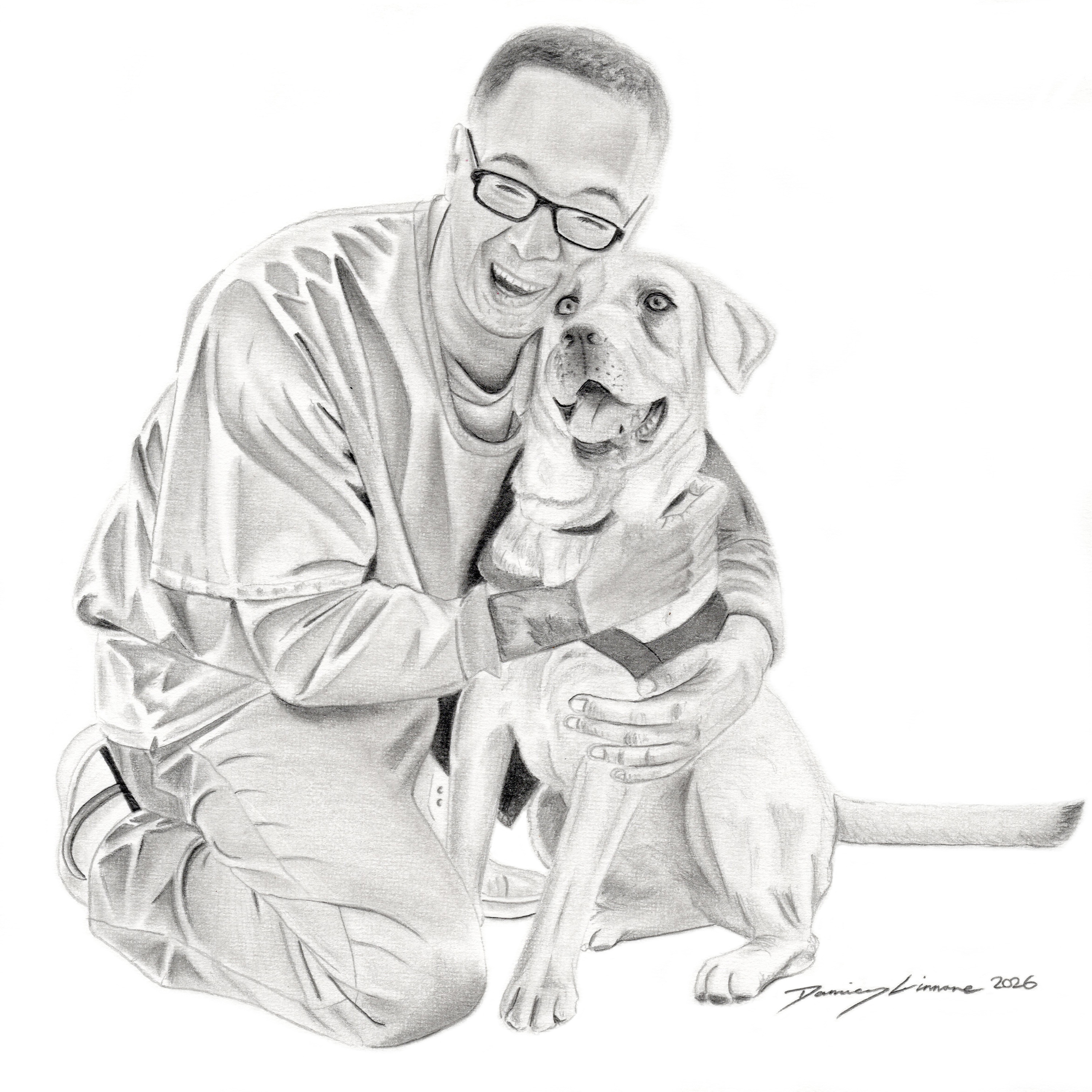
It was a few months back, and, you know, we know Vo that came off death row. He became a dog handler, and he has this little dog called maybe. She's like a golden Labrador. She was, like, three, four months, and she was kind of skinny, like, but nice, like, a little medium size, right? Maybe, like, what, 2ft long, 3ft long.
- [33:57]
H
I love little.
- [33:58]
F
Maybe she has, like, a short snout, big, like, brown eyes, and she looks at you like she's the happiest dog in the world, right? I really wanted just to hug her, so I squatted down and I asked Vo and, you know, I asked his permission, can I hug this dog? And she ran straight into me and then, like, bulldozed into me. So I'm squatted down, and her face is in between my legs, and she nuzzles her little snout into my hands. And then she starts pressing to me really hard. And I couldn't even help it, but my eyes started tearing up. Beau looked at me. He goes, hey, are you crying? And I go, yes, I think I am, because I just. I didn't realize how much I wanted to hug, like, this dog. So as I'm hugging her, she keeps nuzzling into me, and I'm, like, tipping over, right? She just keeps, like, pushing her face against my hands. Then she hooks this strap that they got around her face. I think it's called a lead.
- [34:58]
B
This is clear, right? I mean, the dog is wearing, like, a strap over her nose, right?
- [35:03]
A
It's kind of like a little Muzzle?
- [35:04]
B
Yeah, yeah, almost.
- [35:06]
F
And it unhooks. As soon as it unhooks, she turns around, runs off, and I go, what the fuck was that?
- [35:13]
A
Right?
- [35:14]
F
And then Bo goes, oh, she was just trying to use your hands to take the lead off her face. And I couldn't even help it. The first thing I said was, you fucking bitch. I was, like, so hurt, right? I thought, oh, man, she loves me. And then she just turned out to be a traitor. I just wanted to, like, have a connection, I guess, with another living being that wasn't judging me, didn't hate me, didn't have nothing against me. Apparently. She just wanted to use my hands, though, to, like, take the lead line off her face. But for a few sec, like 20 seconds, I felt like so close to something, and I. I just started crying.
- [36:09]
G
What's your name? Carlos. How long you been in prison?
- [36:12]
H
Four years.
- [36:13]
G
If you could hug anyone, who would it be?
- [36:16]
F
My mom.
- [36:17]
H
I haven't had, like, a touching hug in a long time, so I don't
- [36:20]
F
know, it's kind of hard for me
- [36:21]
H
to talk about right now.
- [36:25]
G
When I think about hugs, I think about my kids.
- [36:28]
H
When was the last time you hugged your kids?
- [36:30]
G
My son, he's in the Navy, so he's always deployed, so that's kind of hard.
- [36:34]
A
Yes.
- [36:35]
G
And then my other son, he's locked up with me. They put us together when we was in dvi.
- [36:39]
H
Okay.
- [36:39]
G
And then one night, they came and got him. They popped the door open. I gave him a hug, and I just couldn't let him go. The cop was like, he's got to go. And I was just like, I know he's my son, though I knew that might be my last time seeing him. Yes. You know, so, yeah, I hugged him. I kept on hugging him, even though the cops kept telling me, let him
- [36:56]
A
go, let him go.
- [36:57]
G
And I was like, I just ignored them.
- [37:09]
D
I went to an elementary school in Los Angeles called Russell Elementary School. Wasn't too far from where we lived, probably like a 10 minute walk.
- [37:20]
A
This is Latoya. She's also incarcerated at the Central California Women's Facility.
- [37:26]
B
The story she's telling takes place when Latoya was nine years old. And I remember this from when I was in elementary school, that every year there would be picture day. Right? And a couple weeks before that, every family was given this order form to fill out.
- [37:44]
D
Within that week of picture day. We had a week to turn in our money. You will put it in an envelope, and you would take it back to school after your parents Fill it out, pick which picture they want, sizes, and then the teachers will put it in the drawer. One day I just was on my way out from school and there was a lot of empty classrooms. And so I started with my classroom and checked the drawer and there was packets there. And so I took the packets, I stuffed them all in my backpack. Yeah. And walked fast home.
- [38:23]
B
When you were walking home with it, how did you feel with that in your pocket?
- [38:26]
D
I was anxious. I just couldn't even wait to get back home.
- [38:30]
B
Were you excited to tell your mom?
- [38:31]
D
I was so excited. I mean, I wanted new shoes,
- [38:36]
A
clothes.
- [38:38]
D
My mom always struggled. And so just to know that she was going to be excited that I had received some money, you know, I thought it was going to bring her a lot of joy and like, less stress.
- [38:53]
B
Do you remember how much money it was?
- [38:55]
D
It was like 180 bucks. It was a lot of money. I mean, 100 bucks for a nine year old. I mean, that's like, I'm rich. Took all the money out of the packets and just gave it to my mom. That was like the only time I can remember my mom really embracing me. I hadn't received that type of attention or affection from my mom. So it felt good. I was happy, I felt loved, I felt accepted by my mom. I had her attention and I received that hug. It was a really good feeling. And I continued to do that because that is something that was gonna please my mom. So let me do more of that.
- [39:42]
E
Yeah.
- [39:44]
D
That led me to jumping fences and looking in people's backyards with me and my brothers. And when we knew neighbors weren't home, we'll go in there in their home looking for food. When we did something that was bad, we were kind of acknowledged and that led us to continue. Then we came together and committed this crime and led us to prison.
- [40:15]
B
Do you remember the next hug in your life?
- [40:18]
D
Yeah. I have two daughters and they were the last people I hugged. My and my brothers. We committed a robbery that morning. I had dropped my daughters off at school and gave him a hug and watched him run into the the school. They were four and six years old.
- [40:45]
A
You never went back to pick him up?
- [40:47]
B
Nope.
- [40:48]
D
Because later, later on that morning, me and my brothers committed our crime. And from there we were arrested.
- [41:00]
B
What was the last thing they said to you?
- [41:03]
D
They reminded me that we were going to go have ice cream after. And I said yes for sure. And then the next time I seen them, they were already 18. They came here actually to come visit.
- [41:19]
B
Did you hug them?
- [41:20]
D
Oh, yeah, we hugged, we cried, we embraced. It was the most beautiful thing, biggest blessing ever in my life. We hugged for, like, a good five minutes and just cried and I cried. And they're 21 and 23, and they are still those little girls.
- [41:50]
A
Any little Boo Hoos over there, you know? Nah, I'm just, you know, I was stuck with the kids, you know what I'm saying? Like, I know they wanted the ice cream, but they got delivered a whole different. You know what I'm saying? Like, damn. Yep, that's deep.
- [42:05]
B
Yeah. See?
- [42:07]
A
Almost. Not really Almost telling you that resonates.
- [42:11]
C
Yeah.
- [42:12]
B
I mean, they aren't just corny stories. Earlonne. And we've got one more really beautiful hug story coming up.
- [42:18]
A
Yeah, this one's from San Quentin. Sammy and his friend Jorge.
- [42:23]
H
My name is Jorge Lopez. Jorge, I've been thinking your name was George all this time. It is George ever since Trump came into office, bro, I was born here. Okay? You know what I'm saying? Look, with Jorge, he don't care about none of that. Exactly. So I'm going by George for now. Okay, I see where we going with this. By the age of 14, I had got deeply into my crystal meth addiction. My mom had kicked me out because she couldn't put up with a lot of the stuff that I was doing. I was living on the streets, and I had no place to really stay. So I started to steal cars so I could try to provide for myself, not only to feed my addiction, but to try to get some of that money and get a motel. I found my way down on Auburn Boulevard in Sacramento, and I befriended a few hookers. I literally just asked him, like, hey, man, can y' all help me out? To rent a motel daily? Then little by little, man, we started being friends. We would go down the street to the ampm, buy scratchers, the slushies, and all this, right? They just knew I was still young, right? And so, bro, they did what they did. I did mine. Little by little, man, we started having this good relationship to where we would bond and we would just talk. One day, I was sitting at the edge of the bed, and I think they just knew I was going through it. I don't know if I was just on the comedown. The drugs wasn't working. I was unable to manage my emotions. And I remember I was using. I was using crystal meth at that time, but it wasn't doing anything to my body because after a while, just nothing works, right. I was sitting at the edge of that bed just Contemplating, like, what my life was looking like, what it has came to. What is it that I wanted to do with myself. Knowing I wanted to stop using, but I didn't know how. Knowing I wanted help, but I didn't know how to ask. For whatever reason, Miriam hugged me, right? She gave me a hug, bro. She came over, bro, and gave me that hug. She leaned in for a hug, bro, and it was on my right side. I remember she put her chest on my shoulder and just, like, wrapped me up. And I didn't react. I didn't react for a moment. At first, it was awkward, Extremely awkward. Because I don't really remember being hugged as a kid. At this moment in time, bro, it just felt like. It felt right. I felt comfort in that very moment, bro. I felt safe. I remember I hugged her back, and we hugged for, like, a while. I don't know if I reminded her of maybe a kid, maybe a little brother or whatever it was, man. But at that moment in time, bro, she reminded me of a mom and somebody that's actually, like, looking out for me. If you can go back and tell her right now how impactful that was to you at that moment, like, what would you tell her? First off, I'd like to say thank you. Cause all these years later, I still remember that hug, bro. I still remember that hug. I just want her to know that I appreciate her. I pray that she's made it out. And I want her to know that I still remember that hug, man. No matter what, I felt love that day, and she made that happen.
- [45:57]
B
Okay. Earlonne.
- [45:58]
D
Mm.
- [45:59]
B
Really? Was this a corny episode? Come on, now.
- [46:02]
A
It was very corny, Nigel.
- [46:04]
B
You know, I know what you're doing right now. You're deflecting.
- [46:08]
A
Oh.
- [46:09]
B
Because that one. How could that not go to your heart?
- [46:12]
A
I get the gist of it. It was okay. Story.
- [46:14]
B
Okay, lift your hat up a little bit so I can see your eyes. Cause you're hiding underneath.
- [46:18]
A
They're not glistening, I can tell you. They're not glistening, Nigel. So you love this episode is what you're saying?
- [46:24]
B
I think. I think it's. It's a potentially super corny topic that I would roll my eyes at, but instead I'm just going, yeah, put my hands over my heart.
- [46:37]
A
But maybe it's just me. Maybe. Maybe my heart is cold.
- [46:40]
B
No, I know you too well to say that.
- [46:42]
A
Okay. I think latoya is the one that really, really, really, really resonated with me. So I see that a lot, so I can relate.
- [46:53]
B
All right. All Right. Well, let's hug it out after this.
- [46:57]
A
All right, that's cool.
- [47:08]
B
Ear Hustle is produced by me, Nigel Poor, Earlonne Woods, Amy Standen, Bruce Wallace and Kat Shuknik.
- [47:14]
A
Shabnam Sigman is the managing producer.
- [47:17]
B
The producing team, Inside San Quentin includes Darrell Siddiq Davis and Tom Nguyen. The inside managing producer is Tony Tafoya.
- [47:25]
A
Thanks to Warden Andes at San Quentin, Acting Warden Parker, Associate Warden Lewis and Pio Lt. Avena at the California Institution for Women, and Warden Dela Cruz and PIO Lt. Vogel at the Central California Women's Facility for their support of the show. And as you know, every episode of Ear Hustle has to be approved by a public information officer. This week it's this woman here.
- [47:51]
B
I listened to the episode and I've learned that it's the little things that we take for granted. I hug my kids all the time, hug my grandson all the time, and so I look forward to other episodes where people can be vulnerable. And my name is Lieutenant Giamare Berry. I serve as the public information officer at San Quentin Rehabilitation center, and I approve this episode. This episode was sound designed by Bruce Wallace, Earlonne woods and Darrell Siddiq Davis. Fernando Arruda and Harry Culhane are our engineers.
- [48:28]
A
Music for this episode comes from Antwan Williams, David Jasse, Darrell Sadiq Davis, Bruce Wallace and me.
- [48:36]
B
For more information about this episode, check out the show notes on Ear Hustle's website, earhustlesq.com Ear Hustle receives support from
- [48:44]
A
the Just Trust, building a smaller, more humane engine of justice and safety across the country.
- [48:50]
B
Ear Hustle will always be free, but if you want more Ear Hustle without ads, sign up for Ear Hustle Plus. You'll get fun bonus content and you'll be supporting our team.
- [48:59]
A
Sign up@earhustlesq.com or directly in Apple Podcasts.
- [49:05]
B
Ear Hustle is a proud member of Radiotopia from prx, a network of independent creator owned listener supported podcasts.
- [49:13]
A
Discover audio with vision at Radiotopia fm.
- [49:17]
B
I'm Nigel Poor.
- [49:18]
A
I'm Earlonne Woods. Thanks for listening.
- [49:24]
F
You know what? You look like a pretty big guy, right?
- [49:26]
A
Yeah.
- [49:27]
G
Can you hug? You can't even reach his arms around his shoulders. He's so buff that you can't even touch your back with your. With your fingertips. It go just to your armpits. That's it.
- [49:42]
A
Hey, listeners, don't forget to donate today to help us reach our goal of 1,000 donors.
- [49:47]
B
Exactly. And every single gift helps us get closer to our goal.
- [49:51]
A
Head to earhustlesq.com donate to learn more and make your tax deductible. Heard that. Tax deductible donation. It only takes a minute and you can even use Venmo.
- [50:04]
B
Venmo? Are you serious?
- [50:05]
A
We making it easy.
- [50:06]
B
Whoa. Anyway, thank you so much for supporting our show.
- [50:13]
A
Radiotopia
- [50:16]
B
from prx.