← Ear Hustle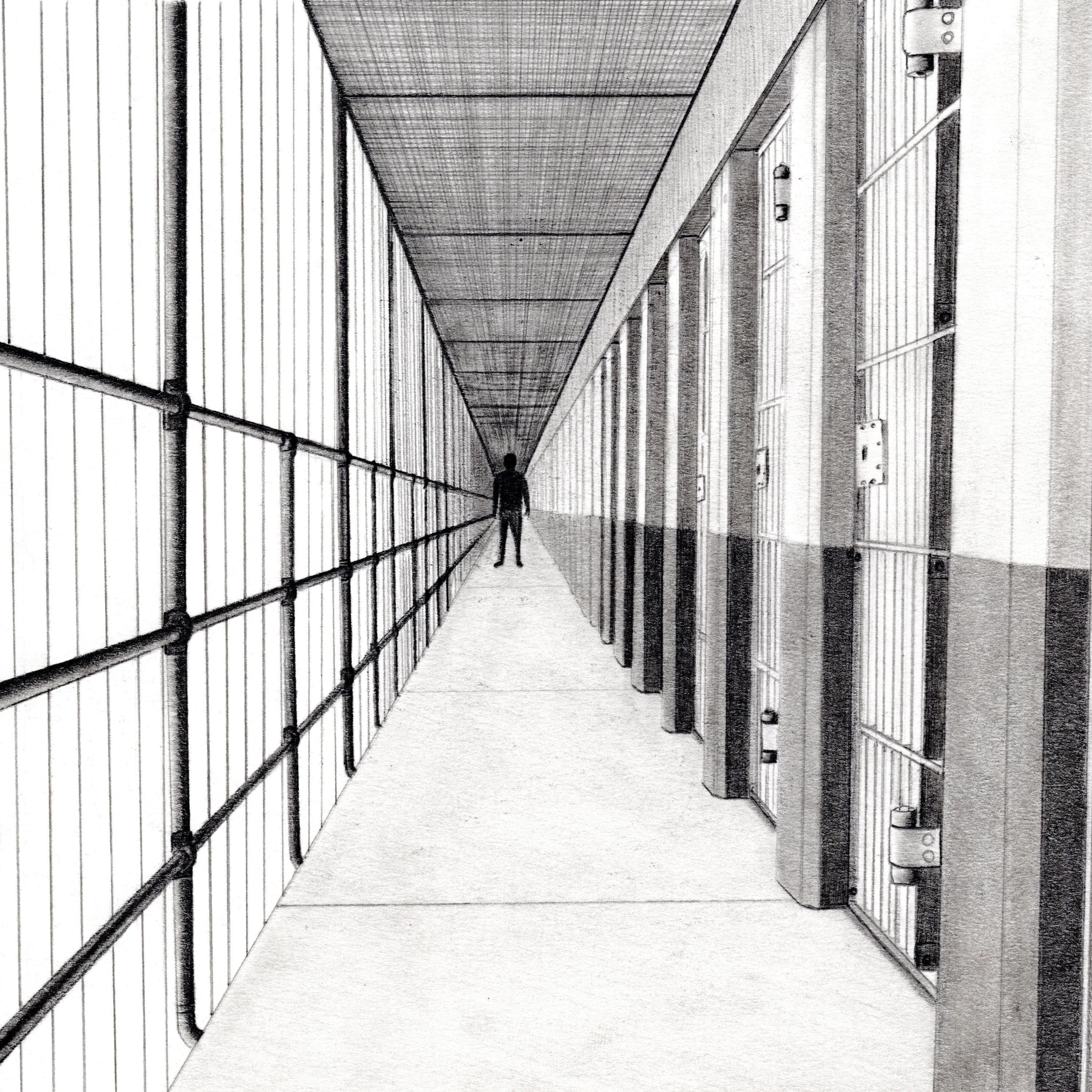
Ear Hustle
My Understanding of This Place, Part 1
00:48:49
Nigel takes Earlonne on a mystery tour of San Quentin.
Loading summary
Transcript404 lines
- [00:00]
Earlonne Woods
Hey, listeners. We are cooking up something really fun for next season, and we need your help.
- [00:05]
Nigel Poor
You might remember that for the last couple seasons, Earlonne and I have been producing mystery episodes.
- [00:11]
Earlonne Woods
That's when me and Nige each come up with a story idea, and we work on it in secret until we reveal it to each other in the studio when we're recording narration.
- [00:21]
Nigel Poor
And I love doing these. It's so much fun to surprise each other, and it gives us the opportunity to each explore a subject that intrigues us.
- [00:28]
Earlonne Woods
This season, we're adding a twist, and that's where you come in.
- [00:32]
Nigel Poor
Is there a story you've always wanted to hear on Ear Hustle, A topic you wished one of us would explore? Well, here's your chance to shape an upcoming episode.
- [00:41]
Earlonne Woods
All you gotta do is email us an idea. It could be something really specific, like you wanna hear a story about someone who had to lose a lot of weight in prison?
- [00:51]
Nigel Poor
Or it can be more abstract, like, what do people think about when they first wake up in prison? Maybe even on their first day in prison. And remember, it's a story idea for Earlonne and a story idea for me. So different ideas.
- [01:06]
Earlonne Woods
If your idea is selected, you will be invited to join us via Zoom and be the third host when we record narration in the studio.
- [01:14]
Nigel Poor
This is going to be great, and it's also going to give us a chance to do something really meaningful with our listeners.
- [01:20]
Earlonne Woods
So send your idea to infoearhustlesq.com and the deadline is January 15th.
- [01:27]
Nigel Poor
That's infoearhustlesq dot com by January 15th. And I cannot wait to find out what my story idea is gonna be.
- [01:36]
Earlonne Woods
I know what I'm gonna give.
- [01:37]
Nigel Poor
No, you don't.
- [01:38]
Earlonne Woods
It's gonna be gang related. Why?
- [01:39]
Rahsaan New York Thomas
Shh.
- [01:40]
Nigel Poor
No hands.
- [01:45]
Rahsaan New York Thomas
Hello, this is Rahsaan, New York. Thomas, producer with Ear Hustle, co director.
- [01:50]
Earlonne Woods
Of the San Quentin Film Festival and.
- [01:52]
Rahsaan New York Thomas
Executive director of Empowerment Avenue.
- [01:55]
Earlonne Woods
The following episode of Ear Hustle contains language that may not be appropriate for all listeners. Discretion is advised.
- [02:15]
Nigel Poor
It's Thursday, 7am and I'm sitting in the San Quentin parking lot looking out at the bay. I haven't done this in a long time. I'm going in to meet the guys down in the media lab, and we're going to do something we've never done before, which is to go into East Block Death Row. Well, I guess, can I say it's formally death row, because they're closing it down and they moved everybody out and we've got permission to go in and look around. And record before they clean it out. So what do you think?
- [02:56]
Tony Tafoya
Spooky.
- [02:57]
Earlonne Woods
Is this a Halloween episode?
- [02:58]
Nigel Poor
No, it's not. But I can see why you think that.
- [03:01]
Earlonne Woods
So I wanna ask questions, but I don't wanna ask the questions. Cause it may come out right.
- [03:05]
Nigel Poor
Right, right.
- [03:06]
Earlonne Woods
So I'll hold back. But first, nyj, I think we should probably explain what these mystery episodes are.
- [03:12]
Nigel Poor
So for the mystery episode, this is our second season where both you and I select a story we wanna work on kind of solo, without the other, and we keep it a secret until the day we come in, which is right now. So everything is unknown to you at this point, and when you do your mystery episode, next time I won't know anything. So it's just kind of a fun way to stir things up.
- [03:36]
Earlonne Woods
Okay.
- [03:37]
Nigel Poor
And it's exciting. I was really looking forward to presenting this one to you. So here we are. It's the east block story. But you know Earlonne, the east block renovation? Yes, but you know me. That might not be all it's about.
- [03:49]
Earlonne Woods
Okay, all right, I'm listening. Did you get the walls to talk?
- [03:56]
Nigel Poor
Oh, my God. Quite possibly.
- [03:59]
Earlonne Woods
Okay, all right.
- [04:01]
Nigel Poor
You know, you're pretty intuitive. I'm Nigel Poor.
- [04:06]
Earlonne Woods
And I'm Earlonne woods.
- [04:08]
Nigel Poor
And this is ear hustle from TRX's Radiotopia. I need you to help me explain this, because there's been a big change at San Quentin when it comes to death row.
- [04:25]
Earlonne Woods
Right.
- [04:26]
Nigel Poor
And I think you understand this better than I do. Okay, so what happened?
- [04:30]
Earlonne Woods
All right, so first of all, there's currently a moratorium on executions. And that happened under Gavin Newsom when he became governor of California in 2019.
- [04:41]
Nigel Poor
Okay, but people can still receive the death penalty as a sentence. Right?
- [04:45]
Earlonne Woods
Right, right. Yes, they can. In fact, there are still about maybe 700 people in California with the death sentence.
- [04:53]
Nigel Poor
Okay.
- [04:54]
Earlonne Woods
And in 2016, the voters passed a law that said these people need to work so they can pay restitution to their victims.
- [05:03]
Nigel Poor
Okay.
- [05:04]
Earlonne Woods
So to do that, they need to be part of a mainline in the prison where the jobs are at.
- [05:09]
Nigel Poor
Right. And so in San Quentin, because at the security level, they couldn't leave their cells, so they couldn't get to those jobs.
- [05:16]
Earlonne Woods
Right. San Quentin don't have a high enough. So all of the individuals that were on death row were moved to other prisons within the state so they can start working and pay back the restitution or pay restitution to their victims.
- [05:29]
Nigel Poor
Right. And so death row was closed.
- [05:31]
Earlonne Woods
Death row where they was housed at for the last 40 something years was closed, dismantled. Yes.
- [05:39]
Nigel Poor
It's huge. And so that means all of a sudden, inside San Quentin, there's this whole block that's now empty. So not just me, the whole inside team really wanted to see this empty block.
- [05:52]
Earlonne Woods
Really?
- [05:52]
Nigel Poor
We talked about it endlessly. Okay. But before we did that, I just stood in the parking lot for a while, kind of thinking about what the experience would be like. East block has always been an unknowable area to me of the prison. I say it's unknowable, but I walk by it every time I go into the prison, and I could always hear people there exercising, but I could never really see anybody. So I know it by sound, and I know it by reputation, and I know it by the stories that have been told around it. I guess it's embedded itself in my imagination and in the imagination of a lot of guys inside San Quentin. If you believe that physical areas hold the experience of what's happened in there, I imagine there's a swirl of things in that place. I'm sure it's haunted by memory loss and sadness, Hope, remorse. Yeah. All right, time to go to the media lab, see the two Tonys, Tom and Siddiq. The thing that I really like about this is that we're gonna have an adventure together. Obviously, you can't just walk into east block on your own. So we had to arrange with Lieutenant Barry to escort us there. And, you know, she's super busy. Right. So it starts off in the morning with just me and Siddiq and Tony de Foia just waiting in the media lab, hoping that this thing was actually gonna happen. What are we about to do?
- [07:42]
Rahsaan New York Thomas
So we're going to go into death row. Well, it's not even called death row anymore. We're going into east block. The condemned row.
- [07:48]
Nigel Poor
Yeah.
- [07:49]
Rahsaan New York Thomas
And we're going to see all the stuff that they left behind and how it used to be in there.
- [07:53]
Nigel Poor
What do you like when you think about it? What's in your imagination?
- [07:56]
Rahsaan New York Thomas
Ghosts. A lot of history. A lot of scary stuff going on in there. A lot of. Just a lot of baggage in there. I could just imagine.
- [08:06]
Nigel Poor
Yeah. What. What is your understanding of that place?
- [08:12]
Rahsaan New York Thomas
My understanding is that this is a place where everybody goes to die. Literally. Like, this is the execution area. It's been a lot of deaths over there. It's been a lot of. A lot of violence. A lot of just misery over there. Anytime we used to look over there, they tell us to turn our heads so we couldn't really peek around the corner.
- [08:32]
Nigel Poor
But yeah. What do you think, Tony? Like, what's the feeling? What's gonna be on the floor? What does it look like?
- [08:40]
Tony Tafoya
Do you remember the big searches that they always do at any housing unit right after they're done with a massive search?
- [08:46]
Rahsaan New York Thomas
It just leaked stuff everywhere.
- [08:47]
Tony Tafoya
Leached everywhere.
- [08:48]
Rahsaan New York Thomas
Yeah.
- [08:48]
Tony Tafoya
So I think there's just gonna be stuff everywhere, right? Just things thrown out of cells. I think there's gonna be T shirts, places, blue shirts, blue pants, just all over the ground. It's probably gonna be a lot of dust. I think it's gonna have this, honestly, like, a deep sadness.
- [09:08]
Nigel Poor
Do either of you believe that places hold onto the memory of what's happened there?
- [09:13]
Rahsaan New York Thomas
I believe so, yes. I believe it lives in the building. Yeah, definitely. And I heard a lot of people didn't want to leave. It was a lot of screams and yelling. So a lot of that stuff is still there.
- [09:25]
Nigel Poor
Why do you think people didn't want to leave?
- [09:29]
Rahsaan New York Thomas
It was comfortable. This is all they knew. They thought they was going to die here. So for you just to up and take them away, it's like. And then you have to remember that These guys spent 30, 40 years by themselves. So now to go out to a mainline and to set up with someone, it is scary. It's like, what am I supposed to do? How am I supposed to react?
- [09:55]
Nigel Poor
I'm like, nervous energy about going up there, But I do really want to see how people lived. I'm really curious about what's left behind, and I'm really glad that we're doing it together because we'll have a shared experience about doing something we've never done before.
- [10:09]
Tony Tafoya
Oh, Barry's on the phone.
- [10:10]
Nigel Poor
What? We got to go.
- [10:11]
Rahsaan New York Thomas
Okay. Got to go.
- [10:12]
Nigel Poor
We got to go. We just got the call from Barry. We are going. Is the equipment ready?
- [10:16]
Tony Tafoya
I don't know where the just called.
- [10:20]
Nigel Poor
We have to be.
- [10:20]
Tony Tafoya
We have to go now. Okay.
- [10:22]
Nigel Poor
Okay. So this narrate what we're doing. Okay, so it's the two Tonys and Sadiq and me, and we are heading up to Eastbach. We were just, like, casually recording ourselves, and then we got the call from Barry. You need to be up there immediately. And luckily, Tony was just heading down here. We would have had to leave him behind. Yep, Saint Pablo's here too.
- [10:43]
Rahsaan New York Thomas
I was trying to run to catch you guys.
- [10:45]
Nigel Poor
So what are you imagining, Tony? What are you imagining?
- [10:49]
Rahsaan New York Thomas
I think it'll be a very desolate place. Looks like. Like someone just abandoned something after an earthquake.
- [10:56]
Nigel Poor
You think there's gonna be ghosts up here?
- [10:59]
Rahsaan New York Thomas
We won't see them though. It's daytime.
- [11:01]
Nigel Poor
So ghosts are sleeping.
- [11:03]
Tony Tafoya
They don't live in the day.
- [11:04]
Nigel Poor
I don't know if ghosts are nocturnal. Okay, so what should our plan be? Because we only have one mic. Stay close. Stay close. For a couple reasons.
- [11:14]
Rahsaan New York Thomas
A couple reasons.
- [11:15]
Nigel Poor
Sadiq and I are going to stay close.
- [11:17]
Rahsaan New York Thomas
Yeah, it's going to be real ghostly in there.
- [11:21]
Tony Tafoya
This is going to be fun.
- [11:23]
Nigel Poor
Are you going to touch anything?
- [11:25]
Rahsaan New York Thomas
Yeah, yeah, why not?
- [11:27]
Nigel Poor
I want steal stuff. I know. I want to collect things too.
- [11:31]
Earlonne Woods
See, you want to go in for totally different reasons than them.
- [11:35]
Nigel Poor
What do you think the reason they're.
- [11:36]
Earlonne Woods
Trying to go in and find some clothes? Because the guys on death row used to have all the button up shirts. They used to have the jeans. So they trying to see if they got a pile of that stuff in there somewhere.
- [11:48]
Nigel Poor
Uh huh.
- [11:49]
Rahsaan New York Thomas
I grabbed a few items.
- [11:51]
Nigel Poor
I'm trying to get a nice new shirt maybe. No. Ew.
- [11:54]
Earlonne Woods
You want to wear a shirt?
- [11:55]
Nigel Poor
Huh?
- [11:56]
Rahsaan New York Thomas
A condemned shirt? I would wear a blue shirt like.
- [11:58]
Tony Tafoya
That if it's like the button up.
- [12:00]
Rahsaan New York Thomas
Yeah. It's a condemned shirt.
- [12:02]
Nigel Poor
It's not the shirt that was condemned, it was the person. Okay. Earlonne. So it took a while obviously, but we finally got to East Block with almost the whole team. We had.
- [12:13]
Earlonne Woods
It sounded like Tom was missing.
- [12:15]
Nigel Poor
Exactly. Yeah, we just. Exactly. We just had the two Tonys, Sadiq, and then San Pablo, our friend in the media lab. Right, okay. So we're at the entrance to Eastbock. We're at the door that says east block, condemned row. You want to try to describe it from the outside?
- [12:33]
Rahsaan New York Thomas
Yes, it's like a big building and on the doors it says east block condemned. So it looked like an old rusty building that's been around since the 17, 1800s. And it's very long and it looks like it's like a few stories up, like five stories up.
- [12:49]
Nigel Poor
Hey, Tom. Tom just got here. How are you feeling?
- [12:53]
Tom Trinidad
I got a head cold.
- [12:54]
Nigel Poor
I'm sorry.
- [12:55]
Earlonne Woods
Is that Tom or is that the ghost of Tom?
- [13:01]
Nigel Poor
So we've just been talking about what we think it's going to be like in there. What do you think it's going to be like inside?
- [13:05]
Tom Trinidad
I feel like it's going to be haunted. There's like generations of people that have been in there for like 30 years. They died. And I hope I see a ghost. Make it more entertaining.
- [13:14]
Rahsaan New York Thomas
Here comes Barry too. We just beat her. We was walking so fast. We beat her. Here's Barry in her Celtics gear. She got her Celtics gear. Ready for the finals today?
- [13:23]
Nigel Poor
You're a Celtics fan? Die Hard. What?
- [13:27]
Rahsaan New York Thomas
Wow. We're gonna head into East Black right now.
- [13:31]
Nigel Poor
I believe they're cleaning it, but we can head in and take a look and see what we see, and we can just. We can walk around. Yep.
- [13:39]
Earlonne Woods
Okay, you can walk around.
- [13:41]
Nigel Poor
Just document what you see. Let's do it.
- [13:44]
Rahsaan New York Thomas
Okay, you ready?
- [13:45]
Nigel Poor
All right.
- [13:45]
Tom Trinidad
Pretty excited.
- [13:46]
Nigel Poor
Yeah, we're all excited. We're anxious. Do you think it's weird that we're excited to go in here? No, not at all.
- [13:54]
Earlonne Woods
Because it's east block.
- [13:55]
Nigel Poor
It's a historic area.
- [13:58]
Rahsaan New York Thomas
We have 30 minutes to move around.
- [14:00]
Tony Tafoya
Should we start the TR down right now? There's an incarcerated worker cleaning everything.
- [14:06]
Rahsaan New York Thomas
I hope they left something for us.
- [14:10]
Nigel Poor
To go closer.
- [14:28]
Earlonne Woods
And who was that? Was that Tom or. That's the Trinidad? No, Sadiq. Who? Oh, Tony.
- [14:38]
Nigel Poor
I love that song.
- [14:41]
Earlonne Woods
Was he trying to be Sam Smith or was he trying to be a ghost? He sounded like a ghost.
- [14:52]
Nigel Poor
So remember I told you that it might not all be about death row and east block?
- [14:57]
Earlonne Woods
Yeah.
- [14:57]
Nigel Poor
So here's our first little detour. Okay. All right, let's describe where we're going right now.
- [15:05]
Tony Tafoya
Okay. So we just got up to the chapel, and right now we are walking.
- [15:10]
Earlonne Woods
Wait, wait, wait, wait, wait.
- [15:11]
Nigel Poor
Yeah. Yeah.
- [15:12]
Earlonne Woods
Is this chapel in death row?
- [15:15]
Tony Tafoya
Nope, on the left. It's set up like a horseshoe. The Count gate. And the opening to the free world is beyond that. Visiting in that door.
- [15:27]
Nigel Poor
Do you realize where we are now?
- [15:29]
Earlonne Woods
I believe y'all are at the Garden Chapel.
- [15:32]
Nigel Poor
Yes, exactly.
- [15:33]
Earlonne Woods
I believe y'all are in that manicured area.
- [15:36]
Nigel Poor
Exactly. So we went into where the different offices are for people who work in the chapel, and we went into this very drab, small office where Tony spent a lot of time. Earlonne. This is really what the episode is about. It's an episode about spaces, and some of them are notorious, like east block, where death row was. And some of them are these just very ordinary, humble spaces where people spend a lot of time. And what I wanted to look at in this episode is how memory transforms spaces. So first we're visiting a space that holds memory for Tony Tafoya, you know, on our inside team.
- [16:17]
Rahsaan New York Thomas
Right.
- [16:17]
Nigel Poor
So we're going to visit his memory place first. And how much time do you spend here now?
- [16:26]
Tony Tafoya
I don't spend as much time as I used to, but during when I first got to this prison, and then during COVID I spent probably 12 hours a day up here.
- [16:35]
Nigel Poor
All right, so let's go see what's special about this place for you. Hello, Rabbi. So the rabbi's opening the door for us, and we're going to step inside. Thank you. Thank you. Siddiq. Can you describe what's in here?
- [16:52]
Rahsaan New York Thomas
Yeah. So in this office, it's a coffee pot. We have a cabinet, like a miniature cabinet there. We have a bookshelf. We have a desk. We have two chairs. And it's not really big in there. It's kind of small. So it seems like it can get real hot in there.
- [17:13]
Nigel Poor
Yeah, it does. It's about half the size of a cell here.
- [17:17]
Rahsaan New York Thomas
Yeah, about half the size. And plus, you have the sun beaming right on it, so I know it's hot.
- [17:22]
Nigel Poor
When you think about this place, what sort of visuals do you get if.
- [17:27]
Tony Tafoya
You sit in there and you look out the window? One, you have a window that opens. I can open that window, so there's control over that. And two, when you look up, you don't see prison. You see this amazing palm tree. It's a small one, but that palm tree with the sun kind of coming through it and it being separated with the light. So, like, the light shining through, and then it kind of rays around the palm tree and it comes into the office. I don't know. I just. You don't see barbed wire, you don't see fences. So I feel free.
- [18:10]
Nigel Poor
Okay, so what are you doing?
- [18:11]
Tony Tafoya
Lowering the blinds.
- [18:12]
Nigel Poor
And what did that do?
- [18:14]
Tony Tafoya
It allows you to have a real sense of comfort and privacy.
- [18:19]
Nigel Poor
Well, it also just created such gentle, soft light.
- [18:21]
Rahsaan New York Thomas
Yeah.
- [18:23]
Nigel Poor
And look at Sadiq's smile. Yeah.
- [18:25]
Rahsaan New York Thomas
You can control the light. You can control a whole lot with just those blinds. A whole lot.
- [18:33]
Nigel Poor
So what memories do you think are left in this space?
- [18:37]
Tony Tafoya
I was in San Diego for, like, four or five years at Donovan, and it doesn't really rain down there. And when it does, you're not really outside. And up in Northern California, where I love the rain, you kind of feel like you want to be more in it and more involved with the rain. It was probably the first time it had rained. I throw the window all the way open so I can get a big, fresh breeze and the smell of rain. I could actually listen to the rain falling off the leaves of that palm tree. For my birthday, my mother had stationary made for me with my name on it. And so I would sit down and I would write. I would write letters to everybody, and I would specifically tell them that I am sitting at a window watching the rain roll off of a palm tree right now. And I never, ever thought that was possible. In prison, I guess music wise, I'm saying it. Cause I love myself some Taylor Swift. The folklore album from Taylor Swift is like, the vibe that it gives me. Like, wearing a cardigan on a cool day, drinking really good coffee and awesome teas. Shout out to all the tea places in San Francisco.
- [20:10]
Nigel Poor
The longer you stay in a space and you talk to somebody about it, the more it reveals to you. Like, I think when we first walked in here, we were like, yeah, okay, yeah.
- [20:17]
Rahsaan New York Thomas
Yep. But Tony has a lot of memories here, and he brought out those memories, and you can kind of, like, see it.
- [20:22]
Nigel Poor
You start to see it through his eyes.
- [20:28]
Earlonne Woods
Outside of the cell, those type of spots are, you know, the peaceful spots.
- [20:33]
Nigel Poor
And not everybody gets one.
- [20:35]
Earlonne Woods
Not everybody gets that. Yeah. I think he made that space into a Tony space.
- [20:42]
Nigel Poor
Yeah, absolutely. And I love how he could control the light. And that was a big deal for him. And then listening to this, I'm realizing that the majority of people inside San Quentin don't even realize that some people have these really private spaces.
- [20:55]
Earlonne Woods
Just seldom let you get a space that you can just have for you.
- [21:16]
Rahsaan New York Thomas
All right, we're back on. We're going on back to the media center. Going to my secret space.
- [21:24]
Nigel Poor
Oddly enough, when Siddiq said his special place was the media lab, I was a little bit disappointed. I don't know, just because we work there all the time. And I was trying to imagine how it was gonna feel like a secret space for him, you know? So I didn't tell him. I was disappointed. I really kept that to myself.
- [21:44]
Tom Trinidad
He'll hear.
- [21:44]
Nigel Poor
He'll hear it now. So, of course, you know the way out of San Quentin. We walk down those stairs. I'm always afraid I'm gonna fall down these stairs.
- [21:52]
Tony Tafoya
I know people who have you would get hurt.
- [21:55]
Nigel Poor
And then Sadiq Earlonne told me, don't ever touch that rail. Because I used to always hold. He's like, don't do that. And then. Do you know Earlonne has had a little thing he would do when he.
- [22:06]
Rahsaan New York Thomas
At the bottom.
- [22:07]
Nigel Poor
Yes. Do a lot of people do that? Is it like a good luck thing.
- [22:11]
Rahsaan New York Thomas
You do it every now and then? I do it.
- [22:16]
Nigel Poor
Earl, you got to explain this.
- [22:18]
Earlonne Woods
So there's this rail that's in the middle of a walkway, one side coming down, one side going up. And at the very bottom, there's like, this little ball thing. And at the bottom of it, it has a hole in it. And I guess one day I was going up it, and I felt this, like, little rock or something inside of It. And I couldn't pass going up them stairs without hitting that rock. For some reason, it just became a thing, you know, it was just something to do when I go up the stairs and just hit the little rock inside. Boop. And keep going.
- [22:49]
Nigel Poor
And it makes that great jangling sound, Right?
- [22:53]
Earlonne Woods
Jiggle, jiggle.
- [23:01]
Nigel Poor
Hey, what's up, Nigel?
- [23:03]
Tony Tafoya
Look how packed the yard is.
- [23:05]
Nigel Poor
It is so busy today.
- [23:09]
Rahsaan New York Thomas
So usually we walk past the first gate. It's like a bunch of clearances. You go through the first gate, and from the first gate, you go to what they call a building, which is the main education building. I drop off my ID there, and right next door is the media center office.
- [23:27]
Nigel Poor
Listeners probably don't know this, but the media lab is not a place that everyone has access to. No, right. I mean, do you think it's fair to say you kind of have to earn the privilege to be able to go down there?
- [23:40]
Earlonne Woods
Well, I would say you would have to have business in there. Like, you would have to be a part of one of the programs, be it San Quentin tv, be it San Quentin newspaper. You had to be in something that goes in there.
- [23:54]
Nigel Poor
So it is a little exclusive.
- [23:56]
Earlonne Woods
It's very exclusive. It's Members only.
- [23:59]
Nigel Poor
Members Only club.
- [24:00]
Earlonne Woods
Members Only club.
- [24:04]
Nigel Poor
If you were somebody who didn't come down here, what do you think people assume happens down here? And what is it like to be down here?
- [24:10]
Rahsaan New York Thomas
Right. So some people are not really sure what goes on. They just hear stories.
- [24:16]
Nigel Poor
What do they think the vibe is down here?
- [24:18]
Rahsaan New York Thomas
So they feel like it's a bunch of entitled, incarcerated people working down there. They don't want anybody in.
- [24:27]
Earlonne Woods
Entitled, huh?
- [24:28]
Nigel Poor
Entitled.
- [24:30]
Earlonne Woods
See, when I was there, I don't think it was like that.
- [24:32]
Nigel Poor
It's changed so much. Earlonne.
- [24:34]
Earlonne Woods
It was a space away from the yard. Like, you know, one of the things you always say where outside and inside people collaborate on something, you know, that's what that space was.
- [24:44]
Nigel Poor
Let's go see the reality of it through Sadiq's eyes.
- [24:48]
Rahsaan New York Thomas
Let's do it. It feels so good in here. I love being in here. One of the reasons I love being in here is that it's like I get away from everything, you know, I don't have to really worry about what's going on in the yard, if they searching the buildings, if I can get a shower or anything that's related to the incarceration population, I can just focus on what I need to focus on. If it's reading, if it's studying for, you know, the board or studying for court or studying for class. I can get that done down here. And the reason I can get that done is because we have headphones. Having those headphones allowed me to just tune out anything around me. And that makes it easy for me to just be in my own world.
- [25:43]
Nigel Poor
Describe the space, the colors, the smells, the textures.
- [25:46]
Rahsaan New York Thomas
A bunch of white walls. So we have paintings on the wall. We have an Ear Hustle logo on the wall. We have the awards hung up on the wall. The Peabody Award nominee, the National Magazine Awards. I just love looking at that award right there. We have Nigel and Airline picture hanging up. We have five computer stations. We have the mic for the recording sessions. We have speakers and we have a bunch of chairs in here.
- [26:17]
Nigel Poor
Listening to this with you now, it makes me feel really nostalgic.
- [26:22]
Earlonne Woods
Oh no, it's the spot. You know, it's a fertile ground place, you know what I'm saying? Where, you know, I don't want to say dreams can happen, but it's a place where things can happen.
- [26:33]
Nigel Poor
Yeah.
- [26:34]
Earlonne Woods
So.
- [26:34]
Nigel Poor
Well, they did for us.
- [26:36]
Earlonne Woods
Yeah, definitely.
- [26:38]
Nigel Poor
I mean, I would never wish you back there, but it does remind me of like those years were so important.
- [26:43]
Earlonne Woods
No, definitely, definitely. It was a. It was a. The changing.
- [26:47]
Nigel Poor
Yeah. Yeah.
- [26:50]
Rahsaan New York Thomas
And what I love so much about this room is that it's quiet. It's nice and quiet. It smells fresh. You know, I don't have a stench. I'm able to catch these aromas of nothing, which I love. And sometimes I can hear the clock. That's how quiet it is in here. And I love that I'm always down here. Like I get down here like 6:55 and I just wait. I wait for the. The gate to open at 7:00. And then if I don't have class or practice or anything, I'm down here till 7:45. So I'm always down there. Even when I didn't have this job, even when I didn't have a job assignment for the media center, I was still coming down here like 6:55, just beating everybody down here to clean up, just to let people know that I want to be in here. It's a lot of memories here. It's a lot of struggle here, you know? So why would you want to leave a place that you done made all of this here?
- [27:50]
Nigel Poor
We need to explain what he's talking about. So there's this plan to build a new media center at San Quentin which is part of the California model that Governor Gavin Newsom is spearheading in the state. So once the new complex Gets built inside San Quentin. We will actually move out of this media center into a brand new building that's gonna be state of the art.
- [28:12]
Rahsaan New York Thomas
Yeah.
- [28:12]
Nigel Poor
Yes. The way they describe it. So that's what he's mentioning here, this idea of leaving place where everything started. I feel a little like, I don't know, a little bit sad about that.
- [28:23]
Earlonne Woods
Well, I mean, you know, it might not have that scrappiness to it, but it might be great. It might be a new start on something.
- [28:31]
Nigel Poor
Yeah, it'll be different, but it won't be our place. I really believe in the power that a space accumulates over time. And so much has happened here. So I feel like we're going to be going to a blank slate and it will take a while to make it our own. But when I come in here, for me, this is like, this is our space and it feels like our space.
- [28:56]
Rahsaan New York Thomas
Yeah, you get comfortable as soon as you come in.
- [29:01]
Nigel Poor
If we stopped using this room, what would we leave behind in here for people?
- [29:05]
Rahsaan New York Thomas
I think that it would just be a sense of professionalism. I think it would be a sense of just feeling welcome and at home. This place brings that welcoming feeling. Just coming in here. I remember when I was on the outside looking in, just seeing you guys come in, I always wanted to just peek through the door. I was always happy when y'all came in. You know, even if y'all probably had disagreements, I couldn't tell. So that's something that I think this room is gonna leave.
- [29:40]
Nigel Poor
I'm always trying to pinpoint what is the joy that I associate with coming in here. To hear you say that, you also see that sense of joy. And I wonder what. What accounts for that feeling.
- [29:54]
Rahsaan New York Thomas
When you're around positive people, positivity just happens when you have that aura of goodness around you, it just comes in you.
- [30:04]
Nigel Poor
This is one of the reasons I think it's joyful in here. When you're around people that are collaborating and working together, you feel really alive. And so it's like a communal spirit that happens.
- [30:17]
Rahsaan New York Thomas
Yeah, I totally agree with that. Because it's like we're all in sync. We're all tuned in at one time. And I don't know if it's like that on the outside, but in here, it's like we all together and we all working to get to this one common goal. And our brains, it's like clicking at the same time.
- [30:37]
Nigel Poor
Does it sound familiar?
- [30:38]
Earlonne Woods
No, it definitely does. You know, and you know, people might not understand these type of areas in society, but I think for Us. And for them, it was a place to where you had the time to be hella creative. It was a place where you could really do stuff differently, move differently. It was definitely a place to give you the opportunity to be the best you could be.
- [31:02]
Nigel Poor
I'm glad. I mean, I'm glad that the new people on the team get to have that feeling. But it does remind me, and I sometimes need to be reminded of like, what an incredibly special creative time that was. And even though horrible things were happening, you were in prison.
- [31:19]
Earlonne Woods
Right.
- [31:20]
Nigel Poor
It's pretty hard to really explain what those years were like, starting your hustle. And it's cool to think that's left behind for other people to experience now.
- [31:30]
Earlonne Woods
I think we did our shit, Nige.
- [31:32]
Nigel Poor
I'm with you. I really do. So we've got one more stop on this tour, but first it's about time.
- [31:40]
Earlonne Woods
We took a break so we can pay a bill. I can go to get some water.
- [31:45]
Nigel Poor
Exactly.
- [31:47]
Earlonne Woods
And come on back.
- [31:48]
Nigel Poor
So when we come back, there's something I'm really excited for you to hear. Earlonne. So we're going to go to a place that is familiar to you.
- [31:56]
Earlonne Woods
Okay.
- [31:56]
Nigel Poor
But I think after our stop there, you might see it and even hear it in a slightly different way.
- [32:03]
Earlonne Woods
Huh. So they got new light bulbs and new speakers.
- [32:07]
Nigel Poor
Maybe.
- [32:15]
Rahsaan New York Thomas
Happy January, Naj.
- [32:17]
Nigel Poor
What? You can't say Happy New Year. Yeah, we supposed to say Happy New Year. Happy New Year to you. Rahsaan, New York. Thomas.
- [32:23]
Rahsaan New York Thomas
Thank you.
- [32:24]
Nigel Poor
I am super excited to tell you listeners about Radiotopias newest show, Hyperfixed.
- [32:30]
Rahsaan New York Thomas
Hosted by former Reply all co host Alex Goldman. Hyperfixed is a podcast where you, the.
- [32:35]
Earlonne Woods
Listener, write in with your problems and Alex solves them. He tackles everything from the origin of.
- [32:41]
Rahsaan New York Thomas
A mysterious button to whether a listener should have kids or not.
- [32:45]
Nigel Poor
This gets pretty personal.
- [32:46]
Tony Tafoya
That's crazy.
- [32:47]
Earlonne Woods
That's such a big decision.
- [32:49]
Nigel Poor
Also, what is this button? Is he talking about like buttons on your shirt? Or is it a very specific button somewhere?
- [32:54]
Tony Tafoya
Benjamin Button?
- [32:55]
Nigel Poor
I don't. Each episode of Hyperfixed attempts not only to solve listeners problems, but exposes the hidden systems that caused those problems in the first place. Alex is kind of obsessed with solving your problems and he will go to absurd lengths to try and resolve them.
- [33:13]
Rahsaan New York Thomas
Help us welcome the newest show to the Radiotopia family. Find Hyper Fix on your favorite podcast platform.
- [33:19]
Earlonne Woods
Now.
- [33:25]
Nigel Poor
Listeners, do you want even more.
- [33:27]
Earlonne Woods
Ear Hustle and even fewer ads? Like zero, zilch, nothing, Nada.
- [33:32]
Nigel Poor
If so, subscribe to Ear Hustle plus.
- [33:35]
Earlonne Woods
Ear Hustle plus subscribers get access to ad Free episodes and bonus episodes.
- [33:41]
Nigel Poor
Our Ear Hustle plus episodes are really fun. Subscribers can find out what's happening with people they've heard on previous episodes, and they can also send in questions for us to answer.
- [33:50]
Earlonne Woods
And me and Nigel get to sit here and chop it up with our producer, Bruce, and just talk about whatever.
- [33:57]
Nigel Poor
If you want to hear more of that, subscribe to ear hustle plus@earhustlesq.com plus or directly in Apple Podcasts.
- [34:05]
Earlonne Woods
And thanks for supporting the show. We appreciate y'all. And send in some provocative questions.
- [34:12]
Nigel Poor
Spicy questions. Okay, who's here now?
- [34:33]
Tony Tafoya
Tony?
- [34:34]
Tom Trinidad
Tom Trinidad.
- [34:36]
Nigel Poor
And where are we heading?
- [34:38]
Tom Trinidad
We're headed north block.
- [34:39]
Nigel Poor
So what's the mission, Tom?
- [34:41]
Tom Trinidad
So you said you wanted to identify a place where I had something meaningful happen, so it would just be in my cell.
- [34:50]
Nigel Poor
Okay, let's check in at the desk.
- [34:52]
Tom Trinidad
Okay.
- [34:55]
Nigel Poor
Hi. I just wanted to check in, and then Tom is going to take us somewhere. I wonder how high we're going to go.
- [35:07]
Tom Trinidad
Okay, there's a guy showering right now. Let's go the other way. The other way will also still be the same thing. No, they don't let us up that way.
- [35:20]
Nigel Poor
Okay. Earlonne, we have to explain this a little bit. So, you know, we're in north block now, and we're walking up the tier. And of course, you know what? You have to walk by the showers. Yes. You are almost in the shower.
- [35:33]
Earlonne Woods
Yeah, you're walking by the swingers.
- [35:35]
Nigel Poor
Exactly. And I was really trying to avert my eyes.
- [35:39]
Earlonne Woods
You wasn't trying to swing?
- [35:41]
Nigel Poor
No, I did not want to see anything. And so Tom and the other guys were being very nice, trying to help me not see anything.
- [35:48]
Tom Trinidad
Okay, so let's just. You can stand to my hurt. Your eyes to my left, and then look. Yep. Nigel's walking with her head down.
- [36:02]
Earlonne Woods
You know the craziest thing about the shower, though? You would have the most craziest conversations in the shower. Everybody want to talk about everything. They just want to, you know, just talk about shit like, not shower and get out. People want to talk about sports, politics, courts, personal shit, all kind of shit in the shower.
- [36:20]
Nigel Poor
But, I mean, I would imagine you were more, shower and get out.
- [36:22]
Earlonne Woods
Shower, get out. You know what I'm saying?
- [36:24]
Tom Trinidad
So Nigel's walking around with her hair covered over her face. So guys don't think she's checking them out.
- [36:32]
Nigel Poor
Do you think that bumps them out? I feel like they got no privacy.
- [36:34]
Tom Trinidad
No, I think most of the guys like, man, I wish you would look.
- [36:38]
Rahsaan New York Thomas
Watch your step.
- [36:39]
Earlonne Woods
Watch your step.
- [36:40]
Tom Trinidad
Go ahead, I'm looking.
- [36:42]
Nigel Poor
So then we started going up the stairs. They're crowded, they're kind of steep.
- [36:46]
Tony Tafoya
We're going up the stairs right now headed towards the fifth tier on the second.
- [36:52]
Nigel Poor
I always feel claustrophobic going up them. I'm always afraid I'm going to trip and I don't know where to look. So it's not the most relaxing experience walking up those stairs.
- [37:01]
Earlonne Woods
I mean, you know, there's a lot of stairs. Cuz they want to take you all the way up to the Dirty nickel.
- [37:07]
Nigel Poor
Bingo.
- [37:08]
Tony Tafoya
Welcome to the fifth tier.
- [37:10]
Nigel Poor
Wait, is this a dirty nickel?
- [37:11]
Tom Trinidad
Yes, this is the dirty nickel. This is the dirty nickel.
- [37:15]
Earlonne Woods
You know why they call it the dirty nickel?
- [37:17]
Nigel Poor
I think it's cuz where all the action takes place.
- [37:19]
Earlonne Woods
You know, the officers is 5 tiers down most of the time. So all the happens on the top tier.
- [37:27]
Tom Trinidad
So we're stepping into my cell. You see, you asked about a place that's meaningful for me where something meaningful happened. It would be in the cell because I spend most of my days. Yes, you guys can all come. You just want to close it and then turn on the fan.
- [37:40]
Nigel Poor
Because you used to live in north block.
- [37:42]
Earlonne Woods
I didn't. I used to live on a dirty nickel.
- [37:45]
Nigel Poor
Damn. Okay, so the cells. Let's just explain what the cells are like. Okay? Two people are in there. Go.
- [37:52]
Earlonne Woods
No, I would say this. When I first seen the sales in San Quentin on tv, I said I could never live in no shit like that. Because that's how small they are.
- [38:06]
Nigel Poor
Yeah, they're shockingly small.
- [38:07]
Earlonne Woods
They are shockingly small.
- [38:10]
Nigel Poor
And there's the two bunks, there's the toilet, the sink. I mean it is.
- [38:14]
Earlonne Woods
And all your property.
- [38:15]
Nigel Poor
Yeah. So there was in this tiny cell. There was this one particular place that Tom wanted us to see.
- [38:21]
Earlonne Woods
Is it the space that's by the toilet in the back?
- [38:27]
Tom Trinidad
The place in the cell where you have the most room is on the toilet, right by the sink in the back of the cell. Because you can sit up straight and not hit your head to the bunk. And so I sit here and I write songs. I write my legal work. When I study and I read. I sit right here and I put stuff on my cellie's bunk.
- [38:44]
Nigel Poor
So Tom is sitting on the toilet, Tony's sitting on the floor. I'm leaned against a wall and the bunk is maybe 18 inches away from me. Tony is about other. Tony's about two and a half feet or three and a half feet away from me. It is hot because we had to Turn the fans off. It's humid. But Tom is describing where he sits to work. And it looks like you've created a comfortable space, maybe as comfortable as it can be in here.
- [39:13]
Tom Trinidad
As comfortable as I can be at San Quentin.
- [39:18]
Nigel Poor
So tell us about what happens in here.
- [39:20]
Tom Trinidad
When I got moved to this prison, I was just stressed out. I didn't know a lot of people, and it's really rowdy outside, as you can see, and it's noisy. But because this is the one place I can control, I like sitting in the cell and being able to do all the things I do. Writing my songs, doing my legal work, doing my study for classes, for college classes. And as you can see, this is the only place where you could sit straight and not hit your head onto something.
- [39:53]
Nigel Poor
Yeah. So, Earlonne, I don't know if you know this, but Tom had a really hard childhood, and he did not have a great relationship with his parents. He was way closer with his grandparents, and so he spent a lot of time with them. But his grandfather died, I think, right around the time he came to prison, and his grandmother died maybe five years after he'd been incarcerated.
- [40:16]
Tom Trinidad
So I sat in here, and I just wrote out things that I remembered about my grandparents, because I can't sit outside and cry thinking about my grandparents. I would look weak. People would try to pick on me, think they could bully me. Here is the safest place I have. I can sit here and write whatever I want to write. If I'm sad, I can, like, vent it out emotionally, cry if I need to. So I wrote a song about it. In this little space on the toilet.
- [40:43]
Nigel Poor
You know what we're gonna ask right now. Will you sing some of it?
- [40:47]
Tom Trinidad
Yeah.
- [40:47]
Nigel Poor
Yeah.
- [40:47]
Tom Trinidad
You want it? Okay. Hand me the guitar, please.
- [40:50]
Nigel Poor
It's so little space in here. We're trying to pass it to him without dinging it against.
- [40:55]
Tom Trinidad
That's also why this is the best place to sit with a guitar.
- [40:57]
Nigel Poor
Okay, one second. So now I'm gonna kneel down on the floor.
- [41:00]
Tom Trinidad
You might have to close the door, Tony, so that it would kill something.
- [41:03]
Nigel Poor
He's sitting on the toilet. I can see part of the toilet underneath him. So he's literally sitting on the toilet. The sink is right off to his right, and there's a little water running, but it doesn't make any sound. But he fits, like, perfectly into this corner. It is literally just enough space for him. And I'm wondering if, because he's in the corner, the acoustics are going to be kind of cool, and the light he's got light on him, like stage lighting almost. So half of his face is in light and the other half is in shadow, so it's actually quite dramatic. He looks quite peaceful. Okay, let's. Let's.
- [41:39]
Tom Trinidad
All right. Sun shining down on me Breeze brushing.
- [42:11]
Earlonne Woods
My face.
- [42:14]
Tom Trinidad
Tasting salt in the air Watching the waves rolling Feet in the.
- [42:25]
Nigel Poor
Sand.
- [42:28]
Tom Trinidad
Sweet voices fill my ears oh, little sisters Living while little brother sleeps Innocent while we're young the summer was ending quickly Back to the city street where our future was on the run oh, I miss those carefree summers.
- [43:08]
Nigel Poor
They were so blue Go home oh, I miss those Careful Would have cherish them.
- [43:23]
Tom Trinidad
If I know There be no more.
- [43:32]
Rahsaan New York Thomas
There be no more.
- [43:47]
Tom Trinidad
It was about me, my sister, my little brother. When my. My mom had left when I was like 7 or 8, because my dad was pretty rough on her, you know, and so he didn't know what to do with us. He sent us to Arizona where live with my grandparents. And so that's by my memories of being with them. It was the most. The safest time. But then when we would have to come back to the city, back to la, then I knew it was going to be all bad. So, I mean, I had a time to process it when I got here, just sitting here writing my songs in this little space. And I cried when I wrote it. A couple, like, sometimes I sing and it makes me, like, cry now.
- [44:31]
Earlonne Woods
You know, I'm a fan of Tom, so it was really nice to hear him on that guitar again. You know, I could tell y'all had a cool vibe up in there.
- [44:41]
Nigel Poor
Yep, we did. There's something about being in the small space that holds. Your voice is reverberated nicely in this small area. It just felt very personal. Yeah. Yeah. I felt like we were at, like, a small nightclub and we were sitting at the table in the front, which is really nice. When people walk in here, what emotions do you think they might get from what you leave behind?
- [45:05]
Tom Trinidad
I hope that they get like, you know, somebody who felt really strongly, I mean, like, had a lot of emotions I can't express openly out there. Like, I told you, I can't cry. I can't talk about how much I miss my family. So in here, like, yeah, I hope somebody feels like, you know, a presence, like somebody's emotions. You know, maybe they become a singer songwriter because they hear my music in their soul when they're sleeping.
- [45:32]
Nigel Poor
One of the things I like about this particular story is that we get to do these little field trips together. And while you were playing, I Was listening, but I was also thinking, this is crazy. We are together in this tiny cell. We have permission to be here. We're recording. We're hearing you perform. And it's really beautiful, you know, considering all the things around that are not beautiful. Just to be able to share this time together. And hearing you sing makes it all the more special. And the light, for some reason right now, the light looks so pretty. We left Tom's cell after that beautiful concert. But of course we had to go buy those showers again. Hello? I'm good, thanks. Okay. Showers are still going.
- [46:14]
Tom Trinidad
Hey, it's towards the end. So when you walk, rock to our right.
- [46:18]
Nigel Poor
Okay.
- [46:19]
Tom Trinidad
So when you go down, stand on his right side.
- [46:21]
Nigel Poor
Okay.
- [46:22]
Tom Trinidad
There you go. Then we'll walk. And then I'll just walk on the right side.
- [46:26]
Rahsaan New York Thomas
Let me walk.
- [46:27]
Nigel Poor
Hey there. Hello. Okay. Okay. Thank you.
- [46:41]
Tom Trinidad
We're safe.
- [46:42]
Nigel Poor
Oh, we're safe. We're safe from any views of. So Earlonne, you've been to all of these places, you know, the office, the media center, the cell in north block. And you know exactly what they look like.
- [46:57]
Earlonne Woods
I do.
- [46:57]
Nigel Poor
They're not spaces that on the surface have any kind of like magic or mystery or, you know, sort of hint at something delightful. They're bland. Or like the cell, you know, they're kind of like these tough, hard spaces, right? But when you experience it through the person who was really attached to this area, it opens up in this like almost like a film, right?
- [47:22]
Rahsaan New York Thomas
Everybody.
- [47:23]
Earlonne Woods
Have everybody got a little peaceful space somewhere? You know, somewhere where they able to just do them, you know?
- [47:31]
Nigel Poor
And then you realize like any space, no matter how drab, can be animated and like you feel their emotion, right? And even hearing it here, I don't know, you're like escorted into someone else's experience in a really three dimensional way. And I love sharing it with you because not only are we experiencing their spaces together, I'm getting pulled back to our shared experience of San Quentin. And it's really connective.
- [48:00]
Earlonne Woods
Indeed.
- [48:03]
Nigel Poor
So you're probably wondering, when are we gonna get to east block?
- [48:07]
Earlonne Woods
Yeah. I believe we haven't heard from the Trinidad yet.
- [48:11]
Nigel Poor
Exactly. So that and the much anticipated peek into the now abandoned death row is gonna happen on our next episode.
- [48:21]
Earlonne Woods
Hold up, hold up. Nyes, you cheating. How you get two mystery episodes and I get one? I'm sorry, she did a two piece.
- [48:31]
Nigel Poor
Exactly.
- [48:33]
Earlonne Woods
Well, that's the first on Ear Hustle. A part one and a part two.
- [48:37]
Nigel Poor
And E. More surprises are coming. I might even get you to make these walls speak.
- [48:44]
Earlonne Woods
Maybe Well, I, I so tune in next time for Ear Hustle's Nigel Mystery episode part two.
- [48:53]
Nigel Poor
And just to keep you and the listeners curious, I'm gonna play a little teaser for you.
- [48:59]
Earlonne Woods
Cheater.
- [49:02]
Rahsaan New York Thomas
Let's go. And the gates are open. Yeah, let's make our way up.
- [49:10]
Nigel Poor
Oh, it's getting hot. Oh, look at, there's some Christmas stuff.
- [49:12]
Rahsaan New York Thomas
It's getting stuffy already.
- [49:16]
Nigel Poor
So.
- [49:17]
Rahsaan New York Thomas
Whoa, here we go. Here we go. Look at this cell right here.
- [49:19]
Nigel Poor
Okay, okay.
- [49:23]
Rahsaan New York Thomas
It has a funny smell in there too as well, Nigel. You see that? Look at that.
- [49:28]
Nigel Poor
Oh, yeah. Ear Hustle is produced by me, Nigel Poor, Earlonne Woods, Amy Standen, Bruce Wallace, Rahsaan, New York. Thomas and Kat Shuknecht. Shabnam Sigman is our managing producer.
- [49:47]
Earlonne Woods
The producing team, Inside San Quentin includes Darrell Sadiq Davis, Tony De Trinidad and Tom Wynn. The inside managing producer is Tony Tafoya. Thanks also to Aristeo San Pablo.
- [50:03]
Nigel Poor
Thanks to Acting Warden Andes at San Quentin, Acting Warden Parker, and Lt. Newberg at the California Institution for Women for their support of the show.
- [50:12]
Earlonne Woods
Thanks also to one of the hardest working women at San Quentin, this woman right here.
- [50:18]
Nigel Poor
I am Lieutenant Giamari Berry, the public information officer at San Quentin Rehabilitation center.
- [50:25]
Earlonne Woods
And I approve this episode. This episode was made possible by the Just Trust building a smaller, more humane engine of justice and safety across the country.
- [50:37]
Nigel Poor
Earlonne woods sound designs and engineers the show with help from Fernando Arruda, Harry Culhane and Darrell Siddiq Davis.
- [50:46]
Earlonne Woods
Music for this episode comes from me, Earlonne Woods, Antwan Williams and Darrell Sadiq Davis.
- [50:52]
Nigel Poor
For more information about this episode, check out the show notes on ear hustle's website, earhustlesq.com and if you're a teacher, while you're there, check out our new curriculum. It's fantastic. You can use it in all your classes.
- [51:06]
Earlonne Woods
And if you want updates about the show, the inside scoop on this and other episodes and other fly shit. Sign up for our monthly email newsletter, the Lowdown.
- [51:17]
Nigel Poor
In the Lowdown, you can see photos. Go behind the scenes to find out what the Ear Hustle team is up to and more. So go sign up@earhustlesq.com newsletter.
- [51:29]
Earlonne Woods
You can also find us on social media. Don't act like you don't use social media. We're on Instagram, we're on Facebook, and we're on YouTube. Earhustlesq.
- [51:40]
Nigel Poor
You know what, Earlonne? I'm gonna challenge you this month to post at least three times on Instagram something that's gonna surprise me.
- [51:48]
Earlonne Woods
Oh, okay. You know what? I would take that challenge.
- [51:51]
Nigel Poor
Okay.
- [51:52]
Earlonne Woods
Because I have your blessings and I can do me.
- [51:55]
Nigel Poor
Can we do one live thing?
- [51:57]
Earlonne Woods
Sure.
- [51:57]
Nigel Poor
Excellent. All right. And if you're not already, follow and review Ear Hustle on any of your favorite podcast platforms like Apple Podcasts, Spotify, and the iHeartRadio app.
- [52:08]
Earlonne Woods
Ear hustle is a proud member of Radiotopia from prx, a network of independent, creator owned, listener supported podcasts.
- [52:17]
Nigel Poor
Discover audio with vision at Radiotopia fm.
- [52:21]
Earlonne Woods
I'm Earlonne Woods.
- [52:23]
Nigel Poor
I'm Nigel Poor.
- [52:24]
Earlonne Woods
Thanks for listening.
- [52:37]
Nigel Poor
Radiotopia from prx.