← Ear Hustle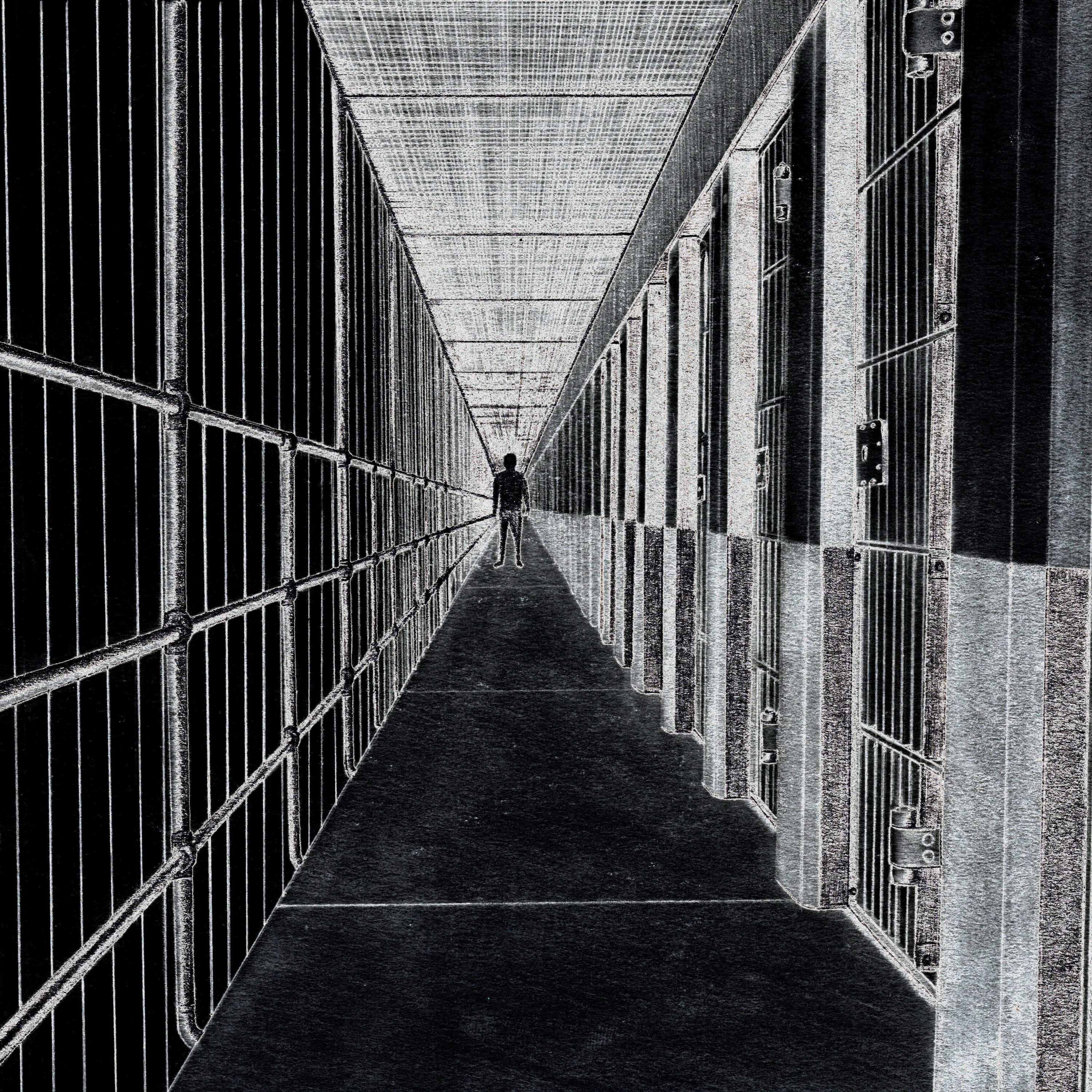
Ear Hustle
My Understanding of This Place, Part 2
00:42:00
The final stops of Nigel’s San Quentin mystery tour.
Loading summary
Transcript367 lines
- [00:00]
Earlonne Woods
Hey, listeners. We are cooking up something really fun for next season, and we need your help.
- [00:05]
Nigel Poor
You might remember that for the last couple seasons, Earlonne and I have been producing mystery episodes.
- [00:11]
Earlonne Woods
That's when me and Nige each come up with a story idea, and we work on it in secret until we reveal it to each other in the studio when we're recording narration.
- [00:21]
Nigel Poor
And I love doing these. It's so much fun to surprise each other, and it gives us the opportunity to each explore a subject that intrigues us.
- [00:28]
Earlonne Woods
This season, we're adding a twist, and that's where you come in.
- [00:32]
Nigel Poor
Is there a story you've always wanted to hear on Ear Hustle, A topic you wished one of us would explore? Well, here's your chance to shape an upcoming episode.
- [00:41]
Earlonne Woods
All you gotta do is email us an idea. It could be something really specific, like you wanna hear a story about someone who had to lose a lot of weight in prison?
- [00:51]
Nigel Poor
Or it can be more abstract, like, what do people think about when they first wake up in prison? Maybe even on their first day in prison. And remember, it's a story idea for Earlonne and a story idea for me. So different ideas.
- [01:06]
Earlonne Woods
If your idea is selected, you will be invited to join us via Zoom and be the third host when we record narration in the studio.
- [01:14]
Nigel Poor
This is going to be great, and it's also going to give us a chance to do something really meaningful with our listeners.
- [01:20]
Earlonne Woods
So send your idea to infoearhustlesq.com and the deadline is January 15th.
- [01:27]
Nigel Poor
That's infoearhustlesq dot com by January 15th. And I cannot wait to find out what my story idea is going to be.
- [01:36]
Earlonne Woods
I know what I'm gonna get.
- [01:37]
Nigel Poor
No, you don't.
- [01:38]
Earlonne Woods
It's gonna be gang related.
- [01:39]
Shaka
Why?
- [01:39]
Darrell Sadiq Davis
Shh.
- [01:40]
Nigel Poor
No hands.
- [01:45]
Nathan Dalton
My name is Nathan Dalton.
- [01:47]
Nigel Poor
I'm a producer with the Kitchen Sisters.
- [01:49]
Nathan Dalton
And also an office mate with the Ear Hustle team.
- [01:52]
Nigel Poor
This episode of Ear Hustle contains discussion of suicide and other content that may not be appropriate for all listeners. Discretion is advised. You my Kim, as we're going up so you can describe going. All right, all right.
- [02:15]
Shaka
Ah.
- [02:15]
Tony Tafoya
What's up, man? Well, so not right now. We're in west block and we're going up the stairs right now. We're going to this first, the second tier, but we plan to go out.
- [02:24]
Nigel Poor
Ow.
- [02:25]
Tony Tafoya
I just walked into a firebox. We're going to the fifth tier. We're gonna go see something.
- [02:33]
Nigel Poor
Okay? So just as a reminder, this is part two of a project I've been working on. With the team inside, where together we go to these different places inside San Quentin that are significant to each of the guys.
- [02:46]
Earlonne Woods
So in the first half, we heard from Tony Tafoya, Tom Nguyen, and Darrell Sadiq Davis.
- [02:53]
Nigel Poor
Exactly. So who's left?
- [02:54]
Earlonne Woods
Who's Damn. So, Tony, did Trinidad get a whole episode? Not only do you get two episodes for your original one, Tony de Trinidad get his own episode.
- [03:04]
Nigel Poor
Well, remember, there's another big component to this story.
- [03:07]
Earlonne Woods
Oh, you're right. You're right, you're right.
- [03:08]
Nigel Poor
And we will get there. But first, Tony de Trinidad had a place he really wanted to show us.
- [03:14]
Tony Tafoya
So we're here on the fifth tier of west block. Right. Whenever I was feeling cooped up, lockdowns, can't feel like I can get outside. I would come up here and I would look out there. All right, now you can look.
- [03:29]
Nigel Poor
Okay.
- [03:31]
Tony Tafoya
This is probably the best view in prison. This is like the one place where the windows in San Quentin are not fogged up. You can kind of see the bay, San Francisco Bay, Right. Outside with a guard tower. And then Mount Tamalpais. Right.
- [03:48]
Earlonne Woods
All right. I know that spot.
- [03:50]
Nigel Poor
You do?
- [03:50]
Earlonne Woods
It's a cool spot, you know, kind of hidden away, you know? There's no other place that San Quentin like it. When you're inside a prison, pretty much any prison, all you see is prison.
- [04:03]
Nigel Poor
Right.
- [04:03]
Earlonne Woods
You know what I'm saying? There's no looking out the window and seeing regular people or on the streets or houses or anything like that. It's just prison walls, prison fences, prisoners and prison staff. That's all you see.
- [04:16]
Nigel Poor
Right. But from this little spot that Tony Hann had taken us to, through this very dirty window, you could see this sliver of, like, regular life outside the walls.
- [04:29]
Tony Tafoya
On the nice days, you can catch sunsets. You know what I mean? At nighttime, you can see lights across the water, and then sometimes you can see the ferry crossing by. So it's everything that's not prison. I'm sitting here, I'm in prison. You can look outside.
- [04:45]
Nigel Poor
What I noticed is you can see all the cars driving by, so you know that people are out there being busy.
- [04:52]
Tony Tafoya
So, yeah, there's signs of life.
- [04:54]
Nigel Poor
Yeah. All right, I'm going to attempt to look over the rail.
- [04:57]
Tony Tafoya
We got you back.
- [05:00]
Nigel Poor
Okay, I'm going to have to touch the rail here.
- [05:02]
Tony Tafoya
Go ahead.
- [05:03]
Nigel Poor
I'm looking over. I got that feeling in my stomach.
- [05:11]
Tony Tafoya
From inside any building in prison, looking out any window. Have you ever seen a better view?
- [05:16]
Nigel Poor
I have not. I have not. Okay, I'll say.
- [05:19]
Darrell Sadiq Davis
America.
- [05:24]
Nigel Poor
I'm Nigel Poor.
- [05:25]
Earlonne Woods
I'm Earlonne woods, and this is ear.
- [05:27]
Nigel Poor
Hustle from PRX's Radiotopia. Today on the show, the most hidden spot in San Quentin. That's right, Earlonne. We are going into east block, formerly.
- [05:39]
Earlonne Woods
Known as death row.
- [05:46]
Nigel Poor
So the reason I invited Tony and the other guys on the inside team to take us to a special place was because we wanted to explore this notion that memory gets left behind in a physical space that is meaningful to you that you've spent a lot of time in. And we wanted to see if that happened inside of prison too.
- [06:06]
Earlonne Woods
Yeah, I mean, you know, I think from the outside, you know, these spots look pretty drab. Is that a word?
- [06:12]
Nigel Poor
Yeah. Dull. Exactly.
- [06:15]
Earlonne Woods
But they look different through the eyes of someone who's experienced something important there, you know?
- [06:21]
Nigel Poor
Exactly. Exactly. And all of this was a buildup for our visit to death row, which Earlonne was a huge deal. I mean, none of us had been.
- [06:31]
Earlonne Woods
There before, didn't want to be.
- [06:34]
Nigel Poor
I know you wouldn't have come.
- [06:36]
Earlonne Woods
And listeners who heard part one will remember that San Quentin recently closed its death row doors and relocated the people that was on the row to other prisons in the state. So the building, also known as east block, was empty.
- [06:52]
Nigel Poor
And the inside team and I were going to see it. You know, we really weren't sure what it was going to feel like. And that's something that we talked about in the days leading up to this, you know, adventure we were about to have.
- [07:05]
Tom Nguyen
There's probably gonna be a lot of dust. I think it's gonna have this, honestly, like, a deep sadness.
- [07:13]
Nigel Poor
Do either of you believe that places hold onto the memory of what's happened there?
- [07:20]
Darrell Sadiq Davis
I believe so, yes. I believe it lives in the building. Yeah, definitely. And I heard a lot of people didn't want to leave. It was a lot of screams and yelling, so a lot of that stuff is still there.
- [07:33]
Nigel Poor
Why do you think people didn't want to leave?
- [07:36]
Darrell Sadiq Davis
It was comfortable. They didn't want to. This is all they knew. They thought they was going to die here. So for you just to up and take them away, it's like. And then you have to remember that These guys spent 30, 40 years by themselves. Everything was handcuffed by themselves. So now to go out to a mainline and to set up with someone, it is scary. It's like, what am I supposed to do? How am I supposed to react?
- [08:03]
Nigel Poor
I'm like, nervous energy about going up there, but I do really want to see how people lived. I'm really curious about what's left behind.
- [08:14]
Earlonne Woods
So are we finally going in?
- [08:16]
Nigel Poor
Yes, we are.
- [08:18]
Sadiq
I just don't want to be.
- [08:19]
Nigel Poor
Let's go.
- [08:20]
Darrell Sadiq Davis
Let's go. And the gates are open.
- [08:25]
Tom Nguyen
It says, must show ID upon entering. Security vest is mandatory in this unit. Watch your step. There's a big metal thing.
- [08:33]
Tony Tafoya
Watch your step.
- [08:35]
Darrell Sadiq Davis
Wow. So what do you see when you first walk in, Tony?
- [08:39]
Tom Nguyen
Right now I see a bunch of lockers, and it says, eastbach lock medic clinic.
- [08:45]
Nigel Poor
Okay. All right, so right now, it looks like any housing unit unit that I've seen at San Quentin. But let's. Let's step in further.
- [08:55]
Tony Tafoya
There's a lot more fences at every point. It looks like, you know, it's not as open.
- [09:02]
Nigel Poor
Yeah, they've probably been cleaning in here. All right, should we go up to the fifth tier?
- [09:07]
Darrell Sadiq Davis
Let's make our way up.
- [09:08]
Nigel Poor
Okay. Bayside. And to get from tier to tier, of course, there's a staircase. And as we were passing by each cell, we. We just kind of cataloged what we were seeing. There's a bunch of soap on the ground. Bars of soap. And masks, Earplugs. I see an American flag. Gloves. Oh, look at. There's some Christmas decorations. Oh, it's getting hot. Heat rise. Yeah, it's definitely getting stuffy. Okay. Tapped here.
- [09:44]
Tom Nguyen
So right now we can see all the way down to the other end of east block. And it's just a bunch of open doors.
- [09:49]
Sadiq
This looks like something from a horror movie. You know that long corridor when you look in? Down. I just. I can imagine being here at nighttime. Still looks like the shining.
- [10:00]
Nigel Poor
So there we were in the fifth tier. The inside team, me, the two Tonys, to FOIA and to Trinidad, Siddiq, Tom and our friend San Pablo. And as you know, we were just, like, looking for clues about what life was like for the people who live there.
- [10:15]
Darrell Sadiq Davis
We have a cell that has hearts on it.
- [10:18]
Nigel Poor
The first cell we walked into, the guy who lived in there had drawn all these kind of cartoon versions of things on the cell wall. Like, there was lots of red. That's what I remember. And polka dots.
- [10:30]
Darrell Sadiq Davis
That's a bikini.
- [10:32]
Nigel Poor
Okay, so there's some graffiti hearts. Maybe a bikini. Oh, there are hearts everywhere.
- [10:39]
Sadiq
Oh, yeah. All the hearts where the lenses would be on the glasses. It just looks like the guy was trying to liven up his life. It looks like this guy was a happy guy or he was a clown.
- [10:51]
Nigel Poor
I'm going to step into this cell. This one has. The sound is really different. This one has 1, 2, 3, 4, about 8 to 10 pinup. Kind of pictures of women. And then on the wall in here, some kind of graffiti or something.
- [11:15]
Darrell Sadiq Davis
What is that? The phone. Wow. Look at the phone.
- [11:17]
Tony Tafoya
The phone is on this, like, triangular stand.
- [11:20]
Nigel Poor
Okay.
- [11:20]
Tony Tafoya
And it's like, basically portable. It's got wheels and stuff and a long ass extension cord on it so that it can be passed down a tier.
- [11:30]
Nigel Poor
So this was really interesting. Earlonne. You know, in all of the housing units in San Quentin, you know, when you come in, there's that line of payphones.
- [11:37]
Earlonne Woods
The old school phones.
- [11:38]
Nigel Poor
Exactly. So people can make their calls. Calls. But at death row, guys can't leave their cells. And when they do, they're in shackles. So there's no way they're getting on a pay phone. So instead, the phone comes to their cell.
- [11:53]
Darrell Sadiq Davis
So. Whoa, here we go. Look at this cell right here.
- [11:56]
Nigel Poor
Okay. Okay.
- [11:59]
Darrell Sadiq Davis
It has a funny smell in there too, as well. So we have, like some mold in the sink. Nigel, you see that? Look at that.
- [12:08]
Nigel Poor
Oh, yeah. Okay. This filth really offended Siddiq. Yeah. I mean, you know how he's. Well, most guys inside are super clean. Siddiq is particularly fastidious. He was really, like, I think, kind of grossed out by how dirty some of the cells were.
- [12:23]
Earlonne Woods
Yeah, I mean, I can imagine some people might just don't give a shit. And they might like, man, fuck this place.
- [12:32]
Nigel Poor
The sink is full of moldy, like, cardboard or paper. The toilet is full of a white powder. So these guys are in here 24 7, right?
- [12:43]
Darrell Sadiq Davis
Yeah. So you can imagine this guy was actually living filthy because it wouldn't be so much grime and stuff on the floor. So this was a filthy guy here. Look at this old toothbrush. This is.
- [12:56]
Sadiq
This soap looks pretty gnarly.
- [13:01]
Nigel Poor
Clearly these cells were upsetting. And, you know, imagine people living in there for decades. It's really horrible.
- [13:08]
Earlonne Woods
Yeah.
- [13:09]
Nigel Poor
But I don't think we were taking in how it was affecting us. You know, we were just kind of like looking around and going, oh, my God, look at this. Look at this.
- [13:17]
Shaka
Right, right.
- [13:17]
Nigel Poor
And as a group, we were in this. I don't know what to call it. Kind of like this discovery mode.
- [13:23]
Earlonne Woods
Gotcha.
- [13:24]
Darrell Sadiq Davis
Yeah. Is that an old. A half a dictionary.
- [13:26]
Nigel Poor
It's a dictionary. You're right. It's just half a dictionary goes to.
- [13:32]
Darrell Sadiq Davis
Oh, no. A.
- [13:33]
Nigel Poor
Where's a. Oh, look it. A little picture.
- [13:39]
Darrell Sadiq Davis
A picture of, like, army men holding the American flag.
- [13:42]
Shaka
Oh, picture of.
- [13:43]
Nigel Poor
Is it irojima or something?
- [13:45]
Sadiq
Yeah, when they. When they're lifting up the.
- [13:47]
Nigel Poor
The American flag.
- [13:48]
Sadiq
How it's slanted like 45 degrees and.
- [13:51]
Darrell Sadiq Davis
We have like little hooks on the wall. It look like sorry pieces. So just imagine a piece to the sorry. The board game.
- [13:59]
Tom Nguyen
The guy that left us a letter.
- [14:01]
Nigel Poor
All right, let's go find the letter.
- [14:03]
Darrell Sadiq Davis
So a guy left us a letter. Let's go find this letter.
- [14:09]
Nigel Poor
Siddiq. Tom and I had been in this one cell when Tony came back all excited because he had found a letter that was left in this, like, cell up ahead of us. So he wanted us to all come and see it, like immediately.
- [14:22]
Darrell Sadiq Davis
A letter to east block. All right, Is this the letter? Where's the letter?
- [14:28]
Earlonne Woods
Whoa.
- [14:29]
Sadiq
Can somebody read it?
- [14:30]
Nigel Poor
Read it.
- [14:30]
Tony Tafoya
So he's leaving a message to. He thinks someone else is going to move in here with all the stuff that he left in here. Over here he's like, I stocked up 50 TPS toilet papers, 50 soaps. I was the TP guy. I don't want the TP let the CEOs use the TP supply here. So he's trying to. He's trying to pass on like whoever moves in here to be the next tp.
- [14:48]
Darrell Sadiq Davis
Okay, so it's one right here too as well. So he has an actual first it says, I'm TP guy. In case you see Axio Reyna, he stocked 50 toilet papers and 50 soaps. That's too much.
- [15:01]
Nigel Poor
Earlonne. It was interesting as we were spending more time in the cells and really digging into what people had left behind. I would like to think that the people in there were becoming more present for us. Like we were sort of guessing at their habits and how they tried to make a life there. I have no idea why that guy had so much toilet paper. I mean, what do you think?
- [15:23]
Earlonne Woods
There's a few things, you know, a lot of people stack up on toilet paper just to have it. Maybe people that go by can grab a toilet paper from them when they handcuffed or.
- [15:31]
Nigel Poor
Yeah, tricky handoffs there.
- [15:33]
Earlonne Woods
No, it's just, you know, they got game.
- [15:36]
Nigel Poor
Okay, well, I don't know if we'll ever know exactly who the TP man was.
- [15:39]
Earlonne Woods
The TP man.
- [15:41]
Nigel Poor
But he took his job seriously.
- [15:46]
Darrell Sadiq Davis
Then he has a calendar of what's for breakfast. It says scrambled eggs. Hum. And then on Friday it said eggs and cheese. Yum. So he had a whole list of what was going on throughout his life.
- [15:58]
Nigel Poor
Okay, look at. What do you think he was doing on his bunk?
- [16:01]
Darrell Sadiq Davis
Cause it's covered with it looks so rusted though.
- [16:04]
Nigel Poor
It's got all kinds of weird, like, gloppy Stuff on it even.
- [16:09]
Darrell Sadiq Davis
It has gloppy stuff on the wall as well. Like a lot of grime or something.
- [16:14]
Earlonne Woods
That opens up a whole nother door. If the paint is scraped off his bunk and it's down to the metal. He utilized those TPS as a fire. So the fire would go under the bunk, and it would heat up the bottom of the bunk, and then you would cook on the top, and that's what the teepee was for. You would turn the bunk that you sleep on into a grill, and you can just roll your mattress back and heat that area up and get your cook on.
- [16:43]
Nigel Poor
Okay, that makes sense. So what are these are tops to something that he's decorated the wall with?
- [16:52]
Darrell Sadiq Davis
Yeah, it looks like tops from, like, a mayonnaise jar or something. Like the little easy open foil.
- [17:00]
Tony Tafoya
I'm like, oh, this is saying, don't touch that shit.
- [17:03]
Nigel Poor
Grabbing random shit, you know, like when you open up a container and there's that little safety foil thing, you know, like, say, have you ever opened up, like, vitamins? Yeah. So he had taken whatever he had opened up, whether it was mustard, mayonnaise, vitamins. He had taken that foil and put it on his wall. So his wall was just covered with these silver, like, you know, these circular foil pieces. It was like he was creating an art installation in there. You know, I thought it was kind of cool. So they're put on the wall like a modern art piece or something. Like, he was slowly trying to cover the wall with these parts. And there's a birthday card that someone.
- [17:42]
Tony Tafoya
Left them, and it's from these two people named. His. I guess his name was Herbert. And their. Their names were Andrea and Rachel. And they say, hello, Herbert, we're very upset that we still have not heard from you. We would like to form a relationship through letters with each of you. Gentlemen, do you think you could find a time to drop us a line? Happy birthday on October 13th from your CAL coordinators, Andrea and Rachel, and everyone at Lifelines. We send you many good wishes.
- [18:11]
Nigel Poor
Sounds like he didn't want to write back.
- [18:13]
Tony Tafoya
Yeah.
- [18:14]
Nigel Poor
Do you think it's interesting that the guy in death row did not want to write back to these people?
- [18:18]
Earlonne Woods
Herbert probably wasn't into writing people. Herbert probably was shut off from the world, you know, on any type of interaction with people or any type of, you know, writing. Writing is a skill set, and some people get tired of it. And maybe Herbert just didn't like who was writing.
- [18:35]
Nigel Poor
Interesting.
- [18:36]
Earlonne Woods
Yeah. He could have just checked out on that type of stuff, you know?
- [18:39]
Nigel Poor
Yeah.
- [18:40]
Darrell Sadiq Davis
Whoa. Whoa. This guy said, I have contagious skin.
- [18:45]
Nigel Poor
So we walked by this one cell and it was really dirty. I mean, the dirtiest. Well, let's.
- [18:53]
Darrell Sadiq Davis
Oh, can you wanna step?
- [18:54]
Nigel Poor
Yeah.
- [18:55]
Darrell Sadiq Davis
Oh, whoa. This is mold everywhere.
- [18:59]
Nigel Poor
So this says there's something on the wall that says, co. I have contagious skin disease. You may see below some of my medicine for it. P.S. i have a chrono for extra laundry, extra art supplies, American Indian things, extra mattress, an ace bandage, a urinal, and cane.
- [19:17]
Darrell Sadiq Davis
But look at his toilet.
- [19:18]
Nigel Poor
Wow. So the toilet earlonne, you know, like where the stuff goes down. It was almost closed up because it. It was caked with mold.
- [19:28]
Darrell Sadiq Davis
I can see why he have a skin disease.
- [19:31]
Nigel Poor
Wow. The toilet is. How would you describe that?
- [19:35]
Darrell Sadiq Davis
Molded with green, blue, white, brown mold.
- [19:41]
Nigel Poor
Look at the sink.
- [19:42]
Darrell Sadiq Davis
It's horrible. How can somebody live like this?
- [19:46]
Earlonne Woods
Either he couldn't smell or he was using it as a tactical with the police, you know? So if he never cleans his toilet, then they're gonna be like, man, your cells stink. I ain't going in there.
- [20:03]
Nigel Poor
Could that also be the skin disease? He's like, I have a contagious skin disease.
- [20:07]
Earlonne Woods
Anything just to keep him out his cell.
- [20:10]
Nigel Poor
Okay. He's got a few spices left.
- [20:14]
Darrell Sadiq Davis
A few spices ginger left.
- [20:18]
Nigel Poor
What's weird to me since city, cuz I don't get any sense of anybody. Like, you don't really feel.
- [20:23]
Darrell Sadiq Davis
I don't feel a bad vibe or anything.
- [20:25]
Nigel Poor
No, I don't feel a good vibe, a bad vibe. It just seems a little oddly neutral.
- [20:40]
Darrell Sadiq Davis
So we have a running toilet.
- [20:45]
Earlonne Woods
What was it running to? Down the tears.
- [20:47]
Nigel Poor
Why did you get out of there bad? You can hear in our voices. It's obviously a sad place, but we're giddy, we're excited, we're running around and I mean, aren't you surprised we weren't more somber about it?
- [21:08]
Earlonne Woods
Nah. I mean, you know, it's an empty building.
- [21:10]
Nigel Poor
I know, but it's death row. I don't think we recognized the gravity of where we were. It was like this teenage spirit had just taken over, and we were kind of running wild.
- [21:23]
Sadiq
We want everybody to see this, especially Sadiq.
- [21:27]
Nigel Poor
Okay, sorry. So at this point, there's a turn in what's grabbing everyone's interest.
- [21:32]
Sadiq
Okay, we just had a good little laugh.
- [21:35]
Darrell Sadiq Davis
All right, let's see what we got. What tier is it on? On the second tier.
- [21:39]
Sadiq
Let's go really fast.
- [21:44]
Earlonne Woods
Come on.
- [21:46]
Darrell Sadiq Davis
All right, in the tier office.
- [21:48]
Sadiq
Let's step in here. Everybody. Step in if you can. I know it's a little tight. Trinidad's older foundation.
- [21:54]
Darrell Sadiq Davis
Brighter light.
- [21:55]
Shaka
Okay, Trinidad.
- [21:58]
Nigel Poor
This was an office where the co sit and Earlonne. It was like the size of a broom closet. You know, no windows, very dingy. I couldn't imagine that being my workplace every day. And it was the only place that actually hadn't been cleared out. There were still, like, the desk and chairs and a ton of paperwork everywhere. And there was also some writing on the wall, which included a pretty offensive joke that I'm not gonna tell here.
- [22:26]
Earlonne Woods
Joke implies laughing. Why can't I laugh right now?
- [22:28]
Nigel Poor
I'm gonna have to tell you off mic. Okay. And there was also this one little line written on the wall, and then.
- [22:35]
Tom Nguyen
Another sign that says, make death Row great again.
- [22:38]
Darrell Sadiq Davis
Yes.
- [22:38]
Sadiq
Wow.
- [22:40]
Darrell Sadiq Davis
All right, let's start working our way down.
- [22:43]
Nigel Poor
We got, like, 10 minutes left, maybe. No. Okay. We got no minutes left.
- [22:48]
Earlonne Woods
I wish I had more time with you guys.
- [22:51]
Nigel Poor
I was trying to get you an escort.
- [22:53]
Darrell Sadiq Davis
Okay. Let's work our way down.
- [22:55]
Nigel Poor
Yeah. Okay.
- [22:57]
Sadiq
Thank you, Lieutenant Barry.
- [22:59]
Tom Nguyen
Yes, thank you. We are leaving east block.
- [23:09]
Sadiq
So now we're walking back out. We're leaving it. I thought there would be, like, some kind of spiritual.
- [23:16]
Nigel Poor
Yeah.
- [23:17]
Sadiq
Like, I'd feel it when I was walking through, but I didn't feel any of that.
- [23:20]
Tom Nguyen
Like, you would take a big breath.
- [23:21]
Darrell Sadiq Davis
Yeah, Just.
- [23:22]
Sadiq
It was just like a regular building.
- [23:23]
Tom Nguyen
Yeah, it really was. And now we're back in reality.
- [23:30]
Nigel Poor
Okay.
- [23:31]
Earlonne Woods
Yes.
- [23:33]
Nigel Poor
Okay. So we just left east block. We were trying to make it down to the media lab, and of course, an alarm went off. Okay. So Earlonne yard, down alarm. And as you know, this happens all the time at San Quentin. But it really snapped us back into the reality of being back to a part of the prison we were familiar with. And so, of course, we all had to sit down and wait for it to pass.
- [23:56]
Earlonne Woods
Nige, you did not have to sit down.
- [23:59]
Nigel Poor
No, you're right. I didn't sit down. But when an alarm goes off, all the incarcerated people have to sit down. I mean, wherever they are.
- [24:06]
Earlonne Woods
I mean, because, you know, they gotta know who's who, you know, who's incarcerated, who's not.
- [24:10]
Nigel Poor
Yep. Anyway, so the alarm finally stops, and we all get up and start walking back to the media lab, and, you know, San Quentin, we are running into all of the people that we know.
- [24:21]
Earlonne Woods
Hey, you know, I'm out of here soon, right?
- [24:23]
Nigel Poor
I had heard next week.
- [24:26]
Darrell Sadiq Davis
Yeah. Next year.
- [24:27]
Nigel Poor
Where are you going to go? Oakland Dream Center.
- [24:29]
Earlonne Woods
You know what I'm saying? You know the Belizean bread. You must go To Oakland Dream Center. You know what I'm saying?
- [24:34]
Nigel Poor
Stop.
- [24:34]
Tom Nguyen
Your accent. You know that's fake.
- [24:36]
Tony Tafoya
Belize, come on.
- [24:39]
Nigel Poor
So after we saw our friend with the stolen accent. Exactly. There was Hanok playing violin.
- [24:49]
Tom Nguyen
Play us a ditty. We just went to east block.
- [24:58]
Earlonne Woods
I would have expected this music to be playing when y'all walked in the east block.
- [25:02]
Nigel Poor
Exactly. I know. When we finally got to the media lab, we sat down and did a little debrief about our experience.
- [25:15]
Tom Nguyen
We are recording.
- [25:16]
Nigel Poor
Okay.
- [25:16]
Tom Nguyen
I just turned it on.
- [25:17]
Nigel Poor
So we just got back from east block. We left here about quarter to eight. I was just so curious what everyone's reaction was.
- [25:26]
Darrell Sadiq Davis
So when I first walked in east block, I still had, like, a lot of little anxiety and anticipation. But soon as I walked in, it just left, like, the feel that I thought I was going to get. The feeling was gone. The vibes were different. It wasn't like it was spooky or it felt haunted or none of that.
- [25:45]
Nigel Poor
Yeah. Like everyone. My expectations were so high and it just. The word I come away with is neutral. But why are we disappointed by that?
- [25:55]
Darrell Sadiq Davis
Because I think it's like that big house on the corner of your street that you want to see what's inside, and you finally see what's inside. It's not really as scary as it looked growing up. That's the type of feeling that I had when I went in there.
- [26:12]
Nigel Poor
So we were all looking for some kind of thrill, right? Yeah. Which is curious to me. The most interesting part was when occasionally one of the cells still had stuff on the wall.
- [26:24]
Darrell Sadiq Davis
Yeah.
- [26:24]
Nigel Poor
Left behind by somebody. Like a little note.
- [26:27]
Tony Tafoya
Do you remember the one cell that had all those little silver foils.
- [26:34]
Nigel Poor
Yeah.
- [26:34]
Tony Tafoya
That you touched for some reason. The one you touched was actually a tuna fish container wrapper.
- [26:39]
Nigel Poor
I washed my hands good.
- [26:41]
Tony Tafoya
Did you, like, run them through flame? Because, like, what do you think it's sticking on the wall with? No, not like. Not the worst case scenario. But like, that's like saliva. You gotta think about somebody who never cleans.
- [26:58]
Darrell Sadiq Davis
Some people just. I guess they decided, like, my life is over, so why clean? I don't need to clean anything. I'm dying anyway. And to live like that, it's like, what am I living for? You know? So that's what I got out of it. There's no point of me cleaning. So to see a lot and to hear a lot.
- [27:17]
Nigel Poor
Those guys didn't get to leave there. Right.
- [27:19]
Darrell Sadiq Davis
They're in that building all day long.
- [27:22]
Nigel Poor
Confined.
- [27:23]
Darrell Sadiq Davis
Confined and detached from reality.
- [27:28]
Nigel Poor
I think the thing is, what we've all been talking about that you have all these expectations and it's your imagination that animates a place and when it's just a place. Yeah. So when I think about going up to East Block, I kept thinking, well, why am I so excited? Why am I so giddy about going to a place that's full of pain? It's because it was an adventure that we could share. And that's. To me, it's really neat.
- [27:54]
Darrell Sadiq Davis
Yeah. We did it together. And the anticipation, everything was there and we all felt it at the same time. So I think that's why it actually was more meaningful when we went as a team, you know, instead of one person going, we all was able to. We was like saying each other words and everything because we all wanted to know what was going on in East Block, you know, that experience.
- [28:17]
Nigel Poor
But before we go any further, I think there is something we need to acknowledge. I think it's somebody's birthday today.
- [28:24]
Darrell Sadiq Davis
Oh, it's TDT's birthday.
- [28:27]
Nigel Poor
I believe it is somebody's birthday. And we need to sing Happy Birthday.
- [28:31]
Darrell Sadiq Davis
Are you ready?
- [28:32]
Nigel Poor
Yep. Which one are we doing?
- [28:33]
Darrell Sadiq Davis
The original one.
- [28:35]
Nigel Poor
Okay. All right. Happy birthday to you Happy birthday to you Happy birthday, dear Tony Happy birthday to you and we gave you the beautiful present today of taking to eclipse.
- [29:01]
Darrell Sadiq Davis
On your birthday for sure. So you was able to get your package on your birthday.
- [29:05]
Nigel Poor
And this was a really sweet ending to the adventure that we had just shared together. But, Earlonne, over the next few days, something about the way we reacted to Death Row was really gnawing at me. Like, really keeping me up at night, really. I wanted to talk to somebody who might see things differently, you know, and sort of get their take on it. Okay, so after the break, Earlonne, there's one more person I want you to hear.
- [29:31]
Earlonne Woods
We'll be right back. Happy January, Naj.
- [29:36]
Shaka
What?
- [29:36]
Nigel Poor
You can't say Happy New Year. Yeah, we supposed to say Happy New Year. Happy New Year to you. Ersaan, New York. Thomas. Thank you. I am super excited to tell you listeners about Radiotopia's newest show, Hyperfixed. Hosted by former Reply all co host Alex Goldman.
- [29:51]
Darrell Sadiq Davis
Hyperfix is a podcast where you, the.
- [29:54]
Earlonne Woods
Listener, write in with your problems and Alex solves them. He tackles everything from the origin of.
- [30:00]
Tony Tafoya
A mysterious button to whether a listener.
- [30:02]
Nigel Poor
Should have kids or not. This gets pretty personal.
- [30:05]
Tony Tafoya
That's crazy. That's such a big decision.
- [30:07]
Nigel Poor
Also, what is this button? Is he talking about buttons on your shirt or is it a very specific button somewhere? Benjamin Button. I don't each episode of Hyperfixed attempts not only to solve listeners problems, but exposes the hidden systems that caused those problems in the first place. Alex is kind of obsessed with solving your problems, and he will go to absurd lengths to try and resolve them.
- [30:32]
Darrell Sadiq Davis
Help us welcome the newest show to the Radiotopia family. Find Hyperfix on your favorite podcast platform.
- [30:38]
Earlonne Woods
Now.
- [30:44]
Nigel Poor
Listeners, do you want even more.
- [30:46]
Earlonne Woods
Ear Hustle and even fewer ads like zero, zilch, nothing, nada?
- [30:51]
Nigel Poor
If so, subscribe to Ear Hustle Plus.
- [30:54]
Earlonne Woods
Ear Hustle plus subscribers get access to ad free episodes and bonus episodes.
- [30:59]
Nigel Poor
Our Ear Hustle plus episodes are really fun. Subscribers can find out what's happening with people they've heard on previous episodes, and they can also send in questions for us to answer.
- [31:09]
Earlonne Woods
And me and Nigel get to sit here and chop it up with our producer Bruce and just talk about whatever.
- [31:15]
Nigel Poor
If you want to hear more of that, subscribe to ear hustle plus@earhustlesq.com plus or directly in Apple Podcasts.
- [31:24]
Earlonne Woods
And thanks for supporting the show. We appreciate y'all. And send in some provocative questions, spicy.
- [31:31]
Nigel Poor
Questions.
- [31:45]
Shaka
I kept asking myself, where are you guys at? What cell are you referring to? The one with the butterflies and the heart. Yeah, I'm trying to rack my brain trying to figure out who the heck that was.
- [31:59]
Nigel Poor
Do you recognize this guy's voice?
- [32:00]
Earlonne Woods
Yeah, that's old boy from the episode we just did about books and his name, Shaka.
- [32:06]
Nigel Poor
Exactly. So he had actually lived on death row. And listeners might remember he's the guy that talked about how some people he felt actually had to be in prison, should be in prison.
- [32:18]
Earlonne Woods
Yeah, I definitely remember that.
- [32:20]
Nigel Poor
And the reason I wanted to bring him down was that, you know, after listening to the tape of me and the guys walking around east block, there was just something about the tone of the tour that didn't sit right with me. And so I asked Shotgun if he would come in and talk about it with us.
- [32:35]
Shaka
91 till 23, I lived in the same cell.
- [32:39]
Nigel Poor
I hear that. And I just chills me, like, I can't. I don't have words to express how, like, trying to understand that. And so to think about how I feel now, sitting across from you, looking at you and thinking, how did this man live like that for 30 years? There's not. It's like we're in two different universes. We brought Shaka down to the media lab and we actually played the episode for him. The recording of us going into death row and our reactions to it and watching him listen to the episode. He was so intense. Like he was so present, his face, his body language. And I was a little bit nervous about what he was going to hear and I was really worried he was going to find it disrespectful. Are you glad that you heard that? Do you wish you didn't hear us up there?
- [33:35]
Shaka
I'm glad that you guys took the time to go through there. You know that officer that said make death row great again, that was a jerk. He wanted executions to start back up. That's the only way he could have met that. Now that had me try to remember all the jerks that worked at east block and I knew a few of them. But if you didn't go through there, that would be sad. That what happened on death row was yesterday news. And it's not. I can't forget some of the things that I saw. Can't forget some of the things that I heard or say. Why was so deaf Row?
- [34:29]
Nigel Poor
Now I'm imagining how different it would have been to go to east block with you and see it through your eyes. We wouldn't. I doubt we would have been laughing very much. Maybe some laughs.
- [34:41]
Shaka
Well, but see, that's old sad. You laugh to keep from crying. That's true. You make jokes to be able to break a little humor to a sad. A bad situation. It was some bad times, it was some sad moments. But we laugh. You know what I mean? There's old saying, laugh to keep from crying. We laugh at each other. Or should I say we laugh with each other, not at each other. It was your way of coming to reality that we live every day. The fact that you guys was curious enough to go through there and try to figure out what we was dealing with says a lot about you. You guys wanted to know.
- [35:34]
Nigel Poor
I appreciate what you're saying, but I do think it was because we were together as a group and like none of us had ever been there before. And it was like a bonding experience. Experience. But there's just so much laughing every time I hear it, I feel uncomfortable with it.
- [35:49]
Shaka
But see, that's you guys. That was you guys way of dealing with the stress maybe. And I don't think bad of you at all for doing it. And I lived there.
- [36:01]
Nigel Poor
Well, what if you had taken us there? What would you have showed us? What would you want us to know?
- [36:09]
Shaka
Obviously I would have showed you the same. And if we had the run of the place, I would have showed you the yard that I was on every day for over 30 years. The cell did my homeboy Hug himself here. I would have had to show you that.
- [36:34]
Nigel Poor
Okay. It's a little bit hard to hear what he's saying, but he's saying he would have showed us the cell where his. Where his friend hung himself.
- [36:47]
Shaka
Reaper was like a brother to me. I loved him. When they brought my homeboy out, I got up and walked to the bars and looked out and I see death on his face. And I saw that for weeks afterward. Still see that to this day. That was the last time that I got up and watched if they removed somebody off the chair the last time. The cold part is that all he had to do was stand up. So his will to. To die was stroll. All he had to do was stand up.
- [37:38]
Nigel Poor
Earlonne, can you understand what he's saying?
- [37:40]
Earlonne Woods
Yes.
- [37:42]
Nigel Poor
It's grim to have to repeat it, but basically he's saying all the guy had to do was stand up.
- [37:48]
Earlonne Woods
Right. Cause the bunk isn't that tall.
- [37:51]
Nigel Poor
So he really had a.
- [37:53]
Earlonne Woods
He had a will.
- [37:54]
Nigel Poor
Yeah.
- [37:56]
Shaka
Now that kind of got to me how bad that he wanted this, because if he straightened his feet out, he would stand it up.
- [38:07]
Nigel Poor
To do that is hard to get your mind around.
- [38:11]
Shaka
Yes, it is. So that's, that's what I would have told you about.
- [38:20]
Nigel Poor
I mean, now sitting here, and I just have to describe this because this is audio. So you're sitting back in a chair. You actually look pretty relaxed now. It's more like you're sitting in a car and you're looking at me in a three quarter view. You have a very nice profile. And I feel like we really missed an opportunity by not being able to be there with you. Because now the way you're talking about it, I'm having a different experience of what it was like.
- [38:48]
Shaka
It would have been a boy and death story because you would have had firsthand and a range of emotion. Right.
- [38:58]
Nigel Poor
So I feel very mixed about us putting this part out about us up in East Bach. We're gonna do it.
- [39:06]
Shaka
You got to.
- [39:07]
Nigel Poor
But it just sounds so. It sounds so. Every time I hear it, I cringe a little bit.
- [39:12]
Shaka
But that's because you care. See, if you would just try to make a story, you would care. You know, you, you, you care about what you do it, and that's obvious.
- [39:25]
Nigel Poor
So you don't think we're doing a disservice to your experience?
- [39:28]
Shaka
It's not. It's not. I never felt discarded or disrespected. Listen to that.
- [39:39]
Nigel Poor
Okay. Okay. Well, I appreciate that. And I think you would tell me if you did.
- [39:45]
Shaka
I have A stroll of pee. And if I felt that you had disrespected me or somebody else, I would have told you.
- [39:57]
Nigel Poor
So at this point, a couple guys from the inside team had joined me, and Siddiq had a question for Shaka.
- [40:04]
Darrell Sadiq Davis
So how would you feel going back in condemned role knowing that it's empty now? Like, what effect you think it'll have on you?
- [40:10]
Shaka
Well, I already bit back.
- [40:12]
Darrell Sadiq Davis
Oh, you bit back.
- [40:14]
Nigel Poor
I'm not really sure of the circumstances of this, but somehow Shaka was able to go back and see his old cell, and he actually went inside and sat down.
- [40:23]
Shaka
I walked back up to the cell that I was housed in. When I walked to this cell, I made a point to push the door all the way open. So could nobody come along and close the door open? That was something new, because every time you walk in the cell, first thing you hear was a click. Door shut. And then lock the door. Although I didn't think they would do that. But it's just the freedom that I had while I was able to do that. It was not a sad moment. You know, it was like when I walk out of the cell, I never come back into the cell. Death row is behind me as I walk down the steps. Those steps that you guys talked about was clear. I knew that I had left that part of my life behind me. And when I walked out the door, I said, good riddance.
- [41:40]
Nigel Poor
So, Earlonne, that's my mystery episode for the season. And now you're up. So your mystery episode drops in a couple weeks. And I can't wait.
- [41:52]
Earlonne Woods
I may have snuck you in in the beginning.
- [41:54]
Darrell Sadiq Davis
What?
- [41:54]
Earlonne Woods
Yeah, I may have snuck you in in the beginning. See?
- [41:58]
Nigel Poor
All right. I can't wait.
- [41:58]
Earlonne Woods
You gotta watch me with a mic. Wait for you to hear it.
- [42:06]
Nathan Dalton
My name is Adam Brown. I am a day one fan of Ear Hustle, and I'm a professor of social work at the Silberman School for Social Work at Hunter College in New York City. And now going to get coffee with Nigel. Ear Hustle is produced by Nigel Poor, Earlonne Woods, Amy Standen, Bruce Wallace, Rahsaan, N.Y. thomas and Cat Schuknecht. Shubham Sigman is the managing producer. The producing team, Inside San Quentin includes Darrell Sadiq Davis, Tony De Trinidad, and Tom Wynn. The inside managing producer is Tony Tafoya. Thanks also to Areesteo Sampablo. Thanks to acting Warden Andes as San Quentin and acting Warden Parker and Lt. Newborg at the California Institution for Women for their support of the show. Thanks also to this woman Here I.
- [43:08]
Nigel Poor
Am Lieutenant Giamari Berry, the public information officer at San Quentin Rehabilitation center, and I approve this episode.
- [43:16]
Nathan Dalton
This episode was made possible by the Just Trust building a smaller, more humane engine of justice and safety across the country.
- [43:26]
Earlonne Woods
Thanks to Rasheed Zinneman for introducing us to Shaka.
- [43:30]
Nigel Poor
Earlonne woods sound designs and engineers the show with help from Fernando Arruda, Harry Culhane and Darrell Siddiq Davis.
- [43:38]
Earlonne Woods
Music for this episode comes from Darrell Siddiq Davis, Tom Nguyen, Antwan Williams and me.
- [43:46]
Nigel Poor
For more information about the episode, you can check out the show notes on ear hustle's website, earhustlesq.com and I want to add while you're at the website, there's more to check out there.
- [43:57]
Earlonne Woods
Yes.
- [43:58]
Nigel Poor
Like the new curriculum. Yes. We've got this great curriculum.
- [44:01]
Earlonne Woods
Free.
- [44:01]
Nigel Poor
Free. So if you're a teacher, if you're the education world, please check out our curriculum and let us know what you think.
- [44:08]
Earlonne Woods
It'll save you a gang of time in your classroom because it's comprehensible, it's deep and your students will get a lot out of it.
- [44:15]
Nigel Poor
Absolutely.
- [44:16]
Earlonne Woods
And if you want to keep up with all things Ear Hustle, you know, with where Nigel Shop's at, you know what I'm saying? Where I.
- [44:25]
Nigel Poor
Where Earlonne gets his lunch.
- [44:27]
Earlonne Woods
Yeah, where I get my lunch. You know, if you want to just stay up on what Ear Hustle do, please sign up for our monthly email newsletter, the Lowdown.
- [44:36]
Nigel Poor
And you'll find that@earhustlesq.com newsletter.
- [44:41]
Earlonne Woods
You can find us on social media, Instagram, Facebook and YouTube. Earhustlesq.
- [44:47]
Nigel Poor
And there's actually some new stuff happening on YouTube soon.
- [44:51]
Earlonne Woods
Oh yeah, you know, we gonna have some Ear Hustle shorts coming soon at Earlonne. Not shorts that you wear. Short video. You can definitely find that at Ear Hustle sq.
- [45:03]
Nigel Poor
That is pretty exciting.
- [45:04]
Earlonne Woods
Yes.
- [45:05]
Nigel Poor
And if you're not already, follow and review Ear Hustle on any of your favorite podcast platforms like Apple Podcasts, Spotify and the iHeartRadio app.
- [45:15]
Earlonne Woods
Ear Hustle is a proud member of Radiotopia from prx, a network of independent, creator owned, listener supported podcasts.
- [45:22]
Nigel Poor
Discover audio with vision at Radiotopia fm.
- [45:26]
Earlonne Woods
I'm Earlonne Woods.
- [45:28]
Nigel Poor
I'm Nigel Poor. Thanks for listening and Earlonne, thanks for being here for two episodes.
- [45:34]
Earlonne Woods
Yeah, yeah. You did that. You did that, Nigel.
- [45:47]
Nigel Poor
Radiotopia from prx.