← Ear Hustle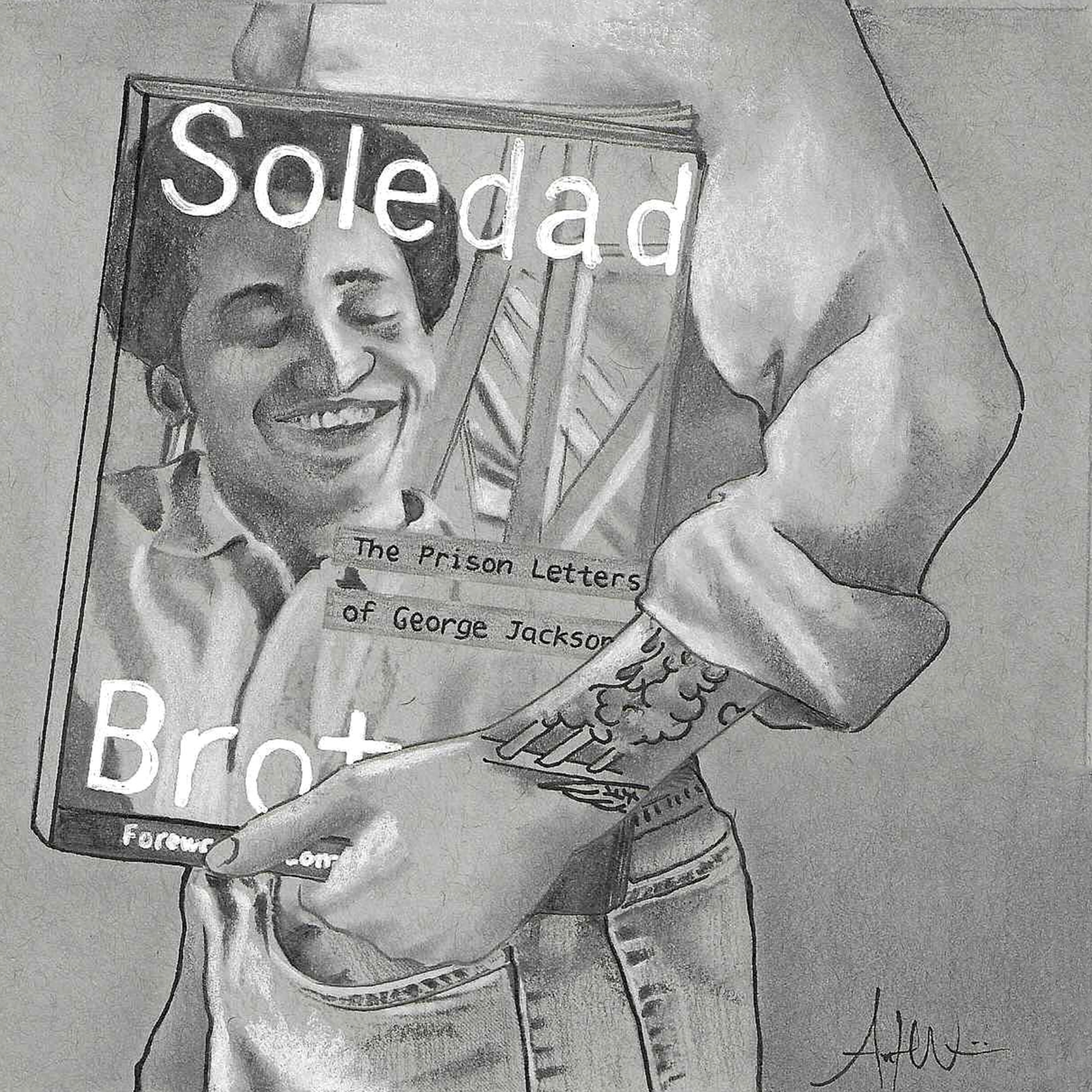
Loading summary
Transcript505 lines
- [00:00]
Earlonne Woods
Hey, listeners. We are cooking up something really fun for next season, and we need your help.
- [00:05]
Nigel Poor
You might remember that for the last couple seasons, Earlonne and I have been producing mystery episodes.
- [00:11]
Earlonne Woods
That's when me and Nige each come up with a story idea, and we work on it in secret until we reveal it to each other in the studio when we're recording narration.
- [00:21]
Nigel Poor
And I love doing these. It's so much fun to surprise each other, and it gives us the opportunity to each explore a subject that intrigues us.
- [00:28]
Earlonne Woods
This season, we're adding a twist, and that's where you come in.
- [00:32]
Nigel Poor
Is there a story you've always wanted to hear on Ear Hustle, A topic you wished one of us would explore? Well, here's your chance to shape an upcoming episode.
- [00:41]
Earlonne Woods
All you gotta do is email us an idea. It could be something really specific, like you wanna hear a story about someone who had to lose a lot of weight in prison?
- [00:51]
Nigel Poor
Or it can be more abstract, like, what do people think about when they first wake up in prison? Maybe even on their first day in prison. And remember, it's a story idea for Earlonne and a story idea for me. So different ideas.
- [01:06]
Bruce Wallace
If your idea is selected, you will.
- [01:08]
Earlonne Woods
Be invited to join us via Zoom and be the third host when we.
- [01:13]
Bruce Wallace
Record narration in the studio.
- [01:14]
Nigel Poor
This is going to be great, and it's also going to give us a chance to do something really meaningful with our listeners.
- [01:20]
Earlonne Woods
So send your idea to infoearhustlesq.com and the deadline is January 15th.
- [01:27]
Nigel Poor
That's infoearhustlesq dot com by January 15th. And I cannot wait to find out what my story idea is going to be.
- [01:36]
Earlonne Woods
I know what I'm gonna get.
- [01:37]
Nigel Poor
No, you don't.
- [01:38]
Bruce Wallace
It's gonna be gang related.
- [01:39]
John Clouchette
Why?
- [01:39]
Gerard Trent Jr.
Shh.
- [01:40]
Nigel Poor
No hands.
- [01:49]
John Clouchette
Welcome, Earlonne.
- [01:51]
Bruce Wallace
What's up with it, Bruce?
- [01:53]
John Clouchette
So we are here. I should introduce myself. I am Ear Hustle's executive producer. Now. I started, actually, when you got out to be your producer on the re entry story you were working on.
- [02:03]
Bruce Wallace
Yes, yes. Bruce got in and did like George Jefferson.
- [02:07]
Earlonne Woods
Moving on up.
- [02:08]
John Clouchette
Stuck around. Stuck around. And these are what we're calling the Ear Hustle sleeper hits.
- [02:16]
Bruce Wallace
Yes, the sleeper hits. The one that we feel like just. Is it that we feel it didn't get as much play as we thought it should have?
- [02:26]
John Clouchette
Yeah, you know, there's some Ear Hustle episodes that are thought of, I think, as, oh, these are the classics or whatever. But then there are others that I feel like on the team, we think of as personal favorites. That maybe didn't get the love at the time that they deserve. So we're, I think at this moment where we're, you know, 100 plus episodes in, we're kind of going back through the archives and looking back and thinking about all the work we've done. And we're gonna bring some of those back and revisit some of these ones that are, Dust them off.
- [02:54]
Bruce Wallace
And I know you did one with Nigel. I don't know which one that is, but I think the one I'm. I'm talking about is, like, one of the most important stories to do in San Quentin. Like, we couldn't be in San Quentin without doing this episode. You know, we wouldn't have been doing our shit if we hadn't tried to, and it was dangerous.
- [03:18]
John Clouchette
Let's. We'll listen to it partway through. Through the first half. Okay, we'll. We'll talk about it after listening to the first half. We'll talk about what we heard. We'll listen to the second half, talk about what we heard. Before we get into that, let's tell folks what episode you have chosen and talk a bit about why we couldn't be a San Quentin podcast without talking about this.
- [03:40]
Bruce Wallace
Okay, cool. So the episode that I chose as our sleeper hit was titled August 21, 1971.
- [03:50]
John Clouchette
Also the year you were born.
- [03:51]
Bruce Wallace
Also the year I was born. A few days after I was born. Like, when, you know. And the story is about a revolutionary. I guess we can call him a revolutionary. George Jackson. You know, he was an activist. He was, you know, sentenced to something like one year to life for a. I think a $70 gas station robbery that they accused him of doing. So that's what we're listening to today.
- [04:16]
John Clouchette
But when you were inside, what was his reputation? Was this, like a history that everybody was aware of?
- [04:23]
Bruce Wallace
So most people know who George Jackson is? Most people know that for some reason, 50 years after George Jackson was dead, his literature was still banned inside of California Department of Corrections. Like, his writings were some reason, a threat. Cause, of course, he came up in the. I guess it's the Jim Crow era. He came up in the J. Edgar Hoover, wanting to neutralize everybody, every black leader.
- [04:58]
John Clouchette
And when you were inside, was his work still circulating?
- [05:01]
Bruce Wallace
Yes, when I was inside, you know, people still read George Jackson books. Cause he had some academic type books. You know, they were. You know, some of them were his letters, which was. The Soledad Brothers was compiled of a gang of letters between him and other people, him and Angela Davis, him and different People. And when I was in prison as a young person and I read that book, it really went over my head. But what. You know, I was not as educated, you know, I was still a little. A little illiterate, you know, So a lot of times I used to just read his books to structure, like, sentences and paragraphs, writing to people because they were letters, so they would have cool openings. You know what I'm saying? Salutations, you know? You know, and you get into. You know, you'd be writing this, and then people be like, the hell are you writing about?
- [05:47]
John Clouchette
Wait. So you would actually take some of the ways he wrote.
- [05:50]
Bruce Wallace
I would. What's the word? What is it?
- [05:53]
John Clouchette
Plagiarize.
- [05:54]
Bruce Wallace
Plagiarize.
- [05:55]
John Clouchette
Borrow from, learn from.
- [05:56]
Bruce Wallace
Where I would borrow from, learn from. You know what I'm saying? Salutations or habari gunny on Dougu, you know, and get to.
- [06:02]
John Clouchette
Did somebody call you on salutations? At some point.
- [06:05]
Bruce Wallace
At some point, I got called out on. Not that, but I got called out. And it wasn't necessarily using his words. It was more of being in my own studies putting too many big words in a letter. And the told me, hey, man, I'm in college, man. Please don't be writing me with these big old letters. I don't want to have to study your letter. I'm already studying too much.
- [06:25]
John Clouchette
Too much studying. I want to kick back with your letter. And you said, this episode idea, doing this story, we had to do it, but it was also. There was some danger there.
- [06:35]
Bruce Wallace
So there was danger, you know what I'm saying? Because, again, this is not a subject that CDCR likes. This is not a person that CDCR likes. You know, as you hear the story unfolds, he was, I guess, always considered a threat. So, you know, I mean, I think soon as we started off, you're gonna see how people are affected by his writings and his books, you know, so we could not have a podcast coming out of San Quentin and not do a story. We done did stories on the mirrors, on the walls. We done did all kind of stories, but we. This was the biggest shit that ever happened inside San Quentin, so we couldn't pass that by, you know what I'm saying? And it was that important to me to make sure that we covered this story by any means, you know what I'm saying? We had to. But I was free in society, so I didn't have to worry about no backlash.
- [07:32]
John Clouchette
That's right. It was our inside New York.
- [07:34]
Bruce Wallace
Now, on the other hand, he was.
- [07:35]
John Clouchette
Still inside he was sweating a little bit. We should remember to get back to that because it'll become clear why he started sweating. A few things I'm thinking of in terms of how this episode came together. One was just like, we talked about it forever and worked on it for a long time, just because we knew if we were gonna do it, we really had to dig in deep and talk to a lot of people. And we're not documentarians, but we had to get the history. We had to know the history. Also, we brought back our first editor.
- [08:03]
Bruce Wallace
Oh, yeah. Scissorhands.
- [08:04]
John Clouchette
Curtis Scissorhand. Fox came back as our guest editor for this.
- [08:07]
Bruce Wallace
Yes.
- [08:08]
John Clouchette
Because it was such a kind of a big lift that we kind of felt like Amy, our current editor, she would work on it, but we just needed, like, another set of hands. And obviously he knew this story.
- [08:18]
Bruce Wallace
Well, he knew the story. Cause we had talked about doing it when he was still around, you know, but we just hadn't got to it.
- [08:23]
John Clouchette
And then one other thing is that I remember this was one of those ones. We always let CDCR know what we're thinking about the season before. You know, here are the episode subjects we're thinking about. But this one, we kind of went to Sam real early and thought, so we're thinking about doing this. How does that sound? And I was definitely like, oh, boy, how's this gonna go? He could just say, like, no way. But obviously he did not, because we're about to listen to the episode.
- [08:46]
Bruce Wallace
Yeah, but I mean, it was one of them ones where. All right, he kind of, like, took a pause. It was almost a reminder of when we did the shoe episode. Was it the shoe or was it boom, boom room? It was one of them episodes where he was like, oh, is this the one I'm gonna get fired on?
- [09:02]
John Clouchette
Yeah, he sort of braced himself. So here is August 21, 1971, which was our 61st episode. It was in season eight. Dropped September 8, 2021. So just a little over 50 years after the events this episode describes took place.
- [09:22]
Bruce Wallace
I'm John Yahya Johnson, co producer of.
- [09:24]
Paul Rudd
The Ear Hustle podcast and campaign coordinator.
- [09:27]
Earlonne Woods
For the Repeal California Three Strikes Law Coalition. The following episode of Ear Hustle includes strong language and mentions of violence and suicide.
- [09:36]
Paul Rudd
Discretion is advised.
- [09:52]
Kenneth Oliver
One day I let a friend of mine read an article, and so he brought the article back. And, you know, I threw it on my bed and walked out to chow. And it just so happened that the tier officer went in my cell, did a cell search, and read the article. And on the front of the article, it had a picture of George, right? And when I was in child, somebody came and told me, like, hey, Ken, you got like 15 officers at your cell. And when I walked back up to my cell, they cuffed me and put yellow tape on the outside of my cell and took me to administrative segregation.
- [10:25]
Nigel Poor
In 2007, Kenneth Oliver was in prison at California Men's Colony in San Luis Obispo. The article he left had a picture of George Jackson on its cover.
- [10:37]
Earlonne Woods
When George Jackson was incarcerated in California in the 1960s, he wrote the books Blood in My Eye and Soledad Brother. He died violently in san Quentin on August 21, 1971.
- [10:50]
Kenneth Oliver
I'm like, well, what are you taking me administrative segregation for? I haven't done anything. And he said, well, you know, you're not supposed to be having reading material like this. I said, reading material like what? They said, well, we saw this article, and then we saw you had this book, Soledad Brother and Blood in My Eye. And, you know, what are you doing with this? I said, I've had these books for 10 years. Ever since I've been in prison, y'all let it through R and R. And I never knew it was a problem with it. And he said, well, you know, we've been told to get rid of you. What do you mean get rid of me? And he said, they want you to go to the SHU forever.
- [11:24]
Earlonne Woods
It wasn't forever, but Kenneth ended up spending over eight years in the security housing unit, the ho. Because of George Jackson.
- [11:33]
Kenneth Oliver
How are you scared that somebody's been dead for 40, 50 years? I mean, George Jackson must have been the most powerful cat on earth for you, 40 something years later, to be so scared that somebody reads a paragraph that he wrote, that you willing to neutralize that person forever because you're so scared that you might wake up to George Jackson and me.
- [11:55]
Nigel Poor
Today on the show, 50 years after George Jackson's death at San Quentin, we pick up that question, what was and what still is so dangerous about George Jackson? I'm Nigel Poore.
- [12:08]
Earlonne Woods
And I'm Earlonne woods. And this is ear hustle from PRX's.
- [12:12]
Nigel Poor
Wait, wait, wait. Oh, sorry, Earlonne, to interrupt you, but before we do that, okay, this isn't just any Ear Hustle episode, right?
- [12:20]
Earlonne Woods
You're right, Naj. This is the first episode of season. What season we in?
- [12:25]
Nigel Poor
Okay. Five, six, seven. Okay, Earlonne, you know me. I count on my fingers and I'm about to run out of them. Can you believe it? We are at season eight of Ear Hustle.
- [12:36]
Bruce Wallace
Yep.
- [12:37]
Earlonne Woods
And it's the fourth season since I got out of San Quentin.
- [12:40]
Nigel Poor
I know. It's a real triumph. Okay, let's get to this. I'm Nigel Poor.
- [12:46]
Earlonne Woods
And I'm Earlonne Woods. This is ear hustle from PRX's Radiotopia.
- [13:00]
Nigel Poor
E. Do you remember the first time you heard about George Jackson?
- [13:03]
Earlonne Woods
Yeah, I was in a Youth Authority, and I read one of his books, but it seemed kind of academic to me at the time, like, way beyond my comprehension.
- [13:13]
Nigel Poor
But it was still a book circulating in the Youth Authority. I mean, who gave? And what made you think you even wanted to read it in the first place?
- [13:20]
Earlonne Woods
Well, I got the book from a dude named Poindexter.
- [13:23]
Nigel Poor
Oh, my God, perfect name.
- [13:25]
Earlonne Woods
Yeah, that was his handle. I mean, he was smart as hell, glasses and all, and he recommended it, and he was like, man, this is something you want to read, right? What about you, Naj?
- [13:36]
Nigel Poor
I'd heard of George Jackson growing up, but it was just another one of those, like, crazy 1970s stories, you know? For me, it was up there with the Mansons and Patty Hearst and the Weather Underground. I heard about it, but I really didn't understand all the details.
- [13:51]
Earlonne Woods
But I'll say this, though. The man looms large in San Quentin. He's part of the knowledge. When we started this podcast, nyge, I knew eventually we had to do a story about George Jackson.
- [14:02]
Nigel Poor
But this is a super sensitive subject for people who work in corrections in California. We were all nervous about how CDCR would respond to the idea, and they.
- [14:11]
Earlonne Woods
Weren'T thrilled at all.
- [14:13]
Nigel Poor
Mm. Mm.
- [14:13]
Earlonne Woods
George Jackson is a red flag. Even today, CDCR thinks of him as a troublemaker, a thug, a killer. But some guys inside think of him as a role model, a righteous dude, a great thinker who was targeted by California prison officials. And there's no bridging the two sides on this one. No, to this day, the name George Jackson is a source of tension in California prisons.
- [14:36]
Nigel Poor
Oh, man, it sure is. Both for cos and incarcerated people. I mean, I've noticed when you ask people about it, Earlonne, this weird vibe comes over the room.
- [14:46]
Earlonne Woods
I remember you would never, ever, ever see a George Jackson book in this cover.
- [14:51]
Nigel Poor
Oh, really?
- [14:52]
Earlonne Woods
Nah. But they were in there, and they do get passed around. Sometimes guys would take a hardbound book and just put a different cover on it. Or they'll photocopy the book and then carry it around, like a notebook or something.
- [15:05]
Nigel Poor
Always a workaround.
- [15:06]
Earlonne Woods
Yep.
- [15:07]
Nigel Poor
Ken Oliver, the guy we heard from earlier, first heard of George Jackson. When he was a young man in California State Prison, Sacramento, a guy in the cell next to his passed him a copy of Solid Dad Brother.
- [15:19]
Kenneth Oliver
I think reading Solid Dad Brother was the first time that I was moved spiritually and emotionally viscerally by reading a book. The first thing that he taught me was how to be unapologetic about who you were. I just remember learning so much about history and the revelation that was occurring in my mind about why I was sitting in a solitary confinement cell at 19 years old. Some of the things that led to that trajectory that I never knew. Cause I was just in it.
- [15:55]
Earlonne Woods
The man woke up a lot of guys inside when he was living. And long after he died. And even though his books are not officially banned, George Jackson is still a painful thorn in the side of the California Department of Corrections and Rehabilitation.
- [16:10]
Nigel Poor
To explain how he became such a divisive figure, we need to get into a little bit of history. So, Earlonne, you want to kick this off?
- [16:19]
Earlonne Woods
George Jackson was born in Chicago in 1941. In his book Soledad Brother, he writes, my family knew very little of my real life. In effect, I lived two lives. The one with my mama and sisters and the thing on the streets.
- [16:34]
Nigel Poor
Jackson writes about getting picked up by the police a couple of times for mugging. And he ran away from home a lot. So in an effort to keep George out of trouble, his father moved the family out to LA in 1956.
- [16:46]
Earlonne Woods
But LA didn't keep me out of trouble, Nige.
- [16:48]
Nigel Poor
Mm, mm.
- [16:49]
Earlonne Woods
And it didn't work for George either.
- [16:51]
Nigel Poor
Nope. Like you, he ended up in California Youth authority. Then in 1961, when he was 18, he was arrested and sentenced to one year to life for an armed robbery of $70 from a gas station.
- [17:04]
Earlonne Woods
One year to life. That's what's called an indeterminate sentence. Kept guys in prison for long periods of time. And George was no exception to this bullshit practice. He got written up 47 times, and those were used against him Every time he went off for parole. His sentence just kept getting longer and longer.
- [17:24]
Nigel Poor
But while he was getting himself in trouble, Jackson was also educating himself mentally and physically. He became a serious student of martial arts.
- [17:33]
Gerard Trent Jr.
He'd just be, you know, showing all kind of punches and kicks and sidekicks and all that. And he had all these magazines, martial arts and stuff like that.
- [17:41]
Nigel Poor
This is John Clouchette. He and George Jackson were incarcerated together at Soledad prison in 1969, before Jackson had written his books and become famous. E didn't you used to sell with.
- [17:53]
Earlonne Woods
His Son, I did, but I didn't know his dad. I finally met him last year in a transitional house he was living in. He'd only been out a couple of years. He told me that back in Soledad, he and George used to spar with each other out on the yard.
- [18:07]
Gerard Trent Jr.
Matter of fact, he used to use me as a punching bag, too. I didn't know it a shot. I'm thinking, I'm learning, learning some martial arts, you know what I mean? But I'd be all beat up and hurt up. And I just tell him, say, wait a minute, man, wait a minute. When am I gonna get a chance to do some punching?
- [18:36]
Nigel Poor
Jackson was also getting deep into politics and political philosophy, reading books by Marx, Lenin, Mao and Trotsky. And he was examining America through their eyes.
- [18:48]
Bruce Wallace
I'm convinced that fascism exists in this country.
- [18:51]
Earlonne Woods
This is from a recording of Jackson made by a journalist who interviewed him inside in 1971.
- [18:57]
Bruce Wallace
The impressions that we get from the movies and from the propaganda system that fascism is a period of doors being kicked down and people being gunned down in concentration camps, that's just a transitory period of fascism. Once it's established itself, it's not necessary for the fascists to maintain themselves any longer with the out and out brutal force.
- [19:20]
Earlonne Woods
George became a communist, a left wing radical revolutionary, which wasn't that uncommon.
- [19:27]
Nigel Poor
I mean, it was the late 60s and you had the Vietnam War raging. Black power groups like the Black Panthers were getting national attention, and you had white leftist radical groups like the Weather Underground, I mean, Earlonne. It was just a very revolutionary time.
- [19:42]
Bruce Wallace
Right.
- [19:42]
Earlonne Woods
And George was talking about all this stuff to John Clouchette and other guys at Soledad.
- [19:47]
Gerard Trent Jr.
You talk about all these revolutionaries from Germany and Russia and all this. I couldn't even pronounce their names. Half the word in the books he wanted me to read. So I take the book back and I look and I say, brother, I can't understand what's going on in this book. You say, well, take the Russia out of it and put the. Put the Los Angeles in it and the California in it and the police over here in Long beach in it. And basically you notice it's the same things going on, it's just in a different place. So that way it was a lot easier for me to understand.
- [20:21]
Nigel Poor
Soon, Jackson and other guys at Soledad were conducting political education classes, first on the sly and then out in the open. And he was really being like a conduit, you know, like bringing all these revolutionary ideas into the prison.
- [20:35]
Earlonne Woods
Yeah, I Mean, he wanted to wake people up in there, right? Show them that their incarceration wasn't an accident. Because to Jackson, you couldn't understand prison without understanding things like racism, capitalism and fascism.
- [20:49]
Bruce Wallace
Fascism destroys a sense of community among the lower classes and then the upper classes, they have a great community of interest. We have to establish community interests of our own from the bottom.
- [20:59]
Earlonne Woods
John Clouchette wasn't just getting schooled by George Jackson in martial arts.
- [21:03]
Gerard Trent Jr.
You got drilled on everything. You can't say, I just read it and think somebody gonna. Ain't gonna drill you on it. Cause we were all trying to educate ourselves close. Some brothers had been educated, some hadn't been educated. Don't forget, we come from them schools in Watts and stuff. And they weren't the best schools in the world. But we were always just trying to be better people when we came home. You understand what I'm saying? Better blacks. So we wanted to be an asset to our communities when we went home.
- [21:36]
Bruce Wallace
I believe in the commune, the idea of the central city communes. And through the communes, as we fill in vacuums at the power elite, the governing elite and the upper classes have left as we fill in these vacuums and give people something to hold, something to defend.
- [21:56]
Gerard Trent Jr.
He was too adamant about us not having separation. And that would make him being separated from this brother over here that want to be this or this brother over here that wanted to be that, you understand? So if he ever said that, well, I'm a bgf, you're not going to listen to him. If you a Crip, are you a blood or, you know, are you a Muslim? And I never heard him do any of that. Solidarity is still the same thing. As a people, we're supposed to be accountable for one another.
- [22:30]
Bruce Wallace
We are not acting individually. Inside the prisons here, we're all together, and we have perfect discipline and we have rank and file.
- [22:46]
Nigel Poor
So that's a bit of the background on George Jackson and what he believed. Now we've got to get into the complex and controversial story of what happened in San Quentin 50 years ago.
- [22:56]
Earlonne Woods
And we've called on an ear hustle friend who has helped us before with San Quentin history. Lee Jaspar.
- [23:03]
Lee Jaspar
By 1970, tensions in California's prisons were boiling over. Racial division between black incarcerated people and mostly white correctional officers often led to violence. Nine guards and 24 incarcerated people were killed from 1970 to 1971. In 1970, in Soledad Prison, three black incarcerated people were shot to death in a racial riot thought to have been instigated by prison Staff. A correctional officer was then killed, apparently in retaliation. A few days later, George Jackson and two incarcerated people were charged in connection with the murder of that co. Jackson and his co defendants became known as the Soledad Brothers. Their case became a rallying cry for leftist celebrities and intellectuals like Marlon Brando, Angela Davis and Noam Chomsky. Later that year, Soledad Brothers, a collection of Jackson's prison letters, was published. It was a literary sensation. Jackson was becoming an international icon of the struggle of black freedom and revolution. The Soledad Brothers were transferred from Soledad to San Quentin to be closer to the trial in San Francisco. In August of 1970, George Jackson's younger brother Jonathan took hostages at the courthouse near San Quentin in an apparent attempt to force Jackson's release from prison. Jonathan was shot and killed outside the courthouse by California Corrections office officers. A judge and two incarcerated people were also killed.
- [24:59]
Nigel Poor
At San Quentin. The Soledad Brothers were housed in the Adjustment Center. That's the prison's maximum security unit. Jackson had been at San Quentin before, but the Adjustment center is a completely different world. And e every time I go inside San Quentin, I walk by that building. I mean, you know, it's on the left and it's got that scary gothic font that says Adjustment Center. And man, you know, serious stuff happens in there.
- [25:25]
Earlonne Woods
Yeah, it's hella isolated. If you go to the ac, it's a wrap. It's the black hole. Once you in there, you gone inside the AC. Back in 1971, the antagonism between convicts and COs was rough.
- [25:42]
Gerard Trent Jr.
Man. Police. Every time, you know, we used to just sit there and stir up feces and piss and a cup and let it sit over there with a top on it for two, three, four, five days when it comes slapping it right in his face, you know what I mean? And then, oh, they'd be so mad. They wanted to drag out after a while. They didn't never bring us out our cell without handcuffs. So we're just showing them that it didn't make no difference who you did it to. Now, we was all for one and one for all. It was 26 of us down there on that bottom tier, and every one of us down there was down there for some kind of attack. The murder of a guard.
- [26:20]
Earlonne Woods
Word soon got out in the general population at San Quentin that George Jackson was in the ac.
- [26:27]
Gerard Trent Jr.
He used to come and they used to bring him out of the AC and they would tell us not to salute him.
- [26:37]
Nigel Poor
Gerard Trent Jr. Was in San Quentin when George Jackson got there. And he's back there now, New York. And I brought him into the studio.
- [26:45]
Gerard Trent Jr.
And saluting him was a closed fist above your head.
- [26:51]
Nigel Poor
A closed fist above your head. He said Trent had throat cancer, which is why his voice sounds so strained.
- [26:58]
Gerard Trent Jr.
But we did it anyway. That's right, because he earned that. That's the very least we could do.
- [27:12]
Nigel Poor
Was there punishment for doing that? For saluting him? No, no, no.
- [27:19]
Gerard Trent Jr.
There's. There's power in numbers, and it was an awful lot of people doing that help a lot of people.
- [27:30]
Nigel Poor
Meanwhile, a lot of the staff felt threatened by the Soledad Brothers.
- [27:36]
Lee Jaspar
Most of the people that I worked with realized that these guys wanted to kill us.
- [27:43]
Earlonne Woods
Robert Ayers was a young guard at San Quentin.
- [27:47]
Lee Jaspar
You still had to deal with them, but all the time, you knew that if they had half a chance, they would kill you. You know, he thought himself a revolutionary and a political prisoner, but to me, he was a killer.
- [28:05]
John Clouchette
Okay?
- [28:05]
Lee Jaspar
He murdered people.
- [28:07]
Nigel Poor
In 1971, Ayers had only been on the job about three years after doing a stint in Vietnam.
- [28:14]
Lee Jaspar
This was right in the middle of. And I'm not sure I'm going to get the term right, but I'm going to say an awakening of black awareness among the inmate population. You saw a lot more black inmates talking politically. Okay. As opposed to shucking and jiving on a yard and talking this, talking that, you know, a lot more political dialogue. And again, this was kind of confusing because nobody really knew how to. How to take this. Is this. You know, what's going on here?
- [28:55]
Earlonne Woods
Is this serious shucking and jiving, Nige? I think we call that chopping it up today.
- [29:02]
Nigel Poor
Yeah.
- [29:03]
Earlonne Woods
In any case, George Jackson spent an entire year at San Quentin in the Adjustment Center. The Soledad Brothers case dragged on through a lot of changing judges, changing venues, you know, all this pretrial stuff.
- [29:17]
Nigel Poor
Finally, the trial was about to begin.
- [29:20]
Earlonne Woods
Then came August 21, 1971.
- [29:25]
Nigel Poor
There's a lot of debate about what happened in the Adjustment center that day, but the prison's official account goes something like this, and it's a wild story. A lawyer working with George Jackson smuggled a gun to him during a visit. When Jackson was searched on his way back into the AC A guard spotted something in Jackson's hair.
- [29:46]
Earlonne Woods
George then allegedly pulled a gun out of what the guard said was a wig and pointed it at him. He then made them unlock the cells of 25 others on A.C. s first tier. Then mayhem.
- [29:59]
Nigel Poor
Guys started grabbing guards, tying them up, and dragging them into cells. John Clouchette had just returned to The AC From a visit with his lawyer.
- [30:12]
Gerard Trent Jr.
At that time, Joy said something. I don't know. He went down the tier. He was just kind of walking back and forth and just. He wasn't, you know. You know, he was like, you know how you be in a zone? He was just kind of just shaking his head like this back and forth. So I go back in the back, and I see the guards, some of them tied up back there. And they'd been stripped down to their drawers and stuff. And I think they thought all of them were dead, but they weren't.
- [30:41]
Nigel Poor
Three guards were killed. Their throats were slit, and two of them were also shot. Two incarcerated people also died after their throats were cut.
- [30:50]
Earlonne Woods
Three other guards also had their throats cut, but survived. It has never been determined who committed which acts of violence.
- [30:57]
Nigel Poor
The incarcerated guys on the first tier were in control of that part of the Adjustment center for about 30 minutes.
- [31:05]
Gerard Trent Jr.
No. I hear somebody banging on the glass. Clack, clack, clack, clack, clack, clack, clack, clack, clack, clack. And then just got real quiet because we knew it was somebody outside. And next thing I know, the door bangs open. I don't know if they open. Somebody opened it from the outside or somebody opened it from the inside. But I think I kind of, like, stepped back in my cell and the door bang open. George goes out the building that was.
- [31:56]
Nigel Poor
Nobody knows why George Jackson left the Adjustment Center. Nobody knows what he was thinking when he ran across the yard. Officials say he was trying to escape.
- [32:05]
Earlonne Woods
He made it about 30 yards before he was shot and killed by a guard. He was 29 years old.
- [32:14]
Nigel Poor
Dick Nelson, a guard at San Quentin, was off duty that day, but he lived nearby. And he rushed down when he heard that something was happening at the Adjustment Center.
- [32:24]
Earlonne Woods
He grabbed a submachine gun from the armory, went to the yard right outside the AC and started firing into it.
- [32:31]
Gerard Trent Jr.
Next thing I know, they coming in with a machine gun. A.45 caliber machine gun. Just got to shooting up the building. Somebody told me, them holes are still in there. They left all them holes still in the walls and stuff.
- [32:43]
Nigel Poor
Nelson didn't hit anyone. But the show of force did bring an end to the AC Rebellion. It was the most violent incident in the long history of San Quentin State Prison.
- [32:54]
Earlonne Woods
Today, the gun Dick Nelson used is in a little museum just inside the San Quentin gate.
- [33:00]
Bruce Wallace
A gun battle occurred in the yard at San Quentin Prison in Marin county today.
- [33:05]
Nigel Poor
Three guards and three prisoners were killed in the disturbances, including George Jackson.
- [33:10]
Lee Jaspar
There's a general Lockup throughout the institution. Prisoners have been fed in their cells. Tomorrow there will be no visitors at San Quentin. The institution is described as quiet but tense.
- [33:24]
Nigel Poor
So much about this story is strange. I mean, if Jackson was making an escape attempt, it was pretty ill thought out. It's impossible to escape. I mean there are those 30 foot walls and he'd have to run for a while out in the complete open.
- [33:39]
Earlonne Woods
Right. And the bigger question is how did the gun get in there? I know they said that he brought it in in a wig, but I'm not quite sure about it.
- [33:49]
Nigel Poor
Yeah, I mean to this day there is no definitive proof of a lot of things. We just don't know what happened in there. And there are a lot of theories.
- [33:57]
Earlonne Woods
There are definitely Jackson supporters who think he was set up. Eliminated. CDCR folks say no way. And people who knew Jackson have long speculated about what really happened that day and what led him to leave the ac.
- [34:12]
Gerard Trent Jr.
Some people say he ran out, you know. Cause he knew if he didn't go out there they was going to come in and kill all of us. And it was a combination of a lot of things probably going on in his head. I could only guess. I saw such a. A dramatic change in his personality after Jonathan had got killed.
- [34:37]
Nigel Poor
Remember, Jonathan was George Jackson's younger brother.
- [34:40]
Gerard Trent Jr.
I don't know if he could call it guilt or whatever. He just. He didn't hardly talk anymore. Whereas he used to sit up and lecture and stuff for hours and hours. He didn't do that anymore. He just kind of became kind of sullen. I don't know, I don't want to say he was trying to commit suicide. Which, you know, I guess all of us was trying to commit suicide. When you're in the devil's house and fight with his children. So, you know, I don't know.
- [35:23]
Earlonne Woods
After Dick Nelson shot up the AC with the machine gun, the guards quickly took back control.
- [35:30]
Nigel Poor
And then there were consequences.
- [35:33]
Gerard Trent Jr.
Made all of us get naked one by one and back out. Everybody was backing out. They beating us with rifles and shit, beating us with gun butts and stuff. Handcuffing us. Shackler. They got us like that and they pulling the chains up where all that. It was like that for hours. Like, you know, your body just went numb. You had to let your brain go numb cause your body was hurting so bad. August Sweeper. I remember that day and I remember it clearly.
- [36:01]
Nigel Poor
It wasn't just the guys in the adjustment center who felt the rage of the guards. Watani Steiner was in general population that day.
- [36:08]
Gerard Trent Jr.
We were on the upper yard. I don't know if I heard the shot first or the whistle because it was whistle that was blowing.
- [36:16]
Paul Rudd
Everybody had to get down, get down on the ground.
- [36:18]
Gerard Trent Jr.
And it was just like guards running wild around there. They racing down there and the rest of them was on the gun tower and they making sure nobody get up, threatening to shoot people if they move and stuff. Everybody's trying to figure out what was going on on the yard. Then people started yelling, man, you know what happened.
- [36:38]
Bruce Wallace
So what do you remember that day?
- [36:40]
Kenneth Oliver
The day was like when George Jackson was killed.
- [36:44]
Gerard Trent Jr.
It was living hell. It was living hell.
- [36:49]
Nigel Poor
Gerard Trent Jr. Again, this was the month of August.
- [36:57]
Gerard Trent Jr.
And usually for August, it's usually pretty warm outside. But for some reason that day it was very, very cold. They had us buck naked and spread eagle on the upper yard for about four and a half hours. The police went in to the gym and got duffel bags of baseball bats and passed them out. And if you raised your head up to look, you might have got hit. And some did. It was a very, very chilling day. And it's the only time. It's the only time in my life I've ever asked God to let me die, to kill me. Because I could hear people screaming. They was the people who decided maybe they was going to look up.
- [38:26]
Earlonne Woods
Robert Ayers, the young San Quentin guard, wasn't scheduled to go in the day after the killings, but he did anyway.
- [38:33]
Lee Jaspar
I went in the next day, Sunday morning.
- [38:39]
Nigel Poor
Why did you feel compelled to go in?
- [38:48]
Lee Jaspar
Because it had to be done. I was not the only one who took it upon themselves to come in. Nobody got called in. They just all came in. The institution needed help.
- [39:05]
Nigel Poor
What were the emotions you were going in with?
- [39:13]
Lee Jaspar
Anger, sadness, confusion, violence towards staff. It wasn't like it was infrequent, but nothing to that magnitude. And, you know, and I think there was a sense at the time, what the hell is going on? What just happened? What. What have we experienced here?
- [39:44]
Nigel Poor
What do you think you were. You were experiencing? What. What was going on?
- [39:54]
Lee Jaspar
I thought we were experiencing a part of the A revolution. I really do. I'm going to tell you something here, and I don't think many people want to talk about it, but in the. Probably the week after August 21st, the aftermath, we did some things I'm not really proud of. Okay? I'm not talking necessarily about beating people up, but we took out our anger and rage on everybody. Everybody. This is how bad it was, okay? I went in Sunday and I did miscellaneous things Sunday, Monday, we started searching the east block, and the word was standardize it.
- [41:03]
Earlonne Woods
This is when they go to your cell and bust you down to regulated property, meaning they basically take everything but your boxers and your state issue stuff. Guys often end up losing a lot of personal stuff in the process.
- [41:16]
Lee Jaspar
And anybody that complained about being standardized was unceremoniously hauled over and thrown into ad seg for what? We didn't have to have a reason. They were an inmate, they were at San Quentin, and staff died, and you're going to pay. One has a hard time coming to grips with the level of anger, frustration in the aftermath of something like that. It's really, you know, for me, was an awakening experience.
- [41:59]
Nigel Poor
What changed in you?
- [42:00]
Bruce Wallace
Well.
- [42:05]
Lee Jaspar
My mentality came together that, okay, we say we're the good guys and you're the bad guys. Okay, and if we're the good guys, why are we doing bad stuff to you? I mean, it doesn't compute when you really think about it.
- [42:39]
Earlonne Woods
We're going to take a short break.
- [42:41]
Nigel Poor
And when we get back, how the fallout from August 21, 1971, is still being felt inside San Quentin today.
- [43:01]
John Clouchette
Roland?
- [43:03]
Bruce Wallace
Yes. Yes.
- [43:04]
John Clouchette
What'd you think? We'll get sort of a. Maybe after we listen to the next part. We'll sort of talk about bigger picture stuff. But what stands out from that first half?
- [43:13]
Bruce Wallace
So. So one of the things that stood out and one of the things that we neglected to say in this episode is that we had a Soledad brother talking.
- [43:27]
John Clouchette
One of the three we never identified cliched as a brother.
- [43:29]
Bruce Wallace
Never identified Clichette as a Soledad brother.
- [43:32]
Gerard Trent Jr.
Whoa.
- [43:33]
Bruce Wallace
Yeah. So that was one of the things that we kind of overlooked. And of course, he was the one that was, you know, doing karate with George, learning the books and all that. He was literally a Soledad brother.
- [43:47]
John Clouchette
And it was his son that you ended up.
- [43:49]
Bruce Wallace
It was his son was my celly when I was in Centinella State Prison.
- [43:53]
John Clouchette
I wonder how we miss that. I wonder if that's more of just an editing error, because I don't think there's any real reason.
- [44:00]
Bruce Wallace
No, it was just an editing error. We just didn't add that information in, you know, and that was a trip. Cause somebody pointed it out to me. That's the only way I really paid attention that we didn't identify him as a Soledad brother.
- [44:13]
John Clouchette
Huh. Cause we say he knew George, but we didn't know he was. That's funny, because he was one of the co defendants. Yeah, we even talk about those three.
- [44:20]
Bruce Wallace
Yeah, we talked about the Three. It was three co. Defendants and, you know, whatever. We thought about three people also. But he. We actually interviewed one of the Soledad.
- [44:27]
John Clouchette
Brothers, and the other one, Rachelle McGhee. Right.
- [44:29]
Bruce Wallace
Was Rachelle McGee, the other Soledad brother.
- [44:33]
John Clouchette
Let me look it up real quick.
- [44:34]
Earlonne Woods
I think you're right.
- [44:35]
Bruce Wallace
Yeah. Yeah. No, no, no, no, no, no, no. Rachelle McGee.
- [44:38]
John Clouchette
Oh, he had a different connection.
- [44:39]
Bruce Wallace
No. Michelle McGee was the only one that technically survived when Jonathan Jackson went to Fleeta.
- [44:45]
John Clouchette
Drum Go was the.
- [44:46]
Bruce Wallace
Yeah. Fleet of Fleeta. Yeah. Now Fleeta, which is. It was Marcelli's middle name.
- [44:54]
John Clouchette
Oh.
- [44:54]
Bruce Wallace
You know, his name was Kobe Fleda. Cl.
- [44:58]
John Clouchette
But yeah. I wanted to ask you about Clouchette because that was, you know, that was. He's a big historical figure. And you took a while, I think, to set up that interview.
- [45:08]
Bruce Wallace
To set up that interview, actually, our friend Jonathan Chu, he ended up talking to Clue Shet. Cause Clueshette was in the same transitional housing as he was in.
- [45:17]
John Clouchette
I didn't realize that's how it had happened.
- [45:18]
Bruce Wallace
That's how it happened. And then me and Yaya went over there and tapped in with him. And luckily we did get the interview because it got a little harder because he ended up. Up moving to, I think, Vegas and then Los Angeles. So it was, you know, but it was really, you know, he had a lot to say, you know, And I know we didn't use half of what we have somewhere on tape.
- [45:37]
John Clouchette
Yeah, we'll do the outtake someday.
- [45:39]
Bruce Wallace
Yeah.
- [45:40]
John Clouchette
But it is pretty amazing to have somebody that was that close to all these events.
- [45:43]
Bruce Wallace
Right.
- [45:44]
John Clouchette
So he would have been there in salad. And then they were transferred up here, all three of them. I remember, like, transferred. Oh, no, they were taken out in helicopters to go to the trial. Right. So he was part of all that.
- [45:55]
Bruce Wallace
Yeah. And so that was an interesting one. And also, you know, we also interviewed Angela Davis for this episode. But, you know, I don't know what a decision. Was it, you know, Scissorhand, Fox? Was it us? You know, where we felt that it didn't fit in the episode itself. So we kind of put it in our newsletter and maybe we can probably attach hers to this episode. I don't know.
- [46:18]
John Clouchette
Totally. Yeah. We should put a link to that.
- [46:20]
Bruce Wallace
Yeah.
- [46:20]
John Clouchette
I don't remember exactly the conversation about whether to include her or not. I think in general, it was. She's so good at sort of the big picture kind of themes of what it all meant.
- [46:32]
Bruce Wallace
Right.
- [46:32]
John Clouchette
But she's not. She's not like a storyteller in Fact, I think she told us when we were leaving that Toni Morrison had helped her with her autobiography. And Toni Morrison was like, you have to have more stories. And she's like, that's not how I think. I think in, you know, like, historical.
- [46:48]
Bruce Wallace
Right, right, right, right, right.
- [46:50]
John Clouchette
So I think there's some stuff that didn't. She just didn't have.
- [46:53]
Bruce Wallace
Like, it was more academic, what she was telling me.
- [46:55]
John Clouchette
Exactly.
- [46:57]
Bruce Wallace
She was the reason I took the COVID test.
- [46:59]
John Clouchette
Oh, that's right. That's the reason.
- [47:01]
Earlonne Woods
All during the pandemic, what was it?
- [47:03]
Bruce Wallace
The.
- [47:04]
John Clouchette
The. The vaccine.
- [47:05]
Bruce Wallace
The vaccine. Because I was like, oh, man, can't go over here and kill soul sister number one.
- [47:09]
John Clouchette
That's right.
- [47:12]
Bruce Wallace
And one thing I. I commend. Ayers. Ayers kind of admitted to the wrongdoings of officers. You know what I'm saying? We were the good guys, but we were doing bad stuff. And I couldn't understand that, you know, And I think that mentality kind of carried over, you know, that one situation in AC became, like, the way CDCR started, or CDC started operating, you know, because I think one of the people. And I don't know if it was the. What was the guy named Dick something?
- [47:39]
John Clouchette
Dick Nelson.
- [47:40]
Bruce Wallace
Dick Nelson. I don't know if it was him, but one of them was the architects of Pelican Bay State Prison.
- [47:46]
John Clouchette
Oh, really?
- [47:47]
Bruce Wallace
We need something that's really secure and this, that, and the other. And they was able to do Pelican Bay State Prison, which is a shoe unit that was really, like, isolated. Like, I think it was, like, eight cells per pod. And they all was, like, in an oval shape, like, you know.
- [48:02]
John Clouchette
Oh, yeah. So the garden looked through all the.
- [48:06]
Bruce Wallace
Pods, look all around. You know what I'm saying? And it was a trip, but it was somebody. I can't recall what it was. I probably can look it up later. One of the guys is the one that really came with those ideas of really isolating people like that.
- [48:18]
John Clouchette
I didn't realize that. So the experience CDC had with this uprising in ad seg at San Quentin that informed how they built Pelican Bay, the shoe, which is the main shoe for the whole state. Right.
- [48:29]
Bruce Wallace
Well, they have a few of them. They have Corcoran, but Pelican Bay is. Cause I served time in Pelican Bay shoe, and I served time in Corcoran shoe and Pelican Bay shoe. You're isolated with just you and your cellmate. If you choose to have a cellmate, you don't have to have a cellmate. You can Be by yourself. You never own a yard with anyone else. You never in the presence of anyone else outside of handcuffs.
- [48:49]
John Clouchette
Yeah, I bet there's a lot to be said about how that one day at San Quentin kind of impacted what happened in all prisons and throughout the 70s, you know? Cause I bet like CDCR kind of get. CDC gets into a real defensive crouch.
- [49:02]
Bruce Wallace
Yeah. Because that, you know, what happened to George. And they always. And it's a trip. It's one person. He didn't make it, huh?
- [49:13]
John Clouchette
Who's the person it was.
- [49:16]
Bruce Wallace
He was the PIO before Sam.
- [49:17]
John Clouchette
Oh, yeah. Crittenden.
- [49:18]
Bruce Wallace
Crittenden.
- [49:19]
Earlonne Woods
Did we interview him for this story.
- [49:21]
Bruce Wallace
Or did we interview him for.
- [49:22]
John Clouchette
We interviewed him for the mural story.
- [49:23]
Bruce Wallace
The mural story. But he had a whole different take than them. He knew. He was like. The one thing he said to me is, he said, six people die at nichu. He's saying that shit was cleaned up within two hours. He said, where have you ever seen a crime scene cleaned up so quick, you know what I'm saying? Like, it was like it was way more to it when you really look at the situation, you know what I'm saying? Because one, why did George. I know he said that George Jackson ran out to save everybody else, but why did he run out? Why would you run out? Maybe you being shot at with a fully automatic weapon, you know what I'm saying? It was a trip because it's so many things that you can say about this. Back at that time, if you really research this shit, you're gonna see how J. Edgar Hoover and them wanted to neutralize any black member who had influence from cast that was in the Black Panther Party, George Jackson. And remember when this shit happened, this is what kicked off the Attica riot.
- [50:27]
John Clouchette
Right?
- [50:27]
Bruce Wallace
You know what I'm saying?
- [50:28]
John Clouchette
I was gonna mention that, which was originally we were planning to do a similar treatment with Attica.
- [50:33]
Bruce Wallace
Yeah, we was doing a two part story, but we couldn't get into Attica.
- [50:36]
John Clouchette
Yeah, we lost the Attica access because of administration changes. But yeah, this Attica, the uprising there, occupation kind of happened a few weeks after this. Yeah. And what sort of kicked it off was, I figure, a bunch of guys going into the chow hall at Attica wearing armbands in memory of Derek Jackson in solidarity.
- [50:57]
Bruce Wallace
Yeah, Comrade George. So, yeah, that's what my mindset was going as I listened to this.
- [51:03]
John Clouchette
There's so much there. Okay, we're going to take a break. We're going to come back, listen to the second part, and then we'll kind of. We're not going to debrief because that has different terms, that has a different term. We're going to chop it up, analyze. We're going to analyze after the fact.
- [51:16]
Bruce Wallace
See Ear Hustle doing historic things. History.
- [51:19]
Earlonne Woods
History is a stretch.
- [51:19]
John Clouchette
I know. It really was a stretch for us. That's what I was thinking. This is like really a new kind of, new kind of episode.
- [51:26]
Bruce Wallace
When you said sleeper, I was like, okay, I got to sleeper for you.
- [51:29]
John Clouchette
I know. I'm really glad you chose this one.
- [51:33]
Bruce Wallace
Happy January, Naj.
- [51:34]
Nigel Poor
What? You can't say Happy New Year.
- [51:36]
Bruce Wallace
Yeah, we supposed to say Happy New Year.
- [51:38]
Nigel Poor
Happy New Year to you. Rahsaan, New York. Thomas.
- [51:40]
Bruce Wallace
Thank you.
- [51:41]
Nigel Poor
I am super excited to tell you listeners about Radiotopia's newest show, Hyperfixed.
- [51:47]
Bruce Wallace
Hosted by former Reply all co host Alex Goldman.
- [51:50]
Kenneth Oliver
Hyperfix is a podcast where you, the.
- [51:52]
Bruce Wallace
Listener, write in with your problems and Alex solves them. He tackles everything from the origin of a mysterious button to whether a listener should have kids or not.
- [52:02]
Nigel Poor
This gets pretty personal.
- [52:03]
Bruce Wallace
That's crazy. That's such a big decision.
- [52:06]
Nigel Poor
Also, what is this button? Is he talking about like buttons on your shirt or is it a very specific button somewhere?
- [52:12]
Bruce Wallace
Benjamin Button? I don't.
- [52:15]
Nigel Poor
Each episode of Hyper Fixed attempts not only to solve listeners problems, but exposes the hidden systems that caused those problems in the first place. Alex is kind of obsessed with solving your problems and he will go to absurd lengths to try and resolve them.
- [52:30]
Bruce Wallace
Help us welcome the newest show to the Radiotopia family.
- [52:34]
Kenneth Oliver
Find Hyperfix on your favorite podcast platform.
- [52:37]
Bruce Wallace
Now.
- [52:43]
Nigel Poor
Listeners, do you want even more.
- [52:44]
Earlonne Woods
Ear Hustle and even fewer ads like zero, zilch, nothing, Nada?
- [52:49]
Nigel Poor
If so, subscribe to Ear Hustle Plus.
- [52:53]
Earlonne Woods
Ear Hustle plus subscribers get access to ad free episodes and bonus episodes.
- [52:58]
Nigel Poor
Our Ear Hustle plus episodes are really fun. Subscribers can find out what's happening with people they've heard on previous episodes and they can also send in questions for us to answer.
- [53:08]
Earlonne Woods
And me and Nigel get to sit here and chop it up with our producer Bruce and just talk about whatever.
- [53:14]
Nigel Poor
If you want to hear more of that, subscribe to ear hustle+@earhustlesq.com or directly in Apple Podcasts.
- [53:23]
Bruce Wallace
And thanks for supporting the show. We appreciate y'all. And send in some provocative questions.
- [53:30]
Nigel Poor
Spicy questions.
- [53:45]
Paul Rudd
So we are in the Peace Officer Memorial here at San Quentin that memorializes all the staff members who lost their life and aligning duty here at the prison. Just as you walk into the prison, when you look to the right you see our chapel complex. When you look to the left, there's the Adjustment Center. And just before the Adjustment Center, a few steps in, is our Memorial Plaza. This is where we are.
- [54:11]
Nigel Poor
A little while back, New York and I met Lieutenant Sam Robinson at the Officers Memorial.
- [54:17]
Earlonne Woods
Fourteen correctional officers who died in the line of duty are memorialized here, including the three that were killed when the Adjustment center was overtaken back in 1971.
- [54:27]
Paul Rudd
You have Sergeant J.P. graham, who was murdered on August 21, 1971. Correctional Officer P.W. krasnas, who was murdered on Aug. 21, 1971. Correctional Officer F.P. de Leon, who was also murdered on Aug. 21 of 1971.
- [54:48]
Nigel Poor
Nearby, there are other reminders of how that day changed San Quentin. Sam pointed to the Adjustment Center. Just a few feet away.
- [54:56]
Paul Rudd
When I began here, there would be window panes that were missing. And the idea was, is they were strategically placed all throughout the building. And you're trained early on that if something bad took place on the tier, if someone got out of their restraints and were attempting to take over the facility, that your first response was to take your keys and drop them out the window. And so you would be on the tier with no way to exit the tier that you were on. But it also compartmentalized the area. And ultimately the idea was to prevent what happened in 1971 from happening on the day that you were there. You may have given up your life, your partner may have given up their lives, but you were isolating the incident right there.
- [55:47]
Nigel Poor
So basically, you are locking yourself in there with no way to get out.
- [55:50]
Paul Rudd
Exactly. Yeah. There was people whose blood was spilled on these tears. The guys who we memorialize here in the memorial today, their blood was shed on those tears. And so there's a. I want to find the right word for it. There's a. There's a lore that's. That's in that building, that's in that place that you have respect for.
- [56:28]
Nigel Poor
Sam, why do you think that 50 years later, this story still brings up so much emotion for people? And it's half a century ago.
- [56:40]
Paul Rudd
From the peace officer side.
- [56:45]
Gerard Trent Jr.
I don't.
- [56:45]
Paul Rudd
Think that we feel that justice was served.
- [56:52]
Nigel Poor
In the aftermath of the Adjustment center incident. Six of the incarcerated men who had been on the first tier were charged with assault in the murder of those three cosmetics, and also of Frank Lynn and Ronald Kane, the two incarcerated men who were killed that day.
- [57:08]
Earlonne Woods
When the trial ended five years later, only one person was found guilty of murder. Two others were found guilty of the lesser charges, and three were Acquitted.
- [57:18]
Nigel Poor
The lawyer who was supposed to have brought the gun into George Jackson was charged, too. He fled the country and didn't face trial until 1986. He was also acquitted.
- [57:29]
Paul Rudd
And so I think 50 years later, 25 years later, right after the trial, people who worked here at the place, who ate with these people, who walked the line with these people, who developed friendships with these people, who grieve with their families, who tried to take care of their children afterward, justice wasn't served for them.
- [58:03]
Kenneth Oliver
I feel like you're still carrying a.
- [58:05]
Bruce Wallace
Lot of the weight from it, almost as if you were there.
- [58:10]
Paul Rudd
I'll tell you this, man. When you work in a place that has a history, right? And then you have this shared experience with the people, you walk those tears, and you have people who are assaulting you, and you have people who are threatening your life, there's a weight that goes along with that. When you look out the building and you see the memorial and you see the names of people who gave their life in the line of duty, and you're in that same place where the same potential is there, there's a weight that goes along with.
- [58:45]
Nigel Poor
I understand what Lieutenant Robinson is saying, and, you know, I sympathize with it. I actually sympathize with all sides of this totally messed up situation. I mean, what do you think, E?
- [58:58]
Earlonne Woods
You know, I understand his point, you know, as a peace officer, but I've talked to people that were incarcerated in the 60s, and they said the atmosphere was as racist as it was in society. You know what I'm saying? Like, officers could kill black people with impunity, which was basically what happened back at Soledad Prison that set all these events in motion. So black people in prison felt that basically they was at war with white prison guards. You know, I'm not justifying it, but that's probably how they felt.
- [59:29]
Nigel Poor
Yeah, yeah, yeah. No, I hear you.
- [59:36]
Paul Rudd
So as you make a slight right.
- [59:38]
Nigel Poor
Turn, we asked Sam to point out another spot just about 60 yards away from the memorial, around the corner of the chapel.
- [59:47]
Paul Rudd
Just before the road starts to decline in elevation, George Jackson was gunned down right about this area here.
- [59:59]
Nigel Poor
This is where we walk every time we come into the prison to go down to the yard. So I can't even count how many times I've walked by here.
- [60:08]
Earlonne Woods
So the location where George was killed, incarcerated people can't walk that way because it's out of bounds, you know, but every now and again, I'd be escorted that way, going up to the chapel or something. I used to Always think that this is the spot where George was killed, you know? Cause I remember seeing a picture of him laid out with his hand up right.
- [60:29]
Nigel Poor
And there's nothing marking that spot.
- [60:31]
Earlonne Woods
No.
- [60:31]
Nigel Poor
But guys inside have their own way of keeping that memory of the day alive.
- [60:36]
Earlonne Woods
Black August.
- [60:37]
Nigel Poor
Black August. I've been hearing about it for years. But Earlonne, I don't really know that much about it.
- [60:44]
Earlonne Woods
Well, Black August is a time when a certain number of black guys inside fast. They study, they exercise, and they have discussion groups about politics and things like that. And sometimes, if they can get away with it, they wear black armbands, you.
- [61:00]
Gerard Trent Jr.
Know, and for them 31 days, it was all about education.
- [61:04]
Nigel Poor
This is Paul Rudd. He did 45 years in prison.
- [61:07]
Gerard Trent Jr.
You have a book, a journal, and you make entries on what you're doing. So the next day you might take it a little farther. So you're stretching yourself, say, you may read five pages a day. The next day you might jack it up to 10. You always tried to push yourself. It was about us making ourself better when you come out of August than what you was when you went into it. That was the whole thing.
- [61:40]
Kenneth Oliver
There was usually schedules, like written schedules, like, this is what we do. We'd have our exercise routine wrote down. We'd have study periods wrote down.
- [61:49]
Earlonne Woods
This is Ken Oliver again, the guy we heard at the beginning of the episode who was sent to the hole because guards found George Jackson books in his cell.
- [61:57]
Kenneth Oliver
We'd have spread time or break fast, you know, so there was a whole, like, protocol, so to speak. And I mean, it wasn't extremely strict, but it was guidelines basically, that would kind of dictate what we were going to do from August 1st all the way through the end of the month. We would do political readings. We would fast all day. We would exercise and do burpees in the heat, you know, hundreds of burpees. And, you know, you'd be ready to pass out. And then, you know, everybody would get together at night when it was available to it, or at the end of the. And cook and break bread with each other. To me, that was life changing. To me, that was always magical.
- [62:32]
Nigel Poor
Guys started observing Black August in the late 70s, but over time, prison officials started seeing it as a threat. So they started to clamp down on it and punished anyone obviously participating.
- [62:44]
Gerard Trent Jr.
Now, when you wear a black armband, they want to lock you up in a hole. When you go to the chow house, all these officers in there, they looking to see if you eat. They're looking to see if you serve in Black August and people realize you don't need to prove to them that you doing Black August, because Black August is not for them, it's for you. So I can go into a childhouse and grab that tray. That don't mean I'm gonna eat that tree and I can go over there and dump it. A lot of people did do that.
- [63:22]
Nigel Poor
Lieutenant Robinson says at least when he was working in the Adjustment center at San Quentin. Cos had to be extra vigilant when August rolled around.
- [63:31]
Paul Rudd
25 years after the incident. All the way up until recent times, Black August was something that staff had to be aware of here at the prison because there were people who, in the name of George Jackson, in the name of the cause, would attempt to harm people here in this building. I spent three or four summers in there myself, right, with my staff on alert, with my staff getting assaulted. Years removed from that day because people were still honoring George Jackson, I guess, are the cause with violence. I don't know what type of cause that is. I don't know what you get from that.
- [64:17]
Earlonne Woods
For Paul Ridd, though, Black August was never about violence towards officers.
- [64:22]
Gerard Trent Jr.
It was a bogus myth that correction officers was to get killed during August. And it wasn't about that. It was about us internalizing, educating ourselves, making ourself better when you come out of August better than what you was when you went into it. That was the whole thing.
- [64:48]
Nigel Poor
So Earlonne George Jackson led to Black August. And CDCR does not have a lot of tolerance for either one of them. Any sign of either can be seen as gang activity. So this is why guys ended up in the Hole for having Jackson books.
- [65:02]
Earlonne Woods
But CDCRs had to bend a little. Paul Rhead did over 30 years in the shoot. Jackson material was part of what kept him in there for so long. But eventually he got out, partly because of a hunger strike and a lawsuit he was party to.
- [65:16]
Nigel Poor
And Ken Oliver, the guy who was sent to the Hole for having George Jackson material, he also sued and got some money.
- [65:24]
Earlonne Woods
Ken Oliver and Paul Rhead are both out of prison now.
- [65:31]
Nigel Poor
We wanted to know how people in San Quentin do or don't remember George Jackson today.
- [65:37]
Earlonne Woods
So we sent our inside guys, New York and Rasheed, out to the yard.
- [65:43]
Gerard Trent Jr.
Who's George Jackson? I was a brother, man. I was one of the comrades, man. Old school, solid brothers and all the business, man, who was locked up in San Quentin State Prison. And he knocked him down, man. 1971, Black August, man. Do you know who George Jackson is? Oh, for sure.
- [65:59]
Earlonne Woods
Big George, I understand what those brothers fought for and what they did.
- [66:03]
Kenneth Oliver
Who's George Jackson, man?
- [66:05]
Bruce Wallace
I have no idea.
- [66:06]
Paul Rudd
Oh, ain't that the.
- [66:07]
Bruce Wallace
The black man?
- [66:10]
Paul Rudd
Yeah.
- [66:10]
Bruce Wallace
I don't know. I don't know. I don't know.
- [66:13]
Gerard Trent Jr.
Matter of fact, I was gonna say a president.
- [66:15]
Bruce Wallace
Who's George Jackson, man?
- [66:17]
Gerard Trent Jr.
The Jeffersons? I don't know. You know what I'm saying?
- [66:21]
Paul Rudd
Oh, George.
- [66:22]
Bruce Wallace
Didn't George Jackson smuggle in a firearm and shoot some people?
- [66:26]
Paul Rudd
Yeah, he had it sitting on the top of his head.
- [66:28]
Gerard Trent Jr.
What does the name George Jackson mean to you?
- [66:31]
Paul Rudd
George Jackson stands up for black people's rights, survival in the community, getting people together to do other things than crime.
- [66:40]
Gerard Trent Jr.
It was eloquent, you know, to be so young. You know, I never read a book where I had to go, you know, pick up a dictionary to understand some of the stuff he was saying.
- [66:50]
Paul Rudd
I'm gonna throw a name out. George Jackson.
- [66:53]
Bruce Wallace
George Jackson, a fighter.
- [66:57]
Paul Rudd
You know who he was?
- [66:59]
Gerard Trent Jr.
Yeah.
- [67:01]
Paul Rudd
You care to elaborate a little bit?
- [67:05]
Bruce Wallace
George Jackson. Interesting. You might have to give me a little bit, a little bit of the history. He is Judas and the black. Who we talking about is Judas, brother?
- [67:16]
Gerard Trent Jr.
No, no, that's the movie that was portrayed on George Jackson.
- [67:21]
Bruce Wallace
Man, I thought that was Fred Hampton.
- [67:23]
Gerard Trent Jr.
Oh, yeah, well, see, I'm wrong.
- [67:25]
Kenneth Oliver
Oh, my God.
- [67:27]
Gerard Trent Jr.
One of his brother. Yeah.
- [67:34]
Nigel Poor
Well, Earlonne, it's a real mixed bag. Some guys knew about him and obviously some guys didn't.
- [67:41]
Earlonne Woods
Yeah, it's a trip because, you know, in my time, I didn't know too many people that didn't know about George Jackson. You know what I'm saying? He was just. He was prison lore, you know? But if Jackson's memory is going to survive inside, it's going to be because of guys like this.
- [67:58]
Bruce Wallace
My name is D'Angelo Prince. I've been incarcerated for four years now at San Quentin for two years. How old are you, man?
- [68:04]
Kenneth Oliver
I'm 21.
- [68:05]
Bruce Wallace
21 years old? You 21 years old?
- [68:08]
Paul Rudd
Yeah.
- [68:08]
Bruce Wallace
Okay, you're probably not gonna know the answer to this then. Who is George Jackson? George Jackson was incarcerated at San Quentin in 1970, and he died in 1971.
- [68:19]
Gerard Trent Jr.
Yeah. So much for that.
- [68:20]
Bruce Wallace
1970 was before he was born. How do you know about the George Jackson? I mean, because I grew up in a pro black house, and George Jackson is like somebody like, for history. Black history. When we mentioned black history, you got to mention George Jackson.
- [68:32]
Nigel Poor
Prince told them about a conversation he had with some COs up near the Adjustment center.
- [68:37]
Bruce Wallace
And I was just playing around with the Police. I'm like, yeah, man. I'm like, you got to know your history about San Quentin. Like, I'm like, if you ask me, San Quentin is cursed. I'm like, you know, George Jackson died up here. And the CEOs like, who's George Jackson? And then the older sergeant guy was downstairs, and he was probably about in his mid-60s. He like, yeah, George Jackson was in here on the first tier. And then my heart dropped to my stomach. From that time on, I wanted to go to the cell that he was in and just look around and just sit down there and, like, feel the vibe. Like, God. Like, you know, it's like me. If you ask me, that's, like, a museum type. I really feel like, from my point of view, that that cell, no one should be able to move in there.
- [69:14]
Earlonne Woods
Like.
- [69:15]
Bruce Wallace
Like, it should be murals of him painted in there.
- [69:17]
Paul Rudd
How you know all this stuff, man?
- [69:19]
Bruce Wallace
I mean, I know my history.
- [69:20]
Gerard Trent Jr.
That's what's up.
- [69:22]
Bruce Wallace
You gotta know your history. Well, if you look from 50 years ago to right now. So if you go from 1971 to 2021, and you peep and understand that.
- [69:36]
Kenneth Oliver
Like Tupac said, some things will never.
- [69:38]
Bruce Wallace
Change, that's just the way it is.
- [69:47]
Earlonne Woods
Okay, we're almost at the end of the episode. This is where we give credit where credit is due. And then we usually hear Lieutenant Robinson's approval at the end.
- [69:56]
Nigel Poor
But for this episode, we thought Lieutenant Robinson might have more to say than usual, and not just because he's in it, but because given the way that George Jackson still has inside San Quentin, he may have more to say also. We were just a little nervous that he might not like what we've done.
- [70:13]
Earlonne Woods
You were nervous, Nigel, not me.
- [70:15]
Nigel Poor
Yeah, yeah, yeah. Let's be honest. I was nervous.
- [70:18]
Earlonne Woods
So let's just get it over with and hear what he has to say now.
- [70:25]
Paul Rudd
Yeah, this is a different episode. This is an episode where I can't necessarily say that I like it or not.
- [70:30]
Bruce Wallace
Right.
- [70:31]
Paul Rudd
I do give my approval to it, but I definitely can't that I like it. This event still has relevance, still has weight 50 years later. I think the one thing that's missing from this episode is really the voices from the staff who worked in the facility who were at San Quentin that day. Dick Nelson, who passed prior to the development of his episode, he was. He had agreed to lend his voice to it. Dick Nelson saved countless lives, and it's unfortunate that his voice wasn't there. It's unfortunate that other survivors of that event, their voices were included in this, it's not because of, not because of you guys efforts, but 50 years is a long time and those voices pass away and others don't have the energy to lend that voice. So I don't know how to conclude an episode when you deal with such a topic that's as weighty as people not return to their loved ones. This is Lieutenant Sam Robinson. I am the public information officer at San Quentin State Prison. And again, I approve this episode.
- [72:00]
Nigel Poor
All right, we got a lot of great stuff coming up this season and one thing I am especially excited about is this Ear Hustle challenge. Yes, you laugh, Earlonne. For the month of October, the outside team is attempting to eat and exercise the same way our team members inside San Quentin do. And we are inviting listeners to join in.
- [72:20]
Earlonne Woods
Yes, the only reason I'm laughing, Nige, is because I know you, a person that sticks to your routine. But there's gonna come a moment when you're gonna be like, why am I sticking to this? Also this season, our email newsletter, the Lowdown will be coming out twice a month.
- [72:40]
Nigel Poor
Yes, very exciting.
- [72:41]
Earlonne Woods
Each issue will feature bonus material from our latest episode.
- [72:45]
Nigel Poor
You can sign up for the newsletter@earhustlesq.com.
- [72:50]
Earlonne Woods
Newsletter and you should, you should definitely do that now because for this episode we have something pretty cool.
- [72:57]
Nigel Poor
Yes, we do.
- [72:58]
Earlonne Woods
We talked to the political thinker, the activist, soul sister number one, Angela Davis. She was a close friend of Joyce Jackson's.
- [73:08]
Nigel Poor
We're featuring that interview in this week's.
- [73:11]
Earlonne Woods
Issue of the Lowdown earhustlesq.com Newsletter.
- [73:18]
Nigel Poor
This episode was produced by me, Nigel Poor, Earlonne Woods, Rahsaan, New York. Thomas John, Yahya Johnson, Amy Standen and Bruce Wallace.
- [73:29]
Earlonne Woods
It was sound designed and engineered by Antwan Williams with music by Antwan David Jassy and Rashid Cinnamon. Shebnam Sigman is our digital producer and Julie Shapiro is the executive producer for Radiotopia.
- [73:43]
Nigel Poor
And you know what else is cool about this wonderland? We brought in our old editor and friend Curtis Fox to help with this episode.
- [73:51]
Earlonne Woods
Curtis Scissorhand Fox Yes.
- [73:55]
Nigel Poor
Thanks, Curtis. Thanks to Nathaniel and Claude at the Freedom Archives of San Francisco. They helped us throughout the project and provided the archival audio of George Jackson speaking.
- [74:06]
Earlonne Woods
They also put together a cool project for this 50 anniversary focused on the books that George Jackson had in his sale. Find that@freedomarchives.org Ear Hustle would like to.
- [74:18]
Nigel Poor
Thank acting warden Ron Broomfield. And it feels strange to not be tossing to Sam here.
- [74:25]
Earlonne Woods
You want me to do Sam?
- [74:27]
Nigel Poor
I think we got him.
- [74:27]
Earlonne Woods
Earlier this podcast was made possible with support from the Chan Zuckerberg Initiative, working to redesign the justice system by building power and opportunity for communities impacted by incarceration.
- [74:39]
Nigel Poor
Ear Hustle is a proud member of Radiotopia from prx. Radiotopia is a collection of independent listener supported podcasts.
- [74:48]
Earlonne Woods
Some of the best podcasts around. Hear more at Radiotopia fm. I'm Earlonne Woods.
- [74:55]
Nigel Poor
And I'm Nigel Poor.
- [74:57]
Earlonne Woods
Thanks.
- [74:57]
Nigel Poor
Thanks for listening.
- [74:59]
Earlonne Woods
5, 4, 3, 2. Thanks. Thanks for listening. Are we off? Are we off on this first episode? Are we off on this episode? Nigel? We Rusty?
- [75:16]
John Clouchette
All right.
- [75:17]
Bruce Wallace
Yeah. So there it is. You know, it was a trip, you know, to hear Lieutenant Robinson on the fence. He felt that, you know, people thought that justice wasn't served. And I don't, I don't, you know, I don't know how to respond to that in a way, because of all the shit that was going on. You know, it was so much, so much going on in the system at that time. You probably would literally have to have been a prisoner or you would have to have been a correctional officer in that time to really understand the magnitude of what they were going through.
- [75:50]
John Clouchette
Yeah. And did we. I can't remember if it was in there because New York was sort of. You were proxy interviewing Sam, you know, and there was definitely. I was there for that interview. And there was a moment or two where I saw Sam get a little bit more tense than I've ever seen him. Not that I've been.
- [76:08]
Bruce Wallace
And he's not a person that get tense. He's not that type of person.
- [76:11]
John Clouchette
But it was, I think it was.
- [76:12]
Bruce Wallace
You can hear it.
- [76:13]
John Clouchette
I think it was when New York kind of pressed him on saying that. But what about people who say, like, the COs were kind of mistreating all the black. You know, probably every incarcerated person. But specifically, there's a lot of racist stuff towards the incarcerated population. Yeah. I can't remember if it was in there or not, but I remember for a while New York was like, did I go too far with Lieutenant Robinson? He's sweating a little bit.
- [76:36]
Bruce Wallace
Yeah. You know, I mean, and that was one of the things. Cause I was even going at it with Robinson, like, bruh, come on, man. You know, it was real bad for them dudes back in them days. Like, bad bad. Like this whole thing, this whole chain of events, just to give you one situation, this whole chain of events came out to, as they say, a staged fight with, I think it was like the black prisoners and the white prisoners in an ad seg environment where when they get into a fight, the officers don't shoot the black guys. I mean, the white guys, they kill the black guys, all three of them.
- [77:11]
John Clouchette
This was in Soledad.
- [77:13]
Bruce Wallace
This was in Soledad. Soledad Prison. And then that's when this officer got killed after that. And they blamed in retaliation the solid dad 3. They said that they threw him over the thing, you know, so. So it was a lot of. Of. Of racial stuff going on. You know, it's within the system. And again, like I say, you know, Ayers alluded to that, you know, like how we so good and we doing all this bad, you know. So also I want to say rest in peace to Paul Ritt.
- [77:43]
John Clouchette
Yeah.
- [77:44]
Bruce Wallace
You know, he was able to get on the mic and he ended up dying from complications from COVID as well.
- [77:50]
John Clouchette
And he was the guy who was kind of the first voice as we talked about Black August and how it was observed.
- [77:55]
Bruce Wallace
Exactly.
- [77:56]
John Clouchette
And that was really interesting. That is still to give more of a sense of how that is still kind of a sensitive history, like talking to guys. They still. There's like some hush hush there. Only a certain amount folks would say. Right. Even though, you know, he and Oliver are both out now. But there's like some stuff that's still.
- [78:14]
Bruce Wallace
Yeah.
- [78:15]
John Clouchette
Not talked about totally openly.
- [78:17]
Bruce Wallace
Oh, no, definitely.
- [78:18]
John Clouchette
So what did you. So you were saying, like, as soon as Ear Hustle started, you thought, this is a story we need to do.
- [78:23]
Bruce Wallace
Yeah, you can't.
- [78:24]
Earlonne Woods
You can't.
- [78:25]
Bruce Wallace
We. So I felt we could not. We could not have a podcast that. That was anchored in San Quentin and not at least do a story about one of the biggest events in San Quentin, you know what I'm saying? Like, you just couldn't.
- [78:49]
John Clouchette
Yeah. And do you think we did it right?
- [78:51]
Bruce Wallace
I think we did it. I think we did a great job. You know, I think we did a great job. We didn't offend nobody. You know what I'm saying? We actually just stuck to the facts as we knew it, the facts as we heard it. And I think we gave an education to people that knew nothing about this situation.
- [79:08]
John Clouchette
Yeah, that was interesting. This sort of what kind of story it was, because we're not historians, nor are we investigative journalists, but we wanted to tell the story as accurately as we could. But we also wanted to tell a lot of things that we couldn't actually confirm, you know, because there's a lot of things about the story as it's told and that you can actually confirm that don't add up. Like, why did he Run out of God's sake. Obviously, like, allegedly, it was an escape attempt. But how on earth are you gonna escape in that situation? The gun. The gun in his hair.
- [79:42]
Bruce Wallace
That was a theory. Because me, I always think, was there ever a gun?
- [79:48]
John Clouchette
Right.
- [79:48]
Bruce Wallace
Was there ever a gun involved in this case?
- [79:51]
John Clouchette
Because the theory of him hiding it in a wig is pretty far fetched.
- [79:57]
Bruce Wallace
Far fetched. But, you know, again, this is the 70s, you know, early 70s, where, you know, you have a dude that was. That was being neutral. And that's why I think Critten was more like, you don't clean a crime scene up so quick.
- [80:12]
John Clouchette
Yeah.
- [80:12]
Bruce Wallace
You know what I'm saying? And so you're gonna always have the conspiracy theories. You'll have the, you know, how did this really pan out? You know, the plan was to neutralize this dude based on that was the United States agenda. Neutralize any black leader with hell of an influence. And as we see, this guy had a lot of influence based on his studies. I think this is one of those stories that it can go any direction, you know what I'm saying? Yeah.
- [80:40]
John Clouchette
And hopefully we gestured it enough of them to give people a sense of how many questions there still are and what we can know and what we can't know.
- [80:48]
Bruce Wallace
Right.
- [80:50]
John Clouchette
So you knew a lot about this story before we started working on the episode. Were there things that surprised you as we worked on it that you learned?
- [80:56]
Bruce Wallace
Well, when we started talking about, there were people that had been in San Quentin during that time, there were people that were there after that time, but dealing with some of the same officers. And they knew these guys like, you know, Lonnie Morris was there forever. So, you know, he knew some of the stuff. So just hearing what they take was on it. And I remember this is a trip part. I remember when Nigel, before all the audio, before we started that stuff, Nigel was doing a picture project where we were taking photos and mapping the photos, what's all in the picture. And I remember I had a picture that was from 1974, which was three years after this. And everybody on this football team down there was black. And they was just sitting there and I'm talking about they had the real pads and everything. Like, they was a real football team that San Quentin had. And I was thinking when I was looking at the picture and I even wrote it on the picture, like, I wonder what that state was like, only three years after George Jackson was killed. You know, like, what was that whole environment, like? You know what I'm saying? Because like I say, they was Just sitting there, just chilling, doing their thing. And I know prison go on and time go on, but that was one of the biggest things that happened there. And you know the crazy part, George was shot like in the spine, and the bullet tumbled all the way through the top of his head, you know what I'm saying? And. But when he died and was on the ground, he's literally throwing up the black power.
- [82:27]
John Clouchette
Oh, yeah.
- [82:28]
Bruce Wallace
And again, like I said, I used to always walk by that spot and try to see which. You know, if you look at that picture, can you go to that spot?
- [82:35]
John Clouchette
One thing, last thing I wanted to ask you is, remember that guy Prince, you hear at the end, who's like the youngest? Yeah. What'd you think about him?
- [82:40]
Bruce Wallace
No, I think, you know, it was a trip because, you know, he. Again, like you say, he grew up in a pro black house. And you know, this is. This is a part of the history. It was a trip to one dude that just got out. They let him out. Compassionate Release was Rochelle McGee.
- [82:55]
John Clouchette
Oh, I'd forgotten that.
- [82:57]
Bruce Wallace
He was a longest serving prisoner in California. I think he ended up serving like 63 years or 67 years. One of them, you know what I'm saying? And his original case was like, for some weed, you know what I'm saying? And then got caught up in that situation.
- [83:13]
John Clouchette
Just like Jackson's was for 70 bucks.
- [83:15]
Bruce Wallace
Yeah, 70 bucks. So, you know, and then he. And do you. Was you with us when we was in Solano and we seen him?
- [83:24]
John Clouchette
Oh, no, he was.
- [83:25]
Earlonne Woods
He was.
- [83:26]
Bruce Wallace
So we was in Solano and we seen him and he was in the. He was in.
- [83:30]
John Clouchette
Oh, he was in the.
- [83:31]
Bruce Wallace
In the bed. In the, like the hospice. Hospice program. And, you know, I hit him with the. With the fist. What's up?
- [83:37]
John Clouchette
Really?
- [83:38]
Bruce Wallace
Yeah. And he. And he smiled like he was just like, what's up? And then I was like, can we. It was about to let us talk to him, but they like, nah, he. He be tripping, you know what I'm saying? And he ended up getting out compassionate release. And I think he died within like maybe three, three, four months. So history.
- [83:55]
John Clouchette
So, you know, people can look it.
- [83:57]
Bruce Wallace
Up and learn a little more. Yeah.
- [83:59]
John Clouchette
Hopefully this will get people interested in going back into all this stuff.
- [84:02]
Bruce Wallace
The sleeper episode.
- [84:04]
John Clouchette
That's right. Thank you.
- [84:05]
Bruce Wallace
Yes, yes. I appreciate it.
- [84:09]
John Clouchette
Radiotopia from PRX.