← Ear Hustle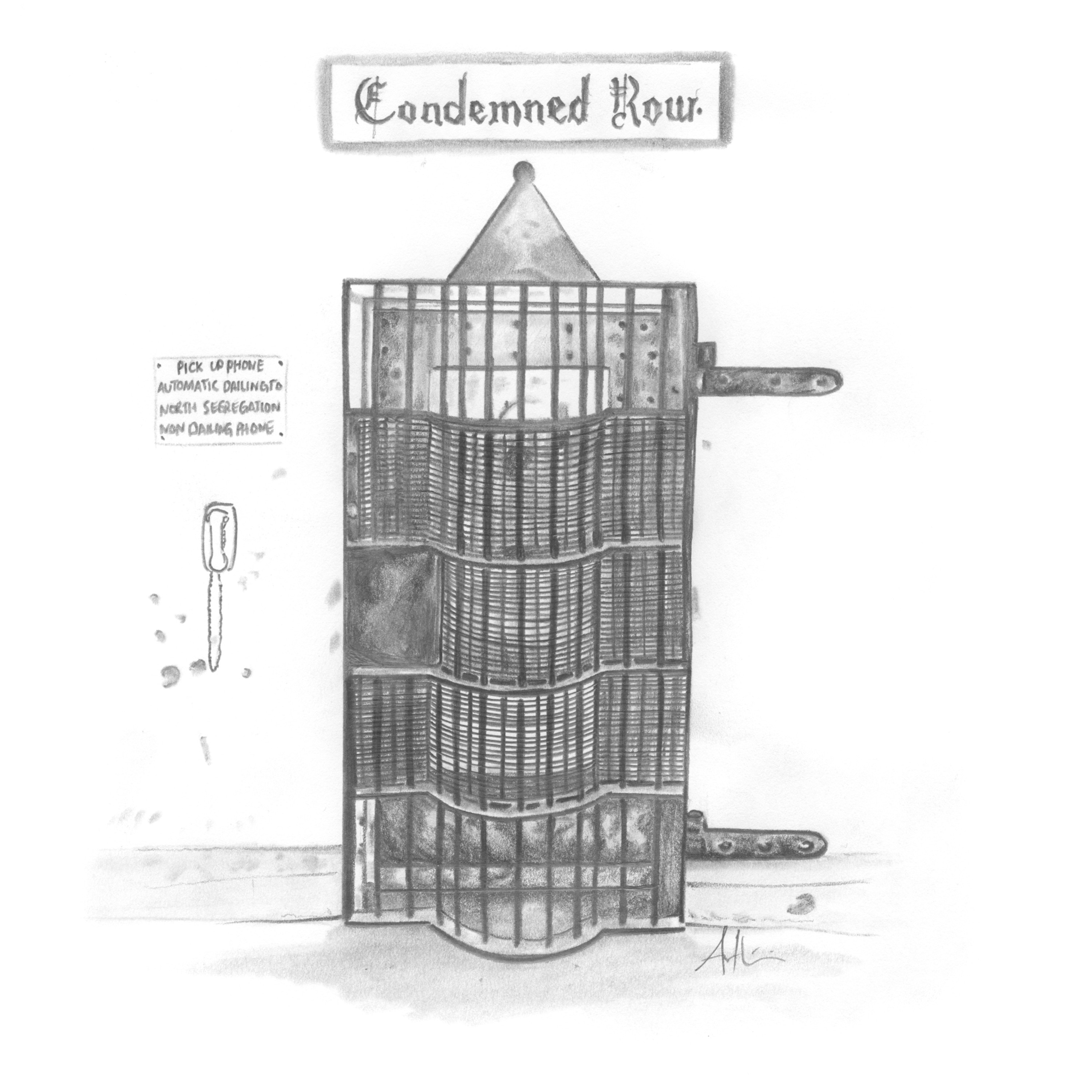
Loading summary
Transcript404 lines
- [00:02]
Earlonne Woods
We've got a special guest with us today, our senior editor, Amy Stand in, who just got her aarp.
- [00:09]
Nigel Poor
What the hell?
- [00:11]
Earlonne Woods
She's our senior editor.
- [00:12]
Nigel Poor
Oh, hey, Amy.
- [00:14]
Amy Stand In
He's right. Hi, guys.
- [00:15]
Nigel Poor
Hello. Hello.
- [00:16]
Earlonne Woods
Amy, could you tell the good folks just a little about all the things that you do for Ear Hustle?
- [00:21]
Nigel Poor
Sure.
- [00:23]
Amy Stand In
Well, I'm in the studio whenever you guys track. Whenever you guys record narration, like right now, I get to help out a lot with the writing and shooting shaping of episodes with the two of you. After this, the three of us are going to San Quentin to do some interviews. That should be fun. Also, speaking of San Quentin, I run an internship program, and I also have something I call the open class, where we bring in guests from the outside to teach incarcerated people about storytelling.
- [00:50]
Nigel Poor
Definitely.
- [00:50]
Amy Stand In
And then the live shows is the other big piece. Right. We all work shaping those shows together, writing them, figuring out what they're gonna look like and sound like, and bringing those shows into prisons to show to incarcerated people. And also workshops on storytelling at different prisons around the country. So, yeah, it's basically I get to work on all of the fun stuff and none of the not fun stuff.
- [01:14]
Nigel Poor
What is the not fun stuff? It leaves up to Bruce. Oh, that will remain a secret.
- [01:19]
Earlonne Woods
And the reason that we have Amy here is to make the point that none of those things she mentioned would be possible without listener support.
- [01:28]
Nigel Poor
Right. And it's a lot of stuff. It's pretty exciting to hear all, I think, behind the scenes of what gets done. So, recently, we launched this year's Ear Hustle fundraiser, and our goal is to reach 1,000 donors by the end of this season.
- [01:41]
Earlonne Woods
We have a long way to go to get to a thousand.
- [01:45]
Nigel Poor
We do. We do. But every gift, no matter the amount, will help us get closer to our goal.
- [01:51]
Amy Stand In
Plus, when you donate, you'll get an invitation to our June 11th virtual party where you can ask Nigel and Earl on your most embarrassing and personal questions
- [02:00]
Nigel Poor
live exactly in the morning. Embarrassing and personal, the more fun it will be. Absolutely. And if you donate $10 a month, you'll get access to Ear Hustle plus for ad, free listening, and bonus content.
- [02:10]
Amy Stand In
For example, I think my favorite bonus content are the Ask me anything episodes that you guys do with Bruce. Because speaking of embarrassing and personal questions, you get asked a lot of kind of nosy stuff in there, and it's really fun listening to.
- [02:24]
Nigel Poor
It's always fun. Remember we had to take that personality test? Exactly. Oh, my God.
- [02:28]
Earlonne Woods
So if y' all are interested in anything, they just said, go to earhustlesq.com donate to make your gift today. It's a gift.
- [02:37]
Nigel Poor
It is a gift and we thank you so much.
- [02:39]
Earlonne Woods
And she said we need a thousand.
- [02:40]
Nigel Poor
I know.
- [02:41]
Earlonne Woods
Before the end of the season.
- [02:42]
Nigel Poor
I know. Like I'm saying.
- [02:43]
Earlonne Woods
All right. Ear Hustlers come in strong for us so we can keep doing this work.
- [02:48]
Nigel Poor
Yes.
- [02:50]
Earlonne Woods
This episode of Ear Hustle is brought to you by Progressive Insurance.
- [02:54]
Nigel Poor
Do you ever think about switching insurance companies to see if you could save some cash?
- [02:58]
Earlonne Woods
Progressive makes it easy to see if you could save when you bundle your home and auto policies. Try it at Progressive, Progressive Casualty Insurance Company and affiliates. Potential savings will vary. Not available in all states.
- [03:13]
Nigel Poor
Earlonne doesn't it feel like it's been like go, go, go, go lately?
- [03:17]
Earlonne Woods
Yeah. I haven't fully unpacked my suitcase in the past couple of weeks. It's all good though.
- [03:22]
Nigel Poor
It's really forced me to pack and shop smarter. I like to go for essentials. Clothes that are comfortable but still put together. It makes traveling and getting dressed simpler. And Quint's has been one of my go tos.
- [03:35]
Earlonne Woods
Quint's has all the Wardrobe St spring. They use premium materials like 100% European linen, organic cotton and ultra soft denim.
- [03:44]
Nigel Poor
That's true. I actually just got a new pair of denim jeans from Quint. They are super soft. I love them. All of their fabrics feel elevated, the fits are flattering and everything just works without overthinking it.
- [03:56]
Earlonne Woods
Everything at Quint is priced 50 to 80% less than similar brands. They work directly with ethical factories and cut out the middlemen. So you're paying for quality, not brand markup.
- [04:07]
Nigel Poor
Refresh your everyday with luxury you'll actually use. Head to quint.comearhustle for free shipping on your order and 365 day returns. Now available in Canada too.
- [04:19]
Earlonne Woods
That's Q-U-I-N c e.com earhustle for free shipping and 365 day returns. Quints.com earhustle
- [04:32]
Bruce Wallace
hello Nigel.
- [04:33]
Nigel Poor
Hey Bruce.
- [04:33]
Bruce Wallace
Hello Earlonne.
- [04:34]
Earlonne Woods
What up Main?
- [04:36]
Bruce Wallace
Good to see you all.
- [04:36]
Nigel Poor
Yeah, nice to be here.
- [04:38]
Earlonne Woods
Good to be seen.
- [04:38]
Nigel Poor
I love being on the mic together.
- [04:40]
Bruce Wallace
Happy Spring.
- [04:41]
Nigel Poor
That's right.
- [04:42]
Earlonne Woods
I enjoy spring. I enjoy the longer sun.
- [04:45]
Nigel Poor
Me too.
- [04:46]
Bruce Wallace
For sure. You know, enough weather chat. We are here for serious business. We're listening to an episode out of the archives for our next sleeper hit or revisiting hit. What is the name of this episode?
- [04:58]
Earlonne Woods
Chicken on the Bone.
- [05:00]
Bruce Wallace
Chicken on the bone episode 35 dropped October 2, 2019 from season four episode 35. I think we're about at 135. I think we're like at 130. Previously we've done these just with one Ear Hustle team member at a time. This is the first time we've had two people on the mic with me to re listen to an episode and
- [05:23]
Earlonne Woods
I believe or first this was you
- [05:25]
Bruce Wallace
all both put some through and this ended up being the consensus choice for
- [05:30]
Nigel Poor
various reasons, I'm honest. It was not my choice, but I was super excited when I saw it. It was Earlonne's choice.
- [05:36]
Bruce Wallace
Why did you suggest this one Earlo? Without giving away any spoilers or any spoilers.
- [05:42]
Earlonne Woods
I think it was one of those cool episodes where it said a lot and I don't think anybody really used his name in society.
- [05:52]
Nigel Poor
You mean this description? No, they don't.
- [05:54]
Bruce Wallace
What the name of the episode.
- [05:57]
Nigel Poor
That's why I delight in the name of this episode, because I'd never heard anyone get so excited about this before.
- [06:03]
Earlonne Woods
And if you ever hear anybody using this name, you can know automatically where they've been.
- [06:09]
Nigel Poor
Yeah, let's not give it away though, okay? But you're right, you know that they've spent some time somewhere.
- [06:15]
Bruce Wallace
We are gonna listen to the first part of it, then we're gonna come and give some impressions about that, then listen to the second part and then come back and do a wrap up.
- [06:24]
Nigel Poor
Groovy.
- [06:25]
Bruce Wallace
So here we are. Episode 35, Season 4, October 2, 2019 called Chicken on the Bone.
- [06:33]
Nigel Poor
Hi, I'm Mine Hajin and I'm chief and editor of rveradjo Norwegian Prison Radio. Denne Episoden a airhustle in holler sprok o the this episode of Ear Hustle contains language and subject matter, including a graphic description of suicide that may not be appropriate for all listeners. Discretion is advised.
- [07:02]
Rahsaan New York Thomas
I remember first day on death row as a brand new cop. You know that they're all there for committing very, very heinous violent acts. And the people have created people's nightmares and horror stories. As soon as you open the first door, that guy walks out of the cell. It's not just one of them, it's a whole building of them. How can that not be intense?
- [07:29]
Nigel Poor
You're now tuned in to San Quentin's ear hustle from PRX's Radiotopia. I'm Nigel Poor, a visual artist now podcaster. My inside co host, Rahsaan New York Thomas will not be hosting this episode with me because San Quentin is now in lockdown. You will be hearing his voice on the tape Asking some questions, though. But to tell this week's story, I've got this guy here.
- [07:54]
Earlonne Woods
I'm Earlonne Woods, a podcaster and former resident of San Quentin. Together we're going to take you inside and back outside again.
- [08:14]
Nigel Poor
On this episode, we're talking about what it's like to live with a death sentence and beyond.
- [08:37]
Al Watson
Around 2:30 in the morning, two of the sheriffs just came and told me, hey, we finna transfer. You waited on them to return. You could hear em dragging chains and handcuffs and stuff down the tiers. They were on the way to come get me. So I got all chained up and one side of the cell they put on leg shackles with padlocks with each step, like the lock would bang against your ankle. Man, it's an annoying pain. When I got to the bus, I was actually the last guy on. The regular guys were already seated. When I come up on the steps, one of the sheriffs let the other one know. He said, end of the road. And I asked him actually, what did that mean? He said, well, a death sentence is in the road. We got to San Quentin, it was after dinner. Two guards came and got me and took me up to the fourth tier. I looked around and said, like, man, I'm actually here. I am one that could actually be put to death at any time.
- [09:45]
Earlonne Woods
There are over 700 people on death row at San Quentin. They're not part of the main line, though, so you rarely see them except maybe when they're being escorted to medical or something like that. We've said this before. Death row is a prison within a prison.
- [10:00]
Nigel Poor
Here's what's odd about that. There's a lot of guys up there, but there hasn't been an execution at San Quentin for 13 years, since 2006. That's when a federal judge ruled that the way California put people to death, the particular mix of drugs used in lethal injection, was unconstitutional.
- [10:18]
Earlonne Woods
A few times in the past decade, California voters have narrowly voted to keep the death penalty. In fact, in 2016, voters passed a measure to speed up the appeals process for people on death row.
- [10:30]
Nigel Poor
And man, that shocked me because basically, voters wanted people to die faster after they were sentenced. But earlier this year, the new governor, Gavin Newsom, unexpectedly called for a moratorium on executions in California that didn't do away with the death penalty or with death row. It just means he pushed pause.
- [10:50]
Earlonne Woods
With that moratorium. You'd think the death penalty in California was on its way out. But if you look at history, one thing's for sure. Public Opinion, laws and policies are always changing. Meanwhile, the residents of San Quentin experienced the issue very personally.
- [11:07]
Lonnie Morris
After each execution, there's an eerie quietness, like something is missing.
- [11:12]
Earlonne Woods
That's Lonnie Morris. He's been in prison for 42 years, 38 of those years in San Quentin. He was there when execution started up again in 1992 after a 25 year pause.
- [11:25]
Lonnie Morris
The first person they executed when they started the executions back up in California was a gentleman by the name of Robert Alton Harris. On the night that Robert Alton Harris was to be executed, they locked us down. I was in my cell, so I started to. From the time I locked up, I started to kind of. I don't. I hate the term, but what we call a death watch, you know what I'm saying? You know, watching the news to see how this situation was going because we knew that his lawyers was going to try to get an injunction against the execution. Right? Every news channel was, you know, attuned to it. When the United States Supreme Court said, no more stays, that was like, oh, my God. They just said, I don't care what you come with, he dying, and he dying before sunrise this day. I didn't know Robert Alton Harris, but the process was something that I knew that this was going to be heralding the death of other people that was on death row.
- [12:39]
Al Watson
I thought it would be relatively quick. Five, six, seven years, somewhere around in there. And when I got there, I met guys that had been there since, like, 78, just waiting around.
- [12:55]
Nigel Poor
This is Watson, Allison. We heard him earlier. He goes by al. And in 1984, he was sentenced to death for felony robbery murder. Were you people's nightmare?
- [13:06]
Al Watson
Um, some. My. The victims of my life crime, yes, I was.
- [13:18]
Earlonne Woods
Al had been on death row for more than four years when he got his first date. What's called a death warrant. It was one of several he'd get.
- [13:27]
Al Watson
I was on the yard. Lieutenant wanted to talk to you. He sent for me to come out, come in, and he told me the governor just. Just issued a death warrant for you. So you want to sign it? I'm like, nah, I refuse to sign it. But it's gonna go on. Whether you refuse to sign it or sign it, there was a choice. Cyanide poisoning or lethal injection. So you make your own choice, or staff members make the choice for you. If you decide not to choose,
- [14:08]
Nigel Poor
And this is a gruesome question to ask. I'm sorry, did you select how you were gonna be executed?
- [14:15]
Al Watson
No, I didn't let them do that. The guards and the lieutenant.
- [14:20]
Nigel Poor
Do you know what they chose?
- [14:22]
Al Watson
Cyanide poisoning. The gas chamber. Yes.
- [14:29]
Nigel Poor
In 1938, the gas chamber replaced the gallows. To hear more about this history, we have to reopen a book that some listeners might remember from a previous episode.
- [14:38]
Earlonne Woods
The San Quentin Story by Clinton T. Duffy. It was published in 1950, and it's about Duffy's experience at San Quentin as he moved up through the ranks and finally became the warden.
- [14:51]
Lee Jaspar
I remember seeing the dumpy little riveted steel cell the day it was delivered at the San Quentin docks on a barge. It weighed somewhat over 2 tons without its grim accessories. And the state paid a Denver firm $5,016.68 for another $10,000 was spent installing the gas chamber. And a small pig from a prison farm was the first victim when its ineffable efficiency was tested.
- [15:24]
Nigel Poor
So, man. So when you. When he called you and you found out what he wanted, like, what. What happened to your body when you heard that?
- [15:34]
Al Watson
I went numb for a minute. A lot of anxiety, nervousness. I'm saying, okay. This is like, okay, I got pretty much 60 days before it actually happens.
- [15:53]
Lee Jaspar
The Manual Of Operations lists 21 separate steps for the technical operations alone. And the equipment recommended by the manufacturer and kept on hand includes funnels and rubber gloves, graduates, acid pumps, gas masks, cheese cloths, steel chains, towers, soap, pliers, scissors, fuses, and a mop.
- [16:22]
Nigel Poor
Do you remember how the CO Was? Was he nervous? Did he make eye contact?
- [16:27]
Al Watson
He was. Businesses, you know, just business. No emotion expressed. I mean, I was sent there to be executed. You know, I think it was, like, June 13th. That was, I think, 1989.
- [16:48]
Lee Jaspar
The chemical supplies include sodium cyanide, eggs, sulfuric acid, distilled water, and ammonia with a discount if they're bought in quantity. We pay about 50 cents for a pound of cyanide, enough to execute one man. But other expenses, including the executioner's $50 fee, the prorated time of the warden, guards, doctors and technicians, and such things as new clothing for the prisoner to wear for his death, bring the cost of the average execution to $150.
- [17:33]
Nigel Poor
So when. When you knew you had this expiration date, what changed in you inside?
- [17:38]
Al Watson
As a person, I strived to talk to like my son. A couple individuals that I really cared about that were still in my life and just, you know, try to, like, get me in order spiritually. Time seemed. Seemed to speed up. Seemed like the days were going past faster. Couple of. Couple of psychiatrists came to see me just to check on my mental status. I had actually sat with my mom and my sister and signed some paperwork where after the execution was done to have my body released to them for cremation and a burial service. My mom, my sister and my lawyer were very emotional and it affected me.
- [18:38]
Nigel Poor
So what's so scary about dying?
- [18:41]
Al Watson
Well, for myself, it's facing the unknown. You know, you hear a lot of stuff about the hereafter, condemnation or paradise. You know, okay, where am I gonna go? Where am I gonna land? So, because I do believe that there is a hereafter. So it's all about, am I going this way or that way?
- [19:06]
Nigel Poor
Where'd you think you were gonna go?
- [19:07]
Al Watson
I think I was going down, under.
- [19:17]
Lee Jaspar
I am sorry to say that many of the thousands of citizens I have conducted through the prison actually enjoy standing in the death house and often are bored with any other phase of prison life. Men visitors are generally odd by the cold surgical neatness of the little green room where the gas chamber squats and look away self consciously when we explain how the executioner's lever drops the cyanide into an acid bucket beneath the condemned man's chair. But many women listen with a curious sort of rapture. And scores of them have walked right into the nine foot chamber itself and sat down in the metal chair just to see how it feels.
- [20:15]
Abu Qadir Alamein
May 4, 1970, I was sentenced to die in a gas chamber at San Quentin.
- [20:21]
Earlonne Woods
This is Abu Qadir Alamein. He was high on heroin when he killed a security guard in 1969. We wanted to find out from him what death row was like back then in the 1970s.
- [20:34]
Nigel Poor
What was it like acclimating to life on death row?
- [20:39]
Abu Qadir Alamein
I didn't really acclimate. I began to work on what I felt were my character defects. And I didn't want to die in the condition that I was in that led me to be there in the first place. I read a lot. I studied. I read history, I read science, math, I read books about faith. And also I exercised and I used to fast a lot. I would eat one meal every other day. I kind of was not willing to enjoy the comforts that existed there.
- [21:14]
Nigel Poor
Really. This is the first I've ever heard anyone say that. What was comfortable there?
- [21:17]
Abu Qadir Alamein
Well, we had our own special kitchen that cooked just for people on death row. Maybe some mornings we'd have steak and eggs. You know, I didn't have steak and eggs in the free world. So we would have steak and eggs and, you know, toast and juice. And I saw people getting big bellies up there and getting comfortable And I said, man, they fattening us up for the kill.
- [21:48]
Nigel Poor
Steak and eggs are lined up. Did you ever have steak and eggs in prison?
- [21:51]
Earlonne Woods
Hell no. I had to wait till I got out of prison for that one.
- [21:56]
Nigel Poor
I remember that meal.
- [21:57]
Earlonne Woods
But back in the day, food in prison was way better. Not just for the guys on death row, but for everyone. Nowadays, death row get the same food as the main line, and let's just say you only eat it because you have to.
- [22:11]
Nigel Poor
Yep, and by the time Al got to death row in the 1980s, steak and eggs were long gone. Can you describe your world there?
- [22:20]
Al Watson
Isolated, dreary, a lot of loneliness, sadness that just became routine.
- [22:28]
Nigel Poor
So what do you think when people say, I'd rather die than spend my life in prison?
- [22:36]
Al Watson
Me? It never crossed my mind. I wanted to live.
- [22:45]
Lee Jaspar
I had determined never to witness an execution. I kept this resolve until October 2, 1930. At 9 o' clock that morning, the baby faced murderer had been found writhing on the floor of the death cell, screaming that he had swallowed poison. Dr. Stanley went to work on him with a stomach pump. But when we reached the cell, Northcott was still trembling and sobbing that the rope was going to hurt. I never have heard anyone complain about its hurting. Dr. Stanley said quietly. I want a blindfold over my eyes. Northcott cried. Let me walk slowly. Warden Holohan, pale and plainly suffering, nodded to the guards. They quickly tied a black bandage around the boy's eyes and the death march began. I hung back as we entered the high gallows room on the top floor of the crumbling furniture factory. And Warden Holohan turned his eyes away from the rope. Northcott stumbled and sagged, and the guards carried him up the steps. I heard him weeping and he said, say a prayer for me, please. Warden Holohan raised his right hand, a tired and unwilling hand, and it was over.
- [24:22]
Al Watson
One of my best friends, he was my neighbor, you know, we could talk about anything, seemed like, and, and we was talking, it was on a Sunday, and so it got to be like dinner time. And so he beat on the wall and he told me, hey man, the rope, it'll work. And I'm like, man, what you trippin on? And he said, the rope, bruh, it'll work. And I'm like, man, look, kick back, we holler in a minute. And at the time I wasn't eating desserts, so the guard came up to fix our trays and I told him, give him my dessert. And he gave me my dessert. And there's only like four or five more cells on the tier to feed. So he fed those guys, and we turned around, boom, the alarm went off. And I stuck my mirror out. And the guard was opening his door. And when he opened his door, he was swinging back and forth on it and he was gone. He just did that. And it was like my stomach or something had been ripped open.
- [25:40]
Earlonne Woods
There are suicides down on the main line too. Guys just give up. But one thing they don't have is
- [25:48]
Nigel Poor
a constant threat of execution or a stay of execution. On death row, you get a date and you think you're gonna die in 60 days. And then you hear something else. And it's gotta be emotional chaos. And I wonder, like, how do they deal with it?
- [26:03]
Earlonne Woods
I don't know.
- [26:07]
Al Watson
After about 27, 28 days, I think I got the news that stay had been granted and I fell back into my regular old normal routine. Seemed like the days just pretty much all blended into each other. I quit using calendars. I would know, just like, if I write a letter, I'll put June 2019, right? But as far as the actual dates and stuff, I quit using calendars many years ago. I still don't use them. As far as normal death row life, you're in your cell a lot. You may go to yard from like maybe 9, 8, 9 o' clock to about 12 o'. Clock. Pretty much 12, 12, 30, the whole program's over. So whatever you have going on in your cell, you're back in there. I had a routine where I worked out like about three times a day. I just burn off energy and relief to actually stay balanced.
- [27:11]
Earlonne Woods
Let me ask you this. I know in visiting, if you're on death row, they put you and your family in that cage. Can you describe that cage in the visiting room cage?
- [27:20]
Al Watson
About 4 foot, 4 foot or maybe 5 foot. The visitors would already be in the cage when I get there. And they would see me get unhandcuffed and everything else and let in you bring all of your food in with you. If they need to go to the bathroom or something, I would have to be handcuffed and taken out of the cage first before they would let them out. How does it feel to be on
- [27:44]
Earlonne Woods
a visit where your family has to literally get in the cage to see you?
- [27:48]
Al Watson
It's hard, really, you know, but they love you enough to do this for you. I used to refuse visits because I didn't want certain people going through those experiences. I put myself here. I'm responsible for this. So I don't want you suffering and having to say goodbye to him, because goodbye is really. Is final.
- [28:19]
Rahsaan New York Thomas
I definitely remember the day that I stood in front of this man's cell.
- [28:23]
Nigel Poor
This is Lieutenant Sam Robinson, the public information officer at San Quentin and the guy who signs off on every episode of this podcast. That was also Sam we heard at the top of the episode.
- [28:33]
Earlonne Woods
He was telling us about his time as a CO on Death row, where he first met Al. And Al made an impression.
- [28:40]
Rahsaan New York Thomas
I remember it like it's yesterday. It was on the fifth tier. One of our protocols before we release maximum security inmates from their cells is you take all their clothing from them, all the items that they're taking out to the yard or exiting their cell in, and you conduct a visual unclothed body search on them while they're locked away on the side of their cells. And I did that. And so, sure enough, I'm going through this white T shirt and I hit this bump. His eyes got big, threw his hands up like, man, you got me. There was no words exchanged or anything like that.
- [29:20]
Nigel Poor
What do you think drugs are on
- [29:22]
Earlonne Woods
some kind of country band? In any case, Sam and Al go way back.
- [29:26]
Nigel Poor
Yep. They first met on Death Row, but Al also saw Sam when he was sent to the Adjustment Center.
- [29:32]
Earlonne Woods
The AC is the hole for Death Row. It's where you go when you don't follow the rules.
- [29:39]
Rahsaan New York Thomas
He had come over for messing up. Al was Al. He'd beat you if he could. He was always involved in nefarious activities, always respectful, never disrespectful. To me, if someone told me that he had been to them, I think I would have been shocked because that wasn't what I got from him. But he was a con. All the way through my time there,
- [30:05]
Al Watson
I stayed in Mischief rule violations for all kinds of madness.
- [30:13]
Earlonne Woods
That kind of madness affects your visits.
- [30:16]
Nigel Poor
It even affects your family.
- [30:17]
Earlonne Woods
Right? Because when you're put in ac, all your visits are non contact. It's through the glass. And you talk to your visitors on the phone.
- [30:25]
Nigel Poor
And this is where Al's mom met him. One day after driving up from Southern
- [30:29]
Al Watson
California, my mom came and told me, boy, what the hell's wrong with you? You still acting stupid. So she came all the way from Long beach and she had bought a bunch of food and stuff, and I couldn't get it. So she just piled it all up in the window and allowed me to look at it while she talked to me.
- [30:49]
Earlonne Woods
And you're on the phone and what was the food?
- [30:51]
Nigel Poor
Do you remember what the food was?
- [30:53]
Al Watson
Burritos, burgers, fries, sodas and stuff. You Know, I like sour candy. So she bought, like, gummy worms and honey buns, all that type of stuff. So she told me, well, you know, you can't eat none of this, so I'm gonna give it to other people. And she said, man, you continuing to do stupid shit, you know, she was right. When you're gonna grow up, was she
- [31:20]
Nigel Poor
really angry with you?
- [31:21]
Al Watson
Yes, very. I wouldn't even repeat a lot of stuff she said, but, yeah, she was angry. I was just tired of the BS that I was into, and I stepped back and started evaluating myself, beginning to take another path away from bs, away from negativity.
- [31:42]
Nigel Poor
How old were you at that point?
- [31:44]
Al Watson
I was in. I think I was, like, about 51, 52 years old.
- [31:49]
Nigel Poor
I was shocked when he said that. He's 60 now, but, man, he looks like he's 40.
- [31:54]
Earlonne Woods
Well, that can happen when you don't get a lot of sunlight. The skin stays fresh.
- [31:59]
Nigel Poor
I don't know. In any case, after 29 years on death row, his case took a dramatic turn.
- [32:05]
Al Watson
I was eating a tuna sandwich and some potato chips. Three guards showed up at my door and told me, hey, the lieutenant want to speak to you. And I got stripped out. I got handcuffed. My heart's pounding. My body's kind of. Kind of warm. When I get there, he's standing outside his office, and he pats me on the back and tells me congratulations, and asked me to come in his office and have a seat. And I'm like, this is all new. And I sit down. He says, congratulations, man. They just overturned your case. So me and the lieutenant, we talked for a little bit, and they brought me the telephone and let me use it. I called my mom, and she was crying and she was joyful. When I came out of his office, it was like I was walking on clouds or something. It was like I was in a daze. I was. I was in, like a trance or dream or whatever. And next thing you know, I'm back in my cell getting unhandcuffed, and I just sat on the bunk. I couldn't eat that night. I couldn't sleep or none of that.
- [33:11]
Nigel Poor
In 2010, a federal judge reversed the original jury's finding that Al intentionally murdered the victim and that he used a gun during the incident and set aside his death sentence. A year and a half later, the DA decided not to retry him. He was re sentenced to 25 years to life.
- [33:29]
Earlonne Woods
After 29 years on death row, Al was moved to a part of the prison called Badger, which is a reception center for Prisoners getting processed into the Main Line.
- [33:38]
Al Watson
So at that point, they came and packed my property, handcuffed me, took me to the front door of each block, and took the handcuffs off, which was very strange. When I got to badger section, there was a CO over there. He knew me. So when he put me in the cell, I actually bagged up to get the handcuffs took off. And he's like, man, what are you doing? And I'm like, what? And I realized then that the handcuffs weren't on.
- [34:12]
Nigel Poor
For the first time in almost three decades, Al was out of his cell without handcuffs on. I mean, freedom is relative. But that was a big deal.
- [34:21]
Earlonne Woods
So Al got off death row because of a development in his case. He's now on the Main Line. But Abu Qadir Alameen, who was sentenced to death in 1970, he got off death row under very different circumstances.
- [34:34]
Nigel Poor
He got off the row because the law changed. In 1972, the U.S. supreme Court struck down the death penalty. And Abu remembers it well.
- [34:44]
Abu Qadir Alamein
I do remember that night. We stayed up all night, maybe two nights in a row. It was an atmosphere of exuberance. People were excited, people were happy. People were talking, you know, just imagining that they're not going to be under that circumstance anymore. And, you know, we'll be, you know, have a possibility of getting out and coming home.
- [35:08]
Earlonne Woods
Abu was re sentenced to seven years to life. And after serving eight years in 1978, he was found suitable for parole and released.
- [35:16]
Abu Qadir Alamein
Well, I'm grateful that that wasn't my end destination, that I didn't die there. I owe a debt to the society that spared my life. So I always think about that. I have to acknowledge that that was a turning point in my life.
- [35:44]
Earlonne Woods
After he got out of prison, Abu became an imam at a mosque in the Bay Area. He also works on criminal justice.
- [36:00]
Nigel Poor
When we come back, we're gonna hear from Al about what it's like to adjust to life on the Main Line after death row.
- [36:07]
Al Watson
Dudes were talking about we having chicken on the bone tonight. And I'm like, what's the big deal?
- [36:20]
Bruce Wallace
Okay, cool, cool. We're back on after the first part. First, most of chicken on the bone. We have. What's the joke I'm trying to make? We have consumed. We have consumed most of the chicken.
- [36:34]
Earlonne Woods
Chicken on the bone. And we have chicken strips.
- [36:36]
Nigel Poor
Just a little chicken left.
- [36:37]
Bruce Wallace
That's right. Just a little chicken strip left.
- [36:38]
Nigel Poor
Two bites left on the drumstick.
- [36:41]
Bruce Wallace
What stuck out to you two?
- [36:43]
Earlonne Woods
Let me say what stuck out to me. We didn't have Paul's control.
- [36:47]
Nigel Poor
Oh, Paul's patrol.
- [36:49]
Earlonne Woods
We didn't have Paul's patrol at all. I don't want to say we were stepping on each other in a way, but I know we were hella close.
- [36:57]
Bruce Wallace
You guys, when you were narrating, is
- [36:59]
Nigel Poor
that where the pauses should have been?
- [37:01]
Earlonne Woods
Pauses should have been between us, between the.
- [37:03]
Bruce Wallace
You know, and when we go from narration back to tape.
- [37:07]
Earlonne Woods
Yeah, it was a trip.
- [37:09]
Nigel Poor
Okay.
- [37:10]
Bruce Wallace
Another thing that kind of reinforces that feeling is that the sound design is almost wall to wall. We have a lot more of it then than we do now.
- [37:19]
Earlonne Woods
Yeah, that's true.
- [37:20]
Nigel Poor
I like the sound. Did you guys not like the sound design?
- [37:22]
Earlonne Woods
Oh, no. We had Antoine, Jazzy and all them doing their thing. So I think Pat used to be
- [37:28]
Nigel Poor
in there doing the heavy lifting.
- [37:31]
Earlonne Woods
No, definitely.
- [37:32]
Nigel Poor
I have to say, sorry, sound design guys. I love the sound design now, but when I hear the old ones, I really like how much sound design is in it.
- [37:39]
Bruce Wallace
Yeah. And I feel like I was having a feeling of it being dense in a nice way.
- [37:48]
Nigel Poor
So much going on in it.
- [37:49]
Bruce Wallace
Dense, yeah.
- [37:51]
Nigel Poor
When I looked at my notes, I was like, this is just the first half. We put so many things in there. There were so many things I forgot about. First of all, Sam. I forgot what a big role Sam plays in it.
- [38:03]
Bruce Wallace
I always think of this as Al Watson's episode.
- [38:06]
Earlonne Woods
Right, right, right.
- [38:07]
Nigel Poor
But it's incredible that we had Sam there to be able to talk about someone he met on death row, which he's called him a conversation. And then he meets him again, you know, in the ac, and then he's gonna. Well, there'll be a third meeting. I mean, that's extraordinary. That means Sam, he's going over a 20 year career. 20 plus year career. He's like a kid.
- [38:30]
Earlonne Woods
They're both kids when they meet. Definitely. And then Sam had caught him with his little stash. He had his little bump in his
- [38:36]
Nigel Poor
little shirt that I forgot about. I love how we use the San Quentin story in here. I think it's so effective. And, you know, we never come in and say how we feel about the death penalty, but we hint at it. So I think, well, in the passages that we use from the San Quentin story, the detail of how they built the death chamber is really gruesome. And the list of things that items. Because the first part is almost all household items. And then it gets to the chemistry. And then the description of Northcott, baby face murderer. And he asks to be walked slowly. Like, oh, it's so emotional.
- [39:21]
Earlonne Woods
Yes. It's A trip how to install it costs more than the actual chamber cost. You know what I'm saying?
- [39:28]
Nigel Poor
Oh, God. In the list of, like, they have to get a new outfit for the person who's being executed.
- [39:32]
Earlonne Woods
A brand new one. And then, you know, of course, you know, politically, gotta give it up to the gov' cause he slowed that down.
- [39:41]
Nigel Poor
Yeah.
- [39:42]
Bruce Wallace
And we're still in the situation we described back then.
- [39:44]
Nigel Poor
Right.
- [39:45]
Bruce Wallace
The moratorium.
- [39:45]
Earlonne Woods
The crazy part is that was when he first came into the office. Now he on his way out. When we revisited now.
- [39:51]
Bruce Wallace
Oh, yeah. And this is actually. It's not the one big thing that's changed that we've talked about is that they've now taken everybody off condemned row. There's no death row anymore in San Quentin. They're gonna turn it into honor living or something. Basically Honor Dorm. Honor dorm.
- [40:06]
Nigel Poor
But the death row. The death penalty still exists. Right.
- [40:08]
Earlonne Woods
That's just everybody's. They don't just. Instead of calling it death row because that's where they house you. It's just condemned.
- [40:14]
Nigel Poor
Condemned.
- [40:14]
Bruce Wallace
Yeah. So they still. People who had death sentences still have the sentences, still have the general population. Right.
- [40:20]
Nigel Poor
It's crazy. The other thing I really like about these kind of episodes is I love the kinds of questions I get to ask people. I was listening to the ones that are like, I can't believe I asked people these questions. But I realized that we get into this moment with people where you feel like you can ask anything and people. And some of the things I were thinking about, like when I fry. Well, when I asked him, are you people's nightmare? And I realized that I asked him because that connects to what Sam says at the beginning. That you walk in there and everyone you meet is somebody's nightmare. Yeah. And that, like, what form are you going to choose to kill yourself? Or are you going to go to heaven or hell? Are you scared about dying? All these, like, really big questions that get to be addressed.
- [41:05]
Bruce Wallace
Yeah. And it didn't make me uncomfortable listening to it. Like, I knew. I mean, those questions stood out to me, but not in like a. It didn't make me nervous or uncomfortable or anything.
- [41:15]
Nigel Poor
Yeah.
- [41:15]
Earlonne Woods
And I was. Of course, I know this is different, but I was wondering, did his neighbor eat that cake or that dessert?
- [41:22]
Nigel Poor
I know.
- [41:22]
Earlonne Woods
You know what I'm saying? Like, how quick it happened. You know, that was deep.
- [41:28]
Nigel Poor
Yeah. And then you kind of wonder on a lighter note, like, why isn't Al eating desserts? Why did he decide to not eat desserts anymore? It's like, such a little small detail, but you realize he's still caring about his body, right? And trying to take care of himself, I think.
- [41:42]
Bruce Wallace
Okay, we are gonna take the aforementioned break, then we'll come back, listen to the second part and then dig deeper into the episode, give some critiques.
- [41:50]
Earlonne Woods
And please, listeners, please comment on what y' all part. What y' all thinking?
- [41:55]
Nigel Poor
Yeah, what you all think. I'd love to hear what people thought if you remember hearing it or if this is the first time you hear it. Hey listeners, Nigel and Earlonne here to tell you about our fellow Radiotopia show Proxy, which is coming back with a new season.
- [42:09]
Earlonne Woods
Proxy is a show built on the idea that you're never alone with a problem, no matter how niche, no matter how weird someone out there gets it.
- [42:20]
Nigel Poor
On Proxy, host Yowei Shah searches for a stranger with the closest possible experience experienced. What someone is going through a Proxy, if you will. And then she brings them together for a conversation.
- [42:32]
Earlonne Woods
The cases can get pretty thorny, like a writer who loses the narrator in her head. But they also can be weird little problems, like a podcast host not knowing how to speak, bro.
- [42:43]
Nigel Poor
You know how to speak, bro.
- [42:44]
Earlonne Woods
For shizzle my nizzle,
- [42:47]
Nigel Poor
the new season of Proxy is out. Now, a good episode to start with is Jane doesn't like her dogs about the terrifying moment when the thing you love starts to give you the ugh. Ick.
- [43:00]
Earlonne Woods
Listen to Proxy wherever you get your podcasts,
- [43:06]
Nigel Poor
Listeners. Do you want even more Ear Hustle
- [43:09]
Earlonne Woods
and even fewer ads? Like zero, zilch, nothing, nada?
- [43:13]
Nigel Poor
If so, subscribe to Ear Hustle Plus.
- [43:16]
Earlonne Woods
Ear Hustle plus subscribers get access to ad free episodes and bonus episodes.
- [43:22]
Nigel Poor
Our Ear Hustle plus episodes are really fun. Subscribers can find out what's happening with people they've heard on previous episodes, and they can also send in questions for us to answer.
- [43:32]
Earlonne Woods
And me and Nigel get to sit here and chop it up with our producer Bruce and just talk about whatever.
- [43:38]
Nigel Poor
If you want to hear more of that, subscribe to ear hustle+@earhustlesq.com or directly in Apple Podcasts.
- [43:47]
Earlonne Woods
And thanks for supporting the show. We appreciate y'. All. And send in some provocative questions, spicy questions.
- [43:59]
Nigel Poor
There's a lot going on right now. Mounting economic inequality, threats to democracy, environmental disaster, the sour stench of chaos in the air. I'm Brooke Gladstone, host of WNYC's on the Meet. Want to understand the reasons and the meanings of the narratives that led us here and maybe how to head them off at the pass that's on the media's specialty Take a listen wherever you get your podcasts.
- [44:35]
Rahsaan New York Thomas
I think the first time I saw Al off death row was he was over in badger section, I think it was. Were you in badger section?
- [44:43]
Al Watson
First tier.
- [44:44]
Rahsaan New York Thomas
First tier. Badger section. Near the officers podium, right?
- [44:46]
Al Watson
Yes.
- [44:47]
Rahsaan New York Thomas
Yeah. And I think I was just walking through and hear this voice yelling at me.
- [44:53]
Al Watson
Yes.
- [44:53]
Rahsaan New York Thomas
Like, Robbie. Like, huh? Like, dude, you ain't off the road.
- [44:57]
Al Watson
Yeah, he said that's. He said the last time I saw you, you were in the adjustment center. When you get caught by someone, you remember that person. You know, you respect him. Of course I talk to other individuals about you. Hey, you do not try to beat this guy with nothing in your clothes. Oh, man, he's going through your stuff. We had a little conversation and congratulated me. Think you walked off.
- [45:23]
Earlonne Woods
After a bit of time in badger section, Al was sent to Solano, another prison in Northern California.
- [45:29]
Al Watson
When I got to Solano, uh, it was a lot going on. You got dudes that walk around all night like zombies, day sleepers. I'm used to everything coming to my cell, the phone, canteen, everything, Right? So I have to go to everything, standing in line, got dudes in front of me, dudes in the back of me, dudes on the sides and stuff, sitting at tables, just. Just interacting. At first, I found myself watching everybody, you know, like some paranoia was in. I used to just go to the shower, and I would go eat or use the phone, and I'm back inside the dorm. I didn't. Wasn't interacting. I wasn't used to that. I'm used to just dealing with myself.
- [46:17]
Nigel Poor
And then there was that chicken on the bone Earlonne. Did you have chicken on the bone in prison?
- [46:22]
Earlonne Woods
Hell, yeah. Chicken on a bone. Have you ever had chicken on a bone?
- [46:25]
Nigel Poor
Nice. Well, the thing is, you don't talk about it on the outside because you always have chicken on the bone.
- [46:29]
Earlonne Woods
Always got a bone on it. But nah, chicken on a bone in prison was like every Sunday, and then they stopped giving it out, and then they start just giving it out on holidays. So when they say chicken on the bone, everybody going, it's something special. Very special. It's chicken on the bone.
- [46:46]
Al Watson
Yeah, you got the drumstick and part of the breast connected together with the bone. It had been over 30 years, actually, since I'd seen that. And sitting down, eating at a table with, like, me and three other guys, you know, dudes were having conversation over a meal. And I'm a slow eater, so from being by myself and everybody's, you know, they're Eating and talking at the same time. And it was strange. When I came out of the dining hall, I just happened to look up. The stars were out there. So while I'm walking, I'm just looking up. While I'm walking, just admiring this. And it tripped me out. I forgot all about that type of stuff. I actually realized, man, I haven't even seen the moon in the stores in a long, long time.
- [47:47]
Nigel Poor
The moon and the stars. That's got to be nice when you haven't seen them in, like, decades.
- [47:53]
Earlonne Woods
I mean, I still, to this day, out here, look up at the stars and the moon and the water and be stuck.
- [48:01]
Nigel Poor
Wait, does it look different out here?
- [48:02]
Earlonne Woods
I mean, it's tranquil. It's like you don't get to see it a lot. You know, you off the yard before that happens, you know? So there was those nice moments, chicken on the bone, seeing the stars. But there were a lot of things about life on the Main Line that were difficult for Al.
- [48:19]
Nigel Poor
And while he was still at Solano, he made an unusual request.
- [48:23]
Al Watson
There was a lady there, Ms. Chu. So she called me for an assessment. She was talking to me and stuff. I was real standoffish. And I just asked her, hey, can you send me back? And she's like, what? And I'm like, man, can you send me back to death row? And she said, boy, are you crazy? I'm not going to do that. You're in general population. But what I'm going to do for you is. She assigned two peer mentors. They helped me a lot.
- [48:53]
Nigel Poor
Well, what was overwhelming you?
- [48:55]
Al Watson
Do you think the movement isolation is not good?
- [49:01]
Nigel Poor
Is it harder for you to attach to?
- [49:02]
Al Watson
Yes, it is. I'm standoffish. I'm guarded, evasive. You may be watching me, but I'm watching you. You know, just guarded.
- [49:15]
Earlonne Woods
How is it speaking, Speaking to people that you don't know?
- [49:20]
Al Watson
I'm slow, slow, slow to speak. I'll listen to you and process what you say. I don't just blurt something right out, you know, it's running in my mind. What do I actually want to say?
- [49:33]
Nigel Poor
Not that long ago, Al was transferred back to San Quentin.
- [49:37]
Al Watson
When I got here, I was. I was kind of excited. Then I seen some familiar faces with some of the COs and stuff, like, hey, you know, they're all getting ready to retire. And it asked me, showed me how old I'm getting.
- [49:53]
Earlonne Woods
A few years ago, Al went to his first parole board hearing.
- [49:58]
Al Watson
And I was so quiet in there that the commissioner actually asked me, am I gonna Say anything. But now, today, if I get the opportunity to be back in front of that same commissioner, we can talk. You know, I can open up and express me.
- [50:21]
Nigel Poor
So, Earlonne, I know you weren't there, but I have to tell you, it was so hard to get Al to talk to us for this story.
- [50:27]
Earlonne Woods
I mean, I definitely can understand that, because, you know, when you have people that's been incarcerated for a long time, they usually don't open up to people.
- [50:37]
Nigel Poor
Oh, yeah. I mean, we had, like, six conversations with him before we even got him down to the media lab. And the first time I met him, he was so blank. You know what I mean? Like, he was clearly uncomfortable.
- [50:46]
Earlonne Woods
Yeah, decades of isolation can do that to you.
- [50:49]
Nigel Poor
But the thing that was really cool, over the time, maybe the six weeks that we were trying to get him to do the story, he really changed. And, like, he started smiling and opening up. And one thing that really stood out to me was that I said to him, you know, it's really great to see you smile. And about a week later, he came up to me, and he's like, can I talk to you for a minute? And he said, I wanted to ask, when you told me that it was nice to see me smile, was that a good thing? And I was like, hell, yeah, of course it's a good thing.
- [51:20]
Earlonne Woods
How does it feel to go on a visit now with your family?
- [51:22]
Al Watson
It's crowded. It's crowded out there, man. You know, it's the trip. Seeing the little kids walking around playing, being able to walk to the microwave and cook some stuff and actually go to the vending machines and pick out what you want to eat instead of just trying to just sit there and talk to people without being in a cage. You know, it's good. And being able to walk around with your people and talk to them, not just isolated to the point where you're sitting in a chair. You can actually get up and stretch your legs, move about a little bit.
- [51:59]
Rahsaan New York Thomas
If Al was still the knucklehead that I knew, Al would have never made it back to San Quentin. And so, obviously, it turned the corner somewhere. It's amazing what over 20 years will do. That wasn't true, because, like I say, the first day, I don't think that I would have ever imagined that someone on the row, when I would sit across from them, open cuffs, dialed in from a microphone inside the prison at San Quentin and have a conversation about
- [52:34]
Al Watson
it, I never thought that I would be in this position at all. I thought, okay, life is gonna be over. On Death Row and by the grace that it wasn't then sitting in this position. I never imagined it, man. Never.
- [52:58]
Nigel Poor
Are there ever times now where you want to go back?
- [53:00]
Al Watson
Not a chance. Not a chance. Not at all.
- [53:16]
Earlonne Woods
Thanks to Al and Abu for talking to us about their experiences on and
- [53:20]
Nigel Poor
off Death Row, and to Loni Morris for sitting down with us as well.
- [53:24]
Earlonne Woods
Also, we want to thank Lee Jaspar for reading those passages from Warden Duffy's book, the San Quentin Story.
- [53:31]
Nigel Poor
Ear Hustle is produced on the inside by me, Nigel Poor, Rahsaan, New York, Thomas John, Yahya Johnson and Pat Mesiti
- [53:39]
Earlonne Woods
Miller, and on the outside by me, Earlonne woods and Bruce Wallace.
- [53:43]
Nigel Poor
This episode was scored with music by Antwan Williams, David Jossi and Rush Rashid Zinnamin.
- [53:48]
Earlonne Woods
The remix of our theme song played on this episode came from Ear Hustle listener Inky from Iceland. Aaron Wade is our digital producer. Curtis Fox is our senior producer. Julie Shapiro is our executive producer for Radiotopia.
- [54:04]
Nigel Poor
We want to thank Warden Ron Davis and we also want to thank Lieutenant Sam Robinson for being in this episode. So what do you think, E? Is he going to approve this one?
- [54:13]
Earlonne Woods
Nah, he might not even approve his own self.
- [54:16]
Nigel Poor
Well, let's find out.
- [54:19]
Rahsaan New York Thomas
Sam Robinson, the public information officer at San Quentin State Prison, and Irvine may be right. You know, I had to weigh in and really consider whether I want to approve myself. But after some long, thoughtful, maybe even a few sleepless nights, of course, I
- [54:35]
Al Watson
do approve this episode.
- [54:38]
Earlonne Woods
Next time on Ear. The repercussions of a single moment.
- [54:43]
Al Watson
I took the gun out of my pocket, turned around, put it to his neck and pulled the trigger. There was a bright flash of light,
- [54:53]
Earlonne Woods
and then I could feel nothing. This podcast was made possible with support from the Chan Zuckerberg Initiative, working to redesign the Jessica system by building power and opportunity for communities impacted by incarceration.
- [55:12]
Nigel Poor
Check out our website, earhustlesq.com where you can sign up for our newsletter, see pictures of people in our stories, and it's also a place to buy Ear Hustle sticker packs, mugs and T shirts, so please check it out and you can also follow us on Twitter, Instagram and Facebook. Earhustlesq.
- [55:29]
Earlonne Woods
Ear Hustle is a proud member of Radiotopia from prx, a collection of the best podcasts around. Hear more at Radiotopia fm. I'm Earlonne Woods.
- [55:39]
Nigel Poor
I'm Nigel Poore. Thanks for listening.
- [55:45]
Al Watson
Yeah, they asked me what you look like when you were younger. I just told them a little thinner.
- [55:51]
Rahsaan New York Thomas
I think that goes both ways.
- [55:53]
Al Watson
A little Afro initially.
- [55:56]
Rahsaan New York Thomas
Hold on.
- [55:56]
Al Watson
Yeah.
- [55:56]
Rahsaan New York Thomas
And so, yeah, I did evolve to it.
- [55:58]
Al Watson
Afro.
- [55:58]
Rahsaan New York Thomas
You're right. You're right.
- [56:02]
Bruce Wallace
All right.
- [56:03]
Earlonne Woods
Damn.
- [56:04]
Bruce Wallace
There was a lot. It was fun listening to those credits even. Yeah, there's a lot in there. I wonder. Season four was a really good season to have this. And then tell Christie I love her. That was. I'd forgotten about the moment where you describe seeing him a week later and he asks you about whether it was a good thing. That was one of my favorite moments.
- [56:25]
Nigel Poor
Isn't that so sweet? And that he was so earnest when he came up to me. I remember.
- [56:28]
Bruce Wallace
And then I think that tape we hear right after might be the first time you can hear him smiling in the tape.
- [56:32]
Nigel Poor
Yeah.
- [56:33]
Bruce Wallace
Really interesting.
- [56:35]
Earlonne Woods
You got to think, though, it's a hard transition to go from stuck in the cell 23 hours a day, sometime even 24, you know what I'm saying? Cuffed up everywhere you go, escorted everywhere you go. To you in a dorm living, and everybody just ripping and running all day, all night, you know what I'm saying? That gotta be a shot.
- [57:01]
Nigel Poor
Well, when he talks about how hard it is to be with people that are talking and eating at the same time, that really makes an impression that he just. That's not what he did. He always ate alone and he used
- [57:11]
Bruce Wallace
to eat slowly or he still ate slowly because of that. I never thought about that.
- [57:15]
Earlonne Woods
Yeah, because you gotta think you eating in the cell every day.
- [57:18]
Bruce Wallace
Yeah, you know, every day, every bit of anything you want to last as long as possible.
- [57:25]
Earlonne Woods
And they gonna probably drop the trays off and come get em an hour later, you know what I'm saying? So you just got that much time to just sit there and just focus on. Or just snatch it off your tray and put it in a bowl, you know what I'm saying? And that's probably one of those quiet times. Everybody get their tray, they finna eat.
- [57:43]
Nigel Poor
I'm curious to hear some of the criticism. But Earlonne, I have a question for you.
- [57:46]
Earlonne Woods
Yeah.
- [57:47]
Nigel Poor
You said that sometimes you still look up at the night sky and you're kind of in awe and other things. Do you still have that experience as a Christian?
- [57:56]
Earlonne Woods
I still pay attention to sunsets. I still pull up to the beach every now and again. I mean, today I probably definitely take it for granted, you know what I'm saying? Cause it's just part of my day. But I do have those moments, you know, I tell you like this. So when I'm tired of being in my apartment, I go to the roof and Just sit on the roof with my computer and just chill up there, you know what I'm saying? And they get dark and you see that type of stuff. But, yeah, I technically don't take the stuff for granted, but I do, you know.
- [58:39]
Bruce Wallace
But you still find moments where you're
- [58:43]
Earlonne Woods
appreciating, you know what? I'm in a position where I have the benefit to walk back into prison and to see the place that I don't want to be, you know what I'm saying? Like, everybody don't have that as a reset. I get that reset pretty much weekly. So, yeah, it's a benefit to me to walk into the prison to see where I don't want to be.
- [59:07]
Nigel Poor
I do remember when we first started talking to Al, it was really hard. He was so blank and unresponsive and that. I don't remember all the details, but I remember, like, cajoling him. Cajoling him. And it took a long time, and then he just started to crack just a little bit. But it was a lot of which it should be, right. But it was a long negotiation to get him to originally to say, but I don't remember how it started.
- [59:37]
Earlonne Woods
No, but I could say, even coming down there, like, he was like that on the Main Line, you know what I'm saying? He was like that on the Main Line, where, you know, a lot of people used to try to get FaceTime with him. You know what I'm saying? People on the yard used to try to tap in with him, especially people from his area, you know what I'm saying? And he was really like. I don't want to say standoffish, but he was pretty much in the background. He wasn't.
- [60:00]
Nigel Poor
He was standoffish for sure. And I think at one point I thought, I can't even go. I don't know if I can go up to him again. Like, I think I felt a little awkward about it, but we kept doing it. We kept doing it.
- [60:09]
Bruce Wallace
Why did you. Why didn't you give up?
- [60:13]
Nigel Poor
I think after a few times, I could sense that it could happen. And I'm also somewhat tenacious about it. And I didn't feel like I was harassing him. And, yeah, I could just see that there could be something there. And it was such an interesting story. I felt like it was one we really needed to do.
- [60:36]
Bruce Wallace
Do you remember when he finally said yes?
- [60:38]
Nigel Poor
I wish I did. I don't, but I know I was excited. And the other thing that I'm listening to this, you know, we don't Talk about his crime. We hear a little bit how. What did Sam calls him a con. And he says that he was really in his mischief, which I love. I was really in my mischief and my bad behavior. But he's very soft throughout the whole episode. Right. He seems very gentle and very thoughtful. So it's hard for me as a listener and someone talking to him to imagine him back in his day, in his mischief.
- [61:10]
Bruce Wallace
Right.
- [61:10]
Earlonne Woods
And I can see how his mother, you know what I'm saying, had a role in, you know, him kind of like opening his eyes a bit, you know.
- [61:22]
Bruce Wallace
Oh, right.
- [61:22]
Earlonne Woods
Because, you know, you never want your family to drive up from Southern California and they can't even hug you because he was behind the wall. He was behind the window, the glass. You know what I'm saying? So your whole visit has been reduced to you just looking on the other side of the glass at your people.
- [61:42]
Bruce Wallace
Yeah.
- [61:42]
Nigel Poor
And she was clearly mad. He's like, I'm not gonna get this. I'm not even gonna tell you some of the things she said.
- [61:47]
Earlonne Woods
You can imagine an elderly woman mad as a motherfucker that I came all this way and I can't even hug my baby.
- [61:55]
Nigel Poor
And I bought all this food and I'm just gonna make it through all
- [61:57]
Bruce Wallace
the security and look after you.
- [61:58]
Earlonne Woods
Criminal shit. You know what I'm saying? That's. That remind me of a letter I got from my mama when I was in the shoe.
- [62:05]
Nigel Poor
Oh, yeah.
- [62:06]
Earlonne Woods
She said, baby, how you go to jail in jail.
- [62:12]
Nigel Poor
Yep. Moms still have power.
- [62:13]
Earlonne Woods
It's shit that hold you hold on to. You know what I'm saying? Mama definitely have power. So.
- [62:18]
Nigel Poor
Yeah.
- [62:20]
Bruce Wallace
Oh, two things. Two notes. I do wonder. I love when I first heard Jasper. I loved it so much. And Jasbar. Jaspar. The readings and was really appreciating the juxtapositions and just the writing of Duffy. It did take me out of Al's story.
- [62:39]
Nigel Poor
Oh. And.
- [62:42]
Bruce Wallace
But there were moments. But there were also moments where it really added, like you said, it allowed us to say things that we didn't have to say in narration. The sort of. The excerpt did the work for us.
- [62:53]
Nigel Poor
Yeah.
- [62:54]
Bruce Wallace
And it also reminded me that. I think there's just a stylistic difference. And I like it. But between Curtis editing and Amy's, I think Amy tends to be more linear. And I think there. I think Curtis allowed for more.
- [63:09]
Nigel Poor
The meandering.
- [63:10]
Bruce Wallace
Meandering? Yeah. Like sort of creative meandering, which I like. I think that's okay.
- [63:15]
Nigel Poor
Yeah, I like that. Creative meandering. Do you think that there was two. Would you have taken. If you were editing this one, would you have taken all of the book out or just cut back on it?
- [63:25]
Bruce Wallace
I don't even know if I would have taken it out. I just might have put some of it in a different place because, like, there was a back and forth. The first few back and forths I really appreciated and it felt refreshing. But there were times when I got back to Al because, I mean, he's through where the excerpts are coming in. He's describing, heading towards the date of his death. And you lose a little bit of the being in that moment when the book comes in, you know, it's like a little bit. Then you drop back into alley and you're like, where are we? Oh, yeah. It was like this very intense thing happening. But I think overall it was effective. And it made me wonder, like, what other Just like, want to look for more opportunities to add textures like that.
- [64:06]
Nigel Poor
Yeah, I totally.
- [64:06]
Bruce Wallace
And be more open and I think, actually, I think we've gotten less sort of directional in narration. I noticed, like, maybe five seasons ago we would have said, like, now we're going here, just done more like signposting.
- [64:21]
Nigel Poor
Yeah.
- [64:21]
Bruce Wallace
But I think we're letting tape do more work and not worrying if there's not always a direct link between one beat and the next.
- [64:29]
Nigel Poor
I did have some thoughts on the narration. I thought it was a little reedy. And I did think at the top, just a squidge reading. We had to do a lot more description with our narration. Like setting up this is the death penalty, blah, blah, blah. Stuff that was more factual. And I think sometimes when we deliver factual information, I think we did a pretty good job with it. But there's less banter in this one because we've got to deliver it a lot more.
- [64:53]
Bruce Wallace
Oh, yeah. When you're describing this sort of recent history of the death penalty, you remember
- [64:59]
Earlonne Woods
we used to do one thing. I think it was like narration and talking to the listeners.
- [65:06]
Bruce Wallace
Remember?
- [65:07]
Earlonne Woods
You know what I'm saying? Like, it was like. I think it was. I don't know how we used to look at it. Two different things. Like we just narrating or we just talking to the listener.
- [65:16]
Bruce Wallace
I will say after hearing the first season, like, we've listened to a few first season things recently. You guys have gotten so much better at narrating by season four. Not that it was ever not good.
- [65:26]
Earlonne Woods
No, no.
- [65:27]
Bruce Wallace
You can hear more fluid and conversational.
- [65:30]
Earlonne Woods
You can. Like when I listen to old episodes, I can hear it, you know, I can Hear the readiness. I can hear a lot of stuff.
- [65:41]
Nigel Poor
Our voices are literally different.
- [65:44]
Earlonne Woods
Yeah, totally.
- [65:46]
Bruce Wallace
And my other question was just a favorite. Your favorite moment. If you had to name one moment
- [65:50]
Earlonne Woods
from the episode Chicken on the bone,
- [65:54]
Nigel Poor
when he says chicken on the bone, that makes me smile.
- [65:58]
Earlonne Woods
We literally just did an interview recently.
- [66:01]
Bruce Wallace
Yeah, it's come up again.
- [66:02]
Nigel Poor
Yeah, it's come up again.
- [66:03]
Earlonne Woods
Yeah, they talked about chicken on the bone.
- [66:07]
Nigel Poor
I think really my favorite moment is the smile.
- [66:10]
Bruce Wallace
Yeah, the smile is really nice. Yeah, One really tiny one I noticed in the first part where when somebody tells him. Comes to tell him that his sentence has been overturned, he says he was eating tuna fish and potato chips. I was like, oh, that's amazing. An amazing detail. So mundane before this huge moment.
- [66:30]
Earlonne Woods
That's what you thought about. You know what I thought about you and your subway.
- [66:35]
Bruce Wallace
Oh, yeah. Tuna fish. My fake. Maybe tuna fish.
- [66:38]
Nigel Poor
I love that moment too, and it really sticks with me. It's such a small detail, and it makes me think. I love tuna and chips together. Yeah, it's such a great detail.
- [66:46]
Earlonne Woods
And I think the other moment was when Robinson passed that little bump in that shirt. And the gig is up.
- [66:55]
Nigel Poor
Yeah, the gig is up. I also like when you hear that he loves gummy worms. It's such, like, a kid candy. Mom brings him gummy worms.
- [67:05]
Bruce Wallace
I did like how Sam talks about, like, he was always very respectful, even when he was, like, up to all his nefarious activities. Always very respectful.
- [67:13]
Nigel Poor
Always very respectful.
- [67:14]
Bruce Wallace
Sam can just have a nuanced perspective on people.
- [67:17]
Nigel Poor
And the last thing I love when he says, and it's not a good thing, but when he's like, I was in my mischief. Just that expression. I was in my mischief and madness.
- [67:24]
Bruce Wallace
Anything else we should have. We should have touched on?
- [67:29]
Nigel Poor
It's always really nice to listen to these together and to. I love these conversations. They're really fun to have together.
- [67:34]
Earlonne Woods
Yeah, no, definitely. I think, again, it was a dope episode.
- [67:39]
Nigel Poor
Yeah. Good choice. Y.
- [67:40]
Bruce Wallace
All right. Thank you, guys.
- [67:41]
Nigel Poor
Yeah. Thank you.
- [67:42]
Bruce Wallace
It was fun to listen back to. And stay tuned for a densely sound design episode sometime this season.
- [67:48]
Earlonne Woods
Yes. Hey, listeners, don't forget to donate today to help us reach our goal of 1,000 donors.
- [67:56]
Nigel Poor
Exactly. And every single gift helps us get closer to our goal.
- [68:00]
Earlonne Woods
Head to earhustlesq.com donate to learn more and make your tax deductible. Heard that? Tax deductible donation. It only takes a minute. And you can even use Venmo.
- [68:12]
Nigel Poor
Venmo. Are you serious?
- [68:14]
Earlonne Woods
We making it easy.
- [68:15]
Nigel Poor
Whoa. Anyway, thank you so much for supporting our show.
- [68:21]
Earlonne Woods
Radiotopia
- [68:24]
Nigel Poor
from prx.