← Ear Hustle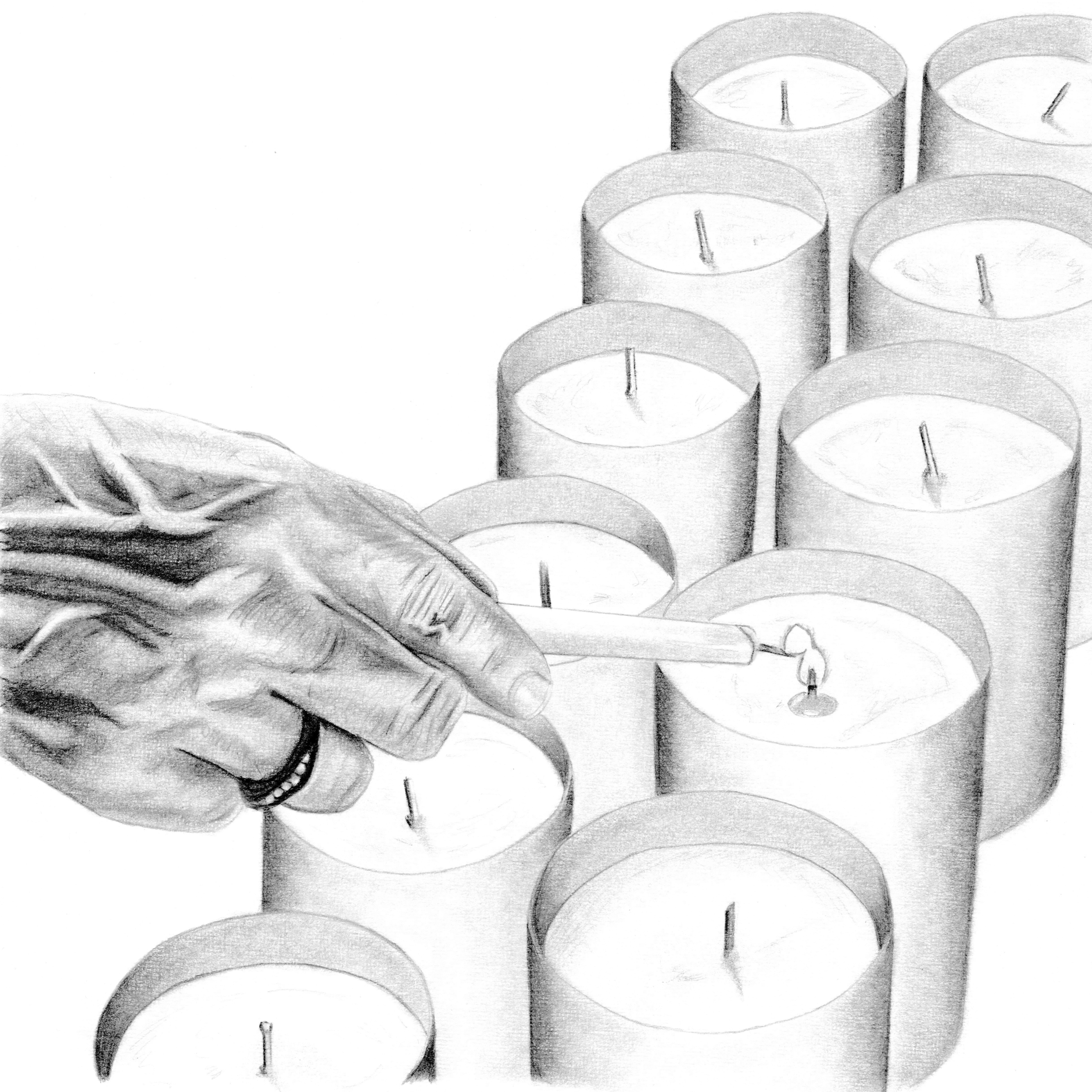
Loading summary
Transcript399 lines
- [00:01]
Narrator/Advertiser
Every week on the Moth podcast, real
- [00:03]
Nigel Poor
people tell their stories live on stage. It was my job to know that
- [00:07]
Earlonne Woods
I'd never stopped being fully human, that
- [00:10]
Nigel Poor
I still deserved connection and compassion. Whether anyone in any courtroom or waiting room agreed or not to hear fascinating, heartbreaking, and sometimes hilarious stories from astronauts, teachers, farmers and people just like you, follow and listen to the Moth Wherever you get your podcasts, this episode is brought to you by Progressive Insurance.
- [00:34]
Earlonne Woods
You're listening to this podcast, so I know you've got a curious mind. Here's a helpful fact you might not know yet. Drivers who switch and save with Progressive save over $900 on average. Pop over to progressive.com answer some questions and you will get a quick quote with discounts that are easy to come by. In fact, 99% of their auto customers earn at least one discount.
- [00:58]
Nigel Poor
Visit progressive.com and see if you can enj a little cash back Progressive Casualty
- [01:03]
Earlonne Woods
Insurance Company and affiliates national average 12 month savings of $946 by new customers surveyed who saved with Progressive between June 2024 and May 2025. Potential savings will vary.
- [01:19]
Nigel Poor
Earlonne One thing I love about summer is that everything feels a little easier. The days are more relaxed and the clothes feel more relaxed too.
- [01:27]
Earlonne Woods
I think the best summer clothes are the ones you end up wearing over and over. They're comfortable, they trav and they look nice for any occasion.
- [01:35]
Nigel Poor
Okay, I'm glad you said that because that is why I love Quince. Quince focuses on well made essentials that you end up living in all season long. Like these stretch cropped wide leg pants I just got. I think you know I'm going on a bike trip this summer and this is going to be really hard for me. We have been told we can only bring carry on. Okay so these pants are going to be the one pair of pants I bring for my trip and they're going to do everything. They're going to be versatile and and I think they're going to look pretty elegant.
- [02:04]
Earlonne Woods
Everything at quince is priced 50 to 80% less than similar brands. They work directly with ethical factories and cut out the middlemen. So you're paying for exceptional quality, not brand markup.
- [02:15]
Nigel Poor
And it's not just clothing. Quint's also offers elevated essentials for your home, from bedding to bath to kitchen.
- [02:22]
Earlonne Woods
Essentials and furniture make your summer wardrobe feel easier. Go to quints.comearhustle for free shipping on your order and 365 day returns available in Canada too.
- [02:35]
Nigel Poor
That's q-u I n c e.com earhustle for free shipping and 365 day returns. Quint.com earhustle.
- [02:50]
Bruce Wallace
Hi, Nigel.
- [02:51]
Nigel Poor
Hey there, Bruce. I'm excited to talk about this episode.
- [02:54]
Bruce Wallace
Tell us what we're revisiting.
- [02:55]
Nigel Poor
Yes. Last Memory. Linda and I believe this is the fourth installment, can I say, of a last memory episode.
- [03:03]
Bruce Wallace
I think that's right. Yeah.
- [03:04]
Nigel Poor
Because it was Michael and then Earlonne and Ryan and that was one episode. And then Leisha.
- [03:13]
Bruce Wallace
Yep.
- [03:14]
Nigel Poor
And then Linda. I think this was the last episode.
- [03:16]
Bruce Wallace
That's right, yeah. And we've only done four. Right?
- [03:18]
Nigel Poor
We've only done four.
- [03:19]
Bruce Wallace
I get confused because this has now become like a teaching tool when we teach inside because. Well, we should explain.
- [03:27]
Nigel Poor
Yes.
- [03:27]
Bruce Wallace
The last memory concept.
- [03:29]
Nigel Poor
Yes. So the last memory concept is we ask somebody. And I think it's probably done a little bit differently inside the prison. But the idea is we ask someone to describe, in as much detail as they can, their last memory before coming to prison using their senses and great visual description. And then we go to that place where that last memory occurred, and we sort of see if we can sense anything about their last memory. What kinds of things do we see and take in? And then we go back into the prison and our experience of what we saw at their last memory. I don't know if that's what happens with the workshop.
- [04:05]
Bruce Wallace
No. But still just people describing their last memory. So I think in there it's useful because it sort of has a story and emotions built into it.
- [04:16]
Nigel Poor
Yes. And details.
- [04:17]
Bruce Wallace
Details, exactly. Yeah. It has, like, a lot of fundamentals to a good story.
- [04:21]
Nigel Poor
Yeah, yeah. And what I like with the way we do it as an episode for us, as the people putting the story together, we really have to rely on because we have no idea what's gonna happen when we get to the place where their last memory took place. And for all of them, we've had really interesting things happen.
- [04:42]
Bruce Wallace
Right. Yeah, Some crazy things. I was. When you first proposed this idea, and it was your conceit, initially, I was worried about that. Cause I saw, like, oh, looking back with somebody, that's obviously gonna be powerful. But then we go to a place and who do we talk to? Like, the place isn't gonna say anything. So, yes, you hope somebody interesting shows up. Which is also fun. Like relying on chance to provide something.
- [05:09]
Nigel Poor
It's totally fun and it keeps us on our toes. We have to be really open to any possibility and. Yeah. I mean, so far, with each one, something pretty interesting has come to pass. I think the Craziest one was Earlonne's.
- [05:24]
Bruce Wallace
Totally.
- [05:25]
Father Lalo
Yeah.
- [05:25]
Nigel Poor
And I think I'm not gonna say what it was so people go listen to it, but it blew my mind what happened on that one.
- [05:30]
Bruce Wallace
And why did you want to re. Listen to this one?
- [05:33]
Nigel Poor
As I remember it, this one was so full of sensory description, which is something I'm always really interested in. And it is such. Linda is a very good storyteller, and without really any coaching, she brought in the memories through smell, sight, touch, not taste, but really brought this place to life. And it touches on things that I'm very interested in trying to answer that can never be answered, which are questions about people's relationship to religion and God when they're thinking about choices they've made in their life.
- [06:16]
Bruce Wallace
Well, maybe we say all this in the episode, but I'll just say we did this idea first with a couple people in San Quentin, plus Earlonne, and then we took this idea to ciw. Leesha was there, and then Linda was there.
- [06:30]
Nigel Poor
Yes.
- [06:31]
Bruce Wallace
And this was.
- [06:32]
Nigel Poor
Well, I'm also gonna say Leisha's another one to go back and listen to, because what happened on that last memory was also really wild.
- [06:39]
Bruce Wallace
Yeah, totally. That's. Yeah, that's so interesting. It's like you could go to any mundane place, and if you're looking right, something interesting is there. Yeah.
- [06:49]
Nigel Poor
Yes. And I think, Bruce, another reason I like these last memories is just what you said. It really bolsters something. I believe in that any place, no matter how nondescript it is, there's a story there or something interesting if you'll spend time looking.
- [07:01]
Bruce Wallace
Totally.
- [07:02]
Nigel Poor
And so these sort of prove that theory to be correct.
- [07:04]
Bruce Wallace
So what we're gonna do is we're gonna listen to the first part of it. We're gonna come in and sort of do some halftime analysis, listen to the second part, and then talk a little bit more.
- [07:15]
Nigel Poor
Yes.
- [07:15]
Bruce Wallace
So this is Last Memory Linda, Season 14, the final episode of the season. Leisha's was the episode right before this one. So go back and listen to that, too. This dropped December 11, 2024.
- [07:28]
Nigel Poor
Hi, I'm Katie Turner, the California program director for Poetic Justice, a community in
- [07:34]
Narrator/Advertiser
and beyond women's prisons and jails that
- [07:37]
Nigel Poor
writes a lot of poetry.
- [07:39]
Narrator/Advertiser
This episode of Ear Hustle contains language and content that may not be appropriate for all listeners.
- [07:46]
Nigel Poor
Discretion is advised.
- [08:03]
Linda
It smelled like earth. It smelled like old straw hats that have been out in the sun too long. It smelled like leather that's been tanned in cowhide. It smelled like old wood. When you get up close to old wood that's been splitting. And it smelled like when you bend down and you put your nose to the dirt. And it smelled like the pavement when rain hits it for that first 15 minutes. And the best smell was my mother smelled like my mother.
- [08:42]
Nigel Poor
What does your mom smell like?
- [08:44]
Linda
Sometimes I could smell even though she was in her 50s. Sometimes I could smell the scent of almost her breast milk. That memory would come back.
- [09:00]
Earlonne Woods
This is Linda. She's describing her last memory before coming to prison.
- [09:06]
Nigel Poor
It takes place at Mission San Luis Rey outside of San Diego.
- [09:12]
Linda
It was a rainy Monday night. I remember being cold. And there were Christmas lights, too, I believe. And I remember walking into the church. There were paintings. Adobe walls that are dirty, snow white. So I sit down and I slide over. And I remember people being very kind and scooting over. And I remember my jeans were a little bit wet from the rain coming in and sitting down and sliding over and kind of sticking a little bit. My mother slides in next to me, and she connected to my shoulder. It was my right shoulder. And every time I tried to move a little to the left, because sometimes I would find my mother annoying. She'd move in closer, and then I would have to scrunch, and she'd scoot in more and I'd scrunch more. And I finally gave that up. I also remember there being a lot of rosary beads. I remember the beauty of the candles and that scent coming at me. And I remember thinking, okay, I'm caught. I'm caught here in this message. And I remember the singing. The singing was vibrating off the walls. It was bouncing off the walls, almost like the words were dancing and the music was dancing. It was beautiful and annoying at the same time because it was maybe getting to me, and I didn't want it to get to me. It was resonating with me, but I wasn't ready for that. I'm remembering right now that my mother kept trying to hold my hand. And I kept pulling it away, but she kept putting it back.
- [11:25]
Nigel Poor
Did your mom know what was going to happen the next day?
- [11:29]
Linda
She knew I was going to do something, but she did not know it was going to be the very next day. I was going with the formalities as the tradition of the Catholic Mass. The rise and the kneel. And at some point I stopped. At some point I shut down. The next time the priest says to kneel, I'm not doing that. And I stopped. I remember thinking, like, this is really not a God. And that's when I feel my mother's hand on my knee, on my right knee. But I allow it. I'm allowing her to put her hand on my right knee. I'm feeling her hand. And I'm. I'm okay with that. I'm okay with her hand on my right knee. Because I know love and I know that my mother loves me. So I'm like in this triangle with my mother's hand on my knee and the Holy Spirit trying to embrace me. But I have this block. There's this block of unwillingness. I'm thinking, when is this going to be over? Like, when can I leave here? When is this mass gonna end? Eventually, there's a little relief because I see that we're getting to the place of communion. And my mother whispers, are you going to receive communion? And I'm like, no, no, Mom,
- [13:29]
Earlonne Woods
I'm
- [13:29]
Linda
not doing the communion. And I don't. I just sit. I want to become part of the pew. I don't want to even be noticed. So I try to make myself small. And when that's over, I'm relieved when we get up and we walk out. But I remember as we pass, I remember looking at the candles and wishing that I could light a candle. But I almost feel like I can't ask to light a candle. Like I don't deserve to light that candle. So I'm not even going to ask my mom, can we stop to light a candle? I keep walking beside my mom and I walk her to her car and I just kiss her goodbye. That's the last time I see her before my arrest.
- [14:34]
Nigel Poor
The way you described your mom moving over and touching you and you continuing to move away, do you still remember the. The feeling of that?
- [14:45]
Linda
Oh, yeah.
- [14:46]
Nigel Poor
What would you give now to have that. Her try to move up close to you?
- [14:57]
Linda
I'd give up my freedom.
- [15:03]
Nigel Poor
Yeah.
- [15:08]
Linda
Sorry.
- [15:12]
Nigel Poor
I totally get what you're saying.
- [15:16]
Linda
Thank you. Yeah.
- [15:28]
Earlonne Woods
I'm earlonne woods.
- [15:29]
Nigel Poor
I'm nigel poor and this is ear hustle from prx's radiotopia.
- [15:45]
Earlonne Woods
Linda is incarcerated at the California Institution for Women. She's serving a life sentence for the murder of her ex boyfriend.
- [15:54]
Nigel Poor
It's been 37 years since Linda sat with her mother in that chapel at Mission San Luis Rey and Earlonne. You and I were gonna go see that chapel for ourselves if we can go there. What would you want us to do once we get.
- [16:12]
Linda
Just touch the wall and just feel what resonates for you and what you would take away from that chapel and then what you connect with and how that place would Affect you. Because I believe that when your feet touch that soil, that something's going to resonate for you as it did for me. Maybe a little too late for me, but it still did.
- [16:44]
Nigel Poor
Okay, this is my last question for you. Okay, think really carefully before you answer this. When we go to the mission, I want to light a candle. Who should it be for? Who in your deepest heart needs to have a candle lit for them?
- [17:13]
Earlonne Woods
Okay.
- [17:15]
Nigel Poor
After that long pause, Linda gave us a name. And just then, something very weird happened with the lights.
- [17:26]
Linda
Oh, that was meaningful to me.
- [17:29]
Nigel Poor
Yeah. So the lights just about went out and flickered and then came back on. All right.
- [17:44]
Earlonne Woods
The plan was that after we talked to Linda about her last memory, we'd go to the spot where that memory
- [17:50]
Nigel Poor
took place and have her memory sort of guide us through it, Try to see that place through her memory.
- [17:59]
Earlonne Woods
Okay, so the mission here is trying to find a small parish.
- [18:05]
Nigel Poor
Yep. And go inside and light a candle. Linda told us that her memory took place not at the main mission, which is a big church that seats, I don't know, a couple hundred people, but at a smaller kind of side chapel.
- [18:21]
Earlonne Woods
So that's what we were looking for.
- [18:24]
Nigel Poor
It's kind of like an adobe color building. A beige building, but nice beige, not the ugly subdivision.
- [18:33]
Earlonne Woods
Is that a color?
- [18:34]
Nigel Poor
I think it's adobe beige. I don't know.
- [18:36]
Earlonne Woods
See, I learned stuff messing with Nigel.
- [18:38]
Nigel Poor
I might not be right. Let's go find a paint chip later and see if I'm right. And that's when you got pretty distracted by those koi fish.
- [18:49]
Earlonne Woods
Nigel, you see the big koi?
- [18:50]
Nigel Poor
Those are big.
- [18:51]
Earlonne Woods
I've never seen koi fish that big.
- [18:53]
Nigel Poor
I. Oh, my God. They're like the size of a toddler.
- [18:57]
Earlonne Woods
Or do you think they fake? Are they moving? Oh, no, they moving.
- [19:04]
Nigel Poor
Well, look at those turtles. Do you see the turtles?
- [19:06]
Earlonne Woods
Oh, yeah.
- [19:08]
Nigel Poor
Well, they're appropriate to have St. Francis there.
- [19:13]
Father Lalo
Hi.
- [19:13]
Nigel Poor
How are you? Is it possible to go in the chapel? Yes, you can enter for right here.
- [19:18]
Various Guests/Contributors
He can help you out.
- [19:19]
Nigel Poor
Oh, okay. Oh, thank you.
- [19:20]
Earlonne Woods
Okay, cool.
- [19:22]
Nigel Poor
Okay. We were at the wrong entrance. We got into the building where the chapel supposedly was, but all we could see was this really long hallway Lined with doors to different offices.
- [19:36]
Earlonne Woods
Associate pastor bereavement funeral planning. Why are you walking so slow?
- [19:44]
Nigel Poor
Cause you guys are walking slow.
- [19:46]
Earlonne Woods
Oh, you leading.
- [19:47]
Nigel Poor
I was getting irritated. You guys were walking so slow.
- [19:49]
Earlonne Woods
You know I'm leading, Nigel.
- [19:50]
Nigel Poor
Step on it, Nigel.
- [19:52]
Earlonne Woods
Parish chapel is down this way.
- [19:54]
Nigel Poor
Okay.
- [19:59]
Earlonne Woods
Finally, we walked into the chapel, the same one where Linda had Sat with her mom 37 years ago. First thing I want to ask you.
- [20:12]
Nigel Poor
Uhhuh.
- [20:13]
Earlonne Woods
Did she get the smells right?
- [20:15]
Nigel Poor
So it's. It has that musty smell that she was talking about. There's a. A real dampness to smells. A little bit like, to me, like an attic or a basement, a place that isn't used a lot. It's very quiet. It's dark. It smells like an old drawer that you open up that has the paper on the bottom and there hasn't been anything in it for a while. It's definitely musty, but there's also something welcoming about it. It feels like a safe smell. If I thought about it in terms of color, it's the color of soil, but, like, slightly damp soil.
- [21:07]
Earlonne Woods
Do you smell the candles?
- [21:09]
Nigel Poor
I don't smell the candles yet. Do you smell the candles?
- [21:11]
Earlonne Woods
I smell more of an oil.
- [21:13]
Nigel Poor
Tell me more.
- [21:14]
Earlonne Woods
I just smell like a oil musk type.
- [21:17]
Nigel Poor
I can smell that. Now that you say it. It's interesting that hearing someone else's response can help you smell something that you missed.
- [21:27]
Earlonne Woods
I have another question.
- [21:27]
Bruce Wallace
Yeah.
- [21:28]
Earlonne Woods
How does she remember them smells 37 years later?
- [21:31]
Nigel Poor
I think because it was a monumental evening for her. Right. It was transformative. You want to walk towards the pulpit and see what smells we get up there?
- [21:42]
Earlonne Woods
Okay.
- [21:46]
Nigel Poor
The pulpit and the flowers here are old.
- [21:55]
Earlonne Woods
I smell them now.
- [21:56]
Nigel Poor
Oh, yeah. You can really smell them.
- [21:59]
Earlonne Woods
I wonder what the numbers are. Bingo.
- [22:02]
Nigel Poor
Those are the numbers for hymns. Oh, yeah.
- [22:07]
Earlonne Woods
We walked over and sat down in a pew.
- [22:10]
Narrator/Advertiser
Yeah.
- [22:10]
Nigel Poor
And we were expecting, like, this quiet, kind of meditative moment. But remember, Earlonne, as soon as we sat down, someone stirred a leaf blower right outside the chapel.
- [22:19]
Earlonne Woods
Oh, yeah.
- [22:21]
Nigel Poor
Let's sit in one of the pews. Because she talked about how important it was.
- [22:25]
Earlonne Woods
Which one do you think she said?
- [22:26]
Nigel Poor
I don't know. But she talked about being stuck on the pews and how it was hard to move, which tells me that they've now upholstered them, because when she talked about them, they were just wood. Actually, you know what? I want to look up these hymns and see if there's any correlation.
- [22:50]
Earlonne Woods
Now, I just added. Let me hold your mic.
- [22:53]
Nigel Poor
Oh, no, I'm not going to sing.
- [22:53]
Earlonne Woods
Get the first verse.
- [22:56]
Nigel Poor
Oh, Lord, you are at the center of my life. I will always praise you. I will always serve you. I will always keep you in my sight.
- [23:07]
Earlonne Woods
So she came to this place but stayed on the same course.
- [23:13]
Nigel Poor
Yeah, yeah. And do you remember she said her mom kept trying to push up against her?
- [23:23]
Earlonne Woods
Oh, Wesley.
- [23:24]
Nigel Poor
Yeah. And then she kept trying to pull away. And I am so curious. We'll never know what was going through her mom's thoughts at the time, if she knew what the bad situation her daughter was in.
- [23:37]
Linda
Now.
- [23:37]
Earlonne Woods
I wonder what was going through Linda's thoughts at the time. When she was sitting here, like, was she sitting here thinking about carrying it out? Was she sitting here thinking about
- [23:50]
Nigel Poor
something stopping her from doing what she was gonna do?
- [23:54]
Earlonne Woods
I don't think nothing was gonna stop her.
- [24:00]
Nigel Poor
Before we left, there was one more thing to do. Light that candle for Linda.
- [24:07]
Earlonne Woods
So let me ask this. What is the purpose of lighting a candle?
- [24:10]
Nigel Poor
Okay, so I didn't grow up Catholic, but my understanding is that when you light a candle, you're saying a prayer for somebody. And it can be for anyone. Someone who's gone, someone who's still around. And to me, the idea is that you're having a meditative and connective moment with whoever you're thinking about.
- [24:29]
Various Guests/Contributors
Huh.
- [24:36]
Earlonne Woods
So I'm lighting this for a friend of mine who's in the hospital right now. I think he's in a coma at the moment. So I'm gonna light this and hope that he get better. Wish you well, my brother. Your turn, Nigel.
- [25:17]
Nigel Poor
I told Linda that I would come here and light a candle for a person, and I'm going to prefer to not say who she asked me to light it for. But in my heart, I will know who it was for, and she will know that I did it. So I just want to be here for a few quiet moments and think about the request and think about the person I'm lighting the candle for, and then I'll light the candle.
- [25:58]
Linda
Okay.
- [25:58]
Nigel Poor
Linda, I lit the candle for you. I did what I promised you I would do. Okay.
- [26:13]
Earlonne Woods
After the break, we'll go back to the California Institution for Women and see Linda again.
- [26:25]
Bruce Wallace
Okay.
- [26:26]
Nigel Poor
All right.
- [26:29]
Bruce Wallace
I always say, what did you think at this point? Yeah. Yes. Let's go with that.
- [26:33]
Nigel Poor
It is. I timed it. There's about eight minutes of description opening this episode.
- [26:40]
Bruce Wallace
Is that right?
- [26:41]
Nigel Poor
Yes. Which is kind of astounding that the editors let me get away with that.
- [26:46]
Bruce Wallace
I always love. Relatedly, I really loved the billboard, which basically, all the narration until the theme comes in and ends was, this is Linda. This is what she's talking about. And then you guys introduce yourself and say, this is Ear Hustle, which I feel like is a mark of a really good episode. If you don't have to be like, explain this and explain that. And here we are. Or sometimes it can be.
- [27:10]
Nigel Poor
Yeah, yeah. And I mean, the whole time I'm listening, it's such a quiet episode. There's, like, on the surface, so little happening. It really does rely on description.
- [27:24]
Bruce Wallace
I noticed. I was actually, when we came back on, I was sort of, like, hesitant to break the silence.
- [27:30]
Earlonne Woods
Yeah.
- [27:31]
Nigel Poor
You feel like you're in church.
- [27:32]
Bruce Wallace
Yeah.
- [27:33]
Nigel Poor
And when you realize that it was 37 years ago that this happened, and her ability to recall her thoughts, because when she's talking about it, you can hear in her voice, when she talks about being irritated with her mother, you can hear the irritation.
- [27:50]
Bruce Wallace
You said it like a teenager.
- [27:52]
Nigel Poor
Exactly. Like a teenager. That's exactly what I thought, too. And you can also. I think everyone's had those irritated moments with a parent. Totally remember, like, when she talks about trying to move away and the mother getting closer or her wanting to. And even adults do this. Give in to the experience, but holding onto her frustration. There's a lot of mouth sounds in this. A lot of swallowing and sort of nervous. I just can think of them as mouth sounds. You know, this is sniffing.
- [28:23]
Bruce Wallace
Yeah.
- [28:24]
Nigel Poor
There's a lot of bodily sounds in this, too.
- [28:26]
Bruce Wallace
Normally that's a conscious decision we've made to leave something like that in or. I mean, often we'll cut it out. More often we'll cut it out.
- [28:33]
Nigel Poor
Definitely. Do you think there were too many?
- [28:35]
Bruce Wallace
I didn't even notice it this time.
- [28:36]
Nigel Poor
Interesting.
- [28:37]
Bruce Wallace
I don't think. I mean, I definitely noticed a real deliberative pace that I liked. I think all of it worked. I normally. I mean, that's the thing I most often pick up when I re. Listen to episodes is I wish we had slowed things down. It feels like things are almost always happening a little bit too fast.
- [28:55]
Nigel Poor
But this one is, like, very subtle. So when you're listening to this, do you see any colors?
- [29:00]
Bruce Wallace
It's a classic. Magical. Poor question. I think the colors. It's very related to having spent so much time in places like this. Cause I grew up Episcopalian, so I think that was one thing. I was thinking about just how familiar all of this was. So I was thinking of dark brown and purple. Because purple is that deep purple I associate with church.
- [29:21]
Nigel Poor
Yeah. To me, it's definitely brown. The feeling I get. And it brings back a lot of memories for me, too, of growing up, going to church. The smells, the tones in there, the quality of the light. So familiar to me, even though I'd never been to this particular chapel. And I swear, you know, when the rosary beads. Do you hear the sound of the rosary beads? I think that's the first time I used my teeth.
- [29:46]
Bruce Wallace
I was going to say we've been thinking about that recently because of some of the work, like the training stuff we've been working on. We knew we had used Nigel's teeth as a sound. As Foley.
- [29:57]
Nigel Poor
Yes.
- [29:58]
Bruce Wallace
Like a sort of creative sound design piece somewhere. And we couldn't remember what it was, but I think you're exactly right.
- [30:04]
Nigel Poor
Yep. And not teeth in my mouth. They're teeth. Just to be clear. They're teeth that are not in my mouth.
- [30:08]
Bruce Wallace
They were once in your mouth.
- [30:09]
Nigel Poor
They are in your teeth, right?
- [30:10]
Various Guests/Contributors
Yes.
- [30:11]
Nigel Poor
Yeah. I like the sound design in it. I think it's really a lovely first half. And you kind of have an. I mean, you get an idea of what's going on, what she did. But we don't overly emphasize that either.
- [30:25]
Bruce Wallace
Totally. I feel like we hint at it enough to make the story work, but also for there to be a little bit of tension, but hopefully not draw attention to that more than we need to. But you also need to understand what she was wrestling with. You need to kind of be in her mind space.
- [30:43]
Nigel Poor
Yeah. I think of her as very perceptive. The things that she remembers and the way she expresses them. And of course, there's some very funny Earlonne moments. His obsession with the koi.
- [30:55]
Bruce Wallace
That's what I was wondering. I wanted to talk about why we left that in. Cause I think actually I remember some sort of comments, some editorial conversation about leaving that. And maybe when you guys are joking with each other about how slow you're walking.
- [31:09]
Nigel Poor
Oh, yeah. I wonder why we left that in. But when I was listening to it, I remembered I was really irritated. Cause they were walking.
- [31:15]
Bruce Wallace
That's so funny.
- [31:16]
Nigel Poor
So I don't know if we just leave it in to give a little bit of a behind the scenes of what it's like when we're doing stuff.
- [31:24]
Bruce Wallace
It's fun. And I think actually, like you were saying before, so much of this is so quiet and slow in a really nice way. But it's a nice change of pace and texture.
- [31:33]
Nigel Poor
Yeah. And it makes me think about how in our episodes, even when there's something very intense, like we do want to have some relief with a little bit of humor or something. And I think that's probably why we also left in the bingo.
- [31:47]
Bruce Wallace
And it seemed. I mean, again, I've spent a lot of time in places like this, but I immediately knew what he was talking about, which made it funnier.
- [31:53]
Nigel Poor
Yeah, exactly. I think the koi come back again in the second part.
- [31:57]
Bruce Wallace
Oh, right. Yeah. So maybe we're actually planting some little bread crumbs or whatever.
- [32:01]
Nigel Poor
Yeah. I thought all the sound design worked really nicely, even though a lot of it is very illustrative of what we're saying. But for some reason it works here.
- [32:11]
Bruce Wallace
There was a lot of those tones were in something that, to me, sounded like a church organ. Like, not the real brassy church organ, but when it's more wooden sounding. I think that's why we chose that as one of the through lines, through line sounds. I also remembered a lot of the actual Ambie is Amy went to mass near her house while we were putting this together. And so there's a time where you hear people moving in pews. I think she recorded that at a church near her house.
- [32:41]
Nigel Poor
I totally forgot about that.
- [32:42]
Bruce Wallace
You at some point hear, like a minister or referend or whatever the Catholic version is. That's from her recording of that.
- [32:49]
Linda
Yes.
- [32:50]
Nigel Poor
Because we tried to go into the main chapel to record a mass and they wouldn't let us do it. And should I say this now or later? I guess it's. We luckily got all the recording done because they basically were gonna kick us off because we didn't have the official go ahead to record.
- [33:11]
Bruce Wallace
I also remember the other editorial conversation I feel like we had. Or one was about whether to say who Linda asked you to light the candle for.
- [33:19]
Nigel Poor
Yes.
- [33:20]
Bruce Wallace
Was it ended up just you not being quite comfortable with it or.
- [33:23]
Nigel Poor
Yeah, I thought it would be, well, two things. Nice for the listener to try to imagine who it was for.
- [33:28]
Bruce Wallace
Yeah.
- [33:29]
Nigel Poor
And so I wanted to keep that mystery and I don't know all of the relationships that she has with people. So I also wanted. I thought for that reason, too, to keep it anonymous. But I like the idea that we just wanted listeners to imagine who it is, even though that's not 100% true
- [33:48]
Bruce Wallace
or, like fill in their own name or something.
- [33:50]
Nigel Poor
Yeah, exactly. Like, who would you have lit the candle for if you were in this situation? I think we did a very interesting editing choice in the second half. And as people are listening, I wonder if they'll pick up on what that is and then we'll obviously talk about it. But I had forgotten this edit editorial choice we made, which is really, I'm going to say, brilliant.
- [34:12]
Bruce Wallace
Interesting. I have no real recollection of what you're talking about. I'm excited to hear it. So we're going to take a break and then listen to the second part.
- [34:23]
Nigel Poor
On all of it with me, Alison Stewart. We'll talk about art, music, theater, Literature, history, food. Well, all of it. Hear in depth, insightful interviews with authors like Zadie Smith, musicians like Steve Earle, actors like Kate Winslet, and beyond. You never know who you'll hear next on all of it, but it's always worth listening. That's all of It. Available wherever you get your podcasts.
- [34:52]
Narrator/Advertiser
If you enjoy our show, this is another podcast we think you'll like. It's called Uncuffed. It's an award winning podcast and the sponsor of this episode. Episode Uncuffed brings you inside California prisons where incarcerated producers tell their own stories. Greg Eskridge spent 30 years in prison himself and now he's back home hosting the show. From the outside, you'll hear about unexpected events inside prison walls, from a father daughter dance to a full length marathon. And you'll get to know some of the incredible people inside prisons. Listen to Uncuffed wherever you get your podcasts.
- [35:29]
Nigel Poor
This episode is sponsored by BetterHelp NYGE
- [35:32]
Earlonne Woods
do you think folks nowadays are more open to talking about mental health?
- [35:36]
Nigel Poor
You know, I definitely do because I hear more and more people talking about the help that they're getting instead of sharing information about it.
- [35:43]
Earlonne Woods
Right. We may talk about mental health more openly now, but asking for help can still feel difficult. And Better Help's latest research confirms it.
- [35:51]
Nigel Poor
BetterHelp's 2026 State of Stigma report surveyed 2,000Americans and revealed that 85% of Americans believe getting support is wise, yet 74% say society discourages people from doing so.
- [36:06]
Earlonne Woods
BetterHelp does the work of matching you with a therapist so you can focus on your therapy goals. A short questionnaire helps identify your needs and preferences, and if you aren't happy with your match, you can switch to a different therapist at any time.
- [36:21]
Nigel Poor
Don't let stigma stand in the way of support. Start therapy with better help. Sign up and get 10% off@betterhelp.com earhustle that's betterhelp.com earhustle.
- [36:47]
Earlonne Woods
The day after you and I visited the chapel at San Luis Rey, we went back to ciw.
- [36:52]
Nigel Poor
We wanted to catch up with Linda and tell her what we had found there. So we told you that we were going to go to the mission.
- [36:59]
Linda
You did? Yes.
- [37:01]
Nigel Poor
And that's what we did yesterday.
- [37:03]
Linda
Just yesterday.
- [37:04]
Earlonne Woods
Just yesterday.
- [37:05]
Nigel Poor
Just yesterday.
- [37:07]
Linda
Wow.
- [37:07]
Nigel Poor
Yes. So it's very fresh.
- [37:09]
Earlonne Woods
I have to tell you what I remember from it. I don't know if they had this. Then they have a lake there. Not a lake, but like a pond with a gang of koi fish.
- [37:17]
Nigel Poor
Oh, there's carpet there.
- [37:18]
Earlonne Woods
They got a big old koi in there. And the koi fish was so huge. I've never seen koi fish that big. Like they was on steroids. They were humongous. And I was like, wow, this is very huge.
- [37:31]
Nigel Poor
Look at them fish Earlonne, you are clearly fascinated by those little buggers or big buggers.
- [37:39]
Earlonne Woods
You know, I've always seen the little ones on tv.
- [37:42]
Nigel Poor
But as charming as your fascination was, that wasn't really what we came to report back to Linda. So we got there mid morning and there weren't that many people there. And we knew you had described going to the chapel, so we went to find the chapel. Do you know how to get into the chapel? Oh, you go through the office. We finally found our way in. If you remember. You walked down a hallway.
- [38:10]
Earlonne Woods
Why are you walking so slow?
- [38:12]
Nigel Poor
Because you guys are walking slow. And then when you turn it all of a sudden gets quite dark. And there's two doors and you can see through those two doors the stained glass of the crucifixion. And that's what lights the chapel. Does this sound familiar?
- [38:31]
Linda
It sounds familiar. So it sounds a little unchanged. I'm getting really emotional. I can feel your actual presence and the connection to your being there yesterday.
- [38:46]
Nigel Poor
I'm suspecting it's changed very little since you were there 37 years ago. And when we walked into the chapel, we were fortunate there was nobody else. So we were able to be in there alone. And it was very quiet. We sat in the pews. We spent a while just smelling the smells. I don't smell the candles yet. Do you smell the candles?
- [39:11]
Earlonne Woods
I smell more of an oil.
- [39:13]
Nigel Poor
And it smelled like all those things that you said, you know, it smelled like wet soil and hot materials that had been sitting in the sun. So all of those things were really present, which made me think, this place has not, as I said, has not changed in a long time. It felt preserved, but in a really not in an intentional way. Like it's just a place that's used for what it is and it doesn't have to keep up with the times because it fulfills its function as it was made to when it was built. We walked around, we touched things. The only thing I think may have changed is when you told me the story. This is one of the things I remembered very clearly was you talking about sitting on the pew and the way your skin kind of sticks to the wood. Oh yeah, the dirty wood.
- [40:01]
Earlonne Woods
Yeah.
- [40:02]
Nigel Poor
So they had cushions on them now. But that was. That was. I'm not going to Call it a disappointment, but that was one of the experiences I was wanting to have of that sticking to the wood. And that was the only. That was the only experience I didn't get to have from the way you described being there, but everything else felt like we were seeing it through the way you described it.
- [40:24]
Linda
Was that pretty accurate?
- [40:26]
Nigel Poor
Did I remember it pretty much?
- [40:29]
Earlonne Woods
Very much.
- [40:30]
Linda
Through.
- [40:31]
Nigel Poor
Yeah. Through the senses. You remembered it beautifully. Through the senses. It felt like stepping back to my childhood.
- [40:41]
Linda
There's significance in that. When you said it's changed very little. Oh, I'm getting emotional again. And the significance for me, excuse me, for someone who has served almost four decades, is that I always assumed at some point that when I was released from incarceration that I would get to return to something that I would remember, something that I had been to before, something that. That I had left behind. But recently, the family home where my father had lived had to go up for sale. And I wanted to be able to at least go there one last time and to touch base with the hardwood floor, to touch something familiar, to get that smell and that scent back. So when you just said that it's unchanged, that was such a gift for me. I'm realizing in my heart, like,
- [41:53]
Narrator/Advertiser
I'm
- [41:53]
Linda
okay because there's always something to go back to.
- [42:02]
Nigel Poor
So after sitting there for a while and talking about. About how we were feeling, we slowly moved our way down to the front of the. Of the chapel. Okay. We're walking towards the pulpit, and if you remember, there's candles on both sides, you may remember this. I do remember. And then there's the. What do they call the. The altar? The altar. You know, it was in the center. So Earlonne went to one side to light a candle, and I went to the other side to light a candle. Do you want to go light the candle and then I'll go light one?
- [42:34]
Earlonne Woods
Sure.
- [42:35]
Nigel Poor
Okay. I'm going to give you this. Then I meditated on it and thought about who this person might be and why you selected that person and quietly lit the candle. So I just want to be here for a few quiet moments and think about the request and think about the person I'm lighting the candle for. What do you think this person would. How they would respond if they knew that someone they didn't know was lighting a candle for them? Based on this situation,
- [43:18]
Linda
I think this person, if this person knew that I had asked this be done, would be angered and just oppose that. But I'm okay with that. I've been incarcerated a very long time. And I can't undo what I've done. I can only go forward. And part of going forward is continuing in a transformation of who I was and who I continue to become.
- [43:53]
Earlonne Woods
Do it unintentionally manifest into harm to the person?
- [44:02]
Linda
No, it's not meant for harm.
- [44:07]
Nigel Poor
I thought a lot about, you know, who I was lighting the candle for, and I think ultimately I was lighting it for you.
- [44:17]
Linda
No, but thank you.
- [44:20]
Nigel Poor
Maybe it was a candle for loss in general and deep sadness that can barely be expressed in regret and the pain of figuring out how to live. So I think it was for a lot of things. Even though ostensibly it was fulfilling this request that you had, it seemed like a very monumental thing this little flame was doing that maybe can't never be completely described to anyone. Maybe you and I are the only people who really understand what happened at that moment, even though you weren't there. So it was a very powerful and curious experience to have, and I'm grateful for it.
- [45:06]
Linda
Thank you for doing that. And thank you for describing the. The flame is being monumental. I think, as the creator of great suffering, that the significance of lighting one flame to try to ease that suffering in some capacity is just such a tiny, insignificant, symbolic gesture. But it's been done.
- [45:47]
Nigel Poor
So, you know, after we lit the candle, we had packed up our equipment, and we were walking down the hallway to leave the chapel, and then coming towards us was one of the fathers that works there. And he had on that traditional, you know, Franciscan brown robe and sandals, like out of a completely different century.
- [46:04]
Father Lalo
Yeah, because I'm the pastor, I don't know what you're doing here.
- [46:08]
Earlonne Woods
Okay.
- [46:08]
Father Lalo
I'm the last one to know what's happening here.
- [46:10]
Nigel Poor
I think maybe you'll find this interesting. So we explained to him what we were doing, and we told him our project and that we were coming here to light a candle for you. And, I mean, I didn't give him details of the crime because I don't really know them, but I told them that you had been there with your mother.
- [46:28]
Father Lalo
So let me understand, because I don't. So the day before she committed the crime, she came here to pray in the chapel here.
- [46:39]
Nigel Poor
Specifically, she came to this chapel.
- [46:41]
Father Lalo
Now she's currently in prison right now.
- [46:43]
Nigel Poor
She's been in prison for 37 years.
- [46:45]
Father Lalo
For 37 years.
- [46:46]
Nigel Poor
So, Earlonne, remember I asked him what he thought God was doing when Linda was there struggling.
- [46:52]
Father Lalo
Right. I think he was with her, and he was sad of the decision that she was thinking to make, but he still loved her. Why he didn't intervene. That's the question. Well, because God has created us with free willing. That's a gift. He wants us to embrace his love freely. He doesn't want robots. This means not less. When you're doing bad things, he still love you. He doesn't love the action that you had done, but he's still with you.
- [47:49]
Nigel Poor
So thank you.
- [47:50]
Father Lalo
Thank you for being here. Thank you for. Especially thank you for this nice gesture. I think that's gonna be meaningful. I don't know if you are believers or not, but at least she is. And to do something for her is something that very, you know, buried something from God. Yeah, I think she will appreciate it a lot. And what her name, maybe I would. I would like to pray for her.
- [48:23]
Nigel Poor
Her name is Linda.
- [48:25]
Father Lalo
Linda, okay. Easy to remember. Okay, so tell Linda that the Franciscans here that we are going to keep her in our prayers. That's Linda.
- [48:41]
Earlonne Woods
Father lalo.
- [48:41]
Nigel Poor
Yeah, father lalo.
- [48:43]
Linda
Lalo.
- [48:43]
Nigel Poor
Yeah.
- [48:44]
Linda
Father lalo.
- [48:45]
Nigel Poor
Yeah.
- [48:46]
Linda
He's absolutely right. And I knew that sitting in the pew. That's why I said I was conflicted.
- [49:04]
Nigel Poor
It was funny when we were talking about spiritual things, he always had. He had his hands crossed like his chest, like from out of a painting. He was praying.
- [49:13]
Linda
Oh, he was praying.
- [49:19]
Nigel Poor
I hope you feel his prayers if you believe in those things.
- [49:24]
Linda
I do. I didn't at the time. I was still at that crossroad. I was very much at that crossroad.
- [49:34]
Nigel Poor
Yeah.
- [49:35]
Linda
Yeah.
- [49:36]
Earlonne Woods
What do you think? You know, had you sat in that pew and listened, where would you be today?
- [49:42]
Linda
I would be out there functioning. And my victim certainly would be alive today. Wherever he would be in life and whatever position he would be in life, he would be alive.
- [50:08]
Bruce Wallace
Okay, we're back.
- [50:11]
Nigel Poor
Yes. I like how the candle, if people remember, comes in at the beginning, and it's kind of how we go out with a conversation about the power of the candle. We mention it in the opening that we're gonna light a candle and you kind of forget about it. And then it comes back when we actually do it. And then that's sort of the final scene is talking about the candle. The thing, the editing choice I like is the way instead of us telling it completely, we bring back audio from the first part of the episode. And I'm kind of surprised we did it because I think it could feel redundant. I also, when I was re. Listening to this, I was like, wait a minute, we talked to a priest.
- [50:54]
Bruce Wallace
I totally forgot about him. Yeah, but it's really satisfying sometimes. It's Hard to know how to incorporate religion when it's relevant to the stories, into the stories. But that was. I was, like, really into what he was saying. It's sort of like. And he explained so well. One of the harder things, I think, which is like. Like, how do bad things happen in a world where there's God?
- [51:18]
Nigel Poor
Yeah, exactly. And I think saving it till the end makes those repeated bits of audio work better because you hear these repeated pieces that you've, you know, from the first part, and then you hear this brand new thing that you don't expect to hear, and you kind of think it ends where she says, okay, it's been done. You know, I think I tell her about lighting the candle, and she's like, it's been done. And it kind of seems like that's gonna be the end. It's like, okay. But then, yeah, we get to hear the other priests. And he's so compassionate. And the sound of his voice, the way he speaks.
- [51:56]
Bruce Wallace
Yeah.
- [51:56]
Nigel Poor
He's very easy to be, very curious. Yeah.
- [51:59]
Bruce Wallace
Yeah. The more obvious thing to do would have been to have him before we go back to her. So we hear him and then we relay that there.
- [52:06]
Nigel Poor
Yeah.
- [52:07]
Bruce Wallace
Oh, yeah. That was good.
- [52:08]
Nigel Poor
I'm pretty sure that was Amy.
- [52:09]
Bruce Wallace
Yeah. Nice work, Amy.
- [52:11]
Nigel Poor
Good job, Amy. Do you think we should have cut in the second half of the conversation about who the candle was for and just had told her that we lit the candle?
- [52:22]
Bruce Wallace
I don't know. And it's hard to say because I know why we made those decisions. So it's hard to say, but to me, it felt like, oh, there's like an interesting wrinkle here. That's always nice.
- [52:32]
Nigel Poor
Okay. Maybe it gives the listener a little bit more. Because it is pretty brief in the first part when we talk about not saying the name.
- [52:39]
Bruce Wallace
One thing that really struck me this time, that I don't remember really focusing on last time, was when she found so much significance in you saying the place hadn't changed. And then she said, hearing that, she realized she was okay because she'll have someplace to go back to. I don't know if I'd focused on that part of which is like, I guess I just hadn't thought about places as having that much power to give hope.
- [53:09]
Nigel Poor
Yeah. When she says she wants people to go back to the house so she can touch the wood floors and get the smells again, that. It hit me more this time, too, when she says that. But I know I'll have a place to go back to.
- [53:19]
Bruce Wallace
Yeah. It says a lot about Being in prison for a long time.
- [53:22]
Nigel Poor
Yeah. I also found myself now listening, just being happy that there are these places that don't change, because I think now everything changes. Everything's updated, Everything's at, you know, whatever 5.7 iteration. And that chapel is. Hasn't changed. And that's something reassuring about that.
- [53:40]
Bruce Wallace
Yeah. I was also just appreciating listening to you connect with people. I feel like you have a real. It's a real skill or talent or natural way, but it's. I hear it a lot, and it's impressive.
- [53:52]
Nigel Poor
Oh, thank you, Bruce. I appreciate that.
- [53:54]
Bruce Wallace
Another thing that stuck out just as you. As soon as you all start describing it, you can hear her kind of exhaling. It's an illustration of how powerful this place is to her.
- [54:04]
Nigel Poor
And also, I heard that, too, and I don't remember it from the first time. It made me think. And not to congratulate ourselves, but it's sometimes really a wonderful thing that we get to do for people to bring this to her. And it's a nice kind of gift, and it's cool to hear her receive it in that subtle way.
- [54:27]
Bruce Wallace
Yeah. We haven't seen her. I mean, we've been back to CIW a bunch of times, and I've lost track of her.
- [54:32]
Nigel Poor
I've seen. This is something about the work we do. I think I've seen her once or twice, and I haven't had any real deep conversations with her. And it is a weird thing after you have this connection. And I meant what I said, you know, it was a very moving experience to light that candle for her and think about how she and I are really the only ones that know the significance of it. And so you feel so connected to somebody and we eventually move on.
- [55:01]
Bruce Wallace
Yeah. Yeah.
- [55:02]
Nigel Poor
It's part of what we have to do. Yeah. But I have seen her a couple times, and of course, I've spoken with her, but, you know, I haven't had this kind of conversation with her again.
- [55:13]
Bruce Wallace
Yeah. Why do you like detail, the sensory detail, so much?
- [55:20]
Nigel Poor
It's how I understand things, how I take stuff in.
- [55:25]
Bruce Wallace
Like when somebody else is telling you something.
- [55:27]
Linda
Yeah.
- [55:27]
Nigel Poor
I always want to know the details. And I think also because I'm a photographer, I'm very interested in details, and I love to just notice little things. So I love when other people notice little things.
- [55:40]
Bruce Wallace
Right.
- [55:40]
Nigel Poor
Yeah. And I think those are the details that give meaning to life also, like, in a bigger way, and they slow down time and they make you present. And I'm always worried about how quickly time goes by and how we can never really hold onto things. But there's something about attaching to the senses that makes me feel very. In the moment. Yeah. And brings me back to a moment that is also.
- [56:04]
Bruce Wallace
We've done an interviewing workshop recently, and that's one thing we talk about in terms of what sorts of questions you want to be sure to ask. Get the details.
- [56:12]
Nigel Poor
Get the details.
- [56:13]
Bruce Wallace
We should linger on that more.
- [56:14]
Nigel Poor
I think so. And it would be interesting to play that first eight minutes in a workshop, because you'd almost think it'd be tedious to have eight minutes of description, but it's not in that. And I think when we do it in workshops, it's such a good way of signaling to people how important these details are. And then they start recollecting textures and smells and whatever, and they can do that anywhere.
- [56:38]
Bruce Wallace
Oh, you had mentioned almost getting kicked out. Was that what happened?
- [56:41]
Nigel Poor
Yes. So, remember you said we had to get sounds of a mass from San Francisco. Well, we went to the main chapel to try to get some sounds of a mass happening, and we were recording a little bit. We hadn't been there very long when this very official and officious woman came up to us and like, what are you doing here? You can't be here recording. And we explained what we were doing and that we had talked to Father Lalo, and she's like, I don't care. That doesn't matter. And she basically kicked us off.
- [57:10]
Bruce Wallace
Wow.
- [57:11]
Nigel Poor
Yeah. And we were all like, oh, thank God we got all this recording. Cause we wouldn't have gotten anything.
- [57:16]
Bruce Wallace
Right.
- [57:16]
Nigel Poor
Yeah.
- [57:17]
Bruce Wallace
We're gonna hear the credits again. But, folks, hang on for the Easter egg, which is a little bit of fun tape that we drop in right at the very end.
- [57:24]
Nigel Poor
This one is fun.
- [57:25]
Bruce Wallace
Okay. And here are the credits.
- [57:30]
Earlonne Woods
Nige.
- [57:31]
Linda
Mm.
- [57:32]
Earlonne Woods
This is the last episode of the season.
- [57:35]
Nigel Poor
Yes. But let's be clear. That does not mean we are disappearing. There's gonna be a bunch of stuff in the feed over the next couple months. Like, for example, we've been working on these things called sleeper episodes, where people on the team go back and they select one of their kind of favorite episodes, and they kind of dissect it and talk about what worked, what were some of the challenges of it, what surprised them. They're super fun to do.
- [57:58]
Earlonne Woods
So it's a. Behind the scenes.
- [57:59]
Nigel Poor
Yeah, behind the scenes. Exactly.
- [58:01]
Earlonne Woods
Exactly. So I would say, you know, y' all should tune in and definitely listen to it, because it's gonna be dope and earlonne.
- [58:06]
Nigel Poor
There's been some big news in your life. So do you want to tell listeners what you've been up to?
- [58:10]
Earlonne Woods
Yes, there's been some great news in my life. I'm gonna start off with one. I have been, you know, first I was commuted. Now I've been officially pardoned by Governor Gavin Newsom of California, which is a big step in my life.
- [58:27]
Nigel Poor
Yeah, absolutely. And you know what? It makes me excited about it.
- [58:32]
Earlonne Woods
What's that?
- [58:33]
Nigel Poor
You know, we can finally do the TSA pre check line.
- [58:36]
Earlonne Woods
Oh.
- [58:36]
Nigel Poor
When we travel, when we go to the airport, we don't have to be separated.
- [58:39]
Earlonne Woods
Yeah. You don't like when I embarrass you, huh?
- [58:41]
Nigel Poor
You mean when you yell out?
- [58:42]
Earlonne Woods
That's what privilege look like, huh? That line over there is the privilege line, Nigel. Just. I'm over here with the common folks.
- [58:47]
Nigel Poor
Well, I'm looking forward to sharing that privilege with you on our next trip.
- [58:52]
Earlonne Woods
And some other news is, you know, my hands have been full lately with what? Due to the fact that I am the father of some new twins, a boy and a girl.
- [59:03]
Nigel Poor
Does one fit in each hand, huh?
- [59:06]
Earlonne Woods
Yes. Like, like a football. Like, like I got two footballs running down the thing. But they're, they're, they're precious, you know, so, you know, I could definitely say this, Nigel, this break comes at a great time.
- [59:19]
Nigel Poor
Yes, it does. Well, in the meantime, we've also got some exciting stuff that's going to be coming up for the show. One, we are getting ready for another live tour.
- [59:29]
Earlonne Woods
Yeah. 2025.
- [59:31]
Nigel Poor
Yep. And we're going to be going to a bunch of cities that we missed on the last tour. And it's going to be super fun. I mean, do you remember how great that was?
- [59:37]
Earlonne Woods
That was hella fun.
- [59:38]
Nigel Poor
I know.
- [59:38]
Earlonne Woods
And we're also spending more time in New York cooking up a season of episodes about life in juvenile detention centers out there.
- [59:47]
Nigel Poor
Yep. So there is a lot going on for the Ear Hustle team. So we really want to thank all of you listeners out there for sticking with us. It's so much fun reading your emails and your comments on social. You all are a big part of our season.
- [60:00]
Earlonne Woods
What y' all don't probably know about me and Nigel is we scan through them comments, we look about what, you know, to see what y' all talking about, see how we're impacting, see what we can talk about, see what your suggestions are. You know, we read all that shit. I'm telling you, I don't know, but we do.
- [60:15]
Nigel Poor
Well, that's what's so great. About doing the live tours is we actually get to meet a lot of people who listen and that is golden.
- [60:22]
Earlonne Woods
Yes, it is very golden. So thanks again listeners. We really appreciate you. Really do.
- [60:30]
Various Guests/Contributors
Hi, I'm Isma Chavez and I'm working from home. Ear Hustle is produced produced by Nigel Poore, Earlonne Woods, Amy Standen, Bruce Wallace, Rahsaan New York Thomas and Kat Shutneck. Shabnam Sigman is a managing producer. The producing team Inside Van Quinten include Darrell Sadiq Davis, Tony Detrinidas and Tom Nguyen. The inside managing producer producer is Tony Sefoya. Thanks also to Aristel San Pablo. Thanks to Acting warden Andy and Lt. Barry at San Quentin and Acting Warden Parker at the California Institution for Women for their support of the show. Also thanks to this guy here.
- [61:26]
Nigel Poor
I am Lieutenant William Newborg, Public Information Officer here at CIW and I approve this episode and many more episodes to come.
- [61:37]
Various Guests/Contributors
This episode was made possible by the Just Trust building a smaller, more humane engine of justice and safety across the country.
- [61:49]
Nigel Poor
Bruce Wallace and Earlonne woods sound designed and engineered this episode with help from Fernando Arruda, Harry Kelhane and Darrell Siddiq Davis.
- [61:59]
Earlonne Woods
Music for this episode comes from David Josse, Antwan Banks Williams, Bruce Wallace, Darrell Sadiq Davis and me.
- [62:07]
Nigel Poor
For more information about this episode, check out our show notes on Ear Hustle's website earhustlesq.com you can find us on
- [62:14]
Earlonne Woods
social media, Instagram, Facebook and YouTube earhustlesq and on our website where guess what? We've got new merch.
- [62:24]
Nigel Poor
I'm so excited. There is really cool stuff there so please, please check it out and if
- [62:29]
Earlonne Woods
you're not already, follow and review Ear Hustle on any of your favorite podcast apps like Apple podcasts, Spotify and iHeartRadio. We love them.
- [62:40]
Nigel Poor
Comments Ear Hustle is a proud member of Radiotopia from prx, a network of independent creator owned listener supported podcasts.
- [62:49]
Earlonne Woods
Discover Audio with Vision at Radiotopia.
- [62:53]
Nigel Poor
I'm Nigel Poor.
- [62:54]
Earlonne Woods
I'm Earlonne Woods. Thanks for listening.
- [63:01]
Nigel Poor
What's the name of the thing?
- [63:02]
Various Guests/Contributors
Hustle.
- [63:03]
Nigel Poor
Ear Hustle. Ear Hustle. Is this a Catholic thing? Catholic program? No, not at all.
- [63:08]
Earlonne Woods
Why are you here?
- [63:11]
Linda
Radiotopia
- [63:14]
Nigel Poor
from PRX.