Loading summary
Transcript69 lines
- [00:02]
A
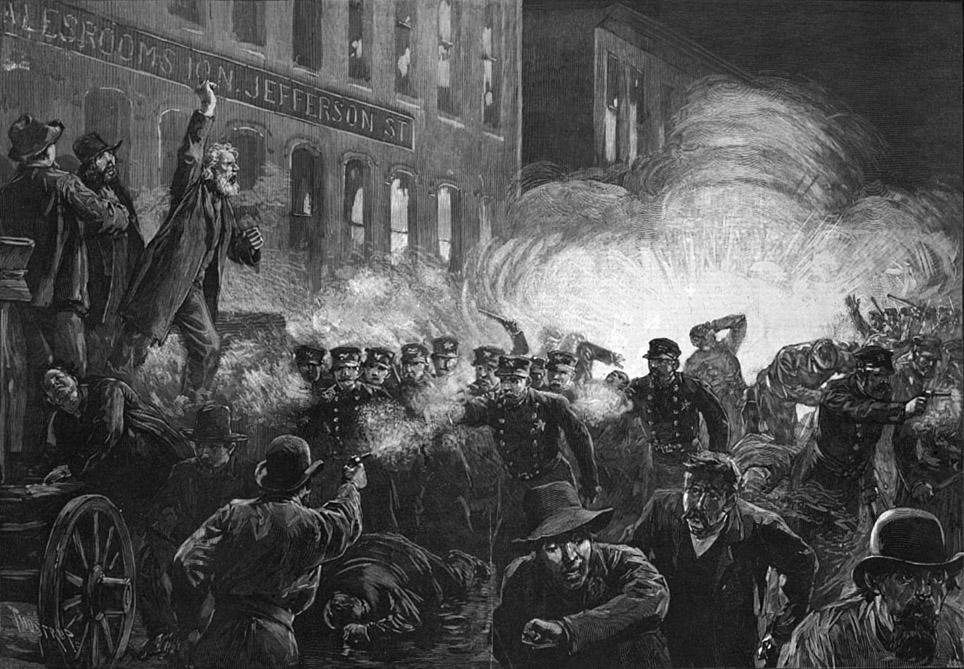
One of these days I ain't gonna change. Welcome, friends, to another edition of Economic Update, a weekly program devoted to the economic dimensions of our lives. Our jobs, our incomes, our debts, the money our children need to get a college education, all of that, the prospects we face, the disappointments surrounding us, the crises of the economic system in which we live. I'm your host, Richard Wolff. I've been a professor of economics all my adult life, and I teach today at the New School University in New York City. Later in the program, I'll have something to tell you about the websites we maintain and the way to follow and participate in in our work. I'll also introduce you to my guest for today. But in the first half of this program, as usual, we're going to do some short updates and then I'm going to respond to some of the comments and criticisms and questions that you've sent in to the websites we maintain. Well, this is the time of year when many people around the world celebrate May Day, the 1st of May. So it is incumbent on a program like this to say a few words about Mayday and what it means and what it could mean. May Day begins as a holiday with an event, May 4, 1886, in Chicago, when a group of police shot and killed people who were engaged in a general strike to limit the length of the working day to eight hours. That's right. It was an event that was part of the long struggle to get the working day down to eight hours. In many parts of capitalism in its earlier years, the working day had been 10, 12, 14 and even more hours. Ever since that tragic event that was also a heroic event in 1886 in Chicago, most countries around the world have celebrated May 1 as May Day, a time for labor unions, socialist and communist parties, social movements of working people of all kinds, to demonstrate in the public arena, to talk about their goals and plans, and to celebrate working people as the majority. In all those countries, however, a little bit of reflection is needed. Most of those celebrations, like most of the struggles that came out of the 1886 events, have been an attempt to get better conditions for working people, to pressure capitalists to give higher wages, shorter hours, better benefits, improved conditions. These days, it's a little different now. Most working organizations, working people's organizations, are fighting rather a different battle, a defensive battle, trying to limit the amount of benefits taken away, to limit the deterioration of their conditions, to limit the decline of their wages and so on. But either way, when you're getting better benefits or you're trying to limit the loss of benefits. What the working class has mostly done is try to focus on getting a better deal within the capitalist system. I would like respectfully to suggest that maybe we've come to the end of the road of that strategy. Maybe working people need to reassess over a hundred years of trying to get a better deal in capitalism, sometimes succeeding only to discover a decade later that the forces arrayed inside capitalism are strong enough to take back, to undo what. Whatever benefits you got before. So that maybe now the strategy we ought to turn to is to say we can do better than capitalism. We have to make the kinds of fundamental change that do not have us begging and working and struggling for better conditions that we can never hold onto very long anyway. Maybe the time is to think seriously about labor and working people having a strategy summed up in the words change the system. Put the working people themselves in charge so they don't have to depend on somebody else to give them the decent working conditions, the decent wages, the decent control over their own lives that they've been fighting for since 1886, if not before. There's a way to summarize what I'm saying. It goes like. If you want to make sure that the economy serves working people, the majority, then you must put working people in charge of producing the goods and services we all need. It's not that complex an idea. Enterprises should be owned and operated by the workers in them if you want them to serve workers as the majority in any society. That, for me, is the deeper lesson of May Day. I want to turn next, as of course I must, to the events in recent days in the city of Baltimore, Maryland, racked by demonstrations, racked by police violence against largely unarmed people. That's what set it off this time, the problem of Freddie Gray, who was killed in police custody under conditions that remind us of the worst of what we have seen in recent weeks from Ferguson, Missouri, on across the country, is the violence and the upset. Is the struggle. Is the tension in Baltimore. Is it an issue of race? Sure, that's obvious. Too many people are spending too much time, in my judgment, on that dimension. Of course, this is partly a race problem. We can see that. Is it a problem of police misconduct? Again, yes, of course. That's been obvious for weeks in this country. In fact, it's been obvious for years, as has the race problem. But to focus on that is to miss something that I want to talk about that tends to go relatively much less attended to. I want to talk about the failure of our economic system. Baltimore Is a screaming example. You have heard me previous weeks repeatedly go to Detroit as an example. I could have chosen Baltimore. So today I won't talk about Detroit. I will talk about Baltimore. The conditions in Baltimore, particularly in the neighborhood where Freddie Gray lived his life, are awful. It's called the Sandtown Winchester neighborhood. More than half the people in that neighborhood between the ages of 16 and. And 64 are unemployed. Let me say that again. People in the ages of 16 to 64, that's the overwhelming majority of adult working age people. More than half of them have no work. This is an unemployment rate that is double that for the city of a whole. Wow. Median income in this neighborhood is $24,000 a year. That's below the poverty line for a family of four. 1/3 of the families in the District live in poverty. Between one quarter and a third of the buildings are vacant. Abandoned stores, abandoned homes. I could go on, but there's no need. Once upon a time, Baltimore was a thriving city. Its biggest enterprise was Bethlehem Steel. Over the last 40 or 50 years, the steel industry abandoned Baltimore, much like the automobile industry abandoned Detroit. When you add to this loss of jobs, the loss of revenue for the city, as there were no jobs as industries left, by the way, why? To make more profits for their boards of directors of those companies. They saw more profits going somewhere else. You had decade after decade in which something could have and should have been done to provide jobs, to maintain the lives of these families, to maintain the homes in which they lived and the businesses that. That they patronized. But it wasn't done. It was neglected. Then for a while, people believed that maybe if you elect these politicians rather than those, it would make a difference. It didn't. Then we were told if we elected African American politicians in a city that had become majority African American, well, then the changes would come. But they didn't. It turns out that the capitalist system that governs Baltimore in reality is stronger than whatever it was that people fantasized could be a political change. So nothing was done in a deteriorating situation because capitalist enterprises were. Were free to get up and leave, make more money elsewhere, and have no responsibility for the disaster left behind. It no longer was a question of whether. It was only then a question of when things would explode. And now they have, and what have we got? We have an African American president, an African American mayor of Baltimore. Their best is to say, gee, there's a problem here. Hello. That's only 40 years late. And, gee, something must be done. I have no comment on that. We all agree on that the only disaster is to explain how nothing was done. Well, here's the answer, and I wish it were easier. But there are no easy answers. I know that because the president, the mayor, and 99% of commentators assure me of that. The answer is to change a system. If the private sector cannot provide the jobs, the public sector has to. Lord knows we have lots of needs. The people of Baltimore could tell you all about them. So we have lots of people who want to work. We know from the Federal Reserve that we have more than enough tools, equipment and raw material for the unemployed to work with. So we need the output, we need the jobs, we have the wherewithal, but we have an economic system that not only cannot put those together, but allows the deterioration of people's lives that then blows up. In all of those images of Baltimore, the lesson, like the lesson of May Day, change the system. As if we needed another lesson. A terrible earthquake in the far off Asian nation of Nepal. Tens of thousands. It now looks injured and or killed. We hear that 40% of children under the age of five are malnourished, suffer from malnutrition. We see a disaster in all of the people traumatized, injured by this earthquake, who don't have a functioning medical care system so that they will die or suffer permanent injuries even though they didn't need to. It turns out that the problem of Nepal isn't an earthquake, is it? The problem of Nepal is the poverty and underdevelopment of that economy that puts them in such a vulnerable position. We probably can't do much about earthquakes. The best way to deal with the potential of an earthquake is to have in place the roads, the homes, the architecture, the structure, the medical care, production and delivery systems, all of the things that Nepal lacked for the last umpteen years and about which an international community of stupefying wealth did nothing. Save us the crocodile tears for the suffering of the Nepalese system. Change is what they needed and what they need now more than ever. Next. The American press enjoys attacking the finance Minister of Greece, Mr. Yannis Varoufakis. I've spoken about him on this program. He and I are friends. I've known him for some time, and something happened to him over the last few days that I thought illustrated an interesting point. So I want to tell you about it. He went with his wife to a restaurant in the middle of Athens for dinner. At that restaurant, during their dinner, he was confronted by a group of anarchist young people wearing hoods so they could not be identified by the police and the camera they were enraged by the suffering imposed on the Greek people by the economic crisis since 2007 and then by the austerity program imposed on Greece by the European Union, the IMF and the European Central Bank. And they were angry that that suffering was continuing despite having voted in the Syriza government back in January of this year, which was committed to doing something. And they were angry at Yanis Varoufakis for not having done more in these few months than has so far been accomplished to reverse that austerity that the majority of the Greek people voted against. There was a little bit of pushing and shoving, but Varoufakis decided to get off his motorcycle. He's quite famous for riding around Athens on his motorcycle. He got off his motorcycle, asked his wife to step aside. She rides on the motorcycle with him. And he spoke with his confronters, the hooded anarchists. And when the conversation was done, they each went their separate way. And Varoufakis was asked by the press what he thought about it. He said he understood and sympathized with their impatience and their anger. And he said the response of our government to, to such outbursts is to say to them, you are right. We will not retreat from our campaign against austerity and we will not repress with police and army the expressions of a people who want that to happen. In a poll taken after this story surfaced, According to Bloomberg, 55% of randomly polled Greek citizens expressed their support for Yanis Varoufakis. 55% is more support by a huge factor than any of the sitting presidents, prime ministers or chancellors of the major capitalist countries imposing austerity on Greece could get in their own societies. Last update for which we will have time today. This one has to do with an advertising campaign by the Anheuser Busch InBev Corporation pushing its Bud Light brand of beer. It has been really in trouble recently and I have to tell you why. It has to do with an advertising campaign that goes by the name up for whatever that is. They've been trying to get more people to drink beer by saying, if you're up for whatever, this is the beer to drink. According to the New York Times on 29 April, they are in a desperate, that's the New York Times term, desperate effort to court women to drink more beer. Before I tell you about the thing that got him into trouble, I want to show you again that we are blessed here in America by a private enterprise beer producing company which is in a position to spend billions of dollars if it chooses to Promote the drinking of more beer by American women. Now, that's a way we would want our resources to be utilized. Isn't it wonderful how efficient capitalism is in allocating resources? But back to Bud. Back to Bud Light. In February, they got into trouble because they had a slogan that they were using to push their up up for whatever campaign. Here's how it On St. Patrick's Day, you can pinch people who don't wear green. You can also pinch people who aren't up for whatever. Gee, you want to associate beer drinking with pinching people? Everybody with even a vague notion of the current problems in the United States with sexual harassment might have thought, wow, you can't do better than that. And they got into trouble and they said they would be more sensitive. Well, that was February and March. What did they do in April? They came up with a new slogan. I'm going to read it to you now. The perfect beer for removing no from your vocabulary for the night. You heard right. Beer pushed at women is advertising that it's the right thing to drink. To remove no from your vocabulary. A country battling epidemic levels of sexual abuse, sexual imposition, particularly on women, sees a company that obviously learned nothing from violating its social responsibility in February and March and so went right on and did it again. Which, by the way, in a free enterprise system, it is free to do, isn't it? And we can all live with the results because we don't control that they do. We live with the results. They're just out there making money. I want to turn in the time I have left to respond to your questions. And we're going to only have time because I want to focus then on the interview that often comes in these programs. In responding, I want to answer the questions many of you have sent. And this one has to do with cooperatives. You hear me talking about worker co ops and quite understandably you get a little confused between all the different co ops you know about and the particular worker co ops that I talk about. And, and you've asked me repeatedly now to clarify this. So here we go. Cooperatives are a very old idea. Cooperatives of all sorts have existed for hundreds, probably even thousands of years. The new interest in co ops is more about dissatisfaction with capitalism than it is with something new. The interest in co ops is as an alternative to the normal business of capitalism. And that's why it's so interesting and why it's historically important. But as I say, co ops are different. So let's go through the differences so we can be clear about them. From now on, one kind of cooperative happens or takes place in the area of ownership. That is, one can own something. I'm going to give you examples in a minute. One can own something as an individual or one can own something as a group. If one owns something as a group, you can speak of a cooperative ownership. So for example, a whole community can collectively, together, cooperatively own, for example, its electric utility company. There are roughly 2,500 cities and towns across the United States who do not get their electricity from a privately owned electric company. Neither a family owns the electric company, nor do private individuals buy shares in such an electric company. No, in those 2,500 cities, the community collectively, the whole city cooperatively owns and operates the electric utility, which sells its output electricity to each of the co owners. And that's the way the problem is solved. Another example of cooperative ownership has to do with many companies in the United States where the workers, through their pension funds, cooperatively own. So cooperative ownership is one thing. Does it mean that the company operates in a radically different way? Not necessarily. It can well happen that the cooperative owners run the business like any other capitalist business. They turn the day to day management over to managers. They give a board of directors the power to make all the basic decisions. And the only thing that is really a result of cooperative ownership is that all the co owners get a dividend or get a share of the profits of the company. When I talk about worker co ops, that's not what I'm talking about. Here's a second kind of co op. When you do cooperatively buying things. Most typical in America these days are when groups of people in a neighborhood set up a food co op. So together they own and operate a food buyer who buys and then resells the food. And the reason for it is simple. You could get a much better price if you buy large quantities cooperatively and then distribute them to each of your members than if each of you goes and buys at the supermarket. That's cooperative buying. It's. It doesn't change necessarily how the co op works in terms of the workers inside the co op food distribution store. I could go on. There are cooperative selling arrangements. There are cooperative management arrangements where workers don't need supervisors because they manage themselves. Those are all ways of cooperating. I'm in favor of them all, I support them all. But that's not what I'm talking about. What am I talking about? I'm talking about a worker co op, sometimes called a producer co op. And here's what I Mean the workers in such an enterprise may or may not own, self, manage, buy, sell, none of that. What the workers do in a worker self directed enterprise is just that they direct themselves. They make all the key decisions, what to produce, how to produce, where to produce and what to do with the profits. Workers collectively do what the board of directors does in a regular capitalist corporation. The board of directors is not who owns capitalist corporations and the board of directors is not who manages the capitalist corporations. The board of directors decides what to produce, how to produce, where to produce and what to do with the profits. And that is the single most powerful position in a capitalist enterprise. When I talk about worker co ops, it's having the workers finally stop that arrangement. No more other people making those decisions. The workers make them themselves. That's a workers co op. That's a workers self directed enterprise. Maybe if workers own an enterprise, they could convert how it's run to be a worker self directed. Mostly they don't. And whether they could or not is the question. Whether they do, that's the issue. And more and more in the United States, it's this that's being understood and as the central problem. Well, folks, we've come to the end of our first half of our program. I want to thank you all for joining and being with us. Please stay with us for a short break. After the break, I will be very happy to introduce you to my guest for the second half of the program. I think you'll find it extraordinarily interesting. So stay with us. We will be right back. Who got away? Welcome back from welcome, friends, to the second half of Economic Update. Today's program involves me introducing my guest, Professor Yahya Madra. And I want to begin by saying to Yahya, whom I've known for many years, welcome to the program.
- [28:50]
B
Thank you, Rick.
- [28:52]
A
Before we get right into it, I want to explain why I've invited Professor Madra to be with us today. Professor Madra is a professor of economics in Turkey. And I want with this program to begin a process of periodically bringing into our program and into our discussion economists, particularly, because it's a program on economics who can help us understand what's going on in the rest of the world, based as they are in the rest of the world, so that we become less narrowly focused on our own society, a problem that we have here in the United States quite seriously and become more cosmopolitan, more knowledgeable about the rest of the world. So this is a movement in that direction. So let me introduce Professor Yahya Madra to you All. He is currently an associate professor of economics and you'll have to help me here. Bogazici University. Is that close enough?
- [29:54]
B
Yes, Boazici University.
- [29:55]
A
Boazici University in Istanbul, Turkey. Before he moved back to Turkey, his native country, he taught economics at Skidmore College in the United States from 2003 to 2006, and then at Gettysburg College from 2007 to 2011. He is a very prolific writer of articles and books that have appeared in many, many different journals. He is a specialist now on the history of economic thought and how different approaches in economics struggle with one another, for the allegiance of politicians and students and others. He's writing two books, one on this, let's call it the history of economic thought, the struggle among different theories. And then he also is working on a topic I know he has long been interested in, with the intersection between economics or political economy on the one hand, and psychology or psychological issues on the other. And I know my audience is very interested because when I have occasionally brought Dr. Harriet Frad to talk about economics and psychology, the emails we get are truly stunning in terms of how much interest there is in that topic. Alright, so let's begin. Yahya, if I may call you by your first name, since that's how I've known you most of my adult life. Tell us a little bit about Turkey. Turkey is a capitalist country. Turkey is a Muslim country. And I think one of the interesting things would be to have a sense of how Turkey's engagement with those two realities, its capitalist economy and its Muslim cultural and religious identification. How has that shaped the modern history of Turkey?
- [31:46]
B
First of all, Rick, thank you very much for this opportunity. And we've been following from Turkey, of course, Internet helps these very easily your program for a while and it's like my weekly listening practice on podcast. Of course we listen. But let me just give you one interesting thing. I mean, Turkey is of course a capitalist country and member of NATO, North Atlantic Treaty Organization, which is during the Cold War was on the side of US and Europe against Soviet Union. And in fact, Turkey was in that sense kind of a bastion of the U.S. bases. I mean, there are a number of U.S. military bases, military bases in Turkey. There is one currently, which we never really know if they are really active or not, but its presence and some of the current troubles between Turkey and us are whether these bases should be used in the latest operations that's taking place against isis. Right? Sort of. That's been a big debate. Biden came to Turkey and so on and so forth within the last year. But maybe here one thing we can say is that Turkey is after the Ottoman Empire. And the Armenian genocide has been a predominantly Muslim country. Prior to that, it wasn't. It was a Christian Muslim more. But Christian and Muslim together within the. Exactly. But with the Armenian and the Assyrian Genocide and the population exchange with the Greeks after 1920s, Turkey became predominantly Muslim. And one major thing about that genocide is it's a kind of what we call in Marxian language, primitive accumulation for a Muslim bourgeoisie. Right. In a way, the Turkish state for a while really did a lot of active work in creating a Turkish Muslim bourgeoisie which didn't exist. Right.
- [33:48]
A
So that capitalism in Turkey, if I'm understanding you, was given a major boost by taking away the property of, of the Armenians, the Assyrians, the Greeks and so on in those earlier struggles.
- [34:01]
B
Exactly, exactly. And of course, you know, any sort of families that were closed, there's of course cronyism there in different ways benefited from this. And new capitalists, monopolistic structures kind of created, but it was a kind of a secular emphasis was there in that capitalism. And that meant that the general Muslim practices were also somewhat oppressed. And what we observed is throughout the 20th century, a kind of a very regular Latin American sort of developing economy, very similar in many attributes. But what happened in the 1990s was that predominantly Muslim working classes were allied and were perhaps helped by an Islamic party. Then the name was Welfare Party. And then in the 2000s it turned into what is today known as AK Party or Justice and Development Party, and the Erdogan's Party. And this party actually began by organizing the working people around the Islamic justice discourse, but combining that with a kind of Islamic oriented new bourgeoisie, more Muslim bourgeoisie. Right.
- [35:24]
A
So this is really very interesting and I want to make sure my audience gets it or that I get it right too. In a sense, the Muslim, the movement for a greater role in society for Islam, made an alliance, in effect, with a discontented working class.
- [35:47]
B
Exactly.
- [35:47]
A
Angry at the conditions of work in a growing Turkish capitalism. So that now you get the result that you're going to tell us about of new directions in Turkish development because of this peculiar connection between a more or less anti or at least slightly anti capitalist working class and a Muslim or Islamic movement that speaks to them and wants an alliance with them.
- [36:19]
B
Yes, I think, you know, the Muslim movement was positioning itself as the victim of the Turkish state. And the sort of working class which had historically Muslim intentions were also, in addition to the state oppression, they were also upset with the capitalism. And what Islamic politics did very carefully was to take that and translate that anti capitalist sentiment into an anti state sentiment. And they said, we're going to transform the state into a more in line with Islam. And the 2000s we observed this type of a transformation. But what happened in the 2000s?
- [36:58]
A
Wait a minute. So by not attacking the capitalists, by attacking the state as the problem.
- [37:04]
B
That's right.
- [37:05]
A
Then it became possible for the Islamic movement to have an alliance with the workers without making the capitalists their enemy. Because they didn't go after them. Exactly. Is that right?
- [37:16]
B
That's right. Though there is a kind of an interesting division. There is a kind of a more secular monopolistic capital that has been there since the 1920s. And their benefit from the genocide, for instance, we can say. And then there is a new Anatolian capitalists. They are like more small scale capitalists where they may have Ramadan festivities with their workers. There's a kind of a corporatist small scale capitalism. Right. But most interesting thing is that when you know, Erdogan and this Islamic political party, justice and Development came to power, they took on a Turkish economy that was radically changed because of a major crisis in 2000. So they swept in in a crisis situation.
- [37:59]
A
What was that crisis?
- [38:00]
B
That was a major financial breakdown. And subsequent to that financial breakdown, what we observed was actually a dramatic change of the financial system which made the Turkish economy very much integrated into global markets. So Turkey became actually a destination for foreign capital, direct investment and hot money, which meant that throughout the 2000s, Turkey.
- [38:28]
A
Explain to all of us what is hot money?
- [38:30]
B
Hot money is short term investment that would come there and would leave if the conditions of investment, the short term investment are not there. This only can happen if there is very extensive financial liberalization. Right. And this is what we have in Turkey. So we have grown very fast in the first part of the last decade, partly because infusion of foreign capital. Now in 2009 this stopped. But then with the quantitative easing United States After 2009 it resumed back again.
- [39:06]
A
Because the interest rates dropped here, hot money would flow to Turkey to get a higher return.
- [39:11]
B
Exactly. So Turkey for a while benefited from the downfall of US economy because the capital that was seeking for investment opportunities end up coming to Turkey. So this Islamic government for a long while experienced quite success. Yet on the other hand, there was an interesting dynamic. The success had enormous contradictions unleashed. First of all, Turkey doesn't produce energy. They are very much dependent on oil. Turkish economy is very much dependent on oil and gas, natural Gas.
- [39:46]
A
And where does it get that?
- [39:47]
B
From the oil it gets from Middle east and natural gas, of course, from Russia and Bulgaria and some from Iran. Which means that even if Turkish economy grows, its imports are always going to be more than its exports, because you need the energy to produce for both the domestic market and for export. So there is a constant structural trade deficit in Turkish economy. So growing fast means, in fact, the deficit may grow faster. And in fact, to finance that deficit, you need to have a current account deficit as well, which means that there should be always net inflow of funds to Turkey. So when the funds dry, as in 2000, the economy collapses immediately. We saw with inflation, immediate rise in the unemployment rates and reduction in production. But in order to sort of solve this problem, Turkey very aggressively does some things that are creating lots of new, unexpected contradictions. Coal, hydroelectric power plants all over they call microdams. These damage environments so dramatically that Turkey has experienced something which it never experienced before. Ecological justice movements that are rising up from the grassroots.
- [41:12]
A
So because of the way they developed capitalism, they became dependent on imports of energy. Yes. To try to cope with the danger to the capitalist system of dependence on imported energy. They're transforming. They're trying to create energy inside the country and. And are creating ecological disasters.
- [41:30]
B
Exactly. That was a major mining disaster that happened two years ago. Not two years ago, a year ago, 300 miners were dead. And this was actually a company that was very much kind of. There's a cronyism there as well, very connected to the ruling party. And this is just not an exceptional case. I mean, these mining conditions are really horrific. At Wallace University with students. We did a lot of research on this last year. And the other interesting consequence of this contradiction, of course, is that we observe Gezi. Right. Gezi didn't just came out. Gezi uprising that happened in 2013.
- [42:09]
A
Would you please just remind our audience of this?
- [42:12]
B
There is a very beautiful, but small, whatever remains, a park in the center, in the very, very center of the Istanbul. And this historically interesting park, which was before that was an Armenian cemetery. So let's remember that history as well. But then there was, after the cemetery, there was actually a building like a barracks. This is late 19th century, early 20th century. And after that we observed that barracks got demolished and we had a park. Right. And this park now wanted to be. The government wanted to change this park into a barrack again, a barrack for military. Well, it's going to be a shopping mall with the same look like it sort of recreate this barrack and make It a shopping mall at the center of the city.
- [43:01]
A
Instead of a park.
- [43:02]
B
Instead of a park. Now the thing, of course, one little footnote there, you talked about Nepal. Istanbul is a major earthquake possibility place, and parks are where you actually go in the case of an earthquake. And that's pretty much the only park within that region where people can actually go. So there's such an important aspect to that as well. So when they began to demolish the park, suddenly all these ecological groups from all over Istanbul and also Turkey got there. So it started as an ecological sort of justice issue, but it immediately move into all other economic and political justice.
- [43:44]
A
Issues and it became a real crisis.
- [43:46]
B
A real crisis for a month, like, you know, similar to those that happened Spain perhaps the year before. Not to the level of maybe a Tahrir Square, though it did refer to that like people who were doing that in referring to that. Definitely a lot of reference to Occupy Wall street sort of was there. So what do we have now? Where do we stand now in terms of the state of Turkish economy? Well, it is at a stop where there is heavy indebtedness, not by the public sector, but private sector and households. And in fact, the indebtedness increases as you go with the lower levels of income.
- [44:34]
A
Right.
- [44:34]
B
Which means there is increased precariousness. Unemployment has risen in the recent years, partly because the money is not that interested to come to Turkey anymore. Why? Well, there is a lot of political turmoil, a lot of cronyism that came out. And also, of course, you know, Europe is in sort of trouble. Therefore it's one of the important export markets, so we can't sell there as well. So the economy kind of stuck and it can't go anywhere. Partly because it's a kind of an economic system that is based upon extractionism, based upon privatization, based upon financialization and sort of in these kind of. And when it comes to those limits, and it's not about sort of, you know, society kind of deciding on what they want, but actually kind of the profit motive being the main driver. We observe a kind of a crisis after a while. There's also the political oppression, which is of course, is not good in terms of the knowledge aspect of the economy. People, there's a brain drain issue. I mean, I'm observing a lot of people coming to United States for education, like I did. I return back after many years, but we're seeing much less people coming back.
- [45:55]
A
So young Turkish people emigrating to other parts of the world.
- [45:59]
B
That's right.
- [45:59]
A
And why? Tell me what?
- [46:01]
B
Well, because the freedom of speech is curtailed in certain ways on press, for instance. So there are a lot of chilling things happening. Internet access is sort of. Freedom is kind of very much curtailed. And these are not what I'm saying. These are actually, a lot of the international press organizations are underlying that. And this is a little bit of a kind of a government who has done so much cronyism that they don't want the sort of public to know, therefore they're kind of oppressing. Right. That's what we've been observing. But also the opposition's sort of emerging.
- [46:40]
A
Would it then be fair to say that by now just about a century of fairly intense capitalist development undertaken partly by the state, partly by the private capitalist sector, has produced an extraordinarily uneven economic record full of lots of serious internal contradictions, crises, and now a pretty serious level of political and cultural oppression?
- [47:15]
B
Yes, we can say this.
- [47:17]
A
Okay.
- [47:17]
B
And we can say this.
- [47:19]
A
I want to underscore that the history.
- [47:21]
B
Of capitalism, you put it very clearly. You're right. I mean. Well, I mean, there is actually sort of contradictions that are regional, uneven development as well.
- [47:34]
A
I'm sure to get to that.
- [47:35]
B
Exactly.
- [47:35]
A
Because we've read a lot about the tensions, I mean, in the recent press, because of the Armenian historical. This is the anniversary and so on. We've seen that in the press. In the west before that, we saw a little. And I want you to help us understand the tensions inside Turkish capitalism that are ethnic, that are regional, that have particularly to do with the Kurdish people. And I know you know a lot about that, and I want that in. Sure.
- [48:05]
B
I mean, sort of just to give a little bit of an overview. Kurdish people are distributed across four nation states. Iran, Iraq, Syria, and then on the north of Kurdistan, if you like the region, Turkey. So under Iran, there is very heavy oppression going on right now in Iraq. We know with the help of United States. There is the Iraqi Northern Kurdistan, Northern Iraqi Kurdish autonomous region. And to the west, in Rojava, which means west in Kurdish, is these autonomous regions that are organized in egalitarian and kind of, if you like, communitarian manner. And these were the ones that are primarily attacked by ISIS since the summer. But ISIS also attacked Iraqi Kurdish region and U.S. began to intervene when the U.S. if you like, oil interests in the Iraqi Kurdish region was endangered, threatened. But so in a way, this is sort of what's happening south of the border, but in the north of the.
- [49:18]
A
Border, this is the border with Turkey.
- [49:20]
B
With Turkey. So in Turkish regions, we have a peace process since 2013 with the Kurdish Liberation Army. It's the Workers Party, Kurdish Workers Party. The guerrillas and the state are in a peace process since 2013 after a 30 year of war where 30,000 guerrillas died and 10,000 Turkish soldiers died. Right. And so this was really important for us, this peace process. And with this ISIS emergence, the destabilization again became a reality in the region.
- [49:58]
A
Now, why would ISIS be concerned here? What is the issue?
- [50:02]
B
That's very interesting you say that because ISIS is not just about religion. I think it's also ideological because the Kurdish movement is a radically egalitarian, autonomous movement. They're very democratic in terms of how they envision the sort of the society they want to live in. They have equal gender rights. This is very important in their sort of constitutions in this sort of Rojava region, democratic constitution, as well as participatory structures and also workplace democracy. These are important. Now, Guelas may be much more sort of hierarchical in their structure, but the vision that the political movement as a broader thing, because it's not just Geilas, there's broader kind of social movement who actually in Turkey, of course, we have a political party who is actually running for election right now in June 7, and they are hoping to get 10% vote of the population, which is important for. To pass the threshold. And they are, for instance, this Turkish component of this movement wants to say that we're not just for Kurds, we're for workers everywhere. We're for women, oppressed women everywhere. We're for youth everywhere. Right. They're kind of trying to create a language that is looking more like Podemos or Syriza, maybe with more emphasis on labor justice issues. I mean, Syriza has that as well. Maybe Podemos is a little bit different. Those differences can be be discussed, but kind of an attempt to also transform Turkey. Right.
- [51:40]
A
So now you have. If I. This is what I want. You have a movement inside Turkey that is radically egalitarian, democratic, Muslim at the same time.
- [51:56]
B
Yes.
- [51:57]
A
Contesting against a very strong pro capitalist state that is also Muslim. So here's a chance for those forces outside of Turkey who want to see the kind of support for what the Kurdish community is saying it wants. This is a chance to be supportive of the Kurdish community and its movement inside Turkey.
- [52:27]
B
That's right. That's right.
- [52:28]
A
Is that how you see it as well?
- [52:29]
B
That's how I see it. I think the People's Democratic Party, this party, is actually putting something on the table that is distinctly what resembles Many of the things that we have seen in projects like yours or solidarity economy projects, just one example, very quickly they actually in the program there's a lot of place for worker cooperatives that should be established not as a kind of an ideal, but as a solution to problems of unemployment. Right.
- [52:58]
A
Or.
- [52:59]
B
But there's also 35 hour workday. So 34 hour work week.
- [53:05]
A
35 hour work week is part of their basic program.
- [53:07]
B
Basic, basic program. Which is why. Because not just sort of to solve the employment issue, but also free time for participation in the workplace, participation in the neighborhoods. So there's this vision of political and economic democracy. I think that's the sort of.
- [53:25]
A
It strikes me as remarkable that were the United States government not what it is, were it not in an alliance with the Turkish military and state, and were the pressures for a democratic alternative genuine instead of purely rhetorical, then the United States would be actively supporting such a Kurdish movement because it would be a coming together of democratic forces and of forces that are inside the Islamic world, but pushing for something that usually in the United States is not identified with Islamic politics or Islamic movements. Yayen, in the very short time we have left, what is the lesson you draw from the situation you're countries in? What would you say is the urgent issue for Turkey that we in the west should know about?
- [54:24]
B
Well, I mean the sugar coated story about capitalism is actually, I mean the trouble in paradise. What Slavoj Iek wrote once on this issue, this is really important. I think capitalism is not the growth. That story about economic growth that capitalism touts once. It rarely actually does it in a proper way, but let's say sometimes it does. It is actually causing all sorts of problems unless it's democratically sort of controlled the economic growth. That is so.
- [54:57]
A
And Turkey illustrates that.
- [54:59]
B
Turkey illustrates that and I think Brazil illustrates that. It's no coincidence that the same time that there was uprisings in Turkey, all across Turkey, just before the World cup in Brazil, we observed these uprisings as well. The coincidence of those two things is that capitalism is problematic even when it's successful. That's the message that probably what we can take from here.
- [55:22]
A
Thank you very much, Professor.
- [55:23]
B
Thank you very much for giving me this message.
- [55:25]
A
Yeah, yeah, Madra. I hope my audience appreciates an insight into an important country in the world. In the remaining time I want to remind you again, please make use of our websites, rdwolf with two Fs.com and democracyatwork.info please use them to send us your comments and questions. There's a mechanism on there for you to email us any of those things. Please use them to follow us on social media, Facebook, Twitter and so on. Please share this program, parts of it, all of it, through podcasts and otherwise, with your friends. We need more and more people to listen and be part of this economic update community. I want to thank especially truthout.org, that remarkable independent source of news and analysis every day. Do check them out@truthout.org and finally, let me remind you, please, I travel around the country eager to present in live audiences the kinds of analysis that we do here, but with more time and opportunity to answer questions and to go into these topics. Use the two websites we maintain, rdwolf.com and democracyatwork.info to get in touch with us. If you'd like to discuss scheduling such an appearance, whether you would like to have us be on the radio, public radio in your area, we will work with you to accomplish all of these things. This has been an important program, initiating an examination of capitalism's development and problems around the world. I look forward, of course, to talking with you again next week. Sam.