Loading summary
Transcript39 lines
- [00:00]
A
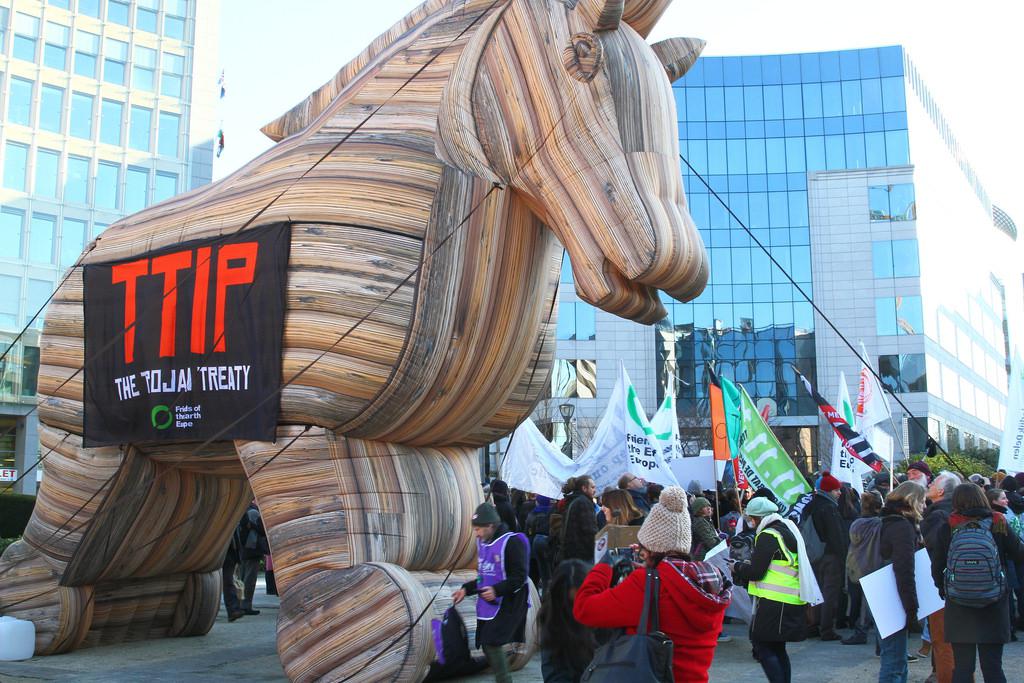
Sam. Saint gonna change. Welcome friends, to edition of Economic Update, a weekly program devoted to the economic dimensions of our lives, our jobs, our incomes, our debts, those of our children, and how it all looks down the road in the economic system we live in. I'm your host, Richard Wolff. I've been a professor of economics all my adult life. I currently teach at the New School University in New York City. I want to remind you that there are a number of services and features of the websites that we maintain that I tell you about pretty much each week, and I want to start today by mentioning them and making a couple of announcements. The first one is rdwolff with 2f's.com and the second one is democracyatwork.info both of these websites are designed and updated every day to serve you. There's a complete archive of these programs. There's all kinds of articles, video, audio, you name it, it's there. Both websites provide you with ways to communicate to us what you like and don't like about the program, questions you'd like us to respond to, such as one or two that I'll have time for later this morning or this afternoon, depending on when you hear this program, I want to also let you know that you can follow us on Facebook and Twitter by just clicking on the appropriate icon on either of those websites. And lastly, I want to mention again that I travel around the country and that I am open and interested to find other opportunities to speak. One that I'm particularly excited about, that I wanted to mention again will take place the evening of October 29, Thursday, October 29 in Berkeley, California. It will be at the Berkeley City Club and it's hosted by Living New Deal. That's a wonderful institution hosted at the University of California, Berkeley that is having a reception and an evening presentation and I'll be talking there about what the New Deal taught us and what it teaches us about today when we're in the second worst collapse of capitalism and have much to learn from what was done and not done the first time capitalism collapsed on such a global scale. I also want to make a new announcement, one I've never made before but that I'm proud to announce. Democracy at Work, the organization that brings you this program has has entered into a partnership with a group of specialists, lawyers, accountants and others with a 20 plus year history of helping working people convert conventional businesses into worker co ops. That is something we talk about often on this program. That's something we will be talking about on this program some more, but I wanted to invite those of you that are interested in converting a business, working in a business that is thinking about conversion, perhaps because the folks who started it are retiring and wondering what to do with it and might be open to selling it to their own employees. But that is a social movement going on in this country that we are very supportive of, and we're now able to offer the kinds of technical services to make it possible that we did not have organized in this way in the past. So if you're interested, go to those websites, let us know and we will follow up. Let me turn then to the shorter updates that deal with some of the things that happened this last week. First and foremost, I want to say a few words about the debate that happened earlier this week because it raises some interesting economic realities. I want to talk particularly about something Hillary Clinton said, and I want to connect it to a recent book that was published by Robert Reich. The book by Robert Reich is called Saving for the Many Comma, not the Few. Saving Capitalism is its major title. That's what I want to ask you to keep in your mind the other night in the debate, a debate between Hillary Clinton and Bernie Sanders and three other people who didn't seem to be clear as to why they were there. And most of us didn't have a clue either, other than the formality in the course of the debate. At one point, Mrs. Clinton said, you know, these words are almost exactly her words. You know, sometimes, every so often, you have to save capitalism from itself. And I was struck that Robert Reich writes a book called saving capitalism, and Mrs. Clinton refers to her own policies and what she might do if she were president as, quote, unquote, saving capitalism. This is an admission, whatever else it is, that capitalism needs saving. Mrs. Clinton says it needs saving from itself. Mr. Reich is more in the direction of saying we need to save ourselves from a bad kind of capitalism. And as you probably know on this program, I leave it off at we need to be saved from capitalism. But my point here isn't about these differences. It's about the fact that for the last half century in this country, it was basically taboo to say anything negative about capitalism, to be anything other than a cheerleader for this system, to pretend, and that's what it required, that it was the greatest thing since sliced bread, if not better, and that it was upward and onward with progress and prosperity for everyone. What a change we saw the other night when we're now having to talk about saving capitalism from itself, from its own failures, from what it is doing to most of us as opposed to the few, etc. Capitalism is now in play, and that's an enormous change culturally, ideologically, and it will have very real effects on the lives we lead. Second update for today. There are now such an accumulation of signs that we're about to go into another economic downturn that it's time for me to comment on them. I don't make predictions. I don't believe in it much, but the signs are now pretty much overwhelming. For those of you that look at the financial press, you know that they have been accumulating this last week. There were two crucial numbers very closely related. One was the number for retail sales in the United States. Retail sales are a pretty good index as to what the mass of people are or are not able to afford. And if the mass of people can't buy in a growing way, this economy cannot grow. And the signs were of a very Flat retail year, 2015, no growth over 2014. But even more stunning was the revelation Wednesday of last week by the Walmart Corporation telling the world that its profits are scheduled to go down by 12%. That's an enormous drop in profits, and this is a drop of the largest corporation in the United States by employment and by sales, and a company that is obviously in the retail sales business. So these two numbers reinforce one another in their signs that economic choppy waters are at very least coming our way. Since most people have not recovered from the crash of 2008, the news that we're heading into another downturn is very bad news indeed. And I present it to you or bring it to you, not in order to get you depressed, last thing on earth I want, but in order to get you prepared. And I was struck in thinking about the significance of this by a group of statistics gathered this last week and published by the Federal Reserve in Washington. I can't give you all of it, but I wanted to give you a thumbnail sketch of these numbers because even though they are few, they give an insight onto the American economy that tells you how fragile things are in the face of a declining prospect. 22% of American workers are confident that they will be able to live comfortably in in their retirement years. That means 78% are worried about it. Four fifths of our people are anxious about their retirement. Wow. 31% of the respondents to a Federal Reserve survey have absolutely no retirement savings or retirement plan whatsoever. One third of our people have nothing for whatever happens to them after age 65 to 70. Let me continue. 47% of American households, that's Roughly half would have to. This is what they told the Federal Reserve would have to borrow money or sell a possession if they had an emergency that cost $400 or more. Let me repeat that. Half of the people of America couldn't meet a $400 emergency expense unless they borrowed from somebody else or sold some of their possessions. Approximately 60% of Americans are homeowners. That's down from 70% in 2007. That's an incredible drop in a short number of years. These are people who have lost their homes, have gone from home owner to renter. But let's remember, in case you're wondering, that homeowner is a bit of a euphemism. It means you and whoever the banker is that lent you the money for your home are the homeowners. And if I had time, I would provide you with the statistics to show you that the proportion of ownership between people on the one hand and their bankers on the other has gone drastically in the direction of the banks. People have used their homes as a basis for borrowing, giving the bank a much larger share of the so called owner owned homes occupied by the owner than ever before. This is a very fragile economy going into an economic downturn. Third item, my hat's off to the German people. Last week, during the week, and this was very poorly covered in The United States, 250,000 people from every corner of Germany, east, west, north and south, gathered in Berlin. A quarter of a million people marched down the major street of Berlin in opposition to something called the ttip. This is the Transatlantic Transatlantic Trade Partnership or Trade and Investment Partnership, excuse me. It is the equivalent for the Atlantic of what the TPP is for the Pacific. These are both secretly negotiated. Let me underscore that secretly. No press, no public discussion, no revelation of the deals being cut and made that rewrite the rules for international trade. Our incomes, our job prospects, all of that is heavily dependent on international trade. The US Economy is more dependent on the rest of the world today than it has been since it was a colony of Great Britain. So the reality is we are all being affected by these two sets of treaties. And since labor unions are not present at the table, consumer groups are not present at the table. The public basically is not present at the table. It is the biggest corporations, their most expensive lobbyists, trying to convince the politicians whom they put into office about rewriting the rules. And a quarter of a million German people say, outrageous, we will not abide by these rules. We oppose the secret negotiations. We oppose the leaks about what the deals are that are being struck. This is something that the German people are showing real leadership, and I wanted to bring it to a larger audience. I'm proud to say that the labor unions in Germany were a key organizer and leader. Let us hope that they might get the idea to do the same thing in other countries. Last short update that we will have time for deals with Puerto Rico. I have been talking about Puerto Rico for some time now because it is America's Greece, Greece for Europe, Puerto Rico for the United States, A poor corner of the larger economy which fell prey to big bankers and to corrupt politicians who together arranged for way more borrowing of loans profitable to the bankers and useful for the political careers of the leaders. And so now the problem is this part of the world cannot possibly pay back the loans pushed and taken under the wrong and the most undemocratic of imaginable conditions. Puerto Rico's governor explained this last summer that they can't possibly pay it back. Let me translate that into what he meant. What he meant, and he explained it is that if Puerto Rico had to pay back the 80 or so billion dollars it owes, it would mean that they could not provide schools, fire, police protection, the most basic human rights, and that he, as governor, could not countenance that. Well, creditors went to work. They've heard this kind of story. They want to get paid. They do not want to remember the rule which if you make a loan, it is your job to determine who called doing due diligence. It's your job as lender to determine whether the borrower is a reliable borrower. Because if you don't do that, you risk that the borrower can't repay the loan. And it is clearly understood in the law and in the tradition of economics that I teach that the risk is to the lender, and the way the lender deals with that is to demand a high interest rate, which Puerto Rico has been paying. But that doesn't eliminate the risk. It compensates the lender for the risk. But the lenders never want to pay the piper. They never want to take the losses when the borrower to whom they've lent the money can't pay back. So they have been threatening lawsuits, they have been threatening vilification campaigns. Those have already begun against Puerto Rico, etc. Etc. This last week, the United States treasury floated an idea that ought to terrify Puerto Ricans, and not only Puerto Ricans, but everybody else who pays attention. The treasury idea was that the United States Internal Revenue Service would come in and take over tax collection from the Puerto Rican authorities. With what purpose? In order to guarantee that the taxes raised from the Puerto Rican people, businesses and individuals would be going to the creditors before it goes to maintain the life conditions of the Puerto Rican people. If this were to be done, it would establish that the federal government can and will do what state governments, for example Michigan, does in the relationship with Detroit, namely, control how much of the taxes raised by the people of Detroit will not be used for them. And how much of the taxes of the people of Puerto Rico will not be used for their needs, but will go to service a debt that shouldn't have been contracted in the first place bears watching because the number of jurisdictions, cities and states across the United States in deep trouble about paying their debts. Let me mention, for example, the state of Illinois, which is literally one step ahead of Puerto Rico, if that are waiting to see how this gets played out. The costs to the American people from all of this are enormous. All right, let me turn now to responding to the many questions that you send me. And let me preface this as I should be doing more often by reminding you that we read every single email that comes to us. We really do, and we craft this program, we design how we do it, what we cover, what order, based in large part on what you tell us you like, you don't like, you appreciate, you find boring, and so on. But we get many more questions from you that you would like us to deal with than we could possibly respond to, and we just ask you to understand and be patient. We try, but there's no way that we could answer all the questions we get. It would take more than the entire time that the program has. But every now and then we want to make this part of the program. As I'm about to do this question, and I want to thank Eric for sending it in. This question has to do with economic planning, and Eric asks, in view of some comments I made in an earlier program, isn't it the case that economic planning, rather than using the market to buy and sell things, but to plan instead how goods get produced, to plan how goods get distributed from one producer to another, from producers to consumers, and so on, isn't that a proven failure? In other words, weren't there, for example, in the Soviet Union, many photographs of people standing in line at supermarkets or other kinds of stores, unable to buy the things they needed and wanted? And wasn't that a proof that that planning somehow doesn't work? The market is better. And the answer to that is no, it didn't prove anything of the Sort. But that, of course, needs a bit of an explanation. Planning was not the problem in the Soviet Union, nor has it been the problem in China. The problem in the Soviet Union was they were trying to do more things than they had the resources to do. Let me explain briefly in the case of the Soviet Union. The Soviet Union was the first and for much of its history, the only country with a socialist or communist party in control. That meant they were beleaguered on all sides by enemies. If you're not familiar with Soviet history, let me remind you that the revolution happened in 1917. And starting in 1918, four capitalist countries sent armies to invade the Soviet Union to overthrow their new revolutionary government. France, Britain, Japan, and the United States. The United States sent 10,000 troops that landed on Soviet soil with the goal of overthrowing their government. The Soviet Union never landed any troops anywhere in the United States to overthrow anything. So if there's somebody who's got a right to be scared of somebody else, it kind of goes the other way, don't you think? But the point is, the Soviets had from the beginning to spend an enormous amount of their resources on military defense because they were, in fact, threatened. The last Japanese troops did not leave Soviet soil until 1922, five years after they came. So they've had that problem all through their history, before and during the Cold War. The second thing the Soviets had to do with their resources was build up their industry. When they made a revolution, they were a poor, Backward, Agricultural Society. 95% of the people in the Soviet Union at the beginning were farmers. They knew they couldn't survive in the modern world without building up their industries, so they devoted an enormous amount of their resources to the building of industry. Well, if you put together the building of a. And maintaining of an enormous defense apparatus and the building and maintaining of an enormous industrial apparatus, there's very little left for consumer goods. And the shortage of consumer goods has been as long a feature of Soviet reality as there was a Soviet Union. Planning was not their problem. It was the inability to do all the things they might have liked to do, given their pressures and their conditions. A second way to make this point is to show you something that you may not have thought of before. Large corporations. You know, things like IBM or General Electric or General Motors or Microsoft or. You fill in the blank. These are enormous corporations that engage all the time in elaborate economic planning. There's no way to run a large corporation without massive planning. The different parts of General Motors do not buy and sell to one another in a market transaction. They don't do anything of the sort. They move goods and services among the parts of these large corporations according to a plan. And guess what? The planning for a huge corporation is very similar to the planning that used to be done in the Soviet Union or was common in many socialist countries. Because it's the same kind of problem. If you talk to an economist who works for a large capitalist corporation, he or she will tell you that they do glaborate planning and that that's why they're so efficient. That if they had to rely on the market, they'd never know from one week to the next whether what they needed could be purchased in the market, at what price it would have to be purchased, under what condition. They don't want that. They don't want the uncertainty. They don't want the interference and interruptions that markets always present to you. So they go around the market, they buy up their suppliers, they buy up the companies they sell to vertically and horizontally, integrating many firms into one huge firm which is run by an economic plan. When you hear arguments against economic planning, please notice that they come from people who. Who do the very planning they denounce. So how do you explain this? Because the answer is clear. The problem isn't planning. The problem is that to plan for the society as a whole, you have to give authority to the planner. Just like to plan for General Motors. You give authority to the board of directors and the top executives to control and design the plan. And the private enterprise want the government to have that power because they're afraid that with universal suffrage, the mass of people might decide not only to ask their politicians to plan an efficient economy, but they might decide that it ought to be planned efficiently for the people and not for the private profit, the corporations. That's the issue. The denunciation of planning is a smokescreen to denounce a larger role both for the government and for the mass of people's needs and desires, perhaps gaining precedence or dominance over the goal of private profit. That's the great fear of capitalist enterprises and always has been. We've come to the end of the first half of this program. Please stay with us. We will be back in a very short amount of time when we will have a guest to interview. And we'll spend a great deal of time on the courageous and independent journalism that she represents and has been devoting herself to for more years than I can remember. We will be right back.
- [28:05]
B
The Mustang kids are out rolling over hills and the roundabouts Black top tambourine Playing for The girls in the back seats the mustang kids are out rolling over hills in the roundabouts why my motorcade sweeter than your baby face Small town gang got nothing to do we got guns, got drugs got the sun and the moon we got big city plans but it always rains and the sheriff is a crook that knows me by name I said mama was a saint and daddy was a criminal I grew up in a trailer with change the fucking xenophoes Now I'm making money Experimenting with chemicals Affecting I'm alive Is why I still believe in m.
- [28:51]
A
Welcome back friends, to the second half of Economic Update. I'm very, very pleased to bring to you again. It's not the first time that she's been with us, Laura Flanders. She is an independent and courageous journalist. I just Learned for over 30 years she's been doing this. She's well known all over the world, but particularly in the English speaking world and now in Latin part of the world as well. She is the host and organizer and originator of the Laura Flanders Show. It is currently syndicated on Telesur English Lingq tv, Free Speech TV and community access cable stations across the country. She also maintains a very big presence on YouTube and people can find out more at. Laura Flanders spelled just like it sounds. Laura Flanders.com and they can also follow her on Twitter ritttv. No, excuse me grit Laura is the G R I T Laura. So welcome to the program, Laura.
- [29:55]
C
It's great to be back with you, Rick. Always a pleasure.
- [29:59]
A
So let's start. I mean I'm going to be a little bit my own person here if you don't mind.
- [30:04]
C
Who else would you be?
- [30:05]
A
Yes, I have a lot of time spent on this program talking about worker self directed enterprises, worker co ops. So I was wonderfully gratified recently to see that you devoted quite a bit of footage and quite a bit of your time to investigating them in different parts of the country and talking about different dimensions. Tell me and tell the audience why you, who have covered so many different topics, came to that one recently and gave it that much attention.
- [30:36]
C
Well, one of the things is the story that you and I have followed since we started working together when the financial crisis happened in 2008, one became very aware of all the problems with the capitalist system and very aware of all the challenges people were facing. So after covering the problems for a very long time, I think a natural appetite develops to kind of try to cover some of the solutions. And what's fascinating to me is not only absolutely there's been a Growth of interest in worker owned cooperatives, the type of transition that you're talking about transforming old family owned or privately owned or corporate businesses into community owned, cooperatively owned businesses. But this has always been an aspect of American life and we have failed to see it, we've failed to report it. People say, you know why? Sure, there's a growth of interest. And I think that's extraordinary in a time when we have only corporate media with any really loud influence over our public debate. The fact that socialism would get mentioned as many times as it was mentioned in this week's Democratic candidates debate was a feat in and of itself. But for the most part we're talking about massive global corporations that bring us the news. Comcast owns, MSNBC, NBC, Hulu, you name it. It's a $158 billion business. That's an economy the size of Hungary. They're not going to cover bottom up worker determined enterprises. And yet we have 130 million people in this country who are members of one kind of co op or another, whether it's a credit union or a food co op or an agricultural co op, you name it. So there's something going on here to cover. And that's always what I've been interested in. What else is there that's not getting attention? And then the other part of I think of the story is these have always been an aspect of our political work. Progressive political work in this country has rested on certain amount of self determination, self support, ability to sustain themselves that has often come through work around co ops. So look to the south, look to the history of the civil rights movement. And you see embedded in there Malcolm X called it black nationalism. You go back to the 60s and the 50s, you had co ops sustaining the civil rights movement. They had to because people got fired as soon as they got political. It's a part of the story that we kind of edited out. I think not just talking about socialism and communism became scary, but far more so actually practicing it. So we think the civil rights movement didn't include that component. It did. And that's I think what we're rediscovering as well as we're looking at the growth of a new interest.
- [33:10]
A
As I encountered this growing interest and as I try very hard now to feed it, I realized that my first contact with it was as a high school student. We had a trip, an educational trip. We all got in a bus and we went to a place called Hancock, New York, to the Shaker Village. And the teacher prepared us to Say, this is an unusual religious community. It's been in the United States from the beginning of the country's history. And they make beautiful furniture and so forth and so on. And you're going to see how people lived because they, excuse me, live in a very simple way. And that's how we went. And on the way back in the bus, there were loads of questions, but none of them had to do about furniture, and none of them had to do about the old buildings which we had seen. Every one of us was fascinated by the almost secondary description of how work was organized, because we all understood, without knowing it, that this was radically different from the way our mothers and fathers worked. When they went to work, all the people got together. They had meetings, they decided what to be done. They divided the work. When the work was done, they decided what to do with it. This was democracy in the workplace in a way no one had ever told us. And we were fascinated.
- [34:37]
C
Imagine if you went to every antique store and instead of it just saying, shaker furniture, it would say, you know, cooperatively created, cooperatively produced furniture. The Worcester group did a piece about Shakers last year, and I think it provoked a lot of new interest. I mean, it's so deep in our, I think, human yearning at this point to see and learn about other models which have to do with relationships. Because I think, as you reported so many times on this show, and what I love about your show is the passion that you bring to it. You know, people don't just want to survive, they want to thrive. Marx talked about the value in capital being about relationships, like who has power over whom. I think people are realizing there have got to be other ways to organize ourselves and our communities. And it's a refreshing way of looking at the world, because otherwise, what are we told? What we're told. Human nature is just naturally cruel, vicious, warmonger, competitive. Is it? In that case, we might as well just give up and agree to let the waters rise and the people drown and let the richest dog be the fittest. I don't think that's what people want. And in fact, you know, we went to cover New Orleans this year on the 10th anniversary of Katrina, and I was reminded once again of that city's role as a kind of. I call it the bellwether on the bayou. That's a group of people who don't want to just be seen as resilient. They relish life. And their message, I think, is that life is more than just enduring. Life is something to do with our relationships. To each other. And there are models in our history and in our present of how we could do this differently.
- [36:14]
A
Yeah. For me, it was also a poignant comment made by a guest about a year ago. And she said to me that her understanding came when she realized as a college student that she was headed for a nameless job in a nameless office in a cubicle somewhere and that she knew it in her mother, she knew it in her father. There has to be, she used your language. There has to be a different way of getting meaning out of your work. The relationships at work, why don't they count? Why are we in each of us a little lonely cubicle where the only time we engage with somebody else is to or from the toilet or to or from the elevator? You know, it's just this is horrible as a way to live. And yet it's the way most people are told they have no choice but to do.
- [37:10]
C
And think of the role of our media in this. All of the television programs about voting people off islands and putting people at each other's throats. Who's going to be the winner? Who's going to be the loser? We all of the Donald Trump sort of model of success that you do it by destroying everybody else. It's amazing that people have any other idea about how you might organize life given how much media attention goes to this kind of dog eat dog competition. So, you know, our role, I think in the independent media, if the commercial media's role is to deliver public viewers and eyeballs to advertisers, which is basically what it is, our, our role is to deliver the public to each other. And what we do on the Laura Flanders show on a weekly basis is try to cover some of these examples of alternatives. So this week, a couple of examples. This week we have a segment about kids Rethink Schools in New Orleans. Like a group of young people who since 2006 every year have been convening to reconsider how they'd like to organize their schools and what they'd like to be learning. We covered last week a whole project in central Brooklyn where they're not only developing, there's a, you know, gentrification that's happening. Is it going to displace the people who were there or is there a way that those who were there could benefit from development without being destroyed by it? So they're both creating food co ops and community owned markets, but they're also developing a revolving loan fund for cooperative businesses, providing business training for cooperatives so that people can Have a chance to raise their income, get better paying jobs, access the better food that's coming into the community, and have some political power to resist the decisions that will destroy their lives and their communities. And the story goes on. We released a report earlier this year, a documentary at the behest of folks who watch our show. We get them corresponding with us as you do to you. And they said we need a short how to about how do you start a workaround co op? It's not easy. It's not just we sit around and let's all decide to make a cafe. There are real questions that need to be asked about starting one. Transitioning an existing business is another model. But we created a short 20 minute documentary that asks those primary questions. What interest you know, who are you serving? Why would you do it? Where would you raise the capital? What would be in your bylines? How would you actually make decisions? Who would do what? I think it's a useful tool. People are playing it all across the country. That's the work I think you and I do together is we're trying to.
- [39:34]
A
Both give us the name so people, if they hear about it, they can.
- [39:37]
C
Go own the change and you can go to ownthechange.org and get it. And it comes, if you want, with a whole package of learning materials that you can use in your groups as you discuss it. There's a group in Boston that's having meetings every month showing the video, raising questions and helping to incubate new co ops.
- [39:55]
A
Well, you know, it's interesting because you and I really are on the same track here because as I announced earlier in the show, we now have a partnership with an outfit that's been around for 20 years and that has the legal expertise and the relationship to lenders to facilitate the credit you need. They're mostly interested in the transition from a conventional, top down, hierarchical capitalist enterprise to a worker co op, a worker self directed enterprise. But we can now help people move in the direction that your film own. The change helps them see clearly as an option.
- [40:31]
C
So exciting.
- [40:32]
A
Yeah, it's amazing and I can imagine, being a political person myself, that a wonderful mutuality can develop because these co ops as they develop will need help. They'll need the laws and the regulations to give them the space to grow. They'll need political representatives, so they will become the support for politicians who will in return for their support, give them the support. In other words, just as the conventional politician serves the capitalist interest, a new generation of politicians can build out of these co ops and then we begin to really see the possibility of a social transition.
- [41:13]
C
Absolutely. And we end our documentary, the Only Change documentary with looking at countries. Puerto Rico is actually one of them where teaching about worker owned co ops is built into the curriculum. You can also find it in Kenya. You can find it of course in Italy, in France, in Spain there clearly needs to be and Canada there needs to be policy supporting this sector of the economy. As you said, it's all a matter of planning. Are you going to plan with capital in mind? Are you going to plan with people in mind? I think that's the difference between capitalism and socialism.
- [41:44]
A
It's very important and that's why we've done it, you know. And maybe you can make a film about them once again because it needs to be done. But it's also important to remind people that there's no problem in a co op that starts small. Which by the way is how capitalist enterprises started back in the 18th and 19th century. They started small and they had to struggle to learn how to become big. There's no problem with co ops, they too can become big. We know that because the most successful one, Mondragon in Spain, we're talking 100,000 workers, they out competed many capitalist firms along the way showing that you can be very efficient if your workers really care because it's their own business and you can out compete the capitalist and you can grow and you can survive as a co op. When I explain Mondragon to people and say it's not the managers who hire the workers, it's the workers who hire and fire the managers, people stare at me because it's such a new idea that they can't have more than eight times. Nobody can make more than eight times what the lowest worker does. Whereas in our country it's hundreds of times. These differences built in give people an instant sense that this really is an alternative that they might really prefer to live and work in.
- [43:01]
C
And it's very interesting talking to people who've gone through this process. There's a solar panel co op called or co op in New Mexico called Namaste that was transferred from private ownership to worker ownership. It was an advantage for the owner because she didn't want to be running it anymore. It was an advantage for those workers who became worker owners. And their number one comment about why they prefer what they are doing now is the quality of their life. Yes, the money works, they've seen it grow, they've got more clients, they've got more business. But the other aspect Is they are happier at work. There's more flexibility at work. They feel a sense of ownership. They have a different relationship with each other. It's those intangibles that, in fact, Marx, who's criticized as being too wonky and too just about numbers, he was a lot about people and life experience. And I think socialism is a lot about societal experience, our life in social relation to others. That's what's so fascinating. But I think it would be very interesting to interview some of the owners who decide to sell their companies to their workers, because I haven't met one that regretted it.
- [44:10]
A
No. And I've met now several, too, and it's, in fact, a very rich resource. The United States is a country whose people are becoming older, that we have to face the way our population is set up so that there are, in fact, thousands of people who are retiring in this year or the next, few who are small business owners, operators, and they're going to face a real problem. Are they going to sell out to a big corporation who they know neither cares nor worries about everything they've done other than the bottom line? Are they going to sell out to some other businessman or woman with the same problem? Or could they sell it to their workers who they know have a commitment because it's their lives? I think there'll be thousands who are very open if the workers want it, and they can make a good case and they can come to folks like us now and get the technical assistance they need. This is now a doable project. And that can mean a very big political change as well as an economic change.
- [45:14]
C
Absolutely. I mean, imagine how different our political debate would be if there were politicians up there who were supported by businesses, but by businesses that were rooted in community, that would not tolerate the kind of, you know, abandonment of local communities that we've seen, the real sort of murder of some of our metropolitan areas. I think it's also related, if we have a moment, to the crisis in policing that we're seeing and the crisis in our. Well, in the black that's been surfaced by the Black Lives Matter movement. In the same way that people have said, we're not just going to leave our factories, we're going to see if we can take them over as they did in Chicago and other places. We're also seeing people saying, we're not going to see our people mowed down in the streets in the name of control. We're going to resist, and we're going to raise a conversation about how else could we talk about Safety in community. We went and did a documentary earlier this year about what were the roots of the crisis in Baltimore. It wasn't about one police killing. It was about political. I mean, economic and political imbalance in that country, community. The kind of imbalance that you get when a society is really in crisis. And our society has always solved its crises first and foremost by dividing people along racial lines, by frightening people of a certain group. That's what happened in New Orleans right after the flood. You saw this vilification of the very people who were affected worst. Lest we have any feelings for those people who were left stranded on the rooftops, because people were beginning to have feelings, they were beginning to feel shame. We will give you a narrative instead of a threat of those looters and muggers and thugs, and we will put money into not rebuilding their communities and hiring them to build beautiful places and building new schools, which everyone who. That everyone's allowed to come to, but rather into prisons and the sheriff's department and to the local jail. And that's what New Orleans, how New Orleans has recovered. It just hasn't recovered the people. And I think that's what we're seeing with Black Lives Matter. In the context of the mass media going back to those huge corporations selling us this language of recovery. You've got people saying, we are not recovered. We do not want to recover the status quo, and it's killing us. We're not joking here. This is a matter of life and death. I think it's an unstable economy in a true sort of death throe. And I'm very interested to read the book coming out next year from Paul Mason in the UK about what he calls post capitalism. He says this is what he's seeing both in this country and in Europe. The old order kind of dissolving a new one, trying to pull itself together.
- [47:45]
A
I think you were prescient in your discussion of Baltimore, because this last week I almost made that an update. There were arrests at the City hall and at the police. The community is up in arms in Baltimore about their police chief and who it's going to be. And. And there were arrests. And, you know, it's a continuing struggle in which the status quo, the way things have been, is on a much more profound level, I think, than we've seen in a long time, being questioned and being challenged. Let me go back and pull on your expertise in journalism in the following way. Having had capitalism kind of goes back to the beginning of today's show. Having had capitalism, get a kind of pass. You don't criticize it. You don't, because it's somehow disloyal or inappropriate to do. Put that together with your comment that capitalism is a system in deep trouble. What can you do? What do you find as your role as a journalist on the Laura Flanders show to the degree that you can, how do you see yourself intervening to get people to begin to think and particularly think critically about something that's been a taboo for so long?
- [49:03]
C
Well, one of the things that we do in the same way that you do is to ask what else? Like what else could there be? Has there been? How did our capitalist system, how did our system come to be this way? So it's partly unpacking the history, it's partly lifting up alternatives. We did a story a few weeks ago about something called Black Land Matters, which was the history of African Americans during this era of slavery in the early part of the 19th century, buying land in Brooklyn, Weeksville, where it could serve as both a haven and an economic support for black freed African American enslaved folks who'd come to freedom in the New York area. Is there a similar model today? Yes, there's an organization today trying to raise money to buy land in the urban context. We've seen it in the south, but it's happening in the urban context too. So is it a direct critique of capitalism? Maybe not, but it's a discussion of how coming together, pooling resources, people were able to develop economic power, to develop political power. And then you ask what happened to it? Well, what happened to it was the growth of a certain kind of rapacious industrial capitalism in this country and globally that made those kinds of initiatives very difficult. So I think one of the other things we're trying to do is not be rosy tinted in our look at how difficult all of this is and what you're up against. But I think, you know, I've had you on the show before. I think we agree this topic of socialism, this topic of the critique of capitalism is it is not half as difficult to talk about today as it was 20 years ago.
- [50:42]
A
And the audience for it is mushrooming literally by the hour. Let me ask you another question. Again, pushing at you as a journalist, and I can't tell you how many times we get emails that say the I like your show, I'm glad you're there, it's really good and all that, very nice. But isn't it kind of hopeless? And isn't the problem the media, by which they clearly mean the mass media? And the question is Infused with the feeling that it's overwhelming that they control the tv, the radio, the Internet, it's everything else. And that yes, it's good that we're doing what we're doing, but isn't it in the end kind of hopeless because of the media? How do you, I'm sure you get this all the time. How do you respond to that?
- [51:32]
C
Well, for one thing, the audiences going to those big multimedia corporations I mentioned at the beginning are shrinking. There was a big blip this week for people watching the Democratic debate, but in general, the audiences going to Cable News Network news, it's shrinking and they are panicked. So we've seen at the same time this kind of decline in cable audience as we've seen a growth of online audience. You know, there is more possibility now to do alternative reporting than there's been in my lifetime. The challenge is, can it get its head above water? Can we create enough of a community to spread the word about what we're doing, to grow the audience that will help us to have real impact. But again, I go back to a kind of, you know, miracle of good. It's like you can look at all the bad. To me, that stands to reason. Of course, this many people feel this hopeless this amount of the time, because that's the message we're given. What I'm interested in is those people who, against all the odds, figure out how to do something different, something they've not been taught in school, something they had to go and ask their grandmother or their great grandmother about. I interviewed workers who were going back into manufacturing in Chicago. Nobody in their immediate family had ever worked in a factory. They found a grandfather who, who had once worked in a factory. They learned from him about the kind of work that he had been able to do, et cetera, changed his life. You know, I talk about that sort of miracle of good that people look out for the alternatives and create them. And then we try to provide historic examples which remind us this system of wage, what used to be called wage slavery is relatively new. This is a 200 year project that isn't working out that well. It's not working out that well for our people, our planet, our communities, our human relations. But we could do something different. We did something different before in this country. We had Roseanne Roxanne Dunbar Ortiz on the show, the great historian of indigenous history. And she said, you know, before capitalism was communism. If you go back to the traditions of most of the indigenous nations, it was much more, if not communist, at least communitarian. So you know, I think everywhere.
- [53:41]
A
That's why the origin of the it takes a village to raise a child comes out of, if I understand correctly, the Iroquois Nation.
- [53:48]
C
That's right.
- [53:48]
A
And they were communal families and communal producers.
- [53:52]
C
Now I will say they were also matriarchal. So maybe we need to look at gender in the mix of all of this.
- [53:56]
A
Oh, I'm sure.
- [53:56]
C
And we're going to be looking much more, in fact at the role of gender and race in the new economy in the weeks to come. But let's, you know, we've seen incredible turnarounds. Socialism mentioned all these many times in the debate this week, the vast change that we've seen in rights for LGBTQ people, none of that was done top down. It was all done from below. Yeah, from below, with a bit of help.
- [54:17]
A
So you're feeling.
- [54:18]
C
I'm optimistic.
- [54:19]
A
Me too. Yeah, me too.
- [54:21]
C
And often I'm gonna be.
- [54:22]
A
Well, yeah, well, no, it's interesting because we present material that's critical and then we're optimistic and sometimes for audiences a little bit hard to get get their heads around that. But the irony is there is this dialectic in which the very deterioration of the system is producing more and more people like us. And there's no question now about that. That's why my trips and my travels and your audience, that's why we're all excited by this, because it's real. It's a very large growing movement.
- [54:55]
C
Yeah, no, it's really extraordinary. I mean, we get email from all over the country all the time and I would encourage people to check out both own the change the show on a weekly basis and to write to us with their questions because I think that we've seen a penny drop that we can talk about these issues. I think of the focus group on CNN after the debate and the CNN reporter goes to them and she says, well, this, you know, Hillary Clinton was clearly the winner here, but we have a bunch of undecided voters. Which way did you go? And they pretty much 3/4 put their hands up for Bernie Sanders. She was shocked. And then she went over to one of them and tried to say the S word to scare him off. Well, you do know Bernie Sanders is a self declared democratic socialist. And the guy, shirt and tie, Nevadan, mainstream looking white guy, says this country could do with a bit more socialism. And you see her face just kind of pall. You know, we're definitely in a different time when people want to talk about this. And the reason I'm so excited for, about the worker owned co ops or the work that you're doing is whatever product, whatever way you end up organizing the workplace. This very process of considering how it could be different makes you look very closely at how it is now. So who are we actually working for? Who's actually making money? Who decides what hours we work? I mean, we have a big struggle ahead. I think that we have a new looking economy that has been sold to us as the gig economy, the independent economy, the freelancer economy. We have to come up with some new ways to protect worker interests in that context where everyone is, we have relations, but it's all about rating one another. We've got a work to do, no question about it. But at least people have their hands more closely engaged with the tools, the machine, I think of our economy.
- [56:42]
A
Unfortunately, as always, we've come to the end. Thank you very much, Laura Flanders. And let me encourage you all, take a look at the Laura Flanders show, wherever and however you can get to it, YouTube websites and so on. She is a fellow worker in the same fields that this program labors in. Thank you very much for your attention. I want to thank truthout.org, that also remarkable independent source of news and analysis. Remind you about our websites rdwolf.com and democracyatwork.info and ask you please to think about joining us again next week for another edition of Economic Update. Gonna change. Change. Yep, it is. Sam.