← Economic Update with Richard D. Wolff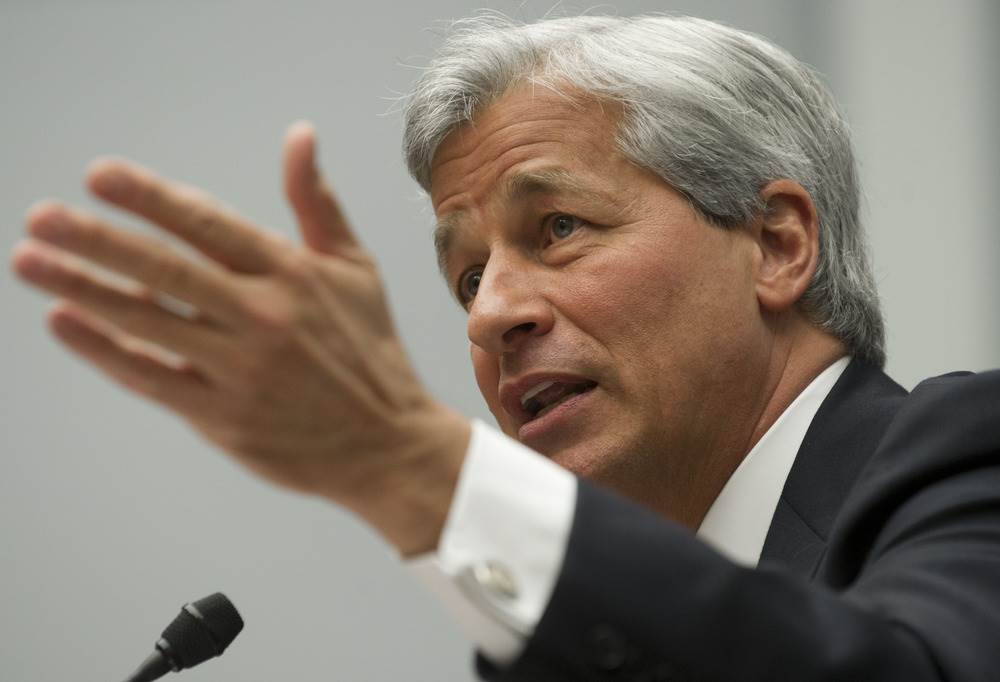
Economic Update with Richard D. Wolff
Economic Update: Deepening Crisis and African-Americans
00:58:14
Loading summary
Transcript35 lines
- [00:00]
A
Sam. Saint Gonna change one of these days. Welcome, friends, to another edition of Economic Update, a weekly program devoted to the economic dimensions of our lives, our jobs, our incomes, our futures, our debts, those for our children and those for the friends and neighbors around us. I'm your host, Richard Wolff. I've been a professor of economics all my adult life, and currently I teach at the New School University in New York City. We have so many things to do in this hot July time of year that I want to waste very little time getting into it. But I do want to remember, since sometimes I let it slide, to ask all of you if you like the program you're about to hear. If you are a listener who has returned from listening to other of these programs, please make use of the websites that we maintain to give you much more of what it is we do in a condensed way on these programs. The first one is democracyatwork.info that's all one word, democracyatwork.info. and the other one is rdwolff, with two Fs. Either or both of those websites will provide you with a way to communicate to us your interests, your desires, what you like, what you don't like about the program. Each of them will allow you to follow us on Facebook and Twitter and Instagram, and in that way, partner with us and make available to your associations the kinds of material we present here. And finally, those websites have much material for you to use. YouTube videos of all kinds of our activities, audio files, written materials, it's all there, 24, seven, available to you, no charge whatsoever, as part of what we at Democracy at Work produce in the way of these programs. And I want to thank those of you that have, in fact, written to us. Many of you do, and we're very grateful, and we shape the program based on that. We also welcome any and all communications, any ways you can partner with us. We're always looking for more radio stations to carry this program. We're very proud that we are now on over 60 stations across the United States, but we are greedy and want to get on more of those stations. And likewise, I travel around the country giving talks. And if you're interested in any of these ways of partnering with us, use the websites, get in touch with us. We will follow up. I want to begin with something remarkable. Mr. Trump, as the candidate likely for the Republican Party, gets a lot of press around the world for the things he has said which make him look, say, an unusual candidate in the race, at least in some ways. But I believe our British Brothers and sisters have done us one step better. On 13 July, the new Prime Minister of Britain, Theresa May, who by the way needs some introduction, which I'll do in a moment, named the new Foreign Secretary. That's the equivalent of the Secretary of State in the United States. It's the person in charge of Britain's relationships with the rest of the world, the leading politician to shape British foreign policy. This is in a world of complex struggles, the kind of position you want to give to a sensitive, thoughtful, well versed, balanced kind of person. Theresa May, the new Prime Minister taken over from. What's his name? I've already forgotten him. Cameron. Cameron. David Cameron. Thank you for helping me. Theresa May was a banker before she became a Conservative politician. She's been a Conservative all her life, very proud of it. She is married to a banker. So we have now two bankers, Prime Minister and consort running the British economy. So not much change there from the sort of person that the Conservative Party has, has always put up. But she named as her new Foreign Secretary on 13 July the former mayor of London, Boris Johnson. I'm going to now read to you from a story carried on the day he was nominated July 13 by the Bloomberg News Service, a very conservative business oriented news service. So that's where the quotes are of Mr. Johnson in recent years that may remind you of an American politician. I'm not sure which one, but I'll leave that to you. Here now are the quotes. Number one, quote, I've slept with far fewer than 1,000 women, end quote. If that worries you. Wait a minute. In 2007, during the presidential campaign when Mrs. Hillary Clinton was running, Boris Johnson made the following statement and I She's got dyed blonde hair and pouty lips and a steely blue stare like a sadistic nurse in a mental hospital. And as I snap out of my trance, I slap my head, my forehead in astonishment, continuing the quotation, how can I possibly want Hillary? I mean she represents on the face of it, everything I came into politics to oppose. Not just in a general desire to raise taxes and nationalize things, but an all around purse lipped political correctness. I'm going to continue with quotations from Boris Johnson because it gets better or worse depending on your point of view. He criticized President Obama on his recent visit to the UK to support the Brexit, that is the vote to stay in the European Union. He attacked Obama by saying, why did he remove a bust of Winston Churchill from the Oval Office? He said, quote, some said it was a Symbol of the part Kenyan presidents and ancestral dislike of the British Empire of which Churchill had been such a fervent defender. Not only did the Mayor of London say this at the time of the visit of an American president, but the American President felt it necessary to respond and said as, as the first African American President, I thought it appropriate to put a bust of Martin Luther King in the Oval Office. And I moved Churchill's to the Treaty Room where I see it day we're not done. Johnson is famous for having explained and justified economic inequality in Britain because it was useful since it encouraged people to work harder. In other words, he resurrected what many of us thought was a very dead horse by saying that it's okay to make many people poor because they work harder. And like all people who have said that through history, they never quite got around to understanding that that meant the rich people, which they were, don't work hard because they don't need to. And that raises interesting questions, but they never thought it through that far. As Mayor of London who hosted the Olympics in 2012, he had this to say about the 2008 Olympics in Beijing. Virtually every single one of our international sports were invented or codified by the British. And I say this respectfully to our Chinese hosts who have excelled so magnificently at ping pong. Ping pong was invented on the dining tables of England in the 19th century and it was called Wiff Waff and now the best one. In a 2002 column published in the Daily Telegraph, Johnson mocked then Prime Minister Tony Blair's globe trotting. In this case writing just before the Prime Minister's trip to the Congo. Get ready folks, here we go. Boris Johnson, the new Foreign Secretary of England, said the what a relief it must be for Blair to get out of England. It is said that the Queen has come to love the Commonwealth partly because it supplies her with regular cheering clouds of flag waving pickaninnies. They say he is shortly off to the Congo. No doubt the AK47s will fall silent and the pangas will stop their hacking of human flesh and the tribal warriors will all break out in watermelon smiles to see the big white chief touched down in his big white British taxpayer funded bird. I don't know what I can say. That man is now the Foreign Secretary of the United Kingdom. And folks, it tells you something about modern societies. I'm not going to spell it out, but it tells you something. If the best people they can find to run the United Kingdom are bankers who choose folks like Boris Johnson as the Best they can for their face to the rest of the world. Think about it, because it tells you much more about British society, just as the candidates we field in this country tell us a lot more about our society than they tell us about anything else. Well, what might lie behind all of this? I want to say something about that. And the way I'm going to do it is to present you with some economic information, which is what this program focuses on. The first comes from. Well, another Bloomberg piece of work. This is about what has happened to US manufacturing and the numbers are so stark that I thought I would just present them to you and then offer a short analysis. Since 1989, so that's not very long ago, maybe 25 years a generation, manufacturing output in the United states has surged 69%. That is over the last 20 odd years, we have produced a growing amount of manufactured goods and services. Well, not services goods. That's what manufacturing does. 69% over a generation. Employment in manufacturing over exactly the same period of time has fallen by 32%. 70% roughly. Increase in output, 30% drop in employment. That's called automation. That's called an economy in which machines have replaced people because we don't need as many people to produce a growing quantity of goods as we did before. In any rational society, this achievement of productivity improvement would have led to an improved situation for most people. For example, the work week in manufacturing could have been dramatically reduced because we don't need as many people as before, leading to giving to manufacturing workers the fruits of the improvement in technology in the form of leisure, in the form of a reduced work week would be no need to reduce their income because we're producing more than ever before. There's plenty to go around. We just don't need as much time. But we didn't do that. We also didn't take the increase in productivity and reduce maybe everybody's work week manufacturing by some, but everybody else, so that we all share in the benefit of becoming more productive. Since it has to do with the education we give one another in our schools. It has to do with the intensity with which we work. It has to do with the inventiveness of every everybody at a workplace who comes up with new and better ways of saving on labor. But we don't do that. Over the last generation, the workweek hasn't been reduced neither in manufacturing nor anywhere else. Not only that, the wealth, the increase in wealth has gone entirely the top 1 or 2% of our people. The benefit of this improvement in technology achieved by Everybody in the schoolrooms, in the workplaces of our country, the benefit of that increased productivity was taken by the few. And that's because profit and the maximization of profit is what governs what you do with improvements in technology. That's how capitalism works. It makes sure that profits are number one. Profits are the famous bottom line. Profits are the focus. So if you can become more productive, then you do it in order to enhance your profits and the income of people who live off profits. And we know who they are. They are the shareholders and the top executives of the corporations who gather the profits into their hands and keep them. Wow. If you put together the loss of jobs through automation documented in the numbers I just gave you, together with the loss of jobs as capitalists decided to move production out of the United States, where wages are high, to the rest of the world, particularly China, India, Brazil, or where wages are low, well, then you can see why profits have boomed. The people who run our society, the businesses, have gathered into their hands the benefits of the technology that we all help to produce and the benefit of being able to go to another country and get the work done at a fraction of the cost that you used to pay to an American worker. It has decimated American culture. It has destroyed places like Detroit that we're going to talk about more today, and Cleveland and Philadelphia and the countless other parts of this country that are in deep trouble. It explains why incomes haven't gone anywhere. In a way I'm going to tell you about in a moment, the decision of capitalists first to automate, but more importantly to take all the benefits of increasing productivity for themselves and to share none of it with the rest of us. That's why the workweek hasn't gotten shorter. That's why the average income of most Americans has gone absolutely nowhere. Nowhere. As I will document in a moment, we see an economic system that is now perverting the potential of human progress and subordinating it to the maximization of profits. That's why the capitalist system has run out of gas and is now encountering opposition of the sort it never felt before. Whether that's Mr. Sanders or a socialist running in the United States or Mr. Corbyn, a socialist leading the Labour Party in the very Britain that just made Boris Johnson its Foreign secretary. So I'm interested to give you another piece of information, this one from a British paper too. We're very British today. The Guardian. On 13 July, Larry Elliot wrote in the Guardian story, and I'm going to read you the headline. Of the story. Up to 70% of people in developed countries have seen incomes stagnate. Well, if I had a lot of time, I'd go through the statistics with you. But the story, if you're interested, easy to find the guardians available for free on the Internet. July 18th. Larry Elliot, the author, you will there see that there has been a stagnation of of incomes for the majority of people in most of the developed world, including the United States and the United Kingdom. People are very upset, people are very angry. People are looking for ways to get out of this declining situation that capitalism as a system has put them into. And the media, unfortunately, are busy coming up with everything else to focus people's attention on. Do we stay in the European Union or not? It's not the issue, friends. It's not the problem, friends. Should we have more or less immigration? Not the issue, friends. Not the problem, friends. Should we be more or less angry at this or that political movement? That's not our problem. Our problem is in a dysfunctional economic system whose priorities have been to go somewhere else and to replace people with machines and to keep all the benefits for a tiny part of the population. Half of the industries in the world now suffer from what is called excess capacity. They have the capacity to produce more goods than they can profitably sell. And you know why? Because there are too many people have dropped out of the labor market, too many people are unemployed, and too many of the people who have a job have it at those low wages that the capitalists went to take advantage of. You put all that together and you don't have the people that to sell stuff to, which is why you don't invest and which is why we have such a long, slow, quote, recovery from the crash of 2008, which never seems to end. Karl Marx, in one of his better insights, pointed out that capitalism is a bizarre system. Every capitalist is constantly looking for ways to cut his or her labor costs. Substitute machines for people, find cheaper workers for the ones you have now. Save money, save money, don't pay the workers. And that's how they make money and make profits. And that's what they're all driven to do by competition. Not understanding. And Marx here has a wonderful ironic sense of humor, not understanding that the very success of capitalists in reducing their labor costs deprives the market of the money it needs to be able to buy what those capitalists are producing. In other words, capitalism is an internally contradictory system that stumbles and bumbles over itself. That would be bad enough, but the stumbling and bumbling tends to be passed down the ladder so that the people who are at the poorest have to take the biggest hit. Everybody kicks down and sucks up in a capitalist system because that's how it works. And that produces bitterness, resentment, tension, and a whole lot of other problems that blow up, to everyone's surprise, who's not paying attention to the economic realities. Surprise when the British people vote to get out of the European Union. Surprise when police behave in the United States in a way for which there is no justification. Surprise when people begin to push back against the police, etc. Where's the surprise? Where's it coming from? Surprised at what? You stagnate people for an entire generation. No increase. You hammer at human beings with an endless barrage of advertising telling them that a successful person has had one who lives in this neighborhood, who wears these kinds of clothes, who eats these meals, who goes to these restaurants, etc. You tell everybody, buy, buy. It's a symbol. It's a sign of your success. And then at the same time, you don't give them the wages with which to do that. That is cruel. That is a kind of torture of a population. The metaphor I like that someone once gave me is that's like the kind of cruel owner of a pet dog or puppy who has the puppy jump up in the air in order to get a piece of food. But as the puppy jumps, they keep raising the food so the puppy never gets it. The puppy will eventually go mad from this. And what do you think happens to human beings if they're constantly told this? You must give your child a college education. On what? On what? Later in this program, I'm going to tell you about some of the statistics of what particularly African American people in the United States earn. They are being treated like that proverbial puppy being asked to live a certain style, give a certain something as a parent to your children, to your husband, to your wife, and not being given the wherewithal to do it. That is a torture of human beings. And it has all the effects that torture always has. Well, I don't want to leave you with just that news. And I don't want to appear to be overly critical of our British brothers and sisters. So let me comment on their equivalent here in the United States. In the New York Times of July 12, one of the leading bankers in the United States, perhaps the leading banker in the United States, Mr. Jamie Dimon, he is the president of the JP Morgan Chase Bank. He wrote a column. I don't know whether he chose the title or whether the New York Times did, but whichever one it is, I want to read it to you. The title of his story, his op ed that he wrote carrying his name, Higher Wage Wisdom. So we are now going to get. I'm going to help you relate to the wisdom of one of the leading bankers in the world, Jamie dimon. The first four paragraphs of this story are remarkable. Mr. Dimon has discovered that. Hold your breath now. Wages in America are too low. This has been debated by half the country for 30 years. Mr. Dimon just got it and he's really exercised about it. He says, opening the fourth paragraph of his speech, a pay increase is the right thing to do. I'm not going to discuss how it came to be the right thing to do now in 2016. But it wasn't the right thing to do for Mr. Dimon and his bank last year or the year before or five years ago or 10 years ago. Now it's the right thing to do. Oh, this is exciting. Further on in the story, Mr. Dimon gives us a very interesting piece of information. The JP Morgan Chase bank itself employs ready 18,000 people at a minimum wage of roughly $10.15 hour. Whoa. If you earn that an hour and if you work 40 hours a week and if you work 52 weeks of the year, you qualify in the United States as a poor person, you are below the poverty line. 18,000 people in Mr. Diamonds bank are paid poverty wages. That's the truth. It's been the truth for many, many years. But Mr. Dimon is now going to do something about it. He's very excited. He is raising the wages of these 18,000 people up to $12 and in some cases as high as $16 an hour.
- [25:37]
B
Wow.
- [25:38]
A
Now he wants to be careful and not do this too quickly. So this increase is going to be spread over three years. There's no need to rush these things. You know how poor people are. You give them a little extra money, they go kind of nutty on you. So he's being very responsible, as a leading banker would be expected to be, and he's not rushing into this, but these 18,000 people are now going to get 12, maybe even $13 an hour. So I decided, because I'm an economist and I'm trained to do this, I decided to say, let's see how that compares what he's going to be doing for these 18,000 with what Mr. Dimon himself gets. That is, he's a paid employee of the bank, just like the clerks are at the bottom but he's paid more. And he actually gets to participate in deciding how much he's paid. Which is a nice arrangement if you can work it. So how did he do? Well, I found from the Bank's own records, 2015, the last full year, Jamie Dimon took home ready $27 million. So I did the calculation. I assumed he works 40 hours a week. Between you and me, I doubt it. But let's say he does. And I assumed he worked all 52 weeks of the year. I know that's not true. But I'm going to make the best case I can for him. So if you work 52 weeks and you work 40 hours a week and you make $27 million, here's what it comes to. Per hour. You ready? $12,975 per hour Mr. Diamond makes. You know what that means, folks? It means that in two hours last year, Mr. Dimon made more money than 18,000 of his workers made in the entire year. Mr. Dimon, you say it's not fair that some people get paid less. Do you think this is fair? Do you really want to start Talking about fair, Mr. Dimon, in his way, in economics, Mr. Dimon offers us the same stunning leadership that we can expect from Boris Johnson as the new Foreign Secretary of the United Kingdom. We've come to the end of the first half of this program. I hope you have found it as interesting and maybe even enjoyable. I tried to weave some humor, even if it's the kind of humor you do in order to avoid from crying about these things. We will be back very shortly and I think you will find the interview in the second half very well worth your time. We'll be right back.
- [28:42]
C
I was Cleopatra. I was young and in act when you knelt by my mattress and asked for my hand. But I was sad you asked it as I laid in a black dress with my father in a casket. I had no plans. And I left the footprints the mustaine on coffin and a heart like my heart did when you left town. But I must admit it.
- [29:30]
A
Welcome back to the second half of economic update for July 2016. I have with me a guest today, one I think that will enable us to have an extraordinarily important and interesting conversation. His name is Rob Robinson, and before I introduce him, let me welcome Rob to the program.
- [29:51]
B
Thank you.
- [29:52]
A
Rob Robinson is the co founder and member of the leadership committee of the Take Back the Land movement. He's a staff volunteer at the National Economic and Social Rights Initiative, widely known as Nesri. After losing his job. In 2001, he spent two years homeless on the streets of Miami and 10 months in a New York City shelter. He eventually overcame homelessness and has been in the housing movement based in New York City since 2007. In the fall of 2009, Rob was chosen to be the New York City Chairperson for the first ever official mission to the US Of A United Nations Special Rapporteur on the Right to Adequate Housing. He has been active, and that's how I met him, both in the housing movement in New York City and national and international arenas, and in a number of other movements, including the Landless Peoples Movement, the International alliance of Inhabitants and the movement of people affected by dams. He is also a member of the board of the Left Forum. In short, he's become a very important leading activist in this country. And that makes me think of him as a particularly appropriate person because of his involvement in issues of poverty, in issues of landlessness, in issues of that part of the society about which we here in the United States have a hard time getting our hands around. What is happening. So let me jump right in, Rob, and begin with dealing with a topic that's on everybody's mind. What do you think are the major causes of for the extraordinary shooting violence of police against African Americans here in the United States? Where does that come from? What is that about? How do you see it?
- [31:44]
B
I think it's 400 years of history to begin with. From the time that black people were brought over here from Africa and enslaved, they were thought of as less than a human being. And that is perpetuated through the years. And it's manifested itself in many ways through poverty keeping folks impoverished. As you talked about earlier on the show, folks are constantly given low wage jobs in a certain area. Right. Manufacturing has left this country. A lot of the folks worked in manufacturing. Detroit is the greatest example. You can go through Rochester, New York. You can go through Baltimore, Pittsburgh. These were heavy manufacturing areas once upon a time. And it provided jobs for folks. Right. Unions come along and those jobs became pretty good jobs. At one point, folks were able to make a living wage out of the jobs. I'm not going to say you would get wealthy. The message was, if you worked hard and you did all the right things, you're going to become wealthy. Right? I would argue that that's not true, but we bought into the narrative. Some people started to work hard and they bought into that narrative and all of a sudden those jobs started to go away through automation. Right. You think about the automobile industry. I was recently in Detroit. And a former automobile industry worker told me how they were laid off at one time. They were used to getting laid off at certain times during the year. So, okay, this is another layoff production. We overproduce, and they got to sell some cars. But this time, the layoff lasted longer and longer. And they noticed that a lot of activity was happening in Northern Michigan, rather in the south, where they live. So they all took a trip to go up there to see why those folks were working. They peeked in the window and they saw a robot. And they saw a robot doing the jobs that most of them had done before. And then they started to get it. So, you know, that automation started to erode away. People became impoverished. Services started to be pulled from these particular cities. Democracy was pulled in places like Detroit and Flint. So it's manifested itself over the years and perpetuates itself. But make no mistake, poverty is at the root cause of this, right? People being impoverished, not having access to a decent wage job, shipping these jobs outside of the US It's a big problem in this country. And I think that leads itself to unrest, Right? People can only be left in this position for so long before they start to fight back. And that fight takes on many different looks in some communities. It takes on violence, right? Pushing back against systems breaking in stores. When you had the riots in the 60s, it was getting back at those retailers, right? Pulling the gates away from the windows. We saw that for years. That's anger coming out of people from years of repression and oppression.
- [34:32]
A
Well, let me illustrate it. My job is to be an economist. And I came across, just in preparation for today, a recent study by the Economic Policy Institute in Washington, which does a lot of work. And this was a study of demographics. It starts with the notion that the population in the United states will be 50% or more black and brown people soon. And so it's looking at the position of black and brown people now and then with a particular focus on African Americans. And here are two statistics that jump out that illustrate what you say, and I want your reaction to them. First, across the country, 8.2 million African American workers are employed today. That's right. Now, July 2016, 8.2 million African American workers are employed in jobs that pay under $15 an hour. That works out to 53% of all African American workers. In other words, a majority of people are being asked to to make a life earning $15 or less an hour. It is impossible to do anything like live the life that Americans are told is their birthright. Is what they ought to do is the kind of life they ought to give to their children, to their family? You can't do it.
- [35:55]
B
Absolutely.
- [35:55]
A
It's like I said in the first half of the program, it's the puppy who's being tortured.
- [36:00]
B
Absolutely.
- [36:00]
A
Second statistic, in many states, it's actually worse than this. For example, In Florida, over 60% of African Americans make less than $15 an hour. Even in Massachusetts and New York. In Massachusetts, it's 46%. In New York, it's 41% of African Americans are earning under $15 an hour and asked to live like that. How can you possibly be surprised at bitterness, anger, looking for ways to get around a system that offers you these kinds of lives? At 15, how do you account for a country that does this to a population and then is constantly surprised that the population is unhappy and dissatisfied with the situation?
- [36:54]
B
Well, shame on them for being surprised because they are the oppressor. But I think the economic system that we live under, capitalism as it continues, that is the way it is effective. It is only looking at the top 1%, the top 2%. Certain groups benefit from this. And, you know, I think it's partially some of our fault also that we bought into this narrative, right?
- [37:18]
A
Can you say our.
- [37:19]
B
Who's we? I think African Americans, but I think people in general in the US and sometimes it does. Out of African Americans, there are poor white folks, impoverished white folks. But there's a narrative in this country that says home ownership is the way to wealth. You buy a home, how can you possibly afford to buy a home on those wages? Right? You can't do it. But we're like the hamster on the wheel. We keep trying and we keep trying because we suck it up. So eventually we're going to come to a realization that this is not working. And that manifests itself in some of the things we're seeing some pushback, being offensive, and maybe sometimes that's breaking in a store and taking something. I need a way to live. I need. You keep telling me I have to have this stuff, so I'm going to exercise my way of self determination. I want it too. I have a desire. So I see it sitting in the store, gleaming at me in my neighborhood every night, right? But when I walk by, the guy tells me I don't have enough credit, my credit's not good enough for it. You know what? Then I guess they say, you know what? I'm just going to come by here one night and take it, right? So you get looting, you get Crime and robberies. I think there are a lot of factors that feed into it. But the core, again, is that issue of poverty not being addressed and not understanding that we need some minimum standards. Our government needs to take care of its people. It has an obligation. So social welfare is dismissed in this country. Right. You're seen as somebody not. You don't deserve it, you know, get up and work. Right. You read the quote earlier from the English. The person from England who has now become the Foreign Secretary. Foreign Secretary, saying those same types of things that we've heard for years in this country. Right. So it's the two big gorillas, US And England, that are exercising these rights. But you see social welfare in other countries. In Europe, people have a minimum standard and the government is going to supply. If the minimum is not there, the government has an obligation to supply those people. But it's always looked past that obligation here. Right. And it becomes a human rights issue. And this is what moved me into this work, you know, as.
- [39:24]
A
Tell us a little bit about that.
- [39:25]
B
Well, as Malcolm was killed and Martin Luther King were killed, they were talking about human rights. Malcolm said, I'm going to go to Geneva, I'm going to go to the UN because this is a human rights issue. It's a human rights crisis. Right. There are certain needs we have as human beings. Right. That are innate to us being born. And these needs are housing. There are some basic things. Housing, food, basic necessities that are guaranteed in certain treaties and documents that were signed off by the U.S. let me be clear about that. They were signed off the Universal Declaration of Human Rights, but totally ignored by the US So it was a dog and pony show to stand before the rest of the countries of the world and have the feathered pen and sun and do the photo op. But as far as following through with any of these obligations, I totally dismiss them because we base everything here in civil rights, which is the law. And you know what? That's the law and that's how the US Will constantly defend itself. In Geneva, it says that, well, our country is based on law, what is written, and the Bill of Rights and then the civil rights. Right. But I would argue that the law doesn't necessarily work for everybody and was intentionally written not to work for everybody.
- [40:45]
A
Yeah. As I like to tell people, you wouldn't have the corporate structure of the United States spending billions of dollars on lobbyists if they didn't understand that shaping the law is how they get many of the things they need.
- [41:01]
B
Absolutely. So these are processes, you know, I think for me, it was a learning experience after I went through that change in life, you know, I got transformed after this bout of homelessness. And looking at the world different from that personal experience and wanting to read and understand more about that. Right. And understanding those processes as you just laid out. And then you start to see things different. You see things for what they really are. Right. You know, my family bought as an African American family, bought into the narrative. My dad picked us up out of Brooklyn, moved US in the 60s of Long island, thought he was doing a great thing, worked his ass off, you know, trying to pay off a mortgage. Probably got a predatory loan. I didn't see him a lot as I was a kid. I understand that now. I can't go back to him and say, listen, you made a mistake, that they jerked you. But I get it, right? And I use that history to drive me forward and say, we can't go down that path again. And, you know, hopefully we're educating ourselves as people, but I think some of us are. But I also think some of us have just, you know, taken it to ourselves to say, I'm going to fight back. And that manifests itself a lot of different ways, this violence. You know, when you're walking down the street as an African American and a cop walks up to you for no reason and asks you what you're doing here? What do you want? Let me see what's in your pocket. You know, put your hands against the wall. You know, putting a gun to your head. That brings out some tension out of folks that's done to you repeatedly. We had the young man who was shot in Minnesota. We found out he was stopped 52 times prior to that. What is it you're trying to get out of me? So eventually, folks are going to push back. Hence, you have what happened in Dallas, where a guy who was trained by this country with all that military artillery, right, got up on the rooftop and said, you know what? I'm going to take and shoot it back at you.
- [42:44]
A
Yeah. You know, for me, it's always. There's two things that are sparked by what you say. The military is there in order to serve the United States needs by using violence against other people. And the military culture always has to justify violence as a way of solving the problem, because that's what they're in the business of doing, violence. It is then hardly surprising that a young man who goes through the training to see violence as a way to solve a problem, to then decide in his own private mind that he's going to use some violence to solve a problem. He perceives, you know, these are really chickens coming home to roost in the classic meaning of this thing.
- [43:33]
B
Absolutely. I turn around and I take those processes that you taught me and use them against you. It's startling whether we wake up behind that and learn something from this and change going forward. I can't say I'm so optimistic, right? Because I think as the police shootings continue, Rick, we don't see anybody being prosecuted and that's a big problem, right? So all of a sudden police think because they have a gun that they have, they're protected by those civil laws, right? And you know, the government is going to protect them, the people are going to protect them. And it seems to be playing out that way, right? All of a sudden you can't get a grand jury to find any of these guys guilty of a crime. So somehow you figured out a process. And maybe I'm a conspiracy theorist, right? Some grand jury is working in a certain city and all of a sudden the DA gets on the phone and says, well, this is how we got out of it, right? Use this process and they'll never indict. Right. It's something that is happening because some of these cases seem too clear cut to us. And in the past, you can argue in the past that, okay, we didn't have all the evidence. Everybody has a cell phone with camera now we're seeing it live like never before. And I think the startling pictures out of Minnesota with the young lady standing there, you know, and how she remained so calm through that video. I don't know where she's said he was reaching for his license, sir. You know, I was totally amazed. But to have to imagine her life witnessing that and she's destroyed and the.
- [45:07]
A
Child with her, right?
- [45:08]
B
She's destroyed for the rest of her life that violence perpetuates itself. Now here's an off duty cop here in New York. We had an incident a couple of weeks ago. Two families are driving at night in Brooklyn. One guy cuts the other off. The guy was put off by being cut off. So he approaches a car. In the car that he approaches is an off duty cop who felt threatened, automatically pulls his gun and starts shooting. His response was the guy took a punch at me. Well, the video is showing otherwise, right? And you know, there's something about having that gun strapped to you that just gives you all of a sudden this courage and this permission to do things.
- [45:45]
A
And you can see also the governor of North Carolina this week signed a Bill. To deny people access to the cell phone videos made by the cameras that the police are now required to have on them. But they used to be publicly available to see what the truth was. Now the state of North Carolina, and there are other states that are following suit are going to deny. The whole point of those cameras was to have evidence. To deny that to people is a sign that something here is seriously wrong.
- [46:22]
B
And we have to understand that the body cameras are not the issue. Right. Because they're going to find a way to say, you can't have that evidence. The evidence is clear. Right. But you can't have it. Right. So that's not going to work. The cop is going to dislodge the wire. Something is going to happen. Why can't the community control police? Why can't we control the police? You know, I love the story. When Syriza first took office and he said, remove the gun, one of the first things he said was, remove the guns from the police. Our lives look a lot different, right? And I think we really have to think of alternatives. Can a community police itself or at least have a community review board that is made up of members of the community not chosen by an elected official, somebody appointed or chosen, and they make the decisions? I think our lives would look a lot different going forward, and particularly those of people of color, because those are the ones adversely affected. I do think, though, and I want to be clear about this, I think that a cop with a gun needs to have a checkup. There's a slang term, a checkup from the neck up every six months, right? There is. I think there are psychological issues to doing that job. No doubt, right? You go out on the street, but then what are you thinking? Have you built up a lot of angst and a lot inside of you that all of a sudden you let out on one individual? If you're coming in for a checkup every now and then I see some trends. You know, I can start to read some of the output and see where you're going, how you're thinking. I just think we have to figure out a different process than the one we're living now, because this is a powder keg. And if you think it's bad now, if Trump gets in the office with his rhetoric, I think we're going to explode in this country. I really do. Because the minute he starts saying black and brown, people have to go, we're going to build a fence, we're going to build a wall, I think all hell is going to break. Loose.
- [48:24]
A
Let me turn, since I'm an economist. Sure. It's clear to me, and please disagree if you feel that way, that we're in an economic system that is not working for the majority of people, white, black, brown, all. The majority of all of us. And there's a kind of desperation setting in of, you know, everybody trying to figure out how to survive in a sinking ship. And we are experiencing the signs of this decline blowing up around us. I don't see any, any of the candidates or any of even the most responsive people looking at Dallas or Minnesota or New York or any of the cases coming up with an understanding that the obvious to me as any kind, to give people a decent job that's secure, that has benefits, that allows them to have a decent life, would give them a focus for their activity, for their energies, other than saving themselves and worrying that the next person is a threat to them because they'll have something different. Why is it so ingrained in the United States, evidently, that you can talk about almost anything having to do with these questions, but to change the economic system in order to address the problem seems unthinkable. It's a little bit like your point earlier. If you believe in human rights, isn't one of the human rights to have a decent job, to have a decent income that allows you to have a family and raise, etc. How did it come that we talk about human rights all the time, like you said, signing the documents, photo ops, but when it comes to making it real in the economic foundation of our lives, suddenly we're out to lunch, we can't discuss it. A human right stops at the workplace. How did that happen?
- [50:21]
B
It's hard to say how it happened, Rick. I think honestly we pushed ourselves in a direction to sign a lot of those documents, or we were shamed into signing a lot of them. We didn't necessarily believe in them as a country. Right. Although Eleanor Roosevelt had a lot to do with the founding, us being one of the founding members of the UN when all came and when all was said and done, there wasn't real intentions about moving forward with human rights. Right. There wasn't. You know, again, this country was built on civil rights, civil law and a bill of rights, and that's the doctrines that they want to go by. The economics play into it. It is, you know, from the time it was founded and wealthy people came over here on the Mayflower and the blue bloods continued their life. That's the core element that are governing this country. We have to find something Other than the two party system. I totally agree with you that, you know, I named Trump and I'll say Hillary I don't think is the answer either. I know it's not the answer. Right. And we have to go beyond that two party system. We have to start to form governments from the ground up. Right. And maybe a multi party system, candidates from multi parties will help change that. I think Bernie would have moved us in the right direction. He wasn't all the way there either, but would have put us in a much better place had he gotten to be president. Right. Here's somebody standing up on the platform talking about socialism and thinking different in Communism, all of a sudden isn't such a bad term. Right. I think somehow we have to come together and realize that we need to change that system. That takes a lot of work. I'm not myself enamored with electoral politics. I think it stinks, it's a cesspool, but we have to change it. I can stand back and criticize it all I want, but it is people like us and people that are directly affected that have to rise up and say, I want to make change. And whether that comes from revolution or we start at the local level and start to make the change and elect candidates who are going to look at us and look at our society and say, we want to change this, this no longer works for us and we want to move in that direction. I think that's where we have to move to. But that's a lot of political education, a lot of people coming to an agreement. Right. Not an easy task. Not an easy task at all.
- [52:53]
A
I don't want to present to our listeners who are, who don't want it and don't deserve it, any prettified or polished or jazzed up notion. So I'm going to ask you a hard question, but I want your honest opinion. What do you think is going to happen here in the United States over the next two or three years? How is this crisis of 2016, the police shootings, the now shooting back, the proliferation? I mean, it seems like every week we have another explosive example on and on. How is this in a time of economic trouble, in a time of political extremes, of beginning to become clear and millions of supporters, what do you think is going to happen? How do you. Unvarnished, unpredified, what do you really think is going to happen?
- [53:43]
B
My belief is we're going to regress to a time that looks like the late 60s, people in the streets rioting. But I think it's Going to take a different level because the police are going to come back with military equipment and then it's all out war. Right? Then it's people doing anything they can to defend themselves. And, you know, it's. Yeah, I hate to say it like that, Rick, but I think people can only take so much. Right. We see, we saw in Dallas that this young man said, you know what? I'm sick of the police shooting black people. Got up on the rooftop and he. He's picking them off. Right. We saw in Brooklyn two years ago, Kai came up out of Baltimore, found two cops sitting in a car and just put bullets in them. Right. People are fed up. People have gotten to a certain level. I thought they would have been. I always tell the story that when the banks were bought out with our tax money, I thought that was the point where we'd have a revolution in the US didn't happen. But I think now the young people, the way they think, they don't want to go by the processes is more of we used to be told, especially as African American, go to the ballot box, elect a black president and your life will change. Well, I think some things have gotten worse during the black presidency. I'm not going to put it all on him. There are other characters involved in that that don't give him the kind of support that he needs. But people have had enough. They've had enough. And I think they're going to take it to the streets. I really do. The black Lives matter young folks, they're not going back to do it the old way. They don't want to listen to the elders. They're saying, we're doing it this way. We're going to the streets. Right. And we're going to be disruptive. And I think that's just going to heighten up and heighten up until, you know, we get a powder keg and it just explodes.
- [55:21]
A
Yeah. And what would you, if you were in a position to advise any political leader what he or she should do, given what you've just said, what would you offer? What would you suggest?
- [55:32]
B
I think the biggest thing right now is we need a new deal. You know, it sounds kind of corny, but I think this country is suffering in a lot of ways. It's suffering from a lack of jobs. It's a lack of good, healthy jobs. It's suffering from infrastructure problems. We have water. People are being fed poison water. So we need to rebuild a lot of this infrastructure that provides jobs. Our highway system is turning to crack. Right. So we need A New Deal housing, you know, where is that social safety net? Public housing used to be. Public housing has gone into reverse. They've taken it down. So I think as a leader, that's from a high level. I think there are different things that can happen at the local level, but it has to feed up to that. I think, you know, anybody who gets in that office really has to think, how can I bring this country back as a whole? And I'll just close out by saying, Rick, we look in this area where we live, you know, some folks call it the Rust Belt, but I always talk about Baltimore, Pittsburgh, Rochester. Right. Healthy manufacturing in a lot of different ways, all is eroded. You go through these areas now and it looks like a war. It looks like devastation. So, you know, not optimistic for the future. You know, the outcome may be a pessimistic one, but it's a real. It's a real one, Right? It's a real one.
- [56:54]
A
Thank you, Rob, very much. Rob Robinson, my guest today. Just a coda to his comment about a new deal. We had a new deal in the 1930s because unions, socialists, communists got together, had a coalition and forced the then president to go in that direction. To have another new deal now would require first that we build that kind of movement from below. It's the only way. Thank you for your attention. This is Richard Wolff. I want to thank our partner, truthout.org the remarkable independent source of news and analysis, for all that they've done with us over the years. And I look forward to seeing and talking with you again next week.
- [57:49]
B
It is it.
- [58:18]
A
Sam.