← Economic Update with Richard D. Wolff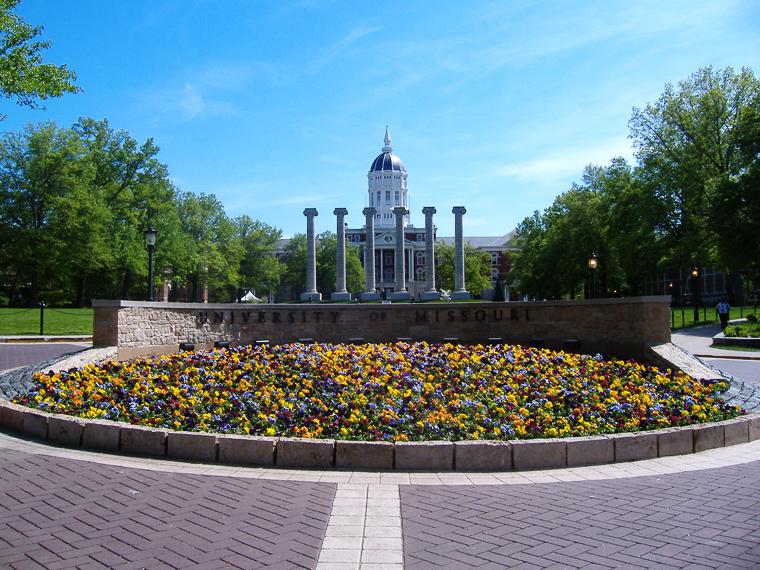
Loading summary
Transcript1 lines
- [00:00]
A
Sam. Saint Gonna change one of these days. Welcome friends, to another edition of Economic Update, a weekly program about the economic aspects of our lives. Jobs, incomes, debts, you know, all of that monetary stuff that intrudes upon the rest of our lives all the time. I'm your host, Richard Wolff. I've been a professor of economics all my adult life and now I teach at the New School University in New York City. I'm going to jump right into the Economic Updates for today before making the announcements that I often begin the program with. But I do want to ask you all to do one thing and that is to become partners of Economic Update. Either our websites or this program have things on them that make you listen, that you find interesting. And we try very hard to keep that interest going. But we want you to share that with other people that you know in all the ways that are now available. This program is podcast through itunes. This program is streamed live. This program is archived on multiple websites, including our own. It's easy to share what we do with other people that might be interested and we invite urge that you do so. Okay. This week, this last week was a stunning repetition of events in Greece. And because they are very important far beyond Greece. It's worth a comment. There was another general strike. That's right. Working people across manufacturing, services, private, public stopped work in protest in Athens and across Greece this last week. They were angry about the continuing austerity even after all the changes in which the old political parties were brushed aside back in 2012 and the Syriza left wing government came to power and there was a plebiscite in which the Greek people overwhelmingly rejected austerity. And then there was the agreement nonetheless by the Syriza government to resume the austerity in the hope of that freeing up credits and relief of debts from European institutions. But you know, this struggle is far from over. And even with a left wing government pleading for the understanding of its people about having to do at least some austerity, the people don't want it and the people are not going to be quite quieted. And so the struggle continues. Big money, big capitalists, huge banks and the governments they control on the one side and the mass of people getting angrier and more determined despite the political adjustments, they're not having austerity, not in Greece. So the country shuts down as a sign of what the people are, are prepared to do. As if to underscore that this is not just Greece. Big changes over the last week in Portugal, another European country there, recent elections brought into power a triumvirate. The Portuguese Socialist Party, the Portuguese Communist Party and the Portuguese Green Party. They have the majority. A conservative government tried to prevent them from becoming the government, even though that's what the constitution of Portugal dictates. But they failed. The Socialists, the Communists and the Greens got together, reached an agreement and will now become the government of Portugal. They came to power on an anti austerity commitment, much as Syriza, the governing party in Greece, did. And they are sounding like Syriza that they're going to make an accommodation even though they were elected to do nothing of the sort to fight austerity, not to accommodate with it. We'll see whether the Portuguese unions and the mass of its people rise up even against the government that they put into power, as is happening in Greece. The struggle over a capitalism that doesn't work in Europe, that is polarizing the country into those at the top of the economic pyramid and the vast mass of the people they wish to take from, oppress, exploit, leave behind, reduced to poverty. None of these things are going to be accepted by the people. And the struggles of Europe are heating up yet again. Next item. Periodically in the United States, we face up to what is in fact an epidemic. In the United States, it's called the epidemic of obesity. It is a problem in which our people, the American people, are overweight. And we know from countless medical studies that being overweight is not good for your heart, for your digestive system, for most of the different parts of your body that make you a human being. It is therefore a problem. The latest national report from something called the National Health and Nutrition Examination Survey. I'll say that again for the those of you that might want to pursue this story. The National Health and Nutrition examination survey for 2013, the last year for which the data have been collected, 38%, two out of five American citizens suffer from obesity. The numbers are actually higher for people ages 40 to 59, which is doubly dangerous to be obese at those ages. It is commented on by one of the most important authorities on this subject, Professor Marion Nestle of New York University, that this is a very troubling trend threatening the health the lives of millions of Americans. Here's the statistical part of this that I thought particularly worthy of comment. The lower your income and the less education you've had, the more likely you are to suffer from obesity. It is a problem of people who don't get paid enough and who don't have enough financial and other supports to get the educations they need not only for a good job and not only for a meaningful life that opens you up to all of the different experiences that a rich life makes possible. Those are enough reasons to go and get an education, but we now have another reason. It's good for your physical health as well as your mental health and mental well being. So cutting back on higher education, making higher education costly in the United States, is in fact contributing to obesity and a danger to the health and welfare of the American people. It is something that economics has a lot to say about. And here's another dimension of our obesity crisis. This one has to do with another story that surfaced this last week when the University of Colorado School of Medicine decided to return a million dollars that had been contributed to the School of Medicine. Now, I can assure you as a lifelong professor that the last thing universities want to do with the grants they get from either the government or corporations is return them. They're desperate for that kind of money and they don't want to do it. So why did the University of Colorado School of Medicine return the money? Well, part of the explanation will become clear to you when I tell you who they return the money to. Coca Cola Corporation. That's right, the soft drink company in our country, probably the best known among them. And why? Because it turns out that the University of Colorado School of Medicine was, was associated with something with a funny name, Global Energy Balance Network. And they and the doctors involved with them, who are also connected to the University of Colorado School of Medicine, have been putting out information that says that obesity has nothing to do with soda pop, nothing to do with junk food in general, nothing to do with sweetened beverages in particular. Needless to say, there are countless medical studies, many of which I've looked at, that say exactly the opposite. There's no question that the preponderance of medical opinion is that one of the chief causes, not the only one, but one of the chief causes of overweight is the vast number of Americans, particularly children, who grow up on a diet of soda pop and junk food. Generally, it is high in calories, it is low in nutrition, it contributes to overweight. But listen to what the Global Energy Balance Network, the folks that are the point of trouble between the University of Colorado School of Medicine and the Coca Cola Company. Listen to what they have to say as quoted in the New York times of Saturday, November 7th of this year, quote, a Dr. Blair speaking for them. Obesity should not be blamed on fast food and sugary drinks, he said. And now there's the quote from the New York Times virtually no compelling evidence that that in fact is the cause. Now, I don't use the word lying loosely, but I don't know what else one could reasonably call this kind of behavior. Clearly the University of Colorado was sufficiently impressed by what was being said and its relationship to the truth that they've returned the money. And you know, it turns out that back in August, the New York Times published a survey that indicated that over recent years, Coca Cola has spent more than $120 million supporting medical facilities that were willing to say something like obesity is not connected to, not involved with, you guessed it, drinking drinks like Coca Cola. There is something fundamentally wrong in an economic system, our capitalist system, that allows, that indeed encourages corporations to use money to persuade us to do something which is good for their profits and bad for our health and our well being. It tells you something about the costs of a capitalist system. One last point that you all shouldn't miss. Where does Coca Cola get the hundred and twenty dollars to fundamentally mislead us about the relationship between calorie intake from sugary drinks on the one hand and obesity as a national problem on the other? Where they get the money is from selling us Coca Cola. Part of what you pay for when you have a Coke produced drink drink. You're paying for the propaganda that Coca Cola arranges to persuade us to drink those drinks more than we otherwise might if we were concerned about our health. A system that works that way is beyond needing criticism, isn't it? Next, I want to say a few words about another story in the press this last week, a very big and important story. It has to do with the University of Missouri and something happened there that it's partly about economics and partly about other things. But the economics is what I'm interested in and I want to say a few words about it in case that part of the story is escaped you. For those who didn't pay attention, let me quickly remind you. Over the last week it became clear that there were serious problems at the University of Missouri in Columbia, Missouri. Those problems included a new administration brought in recently to run the university and in their own words, to run it like a business. I have to say as an economist, that it is a mystery to me, as it is to many economists, where this phrase running it like a business came from. The reasonable thing to run like a business would be, you guessed it, a business. And a university, last I noticed, wasn't a business. It's not producing and selling things. It's trying to educate people, which is a different activity and why one should think we should run it like a business means you don't understand the difference between producing and selling a good and service on the one hand, and teaching people on the other. Imagine if we arrived at the headquarters of businesses and threw out their leadership in order to bring in someone who will run it like a school. We would all think, wait a minute, there's a confusion here. But no matter. That's what American universities have been doing for a while now, as we live in a culture which thinks that something magical attaches to the word business. So in came the businessman, Mr. Wolf. No relationship to me, I'm happy to say. And he did one of those things that business folks sometimes do. He thought it would be really good for the university to save money. So he took away the medical insurance coverage of teaching assistants. You know, graduate students trying to write their doctoral dissertations, complete their education, become thereby the most educated people in the country. What a useful thing for a university to do is to make them all worried that they will not be covered if they have an injury, that they will not be covered if they get ill, that they will have financial troubles on top of already being poorly paid for the work they do as instructors, as adjuncts, and so on. This may be good business, but even that's a question, isn't it? Well, let's pursue the story. Trouble began right away. Turns out the graduate students didn't think this was a contribution to to the quality of either their education or that of the students they were responsible to teach. And it turns out that much of the faculty sympathized with the graduate students and didn't agree either, and began to be critical of the leader. He didn't get it too well, so he didn't change his policies. Meanwhile, this business leader in Missouri also managed to offend the growing number of African American students on the campus by being remarkably troubled by racial discrimination, racial insensitivity incidents on the campus that should have been major alarms about racial tensions there for some period of time. It got so bad that the athletes, many of whom were African American on the football team, got together, explained what was going on in the racial tensions, explained it to their fellow white athletes, explained it to the student body, got the sympathy that is a testimony to what is possible when black and white young people get together and realize an injustice, when they see it and commit themselves to do it, and realize that there's something linking the miserable treatment afforded African Americans on the one hand, and the same miserable treatment afforded to workers, white and black, on the same campus by the same business minded leaders that they got together and they went to the coach, a white man, and they said, we don't want to play football for a university run this way and we're not going to play football until the leader, this new business leader is out of here, is gone, is fired. Well, it turns out here economics play a big role. You can't make money at these business run universities unless they can sell what the businesses are interested in. Which has a lot to do with seats at sporting events, football games, basketball games, in big arenas, in big auditoriums, in big playing fields. And when the athletes said we're not playing, that was money that the University of Missouri wouldn't get. And you hit them then in their pocketbook. And this was a crescendo that athletes wouldn't play. The graduate teachers were threatening not to teach, but with their medical insurance taken away. The faculty were angry that all of this was happening. But that last straw was the solidarity of the African American athletes who took the leadership and galvanized white supporters, white fellow students, too many of them. And the president was booted out of there last week. That top of the business community taking over was fired. Not by anyone else, by their own action and lack of action on the obvious problems they could not or would not solve. It was a sign of black and white people getting together, understanding that helping each other with what afflicts them points them together at the same enemy. And that if they get together they have the power and the people who run the universities don't. It was a wonderful lesson not only in working people and students who do a lot of work too on the modern business run university, that they, if they get together, have the power and that the power of those at the top dissolves like sugar in water the minute those at the bottom say we've had it no more, we're going to take charge and rearrange things. It is a tragedy that it took this long and it is a tragedy now to see how many in the media need to portray all of these events as if they were only about racial difference, racial tension. Yes, that was part of the mix. It was an ugly, unjustified abuse of African American citizens. But that's not all it was. And what made the change was not only the upset and anger and the leadership provided by the African American students and athletes, it was the fact that that leadership brought together African American and white students, teachers, athletes, coaches. That unity made it impossible for the university business run to continue business as usual. And that's an important straw in the winds of change sweeping across the United States. Next, I wanted to make sure you were aware of two big companies whose names you know who were in the news this last week. One is the JCPenney chain of department stores. They were in the news because they settled a class action lawsuit which cost them 55,0 $50 million. Now of course, for a company that big, $50 million isn't all that much. It's another example of a slap on the wrist and not much more for what should have been much more. But that's not why I'm bringing it up to you. I'm bringing it up because of what J.C. penney admitted to in making this settlement. The accusation, the people who brought the suit was that JCPenney systematically misrepresented items on sale as being, excuse me, 10 or 20 or 30 or whatever percentage off the regular price. When the research that was used to bring this suit indicated that there had been in fact no such cut. The statement this is on sale, it's x percent less than than its regular price simply wasn't true. It was a way of snookering buyers into believing they were getting a sale reduced price when they were getting no such thing. I'm sure most of you have suspected more than a few times that this might be going on. J.C. penney proves that your suspicions were and likely continue to be right. Spot on. The next company that got its name into the press, not that they were all that happy about it, was the Macy's Corporation. They announced that they didn't have a very good autumn and that therefore they would be making big discounts to try to make up in the Christmas season for what's going on. So here's an alert that may prove useful to many major retailers, particularly those with big stores in the malls are going to be cutting their prices for real because they have huge inventories they can't otherwise get rid of and they are hurting. Why? Because there's no recovery for most Americans. As I have been saying, I'm being threatened as beating a proverbial dead horse here. Not a good image anyway. Anyway, it's been said that I repeat that well, the evidence is overwhelming and here's another piece. People are not able to buy the way they used to and the discounters are hurting and they going to have to discount more and the regular stores are hurting and they're going to have to have discounts the Christmas season if you have money to buy things which is just the problem in an economy that hasn't recovered for most will be a time of big discounts. Okay, let me respond also now to a question many of you have sent in the Trans Pacific Partnership, the TPP that the government of the United States led by Mr. Obama is pushing so hard through the Congress. Yes, it was a new deal between big corporations and the governments that have frontage on the Pacific Ocean. That's why it's called the Pacific T, T, et cetera. Tpp, excuse me, the Trans Pacific Partnership tpp. It's a deal between corporations and the governments they already buy and control. So it'll have nothing to do with you and me. It will not respect what we need or want. It will not find out what we need or want. It will not institutionalize what we need or want. This is a struggle between corporation A, located in one country, and corporation B. Corporation A bends its politicians to go get the rules of international trade changed in its favor. The only way country A like the United States can do that is if they can do something with another country that allows an American corporation to have an advantage there to sell cigarettes when it's bad for people's health to dump drugs at high prices rather than obey the local laws. All kinds of issues here, but the way you get another country to do what the United States wants is you have to do something for the politicians there. They want you to do something that helps one of their corporations. So the American government, to please the American company, does what the other country wants and helps their corporation. But that of course hurts somebody here in the United States. So each government is is trying to figure out who do they help at the expense of what other economic interests in their country will be hurt. That's what's going on. A vast poker game among governments and businesses helping and hurting each other. And the hurt businesses will fight it and the benefited businesses will push it. Obama is lining up those who benefit to work with him. Ford Motor Company, for example. A company that doesn't like what's happening will fight it. And each side, as they fight, will try to enlist us, the average citizens, to back them. You can do it, but believe me, what you'll end up with, whether it wins or loses, is an arrangement that is good for corporations, good for governments who pander to them, and will have nothing to do with either the ecological, environmental, economic or any other interests of the average people. The that's why we were excluded from knowing about, from news about and from participation in it. We've come to the end of the first half of our program. Let me urge you to stay with us and again to make use of our websites rdwolff with two Fs.com and democracyatwork.info Many things on those websites available. Please go there, take a look at them, make use of them. That's why we maintain them and stay with us. We will be right back in a very short time. When I baby if I. Just Lessons we love we love Stay in my corner baby stay in my corner. Please stay in my Cal. Welcome back friends, to the second half of economic update for this mid November 2015 time. Before jumping into the more substantial pieces of analysis of economic analysis that I want to offer to you today, I wanted to thank the remarkable warmth generosity that I encountered on November 10th in the Tampa and St. Petersburg neighborhoods in Florida. They had brought me down there. They filled the Palladium with 450 folks who listened patiently and with interest to what I had to say and were warm and responsive and enthusiastic. And it made me feel wonderful to be able to present what I have done to such an audience and to get that kind of response. So it makes me appreciate Tampa and St. Petersburg all the more. And I just wanted to thank the folks down there for bringing me down and making it such a memorable experience for me. I also want to invite those of you in other parts of the country that might want to do something like that. That's what we do. Now. I travel quite a bit. I'm on my way to Houston, to Ames, Iowa, a whole bunch of places that have scheduled me to come and talk to, kind of present in person, something of the sort of analyses we do but have less time to develop here on the radio. In addition, let me ask you to go to our websites rdwolf with two Fs, rdwolf.com and the other one, democracy at work, all one word democracyatwork.info There you can communicate to us, send us your thoughts, your ideas, your recommendations, your interest in having me come to your area, your criticism, all of it. And it's a way to communicate instantaneously with us, to sign up for our free newsletter, to follow us on Facebook and Twitter, and so get a constant flow of the kinds of work that we do. And I also want to remind you all that we have a new partnership with a group of lawyers, accountants and credit specialists who are ready to assist any existing business that wants to convert from a top down hierarchical capitalist enterprise to a genuine democratic workers collectively run enterprise. A place where workers are not only doing what's told, but being Part of who tells one another what to do to be a self directed workers enterprise. The new wave, the new cooperative spirit in business. And I want to remind many of you that we are often approached not only by the workers from below who want to change the way the enterprise works, but also by employers who are coming to the end of their lives with their enterprises, don't want to leave them to some big corporation, sell it to a big corporation who will do God knows what with everything that they've built up over a lifetime. They don't want to close the business because they've poured themselves into it. And they are very interested to learn that you can sell your enterprise to your workers, walk away with more after tax than if you sell it to a corporation and know that those workers have poured themselves into the business just like you did, and therefore will maintain what you spent such a lifetime building. So it is something both workers and employers can become invested in. And we now have the capacity to provide you with the technical, financial, legal and other expertise to make that happen. So if you're interested, use our websites, let us know and we will connect you to the people who can help you do this. So let's turn to the first of the topics that deserve some additional analysis from us. There's an enormous amount of debate going on. It's been going on for months now, but it's heated up this last month over what the Federal Reserve will do in terms of interest rates. It is going to be meeting next month in December, and there is much speculation that they will, for the first time in many years, raise interest rates. Okay, let's see what's going on here. First, interest rates have been low now for quite a few years as a result of the collapse of our economic system in 2008. The shockwave sent through the entire capitalist world by this collapse of the system, the second major collapse in the last 75 years, the first one being the Great Depression, the of the 1930s that we turned as a nation to our central bank, the Federal Reserve System, and wanted them to help dig us out of the hole that capitalism had brought us down into. And one of the tools of the policies that the Federal Reserve has at its disposal is lowering interest rates. So they were lowered very far, very fast, to the point where they were barely above zero. Why? The explanation here is very simple. The cheaper you make money, the cheaper it is to borrow money. And that's what it means. If you lower interest rates, it costs you less to borrow money. The lower the interest rate you have to pay on the loan. And the hope was that by lowering interest rates, you would make it more exciting, interesting to businesses to borrow large amounts of this cheap money and invest it in producing goods and services, in hiring large numbers of workers, and therefore overcoming the unemployment that the capitalist system had imposed on all of us. It was thought that lower interest rates would make homeowners borrow more money to fix up their home, to enlarge their home, to move to another home, etc. It would stimulate people to buy more automobiles, because the lower the interest, the lower the monthly payment you have to make to buy a car at any particular price. So the idea was, let's lower interest rates to make the economy recover quickly. Well, it failed. The economy didn't recover quickly. And so the interest rates were not just lowered as they had originally been thought to be lowered for six months or a year or two years. We are now into the sixth or seventh year or beyond that of record historically low interest rates, precisely because the rapid recovery that was supposed to be the benefit of lowering interest rates didn't materialize. Instead, interest rates have basically been rock bottom since 2009 or even late 2008 when this started happening. Oh, wow. This turns out to have all kinds of peculiar consequences when interest rates are low. It's indeed the case that folks may borrow, but there is no requirement in our system that they borrow for what we might like and see as socially useful functions. They may borrow money, all right, but. But not to hire workers and therefore not to do much about unemployment and not to invest in producing more goods and services. Not at all. They may be borrowing money to speculate, to play games in buying things, and hoping that they rise in price so they can sell them at a higher price. It turns out that all over the world, people with plans in other countries came to the United States, borrowed the cheap money, and used it to engage in all kinds of speculations in Asia and Africa and Latin America. In other words, the way the capitalist system works, it never imposes on the quote, unquote, private enterprises, anything like the discipline the society or the economy as a whole needs. It leaves them free to do what they want. And they did. And that's why we haven't had a recovery for most of the of the people. But meanwhile, there have been bad consequences of low interest rates. The quantity of money in circulation has gone crazy, and that makes people nervous. All kinds of speculations have been entered into because the people who counted on a nice interest rate to reward them for what they did with their money discovered that as interest rates went down for the safe investments, they have to make riskier investments, like all those speculations around the world. So economists are getting nervous. Whoa. These low interest rates didn't have the recovery effect we hoped for, at least nowhere near the kind of recovery we hoped for. And meanwhile, they're accumulating bad things that can come back to haunt us. So a debate goes on. Let's raise interest rates and. And hope that somehow that might be a necessary corrective. But then the worriers come in and they say, wait a minute. If you raise interest rates to get rid of the bad effects of what having interest rates so low for so long were, don't you risk making it harder for people to improve or expand their home, making it harder for people to afford to buy a new car, making it harder for people to carry their credit card debt, making it harder for students to borrow now that we require debt to get a college degree. And the worriers say, if you raise interest rates, you're going to plunge us back into an economic downturn. And so the debate rages. One week it looks like things are shifting and we're going to have an increase in the interest rate. The next week the wind changes, and no, we won't. Some people like to blame Janet Yellen, who sits at the top of the pyramid and will make the decision with the other members of the board of governors of the Federal Reserve. But those folks are being buffeted by the same contradictory back and forth. So let me give you a different interpretation of what it all means and where it will end up. What's most interesting to me as an economist is that the debate at the level of the Federal Reserve and whether interest rates should go up or down is fundamentally irrelevant. It's not a very important debate. No one knows exactly what will happen if you raise interest rates. So all of this is more or less educated guesswork. But however educated the people doing it, it's still guesswork. The American economy is rumbling along. It does what the capitalist system leads businesses to do. That's what runs this system. It's the system, not the dictates of the government any more than it's the dictates of this or that group of corporations. Yes, their decisions have some role to play, but it's a system that governs all of this. And what's really interesting is that the government has been reduced to being a kind of addition. A last comment. A marginal player to a system that has its own logic. That's why what the Federal Reserve did in lowering interest rates, did it play some role? Yes. But did it fundamentally have a recovery? No. Did it make sure the recovery was what was wanted? No. Was it able to do much about it? No. And will the raising of interest rates fundamentally change the way this economy works? And the answer is unambiguously, very, very unlikely. Rather, what I see is that this is debate about something that shouldn't be the object of debate. We should be talking about an economic system that isn't working for the majority of people. That because it failed to provide a recovery to the mass of people since 2008, because it failed not only to provide a recovery to the majority of people in a country that calls itself democratic, but did worse, it rewarded with a recovery. The very top 5% who have been doing very well for 40 years and therefore, although the ones who need it least, who are the very people whose speculations fueled and brought us the crisis, that they should be bailed out, that they should enjoy a recovery at the expense of everybody else, compounds the injustice of the 30 years that led up to their crashing our economy around our ears. They run the government, and they will decide in their own ways we when or where or whether to raise or lower interest rates. Long ago, the Federal Reserve and the other agencies of our government stopped paying much attention to the mass of people's points of view, if indeed they ever did. But they don't now, and we get caught up in a debate over raising or lowering interest rates. We misunderstand what has happened. The Federal Reserve, like the Congress, have become disconnected from what the mass of people want or need or feel or anything. They're making decisions based on the struggles among groups of companies. Those who will benefit if interest rates go up, those who will be hurt if interest rates go up. They battle it out, will get the result. They'll regroup, they'll fight again, and they will appeal to us to side with one or the other. But we have to learn that this is not our battle. We have a bigger fish to fry, and that is to deal with the fundamental system that plunges us into a society in which the decision makers can be cut off from act independently of what the mass of people need. Only if and when those people say that's not going to go anymore will we finally have debates over what matters to most of us and raising or lowering the interest rates doesn't we have to learn from the athletes at the University of Missouri, get together, white and black, demand finally, that the institutions technically representing us actually begin to do so. And that will be the change. And we ought to be debating how to get there and not be caught up in debates in which one group of those who run this society battle another group of those who run this society to see who will be in a better position to rip us off. Many of you have written to me about another topic and have asked me to comment on it. And I thought today is as good a day as any. And this has to do with gentrification. That's a polite word for the it's when a city, a neighborhood in a city, a region, suddenly begins to experience rising prices, prices of homes and rental prices, prices for renting an apartment. And when the prices start to go up and go up quickly, something happens which we call gentrification. People who can't afford to pay the higher prices for the rentals of apartments or the higher prices for homes, condos, co ops, single family residences, and so on basically are pushed out. The renters go first because they live on leases that are up within a matter usually of months. But the homeowners disappear. Those who can afford it, they reach old age, they move out, they die. And the people coming in have to pay much, much higher prices. So to make a long story short, the simple story, gentrification means richer people push out middle and lower income people from parts of cities. Well, now let's analyze what fuels this, what makes this happen? Why is gentrification happening? And it is indeed happening in virtually every city of the United States. Course, some cities more than others, wealthy people, people at the top 5% or so of the population are deciding that they would like to live in such and such a city or like to live in such and such a neighborhood within the city. Typically, these are neighborhoods that are already well heeled, where there are nice restaurants, where there are charming parks, where there are a lovely set of fitness centers and nail spas. And you get the picture. And they have the money to go there. And in town after town, city after city, we see this sometimes almost an entire city is gentrified there. We could pick examples, say like San Francisco or which is going through the process, or Seattle. Other times it's major parts of a city, as in New York and many other examples. I wanted to explain then what causes this. And the answer as to why gentrification is happening now and happening pretty fast and happening in a very stark way is fundamentally the product of the growing inequality of income driven by a capitalist system that works that way. I want to remind you all of that best seller from last year, Book called Capital in the 21st Century, authored by Thomas Piketty P I K E T T Y a book which has 600 odd pages. One documented that wherever and whenever capitalism has become the dominant economic system in a society, it creates income inequality and wealth inequality. You do know that the top 10% of the United States owns and earns more than the rest of us combined? Yes, that's right. It's a highly unequal society. And those at the top want to live in just the place that suits them. It should be with a nice park, it should be near nice restaurants, and it seems it should be as much as possible near other people just like them. They want to be where the rich people go because that's what they think it means to be wealthy. And so they do. But it turns out that we have generated quite a few of them and we have made them very, very rich indeed. That's what the growing inequality means. All of us have taken an economic hit so that a very small proportion of us have a great deal of money. So they go in and they bid up the price of real estate, homes, land, apartments in those neighborhoods they like in those cities where they want to be. And their gentrification begins because very quickly the prices get out of the reach of almost everybody. So those that are rich but not yet super rich, and who probably never will be super rich, but they are part of the top 5%, just not part of the top 1%. They too are priced out of the ritziest neighborhoods. So they go to the ones nearby, the ones that haven't yet experienced the boom in prices. And they make that boom happen. If they are people who can't anymore afford the ritziest parts of Manhattan, they go to Brooklyn. If they can't afford the nicest parts of Seattle, they go to the other parts. And so very quickly prices are driven up and only the wealthy, some more, some less wealthy, can afford to live there. But here's the flip side of all of these Wealthy people want to use their wealth also to not do housework, to not do more or less all the chores of life. So they want an army of cheap workers to clean their home, to walk their dog, to plan the parties for their children's birthdays, to do all the menial tasks. So here's the peculiar the rich gentrify a neighborhood, but in the very act of doing that, they create a demand for low wage workers who have to live close enough to, to get to the Rizzi apartment, to clean it, to take care of the kids, to Walk the dogs. You get the picture. So not very far from the elegant neighborhoods are the places where their working servants live. So we see replicated in the housing structure in the cities, in the towns, the same gross gap between rich and poor that the economic system is creating by the billion dollar corporations at the top and the mass of people who spent last week struggling across the United states to get $15 an hour, which is what you pay to the well paid among the folks doing all the work for the 5% who are gentrifying our cities. What's the attempt to deal with this like? Well, it's a little bit discouraging for me as an economist. Yes, I understand why one would try to slow this process down by rent control policies passing laws that limit how quickly landlords can raise the rents in this period of gentrification and how other people fight for zoning regulations. But here's the basic the underlying inequality is constantly undermining the rules and regulations. Of course the landlords work relentlessly to undo rent control, to change the zoning. These are all efforts to stop something which is being driven by, by a system that produces ever more inequality, that puts into the hands of those at the top more and more financial resources to undercut the rules. Much the better solution would not be another rent control law, another zoning ordinance, another rule, another regulation. They don't last, they don't work, they don't survive. Better would be not to distribute income and wealth so unequally in the first place. Then we wouldn't have these fights and we wouldn't have to have gentrification. We could have neighborhoods that are genuinely a mixture of different kinds of people because they wouldn't have stupefyingly rich at one end and menial servants at the other end. That's the solution and the way to get that. Well, again, you know me by now. If you want to distribute income and wealth in an equal, roughly equal way so we don't have polarities of rich and poor and all that goes with that in the way of social problems. Then you ought to put the distribution of income, the determination of wages and salaries and all the rest. Put that in the hands of the majority, make it a democratic decision, which it is not. Now let us decide democratically whether we want to live in a society where the gap between rich and poor is relatively small, so we are all on roughly comparable circumstances and our neighborhoods can become diverse, mixed, rich indifference, or let the system go as it is undemocratic with the results of grotesque inequality and the ripped apart gentrified cities and neighborhoods that we complain about, even though it seems hard for so many Americans to recognize that a root cause of all of this is an economic system that distributes the the rewards of work in so fundamentally unequal a way. We've come to the end of our program and I want to ask you again to do what is the most important thing I can think of, and that is share whatever it is you like in or about this program with others. Share the ideas, share the analysis, send on the program, send on a portion of the program, Use social media, use any mechanism possible. We are looking for partners to work with us to get this message out at a time of change in the United States when it is more important to do that than ever and nothing works easier for you than to go to our websites, rdwolf.com and democracyatwork.info make use of them, communicate with us, share with other people. It is a way to participate in the process of change, making sure it ends where we know we want it to go. Thank you again for your attention and I look forward to being with you again next week.