← Economic Update with Richard D. Wolff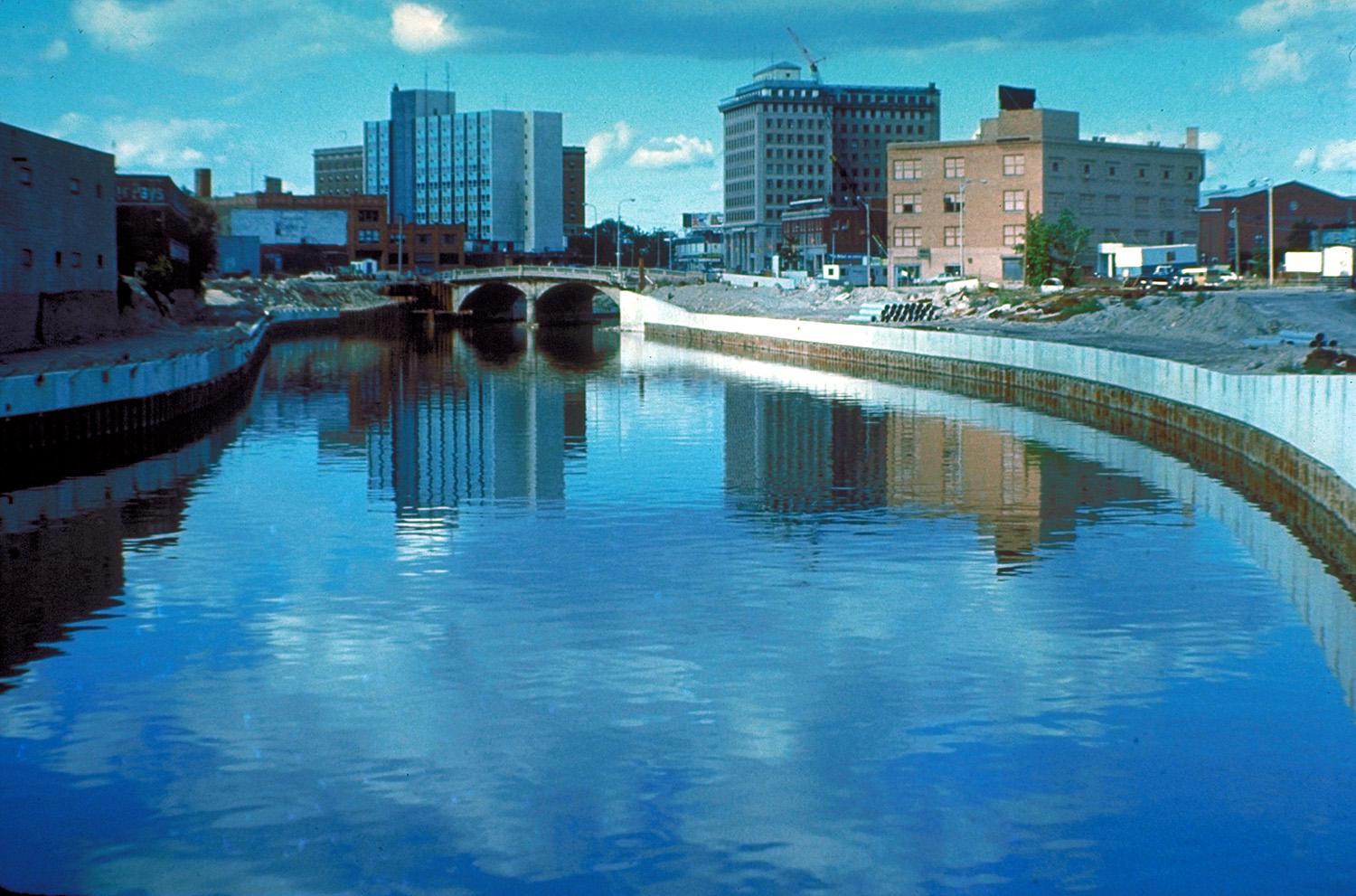
Loading summary
Transcript47 lines
- [00:00]
A
Sam. Saint gonna change. Welcome, friends, to another edition of Economic Update, a weekly program devoted to the economic dimensions of our lives. Our jobs, our incomes, our debts, the prospects for our kids in just those same dimensions. I'm your host, Richard Wolff. I've been a professor of economics all my adult life, and currently I'm a visiting professor at the New School University in New York City. I also want to direct you to the websites that we maintain even before we jump into today's economic updates, because I want to remind you to use them and make use of them. We update them on a continuous basis every day of the week. They contain a great deal of material that amplifies and extends what we do on this weekly program. They archive this program. You can go back and listen to any of our weekly programs, but simply going to these websites. And finally, they allow you to follow us on Facebook and Twitter to communicate with us about what you like and don't like about the programs. So there's really a wealth of material on these websites. They're available 24 7, whenever it's most convenient for you, and there is no charge whatsoever to do so. Here they are. First, democracy at work. Democracy, that's all one word, democracyatwork.info and the other one is rdwolf, that's me. Rdwolff, with two Fs.com easy, simple, available for you. Make use of them. Let's jump then into the updates for this early time in 2016. I want to begin by kind of telling you a theme that's going to be working today, and that's what's happening on the extreme right wing of an economic system we live in because it's something we need to pay attention to because it's part of the story. And that right wing shows up in virtually everything we're going to do today, with the exception of the interview. So let's begin by complimenting some people that are fighting against that right wing in economics 2. In particular, I want to single out first, a group of workers called junior doctors. They comprise about one third of the medical system in Great Britain, in the United Kingdom, and they've been on strike this last week. And they're striking against the David Cameron Conservative government in the United Kingdom, which is part of a Conservative backlash against the extremely successful National Health Service in Great Britain. You see, they have in Great Britain what we do not have in the United States, a national health insurance that covers everybody. They do for all citizens in their country what we barely do for those over 65 here in the United States. But conservatives would like to privatize. They would like to have a private enterprise system, you know, the way we do here in the United States where we have the most expensive medical system in the world. Even though our medical outcomes are mediocre, better than some, worse than others, we pay a great deal more. We don't get any more than what other people do. The British haven't gone down that road. But Mr. Cameron would like to see them. And he goes after the National Health Service every way he can. And one of them is the tried and true mechanism of the right hobble, cripple and undermine a public service in order to get the public angry at it. Then use the public's anger at the service as an excuse to get rid of it altogether, rather than admitting that the reason the public is unhappy is that you haven't funded it properly, taxed the rich to make it feasible to do it in an appropriate way. So my hat's off to the junior doctors of England because they won't play ball. They will not go along. They are proud and able to go out on strike and say, we are not going to allow you to get away with the destruction of something that has served so many of of Britain's citizens for so long so successfully. You're not going to wreck it. You're not going to make our lives impossible so that we are exhausted and can't deliver proper health care. None of it. We're going to strike and permit none of that to happen. That's strength, that's commitment. The strike has been overwhelmingly successful with a clear majority of the junior doctors honoring the strike. They only do emergency work that of course they do to make their case clear. And it is an important pushback against a right wing agenda in Great Britain. The second group I want to complement, and I mean that quite sincerely, are public school teachers in Detroit, Michigan. They did an interesting thing. It's not a strike, it's a sick out. It's sort of a around the corner strike. Half a strike. It's a measure taken by concerned teachers in the public school system of Detroit, Michigan, a city that has been plagued by the right wing's agenda of undermining the needs of the majority. Allowing private corporations like General Motors, Ford and Chrysler to basically abandon that city to make more profits someplace else producing cars and trucks and not to pay any of the costs of the economic devastation they have caused. I could go on. I've talked about Detroit on this program before. But what's interesting is that one of the victims, of course, of this right wing business assault has been the refusal of the Governor of the state of Michigan and other politicians put in place by those same corporate interests to help in anything like the way that's needed. Instead they make cost cutting decisions. I'm going to have about three something to tell you about another one in the Detroit area in a few minutes. But what they've cut is the schools. Therefore public schools are overridden with rats. They have falling walls and ceilings. The descriptions in the press, the Detroit Free Press, among others, are stunning as to the dilapidation and the fact that huge numbers of kids are crammed into single rooms with individual teachers in these unspeakable conditions. Well, the public school teachers had enough. And in tens and dozens of schools across Detroit they called in sick this last week in order to make it public. And boy does that work. When finally workers get up and say no, the media pay attention. The public becomes aware in a way it can't any other way that there's something seriously wrong. That takes courage, that takes sacrifice and that deserves the honor that I want to bestow by giving them a shout out the way I did with the junior doctors in England. Well, as another example of extreme right wing economics, we turn to Detroit. This time it's something that was brought to my attention by the documentary filmmaker Michael Moore. It has to do with a suburb of Detroit, Flint, Michigan. Turns out that Flint, Michigan used to use the public water system of Detroit by arrangement with the city. And that's based on the Great Lakes water that is in the end melting glaciers that feed that system. Well, to save money, the government in Detroit and Flint and in the statehouse in Michigan decided you could save money in economic trouble times. That's how this language works. By not providing Flint with water from Detroit, but by the cheaper option of using water from the Flint River. Problem that over the decades the automobile companies and their feeder corporations have dumped unspeakable toxic materials into the Flint river as corporations have fouled so many of the rivers across the United States. And that led to there being unhealthy levels of lead in the water. Children got sick, people in Flint began to complain, no one paid attention. Money saving, financial fiscal austerity had the rule of the day. It finally got so bad it blew up. And now Michael Moore is calling for the arrest of the governor, Mr. Snyder in Michigan for failure to do the most elemental thing. It turns out that after months there's long term illness of high lead levels that has been dumped on the children who are particularly vulnerable of Flint, Michigan. What a story about the uncounted costs of the quote, unquote austerity. That is a fancy term for shifting the burden of a dysfunctional economic system on those least responsible for its dysfunction. And, and already the victims through economic downturn, now they're told they have to suffer medical expenses for the rest of their lives. This is not a story, folks. This is about right wing economic thinking prevailing from the corporation on over to the political leadership that does its bidding so often and so readily. Well, keeping with my theme, here's another place where right wing economic ideology is playing itself out. In this last week there have been discussions before the Supreme Court of the United States. And these discussions reveal the same story from yet another angle. This time it is a struggle between a schoolteacher in California and the schoolteachers union in California. And in order to understand this, I have to give you a bit of a background. The law in the United States, ever Since the late 1940s, the Taft Hartley law that was passed then, the law requires that in every workplace where there's a union, even though the members of the workforce there may or may not be required to join the union. In the vast majority of cases in this country, even if there's a union in your workplace, you as an individual worker are not required to join the union. But this law says that whether or not you join the union, anything and everything won by the union from the employer must be given to all the workers there, whether or not they join the union. Well, you can see if you're not very slow, what's involved here. This was a law, the Taft Hartley bill, enthusiastically supported by the business community and opposed by the labor movement. The labor movement lost that one. The business community got it. Why would they care? Well, the answer is obvious. The more you guarantee that a worker gets anything a union wins, the more you appeal to that worker to consider becoming a freeloader, a free rider, right? You don't have to join the union. You don't have to pay dues out of your salary for the union. You don't have to do what the union asks you to participate, go to meetings, go on strike. You don't have to do any of it and you'll still get whatever the union wins. That's the law. This was a way of giving an incentive to people not, not to join a union, not to pay the dues, not to support. Well, what did the unions do? It took them a while, but they came up. It took years. They Came up with a midpoint. Okay, they said you're not going to have to join the union, we'll leave it with that. But you really can't expect the union to go out there, struggle for improved workers wages and benefits and not pay any of the costs of doing that. The union office, the union negotiator, the union, the suffering of the people who go out on strike to get a better wage. So they came up with a midpoint was called agency fee. You don't have to join the union, but you do have to pay a fee, usually less than union dues. A fee that at least compensates the union for the work it does in collective bargaining with the employer that improves your labor conditions and your wages. The case before the Supreme Court is to dismantle that, to go back and say that the worker who chooses not to join, the worker who chooses not to participate in the union should, that's what the Friedrich's complainants are saying, should be free not to pay an agency fee either. That is, they want to go back and give a complete freeloader free rider status to the workers who don't want to join a union. So they get the benefits and they bear none of the costs. And it looks from the week's hearings in front of the justices and what the justices said from the reporters, recordings of it all, that they're going to vote in favor of this case. That's right. They're going to say that we live in a country where you don't have to pay anything at a workplace. And of course what that means is that you'll have an easy opportunity for the employer to persuade the employee not to participate, not to pay the dues. This hobbles, of course the union, weakens the union, makes it less able to struggle with the employer. In the end, this will hurt the people who don't pay either because they won't get the benefit since the union can't win them. And if it's hobbled in this way, it's a transparent move by the business community to weaken the labor movement one more step. And that's the last step of the story. Over the last 50 years, since the Taft Hartley act of 1947, unionization has been on a 50 year uninterrupted decline. In the private sector, which is where most American workers now work. The level of unionization is under 7%. That's right, you heard me correctly. Over 93% of all workers in the private sector in the United States are not members of a union. Are not represented by a union and are not covered by a union contract. Only 6.8% roughly are. It's a lot better in the public sector. In the public sector, there's almost 25 to 30% of the workers are organized still, of course, a minority. The majority are not. But a strong minority. This legislation, the Taft Hartley act and now this debate in front of the Supreme Court is meant to weaken the one area where labor is still strong labor movement, public sector workers. Where this agency fee is, is found most of the time. That's why the teachers are on the griddle right now in front of the Supreme Court. But all public sector workers ought to pay attention because this threatens your union, your ability to have an advocate pushing for better wages and working conditions at a time when the political structure working hand in hand with the corporate leadership, is trying to cut government, cut government spending, cut government programs all around you, as you do well know. Last point. Corporations continue to be dominant in the political games, funding the candidates of their choice in every way that they can. So it's important to know that there is also a fight back. Just as it was important to recognize the junior doctors in England and the Detroit teachers taking courageous sickouts to make an important point, there's also an interesting effort in California that strikes me as a sign of tensions and conflicts that are to come. It's called the Voters Right to Know ballot initiative. If I'm correctly informed, it is based particularly in San Jose, California, but it is a statewide effort collecting signatures these days, having until I believe, 4-15-20 to do it, to give the people of California a chance to vote on whether or not they want more information about what financial interests are playing what kind of role in the political contests of their society. This is an important struggle to watch, to see if similar things are going to be done in other parts of the United States, whether the effort to limit at least the influence of big money in our politics is mounting as we talk. All right, let me turn now, in the time left in this first half of the program, to a topic that we discussed last time because you were so interested in it and asked me to talk about it. This has to do with the funding of churches and other religious institutions here in the United States, and I wanted to make the point, because you've asked me to, that yes, indeed, religious institutions in this country are highly subsidized. That is, the government provides all kinds of financial supports to religious institutions. So for some of you who may have imagined that subsidies are something that the government does to Help, for example, poor people or unemployed people or folks on food stamps. Indeed, the government helps those, but those are by no means the only beneficiaries of government help. There are lots of others. And one of those not often discussed, because there's a kind of taboo about talking about this, although not here on this station and not on this program, there's a taboo about discussing whether religions are subsidized by government. So let me explain to you, Crystal, clearly how and why. The answer to Are they subsidized by the government? Is a loud, clear, emphatic yes, they are. There are three major ways that institutions, mosques, synagogues, churches, temples and so on are subsidized. And in the United States right now, the first one we discussed last week, if a church or a mosque or a synagogue or any religious institution is fortunate enough to have money, perhaps given by their members of their parish or their community, or donated by some wealthy person or left to them in someone's will, and all of these institutions make efforts to acquire such assets. If they have those assets and they use them to buy stocks and bonds to have an endowment, they often call it a portfolio, then they are blessed by the United States government and by every one of the 50 state governments with the following if you are a religious institution, the dividends and interest you earn from the stocks and bonds you may hold pay no income tax. If you're an individual and you have stocks and bonds, you have to pay an income tax on the dividends and interest you earn. But if you're a church or a temple or a synagogue or a mosque, you do not have to. You are relieved of the obligation of paying taxes. That means that the government, which serves you, too, the federal government looks after the air you breathe, the water you drink, it maintains the roads you need to allow your parishioners to get to and from your institution, don't they? And you need all the services you want to be able to hire people that are educated in the public schools. So the government needs to do things from which you benefit. But unlike businesses and unlike individuals, you don't have to pay the taxes needed to provide the services to you use. That's a special subsidy. But it's only the first of three. Here's the second one. If a church or mosque or temple or synagogue owns property, by which I mean the land on which their institution sits, the building in which they conduct their religious activities, equipment in the building, like computers, fleets of cars or trucks or buses that they maintain for their activities, whatever property they have is Here we go again. Exempt from taxation. So take a church, say, located in Middletown, anywhere, America. It relies on the local police department if they have need of them, or the local fire department if they have need of them, or, or the local health department to keep the sewers clean, you name it. But unlike the businesses and residents of Middletown anywhere, the church and the synagogue, they don't have to pay any taxes for those services. They get those services from the government for free. And now let me explain what you probably already understand. If the federal government cannot tax the the income that churches have from their stocks and bonds, if the local government cannot tax the property that the church or the synagogue or the mosque has in the local community, but they still have to deliver all the services to them, then someone else has to pay for the services delivered to the churches because they don't pay. And that someone else, friends, is you. The businesses and the individuals of America pay extra property taxes, state taxes, government federal income taxes in order to deliver services for free to religious institutions. If you are not a religious person, you are being taxed to sustain the institutions of interest to religious persons. You need to understand that. But I said there were three ways. There's another one, and in some ways this is the biggest. It turns out that if you are wealthy and you have enough money to give a nice big donation to whatever church you prefer, or whatever synagogue or mosque or temple, the government gives you yet another subsidy. Here's how it works. Let's suppose I'm wealthy and I give a million dollars to a church in my community. I am allowed to deduct the million dollars I give to a church from my taxable income so that I don't have to pay taxes the way I had to before I gave such a gift. So, for example, and by the way, there are people like this. Suppose my income is a million dollars a year from the good job I have. That would put me in the top 1% of Americans. I earn a million dollars. Now, suppose I'm very rich. I've accumulated money over my lifetime. And so I give a million dollars worth of stocks and bonds to a local church. I'm able to take the million dollar gift I give to the church, the donation, and deduct it from my income tax. Well, let's see. I got a yearly income in 2015 of a million dollars. I gave a contribution to the church of a million dollars. Therefore, for tax purposes, my income in 2015 was zero. I owe no taxes to the government. Wow. If I hadn't given that contribution If I wasn't rich enough, I would have had to pay half a million dollars on my million dollar salary. When you add up federal, state and local taxes, once again, everybody who doesn't give money to a church is having to pay more to make up for the government's loss of revenue from the donors who do give. Either the government losing the money of people who give to churches will cut services to you and me, or they will charge us more in taxes to make up for what the donors to religious institutions give. Do you understand those are ways of subsidizing churches? And let me leave you with this. If the separation of church and state means really anything, how is it possible that the state subsidizes churches? Are you really comfortable with that? Is it reasonable to say to people who are religious and want to have a religious institution, you don't need to pay for the institution you want to go to, you want to participate in? Why have we not decided to make religious institutions depend for their sustenance on the communities they serve? Why are we all required to subsidize a religion? Religious institutions that a majority of Americans probably never set foot in talks about political power, doesn't it? Well, folks, we've come to the end of the first half of our program for today. I want to thank you for listening. I want to remind you of those websites that we talked about. I want to remind you also that we are always looking for more and new radio stations carry this program and indeed places for me to give public talks so I can meet those of you that hear this program. And you can meet me if you have any suggestions along those lines, use our websites to contact us. Otherwise, please stay tuned. We're going to have a short musical interlude or an announcement from your station and then we will be right back.
- [28:55]
B
Music is coming I feel it dropping on the ground Sounds like my heart beating fast and free now it's always running in my veins Till I hear the drums and bass Music is coming, I see it Everybody moves now Till we get thirsty and happy all we need this time for the real thing for the real high for the real love Come together now and rock the ground Give it all to the sound body, soul and mind until you get.
- [29:40]
A
Welcome back, friends, to the second half of Economic Update. I am very proud and happy to have for this second half a person, a guest on the program, Michael Johnson. Thank you very much for coming, Michael.
- [29:55]
C
My pleasure, Rick.
- [29:56]
A
I want to introduce him to you and then talk a little bit about why he's here and why I think it's important that his voice be heard. Michael Johnson is an organizer and writer in cooperative and solidarity economic movements, primarily through an important organization called Grassroots Economic Organizing. If what we do today is of interest to you, check out their website at Geo Geo Co Op. Geo Co Op and you can learn a great deal more. His main focus has been on the internal and external development of of the organizations that are building the movements that are building cooperative workplaces and even other kinds of cooperation. He is the co author of a recent book on worker co ops, a book that I would recommend to you all called Building Cooperative Stories and Strategies from Worker Cooperatives in the Connecticut River Valley. And indeed, he's currently working on a book about empowered cooperation. If this book Building Cooperative Power is of interest, let me mention that it is published in Amherst, Massachusetts, which is part of the Connecticut Valley by the Levelers Press and that it is available via Amazon. And once again, the book Building Cooperative Power, it's actually a collaborative effort of a group of people and Michael is one of them. So Michael, let me begin by asking you to tell our listeners and our viewers to tell them a little bit about the reality. And by reality I mean that in the Connecticut River Valley and of course not only there, but you're the one who knows about this, in the Connecticut River Valley, people have been organizing, building, struggling to maintain and grow cooperative workplaces. Places where you don't have a hierarchy of the owner telling everybody else what to do, but you have instead a democratic cooperative work. Tell us a little bit about the history and how this came to be.
- [32:07]
C
Well, one of the interesting things about the Valley is that cooperatives started back in the middle of the 19th century. So there is a whole history of development. And I interviewed over about a four year period people who had been active in the 60s, 70s and 80s in worker co ops as well as the current worker owners that are active in about 10 or 12 different worker co ops. And I was drawn to this because they had just started an organization called the Valley alliance of Worker Co Ops. Okay. And the thing was, this was the third effort to pull worker co ops together in a unified way in order to build cooperative power that they help each other as well to help each other. And it is a co op led process of cooperative development so that all of the worker co ops that are part of the Valley alliance of Worker Co Ops vocal contribute part of their surplus to a cooperative development fund that is used to help convert other businesses into co ops or to start up.
- [33:23]
A
A co op, just everyone Knows VAWC is the acronym for this Valley.
- [33:31]
C
Right.
- [33:32]
A
Valley alliance of Worker Co Ops. Right, okay, so let me push you a little bit. Pick. You pick. Pick one. And tell us a little bit about the particular history of a worker co op in the Connecticut Valley, a little bit. How it got going, how it has grown, how it works so that people have a very concrete sense of what it means to be in one of these.
- [33:57]
C
Okay? So this book was published by Leveler's Press. Leverers Press is part of Collective Copies. Okay. Now, Collective Copies has this fascinating startup history, and you're smiling because you know it. This was about 1982. There was a bunch of workers that worked for a particular press, a nomen press, and the wages were terrible and the work conditions were terrible. And so they started pushing for improvement. And so they were being stonewalled in the negotiations. And then finally they called a meeting to meet, and they go to the meeting, and it turns out that, no, it wasn't the people they had been negotiating with because they set up a franchise. So it's a whole new business group. So they got to go back and start all over again from ground zero. They aren't making a whole lot of progress. Then one day they show up at work to find there's no business anymore. They lost the space that they were renting in, probably because they didn't pay any money. So there's no business. And so they're out. Have been out on strike for, you know, two or three months in the wintertime. And you know what the winner is in the Connecticut. And so they're striking. There's nothing there to strike against. Okay. So they're just left with empty hands until they start creating a solution. So they reached out to all of.
- [35:30]
A
How many people are we talking about?
- [35:32]
C
We're talking. Well, it was about nine or 10 workers. And when they got going on creating the worker cooperative that became Collective Copies, there's about six or seven, I think, of those were the people who did that work. And so the thing is that in order to get the startup money, what they did was they pitched all of the users of the press and they said, look, you give us $1,000 in advance and you'll get back $1,100 worth of printing by the end of the year. And that's how they.
- [36:08]
A
That's how they got the money together to start.
- [36:10]
C
That's how they got the money to get started. Okay. In the dead of winter, totally. All of a sudden, there's. They're in a hole.
- [36:21]
A
And that worked. They got enough money to do it.
- [36:23]
C
They got enough money to do it. And then, you know, and then they struggled and they built and they had the fallbacks, et cetera, et cetera. And in the year 2000 they actually bought a new building and started a second branch of Collective copies which turned out to be a great expansion of the business and they grew the business. So from 1983 to now, they are operating now, I think they have about 13 or 14 workers, it may be more. And they have two locations and they are an established entity and business enterprise in the Valley, in Amherst and Florence, which is an extension of Northampton. And they opened up a press about three or four years ago.
- [37:15]
A
And so they're publishing books.
- [37:17]
C
They're publishing books. And you can go and you can see I get kind of envious because every time I go back to the level of the press to look at the opening page, our book gets further and further down. They're publishing others because they're published.
- [37:31]
A
So this is a clear business success.
- [37:33]
C
Oh, absolutely, totally.
- [37:34]
A
And I can tell our audience since I was for many, many years a professor at the University of Massachusetts and like other professors, often used collective copies for our students to reproduce articles and things like that, that there's a lot of competition in that area. That is, they were not the only copy place to go. They were not the only printing press. So this is a story not only of the success of a worker co op, but it's also the story that a worker co op can succeed in the competition with other non cooperative businesses because there's a kind of a bad rap that worker co ops get that somehow they will pay themselves too much and therefore drive themselves out of business as if they were foolish, et cetera. And the fact of the matter is that in case after case, worker co ops can and often do successfully compete against capitalist enterprises, top down, traditional enterprises. Tell us a little bit about, if you can, about how Collective copies works. So give us, give our audience, if you can, a sense of what it means to be a worker co op.
- [38:48]
C
Well, for example, in the purchase of the building. Okay, so here they are. They've got a 15, 20 year history of working in one shop. And so somebody comes up and proposes the idea, look, if we open a shop in Florence, there's a whole market over there that we haven't really tapped into. It's going to be a big success. Oh yeah, talk to us about this. Show me this. So they went through a long debate and then there were just too many people who were saying no, but they kept thinking together. And one person took a great deal of initiative, okay, and went and really got the numbers together in a very tight, you know, clear, precise way. Came back and said, look, here's the numbers. These work, you know? And so they kept on debating and arguing, and finally they came to an agreement. All right, let's go for it. Okay. Now, this is a real struggle. You know, you can imagine a married couple, you know, who's going through change of jobs or open their own business. You know, you're torn back and forth with the pros and the cons. So they came to the collective decision to do it, even though everyone had some misgivings about it. But there were a couple people who said, look, you want to go for it? I'm not going to oppose it anymore, but I'm going to abstain. I can't really say I'm for it. So they went for it, and boom, it worked. Okay? So later on, they tried a second expansion, and that didn't work. And part of the reason, I think, was they didn't take into account that the digital impact on the printing business, it was really changing the whole market. And secondly, there was the 2008 financial crisis. So not only did they overextend in that they had to pull back. And this is another really powerful piece of why a worker cooperative works. They pull back, and instead of saying, okay, we got to cut two or three people out, they cut everyone's salary or the income they got from the thing so no one had to leave. They pulled on their solidarity, you know, to hold it. And that kind of solidarity manifests throughout the whole 20, 35 years that they've been around. That's the core of their success. And it's what capitalists don't really. They don't get it. You know, they just simply don't get it. And if you. I'm going to jump out of the worker co op thing to the. To the food co op, because this. There's a story there that is just unbelievable.
- [41:37]
A
Please.
- [41:38]
C
Park Slope food Co op, 16,000 members. Okay? Esquire magazine here in Brooklyn. Here in Brooklyn. Esquire magazine, about three or four years ago, runs an article. And the thing is, we're comparing the profitability of Park Slope Food Co Op with the two highest profit producers, Whole Food and Trader Joe's. They measure it by square foot. Your gross income per square foot is, okay, so Trader Joe's was twice as efficient as whole foods and 17 $50 per square foot. Park Slope 6700 per square foot. They're almost four times better than the best commercial food system. Okay, at the end of the article, the writer says, well, the thing is, there's an unfair comparison here. Park Slope had lots of volunteers. Hey, dude, that's the point. And they're not volunteers, they're members. Okay? And so this is the. And you don't take that into account. You don't get what cooperatives can do. And the stories of every one of the worker cooperatives in the Valley or elsewhere reproduces that fact over and over again.
- [43:05]
A
You know, it's a wonderful illustration of something, I think most Americans already know, that if you have, and there's lots of phrases for it, skin in the game. If you have a vested interest, if something is yours in a meaningful sense, you care about it more, you give more of yourself to it. So if the business is really yours, if you're not some drone coming five days a week from nine to five and waiting for the day to be over so you can go and have the happy hour because the other hours are so unhappy, if you change all that and it becomes a cooperative business that you are part of, your whole attitude changes. The way you work, the creativity you bring to your work, the care with which you see a problem and jump in to help solve it rather than say, oh, that's somebody else's job. All of that is going to give co ops a leg up. It's going to give co ops a competitive advantage. And that more than makes up for, I think in many cases, the discipline that a top down can impose on people by threatening them basically with being fired. It's a wonderful illustration.
- [44:21]
C
Right? But there's another side to it also, which is a really challenging side. Okay, So I interviewed one of the members of collective copies and he was telling me about his beginning in work in collective copies. And this story was repeated by a number of people in various forms. His was the clearest. He said, I came in, you know, I didn't really know about co ops, but I heard about this job and it all sounded cool. So I came in. And the thing was that I came in and I spent the first six months trying to figure out, I'm not an employer, I'm not an employee. Well, what am I? Okay, we are saturated with the culture that we grow up in. Okay? And we grow up in. If you're going to go work, what are you? You're going to be either an employer or you're going to be employee. This kind of thinking permeates the cooperative and all of the solidarity economic projects, because we grew up with it. Okay, right. I joined a credit union. I never knew I was joining a cooperative. I just thought it was another kind of bank. And no one there was really telling me, you know, so there's a way in which we are not really visible to ourselves. All right? And there is this learning process, this learning curve that goes on and on and on. What does it mean to be a worker owner? What does it mean, you know, what's involved in that? And every issue that comes up where they have to debate and this and that, or gender issues that all these things come up. And it's got to be, all right, this is an opportunity. Let's think through this. All right? Or if you're not doing that, then you're not. You're going to. That old culture is going to come back. It's going to come back. And it happens.
- [46:21]
A
Of course it does.
- [46:21]
C
Particularly when we try to go to scale. They get larger and then the distance between the people who are making decisions expands. That's when it's really difficult to keep the democracy going. And so there's just a lot of learning that we have to do. And that's the internal aspect of this work.
- [46:44]
A
It's very interesting that your story brings up a very large issue that has intrigued thinking people for a long time. If there's something true about that, if you get to a certain large size, the ability to democratically listen to one another and talk to one another and think about what other people are saying, to come to a decision that really is the best that a group can come to, that at a certain point, that's no longer possible. If that were really true, then every society ought to have a debate and make a decision. Maybe we don't want workplaces that are larger than 80 persons or 100 persons or whatever that number might be, because we value the process of work, which is, after all, what we spend most of our adult lives doing. If we value that process, then that's more important to us than getting 27 more widgets produced. We'll sacrifice some of the output in order to have a better life producing it. In a capitalist system, you don't get to make that decision because profit is driving the people. They don't care what the size is as long as the profit goes up. But in a way, the co op is teaching itself and the larger population that there ought to be a discussion about the size as well as the organization of the workplace, because that's an important thing in our society, which the few that are owners and capitalists oughtn't to be in a position to decide for everybody else.
- [48:21]
C
Right. And it's a real challenge, you know, it is a discussion that needs to go on. And one of the major problems is when we get into these. It's difficult to have this kind of discussion because I'm right and you're wrong.
- [48:36]
A
No, no, I'm the boss.
- [48:38]
C
Or even if we're equal, you know, my point of view is right and yours is wrong. And for democracy to work, we have to be able to understand. I have to understand you and where you're coming from in your context, and vice versa. This is how we're going to negotiate with each, hear each other and make these kinds of decisions and understand ourselves.
- [49:00]
A
As having different ways of understanding something rather than in a scale of right and wrong.
- [49:05]
C
Right. So even, I mean, that discussion you're talking about is really, really important. And how we'll ever get to have it, that. That may be grandchildren, great grandchildren, you know, way down the line. But being aware of it, pushing it, you know, as much as we can here and now is critical to that happening later.
- [49:24]
A
Absolutely. And I think we can be surprised, historically, how fast things go. They build up slowly and you don't notice them and then boom, they blow up on you.
- [49:35]
C
The civil rights movement is an example of that.
- [49:38]
A
Absolutely. You know, people. Well, there's many examples. Let me get you to tell us a little bit more in the time we have. Can you pick another one of the Valley co ops that you discuss in your book? You have about a dozen of them here, right?
- [49:53]
C
Yeah, there's 11. There's 11 stories in the middle of the book about, you know, individual cops, co ops, some of them, but they wrote them themselves. Okay. And they tell the story and you can get a hope. A hope. Like, for example, if you're talking about how do you get financed? Almost everyone has a different story to tell. But throughout the whole thing, every story, cooperation and intercooperation are the ones that stand out.
- [50:23]
A
Another one.
- [50:23]
C
God, it's hard when you say you pick another one. There was. I'll do Tessa. Okay. This is a newer1. Okay. Four or five years or something. Tessa stands for Toolbox for Education for Social Change. I think. I mean, I think I got it right. We're pretty close there anyway. Started by three college graduates in the Valley area. Okay. And their whole point is to create educational materials to learn cooperation. And it's more of a popular education, not a lecture Education. So they created this game called Co Opoli, which has become very, very successful. But the thing was, in their story is amazing because the degree of intercooperation they generated in order to produce this is amazing. Two thirds of the money that they raised was paid to worker co ops across the country in the production of the game. Of this game. About 11,000 of the $20,000 that they raised in order to do this came from cooperatives. And it came from cooperative foundations and organizations that support the movement. So they were able to draw upon the movement as well as outside the movement and then employ the movement, okay, to produce this product that teaches education. So that's the power of cooperation and building cooperative networks, which is basically what VOC has started their alliance with. And then they expanded that alliance to a cooperative economic development hooking up with neighborhood grocers, which is a network of about 25 food co ops and a credit union. It is to bring that level of intercooperation to focus on the regional development code of cooperatives, all kinds of cooperatives. And that regional development only supports the worker co ops as well, because you get it out there, you're doing business together. So Tessa kind of models what is possible in building regional networks, even though theirs was actually international because they were involved with 30 countries.
- [53:05]
A
Well, you know, the interesting thing is I've talked on this program fairly often about the Mondragon Cooperative Corporation in Spain. And if you talk to the people in Mondragon and people who've looked at it, it's clear that one of the basic roots of their success in going from a six person co op in 1956 to 100,000, more or less that they have now was the ability of them to hold together a growing family of co ops so that the co ops helped each other in difficult times. They pooled, everyone had to pay a little percentage of their profits into a fund that could fund new startup co ops that could help convert existing businesses. And I know that I often invite people who listen to this program to get in touch with us, to get help, because we are partnered with an organization that does this kind of thing, convert businesses. Tell me how you would respond, given the research you've done on this group of co ops to people who would say to you it's a pipe dream, it's not manageable, it's not practicable, it just won't work. Tell me if you encountered someone in a talk you gave in a coffee shop someplace, what would be your reaction? What do you tell our audience who have to deal with that question probably all the time, right?
- [54:32]
C
I would go. I mean, first of all, you got the stories in the book, okay? And one of the stories involves a Pelham Auto, which is auto repair shop, 40 some odd years, okay? And they didn't want to put a story in. They don't want notoriety. They like what they do in themselves. But the stories are all there, okay? And the question really is, what inhibits the growth and development of these kinds of economic enterprises? Because if you look at Mondragon, Mondragon evolved in a cultural situation that promoted cooperation. They're full of co ops in that area, that Basque region, Northern and Italy, the same thing.
- [55:16]
A
Emilio Romagna.
- [55:17]
C
Yeah. Emilio Romano. Now, there's an interesting study was done by the Bowling Alone guy in which he demonstrated Robert Putnam, that Northern Italy 1000 Year History of Cooperation through the guild systems, et cetera, et cetera. And you go down into Southern and it's the exact opposite. It's a thousand years of the mafia approach, okay? So you have to create the conditions for this. And in the United States, we're in. That's. How do you get the traction for that is very, very challenging. And we need to do a lot of thinking about how to develop the culture. And a lot of this stuff has to do with cooperative education. Needs to not only pay attention to the mechanics and the operating side of the business, but how do we really learn to connect with each other, to think with each other, to see how. Oh my God. All this stuff that I learned about rivalry, it's kind of screwball. I need to learn something else. So it's this internal development. It's an internal, external thing. They fit together and we got to pay attention to both sides.
- [56:30]
A
Michael, as usual. I wish we had more time.
- [56:33]
C
I'd love to. Yeah.
- [56:34]
A
And we can do this again, and I hope we will. I would like to think that this program is itself part of helping to develop a cultural framework that is friendly to, sympathetic to, supportive of a movement to build worker co ops. We certainly want it to be that way and try to make it that way. We've come to the end of the time we have. Folks, I want to thank you for listening. I want to thank Michael Johnson for joining us. And I want to remind you please to make use of our websites, rdwolf with two Fs and democracyatwork.info let us know about radio stations in your area that might carry the program. Let us know if you'd like me to come and speak in your area. Contact us, follow us on Facebook and Twitter and share what we do on this program with other people. You as a partner makes this program 10 times more effective, reaches 10 times more people than if we rely only on us. Work with us. Let us know how we can work better with you. Thank you again and I look forward to talking with you again next week. Change, change, change, change, change, change. Fame on a change. It's. It.