← Economic Update with Richard D. Wolff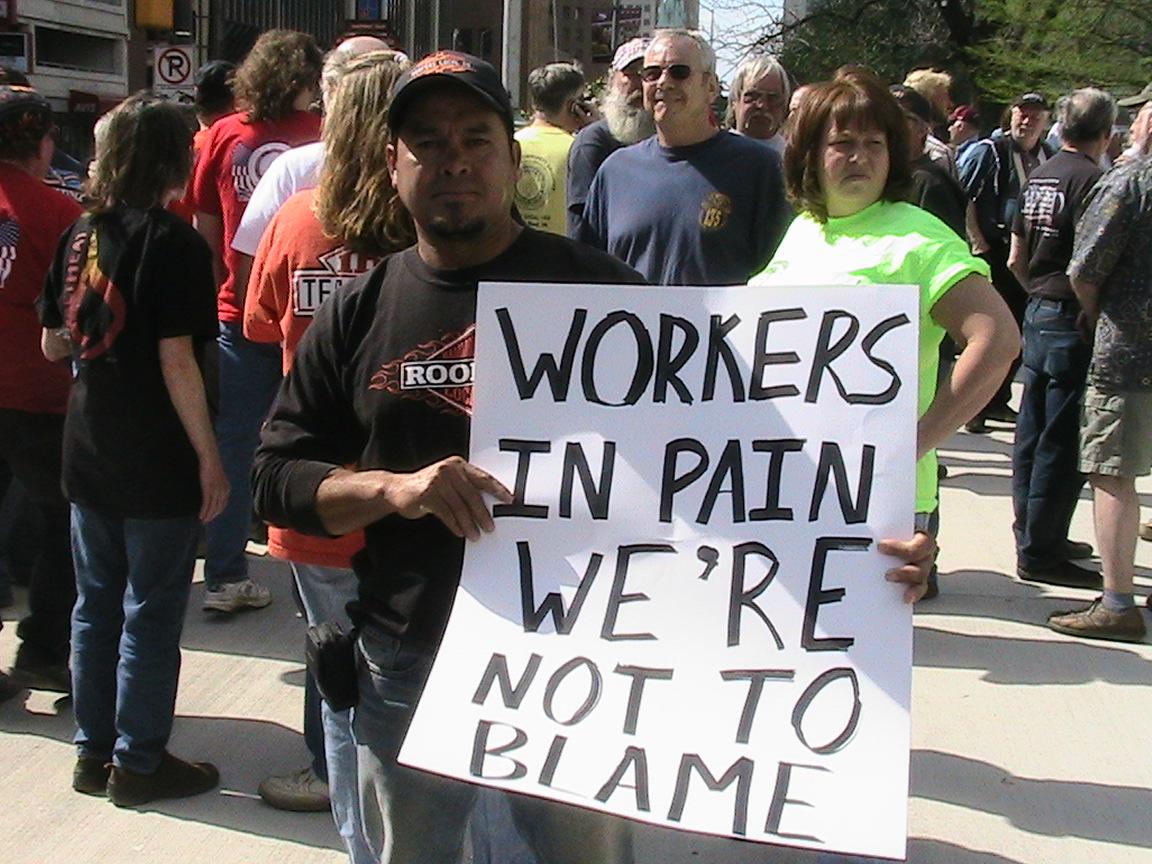
Loading summary
Transcript3 lines
- [00:00]
A
Sam. Saint gonna change. Welcome friends, to another edition of Economic Update weekly program devoted to the economic dimensions of our lives, our jobs, our incomes, our debts, and all of those things facing our children. I'm your host, Richard Wolff. I've been a professor of economics all my adult life and currently I teach at the New School University in New York City. Well, we have an overwhelming number of economic updates because the whole pace and rhythm of the economic system we live in as it declines is becoming more and more intense. So let me start right at the beginning with what I think is the big bombshell of this. Citigroup, which is the parent corporation of the Citibank of New York, one of the five or six largest banks in the United States, issued a report this last week and it was covered as such things always are by the Bloomberg Financial News Service. And so on February 25, Thursday of this week, this last week, the story appeared with the following Here comes a global recession subtitle Growth is likely to fall apart. Well, I couldn't say it better myself and I prefer to be able to quote it from a source like Citibank so you know what it means. What Citibank did was to reduce its estimate of growth in 2016 from 2.4%, which wasn't very good and was what they proposed back in January of 2015 to 1.6%. Folks, that's a drop of one third in what they think is going to happen. And as if that weren't bad enough, they add the following words and I 2016 could well be lower than the 1.6%. In other words, we could have what these economists working for Citibank believe is a global recession. Well, for those of us, and I am one of them who has been saying for quite a while that the so called recovery since the collapse of 2008 is a mirage, is a recovery only for big banks, for the top 1 or 2% who are major players in the stock exchange, etc. And that everybody else has been bypassed. Well, this is now confirmed by in two ways. First, that this so called recovery not only bypassed most Americans, but was based on a foundation that could not survive. And that's what's coming to pass as this foundational absence drags the economy down. And what is that? Financial or if you like economic absence, it's the absence of a mass purchasing power coming from a reasonably well paid lower and middle income groups in this country. You've savaged them. Your capitalist system has they can't buy anything. They're terrified of what will happen to them with the debts they have. So whatever little extra income they can find, for example, from lower gasoline prices, is used to reduce their outstanding indebtedness. It's called deleveraging in economics, and it doesn't mean goods and services are purchased. It just means you owe a little less to whoever your creditors are. And that is really killing the economic impetus. And pretty soon the very corporations that thought there was a recovery because they looked only at their own checkbooks are discovering that if you destroy the mass of people, in the end, that will come out back and bite you in your economic rear end. And that's what's happening. This takes me to another item. There's a new book that has been causing quite a stir. It's by a fellow economist named Robert Gordon. He's a professor of economics at Northwestern University in Evanston, Illinois. The title of his new book is called, and note this, please, the Rise and Fall of American the subtitle the U.S. standard of Living since the Civil War. Basically, Mr. Gordon or Professor Gordon's conclusion is that the United States has entered a period of permanent economic stagnation. Those are his ideas. And he also fears that this kind of economic stagnation will mean growing poverty and growing inequality. That frightens him. Well, that might not be so interesting if it were just him. But the book has occasioned a number of remarkable economic reviews by Paul Krugman in the New York Times, by Edward Glaser in the Wall Street Journal, and other reviews in such places as the Financial Times, Foreign affairs, and Prospect Magazine. In all the cases, these reviews indicate that the reviewers see Professor Gordon's arguments as irrefutable, as right on target. They are not happy about the conclusion, and they say so, but they do not think it's incorrect. And they are terribly frightened that the stability of the United States politically and socially is going to be undermined by this stagnation and this growing inequality. They're very worried about it and they're working very hard, I am sure, to make sure that doesn't happen. But they're scared because their efforts over the last two or three years have not borne fruit. If anything, the opposite. As if to underscore this in yet another way, here's another update that caught my attention. It comes from a CNN story on February 23, a story written by Katie Labasco with the following title that I think might intrigue you as Americans are moving to Europe for free college degrees. Wow. Let's take a look. In 2012, the last year for which Katie Labasco had statistics 47,000American young people had left the United States in order to get a college degree in Europe. Wow. She looked into it further. Why? Well, it turns out that that there are 44 colleges in Europe that are 100% tuition free. Most are public, but some are private. Indeed, all public colleges in the following four countries of Europe are entirely free. Germany, Iceland, Norway and Finland. The Americans explain and several are interviewed in this story from for cnn. The Americans explain two interesting things. One, they don't want to accumulate the debts that their fellow college students in America are confronted with. They want a college degree. They are prepared to study. They are alert, bright young people. But they need to save money on a college education and Europe provides the opportunity. And what I found even more interesting is a growing number of them apparently are considering, based on their experience, that they may well want to stay in Europe after they get their college degree. It is a sign of something profound in a society when it has people leaving in the tens of thousands to get a quality education without paying the outrageous price in cash outlay and in debts that is now required of this generation of American students. The days when the United States could consider itself a place to which economic and political refugees came to the United States will now have to consider that there are tens of thousands of our fellow Americans who are leaving the United States for economic, at least so far, economic reasons to save on an overpriced, over indebted cost of college education. And think about the four countries that feel that a college education, like a public park, like the water and the air, is something everybody benefits from, not just those who study in the classroom and that therefore it ought to be free. Let me turn next to an update about profit driven corporations where we can see, as we are going to repeatedly in today's program, that being profit driven is not only no guarantee that you'll do something socially useful, it is often incentive to do something socially the opposite of useful. First example, a story in Reuters this last week about the drug producing giant Johnson and Johnson. That corporation, a huge drug producer, was ordered by a Missouri state jury to pay $72 million in damages to the family of a woman whose death from ovarian cancer was linked to her use of Johnson and Johnson products, baby powder and shower to shower that she had used for several decades. The Circuit Court in St. Louis, Missouri awarded the family of Jacqueline Fox $10 million of actual damages for her suffering and her death and $62 million of punitive damages. Why? Because, as her lawyer explained, quote and I'm quoting her lawyer, Jerry Beasley. Johnson and Johnson knew as far back as the 1980s of the risk and yet resorted to, and again, attorney Beasley's words. Lying to the public, lying to the regulatory agencies. He spoke on a conference call with with journalists, including Reuters, who wrote this report. Wow. Here is an example of a company making lots of profit and if this attorney is correct, doing all kinds of things horribly damaging, in this case, death to people, holding back information. It's a little bit like the stories I've been reporting on earlier about the automobile companies with their ignition problems and their seat belt problems and so on. Another example, I found it, if anything, even more troubling. This one was reported in the Consumer reports magazine for March 2016 on page eight. For those of you who might want to pursue this, on page eight, the Consumer Reports editors announce their distress over the decision by the Food and Drug Administration in Washington to approve something called Aquadvantage salmon. This is the first genetically engineered animal that has been allowed to be sold for human consumption. That's right. We are now going to be presented in many of our grocery stores and fish stores with a salmon that has been genetically engineered. And for what purpose? It is explained in the story. This new genetically engineered salmon, the first such animal available for human consumption in the United States, grows to its full mature size in half the time it takes a normal natural salmon. This is profitable for the companies that raise the salmon. A capitalist can make more profit if the fish grows faster to maturity. This is not something that we need as consumers. It is something they need for their profits. Wow. The federal Food and Drug Administration at first did not only allow this, but did not want to require the producers to even label this salmon as genetically engineered. Consumer Reports was very upset about that and together with other groups got the FDA to relent. We will have this fish in our diets, but it will be labeled. And the interesting thing is that the Costco company, Kroger and Safeway have at least so far decided not to carry the the salmon. The interesting question is we are permitting the interests of profit to put into our bodies genetically engineered salmon. Have we taken the years of study to see what the other consequences are of a salmon that grows so fast, what that might do to the environment to our bodies? No, we haven't been able to take all the time that's necessary. We that would take years. And profit dominates and makes the decision. I leave it to you to think about the meanings of that fact. Then there were the news this last week about a struggle around the presidential race. You know, when you run for president, the press and others begin to look more closely at what you're doing. And here's two things I found interesting because of their economics. The first has to do with candidate Donald Trump. One of his basic arguments has been that he would not permit jobs to be lost from the United States that go instead to China and Mexico. He has specifically cited those two countries as places that are, quote, unquote, stealing U.S. jobs. Well, the little research that reporters began to do uncovered a wonderful program back in 2012 where Mr. Trump appeared on David Letterman's late night television show and was suitably embarrassed when David Letterman took up one of Donald Trump's ties that he was promoting all over the place and showed how on the back of the tie he it said, as is so often the case, made in Mexico, Wow. Or in China. And it turns out his daughter's clothing line, his linemany of them are made in the places where so much of our clothing is made. But the hypocrisy was exposed. I liked even better another story. This one has to do with the candidacy of Chris Christie, the governor of New Jersey who was running for president until recently. Turns out an enormous portion of the money that he raised to pay for his effort came from a Wall street billionaire named Steven Cohen, who's been in the news much of the last couple of years because his company, SAC Capital, has been prosecuted and persecuted by the authorities for all kinds of illegal behavior. So much so that his firm, SAC Capital, had to pay very recently a $1.8 billion fine. Well, it turns out he's the biggest contributor to Chris Christie and one of the things he funded was an attack by Mr. Christie on John Kasich, governor of Ohio a while back and a competing contender for the Republican nomination. And he was labeled in the Christie ads as, quote, a Wall street banker. How cute. The Wall street bankers finance the denunciation of themselves in the act of pursuing their own interests with their own candidates. Very interesting. There's something almost cannibalistic in this the next story. Well, we go back to Houston, Texas, where public employees are struggling to hold on to their pensions. It turns out that under recent legal changes, particularly the multi employer Pension Reform act that was passed under the 2015 Omnibus Spending Bill allows certain pensions to apply to the US Treasury Department if they fear they will run out of money unless cuts are made in the pensions. And it turns out that the central states pension Funds, which represents 49 companies, including for example, the Kroger supermarket change and the United Parcel Service have in fact asked to be allowed to cut their pensions. Wow. Let's review this story. Because it is so widespread across America, workers sign contracts with their employers and as part of the deal they take less in the way of wages and salaries, often at the behest of the employer. And instead they accept that the employer will make contributions of so and so many dollars for to their pension funds. Typically, a certain amount is taken out of the worker's salary and that is matched equally or more by the employer. But that's part of the negotiation. Workers accept lower wages in order to get a better pension. Now, let's suppose that the pension money set aside, which the workers never see, is badly managed, or let's suppose it's well managed and invested in a stock market that crashes the way the one in 2008 crashed, or the one back in 2000, in the year 2000 crashed and now there's not enough money to cover the pensions. What happens? The workers clearly did nothing wrong. They didn't violate any rule, they didn't stop working. They did everything they were supposed to do to get the pension that they accepted in lieu of payment of wages and salaries. And yet now we are not going to go after the people who invested poorly or make it a general social problem. Because the stock market crash, if you don't want to blame it on a particular group, although you certainly could, is a general phenomena, why would you pick the workers themselves? To hurt them by cutting pensions and cutting them significantly, that's punishing the victim. These are people whose wages have already been badly impacted in recent decades, whose benefits have already been cut, whose job security is much less there than it used to be. To add, cutting their pensions is outrageous. And again, as if to underscore this, last week was the scene of more demonstrations in the streets of Greece. And what was the issue there? The same one. The working people of Greece, having already seen their pensions cut between 14 and 40% since 2010, are enraged at the thought that the government of Greece is going to take even more out of their pensions to pay for the economic crisis of 2008, which the Greek working people did not cause, and to pay for the austerity program, the failed policies afterwards, which a corrupt government imposed on them and which is clearly nothing they wanted or nothing they caused. So they've been savaged by the crisis, savaged by an economic policy that builds up the corporations, but not them, and. And now they are being asked to take pension cuts to pay for it. All. No wonder they're in the streets. The next updateand you can see what I meant when I talked about the flood of them. The next update is very important. It comes from a story in the New York Times on February 21, and it's about a little town in Wales in the United Kingdom. The town's name, Crick Howell, Wales, and the headline says much of it Welch Town Leads a British Revolt against the Tax System and Corporations. Well, you could see why it would catch my interest, but let me tell you why it is especially important. This is a struggle that pits 50 small businesses against Britain's tax system and the big corporations that dominate the British economy. This is not trade unions fighting. This is not working people fighting. This is not radical political organizations or socialist political parties. This is small business men and women. The leader is Stephen Lewis, who owns and operates a coffee shop called Number 18 Cafe and and Brasserie in Crickhowel, Wales. He's had it, he says, with the discrimination inside Britain against small businesses, they, and he talking about himself, pay much higher taxes than what companies like Facebook, Google and Starbucks. The ones he mentions, they get away with murder. It's kind of interesting that these are, yes, American corporations. But he's clear that he sees this kind of tax avoidance scheming being done by all large corporations. It is not particularly focused on US Corporations, but he's determined to change things. He wants and is open to an alliance between small businesses and the mass of working people as likewise shared victims of an economic system, let's call it by its name, capitalism, that is now systematically favoring, subsidizing, rescuing, bailing out the biggest corporations while making the small ones and the working people pay for it. He's leading again from the New York Times headline, a British Revolt. But it's a revolt of small business against big business. And that has political implications that are very important for all of us. In the time I have remaining, I want to say something about iron mines in Minnesota, particularly in and around the town of Iron Junction, Minnesota. Things are very depressed there. Many, many people have lost their jobs. The railroads that used to carry the iron ore are not running anymore. There was a very moving story on February 3rd in the Washington Post. Financial turmoil is melting Minnesota's iron country. Well, that says it pretty well. Here's what the story points that with the slowdown of the economic situation in China, China, which was growing so fast over the last 20 years, was soaking up the world's war raw materials as it exploded into its current status as an economic Superpower China slowing down means less demand for the iron that comes out of Iron Junction, Minnesota. And so the pain of China is becoming the pain of American workers. But there's a lesson here that is so important that I want to spell it out. The problem is not China. Much as American media would love to blame somebody else, let's please remember what the Chinese economic miracle is based on. China grew to importance over the last 20 years by producing exports. It is an export driven economy. The overwhelming bulk of the jobs created in China over the last 20 years were jobs in companies that produce goods and services for sale in North America and Europe. When we changed our economy and wiped out our middle class, especially after 2008, we destroyed the buyers for the Chinese exports. That's why their economy is slowing and that's why people aren't working in Minnesota. Don't look abroad. They're only the middleman. The problem is you've destroyed the class that bought the goods and therefore they don't need the iron anymore. Want to fix it? Fix us here at home. That's where the problem lies. We've come to the end. I didn't have time to talk about some of the questions you've sent me. I will do that next week. But we had too many and they were too important. Please stay with us. We will be back in a very short time for the second half of today's program where there are some major issues that we will be talking about.
- [29:00]
B
I hope this whole train breaks down. Then I could take a walk around See what there is to see Time is just a melody with all the people in the street Walking fast as the feet can take em I just rolled through town and though my window's got a few well the frame I lookin through seems to have no concern for now so for now I need this old train to break down oh please just let me please break down.
- [29:48]
A
Welcome back, friends, to the second half of Economic Update. I want in this second half to invite you, as I often do, to make use of our websites rdwolff, with two Fs com and democracy at work, all one word democracyatwork.info info. Many of the topics that we cover here are covered as well and in greater detail on those websites. They are available to you 247 at absolutely no charge. They have all kinds of video, audio and written materials I think you will find interesting if indeed you find this program worthwhile. The websites also allow you, with the click of your keyboard, to follow us on Facebook, Twitter and instagram These are services that we provide that can keep you in touch on an ongoing basis with what we are doing. We urge you to sign up as you can for the newsletter we send out every week or two. These are ways of keeping up, ways of making use of the analyses we produce. We want you to partner with us. We ask you to do that because it doubles and quadruples the impact and effectiveness of what we do on this program. And finally, those websites allow you to communicate directly to us. If you would like me to come and speak where you are. If you would like to help us get this program on a radio station near you. If you would like us to help you organize a local group around democracy at work that can partner with us in a collective way, all of these possibilities can be explored and we will follow up if you communicate via email to us through through either rdwolf.com or democracyatwork.info. okay, I want to talk about unemployment. This is a recurring issue, but it has come up again and there are some facts I need to make sure you're familiar with, and then some analysis as well. First, I found this remarkable. I had not known what I'm about to tell you. The law in the United States entitles people who are unemployed through no fault of their own. That is, they didn't do something wrong for which they were fired. They did not quit of their own accord, no matter what might have provoked them. But if they are laid off basically by their employer, they are entitled to unemployment insurance. So you might imagine that all of the unemployed people are covered by an insurance and not simply left out there with no resources through no fault of their own. If you thought that, you would be in error, it turns out that because employers are required to make contributions to the funds that are available for the people they lay off through no fault of those people themselves. They don't want unemployment compensation to be easily available. They don't want it to be available to everybody. They want to save on the money that is taken from them to cover unemployment. In a system like ours that produces and reproduces unemployment so regularly. So the states have the rights, and many states do it, to limit the number of weeks that people can stay on unemployment, even if they haven't found work, even if there's no work in the area after a certain number of weeks, the states can and do stop paying unemployment. This has caused such suffering and such an outcry that the federal government sometimes steps in, especially in periods of high unemployment, supplements the amounts that the states have available from taxing corporations. But of course, that's another outlay of tax money which the corporations don't want to pay. So in the aftermath of the crash of 2008, we had a high in the percentage of unemployed getting compensation. In 2010, nearly 7 out of 10 unemployed people was covered. They were getting jobless benefits as a result of a record federal extension of benefits. 7 out of 10. That leaves 3 out of 10 at the height of our current crisis, who weren't covered. But then the Republican dominated Congress eradicated the federal extension program as of the end of 2013. Therefore, today, the percentage of unemployed people covered by unemployment Insurance is around 25%. Three out of four unemployed people are no longer covered by unemployment insurance. I'll leave it for those of you who take human values, family values, community, human solidarity seriously to ponder the implications of having three quarters of our unemployed people no longer receiving unemployment insurance benefits. But here's another part of our unemployment problem. This one was the subject of an editorial in the New York Times on February 20th. The editorial called attention to a report from something called the Great Cities Institute at the University of Illinois at Chicago. This institute's researchers found that in Los Angeles and New York, an enormous percentage of young black men were unemployed. Listen to these numbers. Young black men between the ages of 20 to 24 ready were out of work and out of school. 30%, that is 1/3 when had no job and were not in school in New York City. The amount was terrible, those numbers I just quoted. But they were more terrible in Chicago, where this institute is located. There they discovered one half of the black men in the age 20 to 24 were neither working nor nor in school. By comparison, the rate was 20% for Hispanic men and 10% for whites. What did the New York Times editorial propose for such a drastic situation? Half the young men with no work, half the young African American men. So there's clearly a disparity between what they're suffering in the way of unemployment. And even compared to Hispanics, and even more with whites, five times worse unemployment for black than white young men. In Chicago, all that the New York Times could think of was a temporary employment subsidy program. You heard me right. They would give money to private employers. They stress private employers. I guess they think that will be more likely to get support from business types. The government would pick up part of the salary for a young black man if an employer got him, hired him. Wow. I'm not going to even comment on what that might mean in a city already troubled by all kinds of unemployment and racial tensions. Can you imagine a program like that in which an employer would find a way to lay off a Hispanic or white worker in order to substitute an African American worker because the African American worker's salary would be partly paid by a government program whereas that of the others was not? As if everybody doesn't need a decent job. As if paying and creating an incentive for a different kind of discrimination is a good solution for what is a bad discrimination to begin with. Wow. But I'm not going to talk about that. I'm going to talk about the economics. I'm going to suggest that Italy, a country in Europe that you all know about, gives us a much better model of what to do with gross unemployment. And this has to do with a law that I've talked to you about before. But I want to give you more information. It's called the Marcora Law. M A R C O R A Marcora. It was passed in 1985 by the Italian government and Parliament. One of its provisions is to set up a company called cfi, an industrial finance company. And here's what Takes government money and invests only in new cooperatives set up by employees who have been laid off when companies close or downsize. They have been stunningly successful workers there. Faced with unemployment when companies leave or close down or shut operations. Those workers did not face a disaster as they would and do in the United States. They turned immediately to a government program that gave them the financial wherewithal to get not only a new start but a better start running the business that now gave them employment rather than being dependent on a corporation that may or may not keep them in a job. Why do I tell you about this? Because this is a solution to the unemployment discrimination against young black men. And of course would be applicable and should be applicable to young black women and indeed to young people of all our communities. They should have the option of getting a government leg up. Not a subsidy to a private employer, but rather provide the funds directly to the people who need it and who can benefit from it. Put the condition that it has to be used to start a cooperative business in which these people will be invested because it's their last hope against the unemployment they are now unceremoniously dumped into. Here's an alternative that would be new and creative and powerful as a model and a beacon for people who deserve no less. They don't deserve to be shoehorned into some private employers back room with a subsidized wage. Shame on the New York Times. You can't come up with better than that. For the American people. This is another kind of discrimination. And it has no place in our society. If, and that's of course a big one, if we are committed to overcoming racial discrimination and the damage done to so many by the experience of unemployment, especially unemployment that is 3/4 not covered by unemployment insurance. The United States is a backwards society when it comes to dealing with the unemployment its economic system so regularly produces. The next topic, major topic, has to do with what we call in economics, the profit motive. By that we mean something very simple. That the ultimate determinant of the success of a corporation in a capitalist system, and indeed of any enterprise, is profit. If the enterprise cannot earn more money from what it sells than it costs for the enterprise to produce the good or service that it sells. If it can't do that, it can't stay in business. It has to make more revenue than its costs. And the difference between more revenue and cost is called its profits. And it needs to pay taxes on those profits. It needs often, if it's a corporation, to distribute a portion of the profits to its shareholders as dividends. That's why they invested in their company and so on. So corporations to survive, and especially more if they want to grow and develop and become more important in their community and pay their executives higher salaries and employ more people. All those good things corporations talk about doing. Well, the only way they're going to do that is to make a profit. And so we say that their decisions, corporate decisions, business decisions in a capitalist system are driven by, by profits. Companies decide what to produce according to what they think will bring them the best profit. They'll stop producing A and produce instead B, because it's more profitable to produce B. Likewise, they will choose what technology to use, what machine to buy, what kind of layout of a factory to design in order to get more profits. So the whole point is companies do what they do in the pursuit of profit. Successful companies are the ones who have high profits. Unsuccessful companies have low or no profits at all. Well, that means those of us who live in a capitalist system necessarily live in a system shaped by the decisions that corporations make pursuing profits. We better hope that the result of a profit driven economy is good for all of us. But here comes the problem. It isn't. What's good for profits may or may not be good for the society in which these profit driven corporations exist. And let me explain that because it needs to be understood. Here's the first huge problem. Companies only charge or count the costs they face in producing anything if they have to pay for those costs. Let me give you an example. A company uses water to cool or to get rid of wastes in their business. They dump the water into the ground or into the nearby river. That way they don't have to. Here we go. Pay for the costs of fouling the water. Same applies if they push stuff out of their smokestacks into the air we all breathe. If we get sick with cough, with emphysema and we have enormous dollar medical expenses, that's not the problem of the company with the smokestack. That's a cost for us who live nearby, but not for the company. They don't count the cost. Here's another example. Suppose a factory is built and it expands and that changes the flow of traffic around it, which means we have more traffic coming down our street. We have more pollution on our street, we have more accidents on our street. Our children may have trouble riding their bicycle. Those are costs. They may translate into cash costs, but they're none of the concern of the company. That don't figure in their cost calculations. Wow. That means when companies do things, they have social costs, but those are not borne by the company. They don't have the private cost to pay for the social cost of what they're doing. And because they don't have to pay, they don't count the costs. Oh. That means when they look at whether the production of something is profitable and they compare what they can get for selling it, that's the revenue with what they have as costs. That's only the cost they have to pay for. They will decide to go ahead and produce it. Whereas I as an economist could in 10 minutes show them that the extra cost in the air pollution you produced and the extra cost in the water pollution you produced and the extra cost in the traffic congestion your production system produced, those extra costs mean that if you counted them in addition to your private costs, the costs would outweigh the revenue. And this would not be the decision a responsible enterprise system would make. You only make that decision because you don't have to bear the costs of what you do. And you know something, it works on the revenue side as well. Let me give you a couple of examples. Suppose that the benefits of producing something are not only the money gotten by the enterprise that sells that something. Suppose there are other benefits. I'll give you an example. Workers are hired in your company. You pay them wages, but along the way, as they work in your enterprise, you they develop skills they didn't have before. That's very valuable in society. An increased level of skill in a part of your workforce, that's a benefit that ought to be counted in deciding whether or not to do something. The skill development of workers. Here's another example. If you have a growth of a company, it'll pay more taxes. And those extra taxes will be a revenue to the community. And that will allow the local government to improve the schools or to improve the fire or police or other public services. That's a benefit to the community. But the company that not a benefit to them doesn't improve their bottom line in any direct way. So they don't count that. They don't count the skill improvement of the workers. They don't count the improved public services that their taxes might pay for. They look at the so called bottom line, how much more revenue do they get, how much more costs do they have to pay for? And then they decide that means by undercounting the real costs and by similarly undercounting some of the benefits. The decisions corporations make based on profit can and often are decisions that are the wrong ones from the point of view of the society as a whole. You know, we even admit that in our society, for example, we often see big corporations putting huge pressure on state and local governments to build, for example, sport stadiums. The companies that run the teams or pay for the food concessions, they don't want to have all the costs. They want to make a profit with the community. Picking up the cost and having the community build the stadium or pay for part of it is a way they get this done. And you know what the arguments are? The community should do it because it's going to get all of these other benefits that are different from the private profit earned by the company there when it's in their interest. They admit the general point that I'm making that private profit calculations miss a great deal of the real costs and the real benefits of a society producing this, not producing that. The decisions to make this as simple as I can. The decisions corporations make based on profit have nothing directly to do with whether or not something should be produced or shouldn't be produced. The calculation of what the benefits to society are are radically different from what the benefits and costs to the individual capitalist corporation are. We should never have made the mistake of imagining that leaving productive decisions to private capitalists who calculate on the basis of private profits what they get as revenue and what they have to pay for as costs is an appropriate way to make the decisions. We all have to live with companies are constantly doing things, even if they're legal and even if they're driven by profit that have outcomes that are not good for us. Outcomes that we would not have endorsed had we counted all the costs that we could identify and all the benefits. We would have done different things. We would have produced more of this and less of that. Leaving things to the private profit driven decisions of corporations is good for them, serves their needs given the society in which they work, but it does not serve society's needs. Capitalism is an economic system that systematically sacrifices the needs of society in large part by not even counting them. But when reaching their own decisions, we as the society have to live with the results of decisions capitalists make. But they're not our elected officials. Their job is not to do what's good for society, which the honest ones among them will tell you. Their job is to make money for the capitalist corporation that hired them. And that's what they try as best they can to do. We, the people, the mass, the majority, need to face up to something we can hardly expect them to do for us. Namely that a profit driven decision system running our economy is not serving the needs of the society as a whole. It never did and never less than today. We've come to the end of the major part of today's program, but I want to conclude by saying a few words to you of a general sort. All kinds of people send me materials these days. I want to thank the many of you that send through our websites, emails with articles for me to look at, with statistics for me to consider, with suggestions. These are very valuable. They tell me what you are interested in. They point me often to materials that I didn't see or didn't see the importance of until you brought them to my attention. So I want to encourage you to do that. You are those of you that communicate to us already the kinds of partners we seek. We want more of you to do that. We also want to invite and encourage you to share this program, which by the way is archived on our websites and indeed on the websites of many of the radio stations that carry this partner with us. Share this information, use the powerful tools of social media to share. I want to thank a special partner, truthout.org that remarkable independent source of news and information and analysis. I write for them. Many other people do. Check them out@truthout.org and finally, let me invite you to ask the hard questions about this presidential race as it is narrowing down the candidates more and more. Ask yourself, because the country needs it more than ever. Whether these candidates have some kind of awareness of the economic problems that I began today's show with and that are more and more crushing the American people, as well as Europeans, Japanese and many others around the world. I think particularly of recent stories I've read about Puerto Rico, a society being literally crushed economically, even though it's the poorest corner of the United States, vast holdings these days. I think of Brazil, I think of South Africa, who suffered now with a slowdown in China, which in turn is suffering because the west can't buy the goods that the Chinese committed themselves to produce for the rest of the world 20 years ago. These kinds of fundamental economic crises, highlighted by that Citibank report with which today's program began, is a screaming call for politicians to address it. Not to run away from it, not to find secondary issues, but to deal with a capitalist system that is broken, that is declining, and that is not working for the mass of people. Put that demand on our political system, and maybe more of the candidates will address it than currently do. Thank you so much for participating and listening, and I look forward to talking with you again next week. Ra.