Loading summary
Transcript5 lines
- [00:00]
A
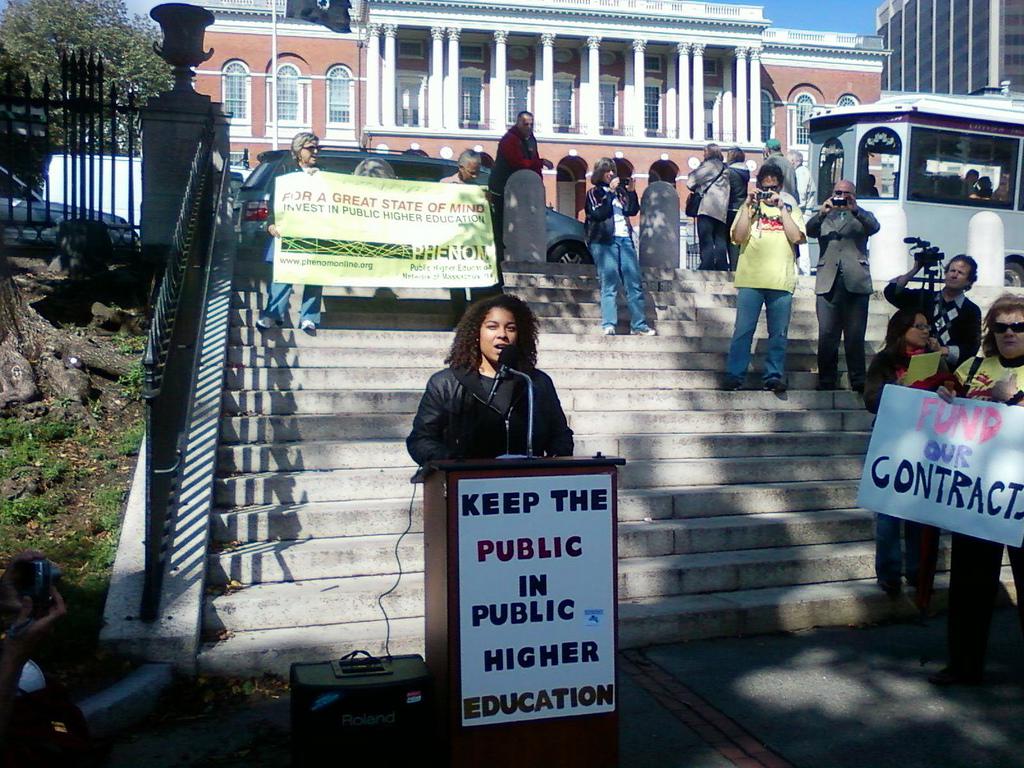
Sam. Saint Gonna change one of these days. Welcome, friends, to another edition of Economic Update weekly program devoted to the economic dimensions of our lives. Our jobs, our incomes, our debts, the future for our children and their jobs and their incomes and their debts. I'm Richard Wolff. I've been a professor of economics all my adult life. I'll be your host on this program as I am each week currently. I teach at the New School University in New York City. Before we jump in, today's economic updates, and we have quite a list of them, I wanted to present you with some announcements and a thank you. Let me start with a thank you. I just came back from a week of ten speeches in six days on the West Coast. People in Fresno, California, Seattle, Washington, Bellingham, Washington, and then Berkeley, California, welcomed me in an extraordinary way. The audiences were large, the audiences were enthusiastic. It was a wonderful opportunity for me to meet many of you and to see some of the impact that the world is having on you. But also, in a small way, this program and I want to thank every one of you that showed up. Your questions were great. The whole feeling of a change in the air was palpable and exciting. No other way to say it. In the next week, I will be visiting three other places and if you're in the area, do look us up. All the details are found on our websites, rdwolff with two f's.com and democracy at work, all one word democracyatwork.in fox. But over the next 10 days, I will be in Tampa, Florida, Houston, Texas and Ames, Iowa. I'm happy to report that we're back on itunes with our podcasts of each and every one of these programs. For those of you that noticed when we shifted to our new and improved and upgraded website, we lost that connection for a little bit. That's been repaired now. And for those of you that would like to use the itunes connection to for podcast ways of listening to the program that is now available. And while I'm at it, let me thank those of you that follow us on Facebook and Twitter. My Twitter handle, for those of you that work with that is professorwolff or rather profwolff. P R O F W O L F F. So it's roffwolff is the Twitter connection and you can find me on Facebook just under profit. Richard Wolff. Once again, Those websites, rdwolff with two Fs com and democracyatwork.info visit them, use them, sign up for our newsletter, follow us on Facebook and Twitter. All of that and more available on those websites. Let me then turn to updates, and the first one is actually a set of updates about college education. So let me say a few words about it and then jump into them. A college education can, and for some people, is, an absolutely crucial turning point in your life. When you get to the age that most of us go to college, you're old enough to know your reading, your writing, your basic arithmetic. You've had that in high school, you've had that in your mind now for a while. You're ready to learn. You're ready to learn how to think, how to look something up, how to answer the questions that life presents to you. If you have a good teacher, someone that you can look up to, someone that conveys to you the wealth of information they've mastered, who conveys to you the excitement they feel about what they've learned and what learning enables them to understand, to see, and to do. If you have a close relationship to a teacher, the one that is not just what is said in the classroom, but the mood, the facial expressions, all of the subtle signaling that one person conveys to another when the one is trying to teach and the other one is trying to learn. There's something very, very special about college education if and when it can be done right. And that means the the student has to have the support to be able to focus his or her attention, to want to learn, to pursue learning, to have the space, the leisure, the time. And the same applies to the teacher. He or she has to be able to keep up with their field, to see how it's evolving, to shape their own understanding in the light of what other people who study their topics are also doing and thinking and learning. Given the right opportunities for the teacher and the student, the combination is an excitement of learning that will shape and improve the lives of both teacher and student for many, many years. And it can be, and our country needs it to be that kind of an experience. However, it isn't anymore for most people. And I want to drive that home with three updates about college education. The first has to do with Youngstown State University, an important school in the middle of our country, Youngstown, Ohio, one that caught my interest because of the numbers I'm about to go over with you. And let me be honest, because I was born in Youngstown, Ohio, many years ago, and so whenever it comes up, it kind of catches my attention. Youngstown State University is now using adjuncts. That's not regular faculty, not people hired to be a professor. Taken through a whole series of evaluations where he and she have to be able to show that they are good at what they do, that they excel in thinking, in researching, in presenting, in making the experience for their students what it can and should be. Well, nowadays colleges are run like businesses. Some people actually think that that's a good idea. And as most businesses go, colleges are trying to cut costs. And one of the ways they cut costs is by not hiring and not using regular full time hired professors, but instead using adjuncts. What's an adjunct? Typically, it's a person who's not given a regular university appointment. He or she is hired to teach a particular course, not to be part of the department in any meaningful way, not to participate in setting policy, not to participate on all the committees that help make education what it can and should be. Instead, these folks are hired to breeze in, teach a course and go out. They try to do well. Heaven knows these are people, people who would have in earlier years gotten a proper job, but they're not offered one anymore. In the case of Youngstown State, here's how it works. And this statistic is so overwhelming, I'm going to have to say it twice. Adjuncts get paid exactly the same in 2015 for each three credit course they teach as they were paid in 1991. That's right. For 25 years, the pay for that teaching that one course in one semester is $2,400. By comparison, most of my adult life, I was a regular tenured professor at the University of Massachusetts in Amherst. And if you figure out what I got paid for each of the three credit courses per semester, it was roughly 10 times what the adjuncts at Youngstown State are paid for doing the same job. Here's the problem. Of course, the adjunct cannot live on $2,400 a course. So the typical adjunct teaches four, five or eight or some absurd number, often as an assistant to somebody, often while they are doing other part or full time work. End result, they do not have the support, they do not have the time. They do not have the capability under these awful conditions to be the kind of teacher. They're worried about the other course they have to teach later that same day. They have to worry about the other job. They have to to make ends meet. They can't give themselves to the learning experience and that hurts the education of the young people that are in the school to learn. It gives them less. It saves money for the school, by the way. Does it save money for the students? Not at all. Over the last 25 years, the tuition Youngstown State. And this is typical. I didn't pick on Youngstown State for any other reason. It's very similar to what goes on elsewhere. Tuition over the last 25 years has gone up four times. The pay for the adjuncts who now do most of the teaching hasn't risen at all. So the students are paying more and more, but they're basically getting less and less. This semester at Youngstown state there are 409 full time faculty and there are 608 adjuncts teaching there. For United States as a whole in 2011, the last numbers we have from the U.S. department of Education, adjuncts account for over 40% of teaching. This isn't a clever new mechanism. This is making education cheap and it's saving money on education by providing a much poorer quality. And when schools were supposed to function to allow intelligent, studious, hardworking young kids, often from families where no one else had ever gone to college, to, to give them finally a chance. This is a betrayal of the American dream that these young people had that if they go to a good school and get a good education, it will transform their lives. It could have. It should have. Once upon a time it did. But in the modern era of a capitalism that doesn't work for the majority of people, this is an example of, of how it is really hurting those who need desperately and want and are prepared to work at getting the education they're capable of. But we as an economic system do not provide for them. It's something to think about and maybe just a little to cry about. Next update about higher education. City University of New York City, a remarkable institution with 275,000 students, the vast majority coming from low income minority households. Again, a vast population whose hope, whose dream, whose aspiration is to get a good education and use that to become part of a successful generation of, of young hardworking men and women. But the City University of New York, like Youngstown State, like so many schools, it's being run more and more like a business. Mayor Bloomberg helped transform, Governor Cuomo helped transform. They want to run it like a business. So they're saving money to. It takes a different form. That is they make use of adjuncts. Oh boy, do they. But that's not the part I want to talk about today. I want to talk about something else. Here's the statistic for you to chew on. There's been no raise in the salary for the faculty, the regular faculty, the full time faculty, since 2010. Let me say that for five years there's been absolutely no increase in their pay. Every one of those years, the cost of living, especially here in New York, has risen. In other words, they have suffered year in and year out for the last five years. What is in effect a pay cut. Because if you're salary is the same and the prices you pay for everything keep going up, you're falling behind. Meanwhile, can we say that this is saving money for the students? Not at all, not at all. Once upon a time, City University was famous around the world for being free. That's right. The city of New York was proud. The, the state of New York was proud that it made a college education available. If you had the grades, if you had the motivation to come and learn, we, the city of New York, would take care of providing you with a first class education. But now that we run schools as a business, we don't do that. We charge. So here's the latest City University budget. So you know where the money comes from? 45% comes from the state of New York. An equal amount, 45% is paid by the students, many of whom come from families for which this is a very difficult expense to meet. And 10% comes from the city of New York. Recently, the Board of Education offered the teachers a 6% increase from 2010. In other words, over the last five years, having gotten nothing, they would now get 6% for those five years. But the cost of living rose significantly more than 6% over those five years. So what the city is offering and what the state is offering is, is actually a pay cut. Dear teachers, please take less. This is in a city which boasts more millionaires than any other. This is a city which recently passed the milestone that a one bedroom apartment costs more than a million dollars in on the average, the money is here, the wealth is here. But for 275,000 young people trying to realize the American dream. Sorry, it's not available for you. We can't afford it. We the rich who run the city. Hats off to the faculty at the City University of New York. All 25,000 of them, they are protesting. A bunch of them got arrested this week protesting at the Board of Education. An unconscionable treatment of them as working people and of their students as those who deserve an education. South Africa, far away, same story. A country 20 years after the end of apartheid, still treating people in a way that is really unbelievable. This last year, this country, South Africa, which boasts an official poverty rate of, of 53%, raised tuition in double digits. That's right. And the students said, we won't have it October 21, 22 and 23 of this year. The students mobilized. Tens of thousands demonstrated in Pretoria, Cape Town, Johannesburg and Durban. They even went to the headquarters of Jacob Zuma, the president, and forced him to cancel the tuition increase, the double digit for next year. That war is far from over. That struggle is far from over. But the concerted drive of students frightened the political power structure, so they gave in. The lesson should be lost on no one. And indeed it isn't being lost. I am happy to be able to announce to you that there is an action scheduled in the United States for November 12th. It's become called, it's become known as the Million Student March. They want no increases in all kinds of things, but their three major demands are the public universities in America should become tuition free. We should all have what New York City once had. There should be a cancellation of all student debts. It is outrageous to make an entire generation of students go to school, study hard, to be able to make a greater contribution to their society and and for the first time in our history, saddle them with an average of 30, 40,000 and more in debt. And finally, a demand of the students for a $15 per hour minimum wage for all campus workers across the United States. If you're interested in finding out more about this nationwide event, now 100 cities are scheduled to participate. Go to studentmarch.org studentmarch.org and you will get much more information, young people and students on the move. I want to turn next to a phenomena that you're all familiar with, but that needs some economic analysis. It's the development of apps for your computer applications that offer you, in glowing terms and hyped advertisement, all kinds of services without making it clear to you what the real costs of these services are. And I'm only going to give you a few examples because of the limits of time. On November 5, the New York Times carries a story in which the reporter checks into what the extra costs are for the free delivery, particularly of food, meals, things like that goes through a variety of the apps that are now available. So you can just tap your smartphone and have a pizza delivered and indeed other kinds of goods. And the reporter finds which I don't find surprising. But I want you all to know that there are huge added costs. Not at all unusual to have 20 to 30% tacked on to the price of something delivered as compared to what you would have spent if you stopped by the store on your own and picked up the exact same thing. Is it convenient? Perhaps. But it's very expensive. And if you're going to use the convenience, be aware, because they don't tell you very clearly. So some of them don't tell you at all what it is. You're going to be paying extra for the use of this gizmo. The same applies to both Uber and Airbnb. Let's not fool ourselves here. These are ways of providing rides in a cab or in the equivalent of a vehicle, or providing you with a room to stay in that are offered because doing it through a computer arrangement is cheaper than going through a conventional taxi in the case of Uber or a conventional hotel in the case of Airbnb. Let's count the costs. You're not covered in the same way by insurance. If you don't understand that, worry about it. But you're not the same laws don't apply yet to these things. You're saving money because people are providing you with services that remove and destroy the jobs of other people. Cab drivers, hotel workers. They're going to be hurt by all of this. So you can choose to do it and you can choose to support it. But the illusion that this is just a wonderful new, cheaper arrangement makes believe that there aren't real costs to all of this. Can you be sure that there isn't mold in the apartment you're renting? And the answer is, you can't. You don't have anything like the apparatus that makes hotels have to worry about such things. Hotels have to spend the money to make sure that you are safe, that you are secure. None of this applies. You are taking chances. Look, that's why in the first place, the cab industry and the hotel industry, which used to save money by providing things cheaply, now have to charge more because they have the expenses of the insurance and the cleanliness and the security and all the other things, things that help make you safe when you use those services. The only reason you're getting them cheaper is that those costs are being saved. And my guess is, just like the cab companies eventually had to be regulated, and just like the hotel industry had to, so will Uber, so will Airbnb. Because basically, these are scams making money for the people providing the apps. Just like those that deliver pizza to your house and charge you one way or another for it. One more app. There's a movement now pushed by companies like Unisys here in the United States. And a company I will spell for you from Spain, S C, Y, T, L. They are pushing online voting. That's right. You won't have to go to A voting place. You won't have to use a voting machine. You'll do it all from your computer. The problem with this, as has been testified by countless experts, is that hackers, whether they be individuals or more likely your political enemies, or even possibly the Secret Service of one or another country, will get in there and manipulate the votes. That's right. We go through this ritual of voting. It's already a joke, as money is used to buy votes directly or indirectly. But now we have the specter of the computerized voting in which somebody sitting in an office somewhere will cast the 10 million votes or rearrange whatever other people have actually cast as ballots to mean something else. If you're interested in learning about this and in learning how and why to fight it, verified voting.org is the place to go. Verified voting.org you will learn about the movement in this direction and the dangers that it represents. We've come to the end of the first half of our program. Please folks, stay with me. After a short interlude, we will be back to deal with some major issues that deserve economic analysis of the sort we try to specialize in. We will be right back.
- [27:11]
B
Another sister shooting hair Roger Morris Amputees and Free time s the church wasn't on us the state put the youth in among us Creating hostility among us the teacher said no college still kid gotta get a check with a couple commas People wanna bomb us More people gotta scatter and run from us Blame it on truth Santa, Apollo and Adonis but what you don't hear is put yourself between a bullet and a target and it won't be long before you pulling yourself away what you done here is put yourself between a bullet and a target and it won't be long before you putting yourself away.
- [28:17]
A
Love.
- [28:19]
B
I've been knowing her for years I've been seeing her for years she got dark, dark wavy hair With a voice that you just don't care she got a skirt with another she got a daddy never gave her she drink a pill with the mon Sh she got knocked up in a big upch when she got engaged and she was.
- [28:45]
A
19 to this dude who was welcome friends, to the second half of today's economic update. I want to welcome you to again participate in this program in one of the ways that is most exciting for us. Please, in all the ways you can. Let people know about this program. Share whatever parts of it you find useful and interesting with friends and associates. Every one of these programs is archived at our websites. Rdwolff with two Fs and democracyatwork.info that's all one word democracyatwork.info There you can pick up any of our programs. Also we are now once again podcast through itunes and as well you can follow sign up for our newsletter. Really become a partner you in getting the word out about the issues we raise. I wanted to use this first part of our second half to answer a question many of you have been sending in through our websites, which is indeed how to communicate with us in an ongoing way. And as I have said many times, we read all of your emails and use them to shape the programs we produce here. Many of you have asked me is another economic downturn coming? Some of you read the financial press which is full of such predictions and you wanted to know what I thought about it. Well, let me respond briefly. I don't believe in predictions. I think it is childish. I think we go to an amusement park and there we find a young lady or a gentleman and they will promise to predict our fortunes, what will happen to us next year, what will happen to us next week. And we give them a little bit of money and we hear the whole thing and it's a giggle. It's an amusement. If someone with you took it seriously, began worrying about whatever it is that was projected into the future, you'd think they needed a good talking to or maybe some professional help. Because this is an amusement. Nobody can tell the future. And that's true for economists. So that if you encounter an economist who tells you with real confidence and certainty that such and such will happen next year, three years from now, my advice? Talk to somebody else. This is not serious. It's a kind of fakery. I know it's tempting for my fellow economists because corporations will pay big bucks to have predictions, but it's important to understand that's not because those corporations believe in the predictions. Most of them are perfectly aware that it is a game. So why do they pay the big bucks? Here's your very often corporations, executives, particularly higher ones, have to make big, expensive decisions. Do we expand into Latin America? Do we build another factory? Do we enlarge the office? Do we hire 20 more people? These are big, expensive decisions. And they're afraid because nobody can predict the future, that the decision they make will in the future look like it was the wrong one. They will then risk being being accused of having made a mistake and maybe their job will be in jeopardy. So how do they protect themselves knowing that any decision they make may turn out to be a bad one? The answer has long been bring in a quote unquote outside expert, preferably an economist who can write a report promising such and such will happen. That way, when the decision in fact goes bad and your superiors call you on the carpet to account for it, you can say, don't blame me, don't fire me. I was following a qualified expert opinion. Okay? Economists have long understood you get paid big bucks for writing these absurd predictions that they will buy them from you. And you don't look too closely at what game is being played with them. But you, my listeners, should not be fooled. So what's the story for 2016 and 17? There are fearful signs on the horizon, signs that suggest we could be in for indeed a rocky ride. I'm not predicting it because too many things can and typically do happen that could change which way the economic winds are blowing. But the signs are there and I wanted briefly to go through them with you. First of all is the growing and now deep inequality in the United States. It is changing everything, as I'm going to explain in detail in a few minutes. But basically the problem is the mass of people are having their incomes pinched. Their job wages aren't growing. Job conditions are deteriorating. Government support programs are being cut back at every turn. The middle class is disappearing. The economic difficulties of the mass of people are mounting. So they're not buying the the way they once did. They are already overborrowed so they can't borrow more. Their wages aren't going up. So it isn't rocket science to understand all kinds of companies that invested over the last 10 or 15 years on the assumption of a growing market of the mass of American people are being disappointed. That market isn't growing. And that's a very, very bad sign about our economy. And since there's no effort among the business community, the wealthy, or the political leaders that they have purchased to do anything about the inequality that is now so severe, this has to be counted as a sign of growing economic difficulty. Number two, we did a lot of exporting. We Americans. We produced goods here with jobs for Americans that we sold in other parts of the world. But the other parts of the world are also having enormous trouble. For example, we sold to countries that were making a fortune off of the high price of oil. We paid a lot for oil. We brought a lot in from the rest of the world. So did Europe, so did Japan, so did third world countries, Mexico, Nigeria. All kinds of countries made money which they used, made money off selling oil which they used to buy American products. Price of Oil has collapsed. Those countries are not earning the way they once did and therefore they're not buying American goods. And that means if you have a job in an export producer, something that produces goods for sale abroad, your in tough shape. And there's no sign that's changing. The number one economic partner for the United States has for a long time been Western Europe. Western Europe is also in trouble there. The problem has been governments imposing austerity on their countries. By austerity I mean a program of raising taxes on people or spending much less on public goods in order to use the money to pay off the lenders from whom the governments borrowed. Those lenders are the few and the rich. And the people being hurt, paying the taxes and losing the government supports are the many. The crushing of their working and middle classes means those people can't buy American exports either. And so we're hurt again by the collapse of those markets. And finally, one of the most important trading and investment partners of the United States has become the People's Republic of China. Their economic growth is slowing from the breakneck pace it had before 8, 9, 10, 11% a year. By comparison, our rate of growth in recent years has averaged around 2%. The Chinese announced earlier this year that their rate of growth will fall to 6.9%, better than three times the rate of the United States. But because it's slowing, that too impacts the United States. When you put all these factors together, it's hard to see that there isn't going to be economic trouble and potentially big trouble in the next year or two. And indeed others have noticed this as well. And I want to bring to your attention a recent report issued by the International Labor Organization, the ilo. One of its projects is called the Social Protection Project and they just produced a working paper called the Decade of A Review of austerity trends 2010 to 2020 in 187 countries. That's right. It's a survey of what governments are planning to do in every country on this planet over the decade 2010 to 2020, a decade we're right in the middle of as we speak. And this paper, which by the way you can get if you go to the website social-partection.org I'll mention it again. Social-partection.org the policy brief, if you want to write it down, is the forthcoming adjustment shock. Here's what they report. Most of those countries in the world, and particularly the less developed countries, are planning because of their financial troubles and in a world economy, to cut spending on social programs. To raise taxes. In other words, austerity imposed on their people, usually to pay off debts to banks and other lenders who are rich and located in rich countries, et cetera. That is expected to cause economic pain and contraction. That's the big word they contraction. That's when the economy doesn't grow, it shrinks. And when that happens, it's bad for the United States and every other country that does business with all of these contracting economic systems. So that's another sign, and I can't really leave this topic without reminding you that this time that we're seeing contraction in all these countries, including in our own here in the United States, we're still not out of the crisis that hit us in 2008. The vast majority of people are still worse off than they were before. The recovery has only been for the top 5%. Well, keep in mind then the following statistic released this for the first time in recorded history, the richest 1% in the world now own more than half of the wealth in the world. If you count as money, stocks, bonds, liquid wealth, household wealth, that sort of thing, 1% own half of it, and the other 99% scramble and struggle with one another over the other half. This inequality is literally killing us. Well, let's talk some more about inequality, and let's begin by talking about how it impacts housing. Again, a topic you've asked me to talk about, and I wanted to focus a little bit. As I have reported, and as many of you know, there was a big book that came out last year by a French economist named Thomas Piketty. Capital in the 21st century was the title of the book. And in it, Mr. Piketty uses 600 pages to lay out a statistical story that is still the dominant understanding of this topic. And his conclusion is important. Capitalism as a system produces and intensifies inequality. It makes the gap between rich and poor larger. It keeps doing that until the gap becomes so enormous that there's a kind of upsurge of resentment and bitterness on the part of the mass of people who are the ones on the short end of that stick. And then they make a big demand, and for a while inequality is reduced. That's what happened in the 1930s in this country. We, with the rise of the CIO and the socialist and communist parties in the United States who forced on President Roosevelt a set of policies that taxed the rich in order to help the mass of people, and inequality was reduced. But once the war was over, once Roosevelt was dead, once that coalition of unions, socialists and communists was Destroyed. We went right back to capitalism's normal functioning, which is to produce more and more inequality, which the last 40 years are like a textbook case. Well, what are some of the consequences? And it's important that everyone understand them to be consequences of capitalism's inherent drive to inequality. I'm going to look at housing, and here's roughly what happens. As a smaller number of people become very rich here in the United States, they do something which they do everywhere. They begin to identify places where they would like to be housed. We might call them playgrounds for the rich, places that have something attractive about them. So rich people becoming richer in this capitalist system want to go there. Here in the United States, it's New York, it's San Francisco, It' sand fill in the blank. A number of our big metropolitan areas. The shopping is good. The situation. To live there, you have a lot of other rich people and fancy restaurants, all the rest. So they move in. And as they move in, they. They drive up the price of the fancy neighborhoods. So those who come a little later discover those prices are very high. But they want to live in New York. Oh, they know what they'll do. They'll go to the border of the expensive areas and begin to take advantage that those are not quite so expensive. And they move in there. They like, for example, places where artists and craftspeople have gathered because it's inexpensive, set up their little shops, set up their work areas, and so pretty soon they move into those areas, transforming them from places that are affordable, that artists and students and small shopkeepers can use. And we then experience something called gentrification or something called yuppification. The. There's lots of words for it. Basically, it's making more and more of the preferred areas of the rich unaffordable by anybody else. What then happens is the people who can't afford what the rich can now afford in large numbers are pushed out. They're pushed into the undesirable areas. They are pushed into the margins from further away so they have more travel expenses further away so they can afford it. And we begin to split the United States more and more physically, geography in the cities and towns into where the rich people live and play and where everybody else is consigned to go. If you live in a city that rich people don't find attractive, none of this happens. You just see that the city kind of goes nowhere. It has a small knot of people who have some money and then a vast array of people whose general situation is slowly deteriorating because the wealth is going someplace else. Or maybe they get an influx of people who can't afford where the rich people go and are now settling in some other place. It is changing our cities, it's changing the lay of our land. For example, large numbers of people can no longer afford homeownership. They were able to do that in the 80s, in the 90s, early in this century, but not anymore. The inequality means they've got to go back to being what their parents were, renters. The statistics are overwhelming as we shift from, from a nation of homeowners to a nation of apartment renters. It's a polarization of our population into rich and poor. And it will affect everyone, every place, in ways that you would like to think about. I think before you celebrate, endorse, or accept the kind of inequality that capitalism as a system produces and reproduces, just as Professor Piketty showed us, well, what is to be done? Well, you can begin to see, at least in some places, pushing back rent control. As more and more people become renters because they can't afford their own home, particularly young people who can't start a family, who can't get married, who, who can't start a household because it's just too expensive, they begin to get angry. They want rent control. They want something to limit it, which we understand. And they would like to see the rich people taxed a bit in order to compensate for the inequality that's getting worse. And I understand those demands, but I want to be just a touch critical. Those things are called rent control, for example. Those things are called redistribution of income. In other words, they are steps taken by people in the middle and the bottom to counteract the redistribution of wealth that capitalism itself produced for the last 40 years. Capitalism, that's what Piketty's book shows us. Moved wealth from the middle and the poor in, into the hands of the already rich, making them that much richer. And rent controls and taxes on the rich and all those kinds of things are attempts to undo at least some of that, to redistribute back to the people from whom the first redistribution was accomplished. Here's my only thought about it. To you, redistribution is bitter and hard. People who've already gotten an amount of money, even if it's unfair, even if it's exaggerated and disproportional, fight, and usually fight hard not to have it taken away. It's hard to give it up once you've got it. Therefore, the better way to go, better than redistribution is to not distribute it unfairly and unequally in the first place, if we didn't distribute wealth in an unfair, unequal way to begin with, we would never have to struggle over redistributing it because we would have done it right the first time. And that's why I'm such a proponent of worker co ops instead of top down capitalist corporations. Of course, if a tiny number of people work, run our businesses. Major shareholders, the boards of directors they elect, they're going to give the lion's share of what the corporate profits are to themselves. Big surprise if workers democratically in every business decided how to divide the profit they all helped to produce. You know and I know they would never give a tiny amount to a handful of people who, while everybody else can't send their kid to college without borrowing money, they would distribute it much less unequally, and we wouldn't then have to have all these fights to get it back from people we've already given it to, because the people we've given it to in the first place got much less unequal shares. We'd all be able to afford the home, afford the apartment, afford life in the city elsewhere. We wouldn't be torn apart in the polarization that capitalism in America and elsewhere is producing. Last topic we have time for today is capitalism and sports. A number of you have asked me to talk about that, and so I thought I would begin. Here's the problem. Our capitalist system, besides producing gross inequality, which affects sports in a way, I'll tell you in a moment, is also highly unstable. Everywhere capitalism becomes dominant, it has an economic downturn every three to seven years. Sometimes they're short and shallow, other times they're long and deep. The one in the 1930s was the longest and deepest so far, and the one since 2008 has been the second longest and and the second deepest in modern capitalist history. Instability is the name of capitalism. It's how it works. Why you accept this, those of you who do, has always been a mystery to me. You wouldn't accept a roommate as unstable as capitalism is, but that's another story. How does it affect sports when the economy turns down? And by the way, between the Great depression of the 1930s when we had unemployment rates as high as 25%, and the one now when unemployment shot up to 10% between 1941 and 2008, there were 11 other economic downturns, according to the National Bureau of Economic Research, which keeps track of these things. This is an unstable system. And when it throws large numbers of people out of work, which it does every few years, those People have no job, they have no income, they don't pay taxes. So suddenly, cities, states and the federal government are pinched for money. One of the things they do when they're pinched for money is cut back on physical education programs in the schools. They lay off teachers, half a million teachers laid off in the last seven or eight years. They cut back on maintenance of parks. You know what that does? It reduces sport activities in the United States. It reduces them in the park where the field isn't maintained, where the hiking trails are allowed to grow weeds. It cuts the sports programs in the schools. It means that Americans have less physical activity, less sport activity in the park, in the school. If the society, if the city or the state provides sports facilities, they are allowed to deteriorate. Capitalism cuts that down. At the same time, the capitalist system sees a chance for profit as there are fewer and fewer public facilities for sport activity, for recreation. The fitness center arrives, a private way of making money off of a gymnasium, off of a swimming pool, off of a running track. Whatever it is, profit enters because the public is cut out of the story. That's very nice for the company making the profit, but they of course pander to the money. And that means the better the facility, the higher the price they charge. Once again, those with a lot of money can afford the better fitness center, while the average person who used to use the facilities in the park or in the community center is cut out of the story. It's a polarization. The only thing worse than that is to know a little bit about the economics of arenas and the economics of televised sports. With less and less public facilities, more and more people don't do much in the way of physical or sporting activity. That's why we have obesity growing. It's a contributor to that. That's why mental and physical health is a problem. We make people pay for arenas by using tax money to subsidize them, but we allow private companies to rake in the money. And who goes to the ballpark? Who gets the best seats? The biggest corporations, so they can schmooze their executives there. They get the boxes, they get the big bucks to pay, they make the profits. It's a profit driven system at the cost of the mass of the people. When you go to an arena and pay big bucks, you decide, I'm going to watch the next game on tv. And then you get an economic jolt. I have to tell you about every few minutes in your watching you get an advertisement. That's how they pay for bringing you the TV program. You don't like the advertisement. You want the sports, but it's worse. The TV company charges the advertiser for putting that advertisement there. So if you watch and you get an advertisement for a car or for a piece of food or a drink, here's the joke on you. The companies that pay for the ads, you know how they get that money? By charging you more for the drink or the pizza or the shirt. You pay extra in order to have the advertisement flashed in front of you that you don't even want to see. That's how capitalism works. We've run out of time. I hope you've enjoyed having an analysis of economic environments that you work through and live through. This is a program that gives me enormous satisfaction and pleasure to produce, to teach, to explain. Please share whatever has been interesting with other folks through social media, through any mechanism you have. And you can do it all as well as communicate with us by taking a look at rdwolff with 2fs.com or or democracyatwork.info I look forward to speaking with you again next week. And please also remember our partner truthout.org a remarkable independent source of news and analysis. Thank you. Your time now behave but after a while gonna be my time my time babe they ain't gonna change. Thing gonna change y. Sam. It.