Loading summary
Transcript5 lines
- [00:00]
A
Sam. Saint Gonna change.
- [00:58]
B
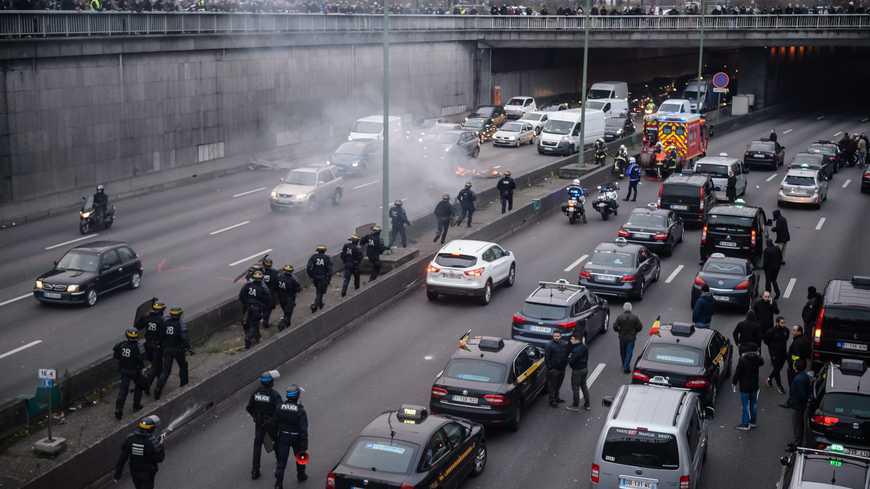
One welcome friends, to another edition of Economic Update weekly program devoted to the economic dimensions of our lives, our jobs, our incomes, our debts, the prospects for our kids in the future, what kind of an economic system we have, where it's going, and what we ought to do about it. I'm your host, Richard Wolff. I've been a professor of economics all my adult life and I currently teach at the New School University in New York City. Before jumping in to today's Economic Update, I want to invite my listeners in California to think about attending one or another of the talks that I'm giving crisscrossing California during February. It begins on the 5th and 6th of February in Los Angeles. Two different talks for two different groups, but both of them happening at Occidental College in Los Angeles. As with all my talks that I'm about to mention, you can get the specifics, the times, the places, the topics from our democracyatwork.info the events page there provides all the details. On February 10th, I'll be speaking at the First Presbyterian church in Berkeley, California. On February 14th at the Sonoma Community center in Sonoma. On February 27th in San Jose and on February 28th in San Luis Obispo. Quite a month for me in February in California, and I hope to meet many of you as I make that trip. I'll have more to say about it on future programs, but the one nearest in Los angeles on the 5th and 6th is something I wanted to mention today. I want also to tell you that as usual, we want you to make use of that website democracyatwork.info or the other one rdwolff with two Fs.com because it's a way for you to communicate with us. It's a way for you to share the work we do with others, which we really do invite and urge you to do. It's a way to follow us on Facebook and Twitter. It's a kind of all purpose composite of everything we do. Every program that we do on the radio and on television is archived on those websites. So it's a resource available to you at your convenience 24, seven, no charge whatsoever. And it's a way for us to work with you. So we invite you to use it. So let me turn to the details of updates for today. I want to begin with a kind of sad story, but one that has to be told. Johnson Controls is a huge American corporation that makes automobile parts and it announced over the last week that it is merging with an Irish Company named Tyco T yco. Why is it doing that? The answer is crystal clear from all the reports. It's to save money on taxes. It is going to move its headquarters from Milwaukee to Cork, Ireland, which is where Tycho is located. That will save them, they say, upwards of $150 million per year. That's money not going to be paid to Uncle Sam, not going to be paid to the state of Wisconsin and so on. They're also going to save on a lot of jobs that they don't have to duplicate with Tyco anymore. And they estimate that at another 500 million, that'll be many Americans losing their jobs, et cetera. This is all about what we call in economics an inversion, a way in which a company ally US Company allies with a foreign company to a escape taxes to move from a high tax zone in the United States, relatively speaking, to a lower tax zone. Now, the taxes that Johnson controls in the last year were 19%, by the way, a good bit lower than most of you that are listening. Pay. It will pay in Ireland, 14%. That's not all that big a deal, but it's enough to make it worthwhile. More profits, less taxes. That's what's going on. This is, by the way, the 13th deal in the last 16 months like this. The big but big bust of one was the Pfizer drug company, which Last November made $152 billion deal to do the same thing. Billions lost in taxes for the United States forces the United States government into the following. Either you make up for the lost tax revenue from companies by taxing us as individuals more, or you deal with the loss of taxes from corporations by cutting government services even more than they already have been. What a choice. Of course there are alternatives. You could prevent companies from leaving, which would be something you might want to think about in the national interest. You could enter into agreements with other countries that stop allowing corporations to hop, skip and jump from one country to another with the end result that we have what's called a race to the bottom. Companies keep leaving. Countries respond by saying, oh, we dare not tax them so we'll lower our taxes so they don't leave. And then they get the bright idea, gee, lower them a little further and companies will leave other countries to to come to our country. That's precisely what Ireland has done. This kind of game, in the end, is a wonderful windfall for the corporations as the countries compete and working people everywhere either face higher taxes or lower government services while the corporations already flush with cash, are Laughing all the way to the bank. Second update for today. Interesting. It's a group of workers who used to work for the Disney Corporation. You know, the folks who make films and cartoons and run those theme parks. They're suing their former employer, Disney. Why? Because they say they were required to train their own replacements. And they claim that this is an abuse of the HB1 visa system. That's a special visa provided to foreigners with technical training of various kinds so they can come into the United States when otherwise they couldn't. And the idea has been that this would only be used by American corporations when they had jobs that could not be filled by Americans. The whole idea being not to permit corporations to substitute lower paid foreign workers by brought here for existing American workers. However, apparently many corporations have been. This should come as no major shock to you. They've been abusing this law. And the workers at Disney provide evidence of having been required to train the very people that replaced them. You know, this kind of abuse is really the flip side of the immigration problem, which in turn is the flip side of companies leaving the very Johnson story I just told you. Corporations leave to get advantages, lower profits, lower wages to pay to make more money. And they don't care what the suffering they leave behind is all about. When did they ever. And the question is whether those of us who are left holding the bag, having to pay the taxes that these companies have gotten out of, having to suffer unemployment and as lower wages are paid to workers abroad or lower wage foreigners are brought in. This is an arrangement that conveniences profits and hurts large numbers of the very American citizens who have supported, worked for, bought the products of, and provided the subsidies through our taxes for the very corporations that are now paying us back in this remarkably unpleasant way. The only real interesting question is will this be permitted? Will the American people continue to grumble rightly about the job situation, to grumble rightly about the tax injustice, but not to do much about it and to have folks like me explaining it to them when the real issue isn't to have it explained. Because in a way, we all know this, don't we? The issue is to do something. And that brings me to the third update today, and it's about the country of France. Last Tuesday, January 26, is referred to in France as Black Tuesday. It was a day when all kinds of workers, hospital workers, school teachers, air traffic controllers at the big airports, mainly Charles de Gaulle and Orly in around Paris, and cab drivers all went on strikes of one kind or another or had job Actions. What are they upset about? Well, let's start with the public employees. Their union said they are angry at the government there for imposing austerity. Billions of dollars in. Yeah, either higher taxes they have to pay or wages they're not seeing increased the way they had been promised, or new rules about how they work that ends up saving money for the government that employs them, but at the workers expense. They won't have it. They're not going to permit there to be business as usual. Many flights were canceled. Many, many airports became inaccessible as cab drivers blocked the roads to and from the airports. Schools closed down, hospitals did only emergency operations and so on. Tens of thousands, hundreds of thousands of French workers went out on strike against austerity. They made that clear. They made it powerful. They will not permit the economic system, they have a capitalist economic system, to simply continue and roll over them as if their interests didn't have to be taken care of. The cab drivers are the same. They basically said, look, we're not going to permit this Uber business. We're not going to permit some company to come in here to make more profits by undercutting our jobs. That's all. They bring in new workers, pay them less, take care of their cars less. Well, scrimp on the insurance, come up with new ways of making profit at our expense. If you want to use a new technology and the Internet to work the taxi system, fine. Sit down with us as cab drivers and work something out. Have respect for our jobs, our incomes, our families and all the rest. You don't just push us out because you want to make more profit. That's a system that's nice for you but not acceptable to us. And they are fighting back. They already got the Uber company to cancel its Uber pop. That's the cheap version of Uber that they had tried to float in France that was shut down last June. But now the rest of Uber is under attack because they will not have it. What's interesting to me are two things. One, here's a working class in France that is fighting back. That is not limiting itself to grumbling. It's not limiting itself to being angry. And it's not limiting itself to voting this way or that. It is choosing to go into the street to make it clear they will not tolerate that the difficulties of capitalism around the world and in France be solved at their expense. And in that regard, let me note a comment made by the Minister of the Civil Service. That's the highest government official in France in charge of public employees. That minister is Marilis Lebronchu, that's her name. And she said on Tuesday that negotiations scheduled for February between the government and public employees should not be expected to lead to a, quote, big rise in salaries. And here's her remark, because we are in a difficult situation. Wow. Yes, there's no question capitalism around the world is in a difficult situation. So is capitalism in France. But it's a difficult situation of that system's own making. And when you're in a difficult situation, you cannot solve your difficulties by singling out working people and telling them all about austerity. They them all about belt tightening when the rich are getting richer in a way that is obscene across the world, as I spoke about last week. And the workers in France are saying, no, no, no, you have a difficult situation for sure, but how you work it out, that has to be worked out with everybody. The wealthy have to take their share of the difficulty for sure, and maybe a bigger share since they are the wealthy, and. And you're not going to push it on us. The second thing that's interesting about it, very interesting, is the fact that the government against which these workers are striking is a government of the Socialist Party. The Socialist Party in France is the government, the president is a Socialist, and the majorities in both houses, the Senate and the national assembly are Socialist Party majorities. So here are working people, the very people who voted the Socialists in to their position of power in France, saying to them, we are disappointed in you. We are not satisfied having voted you in, that you ended up imposing the austerity that we voted you in to not do. And we're not going to be quiet, we're not going to be told, you can't strike against us. We are your friends, we are your allies. And no say the unions, no say the workers. If you don't behave like an ally, we're not going to treat you like one. You're going to be the person against whom we strike. And if that embarrasses you in the government, if that turns people against you because you haven't managed things well, then manage them better. Deal with the working people who gave you the power that you're wielding in office and do something for those who put you in that position or. Or else we're going our own way. What an interesting thing that unions in the United States might want to think about in terms of their relationship to the Democratic Party when it sits in office. Let me turn next to responding to some of your questions, which this week were of particular interest to me. Many of you wanted to talk about and responded to my comments last time in which I explained that churches, synagogues, temples of all kinds, of all religions are subsidized in the United States. Taxpayers are paying for an enormous part of the cost of running churches, synagogues and other religious institutions. And that ought to be understood and acknowledged. We do not know what would happen to religious institutions if they didn't get a subsidy. But it is interesting to understand that if a church has income, it doesn't pay income tax on it. If a church has property, it doesn't pay property tax on it. And as one of you pointed out, a sales tax analyst who got educated at the University of Florida and wanted me to say so that person pointed out they don't pay sales taxes either, that when religious institutions buy something at the store of the sort where you have to pay a sales tax, they are exempted. And this person also pointed out that there are many examples of the abuse of this privilege. When things are bought for personal use by church folks, not for the church, then they should not get exempted. But they often play the game. Okay, so religious institutions are subsidized by not paying income taxes, not paying property taxes, and not paying sales taxes. They're also subsidized because the donor who gives money to a religious institution can take that off their income tax. It's a deduction. So in many ways, the rest of us either have to make up what the churches don't pay or we suffer a loss of services because the churches, the synagogues, the temples are subsidized. The government does all kinds of services for them, Fire department, teaching people to who work for those institutions so they are literate and effective and competent, providing police services. Everything is provided to them, but they don't pay for it. Everything is provided to the rest of us. We have to pay taxes. They don't. Well, you were interested in that. Some of you said, well, won't that hurt the religious institutions if you take away their exemption? Of course it will. It will give them no exemption. Now, the churches would have to function on the charity, on the donations of those who want there to be churches. The majority of Americans don't go to church. And it's a question that you ought to ask whether it is reasonable for them to be required, which they now are, to pay taxes to subsidize free public services delivered to churches, synagogues and temples. But even if you don't agree, you might want to think about the if we require society as a whole, all of us Every business, every individual to subsidize the churches and synagogues and temples in this society, well then might we not socially, democratically have some input into what they do? I mean, you really oughtn't to have it both ways. If you're subsidized by the community, then in a sense the community has some say about what goes on there. The churches are very insistent that they be allowed to do what they want, how they want, when they want to behave in one way towards members of the parish, in another way towards others, to have all kinds of points of view that they articulate to their people. Wait a minute. If you want to be free to do whatever you want, then getting public money is, is a question. And if you accept the public money, and they certainly do, then you might want to think about whether you don't have some social community responsibility about how you function, who you serve, what you say, and all the other ways that you impact on the community. Here's another question. Who should the churches pay taxes too? Well, the answer there is fairly straightforward. If they don't pay federal income tax, then it's the federal government's job to work out a new arrangement that requires them to pay some tax, maybe less than other people. But where is this blanket? You don't pay anything justified. The same is true of the state. The state has an income tax they don't pay. The same is true of the local community where the church is situated. They don't pay property tax. Well, that's a question for the local community to decide. So the level at which the government enters in depends on the level at which the institutions, the religious institutions, are enjoying an exemption from any tax. And lastly, some of you said, well, couldn't we help the smaller ones, the, that are in financial difficulty by letting them keep the tax exemption while the richer, more affluent ones are required to pay. And my answer is, sure, that's one of a hundred arrangements. Let me give you a sample. Because this is done all the time in tax law. You could say that the first hundred thousand dollars worth of property that a church or another religious institution has is exempt from property tax. But that what if it has property over 100,000 or over 500,000 or over a million, whatever you like, that what they have over that is subject to the same tax that other property owners in a community have to pay or other income recipients have to pay. In other words, you could give an exemption that would allow small, not well endowed religious institutions to escape. Or you could have a graduated arrangement if you're below a certain amount, you don't pay any tax if you're above that. But between medium to upper medium, you pay this rate. If you're richer than that, you pay a higher rate. In other words, you could have a progressive tax on religious institutions that gives them a better deal than the rest of us have, but not a complete like have a picnic, you don't pay anything. It's a strange situation that this is done. No discussion, no debate. And why? Well, we all know why. Because the politicians in this society are terribly afraid of saying or doing anything that would question this particular subsidy. The same politician who rails against helping poor people, helping single moms, helping people who have physical disabilities, the same ones who rail against, we can't afford to, don't ever think about whether we can, quote, unquote, afford the subsidy. The complete 100% subsidy of all religious institutions which, regardless of their wealth, regardless of the services they use up, et cetera, et cetera. Last question that I have time to respond to, this question, very interesting, comes in from a listener who says, look, you advocate, you support worker co ops, worker self directed enterprises. The whole notion that workers could and should in a true democracy, operate the workplace in a democratic way, just as we operate our political system in a more or less democratic way. We at least have the democratic trappings, the forms. Whether or not we have the reality of democracy in our politics is very much open to debate. But in the business world, we don't even have the form, we don't have the trappings. We have nothing in the way of democracy. A tiny group of people at the top of most businesses tell everybody in the business what to do and if you're not satisfying them, they fire you. That's the reality. That's not democratic. Well, the questioner says, what about the effort in Israel known as the kibbutz or the kibbutzim in the Israeli language? What about them? They were worker co ops that were founded there years ago. They were once an important part. Very numerous, lots of Israelis worked in these kibbutz worker co op arrangements. But they then faded out. They still exist, but they became much less important. Isn't that some kind of evidence that this is not a workable arrangement? And my answer is an unqualified no. That is no such evidence at all. Every economic system that we know of, slavery, feudalism and capitalism, was tried at various times in history. It flourished for a while and then faded out. Why? Well, let me give you examples. There are known cases in ancient history, in Rome, thousands of years ago, in the medieval period, for a thousand years, when capitalist class structures arose in various parts of the world. That's right. Arrangements where one person was an employer and he or she hired a bunch of other people to produce goods which they sold on the market. The employer got the profit, the workers got wages, usually low ones, et cetera. So we have capitalism all through history. What lacked for capitalism was a set of conditions that could make it not an episodic, occasional short time phenomena, but make it the dominant system in the world as it has been for the last 300 years. Good. That's exactly the same with worker co ops. They've existed at various times in human history, in Israeli kibbutzim, in the Shaker villages, in colonial America, and in thousands of other circumstances. What hasn't happened yet, what's on the historical agenda now is to make the conditions right, the intellectual conditions, the political conditions and so on, so that worker co ops can become the dominant system. Just like capitalism had to work wait until the 18th century to have the conditions where it could become dominant in Europe and then globally. And just like it took special conditions to make slavery dominant for its period and feudalism dominant, it will take broader conditions to make worker co ops dominant. But the fact that they arise and fall is not a sign that they can't be a sustained system, because it didn't work that way for the history of feudalism, slavery or capitalism either. Worker co ops are on the agenda and nothing about kibbutzim in Israeli history changes that. We've come to the end of the first half of today's program. I hope you will find it interesting and worthwhile to stay with us to the second half. We will be back in a very short time and I think you will find what we deal with in the second half as interesting, if not more interesting than what we did now. So stay with us. We will be right back.
- [28:33]
A
Sam. On a dark desert highway Cool wind in my hair Warm smell of kalitas rising up through the air up ahead in the distance I saw a shimmering light My head grew heavy and my sight grew dim I had to stop for the night as she stood in the doorway Heard the mission bell.
- [29:43]
B
Welcome back, friends, to the second half of Economic Update. We're going to have a major discussion actually on two topics in today's second half. The first one is about the market as an economic institution. And I'm going to give you five examples of how, where, when and why markets are a disaster. Why am I doing this? Let me explain the Market in the last 40, 50 years has become something of a holy entity. It is treated as if it were a magical institution, the absolute summit of human creativity. So that if we, quote, leave things to the market, everything will work out beautifully. We will have economic growth, we will have everyone treated fairly, earning a good income in a good job. The market, the private exchange by individuals and companies of, of the goods and services they market to one another. Why, that's the royal road to economic well being. This is nonsense. And it is a way, a kind of mask because the market really serves the rich, as I'm going to show you. But they can't say we want you to serve us, we rich folks, we big corporations. So they say instead the market is this engine of efficiency, this magnificent system of economic perfection. Well, it isn't. And it is important to show concretely how and why that is. And that's what we're going to spend a good bit of the next 20 minutes doing. And I'm going to give you, as I said, five examples. It begins with geriatricians. What's that? It's a medical specialty. There are doctors who train to do caring for older people, to specialize in the kinds of aches and pains and diseases that afflict people, let's say 70 or 75 years of age or older. It's a specialty you train in that and it's very important. Well, why is it important? Well, it's important for one reason, that, that here in the United States, as in many countries, the percentage of our population that are 70 years of age or older is rising and rising rapidly. So the demand, the need for more geriatricians, doctors specializing in problems of the aged, is obvious and clear. What is happening in the United States, however, is a shrinkage in the number of geriatricians. Young doctors in medical school are not choosing that specialty. Now there are a whole host of reasons for that, but before I go into them, let's be clear. We have a private medical system in the sense that we allow individuals to privately seek out and find doctors. And we basically require them to have either private insurance or no insurance, or to rely on a government program, Medicare or for poor folks, Medicaid. Now let's see how this market based economic system works. Well, it's a failure. We need more geriatricians. We're getting less of them. So right there, before we get into the specifics, we, we have something that's not working well. But the biggest problem is the role here of the government, but not in the way you might think, we have limited the government because we believe in the market we have been fighting. Most of the medical profession and the business profession fought against Medicare when it was put into effect years ago, just like they fought against Obamacare, the, the Affordable Care act, which tried to extend it in the last few years. So what we have is a Medicare and a Medicaid system that is pinched for money, that doesn't reimburse doctors for the care they give, either the elderly or the indigent. Medicare, Medicaid. And of course, if you don't reimburse them because you think the market should handle it, there shouldn't be the government that steps in. Well, then you provide an incentive for young doctors to not to go into that business because it's so poorly reimbursed by the government. It never stops. The government struggling. Limited things are to be left to the market. That's why we limit the government in this country in the first place. That produces an outcome that is not efficient, that is not just and is not good for the majority of people. The market has a mark against it. Let me turn to another example, the oil business. Here's where markets get downright crazy. First, we had very high prices of oil, up to $100 or more a barrel in recent years. And what did that lead to? Well, with oil that high priced, the market said, wow, there's a lot of money to be made here. So what did the market do? It persuaded oil businesses in Texas, Louisiana and other parts of the United States to go to work, to come up with a new way to get that profitable oil out of the ground. And they did. They came up with what's called fracking, a new procedure that is an ecological and environmental disaster, causes even earthquakes. And in Oklahoma and elsewhere, very bad for the soil, very bad for our planet, but it gets out the oil. So the first thing the market did by inducing people to go after the oil was damage the environment. Another mark against the market. But it gets worse. So excited were the oil folks by the market signal of profitability and in fracking that they went to work and they brought up a ton of oil. From Canada in the north to Texas in the south. Fracking was bringing up oil like crazy. And these geniuses who invested in the market driven oil business produced so much oil that when they went to sell the oil, they discovered that by adding all the new oil that they had brought up to the world market, when the demand for oil hadn't gone up, collapsed the price. By the way, that's something you learned in the first week of an economics course in school. If the supply of something goes up but the demand for it doesn't, the price of it is going to collapse. But these genius businessmen and women following the signals of the market, produced a ton of oil, which has now done what? Collapsed the price of oil. Wow. Now let's see how the market worked when the businessmen decided the oil price was high, were going to invest in fracking. They didn't want to spend their own money because that's how the financial markets work. So they went to the biggest banks in the United States and borrowed. And the geniuses who run those banks lent to the oil folks. Neither the bankers nor, nor the oil capitalists ask themselves the question, oh goodness. If we pump all this new oil through fracking and we dump it on the world market and the price collapses, we will not be able to pay off the loans to the banks and we will be. By the way, over the last 12 months, as the price of oil has collapsed, oil companies are going out of business. Bankers are scared to death that we're facing another credit crunch because those oil companies that are going out of business cannot and will not pay back the loans. Wow. That means the economy in Texas and Oklahoma and North Dakota is in very bad shape. The market and the reactions of people who are driven by the market did all that market efficiency. Are you kidding? As around the world the price of oil collapses. The super rich oil producers who accumulated huge amounts of money and used that money to buy stocks in the New York Stock Exchange and in the New York, the nasdaq, guess what they're doing in the last few weeks. They don't make money the way they used to on oil, so they're dumping their shares. They've got to find money in another way because oil isn't doing it for them. So they're selling stocks and our stock market is going down, hurting all kinds. That's the market too, the market, that's efficiency. The world depends on oil. Leaving it to the market produces over high prices that rip us off at one point. Collapse those prices with fracking, which damages the environment. Overproduction, which is a crazy way to respond. A planned arrangement that brings up the oil we need as we need it, that is done in the interest of everybody and not left to the market and the private profit driven speculators who run it. That wouldn't be a better arrangement. You've got to be a real hard believer not to see the problem here. Another example, the New York City Housing market. Well, the market around the world, that's the dominant institution that has governed our economy for a long time. The market around the world has produced what I reported on last week, a level of inequality that was summarized in that statistic last week when we pointed out that the 62 richest people on this planet have more wealth than the lower half, three and a half billion people on this planet. I mean, beyond words, inequality. Well, let's see what this market driven inequality has produced around the world. Wildly rich people. And these wildly rich people located in the United States. But in every other country where the market and capitalism dominate, these people have to think about how they keep their huge wealth safe. And one of the rules of people with a lot of wealth is the old maxim, don't put all your eggs in one basket, don't keep all your wealth in one country. So if you're a super rich oil billionaire in the Middle east or you're an arms seller in Belgium, or you're a super rich Texan or a super rich Californian, get your wealth spread out. And one of the most delicious places to spread it is the New York City high end realty areas. Upper east side, Upper west side, Lower Manhattan real estate. Fantastic. Been rising at a double digit rate for years now. What does that mean? It means that the market producing enormous inequality leads the super rich to park their money. Park as in park your car, park the money by buying high end real estate. What does it mean? It means that there was a report last week from Bloomberg and other sources that in the high end neighborhoods of New York, upwards of 1/3, 1 out of 3 1/3 apartments are empty throughout the year. They're not there to give someone a home, they're not there for housing. They're there as an investment for the super rich around the world to park their money. Well, if you understand how this works by having the super rich come into New York to buy all this real estate, it drives up the price of real estate, it makes rental prices, home prices unaffordable to masses of people. The way the market works drives people out of their homes. So we have a homelessness problem in the United States, but in New York City, very dramatically, you see people sleeping around on the streets of New York in a way you didn't five and 10 years ago. So what do we get? The market produces vast numbers of beautiful empty apartments that are looked at from across the street by homeless people who have nowhere to sleep. And it's cold and rainy and snowy in New York. The market produces these Outcomes. The market is the institution in which these outcomes occur. That's not a good thing. That's an awful demerit to be assigned in part to the market system. Now my fourth example, I told you I'd give you five Walmart. Over the last two weeks, Walmart closed hundreds of stores in the United States. Let's review that. Why did Walmart do it? Well, the market, they said, didn't sustain those stores. So we have it on Walmart's authority. It's the market that made them do that. Well, let's review. A few years ago, Walmart came in to these hundreds of communities across America and by the way, in other countries too. But I'm going to focus on the United States. Walmart came in and said the market gives us an opportunity to come in here. So they built a mall on the edge of town, put in a big Walmart. Dozens of little companies in the town, many of whom have been there for decades, closed. They couldn't compete. Walmart charged lower prices. People in town lost their jobs in these little stores. Families lost their life investment and the community lost local people rooted in the community who made business decisions knowing that they had to interact with their fellow citizens and in the town. Now business decisions are made by a board of directors of Walmart thousands of miles away who neither know nor care about anything in that community. They're just driven by the market and they decided it was more profitable to do something else. So they closed hundreds of stores. That is a catastrophe in those towns. It will take a long time. People can't shop at that low price Walmart because it's closed. People who worked at that low price Walmart lost their jobs. It's not so quick and easy to set up again the little stores. And they have to worry the people who might do that. When will the next Walmart or Target or somebody else come in and undo what, what they are now going to invest in? You know, if you have problems in your store, there are a hundred ways to solve them. Walmart decided in secret far away to savage your community when it closed the store. It might have been a much better arrangement never to have Walmart come in there to sit down and say we need services, we need local stores. Now we would like to pay less than the local stores charge. We like it that Walmart comes in with lower prices. That's attractive, but it's not the only issue. It's not just we want lower prices. We have to ask what is the price of lower prices at Walmart and the price is you could lose everything if and when Walmart picks up and leaves. You don't have the local control, you don't have the local decision making. You can't get the local community to figure out an alternative way to solve the problems. It's a short sighted market decision to collapse your local economy in favor of a Walmart. And the decision was never made. The way the market works, Walmart came in, did the deed, got permission to build that store and the rest is economic disaster for everybody else. That's a market outcome. There are hundreds of communities who wish they hadn't allowed the market to dictate who provides all the things that Walmart did and no longer does because it's profitable for Walmart. Profit for Walmart is one thing, the needs of the community are something else. And the market is not an institution that makes those two things the same thing. And if you think that you haven't been paying attention. Now my fifth example. And in way, in some ways this is the most horrible. According to the World Health Organization, the five most polluted with air pollution. The five most air polluted cities in the world are all located in the country of India, including the capital, New Delhi. The air is so horrible there that on many days it is declared dangerous to breathe it. Dangerous in the immediate sense that taking that into your lungs will cause you serious medical pain and damage. Okay, what is this level of pollution a result of industrialization in India? Really? And what does that mean? That means companies coming in and setting up factories. And why are they doing that? Because that's how the market works. You see, many of those companies used to be located someplace else and they moved to Indian cities because the wages of Indians are less than the wages they paid wherever they came from. And in the world of a market, you go if you're a capitalist, from high wages to low wage areas. If it was Indians who set up their own factories in these cities, and there were plenty of those, well then they did it because you can make a profit in the market by taking advantage of the conditions, wages, materials, market and so on in India. In other words, the market is an active complicit participant in producing this pollution that is literally killing people. But that's not how the press reports it. Last week the press was all excited about, and this really defies logic about the wonders of a market response. That's what I read, a market response to this pollution. It turns out all kinds of companies, both Indian and non Indian, are rushing into these cities with gas masks, nebulizers What? Yes, these are contraptions you fit over your head that basically clean or filter out the air you breathe. And the articles waxed poetic about see how the market works. Here's a problem, pollution. And here's the market inducing, inviting, creating an incentive for businesses to respond. Isn't the market wonderful? I did a double take. Excuse me. The market is the problem here. The market created that pollution by giving the incentive for all that production to occur in and around the city. What in the world do you think is the market if not the cause or at least the major contributor to this outcome? Number one. Number two, to celebrate the market for producing an expensive device leaves out the following small detail. India is a very, very poor country. The vast majority of people in India are very poor. Guess what? They can't afford the market solution of a costly gas mask. They will be denied the solution provided by the market because they can't afford it. That isn't a success of the market. That is a screaming failure of the market. A to prevent the pollution in the first place and now to respond to a life threatening condition by a market production of a commodity that the victims of that condition the majority will not be able to afford. That's not a market success. That is a market failure and a failure on a grand scale. The time we have left allows me one other discussion, but it is extremely important. Last week one of the leaders of the Labour Party in England, now under new left wing leadership, they announced a change in their strategy. It's extremely important. Basically what they said was the following and I have the name of the official in front of me. My apologies, it is not. Oh yes, good. Shadow Chancellor John McDonnell announced they are not going to prioritize the way they have in the past government takeover. The Labour Party in England has been known historically for being critical of private enterprise and preferring for the government to do all kinds of things. They now understand that that is not the kind of solution that they as radical socialists, which is those who, who have now taken over that party. That's what they are. They've changed their tack. They believe now that the more important thing is not to replace government, replace private enterprises with government enterprises. Instead what they say is we want to replace capitalistically organized enterprises with worker co ops. Yes, you heard me right. Worker co ops. And what they want is for the government. And if they win power, they're the second big party in Britain. If they win power in the next elections, they will use their power to have the government provide enormous supports of all Kinds to workers who want to convert their enterprises into worker co ops literally to enable the workers to buy the enterprises from the employers. Wow. Here is another sign of a major redirection of the criticism of capitalism so that it isn't any more that tired old debate public versus private enterprise, state enterprise, state intervention versus private. That wasn't the debate. It should have been anyway. But whether it was or not is becoming moot because what's happening is a shift in the world to an interest in worker co ops, democratizing the enterprise and in that way democratizing the whole economy. And the British Labour Party is showing the way. And let's make no mistake, the political message here is clear. Over the last 200 years, capitalists never shied away from asking the government to help them with subsidies, with tax breaks, with building roads in the places they wanted them, with teaching young people the skills employers wanted to see in their employees. The capitalists always used the government to support them. There's nothing wrong with worker co ops as they emerge as as a major player in the world to demand of government that it begin to level the playing field. Let's give government help on the same scale to worker co ops that used to be given to capitalists. Let's see if you help them both equally which one wins in the competitive struggle. Will workers prefer to work in a worker co op than a top down hierarchical capitalist enterprise? You bet they will. Will the public prefer to buy the products that come from a democratic enterprise as opposed to a capitalistically organized one? I would guess so, but history can tell us. But the Labor Party is showing the way by pointing out that it is going to be an active supporter promoter of worker co ops. Very important shift of a major political movement in a major global capitalist society. Something that bears watching and you can be sure we will. We've come to the end of our program. I want to remind you, as I always do, please make use of our websites rdwolff with two Fs com and democracy at work. They are free. They are available 24 7. They allow you to communicate through email with us your questions, your comments, your criticisms. We read and respond to them. We use them to shape this program. Be a partner with us. Follow us through those websites on Facebook and Twigger Twitter. Share anything of this program or anything on that web website with your friends and associates. Help us get the word out for the kind of analysis and the kind of a better world that this program seeks to encourage and to enable. And thank you above all for listening and watching. And I look forward to talking with you again next week. Change, change, change. Change, change, change.
- [58:10]
A
Sam.