← Economic Update with Richard D. Wolff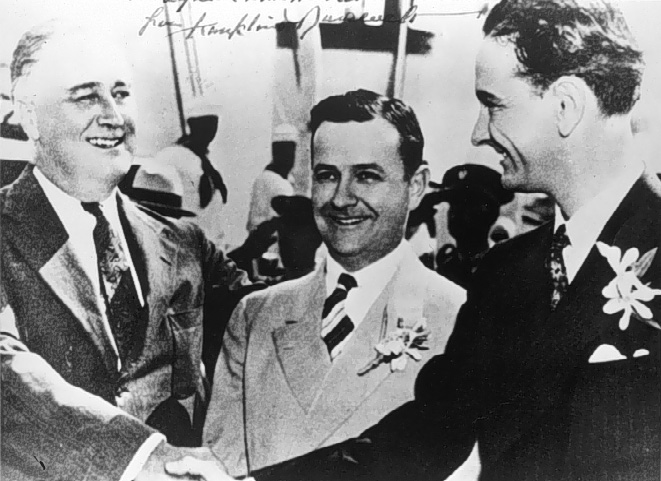
Loading summary
Transcript1 lines
- [00:04]
A
One of these days I ain't gonna change. Welcome, friends, to another edition of Economic Update, a weekly program devoted to the economic dimensions of our lives. Jobs, incomes, debts, prospects for our children, all of that. I'm your host, Richard Wolff. I've been a professor of economics all my adult life. I teach now at the New School University in New York City. As I announced last week, we are now experimenting with a slightly different format. We'll be doing that for these first three weeks in July, and we're looking to get your reactions to whether you like or don't like this format, whether you'd like to see more of it or less of it in the months and years ahead. So we would appreciate your going to our two websites and letting us know through either of them what you think. We always invite you to make use of these websites that we update literally every day. But here's a special reason for you to go there and to use the mechanisms on either website to communicate directly with us. First website, rdwolff, with two Fs.com and the second website, Democracy at Work, all one word, democracyatwork.info there. You can also, of course, click on an icon to follow us on Facebook and Twitter and to engage us in any other of the many ways those websites make possible. So let's go right into the first of the two major topics I'm going to be dealing with today in this experimental new format. This has to do with the New Deal, the lessons of the New Deal. I've talked about this before on the program. A couple of weeks ago, I had two real specialists to interview who work on this and who have developed a whole center of New Deal, the Living New Deal in Berkeley, California. But I want to now draw the lessons of much of the work we've done. What do we learn from the New Deal? What was the lesson of their achievement and what was the lesson of their failure? Because they're not one or the other. They're both. They had extraordinary successes, but they also made big mistakes. And it would be disrespectful to them as to any chapter in human history not to pull out the lessons of what to do and the lessons of what not to do that are inherent to, in every effort, those made in the past and, of course, those that we make now. Okay, the issue of a New Deal, and let me make clear what I mean by a New Deal in the depths of the 1930s, the depths of a terrible depression worse than the one we're going through now, or at Least so far. The one we're going through now is not as bad as the one in the 1930s, but it's the one that we compare today to, because it's the closest comparison. A tragic collapse of our economic system. Between 1929 and 1933, production stopped growing and began shrinking. 25% of our workforce was fired. One out of four workers, which basically means every single family had a mother or a father or an uncle or an aunt out of work and therefore becoming a burden on the family to help them through these hard times. So that the crisis of unemployment was a universal phenomena, except for the richest at the top, terrible poverty, extraordinary social upset about a capitalism that in the 1920s had promised roaring economic progress for everybody, had actually brought rapid, roaring economic distress for nearly everybody. So here's the interesting thing that the new president, Franklin Roosevelt, brought in by a desperate population who blamed the depression not so much on capitalism as on the Republicans who were in office and so swept the Democrat in a little bit like the United states did in 2008, and in blaming Bush and the Republicans and sweeping our first black president into office. The New Deal, however, was different from anything that has happened since 2008 in the United States today. Here's the key thing to keep in mind about the new in the midst of a depression, with millions of people unemployed, the President of the United States was confronted by a mass of Americans who reacted differently from the way they're reacting now. In the 1930s, Americans joined labor unions in huge numbers. It was the greatest unionizing drive in American labor history. We've never had anything like it before, we never had anything like it since. Millions of people joined unions because they believed that in a time of depression, they would be better off in a union than if they weren't. These were people who didn't come from families in which unions had been a part of their life, their parents hadn't been union members, etc. The second and third things that happened in the 1930s was that millions of people did see the problem as capitalism, and they weren't satisfied by being active in a union, although many were. They went further. They joined two socialist parties and one Communist Party. One or the other of these three parties they joined, and they joined by the tens of thousands across the United States, North, east, west and South. Wow. For them, the problem was the system. It wasn't just that we needed to join the union, we needed to change the system. But they worked very closely together. The socialists and the Communists helped the unions to have that successful organizing drive. And the unions welcomed and appreciated the solidarity and the very tangible help they got from socialists and communists in building up the unions. And so the new president was confronted by a coalitionunions, socialists, communists, and they said to have got to help the mass of people suffering a capitalist breakdown, and you have to do it or else we, the union members and we are in the tens of millions, will not vote for you and you will not stay as president. And the socialists and the communists chimed in, moreover, Mr. President, if you don't do it, there may well be a revolution here in the United States, sort of like the one they had a while back in Russia, don't you know? And Roosevelt, being a smart politician, knew he had to deal with these people because they were tens of millions and they were well organized. They weren't bluffing. So Roosevelt went back to the corporations and the rich and he did a remarkable thing. He said to them, look, you all know me because I'm part of the Roosevelt family, and that's part of the families who run the American economy and who run the American political system. I'm not even the first one in my family to be the president. Theodore Roosevelt had gone before me. So when I tell you this, you know, you have to listen. We have to do something for the mass of people suffering in this capitalist depression, because if we don't, there's going to be very serious consequences, not excluding the possibility of a revolution. And the only way. Here comes the punchline, folks. The only way that I, as President Roosevelt can meet these union socialists, communists, this coalition, in some politically workable manner, is if I get the money from you, looking right at these wealthy people and the corporate leaders that they were, you have to give me the money to take care of the people, because if you don't, there'll be a revolution and you won't have any money to give anybody. Stunned silence Half of the corporations in the business rich, didn't believe Mr. Roosevelt didn't think the mass of people could get it together to threaten American capitalism. They didn't want to make a deal. But the other half of the rich and the corporations, they were scared by Mr. Roosevelt. They believed him. They said, yes, let's make a deal. We will provide the government with taxes and loans for the money to do what has to be done to keep the mass of Americans from revolution. And so Roosevelt began to do what we now call the new deal. He went to the leaders of the unions, especially John l. Lewis, the mine worker leader who had built up the new Organization of labor called the cio, Congress of Industrial Organizations. He went to John L. Lewis and the leaders of the socialist and communist parties and he said, okay, we have a deal. I will do spectacular things for the American people suffering through this depression, but you in turn have to do something for me. I'll help the mass of people, but we've got to stop this talk of revolution. We're not going to give the corporations to the workers. We're not going to reorganize capitalism into socialism. All that's out, and you have to stop pushing for that or else there's no deal. The unions, the socialists and the communists basically accepted the deal. Not everyone there were critics, but they accepted it. If you give a massive improvement to the mass of people, we'll soft pedal the revolutionary part of who we are. And so Roosevelt then created, because he had to, the New Deal. And here were the four key parts. One, the Social Security system. In the midst of a depression when there was no money to be had, he said to every person over 65, I'm going to give you a check for the rest of your life. Wow. To the unemployed, he said, I'm creating the unemployment compensation system. Just like we had never had Social Security before. We had never had an unemployment compensation system before. If you're unemployed, and remember there were tens of millions at that time who were. If you're unemployed, I'm going to give you a check every week for a couple of years to help you out. Number three, he passed for the first time in American history a minimum wage law at the federal level saying nobody should be required to work at. At an inhumane low wage. And he raised the wages of millions by a stroke. And finally he went on the radio and he said, if the private capitalist sector of America either cannot or will not employ the millions of Americans who ask for nothing other than a job, then I as president will. And between 1934 and 1941, Roosevelt created and filled the 15 million public sector jobs doing the first environmental protection of America on a mass basis, building the national parks many of us have enjoyed ever since, et cetera, et cetera. Wow. The New Deal. So it isn't surprising that with this remarkable program that really sharply reduced the unemployment rate that helped millions upon millions of families weather the Great Depression in a decent financial shape, suffering for sure, hurt for sure, damaged by capitalism for sure, but a lot better off than had there not been a New Deal. So of course, there are voices today that are saying correctly, why in the world, if we managed a New Deal that had so many positive dimensions back then. Why in the world aren't we doing it now? And we aren't. We're not expanding Social Security, we're cutting it. We're not expanding unemployment compensation. We're keeping it or cutting it in many states as well. We haven't raised the minimum wage in years. And most important, there hasn't even been a national discussion about using the government as a hiring hall, a place to employ workers who are unemployed. We're not doing a New Deal. We're not doing anything like it. And the people who want one are quite right. Even if they're afraid to answer the question why? Why not? With the obvious answer. Because the businessmen and the corporations and the rich who had to pay the taxes to Roosevelt that gave him the money for Social Security, unemployment compensation and a public employment program, they don't want to pay for it. And that's the reason it's not complicated. They don't want the New Deal because these are the people who now think, even more than they did then, that they don't have to, they don't need to, and they're not going to. And the political pressure from below isn't there to force the issue the way it was in the 30s. So is there a lesson to be learned positively from the New Deal? Yes, and it's the one I've just alluded to. The lesson we have to learn is that the masses of people, if they organize themselves into unions and political parties with a clear mandate to serve the people below the mass of working people, they can achieve absolutely stunning results. The reason we know it is the New Deal proves it. That's the positive lesson. But is there also a negative lesson? And my answer is, you bet there is. And here we go. The New Deal, which taxed corporations and the rich, left them in charge of the businesses of America. That was the deal of the socialists and communists soft peddling their revolutionary ambitions. The big leaders of corporations held on to those corporations. They kept running those corporations. Yes, they had to pay taxes to the government, both on their personal income and their corporate income. And they had to lend the government a lot of money. And they had to watch all that money be used to help average people. They didn't like it, but they did it because they felt they had no better option and no real choice. But they also were sharp. And they knew that as long as what Roosevelt gave the mass of people was something they would be in a position to take back as soon as the political winds shifted, that they could live with it for a while and then undo the New Deal, in effect, roll America back to where it was before the crash of 1929. And that's exactly what they did. The corporations and the rich got together. By 1945, the Great Depression was over, World War II had come and gone, and the president who had forced the New Deal on them, Franklin Roosevelt, was dead. And they immediately went to work to mobilize in the United States the undermining of the New deal. And from 1945 to the present, the New Deal has been undone. Let's go through it quickly. First and very intelligently. The corporate leadership understood that they had to undo the coalition of unions, socialists and communists. Because that's where the force came that imposed on Roosevelt. And then he imposed it on them, this New Deal. So they began with the weak link, the Communist Party. Those were converted from militant union people into agents of the Soviet Union. They were demonized, as traitors, etc. Etc. You destroyed the Communist Party, deported their leaders out of the country or imprisoned them and so forth. As soon as that was done, you went around the country and the government did most of this. And you told the American people that socialists were just like communists. They just spelled it differently. And so you basically destroyed the socialist parties as well. And as soon as those two legs of the coalition were destroyed, the business community went to work on the unions. And if you look at the membership of unions in the United States from 1950s to the present, it's a straight line down. Unions have been demonized, attacked, undermined at every turn, and they still are. That was very smart. As soon as the coalition that could have forced and supported the New Deal was broken, then it became a question of which political party would outdo which other political party in rolling back the New Deal. Taxes were cut on the rich dramatically. Taxes were cut on corporations dramatically. Anti tax movements were funded by big business on a massive scale, as they still are. So the government didn't have the money and they didn't have the political pressure from below to do anything like a New Deal or even to preserve the New Deal. We have to learn the lesson of all of this. The positive lesson of the New Deal is what workers organized and unified in a labor movement and a political left party movement. We have to recognize what that is capable of in the United States. That's the good news. That's the positive lesson. But we also have to recognize the failure and the mistake. The New Deal did not put into place the mechanisms to secure what what they won and by failing to do that, they created the opportunity for everything they had won to be undone, to be withdrawn from them, to be taken back by the employers in the United States. And they have wasted no time and no expense in doing exactly that. So the lesson is, if you want things like Social Security, unemployment compensation, decent minimum wages and public jobs when the private sector can't provide enough of them, then you have to do something the New Deal movement and the New Deal time failed to achieve. You have to prevent the businesses of America from remaining in the hands of the shareholders and boards of directors who now run them. And the reason for that is our history. Those shareholders and those boards used the profits that are drawn into their hands, given the way capitalism works, to undo the New Deal for straightforward, obvious reasons. They didn't want to have to pay those taxes, they didn't want to have to make those loans in order to take care of the mass of people. They have much better and more interesting things to do with their money. And that's what they have made sure they're going to be able to do. The irony is it's the mass of people who produce the profits that flow into the hands of a few. That's what capitalism is who could then use it to undo the New Deal. In the current crisis, then the lessons that are crucial here are that one, we see the power, the potential of organized pressure from below, with or without unions, with or without socialist or communist parties, something, whether it's a union movement or a political party movement, or something we don't foresee yet, something has to step in and play the role of organizer of the masses in order for us to learn that positive lesson. We know it can be done. The question is to do it. But we also have to learn the negative lesson. If we win another round of decent mass help programs in a time of mass suffering, if we want to have our students free of an overhang of debt when they get their BA degree, if we want people to get a decent minimum wage for themselves and their families, if we want there to be an American dream as opposed to an American nightmare, then it isn't enough to organize and get good programs. You have to change the system or else those programs will be taken back even if you're strong enough to win them. You have to learn the negative lesson of the New Deal. And that is you cannot leave the the ownership and operation of enterprises in the hands of a tiny minority of our people, major shareholders, and the individuals they elect to the board of directors, because history teaches us they can and they will, use them to undercut whatever gains you've made. That's what they did in the half century after the New Deal. To simply repeat what the New Deal did, in the words of folks running around today talking about a green New Deal or another New Deal or a new New Deal, is to miss the second lesson, which is at least as important as the first. It is the system that has to be changed, or else you're asking masses of people to make real sacrifices to build a movement whose achievements, even if they are great, will be taken away, even for their children's generation. The New Deal, like most important events in human history, have positive and negative lessons to teach, things to learn we can do and things to learn we must not do. Again, we've said that about the Soviet experience. We've said that about the American Revolution. We have to say it about the New Deal as well, to make sure we capture and learn the positive and the negative lessons. Well, we've come to the end of the first half of our program. I want to ask you please to stay with us across a short break. Then we will come back. And again, please make use of our websites rdwolff with two Fs com and democracyatwork.info to let us know whether you like these extended analyses, this new experimental format that we're trying out in these early weeks of July, or whether you don't, whether you want to see more or fewer. Please also sign up for our free newsletter. Please also communicate your general questions and criticisms about the program. Take a look at some of the cities where we'll be traveling and speaking in the months ahead in case you'd like to invite us as well. Tampa, Houston, Kansas City, Seattle are among them. And finally, share what we do here through your own social media. Make use of it. Bring it to other people. Partner with us. That's part of why we do what we do. So please stay with us. We'll be right back. Welcome back to the second half of Economic Update for this week. I want to remind you quickly that we are experimenting with a new format so that each half of the program is divided into one basic analysis of a major topic that you have all communicated to me is something you want to hear more about. So we've decided to see whether this format, an extensive detailed analysis for half the program, works well or not. And for that we rely on your judgment. So please take a look, take a listen, and then let us hear what you think. Use our websites, rdwolff with two Fs.com or democracyatwork.info to let us know what you think about this new format that we're experimenting on early in July. And of course, make use of the other services on our website, the audio, video and written materials, the free newsletter. You can sign up for the icons, you can click us to follow us on Facebook and Twitter, the events page that shows you where we'll be speaking, and so on. Okay, the topic for this half has to do with the strategy for the labor movement. And this is something that affects everybody, whether you're in a union or not. Because how and where and when unions are strong or weak will affect your job, your income, your life. And so this is an important question, literally, for anyone interested in economics today, past and hopefully future. The labor movement, like all social movements, has short term and long term goals. Those don't have to be the same, but there has to be a consistent and logical relationship between them if over the long run, the goals of the labor movement are to be achieved and secured. So let's begin with the short term goals that most labor unions embrace. First, they want to get for their members higher wages and better working conditions. That's what unions have traditionally focused upon, and that's mostly what they continue to give priority getting a wage increase, at least occasionally, getting improvements in their sick pay, in their pension coverages, whatever benefits they're able to get at the job, improving those and thereby improving the lives of the people they serve and that they represent. The way to do that is to gain recognition at a workplace. That is to gain the willingness, by elections, by other mechanisms of the employer to sit down with you as a representative of the workers and do what we call collective bargaining, to bargain over the terms of employment, the wages, the working conditions, etc. And unions spend a great deal of their time either bargaining collectively or once they have worked out a contract with the employer, then they have to kind of police the agreement to make sure that the employer does not intentionally or otherwise violate the agreement to the detriment of the interests of the members and the workers. That means filing grievances, making complaints, going beyond to the Labor Relations Board or even to the courts if an employer violates a contract in a grievous way, etc. Etc. Unions have been doing that kind of collective bargaining and policing of collective bargaining agreements since their inception. It's a major part of what they do, and it's how they go about getting whatever short term gains they can in wages and working conditions. But here's the problem. And if there weren't a problem, I wouldn't have been driven to focus your attention on this. Even when unions win, and let me underscore the even part of that, many unions spend long years trying to get an employer at a workplace to sit down with the union and bargain collectively. They often have difficulty doing that. They often fail in that process. It is costly in terms of the funds unions have, costly in terms of the time of their employees, their organizers. So it's not something that works easily. It often takes repeated efforts over a long period of time, at great expense, to finally win a collective bargaining agreement with an employer, which then has to be policed. But here's what history and the history of capitalism teaches us, and it's a lesson we cannot fail to heed. Capitalism is an unstable system. By that I mean it is continuously rocked and rolled by upturns and downturns, we call them because we have many names for this. Recessions, downturns, layoffs, hard times or prosperity, upturn, uptick, boom, bust, bubble. I mean, the words we have in our vocabulary for all of this instability are many. And that's because it's such an important and continual reality in our lives. That's why we have many words for it. And when capitalism has troubled times, one of the first things an employer will likely do is test whether he can get out of one or another part of their collective bargaining agreement with workers. In other words, the instability of capitalism translates into attacks on the employment contracts that unions have have won for their workers. If an employer thinks he can, he will go beyond merely attacking this or that dimension, shortening the lunch break, finding a way to evade, paying the share of pensions that has been agreed to, and so on. He'll go beyond that and try to disqualify the union, go through one or another of the procedures that can take away from a union its legally enshrined position as the representative of the workers. Of course, where unions are not in place, it is much easier for an employer to take away whatever gains workers have achieved. This is important because one of the arguments unions use when they bargain collectively and improve the wages and working conditions of their members is that other employers in the area will in fact match what the unions win, because that way they can avoid the union coming to their workers and saying, look what we got over there. You should join the union to get that as well. To forestall that event, the employer comes in and gives some or all of these benefits to the workers precisely so they don't become interested in the union. And so he doesn't have a contract in place that's very useful to him. Because when the inevitable downturn comes, and capitalism has a downturn every three to seven years, some worse, some not so bad, but they have downturns all the time. And an employer always prefers to have no union because then in the downturn he can more quickly and more easily push onto the workers the pain and the difficulty that the system is pushing on him as an employer. So that brings us to the inevitable result. Is there something unions could do as a long run goal that would make their short run gains, if and when they get them, secure? Is there something they could do that would make the likelihood of an employer trying to take back whatever it is he's given with or without a collective bargaining? Is there any way to prevent that from happening? To prevent the employer, in short, from shifting onto his employees the pain and difficulties of capitalism's fundamental instability, an instability that no amount of monetary and fiscal policy or Keynesian economics has yet been able to prevent. The best they can claim is that sometimes they make them less serious or less severe than they would otherwise have been. That's a very weak defense. The bottom line is the instability is a reality. The downturns keep coming and employers keep shifting the burden of those downturns onto their employees by firing them and by taking away benefits of all kinds. And we have seen that in a serious and continued way since 2008 with no end in sight. So again, the question is there something unions can do so that they're not in this vulnerable position with or without a union, that employers will shift the burden of capitalism's instability onto the workers, with the shift being as much as the employer can get away with. Okay, there is. And the question is whether unions are going to be willing able to use this strategy to make it happen for themselves. So what is this strategy? In order to tell you the strategy, I'm going to describe a typical moment in capitalist history. This is something that has happened in virtually every industry, often, many times over the last, let's say 30 or 40 years. So this is a common occurrence. Into a meeting with the union comes the boss, the capitalist employer, or if it's a large corporation, the, the head of the human relations or human services department or whatever euphemism the company uses. And here's his speech in a Dear workers, I'm really sad to have to tell you this, but I have no choice. We are a company that is besieged by competition, competition from other producers in this country. And indeed, we are now part of a global economy. So we face competition all over the world. And that means some of our competitors are able to take advantage. And here's what you have to listen to now. Take advantage of the fact that in other countries, wages are often much lower than they are here in the United States, working conditions are much poorer than they are here in the United States, etc. Etc. So we really have no choice. If we're going to survive the competition from people who are paying those low wages and providing such few benefits, we have no choice but to join them. We can't beat them, so we're going to join them. Unless, of course, dear workers, you were willing to make it worth our while not to leave, not to close this factory, this office, this store, and reopen instead in Shanghai or Hyderabad or Sao Paulo or elsewhere in the world. And by making it worth our while, let me be real, dear workers, Will you accept lower wages? Will you accept fewer benefits? Will you accept harsher working conditions? If you are, we can perhaps come to an agreement. If you aren't, we're going to close the factory, we're going to close the store, the office. The words may be polite, but the message is stark. You either accept lower pay and poorer conditions or you'll have no job at all. That's a threat, but it's also the reality we are prepared as employers to impose on you. What typically happens with this sad story is that the workers are upset, of course, worried, of course, the union is angry, of course, trying to figure out what to do in such an awful situation, of course, but there isn't much choice. And so what the unions mostly do is try in whatever way they can to pressure, to beg for some kind of midpoint. They'll give up some things, but not as much as the company wants. And in exchange, the company won't leave, or won't leave right away, or won't leave at least for a couple of years. Sometimes such a give back agreement can be reached. It's not good for the union. It leaves many workers disgruntled. They had thought of the union as a protection, and here the union was not able to protect them. If this happens more than once within a short period, then the reputation of the union among its members is effectively wounded. And that means the next time the company threatens, the workers will cave in because their union isn't any more something they have all that much confidence in. So this is bad for workers, bad for unions, good for corporations, because they can Keep pushing. They have a fallback position, which is to leave the workers never know whether this is a bluff or not. Not in a position to find that out, except if you call it. And that's a very big risk to take. Okay, so what's the lesson here? The lesson is a hard one. I wish it weren't the only one to draw. But it is. It is the only one. Have there been any others? Yes. Unions have decided to spend an enormous amount of their time and energy and money trying to get laws passed by Republicans, Democrats, whoever, that will slow down the process of companies moving so that they can't threaten it the way they used to, to make it less attractive to move, to provide fewer subsidies if they move, to impose punishments if they move. The unions have tried all that, but their record of success there is poor. The companies understand this strategy and they have way more resources to devote to. I'll be polite now, persuading politicians not to do what the unions want. So this is not a successful strategy, which is why companies keep moving and why these threats to their workers are a continual part of of the labor history of the late 20th and early 21st century in the United States and indeed in other parts of Western Europe and Japan. So I go back to my question. If that strategy of the labor movement to cope with this situation hasn't turned it around, and it surely hasn't, is there an alternative strategy? The answer is, of course, yes. There always are other strategies, but they're harder in some ways. On the other hand, what real option is there? What's the answer I would offer? Well, to do that, I need to tell you another story and set up another scenario. This is not one that has happened many times, like the threat. Give us a concession, give us give backs, or else we leave. That story happened a million times, but this one hasn't. But that's because it's a strategy I would like to suggest, not a strategy that has yet been adopted, at least not very often. So now imagine again, the employer comes in, the meeting has been called, the workers are assembled, the union leaders too. And the employer begins his speech and says, global competition being what it is, we have to consider closing this factory, office, store, whatever, and moving to fill in the blank. And we will do that, and we'll do it within the next six months or whatever it is, unless you give us this nice long wish list of concessions. Give backs, lower wages, poor conditions, all of that, same old story, but now something new. The workers, their union, if they're unionized, the Workers and or their union say to the employer something else. Have a nice trip. Go. We don't need you. We don't want you. And we can do without you. But we want you to know something, dear employer. When you leave, when you close this place, we are going to reopen it. Who's we? All of the workers here, those you are abandoning, those you are pushing out of their jobs, their incomes. We're going to come right back to this place and we're going to run this business. We're going to run it better than you because we know how it works. Because we're the ones who make it work. And we're going to set up, in short, a workers enterprise. We're going to own it, we're going to work it. And we're going to make the decisions in a cooperative, democratic way. And we're going to run around the United States and we're going to tell the customers of this business that they have a choice. They can go with your product, that you're now going to make thousands of miles away by paying cheap wages and no benefits. Or they can buy from us, the people who are trying to make a go of this business, to save the jobs, to save the revenue that those jobs pay into the communities which, where these working people live. And to prevent all of America from going through the experience that for example, Detroit went through in the last 40 years. And we think many customers will prefer to buy from us than from you. And to tide us over. How will we get the money to do this? Well, we're going to explain it to you. We're going to go to our local politicians, our mayors, our congresspersons, our senators, and we're going to say such and such a company, namely you, Mr. Employer, are abandoning the workers, abandoning the communities that the workers live in, the state in which those communities are located. And we want you, Mayor, Congressperson, Senator, we want you to stand up for us, for the workers, the communities that you, after all, claim to represent. And not to stand up for the company that threatens to abandon all of us. And you too, Mr. Senator, if you help us, you will be a hero and your re election will get a beautiful boost. But if you turn against us, Mr. Politician, we will make sure that everybody knows whose side you're on and whose interests you're prepared to sacrifice. And your chances of re election will be damaged and with our efforts damaged heavily. So we want your help, tangible help. We want some finances to keep these jobs here in the form we're going to do. It no more subsidies to a company that threatens in this manner that does such damage to the well being of the community in which it was nurtured it including by subsidies from the government. No more. You punish them, you reward us, you help us with money, perhaps with some nice orders from the government for whatever it is we produce, to see us through the early transition from a top down capitalist enterprise to a worker self directed cooperative enterprise. And the union going to do this and the union is going to draw on brothers and sisters in the union movement around the community and around the country and around the world to be supportive, to buy from this co op rather than from the company abandoning. Here's my thought. Many companies never dreamed they would face this set of problems by threatening their workers. They're not going to do it the way they used to. They're going to slow down. And for those that do do it, here's a chance for the union movement to recapture what it once had its position as the leader of the progressive part of our culture. Unions that are coming in there to save not just the jobs of their members, but the revenue from those jobs that sustains the community, to make sure that the local businesses still have people to buy their outputs because those people have jobs in that enterprise threatening to leave. The unions will become the heroes for the whole community, for the whole state and indeed for the whole country. They will recapture what they once had. And that's very important for the future of organizing efforts around unions, as we well know. So this is a strategy that can work better than the failed strategies for dealing with this. This is a long term program of transforming the economy in ways that working people will understand and support. And it has the benefit of, of securing the short term gains that unions sometimes win and that have been so fragile and so vulnerable in the past. It's also a moment of worker heroism and that can do extraordinary things for the spirit, for the solidarity and for the future, not only of the labor movement, but but of the country as a whole. Yes, it's a new direction. Those are always scary. But given what the union movement has lost, given what it has prospects of losing, and given what that means for the society, do we really have any alternative but to try this on a massive scale? We've come to the end of our program for today. Again, I want to remind you, please let us know whether these sorts of extended analyses of particular issues that you've brought to our attention do or do not serve your interests, serve your curiosity, do for you. What this program does can and should do. We want your honest opinion? Yes. No more of it. Less of it. Use our websites rdwolff with two Fs.com or democracyatwork.info to let us know what you think and make use of the newsletters we offer for free that you can sign up for on the newsletter. Let us hear from you. Follow us on Facebook and Twitter. Make use of what this program provides. Share it with other people. That's what the program is for. We feel ourselves to be your partner and ask you to partner with us. Thank you very much and I look forward to speaking with you again next week.