← Economic Update with Richard D. Wolff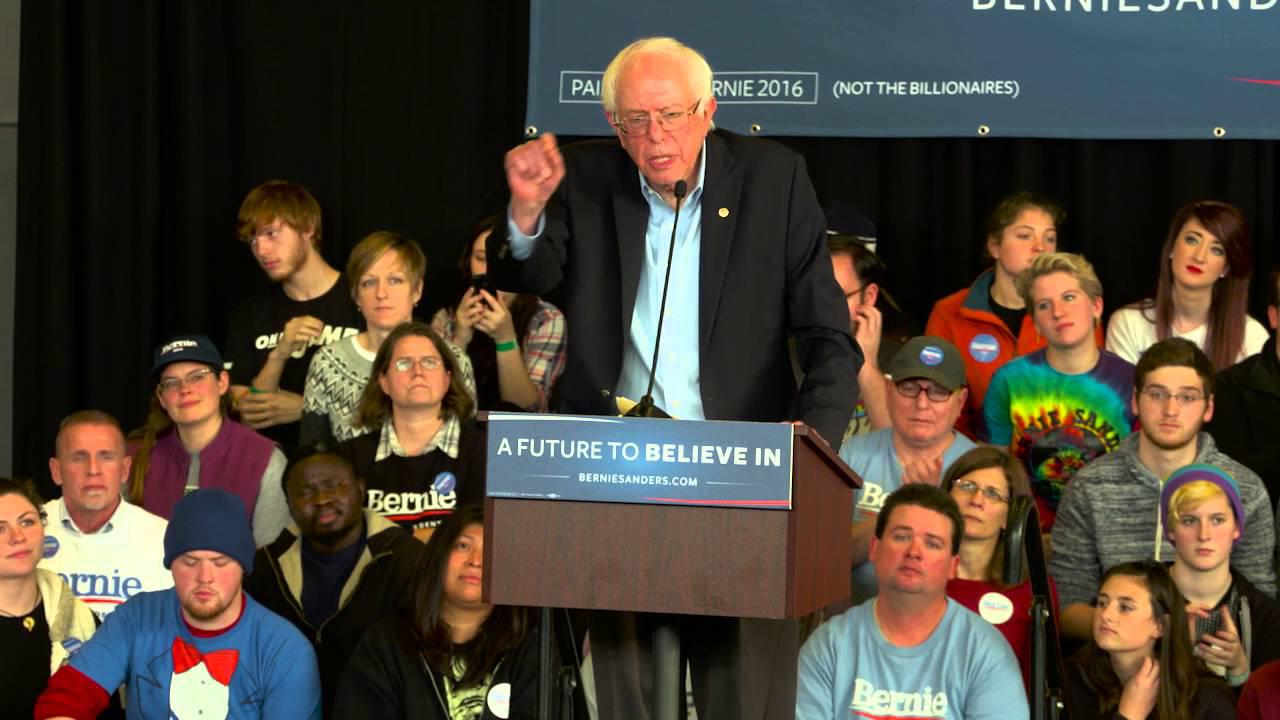
Loading summary
Transcript31 lines
- [00:00]
Richard Wolff
Sam. Saint gonna change. Welcome, friends, to another edition of Economic Update, a weekly program devoted to the jobs, the incomes, the debts, the prospects for our kids, all the economic parts of our lives. I'm your host, Richard Wolff. I've been a professor of economics all my adult life, and currently I teach at the New School University in New York City. Before we jump into today's very interesting program and my very interesting guest who, whom I will introduce a little later, I wanted to make a couple of quick announcements. I will be going shortly on a speaking tour in California, and I thought that some of you out there might like to know that I'll be speaking at the First Congregational Church in Berkeley the evening of February 10, and at the Sonoma Community center in Sonoma, California, on the afternoon of February 14th. So if either of those places are near you and you're interested, come on out and let's meet one another. I really like to do that, and I think you will find it interesting to see what kind of presentation I make in that setting as opposed to the radio. Indeed, if you're interested in some of my other appearances in various parts of California in the month of February, just go to our website, democracyatwork. That's all one word, democracyatwork.info check out events and you get all the details, the where, the when, how to get tickets and all of that material. I'll come back with some more of that kind of announcement a little bit later in the program. Let's turn now to the updates for this week. Well, I have to talk about those elections in Iowa. Even if you've heard more about them than you actually want to, I want to look at them in terms of economics. We don't endorse anyone on this program. And please don't understand what I say as an endorsement for or against anybody. But something extraordinary happened on both sides. But I'm going to talk about the Democratic Party side of the primaries that came out of the caucus in Iowa, because something happened there that is about economics. For the last 65 years in the United States, we have lived in a capitalist economic system, which is true for most of the rest of the world. But even more unusual is we've lived in a capitalist system without being able as a people to debate that system, to ask what are its strengths and weaknesses, to ask if we can do better, to figure out how we might do better and what we might do to get to a better situation. That kind of conversation was taboo. If you thought there was something wrong with capitalism, the majority of your fellow citizens would look at you as if you were either ignorant, poorly educated, or downright evil, as an agent of a foreign power, as disloyal. I mean, every negative thing you can think of was attached to being critical of capitalism and even more to be interested in the alternative known as socialism. Something has changed in the United States, and the people of Iowa brought that home to everyone. A clear half of the people who went to the polls on the Democratic side in Iowa voted for a person who calls himself a socialist, Mr. Sanders. They broke in that step. They broke from a tradition of thinking that that a socialist is beyond the pale, is something impossible, is something not to be taken seriously, if not immediately incarcerated. This is an enormous change. It's going to change our economic system because it puts capitalism on notice that it's not above criticism anymore. It's not out there all by itself with an unspoken rule that no one can cast a critical eye. It's never been healthy for our economic system that there's no criticism. Criticism is one of the ways you identify problems. Criticism is one of the way you begin to develop a strategy to fix, to improve, to go better. It's the background to everything having to do with the advance of technology, being critical of the way things are done, so that you begin to think about better ways of doing them. The United States prides itself on being critical and technologically dynamic, but it seems to be frightened of being economically dynamic and changing. And that just changed this last week. And I would be remiss if I did not bring that to your attention on a program called Economic Update. One last comment on that. The polls were able to identify how people voted according to their ages. And this, for me, was the most remarkable result. On the Democratic side, people between the ages of 18 and 29 voted for Mr. Sanders, 84% and for Mrs. Clinton, 14%. I'm going to say that again. 84% of young people were not intimidated by the socialist label. Not turned off? Not at all. What does that mean? That is a sea change in the consciousness of the American people and suggests going forward, big changes politically, ideologically, in terms of the consciousness, the culture of our country. And it is clear to me, as the questions given to these young people also discovered, that the single most important factor driving them forward into the voting for Bernie Sanders is the economic problems of the capitalism we're living in. It really is less about an interest in socialism than it is an interest in doing something other and better than. Than the capitalism we have. The irony is, therefore, that the interest in Bernie Sanders the socialist is the result of capitalism itself. Staying with this topic in a little indirect way, I want to do also a moment of history. We don't do enough history about economics in this program. Some of you have criticized me about that, and you've been right. So here's a chance for me to draw a lesson for today from some criticism. In order to do this, I want to read to you two sentences. They are the two sentences of the letter written by John Maynard Keynes in December of 1933 to the new president then of the United States, Franklin Delano Roosevelt. This is the depths of the depression, December 1933. We have a quarter of the American workforce unemployed. Every single American family is touched. Mother, father, cousin, uncle, somebody's unemployed and turning to the rest of the family for help. Because remember, at that time, there was no unemployment compensation yet, there was no Social Security system yet, et cetera. So Mr. Keynes, terrified by what is happening to capitalism in his country, Britain as well as the United States, turns for hope to the President of the United States and says to him an amazing thing that I want to read to you. Sentence number one. You have made. This is Mr. Keynes to Mr. Have made yourself the trustee for those in every country who seek to mend the evils of our condition. Let me break in here. He means the failure, the collapse of capitalism around the world. You have made yourself the trustee for those in every country who seek to mend the evils of our condition by. By reasoned experiment within the framework of the existing social system. This is very clear. Mr. Keynes is saying to Mr. Roosevelt, please fix this broken capitalism while holding on to capitalism. That's what the phrase within the framework of the existing social system means. Now, the second sentence of this long letter. If you fail, rational change will be gravely prejudiced throughout the world, leaving orthodoxy and revolution to fight it out. Hmm. The two real winners in Iowa were Mr. Cruz might call that orthodoxy, and Mr. Sanders, who refers to his campaign as a revolution. Mr. Keynes, writing to Mr. Roosevelt, understood really clearly that when capitalism begins to break down, you have the polarization into those on the far right and to those on the far left. And that is scary because when the middle collapses, the security, the stability of the system itself, is called into question. August 11, 2015, on an electronic site that I think some of you know, salon s a l o n.com a wonderful article appeared about conservative billionaires in the United States becoming very, very worried. And they look to history about what's happening to the United States and One piece of history this article goes over is late in 1938. The depression had been going on for a decade. The suffering was enormous. But the efforts of the New Deal angered conservatives, and so they had a backlash. And they were pressing Roosevelt, president at the time, to cut back on New Deal programs that were helping people, like the public employment program, like a whole host of other steps. And Roosevelt feared that if he gave in to the conservatives, there would be a revolution. Let me read to you from Roosevelt's private journal that was only made public many years later. If I do as the conservatives want, the President wrote, this would mean calling out the troops to preserve order. It might even mean a revolution or an attempted revolution. Wow. A final piece of history. Joseph Kennedy, the millionaire father of John F. Kennedy, who would eventually be President of the United States, wrote during the Depression in those days, I felt, and I said that I would be willing to part with half of what I had if I could be sure of keeping under law and order the other half millionaire. I'll give up half if I can hold on to the other half. That's how scared they were at the top. He later told Joe Kennedy. He later told Senator Joseph McCarthy, the famous anti communist warrior. I knew that big, drastic changes had to be made in our economic system. I wanted him, Roosevelt in the White House for my own security. The billionaires wanted Franklin Roosevelt in office to protect them from the breakdown of society they feared their capitalist system was leading them to. Bernie Sanders refers to himself as being not that different in what he wants to do from what Roosevelt set out to do. So for those of you who imagine that because Mr. Sanders calls himself a socialist, he can't be a relevant player in the political life of the United States. This history might give you a pause and make you realize that things may be changing even more than you thought. My next update has to do with the ongoing economic drama of the oil market. It is so stunning and so scary that it really requires an analysis to keep going. Even though I've done it occasionally in past weeks, I want to keep up. First, the new news. Oil companies have been announcing profits in the last few weeks and the profits have plunged. Imperial Oil in Canada down 84. The major oil companies, ExxonMobil and so on, all down, stocks down. I mean, serious problems for the mass of people. I'll just give you two numbers. First is British Petroleum, one of the biggest oil companies in the world, announces cutting 7,000 jobs. Its rival Royal Dutch Shell merging with the British gas producer BG Group, announces China 10,000 people will lose their jobs. So we're seeing a collapse all across Texas, Louisiana, the middle section of the United States, all the way up and across into Canada. Huge unemployment, oil companies shutting down, oil companies laying off workers, and it's spreading. Billions were lent by American bankers to the oil men and women to finance the fracking, the bringing of the shale oil out of the ground. Those banks are now in trouble. They can't collect on the debts because the oil companies that went and did all of that have to sell their oil at $30 a barrel, not the hundred dollars a barrel that it was when they undertook the investment. And then finally, we have seen something happen in China that affects the oil market. Over the last 30 years, the Chinese built up and industrialized their country. They built factory after factory, producing all those goods that you find in your neighborhood, Walmart and every other place where you go to shop. Millions of companies from around the world partnered with China. A good half of the goods that come into the United States from China are made by subsidiaries of American corporations. Corporations that closed their facilities in Cincinnati or Dallas or Denver and moved instead to Shanghai, to China, all over China. Why am I telling you this? Well, when capitalists, people driven by profit, see an advantage moving to cheap labor areas like China, they don't do that in an orderly way. Every little company thinks it's going to make a killing. Everyone opens up a factory with brand new machineries in China. Everyone thinks they're going to succeed. But the problem is, if a lot of companies do it at the same time, they end up with what we in economics call excess capacity. There's too much capability. The additional industrial capability built in China sits side by side with the old but still serviceable capability. In much of the rest of the world, there's too much capability. We can produce way more cars than we can sell as a nation. That's how capitalism works. That's how the market works. So suddenly the Chinese discover, as do all the companies involved, that they built up a capacity way ahead of what they can sell profitably. So China slows down. Of course China slows down because everybody else slows down. If you ask the Chinese, why are you slowing down? They will answer, because we can't sell all the stuff we've been producing. And why can't you do that? Because working class people in Europe and America have been losing income, have been suffering unemployment, and they can't afford to buy the way they used to. China's slowdown is a reflection of economic changes everywhere else in the world. Remember, China depends on exporting goods and services to the rest of the world. It will do as well as its export markets permit it to. And when China can't produce, it doesn't need oil. Aha. It needs a lot less oil than it used to. Meanwhile, the United States, by bringing up that shale oil with the fracking that does such damage to the soil and to our ecology, the United States is producing much more oil at the same time that China and the rest of the world are slowing down in their need for oil. And there you have it. That's why the price of oil has collapsed. The US added more supply, the rest of the world slowed down. That's why tens of thousands of people are losing their jobs. That's why the economies of Louisiana, Texas, the Dakotas are in such deep trouble. That's why so many banks are on the edge of failure. And indeed a few have started to fail. We as a people depend on oil. But that means in a capitalist system that we depend on the profit driven calculations of a handful of couple of hundred companies, couple of hundred banks, that's it. You put all those people together, a few thousand individuals are making decisions about what's profitable for their companies. And we, the millions, the billions on this planet, live with the results. And right now we're living with a disaster. They made one blunder after another. Did the oil companies in the Midwest of the United States really think that they could enormously increase the supply of oil and that wouldn't have a depressing effect on the price? Did they forget the first lesson of supply and demand every student learns in school? Looks like it did. The bankers who lent them billions, they can't now recover. Did they do due diligence? Did they check whether this was a reasonable investment? Did they make sure the people they lent money to could pay them back? Evidently not. They didn't do it well. Wow. You mean the collapse of the oil price, the millions of people whose economic futures is damaged, the tens of thousands that have lost their jobs. This is all the result of how a capitalist profit driven market system works. Yes, that's right. Here's an you plan what the needs of the next 5, 10, 15, 20 years is you make a rational plan. Chinese people, American people, British people, French people, all of the players in the world, those who consume oil, those who produce oil, and you work out a plan and you produce oil, growing as the demand seems reasonable to grow, you reevaluate it. Every two months you adjust. That's how you do it. You don't allow 200 companies, each with its own profit profile, to make a decision about what's good for it and hope that it all works works out. That's the equivalent in economics of what we call a Hail Mary pass in a football game. It's when you've given up on your game plan and you just hope the world's energy needs are far too important to leave to this the ecological damage of misusing fossil fuels and abusing our energy needs that way are much too important to leave to private profit calculations. The critique of capitalism that is deepening and spreading, that underlies everything that happened to Bernie Sanders and what happened in Iowa this last week are driven by the same deepening recognition that there's something terribly wrong in the capitalist economic Let me conclude this first half of the program by responding to a question that some of you have sent me regarding the whole problem which comes right out of what we've been talking about about money and politics, the ability of very wealthy people and large corporations to get away with what they're getting away with because they can use their wealth to shape politics. What party wins, what candidate wins, what ideas get into the minds of legislators and which ones don't, etc. And your question was, is there now a serious fight back against the role of money in our capitalist economic system? And the answer is yes. And as I have reported once before and as often happens, California is on the cutting edge of this effort. And for those of you that are interested, I wanted to bring your attention to a website maintained in California that goes into the complicated struggle to get money, if not out of politics, at least to reduce its role. This is an effort, interestingly, supported increasingly by by both Republicans and Democrats as well as critics of capitalism. So there's a growing consensus, and that might be of interest to all of you, no matter what state you're in or outside the United States. Since this is an issue that is global. The website that I would direct your attention to is called yes, fair elections. That's all one word. Yes fair elections.org O R G. So if you're interested, go there. You'll learn a great deal about the efforts in the great state of California to deal with this problem. And it will demonstrate to you that there is a growing awareness that it is impossible to have a genuine democracy of one person, one vote, one person having the same weight in his or her opinions that anybody else does. You can't have that if one person with one vote has $100 million to spread the idea around and the other person has 14 cents. This is not a fair fight. This is not an equal democratic participation. This is the use of unequally distributed wealth to undercut the whole principle, the whole idea and the whole purpose of democracy. Well, we've come to the end of the first half of our program, but as I promised, I want to appeal to you today before signing off this first half. Everything we do on this program is designed to reach to inform the people of the United States and beyond that, everybody else in the world who, who listens. The best way we can succeed is if you are a partner to us. That is take what we do on this program, share it with others. You can do that literally by going to our website, democracyatwork.info every one of these programs is archived in its complete run on that website. You can go back by using any date you want and listen to the program again, give it to someone else to listen to, share a part of it, all of it, with people through Facebook, Twitter and all the other social media. We are asking you to be a partner with us because it'll double, triple, quadruple the effectiveness that this program seeks to have. It's a very important service. I want also to remind you that the same websites, democracyatwork.info that's one, and rdwolff with two Fs com, that's the other. Democracyatwork.info rdwolf.com these websites are available to you 24 7. They are absolutely free in every way. They allow you to make use of classes, lectures, interviews, articles, you name it. Audio files, video files, written material. It's all there by clicking. You can follow us on Facebook and Twitter, where we are very, very active. We upload onto this website every day. We send out Facebook and Twitter announcements and messages all the time. Both of those websites, again, also allow you to communicate to us what you like and don't like about the program. We maintain these institutions for your use and we invite you and encourage you to make use of them. We will be right back. Stay with us. We have a very, very interesting and important interview coming right out of what we've been talking about in the second half of today's.
- [28:13]
Leonard Cohen (singer of 'Everybody Knows')
Everybody knows that the days are loaded Everybody rolls with their fingers crossed Everybody knows the war is over Everybody knows the good guys lost Everybody knows the fight was fixed the poor stay cool the rich, rich get rich that's how it goes Everybody know Everybody knows that the boat is leaking Everybody know the captain line Everybody got this broken Feeling like their father or their dog just died Everybody talking to their pockets Everybody wants a box of chocolates and a long stem rose Everybody knows Everybody knows that you love me, baby Everybody knows that you really do Everybody knows that you've been faithful Give or take a night or two.
- [29:45]
Richard Wolff
Welcome back to Economic Update. This is the second half of the program and I want right away to introduce my guest today. He is Pete Dolak. Pete, welcome to the program.
- [29:57]
Pete Dolak
Oh, thank you, Rick.
- [29:59]
Richard Wolff
Pleasure to be here. Let me tell the audience who you are and what you do and then we'll get right to it. Pete Dolak is an activist and a writer who has worked with several organizations focusing on human rights, social justice, environmental and trade issues. He writes about the economic crisis and the political environmental issues connected to it. And he writes particularly on a blog called Systemic Disorder. You might want to take a look at that. His articles have also appeared in publications including Counterpunch, Znet, the Ecologist, and Working usa. He has a new book which is part of why I brought him to the program today. It's called It's Not Learning from the Socialist Experience that will be published by Zero Books on February 26th. But Pete has told me that the book is now available. You can get it from any of the normal distribution mechanisms for new books, and I would urge you to do so. Let me introduce this interview in the following way. This harkens back to the beginning of our program today where we talked a little bit about the significance of, of the Iowa primaries that just were completed. Socialism is back in vogue. Mr. Sanders proved that, or to be more accurate, the people of Iowa proved it, that in that Midwestern state an enormous proportion of the people who bothered to go to vote found it in their hearts to vote for a person who calls himself a socialist. Many Americans have probably thought over the last 50 years that socialism was somehow over or done with or a part of history, maybe even ancient history. And so they've been shocked to discover that. No, no, to use Pete's book title, it's Not Over. The whole point of his book and the lesson of Mr. Sanders is that socialism is, and socialists have a long life ahead of them. And we're going to explore with Pete why that might be. So let's begin and tell us a little bit about what your book is trying to do and in particular what you mean that it's not over.
- [32:33]
Pete Dolak
Thank you, Rick. I think the purpose of the book was just to explain to people that socialism is not any one thing and it's not in Particular people hear socialism, especially for folks who are a little bit older and people like you and I who are old enough to remember the Soviet Union and that era, people have a particular picture in their mind of that, and that's not necessarily what it's. So for me, what socialism really is about is about people having the control over their lives, both political democracy and economic democracy. And I think without economic democracy, there's no such thing as political democracy. As you pointed out in the first half of the show, if somebody has $100 billion and someone else is scraping enough money and deciding should they eat or get their medicine this way, this is not an even situation, not even close to it. And I think that the fact that 84% of people under the age of 30 in Iowa voted for a self declared democratic socialist is very interesting. For the younger generation, I find that boogie of the Soviet Union is no longer there. So I think the task for a lot of us is to explain really, really, what is socialism, what is it supposed to be? And what it's really supposed to be is that everybody has control over their life, everybody has a say in production and all the other big issues that surrounds our life, that we're all on some kind of reasonably even footing. I think a lot of it comes down to when we spend a lot of our time in the workplace. This is just a part of life. And I think a lot of it should come down to this simple formula. I like to put it this way. It's like, shouldn't the people who do the work get the rewards? Why should a financier on Wall street or at the city in London or what have you take all the money? Why should an executive at the top make 400 times more than the average employee? If you came up and drew this up fresh and says, hey, I've got an idea, let's do it this way, people would look at you like you're crazy. What one person gets 400 times more?
- [34:35]
Richard Wolff
What?
- [34:36]
Pete Dolak
That would be madness. But here we are. And of course, there's a great propaganda system that has really inculcated this in everybody's minds. That's gone on for 150 years, at least on that. So again, if you show up, you do the work, why shouldn't you have a decision? Why shouldn't you have a say in what gets done, how it gets produced and how it gets distributed, as you've often put it? And why shouldn't you have a say in all the great political decisions of our lives? You know, we're In New York City. And this is the same thing you see in cities, not only in this country, but around the world. I'm in a neighborhood where they're throwing up million dollar condominiums faster than you can imagine. People who live in these neighborhoods are all being forced out. We didn't have any decision on this, nobody consulted us. But one person can make a big profit on it and everyone else has to just suffer the consequences. This isn't democracy, this isn't democratic.
- [35:34]
Richard Wolff
Well, let me ask you, you titled your book It's Not Over. So clearly you think that this socialist alternative you've just very nicely described is alive and well. Even though up until very recently in the United States, it was dealt with as if it was done and over with. Why isn't it over? How would you account for the persistence, if you like it, of socialist ideas now showing up in Bernie Sanders campaign, but in all the other ways? We're going to talk about the time ahead.
- [36:10]
Pete Dolak
I think it's a response to the crisis of capitalism that we've been undergoing the last several years. As long as there's capitalism, there'll be socialism, there'll be some kind of alternative to get beyond capitalism. Capitalism comes with a whole host of problems. We're living through them now. We're living through them at particularly intense way right now, just as people did in the 1930s. And I don't think this is temporary. I think what we're seeing is not simply an ordinary recession or an ordinary downturn. I think we're seeing a structural crisis of capitalism right now. Everything that has led up to this is basically the ordinary workings of capitalism. You know, a lot of people say, and they're very well meaning and I can certainly understand it. Well, look, we had Keynesian in the 1940s and 1950s and the 1960s. Well, why don't we just go back to that? And that sounds nice. Well, that would certainly be better than what we're going on now. But that was a very specific phenomenon for a very specific time. There's two problems with that. One is back then we had an industrial base so we could create jobs here. Now all those jobs, all those manufacturing jobs are in China, Vietnam, Bangladesh, wherever the latest and the lowest wages can go. Also at that time, capitalism had a lot of places to expand. Europe was devastated. Capitalism had not taken over large sections of the world. So people agitated for higher wages, better benefits, better working conditions. Capitalism, as you pointed out, were also scared from what happened in the 1930s. They felt the need to make Concessions, but. But also they could tolerate it because they had so much room for growth and expansion. They could tolerate paying more wages and giving more benefits because they were selling so much and growing. But now capitalism has expanded over the entire world. There's no place left to expand. You can't export to the moon or to Mars. You just can't do that. So how are you going to keep your profits going? Because that's what the financial industry demands. That's why stock prices go up, because profits went up. If profits don't go up, the stock market doesn't go up. Finances become very upset when this happens. So the pressure comes on to the executive, okay, what am I going to do to keep the profits going up? I can't sell more. There's not another market to expand in. What can I do? All right, well, I'll cut wages, I'll reduce benefits, I'll move production somewhere else where I can get away with despoiling the environment, paying less, etc. Etc. And this is a way of doing it. So our conditions deteriorate. So what do we do? Do we just accept that and say, oh, well, this is just the way it is. We just have to accept it. Now, this is what we're constantly told, that all of this is just as natural as the tides of the ocean. This is just the way it is. It's the natural environment and we just have to accept it. But it isn't. Because at the end of the day, what is capitalism? It's a structure created by humans. Everything created by humans is temporary. Everything has its day. Feudalism had its day. It broke down over a very long period of time and eventually was replaced by capitalism. Capitalism will reach its own contradictions and will eventually break down also. It will be replaced by something else. What we'll be replaced by, well, that's what it's going to be up to us. It's not automatic. And I think this is a fallacy that some people who describe themselves as socialists, who see it in a teleological way, that somehow socialism will automatically evolve out of capitalism as just the next step. And it could be the next step, or we could get something even worse, which we certainly would not want.
- [40:05]
Richard Wolff
So.
- [40:05]
Pete Dolak
So if we do want a better system, if we want a better world, and this is what a lot of us say, a better world is possible, a better world is possible, but only if there's enough organization around the world. Capitalists are organized globally. They operate around the world. So if we want a better world, then that's what we have to do, and I think we have to look back at the socialist experiments of the 20th century. What worked, what didn't work, those systems came to an end. There's reasons for that. So what can we take from that and do it better in the 21st century?
- [40:41]
Richard Wolff
Good. That's exactly where we want to go. It's where your book goes. And let's explore that a little bit. And let me lead you a little bit into it. One of the things that many people who are willing to think critically about capitalism and willing to explore socialism, one of the things they worry about is what has been drummed into so many people's heads that the Soviet Union, a major experiment, you might say the leading experiment in the 20th century, the only other one that has that scope would be the People's Republic of China. But let's stay with the Soviet Union, that something happened there in the way of governmental power and of a loss of civil liberties and freedoms. If you're going to look at socialism, then in some sense you have to weigh in a reasonable way the pros and cons of that first socialist experiment in the Soviet Union. What did they do that we would learn from and want to build on, and what did they do that we would want to make sure we don't do? Tell us a little bit about what we should learn, say, from the Soviet Union. What are the major takeaways from that first experiment in a socialist government over a period of time?
- [42:02]
Pete Dolak
Michael Kirk okay. I think one major problem that developed there, and a lot of what happened in the Soviet Union was really rooted in the political culture of tsarist Russia, which I think, and in fact, Lenin, while he was still alive, actually diagnosed this himself. And I think he really was onto something there, that it was really rooted in all the deformations and all the brutality of czarist political culture. The Soviet Union never really overcame that. And of course there was the isolation of it. They were surrounded by a hostile world. They wound up over centralizing, they wound up putting everything under national control. There's a whole history. So it's a very specific circumstance. But what happened is they developed the idea because Russia had a successful revolution and other countries didn't. A lot of people thought, oh, well, then the Russians must be the ones who know what to do. They had the revolution, and so I guess we should emulate what they did. But that was really inappropriate because there was a very specific circumstance. So what happened? Is it.
- [43:14]
Richard Wolff
Well, let me interrupt you. So one lesson, one lesson of the history of the Soviet Union is that socialism is specific in each place where it emerges and that you shouldn't copy in one place what might have worked in another place because it misunderstands that your conditions are different and you have to deal with that.
- [43:38]
Pete Dolak
Right, right. I think that that's an excellent point. Thanks. You put it better than I did right now.
- [43:42]
Richard Wolff
No, no, I just wanted to tease out. Everybody gets it.
- [43:46]
Pete Dolak
Right. So the Soviet Union evolved in a certain way. It become very over centralized. So the problem is if you don't have a functioning market, how do you know what to produce? How do you get it distributed to where you had. So in the Soviet Union you had two very gigantic bureaucracies. You had Gossnab, which was the distribution agency. You had Gosplan, which is the planning agency. And bureaucrats sat down there and made their best guess. Well, we need X number of boots and we need Y number of mittens, et cetera, et cetera. But there really wasn't any way of actually knowing what they were taking kind of their best guess at and their best calculation of what they thought they need because there was no information coming up from below. And no matter how well intentioned or how talented a central planner might be, you just simply can't have enough information. It just doesn't work that way. So I think a very important lesson there is you just cannot have that level of over centralization. Also you can't have that level of having everything controlled in state hands, the bodega on the corner. There just isn't any need for that to be a state property. I think a couple of key industries in particular, I think banking should be reduced to simply being a public utility. And energy, because of its critical importance, those are probably should be in some kind of state hands. But with democratic control, not where bureaucrats just make the decisions, there should be democratic mechanisms so that they really truly are under public control.
- [45:21]
Richard Wolff
So you've answered the question really well. So you've said the Soviet experience, say with planned banking and planned energy is a lesson that we keep, but the control of so many other realms is a lesson that what we learn is not to do that.
- [45:39]
Pete Dolak
Right, right. I think the cooperative model is really where it should, should head to, where everybody in the organization makes all the decisions. You know, I talk about the experiments in workers control in Prague Spring in Czechoslovakia in 1968. That was an interesting lesson. Of course it was very much cut short and that was a real tragedy that the Soviet Union invaded and cut off what would have been such a valuable Such a valuable experiment.
- [46:07]
Richard Wolff
Can you tell us a little bit about that? I certainly check. Just for those who are not familiar, just a brief. I think it would be very interesting to people.
- [46:15]
Pete Dolak
Right. The Prague Spring, for people who aren't familiar with that history, was a movement that came from below to really renew the socialist system as it was called in Czechoslovakia in 1968. Alexander Dubcek was the leader of that. And people tend to see the drama in the party that was going on as the forces that wanted to not have any kind of change and the forces that says this is not working, this is inappropriate, it's now time for this to be democracy. Because without democracy, it's not socialism if it's not democratic. You're attempting to take steps toward socialism, but you're certainly not there. So a lot of this was actually worked out at the grassroots level. Grassroots members of the Czech Communist Party, union leaders and everyday workers. They started getting together and they actually had a national convention at one time point where they were going to keep the properties in their system. They wanted to keep everything in state hands, but have everything controlled from the shop floor where everyone in the. And they actually had these elections. They actually elected what they referred to as an assembly. They actually elected a leadership that would now hire the director, as they call it, which would be the equivalent of a chief executive officer, as we call it in the West. And that would be supervised by an elected body, the equivalent of a board of directors, except it wouldn't be a handful of financiers picking that. It would the workforce as a whole. They would make their decision based on the community need. And then in turn they would elect a higher body that would meet at a national level. They would all get together and they would take all the information coming up from below and working out a way of how much needed to be produced in various things and keeping everything under democratic control. All the people who would be elected to these supervisory bodies within the enterprises themselves would have not only strict term limits, but would be instantly recallable. So if they started drifting away from that, the workforce could immediately recall them and put somebody else in their place. So it was going to be grassroots democratic control of the entire Czechoslovak economy. And they had made some very good inroads on this before. Again, tragically, the Soviet Union invaded and cut off this what would have been such a valuable experiment.
- [48:34]
Richard Wolff
So, so your argument then is that one of the lessons of socialism is not only the problems of over centralization, but if we were really interested in the lessons of socialism, we would also Be interested in the efforts that socialists made, for example, Czechoslovakia in 1968, to develop socialism in a different direction. And that goes to your opening remark that socialism has never been one thing. It's been a variety of. Of sometimes contesting notions of what's better in the minds of a socialist. What's better than the capitalism we have?
- [49:11]
Pete Dolak
Right. I think different countries would have different things. So in some countries, maybe some different industries might be in state hands because people would just feel, well, this is too important. In other countries, perhaps fewer industries would be in state hands and more of the economy would be in a cooperative form of some sort of. Different cooperatives would probably develop different cultures and different styles. Then we also have the question of, well, how do the cooperatives relate to each other? And this is another thing that I really came to understand as I was writing and researching for the book. If the cooperatives compete against each other on a market basis, a la a different form of capitalism, where, okay, well, we're completely democratic within our own enterprise, and the competing cooperative in the same industry is completely democratic and cooperative within them, but they compete very fiercely for market share with each other. And in other ways, what's going to happen is in a different way and not as severe, but nonetheless, I think what you would see is you would start to redevelop some of the problems of capitalism. Marx, in fact, talked about this even in the 19th century already. And the way he phrased it was that. That the cooperative producers would become their own capitalists because they would get to a point of like, oh, wait a minute, we're losing market share. We're losing the competition to the other folks across town, so we're going to have to cut our own wages so we can compete better. And then the first cooperative is going to say, oh, wait a minute now, they just cut, well, we better cut our own wages again. And now you're going to start competing with each other in a different way. And now this would still be better than what we have today, certainly, but you would still have some of these problems. So a lot of this comes down to these competitive kind of pressures.
- [50:59]
Richard Wolff
So I think here again, though, if I can interrupt here again, very interesting what you're doing, because you're saying, well, let's learn from the socialists the importance of moving in the direction of cooperative owning and operating by the workers of the enterprise. But let's also learn that planning democratically done would be better than letting a market do that. Because of the pro. This is the kind of, I think the Point of your book, creatively examining the pros, the cons, the strengths, the weaknesses, dealing with the experiments in socialism, like what they were experiments that you learn from, so that the next time capitalism breaks down and people begin to think about an alternative, they won't make the same mistakes that the earlier experiments did. I mean, that would be a rational way to deal with this.
- [51:54]
Pete Dolak
It would be indeed. So I think probably what would be developed, I would think, is that the cooperatives would have to cooperate with each other, not only on a horizontal basis in terms of planning, but at this time planning from below, democratic planning, and not from above. Where a handful of bureaucrats take their best guess, however well intentioned they may be, they're taking their best guess and not really knowing what has to be produced. Also, another weakness of the Soviet system is that you were expected to meet your quotas, but the quotas were generally a numerical target. You had to produce X number of boots or what have you. And the quality was not necessarily factored into there.
- [52:34]
Richard Wolff
So.
- [52:36]
Pete Dolak
That was a problem also. So you need a mechanism to make sure you know how much stuff has to be produced, that it gets distributed in a timely fashion to where it needs to be. So having a couple of gigantic bureaucracies did not work. That was a model that did not work. But you can't have market chaos because then you get what we're all living through now. And that over time has been probably going to get worse as this crisis continues to deepen. So we have to kind of put different things together and learn from all these different things. And I guess another question would become not only how do you move things up and down the supply chain. Obviously the manufacturer has to buy its raw materials from somebody. It has to assemble it into a final form. It has to get distribution there. So I think another thing that would probably come into there is some kind of price negotiations up and down a supply chain. And actually sometimes this exists even in capitalism, in the chemical industry for instance. Actually that's how prices are decided. The buyer and the supplier argue fiercely and these are very competitive ones. So sometimes the supplier has the advantage, sometimes the buyer has the advantage. And these prices go up and down in a very volatile way, somewhat similar to what we see in oil and gas right now. I think you could have those kinds of negotiations, but in a more civilized, shall we say, or more non competitive kind of way where everyone is aware financial information would be available for everybody. So nobody can take unfair advantage and have all these prices negotiated up and down a supply chain. So that you have cooperation vertically as well as horizontally.
- [54:30]
Richard Wolff
Well, as usual, we have a problem with time. I want to thank you, Pete. I want to say about Pete's book that if I had to tell you all what's so valuable about his work is not in this or that particular argument. There are many important points that are made in the book. It's rather in the unspoken matter of fact tone. Pete is doing in this book what of course, we all should have been doing, talking about the early experiments in socialism, whether we're in Czechoslovakia or Russia or China or Nicaragua or wherever they took place to interrogate them as intelligent human beings. What can we learn from people who decided it was important to go beyond capitalism? And the reason this book is so timely is more than ever, at least more than the last 65 years in this country. There are more Americans today figuring out that capitalism is something we need to do better than there have been for a long time. And this book is a normal, interesting, intelligent way of saying let's learn what we can from the last experiments. So we build on what they did well and we avoid on what they didn't do well because that's how reasonable people make progress in any part of life. So if you're interested in that, if you want to engage the debates that are going to be more and more in the years ahead between a capitalism in trouble and socialisms of various kinds that are being rediscovered, this is a very useful book to take you through the pros and cons of the key first experiments. One last point. Capitalism didn't come fully formed into this world. There were lots of capitalist experiments at various parts of the world for hundreds and hundreds of years. It's nothing surprising that socialism, if it's going to be the next phase, has experiments, some of which make it, some of which don't, some of which last a long time. That is the way all economic systems have come into being and become prominent and then faded out. We've come to the end of another program of economic update. Thank you very, very much. I want to thank you, Pete, for joining us.
- [56:54]
Pete Dolak
Thank you, Rick.
- [56:55]
Richard Wolff
Pete Dolak, author of It's Not Over. Please, as we always say at the end of the program, take a look at our websites democracyatwork.info and rdwolf.com share with us Share with your friends what we do on this program, check us out and by all means, join us again next week. Utah my baby but after a while gonna be my time my time babe Thing gonna change. Thing gonna change y. Sam.