← Economic Update with Richard D. Wolff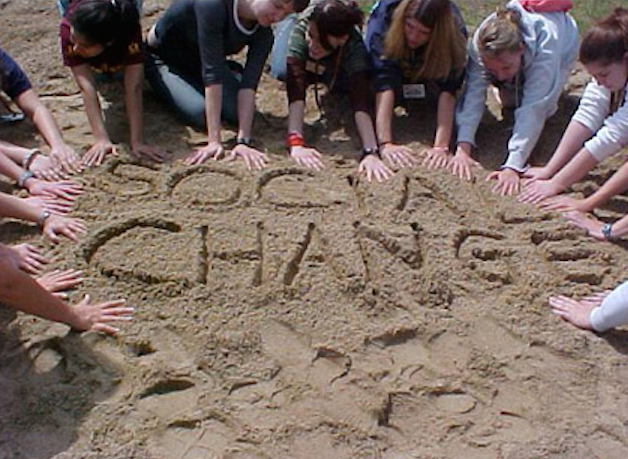
Loading summary
Transcript75 lines
- [00:00]
A
Sam. Saint gonna change. Welcome friends, to edition of Economic Update, a weekly program devoted to the economic dimensions of our livesour jobs, our incomes, our debts, those of our children, those looming as we look down the road. I'm your host, Richard Wolff. I've been a professor of economics all my adult life and I currently teach at the New School University in New York City. Well, Here we are 2016 and our economy is sputtering. The signs are everywhere. The major disappointment of the retail big corporations in America that their last few months have not been good. The fact that in most cases Americans are unable to buy the way they have in the past. Now some commentators profess mystery. They can't understand it. So I'm going to help them as well as explain to all of you that the answer here is very simple. Number one, the fall in the unemployment rate that otherwise might have led people to be able to spend more money hasn't worked that way. Partly because the fall in the unemployment rate is a mirage. It's not a measure of how many people really have jobs, it's a measure of how many people are unemployed. And when people give up looking, they're no longer counted as unemployed in in this country. And that means we see a falling unemployment rate. But in fact what it reflects is large numbers of people that have given up and those people don't have money to go to the store and buy much of anything. Number two, those people who are getting jobs are getting jobs at much lower pay than they used to have in the jobs they lost. It's clear from all the statistics, which means that even when people get back to work in this country, few of them as there are, they're not able to buy the way they did before. And you put these two things together and you can understand why stores are not selling in anything like what they had hoped might happen. And if stores aren't selling goods and services, guess what? Companies that invest, that hire workers to produce goods and services have no incentive to do so in a profit driven system. Because the only reason a capitalist hires workers or buys more inputs is if that capitalist believes profit can be earned by doing that. And if people aren't buying, the profit isn't there. And so the problem of a lackluster so called recovery continues. And the signs of it getting worse before it gets better are rising as well. Let me turn to some of our burning updates of the time and I'll try to be cute this time as well as precise. I really can't not tell you about the next item. Most People listening to this program have a pretty good idea of what the word Budweiser means. It is the name of what has been the largest beer selling in this country in the United States for a long time Back a few years ago, the Budweiser Corporation, originating in St. Louis, Missouri, thought it would be more profitable to the people who own and run the business if they sold it to another corporation. So they did, a company called InBev, which is actually a Belgian company that is based in the European country of Belgium. So the idea that nothing could be more American than a Budweiser beer turns out to have been an inaccurate statement because a Budweiser beer is a Belgian beer. For the last several years, as this became known, apparently the pressure rose inside the Budweiser folks here, now being a subsidiary of InBev from Belgium, the that they needed to shore up their nationalist profile. So they've done that. They're making an experiment, and I wanted you to know about it. From May 23rd through the general election in November, that's their choice. They're changing the name of their beer. From May 23 to the election, it will not be called Budweiser. Instead, it will be calledand I didn't make this up, folks. America. That's right. The can will say America, not Budweiser. And instead of the slogan that appeared on the Budweiser can, king of beers, the new slogan will be E pluribus unum, which is the same phrase that occurs on the currency of the United States. And they went even one step further. On the Budweiser can, printed up above is the recipe for brewing the beer that's going to be gone. And instead we're going to see printed on the can the lyrics of the Star Spangled Banner. Okay, just remember, this 100% American beer isn't American when you enjoy it or can't quite believe what you're drinking, depending on your perspective, but American it isn't. And when it says so, that doesn't change anything. I want to turn next to an interesting new book. Interesting perhaps for reasons other than what you might expect. The title of the book is called Coming of Age. In the other, it is a joint product of three sociologists, Kathryn Edin, Stephanie DeLuca and Susan Clampett Lundqvist. They spent 10 years living and working and studying parents and children who resided in a Baltimore, Maryland, public housing project. They were trying to figure out what enabled young people living in that project, mostly minority young people, what enabled them to escape the poverty of that project. All of the adverse social conditions that they faced, which young people were able to escape and which not, and what lessons that might teach. One of the first lessons they found was that living in a neighborhood like that, an impoverished neighborhood and an impoverished family turns out not to be good for the prospects of a young person. Those young people who moved out of the project because father or mother or both got jobs that enabled them to do so did much better later in life because they had gotten out of that condition. They did, however, discover that even some of the people who got out fell back in later. That is, there were traces, let's call it, of their difficult upbringing in these difficult projects. And so even though they got out, they moved, they fell back into conditions of poverty or difficulty, often because relatives had crises who still lived in those projects, and they tried to help out. Sometimes they had an illness or a problem and there were no funds extra in the family to take care of it. And so it turns out that if you have a poverty condition in a housing neighborhood, the damage you do is not just to the people living there now, but it's to their children. And it's not just to those children while they're there, it's to those children pretty much for the rest of their lives. Are there a few escapees? Yes, there are some who make it out, but the majority do not. The vast majority do not. What do these authors then conclude? And this is what I want to draw your attention to, perhaps more than anything else. The authors recommend initiatives that might help transform poor neighborhoods. They propose regulation for the for profit schools because a lot of these young people end up trying to get out of their situation by going to these for profit schools where they are, not to put too fine a point on it, ripped off. Many of them can't afford to go to a college and so never have the chance to move up by that means. So these authors recommend increasing college help and funding for folks at the bottom. Why am I bringing this up? Well, for two reasons. What the authors have found is not new. What the authors have documented is what many of us have known for decades in the United States. Indeed, the title of their book, coming of Age in the Other America, reminds us that in 1960, that's half a century ago, Michael Harrington, a very famous thinker in America at that time, wrote a book called the Other America, in which he documented for 1960 how the other half of the United States, and he meant it the other half, the other 50% lived, and they lived in conditions very similar to what this new 2016 book finds in America again, and Michael Harrington recommended the kinds of adjustments these authors are. So I conclude from that that these kinds of adjustments are too little and too late. They are reforms that change the edges of a system, but do not change the fundamental system. That's why 50 years ago we have the other America, and now we have coming of age in the other America. And they describe pretty much the same conditions, the same barriers, the same tragic stories of so many lives, and yet they can't come up with anything other than than the same proposals made back then. It won't work. The conclusion I reach, and that I would urge you to think about, is that the problem of having people who are very poor crammed into bad neighborhoods, poor housing, that problem is obvious. And the solution to it is pretty obvious too. We shouldn't have people like that. There should not be people earning so little money that they have to live in these conditions and condemn their children to have all the normal problems of life plus all the extra ones that these social conditions impose on them. Stop changing the edges of the problem and go to the root and the core. There shouldn't be a distribution of wealth as unequal as we have it. There shouldn't be a distribution of income as unequal as we have it. Were you to do something about that, then you would do away with the very conditions that such folks are forced to live in. And then maybe we would finally not have every few years another study documenting what we knew and proposing changes we know aren't enough. The next update I want to bring to your attention is also a written report. This one is not a book, but it's a report by a very famous European student of business. I want to introduce her to you first and then tell you what her recent report finds. Her name is Virginie Perrotin, French. Virginie Perrotin is currently a professor of economics at a British university, Leeds University Business school in the United Kingdom. She specializes in the effects of firm ownership and governance on how companies work. I want to read to you her list of previous jobs she's held ready. She's had positions at the International Labor Office, the London School of Economics, the Centre des Tudes des Revenue et des Couts, which is a central office in the French Prime Minister's office in Paris. She is a professor who has also acted as a consultant to the European Commission, the World bank and the oecd. You really could not get a more prestigious resume of a professor of business wherever you looked. Okay, what is it that she's done? She's written a report. It's called what do we really know about Worker Cooperatives and it was published by Cooperatives uk. If you're interested in looking it up on the Internet to find out the details of this report, I can also give spell out her name that you can find it that way. P E R O T I N so what were the conclusions of her report? What do we really know about worker cooperatives? I'm going to read them. They're not many to you and I believe they will perhaps adjust your thinking about what's at stake in moving from an economy that is dominated by corporations with an undemocratic top down structure where a handful of major shareholders have the power, they elect the board of directors and together the major shareholders and the board of directors, a group of 10, 20, 30 people in most corporate cases. They make all the decisions what to produce, how to produce, where to produce and what to do with the profits that everybody's labor helped to produce versus a worker co op where all those decisions are made democratically. One worker, one vote. Bringing to the economic system the democracy that has so far been kept from it. She examined the two kinds of enterprises. Europe has many more worker co ops than the United States. Absolutely and proportionally. So she had much to study around the European situation. So here we go. What did she find? And by the way, she studied co ops in Latin America, United States and so on. So it's a general conclusion of years of study. And she also studied existing data on worker owned and run businesses and compared them to conventional businesses. Here are her conclusions. 1. Worker cooperatives are larger than conventional businesses and are not necessarily less capital intensive. Let me explain what that means.
- [16:26]
B
Many people seem to think that worker.
- [16:28]
A
Coops are only something that applies to a very small business with very few workers. She is here to explain to us, having looked at the data, that worker co ops are on average larger than conventional capitalist businesses and use just as much technology, if not more. Number two. Worker cooperatives survive at least as long as other businesses and have more stable employment. Again countering the myth that worker co ops don't survive when compared to their capitalist counterparts. That's not true. Number three, and this is the one I would urge you to pay most attention to. Worker cooperatives are more productive than conventional businesses. Their staffs work better and smarter and the production in them is organized more efficiently. So those of you that might have wondered or worried that worker cooperatives can't or won't compete with with capitalist enterprises because they can't be so ruthless to their workers, they can't be so profit and efficiency driven. Not so. The most comprehensive study we have by Professor Perrotin proves exactly the opposite. Next conclusion. Worker cooperatives retain a larger share of their profits than other business models. In other words, worker co ops take more of their profits and plow them back into the business to make it more efficient, to make it more successful than do conventional capitalist enterprises who take a big chunk of the profits and hand it to the shareholders to have the rich lifestyle and hand it to the top executives for the same purpose. That's one of the reasons the worker co ops are more efficient. And finally, executive and non executive pay differentials are much narrower in worker cooperatives than in capitalist firms. Well folks, let me translate that one to you real simply. It means that worker co ops don't distribute the wealth they create so that a few people are very wealthy and everybody's pinched. That's what capitalist conventional businesses do. That's why we have the inequality of the economic systems in Europe, North America, South America and so on. Capitalism produces inequality and worker co ops are a direct alternative, pushing in the opposite direction for less inequality. And that's what they have achieved. If you find this interesting, as I certainly did, and that's why I'm bringing it to your attention once again, the name of the professor, Virginie. That's the French equivalent of Virginia P E R O T I N her report just released. What do we really know about worker co ops? Let me turn next, in the time that we have in this first half of our program to remind you to make use of our websites and what they're there for. The first one is rdwolff with two Fs com rdwolf.com and the other one democracyatwork.info. that's all one word, democracyatwork.info. these websites are there to elaborate on the kinds of stories we present in this program to give you ways of commenting to us. Both websites allow you to send us an email telling us what you like, what you don't like about this program, questions you'd like to see me address, issues you'd like to see the program do some research on so that it can present the answers you're looking for. Make use of these websites if you're interested in the material. If you want to communicate with us. The websites allow you with the click on your machine to follow us on Facebook, Twitter and Instagram. We urge you to do that. It's a way of keeping up with us. And finally, we want you to partner with us. And there's a number of ways to do that. One, if you know of anyone in your area who works on a public radio station or a community radio station or a university or college radio station that might be interested in carrying this program, let us know who the person is, what the station is. Send us an email. We will follow up so that we can go from the 52 stations that carry us now to an ever larger number. We work on that very diligently. Number two, if you'd like to schedule me to give a talk in your area, let us know if you might be interested in something we're going to be talking about in a few minutes. These new groups that we're starting, Democracy at Work groups that are active in local communities, get a hold of us that way, too. Let us know. You might be interested. We will follow up. Indeed, the person you're going to be hearing in the second half of the program is the exact person you'll want to talk to about that. These are websites we maintain and update every single day. You can also follow us on YouTube and other media. We spend a lot of time doing that. Please make use of the material. Make use of these websites. They're available to you 24 7. No charge whatsoever for anything that we do that we make available to you in this way. In the time that remains, I want to deal with a question. And the question many of you sent to me over the last several months has been, you want to understand why I'm critical of the profit motive. Isn't the profit motive, Some of you have said something that drives producers to become more efficient, something that drives producers to try to please the public more so that the public buys more of what they produce. In other words, isn't the profit motive something that produces good outcomes and therefore we should be satisfied or happy with it? I want to direct my answer to you as are there ways in which the profit motive pushes us in a positive direction? The answer, in my mind, is, of course there are. There are ways that the profit motive moves us in a forward direction. But you have to balance that if you're going to make an assessment of the profit motive by looking at the ways in which the profit motive pushes us in a negative direction. And then once you've done that, if you're honest and forthright enough to do it, then you can weigh the positive outcomes of a profit motive, the negative outcomes, and then make an informed decision on whether this institution, the market and the profit motive that drives people is an institution you want to keep or an institution you want to change, or an institution you want to set aside, because we can do better. That's the purpose of what I'm about to do, which is to tell you and give you several examples of how, where, when, and why the profit motive leads to awful social outcomes. Those have to be weighed in the balance, or else you're not doing a serious evaluation of an institution. So let's begin. One of the great problems afflicting the American economy that every single person running for president, for example, in the last year has agreed to. One of the fundamental problems is that jobs and job opportunities have left the United States and gone to other countries. Americans have lost jobs and job opportunities because those jobs have been moved to China, to India, to Brazil, and a host of other countries. That's why the clothing we wear, the appliances we use, say, on the back of them, if you look closely, made in China or made someplace else. Okay, job loss. What is the cause of job loss? The answer is the profit motive. The reasons companies close their factories, their offices and their stores in the United States and move them elsewhere is because it's profitable to do that. The profit motive made them go to where they could get the work done by paying people a lot less money. So if you are not happy with the job situation in the United States, which every presidential candidate said he or she was indeed unhappy, then you've got a problem with the profit rate. What's interesting about the presidential candidates, at least the vast bulk of them, is that they bemoaned the loss of jobs, but they had nothing critical to say about the profit motive. That's because they're afraid to recognize what the problem is. And that's why I spend the time I do driving that point home. Let me give you another example. For 30, maybe 40, maybe more years, the cigarette companies in the United States produced something they knew was bad for the American people's health. Countless court cases, countless government investigations have documented this. Why did the cigarette companies continue to do it? Because it was profitable. The profit motive meant that Americans, by the thousands died of lung cancer and countless other health problems. Why did the Japanese company that makes automobile airbags continue to produce them even after it had examples in cases where they were dangerous and even deadly? Because it was profitable. Why did General Motors not tell us the truth about the ignition failures that caused deaths? Because it was costly to their profits to have admitted it earlier. Why do we have an epidemic of OxyContin in the United States? A drug supposedly a painkiller, even though there are dozens of other painkillers that is highly addictive and is known to be that because it's profitable for the drug company to do it. Why do we have gentrification neighborhoods that become impossible for middle and lower income people? Because it's profitable for building companies to make high rises in certain neighborhoods that only the rich can afford. Our social problems, almost all of them can be traced back to having as one of their major causes the profit motive. So if you're going to look at the way our system works, if you're going to investigate whether the capitalist system with its profit driven corporations and its market competition is a system we ought to maintain, we ought not to change, or perhaps we even ought to go beyond. The only way to do it that's honorable and honest is to weigh what it does that's positive and what it does that's negative. The latter is what is a taboo in the United States. And that's not one we are going to kowtow too. We've come to the end of the first half of Economic UPDATE for today. Thank you very much for being with us. I hope you will stay with us. In the second half of today's program, we will be interviewing an organizer of Democracy at Work groups around the United States and she will explain to us how and why she came to do this, what the goal of all of this is. And for many of you that have asked, is there something I can do? I listen to the radio program. I follow the websites, but I want to become more active and begin to help make change. I really want to be a partner to what this program is about. The second half of today will answer a number of your questions. Please stay with us. We will be right back.
- [29:13]
B
Something good. Oh, something good. Oh, something good.
- [29:25]
A
Oh, something.
- [29:26]
B
Something good.
- [29:26]
A
Tonight. Make me forget about you for now.
- [30:04]
B
Welcome back to the second half of Economic Update for this week. I am very pleased to welcome to the microphone and to an interview that I've been looking forward to, Betsy Avila.
- [30:18]
A
So let me begin by saying to Betsy, thank you very much for joining us.
- [30:22]
C
Thank you for having me.
- [30:23]
B
Betsy Avila is the digital organizing director for Democracy at Work. That's the team of people that produce this radio program every week. And she's the project manager of the Democracy at Work action groups that are forming around the United States. And that's really what we're going to be talking about today. But before we jump into it, let me tell you what else she's done in the past, she has been a field and Digital organizer for Bernie 2016, Latinos for Bernie and the Democratic Socialists of America. Originally from Los Angeles, she currently lives in New York City. So as a way of introduction, let me explain. As I said towards the end of the last half hour, the first half hour of this program, we are now at the stage of a radio program that has grown spectacularly, that has, I am proud and humbled to say, inspired many of you to communicate with us, to partner with us in a variety of ways. Indeed, one of the reasons we're on 52 stations around the country is people like you have helped smooth the way to connect us with the radio stations, or vice versa. Anyway, we are now at the point where a number of you, and we hope this number grows, want to become active in your own neighborhood, your own town, your own state to try to develop a critical understanding of the economic problems of our day the way we do on the radio program, to spread that understanding, to engage other people in thinking critically so that we can move forward. And likewise to pick up on one of the major thrusts of this program, which has been to talk about an alternative way of organizing enterprises instead of the top down, hierarchical, capitalist way, a worker democratic, cooperative way. And because so many of you wanted to get active, we have decided that Betsy Avila, who works with us, is going to devote the major part of her time and energy to helping such groups get off the ground, develop a program, solve their practical problems. And it's really all why that's happening and where that's going to go that we're going to talk about.
- [32:47]
A
So, Betsy, let me begin by asking you almost a little bit of a personal question. Why are you doing this? What is it that brought you in your life to think about being an organizer as you've already been and now being an organizer for these kinds of groups which you are undertaking?
- [33:04]
C
Yeah. So I actually got started with Democracy at Work a few months ago, and I originally started helping out with writing emails and helping out with the website. And it would be a huge question that would keep coming up. People would keep asking, how can I get involved? How can I help? And I remember being in the same position because I was a big fan of the show years ago. And I would even download them like three or four at a time and listen to them on long road trips. And there was that urge, like I really wanted to get involved. I wanted to because I agree with everything you say, I wanted to take action. And because I have this background in the field of digital Organizing. It's something I wanted to bring to democracy at work. It's still a question I get a lot, so I'm just bringing my skill to the team. And I'm hoping that people get very excited about connecting with each other in their cities and helping worker cooperatives and the mission for economic democracy.
- [34:00]
A
Okay, let me ask you one of the things when you and I were talking that is the goal here is to engage local people in being asking the hard questions and not being afraid to go where those hard questions lead in terms of facing the flaws, the failures, the problems of our existing economic system. Do you have a sense of people's receptiveness to that, of the prospects for your being able to do this?
- [34:30]
C
Oh, yeah.
- [34:31]
A
Tell us a little bit about how you see from your interactions with people, what's welling up as an interest.
- [34:39]
C
Oh, gosh. I mean, people are incredibly ready to start moving forward and changing the system, I think. I mean, we can credit a lot to Bernie. Right. He's brought a lot of these issues to the table. But even before that, we had the Occupy movement that brought up these issues of economic inequality and that there was something wrong with the system. So this has. I've been boiling up for a while. I think a lot of people have wanted to find an organization or find a cause to join, to try to take action. The thing is, Bernie's made it very popular now, so, you know, it's becoming a little more.
- [35:13]
A
Okay, it's easier for you to do.
- [35:15]
C
Yeah, I mean, it's okay to. It's okay to call yourself a socialist now. Just a couple years ago, it was a little harder, and then years before that, as you know, even harder than that. So it's these small steps. It's something that's been escalating since Occupy. And, you know, this campaign with Bernie is just another milestone in that movement, and we're just going to take it from here. I think now people are more receptive to the idea. They're more open to it. They know something is wrong and they want to do something about it. And, you know, it's up to us to try to find out how to use that energy and create real change.
- [35:53]
B
Good.
- [35:53]
A
So let me jump right in. Give us an idea of how you think you can help mobilize. In other words, given the enthusiasm you've found, given all the openings that Bernie and other things have created, how do you see this moving forward? What will local groups do once they notice that they're there? In other words, that local people get together Know that there are people that agree with them that they can work with. How do you see this emerging or evolving?
- [36:26]
C
Well, I can tell you what we're going to do. We hope that people involved with democracy at work really take to supporting, creating a new foundation for our economy. That's really what this is about. We want to try to connect supporters in the area with other people who listen to your show, read your books, or are generally supportive of worker co ops as a foundation for a new system and then they can start to take actions in their areas. I mean, the movement as a whole is going to be a coalition of a lot of different organizations and movements that, you know, are focusing on a specific issue. And we're going to, we're going to focus on trying to change the economy from the, from the ground up.
- [37:08]
A
Okay. It's been said, and I know this is a hard question because I face it all the time. It's been said that the American people are somehow leery of joining organizations in general, more leery of joining political organization, and even more leery of joining critical or left wing or progressive, whatever word you like.
- [37:35]
C
Right.
- [37:37]
A
Are you worried about that? Is that an obstacle? Has that changed? Is that wrong? From the get go? How do you.
- [37:44]
C
No response to that. You know, it's, you know, we've talked about how it's become a little bit easier. Bit by bit it becomes a little easier to be open about either being a socialist or being having more progressive points of view. So, I mean, am I worried about it? No. We're always going to have people who have opposing points of view. And I think we also have the issue where people are working more, they go to school and they have less and less time to commit to outside groups, outside of their families, outside of going to work, outside of studies. But you know, we're in a really, we're in a critical point right now where we really have to put that aside and say, no, if this is something I really believe I have to stand up and I have to do something about it. I mean, every time, you know, we're trying to create or be a part of a larger social movement to change the way things are, to change our economy, to change our politics. And it really does start with people just, you know, people like you, me, students, you know, family members, community leaders who just decide they're going to stand up and do something. And it doesn't have to be a big thing. You know, I think people have this idea in their heads, like, if I'm going to change the world. I have to be this great figure or I have to get elected somewhere. But it doesn't, because it really does start at home. You could be, you know, a student, or you could be a mother, father, daughter. You could be just a member of your faith, community of your church and do small things that really help the movement as a whole. So I think people are starting to recognize that. That it's a collective effort. It's a collective effort, and they're going to start stepping up to the plate. I think we're seeing that. Right? I mean, when you go after your events, you speak all around the country. I mean, is that a big question that you get?
- [39:41]
A
Overwhelming, overwhelming. That's one of the reasons I think that I support this with such enthusiasm. Because really, the truth of it is, when I first started this public speaking that I've been doing now, a lot of. Back in 2010, the first two years, 2010 to 2012, even 2013, most of what I was doing was explaining to people how we got into this crisis and this economic mess and why it's so hard to get out of it and why it's so unfair. Who carries the burden? Who gets the bailouts and all the rest of it. But then starting around 2013, 14, my audiences changed, and they changed me. The audiences. Now, they still wanted me to explain what had happened, but they were impatient. You know, if my talk lasted an.
- [40:33]
C
Hour, I was too.
- [40:35]
A
But talk lasted an hour. 45 minutes in, you could, you know, I read my audience, as teachers always do, and I could tell they had enough of the analysis. They wanted to do something. And more and more, they would come up at the end of the talk and say to me, what do I do? What do I do? Where do I sign up? I had nothing for them. I didn't have a place to go. I didn't have an organization to say, hey, go do this. So I said lame things like, you should start something. You know, don't wait, or big, broad general question. But it's absolutely the case that more and more, and it's going and continuing, people are now they want to do something. They just don't know exactly where to turn or how to start or how to get it going. And they're a little scared, I think, still not as much as it used to be. But it is a kind of scary thing. You know what sometimes works, and I'd like your reaction. I sometimes say, look, how many of you in this room are so busy with your job, with taking your family and your family Obligations, Seriously. Maybe being active in your church or whatever so that you have no more time to do these larger political things. Yeah, a lot of hands go up and then I do something which is a little harsh. But I say, you know, one of the ways a system, even when it's not working, keeps itself in power is by making everybody so busy that they haven't the time. This isn't.
- [42:10]
C
I'm so tired.
- [42:12]
A
Yes, you're tired. All I can do is sit in front of the TV or have a beer or whatever it is that you relax.
- [42:20]
C
An America beer?
- [42:21]
A
Yes, an America beer. But it's a way a system keeps itself going. And I say to them, do you want to let this system keep itself going at your expense because you're too tired? Don't let the system win by exhausting you out of becoming part of a change movement.
- [42:41]
C
Right. And I definitely used to be one of those people. I used to have a full time job and still go to school and then have this other part time job. You know, the ridiculous things that you do in and a little after college and you've got energy and you still have to go work out, go to the gym and you come back, you don't want to do anything. You've got family to take care of, you have no time. I think at some point it's hard to be aware of what's going on and not be able to do something about it. It causes this different type of frustration. And that's what I meant when I said people are getting. When I said I was impatient too, I really was because I was working so hard and I still had more to do outside of work and I still had student loans and I was not, you know, it was really hard to make ends meet. And you know, knowing it was a systematic problem is something that really pushed me to get involved in progressive politics. And that's why I'm doing what I do. And I hope that other people who are maybe in the same situation, maybe people are listening in their cars right now who've ever felt this way. You know, there are other people in your area who feel the same way, who are just as frustrated, who understand what's going on and who are tired of taking it. And one thing that we're going to do is get you in touch with those people. And, and that's really where it starts. It starts with communicating. You know, once you get in touch with someone in your area who also agrees something is wrong and something has to be done and you've connected with that person and you connect with a third person and a fourth person and it grows very slowly. It's a long process, but it does grow. And that's when real action happens. That's when you can start taking smaller actions, either supporting co ops or continuing education in your area, or doing something on campus or changing the curriculum of. There's really an endless number of things you can do. These small actions all contribute to the larger change that we're going through. And that's why I'm really excited about it and I'm excited to be doing this with Democracy at Work.
- [45:03]
A
And let me ask you, I know you've only been working at this for.
- [45:07]
C
A few months, just a couple months.
- [45:09]
A
Tell us though, if I'm understanding correctly, there are already some places where this is beginning. Can you give us a smattering of the response so folks have a sense that this is, this is real and it's underway?
- [45:21]
C
Yeah, I mean, we've only been. We sent out the announcement via email maybe two months ago. Right. And we sent it. And if you're not signed on to the Democracy at Work email list, you should definitely sign on because there are really good emails and we promote a lot of good stuff. But we first announced it via email a couple months ago and we had incredible response from people all over the country here in New York, and we've got something going on in New York and you and I can both talk about that. Los Angeles, Puerto Rico. But then we've got interest in a lot of other major cities. Detroit, Philadelphia, Baltimore. Baltimore. It really was surprising to see, see how incredible the response was just from an email. And I really hope it blows up after this.
- [46:13]
A
No, one of the reasons I want, I mean, this is a service that my listeners have basically asked us to do. They've said 100 times, I mean, I can't tell you how many emails we've gotten saying, okay, thank you for the radio program. Very nice, very polite. But tell us what we can do, how we can become otherwise. We're just building up, like you said, Betsy, we're just building up a frustration because we think about the radio program. We read the newspaper and watch tv. We live in this society. We understand, we know what's going on. Yes. But what we don't know is how, where, when. And then there's these. It's very important what you just said, that you can start small. You can start a small group where the imaginations and the energies of whatever small group starts will determine what you do. The point is to Become part of, as you put it, this larger movement for change.
- [47:08]
C
And it is a scary thing to want to do when you think about, well, I could do this small action, but what does that do in the face of this giant. Right. It doesn't look like a lot, but you, you know, you're doing one thing in Los Angeles, someone else is doing a smaller thing in New York, someone else is doing a smaller thing in Baltimore. All these things really do add up and create change. This is how movements start, this and solidarity with other organizations. This is how we get things going. So I'm excited to be part of that.
- [47:40]
A
Perhaps the most famous anthropologist the United States has ever had, a woman named Margaret Meadow, was once asked in a kind of nasty interview. The interviewer said to her, well, I mean, that's a very small group there that's starting to fight for change. And she looked at him and she said, you know, I study human society from the earliest times to the present. That's what I do. And let me tell you something, every single movement that ever changed the world started with a very small number of people getting together. In other words, to say that there's a small number of people getting going is not a criticism. It's how all movements for change, how all change comes about. So don't be shy, don't be self critical in a way you don't need to be. The trick is to make the commitment and start doing it. Then it'll develop on its own.
- [48:37]
C
Yes. And most importantly, be public with your outrage. Be public with what, what you want to do. Because what it does is it allows other people to do the same. You know, a few years ago it was very hard to come out as a socialist, not socialist anymore, but now more people can, and now we're starting to see how big the dissent, the dissenting voice really is. It's huge.
- [49:02]
A
Yeah. And I think that Bernie Sanders deserves the appreciation. Whether you agree with everything he says is really not the issue. What he has done is made it possible in the United States for a critical perspective, which is what the word socialist means, to become part of the national conversation so that we're not a kind of childish society which only allows expressions of appreciation for the economic system as if there were no fundamental criticisms, as if there were no alternatives. It's really opening up a room that had become so stuffy with one sidedness that it, you know.
- [49:44]
C
And you know what else? He's created a new point of reference too, because before he was a popular democratic socialist, and that's in air quotes, depending on whether or not you want to call him that. But it used to be if you told your friends you were socialist, you know, they no longer think Stahl. They don't go back, you know, now it's just, oh, they think Bernie. It's a new point of reference. That's a big deal. That's a huge deal. So we do have to credit him for that. If anything, we credit him for that.
- [50:15]
A
Tell me a little bit, how do you think, I mean, you've partly answered this, but how do you think groups forming in various communities as they respond to us, as you work with them, how do you think that adds up to the bigger changes? Help people thinking, listening to us right now, help them and help me connect the initiative at the base with the big changes that we kind of all know have to happen.
- [50:43]
C
Well, we know that there is a rising number of people who already know that there's something wrong and who already know something needs to change. But as we all know, and we all know people who have yet to get there. So one of the biggest things that we could do is do things in our community that educate people on, you know, what's wrong with this, on, you know, on how to critique capitalism and how to introduce alternative economic systems just into the ethos of the area. So you could, you know, if you were a group and you wanted to focus on education, you could host a teach in, or you could host a film screening, or you could have a reading group. You can try to get economic update on your local station, hint, hint. Or, you know, if you wanted to take a more proactive approach, you could support existing worker cooperatives in your area. You know, create an approved story list, support legislation that would benefit worker co ops or the creation of worker co ops. You could research starting or transforming a business into a future co op. If you're on a campus, you could try to change the very heart of. You could really petition for Marxist economy class in your liberal arts college, or if you're in a business college, maybe a co op development class, or if you're a fan in high school, maybe a revised econ course. I hardly remember mine. So that tells you how good they are. Start a student and there really are an infinite number of things you can do. And I'm actually reading from a list of suggested actions that you can find. If you go to democracyatwork.info groups, we have a list of materials and resources for you. So we're not just asking you to stand up and say, I Want things to stop. We're trying to provide the tools to make it easy for you to take action at the local level.
- [52:46]
A
Could you give us again the website address that people should go to?
- [52:49]
C
Yes, gladly. It is democracyatwork.info groups, and on that page you'll find materials, resources, a little intro to what we're doing. You'll find my emails everywhere. You can't miss my email on that.
- [53:03]
A
Page, but tell us that, too.
- [53:05]
C
It's betsymocracyatwork.info.
- [53:09]
A
So let me repeat that for everyone. You want to talk to the person in charge here who's got all of this information at her fingertips, do not hesitate. That's another service that our websites provide. Send an email to Betsyemocracyatwork.info and that'll be an immediate way to get into this whole process. She will respond, and you're off to the races. In terms of becoming part of this.
- [53:37]
C
I want to hear from you if you're listening. I want to hear, hear from you. We both want to hear from you. Look through the page, see if there's already someone in your area who wants to start a group, and then we'll take it from there.
- [53:48]
A
Wonderful. That's what a digital organizer is.
- [53:52]
C
I'd like to think most organizers are digital or should be, because we live on our phones now.
- [53:58]
A
Well, you know, it's really so interesting. It used to be that organizers would say things like, all organizations start over the kitchen table when you sit down. And they still do. And they still do.
- [54:11]
C
They still do.
- [54:12]
A
But this digital kind of smooths the way to that stage. It gets you into the beginnings of an interaction that can then, yes, become the other.
- [54:23]
C
Right. And I mean, that's part of what we're trying to do here, too, is put you in touch so you can talk to someone face to face. Nothing will ever be better than organizing face to face. It's the strongest thing you can do. But we do have tools that allow us to connect people from longer distances or people who might be neighbors and not know each other, might both be fans. And, you know, that's. I think that's a little bit about how organizing has evolved, too, in the last couple of years.
- [54:52]
A
Tell me if you can. We're running out of time, but tell me if you can your own you just as a person. Betsy, what is this doing for you? What does this kind of organizing work? How does it fit into your personality, into your personal goals, into your sense of the meaning of your own life?
- [55:14]
C
Oh, Gosh. Oh, that's so deep. You know, it's just.
- [55:21]
A
Think of it almost this way. If your uncle or your aunt said to you, why are you doing this, Betsy? What would you. And they know you as an individual, as a person in their family and so on.
- [55:31]
C
See, they also know better than to ask me that question, because then they're stuck for an hour. Lecture from me. Let me tell you. You know, it's becoming. I actually was involved in electoral politics and I worked for some elected officials before I got involved in activist politics. And I mean, great people, great work, but it's just become increasingly clear to me that if we ever want to see change, it has to come from the ground up. They react to what we do. So I feel like I'm contributing a little bit to that movement by being on the other side of things, by talking to people, by encouraging them to stand up and be loud and take action. So that's why I enjoy doing this.
- [56:14]
A
Okay, Very good. All right, folks. Betsy's a great organizer. She's also very modest, so I'm not going to draw her out anymore.
- [56:22]
B
But I do want to underscore. If you're interested, go to the website, look up groups. That's the place where you'll find the material we've already gathered. And email betsiedemocracyatwork.info her job.
- [56:38]
A
And our organization is there to help.
- [56:41]
B
Build whatever groups any of you might.
- [56:44]
A
Be interested in developing.
- [56:47]
B
We've come to the end of our program.
- [56:49]
A
I want to thank you, Betsy, for being with us.
- [56:51]
C
Thank you.
- [56:52]
B
Urge you to listen to what Betsy had to say and what she represents as a whole new generation that knows what it has to do and has a pretty good idea of how to.
- [57:01]
A
Go about doing it.
- [57:03]
B
Please join us again next week. Make use of our websites as I always ask you to do. I want to thank truthout.org that remarkable independent source of news and analysis, for the partnering that they have been doing with us for so long. We really appreciate it, and we urge you to make use of Truth out as well. I look forward to talking with you again next week.
- [57:26]
A
Your time now, baby but after wild gonna be my time my time, babe they ain't gonna change change, change, change change, change, change Fam.
- [58:05]
C
Sam.