← Economic Update with Richard D. Wolff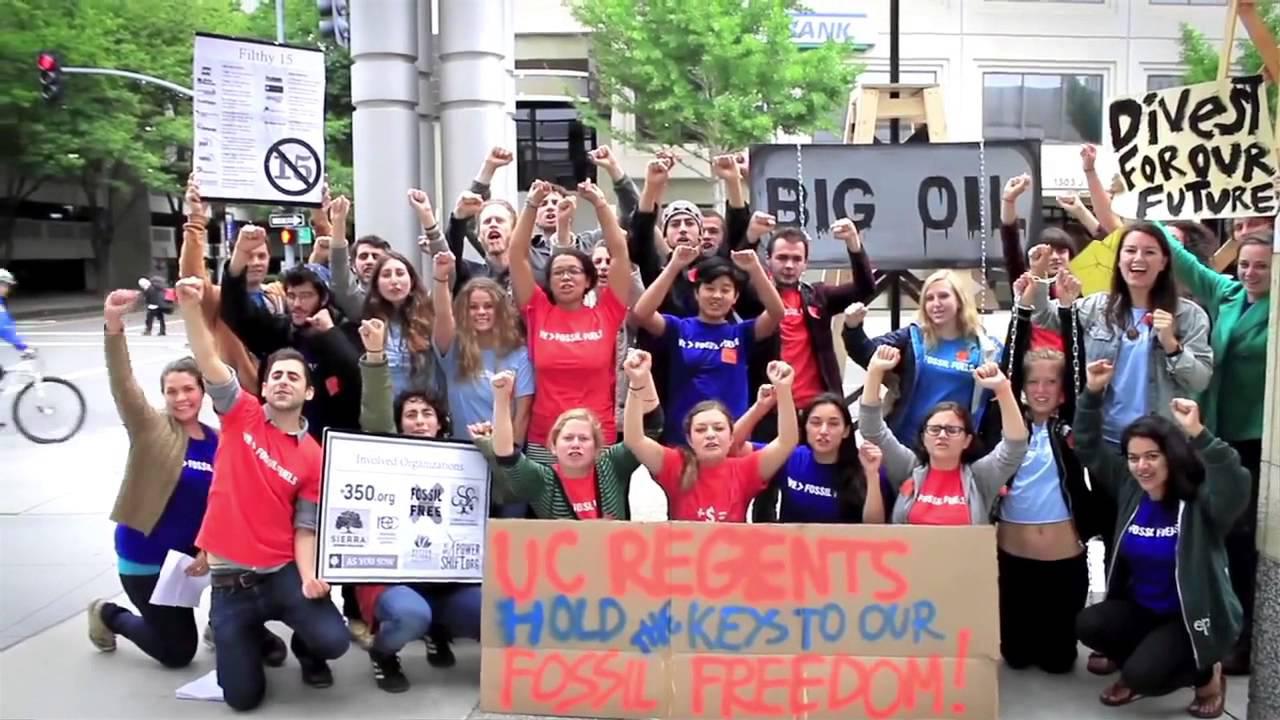
Loading summary
Transcript43 lines
- [00:00]
A
Sam. Saint gonna change. Welcome, friends, to edition of Economic Update, a weekly program devoted to the economic dimensions of our lives, our jobs, our incomes, our debts, those of our children and those looming down the road, either to frighten us or to comfort us, depending on where we stand in this complicated and troubled economy. I'm your host, Richard Wolff. I've been a professor of economics all my adult life, and I currently teach at the New School University here in New York City. We have many things to go over today, so I'm going to jump right into them and wait a little bit for some of the announcements, and I do want to whet your appetite for an interview coming in the second half of the program. This last week or two were a couple of really interesting events, and I want to start with one that happened at the university where I taught most of my life and the University of Massachusetts in Amherst. A few weeks ago, students there staged a sit in and indeed a number of them were arrested back in April. They were demanding that the university's endowment, which by the way is quite modest, stop being invested in fossil fuel production here in the United States and around the world. Their view was that the university, using money that is either donated or paid into it by students and family in and around Massachusetts and beyond, shouldn't be used to pollute the earth and to destroy the earth for all of us, which is what fossil fuel companies spend a lot of their time and money doing. And they didn't want the university to be any part of it, and so they demanded that. And the university made the usual lame excuses for not doing it or it can't do it, even though the amount of money involved was very small, five or six million dollars, which in the scope of these sorts of things is very small. But interestingly, the students persevered. And now the university has in fact agreed with the students and agreed to divest itself. Indeed, I believe that process has already happened, or will very shortly. It will no longer have $5 million roughly invested in companies that are polluting the earth by exploiting fossil fuels. Why is this interesting beyond the initiative of the students, beyond the economic signal that it sends? Because, of course, this is something students in many other universities are thinking about and working on, as are people outside of the university. And I am interested in the economics of it and the broader economic implications. Let me explain. What the students were saying is that a university that invests money ought to have a much wider, broader perspective upon the question of how to invest money than simply getting the biggest bang for your Buck getting back the most money. That that's a narrow, inappropriate calculus. Because what is being done when you invest in fossil fuels is not only making money out of the production and distribution of the fuels, but having very serious repercussions on the air, the soil, the earth and the very survivability of the human race. And that that ough factor in in a way that people who focus on investment returns rarely do. Now this is an interesting principle because it applies all over the place. For example, why should someone pay workers a minimum wage in this country, currently federal minimum wage $7.25 an hour. It is obvious to anyone who isn't deaf or blind, or even if they are, that $7.25 an hour does not allow you to live a reasonable life, to have the health care you need, the education you need, the recreation you need to live a proper life. If a society doesn't want to condemn millions of its people to a substandard living, then they shouldn't pay what the market might allow. What might be the most profitable thing to pay a human being, but isn't the kind of society we want, isn't the kind of relationship among people we want to foster and which we will get if some are very rich and others are living on $7.25 an hour. In other words, what the students in their modest way at the University of Massachusetts did is question the logic of profit as a calculus and a standard by which to judge what we should be doing. They were questioning the market which would dictate that the University of Massachusetts only invest its endowment where the rate of return is the largest. They were saying no, those are not the proper standards. We do not want to be governed by the logic of profit and a market. We have wider, broader concerns that we share with other human beings and they ought to be part of investment wage all economic decisions. And that's a very powerful message which in their way, those noble, courageous students at the University of Massachusetts have put on this nation's agenda. I want to turn next to an age old economic problem, but that now has a modern twist. Here's the problem. Economic inequality. A situation in which some people have a great deal of wealth and an awful lot of other people have little or nothing. Which is the situation here in the United States and in much of the world. We've documented that countless times on this program. I'm not going to do that again. To get at are what the consequences are and the most important consequence I want to stress this morning or this afternoon, depending on when you hear this program is the inequality in the end comes back to haunt and undo the very rich who make it happen. In other words, they constantly believe the folks at the top that they're just going to have a wonderful ride being the rich ones and everybody else is just going to have to get by on what crumbs fall from the table. The mistake they always make is not to see that if masses of people are left to live on crumbs, there will be consequences of that situation and they will come back to hurt and haunt the rich. They constantly forget it. Let me give you the biggest example these days. We have been very loathe to raise wages in this country. The real wage, that is the money you get adjusted for the prices you pay, has not changed much in the United States in the last 40 years. Meanwhile, the rich have gotten much, much richer. So the gap has gotten much wider. But this is a problem for the rich too, because if you don't raise the wages of the mass of people for a long time, they don't have the wherewithal to buy back the goods that the rich people have invested their money in producing. There's a problem for a time in this country, we kind of papered over the problem by plunging the mass of people into huge levels of debt that they could spend borrowed money to keep going. The rich people who were producing the goods that otherwise they couldn't have sold. And then the rich people got so excited about the debts everybody was carrying that they began a big speculation in those debts. And that all blew up in 2008. And when that blew up, it savaged some of the wealthiest people's holdings of stocks and bonds that they had speculated with on the debts of the people whose wages they didn't allow to go up. You see the point? When you squeeze the mass of people, in the end it comes back to undo you as well. Why am I telling this story? Because we have a modern version of it. It's called the Zika virus, the mosquito. Why do I tell you this? Well, we've done two very remarkable things recently in the United States. The Affordable Care act excludes undocumented people in the United States from access to medical care the way it is allowed for American citizens. And those undocumented immigrants are among the poorer folk. America. And the idea behind this was to save money on the poorer folk, to discourage immigration of poor people, which always forgets that the major driver of immigration is the conditions in the countries from which people flee. But put that aside. We also, we also Have a situation in which we are loath to provide health care for people who are not only poor and immigrant and undocumented, but we conveniently forget why they're here and what they're doing. They're working here, most of them. They're working in restaurants, they're working in the fields, they're working in all kinds of areas where if they are carriers of disease, the disease will spread. And if you don't give them the health care that a decent human being wants for everybody else, just as they want it for themselves, then you are condemning them to an illness which they will pass on to everyone else. It is not smart, it is not humane, and it is not safe to treat people in these unequal ways. In New York City just a few days ago, the first case of a baby born with microcephaly that is a head that's much smaller than normal and that will condemn this child to suffering, not to speak of the parents. We just had our first case here in New York City. So the story of the spread from the poor in Latin America where this virus started here is an age old story with a modern twist. Next item. This one has to do with something called the Consumer Products Safety Commission, A relatively new member of the government regulatory apparatus whose job it actually has many jobs, but one of whose job is to find if products produced by capitalist corporations might be dangerous for our safety, for our health, for our well being. And there is an interesting recent story that was in much of the media about how these days this commission is very Busy, they announce one recall per day. Wow. That would be 365 examples of unsafe products that we are bombarded with by companies who are trying to make a profit off of doing this. Well, I'm going to be very generous, much more than I think is justified. But I want to make a point. I'm going to be generous by assuming that when there are defective products, something goes wrong, something in a medicine is unsafe, something in a food is unsafe, something in an automobile is unsafe or dangerous. I'm going to assume that it was a mistake, an honest error of human beings otherwise trying to do their job. I'm going to assume that. But I want to stress that the recalls that are catching these things are not the solution to the problem. Why? Because we have enormous evidence, enormous evidence of many, many examples of companies who respond to a recall. And then when the newspapers get involved and government commissions start looking, it turns out that the company in question, even when it corresponds to when it accepts a recall in Many cases knew about the. The deficiency, the defect months or years ago, not that many weeks ago on this program. I went through that with the Takata airbags that are in the automobiles across America, with the ignition problems that General Motors had with the faulty. I'm again being polite here. Emissions control mechanisms that VW and other companies put in their cars. Just like with the cigarette companies, just like with today. Exxon in trouble because it knew all about global warming and the problems of fossil fuels decades ago. Just like the cigarette companies had evidence of the link of smoking with lung cancer. That's not a problem of a human mistake. That's a problem of the profit system. It's profitable to companies when they know about a product defect that it would be expensive to admit that it would be expensive to correct. That's profit that drives their not telling that to the public. Being able to continue to produce and sell dangerous, defective products that they know to be such that they have had internal memorandum and emails proving it. It all comes to the surface. So please, when you hear that there are mistakes being made and perhaps you think to yourself, well, mistakes are part of the human experience, which indeed they. Mistakes are not the problem. Honest mistakes. That's what we have a product safety commission for, to catch honest mistakes. What we have to worry about is that we have an economic system. Capitalism. The profit motive that drives it, which we now have evidence, leads company after company from one industry to another to hide, to delay, to postpone acknowledging defects that they've known about in many cases, not just for months and years, but for decades. That's a system problem. That's a problem with how capitalism works. In the time that I have left, I want to talk a little bit about yet another economic difficulty that has to be faced. And here I'm going to rely with appreciation on the New York times story of June 2. It has to do with an old problem. There's a little bit of breathlessness in the New York Times story as if this was a hot new issue. This has been an issue for many, many years. What am I referring to? They're called payday loans. Payday loans. And for those of you who may not have needed these things, let me make sure you understand what they are. All across America, there are human beings who live paycheck to paycheck. Next to them are human beings who can't make it from one paycheck to another. As they used to say in the famous old country and western song, there's too much month at the end of the money okay, what do those folks do? Well, in the United States, they often go to a payday lender and this is an institution, a small, usually small lender stuck in a shopping mall somewhere or in a poorer part of the neighborhood, in a strip mall, whatever. And this company, this little outfit, will give you a loan that is guaranteed by your paycheck. In other words, they're giving you your paycheck in advance of your actually getting your paycheck, so that when you do get your paycheck a week or two or so later, you have to bring it to the lender and give it to them, because that's the payback to them. And of course, they charge you for the kindness of giving you your money a week or two before. Most payday loans come due in two weeks. So you getting it about halfway through the month to get you through the second half of the month till you get your paycheck. The fees then are payable and it averages out to in the neighborhood of $15 per hundred dollars that you borrow. Well, if you do the arithmetic of what this works out to as an annual rate of interest, it's just shy of 400%. And the truth of it is, many people are paying that. Why? Because when they get their paycheck, they have to spend it for some basics like food and so they really can't pay back. And that's alright with the payday lender, he simply rolls it over for another two weeks. So you've paid $15 for your $100 loan for the first two weeks, then another 15 in the second. You do the arithmetic. This is the most expensive way to borrow money on this planet right now. Well, is it important? Let me give you an idea. In the United States, according to that article in the New York Times on June 2, 19 million of our fellow citizens rely on payday loans. The amount of fees taken in by payday lenders. 7 billion with a B. $7 billion a year. Okay, there's no nice way to put this. This is going to people who are on the edge of economic crisis in their own lives and ripping them off big time. It's taking advantage of people who can't make it to the next payday by charging them an outlandish amount of interest to squeeze them in their moment of need, in their moment of difficulty. Well, you might be interested in how the three presidential candidates that still remain in the race have chosen to deal with this. Mr. Trump is in favor of getting rid of the Consumer Finance Protection Bureau. That's the bureau considering doing something about this horror right now. So Mr. Trump's response is not to deal with the horror, but to get rid of the commission that's trying to deal with the horror. On the other hand, there's Bernie Sanders. He has a very strong proposal that there be a 15% per year cap on all consumer loans. Well, that would basically put the payday lending business out of business. And in between the two, Hillary Clinton, who thinks that the consumer protection agency shouldn't be eliminated the way Mr. Trump says and that something should be done about this problem. Beyond that, not much from Mrs. Clinton that probably fairly describes the range of opinions in the United States on this subject. Meanwhile, here are some facts to keep in mind about all of this. One, this problem has existed for many years. So where has been the action all the time? Why is this a hot issue now if it even really is? Number two, if the Consumer Product Safety Commission is going to issue some new rulings to actually do something, it's kind of strange because a this commission can do that at any time. It does not need the president. That's the law. And it does not need congressional approval. The authority given to this commission allows it to do this, to change the rules of lending this way. And so the interesting question is why now? Why not last month, last year, years ago? What is the delay here? Is there a moral issue? Does someone really think this kind of thing should be allowed? Whoa. Number if it's just a commission, well then we're about to have an election. And whoever the new president is, whichever one of the three currently still running, they may or may not keep the commission. They may or may not change who's on the commission. In other words, whatever is done now is on shaky ground in terms of any long run effect since a whole new regime will come in with a whole new way of dealing with this problem. At least that's how it looks. So then how do the people who defend this sort of situation, I find their defenses even more interesting in some ways than the horror itself. Here they are. One defense. Gee, this will put people out of work. People who work in those little lending stores that you can go to often with bars, because people are desperate and the people who work there are scared about the rip off they're performing on the folks who come in for the payday loan. But it's right, you know it's correct. If you put the lenders out of business, there will be some jobs lost. I always find this kind of argument remarkable. Yes, there will be some jobs lost, but let's be careful now. Let's just be logical, just a little. The $7 billion that poor people are now forced to to pay over to these folks, they won't have to anymore if there's no payday loan, will they? They will have that money to use for something else and that will create that spending of the 7 billion other jobs, won't it? In other words, if you're really concerned about jobs, which clearly these folks are not, then you would have to weigh the jobs lost if there's no payday lender versus the jobs gained in all the other spending that people will be able to do for goods and services because they're not being ripped off. Excuse me, charged for the payday loans at 400%. Here's the second defense, and this one I find even more remarkable. Poor people, the association that speaks for the payday lenders tells us poor people have too few options and they shouldn't be taken deprived of another option. Oh, I see. Poor people who already suffer because they're poor, who already get ripped off because they are poor, shouldn't be denied another rip off because they're already with too few options. You really have to take your hat off to people who invent arguments like this. But we're not done. What I liked most was how the institution that represents payday lenders refers to its goal. And here it is, quote, we want to provide a wide choice of short term credit options. Oh, wonderful. Doesn't that sound charming? They want to provide a credit option. It's true enough, you know, let's grant them that. Poor people are desperate in our society. They're not paid properly. That's why there's a struggle for $15 an hour, even though that isn't enough either. But nonetheless, everybody knows, everybody knows that. The problem is that we have some people who have an immense amount of money, billionaires, et cetera, et cetera, and a vast number of people who don't have enough to get by, whose options are so weak, whose jobs are so poor, whose income is so low that they become bait for these kinds of bottom fishers, as they're known in the economic lingo of this industry. This is a systemic problem too. People shouldn't be in the position of needing such a thing. There shouldn't be the need that this rapacious industry fills at an enormous cost to the society as a whole and to the lives of millions and millions of the American people. Well, folks, I hope I haven't depressed you. I have felt that it's necessary to look hard into some of the realities around us. We did begin with the heroic action of the students at the University of Massachusetts Amherst and the very important economic questions they brought up. If these kinds of topics interest you, then let me, as strongly as I know how, urge you to make use of the websites that we maintain that are an integral part of this program. Those websites contain elaborations of the arguments we make here. They are also ways for you to communicate to us. If you like the program, if you want to see changes, if you have questions you'd like me to respond to, this is the way these websites provide you with an immediate way of communicating with us. We read and respond to every single one of them. The websites are also ways to partner with us, to follow us on Facebook, Twitter and Instagram, to find ways to use the material on the websites to share with other people. We are in particular interested in partnering with you in ways that the websites make possible. If you go to the website democracyatwork.info that's all one word, democracy at work. The upper left hand corner, there's a little menu symbol. Click on that and you can see the ways in which you can partner with us. I'm particularly interested this week to urge you to take a look at the button under there called get involved. It gives you a way of getting involved with us, helping us get on your local radio station, bringing me to your area to talk so that I can meet you and you can meet me. We are also now forming action groups looking for relationships with existing groups to bring us all together so we can have more of a social impact together than each of us could have on our own. If any of this interests you, make use of the websites. Let us know and let us work together. Please stay with us for a very short break now. When we come back, I will introduce you to my interviewee for today. And I think you will find her an attorney and someone with years of experience in the fight for our environment particularly, I think you'll find it very interesting. We will be right back to have that interview.
- [28:44]
B
You want a sunshine of my life that's why I always be around.
- [28:56]
A
You.
- [28:56]
B
Are the apple of my eyes yeah, forever you'll stay in my heart.
- [29:06]
A
Oh.
- [29:07]
B
I feel like this is the beginning Though I've loved you for a million.
- [29:16]
A
Years.
- [29:19]
B
And if I thought I loved once and day I find myself drowning in my own field oh.
- [29:43]
C
You are.
- [29:43]
B
The sunshine of my life.
- [29:48]
A
And that's.
- [29:49]
B
Why I'll always stay around.
- [29:56]
A
Welcome back, friends, to the second half of today's edition of Economic Update. I want to jump right in to introduce you to Carol Dansarow. So, Carol, before I tell everybody about you, welcome to the program.
- [30:10]
C
Thank you so much.
- [30:11]
A
Carol Dansarow has spent three decades of her life fighting for the environment as an attorney, an organizer and a director of nonprofits engaged in that kind of activity. Her career has included stints with various state and national environmental groups, including a decade with the Seattle based Washington Toxics Coalition and another decade with farm worker families fighting exposure to highly toxic pesticides. Dansarow has been honored with awards from the Washington State Trial Lawyers association and the Pesticide Action Network of North America. She originally received her law degree from the University of Michigan, that's in Ann Arbor, in 1984. And I asked her on the program, having known a little bit about her work, because she also recently released a book called what It Will Rejecting Dead Ends and False Friends in the Fight for the Earth. So, Carol, thank you for all the work you've done and welcome to the program.
- [31:17]
C
Thank you for having me on the program.
- [31:18]
A
Oh, my pleasure. So let's start by saying to the audience or telling the audience, you've been doing this kind of work, legal and other environmental action work, for 30 years. Give us some sense of why you're doing this. Why have you done this? Why did you choose to lead a life like that?
- [31:38]
C
Well, I became an environmental activist because I'm very concerned about pollution and the impacts in our world. Toxic chemicals are contaminating our waterways, other ecosystems, our bodies, our food supply. And I want to end that chemical trespass. I want to end the suffering that it causes. I don't want people to be exposed to things that cause cancer and birth defects and other health problems. I don't want the farm worker families that I worked with for 10 years to keep experiencing these acute poisonings, children included, from pesticides that we don't need to be using.
- [32:14]
A
Was there some particular moment that some people have that kind of solidified in your mind that this was something you wanted to work on? Was there any particular.
- [32:26]
C
It kind of gradually grew. I mean, I read Silent Spring before law school and that really moved me. But I became aware of the environmental injustices that were going on all around us. And one of the things that I have Learned from the 30 years I've been doing this is that my sentiments are not unusual. I mean, most people want environmental justice. They don't want the world to be going through what it's going through. And millions of people are fighting for sane environmental policies. But the other big thing I've learned, unfortunately, is that all that caring, all that hard work that I've been doing, that other people are doing, that that's really going to be for naught unless and until we acknowledge that we cannot win under this economic system, we simply can't win. We're not winning.
- [33:17]
A
I want to come back to that because that's a very important interest of this program generally. But before that, there's a phrase that reappears in your book and in talking to you and I'll quote you. We are losing our fight for the Earth. Tell us a little bit what you mean by that.
- [33:35]
C
Well, I think a lot of us who are fighting for environmental protections, we keep trying to persuade ourselves that incremental victories here and there are adding up to overall progress. But when you actually stop and look at things, it's very clear that that's not true. So, for example, we can finally win a ban on a really nasty class of chemicals after a couple decades of hard fighting. But by the time we've won that, another class, two or three classes of chemicals have been introduced and are contaminating our planet. So the one constant is that the chemical corporations keep getting bigger and wealthier. And if you look at global warming, people have celebrated that. We now have a president that acknowledges that climate change is real and we should do something. But what's the actual record of that president? We've had a skyrocketing of fossil fuel production under the Obama administration because President Obama has increased, encouraged that. So we're losing on global warming. And if you look at the 90 goals set by the nations of the world at the Earth summit in the 1990s, we've made progress on four of those. We're losing ground on 86, and that's because basically we can't get what we need under capitalism.
- [34:51]
A
All right. How did you get to that perspective, in other words? Let me spell it out very briefly. For many years in this country, people who became active on something that mattered intensely to them, the way you have around ecological or environmental. But people who, for example, were concerned about racial inequality or discrimination, people who were worried about or concerned about gender discrimination against women, and a whole host of they have, in general, until recently, felt that it was very important to keep narrowly focused on whatever got them going and not to raise the bigger economic questions. You're really going in a different way. You, in a sense, have concluded that there's no way to keep going without doing. Can you tell us a Little bit about how you got to that.
- [35:41]
C
Right. I want to talk a little bit about the dynamic in the environmental movement and how that shapes things. But first let me just say that, you know, I went into the work and I kept fighting for better rules and laws and enforcement of things. And when I finally realized it wasn't adding up to overall progress, it was a pretty quick step to realize, you know, this system is rigged against us because we were doing everything you're supposed to do, and we couldn't put in place things that the vast majority of people want. And that was happening everywhere. So I started to try to figure out, wow, how come the system is stacked against us? And my first instinct was, oh, it's that big money is buying elections. So I actually helped form a campaign finance reform group and thought, well, we'll get money out of elections and then we'll be able to get the environmental reforms we want. But as I kept fighting in the trenches, I started realizing, you know, money in elections ain't the half of it. It's hardly anything that we're dealing with. We're dealing with this reality where the chemical corporations have their tentacles in everything, and public discourse is basically the basically completely distorted. So if I could give some examples, please. For instance, every year thousands of scientific studies are published that are funded by the chemical industry. And guess what? They always exonerate the toxic products. Meanwhile, independent research is rarer and rarer, and independent scientists find it hard to do the research because the chemical industry stymies them. So if you want to study, for example, what's the impact of genetically modified agriculture, you have to get the GMO seeds from the chemical corporations and their permission to do the research, and they won't grant it. If you're a scientist or anybody and you start making statements or publishing findings that could threaten corporate profits, you're taken down. And I write about all this stuff in the book. You're taken down by smear campaigns, by other attacks, and these are generally led by organizations and experts that seem like they're independent and they're speaking out of the public interest, but they're really on the corporate payroll. So all this stuff is happening. Education, you know, K12 education. It's flooded with money from Exxon and Dupont and Dow for curricula and things like that. The university situation is even worse. I could tell you about Dow and its cozy relationship with my alma mater, the news media. You know, basically, the truth is that I started to realize is that the chemical corporations pollute every aspect of every realm that feeds into how we make decisions. So there's this insane script that's being followed where people aren't at the table, the corporations are pulling the strings. And, you know, as I gradually stepped back and looked at that big picture and wrote what it will take, I realized this isn't an anomaly. It's on all the issues, all justice and survival issues. And I realized that it's not an accident. It's how capitalism works. Because the major industries are privately owned and privately operated for profit. Even though they're making decisions that are determining the fate of humanity. Moreover, they can. So we're just supposed to try to steer things from outside, and we can't. We're subject to extortion because jobs are controlled by those few corporations and individuals. The money that workers produce, that's not ending up in our coffers for the environmental programs we want. And the real kicker, which you talk about all the time on the program, is that money's going to the 1%. So the corporations and their owners have that money and they use it to subvert science education. They have smear campaigns, spies. So the whole system is polluted because our economic system sets it up that way. And, you know, I'm in this work for the justice. I'm also in it because I don't think we're going to survive as a species. And we have to look at why, if we want our children to have a future.
- [39:48]
A
I have two comments. As an economist, I'm always intrigued when I circulate, which I occasionally do in the 1%, and I discover that a good bit of their wealth is used to escape the very pollution that their money creates. They live in special houses with filtered air and filtered water. In other words, they themselves live out the need to escape what they are doing to the world. There's an irony and an absurdity here that you would need a more theatrically equipped person than me to capture. And the other one is, you know, in the logic of capitalism, it makes perfect sense. If you're a company that wants to make a lot of profit off of a product, you've got to do the best you can to make that product look good, to squelch people who suggest the product isn't good. That's just the logic of how business works, which is why, in a sense, you're reporting on the net outcome of the successful effort of these corporations to do what corporations do. By the way, I want everyone to know, because it's a French spelling. My family's a bit French. So I wanted to mention Carol Dansarow is spelled D A N S E R E A U. Carol Dansarau attorney Carol Dansero is my guest. Tell us a little bit, as you were saying you were going to, about how the environmental movement struggled with a more or less systemic approach or critique.
- [41:21]
C
Right. Well, it's obvious that we're not going to get the environmental reforms we want with the deck stacked against us. But environmental groups arose because of what was happening to the world. And really we should have morphed into an anti capitalist movement. We really should have gone in that direction. But what we've got instead is what a lot of people call the nonprofit industrial complex. And this is part of the whole trying to figure out why we're losing our battle for the earth. Why we're not going to survive as a species is understanding how we've been fighting. And there's always been this dynamic in the nonprofit groups that I worked with, where you end up building your organization instead of building a movement because you're in competition with other groups for funding and attention. But that has gotten that whole dynamic of not examining what we're up against and not having tactics and strategies that are based on that and then get us beyond capitalism. It's gotten worse because for the last 30 years there's been pressure for nonprofit groups to think of themselves as businesses, to operate as businesses, to have brands and other things like that. So it's getting worse and worse. And we have to understand that the whole world of environmental groups is shaped by the very big money forces that are creating the environmental problems that we're dealing with. So a lot of environmental groups, they get their funding primarily from big foundations and major donors. So who are those people? Those are people that have done really well under capitalism. And for the most part they are not funding anybody who identifies capitalism as a problem or will rock that boat. And you talked about, you know, rich people getting away from pollution. There's a whole dynamic. If you look at any environmental issue that's facing the planet, you go down to the source, you know, where's it happening? Where are the pesticides being released to the environment? Where are they being the chemicals being manufactured? Where are we mining the fossil fuels? You will almost always find a low income community and usually it's a community of color. These are called environmental justice communities because of the injustice they have. So in a rational world, these would be the groups that would be in the driver's seat in the environmental movement. They're suffering the biggest damages. They'll be able to recognize what's a real solution, what's the band Aid. But they get. The environmental justice groups get about 4% of the environmental Foundation World's funding every year. You know, the groups that get the money are big groups that are not dealing with those issues, not led by those groups. And we have to deal with that and recognize that working within the nonprofit industrial complex as it now exists, many of us are getting diverted into dead ends instead of using our energy for what we should be using it for.
- [44:10]
A
All right, Your very comments lead to the next question. What are the prospects, in your judgment, for a reorientation of the environmental movement to confront capitalism, to say that to solve the environmental problems we need to be part of a movement that changes the economic system. So we have a different system, different way of organizing production and distribution of goods and services that will be more likely at least to take seriously the saving of the earth than the capitalism we live with, as you have shown, doesn't do that.
- [44:47]
C
Right.
- [44:48]
A
Well, I guess I want you to give our listeners also a bit of hope. Yes, that's right.
- [44:55]
C
You know, my book has not been out very long and little publicity has happened so far. But I've already gotten a lot of feedback from people within environmental groups that they're very glad I've written it. They've been wrestling with these questions. And I think that the trajectory that I've been on is one that a whole lot of people within environmental groups and people who don't align themselves with environmental groups are on this trajectory. I think that more and more people are realizing that we need systemic change and what that means. I think a lot of it is under the surface, we've only made baby steps forward so far that are visible. But under the surface, people I talk to within the environmental movement are devastated by the reality that they can't hide from anymore, that we're going to go down as a species. We're not going to have justice, we're not going to even have survival. So people are grasping that I personally have a lot more hope than I did. We need to be organizing an economic democracy agenda movement. And some people, when I tell them about the book and they just hear the first part, you know, we're losing. It's documented. We're up against this really big multi tentacled beast and we're not fighting effectively. People say, isn't that a recipe for despair? But actually it's not at all. I was feeling despair. And people feel despair when we pretend we're winning. And we know we're not or we don't understand what's going on. And when you face into things, the path forward is quite obvious, as is our power. If we do what we should be doing, which is talk like we're doing right here and talk everywhere about what we're actually up against and a vision of the alternative. There is an alternative way to organize things. We also see that we have the power because we are the 99%. We turn the wheels of society. And when we're on the same page, when we don't get diverted into these dead ends, we can rapidly turn things around. And there are solutions for all of the world's environmental problems. They're sitting there waiting to be implemented. You know, we have the renewable technology, we have, we have sustainable agriculture alternatives. It's sitting there. And I think people are searching and I think we are gradually as individuals becoming aware of the need to change how we're thinking. And I think we're going to take that leap as a movement quite soon.
- [47:18]
A
I was struck in your book that it was in fact very smooth how you showed the reader time and again that a good initiative, a good objective, was being stymied by a corporation that was doing what corporations do, trying to make money and shape the environment to be a profitable enterprise. So that as you went through it, I thought it was very effective how you were teaching your reader the very things you've come to understand yourself, which is what a good book does, save them the time, because you've kind of done the experience and done the writing up of the experience so that they can see that if you care about the environment, then being a fighter for fundamental economic changes is a corollary. It's as logical for the pro environmental person to be anti capitalist as it is logical for the capitalist to be anti environmentalist in those industries where their profits depend on muddying all the water and muddying all the comprehension and sending all the groups that they feel threatened by off into the things you call dead ends.
- [48:37]
C
Right? And you know, the water is muddied. And when you're in there in the trenches and you're fighting, it's easy to be confused. But when you step back, and that's what I try to do with the book, and you look at the big picture, it's pretty clear. And the thing is, even though the waters are muddied, people are beginning to see, you know, you can only hide it so long. And so you have things you've talked about on the show where, you know, big Percentages of young people and even people who are not very young are now talking about socialism and would vote for a socialist candidate. You know, despite the taboo and everything that has been done to prevent that conversation, you know, people are talking about that stuff. People are independent, not Democrat or Republican. And there's just a we're at this do or die point, we really are. But people are out there fighting for justice, not just on the environment, but on all these other interrelated issues and doing amazing work, Amazing work.
- [49:37]
A
Give us a couple of examples that maybe come to your mind that people.
- [49:41]
C
Well, you know, the farm worker community that I worked with, you know, we're told time and again, well, drift isn't a problem. So, you know, people got air monitors and got scientific training and set up the monitors and proved what everybody knew, which was pesticides were drifting. You know, people are doing things in.
- [50:00]
A
The air and in the wind, in.
- [50:02]
C
The wind, coming from plants onto children playing at daycares. You know, that's just one example of all the extraordinary things people do. And when we, all of us start talking with each other about how this is all great, we need to keep trying those things. But you know that brick wall we keep running into over and over again, it's a brick wall and we need to take that wall down. We need to get beyond capitalism to an economic system that is compatible with democracy. Because basically we don't have democracy. We don't have any influence over these decisions that affect humanity's fate.
- [50:38]
A
That's really the way you began today's interview, by talking about your sense from your 30 odd years of work that the majority of people you've encountered are clear in their minds that they want clean air, clean water. They want all these things that they know enough to be skeptical. Let's say that they're getting those things. And if a majority wants something and they're not getting it, then the definition of democracy, which is that the majority rules that what it wants is at least the order of the day, protecting minorities. Nonetheless, then the case in a sense is made that it is not a democratic system. Because the results may be good for profits and for the rich who control the industry, but they're not good for the majority of the people. So a commitment to democracy, like a commitment to the environment, pretty soon moves you to a position of being critical of a system, of a capitalist system that seems to create that wall that prevents democratic desire from being realized.
- [51:40]
C
Right? And we need to just stop being diverted into the dead ends by false friends. We really do have the power to change things if we acknowledge that and start using that power. And that's what I talk about in the book.
- [51:55]
A
Do you have a comment on the Republican and Democratic parties? Have they been. And I don't mean one or the other, I mean sort of both of them, because in our system, we alternate government from one to the other. Sort of like musical chairs. How would you assess the role of the Republican and Democratic parties over the last 30, 40 years since Rachel Carson and all of the consciousness around the environment emerged?
- [52:21]
C
I think we have been getting further and further away from both parties are getting further and further away from representing the interests of the 99%. Both are heavily funded by the 1%, and both have agendas that reinforce capitalism. And I think with the Democrats, you get more of the rhetoric of, oh, yes, we really care about the environment. But as I gave with the example with President Obama and what's happening on global warming, the rhetoric is not matched by action. The Democratic Party, just like the Republican Parties, are serving a few corporate interests, including the corporations that are destroying our planet. And in terms of the current electoral scene, it's very interesting and encouraging. I think, that so many people are rallying behind someone who calls himself a socialist, whether he is or not. And I believe on the Republican side that a lot of people that are rallying around Trump are doing so because they feel so disgusted with our system and they're so abused by it. So I think, you know, what's happening in this bizarre electoral season is, is we're seeing people want real change. You don't get that by rallying behind candidates and voting every four years. You get it by organizing for economic democracy. And you certainly don't get it with Democrats or Republicans. Ultimately, we need an independent working people's political party. But that's part of this bigger thing of let's step back together in workplaces, unions, civic organizations, environmental groups, programs like this. And let's say, let's see what are we actually up against. And it's not, you know, money in politics. That's a symptom. That's a symptom of how the economy is set up. Let's see what we're actually up against. Let's envision an economic system based on democracy, and let's acknowledge our power and stop wasting it. And that's what we need to be doing. And that's why I'm so grateful for the chance to be on this program, which is an absolutely great program for fostering the kind of conversations we need to be having.
- [54:24]
A
And nothing is better as a feeling for me than to know that this is helpful to people doing, as you put it, in the trenches. Those fights around all the major issues that are damaging people's lives. I mean, it's what I try constantly to generate. Let me end this interview because we're running out of time. I want to go back and pick up something. You said you have hope. Tell us a little bit what that's based on, how you come. Given all you've seen and the dead end and your sense of we're losing this struggle, you nonetheless have a hope. I think that's a very important thing for people to relate to.
- [55:04]
C
Well, the first piece of it is there are actually solutions. We have enough food to feed everyone. We have the environmental solutions sitting right there, and it is just a matter of empowering ourselves to put them in place. That's one piece of it. And then the other piece of it is that there are these signs all around us that people know that something is terribly wrong with how our democracy is working. It's not a democracy. And you have the shifting, you know, you have the polls showing how mindsets are changing en masse. So the hope comes from. It also comes from having worked with people who work for no pay as volunteers, trying and trying and trying to make our world better. And I think that if we have these conversations with each other, the caring for our world and our children's future is there and the knowledge is catching up with that caring. You know, it's touch and go. I'm not going to lie. We are at a do or die point. We really are. But right before the New Deal happened, the New Deal was a stopgap thing that just treated symptoms and it got undone over time. But right before that, people really didn't know that a couple years down the road we would have some pretty major changes this time around. I'm hoping through conversations like these and through what we've just lived through over the last decades, that we will make that jump to real systemic change so that we can really get where we need to go and save our planet.
- [56:46]
A
I hope so too. Folks. You've been listening to Carol Dansero, her book what It Will, Rejecting Dead Ends and False Friends in the Fight for the Earth. We've come to the end of our program. I want to remind you that the whole point of this is to partner with you with the efforts you're making, like those of Carol Dansarow and the folks she's been working with, make use of our websites rdwolf with two Fs.com and democracyatwork.info There are loads of ways there to do that, we urge you. Not only do we want to thank you for your listening, we also want to thank truthout.org, that remarkable independent source of news and analysis. Check them out@truthout.org use our websites, talk to us about what you'd like this program to do, and I look forward to talking with you again next week. Change, change, change Things gonna change.