← Economic Update with Richard D. Wolff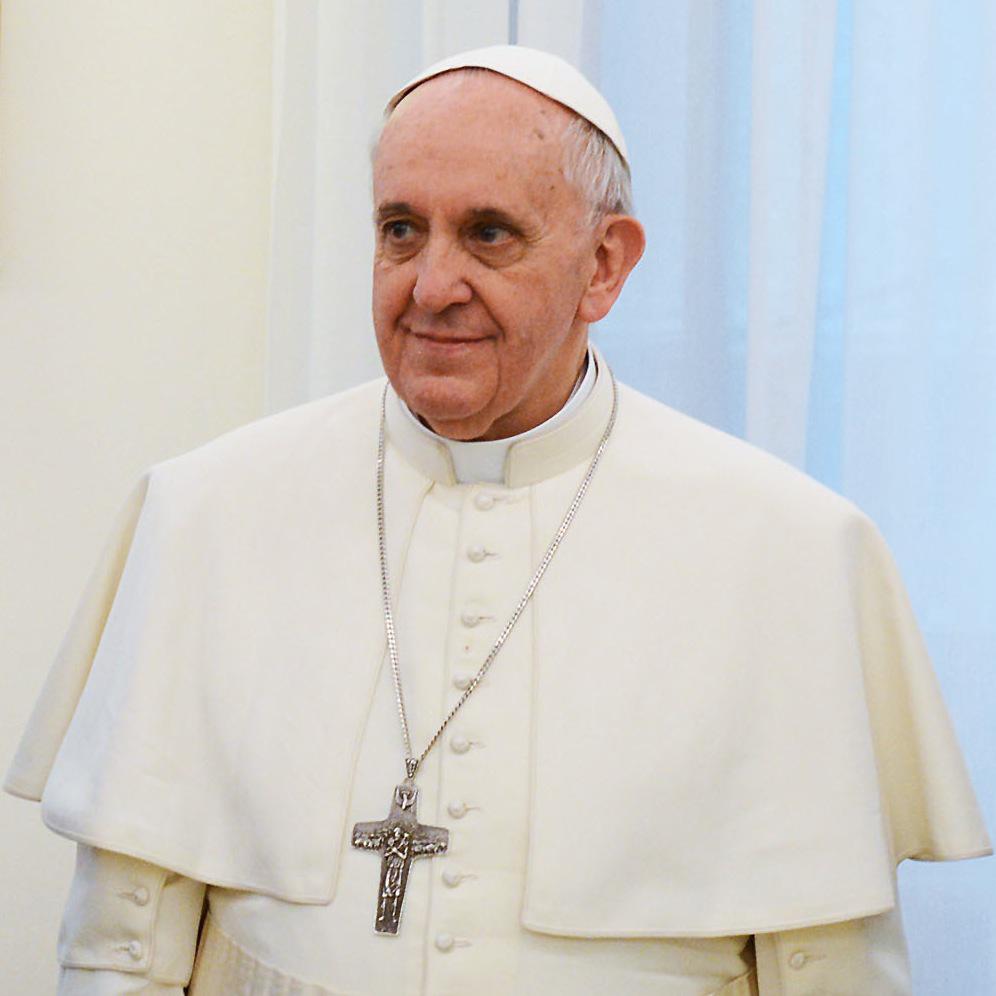
Loading summary
Transcript41 lines
- [00:00]
A
Sam. Saint gonna change. Welcome, friends, to edition of Economic Update, a weekly program devoted to the economic dimensions of our lives, our jobs, our incomes, our debts, things like that. I'm your host, Richard Wolff. I've been a professor of economics all my adult life, and I teach now at the New School University in New York City. Before we jump into today's program, a couple of preliminaries, as usual. You know that I often talk about Detroit because of the disaster that it represents, economically speaking, of course, not the people that live there, but the economic system that unfortunately has destroyed so much of Detroit over the last 40 years. It is in that sense, an illustration the largest urban bankruptcy in American history. A city whose population went from almost 2 million in 1960 to 700,000 today. An unspeakable story of an economic system that doesn't work. What caught my eye this week, and something I want to just mention to you is a new book. The author is David Maranis, M A R a n I S S and the book is called Once in a Great City, A Detroit Story. It's not so much his history, which tells you really what a wonderful success story Detroit was in the 1960s, but it's really what I want to read to you is from a review in the New York Times by Michiko Kakutani of the Marrannis book. And in this review, Kakutani quotes President lyndon Johnson in 1964. I want to read to you what this president of the United States said was the present and future of Detroit. In his mind, prosperity in America must begin here in Detroit, he intoned in his famous drawl. You folks in Detroit put American citizens on wheels. You have the American economy on the move. Unemployment in Detroit is down, profits are up, wages are good, and here we go. Now this is the best part. And there is no problem too tough or too challenging for Detroit to solve. You could not have had a President of the United States more utterly and completely wrong about the major industrial city in his country. And I don't mean to criticize Lyndon Johnson, although there are enjoyments in that process, too. I am interested in pointing out how unprepared Americans were for what happened when capitalism first razed Detroit and then smashed it to the ground. Let me turn next to remind you that this program, like all of our programs, are archived on our websites, rdwolf with two Fs com and democracyatwork.info all one word democracyatwork.info those websites also allow you to sign up for our free newsletter. They allow you to follow us on Facebook and Twitter to send us your comments and questions for this program, your criticisms to hear about where I'll be speaking around the country and so on. Please make use of these websites. That's why they're there. Next update has to do with the city of Chicago and the lesson about economics that it teaches. This Last week in Chicago, Mayor Rahm Emanuel announced an increase of over $500 million in property taxes. Now let's be clear here. This is an economy that has not yet recovered from the crash of 2008 and 2009. This is an economy that needs help for most of the people who are still in trouble. As we documented last week, what this society and economy don't need are tax increases. But that's what Mayor Emmanuel announced and he's going to impose them mostly on middle class homeowners. It's a property tax increase. So if you're in the middle of the income distribution and are living in your own home, you're going to be made to pay a good bit more than you used to for a city that offers you much less than it used to. Why is the mayor doing this? The answer is he he tried to go stick it to somebody else for the economic problems of his city. He tried to lower the pensions of police and firefighters and other public employees. That was the hallmark of his first term as the mayor of Chicago. But the courts wouldn't let him. It turns out that the increase in a pension was part of what was negotiated by the city with all of the unions of the public employees. It was part of the contract they signed. Workers gave up wage increases to get pension increases. And the city not only went along with it, but often proposed it. So now it can't just back out of commitments made that were basically protected by the courts failing to savage people's pensions. Mayor Emanuel is now going to stick it to middle income homeowners. You notice what's not happening. There's no taxing on the rich. There's no focus of taxing on corporations. And it's interesting that Mayor Emanuel doesn't tax corporations and the rich. I won't comment on why he doesn't. I'm sure you can all figure that out. But let's go through one dimension of it. The rich in Chicago, like everywhere in America, are the ones who have done best. Corporations and the rich have had in the last 30 to 40 years the best ride in this country's history. Average people haven't. So if you wanted to take account of who's gotten richer and who hasn't? You would be taxing corporations and the rich. Mayor Emmanuel doesn't do it. Corporations and the rich have more responsibility for bringing the crash that we're now living through than average people. So since they have more of the blame, maybe they ought to get more of the tax burden of fixing the mess they had most to do with making. Not in Mayor Emmanuel's Chicago. And finally, rich and corporations got most of the bailouts that governments provided after the crash that they helped to cause and after 40 years of them doing better than everybody else. So because they got the lion's share of the bailouts, maybe now when it comes time to pay the cost of the bailouts, the beneficiaries of the bailouts ought to take the lion's share. But not in Mayor Emanuel's Chicago. No, no. We're going to either try to take away the pensions of working people or stick them on their property taxes in Europe. When you savage your average person with cutbacks in public services like a pension or increases in public taxes on average people like the property tax, it's called austerity. Mayor Emanuel is imposing austerity as best he can, shifting the burden of an economic crisis onto the people who can least afford to pay for it and who had least to do with bringing it about. Next update, and we're going quickly because there is so much a serious problem affecting all American schools is the problem of homeless children. That's right. Many folks don't understand that one of the side disasters of homelessness, of not having places for people to live, is the problem of when that includes children, when we have three families that are homeless. Why? Because a homeless child does not have the stability enabling him or her to go to the same school to get to know and have a relationship to the teacher, to be able to follow through from one grade to the next with young people that he or she can play with and learn together with. Everyone knows that children learn as much from one another as as they do from their teachers, et cetera, et cetera. So I found it amazing to catch in the wall in the Washington Post of September 14th the following the number of homeless children in public schools in America has doubled when you compare 2014 to the last year before the crisis. So 2007 to 2014, we doubled the number of homeless children in public schools so that they now number 1.36 million children in the United States. That's an amazing number. The federal government, having recognized this problem, allocates some money to help Schools deal with homeless students. It's never been enough. But, but I want to show you what has happened to it over the so called last six or seven years. When you read in the newspapers that we've had. Yes, yes, a recovery. Well, not for homeless families and not for homeless children. The federal government gave in 2006 $62 million. $62 million to, to help and in 2014 it had raised it because we have doubled the number of children up to, you get it, 65 million. It went from 62 to 65. Well, let's do the arithmetic. If you got 65 million bucks from the government in 2014 to help the 1.36 million children, that's about, I don't know, $40 a kid. Now there, there's a government effort, billions to help the big corporations and $40 to try to help a child who has no home during the school year. I can't come up with a commentary adequate to what this tells us. There is no recovery for the mass of people and there is a collapse for those at the bottom. And we will be paying the costs of that neglect and that injustice for many years to come. Next story, quick one, Medical care deductibles. Most Americans are covered by some sort of medical care program where they work. The question is how much of the actual costs they have during the year. Medical costs are covered by the insurance provided by their employer. Well, here are the numbers from the New York Times on September 23rd of this year. And again, I'm going to be looking at the last year before the current crisis hit, 2006 and our current data for 2015. We have numbers for 2015 in the New York Times article on September 23rd. Well, it turns out in 2006, 55% of Americans covered by private insurance had some kind of deductible, a general deductible, an amount of money at the beginning of each year that they have to pay, not the insurance company and not the employer. And how has that gone? Not well, because if it was 55% of people who had a deductible in 2006, in 2015, the number is 80%. A huge additional number of people had a deductible that they had to pay for before their medical insurance kicked in. That's the same as having your wages cut because you're going to have to spend that money on yourself or your family out of your pocket for medical care. But here's the worst number released in this story. How big a deductible was it here's the average deductible in 2006, before the crisis hit, ready $600 a year per person. What is it in 2015? The average deductible of private insurance covering many millions of Americans? $1,300. That's right. Over the last eight years, the size of the deductible now covering many more people has doubled. That's why people feel when they hear the word recovery that you must be talking about somebody else, because I'm not recovering. And now we can see whether it's homeless children in school or average people trying to deal with their medical care or the folks in Chicago. And what I told you about Chicago is true for other American cities as well, suffering an austerity that puts the burden of an economic crisis and an economic system that doesn't work on the people who can least afford it and, and who have least responsibility for it. That's why there's been no recovery for the vast majority of people. I want to turn now, in the time that we have in this part of the program, to questions you've sent in. And. Oh, boy, there's two topics that have dominated. The first topic is the scandal with Volkswagen vw. And the second one is the economic perspectives or views of, of Pope Francis, the new Pope. I'm going to be spending time both this week and next on these topics, a little bit of each, because they raise huge questions that I don't otherwise have time for. But let's do what we can quickly in today's program. First, the basics of the VW scandal. And as I'm presenting this, you should know that the CEO, Martin Winterkorn, has now resigned. Resigned is how in German they say fired. He got fired. But we don't do that. We call it a resignation. Fine. If that makes whoever it is feel better, we do that. Lawsuits are all over the world, in this country and elsewhere. The VW Corporation has admitted to a massive deception and to having worsened global pollution in a dramatic way. Well, what did they do? Very simple. They inserted into many cars. In this case, what we know so far is into diesel engine cars. They ignored, inserted a device whose software would allow the company, the car, to show in a pollution test that it wasn't doing a great deal of air pollution. Then when the car was used for regular purposes on the highway, this device did not, in fact, kick in. And so the pollution coming out of the car was enormous. It was a way of deceiving the effort to have pollution control. Let's remember then what VW is. It's an enormous automobile company, the largest in Germany, employs over half a million people. Mostly in Germany, but in many other places as well. In, in addition to the vw, the Volkswagen Corporation. By the way, the irony of ironies, Volkswagen is German for ready people's car. Volkswagen, it dates back to Hitler times and was to be a government produced mass car. That's why it's called the people's car. But beside making VW cars, the Volkswagen Corporation also produces Audi automobiles, Porsche automobiles, Lamborghini automobiles, Bentley automobiles and Bugatti automobiles. This is a large company. Don't worry about Mr. Martin Winterkorn's resignation. He gets a $32 million severance package and he's apparently entitled to two years of remuneration. Last year he got 16.6 million. So don't cry for Mr. Winterkorn. We may all be breathing bad air, but he will be able to go to a place where the air is very nice. What's going on here? Is this unique to Volkswagen? Not at all. We're just off of what Toyota selling us seat belts that killed us. General motors knowing for 10 years that it had faulty ignition which killed at least 124 people, et cetera. So we have examples all over the lot. And in case you're wondering, this is not the first defeat device. That's what these kinds of devices are that defeat the effort to control pollution. Back in 1998, Ford Motor Company in the United States was fined 7.8 million for using these devices to allow its Econoline vans to pass the testing. Honda paid 17.1 million in the same year for the same activity in 1998, Caterpillar, Volvo, Renault and other manufacturers paid $80 million in fines. Everyone knows in the business about these things. Volkswagen certainly knew Volkswagen did it anyway. We, we don't know yet for how many years. This is a scandal that's going to hurt them. But the most important thing are not the details. They will be all over the press. You will read about them, hear about them and see them. What no commentators are talking about is why this happens. And here's what I want to this is the result of capitalist competition. Here's what Volkswagen wants, which is the same thing Ford wanted and Toyota wanted and all the other they want to get a competitive edge on other car companies. They want to be able to offer something that other car companies can't when the EPA or other pollution control agencies tell them they have to put devices in their cars that will make us less likely to die. Of emphysema for, from breathing the exhaust. They all have to do that. But it hurts the spiffiness of the car. It hurts the sportiness of the car. It lowers the speed of the car, so they have to pay that price. So do we as drivers, until a clever engineer says, hey, we could get an advantage over our competitors if, like them, we put the device in. But. But unlike them, we add something that makes the device not work in regular driving. So you get the speedy, sporty car you want. And we can claim, because people believe it, that we're able to do this because we Germans are so good at engineering and we always have been, and so we can tell such a story. Every competitor has a plausible story. They hire people to write and invent those stories to get advantage. We like to tell people in economics courses that capitalist competition makes the most efficient use of resources and gets the best output. That's wrong. It doesn't. Or rather, sometimes it does. And sometimes capitalist competition leads businesses to do what Ford did and what Toyota did and what Volvo did and what VW did. What they all do is look for an advantage because number one is to make money and to make profits. And if that means fooling around with the equipment, making a defeat device, violating the law, so be it. The fines are low, the cash to be made is a lot. That's why we have this. Every major car company has betrayed the public trust in the last three years. We've recalled more cars than in the history of the business in the last three years. And that's before counting vw. If public employees, if public enterprises had a record of deception, illegality, murder of people, etc. Anything like this, there would be screams to high heaven to privatize such dysfunctional public enterprises. But there's silence now that the private enterprises, having betrayed the public trust, deceived us, killed some of us, worsened the air, lied. The question doesn't get raised. Why do we allow basic commodities like the automobile to be produced by private enterprises when their competition is so dangerous? Finally, you've sent me many questions about the Pope's views on economics. Let me comment quickly. And I am not going to be talking about other dimensions of the Pope, the beatification of the missionary in California that has been opposed by Native Americans because of the record of those missionaries, nor the sex abuse on children's scandal that continues to roil Pope Francis Church. I'm just talking about the economic statements he has made and I want to underscore that they are remarkable in what they say and the best example I could find was a speech Pope Francis gave less than a year ago in Vatican City to a conference was called the First World Meeting of Popular Movements late last October in Rome. And I'm going to read a few of the statements and make short comments about them. And these are quotations from Pope Francis, as I say, about 11 months ago. First one. It means, and he's talking here, by the way, about the generosity that a good Catholic ought to show his or her fellow people. It means thinking and acting in terms of community, of prioritizing the life of all over and above the appropriation of goods by the few. It also means fighting the structural causes of poverty, inequality, unemployment, lack of land and housing, and the denial of social and and labor rights. It means facing the destructive effects of the empire of money. Well, I understand why Pope Francis can't say capitalist and so has to come up with empires of money. But his statement here is unmistakable. Fighting the structural causes of poverty. What I just told you about what Emmanuel Rahm is doing in Chicago, or what is happening to homeless children in the schools, or the damage done to our health care by making the deductible so high. You know, of course, that one of the consequences of raising the deductible for medical coverage that I described to you is that people avoid going to the doctor because they can't afford the deductible, and that worsens people's health. All of those are steps taken by insurance companies, taken by employers, taken by politicians that violate what the Pope said a decent human being ought to believe. Let me go to a next. An aspiration that should be within the reach of all, but which we sadly see is increasingly unavailable to the land, housing and work. The Pope. It is strange, but if I talk about this, there are those who think that the Pope is communist, end of quotation. I have no comment on that. I just think it speaks very loudly and pretty clearly. Let me continue. Every worker, whether or not he is part of the formal system of paid work, has the right to fair remuneration, Social Security and a pension. For those of you not familiar, pensions have been cut in the United States relentlessly, public and private, for years. We are not living the dream and the reality and the commitment of this Pope. And now the last one. I am against people being excluded from employment rights, who are denied the possibility of forming trades unions who do not have an adequate or stable income. Today, I wish to unite my voice to theirs and to accompany them in their struggles. My goodness. People want a trade union and are struggling and the pope says he's with them. This is a pope who, for whatever reason, wants to show that the direction of social change in America and in the world has to be along the lines we stress in this program and are precisely missing from the way this country's capitalist system works. We've come to the end of our program. Thank you for staying with us. This is just the first half. Please stay with us. After a short interlude, we will be coming back. I have a guest who will be interviewed on the whole question of the crisis now gripping Puerto Rico, which speaks exactly to what the Pope had in mind. Stay with us. You know, it ain't easy for these thoughts here to leave me. There are no words to describe it.
- [29:31]
B
In French or in England.
- [29:35]
A
Cause diamonds they fade. Welcome back, friends, to the second half of Economic update. For today. I am very pleased and gratified to be able to introduce to you a guest whom I will interview in this second half of the program. He is Professor Ian Seda Irizarry. Professor Seda is an assistant professor in the economics department of John Jay College, which is part of the City University of New York. There he teaches courses on political economy, introductory economics and global capitalism, and finally, economics in historical perspective. Besides his work as a professional economist, he is also a member of the party of the Working People of Puerto Rico, and he writes newspaper and magazine columns for a variety of media outlets inside and outside of Puerto Rico. He lives currently in New York City. Ian, since you've been a friend of mine for a while, I'm going to call you Ian, not to slight your professorial credentials. Thank you very much for joining me today.
- [30:55]
B
Oh, thank you for your invitation for your viewers and listeners for tuning in.
- [31:01]
A
Let's begin by your helping our listeners get oriented. What is the economic crisis that faces Puerto Rico now? Can you put it a little bit in the historical context of that situation and what the key causes of this crisis were?
- [31:17]
B
Well, by now, I think it's well known that the crisis in Puerto Rico started in the year 2006, which basically means that it precedes the financial crisis and the global recession by a year and a half, two years. Now. Since then, the economy of Puerto Rico has been dealing with the double whip, as some colleagues in the island have called it, both the financial crisis and the fiscal crisis. Double whip in the sense that since 2006, the policies enacted by the different governments have basically implied that as you try to fix the fiscal crisis, you exacerbate the economic recession. And as you try to Contribute and diminishing the effects, the negative effects of the economic recession, you augment the fiscal crisis itself. So that's kind of the conundrum in which we find ourselves or the coordinates of the debate right now in terms of the long term and historical causes of the crisis. I guess we can basically divide them into two sets. One, in terms of the structural dimensions of the crisis, which have to do with the economic model of growth and development in Puerto Rico, and the second set in terms of the actual administrations and the management of public fund administration. So in terms of the structural crisis, or the structural dimensions of the crisis, Puerto rico since the 1940s has been using a model of industrialization and growth that has been based on invitation, model by invitation, in which foreign capital is provided with incentives to establish subsidiaries in Puerto Rico and basically contribute with employment. This happened immediately after World War II, specifically in the period after 1941, 46 and afterwards. So we're talking of the transition in terms of rural agricultural society moving towards urban industrial one, and also in terms of a government named by the United States to a government already made up by the citizens of Puerto Rico. So that's the particular historical moment.
- [33:26]
A
Were there certain industries that came in that were invited, that then shaped the economy?
- [33:32]
B
Yes. So in that initial stage of industrialization, the apparel or clothing industry was extremely important. So, for example, some data from the 1950s suggests that or documents the fact that 30% of imports of apparel in the US came from Puerto Rico. Now, in terms of the basics of how that worked, tax incentives and subsidies were provided for those firms to come and locate their productive activities.
- [34:03]
A
And I assume the wages of workers in Puerto Rico were lower than the wages they had been paying in the mainland of the United States.
- [34:10]
B
Yes. So in those first two decades, we see a growth in those wages. So some people call it a convergence with the mainland, a convergence that has completely disappeared after that period of two decades. And in the present now it's important to focus on the fact that the incentives provided basically put us in a situation in which the costs were socialized, because it's a government providing subsidies based on the revenues derived from the citizens who pay taxes. And gains from that industrial activity were privatized.
- [34:48]
A
They were taken by those companies that came in to respond to these incentives.
- [34:52]
B
Yes, absolutely. Like, clearly, there was gains in employment, there were gains in wages. But in terms of the overall effect and the long term effect of it, what we see is a model where again, the gains are privatized and the costs are socialized for the sake of facilitating the activities of those firms in Puerto Rico. Now, that model encountered a crisis in the early 70s with the global crisis of the early 70s. By then it had shifted into more heavier industries like petrochemical industries, in which oil was processed into gas, et cetera. And as many of your followers might remember, the 1970s is the crisis normally associated with the oil crisis, the world global crisis. So that basically got reflected in a fiscal crisis in Puerto Rico in which the government, in response to that crisis, decided to continue with its strategy of providing even more incentives. Just to give you a quick example, the government in 1976 commissioned a report led by an economist that you knew personally, James Tobin, this famous Tobin Report. If you read the conclusions of that report, they basically echo the present situation. So just to read you quickly, things that that report says. Poverty and unemployment are still immediate problems for a large portion of the population of Puerto Rico. There's a recognition of the dependence of the economy on that mainly American capital. And clearly the capacity to attract American capital had been eroded. We have the reconstruction of Western Europe, Japan, industrialization of other parts of the Third World. So at the end, the Tobin Report concluded that the economic system in Puerto Rico should formulate a new program that was less reliant on US capital. Now, what did the government do at that point? Well, it extended further subsidies, further tax exemptions, known as section 936 of the Internal Revenue Code.
- [36:55]
A
So they basically ignored the Tobin Report.
- [36:57]
B
They basically ignored the Tobin Report and still still follow this path of fragility of the economy dependent on American capital. So that's from the structural perspective.
- [37:09]
A
Just a footnote. Yes, it's interesting to me, besides the fact that James Tobin was my teacher at Yale in just this sort of material, and around that time, too, it's sort of remarkable. He maybe even have been going to Puerto Rico while he was teaching our classes. But I'm struck by the fact that he begins his report after 25 years of a policy that was supposed to deal with poverty and unemployment, saying that Puerto Rico suffers from poverty and unemployment and therefore suggesting a change in policy, only to have the government in place stay with a policy that he had found to be inadequate. It's sort of stunning. But anyway, go ahead.
- [37:54]
B
Yeah, and the best reflection of the failure, let's say, of that policy is the huge immigration waves to the United States starting in the 1950s. Now, an important detail of that new arrangement from the 1970s is that now you have an increase in the federal transfers to Puerto Rico to try and alleviate the dire situation of many of its citizens. Now, throughout those 30 years, again, we see this heavy emphasis on tax exemption and subsidies. So the government, for example, will provide buildings and rent them out to these firms at below market value prices, or they would sell them at below market value prices. With heavy industry, what we see is subsidies in terms of the use of electricity. I mean, people must understand that some of these businesses that were involved in the 1960s and early 70s use more electricity than several countries in Latin America. Some of them needed water to cool down their industrial equipment. They used more water than some full towns within Puerto Rico. So there were heavy environmental costs also associated with this industrialization process. Now, in terms of the administration of the crisis in the present, in which again we have this focus on subsidies, there's something very interesting which is that precisely administration after administration, especially after the year 2006, they have basically based their new ideas on how to deal with the crisis on the same old story. So to give you one important piece of information, in the year 2004, they calculated that there were around 50 laws for tax exemption. In the year 2008, there were 70 laws of tax exemption. Right now in the present, there's more than 80. So basically this is a response of several administrations using again, the same formula to deal with, to try and deal with the same problem, trying to keep those industries from leaving Puerto Rico. Because again, the basis of industrial development has been subsidized. Subsidized all of them. In terms of the non structural dimension, which is the administration of the crisis, then what all of these administrations have done is not only extend these further subsidies, but they have not in any way explored how successful they have been. We have no revocation of any one of those subsidies. Just to give you an example, there was a law, law number 20 of 2012, which basically recognized that, well, we are in a period of deindustrialization. We have to foment service industry. Let's look at countries like India and Singapore who have a very successful and expanding service sector. So they basically passed this law in which any firm that would engage in trying to develop the service sector would pay a fixed tax rate of 4%. So it doesn't matter how much money you make, you'll get 4% if you become more successful. We're going to lower that tax exemption. Well, right now, a couple of months ago, somebody actually looked into what was the result of all of this. And on average, every firm that actually asked for that tax exemption, and they were granted that tax exemption basically produced four Jobs on average. I mean, this is astounding.
- [41:10]
A
Right.
- [41:11]
B
In terms of administration Also, there's calculated 4 million, $5 million in the streets that have not been. In terms of reported taxes, tax payments that have to be done that have not been collected by the Department of Treasury. The amount of resources that this department requires and employment have also been cut further down. So what we have is this combination of factors in which clearly they're trying just to manage the crisis by itself, wait for the elections to pass, let the next administration come in place and deal with the mess.
- [41:43]
A
And this mess has been getting worse and worse because in the last six months, there have been this amazing speech by the governor there, by the leading political leader that their debts are unpayable. I mean, it sounds to me like you have a history of a failed economic development program that costs the local government vast amounts of money, making them very popular with these corporations, who probably give them nice political contributions in exchange. But meanwhile, with the departure of masses of people to the mainland, with the continuing poverty, the continuing unemployment, people should be aware that unemployment and poverty much worse in Puerto Rico than on the mainland of the United States, et cetera, et cetera, that this is a failed policy that has now been postponed by borrowing lots of money, and now no one's willing to lend anymore. They've come to the end of the road of a subsidy that doesn't generate economic development and a budget that can't afford the subsidy. What's going to happen?
- [42:52]
B
Yeah, so this has definitely eroded the tax basis, which basically means the revenues that the government uses to spend. Many people have decided to go into the informal economy. Some estimates say that the informal economy accounts to something around like, over 20%.
- [43:08]
A
What does informal economy mean?
- [43:10]
B
Informal economy basically means a flow of value that is not registered through the state, so it's not taxed. Is it illegal or it's considered illegal.
- [43:22]
A
Because you're not paying tax, because you're.
- [43:23]
B
Not reporting that gain. And the interesting thing is that normally when people think of informal economy, it's about the poor, the people that need help, and all of that. But A study in 2004 documented that as you go up in the income ladder, there's more income evasion or tax evasion. Sorry. So that's a very, very important detail. And again, as you highlighted the role of debt here in terms of, well, if you don't have a flow of income coming through tax revenues, then you have to make up for it. You borrow money. So that's extremely important, and that's where Puerto Rico right now joins a select group of countries in having hedge funds and vulture funds that have invested in buying the debt of the government and.
- [44:11]
A
Its corporations discounted low price as the initial lenders unload their bonds onto these.
- [44:19]
B
Vulture funds that are discounted price at relatively high interest rates to be paid and with guarantees from the Constitution. Something that we see all over the place, not only in Puerto Rico, but also, for example, in Europe. So let's compare, for example, Greece and Puerto Rico. So these have been made in Greece in terms of the role of the increasing interest rates in explaining that increasing amount of debt burden. Part of it, in the case of Europe and Spain, also is explained on the fact that the Maastricht Treaty basically forbids countries from borrowing from their central banks. The central banks would lend money at 1%, half a percent, and now they have to borrow at 8%, 9%, 10%. In the United States, there are studies that document how household debt has gone up, and it has to do with the interest rates going up. This is very important because part of the discourse of the conservative wing in the ideological spectrum has been that we have been living beyond our means. So in Puerto Rico also, we see this in terms of how now we have to access credit through secondary financial markets in which these vulture funds operate, in which the interest rates are much higher, way higher. And of course, we have the extreme case of vulture funds in Argentina in which they were charging something like 1,000%. And we know that right now that's being disputed in courts in New York City. The UN has had a commission to deal with it, et cetera, et cetera. So, yeah, it's.
- [45:52]
A
So now Puerto Rico, if I understand having come, in a sense, to the end of the line with this economic development program that didn't work, and having borrowed money to kind of paper over the fact that they were giving out so many subsidies that they weren't bringing in the money to run the government, even in the most basic level, having therefore to borrow to do that, all the while losing population to the mainland, often young people, just at the beginning of the most productive period of their lives. You put all that together. How bad is the crisis now, and what is the sense of how to resolve it?
- [46:32]
B
Well, in terms of how bad it is, we have average income per capita Z lower than the poorest state of the US which is Mississippi. We have a poverty level that's around 45%. That's, I think, three times as large as the U.S. we have a labor participation rate of 43%. We have had unemployment in double digits for decades. Clearly this colonial economy has not provided jobs for everybody in terms of how the government has dealt with it. Well, they have paid a lot of money to have experts come in and give us the diagnosis of what's happening. So they commission a study led by a famous economist in the third World, Ann Krueger, and by other IMF associated economists, in which basically they recognized, yes, that debt is unpayable. As the governor of Puerto Rico stated some weeks and months ago, the solution to it is to restructure the debt and to give a heavy dose of austerity, which means privatization, the regulation, you know, the usual recipe. Now the bondholders were not very happy with that, so they commissioned their own study.
- [47:48]
A
Yeah, they don't want to give up any. No debt relief. They don't want, they don't care about the rest of it. They want to get paid.
- [47:54]
B
Yeah. The main contrast was that that report which was also made by economists that came from the IMF concluded that yes, that debt can be paid right now under the present circumstances. Now what both of them have in common, again, the heavy dose of austerity. Absolutely.
- [48:09]
A
Which is basically making the mass of people pay, either by taxing them or by ending the delivery of public services and using the money instead to pay off the vulture funds that now have purchased the debt.
- [48:22]
B
Yes. Socialization of cost. Absolutely.
- [48:25]
A
So tell me, if these plans go through either the plan of the government or the plan of the creditors, which is harsher, what does it mean for the people of Puerto Rico? And hear, if you can, both the people in Puerto Rico and Puerto Ricans on the mainland who have left.
- [48:45]
B
Well, the government has actually now published its so called fiscal adjustment plan. In it, when you read through it, you notice that there's huge cuts in spending, huge cuts in the budgets of institutions that supposedly are understood to be able to potentially contribute to the crisis, like the university. So they're discussing a 10% budget cut. There's a series of so called incentives to young people in terms of, for the first 10 years, if you're 25 or younger, the minimum wage doesn't apply to you. Supposedly that will give an incentive to firms, for firms to hire more young.
- [49:24]
A
People and pay them less than the.
- [49:26]
B
Minimum, pay them less than the minimum wage. That of course, that's an interesting analysis to make. When it's very easy for the same people, youngsters to just leave and come to the United States. It's very easy to use your American passport. Puerto Ricans are US Citizens and leave. You have the transfer of funds from certain agencies to others, and you have the lowering of taxes. And what seems to be common around all of this is that the people who have actually gained from the crisis, those corporations, are basically left untouched. Untouched. So nothing is made, for example, nothing is discussed, for example, in relationship to the amount of money that leaves the island of Puerto Rico. It's calculated at $35 billion. For those of you that want some sort of comparison, this is about half the size of the total amount of value produced in Puerto Rico, the GNP of Puerto Rico.
- [50:22]
A
And that money is moving as the return of profits made by American companies in Puerto Rico. That's the bulk of that.
- [50:29]
B
Yes. It's because Puerto Rico is basically a tax haven in terms of the profits produced. So there's actually a bias in terms of income based on property, like dividends, profits, rents, versus the income based on your labor. So again, this is yet another more forceful round and implementation of austerity. And the interesting political aspect of it is that if you actually look at the time frame for its application, it's clear that it's not doable. So some people are speculating. And in this, one of the foremost voices is probably the most renowned political economist in Puerto Rico, Quinones. They're emphasizing the fact that by being basically undoable in the present short term, it will fall on top of the next administration. So then the current party that's in power will blame the other party and then, you know, play the game of moving back and forth, sharing who's administering the country in a situation where most people are still, or a substantial amount of people are still guided by this logic of voting for the least worse option in elections. And the fact of the matter is that as time passes and people vote for the least worst option, the most realistic option to take away those in power, things are not getting any better. So that's very important in terms of how things are playing out in terms of options. We have had dissenting voices and discourses outside of the two main political parties that have from the beginning, when I say from the beginning, it's a year and a half ago spoken about a moratorium, a delay in the payment of the debt to give some breathing space to the island of Puerto Rico and its citizens to try and restructure the debt, restructure the economy, come in with new socioeconomic plans of development. Laws have been put in the Senate for passing. They have been stored in some hidden place. They haven't been passed. New political parties are rising One of which is the one that I'm part of, the Working People's Party of Puerto Rico that have from the beginning said that a very definite need right now is to audit the debt. Let's see what part of that debt actually has to be paid and which part of that debt was obtained under circumstances that go against the common good. This has happened in many, many other countries. But of course, as you can guess, the creditors are frightened about this possibility because an audit of the debt means that debt payments have to stop and this is not in their best interest.
- [52:59]
A
Yeah, there's a whole concept, for those that may not be familiar with it, there's a whole concept of debt that is not legitimate. Debt that was contracted between bankers and other lenders eager to make a successful loan and politicians using it to save their own political careers, even though the conditions under which they agreed to take this loan to were horrible for the people and the country of which they are part. The politician goes on to higher office and the people are left with the price. And there's precedent in global law and in international law not to honor ignominious debt, debt that was contracted under illegitimate. And this, of course, terrifies the lenders because they certainly knew at the time they made these loans with whom they were dealing. That's their job, is to know with whom they're dealing. And they knew that there was a risk that this could happen, but now need to pretend that there is no such risk and that they oughtn't to bear it. Where do you think this will go in Puerto Rico? Give us your sense of how this is going to play out. They can't borrow more. Their economic development program hasn't succeeded. They remain a very, very poor society. Where does this go from here? Or does it just persist in this awful space?
- [54:33]
B
Well, when I speak to people who actually have to deal with the brunt of the problems, things don't look that positive. Things look bleak in terms of thinking of the fact that it's this particular government that's representing the interests of the people and the fact that the next government that will come is also the one that's representing the interests of the people. So in this sense, lots of people are organizing outside of the traditional political parties, in movements, organizations, alternative parties, in trying to seek solutions. So right now, for example, in New York City in October, members of the Democratic Party, who has three congressmen that are Puerto Ricans, will be part of an activity in which they will organize Puerto Ricans here in the diaspora and try to ask the government of the United States to intervene in one way or another being in some sort of bailout of the economy, derogations of laws that have been applying to Puerto Rico for over a century, stuff like that. So people here in the diaspora are definitely trying to contribute, trying to solve the situation. In my opinion, the problem with these approaches is that they don't deal with the political class that's right now in Puerto Rico, which is the same political class that we're hoping that will develop some new economic strategy of growth and development. So that's, I think it's something to be discussed hopefully in October in this meeting in Florida. I think it's when it's going to happen in the island of Puerto Rico. Groups are getting together, massive protests are on the way, hopefully, and again, new political parties are basically making a dent in the usual political space. Just to give you an example of how this has taken the attention of the main parties. The party that I'm associated with running the past election, we just got 1%, 20,000 votes and basically work that was done over a period of three months. Now we want to run in the election again. And historically you need to get a certain amount of signatures. And historically they say that 17% of the signatures you submitted to run in the next election don't match the signature or this person died. We cannot confirm this. In the case of our party, that percentage went up as high as 70%. That for me says that we're doing something good because we're taking people who are frustrated with these parties and they see it as, you know, basically eroding their political base. So I think that's a positive side to all that's happening.
- [57:11]
A
And it's very interesting because the Syriza party in Greece represents a very small party with 2, 3, 4% of the vote that is now the dominant party as people turned away from the failures of conventional politics. That this might be beginning in Puerto Rico makes perfect sense given what you've told us. Thank you very much, Ian. I appreciate your coming and sharing your insights into the crisis of Puerto Rico. That's the end of our program, folks. I want to remind you, make use of our websites, rdwolff with two Fs.com and democracyatwork.info communicate with us, follow us on Facebook and Twitter. Sign up for our free newsletter. Make use of a website that we update and expand every day. This is Richard Wolff. I look forward to talking with you again next week. Sa.