← Economic Update with Richard D. Wolff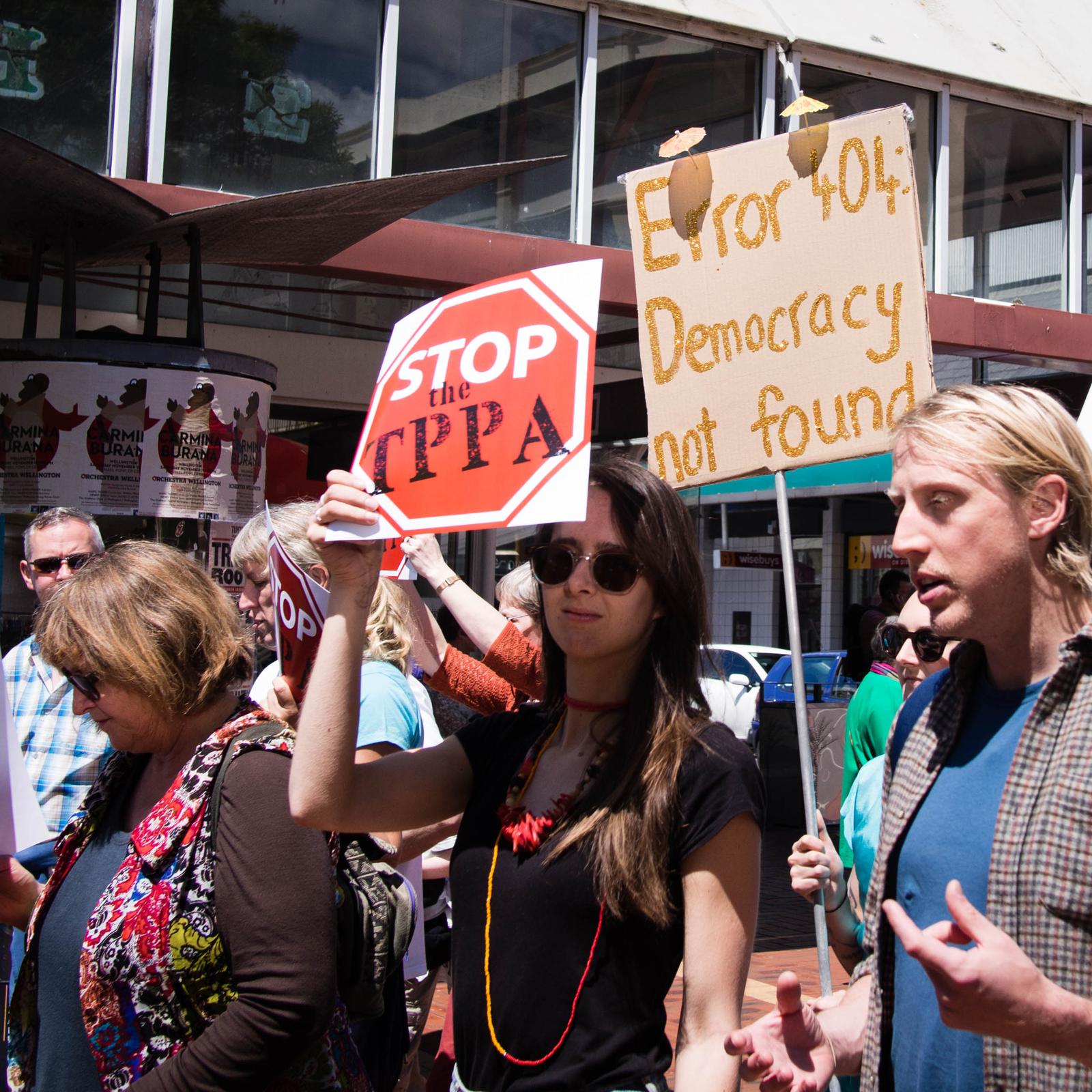
Loading summary
Transcript1 lines
- [00:04]
A
One of these days I ain't gonna change One of these days. Welcome friends, to another edition of Economic Update, a weekly program that examines the economic dimensions of our lives. Our jobs, our incomes, our debts, our children's futures in dollar and cents terms, terms of their work lives. I'm your host, Richard Wolff. Been an economics professor all my adult life. I currently teach at the New School University in New York City. In addition to this program, we maintain supporting websites that I will tell you about a little bit later, but I want to jump right in now and get underway with the economic updates for the end of March 2015. Students at Swarthmore College who this last week conducted a sit in in the offices of Finance and Business at Swarthmore College, a rather well known liberal college in the Philadelphia area. And they did it to protest the investments of the endowment of Swarthmore College in in fossil fuels. These are students concerned about the environmental damage, global warming, climate change and all of that, and its dependence on burning fossil fuels with the carbon emissions that result. And they had demanded already last year that their university stop investing the money that in the end many of the students themselves have paid into that college, stop investing it in fossil fuels as a sign of popular opinion wanting an economic system that doesn't wreck the environment for short term profits. That part is reasonably well known and I admire and applaud the initiative and the commitment of the students. Two thirds of all the students at Swarthmore signed a petition supporting all of this, so it's clearly a majority sentiment. What I want to talk about briefly was the response of the university, which is, and I'm being polite here, deplorable. Here's what the university if we did what the students want, it would cost us 10 to 15 million dollars in investment returns that we need to run the college. Now here's what's absurd and childish and dishonest in such a response. It is framed as if the people who manage the investments at Swarthmore know what's going to happen in the stock market over, say, the next six to 12 months. Otherwise they wouldn't know what a divestment would cost. And to say that you know what's going to happen is somewhere between dishonest and stupid. No one knows what's going to happen in six to 12 months. No one. All you have are guesses and therefore you don't know that it's going to cost the university anything. Indeed, as the students rightly pointed out, had you divested a year ago, you would have been out of the oil and gas stocks that have collapsed in value over the last 12 months, you might have saved a lot rather than lost any. The point is not that that's necessarily what's going to happen in the year ahead. The point is that you don't know. The students are raising a question about environment, about ecology, about sustainability, about what's right, what's good in the minds of the people affected. The university answers with mumbles about knowing the future as if they were a fortune teller, and we know better than to listen to them. Shame on Swarthmore College for responding in such a way. Two other big items in the news deserve a mention. The press got a hold through WikiLeaks of more information about the Trans Pacific Partnership. I've spoken about that on occasion. This is a highly secret negotiation among a dozen nations on the Pacific Ocean that is basically being pushed by large corporations who want the freedom to do things they can't do now by being able to overrule to contest the laws of each of these nations. That's why the discussions are being held in secret. That's why politicians right and left are increasingly wondering what kind of pro business shenanigans are going on that have to be conducted in secret like this. Unfortunately, the Obama administration is doing and pushing this, but we've seen now over and over again signs that this is at the very least something that should not be done quickly, which is what the Obama administration is trying to do, should be aired in public, which is what they are not doing and raises very serious questions about the ability of corporations now to circumvent to get around many pieces of legislation designed to protect workers, protect consumers, protect the environment from the profit driven behavior of large corporations. The second item was a merger between two very powerful food companies, H.J. heinz, famous perhaps mostly for ketchup, and Kraft Foods, famous for a whole list of things, but perhaps most for inventing a way to put single pieces of cheese in a plastic wrapper. Well, I use the word cheese loosely here. These two companies are combining. They expect by next year or the year after to be a hundred billion dollar company, be one of the five biggest food companies in the world. What is this about? Well, the main driver of this, as the companies say, is cost savings, which they anticipate the may be 1.6, $1.7 billion per year. Cost savings is a euphemism. It's a polite way of saying we anticipate being able to fire large numbers of people because we don't need two headquarters staffs we don't need two expensive lawyers, we don't need two sets of computers and computer programmers, et cetera. We, we can save a lot. Typically a goal of many mergers in a country suffering from a very poor economic recovery from a continuation of severe unemployment. This merger will add to the unemployment problem and it will create a mega company in which a board of directors of 15 to 20 people will be deciding the fates of tens of thousands of employees around the world. We'll be deciding much of the food we eat. What's in it, what's not in it, what's safe, what isn't safe. It's another example of the trend in our modern capitalism for every fewer numbers of people to be in the positions of power, like fewer and fewer are in the positions of wealth, with the rest of us required to live with the results, even though we have no power whatsoever to, to shape who these people are, what they do, etc. Etc. Many years ago in the history of the United States, we revolted against this situation by saying no legislation, no government without us being represented. We now live in an economy heading pell mell in exactly the same direction and our politics as well, leading us to wonder. Well, I'll just leave it at that. Leaving us to wonder. My next update. There's a real estate boom that is looking more and more like a bubble, but in an interesting place. The People's Republic of China building has been going on there at an incredible rate. Office buildings, apartment buildings. And there's now fear that this is not sustainable. That billions and billions of dollars worth and of course in Chinese currency have been borrowed to build billions and billions of dollars worth of office and residential buildings. And the wonderment is, are there the people with enough wealth to rent those offices, to buy those condos, or will all of this borrowing and, and developing and building result in a bust? Sort of like what happened in the United States in 2007 and 8 when our real estate boom turned out to be a bubble which went bust and took the whole economy down with it. I don't want to talk about the details and how realistic or not the anxieties are about China there. The evidence is clear. The evidence is strong. How exactly this will play out is a matter of the future. And we can't tell the future. Well, most of us can't. Clearly the administrators at Swarthmore College, as I pointed out, they can, but nobody else can. Here's what I want to talk to us about. Many of the big banks that poured money into the Chinese real Estate buildup boom and now maybe soon to be bubble. Are American banks and European banks, fresh from having done that in the United States and Western Europe, not able to do that again so quickly? Because people are still shell shocked from the economic meltdown that came as a result of that bubble. Those banks are now in China, you guessed it, pouring money, much of it money from Western Europe and North America into the Chinese real estate. That's how capitalism works. After having blessed one area of the world with its speculative manias and collapses, it moves on to fresh territory. Sooner or later, you might wonder, it will become clear to people that the problem is a system that works this way and that one ought to question it rather than letting it do its damage in one place. And while we're all trying to focus on cleaning that up, freeing it up to do the damage someplace else, the last thing I have time for in updates, short updates today, has to do with the federal estate tax. This is a tax that is a hundred years old in the United States. But last week, the House of Representatives, now controlled by the Republican Party, a committee there, had a vote. And along strict party lines, the committee voted 22 to 10 to basically get rid of most of what's left of the estate tax. And I wanted to explain why that's a remarkable thing to have happen. What is the estate tax? Well, the estate tax was designed and passed as a way of, quote, unquote, leveling the playing field. Here's the idea. And by the way, this is the idea of all estate taxes in the many, many, many countries around the world that have them. A child is born into a family in a democratic society, in a society that wants to give everybody equal opportunity. Each child born should have an equal chance based on their abilities, based on their work to achieve as much as possible in his or her life. The problem is, if the family you happen to be born in has billions of dollars to facilitate that process versus the family you might have been born when that has no billions, no dollars, just debts, you're not going to have equal opportunity. So there you go, you've got a choice. Do you have equal opportunity? Well, then you've got to level the playing field. And the best way people have found so far to do that within the limits of capitalism has been an estate tax that you can accumulate wealth in your lifetime, you can enjoy it, but you cannot pass it to your children because it gives them an unfair, undeserved, unmerited by anything they themselves have done, advantage over other people who may be just as Hardworking, just as talented and just as committed. In other words, it's an act of social fairness that has a nice side benefit of providing revenue so that the government doesn't have to tax the rest of the people based on their earnings and work, but can simply tax the passage from one generation to another. As I say, we've had that in the United States a hundred years, but over the years, under the pressure of rich people, and those are the only ones that are subject to this tax, we've run the tax in such a way that the vast majority of Americans have never paid any estate tax at the federal level on their the wealth that they pass to others, of course, for the simple reason that the amount of wealth they pass is relatively small. So to give you an idea, there are less than 1%. In fact, it's only 0.2%. Two tenths of 1% of the estates of people who died last year paid any tax. That's right, 99.8% of the people who died paid no federal tax. Nonetheless, that 2/10 of 1%, the richest of the richest of the richest in America have succeeded in getting the Republican controlled House of Representatives to get rid of that remaining estate tax on them. It will cost the government $269 billion over the next decade. That's a lot of money because the rich are very rich in the United States. So we will all have to make up the 269 billion that the richest of the rich, the top 2/10 of 1%, are being freed, liberated by the Republicans. It is an astonishing act here at a time when we know that the rich have gotten richer and the mass of people poorer over the last 30 to 40 years. That the gap between rich and poor has gotten wider and wider to the point where even major officials admit it as a problem, don't do much about it, but at least they admit it. We have the leaders of the country saying they're concerned, but meanwhile busily removing a tax on the richest of the rich, which will mean we lose 269 billion worth of government services that the government can't perform anymore, because it isn't taxing the richest of the rich or we will all have to pay more in taxes so that the richest of the rich can pass more to their children, so that the playing field is not only not level, but is tilting like a roof in a snow zone. Let me turn now to questions, questions, as we often do at this part of the program that you have sent in. Well, actually, before I turn to Your question. There's one more update that answers a question that was sent in several weeks ago. So I can do two things at once. This has to do with the Graco Children's Products Company. And there was a story in the New York Times this last week about them having agreed to pay a fine. Graco Children's Products produces children's car seats for very young children. To be safe when driving in a car, you install a car seat, typically in the backseat of your car, and you buckle a child into that to give them added safety in the event of an accident and so on. Graco Children's Products Corporation turns out produced faulty children's car seats. Children were injured, etc. Precisely in the way that was supposed to be avoided. Make a long story short, the National Highway Traffic Safety Administration fined Graco, spelled G R A C O Graco Children's products $10 million for not having properly and in a timely way recalled approximately 4 million children's car seats. In other words, they didn't protect 4 million of America's children for this. They were fined $10 million. Okay, do the arithmetic with me. 4 million car seats they sold and they made a lot of money. Car seats range from $30 to $200 and more dollars. So they're a profitable piece of business. They didn't recall 4 million. They endangered at least 4 million children. They paid a $10 million fine. That works out to 2 1/2 dollars per seat for a child. That's called a slap on the wrist. Well, let's be bet more honest, a tap on the wrist. In fact, the tap is so light you might not notice it even happened on your wrist if you got it. But here's the worst. The company tried for a while to avoid the fine by saying the problem wasn't that the buckle didn't work, but that children. Now listen to this. It's really wonderful. Children spilled food onto the buckle, which impaired its functioning. You have to applaud the National Highway Traffic Safety Administration in its statement. If you make a child's safety seat and if the buckle cannot withstand children, very young children, spilling food or drinks on it, you haven't done your job properly, have you? But they gave it the old college try some way to get out of $2 and 50 cents. But here's even better news. Back in 2005, the same company was fined another $4 million for another failure to protect the children whose lives depend on them. This is a problem of capitalism. This is the problem when what production is driven by is Making money, first and foremost, taking care of the people who use your product is a secondary, tertiary, or worse, low priority. And how do we know it? Because of these endless stories and because of the behavior of companies who figure with the light tap we get, with the tiny amount of money we are still making profits, we can continue to do business as usual. Graco got fined in 2005, and now in 2015, they're fined again. What do you think they learned from all of this? Not a lot. Question to which I respond. Could you please go over, even though you've done it before, says a listener, the conditions of the medical coverage versus the medical expense here in the United States? I'm going to do it by using the latest report of the Commonwealth Fund, that is a very famous foundation, that is this leading researcher publishing wonderful reports on the medical system of the United States. And in comparison with other countries, its most recent report is excellent. It looks at the following 11 advanced industrial countries. I'm going to read them so you know exactly who's being discussed. Australia, Canada, France, Germany, Netherlands, New Zealand, Norway, Sweden, Switzerland, the United Kingdom and the United States. A list of 11 of the wealthiest countries in the world. And they're ranked according to the quality of the medical care they provide, the health conditions of the people, and how much is spent in each of the 11 countries on health care to get the health outcomes they have. Here's what I want again, drive home. And these numbers are wonderful. Number one in expenditures is the United States, $8,500 per per person. These are data from 2010, the most complete data that we have, $8,500 was spent per person in the United States. The next highest expenditure was in Norway, 5600. Okay, so the United States, 8500. The next highest, Norway, 5600. But you might be interested to know that in the United Kingdom, in Britain, the amount spent per person on health care was $3,400. So let me do this really quickly. The United states, we spend $8,500 per person. In Britain, $3,400. Well, how do Britain and the United States rank in terms of overall health care provided to its people and health conditions of its people? Britain ranks number one. And the United States out of 11 ranks number 11. Wow. Let me do that again. Quality of health care delivered to your people in Britain, number one out of eleven. Quality of health care delivered by the American system to its people. Number 11 out of 11. We. We pay way more and we get way less in the way of health care. Anyone who wasn't blind or biased beyond redemption would know there is something fundamentally wrong in the fact that the United States spends so much and gets relatively such poor results compared to other countries who spend much less and whose results in terms of the quality of care provided to its people is so much. Greater Britain has a socialized medical care system. The government provides basic medical care and insurance to everybody. Period. The United States has a private capitalist medical system. Private profit driven corporations make our medical devices, make our drugs, run our hospitals and and run the insurance companies that provide us with medical insurance. We are a private, profit driven capitalist medical system. The British are a socialized, collective government provided medical system. They rank number one in care and cost three and a half thousand dollars per person. We rank 11th in care and charge everybody eight and a half thousand dollars a year. This is stunning. There is no refutation here that is anything other than protecting what ought to be condemned. We've reached the end of the first half of our program. I want to remind you briefly that we are going to continue after a short interlude and that in the second half of our program we will begin with one of the questions we did not get time to deal with today and then go on to a major set of topics that demand our attention at this point. So please, folks, stay with me. We will be back in a very short amount of time. Welcome back, friends, to the second half of Economic Update. I'm your host, Richard Wolff, and in this second half we will answer one of the questions that has come in the many questions. I want to thank you again for those of you who make use of our websites, rdwolf with two Fs.com and democracyatwork.info I want to thank those of you that make use of them to send us your comments, your questions, your criticisms. You are sending us more than we can answer each one. I regret that. But the time limitations leave us no choice in that matter. We select a few, we read them all in order to shape the larger program. So I do want to thank you because you're helping to make this program hopefully useful and interesting to all of you. And I'll have more to say about that. At the end of the program. One of you asked a question and the question went like this. Isn't it important to remember here in the United States at least, that all Americans basically own this economy? That there's something fundamentally wrong and inappropriate about having fewer and fewer people take to themselves more and more of the property that makes up the American economy and thereby Undermining, sabotaging, subverting a fundamental reality that property belongs to us all. I wanted to respond to this comment. Half a comment, half a question. Thank the listener from California who sent it in and say a few words about it, because it is certainly an important topic. Let's begin with the most fundamental, in some sense, of all properties. The land. That's right. The mountains, the rivers, the prairies, the fields, the forests, the earth. We live on the land that in the end, nurtures us and sustains us all. Let's ask some questions that go to the question of property. Sometimes property is justified by saying you or I or someone should own something because you or I or that someone made it, produced it, created it. Let's hold that thought for a minute and ask whether and how it applies to the land that we all depend on. And the answer is clearly that whatever you think produced this planet, it wasn't you or I. We arrived on the planet. It was already here. The land is not the result of the creation of human beings. Not you, not me, not anybody else. Human beings evolved one way or another to become an important species on the land that was already there. So the question is how and why and with what justification is something that wasn't produced by any individual now the property of that individual? Remember what property is. Fundamentally, property is negative. Here's what I mean. When you own something, it means you have the right to exclude other people from it. Property is negative. Property is about exclusion. And property only exists. You have ultimately the force to exclude. If you own something and others wish to make use of it, you call the police or the army to provide you the force needed to exclude others from what is your property? Otherwise, property has no meaning and no reality. So property in land means that something none of us created has become available to some of us to exclude others of us. Does that raise profound questions about the legitimacy of private property? You bet it does. And that question has lurked in the history of the human race. From the beginning. From the earliest steps that human beings took to withhold from one another the land that was their common heritage, their common benefit, their common sustenance, there have been questions raised by those who were excluded about the legitimacy of their exclusion. That's the fundamental question about private property. And guess what? The minute you extend the question to other things, the same haunting problem arises. How came a building to be the exclusionary right of the property owner? Who made the building? Well, when you think about it, lots and lots and lots of people, the folks who built the bricks have a roll in making the building possible. The folks who cleared the land, the folks who put the cement between the bricks, the folks who built the furniture that's in the building, the folks who painted the building, the folks who built the sidewalk and the roads to it. A building, a functioning building, is the product of many, many people. If property means you have some sort of stake or claim by. Because you helped to produce it, well, then the property of almost anything other than a little wooden doll you whittle out of a piece of wood you found on the forest floor. Almost anything of importance in our society is the product of many, many, many people over a considerable period of time. And how can you justify with all of those who contributed to creating it? And remember, the land was part of what created anything too. The land provided the clay for the bricks, and on and on and on. When you think it through, you can't justify why that becomes one person's property, enabling him or her to exclude the rest of us. Private property is a profound moral, ethical, economic and political problem. And it is debated by honest people who recognize that there's a fundamental question about the legitimacy of it. We pretend that that question has been settled, but it was never settled. It is an issue that sits not very many millimeters below the surface. And I'm glad a listener brought it to the surface, where it belongs as a central part of what we should be discussing in our. In our society. Okay, what about a major topic for today's session? Well, the one I want to talk about is one that you've also sent me emails about, and one that is long overdue. This has to do with the question of how we understand the possibilities of fundamental social change. Let me explain what I mean. I'm an economist, so I'm going to focus on the economic kinds of changes that have really altered society over history. In the back of human history, in our long history as a species, we have organized our economy in a variety of ways. You go back, you notice that we've lived in villages, we've lived in tribes. We've lived in small communities where everybody had a function. There was a kind of division of labor. And we all got together once or twice or more a year and divided up the work to be done and the produce we had all produced amongst ourselves. And we got along in that way. Sometimes we did it by discussion in a very kind of democratic, primitively democratic way, as a kind of community. Sometimes we assigned certain special roles to priests or priestesses, to head men, to chiefs, to all kinds of subgroups to help manage the production of goods and services and then their distribution amongst us, what we call the economic structures of our lives. Then later in history, we did something else. We divided ourselves. And that's a very interesting story, but I can't go into it today. We divided ourselves into two fundamentally different groups. One group that did all the work were called slaves, and they were actually the property of the other group called masters. And the masters told the slaves what to do, made them do it, usually with threat of punishment, violence, and so on, compensated the slaves by keeping them alive, which, of course, the masters had an interest in doing, because they made sure always that the slaves produced a lot more for the masters who took it all than what the masters gave back to the slaves so that they could continue to be alive, to be able to work and to be able to produce that extra for the master that gave the masters the chance to live the good life in those days. That's a slave economic system. Eventually, that system blew up. The slaves reached a point where they could not or would not tolerate what was being done to them. The fact that they were producing more and more, but never enjoying the fruits of their labor, being given the least possible by the masters who wanted to take the lion's share of, of what they made the slaves produce for themselves. And eventually these societies blew up out of the tensions and contradictions of this hostile, damaging relationship at the core of their economic lives. Then we had a system called feudalism. In that system, we again divided people into two groups. One group was serfs. They were nobody's property. They were free people, but they had to live on the land where they were born. And they had to work partly for their own sustenance, but partly for the sustenance of the lord of the land, the landlord, who took a large share of what the serfs produced and thereby lived the good life rather like the masters in relationship to the slaves before them had done. And now we come to our system, capitalism, and once again we see a division. It's clearer today than it has been for decades in North America or Western Europe or Japan. Clear that we have two groups of people, one who do all the work, the nine to five people working in the factories, the offices and the stores to make the goods and services and distribute them. And we also have another group. We don't call them masters because the workers aren't slaves. And we don't call them landlords because the workers aren't serfs. It's not slavery. It's not feudalism. It's capitalism. And the people at the top are the ones who own the shares of the big companies. Therefore select the boards of directors who run these companies and whom they pay very, very well. A group at the top, and then the rest of us. So here's my question that I want to talk with you about today. We know from history that that slave system eventually passed into something else, fell apart, blew up, faded out, and was replaced, at least in Europe, where the classic story is told, by feudalism. And then we know that feudalism lasting a thousand years, roughly from 500 A.D. to roughly 15, 1600 A.D. that that feudalism also faded out, blew up, couldn't sustain itself, dissolved in the face of its own tensions and produced capitalism. So then, two questions. First, what's happening to capitalism? Is there any reason to believe that capitalism, like every economic system and political system before it, has a life? That means it's born, that means it evolves and changes, and that means that it passes away, dies, gives way to something else. So the question is, is there any reason to believe that capitalism isn't doing that? And my answer the question is, no, there's no reason to believe that capitalism isn't doing that. Okay, then the second question is, how is this happening? How do we see, how do we learn to see in capitalism the signs, the milestones, the markers of where it is in its life. We know it's not being born that already happened. And we know it's been evolving and changing over at least two to three centuries, because that's pretty clear from the historical record. So the question really is, where is it now? How does change look inside capitalism right now? And I would like to draw your attention to two things we can learn about capitalism by looking at the last transition, the one from feudalism to capitalism. And there we notice two big signs. One, that there were key moments when the mass of people who had been serfs or small farmers being oppressed by the big landlords, who had the money, who had the power, who had the controls in those societies, we can see moments when the serfs, the poor farmers, the small little independent peasant households banded together and overthrew feudalism, said, we won't have it anymore. Rather like the slave revolts that we can talk of even earlier. Perhaps the most famous of the revolutions against feudalism took place in England in the 17th century, associated with names like Oliver Cromwell. Or we can point to in the 18th century, the revolutions in France, the great French revolution of this 1789, or even the American Revolution. In the 1770s, when we said no to feudalism, no to the British king, the highest official of feudalism. No, we don't want to live in that kind of a society. We don't want those inequalities. We don't want. We want something else. And we overthrew feudalism. The French did it, the British did it, the Americans did it, and sooner or later, in country after country, it was done as well. Years like 1848 in Europe and many others were the great moments of revolutionary overthrow. But make no mistake, those revolutions were moments when the mass of people had it with feudalism. They weren't going to tolerate it. The revolutions were mostly about the intolerability, the unacceptability of what existed. But the open question in all of those revolutions was, okay, we know we can't stand and we will not tolerate what we have, but where do we go? What new, different system do we put into place with the hope. And that's all it ever can be, the hope that this new system will forever protect us from sliding back into what has been intolerable and what made us revolt? Well, here's the in feudalism, for centuries before the great revolutionary outbursts of the 17th, 18th and 19th century that finally pushed feudalism onto the dustbin of history for hundreds of years before that, there had been new developments of new little economic systems that grew up in this village, in that town, in this region. Sometimes they lasted for a few weeks, sometimes some months, sometimes for years. And they slowly developed a way of existing in feudalism, even though they were different from feudalism. And when the revolution against feudalism happened, guess what? People turned to those different dissident ways of organizing the economy and put their faith in that. That's why we have capitalism. Because in the explosions against feudalism in the American, in the French and the British, and in the subsequent European and global revolutions, people turned to a new economic arrangement that came out of feudalism and had matured within it. And here's what it Serfs who couldn't stand a landlord ran away. Small peasants, squeezed by their dependence on the larger landlords in their area, ran away. And where did they go to? They went to the towns of Europe. It's a classic story, because in the town, you could get a little bit away from the old traditional, oppressive realities of feudalism. In the countryside, where in those days most people lived, the town was an area of freedom. You know, in the last several hundred years, towns have been beacons for people wanting a more open, freer life. There's nothing new about it really. And when they went to the cities and towns, there were no landlords anymore, there were no serfs. They had to find a new way of living, a new way of earning a living. And, and here's what they did. They discovered they found their way to a relationship in which those who had something, who had brought something with them from the countryside, who had a little bit of property encountered in the villages and towns, people who had run away from terrible conditions on the countryside, but arrived at the city with nothing, no property, the shirt on their back, if that. And these two groups made a deal in a thousand little villages without being aware of it. And the deal was a new economic system in which the relationship wasn't landlord to serf, but it was employer to employee. The ones who had come to the city with little something said to those who had come with nothing, you know what? You go to work, you help me work on my little job, my little craft, my little merchant house where I buy and sell my little peddler's shop. I'll give you some of what I have so you survive. And you will produce more sales for me than I could do by myself. I'll get more from your work than it costs me to give you to come and work for me. And so I benefit by giving a part of what I have to you, because you give me more in the results of your work. That's an employer employee relationship. That's capitalism. That's a situation in which one person produces more for his or her employer than the employer pays them to do it, Capitalism emerged and grew inside of feudalism, in the cities of feudalism, slowly. And sometimes the landlords got angry and bitter or jealous and destroyed those capitalist efforts. Some lasted, some didn't. But when feudalism couldn't sustain itself, when the contradictions between rich and poor, powerful and powerless, became socially revolutionary, the revolutionaries, the minute they overthrew feudalism, found themselves confronted with really one major alternative. And that was this new capitalism. Sometimes, to be fair, there was another alternative. Sometimes there were people in revolutionary situations who warned, don't go in the direction of capitalism, because that's really like feudalism. And in the sense that a tiny group of people, employers, capitalists, will control and dominate the mass of people, workers, just like landlords did with serfs. And there were those who warned and those who said, you should go a different route, sure, get rid of feudalism, but the economy you should develop is one of equal. Small businesses, self employed people should be the future. A small farm A small store, a small craft shop, a small manufacturing business. We should keep everybody small and equal. Otherwise we'll have the inequality that capitalism will only make worse here in the United States. That was fought out right early in our revolutionary time by Alexander Hamilton, who wanted to go the capitalist route, and by Thomas Jefferson, who, who wanted to go the small but equal route. Jeffersonian democracy it was called, and it was defeated. And capitalism won out. Why do I tell this story? Well, as I began, in order to show something about where we are in the United States, in Western Europe and globally, the tension inside capitalism is growing. The gaps between rich and poor in China, in Europe, in North America are staggering and becoming worse all the time. They are not sustainable. They will blow up this system the way parallel inequalities blew up the systems of the past. So the question is, though, where will people go to look for, to identify, to begin to see what, what the alternative is? Is there something happening in capitalism today that is the parallel from what happened in feudalism, when in the towns and villages capitalist relationships began to form and grow? And the answer is yes. Yes. And that's why we talk in this program so often about worker co ops, about worker self directed enterprises. And I think that's why that movement to build and sustain co ops is growing, growing in Europe, growing around the world, growing here in the United States, because people are beginning to demand and to construct for themselves alternatives to the capitalist worker rather relationship that dominates our economy. Still. They're creating co ops everywhere, in manufacturing, in services, in high tech, in medium tech, in low tech, in cities and in towns. The cooperative is moving. It is beginning to suggest itself as that alternative way to organize an economic system. That is where we need to look as the intolerability of capitalism makes itself more present in our world. A system that, for example, this last week saw in the very, very poor state of Louisiana a decision ultimately made by the governor there to close hospitals in poor areas, to deprive people of one of the most fundamental requirements of a decent life, which is your health. Sickness is something that in many cases comes to you through no fault of your own. Sickness is something that makes it impossible for you to be the kind of mother or father or husband or wife or friend to other people through no fault of theirs. Health is something we request and need in order to live a decent life. This is a country more than able to provide decent health care at an affordable cost to all its people, as has been done in so many other countries. But it can't get to doing it the gap between rich and poor, the demand of the rich never to pay the taxes that they could afford, and the increasing inability of anybody else to do it means we don't have the money to take care of the people. Or to be more honest, we won't take the money that's there to provide the health for our people. This isn't a sustainable arrangement. It's just a way of stoking the fire. And at the same time, co ops are beginning to show those who find this system intolerable an image, a vision, a possibility and an accumulated experience of how an economy and a society could be organized otherwise. That's how change is taking shape in the United States and in capitalist economies around the world, not only in the United States. I hope you found this long but crucial discussion of economic change that we are going to be living through in the months and years ahead useful. I want to ask you please to make use of the websites that develop all these sites that we maintain. Rdwolf with two Fs.com and democracyatwork.info through those websites you can communicate to us. You can follow us on Facebook and Twitter and we urge you to share with others whatever parts of these programs are interesting and also to join as friends on Facebook and Twitter so we can communicate with you more regularly. I Want to thank truthout.org that independent source of news and analysis every day that is such a worthwhile partner to our efforts. Check them out. They deserve it. And I want to also ask you please to find ways to support the radio stations that bring this program to you and to enable us to continue our work with them to provide an alternative way of understanding what we are all going through, which is a crisis of an economic and social system that is going to shape every dimension of our lives. This is Richard Wolff. This is Economic Update. Thank you very much for being with me and I look forward to talking with you again next week. Gonna be my time, my time baby they ain't gonna change. Things on the chain yes, it's sa.