← Economic Update with Richard D. Wolff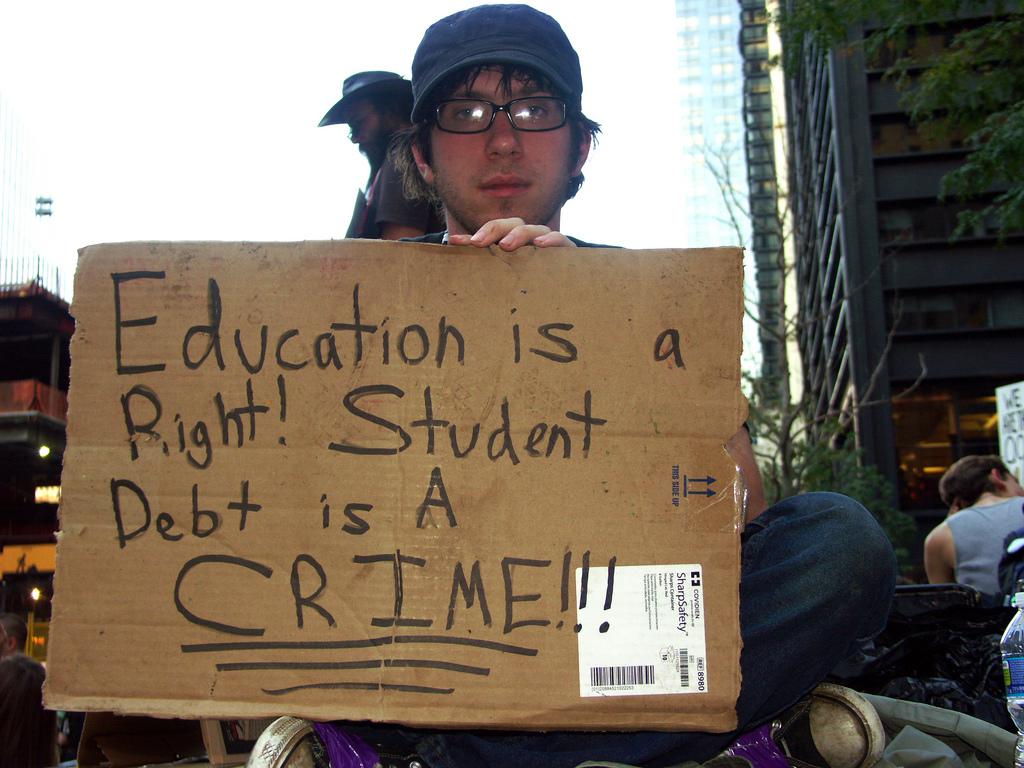
Loading summary
Transcript45 lines
- [00:00]
A
Sam. Saint gonna change. Welcome, friends, to another edition of Economic update. This is a program that every week explores the economic dimensions of our lives, our jobs, our incomes, our debts, those of the generations to come, our children, all of that. I'm your host, Richard Wolff, professor of economics all my adult life and I teach now at the New School University, New York City. Let me jump right into the updates for today and leave the announcements for a little bit later. I want to start with a distressing story about the Obama administration and its relationship to the problem of student debt. The story has to do with the effort in Massachusetts of a gentleman, 65 year old man named Robert Murphy. He went to court in order to get a bankruptcy ruling. He wanted to discharge the debts he had accumulated to put his children, I believe there were four of them, through college. He ended up having borrowed $220,000 between 2001 and 2005. Seven he appealed for bankruptcy relief because the following things had happened to him. He lost his $165,000 a year job as president of a manufacturing company in 2002 while looking for work over the last 13 years. He used up his retirement savings and his home was recently foreclosed. He lost his home. Murphy estimates that if he were to find a $50,000 a year job now and pay until he turns 77, the balance of his loans would still grow to $500,000. With the accumulated interest, he can't do it. And so he appealed for these debts to be forgiven. Okay, here's a fellow then who did the unthinkable. He borrowed money so his four kids would have a chance at a decent life. Because nowadays you need a college education to get almost any kind of job. And we would call that noble. He then lost a job in an economic recession he obviously didn't cause. He used up his savings, did not go on the public dole, and now has stopped being able to pay on his mortgage and given up his home. Seems to us that he's paid a very heavy price to do something noble for children and he asks to have his debts forgiven. The Obama administration went into court to argue that he should not be allowed to to take advantage of the bankruptcy laws which are designed to relieve people in that kind of a situation. It's the arguments that the attorneys for the Obama administration used that I found amazing and I wanted to share with you first. And by the way, I'm basing all of this on a story in the UPI, United Press International, published October 20. The author in Boston, Amy Connolly for Those of you who would like to find more details about this. The argument was that no student debtor should get a break, a bankruptcy break, unless there is, I quote you now because you won't believe it otherwise, a certainty of hopelessness, end quote. With circumstances that have a, quote, total incapacity to change. I kid you not. The attorney said, quote, an individual's economic circumstances may change over time. Improvements in the national economy may offer new employment prospects. Changes in family circumstances may reduce the number of the debtors dependents. A spouse may enter or re enter the workforce, or the debtor may benefit from an inheritance or other windfall. In other words, don't help this man with bankruptcy because of good things that might happen to him in the future. Every day, this is important for all of you to understand. Every day in every court in this country, bankruptcy is a matter of normal judicial process. Individuals, companies, in the case of Detroit governments are declaring bankruptcy and not paying all their bills. No bankruptcy judge turns to them and says, you know Detroit, 30 years from now, something may happen in a corner of Detroit that will make your city strong again. So we're not going to let you take a bankruptcy. This is craziness. And it is particularly noteworthy because the Obama administration has tried both Obama himself, Vice President Biden and others to say that they are supportive of, interested in helping students that have accumulated too much debt. Well, when the rubber hits the road, when there's a clear case of a person who, who needs a break and deserves a break and has done it for his children, we hear not only that the government doesn't want him to get a break, but that they use the possibility that his circumstances might change in some imagined future as the rationale for denying him. So you might wonder, as I did, what's going on here? And I think the answer to the question what's going on here? Is rather simple. If you help him, you're undercutting the current law which denies to student borrowers the bankruptcy protection that is given to virtually all other borrowers. It was, after all, I believe, Vice President Biden who took the lead in getting the law passed years ago that really prevents students from declaring bankruptcy in the way that other borrowers are enabled in our law to, to do. And the fear is if you give this man a break, the dam will overflow with students in similar circumstances, with their parents in similar circumstances asking for the same treatment. And if you begin to do something for the indebted students and their parents, well, then the other kinds of folks with debts are going to come clamoring, too. And we have an economic system that is so ridden with a dependence on debt, we can't back away from it. It's a little bit like an addict who can't back away from another fix. The next economic update might be headed under the heading corporate misdeeds yet again. I know some of you find it tedious, as I do, too, to chronicle yet another example of how big capitalist corporations take advantage of us and thereby abuse the faith so many still have in them. But it's my job as an economic analysis to make sure that the scope of corporate misdeeds is not underestimated. They spend billions in advertising to clean their image. The least I can do is try to achieve some sort of balance. So the latest story comes out of the courtrooms of Philadelphia. A federal judge in Philadelphia is hearing a whole bunch of cases brought against the McNeil Consumer Health Care Court that's actually a subdivision of Johnson and Johnson, one of the largest pharmaceutical companies in the world. And this has to do with a drug you're all familiar with called acetaminophen. It is the drug that's the active ingredient in what you probably know better as Tylenol. Here's the problem. Tylenol has made an awful lot of people sick. And so the question is, what is it? Is it a problem with the chemical? Is it a problem with the dosage that people take of this chemical? What is the problem? And here's the answer. We're not sure yet. Some of the cases brought against this company have been won by the people bringing the cases. Some of the cases have been won by. By McNeil and the Johnson and Johnson Corporation. I don't know quite how to assess what that means. So I looked a little bit further. It turned out that many doctors have for years been telling people not to take the maximum allowable dose, which is four grams or eight pills a day. But in order to be safe, to limit themselves to 3 grams and 6 pills a day, you'd think that would be enough for a company having learned from the doctors who prescribed this medicine that they would have changed it. They fought tooth and nail. That's what the court documents show, and public records show they fought tooth and nail against lowering. But they finally did. Then finally there was a situation in which the proposal was that various safety warnings would be required to be published on the medicine. So people are aware of some of the claims. The company fought that, too. What are we doing? In order to make money, in order to sell more pills, a company is fighting the kinds of information and cautions that safety would dictate as a first order of business. There's a clash between the profits made by people in the health care business by corporations and the health of the people they're supposed to be serving. That's a consequence of profit driven capitalism. And if you like profit driven capitalism, then you are voting for this kind of behavior because it's going on all the time. Which is why I have so many occasions to bring examples to your attention. Next update, a new book by an interesting author, Professor Gabriel Zucman. Z U C M A N He's a professor of economics at the University of California in Berkeley. His new book is entitled the Hidden wealth of Nations. The Scourge of Tax Havens. His book is the first comprehensive study of where both individuals and corporations are hiding money. That's what I mean. They put the money in these places called tax havens because by keeping their money there, by making their profits show up in that country, even if it means starting a corporation in that country that doesn't do anything but maintain a mailbox someplace in order to do that. The purpose is to avoid taxes. You make your profits show up, you keep your money in a place that doesn't levy taxes on you and that way you escape taxes. And he wanted to see how big an issue is this. And his findings, which I urge you to take a look at, are truly stunning on a global scale. 8% of financial wealth of households is held in tax havens. According to the latest available information. In the spring of 2015, foreign wealth held in Switzerland reached $2.3 trillion. 55% of all the foreign profits of US firms are now kept in in tax havens outside the United States. Not paying taxes. One of the reasons the government demands so much taxes that upset so many of you, the taxes on you middle and lower income citizens, is because big corporations and wealthy people use tax havens to escape their share of taxes. The solution is not more or less taxes. The way it's debated in our society. Conservatives say we're against taxes. Liberals sometimes say, well, sometimes you need to raise taxes. That's not the issue. The issue isn't high or low taxes. The issue is who's paying and who's evading. And big corporations and wealthy people are the number one evaders using tax havens who are whose size is enormous, as now documented by Professor Gabriel Zucman at the University of California in Berkeley. His book the Hidden wealth of the Scourge of Tax Havens. It is Good reading. It teaches you something important. Next update. Students in Stanford University, a school I once attended years ago, and indeed students in many other universities across the United States have been conducting a successful campaign to get their universities to sell holdings of stocks and bonds in companies that are damaging the environment. Companies involved in the fossil fuel business, oil, gas, all of that. Their argument is that the job of the university is to be the center of learning. And if the overwhelming preponderance of scientific learning teaches that burning fossil fuels is dangerous to the people of this planet, then a university committed to science and to knowledge and is duty bound not to actively support and encourage the production of something science teaches is destructive. The students and the faculty involved also argue that they want their university to be a contributor to what is good for people. Not to destroy the air that their students, their faculty and the general public have to breathe. They want leadership from their university. Universities that claim to be leaders of civilization, centers of learning, leaders in the community. Okay, say the students, then lead. So how interesting is it that this last week as reported in Bloomberg on 21 October Bloomberg News Service, that MIT in Massachusetts, the Massachusetts Institute of Technology, has decided to reject demands from a student led group to divest its $13.5 billion endowment of fossil fuel investments, joining universities such as Harvard and Yale. Okay, let's figure this out. Yale, Harvard, mit, these are the schools with the biggest endowments. Harvard is number one. Yale I think is number two or three in terms of the richest endowments of any university probably on the planet. They're not going to do it. They're going to. Hold on. MIT has $675 million invested in fossil fuel companies according to their latest statements. What's going on here? Don't they want to be leaders? Don't they believe in the very science their own scientists affirm? Or are they just greedy? They want to make investments, they don't want to give up the money. Well, according to the student leader at mit, one rife. I want to get his name, sorry, Jeffrey Supran, a student with the fossil free MIT group. He put it nicely. I can't add to what he. MIT has put money before morals and its students future. Nicely said, Jeffrey, you got the idea. Okay, what is the time that we have left? Well, it's enough time to deal with a question that many of you have sent in. This is the part of the program when we deal with these kinds of questions. So let me deal with it here. Question goes roughly like where is the United States economy headed? Please tell Us, what is likely to happen to interest rates, employment, incomes, jobs, all of that? Well, I get that question often. Indeed, if you're an economist and people in the room know it, you get asked these sorts of questions, sort of the way a doctor, I suspect, gets asked, could you tell me why my neck hurts? Or whatever else. So let me answer on two levels. First, I don't do predictions. Predictions are something that I never understood, that make absolutely no sense to me. And indeed, I think there's an important point that I can make here, which is which I'm about to do. But if you want predictions, believe me, the television is full of them. The newspapers, particularly the financial newspapers like the Wall Street Journal and so on, are also full of them. There are loads of people around who will provide predictions because people seem to want them and indeed pay for them. But I know that I can't tell the future, and I know nobody else can either. And I can't let that go because it seems to me elemental as a way of understanding the world. If you go to an amusement park and you speak there with a person who reads your palm or looks into the tea leaves and tells you who's going to be your romantic partner next week, you giggle because you understand that this is an amusement. If you were with a person who immediately reorganized their lives planning for this romantic interlude next week, you'd realize you were with a person who has a problem because this is an amusement. It's not serious because nobody knows what's going to happen. There are too many variables subject to too many influences to know. So I'm not going to be able to answer your question. I will in a minute suggest to you what some indicators might point to. But that's not a prediction. But first, let me explain why, if nobody can tell the future, so many people are busy doing that? Here's the answer. In economics, at least, every corporation has to make big economic decisions all the time. Are we going to build a new factory, hire a lot of workers, and buy a lot of equipment to produce a line of something? Are we going to open another office in Philadelphia or Dallas or St. Louis? Should we open up, undertake the expense? Some executive somewhere has to make the decision. And that executive, if he or she has any brains, knows exactly what I just said. We don't know the future. We may make a decision which turns out, in retrospect later to have been a bad one. That's always possible because no one knows the future. How does an executive protect himself or herself when making a decision? Their job calls upon them to make which may go bad for reasons that nobody can predict. The solution is to say I contracted with an expert, an economist, let's say, to tell me whether such and such a decision is the right one to make. And that fellow or that woman economist came here, did a study and reached a conclusion. So don't blame me if the decision I made turns out to have been a mistake because I did all I could to make the right decision, even bringing in an expert. So the job of the expert who comes in and makes a prediction is not to know what the future brings because no one can do that. It's to provide covering for the rear end of whoever the decision maker is. Every time I've done this in my life, the person calling me in in the company made crystal clear what they wanted me to find. This is rear end covering. That's what it is. And if you go to an amusement park, you should giggle when someone predicts. If you hear an economist making a prediction, you are talking to somebody who's making an income by doing something useful for corporate executives. But as to predicting the future can't be done, hasn't been done. Nobody has done it. It is a joke and not a good one. Having said that, what are some indications about the American economy as it looks now? Well, here's the the United States is more internationally connected now than we have ever been since the days of being a small colony of Great Britain. We depend on the Chinese for a vast amount of material. You all know that because you're wearing it. You're, you're toasting your bread in the morning with it and soon you'll be driving it. So we depend on China in lots of ways. China is the largest owner of U.S. corporate, U.S. treasury debt. Our government is in hock to the Chinese Communist Party government. So we are interacting with China all the time. China's economy is slowing down. It has been the most well performing economy now for 20 years, far outdistancing the United States in its rate of growth. But it is now slowing down. And that slowing down means it can do fewer of the supportive things in relationship to the United States that it once did. Japan, another important partner to the United States, has been in a recession or depression for 20 years. It is not the economy it once was. It cannot provide boosts for the United States. Quite the contrary, it's a drag. The European economy is also in very tough shape. They committed themselves to austerity, to cutting back on what the government provides. Their unemployment rate is in double digits. They are a bad situation and we are completely intertwined with them. In recent months, the Third World, Asia, Africa and Latin America, who were doing pretty well selling their raw materials and food to the Chinese industrial juggernaut that was chugging along, they're now in trouble because the Chinese have slowed down. Everywhere in the world you look, economic conditions are either poor or deteriorating. There is no way for the United States to be independent in its performance from what's going on in the rest of the world. Therefore, my guess is we are in for a rocky time in the months and even the years ahead, partly because American companies are still leaving the United States in big numbers to move to where wages are cheaper, where environmental controls are less, where taxes are lower, etc. But even if that weren't happening, and it is, the reality is that the United States can't go it alone and therefore is going to be negatively affected by the very difficulties in those parts of the world. And by the way, economists in those parts of the world enjoy pointing out that many of their problems have to do with the negative consequences of their links to the United States. First and foremost, the collapse in 2008 when the United States was the scene of economic catastrophe, the results of which are still playing themselves out, particularly in Europe and Japan. I don't make predictions, and I know that I don't agree with my colleagues on the left or the right or in the middle about how we got into this mess or indeed how we should get out. But I would let you all know that never before in my professional life have there been so many economists with whom I disagree on other subjects who do all agree that we are in the worst conditions of the economic system in the United States that any of us have seen in our lifetimes. We've come to the end of the first half of this program. Please stay with us. We're going to have a short interlude and then we're going to come back to you with what I am very sure you will find a fascinating interview having to do with how Americans learn about their economic system, what they learn, what that means for both economic literacy and literally, how the economy in our society works. Stay with us. We'll be right back. In the morning and close in the afternoon. That's the way she was, the uniform she went down.
- [28:50]
B
Never given up.
- [28:53]
A
But.
- [28:54]
B
In my tiredness you've always placed your trust. You give your sweet nothing me.
- [29:05]
A
You.
- [29:05]
B
Give your sin nothing to me. When I was lost with another in sadness.
- [29:30]
A
Welcome back, friends, to the second half of Today's economic update. I'm very proud to introduce to you Alan Shulman. He started teaching high school in 1968. It was an alternative to military service in Vietnam. And he stayed on to serve as high school English and social studies teacher, administrator, Special and International Projects Coordinator for the Alternative High School Division and the Department of Education, Office of Teaching and Learning here in New York. He currently serves on the executive committee of of the association of Teachers of Social Studies and is a project coordinator for a Youth on Community Boards campaign. A lifelong high school teacher in New York City. Welcome, Alan Shulman.
- [30:25]
B
Thank you, Richard.
- [30:26]
A
All right, I want to jump right in because this is a program about economics. So I want to ask you to tell me what your impression is, what your sense is of economics education in American high schools based on your lifelong experience. What's taught, what do young people get from the economics courses or the portions of the courses that deal with economics. How would you assess it?
- [30:53]
B
Well, according to my three children who all went through New York City public.
- [30:57]
A
Schools, well, maybe that's the best way.
- [30:58]
B
To learn and took economics courses. Nothing that was useful into the future. But that's not a condemnation about the effort. There's more economics education going on in the New York City public schools than there ever has been. There are two high schools that have business and finance or economics in their title. Students go to them deliberately from around the city because they want to be able to access the business world. And at least the high School for Business and Finance, which was created by and sponsored by an organization called wise, working in support of education, really has a connection into business. And it gets kids from poor and immigrant and working class families into a process where they can access the business world and are really prepared for it. So on some level, New York City provides for a small sector of kids a very high level of opportunity in economics and economic literacy. The problem is that you just scared me also that Something happened in 2008. Almost all of the economics curriculum and units, including the Common Core standards, which fuel the New York State standards in economics, are predicated on capitalism and democratic capitalism being the system that's going to work and incorporate all the people and all the students into it, and that the equation of hard work, disciplined study, and staying focused on your goals would get you a decent quality of life. Something happened in 2008 and it hasn't recovered. And you can actually feel almost the degradation of the effort in economics going on inside the public schools. I don't know if you realize how the coursework runs but there's an eight semester social studies curriculum in place in the high schools. Economics is a course that's mandated in the senior year and it's really predicated on the fact that 35,000 kids are about to be graduated into an adult reality and they need a dose of economics. Before 2008, it was about banking and loans and you know, had a, all the personal finance stuff that if you get a good job and when you get a good job, you'll be able to do. And you know, they invented games like the stock market game and Global Business Challenge. I mean, wonderful stuff for kids in high schools, but all predicated on the.
- [33:51]
A
Notion that there was a job and a decent income waiting for you and you needed to learn some of these skills to do well in it.
- [34:00]
B
That's right. What's happened in the last few years? Because nobody really understands how money works anymore and nobody understands how the economics of things really operate. And the fallout from the economic disaster in 2008 that's affected so many families in New York City, I mean, you just, you feel the lack of an excitement about accumulating debt to go to college, the sense of I'm on my own and how do you get work in an economy? I mean, just all of it is sort of broken down. And there's no test in the high schools for economics. So there's no set curriculum or set of standards. And it's literally in most places that I know of, the least popular course that teachers want to teach because they don't know where to take it. And that's where the answer to your question starts to happen right across America. Something has happened. And it may be that we're changing systems. It may be we're never going to respond. There may never be a recovery. And it's going on a long time. This isn't just, this is now seven, eight years since 2008. And teachers of economics have been sort of holding on to what made them and their lives really work. I mean, most teachers come from poor families, they come from immigrant families. They're like, American capitalism was great for them. Carmen Farinho, who runs the school system and who is a wonderful leader.
- [35:39]
A
She'S.
- [35:40]
B
Like a poster woman for how good the public school system can be in a healthy economy. But you've been week after week, you come and you tell and it's there. I mean, teachers know it. They're constrained at the moment from actually taking an objective view and look at what's going on by the rigors of having to pass Tests and get kids.
- [36:05]
A
Let me ask you a question. Do they. And of course I know that you can't. This is a generalization. Are they offering students at least an explanation of what went wrong in 2008 so that the students have some idea how and why they came to be in this troubled situation you've just described so well?
- [36:27]
B
So no. The answer is no. Because I think most of us, and you know, including me, I'm not an economist, don't really understand the depth of what 2008 revealed about the fissures of our system and what could happen. We just. And we're not getting a whole lot of good help in having a conversation publicly where people can actually err. What these questions are. The professional development stuff that's going on inside the public school system is really geared toward providing students with some curriculum that will enable them to pass tests. It's really a test driven and now science, technology, engineering and math driven college and career bound system. What's broken down is the conversation that needs to go on both at the college level where we're producing the teachers of economics, inside the Board of Ed, the Department of Education, and inside the union, because the union plays a really critical role in some of this stuff about what future are we really preparing the kids of this city for? And you can't have like an economics course unless it's geared to some system that's going to be sustainable and stable. The other day I was listening to the radio and some Bloomberg commentators said, well, this period of volatility isn't such a bad thing if you're a long term investor in the market. And I'm thinking about all the kids I'm working with out in Brooklyn and in Curtis High School, I mean, all over New York City. And the volatility that this guy is just, you know, just sort of as an investor talking about results in parents not knowing who their bosses are and businesses clothing and stresses and homelessness and I mean, so much depression. And the economics thing has become so intertwined with the way people feel about themselves. I mean, part of what got lost somewhere in the last generation is just the dignity that people get from work. And we're sort of raising a generation of students who don't get that work is simply how you get your money. And yet as soon as you lose your job or you're unemployed, it affects everybody in your family. And it goes. I mean, it's just so we're seeing the economics classes aren't sort of dealing with the morality and the personal Fallout and all of the exigencies that have been created by this thing, including the acceptance that not everybody's going to have a professionalized job that pays enough to be able to do this without getting into debt, and that maybe people should start thinking about living in a different kind of system and sort of making it that if you're willing to work.
- [39:32]
A
You should be able to live a.
- [39:33]
B
Decent life without stress.
- [39:36]
A
Is there anything going on in high schools that you know of that might be called a movement in the direction of talking about alternative systems? In other words, being able to translate the upset, the confusion, perhaps a sense of betrayal that young people feel with the world that's being handed to them. Is there something happening that at least they can now ask different kinds of questions and get that satisfaction that comes from having at least a sense of what's happening to you rather than being literally lost in a bad situation?
- [40:17]
B
Well, see, I think that there are pockets of really good things that are happening, but they're usually dependent on enlightened administrators who release the teachers who are in position to actually have these conversations with kids as equals, because the teachers are in it also, and the teachers.
- [40:37]
A
Are fit, because I know the college economics is not teaching. The explanation for why the crisis happened in 2008 and what it means and where it's taking us is as confused a topic in the college where the teachers are being trained as it is in the high schools where they then teach.
- [40:56]
B
It's deeper and personal. We've got a lot of teachers whose kids did everything right, and they're living in their basements because the kids can't get out. And what are they supposed to be saying to the students? Because it's a condition that the teachers don't understand either, so there's got to be elite.
- [41:14]
A
And.
- [41:14]
B
And it's not happening quickly enough in the way we see the young adults in high school. Teachers are still walking in as the authorities in a situation, but in terms of trying to explain what's going on for the last five or 10 years and the changes and literally being able to recognize that while the media has a recovery going on and while everybody's got a recovery going on in, it's not happening in Brownsville, the recovery isn't happening down in the Lower east side of Manhattan. And the teacher really has to be able to be free enough and have the time and space in their curriculum to be able to come in and say, I don't understand these things much either, but I've gotten, you know, I'm Getting some guidance on how to approach these things. And that's why it really is dependent on that chain that starts with the universities and runs through the social studies department at the Board of Ed. They've got some really good people in place. Carmen's brought in some good people, but they don't know what to do. It's literally they're tied to teaching, to an old system and an old vision of capitalism. And they don't have the time to have the conversations even about, well, where is this heading? And then they talk to guys like you and they say, well, where's it heading? And you say, I don't know, but it's serious. And that really requires, like, recognizing that we're in a very special period in American history. And maybe the way the conversation has to go on is going to be different than can we really set specific goals, or is it really just important enough right now to recognize that something has happened and it's not going back to the way it used to be? And whatever vision you have of a solution to all of the problems, including getting young people really engaged in this stuff, and they're not at the moment, there's a lot of alienation, a lot of cynicism, but that getting people engaged in the conversation about, like, what future can we all agree on that we sort of want to tweak this American reality to that won't make us crazy into the future. You talked about that guy earlier in the program who got so snowed under with college debt that it's blown his entire life apart. I'm one.
- [43:45]
A
My wife.
- [43:46]
B
We're dependent. We've got those things in my own family, you know, I'm him at some point, if it breaks down in my own personal life and there's millions of us, and it's like the economics education really has to catch up to the question of now that economics are central to the rights of people, central to everybody's quality of life, and central to the way we're going to be socialized amongst each other into the future. Then what do we really have to do to put this on the front burner of getting some coherent story about how things got to be the way they are to young people. See, the economics in schools really are tied to the way history and social studies is taught. Global studies, American history, and it's completely divorced at the moment. One is this financial literacy stuff, and the second is sort of telling bits and pieces of history. But when you talk to the university folks who cuny not just in the Economics departments. But in the history departments, they'll tell you that the level of education that they would like to start with is not the level of education about the American history or global history or economics that they would expect the high schools to be able to get to. And there's not a lot of conversation going on between the two of them. That's what's led to a project that you're now involved in.
- [45:19]
A
Right. I'm still struck by one thing. You know, when it's a period of transition, as you make a good case that it is in the country and therefore in the schools, one of the things that might bring students and teachers together is if they understood themselves to be in a conjoint project together to try to figure out what went wrong and what to do now. In other words, make it sort of a John Dewey idea. Let's be practically getting together, learning as an adjunct to ourselves, figuring out what went wrong and beginning to chart a new future that includes a job for me and an income for me. Let's make it happen. Instead of adjusting young people to a system which isn't there anymore after 2008, let's enlist the young people in a learning project to explain what went wrong and to build something new. You could get a whole generation of people that are dynamos in helping to solve the problems of this country rather than unhappy people suffering the breakdown of something.
- [46:29]
B
See, but that's a gutsy thing because it can't just be done with high school kids. It would take people at the university level with doctorates and master's degrees and years of experience and books that they've written saying, wait a second, we're in this, too. And maybe there's a turn in history that we don't understand either, that this is a special period that now involves everybody in the chain. It's not like somebody can be sandbagging and everybody else is. Is at home watching TV while the river's rising. This is like a serious moment in American history. And there are models and moments in history where societies recently have faced crisis like this real transition challenge, and they've declared them as special periods. And they've activated all of the organs that were available now, not just the public schools and the schools, but unions and everybody, to have a conversation of now that this disaster has taken place or now that this thing has gone on, how are we going to readjust so that nobody gets left out and the people who are left out before the disaster get built into the response to it and we can sort of move forward. I think it's very much what the Occupy Wall street the statement was, that we can rebuild an America that includes everybody without having to make ourselves crazy. But it's going to take a kind of cooperation. And I don't know all these university people who are willing to say, I don't know much more about the economy and the economics of things than the average high school kid, but that's the gutsy place that is going to have to happen. That what we consider people are going to have to back off and say, this is as confusing to me and as frightening to me as it is to. It must be the high school kids who are coming through and really be able to reassure the high school kids that nobody really knows more than they do at the moment. Because even though there's not a lot of conversation coming out of particularly the poor and working class neighborhoods in New York, you talk to kids individually and they're scared to death because they're seeing their brothers and sisters and their cousins going to college, racking up debt coming out, and they're working at the mta. I mean, they're looking for some kind of job that will insure them, some kind of health benefits, some kind of pension and the college degree that they went into. Not looking to get smart, but looking to get a good job. That was the deal.
- [49:20]
A
They're very American. Yes.
- [49:21]
B
And they've been spun out and it's almost like the subprime mortgage thing. They've been tricked into believing that they could get a ride into middle class America. And now they're back to stress all the time about the jobs that are available and how they feel about themselves as a result.
- [49:41]
A
You know, I understand you need to change all along the line from the university through the schooling and all the rest, but you never know where that starts. It can start almost anywhere. If it starts among the high school students, I wouldn't be surprised. And then it'll work its way up the ladder into the university. It doesn't have to go the other way. It's always an open question. And it depends on where the leadership is, where the first teachers, the first students have that spark. You know, there are many stories of revolutionary situations in which because the revolution scrambles up everything, the next generation is unbelievably productive because everybody understands they're part of a new beginning, a new. And they have to find their way. And they're all kind of equally searching and they're going to help each other. If we could get an honest critique of what went wrong with the capitalism we had? And have a generation that's embarking on building a new school, a new economy, a new society, you would, I think, bring out, galvanize and inspire creativity and energies that we don't see anywhere now that would overflow. Because that's a very special moment in anybody's life when they're caught up in that kind of a situation.
- [51:06]
B
Oh, I totally agree. And I think a youth movement that's informed and has this on their agenda, the fact that they're going to be living into the future is long overdue and that it's going to start somewhere you would have expected it would have started on the college campuses, but that doesn't seem to. I mean, people have fried. Money has become so overwhelmingly the determinant for how you use college that to get thrown out because you're protesting, you know, somebody's pensions, being in a diamond mine and stuff. It's crazy because you got debt degree people are just so tightly bound to a contracting system that it's almost like the tautness is happening and sooner or later something's going to break. And we've started discussing putting an economics working group together to actually look at writing a new curriculum for high schools that says something. When conditions in 2008 changed and we need to explain the political economy and the fallout to that on the real lives of the real students who are coming through our public school system. And we're in the process of actually organizing this work.
- [52:35]
A
No, I'm very excited about it, very, very honored to be part of it. Because again, I can see that this is a turning point. I've said it now several times in today's program coming at it from different. But when you see in different realms of a situation a turning point, that's when you know it's genuine, when it's happening in so many different arenas kind of at the same time.
- [53:00]
B
I mean, I could only tell you that for 45 years, my union, the UFT, was closed to this kind of conversation. It's now at least on open to coming in and helping us with this new project. And it's almost like there's a new period that we've entered and the possibility of realigning and people backing off their old grievances and people really taking the measure of their pain. Everybody's got a grievance about somebody else and just being able to take a deep breath and say, okay, but the same people I may not have wanted to work with or like, are the people I'm going to have to align with because our interests in the future are common and I think it's going to come from somewhere. I mean it's hard to tell which sector.
- [53:55]
A
Well, I sense it coming because as you mentioned before, it's now eight or nine years since we've gotten ourselves into this disaster and there's no end in sight. The talk in the financial press now is of another downturn in the US economy. As I said, I don't make predictions, I don't know whether or when that will happen. But it's clear we're in a long term decline situation now. It takes years for people to accept that, years for them to realize, wow, my hope that it would blow by, that we would have some hard times and get through them. This is not what it's looking to become. The powers of denial in the human spirit are enormous. So it takes time. But I believe it is now beginning to get the momentum that people are kind of bitterly, in some cases resigning themselves to. It isn't any more business as usual. It isn't going to pass, it isn't going to be taken care of by somebody else. I've got to get out there and struggle with other like minded people to make the changes we need. Not for somebody else, not for a distant future, but for us, for our children and us right now, right here. And once that happens, I think we will all be blown away by the energy and the creativity that will be explosive.
- [55:27]
B
No, and I agree, but in the meantime the problems are really deep. I mean getting back to economics education right now, it's big business. Pearson is a big business. It creates the tests that give the yard markers for success and failure in jobs in New York City. Wise creates curriculum that reaches 50,000 students every year. And these are all big business situations. And to change, for them, to change their view means that they're going to have to sort of say the reason that they exist, which is to make profit and exploit situations. And they're certainly doing it with textbooks and testing and education and look at possibly a different future where our shareholders aren't going to be so happy with. It's not going to happen without some kind of mounted pressure from change. And it's not there yet. And that's where the universities really, they can't be let off the hook anymore. No, no, no, no, I agree. It's, it just, well, let this then.
- [56:45]
A
Be a program about high schools, one of whose messages is the universities have got to play their role in all.
- [56:52]
B
Of this and we're sending 35,000 more kids into the universities about which they.
- [56:58]
A
Complain unprepared for them.
- [57:00]
B
So it's in their best interest to change.
- [57:02]
A
Alan, thank you very much. As usual, these conversations are just getting underway when we run out of time.
- [57:07]
B
Thanks.
- [57:08]
A
Thank you very much everybody. Please remember that we are helped along in our work by Truthout.org, that remarkable independent source of news and analysis. Please make use of our websites rdwolffwith2f's.com and democracyatwork.info to communicate with us your questions, your comments to let us know what you'd like to see in future programs and to follow us on Twitter and Facebook. Last, let me close by asking you to share what you've heard on this program. Use social media any way you can. The impact of this program depends on our partnership with you in sharing whatever you've learned and thought about as a result of this week's program. I look forward to talking with you again next week. Sam.