Loading summary
Transcript45 lines
- [00:03]
A
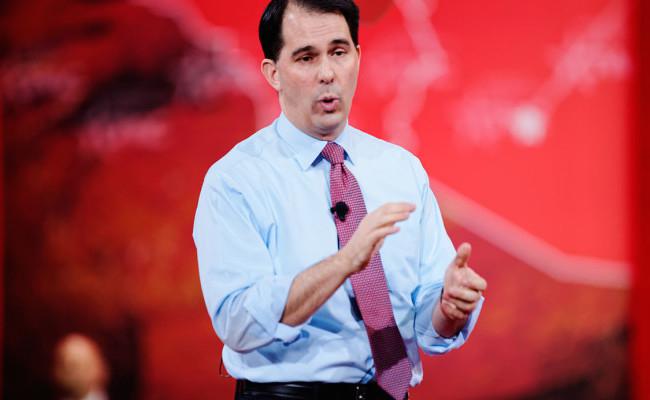
One of these days I ain't gonna change. Welcome friends, to another edition of Economic Update, a weekly program of analysis and news looking at the economic dimensions of our lives. Our jobs, our incomes, our our future prospects, our children's college debts, all of that. I'm your host, Richard Wolff. I've been a professor of economics all my adult life and I currently teach at the New School University in New York City. Once again, I want to remind you that we maintain two websites that contain all of the work that we do that I urge you to make use of. They're open 247 at no charge whatsoever. I'll have more to say about them later in the program. Let's jump right into the economic updates for this summer week. First and very interesting. The latest report from the Bureau of Labor Statistics released this last week indicates that real wages fell in the month of May. I'm not going to say more about it because some things don't need much commentary. But if you have a recovering economy, you don't typically see a month of not only not increase, but an actual decrease in the real wage per hour and the real wage per week of the average American worker. My attention was also drawn to another article of news, again where I'm not going to make much comment. This one has to do with a memorandum sent out to the interns working for Goldman Sachs, the investment bank here in New York City which makes use of interns. For those of you not familiar with intern, it's a polite term for an unpaid worker. This is a young person usually desperate to make a better CV for their future job search and therefore beg borrow in order to become an unpaid worker in in a prestigious firm. And the prestigious firms love this since it's of course free labor and they can make these folks work unspeakable numbers of hours for nothing. It became a scandal a little bit last year in the wake of the death of a 21 year old bank of America Merrill lynch intern. Moritz Earhart was found dead in the shower of his London accommodation after having worked for 72 hours straight in the offices of bank of America. So Lloyd Blankfein, the head of Goldman Sachs, decided it was important I'm going to quote now to improve the overall work experience of our interns. So the new rules introduced for this summer's crop of investment banking interns go as you should not go home before midnight and you don't come back before 7am Let me rewrite that work until midnight. Show up tomorrow at 7. This leaves a lot of time for recouping yourself. It leaves a lot of time for eating and relaxing and having a real life. In other words, Goldman Sachs, which is a leader in producing precisely the intern dilemma of that I've described making use of it for years, is now deciding that there ought to be limits that go from 7am work arrival to midnight. Wow. And the concluding comment of Mr. Blankfein, at the head of Goldman Sachs about all of this is priceless. So I will read it to you and make no further comment. Quote, you have to be in. He's addressing the intern. Excuse me. You have to be interesting, comma, you have to have interests away from the narrow thing of what you do, comma, you have to be somebody who somebody else wants to talk to. So Mr. Blankfein is leaving you seven hours from midnight to seven in the morning to become an interesting person. Next update for this, a remarkable set of rulings in this case, both in California. The first one is a very important court case which found in the case of workers at FedEx in California that they had been inaccurately and improperly the drivers of those famous FedEx parcel vans had been improperly designated, quote, independent contractors. That is, they were not considered by FedEx to be employees in the usual sense of the word. That is, you come to work, you get paid a wage or a salary, etc. Etc. No, they were reclassified as independent contractors whose services were purchased. Now, this may sound to you like a quibble and a semantic difference, but it isn't. It's very real. You see, FedEx, like other companies that do this, and there are many of them, indeed, one of them I'll mention in a moment. Many companies do this because there's a vast collection of laws that govern employees and what services you have to give them, what working conditions you have to provide, overtime if you work them more than 40 hours, all that kind of thing built up over a hundred, two hundred years of struggle in the labor movement to get these protections. If you reclassify a person as no longer an employee, then he or she is not covered by those rules and regulations. An independent contractor from whom you buy a service is simply another business that the company is dealing with, and none of the protections apply. So what is done, of course, is that corporations see an advantage they can get out from under the recordkeeping, the labor you have to have working to keep the records and the money that it costs to have an employee that can save all of that by simply changing his or her name to be an independent contractor. They even save on taxes in various kinds of ways because you don't have to withhold Social Security and things like that from an independent contractor. So they save money, they save time, they this is a profit making advantage. They also can shift the costs of all kinds of business onto these independent contractors. FedEx, for example, rented the vans to the independent contractor. Rather than owning the vans as their own expense. It was put onto the workers, and so on and so on and so on. So the company saves all kinds of money which it can add to its profits. It saves all kinds of taxes. And of course, if the company pays fewer taxes, then it leaves for the rest of us to either make up that money by paying higher taxes ourselves or suffer the loss of public services that can no longer be afforded because the companies have done this. The court in California said this is illegal, this is improper. This was purely a money saving event. It doesn't qualify. This is not what the difference was designed to be. And they imposed a fine on FedEx of $228 million to compensate several thousand workers in California who have been working for FedEx for years because they've been deprived of what they ought to have gotten. Here is a comment from me about. Corporations hire people to figure out how to do these kinds of things. For years they've been able to make extra money more than what they pay. The business school graduates who figure this out, they made much more than that by abusing their workers. What other words should I really use? And you know, now that the court case has said you can't do that anymore, they won't fire the business school graduate. They'll set him or her to a new task. Find a new way to get, get us out of something we were giving to the workers. Shift the cost of business onto them in some other way. Cut back on their benefits, make them come to work a little earlier, cut back on the free time during the day, whatever. This constant struggle in which workers find themselves maneuvered or manipulated in one way or another and then have to fight back in this case by going to court. This constant back and forth. That's what we call sometimes if we're in a courageous frame of mind, class struggle. It pits the two sides in the production process, employer and employee, in this endless struggle and maneuvering. Of course, the resources that the management and the owners and the employers bring are much richer, much more well paid, and have more the time and the support to come up with these gimmicks like this one they got caught with. But even if you close off one avenue, you Open another. It's endless. One of the reasons we talk here about cooperative enterprises in which workers were themselves the owners and the operators as well as the laborers in an enterprise, is this kind of absurd manipulation would stop. Let's move on to another update in the time that we have. The state of Wisconsin is back in the news. You're going to see a lot about the state of Wisconsin because The current governor, Mr. Walker, is also trying to become the Republican candidate for president in the United States. And getting as much publicity for him and his state as possible is a free way to get advertising, which later he will have to pay for with the money that he's raising to. But please don't worry, he's raising plenty. I want to deal with what Wisconsin and Governor Walker are doing with the state university there. The University of Wisconsin has a many, many decades old reputation as one of the finest state universities in the United States. It has typically drawn students from all over the country who go there because it's a state university and therefore affordable. But it is in the top rank of universities pretty much across the board and has been for a long time. Mr. Walker wants to change that. For example, this year the university asked for an increase of $95 million in its budget, a modest increase compared to previous years. Mr. Walker's response and the response of the Republican Party, which dominate the legislature there, was to cut the budget, not increase it, not increase it by the 95 that was requested by the university, but to cut it by $300 million, a savage blow to anything that that university can do. So bad was the cut and the implications of that cut that there was a kind of a popular backlash, and the Republicans, trying to look as though they had some face to save, reduced the cut from $300 million to $250 million. Let's look at what that means first. Wisconsin already spends less than the national average per student on its colleges and universities. So we're not talking about a budget that is in some wild, unusual place relative to others in the country. So this means a state already spending less than the national average is now going to have the distinction of spending on a lot less than the national average. That diminishes. What? Well, let's remember, out of the 20 million roughly Americans that go to colleges and universities, more than three quarters of them go to public institutions. Higher education in the United States is a public enterprise much more than it is a private enterprise. And that means that the trained manpower and woman power of our economy, one of the most important things that any economic future depends on is the quality and the quantity of educated young people. And most educated young people in America go to public higher education in places like the University of Wisconsin. If you diminish, especially by these proportions, the quality and the quantity of education that you provide, you are undercutting the economic future of this country. This is now a world economy, we are told. We have to compete in a world economy, we are told, and we have to compete with other countries that are spending more money on educating their young people, not less. What a strange thing for a country to do. Of course, it might make sense if the employers of the United States were in the process of moving out of the United States to the rest of the world because wages are cheaper there. If companies are leaving Wisconsin and going to China, India, Brazil and other places, which of course they are, then it might be understandable that they don't want to pay for the education of the young people. They're no longer interested in hiring because they found much cheaper young people coming out of the universities in other countries. This means that Mr. Walker is doing the bidding of large corporations in an anti education, anti young person, anti future of the American economy program. It may make him look good as a person who cuts taxes, but the naivete of the folks who believe this is not to ask the question. If you don't raise taxes, particularly on rich and corporations, and the way you handle the fact that you're not raising taxes is to cut your education budget, who's the winner? Who's the loser in that arrangement may make Mr. Governor Walker a better presidential candidate, but it's at the expense of the people of Wisconsin, the people of the United States, and the future of our economy. Last item, when I spoke to you a few Moments ago about FedEx, I mentioned that there was another company in the news about this as well. And here is a second decision also in California regarding the Uber car service company. It turns out that the Uber car service company is able to claim that it undercuts taxicab companies in part because Uber, taking a lesson from FedEx, has designated all of the drivers of Uber cars as, yes, you guessed it, independent contractors. So it doesn't have to do withholding of their income taxes. It doesn't have to withhold for Social Security. It doesn't have to cover the hours if they work more than 40 with time and a half, it gets out a very high expenses. One of the ways they undercut the taxi business is by this maneuver. And guess what? A California commission has found that just as FedEx abused the difference between an independent contractor and an employee for its own profitable benefits at a cost to the employee, Uber has been doing the same thing. The implications of these two decisions, 1A court decision, one a state commission decision, is to take away from all the businesses, and they are in the thousands across the United States, who have made a habit of using the independent contractor gambit to boost their profits and to diminish the standard of living of their employees. Well, at this point in the program, we shift to having me respond to one of the questions, or if we have time for more than one, that you have sent in to which you would like responses. And today's is going to be a response to something that literally, I don't know, 20, 30, 40 of you have written to me about within just the last two months. And it's something that came to a head over the last week and a half. So this is the right time, I think, to speak about it. It's about something called the Trans Pacific Partnership. This is a deal between the United States and a bunch of other Pacific countries, countries that have a border on the Pacific Ocean, big ones like Japan and China, little ones like Malaysia and so on. And they're working to come to an agreement about trade amongst themselves. That's why it's called the tpp, the Pacific Trade Partnership. Okay. Over the last few months, the Obama administration has been doing something interesting, rushing to get this passed. And in order to get it passed, they have asked the Congress to give the President something called fast track authority, the ability to go faster than usual to get this passed. This is remarkable because a trade agreement of this magnitude involving this many countries is normally a very long, drawn out affair because so many people's interests have to be protected, served, evaluated, and so on. It's also interesting because there's been a furious negative reaction to the long term consequences of the last big partnership agreement, called nafta, between the United States, Canada and Mexico, the consequences of which never played out the way the boosters at the time in the 1990s promised they would. So there's skepticism to say the least. Then we have to add to the fact that the negotiations so far, and they've been going on quite a while, have been rigidly secret. We don't know what's in that partnership agreement. We don't know what's been negotiated. We don't even know what's on the table to be negotiated. So all kinds of people are wondering, why do we give the President, by the way, a President who claimed that he was committed to transparency and openness. Why does he want, let alone why should we give him the ability to operate in secret to produce an enormously important deal among major trading partners in the world in a quick way that would not allow mass participation or even understanding? Well, let's provide the answer. But before I do, a remarkable thing. Last week, the Congress of the United States, to the surprise of many, voted down two bills that would have provided the President with the fast track authority. Republicans and Democrats together defeated this after the labor movement and the environmental movement, and indeed quite a few corporations weighed in. They don't want this agreement. They don't want the President to have fast track what's going on here. And that's what I want to explain in the time that remains, every trade deal ever worked out by the United States and other countries, and by the way, this holds for other countries as well. Between Britain and India, between China and Germany and so on. Every deal like this involves. There's no other way to describe this. Corporations see enormous advantages if the deal is written this way. They will have more opportunities than they would otherwise have if the deal is worked this way. At the same time, corporations are afraid that if the language of the deal is turned in another way, a competitor will get an advantage they won't have. So corporations are very involved in the idea of, in the promotion of and in the negotiations of these deals because they could either make a lot of money depending on how they're worked out or lose a lot of money depending on how they're worked out. The folks who know that their interests will in any case not figure are what the labor movement. That's why it's against the tpp, because this is a bunch of corporations dealing with a bunch of governments. And the one thing neither of those two and ever worries about a great deal are the average labor conditions. The labor movement was not brought in to these negotiations. The labor movement has not been able to discuss, debate and evaluate. If that had been done, maybe it would have been a way to protect working people's interests. But having been excluded, the labor movement is against it. For the obvious reason. Ditto the environmentalists. They aren't at the table and they know that the corporations and the countries will work out what's good for them. But that is not necessarily, and in all likelihood won't be any good for the environment. So they're against it. But there are other interests. There are corporations who do not trade. That is, they produce goods and services that don't move across the border. They're very worried that this trade agreement to get advantages for the companies that are interested in foreign trade, we'll of course have to give something up. That's what a negotiation is. If, for example, just to take an example, the trade negotiation helps the United States airline industry to export more airplanes, that's going to hurt competitors who are producing airplanes in China, in India, in Europe. In order for the Americans to get, in the language of the deal, something good for an American airline company, they have to give something to the other countries, otherwise the other countries will refuse to agree. So they're going to have to give the other countries, guess what. The other countries want something good for their industries, which could well be at the expense of their American competitors. So you might find yourself as an American company, discovering after this deal that your interests have been sacrificed for some other industry because the other industry had the ear of the president or contributes more to the political party of that president, etc. So there's a lot of industries that are very skeptical about this because they can see, and sometimes they have inside information that their interests will be sacrificed. So the bottom line, President Obama lost because there's a split among businesses. There's a bunch who want this to happen because they think they're going to get an advantage, and there are a bunch who don't want it to happen because they're pretty sure their interests are going to be sacrificed. When you combine those businesses who don't want it with the labor opposition and the environmental opposition, that's what defeated the president. But don't think it's over. Here's what the President and his corporate allies will do over the next two, three weeks, which they've given themselves. They're going to go and find every senator and every congressman or woman and offer them something, a post office for their district, something that will make them look good back at home as the price they will get that if in turn, they change their vote and go forward. It's too early to call how this is going to work out, but that's the kind of horse trading that these kinds of deals require. The President knows it. The leaders of the Democratic and Republican party know it. It's all going on now. It has absolutely nothing to do with what's good for this country. It has absolutely no relationship to any definition of democracy worth articulating. But it is how a capitalist system like ours works. And from that you have to draw your own conclusion. We've come to the end of the first half of this program. I want to thank you all. I want to remind you that our two websites are rdwolff with two Fs com and democracyatwork.info Please make use of these websites for all that they contain in the way of additional material, as well as an archive of all of our programs. They are also the ways you can communicate to us. Follow us on Facebook and Twitter. Sign up for our free newsletter. All of these are ways you can continue to partner with us. Thank you very much. Stay with us. We will be right back with a remarkable interview. Welcome back, friends, to the second half of today's edition of Economic Update. I'm very pleased to have with me today for the second half, Professor Kristin Ross. She is a professor of comparative literature at New York University, the author of several books on left political events and culture in France. These include Fast Cars, Clean Bodies, Decolonization and the Reordering of French culture Back in 1995, a book on May 68 and its afterlives early in the new century and the book I want to be talking to her about called Communal the Political Imaginary of the Paris Commune. All of her books have been translated into French. So first of all, Kristen, if I may call you that.
- [27:39]
B
Yes.
- [27:40]
A
Welcome to the program.
- [27:41]
B
Thank you.
- [27:42]
A
Let's start by asking you to do two things at once. First, give our audience a thumbnail depiction or description of what the Paris Commune was, why it's so important in modern history on so many levels, and then why, even though it's been written up and there are books on it, Lord knows I've read a bunch of them. Why you chose at this point in history to spend your life writing another one?
- [28:13]
B
Well, the Paris Commune was an amazing event that took place at the end of the 19th century when the French government had launched a disastrous war with the Prussians. They had bungled the entire thing. And in the wake of that, they had a city, a capital city filled with armed workers. They attempted to go in and disarm the workers, workers who resisted. And at that point, the state withdrew. It just gave up, in a sense.
- [28:46]
A
It withdrew from its own capital city.
- [28:49]
B
From its own capital city. And for 72 days, workers in a completely unscripted way, began to remodel their entire lives and organize their lives according to principles of association, participation, cooperation. These became the way in which they transformed their everyday lives. So it's an incredible living, breathing example of what non capitalist everyday life might look like now. At the end of the 72 days, the state had reconsolidated itself, and it came in with a vengeance and essentially attempted to massacre everyone in the city that they could get their hands on. And they massacred a great deal of people. So that, traditionally, is the way that the story of the Commune comes to an end. A very gory and horrific end. I was far more interested, actually, in looking at the way the thought of the Commune continued after the 72 days when the survivors met up with some of their supporters and fellow travelers of the era, like Karl Marx, like Peter Kropotkin, William Morris in England, and began to work together and try to think through what had actually occurred. They, in effect, theorized their own movement. So that's why I felt the need to write about the Commune, but specifically why I did it today. Two reasons. The first one is a little bit of what you were talking about earlier in the program when you were talking about the interns. The incredible precariousness. The French have a good word, precarite. But, you know, the precariousness of the way that young people live today.
- [31:02]
A
Actually.
- [31:04]
B
Bears an enormous resemblance to the way that the artisans and workers who made the Commune lived in the 19th century, the same sort of brutal level of capitalist exploitation. And these were people back then who actually spent most of their time not working, but looking for work. And to me, this resonates very closely with the way that young people today are forced to live. Secondly, I was struck, I think, by. And a lot of people were after 2011, by the return to a political strategy of occupation. We saw that everywhere. We saw it in Madrid, we saw it in Athens, we saw it in Montreal, Detroit, Oakland, of people taking up space or seizing places or making public space public again, that the state had considered private, remaking it into a kind of theater of strategic operation. And that brought back to me very, very tangibly, the space, time of the Commune. And so I decided to go back and sort of take it as an example and see. See what it could tell us and what sort of resources it could offer us today.
- [32:39]
A
Remarkable, because I know from the little bit of reading that I've done in my life that for many of us, the Paris Commune was a concrete demonstration that answered the question, could the world be otherwise? Could a city, a major city, be operated by the. By average working people who didn't have the benefit or the burden of a ruling class, of an administrative apparatus, of the elite that normally govern cities? And the answer was a resounding yes. That's why it's so important. They did it. And they didn't stop Doing it because they couldn't do it. In fact, the state destroyed them because they were quite successful doing it. And so it was a very important lesson in what's possible, just as it was a lesson in how vicious the existing status quo might be when that demonstration that they weren't needed was made so palpable. Do you think there are, or did your research come up with lessons? I know this is a kind of mechanical way of putting it, but lessons from experiences in the Commune that have resonance and relevance today. Could you tell us if there were any and what they look like?
- [34:00]
B
Yeah, I steer away from that word, lessons. You know, I actually don't think that the past has a pedagogical relationship to the present. I think the past actually teaches us nothing. I know that's a fairly extreme thing for a person like me interested in history, but I'm interested in history more, as I say, as a kind of usable archive. The reason I don't think in terms of lessons is because all of the literature around the Commune is filled with people doing a lot of what I call backseat driving or second guessing where.
- [34:44]
A
What could have happened?
- [34:45]
B
What could have happened if only they had marched on Versailles, if only they had taken them banks money and hadn't wasted their time playing at these symbolic games like taking down the Vendome column, which is in fact a very important thing to do. It was the symbol of French imperialism, and it was also a way of liberating the city space and making it their own. But you have commentators from Trotsky onto Mao Zedong, all of the great revolutionaries looked at it. They've looked at it and they've gone in and they said, no, no, no, you should have done this, you should have done this, you should have done this. So I think neither should we draw lessons. That's not it. But I think that it's extremely fascinating to look at what happens and what the kinds of. What people look like, how they behave when they are owning their own lives instead of living as wage slaves.
- [35:53]
A
And what did happen? Well, how would you describe it? But that's a very. I mean, I agree with you. It's fundamentally important. Shape it for us. Give us an image.
- [36:03]
B
Well, Marx famously said they smashed the state, but I actually think they did something a little different. They dismantled it. And they dismantled it step by step. All of the hierarchies. So the hierarchies that govern, say, that privilege a painter or a sculptor over an industrial designer, for example, or the. The hierarchies that would privilege boys over girls in the education system, any of the numerous kinds of social hierarchies is what they targeted. The question of schools was extremely important. The question of artisanal work versus artistic work. The question.
- [36:57]
A
So the point was to dismantle those.
- [36:59]
B
Yes.
- [37:00]
A
To bring everybody into some kind of equality, rather than ranking them in some social sense.
- [37:06]
B
Exactly, exactly. And to do it in a very tangible way and in an immediate way. I mean, with education, for example, they decided that everyone, regardless of class and regardless of gender, should have an education that included what we would think of as theory, literature, history, science, and learning how to make things, learning how to make shoes, learning how to make art, and that this would be the same for everyone, so that someone wouldn't be destined to make shoes. So this was. So it was really ordinary people emancipating themselves at an everyday life level. And, you know, you can't really see this if you get caught up in saying, why didn't they take the money from the bank? Or that kind of thing.
- [38:13]
A
Tell me. It is normally thought, and please disagree with this if you feel that way. It is normally thought that working people don't know how, don't want to break out of the constraints that they're used to. You're telling us that there was a situation where a vast part of the population got caught up in doing exactly that, in dismantling old ways of thinking and living and creating daring, egalitarian new ones. Well, that leaves me the question, did something happen to the French people in the years leading up to this to make them capable of this kind of a break? Or is that always in the working class just waiting for some opportunity? How do you account for what happened there?
- [39:12]
B
Yeah, I mean, I think that it's a combination of a number of things. I think that at the time, you did have particular circumstances. There are always particular circumstances. There's always a conjuncture. Right. So you know that you did have a situation at the end of the empire where suddenly the emperor loosened up a little bit and he allowed people to meet. For example, he allowed workers to gather and have discussions and reunions that had been forbidden, absolutely forbidden up until that point. So for the very first time, you had people meeting in a local level, a neighborhood way, regularly, and just discussing things like, well, how can women have better wages? How can they? You know, they would address topics. But the most important thing was that these were already sort of embryos in a sense of the commune. I mean, you had people speaking up who had never spoken before. You had people sort of recognizing their own competence and becoming a bit accustomed to each other, to, you know, workers. Old, old revolutionaries from 1848 were mixing with kids and women with men. And so it was an amazing kind of sociability that really helped, I think, at that time. But as far as your question about its kind of timelessness, I think that's also true. And I think that you can see that in. In the kind of joy of the event which so many recorded, the joy that came about when anybody, anywhere was performing a task that had been previously thought to be the task that only an elite or a specialized person could perform, and anybody, anywhere was performing it from, for exactly the same salary. A worker's salary.
- [41:25]
A
Yeah. You know, it's been a theory of revolution for a long time, that when a breakthrough happens, even if it is done by a relatively small number of people breaking the hold that an existing social structure has, that there's a kind of liberation of people's energies and imaginations that then can carry the revolution way beyond what it could have thought it had as the resource when it began. That there's a process in which when it becomes believable to people that the change could actually happen, that they've only fantasized, then there's an outpouring of energy that carries everything before it and makes impossible things possible.
- [42:14]
B
Exactly.
- [42:15]
A
Did you get that sense?
- [42:17]
B
Well, yes. And even to the point where even after something so horrific as what was called the Bloody week, when the state came in and actually killed men, women and children, even after that, in the life of the exiles, the people who. The refugees who went to Switzerland, who went to England, I mean, there was a counter revolution of enormous proportions that clamped down. Despite all of that, despite the military defeat, despite the massacre, you still had an enormous unleashing of thought, ideas, ideas around, you know, the idea of communal autonomy, for example, or the idea of associated labor, mutual aid, regional self sufficiency, these were the kinds of things that everyone went on to think through in the mountains of Switzerland. So you had even a geographic displacement that was very important, but that continued right through the life period of these people's lives, even after the massacre.
- [43:46]
A
And the echoes of Occupy Wall street are obvious in these ideas of horizontalism or community or cooperatives of various kinds. Just for the record, when the Commune was formed, did the people leading it vent a lot of violence on the existing state apparatus?
- [44:09]
B
No. I mean, there was some. I think they killed a couple of priests or something. No, I mean, they were a couple of bishops.
- [44:16]
A
The violence at the beginning is tiny compared to the violence vented on the Commune by the returning state. That there's no comparison here. It's important because there's a debate always on the left, is violence appropriate or not? And whatever you think about that, it's important to remember historically how often the violence of the revenge and repression far exceeds anything that could be justified by the minimal, by comparison, violence of those trying to make the changes.
- [44:53]
B
That's right, yeah. No, I think all of the old standard kinds of Leninist debates about seizing the state and violent revolution, the Commune is an interesting. Again, as an example, it's very odd because I think that they were much more concerned really with. With getting control of their local situation. You know, I mean, they were fiercely anti State themselves, and they were pretty much indifferent to the nation. So their imagination, what they saw themselves as, was a local commune within an international federation of other communes. So what's missing from that is really the state and the nation. Actually, their imaginary was much more expansive than the state and much smaller.
- [45:58]
A
At the same time, it strikes me that the Commune happened not long after the founding of the First International with Marx and Bakunin, at a time when Marxists, in their antipathy to capitalism and anarchists, in their antipathy to the state, thought of themselves as having a natural compatibility with one another. And they could, in that commune, begin to see practically how they might ally in something that could meet both of their imaginaries as to what was possible.
- [46:34]
B
No, exactly. And this is one of the reasons I'm drawn to this period is because I think it, again, it resembles our own period, which is not a period of great theoretical purity, but one where, you know, the people were not slavishly beholden to either Marxism or anarchism, and they were performing a kind of bricolage and mixture of. Of elements from both tendencies. And I think that's very clear immediately after the Commune especially, you know, And I think that it's a mistake. We have in our heads an image of that period as about the rivalry between Marx and Bakunin, and that's what ended the First International and all that story. But I sort of swept that away. And when I did that, what I saw is what you're saying is people who really did not privilege the political struggle against oppression over the economic struggle against exploitation, but in fact saw them working together, those two struggles.
- [47:47]
A
I'm tempted to ask you a question that I hadn't thought of before, but, you know, it's clear that your work is about France. It's clear that Your work is translated into the French. And the French are now governed by a Socialist party, a party that controls the presidency and both houses of the French legislature. Something the Socialists haven't done either, ever, or at least for half a century, is the kind of thing you're saying. This image, this sense of the Paris Commune, is that a living reality for anyone in France? In other words, how do the French process, if that's the right word, their own remarkable history at this moment of the French Commune, is it a living experience for them at all?
- [48:38]
B
I just spent three weeks. The book came out in France. I just spent three weeks touring around in bookstores and all through France. And it's an amazing thing, I think they have. If you had a kind of a militant formation of any kind, you know about the Paris Commune and you know a great deal about it, if you didn't, and you were simply relying on the school system, nothing, nothing, nothing. Except perhaps the head of Louise Michel and the corpses. Those are the images in people's heads. So it's, you know, and that's not so surprising, because if you think about it, what is the myth or the fiction of the French Republic going to do with an event like the Paris Commune and its annihilation? You know, how are they going to talk about that? How are they going to. They can't really assimilate it into their.
- [49:40]
A
National history because it's such a break with their normalcy.
- [49:46]
B
Well, because of the. I mean, this was the largest number of French people killing other French people in history.
- [49:57]
A
In their history, Yeah.
- [49:58]
B
I mean, it's much more than, say, the Tea Terror in the French Revolution. It's an equivalent, I think, to the Turks and the Armenians or the Americans and the Native Americans. I mean, it's at that level. Except that the French were killing their class enemy.
- [50:15]
A
Yes. It raises the most profound questions about class society.
- [50:19]
B
Exactly, exactly. So they either have to banish it from their national history, which, for the most part they do, or they have to kind of try to corral it back into some radical sequence in the history of French republicanism. But that's very hard to do.
- [50:39]
A
And what do the leftists or the activists, what do they. In France, what do they do with it?
- [50:46]
B
Well, I think there, of course, it's very powerful, you know, and very, extremely powerful to any number of left tendencies. Exactly as it is everywhere else in the world. It's exactly what we've been talking about. Certainly everyone from. There's a movement in France right now which is a kind of radical ecological movement that that's activating over questions of dams and airports that they're putting in the countryside. And these are occupations on the part of ecological militants attempting to block these kinds of constructions at the infrastructural level. And they very much see themselves in the lineage of the Paris Commune.
- [51:40]
A
Yes, it's interesting because in, in Istanbul, there was this tremendous upheaval around the effort of the Erdogan government to develop the last remaining park. And this park occupation is becoming very important as a focal point of the left. Okay, thank you very much.
- [52:01]
B
Thank you.
- [52:01]
A
Kristen Ross I want to remind everyone the title of the book, Communal the Political Imaginary of the Paris Commune Authority. Kristin Ross, Folks, we've come to the end of another program of Economic Update. I hope you have found this as interesting as I have. I want to remind you, please to go to our 2rdWOLFF with 2F's com and democracyatwork.info those are the ways to communicate to us what you like and don't like about this program. Questions you'd like us to respond to. Please sign up for our free newsletter, which is an easy way to keep up with what we're doing. Click on the icons for Facebook and Twitter and follow us in that way. Share anything and everything you find on those websites or on this program with other people. Be a good partner. And finally, if you would like to talk with us about my giving a talk in your area, get in touch with us through the websites. Ditto if you have a radio station that might be interested in carrying this program. I want to thank truthout.org, that remarkable independent source of news and analysis. Give it a look. It is a partner of Economic Update. Thank you very much and I look forward to speaking with you again next week.