← The Signal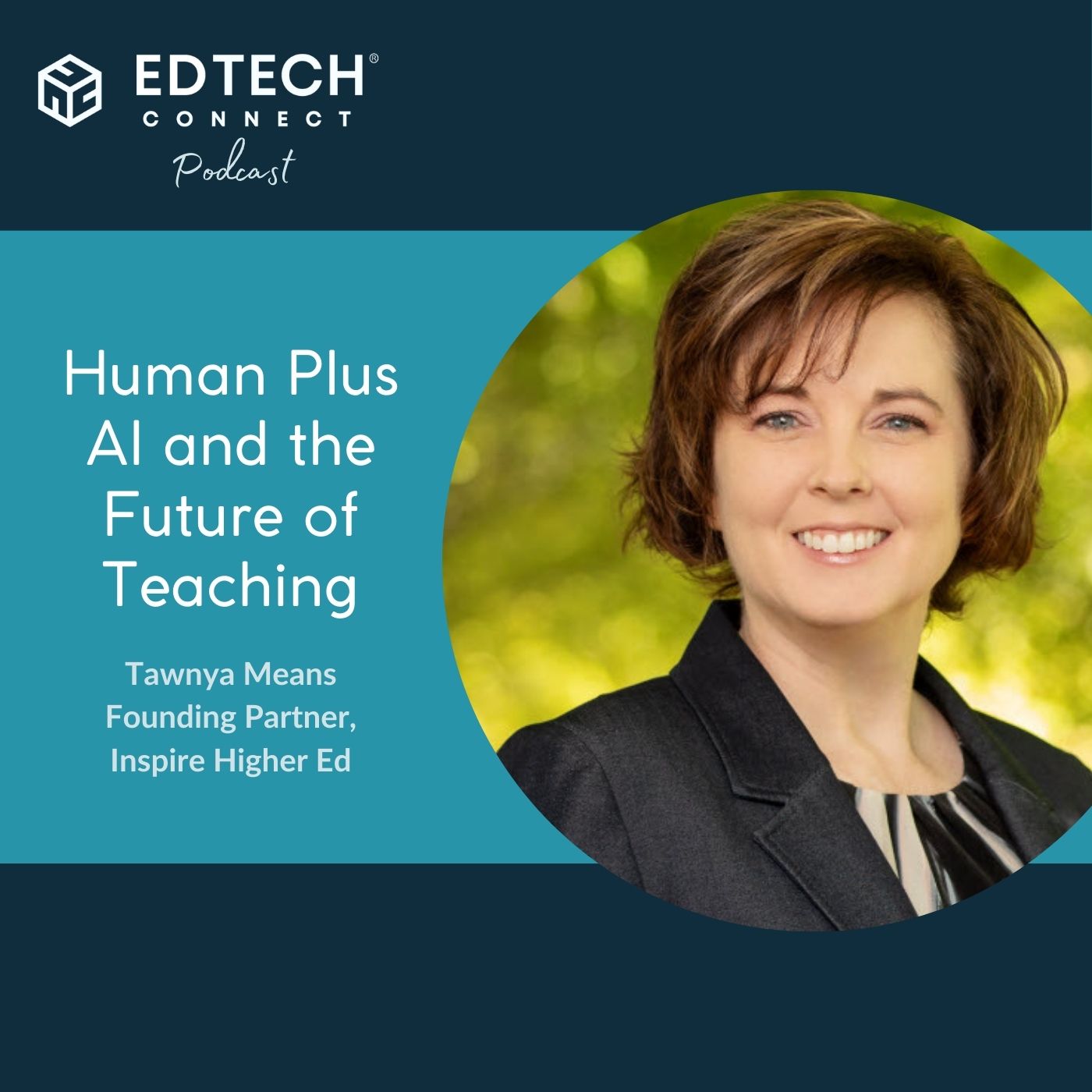
The Signal
Ep. 75 - Tawnya Means: Human Plus AI and the Future of Teaching
00:33:02
Tawnya Means, Founding Partner and Principal at Inspire Higher Ed, talks about how institutions can navigate the rapid shifts in technology without losing the human heart of education. With over two decades of experience guiding colleges through digital transformation—from the early LMS days to today’s AI revolution—Tawnya brings a rare, grounded perspective on what it takes to innovate with purpose. She breaks down why smaller institutions can actually lead the way, how to move beyond "shiny object" tech adoption, and why the future of teaching is a "human plus AI" partnership—not a replacement. Whether you’re wrestling with change fatigue, misaligned incentives, or the pressure to modernize on a budget, this conversation offers practical frameworks, real-world examples, and a refreshing focus on culture, accessibility, and sustainable impact. Key Takeaways Innovation Isn’t About Tools, It’s About Teaching – True transformation starts with pedagogy, not technology. Tools should s...
Loading summary
Transcript26 lines
- [00:00]
A
We know from the research that one to one instruction, or even small group instruction is the most effective. The tutoring model, the mentoring model, the studio model. But if we did that, we would be so elite, exclusive, we would be focused on only the few who could get into that kind of environment. And so we've said we want to empower as many people as possible to learn. And when we do that, it requires scaling in ways that remove that effectiveness. So group instruction just isn't as effective. So when we think about kind of, I call it the conveyor belt of educational system model.
- [00:46]
B
Welcome to another episode of the EdTechConnect podcast. Today's guest is Tanya Means, founding partner and principal at Inspire Higher Ed consultancy dedicated to helping colleges and universities innovate, grow and thrive in the evolving landscape of higher education. With more than two decades of experience guiding institutions through digital transformation, Tanya has worked closely with educational leaders and administrators to integrate technology into teaching and learning. Always mindful of preserving the human connection and at the heart of education. Under her leadership, Inspire Higher Ed aims to bring thoughtful, accessible and impactful solutions to institutions of all sizes, helping them adapt to new technologies, reimagine pedagogy, and expand access for learners. Through her deep expertise and passion for educational equity and innovation, Tanya has become a respected voice in higher ed consulting. I'm excited to explore with her how institutions can navigate change, embrace opportunity, and build a future where learning is more engaging, inclusive and scalable. Welcome to the show, Tanya. It is great to have you today.
- [02:04]
A
Thanks for having me, Jeff.
- [02:06]
B
Before we jump in, I want to say how much I've been looking forward to this conversation. Your work really sits, I think, at the intersection of where I spend my time, where technology and teaching and real student needs collide. Your experience helping institutions really rethink digital learning, removing friction and modernizing at scale really hits the same themes I hear from campuses every week. So I'm excited to compare notes and dig into how you see this moment in higher ed. So start off. Tell me what inspired you to launch Inspire Higher Ed?
- [02:41]
A
Well, first of all, thanks, Jeff, for having me. I'm really excited about this conversation and looking forward to what we're going to talk about. My work with Inspire has really come naturally out of the progression of my career. You know, my background is in educational technology, my master's degree there and in network learning systems that many years ago, and then my PhD is in information science and learning technologies focused on learning systems design and development. And so I've really been heavily involved all the way from my educational background up until my work that I've done for the last two decades is, is around educational technology and specifically about how we can use technology to improve and enhance teaching and learning. And a lot of that work was around online and blended education prior to the launch of ChatGPT three years ago. And just over the last few years has really come clear that we're experiencing a fundamental shift in how education is able to be adopted and offered. But there's also this great concern and hesitancy and kind of like murkiness around, like, how do we actually do this? Right? And so the launch of Inspire Higher Ed was really designed to take that knowledge that I have and the background that I have and the exposure that I have to lots of different institutions and how they operate and help them not only to understand kind of the vendor promises and the institutional bureaucracy and reality that we experience and kind of bridge between those and help to recognize ways in which education is the focus rather than technology. Technology is a supporting role. The solutions, so to speak, that come out of that need to be implemented with an understanding of how learning works and not just as a tool that gets kind of passed into the system and then who knows what happens with it after that. And so just because education has been a passion of mine and it's been something that it's so empowered by technologies that I wanted to be able to be there at the forefront to help people leverage these new technologies in ways that really enhance learning.
- [04:57]
B
One thing that really stands out about your career, I think, is just how long you've been working at this crossroads of higher ed and tech. You've seen the early LMS days, the rise of online learning, the shift to mobile, and now this. I think the campuses feel this pressure with AI. We're way over here, they want to be over here. But it's a real scary kind of transition. And that perspective, I think is rare. It gives a lot of weight to, I think, the work you're doing now. You've got decades of experience in higher ed and educational technology. How has that background shaped your, your vision for Inspire?
- [05:34]
A
Well, so what's always been important to me is the teaching first. The technology is a tool that sequence matters between looking at the teaching first and then finding tools that match. I've worked with lots of different institutions, either as a full time role or as a consultant, and everything from community colleges to big research institutions where the focus is different depending on, on the institutional context you're in. And I've really learned that efforts at Transformation will fail if they're done at people rather than with people. And so for me, the conversations that are always most empowering to everyone is when we're focused on what are we trying to accomplish, what's important, the value that we bring through education. And then how can we leverage tools that will help to support that vision?
- [06:31]
B
I've looked through some of your work and something really jumps out to me. People use the word innovation constantly, but you actually work with institutions where it has to show up in real decisions, real classrooms, real budget constraints. You see what campuses are trying to push forward and what's holding them back. And it gives you this practical view of what progress actually looks like right now. So when you talk about innovation in higher education, what does that look like in practice today, especially for institutions grappling with digital transformation?
- [07:07]
A
One of the things that I think our educational system has kind of, it's always kind of been this way and has become more so as we've found ways to scale up education. There's kind of this competing value here, right? We want to provide people with education, we want to provide as many people as possible with that education, but we have limited capacity to be able to do so. So we know from Bloom's two sigma problems, one that I talk about quite frequently, we know from the research that one to one instruction, or even small group instruction is the most effective. The tutoring model, the mentoring model, the studio model. But if we did that, we would be so elite, exclusive, you know, we would be focused on only the few who could get into that kind of environment. And so we've said we want to empower as many people as possible to learn. And when we do that, it requires scaling in ways that remove that effectiveness. So group instruction just isn't as effective. So when we think about kind of, I call it the conveyor belt of educational system model, we basically say that we have to bring people in at a certain point, we have to progress them at a certain point. We have to give them the certain things, you know, the scalable things that we can, that we can do. Well, I think that if we can move back to that creative model without reducing the accessibility of the learning both in terms of, know, accommodations that people need for differences in capabilities, but also your background, your experience, your interests, your passions, your, all of those things make it so that we can have a studio based model if we can leverage technology appropriately. So the innovation when we think about now is not about adopting new tools. It's not necessarily about, you know, what kinds of Processes and tools do we bring into the system? But what kinds of learning experiences are now available at scale, and how can we empower those so that it's not just, oh, we're going to automate feedback, or we're going to automate grading, or we're going to check everything that everyone does in some kind of a mechanism way. But it's about how we can take your individual, personalized background, experiences, interests, ideas, and use them so that students have a thought partner, have a mentor, have a guide that can help them through the parts that it makes sense for the technology to do. But they also have access to the human piece that makes empathy, judgment, wisdom, relationships a part of things that we couldn't do in the past. And so it's kind of like, how can we bring those two together?
- [09:58]
B
I love that. I think too often higher ed is looking at transformation is like, for example, moving forms to a digital process, like just transferring it to digital. It's not just moving things to digital. There's just a bigger scope we need to look at. And of course, none of this really happens in a vacuum. Every institution you and I talk to wants to modernize how learning happens. But they often are navigating this maze of legacy systems and competing priorities and very real resource limits. You've had a front row seat to what actually slows progress down and what keeps leaders up at night. What do you see as the biggest challenges colleges and universities face right now in trying to modernize their approach to learning?
- [10:45]
A
I think that there's some kind of rote answers that people often give. Oh, it's the institution. Oh, it's the bureaucracy, it's this. But I really think that there's some real reasons that institutions are challenged. One of them is, especially lately, change fatigue. I mean, the idea that we're asking faculty to, especially if we just think just since the pandemic, I mean, it was happening before, but not at the pace, you know, we had the pandemic. We had everybody having to do remote teaching online. We've had LMS changes for years. This one's better than that one, and let's switch to that one. And. And now we have AI that in and of itself just AI. I mean, we've got 75 years of history of artificial intelligence and machine learning. That's not surprising and new, but the fact that everyone has it in their pocket now, that's the part that's new. And the fact that it changes almost on a weekly or sometimes even daily basis, if you look at all the different models and their capabilities and what they're being able to do. So being able to keep up with changes is nearly. Well, I'll say it is impossible. I don't think it's even nearly impossible. I think it's impossible. No one can keep up with all of the changes for everything. And that's kind of what I love about what you're doing, is you're crowdsourcing all of this information about technology to be able to bring lots of people together because lots of people's brains work better than just one or two. And so that change fatigue is not only challenging just because we get tired of trying to keep up where we feel challenged by our. I just can't keep up. But the trust in the system is depleted because it used to be that we were like, okay, if I'm going to move from this LMS to that ms, that's the last move, right? You know, it's like, sure. And then, oh, maybe we need to change again. So that trust that I'm going to do a big burst of energy to be able to make this change, and then I'm going to be able to. To continue my life this way. And it's like, no, that. That's not ever going to be part of our world anymore. So that's. That's hard change fatigue. I also think that the system itself is designed in such a way that there are misaligned incentives. So what that means is we as institutions say, you know, we want you to be innovative, we want you to value your students. Their students are the reason why we do everything we do. But then the reward system doesn't say that. The reward system says, your tenure and promotion is reliant upon your research. Well, but you want me to do this and that. And so then when we bring in technology, we're not only saying to faculty, hey, you got your PhD in this subject matter area. You're an expert. You're really well developed, deeply in this one piece of subject matter. But we also want you to do this, this, this, this, this. And we start listing all of these things. And then we say on top of that, you need to be experts in technology. It's like the incentives aren't aligned for that kind of system. And then the other thing that I think happens is that we've kind of got this shiny object problem, right? I actually heard somebody say, hey, Twitter's really cool. Can you help me figure out how to use it? It's like, well, no, wait a minute. Twitter is an interesting thing, but that's not why we do what we do. So can we look at the pedagogy? Can we look at what we're trying to accomplish? Hey, if you're trying to get your students to think about your lecture content outside of class and you want to have them use X or Twitter or some other kind of tool to be able to notify or tag something that they've seen in the world that relates back to what you're talking about in class, that's great because that's a pedagogical reason, not because it's a tool. And so I think if we can start to evaluate and bring together a shared language for what we mean by good teachers teaching how we evaluate technology and how it aligns to that, and then help people to feel like there's a manageable way to keep up, then I think we overcome some of those challenges.
- [14:43]
B
There's a lot of things in there. Earlier on in that response, there was something that made me think more about. I think we need to look at things as a process and not a project. Most of the time, like it's too much that's forgotten. And one thing I appreciate about your work is that you don't only focus on the well resourced giants like you spend a lot of time with regional publics, community colleges, smaller privates trying to do big things with modest budgets. And they want modern learning experiences, but they can't afford to lose the personal element that really defines who they are. How do smaller institutions or those with limited resources still benefit from edtech innovations without losing that human touch?
- [15:29]
A
So I think smaller institutions actually have an advantage. And while they don't maybe have as many dollars or maybe as many people that can focus on the innovation itself, they have closer student relationships, so they're more able to interact one on one with individual students. They also can be more nimble in some ways to make decisions without feeling like they're turning the entire Titanic in order to be able to make a change. So piloting something or even adopting something at an institutional level is sometimes easier because they can be a little bit more nimble. Now I said, can they? Don't always. Because I think sometimes they also get bogged down in the bureaucracy of making decisions and wanting to bring together the really large committee that has everybody's voice. And that's not necessarily a bad thing. There are ways to be able to do that. But to be able to make changes institutionally, I think sometimes those smaller institutions can do more. If I were to give a little bit of practical advice or some tips for that is to try to pick one high impact problem to focus on and pilot it and not try to just change the whole institution, do a campus wide rollout of something, but instead try and say, well, let's try this in one focused area, let's see how it works and then let's move it out. And then, you know, smaller institutions often have more visible champions. So because the faculty are sometimes smaller and have more cross disciplinary relationships, they can be more visible as a champion. So they can say, you know, I tried this in my class and it really works. Would you like to try it too? As opposed to feeling like it's a mandate that's coming down from the top. And then I think they also have a little bit more flexibility because of technologies that are either free or low cost, that if they have good professional development and people who are trying to help them to spread the adoption, they can actually move forward with those tools a little bit easier than some of the really large institutions that require a lot more guardrails and implementation processes.
- [17:46]
B
You've probably done a lot of thinking where learning is going next. And with AI maturing so fast and online learning evolving beyond the old models, campuses are really trying to sort out what these tools actually mean for teaching support the student journey as a whole. Your perspective here feels really valuable because you've seen multiple waves of edtech come and go. You mentioned interest in AI online learning. How do you see emerging technologies like AI influencing the future of higher ed pedagogy and student experience?
- [18:21]
A
So one of the things I write about and talk about quite a bit is the Human plus AI partnership, the collaboration between the two. And I had often seen it human dash, AI like it's joined together. It's kind of implied, but I really like the Human plus because it's very explicit. It's saying these two go together. It's a partnership, it's a collaboration. And so the goal as we think about AI is not to think of it as a replacement for a human, but as a partner. Whether it's a thought partner, whether it's a cognitive capability that you're enhancing or expanding, it's not necessarily about being more productive or more efficient, but as expanding what you could do yourself. And so when we think about higher ed pedagogy, what I think we need to be really leaning into is how do we help students and faculty, but especially students, how do we help them to realize how to learn with AI, not just about AI, or figure out how to use it or what kinds of things can I have it do instead of me? But how do I, as an individual student, how do I lean on these tools in a way that doesn't cripple me for the future, doesn't reduce my learning, but enhances it? And so that could be things like, maybe I was sitting in lecture class and there was something the instructor talked about that I didn't quite understand. I can go to an AI tool and I can say, help me better understand this concept. I'm not asking it to write an essay for me or solve my homework, but I'm asking it to help me understand. And then once I understand, then I am better prepared to be able to do the work myself. In a similar way, it's something like if I am working on my homework and there's some physics concept that I don't really understand completely, and it's asking me, in a homework problem, to do something that I don't really know how to do. The easy way out would be to just take a screenshot of that homework problem, give it to ChatGPT, and say, answer this question. But then I'm crippling myself for the future, right? Because I don't know the piece that I didn't know still. And I also just got an answer that I don't know if it's right or wrong because I have no real way of verifying it. But instead, if I say, I, I'm being asked to do this thing, I don't understand it. Don't give me the answer. Just help me understand the process. Now I'm getting a tutor, a mentor, and further instruction, and I'm able to work through that. And then when I think I understand it and I solve the problem, then I say, okay, give me three more questions like that. The teacher didn't give me three more problems. I asked for it because I really want to know if I understand it. And so if we can help students to understand the value to their future of doing that kind of process, then we're really going to enhance their learning. And the pedagogical environment in which they're operating in becomes a support to them as opposed to just helping them check the box to get a degree to get the job.
- [21:30]
B
I love your philosophy about keeping a human. I call it keeping a human in the loop. Some of the most powerful AI solutions I've seen out there recently are, are like, let's say, a grading tool. There's a lot of grading tools out there that are using AI, but really the faculty member Needs that control. They might give you the head start, but they're clicking the buttons. Search tools now, you know, you could hand all that off to AI, but even the search tools, the best ones, are giving control to administrators at campuses to say, hey, I want to connect these dots. This acronym should go over here. Those tend to be the best. But I like your perspective on that. I noticed that a lot of your messaging points to helping institutions innovate, grow and thrive. Those are big promises, but they only matter when they show up in real outcomes on real campuses. So I'd love to give listeners a sense of what does that look like in practice. Can you share a real world example of where Inspire helped an institution achieve those goals?
- [22:30]
A
Of course, yeah. So one of the things that I've developed is what I call a three tier framework for education for AI in education. And it's basically looking at what we have expectations for students to do. We also need to have an alignment with what we expect faculty to do so quickly, just running through what that looks like. If we want students to have AI literacy, we need faculty who have an awareness of AI. They understand what it is and how it works, and they talk about it to their students on a regular basis. If we want students to have competencies in AI, we need faculty that have integrated AI into their teaching practices. There's a variety of different ways in which that can happen, but they're giving the students opportunities to interact with and develop competencies using those tools. And then if we want students to have expertise in AI, to be able to build things or to do things that they'll experience in the real world with AI, then we need faculty who are willing to rethink what they do with their teaching and innovate in really interesting ways. And so if you take that framework and then develop faculty professional development around that, then it gives something for people to latch pieces onto. Right. So it's not just saying, I'm going to come in and tell you what AI is and how it works, and I'm going to present to you this information and then you're going to be able to just go forward and do. Instead, it says, okay, let's first get you up to speed what it is and how to talk to your students about it, how to use it in your, in your teaching, how to have these conversations. Now let's help you to think about ways that you can increase efficiency or reduce workload, but also empower students to be able to try things. And now, once you're at that place, now we can really start to reimagine. Instead of doing a quiz or an essay, let's imagine a scenario where your students can have a conversation with a bot that actually walks them through a process, and you can collect all of the same assessment information that you would have done in an essay or quiz. But it's a meaningful conversation that you can then use the insights from to better what you do in the classroom and to increase the activities that you do with your students. And so taking something like a framework and then using it as part of the reasoning for, and the method of delivery for professional development then gives the faculty something that on the outside, it's not just how many people went to this workshop, but it's how many people went to this workshop and six months later have realized meaningful learning growth in their courses. And so you can look further out to be able to say what actually is an outcome of this. How does this impact the teaching and learning experience?
- [25:15]
B
With the pace of technology's evolution right now, I think a lot of campuses are feeling pressure around accessibility, equity, making sure every learner can participate. And those aren't buzzwords for most institutions. They really shape decisions, funding, and the student experience and in practical ways. So with the growing attention on accessibility, even the mandates, equity, inclusion, and education, how does inspire higher ed incorporate those values into consulting and solutions?
- [25:48]
A
So I think of accessibility not as a compliance burden. Right. A lot of people look at it that way, but I think it's a design philosophy. It's how can you. And it goes back to beginning of our conversations when I said access is so important, accessibility is so important, access to learning. If you are designing learning such that it's going to be accessible to as many learners as possible, then you are empowering and expanding learning for everyone. You're not eliminating anyone from being able to get access to that learning. And so while these deadlines that are coming up are conversations we should have been having for years, I mean, this is not new that there's accessibility requirements. They've been in place for a very long time. They've gotten more and more stringent, and they've gotten more advanced as technology advances and as we see need for continued ability to offer educational content, digital content, in ways that more people can get access to from a compliance standpoint. But it's really about how do we make this conversation about accessibility be part of the innovation process. And so if we bake it into the process, we bake it into the technologies, then it doesn't have to be retrofitted. It doesn't have to be kind of cobbled together at a later date. It's much, much more accessible from the beginning.
- [27:14]
B
Something I always found interesting when talking with people who work across many campuses, how they define a win. Because success in higher ed isn't always a clean metric. Sometimes it's a culture shift, sometimes it's a smoother process. Sometimes it's clear direction from a team that feels stuck. You've seen enough institutions up close to know what real progress looks like. How do you measure success or impact when you work with a college? And what metrics or signals matter the most to you.
- [27:45]
A
So there are three that I think are good places to start. One I just mentioned, this is sustainability. Six months down the road, is anybody still doing it? You know, is it still having an effect? The second one that I would talk about is engagement. And I think that we often use engagement from the student perspective, like, are students engaging in the content and learning and that kind of thing. But I think engagement goes both ways. It goes from the faculty to the students, from the students to the faculty, and from the students to each other. And so are they engaged? Are they thinking about learning differently? Are they actively working, wanting to and enjoying the learning process? And shouldn't be a chore to learn, right? It should be something we like doing. And then I think the biggest one, if I were to just say, what's an umbrella term that we could use is culture? Is the culture changed? We can look at the culture when we start. We can look at the culture 3, 6, 9, 12 months down the road and say, what's happening in the culture? Do we still have fear, uncertainty, and doubt, or do we have people starting to open their minds? Do we have a culture that gives people a safe space to fail and learn from their failures? Do we have the willingness for people to talk to each other? Do we see more cross subject and cross discipline and cross college conversations happening? Do we see people who are helping each other, who are? I like, again, your cross crowdsourcing idea. Are they. Do they recognize the value from being able to be involved in those conversations? And so I think those are the metrics that we at least start with. There's probably some others and more refinement that we can do within each one of them. But if we start there, that's. That's a meaningful way to see change.
- [29:27]
B
Well, as we wrap up, I want to zoom back out and we've talked about technology, teaching strategy, the realities institutions are navigating right now. But these conversations always come back to the people who make higher ed what it is, the faculty shaping learning, administrators that are steering the change, and the students counting on us to get it right. So let me, let me end with this. If you could leave one lasting message for listeners, faculty, administrators, or even prospective students about the future of higher education, what would it be?
- [29:59]
A
I think we're going to continue to see change. That's just going to be a given. But I think change is not necessarily a bad thing. You know, education itself, it changed my life, changed the entire trajectory of my life and my children's lives and everyone who comes after me. And I know that it has the power to change everyone who's involved in it. And so it's very important that we protect the opportunity for people to get education and to learn and grow and expand what they do. And I think educational institutions have a very special place to serve in that. I mean, anyone can learn anything from YouTube. That's just the way the world is now. But there's also a great amount of value that comes from an educational institution offering learners a community and learning from each other and learning from experts and mentors and, you know, life changing experiences around education. And so I hope that what we do over the next five to 10 years as we see things change is that we pull into that, that we further the relationship building, that we turn to things that make us more human as educational technologies and artificial intelligence and all that, as they kind of shape what's happening in the world that we use our relationships as. How do we improve who we are as people? How do we improve society? How do we improve the people around us? How do we focus on character and wisdom and all of those things that really make us human, that this becomes the bastion of that, the place for that being projected.
- [31:47]
B
All right. And for everyone listening, if Tanya's perspective resonated with you, I'd encourage you to take a look at the work she's doing. Inspire higher ed. Whether you're tackling a digital transformation, rethinking learning, or just trying to to chart a smarter path ahead, she's someone worth having in your corner. Thank you, Tanya. It was great having on the show. I'll put your links in the show notes to Inspires and your LinkedIn.
- [32:11]
A
Thanks so much, Jeff. Appreciate the conversation
- [32:16]
B
as we wrap up this episode. Remember, EdTech Connect is your trust trusted companion on your journey to enhance education through technology. Whether you're looking to spark student engagement, refine edtech implementation strategies, or stay ahead of the curve in emerging technologies, EdTech Connect brings you the insights you need. Be sure to subscribe on your favorite podcast platform so you never miss an inspiring and informative episode. And while you're there, please leave us a review. Your feedback future us to keep bringing you valuable content. For even more resources and connections, head over to edtechconnect.com your hub for edtech reviews, trends and solutions. Until next time, thanks for tuning in.