← The Signal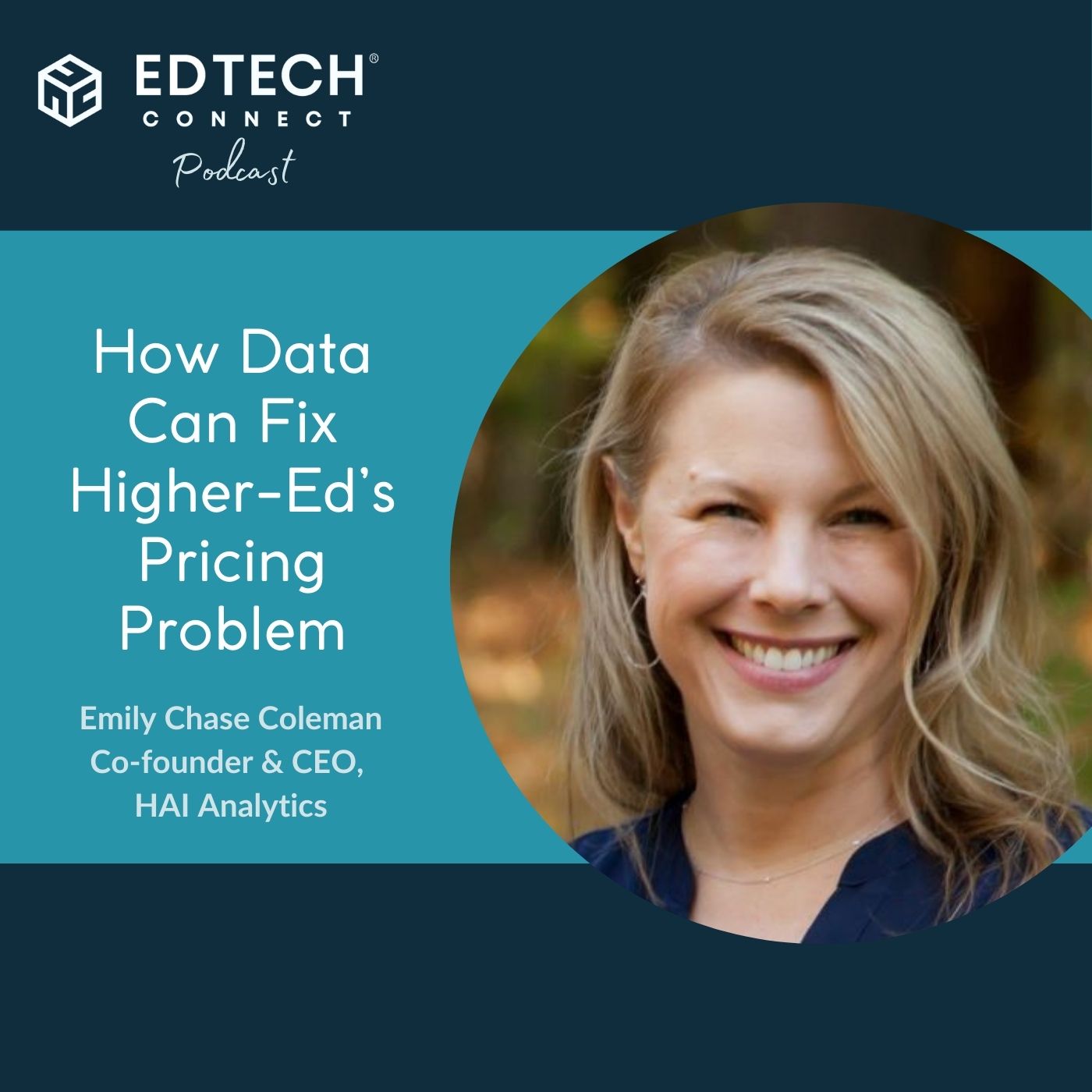
The Signal
How Data Can Fix Higher-Ed’s Pricing Problem
00:25:15
In this episode of EdTech Connect, host Jeff Dillon sits down with Emily Chase Coleman, CEO and co-founder of HAI Analytics, to explore how data is reshaping higher education strategy. With over two decades of experience blending social psychology and statistics, Emily shares her journey from academia to entrepreneurship and how HAI’s AI-powered platform helps colleges predict enrollment, optimize financial aid, and improve retention—without overwhelming internal resources. From challenging outdated tuition models to advocating for test-optional admissions, Emily offers a candid look at the equity gaps in data, the pitfalls of "gut instinct" leadership, and why real-time metrics are non-negotiable in today’s volatile landscape. Tune in for a conversation that’s equal parts analytical and actionable, and discover how to turn campus data into a competitive advantage. Key Takeaways: Data Over Gut Instinct: Leadership often relies on intuition, but data reveals hidden patterns (e.g.,...
Loading summary
Transcript42 lines
- [00:00]
A
AI models have allowed us to take huge data sets. So you talked about the data schools are collecting and they have so much of it and they help us to kind of sort through that. So they help us to figure out how should we be looking at this, what are the factors that matter? We can put a lot of data into machine learning or another AI model, but it can't be limited to that. So there has to be a person who is thinking about the data going in and interpreting the findings coming out. It can't just be dump the data in and the model will kind of tell you the answers.
- [00:42]
B
Welcome to the EdTech Connect podcast where we talk about all things higher ed tech. Today we're talking about data with a guest who lives it. Emily Chase Coleman is a higher ed data visionary who turns spreadsheets into strategy. With 22 years in university leadership and a PhD in social psychology and statistics from Cornell, Emily co founded HAI analytics where she now serves as CEO. Her team's AI powered software with service platform lets colleges predict enrollment, optimize financial aid and boost student success without a battalion of consultants. A fearless reformer, Emily challenges the high price, high discount tuition model and champions test optional admissions to widen access. She also amplifies women's voices in tech entrepreneurship, drawing on her own journey building a data company from scratch. When she's not decoding yield curves, you'll find her mentoring the next generation of women in stem. Get ready for a fast moving conversation on predictive modeling and equitable admissions and the future of data driven leadership in higher education. Well, welcome to the show, Emily. It's great to have you today.
- [01:59]
A
Thanks for having me.
- [02:00]
B
I want to start by hearing what inspired you to start HAI Analytics. Like our founders episodes are some of the most listened to episodes. So people always want to hear how you started this.
- [02:13]
A
Yeah, I mean, it's interesting. It's quite a journey starting a company. I have to say that, you know, even a few years before we started hai, it never occurred to me that I would start my own company. That seemed totally overwhelming, but the work that I was doing and one of my colleagues we were doing together, we felt like there was sort of a solution missing in the marketplace, in the higher ed marketplace that we were serving. And so we kind of came up with the idea that we could author something a bit different and we just made the leap. And that was seven years ago. And there are so many things that I think if I knew then I maybe wouldn't have done it because you have to figure everything out. It's Just the two of us, so we have to figure everything out. But it's been really fun. It's been a great journey. Really glad that I did it.
- [03:03]
B
So you've spent more than two decades translating raw campus data into stories. What was the first data set that got you hooked on analytics?
- [03:17]
A
It's funny because I think that what got me hooked on analytics was sort of the process of analyzing data and finding answers and finding explanations. So the first time I sort of used a data set was in undergrad. I majored in psychology and I had to take a research practicum. And I honestly don't even remember what my topic was. I know that at the time it interested me, but it was more just learning how to do the statistical tests and learning, you know, what to watch out for and how to remove bias. That really, really kind of hooked me on analytics, and I've done it ever Since.
- [03:59]
B
Yeah, your PhD work at Cornell blended social psychology and statistics. How did that mix shape the way you now advise institutions on enrollment?
- [04:12]
A
I think that it is. It's an important combination. And we talk a lot with our partners about this, that, you know, there's a lot of survey work in the field. So asking students, why did you make the decision you made? Or why did you choose the school that you chose? And that is valuable, but can also contain a lot of biases. And a lot of times we aren't aware of all of the factors that are influencing our behavior. So adding the statistical piece and sort of taking the two together, where, you know, we can measure behavior and we can look at all the factors that are quantifiable and build a statistical model to see what's impeding ailment. And we may get an answer that's different than what if we ask a bunch of students, you know, why did you make your decision? But both are very valuable. I don't think you can get the complete picture from just one. And so it's a valuable combination, I think that helps us understand student behavior.
- [05:11]
B
Hai started as a boutique consultancy, is now a software with service platform. What problem on campus convinced you to productize?
- [05:24]
A
We wanted to be able to just serve a bigger piece of the market. So not everybody needs statistical modeling. You know, some schools have internal capabilities to do that. Some schools are kind of just getting started in collecting and storing their data, and they don't have the funds to kind of sign up for a contract that has a lot of services in it. So we wanted to have an offering that was a less expensive, less time intensive for Us, but that could be used by kind of a wide range of schools and would be helpful.
- [06:01]
B
Yeah. Is it solely focused on enrollment, the enrollment side, or are there other pockets within the university you're helping?
- [06:08]
A
Yeah, so we focus on typically application enrollment and retention. So we're building statistical models that kind of predict every stage of the student life cycle. And we're looking at. We're really looking at retention as an enrollment one. So it isn't just that schools just want to get students in the door. They want them to be successful and graduate. So that is mainly what we do. We have done work in advancement, you know, with donor behavior. But typically what we're looking at is enrollment and retention.
- [06:41]
B
When schools compare enrollment tools, what role red flags tell you they're buying dashboards rather than insight.
- [06:50]
A
That's interesting. You know, I think that the important thing, even with dashboards, is that they have to be interactive. So you have to be able to drill down on particular populations. And if a school is saying something like, distance from campus predicts whether students bone wool. So students who are closer to home are more likely to enroll, that is a relationship that could be a correlation without an actual pause. So you could see things like, well, actually it's because in state, students are eligible for in state funds. So it's really a financial issue. So kind of making these broad, sweeping generalizations without any research behind it is a red flag. And with the dashboards, you know, we want things to be real time. Things change really quickly, and they just really have to be interactive so that schools can drill down on particular populations and, you know, find out really where the effect is coming.
- [07:53]
B
Do you have any other stories about how you've discovered data or schools discovered something, their data that was not expected that you mentioned? Like, yeah, if you're closer to home, you're more likely to enroll. What are some maybe unexpected findings you've had?
- [08:08]
A
I think that in some of the retention work that we've done, we have found things that are surprising factors that predict retention. So it may be, you know, in one project that we did, we found that particular dorms had higher retention. And they, you know, that led to an exploration of why that was. Was it that they were closer to classes or was it, you know, that all of the different factors. So that was surprising at the time to that school, they didn't expect that finding. We've also looked at course enrollment, and obviously grades are a big predictor of retention. But we have found in some cases that taking certain courses is either a positive or A negative. And that was surprising. And basically what we theorized was that students who are struggling are choosing easier classes and, and so taking those classes is a negative predictor of retention. That wasn't something that we expected to find. But that's what's great about statistical modeling is you can test so many factors at once.
- [09:14]
B
I want to just throw something out to you and see if how much of this you see or that you can help with is. My take on it is that so many universities, the larger, maybe the more exponential this problem is, but they have just these huge data sets, they just don't know what to do with them. They don't know what questions to ask. The data is in too many silos. And I've known other companies that have done cool stuff and one example I've heard of was we know in this zip code students struggle and they could track that they're having a lot of power outages in that low income zip code and that it was affecting their, you know, in their learning management system. They have lower scores and things like that. Questions you don't know to ask is that what you're doing some of is like you have all this data, you might not know what questions to ask. Do you help these enrollment leaders see the patterns without knowing the question asked?
- [10:01]
A
That's a big part of what we do. Yeah. And you know, there are a lot of institutions that are just kind of starting their data journey or their analytical journey. And so they started by, as you said, just reporting every piece of data that they can. And then you end up with kind of this data overload where it's hard to figure out where to start and how to kind of tease things apart. So a lot of what we do is helping schools figure out what questions should we be asking? What data do we need to answer those questions? And how do we create a system that can both track that and we can extract it from so that we can do that analysis?
- [10:40]
B
Predictive modeling can feel like a black box, I think. How do you make the algorithms transparent for leadership like presidents and boards?
- [10:50]
A
We, you know, one of our kind of founding principles was transparency. And we're very open with our partners about the models that we build. We don't use kind of proprietary methodology. We will show them the models, we will explain the factors. Even with that, you know, there is kind of an obstacle. If someone has never built a statistical model before or taken a statistics class, there is a piece that sometimes can be challenging to sort of explain. So we do our best to sort of walk through that and just answer questions as they come. And you know, the more patient we are and the more patient the person asking the question, the more likely we are to kind of, you know, meet in the middle there and be able to explain what we're doing.
- [11:35]
B
Many campuses still run a high price, high discount tuition model. What does your data say about its shelf life?
- [11:43]
A
I think the data say that it is nearing the end of its shelf life. We have seen for many years that there's sort of a squeezing out of the middle class where private institutions, they've really seen drops in the number of students from middle class families that have been enrolling. And those are families that have too much income to qualify for financial aid according to the formulas that have been built, but not enough to be able to afford a private education. So they're more likely to end up at public institutions, which is fine. You just want students to have choices with low income students. I think schools have really, there's been a big push to serve those students and figure out, you know, how to direct financial aid there so that those students can enroll and can thrive. But we've gotten to this point where every family expects some financial aid. They expect. If it's not need based aid, it's a merit based aid. And parents compare, you know, what did your kid get offered for this scholarship? And so it's gotten us into this place where the discount rates have just gotten so high that they're not sustainable. And you know, schools have to figure out ways to kind of lock back that discount to tell their value proposition what's the return on investment and really make that case that the education is worth the price that they're charging for it. So I think it's the end is near. That's my thought on it.
- [13:17]
B
And now a word from our sponsor. Your audiences know the true power of your institution's story. With deep inquiry and expert strategic and creative development. Mackie Strategies applies decades of leadership to help you drive branding, marketing and fundraising that get results. Mackie Strategies, moving your mission forward. You know, just thinking your company's seven years old, you started pre pandemic a couple years before and then you went through the pandemic and now here we are. What changes have you seen in that time has there been at this shift that's sustained versus how these schools view data? The significance of what you're doing, Any insights there?
- [14:06]
A
I think it has brought to light the complexity of building any sort of model or using data that relies on past behavior to predict future outcomes. So when the pandemic started, we could not build a yield model based on the prior years past because the factors were completely different. So then schools started looking at what about online behavior, you know, ping behavior, what students are doing, how they're interacting with the school online. Maybe we can use that because that wouldn't be affected by the pandemic, but it was affected because students are doing that more, because it's still an option. So I think that that really gave everyone an education in what you need to be careful about when you're using past behavior to predict future behavior and how careful you need to be with that. And, you know, it seems like people are more aware of that and more aware of how they can ask those questions in a way that won't be biased.
- [15:06]
B
Yeah, well, test optional admissions exploded post pandemic. What equity wins and unintended gaps are you seeing in the numbers?
- [15:16]
A
You know, I think that the wins haven't been as big as I hoped that they would be. So schools using test scores heavily in the admission process. We know that there's an issue there. There's bias in the tests, and students from low income backgrounds, students of color, do not score as highly on these tests. So, you know, it was to me, a great thing when school started falling back and really everybody sort of went test optional. But there are other factors that are considered that are also related to income. So even if they are basing the decision about merit aid on a kind of holistic review, what has the student done outside of test scores? What extracurriculars do they have? What have they accomplished that still has an economic bias? Because if you're a student who is working to help support your family, you're probably not doing a lot of extracurriculars. So that was kind of a wake up call that eliminating the tests wasn't enough to get where we want to get with that. But at least, you know, it sort of exposed that. And I think schools are working harder to overcome those gaps.
- [16:33]
B
Right, right. Do you have a success story where Hai's forecast directly change a financial aid award and retention curve?
- [16:44]
A
Yes, we do. We have several. Yeah, we have, you know, a lot of clients that we are working with. I guess all of the clients we're working with now, when they first started working with us, the way that we determine financial aid is we have this kind of optimization process where we're looking at, on an individual student basis, what is the A level that optimizes their likelihood of enrolling. And I won't get more technical than that, because I know probably no one's interested. But then we work from there to come up with the financial aid offer and that's where we bring the retention in as well. So what we have seen when we work with schools is that adjusting to that type of optimization and letting that be the driver of financial aid awards often will increase yields, it will increase enrollment, increase, you know, certain populations that they're wanting to grow. So we see with that increased revenue and really all of the schools that we're working with now, we've seen that kind of success.
- [17:48]
B
You've said gut instinct, culture stalls data adoption. What one habit should leadership teams drop this semester?
- [17:58]
A
I think that they should drop the. There is this kind of feeling or thought process for people who have been in enrollment management for a very long time can often feel like, I know the answers to those questions, I know what's driving student behavior, and there's no way that numbers are going to tell me anything more about that. And I think that is what they need to drop that. You know, we're not doing anything to replace that human element. And actually the name of our company, HAI stands for human and artificial intelligence. We really believe in combining the two and the importance of that. So we're not trying to replace anything. But we do need that quantitative side as well to give a fuller picture of really what's driving behavior.
- [18:49]
B
How do you keep institutions from becoming dependent on your analysts?
- [18:54]
A
That's a good question. I don't know that we do. I mean, one of the services that we offer is, is that we will help schools become self sufficient when it comes to the work that we do. We will teach someone on their team to do it. And we have done that successfully. We have worked with schools where over a period of a few years, they went from completely relying on us to build the models and develop the financial aid strategy to having an internal person do it. But they have to have, you know, they have to devote resources to that and they have to have the right person to do that. And for a lot of schools, that is, you know, just a complication that they don't necessarily want to deal with. When they do decide they want to deal with it, then we can help them not be dependent on us. We can sort of walk them through how we do what we do with the schools where we've done that. We've stayed on in kind of a limited consultant capacity to just have that eye on the data and know what else is happening in the field to inform the conclusions that are being Drawn from the models that they're building internally. And schools tend to like that.
- [20:05]
B
Yeah, it sounds like the philosophy of any great agency is like, they just, schools don't have the resources right now to do everything. And I mean, more than ever, they're really struggling with the brain drain and yeah. Trying to do more with less. Right. I'm curious, on your take with AI, how are you using AI? How's that evolved over the last few years? And what's your, what's your take on how you see that being useful in your work with universities?
- [20:30]
A
I think that AI models have allowed us to take huge data sets. So you talked about the data schools are collecting, and they have so much in it, and they help us to kind of sort through that. So they help us to figure out how should we be looking at this? What are the factors that matter? We can put a lot of data into machine learning or another AI model, but it can't be limited to that. So there has to be a person who is thinking about the data going in and interpreting the findings coming out. It can't just be dump the data in and the model will kind of tell you the answers. And we have seen necessarily with institutions that we're working with, but with analysts that we've worked with, that, you know, they're coming out of undergraduate degrees with incredible statistical knowledge and this ability to build very complex models that are very powerful. But they also have the feeling that, you know, that sort of replaces the thinking that you have to do that. As long as you just know how to build those models, you don't have to think about it. And that is dangerous for so many obvious reasons. So we make sure that that isn't happening. Like the schools that we're looking at, people, people, AI, you know, it's such a buzzword. And some people just have this negative reaction like it's going to take over the world. And other people feel like it's going to solve all our problems. And I think it's important to realize that it's not going to do either of those things, but it can help us increase the efficiency of what we're doing if we're using it correctly.
- [22:05]
B
Back to your, your founder's kind of journey. As a founder in edTech, what systematic shift would make the next Emily's path shorter?
- [22:16]
A
Well, I think a big one would be that, you know, there's a lot of data on the fact that female founders do not get funded at the same rate as male founders. And it's really, really disproportionate I'm sure there are a lot of reasons why that happens, but it does put an extra barrier in the, the way of women founders. And it's harder to kind of get in front of investors or convince investors that, you know, this is something worth investing in. So that's obviously a very complicated problem to solve. But, you know, if we could come up with ways to make that more equitable, then it would make the journey much easier for, you know, future Emily's to start the next.
- [23:03]
B
All right, I have one last question for you, Emily. For presidents worried about shrinking traditional age populations, what metric should move from quarterly to real time on their dashboard?
- [23:16]
A
I think my answer to that would be every metric. I think that things change so quickly that they need to be. And maybe this isn't true at the present level, but they need to have someone under them who's able to track the data in real time and who is willing to shift strategy as needed. Things change very much from one year to the next in terms of what's going to predict or what's going to drive student behavior. And if we don't have that real time tracking of every data element we can get our hands on, then it takes too long to make adjustments to either the admissions policy policies or the financial aid policies. So in order to be nimble, they really have to be tracking, you know, everything that has to do with student behavior, the application, the financial aid, that all needs to be tracked on a really regular basis.
- [24:09]
B
Yeah, I agree. Great tips for everybody. Well, I'm going to wrap it up and that was really fun talking to you, Emily. And we will put links to HAI analytics in the show notes as well as to your LinkedIn. So thanks for being on the show.
- [24:24]
A
Yeah, thanks so much for having me.
- [24:25]
B
Bye. Bye. As we wrap up this episode, remember EdTech Connect is your trusted companion on your journey to enhance education through technology. Whether you're looking to spark student engagement, refine edtech implementation strategies, or stay ahead of the curve in emerging technologies, EdTech Connect brings you the insights you need. Be sure to subscribe on your favorite podcast platform so you never miss an inspiring and informative episode. And while you're there, please leave us a review. Your feedback fuels us to keep bringing you valuable content. For even more resources and connections, head over to edtechconnect.com your hub for edtech reviews, trends and solutions. Until next time, thanks for tuning in.