← The Signal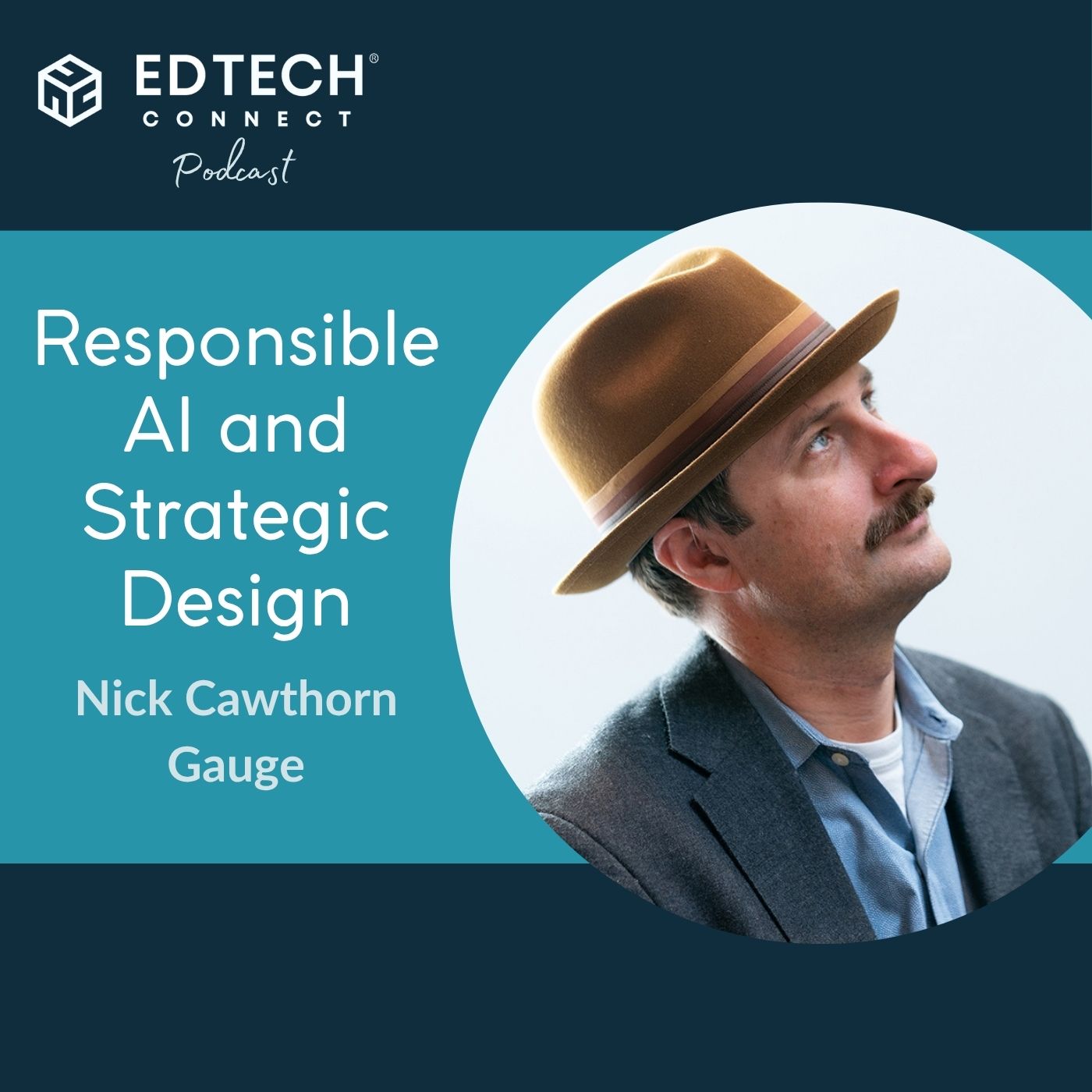
The Signal
Nick Cawthon: Responsible AI and Strategic Design
00:32:59
How can universities overcome their unique challenges to create amazing digital experiences in an AI-driven world? In this episode of Edtech Connect, host Jeff Dillon sits down with Nick Cawthon, a seasoned UX strategist with over two decades of experience working with giants like Adobe and Visa, and a professor at the California College of the Arts. Nick pulls from his rich background in the first dot-com boom to draw powerful parallels between then and now, arguing that we are in a similar era of transformative potential with AI. He offers a candid look at why higher ed struggles with UX—citing complexity, siloed departments, and slow-moving governance—and provides a fresh perspective on how to navigate it. They dive into the ethical integration of AI, the irreplaceable value of human creativity, and why mastering the humble spreadsheet is more important than ever. For any leader, educator, or designer looking to build more intuitive and impactful digital products, this conversat...
Loading summary
Transcript48 lines
- [00:00]
A
Excite me is that my ability to launch digital experiences just exponentially multiply. I can go from an idea to a deployed application in a speed that was not even possible a year ago. So that's really exciting to me. Things like tours and maps and surveys and things that are really reducing the gap between design and development, which has always been a chasm because the nation of should designers know how to code? Has been going on as a conversation for a long time.
- [00:39]
B
Today on the pod we have Nick Cawthon. Nick is a seasoned user experience strategist, researcher and educator with over two decades of experience helping Fortune 100 companies, startups and educational institutions build user centric solutions. He's the founder of Gauge, a boutique consultancy known for improving the user experience of complex technical workflows and has worked with brands like Adobe, IBM, Visa, VMware, and the San Francisco Giants. Nick currently teaches in the Design Strategy MBA program at California College of the Arts and mentors data science students at UC Berkeley. He's known for blending data visualization and design thinking and real world application in ways that empower teams to act boldly and responsibly, especially in today's AI driven world. Whether he's speaking at Google or mentoring future leaders, Nick brings a unique perspective grounded in both practice and pedagogy. Well, it is great to have you on the pod today Nick. Thanks for being here.
- [01:49]
A
Hey Jeff, what's going on?
- [01:50]
B
I guess I wanted to start with having you talk a little bit about one way design thinking has shaped how you approach your daily life outside of work.
- [02:01]
A
Yeah, that's a loaded question. My daily life outside work. I think back to a friend who is aspirational and impulsive and optimistic but has very little business acumen. Nor is he in the field of digital design agency product thinking. And he was going through what he's going through right now. He was trying to figure out where to put his business and how to deal with commercial lenders. He does music instruction, so that kind of acumen isn't really a part of his world. And we brought in a strategist to help him create a two by two matrix of urgency and importance. And on one side was I need to get my paperwork filed, I need to find a place to run my business, I need to understand my marketing, I need to do all these things and it brought them to tears. And you asked the question by outside your work. And I think that's an important distinction of how do you start to parse a lot of thoughts in the air into something that's much more tangible. I tend to be. It's not the official diagnosis, but scatterbrained is the eloquent definition of it and have been since my youth. And I even see these qualities in my own son. And what I try to do, and I beat myself up if I don't, is create a 2x2 on a Moleskine notebook of which I've had the same type for more than 20 years and have now a rack of them. And it's always dotted, it's always the 8 and a half by 11 hardcover and like I found on myself liking a type of it. And I have a little bandolier that I put my pens in and every morning I have a twinkle. For those of you old enough, there's something called this week in Baseball which was called a twin and now it's a twink this week in Nick Cawthon. And I have in one quadrant what I'm doing with my personal life and things that I want to get done. What I'm doing for my business and my consultancy, what am I doing for a client. And then the third one is what am I doing for my family? And it's just a list of checkboxes. And the next week I turn the page and I bring things over from what I didn't get done last week. But it's a way of taking this generative thought into synthesis. And so that's how in my non professional life I try to go from nothing to something.
- [04:20]
B
Yeah, I love the old school approaches where I do something similar. Very much more simple. Like I have a notepad. It's. It's a smaller moleskin that I always want to tackle. What are the top three things I have to get done today? There's no visual, nothing fancy there. But it's always on paper. It's not on my, on my computer right in front of me.
- [04:39]
A
Yeah, there's so much digital paper sometimes as a refresh.
- [04:43]
B
Yeah. Well, I really was excited to have you on the show because I feel like higher ed struggles when it comes to ux. It's often deprioritized, it's under resourced. And I want to hear a little bit about your journey into user experience, design, strategic thinking. What drew you into that field initially?
- [05:03]
A
Yeah, and I'll keep the conversation centered around education. I was fortunate enough to go to school. I was getting a Bachelor of Fine Arts in the year 2000. And this was from a place that I had been intimate with since I was a little kid because my parents would Send me to California College of the Arts for some of their summer camp programs. And it was really a defining moment for me as this is where you want to practice, this is what you want to do, and this is what you're good at. And then coming back from undergraduate education, I found found myself in a world that was changing rapidly, much like it's changing today, where technology was introducing all of this money and all of this hype around the first.com boom. And I looked at my portfolio and I looked at the kind of work that was being done around me and said I need a finishing school here. This is really not good enough. And I sent myself to a graduate school in the evening. I was sort of consulting during the day. I had a job at bank of America doing word processing and Quark Express formatting investor reports on different companies from the east coast. Hours of 6am until 2:30. And I'd hop on a bicycle and I'd pedal down to Potrero Hill or China Basin as they called it then and go to school from 4pm until 7pm in the evening, 4pm until 10. There were two, three hours classes. And then I'd put my bike in the back of the pickup truck and I'd do it all over again the next day. And it was this time of excitement because nobody quite knew how this Internet thing would shape out. And I was a designer with a capital D that was trained in graphic design and production. And now all of a sudden there's this, a medium of interaction and the pictures were moving and the same principles of typography and hierarchy and balance all applied, but we were interpreting it differently. And again, not to beat a dead horse, but I feel like that's the same kind of era that we are today is that there are these blinking cursors and they're returning these things and we're not quite sure how to integrate them into our workflow. And maybe you're not talking to a person, maybe you're talking to an assimilation of an avatar or a virtual interviewer.
- [07:13]
B
So yeah, you reminded me, you said QuarkXPress. I think I'm in the same generation here where one of my first real jobs that when I got into a career track, you know, in the digital age was pretty far back when my prospective employer asked me if I knew QuarkXPress. And I kind of heard of it because my roommate had a Mac that had QuarkXPress on it. So I'm like, oh yeah, I know Cork Express. And of course I gotta say yes to that and like then I had to scramble that night and next couple nights and have them teach me. But this was when, same time as you, the Internet was coming out. That job I got with building these ads and These layouts in QuarkXPress, the same boss of this company called me to his house at 9 o' clock one night. This is in the early to mid-90s. This is where your boss calling me to his house, he had discovered Yahoo. This is before Google. And we were like, what the heck is this? This is incredible. And so it reminds me of the book Outliers, Malcolm Gladwell, where like it's almost gonna fall in your lap because you're doing the thing that.
- [08:15]
A
Yeah.
- [08:16]
B
Relevant for you at that time.
- [08:17]
A
Yeah, my first job out of college undergrad, this is before I went back to school, was at altavista, which was the Google at the time. I designed the first image search on the web, which dates me considerably. But now somebody's going to be able to say they designed the first MCP platform. You know, they did the first thing of the thing. And so, you know, I hope that again we can train our students to be the one that takes the call to go to the boss's house at 9:00 o' clock at night.
- [08:46]
B
Yeah, yeah.
- [08:47]
A
After second.
- [08:48]
B
Because we're so excited to learn it. It didn't feel like work. It didn't feel like work at all. You know, I mean, I was doing the same thing. Graphic design. If you're doing graphic design in the mid-90s, you're. You're going to be doing web pages. So you've worked with some major players as I talked about in your intro. Adobe, Visa, even the San Francisco Giants. How did those experiences shape your approach to human centered design and even education?
- [09:11]
A
It's always a touchy because different organizations have different aptitude or tolerance for that. I think that organizations that don't trust each other also don't trust the user. Where you have siloed departments and when you come in as a consultant, sometimes you're kept close to the vest where they don't want you going in and talking with their coworkers for fear of exposure or disruption or criticism. And it is very much a process of subversion. And so as you mentioned, those companies, each of them had a different level of aptitude and encouragement with how do we understand what's best for our user? How do we understand what's best for our co workers? I've done a lot of B2B applications, even internal tools within companies like that. And it is something that you sort of have to take with a grain of salt and take the space that's given. If it is a collaboration with a single individual instead of one that is collecting opinions throughout the organization, you try to empower that individual to espouse user centered design principles with hopes that they may start to adopt measures like outreach or surveys or studies around efficacies. I know that was a bit of an ambiguous answer across dozens and decades of clients, but each one of them has a different level of comfort and exposure with unbiased opinion.
- [10:37]
B
Yeah, well, let me ask a kind of a build on that question is that, you know, I've my whole career, best two decades have been spent in higher ed helping them with their digital optimization and choosing the right tools and teams and that type of thing. Why is it so hard for higher ed to create amazing digital experiences?
- [10:56]
A
Yeah, I, I'm taking a pause at my alma mater at cca I've taught within their design strategy MBA program for the last eight years and this is the first year that I haven't done it even through Covid. And no, my thought is like, well, you should get good at Maven or you should get good at Udemy or Coursera. You should go and figure out what their business model is. Because if higher education isn't able to productize or translate that experience from an in classroom experience to a hybrid or digital one, you should understand what's coming out from this other side of the coin because they're doing quite well. They've been around for a number of years and more and more am I seeing that kind of adoption. And so I think that universities move really slowly and to as the nature with every conversation in the world right now as to tie it back to AI. You know, you see, I've got a high school student here in the house and I've asked the administration point blank, what's your policy on AI Like I use it every day and I have all sorts of workloads that are improved by. And how do I teach my kid about it? And how does the school want to see this? Because there was a time in which bringing a calculator into a math class was seen as cheating. But you know, over the years you learn to show your work and you learn to be able to defend. Well, I take this number and I divide it by that number and that's how I get to something else. And sure, I could type it in to validate my work, but I'm going to show you how I got to My answer, I think that's where we are from an education standpoint is that either it's viewed as cheating without any sort of amnesty with, hey, this is a part of my process. I'm going to show you the prompts and I'm going to show you the edits. I'm going to then give you the end result. But right now it's slow and met with, you know, criticism.
- [12:45]
B
And now a word from our sponsor.
- [12:50]
A
Do your audiences know the true power.
- [12:53]
B
Of your institution's story? With deep inquiry and expert strategic and creative development, Mackie Strategies applies decades of leadership to help you drive branding, marketing.
- [13:06]
A
And fundraising that get results. Mackie Strategies moving your mission forward.
- [13:15]
B
Here are two theories I have and I want to get your thoughts on. If either of these ring true to you or if there's something else happening too, is that higher ed is so complex and it's got even worse since you and I saw the evolution of the content management system, right? The webmaster doesn't have to do everything anymore because we have these great CMSs that can create thousands of pages which now we're at the mercy. We're the victims of our own success because we have thousands of pages and there's usually hundreds of content publishers on accountant on a university website. So number one, it's so complex because of our own doing. It's just what it is. And the digital governance is not there. So putting up a new set of GE requirements, oh, we didn't actually take the old one down, we just kind of wrote a new one and then your search gets all messed up. So the complexity I think is, is second to none as far as other industries. But also the digital governance, right? If you have 100 people, you're trying to manage 100 people. And if you try to push a new web redesign through the project funnel, anyone can kind of slow down or kill that. Right? One faculty department chair is like, I think we need this. And so it's this perfect storm of and we're in a slow moving environment. Do you see that as kind of unique to higher ed? Is that.
- [14:31]
A
So I'm doing work with the AIRPORT SFO right now. And instead of education is procurement, where they have several hundred RFPs that go out to several thousand vendors and there are dozens of stakeholders. Just like there'd be dozens of professors within the airport that are responsible for writing RFPs now. Instead of grades, they hand out multimillion dollar contracts. Instead of assignments, they have SOWs and KPIs that the contracts need to meet and if it's not written correctly, at the end of this two, three year project, the vendor can say, well, I did what you asked me to, give me a good grade or pay me the money. And if it wasn't authored correctly, there's nothing defensible to say that you did a good job or you didn't. So it's a similar kind of workflow. And instead of a CMS or an educational institution, it's now a procurement platform. And so it's about structuring and making sure that that step in the process is mandating that there are actionable SOW code points before it gets approved and before it goes live. So I see those as very similar. And a lot of the times you're talking with, in our case, people within facilities that don't quite know the same type of legal distinction that's needed for a contract to be approved. In education's case, it's professors that may not have that same broader understanding of a rubric rather than the content material.
- [15:52]
B
As the founder of Gauge, how have you seen internal tools evolve in complexity, especially for technical workflows?
- [16:02]
A
Yeah, it feels like it's getting more complex. I don't know if it's ever like, oh, it's really simple and easy. I guess it depends upon the industry and the political stakeholders. You know, I think one thing that's an underpinning is our access to data. All of these sort of promises of AI enabled workflows only hold true if you're able to understand where the data is within an organization. And I know that's a general term, but to be able to integrate that effectively into other places, if you have the organizational support and some of those keys to be unlocked, then those can help. But that's always a very complex matter, is because there's privacy and transparency issues with how we share information, ownership and sort of legal ramifications. And those are all sort of things to navigate. This must be putting people to sleep here about organizational efficiencies. But it is typically one of the most complex things. The ideas are the easy part to sell. You asked me about design thinking earlier. We can put sticky notes on the wall that something is that I have confidence in us collating the clarity of thought. But all of those are meaningless until we understand that sort of behind the scenes backstage, what data is held, where and in order to get to this process, what needs to be unlocked so that we can achieve that grand vision.
- [17:26]
B
You're also an adjunct professor at cca. What shifts have you seen in student expectations and needs over the last few years.
- [17:35]
A
Yeah, I mean the allure of that program being in San Francisco as well as having connections to Silicon Valley is that for many mid career professionals are using this as a pivot as well they should. Oftentimes their employer is helping them pay for the degree. Oftentimes they're disgruntled with said employer and looking to pivot into a different direction or start a direction of their own. And I think the school is wonderful for that. There's also this sort of underlying stress anxiety of all the junior jobs are going to go away and that with automation and with efficiency that we are going to now not need the entry level skills that typically are associated with that. But I think that that couldn't be further from the truth. If there's an area of which you want to go into and all the tools are changing, then none of us have any experience with these tools that we're all starting from a zero. That Quark Express just came out and you can find a 23 year old Jeff Dillon who's never used it before, but he can hum his way into a job with two days of notice and start as if he was a senior level designer. So take that as a, as a method of encouragement is that you get to reimagine because we're all starting at the same starting line with this transformation that's sweeping us from within. So yeah, not to be so much anxious about it, but more curious and willing to adapt.
- [18:57]
B
I love that perspective because if you do, embrace it. I heard Mitch Joel say this. I think he has the longest running podcast out there. For 19 years he's had a weekly podcast. But I heard it say at a, at a webinar he said AI isn't here to replace us, it's here to make us superhuman. And I really, I really do believe that. And I'm kind of really thinking about AI when I hear you talk about like my old days, trying to like say I knew something and just figuring it out. You know, the learning curve is sped up so much.
- [19:26]
A
Yeah, I mean when all you have is a hammer, everything looks like a nail. When you're just eager to use AI, everything looks like it's an AI process. And sometimes it helps that you have collaborators that ask you to slow down a little bit and figure out the best way to go about doing this. But yeah, if you know that specialized application of it, I think it's extremely important.
- [19:46]
B
The biggest thing I'm advising universities on now, I mean one of them is have your team share their AI processes with each other. Even this whole thing about if you use Claude to code something, you should be pretty proud of it. Nobody's afraid to share that generally, but in writing, it's different. There's still kind of this taboo a little bit, like, how much of that.
- [20:06]
A
Was you and how much was the AI?
- [20:08]
B
And it's completely different. But I. In certain industries, certain teams, it's much easier to say, like, hey, we have our shared prompt library. People come and go and some people have some incredible prompts. And you. You don't want to invest. This is your university, you know, intellectual property, too. You can start building upon and not relying on these silos of expertise. I mean, even if you don't know it, it's out there, these people are using it. What excites you the most about the current state of AI in education and.
- [20:36]
A
Design in education, I think that it's going to open us up to. Again, you're talking to an art school graduate. So I was always just so eager to try the shiny object and still am. And I do not reject it as a sapping of creativity at all. I do not think that that's even the case. What excites me is that my ability to launch digital experiences just exponentially multiply. I can go from an idea to a deployed application in a speed that was not even possible a year ago. So that's really exciting to me. Things like tours and maps and surveys and things that are really reducing the gap between design and development, which has always been a chasm because the nation of should designers know how to code has been going on as a conversation for a long time in terms of education. I can't wait to see what kind of work that the students are going to do with that, where you can say, gloves are off. Go ahead and don't feel like it's cheating. I give you amnesty to say whatever you can do. But. And as you mentioned, from an organizational standpoint, to make mentorship and transparency be a big part of that in the classroom, is that there's a portion of every presentation cycle that talks about the proper documentation and the proper sharing of resources and process.
- [22:02]
B
I like your view. I kind of align with exactly what you're saying with the artistic view of, like, this is a powerful tool the artists can use. Right. And I want to bring up one example for you and see what you think. I was blown away with the text to image generation evolution. Even a year ago. I'm like, wow, this is incredible. How are these People doing this with these, these, these images are creating. So I tried to do. And I couldn't do it. I couldn't. I couldn't create the images they were creating. I was using Dall E and Mid Journey and I could get some decent results. But then I started looking, you know, Mid Journey released the prompts on their homepage as to some of the incredible images. And I saw, well, guess what? Who are the best users of this tool? Well, they're professional photographers. The best professional photographers were saying, you know, draw this image of a bird flying over the Grand Canyon at this aspect ratio with this aperture of the, of a, like, of a camera. I'm like, I could have never wrote that prompt. Right. So these people are, you know, not every photographer. I'm sure a lot of them are pretty. Some are pretty upset about the whole situation. But if you really embrace this, I mean, they're better at using these tools than I am because they know their art, you know.
- [23:07]
A
Yeah, yeah, that's the starting line. We've all. We've reset where the starting line is. And if you are a burgeoning young digital photographer and you're not intimidated by stock photography or Adobe Photoshop or any of those tools that were seen threatening back in the day, and you're willing to be an image maker, maybe sidestep the way you talk about your work, you're an imagineer, as Disney likes to call them, and that you use and supplement all these tools, but you can't have a good product unless you understand photography. And the same thing is true with design. The same thing is true with education. If you don't know how to conduct a class where you have people collaborating with one another, that you have people collaborate, sharing and talking about with one another, then the output's going to be bad. And so I need to take that as a sort of a mental note of what do you want to bring into a educational environment, regardless if you're using tools or not, or regardless of whether you're hybrid or in person. And the same thing is true with whatever your craft might be. What do you want to bring into this and make sure you abide by and then supplement that in whichever manner possible.
- [24:13]
B
What does it mean to integrate AI ethically into curriculum and enterprise workflows?
- [24:20]
A
I think there are a couple different ethical considerations. One is that this is not magic. This has been trained by humans. This has been trained and written on writing and design and what has been the source for all of this? And I think that's worth an ethical Consideration. We should also understand who is editing and the trust and safety teams and what levels of contractors are required to make these environments safe for all of us to use. That entire sort of ecosystem of generative tools is not just a blinking cursor. There's a lot that went into this and there's a lot that's maintained to keep it running. And not all of those are done with ethical means, whether it be intellectual property or working environments or mental health. I think that is a part of this dialogue, that it's not just look what I can do, it's also look what this means. There's a climate concern as Californians, I think that's always front of mind for us. That should be a part of any dialogue. I had a real crew and I have a coach that just graduated from his undergraduate education, has come back and has been freelancing as a policy analyst and he missed crew practice because as a coach he missed practice and he had to come back and apologize. And there's a line that stood out to me about, you know, I had to spend a weekend using ChatGPT to help write these policies and man, the amount of carbon I must have burned from that. And I'd never seen the perspective of AI like that because I always thought the same feeling of riding an electric bicycle like this is amazing. I've never been able to go so fast or so far and I feel like I got superpowers. And I've never had anybody try to calculate the, the impact of what they had just done because I was so entranced by the efficiency. And so I hope that more people see the world like my coach and less people see the world like I do of like, look how much I can get done rather than look at the damage that I've done.
- [26:24]
B
I hear that too. And I, I kind of don't probably spend enough time maybe thinking about the, the impact, but I know it's getting better. I've heard these models are getting much more efficient, so hopefully we're on the right track that way. With your background in data visualization, how do you help students and professionals turn data into a compelling strategic narrative?
- [26:46]
A
Yeah, unfortunately, the art of the spreadsheet has been lost with the generation that has been raised on sas. You know, you and I are gray bearded or gray haired enough to have remembered the first wave of digital transformation where paper and pen was disrupted by Microsoft Office and Word documents and spreadsheets, and that there were people that were left behind back in the 2000s where they're like, Nah, I'm good. I like fax machines and writing things down and, you know, more of a tactical person rather than a keyboard person. And, you know, there are still some quaint examples of that. The restaurant industry stands out of, you know, writing down orders and handing them to a chef and things like that. But for those of us in the white collar workforce is that we had to adapt or we're going to die. And the same thing was True maybe in 2010 with cloud platforms where those who were coming into the workforce, that's all they knew, was SaaS applications and the ability to have interfaces that were largely driven by spreadsheets. If you ever worked in financial services like I have, there's a lot of this industry that still runs on Microsoft Exchange, Excel even to this day, where databases are a step too far. And so when you teach students who haven't had to understand what a pivot table was or a vlookup or any of these sort of tabular ways of thinking about data, concepts around analysis are important. I'd even take them back to spreadsheets of understanding the process of normalizing data, the concatenating or aggregating data and making a single data source out of it. These are basic skills whether it's a postgres database or whether it's a Google Sheets integration. I've started making prototypes, UX prototypes, click throughs and you know, walkthroughs of applications and making sure that it was tying into a Google Sheets integration so that I could show the flow of data through these applications and where you take this ID and you pivot it to this field and that this is a way of validating as well as flowing data from one step to the next. And I think that that's an important lesson to be learned is try to get good at spreadsheets and don't, don't wait till that's a good tip.
- [28:57]
B
A bridge to the past. Well, one final question. What advice do you give teams struggling to prototype or validate AI driven product ideas quickly? Yeah.
- [29:08]
A
Well, the good thing is that it was quick. So you know, the lessons learned can be a lot faster in terms of prototyping. Right before this call was jumping on a workflow that it's intimidating to me. It's the point where I may not go into this business idea because it involves API keys. And what I was hoping was that there would be a one click button of authentication and it would give the business access to a piece of data. Well, unfortunately that authentication doesn't provide that Data and in order to order for this business to work, I need to figure out a way to get people to generate an API key for the sake of this integration. And for the non technical user that's extremely complicated or that concept isn't quite clear, or there's going to be hand holding that needs to go on to say, well instead of a one click solution, you've got to actually generate a key and paste it back into the integration and then hit verify and then, and then you're off the go. And so that's six or seven clicks instead of one click. But what I'm doing is I'm prototyping out is this going to be worth the smoke test of usability? Is it going to change the icp, the customer profile of which I try to market this business idea to, because it now needs somebody more technical or with the authorization credentials to generate such keys. And the good news, the answer to your question is that can happen at such a rapid speed and for your ability to adapt or pivot or adjust based upon hopefully user feedback, I think that's a great way to iterate quickly and fail.
- [30:46]
B
Yeah, you have a great strategic view of the whole landscape. One tactical process or tool that I just found a few weeks ago was Lovable. I don't know if you've used lovable and I hadn't really thought about why I was going to use it. Someone told me about it and two hours after I found it, I had built the next version of EdTech Connect, my prototype of how I want it to work. And the idea isn't that these platforms I think can get you to a hundred percent. Really. I mean you're going to need someone to fix all the little things there. And I'm not a, I'm not a real strong developer, but it got me to the proto a strong prototype where I can send that link now to a real UI or developer and saying this is what I want and it's all right there. And so I was blown away with a text to code tool like lovable.
- [31:35]
A
And even further in this area, yours included, you can show that prototype to somebody and get $2 million for a business idea. It is so much closer to reality than it's ever been. And those fears of can Jeff get this off the ground ground have been alleviated because you're showing that this is.
- [31:54]
B
An actual product, real, a strong proof of concept pretty quickly. It's incredible what these schools can do. Well Nick, it was great to have you on the show. I am going to put links to your LinkedIn in the show notes and to gauge put that in there too. So thanks again. It was fun talk.
- [32:11]
A
Thank you Jeff.
- [32:13]
B
As we wrap up this episode, remember EdTech Connect is your trusted companion on your journey to enhance education through technology. Whether you're looking to spark student engagement, refine edtech implementation strategies, or stay ahead of the curve in emerging technologies, EdTech Connect brings you the insights you need. Be sure to subscribe on your favorite podcast platform so you never miss an inspiring and informative episode. And while you're there, please leave us a review. Your feedback fuels us to keep bringing you valuable content. For even more resources and connections, head over to edtechconnect. Com, your hub for edtech reviews, trends and solutions. Until next time, thanks for tuning in.