← The Signal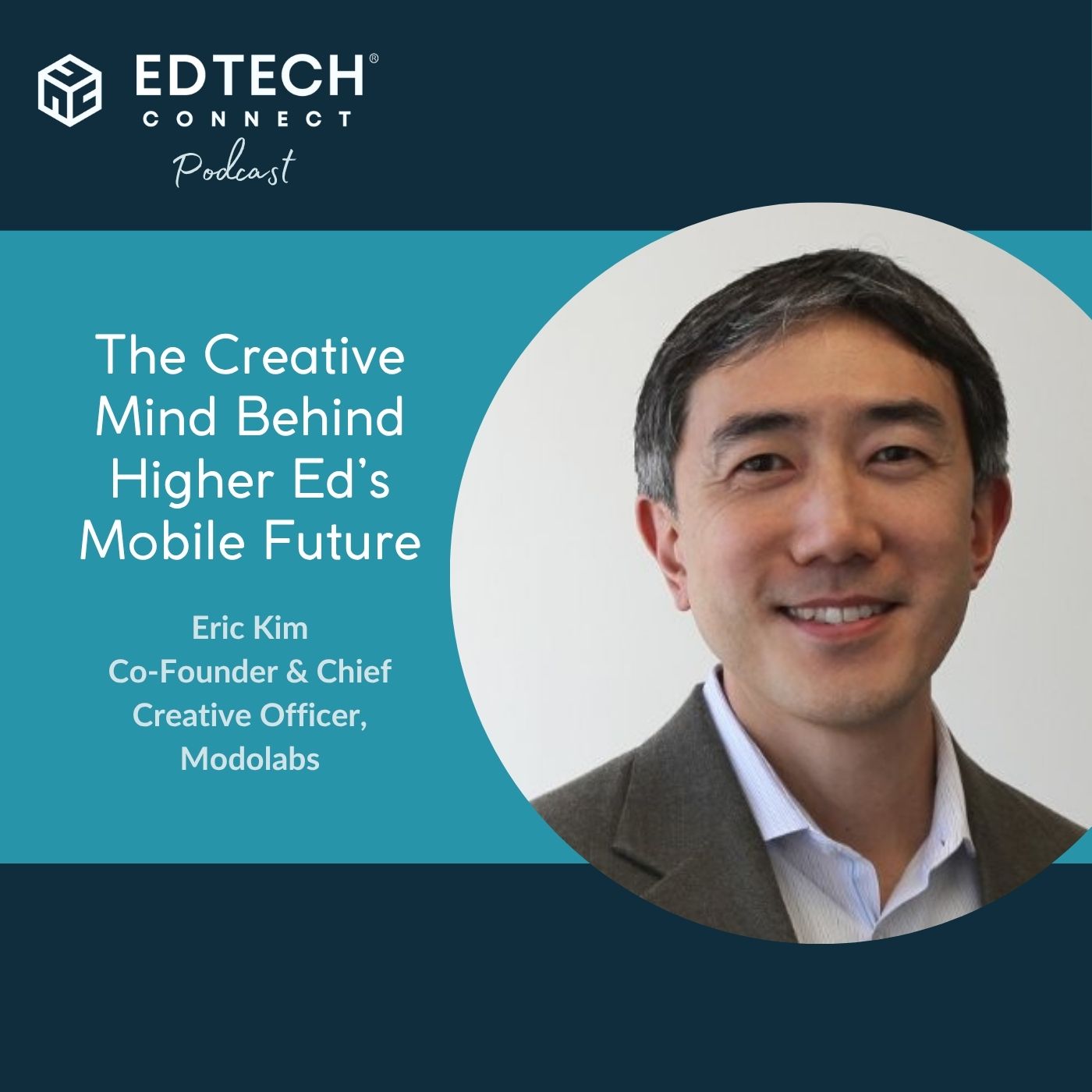
The Signal
The Creative Mind Behind Higher Ed’s Mobile Future
00:30:41
In this episode of EdTech Connect, host Jeff Dillon sits down with Eric Kim, co-founder and Chief Creative Officer of Modo Labs, to explore how mobile technology has reshaped higher ed—and where it’s headed next. From Modo’s origins at MIT (inspired by Kabuki stagehands!) to its global impact today, Eric shares how universities can break down silos, leverage AI, and design experiences students actually love. Hear how early adopters like Sacramento State pioneered mobile registration and food insecurity alerts, why personalization is no longer optional, and how TikTok-era expectations are forcing a rethink of campus apps. Eric also reveals why higher ed’s collaborative spirit hooked him for life, the surprising industries borrowing from campus tech, and his bold vision for AI-powered “conversational” interfaces. Key Takeaways: The “Kurogo” Philosophy Modo’s original name and ethos come from Kabuki theater’s unseen stagehands—making the impossible seamless for users. Mobile’s Unfi...
Loading summary
Transcript54 lines
- [00:00]
A
What you measure in that world is really engagement with the app. Clicks, views, minutes spent in the app. For me it's like that's not important. Is engagement with the life of the organization and your life within the organization facilitated by the app. That's what's important to me. If we focus on the user and their life in your school and how you're going to make that life a little bit better moment to moment throughout the day, I think whatever the techniques or tactics or technologies you use, if that's your going in mindset, I think you're going to do something good.
- [00:36]
B
Welcome to another episode of the EdTech and Act podcast. I'm really excited to have this guest today as I've known him when he was early on in building his company and since then he's become wildly successful. Eric Kim is the co founder and chief creative officer of Modalabs, where he's spent over 15 years helping universities deliver digital experiences that are both elegant and practical. A Harvard trained designer, Eric specializes in turning complex systems into intuitive tools. His work powers personalized campus apps at top institutions worldwide. Before Moto, Eric led design projects for clients like Microsoft and mit. Today he's focused on helping higher ed meet modern student expectations through thoughtful UX and mobile first innovation. Eric brings a multidisciplinary user centric approach to every design challenge he tackles. So welcome to the pod, Eric. It's really great to have you today.
- [01:43]
A
Yeah, it's really good to be here. I've been looking forward to this conversation. Jeff, you know, know known each other a long time and always great to catch up.
- [01:50]
B
Well, let's start with your founder's journey and I'm curious in the evolution of the name, the name of the company, the name of the product. Can we start there?
- [02:00]
A
Sure, yeah. So Moto Labs, I'm one of the founders we launched in 2010. We spun out of MIT originally and a majority, it turns out of the original founders were of East Asian descent. And so when we came up with A company named M.O. stands for mobile and do is the East Asian word root for like you see it in judo and taekwondo and dojo, it means the way of. So Moto literally means the way of mobile.
- [02:26]
B
Okay.
- [02:27]
A
And our original platform, originally we called it Korogo and we, our products we called Kroger, we ran, you remember the Kroger conferences, the higher ed tech conferences. We ran for like seven years until Covid, also called the Krogo conference. Kurogo is a hugely important word for us. It's a Term from Japanese stage theater, Kabuki theater. And these are the guys dressed all in black. They look almost like ninjas. And they're the stage hands that move things around during the performance. They'll move set pieces around. Sometimes they'll even pick up the actors and move them around when something supernatural is supposed to be happening. And so the conceit is the audience can't see them. And they make the supernatural happen. They make the impossible possible on stage and they make the actors into stars. And so that was kind of like the ethos for the technology, what we wanted to be for its users and its customers and even the kind of people we hired and the kind of culture we wanted to build as a startup.
- [03:19]
B
I remember the Korogo platform because Sacramento State when I was there was one of the early adopters. We were at the free version for a while until we came over as full customers. So I do remember that story being told, but didn't know, didn't know the Moto, the Motor Labs itself story. So that's interesting to hear. You met your co founder at mit, is that right?
- [03:38]
A
No, actually. So Andrew Yu is the co founder and he was MIT's mobile platform architect. So he was working at MIT. He put together the mobile platform team and brought me on as the creative lead there. But we originally met at Harvard. We were both undergrads there, classmates lived across the street from each other.
- [03:53]
B
Okay, so this is 2010ish. You timed it just, I mean that was when the mobile revolution was just kicking off. Right. Well, let's talk about, you know, you spent over a decade designing mobile and digital experiences. Since then, what's changed the most?
- [04:10]
A
Well, that's a big one. So would you humor this founder and let me start with my favorite story which is. Oh yeah, great. So yeah, as Moto as a company did launch in 2010 and it was a great, very exciting time to be doing that. But at that point most of the founders had actually been working together for a few years at MIT as its in house mobile platform team. And Andrew, my classmate and we had done another startup together back in the late 90s. You know, he had been hired by MIT as their first mobile platform architect. And when he was working there, he had experienced this intense frustration of being at this amazing place, having these incredible new devices in his hand, you know, always on super personal, having all of MIT's incredible resources available online, but not being able to use the one to access the other. It was like, you know, two great tastes that you can't like actually putting your, you can't taste together. And you know, this was 2007, 2008 and when he started assembling team and Jeff, you'll remember those days, it was a fun time. Diverse platforms. BlackBerry, Palm, Symbia, Nokia, Windows Mobile and the very first iPhone came out around then. It was before you could even buy. There wasn't a single Android phone you could actually buy in the market at the time. And the dominant mobile devices back then were feature phones like you remember the Motorola razr. Oh yeah, yeah. And so at that time, Even on desktop, MIT's websites were all siloed and disconnected from each other. So if you wanted to say get to your TA's office, you'd have to go to Moodle, then who is that? MIT Edu and then where is that MIT Edu and to the Shuttle Tracker website run by the facilities team. You have to bounce around between these different websites and literally copy and paste bits of info from one to the next just to like do this one simple thing.
- [05:50]
B
I remember those days. Everything was in its own silo and there was no integrations.
- [05:54]
A
Yeah, yeah. And you wish that things had gotten better. They've gotten better much more slowly than they should. And that's even on desktop, right? Let alone on mobile. So we were looking at this incredible fragmentation, both the end user device, that whole ecosystem and backend services. So Andrew and our team, we saw this real need. So we set out our kind of unofficial motto as founders was make mobile awesome for everyone. And so we wanted to make mobile awesome for everyone and all these different devices by taking these mission critical resources and making them not just possible to use on mobile but like great to use them. Glanceable and actionable and personal and in a unified experience. So you didn't have to bounce around to many different systems. You could just like go to one place, get what you needed to do life better and you wouldn't even know or care that you were interacting with maybe a dozen different back end silent systems.
- [06:46]
B
I remember using it, it was really user friendly. We loved. I mean it was kind of cutting, it was cutting edge when we were using in SAC State, so and you.
- [06:53]
A
Know we got tons of interest and won awards and interest from like people who use the original open source version. Like you guys at SAC State.
- [07:00]
B
I remember your conferences. So these don't happen anymore in higher ed unless you're the biggest company or you're an Adobe or something where you have customer only conferences and Moto would fill a conference center with hundreds of Their customers. And I would just love going to these conferences because you and Andrew would drop these stats on us and like mobile usage and where it's going and the latest trends. So it made us in higher ed feel like, wow, this company's devoted to higher ed. And so I want to ask you a question about. I really, I didn't even know for a while that you served other industries when I was in higher ed. I'm like, wow, I think higher ed is and was your biggest vertical, but you're biggest in other industries too. And you did a great job of hiring or really focusing the product on higher ed. But when you have another industry like financial services, like what can hire learn from those other types of industries?
- [07:52]
A
That's a great question. And you know, like, like you said, our focus for the first several years of the company was very. We were laser focused on higher ed. And I missed those conferences too. I missed the community that we had there. And, and we didn't go out, we didn't have some grand strategic plan. We will do higher ed and financial services. Those will be our two business targets. Enterprise actually came to us and so we had one of the world's largest financial services firms. They were looking for an employee experience app. And they have campuses with multiple buildings and tennis courts and shuttles and, you know, dining halls and all that stuff. And they wanted an employee experience app. And most of them frankly kind of sucked. And so I said, hey, we hire thousands of people fresh out of school every year. Let's talk to them, these digital natives. What are the digital tools they're growing up with on campus? And let's go get best of breed from that world and bring it into our world. And so they ended up building what became one of the world's first really unified workplace apps on Moto. That opened the door.
- [08:46]
B
And I love companies that are fully devoted to higher ed. That's great. But the ones that have a few industries can really borrow from those. I can really see that with your different versions of your product for your different industries. Impressive. So your background is deep in UX and ui. What do you see as a common mistake that institutions are making when it comes to their digital experience?
- [09:08]
A
Several. You know, we've seen a bunch. I think one of the biggest ones is the idea that you can take a whole bunch of siloed systems, just adapt them or mobilize them in their existing silos, duct tape them together and think that, okay, that's what the end user wants. And you know, you can, it can be better than trying to navigate all these different siloed systems separately. But what you end up with is instead of like a real, true single pane of glass, you end up with like a window with many little panes of glass in it. And when you actually start to look through any one pane, you end up linking out into the original system of record. And it becomes certainly better than just all these separate, completely isolated systems. But I think what the user really wants is I just want the information and services I need at the moment. I need them. And I don't want to think about I'm bouncing around between these different systems. They should all kind of interoperate and work together into something much more unified for the user. And that's been the driving philosophy for us from the design side since the MIT days.
- [10:08]
B
You made me think of a couple things we did with your platform when I was in Sacramento. And I want to tell you these stories. I think you'll remember these. So the big thing back then was student registration on your mobile device, right? It was a new thing. I think it was around 2011 or 12 that school started doing that. I think Sacramento State was the third school to build that. And there were different ways to do it. You had to register a module. There were some other ways. I know that changed, but that was exciting. What we realized in that process was students didn't really want to fill their course shopping cart on their mobile device, but they wanted to have it ready so that when they that time came up, they could just hit the button. It was that simple. So we discovered that in Sacramento was really something we showcased at conferences, at your conference and others. And the other one was a free food notification app. You know, in California, there was this big study that came out a couple times in the 2010s that students were food insecure. And basic needs is still a really critical point to a student. So we said, let's build a module within Moto that can notify students who subscribe to say, hey, we had just had a big event in the student union, come by in the next half hour and get our sandwiches. And we presented this at the conference. And some of the east coast schools that don't have the problem, they thought it was kind of a novelty. They didn't really understand how critical this was to our students. But it won awards. And so it just made me think of these great things we built with that platform. So what are some other creative ways people have used Moto in school?
- [11:40]
A
I remember that, by the way. And I remember you presenting on it and I remember just being shocked by the statistics of how many of your students experienced homelessness during their four years and what a big issue of food insecurity was. And so like that really kind of crystallized for me, made concrete in a new way some of the design ethos. So we're just trying to help people do life better, remove roadblocks that get in the way of student success and not having a place to stay or enough to eat. These are things you don't really think about. But we love that you guys use the platform to address a need like that. I would say that particularly, you know, right around Covid and immediately thereafter, mental wellness and, you know, emotional wellness and different types of safety became a bigger issue. And we saw some very interesting use cases around that, including as some of the students hackathons, the ideathons that we ran where people could come ideate on an idea and build it out in our platform over a weekend. A bunch of those were around. Mental well being. Yeah, yeah, yeah. One other favorite one is University of Houston. One of the first uses of X module, our kind of low code extensibility platform, real time where the food truck study on campus and like a real need very specific to a big commuter campus. And I loved it, became very popular.
- [12:53]
B
That's a great one. I just have one more. We did, we saw this. Other schools were doing it. We weren't the first parking availability and a lot of numbers, like there's this many spots available, but we turned into heat maps so you could look. Hopefully people aren't looking when they're driving. But before they, they head to campus, they could see red, yellow or green. You know, they want to hit the green parking lots. And that was really a big popular module as well.
- [13:15]
A
So you guys did great stuff.
- [13:17]
B
Bring back all the memories of the fun that, you know, building on the Moto platform back in those days kept me going for a while until I left to go on the other, other side of higher ed because it was so. It was so fun. And now a word from our sponsor.
- [13:36]
A
Your audiences know the true power of your institution's story. With deep inquiry and expert strategic and creative development, Mackie Strategies applies decades of leadership to help you drive branding, marketing and fundraising that get results. Mackie Strategies moving your mission forward.
- [14:01]
B
So with mobile experiences, they're being shaped by TikTok and Instagram now. I mean that's just in the last, you know, five plus years. How does that influence how you build, build for students now?
- [14:14]
A
I've been thinking a lot about kind of some of the big arcs of change that we've seen in the past 15 years. And obviously the mobile wave itself and the way it changed the way we live and the way we interact, much shorter burst year interactions. I think that actually went hand in hand with the social wave change wave. And I think social wouldn't have blown up the way it did without mobile, without having these personal devices on you and connected all the time. I think what happened with social is it really kind of taught people to spend a lot of their time in a very passive or reactive consumption mode where you expect this invisible algorithm to be surfacing. The stuff that's going to be interesting to you, to predict what you. What will be interesting to you and surface it to you. And you don't have to really think or act. It's just being brought to you and fed to you. And there's good things about that. There's a little shake up, shake my fist to the sky kind of kids these days side of me that feels like, hey, we've gotten a little too passive and a little too consumptive. But it has definitely made us change our approach to where it's not just apps built on Moto are not just a toolbox where you go in with the need and you look for the right tool and you pull it out and you, you meet that need. But what can you do to proactively surface this stuff based on what it knows about you, who you are, where you are, and give you what you need in the moment, pro, you know, proactively.
- [15:28]
B
So we're getting into personalization now without saying the P word there. I have some stories with this too. I was really early on in testing this back and was. It was the early 2000s and it wasn't really talked about too much and, and there was a company out there called Liquid Matrix and they have this personalized CMS that we purchased. This was at nau and I know NAU is one of your customers now and we thought this is great. If someone comes and they identify as a biology major, we'll have serve up these biology photos and it'll just be personalized for them. Biology messaging. So we started building this and then launched it and guess what? The biology department said that's not good content like those images. And that's not. We need better like okay, you do it, let's have the biology department do it. It never worked because no one could keep up with the actual content. So getting into personalization, why is it easier now in the modern campus app and how far can it go?
- [16:21]
A
I think there's at least a couple of levels that contribute to it being easier and more feasible today. One is that there's many more systems that are built with that world in mind and there's a push pull here because the user expectations have evolved over the past 10 years where people just kind of expect that that is the way digital experiences work. And I'm not going to get a one size fits all. And whether it's based on passively what it knows about me and my, you know, based on my behaviors over time and also what I tell the system about myself and express my own desires, it's got to respond to both and the system's got to be able to take in both and craft an experience for me based on that. So I think the broad demand, the awareness, the evolution of the enabling technologies to allow it and then I think also people's comfort level with there's an assumption that the systems know everything about me so I might as well get some advantage, some benefit from it. And this was an aha moment for me, talking with people that we were hiring right out of school or talking with interns that we hire. Talking with my own kids as they grow up where for me there's a natural resistance. I don't want the systems to know that much about me. So I'm careful about the information I share. But like a whole generation I was growing up expecting, the younger generation is.
- [17:39]
B
Not as concerned about privacy, is that right is what I mean?
- [17:42]
A
Well, they are concerned about it, but I think they just assume that it's gone. And so they're living in a world where I might as well get maximum benefit from the reality that I live in.
- [17:52]
B
Yeah, you know, many universities I think struggle with access app adoption. They build something but it just doesn't get used. What are the keys to making a mobile app truly indispensable?
- [18:03]
A
First of all, it's got to provide some real value, right? It's got to provide some things that people want. And so there's one interesting use case. University of Arkansas Pulaski recently rolled out a pilot version of our AI chatbot. Very simple use case, very simple early version of the technology. Within a week they had 94 point adoption. I think within a few weeks the overall use of the app had gone up 235%. Something like that. There's actually an article about it in the AWS public sector blog. So there's something that clearly there's A demand for it, it's going to draw people into the app. The other is just kind of there's people fall prey to the, if you build it, they'll come fallacy and you just gotta let people know, like, and not just put up a banner in the student center, but at the shuttle stop, you know, scan the QR code to get real time shuttle tracking at the dining hall, you're waiting in line, you know, scan the code next time you can order ahead or see what's being served. So in situ, at the point of need, advertise the app's utility and more people will, I think, naturally use it.
- [19:05]
B
What I found when I was really in the weeds on this was that the projects that didn't have formal project support or stakeholders at the highest level tended to fail. Like, you know, the digital governance is still such a challenge in higher ed. And I had a different angle, wherein when mobile came out, we didn't have much governance around it. And there's a different way higher ed can handle this. A lot of people, especially if they're new in the role, they're not. I'm not touching this. I'm scared of making a mistake. I'd been there long enough and I liked, I like trying new things. I'm like, oh, wow. This is an opportunity for me to take this as far as I can until they get some formal governance around. I know some VPs in my old university would kind of cringe and saying like, what? Wait, what? But I feel like we made so much more progress, you know, with looser ties, but there's a trade off for that. But you brought up AI. We always get into AI. What trends are you watching closely? AI, voice interfaces, digital ID cards, or there's something else.
- [20:04]
A
I mean, AI, obviously you can't be a software company in the world without it. You can't be talking to end users of that feeling, that tug. And so like I said, we've got first release of an AI knowledge agent which aggregates content from a bunch of different types of sources and natural language interaction. And that's been fascinating to watch, not just because of the enabling technology. And everyone who's watching is just kind of dizzied by how fast that's evolving. Right. But also it's another change wave of end user expectation, interaction pattern. We've gone from like the toolbox to the feed and now I think it's the conversation. I think part of what people are so excited about or taken with AI is the natural language part that I can interact with the device through voice or through written word in a way that feels more conversational. And so I think we're going to see in the coming year, a couple of years, another real sea change in the way people expect to interact with technology. And so that's super interesting for us. Yeah. And for me as a designer, hard.
- [21:04]
B
To predict where it's going. It's hard to see past a year or two for me.
- [21:09]
A
Yeah, well, I mean even in the here and now and kind of like trying to draw a vector extrapolating from where we are right now, it's. What's exciting to me in my role at modo is that it plays to a bunch of our historic strengths in aggregating content and services and making it available in this unified experience. But the nature of the way you interact with that experience is going to change. But it's really only provides value to the user insofar as you've got the information and services that the user cares about to begin with.
- [21:35]
B
So you have co founded multiple creative ventures. What's kept you focused on higher ed?
- [21:43]
A
Well, you know, I didn't plan to go into higher ed. When Andrew hired me to be the creative lead at the MIT project, it was. I did it because we were friends, we'd done startups together before. But then very quickly I found that like I kind of fell in love with the higher ed community. I miss educause, I miss the CROW conferences dearly. And it's because a lot of industries and groups talk about collaboration and sharing ideas and. But higher ed, from what I've seen, from what I experienced, really lived that out. And at the Kroger conferences, people like you would get up on stage and be so excited to share what you were doing. Where other industries, there's a lot of kind of secrecy and it's competitive advantage for me and that kind of thing.
- [22:26]
B
Yeah, that's interesting. Higher ed does like to share for the most part. Even within the csu where I was the largest system in the country, almost have half a million students, we had a great network of even like that mobile registration module I was telling you about. Like every school kind of ended up doing that. And you're right. And you made me think of something else too. It's like, you know, you didn't plan on going into higher ed. Every time someone asked me where I used to work, I'd say, yeah, I work at SAC State. Oh, you, you teach? Are you a faculty? I'm like, no, no, not faculty. I'm an administrator. And you Know, there's no one that plans to be a hired administrator or you know, you know, I think you kind of fall into it and it's, it's a fun place to be.
- [23:02]
A
So how did you fall into it, Jeff?
- [23:05]
B
That's funny. So I had a business in 2000 I time. This is good timing to in the early 2000s, or actually late 90s to the early 2000s. I went in with a couple people people and we built a web development company in northern Arizona, which is right by the Grand Canyon, Sedona and all these tourist destinations. So we had to educate people what the Internet was saying, look, you have a global audience. I was building web pages for tourism companies in Arizona, which was pretty easy if you could convince them about the Internet. And then I sold that business. We sold that and NAU was hiring for a webmaster. And there it was a side job for someone in it. And the website was bad, even bad standards back then. And so they moved the position to marketing. The title was webmaster. I was a one man show in a marketing team having to work with it. People that were a little disgruntled, they just lost their webpage to this guy from marketing that they didn't know who I was. So that's why I got into it. And then eight years there, Sacramento. So that's the short story, but thanks for asking. I haven't told that story in a while.
- [24:06]
A
I remember the job title webmaster. That was the thing back in the day. But you know, sadly the one man person, you know, like responsible for juggling, you know, spinning the plates and keeping.
- [24:14]
B
Everything running is still one more funny story about that. When we have this webpage, we had this email on their contact or something. Contact email. This is early on. This is, I think this is around 2000, 2001. And I kept getting all these emails that said, you know, hey, we're interested in this biology program. What are the requirements? Or I want to sponsor something, I mean from all over the university. And I said, hey, I think we're onto something here. I think this could be used as a marketing tool. This whole thing like can we do something? And no one really listened. And I thought I want to create this pull down menu where these people that want to contact us, they can choose at least the area so I don't have to kind of route all these. Is that. So that was my first step. That's what I could sell is let's have the admissions one go to the admissions people so you guys can see these. But it was not an easy sell. I just thought it was so funny that they weren't just jumping all over that those people that are trying to get a hold of us through our website. I guess I'm kind of dating myself here, so.
- [25:08]
A
Well, you're thinking about personalization from way back in the day. And like, like you said, it is, I think personalization is everything now. People are so much expected and what you were thinking about it back in the day.
- [25:18]
B
So how does MOTO approach user research when you're designing tools for students, faculty, staff, such a diverse audience, that must be a challenge.
- [25:29]
A
Yeah. And it's always a super important obviously for any user experience designer to keep a finger on the pulse of when connected to the people they're designing for. And so for us, interestingly, we have two audiences that we design for. One is people like you and your role back in the day. You're the buyer and you're the administrator who's using our platform to create these experiences for your constituents, for the students, faculty and staff. Right. But then we're also designing the platform that enables a great experience for those end users. And so for the one, you know, conferences, meeting face to face, meeting online as much as possible. Deep in depth conversations with the actual customer on a constant basis about what are their needs, what are their frustrations, what problems are trying to solve. Absolutely essential. Partner with the students. You have to be more intentional about it because the natural course of business, you're talking to your customers all the time. Right. But to their end users. A, we would often ask for or can you put us in touch with some representative students? B, we would run these ideathons, hackathons on campuses. We're working hand in hand all weekend, burning like all nighters with the students. We've always made it a point to hire out of schools as much as possible, including for several years now, we've had summer interns. College students who go to school at one of our customer organizations will come to work with us for a summer. And we learn more from them than I think they learn from us.
- [26:50]
B
You reminded me of something else that I learned at a MOTO conference was talk to your students. It sounds so basic. Of course you should. It's just easy to say, harder to do. But I'm like, so I think in Notre Dame, they were always one of your leading schools, presented how they really leverage their students. So I started doing that. And what I learned from just bringing students in, giving them pizza, asking questions, seeing how they use things was really insightful. So so that in those hackathons too were great. I feel like we're to this point now where, you know, we saw these smart watches coming out, we have these mobile phones, we have digital signs. I feel like a school really needs to have a place where they, you know, the true COPE model, create wants, publish everywhere. Are we there yet? Like is it in the mind of Moto to to be building that way? It seems really hard, but with all the integrations maybe it's possible.
- [27:41]
A
You know, we've always been multi platform, so mobile first but you know, we have customers where the majority of their usage is on desktop and doing legacy desktop portal replacements and so on has been a huge growth area for us. Beyond that, you know, so architecturally, philosophically, at its core, our platform is very good at doing adapting on the server side for different types of end user endpoints, displays and interaction models. We have done a little bit of work with kiosks and digital signage. We have a major financial services firm that's rolled out interactive kiosk using our technology. It remains a minority use case for us. Honestly, did you guys ever have a digital kiosk? Some of our, like Fitchburg State, Notre Dame, they had digital signage powered by Moda.
- [28:24]
B
We did not. When I left, we did not. So I don't know. I know they're still a big customer of your Sacramento State, but yeah, sure. Well, I'm going to wrap it up here, but I want to ask you what advice you give to hired leaders trying to upgrade their digital campus experience or any last words for our audience?
- [28:41]
A
Sure. I think a lot of what we touched on in terms of really stay in touch with your users and not just their expectations and their usage patterns at a moment in time, but how quickly those are changing year by year and cohort by cohort, the move to AI and the different expectations for the way people will consume and interact with content. And we talked about, you know, the ways that social media, TikTok and Instagram, that consumption oriented usage patterns that has changed user expectations as well. For us, what you measure in that world is really engagement with the app, clicks, views, minutes spent in the app. For me it's like that's not important. Is engagement with the life of the organization and your life within the organization facilitated by the app. That's what's important to me. If we focus on the user and their life in your school and how you're gonna make that life a little bit better moment to moment throughout the day. I think whatever the techniques or tactics or technologies you use. If that's your going in mindset, I think you're gonna do something good.
- [29:39]
B
I love that. Thank you Eric. Well, I will put the link to Moto labs and Eric's LinkedIn profile in the show notes. Thanks for being on the show Eric. Great to talk to you.
- [29:50]
A
Thanks so much Jeff. Great to talk to you too.
- [29:55]
B
We wrap up this episode remember, EdTech Connect is your trusted companion on your journey to enhance education through technology. Whether you're looking to spark student engagement, refine edtech implementation strategies, or stay ahead of the curve in emerging technologies, EdTech Connect brings you the insights you need. Be sure to subscribe on your favorite podcast platform so you never miss an inspiring and informative episode. And while you're there, please leave us a review. Your feedback fuels us to keep bringing you valuable content. For even more resources and connections, head over to edtechconnect.com your hub for edtech reviews, trends and solutions. Until next time, thanks for tuning in.