← Elon Musk Thinking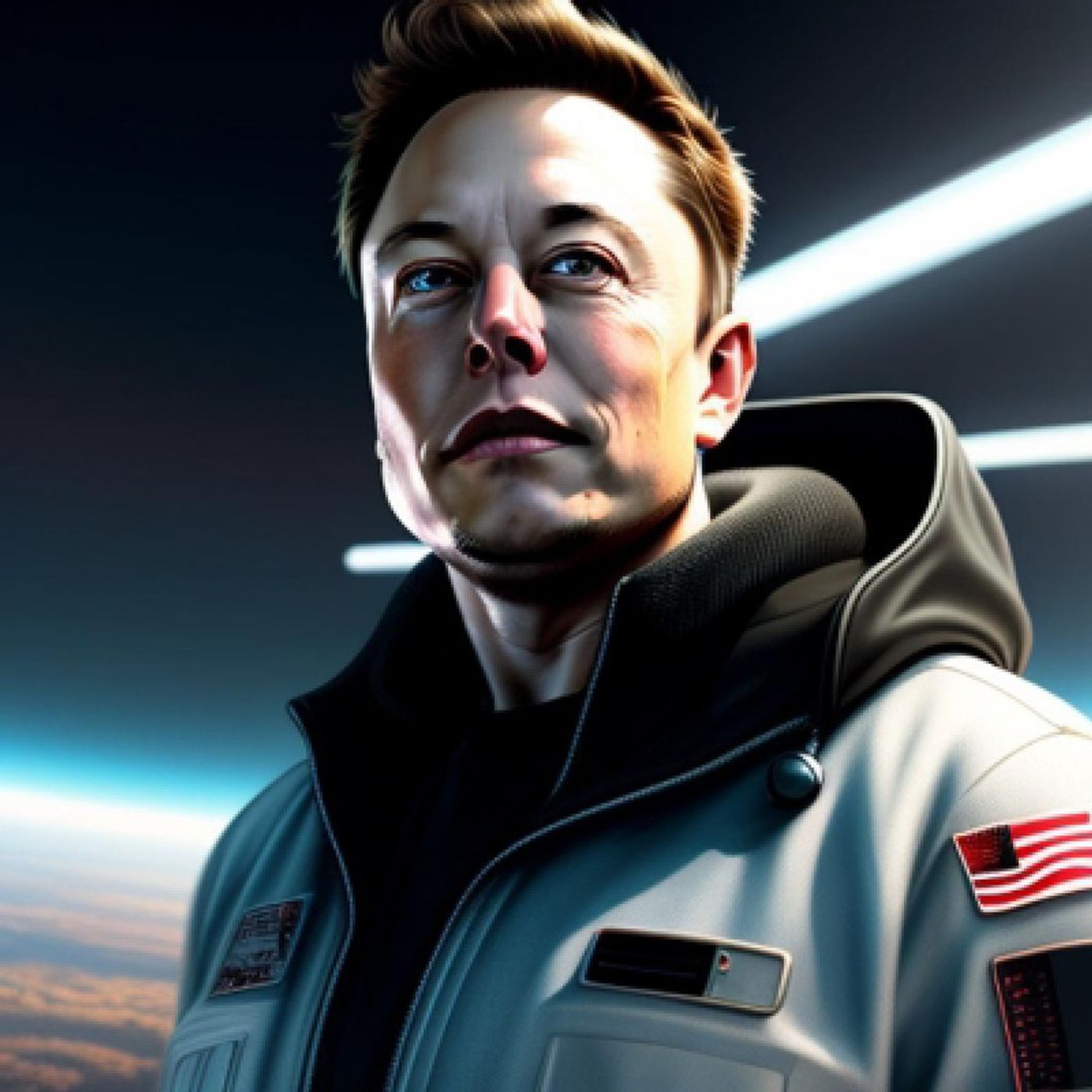
Elon Musk Thinking
12 Years Ago, Elon Musk Interview About Rockets!!!
00:15:14
12 Years Ago, Elon Musk Interview About Rockets!!! #ElonMusk Follow me on X https://x.com/Astronautman627?t=RFQEunSF2NwRkCOBc6PkkQ&s=09
Loading summary
Transcript62 lines
- [00:01]
McDonald's Representative
Did you know you can save money with the McDonald's app every single day? Yeah, I was surprised too. Deals every day right at your fingertips. I love a good deal, but the McDonald's app takes gaming the system to a whole new level. Just the other day I treated myself to a 10 piece chicken nugget for only a dollar. Yeah, you heard that right. Just $1. All you have to do is order in the app. And get this, you can grab that deal once a week through December 2nd. The first time I discovered the deals in the app, I was honestly shook. I had to tell my whole group chat about it. And now we're always comparing who got the best app deal of the week plus ordering ahead. Total game changer. Especially when I need a quick lunch or a treat after a long day. So why wait? Save money every day with the McDonald's app. Download it, get those deals and treat yourself. You deserve it. Valid through December 2, 2024 at participating McDonald's. Offer valid one time per week. Excludes delivery. You must opt into rewards. So go check out McDonald's deals.
- [01:09]
American Giant Representative
Americans are durable. We take pride in hard work and high quality. American Giant makes durable quality clothing right here in the USA because what we wear reflects who we are. When you buy American Giant, you're not just wearing the best clothes can buy. You're helping keep jobs and pride in your own backyard. Premium clothing built to last decades like it should get 20% off your first order at american-giant.com with code right here. 24.
- [01:40]
Interviewer
I'm here with Elon Musk, the founder of PayPal and space entrepreneur, electric car entrepreneur and solar power entrepreneur. So thanks for joining us, Eon. And just a few questions. Earlier this year you made history with having the first private spacecraft, SpaceX's Dragon, to dock the ISS. You must be feeling pretty confident now.
- [02:07]
Elon Musk
Well, I feel reasonably good about things, but I don't want to be complacent. And we definitely want to keep the pace of technology progression as rapid as possible. So we wanted to do lots of launches which are kind of our bread and butter, and then keep pushing the envelope in parallel on new technology.
- [02:33]
Interviewer
Okay, and have you identified the causes of the anomalies from the October carbon cargo flight? You know, there was a little bit of issues with the rocket and what have you, just a scratch.
- [02:47]
Elon Musk
Just a flash word.
- [02:48]
Interviewer
So it won't have any impact on the human rated Dragon sort of development?
- [02:53]
Elon Musk
No, we actually file flight plans. When we file a flight plan, we file a flight plan with zero, one and two engines. Out.
- [03:01]
Interviewer
Okay.
- [03:03]
Elon Musk
So it wasn't even considered from the Air Force and FAA standpoint, it wasn't actually considered an anomaly because it was one of the prescribed flight plans.
- [03:14]
Interviewer
Okay. And beyond the Falcon 9, you've got the Falcon Heavy rocket waiting.
- [03:19]
Elon Musk
Or it was considered an anomaly but not a failure. Sorry.
- [03:23]
Interviewer
Okay, so you have the. Beyond the Falcon 9, you've got the Falcon Heavy sort of rocket in development or waiting in the wings. What's that all about? And is there really about a market for it? Because satellites seem to be getting kind of a lot smaller these days, so.
- [03:39]
Elon Musk
Well, I think they're getting smaller and bigger. On the small side, you got companies like. Sorry. Which I used to be an investor in until it was acquired, and I certainly admire what they're doing in small satellites. And then on the big side, you've got the big geosynchronous satellites, where particularly for places that have a limited number of geostationary spots, they actually want the satellite to be as big as possible. So I think you've got this bifurcation going to both big and to small, but probably with fewer media.
- [04:12]
Interviewer
Okay. And also with the human rated systems and the iss, obviously NASA, after the retirement of the spatial NASA, NASA is very keen to get a US subsystem there funding a lot of you and your competitors. So there could be a case of going from no US systems to several in the next few years. You know yourselves, it'd be really great. Do you think there's room enough for all of them?
- [04:39]
Elon Musk
I think as long as we're making revolutionary improvements in space transport, I think there is room for a lot of companies. But we really need to get to rapidly and completely reusable rockets, just as is the case with aircraft. Aircraft are rapidly and completely reusable. I mean, they have a maintenance cycle and everything. But basically you put fuel in and fly it again and you can land a 747 and take off an hour and a half later. And you should be able to do that with rockets too. And if you do that, then the cost would come down so dramatically that I think we could find many uses for rockets.
- [05:19]
Interviewer
And can you give us an update on the air launch Stratolaunch system that was announced last year? You're partnering there, you're going to be doing the rocket launch bit. What's that all about and where does it kind of fit into your family of rockets launchers?
- [05:35]
Elon Musk
Well, that's definitely not one of our main initiatives. And I think there's likely to be some changes in that program, but nothing I could comment on myself.
- [05:53]
Interviewer
You've also dropped hints of a more powerful rocket engine under development, Raptor or mct. People seem to be talking about. What does MCT stand for? And is that right?
- [06:08]
Elon Musk
Yeah, every now and again I just throw something out. Fun. And I can confirm that the name of the engine is Raptor. I'd like to announce maybe some details about the engine next year. But perhaps what's even more interesting is the spaceship that that's attached to.
- [06:36]
Interviewer
Okay. And does the M in MCT stand for anything to do with Mars or Martian or.
- [06:44]
Elon Musk
Okay to leave a little, you know, you show a little leg, not all of it. Okay.
- [06:50]
Interviewer
You've also got a vertical landing system, the Grasshopper, in development. How does that again, how does that fit into the family of that? That's the reusability of rockets.
- [07:03]
Elon Musk
Right. So the Grasshopper is kind of a test rig and it's intended to help us develop vertical landing capability. Obviously the rockets can certainly take off vertically and we need to make them land. And so Grasshopper has very robust landing legs. It's designed to be able to take very often nominal landings. It's got a Falcon 9 version 1 stage and combined with the Merlin 1D engine that would go on the next generation Falcon 9. So it's sort of a hybrid vehicle of past and future technologies. We'll use it to sort of figure out a bunch of things and then next year we'll upgrade to the actual flight design of Falcon 9. The next generation Falcon 9.
- [07:49]
Interviewer
Okay, so is there a data to then recover the top stage or. Or the whole thing?
- [07:57]
Elon Musk
Yeah, long term, our goal is to recover the entire rocket and be able to relaunch the whole thing quickly.
- [08:02]
Interviewer
Okay. This year also, we've also seen planetary resources launched. What are your thoughts on that? Do you think asteroid mining is viable? Are they ringing up wanting to know prices on deep space launch? Prices?
- [08:17]
Elon Musk
Our rockets are standing by. I think there's potentially some market for mining asteroids as a kind of a refueling station on the way to Mars and other places I don't see. I'm not convinced that there's a case for taking say platinum or something that's found in an asteroid and bringing it back to Earth.
- [08:42]
Interviewer
Have you seen the UK sort of sky launch space plane project? What's your take on those air breathing?
- [08:51]
Elon Musk
Don't know it well enough. In the past, whenever I've done the basic math on having an air breathing stage, it doesn't seem to make sense, but I could be wrong about that. And Always look to sort of figure out how I can get around.
- [09:11]
American Psychiatric Association Representative
The sun's shining, birds are singing, and all feels right in the world until the season changes and suddenly you lose your motivation to get out of bed. In fact, one in five people experience some form of depression, no matter the season or time of year. At the American Psychiatric association foundation, our vision is to build a mentally healthy nation for all. Because we want you to live your best life and be your best you all year round. Please visit mentallyhealthynation.org to learn more.
- [09:44]
Elon Musk
I think it's maybe easier just to increase the size of the boost stage than to add any air breathing stage.
- [09:50]
Interviewer
Okay. And you've obviously famously said you want to retire on Mars, which fantastic ambition. Is it something that you've got a team at SpaceX actively working on? Are they kind of looking at spaceships and habs and what have you designing the Musk retirement home.
- [10:12]
Elon Musk
Right. Well, there's no real work going on right now in terms of designing Mars habitats. I think we need to focus our energies on designing the Mars spaceship first and then that would effectively be the first habitat.
- [10:30]
Interviewer
Okay, and how far away do you sort of see a manned Mars mission, you know, and who do you think would will be going there? Do you think it will be the US or China or international or commercial mission?
- [10:45]
Elon Musk
Well, I'm hopeful that from a SpaceX standpoint, we'll be ready to do such a mission in the 10 to 15 year time frame.
- [10:52]
Interviewer
Wow.
- [10:55]
Elon Musk
So we'll see if that occurs. And obviously that would be an American. It may or may not be a government or maybe some government involvement or none. I don't know quite yet. But I think SpaceX will be ready in approximately that time frame.
- [11:12]
Interviewer
Okay, well, you've had an exciting year obviously this year. So what can we look forward to in 2013 in terms of SpaceX news and accomplishments in 2013?
- [11:24]
Elon Musk
I'm hoping we'll be able to demonstrate high altitude supersonic lift off and return. So to be able to have the stage take off, go supersonic, and then come back and land repulsively at the launch site. Then I hope we'll also demonstrate the Falcon Heavy towards the end of next year and it'll be the most powerful vehicle in the world by a factor of two and more than a factor of two actually. Yeah. So next 2013 should be exciting year.
- [11:58]
Interviewer
Okay. How many people now work at SpaceX? What are kind of the recruitment plans there? I get a lot of feedback from people saying, how do we get a job there?
- [12:09]
Elon Musk
Well, it's quite difficult for us to employ people that don't have a green card because of us ITAR rules. So my first advice would be do anything you can to get a green card. We haven't been successful in a few cases with getting permission from the US State Department, Defense Department to employ non US citizens, but it's very difficult to do that, unfortunately. I wish it were easier.
- [12:35]
Interviewer
Okay, and where do you get your passion for space from in the first place? Where did it kind of start that sort of inkling you wanted to be in this field?
- [12:47]
Elon Musk
Well, I mean, I was always a big fan of science fiction movies, books, and I always thought that we were on our way to becoming a space bearing civilization just to be like the stories that one would read about. And then I was disappointed to learn that it didn't seem to be happening. And that's why I got into, that's why I started SpaceX, is to sort of make that a reality and not just be forever a fiction.
- [13:13]
Interviewer
What do you attribute to the success of SpaceX so far? I mean, the last time you were here you'd just done the launch and that had gone well. And I think a lot of you kind of surprised and were pleasantly surprised. A lot of people said, wow, you know, this is someone who's come on scene and done it right first time. And you know, we're quite shocked in a way. What do you put down to that sort of success there?
- [13:38]
Elon Musk
Well, we certainly were very, very determined to succeed and fortunately we had just enough money to make it to the fourth launch, which was the one that worked, thank goodness. Yeah, but I think we had a critical mass of technical talent and just enough money and a design that was sensible. And those were probably the three ingredients that resulted in success eventually.
- [14:13]
Interviewer
Okay. And you've always got a number of different enterprises going on at the same time, such as Telsa and the solar power. So how do you split your time and kind of juggle between them? How do you divide your time and attention?
- [14:27]
Elon Musk
Well, I split my time approximately evenly between the two companies, but although depending upon which company needs me the most, I might allocate a bit more time to that company at times. So right now I put a majority of my time on Tesla, but earlier this year was a majority of my time on SpaceX.
- [14:45]
Interviewer
And if you were, obviously you're in the commercial sector, but there's NASA kind of beavering away there. If you were the head of NASA, what would be your priorities? What, what sort of changes would you make and how would you steer space policy, for example.
- [15:05]
Elon Musk
Well, I think NASA is actually doing a pretty good job overall. I mean, they've been a very pro commercial space. And I really have really nothing but good things to say about what NASA's doing.
- [15:19]
Interviewer
Okay. Another thing that's been mentioned as well with Mars is something called Hyperloop, which, I don't know, is it aerospace or a train system or.
- [15:30]
Elon Musk
You know, it's funny, it's sort of a combination of electric and aerospace. I'd like to publish something before the end of the year, hopefully, but I want to make sure I bet it with a few people within SpaceX and Tesla and maybe a few outside people, and then just sort of put it out there as this is something that I think would be sensible and then ask people to add to it and modify it. And maybe people have, I'm sure people have good ideas about making it better and then try to come up with some sort of standard design that anyone can implement in the world. I think that would be quite cool. Sort of like an open source operating system, like an open source transport system. That would be really neat. But the basic thought behind it is to have something like that that's cross between a railgun and a Concorde. Wow. Yeah. Now some people, and I sort of like saying that because some people are going to be scared about that and some people are like, yes, that's awesome. I'm appealing to the second group and.
- [16:40]
Interviewer
That would be using kind of a maglev in a possibility of vacuum to.
- [16:45]
Elon Musk
Nice try.
- [16:47]
Interviewer
Okay, well, we're almost there. Final question then. You said you were a big science fiction fan. Yeah. So I've got to ask you, what's your favorite fictional spacecraft?
- [16:55]
Elon Musk
Ooh, fictional spacecraft. Well, you know, I'd have to say that would be the one in Hitchhiker's Guide to the Galaxy that's powered by the Improbability Drive.
- [17:03]
Interviewer
Fantastic.
- [17:04]
Elon Musk
I mean, that thing's awesome. This is the most unexpected things.
- [17:08]
Interviewer
Right. So that's a scoop in half. The MCT will be powered by the infinite probability.
- [17:14]
Elon Musk
Exactly.
- [17:15]
Interviewer
Brilliant. It's been fantastic talking to you and very much looking forward to hearing your lecture later.
- [17:20]
Elon Musk
All right, thank you. Thank you.