← Elon Musk Thinking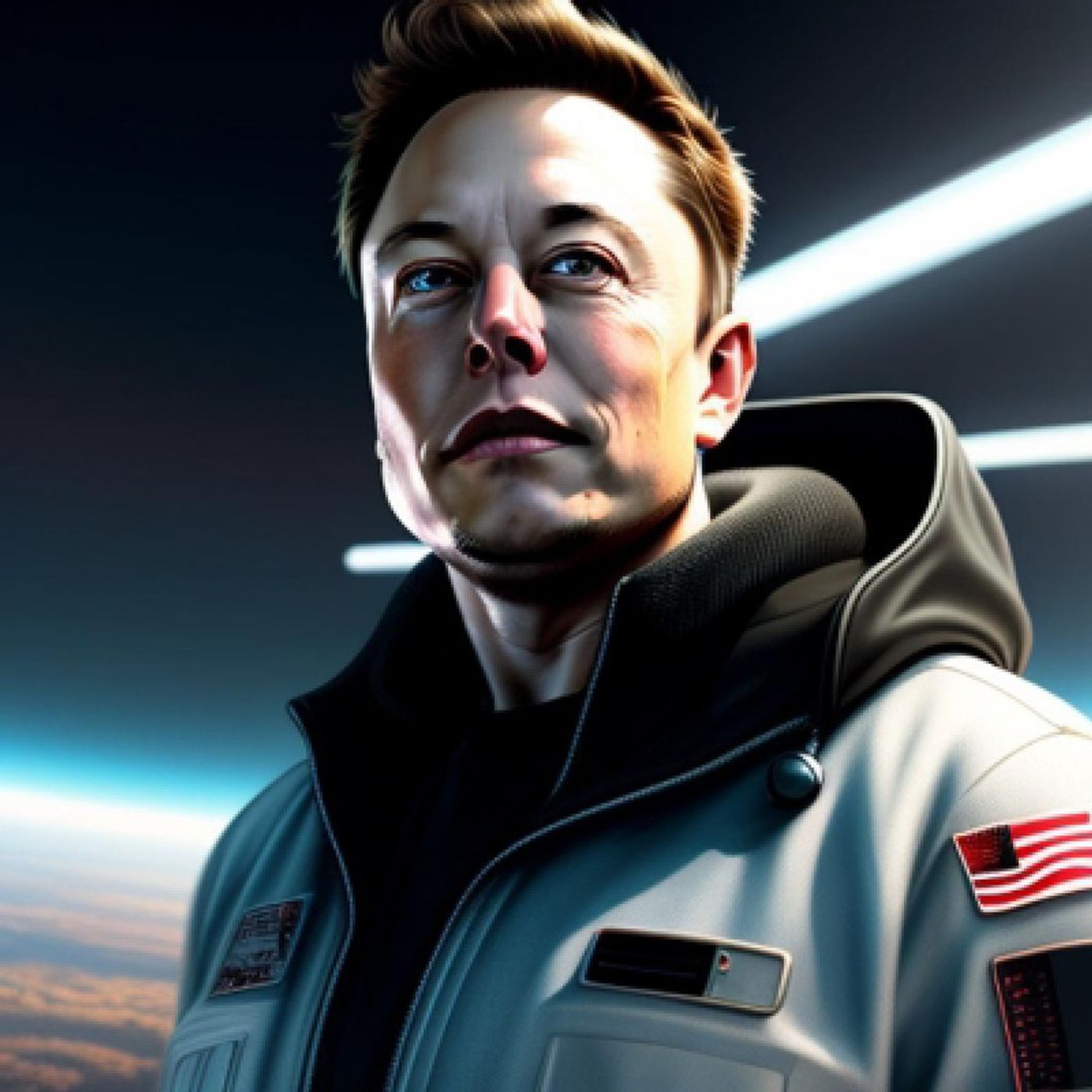
Elon Musk Thinking
Elon Musk Interview on September 29, 2011!!!
00:36:30
Back in the past, Elon Musk Interview on September 29, 2011!!! #ElonMusk Follow me on X https://x.com/Astronautman627?t=RFQEunSF2NwRkCOBc6PkkQ&s=09
Loading summary
Transcript92 lines
- [00:00]
Instacart Representative
The holidays are all about sharing with family meals, couches, stories, Grandma's secret pecan pie recipe, and now you can also share a cart. With Instacart's family carts, everyone can add what they want to one group cart from wherever they are. So you don't have to go from room to room to find out who wants cranberry sauce or who should get mini marshmallows for the yams or collecting votes for sugar cookies versus shortbread. Just share a cart and then share the meals and the moments. Download the Instacart app and get delivery in as fast as 30 minutes. Plus enjoy free delivery on your first three orders. Service fees and terms apply.
- [00:32]
Grainger Representative
If you're a maintenance supervisor for a commercial property, you've had to deal with everything from leaky faucets to flickering light bulbs. But nothing's worse than that ancient boiler that's lived in the building since the day it was built 50 years ago. It's enough to make anyone lose their cool. That's where Grainger comes in. With industrial grade products and dependable, fast delivery, Grainger can help with any challenge, from worn out components to everyday necessities. Call clickranger.com or just stop by Ranger for the ones who get it done.
- [01:02]
Interviewer
It was a little bit I was interested by your background. You finished your bachelor's degree at Wharton and then you stayed on an additional year and got a physics degree, when I imagine almost all of your classmates went to Wall street. So that must have been a pretty tough year. Did you have a vision at this point for what you ultimately wanted to achieve?
- [01:26]
Elon Musk
Well, I, yeah, there were three things in college that I thought would most affect the world, and there were the Internet, sustainable energy, and space exploration. I didn't think I'd be involved in all three of those, but as it turns out, as a result of some success in the Internet arena, I was able to get involved in rockets and cars, which are pretty capital intensive. But yeah, after sort of finishing the Wharton undergrad, I decided I didn't want to work on Wall street or work for McKinsey or something like that, which everybody else wanted to do. And I'd taken enough sort of physics electives so that I could just spend another year and finish off a physics degree and then and then head to California to do grad studies at Stanford in material science and applied physics working on high energy density capacitors for electric vehicles. And then I ended up putting that on hold to really dropping out.
- [02:25]
Interviewer
You're going back?
- [02:26]
Elon Musk
Technically, I'm still under Dean says I can come back anytime, but that's unlikely. So, you know, with that Stanford degree.
- [02:36]
Interviewer
You might really do something with your life.
- [02:38]
Elon Musk
Exactly. Yeah. So a couple Internet companies and then kind of circled back to electric cars and then rockets.
- [02:50]
Interviewer
Yeah, it's a typical story. So, you know, it seems like a long time ago now, but, you know, I think probably, you know, your entire background is very interesting. For us, we're an Internet company at our core as well, and we came up really during the same period of time as PayPal. To me, one of the really interesting things about you, and that is very similar to some of the history of our company, is that you have been very willing to put your own capital and your own money into your business. And one of the most intriguing times for me, for you, was 2008 with Tesla. And you went in and you were not originally the CEO, you were the. You were the funding, you were the funder and the chairman, but then you were a developer. So talk a little bit about that time and what it was like to have basically everything on the line.
- [03:45]
Elon Musk
Yeah, that was super unpleasant, that's for sure. Yeah, basically 2007, 2008 and 2009 sucked. They were really horrible.
- [03:57]
Interviewer
It was awesome here in Washington.
- [04:02]
Elon Musk
So, yeah, so my thought with what I had originally hoped with Tesla was that I wouldn't. That I could just dedicate enough time to do product development, but then not actually run the company. So that turned out to be a false assumption and I was sort of faced with the choice of, in 2008, of either run the company and just work a lot more or it would die mostly, you know. So, yeah, in 2008 was particularly tough on a number of fronts because the third launch of the Falcon 1 rocket for SpaceX failed. The Tesla financing round fell apart because, well, we kept. People kept telling us that the term sheet was just around the corner. They just want to see what the market's going to do. It was great.
- [05:02]
Interviewer
We were doing the same thing.
- [05:03]
Elon Musk
Right. So Tesla desperately needed money. And then SolarCity had a deal with Morgan Stanley Solar Lease Finance deal that Morgan Stanley themselves could not honor because they just didn't have money. And then I was also getting divorced, so that was like just shit on every level. Utter misery. And then fortunately, things perked up towards the end of the year. The fourth launch of Falcon 1 did work. SolarCity was able to get through that period by just selling solar systems instead of leasing them. It was very tough. Tesla. Tesla was probably the most difficult in that time because obviously General Motors And Chrysler were busy getting bankrupt and trying to raise money. Can you imagine trying to raise money for a car company in late 2008 while General Motors and Crisis are going bankrupt? And they're like asking for examples of prior successful car companies. And the last examples are at least they're not in living memory.
- [06:17]
Interviewer
There's that Tucker guy.
- [06:19]
Elon Musk
Yeah, I mean, they think of Tucker and DeLorean. It's like, if I had a buck for every time somebody mentioned DeLorean, I wouldn't need to have an IPO. So, yeah, that was very difficult. In fact, the only way we could raise money was internally from existing investors. And then I had to commit all of my available capital to Tesla in order to get the other investors to do the other half of the round. And that was enough to get Tesla through that point. And then a lot of people assume that the DOE saved our butt, but actually it was Daimler. So in early 2009, Daimler invested $50 million into Tesla, which was extremely important. Tesla didn't actually get any DOE money until 2010. So if.
- [07:12]
Interviewer
And that was a loan, correct?
- [07:13]
Elon Musk
Is that correct? A loan? And it's a staggered loan. It's actually what it is. As we incur expenses, those expenses and Then audited by PwC. And the portion that is applicable to the Model S and to powertrain deals or powertrain supply to other companies, like the powertrain supply deal we have to Daimler Toyota, that that portion is then reimbursed about a month or two later because we also get some bullshit press about like, oh, the doe's, you know, giving us money for the, for the Roadster. And it's like, no, it's like literally impossible for them to do that. So, yeah, I made the mistake of calling some. The New York Times reporter who falsely reported that, knowingly falsely reported that, a douchebag. If somebody knowingly falsely reports something, look, the truth hurts.
- [08:06]
Interviewer
Are they not a douchebag? Well, I'm going to ask you a. We'll go from dark to light. Here's a question I've. I really never thought that I'd ask someone. What was it like to have a rocket fail? I mean.
- [08:21]
Elon Musk
Yeah, it sucks. It's really terrible.
- [08:22]
Interviewer
It was, it was. But it looked kind of cool.
- [08:27]
Elon Musk
It did look kind of cool. Just between you and me.
- [08:34]
Interviewer
Well, so the first one, I guess a serious question. I mean, you had to expect that there was a very high likelihood that the rocket was. There were kind of a lot of things that could go wrong.
- [08:44]
Elon Musk
Yes, yes. At the beginning, at the start of SpaceX, I thought the chance of success of the company was less than 50%.
- [08:52]
Interviewer
How are we doing now?
- [08:53]
Elon Musk
Oh, I'd say, well, 99% at this point because, well, SpaceX has been profitable for four years and will be profitable this year as $3 billion of contracts under revenue. $3 billion in revenue under contract. Even if we didn't sell any more launches, we'd be profitable for the next several years.
- [09:13]
Interviewer
You have an existing. The NASA contract, correct?
- [09:16]
Elon Musk
Yeah, the NASA is the biggest contract. But SpaceX has over 30 launches. Thirteen of those are for NASA. So about 40% of our business is with NASA. But you know, if you look at the government spending as a percentage of the economy, it's about 40%. So even if you sold pencils, about 40% of your business would be with the government.
- [09:34]
Interviewer
I've lost my. And then what was like to. When you. When the. When the. When the fourth rocket went up and it was a successful launch, that. That had to be kind of cool too.
- [09:46]
Elon Musk
Yeah, that was awesome. It was actually more just relief. I didn't feel elation. I just felt like extreme stress relief.
- [09:54]
Interviewer
Yeah.
- [09:55]
Elon Musk
Yeah. I actually was disappointed that I didn't feel happier. I just felt like slightly less stressed.
- [10:01]
Interviewer
Just onto the next thing.
- [10:03]
Elon Musk
Yeah, well, that the fourth launch just meant that we wouldn't.
- [10:09]
John Morgan
Recently, a new client called me and started by saying, Mr. Morgan, I really need your help, but I'm just a nobody. Those words stunned me and I immediately called him back. And we're now helping him and his family after a terrible accident. I'm John Morgan of Morgan and Morgan. Everybody who comes to our firm at their time of need is a somebody. I grew up poor, but my grandmother was like a queen to us. At Morgan and Morgan, our goal is to level the playing field for you and your family at your time of need. The insurance company has unlimited money and resources. You need a firm who can fight them toe to toe for right at 30 years, we have fought them in courtrooms throughout America. Our results speak for themselves. And always remember this. Everybody is a somebody and nobody is a nobody. Visit forthepeople.com to learn about our firm, Morgan and Morgan. For the people injured, visit forthepeople.com for an office near you.
- [11:09]
Instacart Representative
The holidays are all about sharing with family. Meals, couches, stories, Grandma's secret pecan pie recipe. And now you can also share a cart with Instacart's family carts. Everyone can add what they want to one group cart from wherever they are so you don't have to go from room to room to find out who wants cranberry sauce or who should get mini marshmallows for the yams or collecting votes for sugar cookies versus shortbread. Just share a cart and then share the meals and the moments. Download the Instacart app and get delivery in as fast as 30 minutes. Plus enjoy free delivery on your first three orders. Service fees and terms apply.
- [11:41]
Elon Musk
Die quite then. Well, that's good news, right? But then we were awarded a big NASA contract at the end of literally, I think it was December 23rd. In fact, the absolute low point was for me was I think December 22nd or 21st of 2008. Because even though we'd had that Falcon 1 success, we still had very few contracts and we didn't have enough money to keep the company going. We really needed a big contract win. And then NASA called and said that they had awarded us the main contract for replacing cargo transport function of the space shuttle and it was 1.6 billion. So I was like, I said, I love you guys. I don't know if you're supposed to say that, but that's right.
- [12:41]
Interviewer
Yeah. That was billion with a B.
- [12:42]
Elon Musk
Right, Right. I love you. Yes. Lustful decorum.
- [12:54]
Interviewer
I think one of the interesting things taking quotes from you is that your cost is about one third. I believe that's right. Of the competitors for rocket launches.
- [13:07]
Elon Musk
Are.
- [13:08]
Interviewer
There things that you think that NASA could learn from private companies that are coming into the market now?
- [13:13]
Elon Musk
Yeah, I think in general, it's tough for government to do things efficiently, you know. So I mean, generally I think that government should do try to minimize the number of things that government does. So I'm generally a proponent of smaller government, not bigger government, just because government as a system is not an efficient system. So you want to minimize the government participation in the economy. That doesn't mean getting rid of it, but it's just saying you have to rethink really carefully before government does something versus free enterprise does something. Free enterprise is always going to be more efficient. So now there are things like basic physics, research, and obviously I think would rather have a government army than a private army. And I think probably a government justice system than a private justice system. There's sort of things that the government should do and also kind of doing things like the Hubble and the Mars rovers. Something like the Hubble is a small amount of good for everyone. It's like, whoa, we learn more about the universe. Got some really cool pictures and that's of value to all of America and all of humanity really, but it's hard to say who's going to pay for it. If you try to raise private funds for it, you might be able to get it, but harder.
- [14:43]
Interviewer
You got your money back from the last thing, right? So which one you got your money back from? You know, having invested in Tesla and you know, you just got the count contract from NASA. So.
- [14:55]
Elon Musk
Yeah, actually as it turns out, Tesla and SpaceX and SolarCity are doing really well. And you know, at the, you know the, I think it's, if you look at say the Tesla stock price, it's actually been remarkably stable. It's been sort of in the 20s for a year despite massive gyrations in the market. And there was a, there was a momentary short squeeze in December of last year, which there's a bunch of articles that reference, oh, Tesla had this high of like $36. That's only because there was a short squeeze at the end of December. It's because at the end of the, that was when the six month lockup period for the IPO expired. And I think people in the market expected that there would be a lot of people selling stock at that point and actually they weren't.
- [15:41]
Interviewer
Just didn't happen.
- [15:42]
Elon Musk
Right. So as big short squeeze took place, I think there's probably going to be another short squeeze on Tesla because like I get these Google alerts that were like the third most shorted stock on the NASDAQ.
- [15:53]
Interviewer
21 million shares short.
- [15:55]
Elon Musk
Now, I mean, somebody's got a lot of bulls.
- [15:57]
Interviewer
Yeah, well, so what? All right, what do they have wrong? What, What? Okay, so that guy, he's short your shares. So talk to Dave Meyer, you tell him why he's wrong.
- [16:11]
Elon Musk
Dude, it's gonna sting. That's all I can tell you. It's like. Yeah, I think. Well, I mean, I don't know if you actually. Okay, but, but I think generally when I talk to people who short the shares that they're not shorting it because of anything they know about Tesla. They're just shorting it because of historical precedent. It's like, oh, there's never, there hasn't been a successful car company in ages. So Tesla is going to be, is not going to succeed. Like, well, how about looking at the fundamentals, you know, so the thing is that whenever there's a big change in technology, whenever there's a big technology discontinuity, that's when opportunity arises in an industry. And if you look at say like the computer industry we had, IBM was extremely dominant in mainframes and Everyone thought, oh, you know, they'll just be extremely dominant in PCs and everything. And they weren't. They just, they have a hard time with the technology. When there's a sharp change in technology, gradual changes they can deal with, but sharp changes they tend to not do well with. And you can look at the Internet and say, well, why wasn't Microsoft the leader in search? Why didn't they beat Google? Why didn't Google beat Facebook? And it's just tough to deal with big technology change. And what we're seeing in the automotive industry is the biggest technology change since the moving production line and the entire powertrain is changing. So. And then people say, well, how could you possibly compete with like, the big car companies like Toyota? Oh, like, you mean Toyota, mean our partner, the one that we're providing electric powertrains to? That Would that be the Toyota you're referring to? You know, you have to say, well, why is Toyota having Tesla supply electric powertrains? It can't be that easy. If we're doing that, why is Daimler, the company that invented internal combustion engines, having us supply components to them? And it's because it's really hard technology. Tesla is really a hardcore technology and design company. You know, there's, I think there's other companies out there like, that are not. That are sort of different and, you know, like Fisker's pretty different from us. Like, they're not a hardcore engineering company, but we are. And so I think, come what may, there's huge value in Tesla in terms of the intellectual property that we've developed. And if you look at some of our strategic investors, like Daimler and like Toyota and like Panasonic, who have not sold a share, in fact, Daimler at the last, when we do a secondary earlier this year, Daimler participated full pro rata in that secondary. You know, it's difficult to ask for a better endorsement than that.
- [19:19]
Interviewer
Yeah, I think that the powertrain contract that you all signed with, with Toyota was very interesting for one reason, it seems to me. I couldn't think of another instance where a car company had outsourced such a central component. Like, usually they do a lot of manufacturing, but that's a central component. So that feels like not just a game changer for you, but a game changer for the industry.
- [19:45]
Elon Musk
Yeah, you're right. It is unusual for that to occur. And part of what Akio Toyota is trying to do with his company is try to push it to be more entrepreneurial. He remembers the days of his grandfather when it was very Entrepreneurial. Toyota made sewing machines in the 30s, and then they decided one day they're going to make cars. And people were like, they couldn't possibly make a car that anyone would want to buy. And they made a great car. But they were very entrepreneurial. And AKA Toda is concerned that their. They've become too set in their ways. They've become too convinced in their own rightness. And that's part of what led to some of the issues that he came in to fix. And Aiko, Toyota's a really great guy, by the way. Toyota is really fortunate to have him at the helm there, but he wants to push his team to try new things because when he went to his team and said, hey, what about electric vehicles? They said, I couldn't.
- [20:48]
John Morgan
Recently, a new client called me and started by saying, Mr. Morgan, I really need your help, but I'm just a nobody. Those words stunned me and I immediately called him back. And we're now helping him and his family after a terrible accident. I'm John Morgan of Morgan and Morgan. Everybody who comes to our firm at their time of need is a somebody. I grew up poor, but my grandmother was like a queen to us. At Morgan and Morgan, our goal is to level the playing field for you and your family at your time of need. The insurance company has unlimited money and resources. You need a firm who can fight them toe to toe for right. At 30 years, we have fought them in courtrooms throughout America. Our results speak for themselves. And always remember, everybody is a somebody and nobody is a nobody. Visit forthepeople.com to learn about our firm, Morgan and Morgan. For the people injured, visit forthepeople.com for an office near you.
- [21:48]
Instacart Representative
The holidays are all about sharing with family. Meals, couches, stories, Grandma's secret pecan pie recipe, and now you can also share a cart with Instacart's family carts. Everyone can add what they want to one group cart from wherever they are. So you don't have to go from room to room to find out who wants cranberry sauce or who should get mini marshmallows for the yams, or collecting votes for sugar cookies versus shortbread. Just, just share a cart. And then share the meals and the moments. Download the Instacart app and get delivery in as fast as 30 minutes. Plus enjoy free delivery on your first three orders. Service fees and terms apply.
- [22:20]
Elon Musk
Be done. And so it's like, okay, so let's see if this little company, Tesla, can do it. And so, and we're doing it. And they're like, oh, okay, I guess it can be done.
- [22:31]
Interviewer
Why don't you think they could do it? I mean, they tried on a number for a long time. They put millions of dollars into. Into developing the technology. What's different?
- [22:43]
Elon Musk
Well, no, I think they will be able to do it over time, but it's just not very quick and they didn't. The mindset of trying something new and radical was just not there. You know, if there's. People have written books about this, like Crossing the Chasm and Innovators Dilemma and all that, about how it's difficult to do radical innovation at a big company, because if you try to do radical innovation and you fail, you get a huge ding. And then especially if you have something.
- [23:25]
Interviewer
To protect to start with.
- [23:26]
Elon Musk
Yeah, right, exactly. You've got to decide that. You're trying to decide that you're going to cannibalize your existing business and take a big risk and deal with all the issues that inevitably arise when you're trying to push a new technology and not get fired along the way. It's pretty hard.
- [23:45]
Interviewer
One of your passions has been clean energy, and this has been something that you've done, I guess, on the side of these other very small projects. Do you believe that the developing markets like India and China, how are they going to develop in a way that sustainable and clean energy is possible?
- [24:08]
Elon Musk
Well, China is actually already moving towards clean energy very aggressively. There's a lot of press about Solyndra and the DOE giving Solyndra $400 million and Solyndra failed. And should the government really have given them $400 million? Well, it's worth pointing out that they got about $800 million from private investors, primarily Silicon Valley venture capitalists, including some very big names. So they weren't suckers who got that money. And the fundamental issue with Solyndra was they would have been okay at about $2 a watt for solar, but the Chinese pushed it down to a buck a watt price.
- [24:47]
Interviewer
Yeah, the prices collapsed, right?
- [24:48]
Elon Musk
Yeah. And the Chinese government invested 40 billion in their solar industry. And so people were like, Solyndra, you suck for failing. I'm like, yeah, they had literally 1% the resources of their competitors. Who would win in that situation? It's pretty hard.
- [25:08]
Interviewer
You did well.
- [25:10]
Elon Musk
Okay. Yeah. But in the case of SolarCity, I thought this would occur. I thought there would be a rabid competition in the cost per watt of solar. They're somewhat inevitable with Korea, Japan, China, Germany all competing like mad on cost per watt. And it's very much a commodity that you do not want to be in that business. So SolarCity's focus is on balance of system. They're kind of like Dell or Apple. They don't make the memory chips or the CPU or the hard drive, but they design the overall system, they put it together, they handle the customer relationship. They own the customer brand, they own the relationship. I mean, if you've got SolarCity installation at your house, you have no idea what panels you got. I mean, it's like panel, panel, dummy solar city panels. You might as well know. People know about as much about what panels are on the roof as they know about what DRAM chips are in their computer. Like who made your DRAM chips in your Mac? Apple? No, it was not Apple. So in fact, I think that there's a lot of parallels between the DRAM business and the solar panel business. I think it's going to go through the same sort of boom, bust, microscopic margin situation. But the more competition there is in panel cost per watt, the better Solar City is. So they're kicking butt. I mean, they're growing at 50 to 100% a year and positive cash flow.
- [26:43]
Interviewer
You have a pretty tight timeframe. So I want to make sure that we open it up to questions from the audience, if that's okay.
- [26:53]
Audience Member
Elan, thank you very much for visiting us today. Just a couple questions. The first is why are there so many fewer IPOs now than than have been the case in years past? And the second question is, having never had the pleasure of working with you or for you, this might actually be a better question for your associates. But I always think of CEOs and leaders as creating cultures around them. Bill's interview very much was focused on exploits, achievements and forward looking things for your businesses. What's it like to work with you on a daily basis? What kind of a culture do you typically create around yourself? Are there catchphrases you use or how do you roll?
- [27:35]
Elon Musk
Well, I don't normally wear a suit. The reason I'm wearing a suit is because I'm in D.C. and you know, when in Rome, although you guys are wearing suits. But we roll a little differently. Right. You're not normal for D.C. welcome to Virginia. Right. I just gave a talk at the National Press Club and I'm headed to the Pentagon Right. Right after this. That's why I need to leave on time because they're quite punctual over there. So I don't know, I'm not sure exactly how to describe the culture of SpaceX or Tesla, but I do Try to think of it in kind of like signal to noise, where signal is getting useful things done. Noise is everything else. And so we want to get have people do, you know, be focused on doing useful things and not involved in sort of internecine politics. And you know, I think yeah, the role of the manager is like basically to make sure people are well, you need to be able to decide what is the right strategy, what's the direction to go and then, and then make sure people are doing things that are pointed in that direction and that their talents, their opportunities are maximized. And I just sort of like iterate on that loop. That's kind of how I think. And then I think in terms of recruiting and motivating the best people having you've got to make sure it's a reasonably fun work environment. So people are looking forward to coming to work in the morning. It's a lot easier to be productive and focused. But if you're interested in what you're doing and you're looking forward to it, then if your mind's trying to escape and it feels like prison where you leave at 5pm or something like that. And then the other is, that is financial reward needs to be commensurate with the effort expended. So if they work really hard, they've got to think, okay, the reward will be proportionate to my effort. Obviously if you have a situation where you see somebody is highly rewarded for doing much less effort than you, then that's demotivating. So you want to avoid situations like that. And then the third thing is I think if people think that what they're working at on there's a greater cause, you know, that there's something that could change the world, then I think that that's also a motivating factor. Now not everything changes the world, I mean, or changes to various degrees, but. But I think for the most talented and driven people, it's important that there be a larger purpose.
- [30:18]
Interviewer
How do you view well conceived failures in your company?
- [30:26]
Elon Musk
Well, I think it's important like nobody bets a thousand obviously. And no matter how smart you are, you will make some number of mistakes. Everyone makes mistakes, it's just a question of how many and how often. And do you have a good.
- [30:40]
Interviewer
Whether a rocket blows up.
- [30:42]
Elon Musk
Right. I didn't fire anyone responsible for the particular failures associated with the first three flights actually. And because I mean they could have made better decisions, but they're smart, hardworking and it's sort of like it just wouldn't be fair in that situation. So it's only if somebody is either like, they can't, they can't get themselves motivated around the core mission, or they're really not giving it everything they can. In some cases, they may be not the right fit for a particular role or there was an error in the hiring process. But other than that, it's pretty forgiving, I think.
- [31:31]
Interviewer
Who's next?
- [31:32]
Audience Member
Okay, so, hi, I've got a question. It's a nice segue to your next appointment at the Pentagon. So I'm interested in what the US Military is doing with green energy, how they're going to use it in the future. For them, it's probably a matter of national security. That's very important. But I also care a lot about our planet and I know you do too. So, any comments on upcoming opportunity for either solar or electronic vehicles or anything green with the military?
- [32:00]
Elon Musk
Yeah, absolutely. Well, you know, the military does. So the military does have a mandate to move towards sustainable energy and it does have the dual advantage of being good for the environment and good for national security. I think certainly solar is very important because a lot of the military bases out there, they operate on generators and so they're pretty inefficient from electricity generation standpoint. They're just importing a lot of oil and it actually takes a lot of oil to get the oil there. So it's really inefficient. So going big on solar is pretty important for the military. And Solar City is actually trying to do that with a big solar installation at military bases. It was announced recently it was actually going to be funded by, in part by the doe. But then the Solyndra thing kind of threw everything for a loop. And so it doesn't look like that's going to happen, unfortunately. But on the positive news side, the Solar City thinks they can probably get it done without the doe. So I think I jumped the gun here, but I think, I think they'll be able to move forward even without the doe. The cost is going to be a little higher because the cost of solar is so dependent on the capital cost of the thing because it doesn't cost anything to run it really, it's just capital cost. So, yeah, I think things are moving in a good direction there. And then over time, I think we'll see military vehicles going increasingly electric. But the military can be a relatively slow adopter. Unless there's a pressing need. It can be a pretty slow adopter of technology. I mean, some of the planes that are up there flying pretty ancient. So I think it'll probably take a while for the military will not be the. Probably not be the first here.
- [34:07]
Interviewer
More of a whimsical question and a dream of mine. Chances of passenger flights, how soon?
- [34:14]
Elon Musk
Sure. Well, I think we could do passenger flights. I think maybe best case three years, but probably worst case five years. And these will be orbital flights. And depending upon what level of reusability we're able to achieve with, with the vehicle that will drive the cost on a completely expendable basis, I think that the cost per seat would be on the order of $20 million, which is obviously pretty expensive. But that's because you're throwing the rocket away. It's sort of like imagine how much an air ticket would cost if you had to throw the plane away every time you're really expensive. 747 is about $300 million and you two for a round trip. But nobody's paying half a billion dollars for plane ticket or even, you know, whatever it is. 400 passengers times that. So like one and a half million dollars a ticket. So they do it if they could.
- [35:10]
Interviewer
Get away with it.
- [35:12]
Elon Musk
Well, that's the beauty of competition and everything, but you can use that 747 over and over again like 10,000 times or more. So the capital cost of the, you know, in your ticket price, the capital cost has to be accounted somehow, but it's a pretty small portion.
- [35:27]
Interviewer
So we have time, I think for maybe two more questions. Oh, right here. In keeping with the what do you see in the future discussion we've got going with Tesla. It seems like the auto industry is ripe for disruption as well. How long do you think it'll be till we're all driving Teslas to work? Will it be a generation? Will it be 10 years? When do you think the technology will really be commercially viable for the everyday consumer?
- [35:52]
Elon Musk
Well, so we're trying to get to mass market electric cars as fast as possible. And if that's really been my goal with Tesla from the beginning, is to make mass market electric cars. But as a small company we didn't have the economies of scale and the technology wasn't refined enough to go to mass market right away. So the master plan has always been to start with expensive vehicles in low volume, go to mid price, mid volume and then low price, high volume. And so we're about to do step two in that strategy, which is mid price, mid volume with the Model S, which I'm highly confident will hit the market and get delivered to customers middle of next year. In fact, we've got a Big event this weekend, which is the first customer drive or the first time anyone will drive the Model S Beta, which is essentially indistinguishable from the production car except for slight bugs and things. And that's a car that starts at $50,000. So it's comparable to Mercedes, BMW, Lexus type of thing. And then hopefully in about four years or so we can get to the kind of the sub 30,000 or maybe around $30,000 car and we have the factory to do it. The great thing about the factory that we acquired from GM and Toyota is that it has about a half million vehicle year capacity. We're just using a little tiny portion of it. In fact, we've literally turned the lights out and cut off the main breakers in the rest of the building. So not to use baseload, but we have this huge asset which is this factory that we can leverage and scale up at a relatively low capital cost.
- [37:35]
Interviewer
And you're a bull on manufacturing domestically.
- [37:39]
Elon Musk
I really like manufacturing and I think sometimes manufacturing is looked at as kind of a boring, like you're just making copies or something like that. But there's a huge amount of innovation that occurs in manufacturing and I think it's actually a really interesting problem. So I'm very pro manufacturing and I'm very much in favor of thinking manufacturing like a technology problem and not just like you're just to make copies.
- [38:06]
Interviewer
Bending iron.
- [38:07]
Elon Musk
Yeah. Think about it like this. You're trying to take raw materials and get them into the desired shape as efficiently as possible. And it's a really interesting puzzle as to how you do that. And there's a huge amount of innovation that can be applied there. Toyota showed this with the Toyota production system and I think there's actually even more that can be done in that regard. But I think you have to have a tight iteration loop between engineering and production in order to experience that, in order to apply that innovation. That's why we've got engineering and production closely physically located in Silicon Valley, I think.
- [38:48]
Interviewer
Jeff J. Lo hey. Actually I was curious what you thought.
- [38:52]
Instacart Representative
Of the future of the Vasimir rocket.
- [38:54]
Elon Musk
And does SpaceX have any plans on working with Ad Astra at all? So the VMIR is basically an in space propulsion. It's basically an ion drive and you can't use it to depart from Earth, you can only use it in space because the actual thrust is quite low. That is true for all ion drives. And I think it's okay as far as ion drives go. I mean it's, it's I think there's some question marks around how much energy is required to operate the Vasimir and I think that generally sort of presupposes a nuclear reactor and all that sort of stuff. So I think that's a bit tricky and it's not clear to me that the Vasimir wins when you're looking at, you know, basically watts of input energy per newton of thrust, which is sort of a key figure of merit. I do believe in ion drives and Saying it's something SpaceX will get into, but I think we'll probably be more in the, in favor of sort of things like hall effect thrusters and you know, maybe, maybe laser accelerated particles or something like that.
- [40:17]
Interviewer
So Elon, I think you can get a sense from, you know, from our audience that we are enormous fans of purpose driven entrepreneurship and you know, you're one of the embodiments of that. And we, you know, we really appreciate that you took the time to come and speak with us today.
- [40:30]
Elon Musk
All right, thank you. Thank you.
- [40:35]
Grainger Representative
If you're a maintenance supervisor for a commercial property, you've had to deal with everything from leaky faucets to flip flickering light bulbs. But nothing's worse than that ancient boiler that's lived in the building since the day it was built 50 years ago. It's enough to make anyone lose their cool. That's where Grainger comes in. With industrial grade products and dependable, fast delivery, Grainger can help with any challenge, from worn out components to everyday necessities. Call click grainger.com or just stop by Grainger for the ones who get it done. Feeling overwhelmed, Struggling with mental health shouldn't be the norm. At Mindful Therapy Group we specialize in connecting you with compassionate therapists that can support you through stress, anxiety, ADHD and so much more. With in person and telehealth appointments available, we can get you seen in as little as 48 hours. To make things easier, Mindful Therapy Group accepts most health insurances, including Medicare, allowing you to focus on you and not your wallet. Visit mindfultherapygroup.com to start your mental health journey today.