← Elon Musk Thinking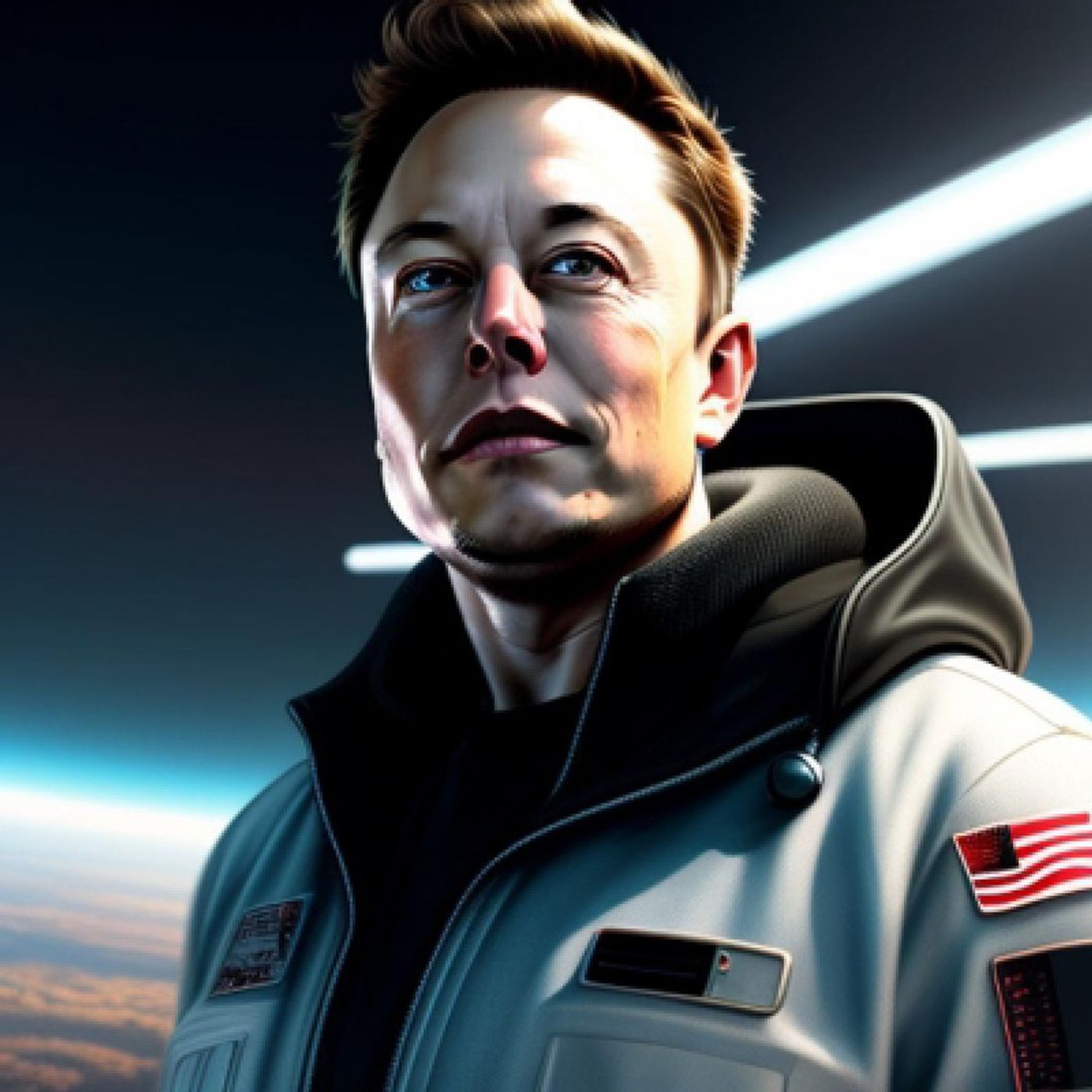
Elon Musk Thinking
Interview Of Elon Musk Talking About Mars Exploration!!!
00:41:01
Interview Of Elon Musk Talking About Mars Exploration!!! #ElonMusk #Mars Follow me on X https://x.com/Astronautman627?t=RFQEunSF2NwRkCOBc6PkkQ&s=09
Loading summary
Transcript74 lines
- [00:01]
Advertiser
Weight loss. It needs to be fast and sustainable. Noom GLP1 starts at just $149 and ships to your door in seven days. Take it from Marcos, who's loving his journey with Noom GLP1.
- [00:11]
Elon Musk
I'm getting to where I want to be.
- [00:13]
James Burke
I'm in such a good place right now and I'm very confident that I'm.
- [00:17]
Elon Musk
Going to be able to continue this.
- [00:19]
James Burke
Weight loss, this journey and really make a true lifestyle change.
- [00:23]
Advertiser
Don't believe it. Take it from Cam, who's gaining more confidence with Noom GLP1.
- [00:28]
Carrie Fayette
I really am starting to feel better. Like I feel a lot lighter, I feel a lot happier, I feel a lot more confident. I just feel a lot more like myself. I don't feel so bogged down every day.
- [00:40]
Advertiser
$149 GLP1s now that's Noom smart Noom the smart way to lose weight. Get started with NoomGLP1@noom.com that's n o m.com real Noom users compensated to provide their story. Individual results may vary. Not all customers will medically qualify for prescription medications. Compounded medications are not reviewed by the FDA for safety, efficacy or quality.
- [01:00]
Mindful Therapy Group Representative
Life can be hectic and managing your mental health is more important today than ever before. That's why Mindful Therapy Group's mission is to take the pain out of finding a therapist. Whether you need talk therapy, psychological testing, even medication management, Mindful has you covered. Our mental health providers are here for you with both in person and telehealth options to get you seen in as little as 48 hours. Mindful therapy Group also accepts insurance. Join us to start your journey to a healthier and happier you. Visit mindfultherapygroup.com to get started today.
- [01:32]
Interviewer
Well, Elon, you need no introduction, but for those who don't know, you are the founder and Chief Engineer of SpaceX and the Mars Society and we're delighted to have you back. We've got 9,000 people registered to hear you today.
- [01:48]
Elon Musk
All right, cool. Sounds good. Okay, so we should like change this perspective. I'll see if I can change the perspective. Is that better or is that worse?
- [01:57]
Interviewer
I think you were better before.
- [01:58]
Elon Musk
Okay.
- [02:01]
Interviewer
Okay, so listen, why don't we just start out with the basics? You started SpaceX to make humanity multi planetary.
- [02:11]
Elon Musk
Yeah.
- [02:11]
Interviewer
Why? Do you see that as a critical goal?
- [02:15]
Elon Musk
Yes. I think we want to be on track to become a multi planet species and a space bearing civilization in order to find out what the universe is all about, like what you know and ensure the continuance of consciousness as we know it. As far as we know, we're the only life. I mean people think there's aliens, but honestly I haven't seen any sign of aliens. So as far as we know we're the only, the only life, whether we could be the only life. So let's put it that way. And we need to take the set of actions that are most likely to make the future good and result in the continuance of consciousness as we know it.
- [02:53]
Interviewer
Okay, so, okay, well obviously your means to that end is to open the space frontier with reusable launch vehicles. And you've gone through some partially reusable ones and now it's starship. Can you explain basically the line of thinking that led you to the starship design?
- [03:15]
Elon Musk
I figured out what I need to look at. Just look like I'm looking at the camera. So let's see. Well, on the starship front we've gone through many iterations starting from not really knowing how to build rockets at all with Falcon 1 and having four failures actually in reaching orbit. Yeah, sorry, three failures. Then the fourth one got to orbit. So fourth one's a charm. So only barely survived. I was at zero cache basically when we got that fourth one to orbit. And if that fourth one hadn't worked, we would have been curtains. So it's definitely not been smooth sailing. It's been a very difficult ride with just a lot that has been discovered along the way. I mean, just trying to figure out what questions to ask about the design was quite difficult. I think it's helpful to have as the objective the creation of a self sustaining city on Mars. I think this has to be the objective. Not simply a few people or a base, but a self sustaining city. The acid test really is if the ships from Earth stop coming for any reason. Does Mars die out for any reason? It could be from banal or it could be nuclear Armageddon. Doesn't matter if the, if the ships stop coming for any reason. Does the city on Mars die out? If it does, we have not. We're not in a secure place. So I mean I think this really might come down to, you know, on the great filter front is this. Are we going to create a self sustaining city on Mars before or after World War three? And I think the probability of it being created after World War Three. Hopefully the. Hopefully there's never World War three, but of after is low. So we should try to create, let's make the city self sustaining before any possible World War 3. This is just a risk. This is not, you know, I think sometimes people have difficulty dealing with probabilities. It's either this way or that way. But it's really, we just face a series of probabilities and there's some chance that we will have a giant war or through a volcano or a comet might hit the earth or we might just self extinguish in some. It might be more of a, more of a whimper than a bang. And frankly, right now civilization is not looking super strong. You know, this is looking a little rickety right now, to be frank.
- [06:05]
Interviewer
Would you say that it's more than a lifeboat? That it would actually make you civilization more robust, clearly more able to divert asteroids from hitting the earth and otherwise help?
- [06:24]
Elon Musk
Yeah, it's not an escape vehicle. It's simply something that it's not like you can, I mean, unless Mars is made self sustaining, which will probably not happen in my lifetime, it is certainly not. It's meaningless to have an escape, you know, lifeboat or escape hatch or something if you're simply moving to another place where you will soon die out. That doesn't count. It's not much of a lifeboat really. So this is really about say minimizing existential risk for civilization as a whole. And then having an exciting future that you can look forward to. And a future where we are a space faring civilization and multiplanet species is far more exciting than one where we are not. I mean that's an exciting future. And being forever confined to Earth until some eventual extinction event is depressing and not fun. And we need things that make you want to get out of bed in the morning and be excited about the future. And I think being a space faring civilization is one of those things that everyone can get excited about.
- [07:44]
Interviewer
But can you maybe just kind of lead people on the path that led you from the design from Falcon 9 to Falcon Heavy? But now Starship is rather different than Falcon Heavy.
- [07:57]
Elon Musk
Yes. The engineering, absolutely. I didn't quite answer your original question. You first have to say what is the goal? And once you have what is the goal? You can then measure various designs against that goal. If otherwise you're saying how are you evaluating? Why is one design better than another? What's your goal? It's got to be a goal. So the goal is get enough tonnage to Mars to and enough people to make Mars self sustaining as quickly as possible. So then you say, okay, let's back back out the math on this. We're going to need a lot of, need a lot of Tonnage, maybe, I don't know, 100,000 tons, maybe a million tons. So you can't be faffing around with these expandable rockets. They're a joke. They're absurd. Even Saturn 5 is tiny potatoes we need. Because if you want to get like, let's say first order approximation, a million tons, the surface of Mars inclusive of people, you know that that means probably something around 4 or 5 million useful tons of payload in the, into a low Earth orbit. You know, for every time you get to low Earth orbit, you're gonna get four or five tons, hopefully closer to five. It's, it's, you know, these, this math is, you really start squeezing like tiny percentages. But let's say confidently, if you got five tons to low Earth orbit, you can get one ton to Mars. That's maybe you can get, maybe you only need four. Anyway, the point is you need 5 million tons into Earth orbit to get 1 million tons to Mars. Now let's put this into perspective. Total global capacity to orbit of all expandable rockets is around 5 or 600 tons, I think. And if you said, okay, the world's going to end if you do not increase your capacity, perhaps they could do a thousand tons. Okay, so that's 1 5000th of what's needed. This is ridiculous. You know, it's not Even, you know, 0.1% would be, you know, 1,000th so way less than 0.1%. We have way less than 0.1% of the capability needed to create a. If everyone went full tilt with expendable rockets. Expendable rockets are the absolute, are just utterly stupid, in my opinion. Utterly stupid. They're a complete waste of time. People should stop wasting their time. If you try to sell an expendable plane, people would laugh you out of the room. If you try to sell an expendable car, they would laugh you out of the room. If you try to sell an expendable horse, they would laugh you out of the room and think there's something wrong with you mentally. So all these things are reusable. It's essential to be reusable. Now, creating a reusable rocket, orbital rocket is very difficult. Doing a suborbital reusable rocket is easy. Doing a reusable orbital rocket is hard. Even when a lot of smart people have put quite a bit of effort into it. They might get 2 or 3% of the lift of mass to low Earth orbit and a really epic rocket would get four. I'm not sure. I don't think anyone's ever gotten four. So. But you basically need to have something that in expendable form would probably get about 4% of its payload to order, such that you can spend about half of that 4% on reusability and still net out to around 2% payload or so. You have to make both the booster and the upper stage and the fairing everything reusable with Falcon 9. So with Falcon 1 we did actually attempt to do this. So we had a parachute from the first stage, but really did not appreciate that that first stage was going to hit the atmosphere like a concrete wall. So at first I got pretty mad at the parachute supplier until I realized, eh, it's not their fault, we're just being fools. That thing was exploding as soon as it hit the atmosphere. And you know, so you really got to do something to ease the transition into the atmosphere. At high Mach number, it's very hot and there's a lot of force and a lot of heat. So then with Falcon 9, we made a bigger rocket. And our scale matters here because you do get basically economies of scale. You can't have a tiny rocket, there's a tiny rocket, you basically just end up carrying your electronics to orbit. So your avionics, you know, so in a little rocket, if you're small enough, just your avionics loan ends up being a significant percentage of your payload. And then, you know, if you had a rocket that was, I don't know, trying to get a 10,000 pound rocket, for example, or even a 10,000 kilogram rocket to orbit, I think you would basically get zero payload. Now as you get bigger, the rocket gets bigger, but the brain doesn't get bigger. The brain can stay the same size. So your avionics, for example, become almost 0% of the weight for a big rocket. Then for big rockets you also get gauge advantages. So this is, we're really in the nuances of rocket design and manufacturing here. If things are very small, it's difficult to get your gauge accurate. So basically how thick is the material? Like you want to do castings, for example, there's a minimum gauge or thickness for casting. There's a minimum kind of error bar on the, you know, on this material skins. Even for a composite rocket, you've got, you know, you start hitting granularity issues as you get bigger, you know, you're no longer gauge limited and you can get your percentage accuracy on the thickness of walls and castings can be, can be very good. These are nuances that I think almost no one appreciates but suffice to say that there are advantages to size and you can certainly see this in many walks of life where if you've got a truck that's carrying cargo, it's more efficient to have a big semi truck, not a bunch of little trucks for ships. It would be pretty silly to see container ships or containers going across the ocean one at a time with little outboard motors. That would be silly. You put them on a container ship, you have big ships, not little tiny ships. So anyway, so size matters. It really does. And full reusability matters. So with Falcon 9, after immense effort, we were able to achieve reusability of the booster and we're mostly achieving reusability at this point with the fairing as well. This is a monumental effort. And I think within its architecture, Falcon 9 is close to a local maximum. If you say, you know, gas, generator, cycle, kerosene, oxygen vehicle of this particular size with a 12 foot or 3.6 meter diameter, which is that size because of road transport limitations. So if you go bigger than that, you can't transport it over the road and your logistics costs become extreme. So. But having a long thin rocket is not very mass efficient. You end up having to have thicker skins to take out the bending moment. So and then having like kerosene is not the right fuel. Methane is a much better fuel. You can get higher isp, a specific impulse, basically efficiency. I mean for those who, I think probably a lot of us who are listening know what the rocket equation is. But in simple terms, it's actually very simple. It's like a rocket is going to go further if the gas, if it shoots the gas out of the end faster and if a bigger percentage of its mass is propellant, obvious. So that's what the rocket equation says. So if you gas out faster in the right direction and increase the propellant, the percentage of propellant that's going to get you go allow you to go further. With methane, you can shoot out faster.
- [17:03]
Interviewer
And, and you can make it on Mars.
- [17:05]
Elon Musk
You can make it on Mars for sure. Exactly. So being able to do institute propellant development is. Production is very important. So you don't have to carry your return fuel. With your return fuel and oxygen, it's like rockets are mostly oxygen or oxidizer. So and there's, there's some other subtle advantages with a oxygen methane system in that you can go to a higher percentage, a higher mass ratio of oxygen. So with kerosene you'd be at about roughly two and a half to one oxygen to fuel mass ratio with methane you're more like three and a half to one. And you actually want that higher mass ratio because oxygen is very dense and inexpensive, especially on Earth. So you're gonna, you know, you have all these plants just making oxygen all day long and plankton just making oxygen never do anything. So the cost of oxygen is basically the cost of electricity anyway. So going from Falcon, going from kerosene, which is basically the same AS jet fuel, RP1 rocket propellant grade. Kerosene is just a tighter grade of jet fuel. You want to go from that to something which has, where the gas shoots out faster and that's methane and where institute production of propellant is easier. So that's why the change from kerosene to methane. Methane is just CH4, it's one carbon, four hydrogens. And then the oxygen pairs, pairs together. So you have, it's called O2 because oxygen pair bond and obviously you know, all this stuff I'm just basically.
- [18:56]
Interviewer
Together, large size, twice the takeoff thrust of a Saturn V. But yes, about the same payload. But that gives you reusability, much cheaper in situ propellant. It all is coherent. And so let me ask you the thing that I think everybody wants to know, which is when, when are we going to see starship do a high flight to stratosphere, when to orbit, when first payload to Mars, when first humans to Mars.
- [19:29]
Elon Musk
All right. Well it's not like we're obviously venturing into unknown territory. So it's not as though I, I have all these secret dates and I'm just keeping them from people. So these are just guesses. Obviously. I'm 80 to 90% confident that we will reach orbit with Starship next year. I think probably 50% confident that we'll be able to bring the ship and booster back. That's like, that's more of a dicey situation. We'll probably lose a few ships before we really get the atmospheric return and landing right. We might lose, hopefully we don't lose it. Hopefully we don't lose any boosters because that's a lot of engines. Our initial booster flights will just have maybe two to four engines, not 28, 28 lot of engines. So yeah, and then I think we'll probably be in doing high volume flights I think probably in 2022. So a couple years from now I'm trying to make sure that our rate of innovation increases, it does not decrease. This is really essential. In fact, if we do not see something close to an exponential improvement in our rate of innovation, we will not reach Mars like A pure linear doesn't get there, I'll be dead anyway before it gets there. If it's pure linear, if it's exponential, I think we could get to Mars. We could probably send an uncrewed mission there in maybe four years. You know, there's a MOS conjunction every 26 months. There's one this year. So that means in a couple years from now is another one, and then four years from now is another one. I think we've got a fighting chance of making the second MOZ transfer window.
- [21:40]
Interviewer
So one thing that is really amazing about SpaceX to those of us who have experience in the aerospace industry is the rate of innovation. You know, okay, last time you spoke to the Mars society convention was 2012. Since then you've made the Falcon 9 reusable, introduced Falcon Heavy, crew Dragon, a satellite constellation, and you're in the middle of developing starship. So what is your, you know, what would you say is your methodology that allows you to innovate so swiftly?
- [22:25]
Elon Musk
I don't really know. We're focused on, like I said, it is important to have that, have the objective. Right. That's why I was talking so much about the importance of making Mars a self sustaining building a self sustaining city on Mars. If that's the objective, then obviously, you know, just putting some satellites in orbit or there's not that, that's not important. You have to achieve full and rapid reusability. Amph size, full and rapid reusability is only relevant to the degree it's rapid and complete. And then you also have to do orbital refilling. This is essential as well. And then propellant production on Mars, also essential. So you know, with that as the goal then, you know, that means that creates, I think a good forcing function for radical innovation. Because in the absence of radical innovation we have no chance of meeting that goal. Whereas if I go simply, you know, defeat Lockheed and Boeing or something like that, we would probably achieve.
- [23:41]
Interviewer
You've already done it.
- [23:45]
Elon Musk
That really wasn't even a thing. You know, I wish it was like they're not really trying to do, not even trying to do reusability, which is bizarre because they make planes that are reusable. So I mean if they, if they talk to the, you know, if they talk to one of their customers buys or a Lockheed fighter jet or Boeing aircraft, like hey, we're going to sell you a 737, it can be used once and it's not 737 Max. But that turns out that was a single user plane at times. But you really, it would be an absurd thing for them to sell a single use aircraft, but they feel quite comfortable selling a single use rocket anyway. But if our goal was simply we're going to have be the leaders in launching the conventional satellites that exist, we would probably approach that on sort of a logarithmic basis where you know, you'd get there and you sort of slowly make progress towards doing 10 launches a year, 12 launches a year, while they do six or something like that, I don't know. But since the goal is hey, we need to make life multi planetary before it's too late and time really matters. So we're, it's like we're shooting for Mars, not just the moon. It's not much shoot for the moon, shoot for Mars and then, and then the, you know, these competitive things are kind of small things along the way. Unless somebody else is shooting from Mars, they will not be competitive with something as pedestrian as launching a few satellites into Earth orbit.
- [25:27]
Interviewer
So how can the Mars Society help you?
- [25:31]
Elon Musk
Well, I do think there's, in order to, for there to be a self sustaining city on Mars, we're going to need an intersection of sets here. One set is the set of people that want to go and can either find sponsorship, they can either afford it themselves or find government sponsorship or take out a loan or whatever the case may be. But somehow you've got to have the set of people who want to go to Mars and can come up with a fund somehow to do that. And then I should say there's two sets. Desire to go to Mars and can afford to go to Mars. When desire to go to the people who want to go to Mars and the people who can afford to go to Mars. When that intersection of sets reaches a million roughly, then I think we will have this city on Mars. So we need both the motivation and the, you know, we need both the means and the way. It's like we need people to want.
- [26:44]
Interviewer
The will and the way.
- [26:45]
Elon Musk
The will and the way. Yes, exactly, the will and the way. There's a will is way, but in this case we need will and a way. So when the will and the way intersect, then we will have be a multi planet species. The will and the way must intersect. So I think the Mars society can really help with the will.
- [27:02]
Interviewer
Okay, you provide the way, we'll provide the will.
- [27:05]
Elon Musk
Yes, exactly. Okay.
- [27:07]
Interviewer
Now your assistant Jen told me earlier that you have a hard cutoff at the half hour. Is that true or do you want to stay and take some questions from the Audience?
- [27:18]
Elon Musk
Yeah, we could do maybe five, ten minutes of questions.
- [27:22]
Interviewer
All right, great. So we've got hundreds of questions. So with the. Jim, do you want to read a question or two?
- [27:34]
James Burke
Yeah, sure thing. Hi Elon, My name is James Burke, I'm from Seattle, Washington. Where's the best place to land on Mars, do you think?
- [27:43]
Elon Musk
Yeah, actually I'm not super sure I can tell you what the criteria are that you'd want. You'd want to be, I think the short answer is mid latitudes, probably on the north. So you want to be close to ice. You don't be too far away from the sun so you can get solar power and you want to land at a low altitude so that you can take maximum effect of atmospheric breaking. What do you think?
- [28:17]
James Burke
I like Millis Chasma. It's a nice little area at the bottom of Valles Marineris. The air pressure is high.
- [28:23]
Elon Musk
Okay, is there a lot of ice there?
- [28:27]
James Burke
There's ice around there. We'd have to look for it though. Okay, that kind of brings me to my next question and I'm going to turn it over to Carrie to ask you 1, how would you prioritize like missions like 2 through 10, are you going to focus on exploration or building up the infrastructure or science?
- [28:47]
Elon Musk
We're going to. I think the first order of business is build a propellant plant. I mean we can for sure lob out a bunch of droids, you know, that's no problem. I think. Why not? You know, we're going, you know, and probably if anyone wants to put their droid on, we could just take it and you know, it's like, hey, it's basically a remote control car, solar powered remote control car. And we could provide the communication relay. So you know, you could just basically connect to your car from your computer at home and you know, cruise your electric. You could have legs too matter. Your robo device slash car. That would be pretty cool. And there's a lot of people worried about like, you know, life contamination. It's like, listen, anything that can survive on Mars is very so freaking tough. It's insane that it is cold and there's like a lot of UV radiation and it's not going to be too worried about anything we sent from Earth. Like that way it's tougher than anything on Earth. So. But I think the first order of business is we've got to build up a plant to make propellant. And so we've got need a lot of energy. We got a mine, some ice and we've got you got CO2 from the atmosphere, so from the ice you got the H2O. Combine that H2O with the CO2, you got CH4 and O2. But that's a lot of energy and be quite hard I think, to make that propellant plant reliable. So but that's the primary order of business. And then we close look around and see if we can learn anything from a scientific standpoint.
- [30:45]
James Burke
Carrie, do you want to go next?
- [30:48]
Carrie Fayette
Thank you, James. I'm Carrie Fayette, I live in Denver, Colorado. Thank you for joining us today, Mr. Musk. We do have a lot of questions from 13, 14 year olds. I'm just going to pick one and ask you. It's from teenager and her name is Dara and she wants to be an engineer and build starships and robots and her dream is working for SpaceX. What should she focus on to be an engineer?
- [31:19]
Elon Musk
Well, I think there's all kinds of engineering that's needed. So you don't have to be an aerospace engineer. You could be in electronics, mechanical engineer, electrical engineer, it could be software engineer. I mean there's a lot of engineering, basically almost any kind of engineering. We'll need chemical engineering, I think also for figuring out how to make a good propellant depot or say propellant production plant. And yeah, I think physics in general is a good background for thinking. I just generally recommend people take physics courses because physics has the best tools for critical thinking.
- [32:05]
Carrie Fayette
Thank you, Elon. James.
- [32:07]
James Burke
Yeah, thanks Kerry. Another question. The Boring company. Now is that just kind of an outfit to build tunneling machines that can work on Mars?
- [32:19]
Elon Musk
No, the Boring Company actually started as kind of a joke. And I, for a lot of times people would ask me what do I think the opportunities are out there. And for, I don't know, five years or more, I kept saying can someone please start a tunneling company? Because I think tunnels have a lot of opportunity for alleviating traffic in cities and just improving quality of life overall. I mean there's a lot of streets you could turn into parks. Certainly you wouldn't need parking. You could just park cars on the ground. So, and I just, everyone thought I was joking and I was, and I was like, well, I guess we'll see what it takes to drill a tunnel. Dig a tunnel. And all these like so called traffic experts and like haven't really made much progress. You know, cities like LA and DC are still a traffic nightmare. I'm like, okay guys, well if you got such great ideas, why is this little traffic nightmare? So if you build tunnels, you've got to go 3D somehow. Either underground or above ground, like either air or ground. And the problem with air is like, you know, anything that can carry persons can generate a lot of noise and a lot of wind force. So and could fall in your head and also kind of not be good for privacy and like, you know, sitting in your backyard and someone like flying over you is like not that cool. So the tunnels are working, all those things. They're also weatherproof, privacy issues and safe anyway. They would make a big difference to traffic. And we have the first production tunnel or useful tunnel in Vegas that's going to open in a month or two. So a few months, I guess, and hopefully we'll be ready for prime time around the consumer electronic show. So. And now for Mars. I think tunnels and digging in general is good, but you need to build a very light system compared to what would matter on Earth. You don't really care all that much about mass on Earth. You care a lot about mass going to Mars.
- [34:26]
James Burke
Is it fair to say that you're learning some techniques that might apply to Mars with the boring company?
- [34:32]
Elon Musk
Yeah, yeah, probably.
- [34:36]
James Burke
When do you think Starship will be able to be demonstrating refueling in low Earth orbit?
- [34:43]
Elon Musk
I think we got a shot at doing that in 22, about two years.
- [34:49]
James Burke
And then when do you guys think you'll have a Moonship prototype?
- [35:00]
Elon Musk
Probably two or three years. As soon as you've got orbital refilling, you can, you can send significant payload to the moon. Like significant meaning 100 tons of useful payload at a shot.
- [35:14]
James Burke
So then from there, I think you mentioned Mars is a couple years after that.
- [35:20]
Elon Musk
It's only a couple years after that because the Mars transit window is every 26 months. Like I think we maybe have a shot of sending or trying to send something to Mars in three years, but the windows is four years away because of the being in different parts of the solar system.
- [35:40]
James Burke
Kerry asked a question from a young person I'd like to also ask, do you have any tips for young people who love Mars but don't know how to help with the settlement of Mars?
- [35:50]
Elon Musk
Well, I think definitely I, you know, anyone who is a strong advocate for Mars, I think this really makes difference. You know, a lot of times it's not even. People aren't even thinking about it. And you know, you can talk to people at a party and they, or talk to friends. They're like, it's just not even a topic of conversation. So I think it could really help if everyone out there who thinks this is important for the future of humanity and consciousness as a whole to make it part of what people are thinking about. Bring it up at parties and talking to friends and online. It's like it should be a thing that we do. And I think it's worth, you know, maybe 1% of our resources at least. And that's not going to fundamentally change things, you know, quality of life, if we have one, if we spend 1% of our resources, you know, much less than healthcare, obviously, maybe probably even less than we spent on cosmetics, frankly, then that would be enough to make lipology planetary. But we really need to make this a thing people talk about at least 1% of the time and that would really matter. Like as we were talking about earlier, we need the will, which is we need a critical mass of people wanting to make it happen. And then we need the way. And SpaceX is going to try hard to provide the way. And then once we show that there's a way, probably there'll be other companies that also try to do it as well. So we need the will in the way they can provide either. The will is extremely important. Makes a huge difference.
- [37:27]
James Burke
What's the coolest part of starship development?
- [37:33]
Elon Musk
Well, I guess the coolest part of starship development is working with just a great team of engineers and coming up with interesting solutions. I think it's just fundamentally enjoyable if you're working with a lot of good smart people creatively towards solutions that have never existed before. That's very rewarding. So I guess probably I like that the most.
- [38:00]
James Burke
Can you talk a little bit about how starship could be used for other destinations in the solar system like Venus and the outer planets.
- [38:09]
Elon Musk
Starship is definitely a general generalized ship. It basically can, it solves for transport anywhere in the solar system that where there is a solid surface to land. So if you land there, we're going to take there. We're also actually go into the atmosphere of Venus, for example, just like going to orbit and perhaps to the upper atmosphere. Venus's atmosphere is extremely dense, also quite hot. So because that dense atmosphere you could have something, you could have a kind of like some sort of dirigible, you know, kind of some kind of like, like things that could float on Venus, that could not float on Earth in the atmosphere because of the dense atmosphere. So you could go to Venus, I mean it's not a super friendly place and then like Mercury, super hot. But I think that we could go to Ceres or any of the asteroids, the moons of Jupiter, although we quite high radiation around there and then out To Saturn, you know, eventually getting out to, you know, these sort of kiper belt, Earth cloud and that kind of thing, the outer solar system. So starship, once you have propellant depots, you can kind of like planet hop or moon hop around the solar system. It's not a vehicle that would enable us to go interstellar, but it's. That's a tough one. But we need to make the leap of going to another planet first. Once we are multiplied species, we will create a forcing function for the rapid improvement of spaceflight. And we'll figure out new technologies that will ultimately allow us to go to other star systems.
- [40:11]
Interviewer
What do you look for in the people you hire, especially the engineers.
- [40:17]
Elon Musk
Really just look for evidence of exceptional ability. So it's not, or at least aspirationally, like sometimes these things get messed up in recruiting or the recruiting fault of being ends up being wrong. Like I sometimes wonder with Tesla, if Nikola Tesla applied to Tesla, would we even give him an interview? It's not fair. You know, this guy came from like some weird college in somewhere in Eastern Europe. He's got some odd mannerisms. Now. We don't know if we should give an interview. Like, I worry that that's actually what we do. Instead of like, right, it should be like, man, Nicola Tesla, this kid's super smart. What does he want? We'll pay him anything. That should be the reaction if Nikola Tesla applies, you know, to Tesla ironically. But so I can tell you the intent is we're looking for evidence of exceptional ability. And it really doesn't matter if you want to graduated high school or college or anything. We're just looking for evidence of exceptional ability such that it would be a good predictor for doing exceptional things. SpaceX.
- [41:24]
Interviewer
All right, do you have some more questions from the audience there, Jim?
- [41:27]
James Burke
I've got one. So have you thought about communication networks between Earth and Mars and kind of you're working on Starlink? What about like an Internet around Mars? Have you thought about that?
- [41:39]
Elon Musk
Yeah, I mean, you could certainly do some variants of Starlink. This probably have to be the last question because I got a bunch of things piled up. But yeah, you could just do it version Starlink around Mars and then you just need a big laser coming from Earth. Probably want it to be in orbit so it doesn't get atmospheric diffraction or attenuation. You want to go from a big laser from Earth orbit to Mars orbit. And then you're going to need some relay stations for when Mars is on the other side of the sun. So you can't just shoot a laser through the sun. All right. Thank you.
- [42:17]
James Burke
Thank you so much, Elon. We're all pulling for you. Good luck.
- [42:21]
Elon Musk
Much appreciate it. I just, like, thank you to all the people out there that are fighting hard for the cause of Mars. There's not that many, and we need more. Thank you. All right.
- [42:30]
Interviewer
Thank you.