← Elon Musk Thinking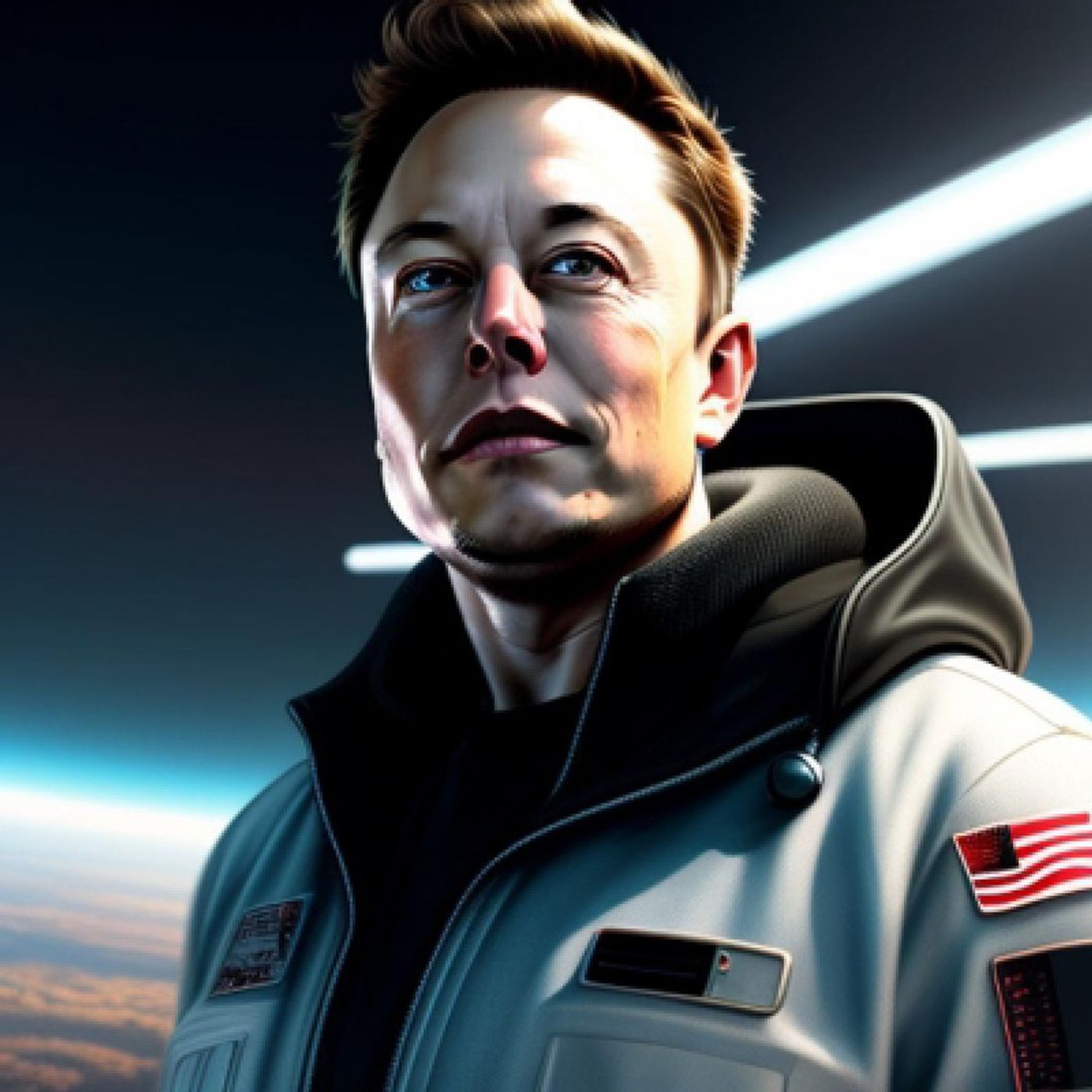
Elon Musk Thinking
NVIDIA CEO Jen Hsun Huang Interviews Elon Musk, 10 Years Ago!!!
00:18:57
NVIDIA CEO Jen Hsun Huang Interviews Elon Musk, 10 Years Ago!!! #ElonMusk #JenHsunHuang Follow me on X https://x.com/Astronautman627?t=RFQEunSF2NwRkCOBc6PkkQ&s=09
Loading summary
Transcript63 lines
- [00:01]
Elon Musk
Now, you know, we made it a point not to rehearse anything. And so I just want to just as a, as a, as a, just reminder, you're my last thing.
- [00:12]
Jensen Huang
Okay?
- [00:13]
Elon Musk
Okay. Could you not ruin the whole thing?
- [00:15]
Jensen Huang
All right.
- [00:15]
Elon Musk
All right. So speaking of that, speaking of that, I think everybody would like to, before we get into all of the good stuff.
- [00:23]
Jensen Huang
Okay.
- [00:23]
Elon Musk
And they want to go directly to the juicy stuff.
- [00:27]
Jensen Huang
Okay, okay.
- [00:27]
Elon Musk
And the juicy stuff is this. Look, you know, you were quoted as a saying that, that artificial intelligence is more dangerous than nuclear weapons.
- [00:40]
Jensen Huang
I said potentially.
- [00:44]
Elon Musk
And, and, well, it goes on. It goes on. And it does go on. You say that it's like summoning the demon.
- [00:51]
Jensen Huang
Could be.
- [00:53]
Elon Musk
How do you consolidate, rationalize that conflict between artificial intelligence? Of course, deep learning, that obviously is going to be very important to self driving cars. How do you think through that?
- [01:03]
Jensen Huang
Well, I don't think we have to worry about autonomous cars because that's sort of like a narrow form of AI and that's something that I think is very difficult actually. I think to do autonomous driving to a degree that's much safer than a person is much easier than people think. Yeah, right. And yeah, I think it's going to just become normal. Like it'd be like an elevator. Like they used to have elevator operators. And then we, you know, we developed some simple circuitry to have elevators just automatically come to the floor that you're at and you can just press the button. Nobody needs to operate the elevator. The car is just going to be like that.
- [01:47]
Elon Musk
And the elevators these days are even smart. I mean, it knows where to position an elevator so that if you were to need an elevator, it's pretty close to you. Cars in the future will be pretty smart about that too.
- [01:58]
Jensen Huang
Yeah, you'll be able to tell your car, like, take me home, go here, go there, anything, and it'll just do it. Yeah, at an order of magnitude safer than a person. In fact, in the distant future I think it's probably going to be people may outlaw driving cars because it's too dangerous. You can't have a person driving a two ton death machine.
- [02:25]
Elon Musk
Now, if we have the right type of intelligence in a car, we also don't have to make the cars that heavy. I would think cars are getting heavier and heavier and it's got more and more stuff in it because it needs to survive all these incredible collisions and things like that. I wonder if we were to design cars that just simply don't collide as much. I wonder if we could relax on some of Those laws and make cars more fuel efficient and lighter and better to drive.
- [02:52]
Jensen Huang
You could definitely do that. If you could count on not having an accident, then you can get rid of a huge amount of the crash structure and the airbags. We're a long way from that because there's always going to be some for a very long time. There'll be some amount of legacy car cars on the road. And I think it is important to just appreciate the size of the automotive industrial base. It's not as though when somebody makes an autonomous car that suddenly all the cars will be autonomous. It's like there's 2 billion of them. So the total number of cars and trucks on the road is 2 billion and climbing. The capacity of car and truck production is about 100 million a year. So if tomorrow all cars were autonomous, it would take 20 years to replace the fleet. Assuming the fleet stayed the same size. Arguably it could get smaller if things are autonomous. But still it's still maybe 15 years or something. And it's not all going to transition immediately. It'll take quite a while. And it's the same for electrification of cars, changing that industrial base to be electric. If all cars were suddenly, if all cars produced were electric tomorrow, it would still take 20 years to replace the fleet. And right now it's less than 1%.
- [04:15]
Elon Musk
You mentioned just now about self driving cars being easier than people think. Now you have your vision of how to go from where we are today. My P85D has lane detection and so it gets a little bzzz, you know, when I get close to a lane it detects the speed signs and it uses computer vision technology to do that. And that's today's ADAs. What is your roadmap? How is that different than other people's roadmap? How do you think about how to get to self driving cars?
- [04:48]
Jensen Huang
Yeah, well, you kind of need the hardware foundation, the sort of sensor and computing foundation. And then you can keep uploading new software. At least you can with a Tesla because it's always connected. So the car that you have, you'll notice the features are steadily improving. We now have active cruise control, so it'll use radar and camera fusion to track the car in front of you. It's also looking at with a some of the things that are coming out. It looks at the brake lights so it anticipates that the car's got the brake lights are active. It's going to get basically smarter and smarter even with the current hardware suite. So the current hardware suite is 360 degree ultrasonic sensors that go up to about just over 5 meters. It's a forward camera and a forward radar. So we'll make. Even with just that sensor suite, we can actually make huge progress in autonomy. We can certainly make the car steer itself on a freeway and do lane changes. It's really autonomy is about what level of reliability and safety do you want? Even with the current sensor suite, we could make the cargo fully autonomous, but not to a level of reliability that would be safe in, say, a complex open environment at 30 miles an hour where the lane markings aren't there and children could be playing and things could be coming at you from the side. So in order to solve that, you need a bigger sensor suite and you need more computing power. And I think what you're doing actually with the Tegras in the future is super interesting and will really be a big enabler for autonomous driving. So I think Nvidia is doing really great stuff on that front. I appreciate that.
- [06:40]
Elon Musk
And so some of the challenges that you see, what are some of the technological hurdles that. And there's all kinds of researchers in the room, there are all kinds of engineers in the room. What are some of the technological hurdles that you think are really important for us to go tackle? Surely we're going to get to some better cruise controls on highways, but beyond that, what are some of the things that you would like us to go focus on to tackle for the car industry?
- [07:09]
Jensen Huang
Well, where it gets tricky is just that sort of urban environment around 30 or 40 miles an hour. Right now it's fairly easy to deal with, say things that are sub 5 to 10 miles an hour, because we can do that with the ultrasonics. We just make sure it doesn't hit anything, because you can always.
- [07:31]
Elon Musk
Which is the right thing to do, largely.
- [07:33]
Jensen Huang
Why would you want to hit anything with your car?
- [07:34]
Elon Musk
Exactly.
- [07:35]
Jensen Huang
So at 5 to 10 miles an hour, you can stop within the range of the ultrasonics and then from let's say 10 miles an hour to call it sort of 50 miles an hour, that area in complex suburban environments, that that's where you can get a lot of unexpected things happening. Like let's say there's a road closure or a manhole cover open. Children playing is a big issue. Bicycles, once you get about 50 miles an hour and you're in kind of a freeway environment, then it also gets easier again. The set of possibilities is much reduced. So highway cruise is easy, low speed is easy, intermediate is hard. And so being able to recognize what you're seeing and make the right decision in the suburban environment in that 10 miles an hour to 50 mile an hour zone is the challenging portion. But I really think, I mean, this may sound a little complacent, but I almost view it as like a solved problem. We know exactly what to do and we'll be there in a few years.
- [08:48]
Elon Musk
Right. Just like Mars. But that's not quite as. That's kind of the spirit of innovators. I mean, in a lot of ways, in your mind, you kind of see things solvable or arguably solved. And a lot of it is really about getting there.
- [09:10]
Jensen Huang
Yeah, we'll take autonomous cost for granted in quite a short period of time. It's amazing how comfortable you get and how quickly you get comfortable with it.
- [09:21]
Elon Musk
Now, what about government? Government policies? Like, one of the things that I would like to do is I would just like to keep working on my email as I'm driving to work.
- [09:29]
Jensen Huang
Sure.
- [09:30]
Elon Musk
There's a 30.
- [09:31]
Jensen Huang
Some people will do that already.
- [09:35]
Elon Musk
Like I said, I would like to do it without breaking the law. So where do you think government intervention falls in some of this stuff? Because obviously if your car drives by itself and it does it even better than people, you would like it to drive by itself, but largely the laws don't allow you to do that today.
- [09:56]
Jensen Huang
Right, Absolutely.
- [09:57]
Elon Musk
So how do we cross that bridge and how do you think about government intervention Regulations?
- [10:02]
Jensen Huang
Right. So I think from the point at which a car is definitely safer than a person, there's probably at least another two or three years after that before regulators will allow that to be the case because they will want to see a large amount of statistical proof that it's not merely as safe as a person, but much safer. So I think what you can do is you can run it in shadow mode and essentially say, okay, this is what the computer would have done in all these circumstances. And was there a crash or was there not? Like what are the false positives, false negatives, and then achieve a large population group and then make a really clear statistical argument with the regulators and then they're going to digest that, observe it for a while, see if they agree with it, and then I think they will. Because the evidence will be overwhelming.
- [10:56]
Elon Musk
Yeah, and the evidence is actually already quite overwhelming that if you, if you would have noticed a brake light in front of you on the highway and you didn't crash into a rear end collision. But a lot of lives are safe, you know, ideally, hopefully people don't overreact with this unknown technology and prematurely regulate no Premature regulations.
- [11:23]
Jensen Huang
Well, I mean, that was a joke. I think when it comes to public safety, I think there's an argument for being quite cautious and making sure that things are okay before there's a change. And I don't think it's the case that right now there's a fully autonomous system and regulators are not approving it. That really be a substitute for people. But there will be in a few years.
- [11:55]
Elon Musk
Now, as we get more computerized technology into these cars, this car becomes really a software defined car. I mean, a lot of your engineers are software engineers. I mean, that's absolutely one of the great things about Tesla. You guys right here in Silicon Valley, you're rich with software engineers and you have that computer sensibility about architecting a computer, properly designing the software, properly designing the software for many generations of cars. So it refines and gets better and better. And it has been getting better. I mean, the software from the first time you sent me my Tesla to the now, it's just like it's unrecognizable software.
- [12:29]
Jensen Huang
Right. Big improvements. I mean, that's why the first thing we try to do is establish the hardware platform, make sure that we have the sensors and compute power. And so we do that first, even though the software is only taking advantage of a small percentage of the sensors and compute power. And then we do continuous updates to make the car more and more capable. And we're going to see a lot of that happen later this year. If I didn't have an announcement on Thursday morning, I would be saying a lot more. But yeah.
- [13:04]
Elon Musk
The audience doesn't understand why they have to wait until Thursday morning. You tweeted it already. You're announcing you're going to do an ota. What kind of announcement is that? I'm going to do an OTA on, on Thursday. That's like a new product announcement these days.
- [13:16]
Jensen Huang
It's just, it's just that. Well, it's just saying that there's going to be a call on Thursday morning and I'll describe what's going to be in version 6.2 for anyone who's interested.
- [13:25]
Elon Musk
That's so awesome though. I'm interested. I get excited every time I get an ota and it's, you know, one of the things that was really interesting is in the beginning, when we first built the first Tesla together, the Tegra in it we thought was more than enough. And recently you said, can we just squeeze more performance out of that platform? And it just happened in literally two years, you know, several versions of your Software updates. All of a sudden the computing platform is not powerful enough.
- [13:52]
Jensen Huang
Right.
- [13:53]
Elon Musk
And it's because you want to add more features. And a lot of features these days are based on software.
- [13:57]
Jensen Huang
True.
- [13:57]
Elon Musk
Yeah. And so one last question, and it has to do with, I guess, something that a lot of people are very concerned about, which is your car becomes a software platform and software platforms get hacked. How do you think about that? How do you think about security? And what are some of the things that we could do to try to make the car more resilient to security attacks?
- [14:20]
Jensen Huang
Yeah, I think that that becomes really important when the cars are fully autonomous. I mean, the way the cars work right now, every system in the car, it's assumed, could actually have a mechanical failure of some kind or a logic failure, a fundamental logic failure. So you can always overwhelm the braking of the car with your foot and you can overwhelm the steering wheel with your hands. But when there isn't a steering wheel or there isn't a brake pedal or something like many years from now, then it's really dangerous. But even as it is right now, what we spend most of our time on is making sure that it's very difficult to do a multi car hack if you have direct access to a car. Just like if you've got direct access to a computer or even a conventional car, you can do a lot of things to it. That's less of a concern than somebody being able to hack an arbitrary car or multiple cars. So that's what we focus our energy on is making sure that, that in that way it's a lot like a cell phone or a laptop, you focus on making sure that they can't or that it's very difficult for there to be any kind of system wide hack. So we put a lot of effort into that and we have third parties try to attack it. And then certain parts of the car at the very fundamental level, like the drive unit controller or the steering controller, have an additional level of security. So somebody may be able to hack something that's cosmetic, but it's much harder to hack something that's actually physically dangerous. There's multiple levels of security.
- [16:03]
Elon Musk
So this way, if you were able to penetrate maybe the infotainment system, it doesn't allow you quickly as a result of that.
- [16:10]
Jensen Huang
Right. It may display a funny message or something, but you would not be able to then control the steering or the motor.
- [16:17]
Elon Musk
Yeah. Well, the future of cars is so exciting and the work that you guys are doing are so exciting and it's great to see you guys pioneering these computerized cars. I mean, a lot of people think about Tesla as the electric car, but I think it's obviously more than that. It's an electric car, but it's a whole computer platform on top of that.
- [16:36]
Jensen Huang
Yeah, I think Tesla's, Tesla's sort of the leader in electric cars, but I think will also be the leader in autonomous cars, at least autonomous cars that people can buy. And so if there's anybody who's interested in working on autonomous cars, we'd love to have you work at Tesla, by the way. So we're going to put a lot of effort into automotive autonomous driving because it's just going to be the default thing and it could save a lot of lives.
- [17:05]
Elon Musk
Yeah, to save a lot of lives. And hopefully one of these days it would be nice if Nvidia's campus has no, no parking lot. It drops us off and it meanders off to a place where the land's a little cheaper and parks a whole bunch of cars there. And when it's time to go home, we summon it to come.
- [17:22]
Jensen Huang
It will be extremely transformative, that's for sure. But yeah, I mean, when it comes to AI, I'm not really worried about narrow AI like autonomous cars or a smart air conditioning unit at the house or something. It's more like sort of the deep intelligence stuff. That is where we need to be cautious. I actually think there's many potential flavors of AI and it's odd that we're so close to the advent of AI. It seems strange that we would be alive in this time.
- [17:57]
Elon Musk
Well, come back every year, come back every year and you'll see the work that this group is going to do. I mean, there's so much deep learning work being done here. You have a lot of engineers here as well and it's fantastic to see the whole community focused on advancing this field. And along the way we're going to spin off a whole bunch of new capabilities. As you know, that's going to make cars just safer and more fun to drive long before we have to get to essentially a self driving car. There's going to be a lot of versions along the way. That's just going to bring joy to a lot of people.
- [18:28]
Jensen Huang
Yeah, absolutely. I just hope there's something left for us humans to do.
- [18:32]
Elon Musk
Well, I'm not going to let, let go of my steering wheel. You know, I've got mine on, on the craziness mode and the sport steering mode. Is that the way you have it? You, you get driven to work now?
- [18:43]
Jensen Huang
No, no, I. Well, I drive half the time, actually.
- [18:47]
Elon Musk
And which mode do you have it in?
- [18:48]
Jensen Huang
I always have it in the same mode.
- [18:50]
Elon Musk
Yeah.
- [18:51]
Jensen Huang
All right.
- [18:52]
Elon Musk
All right, Elon. Thank.