← Elon Musk Thinking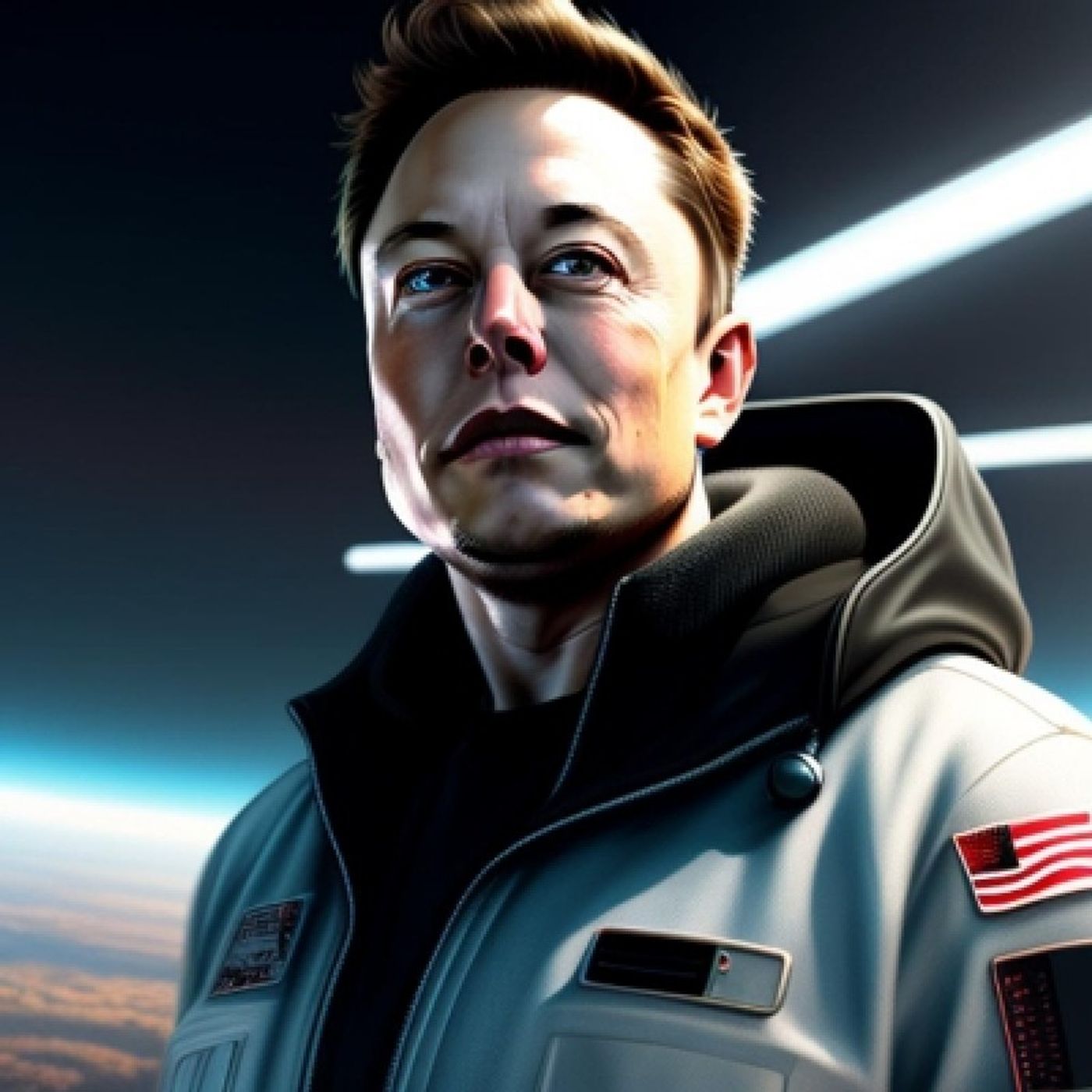
Elon Musk Thinking
Part 1: Elon Musk Story - Tesla Podcast!
01:32:31
Part 1: Elon Musk Story - Tesla Podcast! #ElonMusk Source: Tesla Elon Musk is the CEO of the company X, Tesla, Neuralink, SpaceX and the Boring Company. Follow me on X https://x.com/Astronautman627?t=RFQEunSF2NwRkCOBc6PkkQ&s=09
Loading summary
Transcript428 lines
- [00:00]
Narrator/Advertiser
Forget the pressure to overhaul your life. The new year doesn't need a new you. It needs you. Grow therapy helps you make meaningful change at your pace and on your time. GROW connects you with thousands of independent licensed therapists across the US Offering both virtual and in person sessions, nights and weekends. There are no subscriptions, no long term commitments. You just pay per session. Grow accepts over 100 insurance plans, including Medicaid in some states. Sessions average about $21 with insurance and some pay as little as $0 depending on their plan. Visit GrowTherapy.com TryNow today to get started. That's GrowTherapy.com TryNow availability and coverage vary by state and insurance plan.
- [00:50]
Elon Musk
Latest interview of Elon Musk Tusmanian.
- [00:53]
Interviewer 1
Hi.
- [00:54]
Interviewer 2
All right, great. And then we got Galileo Russell from HyperChange.
- [00:57]
Elon Musk
What up?
- [00:57]
Interviewer 3
Third row.
- [00:58]
Interviewer 2
And then we got Viv, who's Falcon Heavy.
- [01:01]
Interviewer 4
Hey.
- [01:02]
Elon Musk
Great.
- [01:02]
Interviewer 2
All right, Omar, do you want to introduce our guest?
- [01:05]
Interviewer 5
Please welcome the inventor of the car fart, Elon Musk.
- [01:09]
Elon Musk
Thank you. Thank you. Please put that on my gravestone.
- [01:17]
Interviewer 6
So, yeah, it's kind of crazy that we're actually all here. And thank you so much for doing this.
- [01:21]
Elon Musk
You're welcome.
- [01:22]
Interviewer 6
We're all Tesla customers, fans, and it's really good that it's finally happening. I remember that I was looking at your Wikipedia tweet that it's like this bizarre fictionalized version of reality. I replied to him, why don't you come on a podcast and tell your fictionalized version of reality?
- [01:38]
Elon Musk
Sure. Exactly. I tell my fictionalized version.
- [01:43]
Interviewer 6
And you replied, okay, sure. And I was kind of taken by surprise by that. And, you know, the way you engage and listen to your customers online, it's like, I've never seen anything like that from a CEO of a public company or any executive. So can you tell us a little bit where that came from, why you communicate directly instead of, like, having this PR strategy that most companies have?
- [02:06]
Interviewer 2
Sure.
- [02:09]
Elon Musk
Well, I mean, it started out I actually had one of the very, very first Twitter accounts, like when it was like less than 10,000 people, and then everyone was tweeting at me like, what kind of latte they had at Starbucks. And I'm like, this seems like the silliest thing ever. So I deleted my Twitter account and then someone else took it over and started tweeting in my name. And then a couple of friends of mine, Will Lee and Jason Calacanis, said, they both said, hey, you should really use Twitter to get your message out. And also, somebody's tweeting in your name and they're saying crazy things. So I was like, I'll say crazy things in my name.
- [02:53]
Interviewer 2
Did you have to pay them?
- [02:54]
Elon Musk
No, no. They. They. I'm not sure who it was, but it was. For some reason, I don't know, I got my account back. Great. And then I was just. I don't know, to some degree, it's like just sort of. I just started tweeting for fun, really. And my early tweets were quite crazy, as I was trying to explain. Like, the arc of insanity is short in that it's not very steep because it started off insane. And so if it's still insane, it's, you know, hasn't changed that much. So. Yeah. And I don't know, it seemed kind of fun to. You know. I think I've said this before. It's like, you know, some people use their hair to express myself. I use Twitter.
- [03:49]
Interviewer 6
Why do you like Twitter so much? I mean, you could use Instagram as.
- [03:52]
Interviewer 5
Opposed to other platforms.
- [03:53]
Interviewer 6
Yeah, exactly.
- [03:56]
Elon Musk
Well, like, I don't trust Facebook, obviously, you know, and. And. And then Instagram is. Is fine, but it's. I. I think not exactly my style. It's hard to convey sort of intellectual arguments on Instagram. It's hot on Twitter too, but it's. But you can't, you know, it's. So Instagram's also owned by Facebook. And I was like, you know.
- [04:29]
Interviewer 2
Deleted.
- [04:31]
Elon Musk
Yeah, yeah, just deleted it. It's like, I didn't really need to just. If I need to say something, I only really need to say it on one platform pretty much. And so for trying. And I don't spend too much time on social media, so it's just like, if people want to know what I'm saying, then they can just sort of go to Twitter, you know, keep doing that. As long as Twitter is good, I suppose. More good than bad. Yeah. Crypto scammers are really.
- [05:05]
Interviewer 2
I understand that they've been taking advantage of Vincent recently.
- [05:08]
Interviewer 4
I know. Really?
- [05:09]
Elon Musk
Yeah.
- [05:10]
Interviewer 2
There's like 10 Vincent's out there.
- [05:12]
Elon Musk
Oh, right. Well, they totally. They copy everything and just like, change one.
- [05:15]
Interviewer 2
Yeah.
- [05:15]
Interviewer 1
They use my avatars and then the picture and then they just post, like, right below.
- [05:20]
Elon Musk
Yeah, your tweet, you know? Yeah.
- [05:23]
Interviewer 1
I was like, wow.
- [05:24]
Interviewer 4
Yeah.
- [05:24]
Interviewer 1
And they block me, too.
- [05:25]
Interviewer 2
We fight them all the time. We're always, like, reporting them. Like every day we report like, 10 people.
- [05:32]
Elon Musk
Yeah, yeah. I have so many, like. Yeah, exactly. Conversations with Twitter. Like, come on, can you just. Like, I think it would take like three or four customer service people to Just look. Look at this. It's crypto scam block. It should be easy. It should be easy.
- [05:50]
Interviewer 2
But then, like, my wife, vegan Shelley, I think you liked her tweet the other day. She got banned for, like, replying to one of your tweets and quoting, like, the video inside of it. And then she got suspended for like a day or something. I was like, what the heck is going on?
- [06:04]
Elon Musk
Yeah.
- [06:04]
Interviewer 2
So it's just weird how the algorithm works.
- [06:06]
Interviewer 5
Yeah, yeah, There's a lot of manipulation, but, you know, going back to the Wikipedia page, you know, it's kind of interesting. Just what a decade you've had it. I remember I was reading somebody's article. I think they interviewed you in 2009 or something like that, and they said, you know, if you had met Elon Musk in 2009, right after the recession, they're like, struggling with the roadster, you know, you never would have thought that you are where you are today. You're, you know, launching astronauts into space.
- [06:34]
Elon Musk
We will be, hopefully.
- [06:35]
Interviewer 5
Well, hope, yeah, this year, you know, servicing the International Space Station. I mean, Tesla with the Model 3. The model. Yeah. You know, electrification, really, Without Tesla, it would not be where it is today. You see, where the other legacy automakers are, they're not doing great. So, you know, looking at kind of like this, like you've. You've become this legendary figure. And looking at kind of like how people kind of see you, kind of the Ashley Vance biography or Wikipedia page, what is it that really kind of sticks out to you or, you know, makes you laugh? Like, that's just completely off base.
- [07:14]
Elon Musk
Yeah, well, I think I mentioned that I kept getting referred to as an investor in like, a bunch of things, and it's like. But I actually don't invest really, except in companies that I help create. So I only have. The only publicly traded share that I have at all is Tesla. I have no diversity on publicly traded shares.
- [07:36]
Interviewer 2
Just like us.
- [07:38]
Elon Musk
Yeah, nothing so. And that's quite unusual. So almost everyone diversifies to some degree. And then the only stock that I have of significance outside of Tesla is SpaceX, which is privately, which is private corporation. And then in order to get liquidity, which is mostly to reinvest in SpaceX and Tesla and occasionally in, like, provide funding for much smaller projects like Neuralink and Boring Company, then I'll actually take out loans against the Tesla and SpaceX stock. So what I actually have is whatever my Tesla and SpaceX stock is, and then there's about a billion dollars of debt against that so which, you know, this is taken to imply that I'm claiming that I have no money, which I'm not claiming, but it's something to make it clear that you'll see some like, number, some big number in like Forbes or something. People will think I have the Tezzlen SpaceX stock and I have the cash and I'm being, somehow I'm just sitting on the cash. Nothing like hoarding resources. No, the only alternative would be to say, okay, let's give the stock to the government or something, and then the government would be running things and the government just is not good at running things. That's the main thing. I think there's a fundamental question of consumption versus capital allocation. This is probably going to get me into trouble. But the paradigm of say, communism versus capitalism, I think is fundamentally sort of orthogonal to the reality of actual economics. In some ways what you actually care about is the responsiveness of the feedback loops to the maximizing happiness of the population. And if more resources are controlled by entities that have poor response in their feedback loops. So if it's like a monopoly corporation or a small oligopoly, or in the limit, I would say the monopolistic corporation in the limit is the government. So, you know, it's just, it's, it's, this is not to say people who work at the government are bad. If those same people are taken and put in a better sort of operating system situation, the outcome will be much better. So it's really just what is the responsiveness of the organization to maximizing the happiness of the people? And so you want to have a competitive situation where it's truly competitive, where companies aren't gaming the system and then where the rules are set correctly. And then you need to be on the alert for regulatory capture where the, the referees are in fact captured by the players, which is, you know, and the players should not control the referees, essentially, which can happen. That happened for example, with I think, the zero emission vehicle mandate in California, where California was like really strict on EVs. And then the car companies managed to sort of, frankly, in my view, trick the regulators into saying, okay, you don't need to be so hardcore about the EVs and instead you say, save fuel cells of the future. But fuel cells are of course, many years away, so forever. So they let up the rules and then GM recalled the EV1 and crushed them in a junkyard, which was against the wishes of the owner.
- [11:49]
Interviewer 2
They all lined up to buy them and they wouldn't let them buy it.
- [11:52]
Elon Musk
I Mean, Chris Payne did this great documentary on it, and it's like the, you know, the owners of the EV1, which, by the way, wasn't actually that great of a car, but they still wanted the electric car so bad that they held a candle at vigil at the junkyard where their cars were crushed.
- [12:07]
Interviewer 7
Oh, wow.
- [12:08]
Elon Musk
Like. Like, it was like a. Like a prisoner being executed or something like that. That was literally. And like, when is the last time you even heard of that for a product? Right. You know, GM has stopped the product. I mean, what. I mean, listen, man, they're not doing that for any other GM product. Have you thought about doing the EV too? It's kind of sometimes hard to get through these guys. So anyway, I think that's a very important thing. So generally where you could see these oligopolies forming or duopolies and they get effective price fixing and then they cut back on the R and D budget. Like a kind of a silly one, frankly. It's like. Like candy. Like, there's a. There's a candy oligopoly. And it's like, when is the. We don't see much innovation in candy.
- [13:01]
Interviewer 5
So you're still working on the candy company crypto candy.
- [13:04]
Elon Musk
Is that boring candy?
- [13:06]
Interviewer 2
Foreign candy. Candy is gonna be boring candy.
- [13:08]
Elon Musk
I haven't seen a candy yet that's good enough to send out. But. And it's. Yeah, but I think. I think it.
- [13:17]
Interviewer 4
It's.
- [13:18]
Elon Musk
There's. There's like three companies or something that control all the candy in the world pretty much.
- [13:23]
Interviewer 7
It's crazy.
- [13:24]
Elon Musk
And dog food. Yeah. Somebody constructed like this. It's this crazy conglomerate. And it's like. And it's like dog food and baby food and candy. And it's like all, you know, other brands are rendering. Yeah.
- [13:40]
Interviewer 1
Hundreds of brands.
- [13:41]
Elon Musk
Yeah. You think you're buying from different companies, but it all funnels up to like three companies or something like that.
- [13:46]
Interviewer 7
Don't send the rendering food to the candy company.
- [13:48]
Elon Musk
Yeah.
- [13:51]
Interviewer 5
Big candy.
- [13:53]
Elon Musk
So you want to have like a good competitive forcing function so that you have to make the product better or you'll lose. Like, if you don't make the product better and improve the product for the end consumer, then that company should have relatively less prosperity compared to a company that makes better products. Now, the car industry, you know, is actually pretty competitive. So that's good. And the good thing about a competitive industry is then if you make a product that's better, it's going to do better in the marketplace.
- [14:28]
Interviewer 2
Definitely.
- [14:30]
Elon Musk
This is Gene Wilder's old house.
- [14:32]
Interviewer 1
Yeah, yeah.
- [14:33]
Interviewer 2
That's amazing. It's lovely. Thanks for having us here as well.
- [14:36]
Interviewer 4
Thank you.
- [14:37]
Interviewer 2
Really special.
- [14:37]
Elon Musk
Yeah, it's a good. It's a cool, cool spot. It's got a solar glass roof.
- [14:40]
Interviewer 4
Yeah.
- [14:41]
Interviewer 2
Version two. Right.
- [14:42]
Interviewer 5
We didn't notice it, but we checked it out the second time.
- [14:45]
Elon Musk
Yeah.
- [14:45]
Interviewer 2
I'm waiting for my three, so I'm waiting for version three. Well, whatever they're going to put on, I don't care.
- [14:49]
Elon Musk
Give me version three. Yeah. Looking forward to it.
- [14:52]
Interviewer 4
Yeah.
- [14:52]
Interviewer 5
We saw it at the store in Torrance, actually. They've got in the stores now.
- [14:55]
Elon Musk
Yeah.
- [14:55]
Interviewer 4
Looks really good.
- [14:56]
Elon Musk
Well, it's actually designed such that you don't notice it. So he's like this. Look at this old hat. This is like. It's an old house. I know, probably 50 years old, something like that. And it's quite quirky. So if you put something on that was like, didn't blend in, it would not look right. It would be pretty strident. And this had a black comp shingle roof, so I was like, okay, let's see if we can actually have it weave in and still feel natural. Look good. And. Yeah, and I think it's sort of achieved that goal. But yeah, this is a lovely, quirky little house. I'll show you around afterwards. It's got all sorts of weird things. It's exactly what.
- [15:38]
Interviewer 7
Sorry, is it Frank Lloyd, right?
- [15:40]
Elon Musk
No, I, I don't think so. I think it was just built in increments over time by probably several people, but they would have just knocked it down and built a giant house here.
- [15:54]
Interviewer 2
So it's like, so glad they didn't.
- [15:56]
Elon Musk
Yeah, it's super cool. Really amazing. Genewild is one of my favorite actors actually, so it's great. Awesome movies. So.
- [16:05]
Interviewer 3
So when you come up with a product like the solar glass roof, I think a lot of people misunderstand that, like your goal is to bring these crazy technologies to market and really create a change in the world.
- [16:15]
Elon Musk
Yeah.
- [16:15]
Interviewer 3
And so I think it's fascinating that you do it through companies and it seems like the fastest way to create that feedback loop and to really like get go from inventing something to millions of people using it right away.
- [16:24]
Elon Musk
Yes.
- [16:25]
Interviewer 3
So like, it seems like buying a Tesla is almost like the best thing you could do to help the climate crisis because you're like turbocharging R and D innovation. I feel like not enough people really understand that.
- [16:37]
Elon Musk
Yeah. That is, I think there's lots of good things people can do for the climate, but just generally anything that is moving towards sustainable energy. Whether it's sustainable energy generation through solar or with an electric vehicle. Actually just, just things like better insulation in a house just is really effective for energy consumption. But, but oh geez, Morphin, it's increasing. That's Marvin the Martian. Oh, I actually got him a little for Halloween, a little knitted Marvin the Martian cap. You know, the helmet with the. It looked super cute. You got enough, buddy.
- [17:31]
Interviewer 5
So did you always know like, you know, business was the way you wanted to kind of attack these problems versus say, you know, maybe a non profit or, you know, working as a college professor or something? I don't know.
- [17:43]
Elon Musk
Well, when I was in, in high school, I thought I'd most likely be doing physics at a particle accelerator. So that's what I was if physics and computer. I mean I got distinctions in two areas in physics and computer science. And those were. Yeah, so my two best subjects. And then I thought, okay, well I want to figure out what's the nature of the universe. And so I, you know, go try to work with people banging particles together, see what happens. And then sort of things went along and the superconducting super collider got canceled in the US and then actually I was like, whoa, you know, what? If I am working at a collider, it's been all these years, and then the government just cancels it. Wow. And then that would was like, I'm not gonna do that. So. So it's like, well, we roll back a little. Like I was trying to figure out what. When I was a kid, I had like this existential crisis and I was about 12 years old or something, and I was like, what does the world mean? What's it all about? We're living some meaningless existence. And then I made the mistake of reading Nietzsche and Sharpener and I'm like, don't do that. Older actually lately these days I sort of rewrite it. So, you know, actually he's not that bad. He's got issues. He's got issues. No question about it. But you know, it's. Anyway, so. But then I read Hitchhike's Guide to the Galaxy, Douglas Adams, which is like quite a good book on philosophy, I think, and was like, okay, we don't really know what the answer is, obviously, but the universe is the answer and that really what are the questions we should be asking to better understand the nature of the universe? And so then to the degree that we expand the scope and scale of consciousness, then we'll better be able to answer the ask the questions and understand why we're here or what it's all about. And so take the set of actions that are most likely to result in us understanding what questions to ask about the nature of the universe. So therefore, we must propagate human civilization on Earth as far into the future as possible and become a multi planet species to again extend the scope and scale of consciousness and increase the probable lifespan of consciousness, which is going to be, I think, probably a lot of machine consciousness as well in the future. And that's the best we can do, basically, you know. And yeah, that's the best we can do. So, you know, in thinking about the various problems that we were facing or what would most likely change the future, when they were in college, there were sort of five things that I thought would be, I thought these were actually, I would not regard this as a profound insight, but rather an obvious one. The Internet would fundamentally change humanity because it's like humanity would become more of a superorganism because the Internet is like a nervous system now. Suddenly any part of the human organisms anywhere would have access to all the information.
- [21:24]
Interviewer 2
Amazing.
- [21:24]
Elon Musk
Instantly, Neuralink, I can imagine if you didn't have a nervous system, you wouldn't know what's going on. Your fingers wouldn't know what's going on. Your toes wouldn't know what's going on. You'd have to do it by diffusion. Oh my gosh. Yeah. And the way information used to work was really by diffusion. One human would have to call another human or actually write them. Yes. Like if it was in a letter, you would have to write letter. You'd have to hand that letter to another human. That would be carried through a bunch of things. Find another person would give it to you. Inefficient, extremely slow diffusion. And if you wanted access to books, if you did not have a library, you don't have it. That's it. So now you have access to all the books instantly. And if you can be in a remote like, you know, mountaintop jungle location or something and have access to all of humanity's information, if you've got a link to the Internet, fundamental, profound change. So that's one thing. I was on the Internet early because of the physics community. That was pretty normal, although interface was almost entirely text and hard to use. But another one would be obviously making life multi planetary, making consciousness multi planetary, the changing human genetics, which obviously I'm not doing, by the way. There's a thorny subject, but it is being done with CRISPR and others. It will become Normal, I think to change the human genome, it will become normal.
- [23:07]
Interviewer 3
What's the opportunity? Why is that something that's inevitable?
- [23:12]
Elon Musk
Well, I think for sure, as far as say getting rid of diseases or propensity to various diseases, then that's gonna be like the first thing that you'd want to edit out. So it's like if you've got like a situation where you're definitely gonna die of some kind of cancer at age 55, I prefer to have that edited out. Yeah, definitely. So I think, you know, edit that out. You know, there's the Gattaca sort of extreme thing where it's not really edited out, but it's like it's edited in for various enhancements and that kind of thing, which probably will come too. But I'm not saying, you know, arguing for or against it. I'm just saying this more likely to come than not down the road. Yeah. So then, and then AI really major one.
- [24:03]
Interviewer 2
So these are all big motivational factors to keep our consciousness going.
- [24:09]
Elon Musk
Oh, and it's sustainable, sustainable energy. So sustainable energy actually was something that I thought was important before the environmental implications became as obvious as they are. Simply because if you mine and burn hydrocarbons, then you're going to run out of them. Because it's not like mining sort of say metals, for example, if you, you know, we recycle steel and aluminum and because that's just, it's, it's not a change of energy state. Whereas if you, if you take fossil fuels, you're taking sort of some from a high energy state, converting it to a lower energy state like CO2, which is extremely stable, you know, so whereas we will never run out of metals. Not a problem. We will run out of mined hydrocarbons. And then necessarily if we have got billions, ultimately trillions of tons of hydrocarbons that were buried deep underground in solid, liquid, gas form, whatever, but they're deep underground. You sort of move them from deep underground to the oceans and atmosphere. You will have a change in the chemistry of the, of the surface, obviously. And then there's just a certain probability associated with, well, how bad will that be? And the range of possibilities goes from mildly bad to extremely bad. But then why would you run that experiment? That seems like the craziest experiment ever, especially since we have to go to sustainable energy anyway. Why would you run that experiment? This is the maddest thing I've ever heard. I'm not saying there shouldn't be some use of hydrocarbons on Earth, but there just should be the correct price placed on CO2 production. And the obvious thing to do is have a carbon tax. It's a no brainer. Every, I don't know, 90 plus percent of economists would say this and I think of physicists and it's just the mock system works well if you've got the right price and things very simple. And if you've got a price of zero, effectively or very low, then it's. Well, people will wave accordingly. So that's the thing that needs to get done. I think it will get done. And then over time, as you raise the price on carbon, you can actually, I think encourage sequestration technologies over time and there'll be a lot of innovation in that regard and that's the right way to do it.
- [26:51]
Interviewer 5
So you had these realizations about areas of big value and you went and started Zip2. You sold it, got 20 million cash. You were the largest shareholder of PayPal at the time eBay acquired it. I think, you know, you got 160 million or something like that, you know, you have enough money basically for an entire lifetime. Why go and put your money into SpaceX, which is a huge, you know, risky operation, or Tesla? Why not just kind of, you know, relax?
- [27:28]
Elon Musk
Sure. What? So yeah, basically, you know, I graduated from Penn, basically physics and economics, and then I did a road trip to Stanford with Robin Ren, who is in my physics class and now works at Tesla, actually. That's cool. Yeah, he grew up in Shanghai. Yeah, very smart guy. He ended up continuing at Stanford and I ended up going on deferment a couple days into the semester. But I was going to be studying material science and the physics of high energy density capacitors for use in electric vehicles. So the intent was, I was going to say, okay, I'm going to work on energy storage solutions for electric vehicles. And I'd worked at a company at Cold Pinnacle Research for a couple summers that did high energy density capacitors. I was going to try to do effectively like a solid state version of what they were doing with. It's going to get very complicated from a technical standpoint, but they were using ruthenium, tantalum oxide. Ruthenium is extremely rare and expensive. You cannot scale that. So can you find a substitute for ruthenium? But we're able to get to. Energy density is comparable to lead acid battery, but with incredibly high power density. So what do you want? I cannot go down a deep rabbit hole there, but what's the purpose of.
- [29:00]
Interviewer 5
A super capacitor in an ev?
- [29:03]
Elon Musk
No, I think with the advent of high energy lithium ion batteries. A capacitor is not the right path.
- [29:10]
Interviewer 5
What was your thinking back then though that made you think it could be useful for EVs?
- [29:14]
Elon Musk
I want to use advanced chip making equipment to make capacitors that were precise at a molecular level. So at the, you know, just a level of precision that was sort of unheard of in capacitors. Like capacitors, energy is a function of its area and the separation distance. So if you have. If you have very tiny separation distance and you can inhibit quantum tunneling, like I said, how do you. Things get pretty esoteric. So you've got to inhibit quantum tunneling, give very short gap. And then you could in theory get to very high energy densities by making capacitors in the way that you would make an x86 processor. And since there were tens of millions of dollars going into chip making, R and D, I thought there might be a way to make an advanced capacitor using chip making equipment instead of conventional means.
- [30:18]
Interviewer 7
So is it off the table? Ultra capacitor.
- [30:20]
Elon Musk
It's unnecessary.
- [30:21]
Interviewer 7
Okay.
- [30:23]
Interviewer 5
Interesting.
- [30:24]
Elon Musk
It's unnecessary. I think it's probably as physically possible, but it's unnecessary at this point.
- [30:33]
Interviewer 5
I mean, I know a lot of people were talking about Maxwell and they'd been working on some stuff with capacitors.
- [30:38]
Elon Musk
The funny thing is that when I was doing my internships at this advanced capacitor company called Pinnacle Research, which was in Los Gatos, we talked a lot about Maxwell. And Maxwell is also trying to make high energy density capacitors. Now Tesla acquired Maxwell.
- [30:55]
Interviewer 3
That's awesome.
- [30:55]
Elon Musk
Yeah. Wow.
- [30:56]
Interviewer 7
We're looking forward to that investor day.
- [30:58]
Elon Musk
Yeah, it's kind of a big deal. Yeah.
- [31:01]
Interviewer 1
That's great. Great to know.
- [31:03]
Elon Musk
Maxwell has a bunch of technologies that.
- [31:06]
Interviewer 4
Are.
- [31:08]
Elon Musk
Where, if they're applied in the right way, I think can be. Have a very big impact.
- [31:14]
Interviewer 5
Like the dry electrode stuff.
- [31:16]
Elon Musk
That would be one of them. That's a big deal.
- [31:19]
Interviewer 2
Yeah, for sure.
- [31:19]
Interviewer 1
Okay.
- [31:20]
Elon Musk
Much, much bigger deal than it may seem. Yeah. And there's a few other things with.
- [31:27]
Interviewer 2
With the, the space that it takes up for the ovens that, you know, for the current technology, you can save all that. That real estate space.
- [31:33]
Elon Musk
Now.
- [31:34]
Interviewer 2
That's one aspect. And the cost reduction, the weight savings. I mean, there's so many pluses, right?
- [31:40]
Elon Musk
Yes. I mean, there's many things that. But I'll have to wait until, you know, whatever. Battery day. Sure. Hopefully in a few months. But I think we've got some pretty exciting things to share.
- [31:52]
Interviewer 5
So Galley's Very excited.
- [31:54]
Interviewer 3
Yeah, it seems like the pace of the innovation of the battery thing has just taken off, like since you guys have more capital and being able to like have the gigafactory be vertically integrated. Just seems like no other car company is making that many batteries. So they're not even thinking about what comes next, but that they're not even.
- [32:10]
Interviewer 1
You know, man, not even come close at all.
- [32:15]
Interviewer 2
I can 201 mile.
- [32:17]
Interviewer 4
Not.
- [32:18]
Elon Musk
Not even.
- [32:18]
Interviewer 1
That's a joke.
- [32:19]
Elon Musk
Yeah, no, it's really, it's true. The other car companies just really want to outsource battery technology. Not even, not even making the, like this battery module and cell. But they're obviously outsourcing the cells, but even outsourcing the modules in the packs. And it's like they're really not thinking about fundamental chemistry improvements. And there's some pretty deep wizardry at Tesla on this front, I should say a bit about electric vehicles and sustainable energy in general. It was pretty, I think, obvious to, not just to me, but to a lot of people, even go back 30 years or longer, that we must have a sustainable energy solution. In fact, it's sort of logical if it's, if, if it's, if it's not sustainable, we must at some point find an alternative to it. And so even if there were no environmental impact to the sort of fossil fuel economy, then we would run out of them and then we'd have economic collapse and civilization would fall apart. So, so that was actually my initial motivation for electric vehicles is like, okay, we've got to have a solution that does not require mining hydrocarbons, that is sustainable in the long term. It was not actually initially from an environmental standpoint because I did not realize the gravity of the environmental situation at that time. And I thought actually for sure by now we'd have electric cars, for sure.
- [33:49]
Interviewer 7
Are we back on the moon?
- [33:50]
Elon Musk
Yeah, totally. Why are we not back on the moon? Exactly. Insane.
- [33:54]
Interviewer 7
It is insane.
- [33:55]
Elon Musk
If he told somebody in 69 that that would not be back on the moon and in like 2020, that'd be like, you probably might have gotten punched, honestly, because I'd be like, you're just. It's like so insultingly rude to the future of humanity because they'd be like, what is wrong with you?
- [34:16]
Interviewer 7
It's encouraging. SpaceX is encouraging them.
- [34:18]
Elon Musk
Yeah, yeah, yeah. So it's like, we should be able to share a base on the moon. We should have sent people to Mars. None of that's occurred. You know, it's gotta, we've gotta make that happen. Yeah. So on the sustainability front, it was really, like I said, not so much initially, not so much from an environmental standpoint, but from a necessity of replacing a finite resource in order to ensure that civilization could continue to grow. And then the urgency of it became much more obvious, like, wow, we really better do something because the environmental stuff is becoming quite serious and the inertia of large existing companies is just hard to appreciate. They just want to keep doing the same thing and maybe 5% different every year, maybe 5% difference. Big companies hate change. So then the time that Tesla was created, you know, there was no, no one was doing electric cars. They weren't really startups, they weren't. The big car companies weren't doing it. GM and Toyota canceled their EV programs.
- [35:29]
Interviewer 1
Now everybody's doing it right now.
- [35:31]
Elon Musk
Like everybody and their mom, Apparently the mom is doing it.
- [35:39]
Interviewer 5
Yeah.
- [35:40]
Interviewer 1
And we will all like to congratulate about the gigafactory.
- [35:43]
Interviewer 6
Three.
- [35:44]
Interviewer 2
Three, definitely.
- [35:44]
Interviewer 1
Yeah, yeah, it's amazing. And I would like to know, like, why China is the best country to build the first foreign gigafactory.
- [35:55]
Elon Musk
China is the biggest consumer cars in the world, so it's the biggest. So that, that, that alone would be enough to do it. I think also there was a lot of uncertainty about tariffs and you know, it's like we potentially would be unable to sell effectively in China if we did not have a factory locally or at least unable to sell at prices that weren't extremely high. Those are really the two main reasons, I think that. But I think there's also a third important reason that there's just so much talent and drive in China that I think it's a good place to do a lot of things. And the evidence is there in the incredible progress in the factory, which was built with very high quality in a very short period of time. And the cars coming out of Shanghai are already very high quality, I can tell.
- [37:01]
Interviewer 1
And the run rate is amazing.
- [37:04]
Interviewer 2
And I love that they use the Chinese badge as well. It's like a symbol of pride. And made in China.
- [37:10]
Elon Musk
Yeah, it's cool. It's super cool.
- [37:11]
Interviewer 5
How did Tesla manage to get the first wholly owned foreign car company in China? I mean, a factory.
- [37:19]
Elon Musk
Well, I've went to China many times and they kept saying that we would have to do this majority local owned venture. And I said that. Well, we had to partner with someone who said, well, oh, you know, we're a little late to the dance here, you know, so who would you partner with? You know, there's nobody, nobody left. And also we're just a little company so you know, you know, saying we should get married. We're like, we're a bit young. That's a good example. But yeah, you know, and then, so then you know, but and then also as I was pointing out, like, you know, there's so many Chinese companies that are going to, you know, they're establishing factories in or in the U.S. i mean it's like Faraday Future and that kind of thing and that's 100% owned by them. And so I mean to be fair it should be allowed that an American car company should be able to own its factory in China as well. And so we talked to them over a number of years and they eventually said okay, well we'll change law. So they changed law but now other companies can do it as well. So it's not just limited to Tesla.
- [38:38]
Interviewer 3
And how much of that production hell like learnings have really enabled. Because one of the I don't want like to bring up Capex but one of my favorite things is the stats in the shareholder letter. It's so much cheaper, not only faster, but it seems like you guys have learned so much from, from this, the Fremont factory. And that really enabled like kind of a turbocharged build for Shanghai.
- [38:59]
Elon Musk
Yeah, the, I think the big difference is like we are way less dumb than we were. So the foolishness of capital expenditures was very high and it's less high now. And then the Shanghai factory we designed out all of or as much of the foolishness as we could think of that exists at Fremont and Nevada. So we just made a lot of decisions that weren't smart and we designed those out such the production line is much simpler. So it's much simpler and better implemented. And then we also found that in most cases the suppliers were more efficient in China as well than in the US We've also managed to get a lot more output from existing equipment in the US as well. So the Model 3 body line in, in Fremont for example was only ever meant to do 5,000 cars, model threes a week and it's doing 7,000. Wow, nice. And with turning off a bunch of unnecessary things that were being done. So it, I mean there's just, there was a lot of bullish things that we're doing.
- [40:35]
Interviewer 3
So.
- [40:38]
Elon Musk
And we changed some of the designs and made it easier, it's like hundreds of little things to make it easier to build. And so being able to get 40% more output of the same line obviously makes a big difference. And while reducing the cost, the marginal cost of production and I think improving the quality of the car. So it's all good stuff. It was the result of a ton of hard work by a lot of people. So yeah, it was kind of necessary in that we didn't really have a place to put a second Model 3 body line. So it's like we either make this one go faster or we will not be able to achieve production. But the Model 3 body line in Shanghai is much, much simpler than the one in. And I say that a good way because it has the same end result. So. But it's much easier to understand just getting rid of unnecessary movement. There's a lot of unnecessary movement in the Fremont body lane, but not in Shanghai.
- [42:00]
Interviewer 5
So you guys said in the production letter that you just started battery production in Shanghai too. And I heard that you guys were getting cells from cattle and LG Chem are the cells basically kind of like a commodity part that you can assemble into your battery packs there or you know, does it make a difference? How do you see that long term?
- [42:23]
Elon Musk
I believe these cells are not yet from lg. We do expect to use locally produced cells, but I don't, to be clear, I don't always know exactly what's going on everywhere at the 50,000 person company. So some of the things like most of the things I say will be correct bits of the media, occasionally something that's not to the best of my knowledge, we're not yet using LG Chem cells. We're using Panasonic cells made in Nevada.
- [42:54]
Interviewer 5
But LG Chem can make pretty much the same cells as Panasonic.
- [42:58]
Elon Musk
Yes, but pretty much it's not the same as same. So there's still a few bugs to work out with the algaecem cells before we can use them in our module and battery pack production system. The CATL cells, the CATL situation will be more of an integrated module than it will be a cell. And that's. So it's not just, it's not super easy to replace these things. But we do expect to use catl. Would you expect to use lg? Currently we're using Panasonic. When I say expect to use, I mean like roughly a matter of months. So by the middle of this year we probably be using both LG and CTL in volume. Wow.
- [43:53]
Interviewer 7
So we were talking about a lot of Tesla stuff, but we kind of wanted to ask you about your personal history because you were saying how there's some misconceptions you would like to make straight. And you know, Ashley Vance wrote a book about you. I just read May's lovely book and it was really wonderful. I loved it and learned a little bit more history about your family and you. But what are some of the misconceptions that you would like to correct?
- [44:15]
Elon Musk
You know, most of this is just ended up being kind of water under the bridge that people didn't notice that much. Yeah, I mean, there's sort of some stories in there where it sounds like fired people all of a sudden and arbitrarily, which was not the case. You know, it just actually asked somebody who didn't know what was going on, and then that person was suddenly not there and they didn't know why. But I definitely do not fire talented people unless there's no option. So. Yeah, and not without warning.
- [44:57]
Interviewer 7
I keep hearing you say we. It sounds like you're always thinking of everybody. I see you as a very selfless person. I mean, seriously. I mean, yeah, it's like from the age of 12, it sounds like you've been thinking about how to help humanity.
- [45:12]
Elon Musk
Yeah. I mean, I'm not trying to be sort of like some, you know, the sort of savior or something like that, you know, but it's really just that if it just seems like they're. It's just, I don't know, seems like the obvious thing to do. I'm not sure why you do anything else. We want to maximize happiness of the population and propagate into the future as far as possible and understand the nature of reality. And from that, I think everything else follows.
- [45:56]
Interviewer 6
I saw you on Twitter talking about how people are having this rumor that you've been wealthy your whole life and that would be like, the only reason you became successful and you debunked that. And can you share more about your upbringing and what led you to going to North America when you.
- [46:11]
Interviewer 4
Sure.
- [46:13]
Elon Musk
I was in South Africa and it seemed like wherever there was, like a lot of the advanced technology in the world was being produced in America and Silicon Valley especially. So I wanted to be where. Where I could sort of be. Have an impact on technology. So that's. Or be involved in the creation of new technology. So that's what prompted me to go to, at first Canada, because I could get citizenship in Canada through my mom, and then ultimately to the U.S. but yeah, I just left South Africa when I was 17 and landed in Montreal. I had like, I don't know, about $2,000 Canadian. And I started staying in a youth hostel for a few days. And then there was this. You could buy a ticket to go across the country for 100 bucks and stuff. A long way. And so I bought that and just took a Greyhound across Canada and saw all these, like, little towns. Well, we were getting. I didn't have much. I had, like, a backpack, a suitcase, books. The bus company, Greyhound unloaded it in one of the cities, and then the bus left without my stuff.
- [47:41]
Interviewer 7
Oh, that's nice.
- [47:42]
Elon Musk
So I literally had nothing.
- [47:43]
Interviewer 2
All your books but your clothes, too?
- [47:46]
Elon Musk
Actually, weirdly, I think I might have had the books thing, but no, my clothes.
- [47:51]
Interviewer 7
That was priorities.
- [47:52]
Interviewer 5
All you needed?
- [47:52]
Elon Musk
Yeah, because I needed. I was just sitting in the bus station reading, waiting for the bus to get ready. And I think I had the books, but not. But no clothing. So anyway. But I managed to get to Swift Current, Saskatchewan, and then my. It's your cousin's son. Cousin's son, yeah. Has a wheat farm there. And I worked on the wheat farm for about six weeks. Wow. So I turned 18 in Saskatchewan in this town called Swift Current.
- [48:27]
Interviewer 2
So that was summertime, right? It was June.
- [48:29]
Elon Musk
Yeah. Yeah, June 28th.
- [48:31]
Interviewer 2
So because I've been there in the winter and it's like minus 40.
- [48:33]
Elon Musk
Yeah, yeah.
- [48:34]
Interviewer 2
You don't want to be traveling.
- [48:35]
Elon Musk
Yeah.
- [48:36]
Interviewer 7
Did you ice skate? Did you try ice skating?
- [48:38]
Elon Musk
No. There was. It was quite warm.
- [48:40]
Interviewer 7
Well, I mean, in the winter. Did you stay for the winter?
- [48:42]
Elon Musk
Were you there in the winter? I was just there. I was there for about six weeks.
- [48:44]
Interviewer 2
Oh, you're lucky you survived. That's good.
- [48:46]
Elon Musk
Yeah, I was cold there, literally. Working on the wheat farm. We did a barn raising, and I cleared out the wheat bins, you know, the grain. Grain silos, that kind of thing. And I just worked the vegetable patch, basically. Just doing various things.
- [49:00]
Interviewer 7
Was your mind just thinking of what you're going to do after that?
- [49:04]
Elon Musk
Yeah, I was trying to figure out what I do next. Don't know what to do. So then I ended up getting back on the bus and went to Vancouver. And I had a half uncle there who is kind of in the lumber industry. He, like, made lumber equipment.
- [49:23]
Interviewer 7
Sounds like the Northwest.
- [49:25]
Elon Musk
Yeah, yeah, yeah, basically. So I end up chainsawing logs and working on the slumber mill and cleaning out the. Where they boil the pulp in these, like, crazy sort of boiler rooms. And that might be the hardest job I've had, actually, because you have to, like, crawl through this little tunnel in a hazmat suit and then with. With a shovel. With. And then shovel is sort of steaming sand and. And mulch out of the. The boilers to clean them out. Wow. And you have to, like, there's only one entrance or exit, which is like a little tunnel. If you're claustrophobic, you could be real, real bad. And then you could you shovel the, the sand and the mulch through the tunnel and actually block the tunnel. And then somebody else would reach in and shovel it out from the other side. So just big enough, long enough if you have a shovel with a long handle, so one person on the inside can shovel it far enough that someone on the outside can shovel it out and then yet to rotate every 15 minutes to avoid getting hypothermia.
- [50:39]
Interviewer 4
Oh, wow.
- [50:42]
Interviewer 7
And there's no safeties to just a man looking out for you.
- [50:46]
Elon Musk
There's just two people kind of paired up. So if like one person collapses and you gotta call somebody, but it'd be really hard to drag somebody out. I have to say. It does not seem safe because if the tunnel gets blocked, trying to get the unblock that tunnel would be very difficult in a short period of time. But it was the highest paying job at the employment office. Sorry, I was like, okay. The other jobs were like, I don't know, $8 an hour and this one was 18 an hour.
- [51:15]
Interviewer 7
You had to buy your clothes and they're all gone.
- [51:18]
Elon Musk
Well, they gave, they did give you a hazmat suit too.
- [51:20]
Interviewer 6
Oh, there you go.
- [51:21]
Elon Musk
Yeah.
- [51:21]
Interviewer 2
How long did you have to.
- [51:22]
Elon Musk
Did you do that job for like four days? Oh, okay. Then it was done. Yeah, it was like a short term thing, cleaning green bins, cleaning the boilers.
- [51:33]
Interviewer 3
So what was next? We were in boiler rooms and then.
- [51:37]
Elon Musk
Yeah, so it's basically. Yeah, I mean, literally it was like a lumberjack. It's chainsawing logs and just doing lumbery lumber stuff basically for a few months there and then applied for college. And I went to Queens University in Kingston and was there for a couple years. And then somebody suggested I should apply to UPenn and I, I didn't think I'd be able to go because I, I paint my own way through university. Just. Which is actually not that hard in Canada because the tuition system, yeah, the tuition is highly subsidized in Canada. So. So with, you know, with basically some. If you sort of work during both the summer and semester and take out some loans and get some scholarships, you can pretty much go to any college in Canada, I think. But I met someone who was at UPENN and they said you should at least apply. And I applied and they actually gave me like quite a big scholarship. So that allowed me to go there. And so I did the physics and economics there And. And then that's what led to the road trip to Stanford with Robin Wrenn. And then it was during that summer that I was like, okay, I can either spend several years doing a PhD. Not that I care about the PhD actually, but I just needed a lab. But I could either spend a bunch of years working in a lab and maybe I would. Maybe the technology would pan out, or maybe it wouldn't, but the Internet would. Was definitely about to go supernova in 95. So I was like, okay, look, I can always come back to working on electric cars, basically. And. Which, of course I did, but the Internet is not going to wait. So then I put Saffron deferment and started Zip2, which was really just.
- [53:58]
Interviewer 4
You.
- [53:58]
Elon Musk
Know, started off with maps and directions, yellow pages, white pages, that kind of thing. And it was, best of my knowledge, the first maps and directions on the Internet. So this looks some, like, patents I have. I don't know how many more, but they've obviously lapsed at this point for maps and directions and yelpages and advertising and stuff. And I wrote the whole. The whole initial code base I wrote personally, because there wasn't any Rails, it was just me, so. And only had a few thousand dollars, and my brother joined and he brought, like, $5,000, which was a lot.
- [54:40]
Interviewer 4
Yeah.
- [54:40]
Elon Musk
At least for the first few months. There was literally only one computer. So the website. When the website wasn't working, it was because I was compiling code, and even to get an Internet connection was pretty hard. But there was an Internet service provider on the floor below us. We more or less squatted in this office. The landlord was, like, out of the country or something, and nobody was using it, so.
- [55:09]
Interviewer 5
So you lived in there?
- [55:10]
Interviewer 7
Yeah, I think I read that in May's book. You showered at the YMCA then, right?
- [55:14]
Elon Musk
That's right.
- [55:16]
Interviewer 7
That's smart, though. I mean, you were thrifty. You did what you had to do.
- [55:19]
Elon Musk
We just, like, had no. No money. So what are we gonna do?
- [55:24]
Interviewer 5
What did people think about Zip2 generally? Was it, like, seen as a crazy idea or, like, did people even understand the Internet back then?
- [55:31]
Elon Musk
Most people did not understand the Internet. Most people didn't know. Even on Sandhill Road, like, we tried pitching people to invest in an Internet company. Most of the VCs we pitched to had never used the Internet.
- [55:43]
Interviewer 5
Do you remember some of the VC firms you went to on Sandhill?
- [55:46]
Elon Musk
I remember most time we wouldn't take a meeting. And if they did take the meeting, they were pretty bored and not say, like, who's Made money on the Internet. We're like, no one. Okay. But the sea change occurred when Netscape went public. Yeah. So the first thing I tried to do was not start a company. I tried to get a job for Netscape, but they didn't reply to me. Oh, no.
- [56:13]
Interviewer 5
Oh, man.
- [56:13]
Elon Musk
So I just tried hanging out in the lobby at Netscape. I didn't know who to talk to. I was really too shy to talk to anyone. I don't know. So it's like, okay, I can't get a job at the only Internet company that, you know that does Internet software. So then I'll try writing software. So that's kind of what happened there. Yeah. And then, like I said, my brother came down and joined this cycle, like, late 95. And then in January 95, I think it was the. There was a lot more interest in the Internet stuff following the Netscape ipo, and the software was more impressive. I guess so. Then more David Au invested. So their VC firm on Sand Hill Road, and they. They invested, I think it was like $3 million for effectively 60% of the company. Wow. Which we thought was crazy. They're like, would these give. They're going to give us money for nothing. They must be mad. Yeah. So this seems like, like, crazy that they used to give so much money for a company that consists of the time of about five people. Like, literally, I think five people at the time. But anyway, it worked out well for them in the end. So we hired a lot more people, we built out the service, and they also ended up writing a bunch of software to bring the newspapers online. So Knight Ridder, New York Times Company Hearst became investors and customers. And at one point, Zip2 was responsible for a significant section of the New York Times Company website. Yeah. So I got to know the media industry pretty well. What really happened with Zip2 is it effectively got. There was too much control by the existing media companies, so they had too many board seats and too much voting control, and that they kept trying to push the company down directions that made no sense. So Zip2 actually had really good software, I'd say software that's comparable in some ways, more advanced than, say, a Yahoo or Excite at the time, but it was just not being used properly, and it was all being forced through media companies who would then not use it. So it's like, okay, we've got the best technology, but it's not being deployed properly. But fortunately, Compaq came along and they. Compaq had acquired Digital Equipment, and Digital equipment had owned AltaVista which at the time was probably the best search engine. So they thought their idea was they will combine altavista with a bunch of other Internet companies and try to create a competitor to Yahoo or Excite. Excite used to be a big thing, amazingly. And Yahoo used to be a big thing.
- [59:50]
Interviewer 1
Yeah, a long time ago.
- [59:52]
Interviewer 5
Now it's like owned by Verizon or something.
- [59:54]
Interviewer 4
Yeah.
- [59:54]
Interviewer 7
And there was aol.
- [59:56]
Interviewer 1
AOL back then.
- [59:57]
Interviewer 5
Yeah, it was a crazy story. They, you know, they failed to acquire Google twice. You know, Microsoft offered them like 40 billion or something and they turned it down.
- [60:07]
Interviewer 3
Then Alibaba saved them out of nowhere.
- [60:10]
Elon Musk
Yeah, yeah.
- [60:11]
Interviewer 5
The Alibaba stake was worth more than the whole company at one point by like.
- [60:15]
Interviewer 3
Yeah, a huge amount.
- [60:16]
Interviewer 4
Right.
- [60:16]
Interviewer 3
It was basically a proxy for Alibaba shares training.
- [60:20]
Elon Musk
Yeah, exactly. But at one point, I mean, at that time, like if you go back to say, 98, 99, Yahoo seemed like an unstoppable juggernaut. Yeah, like literally, like. Yeah. This company will, you know, as a behemoth. Nobody could possibly defeat them. But anyway. And where's compact today? Yeah, but that was their idea. Which is at least if executable. Well, could have made sense. Gimbal.
- [60:55]
Interviewer 4
Yeah. What are you guys doing?
- [60:57]
Interviewer 5
We're recording a podcast.
- [60:59]
Interviewer 4
Yeah. How do you want me to join?
- [61:01]
Elon Musk
Yeah, pull up a chair.
- [61:04]
Interviewer 5
So what do you remember about Zip2?
- [61:07]
Elon Musk
Yeah, what do you remember?
- [61:08]
Interviewer 4
Yeah, so. But then the Internet came along with this huge thing. I mean, it was always. It was always there, but it became a big deal. And then Elon was working in Silicon Valley and as I remember it, Elon never heard a meeting where some of the yellow Pages companies were thinking of doing sort of online Yellow Pages.
- [61:28]
Elon Musk
And no, why would I have been in a meeting?
- [61:31]
Interviewer 4
I don't know. This is a long time ago. Anyway, you called me up and you said we should. You think you can do a better job? So we think we can do a better job.
- [61:39]
Interviewer 5
Maybe you made that up to try and get kids him.
- [61:41]
Elon Musk
Well interested. How would I be in a meeting with yellow Pages company?
- [61:43]
Interviewer 4
I have no idea. That's what I remember. No, but what's your version of it?
- [61:49]
Interviewer 7
Sleepless night?
- [61:53]
Elon Musk
I don't even know any Yellow Pages.
- [61:54]
Interviewer 4
I agree with you now, but, but. So it was like, I think April of 1995, we started working on it. And the. I guess the idea was fairly simple to take mapping and apply it to the Internet. And there were a few other companies trying to do it, but no one with the very cool technology of what was called Vector based mapping, which is what we all use today, where the map is actually alive, not just a picture.
- [62:29]
Interviewer 5
That was very ahead of its time.
- [62:31]
Interviewer 4
I think we were the first, I know there were other people putting maps on the Internet, but I think we were the first to put. Put vector based mapping, which is the kind of technology you use today on the Internet and door to door directions. So it was cool. I remember my brother and I pressing go on his server at our office and took about 60 seconds for the first door to door directions to come up on the screen. And even 60 seconds was amazing. You're like, this is incredible. Door to door directions to anywhere. This is just amazing.
- [63:06]
Elon Musk
And definitely seemed amazing at the time.
- [63:08]
Interviewer 4
Definitely seemed amazing at the time.
- [63:10]
Elon Musk
Yeah, it's like now it's like wherever.
- [63:13]
Interviewer 4
But this was like an impossible thing. It was so cool. And using Java, Elon had coded a interactive map which again all super normal stuff today, but the ability to just draw a square and zoom in or zoom out, that was just unheard of technology.
- [63:36]
Elon Musk
Draw a square.
- [63:38]
Interviewer 4
Yeah, you remember that? It was like a little red square on the Java on a browser.
- [63:42]
Elon Musk
It was, that was unusual.
- [63:43]
Interviewer 4
Yes.
- [63:44]
Elon Musk
You just like.
- [63:45]
Interviewer 5
Yeah, well you cheated if you're using Java applets.
- [63:48]
Elon Musk
Yeah. But this is when Java sucked and was barely.
- [63:51]
Interviewer 4
Yeah, this was like probably the most. I think we even got some sort of recognition because it was the most advanced Java application on Java at the time because it was so ridiculously hard. It was a really crappy technology at the time, but this was done on it.
- [64:09]
Elon Musk
The thing is, if you downloaded the Java app, we could transmit the vector data, not just a bitmap. And this is when everyone was on a modem. So if somebody's on like 28 kilobits modem or. But trying to download a map image would take forever. Whereas if you had downloading the vector datas that locally rendered using the Java applet was relatively speaking super fast. That's what made it cool.
- [64:36]
Interviewer 5
Yeah, I mean, yeah, even like vector maps, even Google Maps using raster maps.
- [64:41]
Elon Musk
A few years ago.
- [64:42]
Interviewer 5
It seems like very ahead of its time.
- [64:45]
Interviewer 4
Well, we were the first, I believe the two of us were the first humans to see maps and directions on the Internet. Which I think is pretty cool.
- [64:55]
Elon Musk
Very cool.
- [64:56]
Interviewer 4
Yeah.
- [64:57]
Interviewer 7
Garmin came out. When did Garmin first launch?
- [65:00]
Interviewer 4
Well, they weren't Internet based. Right. So you could, you could actually. I don't think Garmin was even a player at this point. It was. Navtech was the only place that we were. That's where we Got the data from.
- [65:12]
Interviewer 7
Yeah.
- [65:12]
Interviewer 4
And they were building it for. For Hertz. Never lost. Which came out a few years later. You know those things that no one uses in the GPS systems. Really, really bad technology. But the actual mapping data was amazing. And so we took that and applied it to the Internet. We were 22 and 23 at the time. It had cost them $300 million to build this data and they gave it to us for free with a simple contract saying if you ever make any money on this, you've got to come.
- [65:42]
Interviewer 2
Share it with them.
- [65:44]
Interviewer 4
And that's. That's how we got it.
- [65:46]
Interviewer 5
That's amazing.
- [65:46]
Interviewer 7
That is amazing.
- [65:48]
Interviewer 4
Yeah, you could say it's amazing. What happens if you ask. That's nicely. And there's also part of it was these guys had been working so hard on the tech and no one had ever seen what they were doing.
- [65:57]
Interviewer 7
Yeah.
- [65:58]
Interviewer 4
Because it was not on the Internet and was not being used for. For Hertz. And so it was just. They were excited that someone would use the data and it would. People could see what they've been working on.
- [66:10]
Interviewer 3
So how did you get. Guys get the engineering chops to pull this off? Because it sounds like you were so young you didn't really have any help. And then you built this like cutting edge piece of technology. Did you teach yourselves or from I.
- [66:20]
Interviewer 4
Don'T know what time, what age, but.
- [66:21]
Interviewer 3
Publish your first the like Blast Star Game, right?
- [66:24]
Interviewer 4
Yeah. When he was 12.
- [66:26]
Interviewer 2
Did you write any other cool stuff back then?
- [66:28]
Elon Musk
Yeah, I wrote a bunch of games. Yeah. And then like occasionally software for people that ask for software.
- [66:39]
Interviewer 4
You know you also work for a video game company.
- [66:42]
Elon Musk
Yeah. Funny. It was called Rocket Science.
- [66:46]
Interviewer 4
Yeah, that's funny.
- [66:50]
Interviewer 5
By the way, we took a SpaceX tour yesterday. It was insane.
- [66:53]
Interviewer 2
Thank you for that. That was amazing. Yeah, it was so good.
- [66:55]
Interviewer 5
It's like Batman's lair in there.
- [66:58]
Elon Musk
That's right. It's really cool.
- [66:59]
Interviewer 4
It is amazing.
- [67:00]
Interviewer 2
But it gives you perspective on what Tesla's doing because the technology is so advanced and there's interchange of information there. I know they use the inconel for fuse.
- [67:09]
Elon Musk
Right.
- [67:09]
Interviewer 2
Was from SpaceX. When they couldn't get the power output right, it kept burning up the fuse in the performance models.
- [67:16]
Elon Musk
So.
- [67:17]
Interviewer 2
Yeah, it's awesome.
- [67:18]
Interviewer 4
Yeah. It's pretty cool to see the SpaceX tech being applied to Tesla. I think there's one joint employee between SpaceX and Tesla and it's the materials. Is it the materials engineer?
- [67:28]
Elon Musk
What about Elon.
- [67:32]
Interviewer 4
In addition to Elon? Because there's just not that many Humans on the planet that's. Know how to do this stuff.
- [67:38]
Interviewer 2
Well, it sounded like back in the old days, it was. Was it just Elon doing the coding or.
- [67:42]
Interviewer 4
I mean, I did a little, like, HTML front end thing, but it wasn't mine.
- [67:46]
Elon Musk
Not recently, but. No, there was. There was. We had no money, so you can employ him. So I just wrote. I short all the software.
- [67:53]
Interviewer 7
And you worked through the night. Right. You just never. According to Mae's book, you just never slept? I don't know.
- [67:57]
Interviewer 4
I mean, we lived in a little office. I think this address was 470 Sherman Way in.
- [68:03]
Elon Musk
Yeah.
- [68:04]
Interviewer 4
In Palo Alto.
- [68:05]
Elon Musk
It was probably about the size of this room here.
- [68:08]
Interviewer 4
Yeah. It was probably like 15ft wide by 30ft long, with a little closet in the back. And we would. We couldn't afford a place to sleep or like. Like a house, a home or apartment, so we would sleep in it. And it had a couch that was a futon. And so we would pull out the futon, take turns sleeping on the futon or the floor. Although he coded a lot at night, so I usually got the futon at night, and he had to code it at night because the server, when the Internet was live, needed to be functional. And we just had data for the Bay Area at the time, so we were just kind of making sure that the people in the Bay Area could use it. And then I had a little mini fridge with a cooking stove on it, and we'd cook simple things, you know, like pasta sauce and pasta and things like that. That would be as cheap as dirt. People think it's expensive to eat real food. It's actually really cheap.
- [68:59]
Elon Musk
Yeah.
- [69:00]
Interviewer 4
You know, cooks vegetables, pasta and beans stuff. Beans. Super cheap. So we ate that Jack in the Box, and then. And then we would go eat at Jack in the Box, which I can still. Still kind of shiver a little. I haven't eaten there for. For probably 20 years or longer. Maybe 22 years. And I can still probably recite the entire menu.
- [69:21]
Elon Musk
Yeah. Recycled through the menu at Jack in the Box, because it was like, a few blocks away from.
- [69:26]
Interviewer 4
And it was open 24 hours.
- [69:28]
Elon Musk
Open 24 hours. Trying to get, you know, dinner in Palo Alto after 10 is a very different zero. Yeah.
- [69:34]
Interviewer 2
So did they know you very well at Jack in the Box?
- [69:36]
Interviewer 4
Well, they didn't really.
- [69:37]
Elon Musk
No.
- [69:37]
Interviewer 2
They didn't.
- [69:38]
Interviewer 4
No. And I remember one time I got a milkshake and I was so tired, it was like 4 in the morning, and just needed to get some sugar for the rest of the night. And there was Something in it. And I remember just flicking it out and just pretending it didn't exist and just kept drinking my milkshake. It was like that we were that kind of like, not in the zone to go back into Jack in the Box, argue about a milkshake, but I don't want to not drink the milkshake.
- [70:02]
Elon Musk
And part of the reason their food was like, so cheap is that they had. Some people, I think, died of food poisoning.
- [70:09]
Interviewer 4
It was right around that time when they got into a food poisoning scare.
- [70:14]
Elon Musk
Yeah. So it was just very cheap to eat there. And I figured, like, you know, they probably, you know, have taken some action because after the food poisoning. So hopefully. Yeah, that sounds just like, eat a little bit of it. Just taste funny. Stop eating if it tastes funny, you.
- [70:34]
Interviewer 4
Run out of things to eat. Because after like the 17th chicken fajita pita, you're like, chicken fajita pita. Can't do it.
- [70:42]
Elon Musk
The teriyaki bowl. Remember that? Teriyaki bowl?
- [70:45]
Interviewer 7
Was that one good?
- [70:46]
Elon Musk
It's actually. It varied, but it was. It was edible. It was so bad.
- [70:50]
Interviewer 4
Which one? One.
- [70:50]
Elon Musk
The teriyaki bowl.
- [70:51]
Interviewer 4
Teriyaki bowl wasn't bad. There was this sort of sourdough grilled. Grilled cheese thing that was. Wasn't bad.
- [70:58]
Elon Musk
Yeah, I don't see that those were the good old days.
- [71:01]
Interviewer 5
Right?
- [71:02]
Interviewer 4
I mean, it was honestly good days. I mean, we just. We were just hoping that people would let us stay in the country. We weren't really that worried about while we were eating. We were. We were just doing everything we could to. To get. To get someone to support the company. We didn't really understand. I didn't understand the venture capital all that much. So we were doing a seed round, an angel round, and doing our best to talk to everyone and anyone we could find. We had a very good friend with us, Greg Curry, who now passed away, who was older than us by about 10 years, I think, and was a wonderful mentor. Helped us out and put a little money in as well.
- [71:38]
Elon Musk
And.
- [71:39]
Interviewer 4
And then I did a lot of the work to just find. Just network with people. I think our first salesman who was selling Yellow Pages ads for us, I was a real estate agent who knew another person who knew this other person who helped us, helped us raise or put together. We ended up not doing the round, but put together a round of like $200,000 or something.
- [72:04]
Elon Musk
Yeah.
- [72:05]
Interviewer 4
And then we did, like, part of it or something. But I think once we had the Java Map, which was really quite impressive. I mean, if you've Never seen. If you've never seen Google Maps or Yahoo Maps before, it really is a remarkable thing to see. We started to go to. We got some audiences with some venture capitalists and it just went from. We were starving. We had no car. Well, the car we had had broken.
- [72:32]
Elon Musk
The wheel fell off.
- [72:33]
Interviewer 4
Huh?
- [72:34]
Elon Musk
The wheel fell off.
- [72:34]
Interviewer 4
The wheel fell off. Yeah.
- [72:35]
Interviewer 5
What kind of car was it?
- [72:36]
Interviewer 4
I remember that it's an old BMW 3C. Was it the one you did at roads.
- [72:40]
Elon Musk
Yeah.
- [72:40]
Interviewer 4
Across the country.
- [72:41]
Elon Musk
Yeah, the one that my mom has some pictures of.
- [72:43]
Interviewer 4
I think this. I think there's still a. There's a. There's a carve in the, in the road at Page Mill and El Camino.
- [72:49]
Elon Musk
Literally the wheel came off, wheel fell off.
- [72:51]
Interviewer 4
And.
- [72:52]
Elon Musk
And the guy literally in the intersection.
- [72:54]
Interviewer 4
Just drove it without the wheel to the, to the silent.
- [72:59]
Elon Musk
It's pretty much time for the junkyard at that point because the whole car is just falling apart. So yeah, it's like the point which the wheel falls off. It's time to go to the junkyard. Kimber, the night before you met the venture campus, you and I were at king coast till 2 in the morning.
- [73:19]
Interviewer 4
No, that was. No, that was way too much. That was way later because we already had the deal. But we were.
- [73:25]
Interviewer 2
I.
- [73:25]
Interviewer 4
We were not. I don't know if you were, but I was not legally in America, so I was illegally there.
- [73:33]
Elon Musk
I was legally there, but. But I was meant to be doing student work.
- [73:35]
Interviewer 4
Oh, yeah, right.
- [73:37]
Elon Musk
At a student work. Yeah.
- [73:38]
Interviewer 4
You were doing a p. You were supposed to be doing a PhD in Stanford and yeah. Decided not to.
- [73:42]
Elon Musk
So. And it was like I was allowed to do work sort of supporting whatever, you know, I don't know.
- [73:47]
Interviewer 4
Whereas I try to get a visa with the. There's just, there's just not no visa. You can get to do a startup.
- [73:53]
Elon Musk
Yeah. Fortunately, nobody was paying you anything either.
- [73:57]
Interviewer 4
And so we ended up getting. We got a deal from Moore David out and this really well respected VC firm. And we had to break the news to them that we take the bus. We took the bus to get to the offices. We don't have a car and we don't have an apartment and we're illegal.
- [74:18]
Elon Musk
No, no, no, you're illegal. I was legal, but my visa was going to run out in two years.
- [74:27]
Interviewer 4
Okay.
- [74:28]
Narrator/Advertiser
Yeah.
- [74:28]
Elon Musk
But I was definitely student visa.
- [74:30]
Interviewer 4
We needed to get it sorted. And so they were great. I mean, the lead investor, his wife was from Canada. They knew the whole challenge of being an immigrant. And we had Canadian passports and so they funded the company, and they gave us some money to each buy a car and they gave us a salary so we could rent an apartment. And I got a visa through the company. But the morning we were supposed to present to the partners, I went to Toronto because my mother was freaking out because she needed her computer fixed.
- [75:05]
Elon Musk
What?
- [75:05]
Interviewer 4
Really? Seriously?
- [75:06]
Elon Musk
This is brutal.
- [75:07]
Interviewer 4
So I flew out there, planning to fly back on Sunday, and the meeting was on Monday and I get to the airport on Sunday and the. The border control, they call me out. They're like, you're going out of work. You're not going down for travel. I was like, no, no, no, I'm going out of work. I explained. Actually, no, I didn't. I said, I'm not going to work because I think that's what I was supposed to say. The lawyers told me not to say anything. And so they rejected me from the border. And so I'm supposed to would do the presentation with Elon the next morning. And so a friend of mine came to pick me up at the airport and drove me across the border. And we went to the Buffalo border and just said, we're gonna go see the David Letterman show. And the border control guy was like, yeah, go ahead.
- [75:52]
Interviewer 2
Wow, that's amazing.
- [75:54]
Interviewer 4
I got on the late night flight from Buffalo to San Francisco and we made the meeting in the morning, so.
- [76:00]
Interviewer 7
Very good.
- [76:00]
Elon Musk
Yeah, I mean, technically you were not going out of work because that would have required. Meant you were being paid something.
- [76:05]
Interviewer 4
Yeah, I wasn't actually paid anything. Yeah, technically we weren't actually. No, you're right.
- [76:09]
Elon Musk
You're not actually breaking the law.
- [76:10]
Interviewer 4
We're not breaking the law because we were not being paid anything. Exactly. Yeah, I should have told them that at the border control.
- [76:20]
Elon Musk
Anyway, it was very frustrating getting paid for something. No, I'm not doing that.
- [76:23]
Interviewer 4
No, yeah, you're right, exactly. We were not being paid exactly. But yeah, so then they approved the deal that Monday and we started building Zip2, you know, and it wasn't a business model for, you know, back in those days.
- [76:39]
Elon Musk
Well, it was. It was kind of like a pre. Like Yelp is like business model similar to. It's sort of Yelp. But it was at a time when most businesses didn't. Didn't know what the Internet was, so. And most people didn't have an email.
- [76:50]
Interviewer 4
Address or explain to them what a website was. The Internet was kind of this cool thing. People were using Netscape browser. And I think by the end of it, we got 18,000 businesses to be on our service paying to be with websites and everything, a lot of the things that you can do today like automatically build websites, we built a lot of those sort of tools to make it easier to build websites. And we had to sell door to door because that was the only way.
- [77:21]
Interviewer 7
Did you hire people or is it just you guys going door to door?
- [77:23]
Interviewer 4
No, no, we had a team by that time because we could hire a team. But I remember talking to a Yellow Pages guy once and it was amazing. It was the head of the Toronto Star that they owned all the Yellow Pages.
- [77:34]
Elon Musk
Yellow Pages will never die. Famous last word.
- [77:36]
Interviewer 4
Literally, because we went and talked to him to partner. We said, we want to part with you and let's be one of your partners to put the Yellow Pages online. And he picked up the Yellow Pages, this book, this big thick book that full of ads, this multi billion dollar revenue stream.
- [77:52]
Elon Musk
I mean, these guys were so arrogant and so like, we are kings of the world and it will never end.
- [78:00]
Interviewer 4
He picked up this book and he threw it at me and he said, do you ever think you're gonna replace this? And I was just literally like, I'm. In my head. In my head is like, dude, you're already dead.
- [78:16]
Interviewer 2
Yeah, that's hilarious.
- [78:18]
Interviewer 5
Reminds me of the anti Tesla people.
- [78:20]
Interviewer 4
You know, gas, cars will never die. Yeah, but I mean like we, we saw the growth of the Internet. We saw the use of the Yellow Pages. We saw even all our competitors and stuff. And no one was using the paper Yellow Pages if you had the choice.
- [78:36]
Elon Musk
Yes, exactly.
- [78:37]
Interviewer 4
No one.
- [78:38]
Interviewer 1
Yes, that's very true.
- [78:39]
Interviewer 4
And so. So at that point, very few people were on the Internet. So it was really a question of really, is the Internet going to succeed? Which we were huge believers in. And these guys were not. You know, they didn't even clue in.
- [78:49]
Elon Musk
Yeah, it was like one. One phone country after, after another. We said like, listen, we'll just put your L pays online. It's going to cost very little. You know, you'll still own all the content and everything. And they're like, they'll just throw at us, Throw us out of the office.
- [79:01]
Interviewer 4
Yeah.
- [79:01]
Elon Musk
You're like, no. And how dare you even suggest this.
- [79:06]
Interviewer 4
It was extraordinary. And it's.
- [79:08]
Elon Musk
We're like, okay, I guess we'll just build it. And yeah, we're. Yeah.
- [79:13]
Interviewer 4
But it's been interesting to watch over the years where, like in PayPal, the competitors were not banks, you know, even though that should have been the competitor.
- [79:21]
Elon Musk
No, they were banks that tried to.
- [79:23]
Interviewer 4
Compete, but it wasn't ebay mostly. That was sort of the Ebay had something called Bullpoint.
- [79:29]
Elon Musk
Yeah, that. Which. But it wasn't exactly like PayPal. Yeah, but generally ebay had an issue with trying to get payment for stuff. Like, like two people would have to mail checks to each other.
- [79:41]
Interviewer 3
Yeah, that's gonna work.
- [79:42]
Elon Musk
If you mail a check and you receive the check, and how do you know the check's real then you've got to, you know, cash, check and take, you know, two to five days for the, for the money to transfer. So it could take two weeks before somebody had confirmed payment, and then they would ship you the item. And so the transaction velocity was very low. As a result, if you had instant payment, you could improve transaction velocity dramatically. Like factor of, you know, maybe three to five.
- [80:11]
Interviewer 4
Yeah, but I've just sort of seen that the, when you, when an industry is disrupted that you worry about the major players. I mean, we remember when we started Tesla, we were aspiring to be the GM of the 21st century. Four years later, GM went bankrupt. You're like, okay, we don't, we don't.
- [80:29]
Elon Musk
We're good, we're good, we're good.
- [80:34]
Interviewer 4
And it's, you know, whoever is going to be the main competitors, you know, we don't know yet. But it may not be the entrenched players, may be sort of other companies. And so that happened at Zip2, where we tried our best to partner with the industry because that seemed like the best way to make some money and actually have a revenue model. And we ended up finding the newspapers to be a better partner because they didn't have the Yellow pages business. And I think they were smarter. Their classifieds business was getting eaten away by Craigslist. You know, before Craigslist, classifieds was the bread and butter of the newspaper. And of course, anyone who used Craigslist would never use the newspaper. So it was. Those folks seemed to have a better. At least some of the players had a more vision of the future. And so our business became putting major newspapers, New York Times to all of the Philadelphia Inquirer, Chicago Tribune or whatever, all the main players, all the LA Times, everyone. And then we started going internationally doing the same thing. So if you went on to the New York Times website and you wanted to search for a restaurant, of course, have all these reviews, or if you wanted to search for a home, we tied them MLS together with maps in door to door directions. So all of these services that we now use and take for granted, that use maps in the door to do directions, we, we did that all in the 90s to find a Business model.
- [82:06]
Elon Musk
Yeah.
- [82:07]
Interviewer 6
When might you do PayPal after Zip2. Why don't you go, like, straight into sustainable energy?
- [82:15]
Elon Musk
Right. So gotta recall things that are not for quite a while. So it would've been like 98 when Compaq offered to acquire Zip2, which I think it was a good thing for them to acquire it, because, as I mentioned, the newspapers, actually media companies had too much control over Zip2. So they were not. We had great technology that was not being deployed effectively, and they would just generally be averse to anything that could remotely be competitive with their newspapers. So we're sort of trapped in this situation. And then Compaq came along and bought the company in late 98, and the deal closed early 99. So then as a result of that, Kim Lai had some capital, $20 million out of it. And I think the thing that was frustrating to me was that we built incredible technology and it had not been used. It was just sort of like, very disappointing. Put a lot of work into this technology and just wasn't being used. So I was like, okay, I want to do one more thing on the Internet just to show that we can make technology that is, when it's used properly, can be extremely effective. So I thought about what's digital, essentially what exists in the form of information and is also not high bandwidth. Because in 99, people still mostly had modems, so you couldn't. Like, video was not really feasible in 99. So. But money is low bandwidth and digital, effectively, mostly digital. So it's like, what can we do to make money work better? Money, in my view, is essentially an information system for labor allocation. So it has no power in and of itself. It's like a database for the. For guiding people as to what they should do. And so you can think of banks as a set of heterogeneous databases that are actually not very secure. And certainly the monetary system, the transfer system of checks is very insecure. Still is insecure. So are credit cards. And. And it's still mostly batch processing. And it was entirely batch processing that day. So it was not. So payments were. Money was like heterogeneous, high latency, low security collection of databases. That's what banks are. And so just from an information theory standpoint, this should be something that can be much better if it can be real time, secure, and, you know, just very fast. Essentially, it's just one real time database. So it's like, okay, let's try to build that. So that's what X.com was. And then at the time, I Also thought what we should try to do is just do all the financial things as well, not just payments. I still think that's really what PayPal should have done, but whatever, it's water under the bridge at this point. And then there was a company that was formed around the same time called Confinity, which was Peter Thiel, Max Levchin, Luke Nosek, David Sacks, Ken Howard, and a number of others. And@x.com, there's also, like, Jeremy Supplement, who created Yelp, Roloff Botha, who then went on to run sequoia and fund YouTube. It was x.com so we just had this, like, two companies with, like, a crazy amount of talent. X.com and can confinity. Confinity started as a PalmPilot cryptography company back when you communicate via the infrared port of a PalmPilot. So it was like. So you could basically communicate crypto tokens between palm pilots using the infrared port and then reconcile them on a PC. Now, obviously, that's. They evolved to go in the payments direction as well. And we were both in Palo Alto, like, literally a block away from each other. I think at one point we were briefly, even in the same building that was, you know, so we were just competing with each other like maniacs. And then we had a coffee on University Avenue and said, hey, why don't we just combine our efforts, or we're just going to bludgeon each other to death here. So we merged confinity and x.com and raised $100 million in the space of three weeks in March of 2000. Yeah. And in April, the market went into free fall. Yeah. So, yeah, I remember that. That was insane. And we kind of thought it was going to go into free fall, but we're like, we better get this thing done fast or we're both gonna die. So. And so x.com was technically the acquirer of Confinity, but it was a, you know, 50.49.9 or something like that. And then there was a lot of drama. There was so much drama. @x.com, the company was called x.com for about a year, and then we changed the company name to the product name. The product was PayPal. All the incorporation documents and everything is all this. My incorporation documents.
- [88:49]
Interviewer 5
Who came up with the PayPal name?
- [88:52]
Elon Musk
I actually don't know.
- [88:54]
Interviewer 5
People call you guys the PayPal mafia now. You know, Teal wrote that in his book.
- [89:00]
Elon Musk
You know, I don't know who did the PayPal. I was never a huge fan of PayPal as a name the reason being that I thought it made sense for, for the company to kind of broader. Be much broader. Yeah, exactly. I mean if you limit yourself to payments then necessarily people want to transfer money out of the system and as soon as they transfer money out of the system, the efficiency of the database drops dramatically. Because now you're in the traditional banking world. So if you just offer all the things that if you just basically address all the reasons why people are taking money out of PayPal system system so you have to provide them with checks so that you have a bridge to the legacy transaction system. You've got to provide them with a debit card, provide them with the ability to get a loan and that kind of thing. But these are all ancillary to accelerating the velocity and accuracy and security of payments. Then basically paper would be where all the money is. It would just suck all the money out of the banks and they wouldn't be. The banks would go away. Yeah.
- [90:17]
Interviewer 1
So any plan you're going to do.
- [90:19]
Elon Musk
With the x.com I wrote, if they just executed the business, you know, the product plan I wrote in July 2000, let's just do that. But I talked to them several times but they didn't do it.
- [90:32]
Interviewer 5
So why did you and paypal kind of part ways? What was really the drama that led to that, you know, separation ultimately?
- [90:39]
Elon Musk
Well, things were very dicey in 2000. You know, companies were dying like all over the place. So I was CEO of the combined company and we're doing quite well from a growth standpoint. We were like adding 100,000 users a month type of thing, which back then was a lot. But financially things were tough and we needed to raise financing around. We were also like there were some technical questions around what code architecture would we go with. And then there was also a branding question. Like I said, I think we should not use PayPal as brand because this is not consistent with being where all the money is. You want a centralized database. So I was kind of against the PayPal branding and basically I wanted to do a bunch of things that seemed extremely risky and I think those things would have worked out. But at a time when companies are dropping like flies and I'm proposing that we do all these things at sound very risky. This is, this is just much too scary for the rest of the team.
- [91:54]
Interviewer 5
You seem to be attracted to crazy ideas that other people are like that. Like, you know, I think the Autopilot one is a great example where everyone's kind of trying the spatial approach to self driving, you know, they're doing way more for 10 years, nobody cares. And you come out and say, hey, we think vision is the way forward and deep learning is vision, you know, will take us all the way there. How do you find like courage inside to. I mean, people have to be coming up to you all the time and you know, thinking that you're an idiot or it's never going to happen. And you know, how do you find that in yourself to like, go through all that resistance and still be confident in, you know, your thesis?
- [92:39]
Elon Musk
I mean, I try to be hyper rational so it's not, you know, just like if this is. If the reasoning fits and you're not violating laws of physics or something, then that's the thing you should do. So yeah, I guess the other day, if we lost all the money, I wouldn't. As long as we didn't lose other people's money, I guess. Lose my money, I don't mind. These things just don't seem that crazy to me. So like, I think if, if. Thanks for listening. See you in the next episode.