Loading summary
Transcript328 lines
- [00:01]
Dan
Welcome to the Empty Netters podcast.
- [00:03]
Mike
Can you believe what this has become?
- [00:06]
Mike Lupica
There's a full 48 hours where I.
- [00:08]
Dan
Felt like I was like literally Superman.
- [00:09]
Mike Lupica
Jumbo loves playing Fortnite, so he gets on the sticks.
- [00:13]
Dan
Did TR show you the sauna cycle.
- [00:15]
Mike Lupica
Or was that all? No, I invented that.
- [00:16]
Mike
Almost a year now that I haven't taken a body check.
- [00:19]
Mike Lupica
That's kind of nice.
- [00:24]
Dan
Finished tonight with some chicken fingers and a few Guinnesses.
- [00:27]
Mike
Ran into you guys.
- [00:29]
Dan
That's where this pod came to life.
- [00:30]
Mike
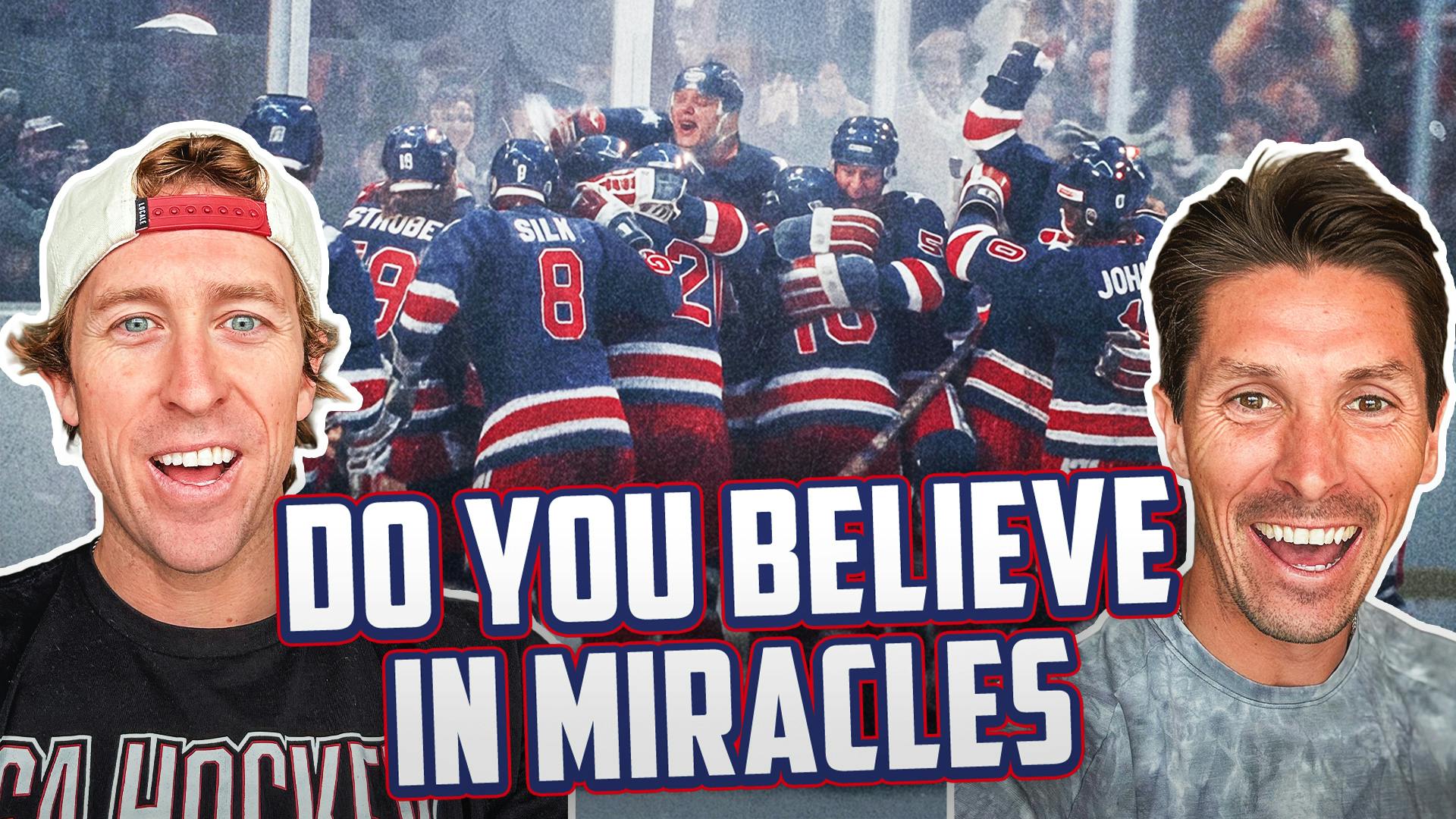
All right, ladies and gentlemen, we have watched the miracle doc and we had to call in the big guns. We are joined today by the Emmy award winning all time legend, father of the glue guy, Mike Lupica is here and he was at every single game of the 1980 Hockey Olympics story. Mike, thank you so much for joining us.
- [00:51]
Mike Lupica
Thanks. And by the way, I wish I had won an Emmy. I think my son has won an Emmy, but I have not, sadly. But this could be it. This, this here.
- [01:01]
Mike
It's on display. On display in the studio. Yeah, right next to the other one.
- [01:05]
Mike Lupica
We're.
- [01:05]
Dan
We're giving you our Emmy. Like that. That's. That's the Emmy that we're talking about here. Like you are.
- [01:10]
Mike Lupica
You are. Wait, aren't they giving out Emmys for podcast now? They are, right?
- [01:14]
Dan
Oh, so, yeah, they're giving out Golden Globes too, which is.
- [01:17]
Mike
Golden Globes. Golden Globes. Golden Globes.
- [01:19]
Mike Lupica
That's it. Okay. Yeah. So, all right, so I listen, I'm, I'm willing to, to just take an ascendant course to, to an enemy eventually.
- [01:28]
Mike
This is the way. This is the way forward. This is the way forward.
- [01:30]
Dan
So before we even get. Mike, was this the greatest sporting event you've ever been to still to this day?
- [01:38]
Mike Lupica
Yeah, I get that. I get asked that question all the time. I was doing an appearance the other night with Jim Patterson, my, my co writer, and somebody asked that question from the audience and I think they were surprised at how quickly I answer. I said this, this question answer has not changed since Lake Placid in 1980. And here's the thing, guys. I knew that night that it was going to be. I knew, I knew that night that nothing was ever going to approach that game and forget about the gold medal game. I'm talking about the night we beat the Soviets. And I was walking through the press room afterwards and it was time to write and I heard a guy saying, oh, my God, how can I write this? I said, no, no, no, no, no, no, no. You wait Your whole. This is why we do this. To have a night like this. It's. It's all the nights when nothing is happening. Those. You can wonder what. Why do I do this for a living? But. But not that night. I. I ran to. To the keyboard that night because I wanted to tell this story.
- [02:35]
Dan
Yeah. Oh, yeah.
- [02:36]
Mike
The two things for me before as the doc was introing was, was how hard, like, it's hard for us to process how big this was. You know, I've seen, I've seen the, the previous docs. I've seen Miracle. I've seen it all. But just having not lived through it, it's. It's hard for me to even wrap my brain around how big this was for, for the players, for the writers, for the country, for everything. And there was a quote early, too. That was. One of the guys in the intro of the doc was like. What I remember most is how loud it was. And I wonder if you can speak to that too, Mike, because Dan and I were at Four nations and we always say that that was so loud. And I can't imagine what this, what that atmosphere was like in here.
- [03:17]
Mike Lupica
Well, it sounds like what people want you to believe now, which was that there were 800,000 people there instead of just 8,000 people in that arena.
- [03:27]
Mike
Crazy.
- [03:27]
Mike Lupica
It's a very small place. I mean, it's now sacred ground and, and, and people visit it and it's, It's. You know, hockey teams go up there. But I'll start with before the game, David Israel, who's still my friend, a great sports columnist, he was with the Chicago tribute then, and he got up right before the game and he said, listen, I know what we've been taught our whole career, but he said, any Americans in this press box who don't cheer tonight, I'm going to beat the. Out of. And so that set, that set the tone and, and we'll talk about that game. But, but when. When Michael Aruzioni of East Boston, Massachusetts, you know, son of a. A bartender, scored the goal with 10 minutes left. And they, they speak to this in, in. In the documentary. Okay, yeah, it was 10 minutes straight up. And I can tell you, they say what I have been saying ever since. Those 10 minutes felt like they took 10 years because you still couldn't process that this actually might happen. And I think they give you a good sense in the doc about just, just how vaunted this Soviet team was and how unbeatable they were supposed to be. But now we're ahead and, and and so they, they, you know, they'd skate and do this and do that and they pass and they get hit into the boards and you'd look up in like 15 seconds was all that. It elapsed and, and it just, it kept building and building and building. And of course, in those last seconds, we would only find out later about Al's call, you know.
- [05:04]
Mike
Yeah. Yeah.
- [05:05]
Dan
Wow.
- [05:05]
Mike Lupica
That's Jimmy Craig stating around, looking for his dad. All of that we would find out later. But, but that noise, I have never heard a noise like that. And I have been in, you know, the Metrodome in the old days, Game seven of a World Series, an indoor place. But this, this, I, I described it this way. Later that night, sports made a sound that night that it actually can't make. And, and that's what we all heard and, and felt when, when it was four, three forever against Soviets.
- [05:41]
Mike
Dan, you had said when we were watching that the Soviets winning every Olympic gold since 1960 is coming into. That is ridiculous. Like, even wrap your brain around that.
- [05:52]
Dan
Yeah, it's so, it's so crazy. And I mean, we listen like, Chris, you can, you can Sherpa us through the whole doc as we talk about it, but we, you know, just watching Miracle and watching previous documentaries that have been made, it's that, that exhibition game, that 10 to 3 game. I can only imagine what was going through everyone's heads when they came into this, this matchup again, being like, there is literally no planet where they can beat this team. And then here we are.
- [06:17]
Mike Lupica
And somebody said it in the documentary, that 103 game. It could have been 20 to 3. I mean, it was, it was, you know, that's the great scene in the movie Miracle when Craig says to her, that's my net. He said, jimmy, tonight it was everybody's net, you know, and, and, and now, and now they get to Lake Placid. Yeah, and, and they're nearly gone in my memory. And I'd have to check this. I believe the Sweden game was the night before the, the opening ceremony.
- [06:50]
Mike
I think that was the craziest thing I've ever heard, by the way.
- [06:53]
Dan
That's what I know.
- [06:54]
Mike Lupica
So, literally, we were talking about before we started today. They were literally gone before the Olympics started. And, and then Billy Baker ties that game and all of a sudden, okay, we're in the game. We're in the game. And. Yeah, and as the thing goes on, nobody's thinking we're going to beat the Soviets at this point, but we're, you know, we're Hanging around. And it wasn't until the Czechoslovakia game when we just. Absolutely. I think somebody described it afterwards, we stuffed him in a locker, okay, and put seven goals on what was supposed to be maybe the second best team in the world.
- [07:35]
Dan
Yeah.
- [07:35]
Mike Lupica
And then you. And now the thing is starting to build. And here's the other thing about this Olympics, guys. This became, like, the only game in town. The Lake Placid Olympics were a mess. You know, the buses wouldn't run. I think a bunch of guys ended up going to jail afterwards. I had a dear friend, Reno Tomasi, the late Reno Tomasi, who I knew from tennis, and he was covering the Olympics. And one day I see him outside the press center, and he's just shaking his head. He goes, mike, Mike, Mike. This is the second worst assignment of all time. I said, what was the first, Reno? He goes, World War II. So nothing is working except this team. It felt like this team. All of a sudden you just say, okay, no game tomorrow. But then they play the next day. And the thing starts to build a little bit, and you start to think, maybe there's a chance. You know, I tell Zach, my son, the glue guy, this story all the time about Jimmy Valvano, when North Carolina State became one of those upset stories for all time in college basketball. And I was pretty close with Jimmy Valvano, and after his Sunday press conference, after they played themselves into the final, we're walking to his car, and he said, they keep telling me, I don't got a chance. He said, there's only two teams left. I got to have some kind of chance. It's why I brought two suits with me. And so, again, now we're building towards that Friday night and the main event and what had now become something because of the situation in the world, because there was something so damn appealing about our kids became. It's like when Vin Scully called Kirk Gibson's hotel. In a year of the improbable, the impossible just happened. We didn't know the impossible was going to happen, but we had tricked ourselves into believing that because it was sports, maybe they could do this.
- [09:45]
Mike
So that was. I was right about to ask you that, Mike, did you. Going in, you had some belief, like, of course, because you crushed the checks. That's incredible. Beat West Germany, Right. That was the last one before the medal round. Yeah, but then. So. But you. Before that game, you genuinely were like, we could win. Because I actually was surprised in. To hear in the doc, some of those guys were like, yeah, I mean, it's the Soviets, like, we. We kind of felt like we couldn't beat them. Like, was there a little bit of belief in you?
- [10:09]
Mike Lupica
Yeah, yeah. Because. Because, guys, I always go to the biggest events hoping for the same thing my entire career, that I'm gonna see something tonight that I've never seen before, whether it's a ball game, the super bowl, the World Series, whatever it is, okay? The big final in tennis. I. So there's enough romance in me that. What are you rooting for? Perfect word.
- [10:32]
Mike
Yeah.
- [10:33]
Mike Lupica
The best story. You root for the best story. And not only would that be the best story, it would be the greatest story ever told in sports. And again, okay, so now we. We. We're playing the game. And by the way, we can jump around on this, but.
- [10:49]
Mike
Yeah. Yeah.
- [10:50]
Mike Lupica
Now the game is being played, and the Russians are ahead 2 to 1. And Aruzioni's been telling me it's. He tells it in. In the doc, and he's been telling me this story ever since when we've run into each other. He's skating. He's skating off, and all of a sudden, 10 seconds, nine at the end of the first period, and he says, all of a sudden, I see something flash down the ice, and it was Mark Johnson. And everybody kind of had stopped playing in that moment except Mark Johnson. And. And when I've written about it ever since, I've always said, where was he going? He was on his way to beginning to change sports history. And he picks up that bouncing puck and he puts it behind Trechak. And all of a sudden, it's not 2 1. They're not ahead. They're not doing what they're supposed to do. Now it's 2:2. And that was the first crazy explosion of. Of the night, because we didn't know that Trechak was about to get benched. We didn't know any of that. Okay. But what we knew was the scoreboard said, 2 2. And it's just like Jimmy Galvano said, it's only two teams playing two more periods, so they had to have some kind of chance. And then. And then we come out and Tretch acts on the freaking bench. And in the movie, I forget. I think it's Craig Patrick who said, I don't know what just happened. We. We just put the best goalie in the world on the bench.
- [12:16]
Dan
Yeah.
- [12:17]
Mike Lupica
And that became. You know, that's been all so controversial ever since. But I was talking about. This was Zach today. Michigan only gave up two more goals the rest of the game. You know, and that's why, that's why for all the stuff about Tretchak and Michigan and all the, the goalie switch, there was only one goalie to talk about on this night.
- [12:36]
Dan
Yeah.
- [12:36]
Mike Lupica
Because Jimmy Craig was in the process of having the night of his life in the, on the, on the night when they were playing the game of their lives. And he was the story. And, and yeah, guys, if you ever go back and look at the third period, which I have in real time, he stood on his head. He stood on his head and even at the end, in those last couple of minutes, they're, they're coming at him. You know, they're coming at him with everything except Russian tanks and.
- [13:06]
Dan
Yeah, truly.
- [13:07]
Mike Lupica
And, and they just. And, and, and the clock begins to wind down and Jimmy makes one last stop and, and you know, as they say, the rest isn't just history. It's. It's the history.
- [13:21]
Dan
Yeah, yeah. I mean, it's the, it's got to be the greatest hockey game ever played. And there's no question, but it's going back to what you were talking about with the Mark Johnson goal. I think that one gets lost all the time when people break down the skill.
- [13:34]
Mike Lupica
Yeah.
- [13:34]
Dan
There are so many elements. It's like the captain who was almost cut, who didn't have an NHL career, who maybe wasn't the most talented guy scoring the game winning goal the 10 minutes left after they took the lead. The, the Jim Craig performance, the fact that they forgot to pull Michigan because the Soviets didn't know how to play from, you know, losing. All of those things are the storylines. But we were actually, we were talking with Zach about it last night. The fact that Mark Johnson, your best player, scores a goal with one second left to tie the game in the end of the first period is not talked about enough like that is insane that that happened. And we can all, all say all with almost certainty, if that doesn't happen, they don't win this game. It's fucking crazy.
- [14:17]
Mike Lupica
No, they, they don't win the game again. That was, that's when the spark was, was, was really lit and you know, and when the puck is behind Trechak, we're not sure, we're not sure whether if he got it past him in time or not. And I'm telling you something, if they had taken that goal away in that moment, there would be no arena in Lake Placid still, and they would have had. They had to find a rink down the street somewhere to play the rest of that game. And that then the Goal stands and. Yeah.
- [14:51]
Mike
And was that, Was that a delay, Mike, or did they. Did they call a goal right away?
- [14:54]
Mike Lupica
Because there's no reason.
- [14:56]
Mike
No goal.
- [14:56]
Mike Lupica
Yeah, it was a brief delay because I. In my memory, and I'd have to go back and check. Everybody's kind of looking over to make sure that they were going to score the goal. And. And when they do, and then our kids, you know, they sprint off the ice. You know, it's almost. They're sprinting off the ice, almost like they're afraid. Yeah, yeah, yeah.
- [15:18]
Dan
Oh, it's tied.
- [15:19]
Mike Lupica
Tied. If we're in the locker room, they can't take that goal away.
- [15:22]
Mike
Yeah.
- [15:23]
Mike Lupica
And in that moment, one of my writing heroes, Pete Hamill, used to say the template was cut. All of a sudden, all of a sudden we. Again, the night had changed, the moment had changed and the possibilities had. Now hope had come in. It was. It was. Hope had come into that arena because. And, And I think. I think it was Mark Johnson in the doc who, when, you know, they fell behind again.
- [15:57]
Mike
I know I was about to ask that.
- [15:59]
Mike Lupica
Yeah, they fell behind it. And he said, if we can get the first goal of the third period, we're in this. And. And they did. And again, he was their best player, their two best players. I mean, Jimmy became a giant that night. Kenny Morrow, who ended up winning all those Stanley Cups with. With the Islanders and Mark were the two best players. And Johnson has now gone on to become a great coach of the women's team at the University of Wisconsin. And, you know, he was another guy on that team who, if you saw him in street clothes, you would have thought he's somebody looking for his mommy. I mean, he does.
- [16:36]
Dan
Yeah.
- [16:37]
Mike Lupica
You know, these are the guys who are going to slay the Dragons. And again, they look like a bunch of rink rats playing a peewee game at 6:00 in the morning.
- [16:46]
Mike
Oh, because they were. They were just like little kids. It's so crazy.
- [16:50]
Mike Lupica
They call themselves Big Dualies. They were little, but they call them. That was their nickname. They call themselves the Big Dualies. And. Yeah. Oh, my God. Last night when I saw Jackie o' Callan hand in the Post Finland press conference, I was sitting in the front row.
- [17:04]
Mike
Oh, you were there for that? Oh, my God.
- [17:05]
Mike Lupica
Yeah. You can see he was halfaced by the time he showed up, because what we had heard was he. They. I think he had been selected for drug testing. He couldn't pee. That's what we had heard. And so he's. He's down in Beer. So I'm telling you, he's half in the bag, but it kind of gets there. And that's when he said he was from Charlestown, and we wanted Bunker Hill, and we want. Somebody just politely said, jack, we didn't. We didn't win at Bunker Hill. And he said, well, you saw. I don't want to hear. I don't want to.
- [17:36]
Dan
Mike, that.
- [17:37]
Mike Lupica
That.
- [17:38]
Dan
That response. I don't want to hear.
- [17:39]
Mike Lupica
That is so Boston. It was so Boston. It was so Charlestown. Because what I remember is at one point, he just stretched out on the table in front of his teammates as he's. With his head, you know, his head in his hand as he's answering, oh, my God, that was such. That. That was a fun day. And I'll tell you another story about the Finland game, because I had only seen Herb's comment about you'll take it to your grave in the original documentary. It's. It's. That's not. That's not in the movie. And.
- [18:13]
Dan
Yeah, yeah, that's right. That's right, that's right.
- [18:15]
Mike Lupica
So now the Finland game is over, and they. That game, by the way, again, I'm testing my memory, but I believe it was played at 11 o' clock on Sunday morning. It's played really early.
- [18:24]
Mike
Okay.
- [18:25]
Mike Lupica
Really?
- [18:25]
Dan
Yeah.
- [18:26]
Mike
Yeah.
- [18:26]
Mike Lupica
And of course, they fall behind again, because that's what they did. But now it's over. They've won the gold medal. Okay. And. And. And it's time for the. You know, we're kind of writing, starting to write, and then we realize that the medal ceremony is going to take place. And I remember saying to David Israel, I said, you know, we ought to. We ought to take a walk back over there, because with these guys, there's always the possibility that something's going to happen. Yeah. And sure enough, you can watch it a thousand times and not know how they all ended up on that metal plate, how they got. It's you. I've always said the real miracle. The real miracle was when Michael waved him up and they all ended up on where he had been standing during the national anthem.
- [19:11]
Dan
Yeah.
- [19:12]
Mike
It's so. It's the perfect picture. It's like it's impossible that that happened.
- [19:16]
Mike Lupica
Yeah. I said one time, I asked him about the shot, and he said, and I think he might have said this in the documentary, he thought he'd pulled it. And he said, if that puck is a foot to the left or right, wherever it is, he says, I'm Peyton Bridges for a living. And he didn't know how much his life had changed in that moment, but it had. And I've gotten to know Rob Mcclanahan in recent years because he's a stepfather, a very. A good family friend. And so. Yeah, I thought he was great last night, by the way. Me, too.
- [19:48]
Mike
Yeah, me too.
- [19:49]
Mike Lupica
And. And, you know, he talked. When he was talking about how Herb got on him. I mean, that might be the most dramatic scene in the movie is when looks into him and basically calls him gutless. When Mark about Rob could basically not walk.
- [20:05]
Mike
The. The.
- [20:06]
Mike Lupica
The.
- [20:06]
Dan
The shot of him on the bench when they were like, Mike stood, like, that's.
- [20:11]
Mike Lupica
Those are. I've.
- [20:12]
Dan
I've long said that. Obviously, I'm biased as a hockey guy. I think Miracle is the greatest sports movie ever made. I think as far as authenticity and getting it right, really honoring the game of hockey, showing good hockey being played. We talk about it all the time. It's why Shoresy is so good. I don't know if you've ever seen that show, but they cast real hockey guys, so, you know, the hockey looked good. The historical elements were so good.
- [20:40]
Mike Lupica
The action. The action in that movement, I think I saw once how they did it with the rolling camera and. And they. They took you into the middle of. Of. Of the action. And I'll tell you something. Yes, Kurt Russell got screwed that year. How he did that, Mike, listen, I covered it. It's.
- [20:59]
Dan
It's insane.
- [21:00]
Mike Lupica
It's crazy. He's so great. He should have gotten the Oscar simply for his speech before the Soviets game. Okay? And I, you know, I spent a lot of time around her then. And then when he coached the Rangers, he became Herb Brooks. That scene in the actual movie where when it's over, he's by himself out in the hallway, just. It's one of the most beautiful moments. No, that movie, I've always. There's two movies I always say, you cannot turn off if you're. If you're remote surfing, if you come to them at any point. One is A Few Good Men, okay? Because, you know, you gotta correct Jesus.
- [21:38]
Mike
Absolutely correct.
- [21:39]
Dan
Great call.
- [21:40]
Mike Lupica
I'm a lawyer and an officer, and you're under arrest, you son of a. So, you know, you're gonna hang in until Nicholson gives a speech, okay? But Miracle is the other. And. And, you know, you guys know my son Zach, you know, known far and wide as the Goo Guy. My boys, I have three sons. They grew up. They. They embraced this story from the time they were old enough because they knew how much it had meant to me. So they memorized the original documentary. They fell in love with the movie Miracle. And they were the first. Zach was the first to tell me. I didn't even know this documentary was coming until Zach told me about it. And I called him last night, and I said, zach, what time's it going to drop? He said, dad, I think it's already.
- [22:31]
Mike
It's already out.
- [22:32]
Mike Lupica
I just went in. I went into a room, and I closed the door, and. And I. I texted Zach about 10 minutes in and said the following. I am crying already. It was okay. It was so that kind of moment, and it remains that kind of moment for me.
- [22:49]
Dan
So perfect. Perfect transition into what I wanted to bring up next, because we were the same way. Our dad indoctrinated us with this. We. We watched that original documentary from. From the time that our brains could process things. This movie came out. We've seen it a billion times as hockey players. In 2004, when this movie came out, every coach you ever had would then do the Herbies to you and say, again, again, again, again. Like, this was a part of our lives as it is a part of every hockey player's life. I couldn't believe having seen every documentary that's ever been made about this, having seen the movie 3000 times. This doc was unbelievable with how many new things. And it was like I was just referencing the. I had never seen that clip of Rob McClanahan standing on the bench because he couldn't sit because of the.
- [23:37]
Mike Lupica
No, I forgot that. I completely forgot that until last night. And for God. So somebody had said that night in the press box, you know, Rob's. Rob hasn't sat down.
- [23:47]
Dan
Like, that stuff's crazy. And it's the. The. The audio of Herb that was super emotional for me. I want to get into. I can't even imagine for you. It was super emotional for me hearing all of those sound bites of Herb because I feel like most of us haven't heard or seen any of that stuff. So for you having been there, Mike, how emotional was this doc? You know, reliving? Like, we joked around watching it. I can't fucking believe that Lake Placid got an Olympics like that. Podunk little town. Some of the footage was crazy. And then all of these moments, all of the elements, like the check game, seeing the US Run up the score, and then they start cheap shot. And Mark Johnson, like, we didn't know about that stuff. Yeah, that was unbelievable that there was still more stuff to be told about this, more shots to be seen. It Was. It was unreal. I can't imagine what it felt like for you, reliving.
- [24:39]
Mike Lupica
Well, here's the thing. And you got the sense listening to the guys last night talk about how tough Herb was on them. He was much tougher on us. He was.
- [24:50]
Mike
Oh, really?
- [24:51]
Mike Lupica
Oh, no. You asked him. No, he was pain in the ass. I mean, I don't know if you've heard the stories. He, he. Sometimes he wouldn't even come in after he'd send Craig Patrick, who's one of.
- [24:59]
Mike
Oh, right, I forgot about that.
- [25:00]
Mike Lupica
We didn't get to talk to the players. We'd have to wait outside in freezing cold temperatures to talk to the players. And, and even the night of. Of the Soviets game, you know, you want to talk about the movie that was within the movie. It was the streets of Lake Placid after we beat the Soviets that night.
- [25:23]
Dan
Wow.
- [25:23]
Mike Lupica
Because it started to snow. It was like, you know, it's like a production designer. So we need a little falling, gentle snow.
- [25:32]
Mike
Gentle snow.
- [25:32]
Mike Lupica
Guys are outside in their dopey cowboy hats, you know, those ridiculous. The ridiculous uniform. But as you walked around Lake Placid that night, because nobody wanted the night to end, you would see pockets of Americans. I mean, I get emotional just thinking about this. Standing on street corners singing God Bless America or the national. Just stopping and starting to sing. Not, not drunkenly. Just caught up in this moment because everybody knew in that town that they had experienced something that they were never going to forget. And again, the game was played like at 5 o' clock in the afternoon. That was the one thing that they kind of made a movie moment of last night because people aren't watching the game live in the United States.
- [26:15]
Mike
Yeah, right.
- [26:16]
Dan
Yeah.
- [26:16]
Mike Lupica
No, that's the other thing. In the modern world of where everybody knows everything immediately. Okay. Imagine kind of keeping that buttoned up.
- [26:27]
Mike
What did you have to do, Mike? What did you say, possible?
- [26:31]
Mike Lupica
Well, the biggest. Here's what I found out later. Like, the anchormen on the nightly news were saying, okay, if you don't want to know the final score of the U.S. soviet hockey game, like, turn off your set right now. So, I mean, it's not like we had contained it in Lake Placid that night. I'll tell you. I'll tell you a great story because you found out great stories from friend of yours who wanted to tell you where they were or what was happening in New York City or wherever they were. A late friend of mine named Mike Pearl, who was the original producer of the NFL today. He kind of he's responsible for NFL pregame shows. And he was on a flight from Kennedy to Phoenix. During the game, he had to be in Arizona. And they left an hour late out of Kennedy. And as they're getting close to Arizona, the pilot comes on and he said, well, I've got some good news and I got some bad news. He said, the bad news is, even though we left an hour late, we're still going to land on time. And Mike said it was on the plane going, why is, why is that bad news? So the good news is United States just beat the Soviets in hockey. And he said the plane went batshit crazy. Somehow champagne appeared with the flight attendants and they had this instant party on like an America west flight or whatever. It was about to land in Phoenix, Arizona.
- [27:57]
Mike
All time experience, like, greatest flight ever.
- [27:59]
Dan
Yeah.
- [28:01]
Mike Lupica
No, it was. Again, all we kept thinking, even as we're sitting down to write our stories, is the whole world is about to find out what we just saw. You know, and it, you know, to use the words of the great Jack Buck, I don't believe what I just saw. And then the word starts to get out. And then the next day you saw the, you know, instant block parties outside in New York City and you saw what was happening in Boston. And all of a sudden, Lake Placid became the capital of the universe. It became. And there was one. But there was still one more game to play when the Red Sox, when the Red Sox finally beat the Yankees in 2004, Theo Epstein, the general manager, had a great line. He's. He said, now we got to beat Finland and meeting the Cardinals in the World Series. So Finland had become almost like a buzzword by then.
- [29:00]
Dan
Yeah.
- [29:00]
Mike Lupica
And then we fall behind. And I will always repurpose. These are my guys, so I will always prove them as we. And you're thinking, oh, no, no, no, no, no.
- [29:11]
Mike
Going into the third, Mike behind. It wasn't like behind early in the first. Like literally going into the third period, you're losing to Finland.
- [29:17]
Dan
Believe that.
- [29:18]
Mike Lupica
Yeah, I like that. That we found out last night that it's, it's, it's such a great scene is when her. They tell the story of her saying to your grave and then repeating it to your grave.
- [29:31]
Mike
Yeah.
- [29:31]
Mike Lupica
I said, that's the first time we ever heard him use the F word. Yeah. And you would have fit the way he lit into them. You would have thought he'd be dropping F bombs the whole time, every day and all day. But apparently maybe, you know, that was that nice Minnesota boy Who. Who didn't want to talk like that in front of his players. Yeah.
- [29:50]
Dan
It's true. I think my favorite part of the doc was hearing about the Jack o' Callaghan and Phil Ricota speech. I mean.
- [29:58]
Mike
Yeah.
- [29:58]
Dan
Them being in that locker room, O.C. getting up.
- [30:01]
Mike Lupica
No. You got chills. No, I still get chills hearing those stories. I mean, I. Yeah, I. Because. Oh, that was the other thing. That was great last night, because I have to tell you, Craig Patrick is one of the sweetest guys on earth. Herb sent him into the locker room, and I think it was McClan. Was it McClanahan who said, Craig. No, we got this. We're not losing this. Get out of here.
- [30:24]
Dan
I think. I think it was O.C. yeah. I think he was like, we're fine.
- [30:29]
Mike Lupica
Yeah.
- [30:30]
Dan
It's like. That's so great.
- [30:32]
Mike Lupica
Says to Craig, how'd it go? I guess. Yeah.
- [30:36]
Mike
Everything perfect.
- [30:36]
Dan
Yeah. Honestly, though, Mike, it's like I can't think of. I can't think of a moment for a coach that would be more reassuring than going into the locker room and having that be the response, and you're like, oh, they're fine. Yeah. Like, we got this.
- [30:48]
Mike Lupica
Yeah.
- [30:50]
Mike
Yeah.
- [30:50]
Dan
I'm sure that Craig and Herb, in that moment were like, oh, we don't need to go in there. We're good. This is great.
- [30:55]
Mike Lupica
It was. It was. But that was that Sunday morning and into Sunday afternoon. I can't tell you the feeling of dread the longer the Finland game went on. That.
- [31:08]
Dan
Yeah.
- [31:09]
Mike Lupica
I said. I said to a friend of mine, I said, we need to go down there and talk to them because they're about to screw up the greatest story of all time. So it just. If we could just reason with them and explain to them that we can't have this thing go off the rails, you know, like, five minutes before the. For the. Yeah, fortunately.
- [31:31]
Mike
When did you start to feel good, Mike? Like, when it went.
- [31:34]
Dan
Yeah.
- [31:34]
Mike Lupica
Like, you know, not till. Not till the portal, which I think made it 42. Yeah. Yeah. Right.
- [31:41]
Mike
Yeah, yeah. Four, two.
- [31:42]
Mike Lupica
Oh, no. I wasn't spiking. No, no. At three, two. I'm not spiking the ball. Okay.
- [31:47]
Mike
Yeah.
- [31:47]
Mike Lupica
Because I'm already having PTSD on Friday night on trying to protect a one goal lead for 10 for those 10 minutes. That felt like 10 years off of my life. Those 10 minutes, by the way. And I'm so glad the players described it the same way.
- [32:05]
Mike
Yeah.
- [32:05]
Mike Lupica
Being, you know, in the arena. Really, in the arena was. Yeah. We all. We all lost a lot of time off of our lives waiting for that stinking clock to run down.
- [32:16]
Mike
Longest 10 minutes in sports history.
- [32:18]
Dan
I, I, yeah, it's, you said it so perfectly, Mike. It's. We always think about these moments, us growing up as Bruins fans in, I think it was 2013, they had that insane down 4:1 in Game 7 against Toronto. They came back, beat them in overtime, and then when they lose that Stanley cup to Chicago, it's almost like that game gets lost in the animal Toronto game.
- [32:42]
Mike
Yeah.
- [32:43]
Dan
When it all, and it's like, I'm sure it must, you know, for someone. Let's not even talk about the, the players and Herb and, and Craig and all that, but like, I'm sure even for you, like, it, it would keep you up in a cold sweat at night until your dying days if they had lost that Finland game. Because it's like truly the greatest moment in sports history, potentially could have been lost to history. That is so wild to think about.
- [33:08]
Mike Lupica
Yeah, I, I, that, that team and those two weeks and, and what they did that last weekend, that's like, like a bank account that I'll be able to draw on forever.
- [33:21]
Mike
Yeah. Wow.
- [33:22]
Mike Lupica
Because when somebody tells me, yeah, but you should have seen this happen in sports, and you should have seen this, or, wow, you should have been at that game. And I'll say, yeah, I'll see you whatever game you're talking about, and I'll raise you with, with Lake Placid, New York, February of 1980. Because I can't even, I've tried to imagine what could be a comparable story to that in this country. And I think, well, maybe if men's soccer, you know, the women have won the World Cup. Okay, maybe if men's soccer somehow shocked the world and, and, and, and won the World Cup. But even that wouldn't be what we saw from those kids in that time, in that time in the world, in that crazy little town. You know, again, I can't stress to you what a pain in the ass the whole experience. It was outside of those games. I'll give you another Reno Tomasi line. The buses would not run. There are all these horrible stories about people getting stranded, waiting for buses and, you know, like zero degree temperature. And we found out that John Brown, the famous abolitionist, had died in Lake Placid. And one day I see Reno Tomasi again outside. He's shaking his head again. It says, mike, Mike, Mike, John Brown was not hang, it was bussed. Oh, my God. But fortunately, I could walk. We had a big contingent from the Daily News. We had this big house in town. We could walk to the arena and. And I will tell you, I've taken some great walks in my life in sports, but finally walking back to that place that night after. After it was 4:3 over the Soviets forever, that's as good a walk as I've ever taken in my life. Mike, would. Would.
- [35:18]
Mike
Would the Soviets have gotten gold if. If we lost to Finland? Because I know it was like a weird. It wasn't just like, that was the gold medal game. Because didn't the Soviets get silver at the end of all this?
- [35:29]
Mike Lupica
You know what? I don't remember. I think Finland. I don't know if Finland would have gotten. I think it was the gold medal game. You guys. You guys would know better than I. And if you can't figure it out, just ask Zach. Yeah.
- [35:43]
Mike
Yeah, you're right. I will ask Zach. But, yeah, no, because it's so crazy.
- [35:47]
Mike Lupica
But it was all or nothing for us. I. You could get a bronze even if you lose. They would. They would have taken you outside and wanted to beat you for even suggestion. Right? Yeah, they were that close. They were that close to the mountaintop. And. And yeah. So I'm trying to think now that now you guys are giving me ptsd because now I'm trying to measure how stressed I was over the last 10 minutes or how stressed I was with 20 minutes to go. Yeah, it was a gold medal game. And. And we're still losing. And. And, yeah, I'm telling you, if.
- [36:27]
Dan
If Chris had been alive during that event.
- [36:30]
Mike
Oh, dude, that third period.
- [36:32]
Dan
That third period would have killed him. I. I genuinely don't think you would have survived. Chris is the most negative sports fan who's ever lived.
- [36:38]
Mike
Yes.
- [36:38]
Dan
Every single time there's a bad play, he goes, that's it. We've lost. We're over.
- [36:41]
Mike
Sky's falling.
- [36:42]
Dan
Going into the third period down to Finland, I think Chris would have literally died. I think he would have walked.
- [36:47]
Mike
Correct.
- [36:47]
Dan
He would have walked into Lake Placid and drowned himself and not finished the game. That's what would have happened.
- [36:53]
Mike Lupica
But it's.
- [36:54]
Dan
It's incredible.
- [36:55]
Mike Lupica
You think back now to the biggest points of light and you can't. You know, obviously, Marx goal at the end of the first period of. The Soviets gave. Okay. Obviously, Michael Aruzioni's goal that became the gang winner. Billy Baker. Tying. Think about that. For all of the victories that came, all the rousing victories that came later. A tie. A tie. Set up everything.
- [37:26]
Mike
And.
- [37:26]
Mike Lupica
And then you'd have to go back And I. I'm trying to picture the last save Jimmy made, but I. In my memory, whatever it was, it was a good one. He was making kick saves like, you know, it's. It. It's. It's one of those things where you almost want to go up to him and said, you know, you could. You can't make that. Yeah, get. Get out of here. And now it was when. When I used to joke with Al Michaels, who. Who just turned him out to be the perfect guy for the perfect place at the perfect time. And if you listen with all. By the way, he loved Ken Dryden, was a dear friend of his till the day. Oh, yeah, Kenny died. But if you listen to the call, Al's about to make the most famous call in the history of sports. And Kenny's kind of talking.
- [38:16]
Dan
He is. He's like, doing play by play, still talking.
- [38:20]
Mike Lupica
And I ran into Al not long after the movie came out, and I said, you know what? Kenny's still trying to screw up the greatest call. Yeah, broadcasting.
- [38:32]
Mike
That is so funny.
- [38:33]
Dan
So true.
- [38:34]
Mike Lupica
No, but you listen, you guys.
- [38:37]
Mike
Yes. Oh, Mike.
- [38:37]
Dan
It's like I always laugh. It's like we. That. That call is ingrained in all of our memories so, so deeply. But every time I hear it, you can hear Al, he kind of screams it because he's like, ken, shut the fuck up. Like, I'm trying to say something here, pal. There's a lot of commotion going on while he says it. It's so funny.
- [38:56]
Mike Lupica
No, there. There was a lot going on at once. And, And I. Again, when you looked up and saw only zeros on that score, and you. You said yourself, okay, okay, sometimes, you know, because I always say to people, oh, they'll say, that shouldn't have happened, and, and that shouldn't happen in sports. I said, no, no, no. There's no justice in sports. It's not like the sports gods are up there and say, well, I'll take this one, but I'll give you one down the road. There was going to be no down the road. It was. It was that night or. Or nothing. And, And. And they delivered, and all those Herbies came back. And I. I love them saying. Giving you the sense that they knew that they could skate with them, not necessarily that they could beat them, but that in the shape they were in, that they. That they could skate with them. And in the. In the real. In the movie Miracle, you know, when he does those short shifts at the ends, you know, and. And it feels like they just keep. They keep coming off the. Over the boards in like waves. And it all worked because of this man's vision. And again, you can't talk about this story. This is the single greatest coaching job to my mind in the history of sports. That, that, you know, it's. It. Faith is, Is believing what you cannot see. Only he could see this. Only he could see this. And, and, and it's just such a shame he died way too young. And remember that little thing at the end of the movie, you know?
- [40:33]
Mike
Yes.
- [40:33]
Mike Lupica
He didn't live long enough to see it, but, but he lived it.
- [40:36]
Mike
He lived it. Yep. It's kind of crazy, Mike, that he never got to. To, to chime in on the movie or in this. Like, it's, it's crazy because you, like you said, he, he kept it so private during the actual events. It's wild. We never really got to hear Herb talk about it after the way the players have been able to.
- [40:51]
Mike Lupica
I think he had some input into Miracle for sure. The movie. I think he was. I, I think. I think he was. I'd have to act Mark Jordy, but I think he was. And that was. You guys are right though. That was a beautiful thing, having his kids in that, in that documentary. Because see, A, how much they love their father, but B, how much they knew their father. And they're talking about him almost. To me, this is what struck me last night. They're talking about him like they were players. Like, yeah, yeah, hey, you players. There's nothing you can tell us that we don't already know. Yep.
- [41:31]
Mike
You know, they were on that journey.
- [41:33]
Mike Lupica
What blows.
- [41:34]
Dan
What blows my mind so much about this, doc, is, you know, to go back to what you said about the sports gods and to what we were saying earlier about how, how great the 2004 Miracle movie is.
- [41:45]
Mike Lupica
Yeah.
- [41:46]
Dan
I feel like so often we watch movies now that are based on a true story inspired by a true story. And then you kind of look up the true story and it's really not that similar to how it went down. Like another all time sports movie. Remember the Titans? If you look up the actual scores of those games in that season, they weren't that close. T.C. williams, wheels off of everyone they played.
- [42:07]
Mike Lupica
Right.
- [42:08]
Dan
The true, not, no pun intended, the miraculous nature of that movie and this real event is it. It's the most scripted feeling thing I've ever seen in my life. It's like everything that you just ran down, the, you know, that the tying Sweden, the situation. We haven't even gotten into the situation with the Cold War and The Soviets and holding out of or saying they were going to boycott Summer Olympics. Everything about this Olympic games felt like it was written for a movie. Right down to the. The final scoreline and the game winning goal of the game. And Dan, Soviets. Dan.
- [42:47]
Mike
I'll be the. The telegraphs, right, Mike? Like, the telegraphs, they.
- [42:51]
Mike Lupica
Oh, God, that seat is all those. That wall.
- [42:54]
Mike
Are you kidding me?
- [42:55]
Mike Lupica
Oh, my God. It's like the wall.
- [42:57]
Dan
Yeah.
- [42:57]
Mike
Yeah, that is like, that is.
- [43:00]
Mike Lupica
I don't know that I'd ever seen that wall before. And. But how about just the beginning of the documentary with. With I was talking about was that today, like they're walking down the street like the Magnificent Seven, you know, And. And all this time later, it was like, really? You were like. Even though it was the beginning of the documentary, you felt like you were watching the end of an old Western, you know. Yeah. Here come the old gunslingers back, you know, to the OK Corral, you know, and. Oh, that was shot so beautifully and incredible. And you know what? You get a sense when. When you look at old pictures and the new pictures, how little that town is like. That town is time, you know? It is. Yeah.
- [43:49]
Dan
I was. The most shocking thing. Yeah. Of the dock, like, looking at the shots of Lake Placid, I was like, this is. This is ridiculous.
- [43:56]
Mike
This is the Olympics, Dan. The Olympics are there.
- [43:58]
Mike Lupica
It's crazy. It would be like. It would be like, you know, my. My kids, they grew up in. In Connecticut, and it would. It would be like they had the Olympics in New Canaan, you know, twin rinks where. Where Alex played peewee hockey.
- [44:17]
Dan
Like, we. We always joke, Mike. We're like, genuinely. It's like, if they did this in Biddeford, Maine, and you're like, yeah, that's pretty much. Can make.
- [44:24]
Mike Lupica
That's what Lambos, guys. That's what Lambo's like. I mean, if you've ever. If you ever get a chance, you. You know, I've been lucky enough to go twice with Zach Lica, okay. It's. It's. I grew up in Oneida, New York. Okay. In the middle of New York State. It's like they built. It would have been like building Lambo Field on Earl Avenue in. In Oneida. That's what it was like, having this. And. And, you know, as I said to you before, over the years, that crowd has grown from about 8,000 to about 800,000 people. Yeah. Who say they were there that night. And that's okay, because they were. But I was. I was. And I'll Never forget it.
- [45:06]
Dan
So I do want to. I want to ask finally here, Mike, what were, for you, someone who lived this and experienced this, what were the most, maybe you could say, surprisingly emotional moments of the doc for you, whether it be reliving or whether it be something that happened that you didn't know about, that you were like, oh, my God. I had no idea that that was going on.
- [45:29]
Mike Lupica
What.
- [45:29]
Dan
What. What parts hit you the hardest?
- [45:33]
Mike Lupica
I. I became emotional last night watching Mike Aruzioni describe the house in which he had grown up, and I believe his father was a bartender, among other places, at Santorpio's Pizza, which is. Yeah.
- [45:50]
Dan
All times. I know it well. Yeah, I know it well.
- [45:53]
Mike Lupica
Right, okay. It's. It's great. Okay. But describing that moment with his uncle where he earned the money to go to hockey school and his. His uncle wouldn't take the money from him. I. You know, I'm an Italian American kid. He's an Italian American kid. And that. That was. To me, I. There were other extremely emotional moments last night. Hearing Herb's voice again, you know, I'm still ingrained now to thinking Herb is Kurt Russell.
- [46:26]
Mike
Yeah.
- [46:27]
Mike Lupica
It's like. And as. As much as Kurt got down his, you know, that kind of Midwestern twang. Okay. And those horrible pants, by the way. Remember the horrible pants?
- [46:39]
Dan
All the jackets, too. I mean, it was all like Herbie's. Herbie's style was very interesting.
- [46:44]
Mike Lupica
He was not gonna make any guest dress list. Okay. But hearing his voice was most. But Mike Aruzioni talking about his family and Jimmy talking about his mom. I. I had Jim back in the day when I was still doing a radio show in New York. I had Jim on a couple of times, and he. He. You can imagine, he had become a great public speaker by then. I mean, he was. You. You can see he has great presence. He has great command of the language. And. And there's something else going on with Jimmy Craig, a likability factor. The minute he starts to talk and. And the minute he. Not just talking about his late mother, but talking about Don, his. His father. So. No, I, I. No, I. About every 15 minutes, I would text my son last night and say, okay, I'm crying again. I'm crying again.
- [47:35]
Mike
Yeah, Yeah.
- [47:36]
Mike Lupica
I get that way when I watch Miracle, the movie. I get. I get that way when. Because the thing that they really captured in that movie was the drama of the last moments of the Soviet game. I mean, that's like a masterclass to me in filmmaking. If. If your job is to try to make the viewer feel like they're there, that they did that. But so did this documentary last night that those scenes of them walking in and out of the arena, I mean, how cool was that? That was cool.
- [48:08]
Dan
Unbelievable.
- [48:09]
Mike
That was so.
- [48:10]
Dan
Honestly, I weirdly think for me, obviously I, I didn't live through this, but we have a massive connection to it. Watching the guys watching. Yeah, yeah, yeah. I was gonna say this while having that. It was so brilliant of the filmmakers of this doc to have them sitting on the bench where they played this game and looking up at a screen and watching the reliving this scene turn into kids again was so emotional for me.
- [48:41]
Mike Lupica
That was, that was remarkable because we had heard, and I had heard, once I became aware of it, that, you know, this was going to be like a new look. And I'm thinking, well, wait a minute, you know, what don't we know? What don't we know? I mean, it's like burned into our memory and burned into our imagination. You know, I've always said this about sports and I've written it more times than I care to think about. When something great happens in sports, you do not need to see it replayed a million times. You do not have to wait to watch it again on SportsCenter. It is burned into your heart and it is burned into your imagination and it will remain there vividly forever. So I'm thinking, okay, I, I was there. I saw all this and, and this was new. Last night. It was like looking. It's like going to a museum and a picture you'd seen before and then saying, oh, wait, if I step and look at it from this angle, it's. It's even better than I thought it was before. I don't know how they pulled it off, but, but putting those guys in that arena and remember what it was like watching Last Dance with, with Michael Jordan when they'd hand him the iPad.
- [49:58]
Mike
And the iPad.
- [49:59]
Mike Lupica
Yeah, be looking at some and he'd get that grin on his face. This was different because as again, you saw, what you saw in these, these faces of men now in their 60s was, was them becoming the little boys who had. Whose parents had taken them to the rink at 5:30 in the morning. They became those kids again last night.
- [50:26]
Mike
What it meant to their families. Right? Like they all said that in their own interviews to my mom. What it meant to my family, what it meant to my community. That was, that was killer. That was unreal.
- [50:36]
Dan
And no, I've got moments and it's like when you think about these moments, especially years later. Right. 46 years later, the first thing that must come into your mind is, oh, God, I wish I could relive this with the boys again. And that's kind of what they did in this doc. Like them.
- [50:55]
Mike Lupica
Yes.
- [50:56]
Dan
Then being able to watch these games, watch these plays, watch these interviews that I'm sure many of them haven't seen for decades, and be able to look down the bench at their teammate and, and laugh about it again. That was, I mean, holy moly. Was that special? That, that was just so great.
- [51:14]
Mike Lupica
And they've had their share of, of tragedy. I mean, yeah. Pavlovich story is extremely sad. They've lost.
- [51:22]
Dan
Oh, it's terrible.
- [51:23]
Mike Lupica
And they lost the conductor of the orchestra and, and just, and, and not because he was ill. He just had an accident and, and, and died one one afternoon. And that's what I've always felt. Even though we heard his voice last night, even though we saw Kurt Russell do such a beautiful job playing in the movie. All of this would have been better with, with, you know, with her being handed an iPad. You know, the way Michael was in the Last Dance.
- [51:56]
Dan
And you know what, Mike?
- [51:57]
Mike Lupica
It's not that bad. You know, you can see him say, yeah, yeah, yeah.
- [52:00]
Mike
Did I say that?
- [52:01]
Mike Lupica
£10 fart.
- [52:02]
Mike
What does that mean?
- [52:04]
Mike Lupica
Yeah, right?
- [52:06]
Mike
Yeah.
- [52:07]
Dan
You know what's great, too, is you're so right about that. I, I, I thought it was so lovely how they did dedicate, you know, the last five, ten minutes of the doc to all of them talking about Herb and how they were like, I wish I got to know him. Like, I wish, you know, he, he could have been a friend to us, the way we all are to each other. And I think it was Morrow reading that. Or maybe it was random.
- [52:31]
Mike Lupica
Oh, yeah, it was. It was, yeah.
- [52:34]
Dan
Oh, my God, that was so nice.
- [52:36]
Mike Lupica
Yeah. And it made me wonder when he read it, if maybe all of them didn't get that letter. Same.
- [52:43]
Dan
I know.
- [52:44]
Mike
Totally agree. I was like, what's going on right now?
- [52:46]
Mike Lupica
Whether he had sent that letter to all of them or just some of them, but that was. I, I was amazed that he could even get through it, you know?
- [52:54]
Dan
I agree.
- [52:56]
Mike Lupica
Without breaking down.
- [52:57]
Dan
Yeah.
- [52:59]
Mike
Unreal.
- [52:59]
Dan
I imagine 95% of the people who watch this doc will then go and watch Miracle within the next few days of watching it. And it's just another reminder to us that retroactively, miracle deserves, like, 10 Oscars. It's, it's like, forget about just Kurt Russell needing an Oscar for That role that when we talk about what you just broke down, Mike. Like, the shots, the way that they recreated these games so perfectly. And then you watch this doc and things as simple as those telegrams not only being referenced in the movie, but in. When they're walking through the tunnel to play the Soviets, you see them tapping their sticks and their gloves on, the telegrams tacked to the wall, like, those little details.
- [53:37]
Mike Lupica
It's.
- [53:38]
Dan
It's so wild watching this doc and thinking about the game or about the movie and being like, it's one of the greatest movies ever made. It's remarkable.
- [53:47]
Mike Lupica
It's weird. You know, our youngest child is. Is my daughter Hannah. Okay. Yeah. And pretty much with hockey, even though she went to Boston College the way her brothers did, and hockey is a huge part of the culture at our school. Okay. She really doesn't know a hockey puck from an avocado. Okay. And she sat down several years ago and watched Miracle with me. And now it's one of her favorite movies of all time. And she was. Her boyfriend is from Dallas and not really a big hockey guy. And he watched it with her the other night. And she said, dad was, like, watching it for the first time all over again.
- [54:28]
Dan
Y. Yeah, it's the best.
- [54:29]
Mike
That's how I feel, too. Like, that movie gets me going.
- [54:34]
Mike Lupica
To.
- [54:34]
Dan
Show this doc to everyone. It's incredible.
- [54:37]
Mike Lupica
I think he played Craig Patrick in Miracle, the movie. And I. I walked into a coffee shop out on eastern Long island and managed to not run up and try to hug him.
- [54:50]
Dan
Yeah.
- [54:54]
Mike Lupica
You know, because. Oh, yeah. I feel that, you know, introducing yourself to famous people, just you open yourself up to heartbreak. So I didn't write, but he was great. And all the young actors who played, you know, I forget the name of the young guy who played Jim. Jimmy Craig. And I think it's Eddie Cahill.
- [55:15]
Dan
Yeah, he's fantastic.
- [55:16]
Mike Lupica
No, and then one of the. One of the actors died, I think. Michael Mancuso. I forget which part.
- [55:23]
Dan
Yeah, he played.
- [55:23]
Mike Lupica
He played OC Is that his name?
- [55:25]
Dan
Yeah.
- [55:25]
Mike Lupica
I think one of the actors actually died young. You're right about that movie. Obviously, we're all prejudice about it. Okay. Because we love the sport. Yes. We love the story even more than we love the story, but it was a perfect piece of filmmaking. But again, it's like, you know, this is before your time. The old television series mash. Everybody in MASH was great. It was one of the greatest written scripted shows of all time. But it doesn't work without Alan Alda playing Hawkeye. Pierce and Kurt Russell was. Hawkeye Pierce. And in.
- [56:03]
Mike
Yes.
- [56:04]
Mike Lupica
In Miracle. And again. I just would love to have Herb's voice even now, going over it all one more time and. And again, and just saying, yeah, but we. You know, we did it. What's the line in the pregame Street. Great moments are born out of great opportunity or something like that. Yeah. It's the greatest pregame speech. It's the greatest pregame speech of all time.
- [56:29]
Mike
Hey, Mike, is that that. They found the card. You know, like, they remember when his kids were like, this was the speech. Like, they had that note card.
- [56:37]
Mike Lupica
Yeah. No, that was awesome.
- [56:38]
Mike
Oh, my God.
- [56:39]
Mike Lupica
Sick. Like a talisman last night. Oh, my God. Yeah. No.
- [56:42]
Mike
Holy.
- [56:44]
Mike Lupica
The sense of appreciation of. Of the details. You know, it's not always the devil that's in the details. It's. Sometimes the genius is in the details. Yeah.
- [56:54]
Mike
Yeah.
- [56:55]
Mike Lupica
Those little Pete's. Pete's pieces of business were just added to the story again. I. You know, I. I have no skin in this game. It doesn't help me how popular this documentary becomes. But anybody who's listening to this, if. If you don't want to now go see it, then you need to go bowling or something. You're right.
- [57:21]
Mike
That's correct. That is correct.
- [57:23]
Dan
It's so true.
- [57:24]
Mike
God.
- [57:24]
Mike Lupica
And.
- [57:24]
Dan
But, you know, it's funny, that note card that you bring up, it makes me think, like, shout out to Eric Guggenheim, the writer of Miracle, because it's like to write that Kurt Russell pregame speech based off of just that note card. And I'm sure some conversations of, you know, how much deeper the speech went, but, like, it's just a masterclass.
- [57:43]
Mike Lupica
No, it was. It's. It's. And guess what? How many coaches and how many sports do you think have knocked off. Oh, my God. Knocked off that speech in. In the. At least. At least in the last 20 years since the movie came out.
- [57:59]
Mike
Oh, yeah. Every high school in the world, Mike. Like, we are. We joke all the time. It was like, our coach. We would give it to us, and we'd have a playoff game, and our coach would give us that speech, and he'd walk out, and we would all look at each other and be like, the other team's coach just gave them this speech, too. Like, they just heard the exact same thing. It's all a while.
- [58:18]
Mike Lupica
How about. How about after? How about after Herb just vilifies poor Rob McClanahan for being hurt, and then when he walks past Craig walk out of the Lagos. That ought to get him going. Yeah.
- [58:33]
Mike
Yeah. That's so good. That's so good. Oh, you know what's cool, too? We can. This can be the last thing, but what's cool, too, is the. There was a lot of criticism about how it was so many of the Minnesota boys, but it was like he knew those guys. I think they say in this, I think Rob even says in this doc, like, they knew what buttons to push for those guys, you know, and that's what ended up mattering. Right? Like, how he could get the most out of those players made such a huge difference.
- [59:02]
Dan
No, And I do just want to say, because, Mike, I'm actually curious if you knew this one. This one blew. This one knocked me off my feet in the dock. Steve Janicek meeting his wife there. Who was it?
- [59:12]
Mike Lupica
Who was that? Was that. How great is that story?
- [59:16]
Dan
What an amazing story. And when Janny was like, of all those guys, I, I was the luckiest guy, and I had the best experience, and I'm like, rights, you did like that. The fact that he met his wife there and, and, and, I mean, good God, I loved how he, he showed a little bit of, of, I don't even want to call it cockiness, but a little bit of respect for himself as a player. And he was like, I was the MVP of our national championship.
- [59:39]
Mike Lupica
I didn't know that. Did you guys know that?
- [59:41]
Mike
I didn't, I didn't know that because.
- [59:46]
Mike Lupica
I had no idea that he had those hockey bona fights going for him. Yeah, yeah.
- [59:51]
Dan
Like, he was the best goalie in college hockey and played for Herb at Minnesota. And the fact that they came into that, those games, and, I mean, another one of those amazing stats where he was like, I was the only player in that tournament that did not see a second of ice time. Like, that is crazy. And the fact that he went in there and came out of it with a wife is the best.
- [60:11]
Mike Lupica
It might be the best story of the whole thing. No, I, I, I love that story because. And Zach Lupica can tell you this. I, I've told his mother for years, if she ever leaves me, I'm going with her. So I, I can, I could, I could understand. I could understand completely what Steve was talking about. That, like, the greatest thing that happened in my life wasn't us winning a gold medal. I got my wife.
- [60:38]
Mike
He got a bonus gold medal to go with it. Yeah, yeah.
- [60:42]
Dan
Like, even deeper, Mike. It's like not, not just the greatest thing that happened in his life, the greatest thing that's ever happened to him in Lake Placid.
- [60:47]
Mike Lupica
Yeah.
- [60:48]
Dan
It's not winning that gold medal.
- [60:50]
Mike
How incredible is that?
- [60:51]
Mike Lupica
Yeah. This gold medal.
- [60:54]
Mike
Yes. God, that is so good. He left with two. He left with two gold medals. Incredible.
- [61:00]
Mike Lupica
Oh, man. Well, what a.
- [61:02]
Mike
What a Doc High recommend. If you haven't seen it, go watch the doc. Go watch Miracle. Greatest sports moment of all. Hey, Mike, what's second? That's your greatest sports moment of all time by a mile. What's second?
- [61:13]
Mike Lupica
I would say that as a piece. Okay. And that not rooting. Any way to have seen those four nights in October.
- [61:24]
Mike
Yeah.
- [61:25]
Mike Lupica
In 2004. Not, not just the first night or the second night or everything. That, that piece. Because in my career, if Miracle is the number one story those four nights in October, considering who it was the Red Sox were doing it to and what the other team had been doing to them for nearly 100 years, that's probably the second greatest story I've ever gotten to cover. And it was. I'll tell you one quick story about that and then we'll go. So I have my boys with me and they, they go to game four. Okay. And. But they're. They. It's been decided. The year before there had been a rain out. They're at these games at Fenway. They had to miss school and their mother informed that they were not going to miss school this time. Yeah. Okay. So they play all night. Okay. They play all night. I still have to write a column, but I'm. My car is in a secure parking lot and so the boys go and wait and I try to write us. Because I have to now drive two and a half hours back. Right. Knowing there's a game the next night.
- [62:38]
Mike
That night. Yeah. Yeah.
- [62:39]
Mike Lupica
Okay. And. And it's.
- [62:42]
Dan
Mike, real quick. That's, that's one of my favorite calls ever by Joe Buck when he goes, we'll see you later tonight after that home run.
- [62:48]
Mike Lupica
Yeah, I love that. Later tonight. And, and, but between game four and game five, I said to my wife, you know, honey, the game's going to start at 5:30 tomorrow. There's no way they can play all night again. Well, guess what? They played.
- [63:03]
Mike
Yeah, sure did.
- [63:04]
Mike Lupica
Played all night again. And then Ortiz knocks in Johnny Damon and, you know, the rest is history. But if I had to, if I was ranking them, I don't know, maybe Kirk Gibson's home run would be. I was in that night. But, but Miracle. And then that comeback to. Just. Only because it had never happened before and probably won't ever happen again.
- [63:25]
Mike
Mike, were you. Were you guys at game Three that year, I swear. Zach tells me a story of. You were at game three when the Sox were getting murdered 1988.
- [63:34]
Mike Lupica
Boys were sitting. They were sitting up on the wall and it's freezing cold. You know, Alex Rodriguez has hit my boys don't leave the game early. Okay? That's a game that ended up 19 8. Okay. So they went back, they went back to the hotel and. And then I watched the post game stuff, and John Damon, who is. Who I've known for a thousand years, and Frank Kona and they say, well, you know, we've had four game winning streaks before and, you know, we just got, you know, saying all the right things. Okay. And I'm thinking, yeah, okay. They're all, they're all. They've been either. They've combined. They shouldn't have combined with the sedatives they were taking and post game beers. And then, of course, then Ortiz does what he does. And then Ortiz does it again, and then comes the bloody sock and then comes, you know, the grand slam in game seven. And. But that was another time when it became clear that the Red Sox were going to win game seven that you said, well, this can't possibly. It wasn't as improbable as beating the Russians. Right. But it was pretty a problem.
- [64:45]
Mike
But it was crazy. On eight straight. Holy shit. What a moment.
- [64:49]
Dan
Yeah.
- [64:49]
Mike Lupica
Okay.
- [64:50]
Mike
Unreal. Mike, thank you so much, man. This was an absolute blast. It was so sick. Reliving that and hearing your stories is just all time.
- [64:57]
Mike Lupica
Well, yeah, truly. I love your show. I love the way you grow in the sport. But, but all, all you guys there, okay? I, I tell people this all the time. It's just a younger, smarter, hipper, cooler version. And I love the sports reporters, and I was proud to be on it. But you guys have got. You all got it figured out there, so God bless you.
- [65:22]
Mike
Hey, we're following in your footsteps, man.
- [65:24]
Dan
You paved the way. Paving the way.
- [65:26]
Mike Lupica
Guys, I had a blast today. Thank you for letting me live this one more time because that means that it'll be a while now before I can wear my sons out again. Sharing all these memories.
- [65:40]
Dan
No.
- [65:42]
Mike
Start calling us.
- [65:42]
Dan
Yeah, exactly. We'll talk to you about this all day long. This is incredible.
- [65:47]
Mike Lupica
Thanks for having me, guys. It was a blast.